Forensic tracking could verify uranium cube came from Nazi nuclear effort

Extreme close-up photograph of a bluish cube.

Enlarge / This is likely one of 664 uranium cubes from the failed nuclear reactor that German scientists tried to build in Haigerloch during World War II. (credit: John T. Consoli/University of Maryland)

For decades, the Pacific Northwest National Laboratory (PNNL) has been home to an unusual artifact from World War II: a small cube of solid uranium metal, measuring about two inches on each side and weighing just under 2.5 kilograms. Lab lore holds that the cube was confiscated from Nazi Germany’s failed nuclear reactor experiments in the 1940s, but that has never been experimentally verified.

PNNL scientists are developing new nuclear forensic techniques that should help them confirm the the pedigree of this cube—and others like it—once and for all. Those methods could also eventually be used to track illicit trafficking of nuclear material. PNNL’s Jon Schwantes and graduate student Brittany Robertson presented some of their initial findings this week at the fall meeting of the American Chemical Society (a hybrid virtual/in-person event).

University of Maryland physicist Timothy Koeth is among the outsider collaborators in this ongoing research. He has spent over seven years tracking down these rare artifacts of Nazi Germany’s nuclear research program, after receiving one as a gift. As of 2019, he and a UMD colleague, Miriam Herbert, had tracked down 10 cubes in the US: one at the Smithsonian, another at Harvard University, a handful in private collections—and of course, the PNNL cube.

Read 11 remaining paragraphs | Comments


Source: Ars Technica – Forensic tracking could verify uranium cube came from Nazi nuclear effort

Western Digital Caught Bait-and-Switching Customers With Slow SSDs

An anonymous reader quotes a report from ExtremeTech, written by Joel Hruska: According to a report from Chinese tech site Expreview, the WD SN550 Blue — which is currently one of the best-reviewed budget SSDs on the market — has undergone a NAND lobotomy. While the new SSD variant performs on-par with the old drive that WD actually sampled for review, once you exhaust the SLC NAND cache, performance craters from 610MB/s to 390MB/s. The new drive offers just 64 percent of the performance of the old drive.

This is unacceptable. It is unethical for any company to sample and launch a product to strong reviews only to turn around and sell an inferior version of that hardware at a later date without changing the product SKU or telling customers that they’re buying garbage. I do not use the term “garbage” lightly, but let me be clear: If you silently change the hardware components you use in a way that makes your product lose performance, and you do not disclose that information prominently to the customer (ideally through a separate SKU), you are selling garbage. There’s nothing wrong with selling a slower SSD at a good price, and there’s nothing right about abusing the goodwill of reviewers and enthusiasts to kick bad hardware out the door.

As a reviewer of some twenty years, I do not care at all about the fact that SLC cache performance is identical. While I didn’t realize it at the time I wrote up the Crucial bait-and-switch on August 16, I’ve actually been affected by this problem personally. The 2TB Crucial SSD I purchased for my own video editing work is one of the bait-and-switched units, and it’s always had a massive performance problem — as soon as it empties the SLC cache, it falls to what I’d charitably call hard drive-level performance. Performance can drop as low as 60MB/s via USB3.2 (and ~150MB/s when directly connected via NVMe) and it stays there until the copy task is done. The video upscaling projects I work on regularly generate between 300-500GB of image data per episode, per encode. Achieving ideal results can require weaving the output of 3-5 models together. That means I generate up to 1.5TB of data to create a single episode. God help you if you need to copy that much information to or from one of these broken SSDs. It’s not literally as bad as a spinning disk from circa 2003, but it’s nowhere near acceptable performance.

Read more of this story at Slashdot.


Source: Slashdot – Western Digital Caught Bait-and-Switching Customers With Slow SSDs

YouTube Kills Discord's Best Music Bot

YouTube has issued a cease-and-desist order against the creator of Groovy, who has agreed to shut down the widely-popular music bot on August 30th. PC Gamer reports: Effectively a tool for adding background tunes to a chat room, Groovy worked by pulling audio directly from YouTube videos, joining voice calls, and playing music queued up by users […]. It was ridiculously popular, reportedly installed on over 16 million servers. But it seems Google wasn’t so hot on the bot, with a spokesperson for the company told The Verge that Groovy violated YouTube’s terms of service for “modifying the service and using it for commercial purposes.”

In that same report, Groovy creator Nik Ammerlaan (who made the bot because “my friend’s bot sucked and I thought I could make a better one”) admitted that this was likely a long-time coming. Groovy circumvents YouTube’s front-end and advertising entirely. “I’m not sure why they decided to send it [a cease and desist] now,” said Ammerlaan. “They probably just didn’t know about it, to be honest. It was just a matter of seeing when it would happen.”

Read more of this story at Slashdot.


Source: Slashdot – YouTube Kills Discord’s Best Music Bot

Steam's Two-Hour Refund Policy Forces Horror Developer Into "Indefinite" Absence

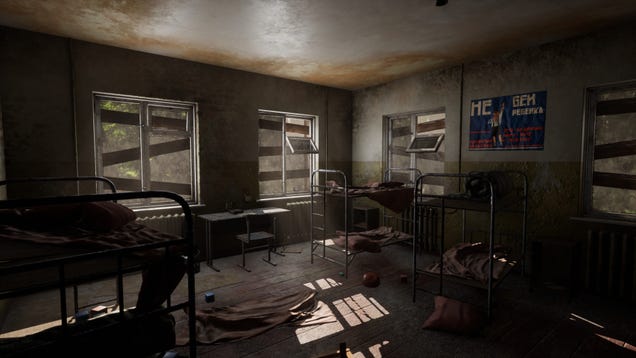
Emika Games, the lone developer behind games like the recently-released Summer of ‘58, has decided to leave game development “for an indefinite time” after Steam’s two-hour refund policy resulted in a “huge number of returns” of their latest title.

Read more…


Source: Kotaku – Steam’s Two-Hour Refund Policy Forces Horror Developer Into “Indefinite” Absence

Wakayama Signs IR Agreement with Clairvest

Akihabara News (Tokyo) — The partnership between Wakayama Prefecture and a business consortium led by the Clairvest Group aiming to build an Integrated Resort (IR) including a casino at the Marina City site is now a done deal.

This is also the first basic agreement across the nation to be signed between a local government and a casino operator, a key first step on the road to opening the first Japanese IRs in the latter half of this decade.

The next step, should there be no major changes in the national policy, will be for Wakayama and the Clairvest consortium to compile a joint application to the central government, which must be submitted between this October and the deadline of April 28, 2022. Government decisions on licensing are expected to be made in the months following the deadline, perhaps around next summer.

Clairvest Group is a Toronto-based based investment firm known for casino holdings in Latin America and elsewhere, and has been one of the early movers in Japan market. It’s local subsidiary is Clairvest Neem Ventures, and the consortium it leads also includes the French casino operator Groupe Partouche and AMSE Resorts Japan.

The Clairvest consortium’s proposal is to construct a US$4.3 billion luxury casino resort at Marina City, featuring hotels, exhibition areas, a casino, and all of the other attributes required under the terms of the 2018 IR Implementation Act and subsequent Cabinet decisions.

If it is licensed, the plans call for the Wakayama resort to be built on a 560,000 square meter plot of land, intended to host about 13 million visitors a year. It would potentially become the first casino resort to open its doors in Japan around autumn 2027.

Recent Integrated Resorts Related Articles

Probity Accusations Abound in Japan IR Race

Wakayama, Osaka Reaffirm IR Intentions

Mayoral Election Slams the Door on Yokohama IR

Accusations Fly at Nagasaki IR Operator Selection

Oshidori Lingers in Nagasaki IR Race

The post Wakayama Signs IR Agreement with Clairvest appeared first on Akihabara News.


Source: Akihabara News – Wakayama Signs IR Agreement with Clairvest

Peloton lowers price of its Bike to $1,495

For the second time in less than a year, Peloton is cutting the price of its entry-level stationary bike. Starting today, you can buy the machine, without any additional extras like cycling shoes, for $1,495. That’s nearly a 20 percent discount from the $1,895 price the company has sold the bike for since September of last year. Peloton is also dropping prices in Australia, Canada, Germany and the UK. At the same time, it’s reducing how much it costs to finance the machine in the US by $10 to $39 per month. 

Notably, what isn’t changing with today’s announcement is the cost of the company’s Pelton Membership, which will still set you back $39 per month. You need that subscription to get the most out of the bike.

The announcement comes on the same day the company announced a Q4 net loss of $313.2 million. Peloton was one of the beneficiaries of the pandemic, struggling at times to keep up with demand from people who couldn’t go to the gym to exercise. And you saw that in the company’s financials, with it posting a net income of $89.1 million a year ago. Clearly, Peloton hopes a price cut can help it recapture some of the growth it experienced previously, and entice new customers to its subscription offerings.


Source: Engadget – Peloton lowers price of its Bike to ,495

Gasp, Wonder Woman 1984's Patty Jenkins Also Hates Seeing the Box Office Hit By Streaming

Patty Jenkins has joined the growing crowd of directors who immensely dislike your ability to watch their films on TV screens instead of movie screens during a global pandemic. She’’ll be in good Hollywood company, as Tenet’s Christopher Nolan and Dune’s Denis Villeneuve have all gone out of their way to decry their…

Read more…


Source: Gizmodo – Gasp, Wonder Woman 1984’s Patty Jenkins Also Hates Seeing the Box Office Hit By Streaming

Elizabeth Holmes's Trial Could Reveal Her Side of Theranos Story

Since Theranos began to unravel in 2016, the blood-testing company’s founder, Elizabeth Holmes, has sought to tell her side of the story, even pursuing the possibility of a lucrative book deal. Now, at her coming criminal fraud trial, Ms. Holmes finally will get her best shot to tell it. From a report: After Theranos began imploding five years ago — with federal investigators building cases against her for allegedly misleading investors and patients about the company’s technology — Ms. Holmes remained convinced she had done nothing wrong, people close to her at the time recalled, and wanted a venue to profess her innocence. In 2016, months after Theranos received its first criminal subpoena, Ms. Holmes pitched a book idea to Bob Barnett, a lawyer and book agent known for landing six-figure-plus advances for the political elite, people familiar with the matter said. The meeting, at Theranos’s Palo Alto, Calif., headquarters, was brokered by the company’s then-general counsel, they said.

Mr. Barnett told Ms. Holmes that there could be a market for her book — but only if she could emerge successfully from the federal investigations, one of the people said. He told her his Washington law firm, Williams & Connolly LLP, could help with her legal troubles, too, the people recall. The book deal didn’t happen. Ms. Holmes was indicted in June 2018 on charges of wire fraud and conspiracy to commit wire fraud; and Theranos, a startup once valued at more than $9 billion, dissolved three months later. Her criminal trial in San Jose, Calif., is set to begin Tuesday. Four of Mr. Barnett’s partners will be defending her.

Read more of this story at Slashdot.


Source: Slashdot – Elizabeth Holmes’s Trial Could Reveal Her Side of Theranos Story

Celebrate 800 Episodes of Star Trek By Making Your Favorites Fight to the Death

Star Trek itself turns 55 in just a couple of weeks, but as of today’s episode of Lower Decks, “We’ll Always Have Tom Paris,” the franchise hit another major milestone: 800 episodes of boldly going have now been released for our joy, horror, and occasional mockery. But it also means picking your all time favorite gets…

Read more…


Source: Gizmodo – Celebrate 800 Episodes of Star Trek By Making Your Favorites Fight to the Death

T-Mobile Hacker Explains How He Breached Carrier's Security

According to the Wall Street Journal, the person behind T-Mobile’s recent security breach that affected more than 50 million customers is a 21-year-old named John Binns. ” Binns said he broke through the T-mobile defenses after discovering an unprotected router exposed on the internet, after scanning the carrier’s internet addresses for weak spots using a publicly available tool,” reports Axios. From the report: “I was panicking because I had access to something big,” he wrote in Telegram messages to the Journal. “Their security is awful.” “Generating noise was one goal,” Binns said. He declined to say whether he sold any of the information he stole, or whether he was paid for the hack.

Some of the information exposed in the breach included names, dates of birth, social security numbers and personal ID information. The breach is being investigated Seattle’s FBI office, according to the Journal.

Read more of this story at Slashdot.


Source: Slashdot – T-Mobile Hacker Explains How He Breached Carrier’s Security

How to Switch Boot Target to Text or GUI in systemd Linux

A quick tutorial about working with systemd targets: Learn how to list, view, and switch between text and GUI targets. Further, learn the difference between SysV init runlevels and systemd targets on Linux distros.

The post How to Switch Boot Target to Text or GUI in systemd Linux appeared first on Linux Today.


Source: Linux Today – How to Switch Boot Target to Text or GUI in systemd Linux

TikTok Bans Milk Crate Challenge After Reports of, You Guessed It, Milk Crate-Induced Injuries

It’s a tale as old as time: Humans goading themselves into serious, preventable injury and then getting banned. This time, it’s something called the “Milk Crate Challenge,” which involves building a tall pyramid out of milk crates and filming oneself walking over before inevitably careening off of it, and hashtags…

Read more…


Source: Gizmodo – TikTok Bans Milk Crate Challenge After Reports of, You Guessed It, Milk Crate-Induced Injuries

Greta Thunberg ‘Urgently’ Seeks Help to Evacuate Afghan Youth Climate Activists

Fridays For Future—the global climate strike organization that was founded three years ago by Greta Thunberg—is in trouble. On Thursday, the Twitter account repping the group’s activists working in the “Most Affected Peoples and Areas” (MAPA) put out a desperate plea begging for anyone with resources to help evacuate…

Read more…


Source: Gizmodo – Greta Thunberg ‘Urgently’ Seeks Help to Evacuate Afghan Youth Climate Activists

China's Microsoft Hack May Have Had A Bigger Purpose Than Just Spying

An anonymous reader shares a report: Steven Adair hunts hackers for a living. Back in January, in a corner-of-his-eye, peripheral kind of way, he thought he saw one in his customer’s networks — a shadowy presence downloading emails. Adair is the founder of a cybersecurity company called Volexity, and he runs traps to corner intruders all the time. So he took a quick look at a server his client was using to run Microsoft Exchange and was stunned to “see requests that we’re not expecting,” he said. There were requests for access to specific email accounts, requests for confidential files. He followed all this requested information to a virtual server off-site. “The hair is almost rising on my arms right now when I think about it,” Adair told NPR later. “This feeling of like, oh, crap this is not what should be going on.” What Adair discovered was a massive hack into Microsoft Exchange — one of the most popular email software programs in the world. For nearly three months, intruders helped themselves to everything from emails to calendars to contacts. Then they went wild and launched a second wave of attacks to sweep Exchange data from tens of thousands of unsuspecting victims. They hit mom-and-pop shops, dentist offices, school districts, local governments — all in a brazen attempt to vacuum up information.

Both the White House and Microsoft have said unequivocally that Chinese government-backed hackers are to blame. NPR’s months-long examination of the attack — based on interviews with dozens of players from company officials to cyber forensics experts to U.S. intelligence officials — found that stealing emails and intellectual property may only have been the beginning. Officials believe that the breach was in the service of something bigger: China’s artificial intelligence ambitions. The Beijing leadership aims to lead the world in a technology that allows computers to perform tasks that traditionally required human intelligence — such as finding patterns and recognizing speech or faces. “There is a long-term project underway,” said Kiersten Todt, who was the executive director of the Obama administration’s bipartisan commission on cybersecurity and now runs the Cyber Readiness Institute. “We don’t know what the Chinese are building, but what we do know is that diversity of data, quality of data aggregation, accumulation of data is going to be critical to its success.”

Read more of this story at Slashdot.


Source: Slashdot – China’s Microsoft Hack May Have Had A Bigger Purpose Than Just Spying

T-Mobile hacker says the carrier's security is 'awful'

The T-Mobile customer data breach might not have been a sophisticated data breach — in fact, it might have been relatively trivial. The hacker claiming to be responsible for the attack, John Binns, told the The Wall Street Journal in a discussion that T-Mobile’s security was “awful.” Binns reportedly broke through by using a readily available tool to find an exposed router, and took a week to delve through customer data stored in a data center near East Wenatchee, Washington.

Binns, who provided apparent evidence to back up his claims of involvement, said he breached T-Mobile and stole the data to create “noise” that drew attention to him. He came forward to highlight his claims he had been kidnapped in Germany and placed into a fake mental hospital. There wasn’t any evidence to support that allegation.

T-Mobile declined to comment on Binns’ claims in response to the Journal. It previously stated that it was “confident” it had closed the security holes used in the breach, which compromised sensitive info for more than 54 million active and former customers.

The incident is the third breach in two years, and suggests that T-Mobile is still struggling to offer security that matches its rapidly growing customer base. It only hired a new security leader earlier in 2021, for instance. If Binns’ claims are accurate, though, the ease of the attack is also frightening — it only took a casual hack to put tens of millions of people at risk of fraud and other data crimes. The company may need to scramble if it’s going to reassure customers that breaches will be rare going forward.


Source: Engadget – T-Mobile hacker says the carrier’s security is ‘awful’