Oshidori Lingers in Nagasaki IR Race

Akihabara News (Tokyo) — Despite its dramatic announcement that it was withdrawing from the race and coming in second in the prefecture’s selection process, it has become apparent that Oshidori International Development hasn’t entirely given up on building an Integrated Resort (IR) including a casino in Nagasaki.

At the beginning of this month, Oshidori, in partnership with Mohegan Gaming & Entertainment and others, led one of three consortiums applying to become Nagasaki Prefecture’s IR partner.

However, on August 6, the Hong Kong-based firm suddenly announced that “the restrictive and unreasonable rules imposed by the Nagasaki Prefecture make it impossible for Oshidori to conduct business in a prudent and efficient manner” and that “unless the [Request for Proposal] process is conducted in an ethical manner, it is withdrawing from participating in the [Request for Proposal] for an IR in Nagasaki.”

Despite the statement, it would appear that the Oshidori-led consortium made no official move to withdraw its application.

Less than a week later, Casinos Austria International Japan was announced as the preferred negotiating partner for the prefecture’s IR, though the Oshidori consortium had been ranked as the runner-up.

In this context, Oshidori has now explained to the local media that it is not, in fact, terminating its participation in the process. The firm is requesting further information disclosure from the Nagasaki prefectural government and, apparently, trying to resolve whatever issues led to its feisty August 6 press release.

Moreover, Oshidori released its concept art for its IR design to a Macau-based casino industry magazine, unveiling its proposed theme of “The Sails at Omura Bay.” This appears to be part of its lobbying effort to sway the Nagasaki officials.

The bottom line is that while Oshidori’s chances of ever building its IR in Nagasaki are now quite a long shot, it is still holding out hope that Casinos Austria’s negotiations will stumble and that it will have a chance to move in.

Recent Integrated Resorts Related Articles

Okonogi Edge in Yokohama Race

Casinos Austria Outlines Nagasaki Plans

Casinos Austria Selected as Nagasaki IR Partner

Casino Issue Focus of Yokohama Mayor Race

Oshidori Angrily Ditches Nagasaki IR Race

The post Oshidori Lingers in Nagasaki IR Race appeared first on Akihabara News.


Source: Akihabara News – Oshidori Lingers in Nagasaki IR Race

German chemists identified over 7,700 different chemical formulas in beers

A cold, frosty mug of beer.

Enlarge / German chemists combined two complementary mass spectrometry techniques to analyze 467 different commercial beers from around the world. (credit: Natasha Breen/Getty Images)

People have been brewing beer for millennia, and the basic chemistry of fermentation is well understood. But thanks to advanced analytical techniques, scientists continue to learn more about the many different chemical compounds that contribute to the flavor and aroma of different kinds of beer. The latest such analysis comes courtesy of a team of German scientists who analyzed over 400 commercial beers from 40 countries. The scientists identified at least 7,700 different chemical formulas and tens of thousands of unique molecules, according to a recent paper published in the journal Frontiers in Chemistry. And they did it with a new approach that can analyze a sample in just 10 minutes.

“Beer is an example of enormous chemical complexity,” said co-author Philippe Schmitt-Kopplin of the Technical University of Munich and the Helmholtz Center in Munich. “And thanks to recent improvements in analytical chemistry, comparable in power to the ongoing revolution in the technology of video displays with ever-increasing resolution, we can reveal this complexity in unprecedented detail. Today it’s easy to trace tiny variations in chemistry throughout the food production process, to safeguard quality or to detect hidden adulterations.”

As I’ve written previously, all beer contains hops, a key flavoring agent that also imparts useful antimicrobial properties. To make beer, brewers mash and steep grain in hot water, which converts all that starch into sugars. This is traditionally the stage when hops are added to the liquid extract (wort) and boiled. That turns some of the resins (alpha acids) in the hops into iso-alpha acids, producing beer’s hint of bitterness. Yeast is then added to trigger fermentation, turning the sugars into alcohol. Some craft brewers prefer dry-hopping—hops are added during or after the fermentation stage, after the wort has cooled. They do this as a way to enhance the hoppy flavors without getting excessive bitterness, since there is no isomerization of the alpha acids.

Read 9 remaining paragraphs | Comments


Source: Ars Technica – German chemists identified over 7,700 different chemical formulas in beers

Updated app from Apple brings iCloud Passwords to Windows

Read 6 remaining paragraphs | Comments


Source: Ars Technica – Updated app from Apple brings iCloud Passwords to Windows

iPhone keyboard for blind to shut down as maker cites Apple “abuse” of developers

The FlickType keyboard running on an iPhone.

Enlarge / FlickType iPhone keyboard. (credit: FlickType)

An iPhone keyboard for blind users will be discontinued, according to the app’s developer, who alleges that “Apple has thrown us obstacle after obstacle for years while we try to provide an app to improve people’s lives.”

FlickType includes an Apple Watch keyboard and the iPhone keyboard intended for blind and low-vision users of VoiceOver, an Apple technology that can speak the key a user selects. FlickType’s Apple Watch keyboard will continue, at least for a while, but the iPhone keyboard will be disabled.

“It’s with a heavy heart today that we’re announcing the discontinuation of our award-winning iPhone keyboard for blind users,” the FlickType account on Twitter wrote yesterday. FlickType is developed by Kosta Eleftheriou, who recently filed a lawsuit alleging that Apple used its control over iPhone app distribution to induce him to sell FlickType to Apple at a discount. He says he refused to sell the app.

Read 20 remaining paragraphs | Comments


Source: Ars Technica – iPhone keyboard for blind to shut down as maker cites Apple “abuse” of developers

It’s now possible to play early ‘90s CD-ROM games via ScummVM

Screenshot from 1990s video game shows anthropomorphic frog police.

Project Starship’s frog cops out in force. (credit: Rock, Paper, Shotgun)

The ScummVM community has just made the early CD-ROM gaming era more accessible. For five years, multiple people have worked on making Macromedia Director games playable on modern hardware, and today, that work is done.

Director was a critical component of early CD games that failed to scale up as Windows advanced (and as software like QuickTime fell by the wayside). But playing Spaceship Warlock or the bizarre Japanese art piece Eastern Mind: The Lost Souls of Tong Nou is now possible on current hardware—without the use of specific emulators.

Time travel and killer robots at their most '90s.

Time travel and killer robots at their most ’90s. (credit: The Obscuritory)

Librarian, historian, and game archivist Phil Salvador, who runs The Obscuritory, tweeted about the project on Tuesday. “In many cases, the classic games you can purchase on platforms like GOG.com are being run through an emulator like DOSBox or ScummVM,” Salvador told Ars. “But because Director games use features of their operating systems like Windows 3.1 or external plugins like QuickTime, there’s been no clean, easy way to re-release those [games] on the commercial marketplace. As the ScummVM team continues to improve support for Director, there’s a good chance we could see some of these games on the market again.”

Read 4 remaining paragraphs | Comments


Source: Ars Technica – It’s now possible to play early ‘90s CD-ROM games via ScummVM

Climate tipping points add to the cost of carbon emissions

Image of glaciers terminating above water.

Enlarge / The destabilization of ice sheets in West Antarctica would be a major climate tipping point. (credit: Alessandro Dahan / Getty Images)

Rising temperatures are producing some very predictable effects: gradually worsening droughts, a steady rise in sea levels, and so on. But we also risk crossing thresholds in which aspects of the climate suddenly shift to new behaviors. That process seems to have happened in part of the Arctic Ocean, and there are indications that the main circulating current in the Atlantic Ocean may be approaching a shutdown.

A lot of effort has gone into modeling the economic cost of climate change in general, but we haven’t figured out what crossing a tipping point might do to the world economy. This week, three researchers attempted to explore the subject, integrating estimates of the cost of tipping points with combined economics/climate models. The results suggest that we may be under-valuing the current cost of our carbon emissions and accepting a much higher level of financial risk than we might think.

What percent do you tip?

Climate tipping points are easy to understand on a conceptual level. At some poorly defined point in the future’s warming, some natural systems will shift to a different type of behavior. That behavior will make it unlikely that the system will return to its initial state.

Read 14 remaining paragraphs | Comments


Source: Ars Technica – Climate tipping points add to the cost of carbon emissions

WhatsApp shuts down Taliban helpline in Kabul

Read 15 remaining paragraphs | Comments


Source: Ars Technica – WhatsApp shuts down Taliban helpline in Kabul

The Google Pixel 5a is $449, adds a bigger screen and water resistance

Google has officially unveiled its next mid-range phone, the Pixel 5a. The big news today (and always the main selling point of the Pixel A-series) is the price, which is $449, or $100 more than the Pixel 4a. Google’s blog post has a phone comparison sheet showing its lineup as the Pixel 5, Pixel 5a, and Pixel 4a, so hopefully, the $349 Pixel 4a is sticking around?

Part of the reason for the price increase is that the Pixel 5a is a bigger phone, with a 6.34-inch display and 73.7 mm width compared to the Pixel 4a’s 5.8-inch display and 69.4 mm width. Another big change is the addition of IP67 dust and water resistance, which means the phone should survive submersion in 3 feet of water (1 meter) for 30 minutes. Like the Pixel 5, the body is metal coated in plastic instead of the pure plastic body of the Pixel 4a. We did not really see the appeal of this in the Pixel 5, but presumably, the phone is stronger now.

As usual, we’re getting a no-frills design that just takes care of the basics. On the front, there’s a slim-bezel OLED display and a hole-punch camera in the top right, while on the back there are two cameras (main and wide-angle) and a capacitive fingerprint reader. Specs include a Snapdragon 765G (that’s a 7nm chip with two Cortex A76 cores and six Cortex A55 cores), 6GB of RAM, 128GB of storage, and the biggest battery of any Pixel: 4680 mAh. The main camera is 12.2 MP and looks like the same Sony IMX363 sensor that Google has used for the past four years. There’s a 16 MP wide-angle and an 8 MP front camera. Oh yeah, the headphone jack is sticking around for at least one more year.

Read 4 remaining paragraphs | Comments


Source: Ars Technica – The Google Pixel 5a is 9, adds a bigger screen and water resistance

Exploding power supplies are now the worst thing about the Newegg Shuffle

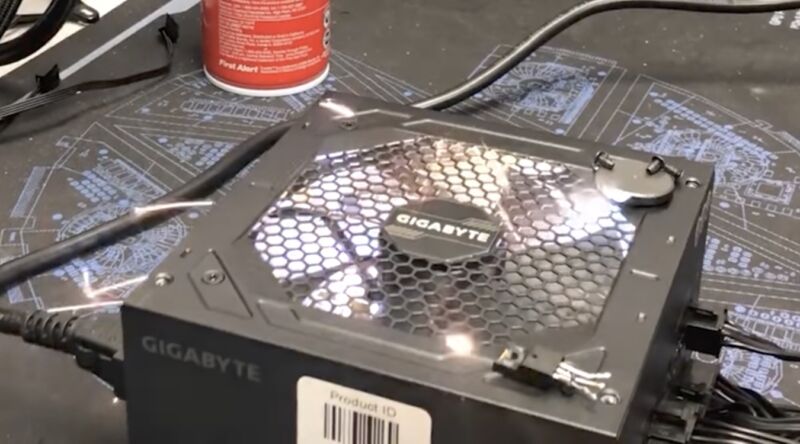
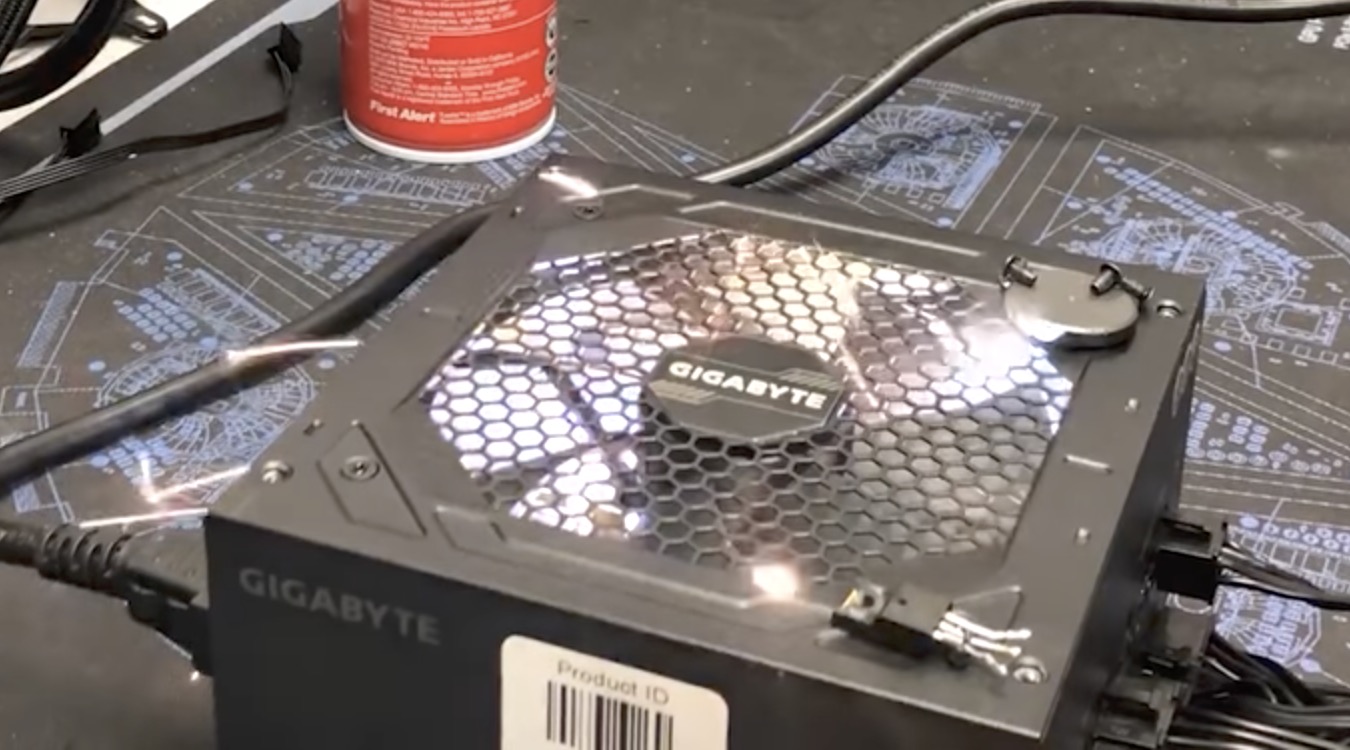
A Gigabyte power supply explodes during Gamers Nexus' testing.

Enlarge / A Gigabyte power supply explodes during Gamers Nexus’ testing. (credit: Gamers Nexus)

If you’ve been trying to buy a GPU this year, you may be familiar with the Newegg Shuffle, a lottery system that Newegg instituted in January to try to beat bots and scalpers. You may also know that the GPUs and consoles in the Newegg Shuffle are often bundled with components like RAM, motherboards, and power supplies as a package deal—if you want dessert (in this case, a GPU), you have to eat your vegetables (or, a product you might be able to use but weren’t looking to buy).

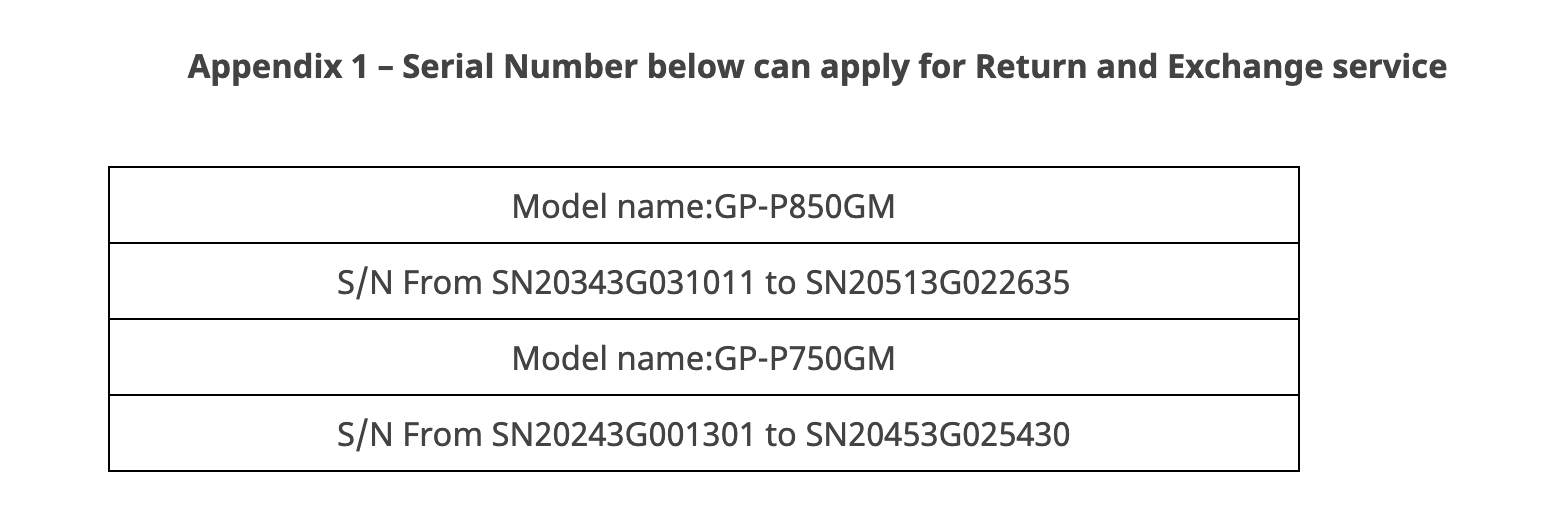
Earlier this month, the PC gaming YouTubers at Gamers Nexus posted a video showing that two Gigabyte power supplies commonly bundled with GPUs in the Newegg Shuffle were prone to “catastrophic” failure. Some of the GP-P850GM and GP-P750GM models that were tested sparked as they died, creating a fire risk, and one also ruined an attached RTX 3080 GPU. Gigabyte has now released a statement that (inaccurately) takes issue with Gamers Nexus’ findings before outlining how the company is addressing the problem and offering exchanges for anyone who has bought a power supply within the affected range of serial numbers (the company has stopped short of a formal recall, however).

Affected GP-P850GM and GP-P750GM models can be exchanged, whether they've actually failed or not.

Affected GP-P850GM and GP-P750GM models can be exchanged, whether they’ve actually failed or not. (credit: Gigabyte)

Gigabyte claims that the Gamers Nexus team ran the power supplies over capacity for “extended lengths of time” and that these conditions “would not be typical of any real world usage.” In a response video posted today, Gamers Nexus pointed out that this mischaracterizes their tests, which were carefully designed to find where the power supplies’ Over-Power Protection (OPP) feature would trigger and shut the power supply off (as OPP is designed to do, when functioning properly). The power supplies were then left to sit for a few minutes and brought back online at 60 percent of their capacity to ensure that they were still working properly after the shutdown—the full testing methodology section of the first video is here. Gamers Nexus also pointed to numerous product reviews claiming that the power supplies had shown up dead on arrival, before they were ever installed or used.

Read 3 remaining paragraphs | Comments


Source: Ars Technica – Exploding power supplies are now the worst thing about the Newegg Shuffle

After a dozen flights, NASA’s chopper has yet to come a cropper

Read 4 remaining paragraphs | Comments


Source: Ars Technica – After a dozen flights, NASA’s chopper has yet to come a cropper

Colorado River drops to record low levels, slashing Arizona’s water supply

Read 6 remaining paragraphs | Comments


Source: Ars Technica – Colorado River drops to record low levels, slashing Arizona’s water supply

Boston Dynamics shares an incredible behind-the-scenes look at robot-building

New Boston Dynamics video alert!

The robot developer and YouTube sensation is giving us another peek at its robot-building efforts, this time by having its humanoid robotics research platform, Atlas, do some more parkour. Besides releasing a highly polished video, the company also posted a behind-the-scenes look at what it takes to get a robot to jump through an obstacle course. It’s the best look at Atlas we’ve gotten yet and shows incredible footage of manufacturing, software, and repairs—plus some gnarly wipeouts when the stunts don’t go according to plan.

This is the third video we’ve seen of Atlas doing parkour, and you might wonder why Boston Dynamics is so obsessed with making its robots jump on boxes and do backflips. Atlas does parkour for the same reason car companies do motorsports. Using sports to push the performance boundaries of a machine leads to the development of better parts and techniques, and the tests have a trickle-down effect for consumer products. Just as motorsport has led to the creation of all-wheel drive, disc brakes, and tons of safety features for production cars, teaching Atlas to do backflips will hopefully result in better robots from Boston Dynamics.

Read 9 remaining paragraphs | Comments


Source: Ars Technica – Boston Dynamics shares an incredible behind-the-scenes look at robot-building

Anime studios and an all-star cast combine for Star Wars: Visions

Read 2 remaining paragraphs | Comments


Source: Ars Technica – Anime studios and an all-star cast combine for Star Wars: Visions

SK Hynix Releases 2TB Version of Gold P31 NVMe SSD

Coming off of the popular reception of their first family of retail NVMe SSDs, SK hynix this morning is adding another model to the Gold P31 family: the long-awaited 2TB version. The higher capacity drive, still using SK hynix’s in-house controller and 128L NAND, is being launched with immediate availability today, with retail pricing set at $280.


Source: AnandTech – SK Hynix Releases 2TB Version of Gold P31 NVMe SSD

Celebrating the community: Toshan

Today we bring you the fourth film in our series of inspirational community stories! Incredible young people from the community have collaborated with us to create these videos, where they tell their tech stories in their own words.

Toshan, an Indian teenager in Bangalore.
Toshan had community support when he started learning to code, so now he mentors other young people at his CoderDojo club.

Watch the new film to meet a “mischievous” tech creator who is helping other young people in his community to use technology to bring their ideas to life.

This is Toshan

Toshan’s story takes place in his hometown of Bangalore, India, where his love for electronics and computing sent him on a journey of tech discovery! 

Help us celebrate Toshan by liking and sharing his story on Twitter, Linkedin, or Facebook!

Toshan (16) first encountered coding aged 12, thanks to his computing teacher Miss Sonya. Describing his teacher, he says: “The unique thing is, she just doesn’t stop where the syllabus ends.” The world of digital making and Raspberry Pi computers that Miss Sonya introduced him to offered Toshan “limitless opportunities”, and he felt inspired to throw himself into learning.

“If we help people with their ideas, they might bring something new into the world.”

Toshan

Having found help in his local community and the online Raspberry Pi Foundation community that enabled him to start his tech journey, Toshan decided to pass on his skills: he set up a CoderDojo for other young people in Bangalore when he was 14. Toshan says, “I wanted to give something back.” Mentoring others as they learn coding and digital making helped his confidence grow. Toshan loves supporting the learners at his Dojo with problem-solving because “if we help people with their ideas, they might bring something new into the world.”

Toshan, an Indian teenager, with his mother and father.

Supported by his mum and dad, Toshan’s commitment to helping others create with technology is leading him to extend his community beyond the city he calls home. Through his YouTube channel, he reaches people outside of Bangalore, and he has connected with a worldwide community of like-minded young tech creators by taking part in Coolest Projects online 2020 with an automated hand sanitiser he built.

Toshan’s enthusiasm and love for tech are already motivating him to empower others, and he has only just begun! We are delighted to be a part of his journey and can’t wait to see what he does next.

Help us celebrate Toshan by liking and sharing his story on Twitter, Linkedin, or Facebook!

The post Celebrating the community: Toshan appeared first on Raspberry Pi.


Source: Raspberry Pi – Celebrating the community: Toshan

Suga Government Promoting Hydrogen

Akihabara News (Tokyo) — In October 2020, Prime Minister Yoshihide Suga made a pledge to make Japan carbon neutral by 2050. In just the last year, this new target has energized Japan’s fledgling hydrogen production industry as corporate leaders rush to get ahead of the new wave of innovation.

While Japan was an early leader in hydrogen power in the 1970s, high costs made the industry less profitable than fossil fuel energy, causing development to stall. Now Japan is embracing a new era of clean energy.

In one of the latest moves from a major Japanese firm, Panasonic is developing what could be the world’s first hydrogen plant powered completely by renewable energy in Kusatsu, Shiga Prefecture. This plant is expected to utilize a combination of lithium ion storage batteries and solar panels, as well as larger fuel cells that can convert hydrogen into electricity.

Panasonic hopes to sell this hydrogen-power system commercially in the global market by 2023.

Not far from Panasonic’s plant, Toyota, which has a carbon zero target set for 2035, is creating hydrogen-powered Mirai cars at its factory in Aichi prefecture. Last year, Toyota partnered with multiple hydrogen producers to create fuel cell systems for cars, trains, and other vehicles.

These recent innovations haven’t been entirely due to private investment; the Japanese government has put a huge amount of funding into green energy in Japan. Last year alone, the government invested ¥2 trillion (US$18.3 billion) in renewable energy and green technologies in order to meet its 2050 carbon neutral goal.

However, smaller corporations are having difficulty handling the costs of switching to hydrogen, leading some to push for significantly greater government assistance.

While the costs of hydrogen energy continue to be much higher than fossil fuel, increasing government investment could push a rapid change in the next decades.

Recent Hydrogen Related Articles

Tsuneishi Launches Hydrogen Ferry

Sister Cities Commit to Hydrogen

World’s First Hydrogen Hotel

Queensland Green Hydrogen for Japan

Trash Energy: Another Source for Tokyo Hydrogen

The post Suga Government Promoting Hydrogen appeared first on Akihabara News.


Source: Akihabara News – Suga Government Promoting Hydrogen

T-Mobile has been hacked yet again—but still doesn’t know what was taken

Read 5 remaining paragraphs | Comments


Source: Ars Technica – T-Mobile has been hacked yet again—but still doesn’t know what was taken

Here’s who can get a 3rd vaccine dose now—and who may be next

Hypodermic needles lined up in a tray.

Enlarge / COVID-19 vaccine at a vaccination center in Madrid on Feb. 26, 2021. (credit: Getty | NurPhoto)

Pfizer and BioNTech submitted new COVID-19 vaccine-booster data to the Food and Drug Administration Monday as US officials continue to consider whether to recommend third doses for more Americans.

For now, officials have only recommended that some people with weakened immune systems get a third dose of a COVID-19 vaccine. While officials continue to say that there is not enough evidence to support third-dose boosters for other vaccinated groups at this point, many officials say boosters will likely be in our futures. The lingering questions are when exactly shots will be needed and who will be next in line.

On Sunday, Director of the National Institutes of Health Francis Collins told the Associated Press that, with the delta variant raging and immune responses possibly waning, officials could be making decisions on boosters for this fall or winter within the coming weeks.

Read 14 remaining paragraphs | Comments


Source: Ars Technica – Here’s who can get a 3rd vaccine dose now—and who may be next

Global Drone Market Worth US$26 Billion

Akihabara News (Tokyo) — The global commercial drone market will be worth about US$26.3 billion this year and Asia leads the way, according to a new report released by the Germany-based firm Drone Industry Insights.

The report further projects that the drone market will be worth over US$41 billion five years hence.

Drone services, such as mapping and inspections, currently represent more than three-quarters of global drone-related revenue and are the main driving force in the market.

Nevertheless, unit sales this year are estimated to reach about 828,000 drones.

Geographically, Asia and North America are currently the strongest markets, led by China and the United States respectively, though Japan comes in for a prominent mention as well. Going forward, Latin America and developing countries in Asia, especially India, are expected to close the gap in terms of their market growth rate.

Drone applications to the energy industry are in the lead, but other industries such as construction and agriculture are not far behind. The warehousing and insurance applications are anticipated to grow rapidly in the next few years.

The report excluded “passenger drones,” or eVTOL, from its study, as this is widely regarded as a separate sector.

Recent Drone Related Articles

Drones Tested for Disaster Relief Missions

Agricultural Drone Alliance

Japanese Drones in India

Japan Post Deliveries from the Sky

Drones to Connect Small Island Communities

The post Global Drone Market Worth US$26 Billion appeared first on Akihabara News.


Source: Akihabara News – Global Drone Market Worth US Billion

MIT scientists reveal why water drops move faster on a hot, oil-coated surface

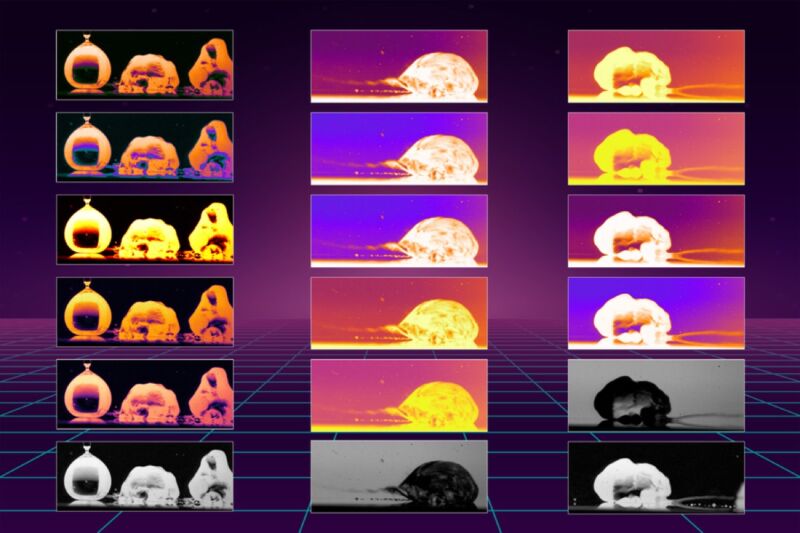
Side-by-side photographs of teeny-tiny explosions.

Enlarge / Researchers have determined why droplets are propelled across a heated oily surface 100 times faster than on bare metal. The images above reveal the mechanisms that cause the rapid motion. (credit: Kripa Varanasi/MIT News)

There’s a classic 2009 Mythbusters episode in which the hosts demonstrate how someone could wet their hand and dip it ever so briefly into molten lead without injury. The protective mechanism is known as the “Leidenfrost effect,” and it could one day prove useful for microfluidic devices, particularly in microgravity environments, among other applications. We’re one step closer to achieving those applications, thanks to new insights into the phenomenon uncovered by MIT scientists. They described their findings in a recent paper published in the journal Physical Review Letters.

As we’ve reported previously, the Leidenfrost effect dates back to 1756. That’s when German scientist Johann Gottlob Leidenfrost observed that, while water splashed onto a very hot pan sizzles and evaporates very quickly, something changes when the pan’s temperature is well above water’s boiling point. When that happens, Leidenfrost discovered, “gleaming drops resembling quicksilver” will form and will skitter across the surface.

In the ensuing 250 years, physicists came up with a viable explanation for why this occurs. If the surface is at least 400 degrees Fahrenheit (well above the boiling point of water), cushions of water vapor, or steam, form underneath the droplets, keeping them levitated. The droplet can skitter across the surface with very little friction. The Leidenfrost effect also works with other liquids, including oils and alcohol, but the temperature at which it manifests (the “Leidenfrost point”) will be different.

Read 9 remaining paragraphs | Comments


Source: Ars Technica – MIT scientists reveal why water drops move faster on a hot, oil-coated surface