
Thanks to 3D NAND technology, Western Digital’s latest SSDs will offer lower power consumption and higher performance, endurance, and capacities. The two varieties are WD Blue and SanDisk Ultra, but I suspect that they are identical aside from the former having F.I.T. Lab certification: both offer up to 560MB/s/530MB/s sequential read/write speeds, as well as a 3-year limited warranty. Prices start at $99 (250GB).
WD Blue 3D NAND SATA SSDs will be available in 250GB, 500GB, 1TB and 2TB capacities in both a traditional 2.5-inch/7mm cased drive as well as a single-sided M.2 2280 form factor. Like all WD SSDs, the WD Blue 3D NAND SATA SSD includes WD F.I.T. Lab certification for compatibility with many leading platforms. SanDisk Ultra 3D SSDs will be available in 250GB, 500GB, 1TB, and 2TB capacities in a traditional 2.5-inch/7mm cased drive form factor. Both products boast up to 560MB/s and 530MB/s sequential read and write speeds respectively, a 3-year limited warranty, and will be available worldwide in the third quarter of 2017.
Discussion
Source: [H]ardOCP – WD to Deliver World’s First Client Solid State Drives with 64-Layer 3D NAND
Monthly Archives: May 2017
The Joule Sous-Vide Circulator Is Tiny, Mighty, and $30 Off on Amazon

Anova dominates the sales charts, but in many ways (raw heating power, looks, size, software quality), the Joule sous-vide circulator is actually the superior product, and Amazon’s running a rare $30 discount on it, today and tomorrow only.
Source: LifeHacker – The Joule Sous-Vide Circulator Is Tiny, Mighty, and Off on Amazon
Zika test machine needs just a drop of blood
 At this point, the idea that you could use a drop of blood, taken from your finger, to test for disease is pretty played out. After all, a certain company has spent the last year or so burning up any remaining goodwill for the technology. Despite thi…
Source: Engadget – Zika test machine needs just a drop of blood
PC Market Could Return To Growth in 2019
IDC’s latest Worldwide Quarterly Personal Computing Device Tracker offers new insight as to why the firm believes the PC market is set for a growth period a few years from now. From a report: Detachable tablets such as Microsoft’s Surface line and Apple’s iPad Pro will lead the growth as consumers have turned away from laptops in favor of these more versatile computing devices. Last year, 21.5 million of these devices were shipped and the number of units sold could reach as high as 45.9 million in 2021. Notebook computers and mobile workstations are another category that will see continued growth with shipments rising from 156.8 million units in 2016 to 163.7 million by the year 2021. Desktop computers are still decreasing in popularity and that trend is likely to continue with their sales predicted to decrease by 15 million a year leading up to 2021.


Read more of this story at Slashdot.
Source: Slashdot – PC Market Could Return To Growth in 2019
Here's a Snake Vomiting a Live Snake

It must be a fever dream, you think, your skin burning and everything going black as some strange force compresses your body. Am I being digested? But suddenly, a muffled human voice begins chatting. A rush of air and you’re free, your captor slithering away. Bewildered, you pose in shock for the camera.
Source: Gizmodo – Here’s a Snake Vomiting a Live Snake
Today's Best Deals: Joule Sous-Vide, BioShock Collection, DEWALT Drill, and More

ChefSteps’ Joule sous-vide circulator, the BioShock Collection, and a great hammer drill/driver deal lead off Tuesday’s best deals from around the web.
Source: LifeHacker – Today’s Best Deals: Joule Sous-Vide, BioShock Collection, DEWALT Drill, and More
Slo-Mo Footage Reveals Exactly How a Giant Firework Shell Goes Kaboom

There’s no better way to celebrate a long weekend, or your nation’s birthday, than by blowing up giant paper shells packed with explosives. It’s not hard to understand how the firecrackers you played with as a kid worked, but YouTube’s BeyondSlowMotion channel reveals how those gigantic fireworks that fill the night…
Source: Gizmodo – Slo-Mo Footage Reveals Exactly How a Giant Firework Shell Goes Kaboom
Nvidia Max-Q wants to make gaming laptops thinner, lighter, less fugly

Enlarge (credit: Nvidia)
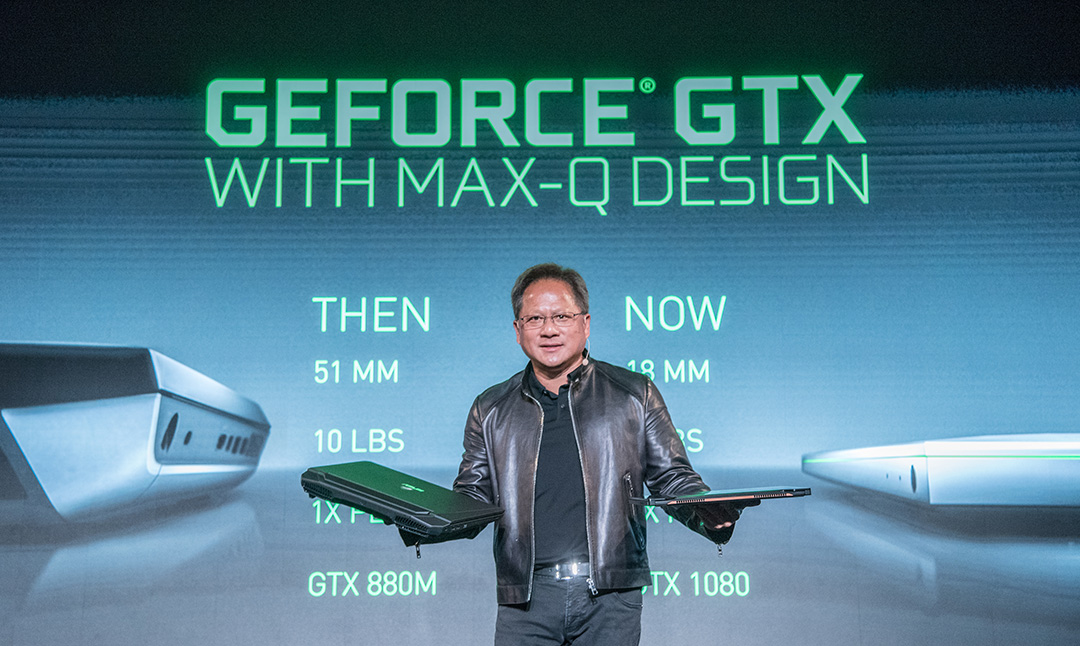
In a thinly veiled branding exercise, graphics card marker Nvidia has unveiled “Max-Q,” a series of thin and light gaming notebooks. Much like Intel’s Ultrabook initiative, Nvidia is hoping that Max-Q will encourage laptop makers to create gaming laptops that can actually be used on the go, rather than remain permanently tethered to a wall socket because humanity’s best scientists haven’t yet created a battery-sized fusion power cell.
To that end, Max-Q (a co-opted NASA term that defines the point at which the aerodynamic stress on a rocket in atmospheric flight is maximised) has some recommended physical specs. Those include a thickness of 18mm and a weight of 2.3kg—a significant reduction over the 51mm and 4.5kg of GTX 880M-era laptops. Naturally, Max-Q laptops sport one of Nvidia’s desktop-class graphics cards, which include the GTX 1060, GTX 1070, and GTX 1080.
Fan noise, a perpetual problem for gaming laptops, is kept low by a new feature dubbed WhisperMode. WhisperMode dynamically changes the game’s frame rate, while simultaneously tweaking the graphics settings in order to save GPU resources. While Nvidia is yet to reveal the technical details behind WhisperMode, it sounds an awful lot like AMD’s Radeon Chill feature, which lowers the frame rate during less action-orientated scenes in order to save power.
Read 5 remaining paragraphs | Comments
Source: Ars Technica – Nvidia Max-Q wants to make gaming laptops thinner, lighter, less fugly
WD's next-gen SSDs add even more speed and capacity
 Hard disk specialist Western Digital (WD) acquired SSD maker SanDisk last year for a colossal $19 billion, and now we’re getting some idea as to its strategy. The company unveiled two new lineups — branded under each company’s names — that feature…
Source: Engadget – WD’s next-gen SSDs add even more speed and capacity
Ukraine Just Tweeted a Simpsons GIF at Russia Because 2017 Is Weird As Hell

Just when you think 2017 couldn’t get weirder, two countries get into a spat on Twitter and use a Simpsons GIF to accuse the other of aggression. Seriously.
Source: Gizmodo – Ukraine Just Tweeted a Simpsons GIF at Russia Because 2017 Is Weird As Hell
Intel Queues More Changes In DRM-Next For Linux 4.13
Intel developers have landed more code into DRM-Next of feature material in turn targeting the Linux 4.13 kernel cycle…
Source: Phoronix – Intel Queues More Changes In DRM-Next For Linux 4.13
Sony has shipped its last ever PlayStation 3 in Japan
 11 years after its release, Sony has finally stopped shipping the PlayStation 3 to retailers in Japan. We all knew this day was coming, with the country ceasing production on the 500 GB standard model in December last year. Now, however, a recent upd…
Source: Engadget – Sony has shipped its last ever PlayStation 3 in Japan
The Surprising Place Aquaman Sits on the DCEU Timeline

Bruce Wayne wants Gotham to crossover with The Flash. Jughead teases an even weirder season two for Riverdale. Real person Stephen Amell says to never expect a musical episode of Arrow. Plus, Netflix’s Castlevania show gets a gloriously retro poster, Justice League Dark director rumors, and new Doctor Who pictures.…
Source: Gizmodo – The Surprising Place Aquaman Sits on the DCEU Timeline
ASUS ROG Swift PG35VQ: Massive 35" 3440×1440 200Hz HDR Monitor with G-Sync
Once again, I am having trouble locking down the panel type, but ASUS may have checked off all the right boxes here for gamers who are looking to update their display: the PG35VG is big, refreshes at 200Hz, offers tear-free gameplay courtesy of G-Sync, and even includes localized dimming technology for deeper blacks. Acer also has a take on this panel with their Predator X35; both monitors are covered here in an NVIDIA posting.
The ROG Swift PG35VQ conforms to the HDR10 standard and draws from both an expansive palette of colors and a wide range of contrast. We employ quantum dots to broaden the spectrum of tones the display can produce, making gradients smoother and images more lifelike overall. Using these luminescent nanoparticles allows the monitor to support the wider DCI-P3 color space typically associated with cinema projectors. In addition to satisfying gamers, the PG35VQ is likely to entice content creators who want to mix work and play on the same display.
Discussion
Source: [H]ardOCP – ASUS ROG Swift PG35VQ: Massive 35″ 3440×1440 200Hz HDR Monitor with G-Sync
GIGABYTE Introduces New X299 AORUS Motherboards
GIGABYTE introduces its newest addition to the AORUS motherboard series with support for Intel’s upcoming X299 chipset.
GIGABYTE has also laid out two very complete AORUS X299 specification and feature comparison charts below.
I have upped the full GIGABYTE PDF here if you want to give it a look.
Discussion
Source: [H]ardOCP – GIGABYTE Introduces New X299 AORUS Motherboards
Battlefield 1 May Update Now Available
EA Dice has released the Battlefield 1 May update for all platforms (PC, PS4, Xbox One). One of the more requested changes regards matchmaking in the game’s Operations mode: players will now be kept on the same servers rather than being booted back to the globe screen. Players who are using controllers may also do custom button/stick mappings. Check the update notes page for the rest of the numerous changes.
We’ve received a lot of feedback from gamers regarding matchmaking into Operations servers, and we’ve made some adjustments – the first of many – to help mitigate getting matched to an empty server. With this change, a completed match of Operations will loop back to the same Operation rather than exiting the mode. However, you’ll be on the opposite side of the battlefield. For example, if you started as the French Army in the first Operation, you’ll be on the German side when it loops back after the “End of Operation” screen. By remaining on the same server with other players, instead of returning to the globe screen, we believe this will reduce the occurrence of being matched into an empty server.
Discussion
Source: [H]ardOCP – Battlefield 1 May Update Now Available
How to Self-Publish a Book
So you want to self-publish your book? You’re in good company. Plenty of authors have gone ahead of you, working to prove that high-quality books can hold their own in the marketplace without the support of a traditional publisher. Amazon, of course, has changed the entire publishing landscape, but authors have been…
Source: LifeHacker – How to Self-Publish a Book
NVIDIA Announces GeForce GTX Max-Q Design Initiative: High-End Gaming Meets Ultrabooks

This morning as part of their Computex keynote, NVIDIA CEO announced a new initiative for high-end gaming laptop design. Called GeForce GTX Max-Q, NVIDIA is undertaking their own Ultrabook project of sorts, encouraging partners to develop thinner and lighter high performance gaming laptops, giving them better tools to do so, and then bundling it under a catchy name. The end result is that, not unlike Intel’s efforts in this space, NVIDIA wants to sell consumers on the idea that they can have their cake and eat it too with a light laptop that is still substantially more powerful than their old laptop.
As a bit of historical context to this, last year NVIDIA shook up their high-end laptop branding a bit by doing away with “Mobile” video card designations. Rather than having a GeForce GTX 1080M for example, the company simply offered a laptop version of the desktop GTX 1080. Or rather, that was the basic idea behind the policy. In practice these mobile-but-not SKUs had their own specs (e.g. a GTX 1070 with an additional SM enabled), not to mention the greater thermal constraints of a laptop, and of course the use of laptop-appropriate MXM boards.
Consequently from a product designation standpoint, this is a bit of a return to form for NVIDIA. They never stopped making mobile parts – and I haven’t seen any evidence that partners couldn’t try for a thin laptop before now – but now at least some of their mobile parts have a mobile designation, just that the ‘M’ stands for Max-Q instead of Mobile. Which admittedly may be a bit of a cynical read on the situation, but as there’s only a very limited amount of new tech involved – and no new GPUs – Max-Q seems to be more about branding and setting performance expectations for high efficiency (as opposed to high performance) parts. On which note, this isn’t the first place we’ve seen the name Max-Q show up, either. So I wouldn’t be too surprised if we see NVIDIA use it in more places.
In any case, as part of the Max-Q initiative, NVIDIA is releasing Max-Q designs for the GTX 1080, GTX 1070, and the GTX 1060. Not explicitly stated by NVIDIA, but something I suspect, is that these designs are using new MXM cards and aren’t just a different clockspeed profile for the original cards. But at any rate, these are still the same SM and memory configurations as the original mobile parts, but now with lower TDPs and lower clockspeeds to match.
| NVIDIA GeForce 10 Series Laptop Max-Q Specifications | |||||
| GTX 1080 | GTX 1070 | GTX 1060 | |||
| CUDA Cores | 2560 | 2048 | 1280 | ||
| Core Clock | 1101 – 1290MHz | 1101 – 1215MHz | 1063 – 1265MHz | ||
| Boost Clock | 1278 – 1468MHz | 1265 – 1379MHz | 1341 – 1480MHz | ||
| Memory Clock | 10Gbps GDDR5X | 8Gbps GDDR5 | 8Gbps GDDR5 | ||
| Memory Bus Width | 256-bit | 256-bit | 192-bit | ||
| VRAM | 8GB | 8GB | 3GB/6GB | ||
| Max-Q TDP | 90 – 110W | 80 – 90W | 60 – 70W | ||
| Full Perf TDP | 150W | 115W | 80W | ||
| GPU | GP104 | GP104 | GP106 | ||
| Manufacturing Process | TSMC 16nm | TSMC 16nm | TSMC 16nm | ||
In a specification document NVIDIA released to the press, they listed both the normal and Max-Q TDPs and clockspeeds of their mobile products. I do feel this is a bit disingenuous, as mobile parts are commonly subject to thermal throttling – and few laptops could sustain the 115W+ TDPs of the original GTX 1070 and GTX 1080 – so comparing Max-Q to the desktop-like TDPs of the original parts doesn’t tell the whole story.
But in any case, the point NVIDIA was looking to drive how is that while official clockspeeds have dropped by a few hundred MHz compared to the original parts (a not insignificant drop), TDPs have dropped by even more. A GTX 1080 Max-Q that tops out at 110W may only have a boost clock of 1468MHz (a drop of about 15%), but the TDP has dropped by 40W. Which ultimately is the principle purpose of the Max-Q branding from the NVIDIA side of matters: these are slower parts at the more energy-optimal point in the curve, instead of going further up the curve in the name of performance.

Clockspeeds aside, there are some hardware changes to mention. In discussing the Max-Q design, NVIDIA noted that they have implemented some changes over the years to reach this point. A big part of this is of course Pascal, which gives them a solid starting point for high efficiency performance. But the company has also cited improvements in voltage regulators as part of the Max-Q formula, apparently using very low loss regulators optimized for around 1 Volt(a). And this is where things get a bit fuzzy, since NVIDIA was similarly promoting power delivery improvements for their desktop GTX 1080 reference boards last year; so I’m not sure if there’s anything new here specifically for Max-Q, or if it’s just about how NVIDIA has put the pieces together for boards going into Max-Q laptops. The final piece of the puzzle then is what NVIDIA is calling “advanced thermal solutions”, which the company doesn’t go into much detail on, but notes that it’s responsible for allowing their partners to cool such powerful cards effectively, and to do so without blowing out any eardrums while blowing out hot air.

Taken altogether, I’m not sure what here is new. NVIDIA always talks up their latest wares – they’re trying to sell GPUs, after all – but there’s an implication that NVIDIA and their partners weren’t already using high efficiency regulators and good coolers on past products, which of course isn’t the case. The company has been making high-efficiency laptop GPUs for the 100W mark for a while now, and these designs have been powerful in their own right thanks to a combination of solid design and chip binning. So there’s a very fuzzy line here in terms of what’s actually new in terms of video card design, and how much of this is NVIDIA talking up what’s essentially the successor to the GTX 980M (i.e. low voltage parts).
WhisperMode
Meanwhile, buried in NVIDIA’s announcement is a new feature for GeForce Experience, which they are calling WhisperMode. As noted in NVIDIA’s press release “WhisperMode intelligently paces the game’s frame rate while simultaneously configuring the graphics settings for optimal power efficiency.”

This description sounds almost identical to AMD’s Radeon Chill, in which case we should have a good idea of what to expect: framerate throttling combined with GeForce Experience/Battery Boost settings adjustment to turn down the image quality, lowering the overall rendering needs. What isn’t clear is whether NVIDIA is also duplicating AMD’s efforts to time frame rendering such that frames are submitted as late as possible to minimize input lag.
In any case, while WhisperMode is being announced as part of Max-Q, it’s actually part of GeForce Experience. So once released, it will be available to all Pascal laptops – including existing laptops – and not just Max-Q laptops.
Max-Q Design Laptops Coming June 27th
Last, but certainly not least of course is the end product of all of this: the Max-Q laptops. The goal of NVIDIA’s initiative is to get their partners out promoting thin laptops with high performance GeForce video cards, and their partners have quickly jumped into action.


NVIDIA has not publicly announced a definition for what a Max-Q laptop should be, but there is a very common thread among all of the laptops they’ve detailed so far: under 5lbs and under 20mm thick. The marquee laptop for the program appears to be Asus’s new UX501 “Zephyrus” laptop, which NVIDIA showed off at their press conference. This is a 15.6” laptop with an Intel Core i7 quad and NVIDIA’s GeForce GTX 1080. NVIDIA has also named laptops from Clevo and MSI, which come with the GTX 1070 and have a similar build. In which case at least among the laptops NVIDIA has shown off so far, 15-inches seems like the sweet spot for this program.

Graphs Corrected To Use 0.0 Origin
NVIDIA is promoting these laptops as having significantly better performance than existing thin laptops – in this case comparing it to an 18mm thick GTX 1060 laptop – though this seems to be more about the GPU used than the thickness of the laptop. The big question of course is just what performance such a thin laptop can sustain; even at the lower-bounds of the GTX 1080 Max-Q configuration, that’s still 90W for the GPU, along with another 35W for an Intel quad-core CPU in a cTDP down state. To NVIDIA’s credit, they definitely know a thing or two about cooling (see: reference blower), so applying that knowledge to laptops could be a boon. But sub-20mm still leaves limited room for heatsinks and fans.
Anyhow, expect to see Max-Q design laptops show up later next month, on June 27th. Along with the partner designs NVIDIA is explicitly showing off at Computex this week, they have lined up many of the major OEMs for this initiative. And particularly with Clevo participating, this means their reference designs will be able to filter down to a number of smaller vendors who sell Clevo’s designs.


Source: AnandTech – NVIDIA Announces GeForce GTX Max-Q Design Initiative: High-End Gaming Meets Ultrabooks
More Than Half of US Workers Didn't Use Up Their Time Off Last Year
An anonymous reader shares an article: Americans, famously, take far less vacation time than their European counterparts: less than 17 days, on average, compared to 30 days in France, for example. But for many Americans, that’s apparently all the time they need. More than half of all US employees (54%) didn’t use all their days off last year, working a combined total of 662 million more days than required. Of those days, 206 million couldn’t be rolled over or cashed out, meaning they were forfeited, costing the equivalent of $66 billion, according to a report (PDF) from Project: Time Off, a group funded by the travel industry. While it’s a group with a strong interest in promoting more vacations, their findings are still revealing about America’s unhealthy reluctance to take time off. Almost 60% of US workers who don’t take their allotted vacation say they fear the amount of work they’ll have to return to, according to the survey of 7,331 working Americans. Others (47%) say they stay put because they believe no one else can do their job, or because they want to impress their bosses with their dedication (36%).


Read more of this story at Slashdot.
Source: Slashdot – More Than Half of US Workers Didn’t Use Up Their Time Off Last Year
Toshiba Introduces XG5 Client NVMe SSD

After teasing with a demo earlier this month at the Dell EMC World conference, Toshiba is now officially announcing their first SSD based on their 64-layer BiCS3 3D NAND. This is the first generation of Toshiba 3D NAND that will be adopted across their entire range of SSDs, and the first product to get the new flash is a consumer-oriented M.2 NVMe SSD. The Toshiba XG5 is the direct successor to the XG3 and will occupy the highest of Toshiba’s three tiers of client OEM SSDs. While the XG3 and its retail sibling the OCZ RD400 used planar MLC NAND, the XG5 uses 3D TLC NAND but still promises higher throughput. The Toshiba XG4 was the TLC-based counterpart to the XG3, and its role as the entry-level NVMe drive will be taken over by the BG-series NVMe BGA SSDs, while SATA SSDs will continue to be the lowest tier of Toshiba OEM SSDs.
It’s unusual for Toshiba to put out a press release about a client OEM SSD, but the XG5 is a major milestone for the company as they finally begin a widespread transition to 3D NAND. The preceding 48-layer BiCS2 3D NAND did technically ship, but only in a handful of niche products, while BiCS3 is planned to replace Toshiba’s planar NAND in all mainstream applications. The XG5 is currently sampling to all the usual OEMs for qualification in their upcoming products, and systems using the XG5 should be on the shelves in the second half of this year.
Aside from the use of BiCS3 3D NAND, Toshiba isn’t sharing much in the way of technical details about the XG5. Sequential reads are rated for 3GB/s and sequential writes at 2.1GB/s, but random access performance has not been disclosed other than to say it’s better than the XG3. Typical power consumption is rated at 4.6W for reads and 3.5W for writes, with idle of less than 3 mW. Toshiba won’t confirm if the controller has been upgraded from the XG3/RD400 controller, but at the very least the firmware has been significantly updated. There will be XG5 models both with and without TCG Opal encryption.
The XG5 will be available in capacities from 256GB to 1TB. The smaller capacities will be using Toshiba’s 256Gb TLC BiCS3 dies and the larger drives will be using the 512Gb TLC parts. The 512Gb TLC could easily enable capacities above 1TB, but the OEM market currently isn’t interested. When Toshiba releases a retail counterpart to the XG5 it is very likely we’ll see a 2TB option in addition to the firmware tweaks and custom NVMe driver the OCZ RD400 came with.
Source: AnandTech – Toshiba Introduces XG5 Client NVMe SSD