Lego Batman: Legacy of the Dark Knight is a game that a whole bunch of people are looking forward to, and they might be pleased to learn Warner Bros. Games is making the wait a bit shorter. The publisher has moved up the game by a week from its previous release date of May 29, meaning it will land on PlayStation 5, Xbox Series X/S, Steam and Epic Games Store on May 22. A Nintendo Switch 2 version will be released later this year.
Folks who buy the deluxe edition will still be able to jump in three days early. Everyone who pre-orders the game will get access to a The Dark Knight Returns Batsuit from the jump.
TT Games is the team behind Lego Batman: Legacy of the Dark Knight. The studio did a fantastic job of folding nine movies worth of material into the fantastic Lego Star Wars: The Skywalker Saga. Here’s hoping it can pull off a similar trick this time — it has nearly nine decades of Batman history to work with.
This article originally appeared on Engadget at https://www.engadget.com/gaming/lego-batman-legacy-of-the-dark-knights-release-date-moves-up-a-week-174035977.html?src=rss
F is for Free, FSF, and fat chanceThe Free Software Foundation (FSF) has rattled a saber at Anthropic over the use of its materials in training the AI vendor’s models.…
Bootstrap Island exits Early Access as a fully realized VR survival adventure that stands up to any top game in the genre.
I openly admit when I played Bootstrap Island in Early Access over a year ago, I wrote it off as a single-mechanic glorified tech demo without much staying power beyond chasing leaderboards for ‘the most nights survived.’ I admit this to kick off this 1.0 release review because Maru VR’s work should be commended. This is a prime example of how to use Early Access correctly.
The Facts
What is it?: A tropical island survival game Platforms: Steam (a PlayStation VR2 port has been announced) Release Date: March 12, 2026 Developer & Publisher: Maru VR Price: $24.99
Bootstrap casts players as Daniel, a shipwreck survivor stranded on a desert island. A brief prologue doubles as a tutorial and sets up the ‘hero’s quest’ for the survivor with other intermittent cutscenes at the end of each chapter to flesh out the story.
The early game is all standard survival tropes. Find food, find water, and find a good spot for a fire for the night. Nightfall is when the game kicks into gear as you find yourself surrounded by a pack of animals (it varies from night to night) trying to kill you. Unlike Song in the Smoke, failing to light a fire here is an instant death without an already lit torch. The whole day/night sequence lasts about ten minutes (this can be adjusted in settings), and keeps the tension sky high while exploring the island. When the sun sets, there’s an immediate sense of peril, even if you are already prepared.
Opening a chest in Bootstrap Island captured by UploadVR
The island itself is the star here. The environment is stunning to look at, up there with some of the best visuals on PC VR. This does come at a cost though. This game is a performance hog. I recently upgraded my PC and I’m glad I did because my old hardware, an RTX 3070 on a Ryzen 5 5600X, did not run this game well, even on the lowest settings. If you are running a mid tier rig, be prepared to fiddle with settings to find the best balance of performance vs graphics.
PC Specs Used
My PC uses a Ryzen 7 9850X3D processor with 32GB of DDR5 and an RTX 5070 Ti GPU.
This review was conducted using a Meta Quest 3 via the Virtual Desktop app on the High graphics preset.
I played the game with graphics on the high setting for recording and did two days of a run on epic without recording to see the highest fidelity.
You can find the minimum and recommended specs on the Steam page to learn more.
Bootstrap Island has a roguelite element to it. If/when you die, the campaign brutally starts over from chapter one. It does, mercifully, have autosave, so you can leave in the middle of a run and pick it up later. A full run will take a few hours with all cutscenes included, so don’t expect to complete your first full run in one session. My first completed run was about nine total hours with exploring as much as I could and there is a lot to explore in this game.
Similar to other survival games like Green Hell, you can repeat the survival loop into perpetuity without being forced onto the campaign path. The game will nudge you in that direction, but anyone who wants a more simple survival adventure is free to play it that way. The aforementioned leaderboards from Early Access remain for those looking to top the charts. There are also settings for those who just want to explore the game to turn off parts or all of the survival elements, allowing for a more relaxed experience.
Comfort
Bootstrap Island uses stick-based locomotion with a teleport option available. There are options for motion vignettes, snap and smooth turning, and a camera shake toggle to reduce motion sickness. The game does have climbing and possible long falls.
We do not recommend Bootstrap Island for brand new VR users, but anyone who can handle stick-based movement should be fine.
Over the last year, Maru VR updated Bootstrap with new areas to explore, creatures, and features like the hallucination system. Taken at time of release, they just seem like more threats to manage, but it all comes together in the story. The final release also brings a tribe native to the island. This is, for my money, the best part of the game. You have to learn how to communicate with the tribe and your interactions will foster either a good or bad relationship. Said relationship opens up bartering (positive) or outright hostility (negative).
0:00
/0:52
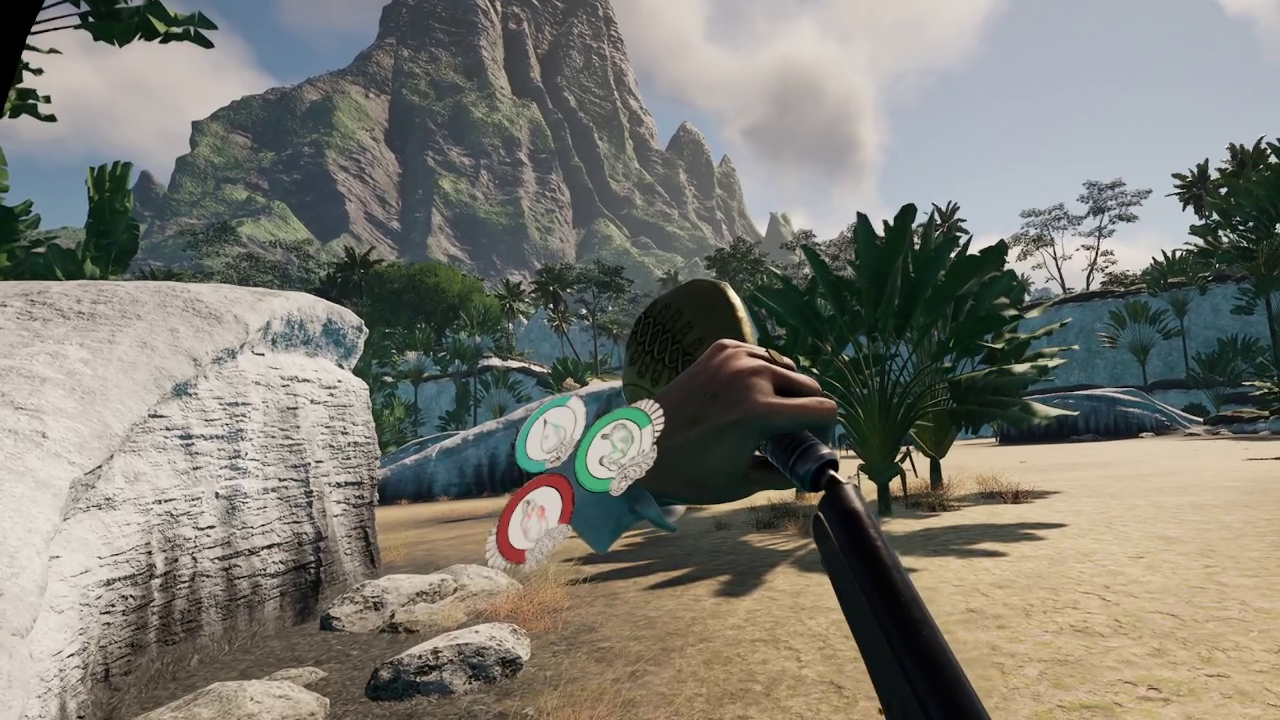
Reloading the gun during combat in Bootstrap Island captured by UploadVR
Bootstrap Island is not without its flaws though. Sometimes during a night attack, creatures would glitch into the environment, especially if I kept my back against a cliff wall or cave to cover one possible attack angle. Then they’d just disappear at sunrise. It happened often enough that I would actually try to force the glitch just to make the overnight sections easier.
Grabbing is a bit cumbersome. Bootstrap Island uses a palm-facing ‘gravity-like’ system to pop items up to your hand. It requires a decent sense of timing and more often than not I crouched to pick up items.
Combat can also be clunky. Loading the gun has to be done very deliberately, which is problematic while also dodging wild animals. The bow & arrow requires a similar amount of precision. It all works, but it’s not exactly fluid and suffers from the sort of jank one often finds in heavy physics-based VR games.
Bootstrap Island 1.0: Final Verdict
The full release of Bootstrap Island lives up to its early promise with a highly engaging, immersive, and at times disturbing adventure that stands as one of VR’s best survival titles. Any issues I had will likely be ironed out with further patches, but this is already a great time in VR.
UploadVR uses a 5-Star rating system for our game reviews – you can read a breakdown of each star rating in our review guidelines.
The new update for the long running VR rhythm game adds a new experience point based rewards system and stat tracking for players.
Kluge Interactive has released what it calls its biggest update ever for Synth Riders, introducing a new progression system for the game that allows players to track their journey over the long haul. The new update is free and available now for all players.
0:00
/0:37
Synth Riders Level Up release trailer
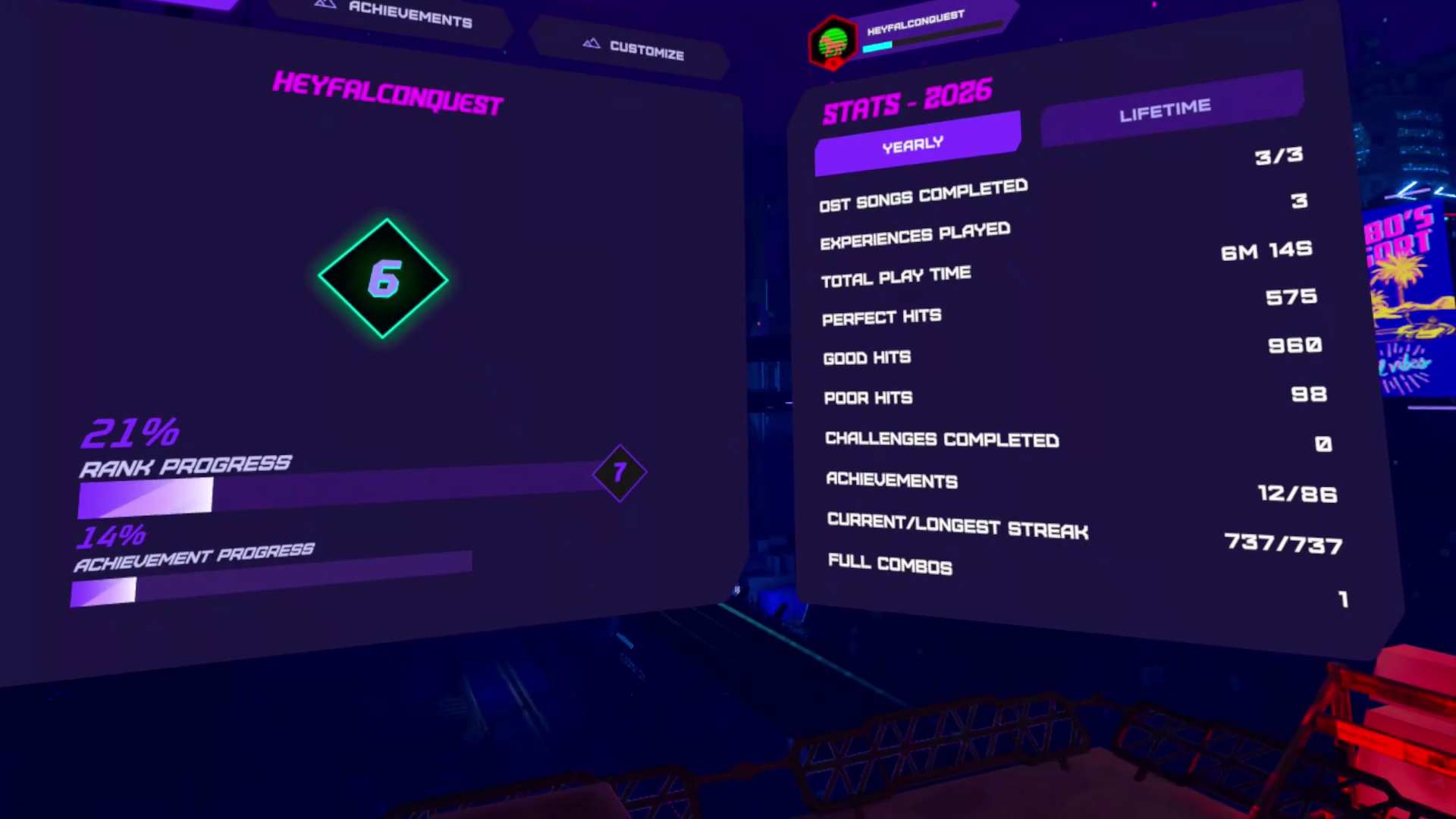
Prior to this update, Synth Riders has primarily been a session-based experience with players grinding for high scores song by song and jamming together in multiplayer. The new update adds a stats panel allowing players to track their progress for the current year and lifetime for metrics like total playtime, in-game achievements, full combos (completing a song without missing a note), and so on.
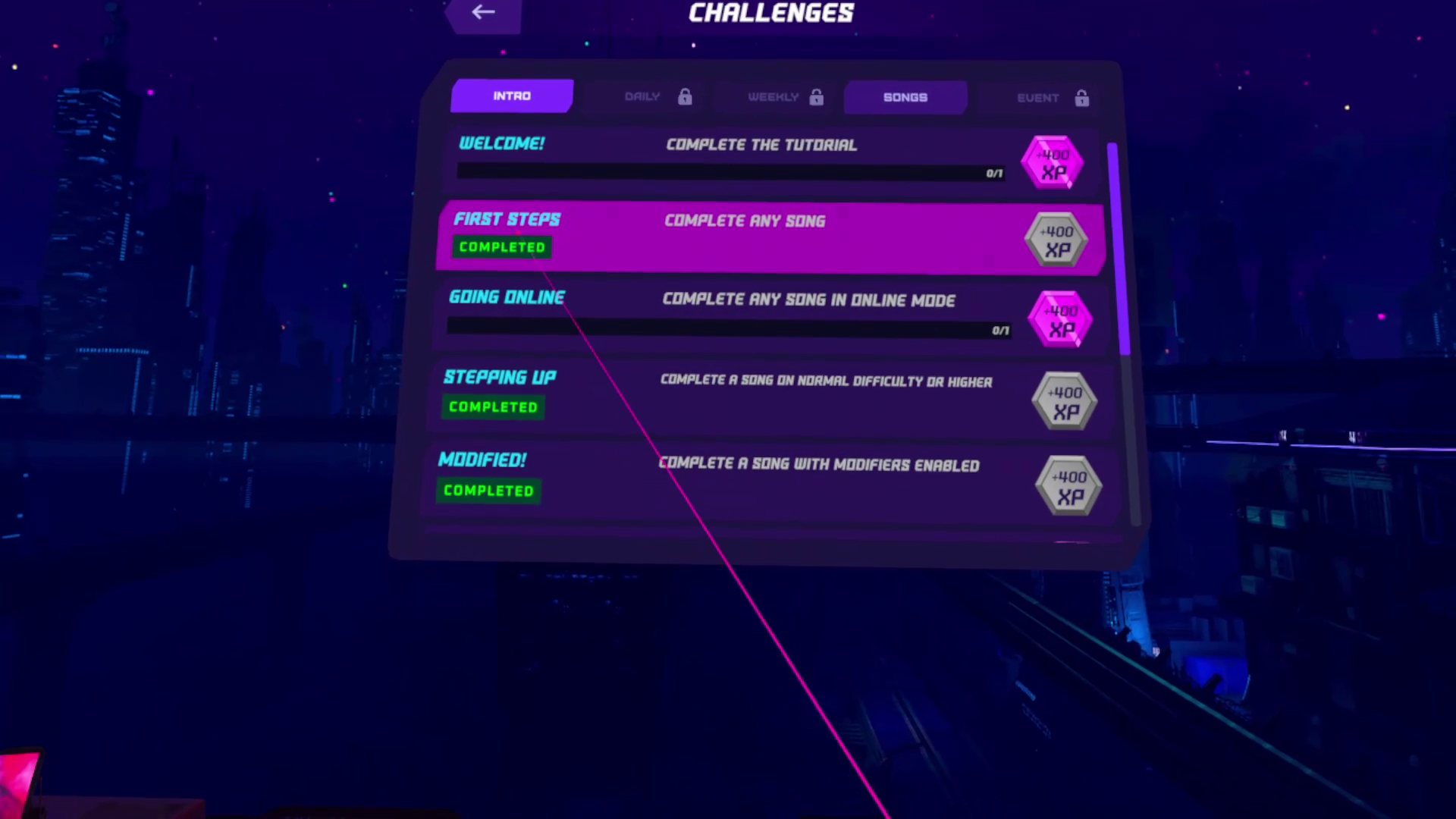
Level Up also adds a new guided tour-like introduction for newer players with challenges to get started with the game, begin earning experience points, and navigate the multitude of ways to play the game. All of this is accessed via the new Player Menu from the main menu and a panel on each submenu.
The new user challenge panel and stats panel in Synth Riders
Synth Riders is available on Quest, Steam, PlayStation VR2, and Apple Vision Pro. At the time of this article, it is a part of the games catalog in Meta’s Horizon+ subscription service.
X-Plane 12 and iRacing will be officially playable on Apple Vision Pro, streamed from your PC via Nvidia CloudXR, with your physical accessories blended in using mixed reality passthrough.
Announced at GDC 2026, official Vision Pro support for the two PC VR simulators will leverage the OS-level foveated streaming feature Apple is adding in visionOS 26.4 as well as Nvidia’s CloudXR SDK.
To be clear, while the name CloudXR implies the PC is in the cloud, and this is Nvidia’s primary focus for the technology, in the case of X-Plane 12 and iRacing you’ll also be able to use your own local gaming PC as the rendering source.
iRacing on Apple Vision Pro via Nvidia CloudXR.
Of course, you can already use your own PC to play these two titles on Apple Vision Pro via the free and open-source tool ALVR. The advantages using the Nvidia CloudXR support instead will bring will be:
Foveated streaming, prioritizing image quality where you’re currently looking. It’s the same technology Valve is using to make wireless PC VR great on Steam Frame.
A simplified launch process, where dedicated X-Plane 12 and iRacing visionOS client apps automatically find and connect to the games on your PC.
Mixed reality, overlaying your physical accessories like yokes, wheels, and pedals onto the VR world so you can practically use your controls. This active tracking of your accessories is also used to align the virtual cockpit automatically, eliminating the need to use a crude recentering system.
0:00
/0:24
Gameplay of X-Plane 12 on Apple Vision Pro via Nvidia CloudXR from Justin Ryan.
Official support for streamed X-Plane 12 and iRacing on Apple Vision Pro is coming “later this spring”. We’ll be sure to test it out when it arrives, as it sounds like the mixed reality and automatic calibration features could eliminate some of the key pain points of typical VR flight and racing simulation.
Formula 1 raced in China this past weekend, just a week after the sport kicked off its 2026 season in Australia. Most of the teams had a better handle on the sport’s complicated new cars in China, and the more traditional racetrack environment played better to the strengths of their hybrid power units, with enough hard braking zones to recharge batteries without having to sap engine power instead.
We have a better idea of the grid’s current pecking order, at least for now. There’s some daylight between each of the top three teams and a close battle for midfield honors. Meanwhile, the specter of unreliability is well and truly with us; four cars failed to even take the start, and seven (of 22) were not classified as finishing. For fans of those teams and drivers, it wasn’t a great weekend, especially if you woke up at 3 am to watch the race. But F1 put generally on an entertaining show in Shanghai.
That’s a lot of fans
The sport has been visiting the city since 2004. The setting is a classic turn-of-the-century facility designed and built by Herman Tilke. It’s a captivating-looking place, with a pond-filled paddock, a vast grandstand that spans the start-finish straight, and a layout that resembles the character for “shang,” which creates some rather tricky corners, like the spiraling decreasing radii of turns 1 and 2.
After a year’s worth of development since GIMP 3.0 was released,
the team behind the open-source image editor has released
GIMP 3.2. It comes as part of the plan
to release GIMP more frequently, rather than wait six or seven years
between releases. The release comes with lots of new features (as can
be seen in more detail in the release notes),
including 20 new brushes for the MyPaint Brush tool, an “overwrite” paint
mode, new and upgraded file formats, UI improvements in a variety of
places, such as the on-canvas text editor, and new non-destructive layers:
You can now use Link Layers to incorporate external image as
part of your compositions, easily scaling, rotating, and transforming them
without losing quality or sharpness. The link layer’s content is updated
when the source file is modified
The Path tool can now create Vector Layers, which lets you draw
shapes with adjustable fill and stroke settings.
An anonymous reader quotes a report from Bloomberg: Spending on data center projects in the U.S. has exploded, surpassing offices for the first time at the end of last year. It’s a trend Matt Kunz saw early on when Meta built a computing hub outside Columbus, Ohio. Other tech companies soon swarmed into the area, drawn by its stable economy, university talent pipeline and ample power, water and land, said Kunz, vice president and general manager at Turner Construction Co., the firm that led Meta’s build-out. Since Meta broke ground in 2017, it’s expanded its data center campus, and Amazon.com Inc., Alphabet Inc.’s Google and Microsoft Corp. made plans to join it nearby.
“When one shows up, almost all the other ones tend to follow,” Kunz said. For Turner, a construction giant responsible for supertall office skyscrapers, sports stadiums and cultural venues around the globe, data centers are commanding more of its bandwidth. The company completed $9.4 billion of the projects last year, more than five times its 2020 total. Last month, Turner announced it was chosen as one of the contractors on a $10 billion data center for Meta in Indiana. Tech companies’ needs for AI processing facilities have made data centers the latest darling of the real estate industry. The properties are figuring heavily into portfolios of major investors such as Blackstone, Brookfield Asset Management and KKR, on a bet that long-term demand for computing power will continue to grow. At the same time, office development has slowed as cities across the U.S. contend with vacancies that have piled up since the Covid lockdowns.
Construction spending for data centers has climbed steadily in recent years, while outlays for general office projects headed downward, U.S. Census data show. The two crossed paths in December, with roughly $3.57 billion spent on data centers that month, compared with $3.49 billion for offices, according to preliminary estimates. The shift is likely to continue and “may perpetuate itself even further as AI is utilized for automating day-to-day jobs,” said Andy Cvengros, co-lead of U.S. data center markets for the brokerage Jones Lang LaSalle Inc. “It’s going to directly impact the amount of office space people need.” According to Christopher McFadden, senior vice president at Turner, more than a third of the company’s backlog is now tied to data centers.
“We’re going to be building these at this scale for years to come,” McFadden said. “There’s a lot of wind in the sail.”
Apple announced the AirPods Max 2 today, following up the original AirPods Max, which were announced in December 2020. The new model brings improved active noise cancellation (ANC) and other new features via an updated H2 chip.
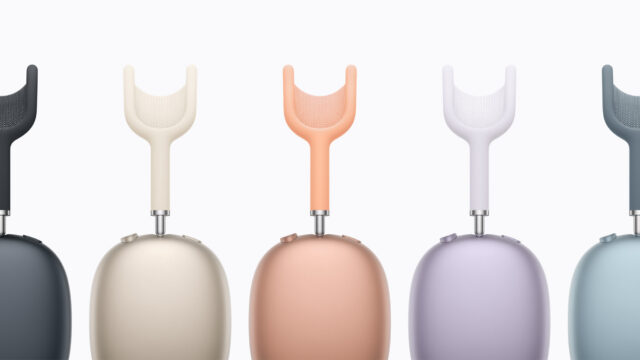
The AirPods Max 2 are available in the same five colorways as their predecessor.
Credit:
Apple
Apple introduced the H2 with the AirPods Pro (2nd Generation), which came out in September 2022. The original AirPods Max released in 2021 with an H1, meaning the new over-ear headphones should be more in line with Apple’s AirPods series in terms of features.
Apple claims that the new chip, combined with new computational audio algorithms, makes ANC up to 1.5 times “more effective” on the AirPods Max 2 compared to the original AirPods Max.
OpenAI has been hit with another lawsuit. This time, Encyclopedia Britannica took legal action against OpenAI, accusing the company of copyright and trademark infringements, as first reported by Reuters. More specifically, Britannica alleged that OpenAI illegally used its “copyrighted content at a massive scale” when training its AI models. Not just with training, the encyclopedia company claimed that ChatGPT’s responses to user queries sometimes contain “full or partial verbatim reproductions of [Britannica’s] copyright articles.”
Along with claims of copyright violations, Britannica argued that OpenAI was also responsible for trademark infringement. According to the lawsuit, ChatGPT generates “made-up content or ‘hallucinations‘ and falsely attributes them” to Encyclopedia Britannica. The lawsuit doesn’t specify an amount for monetary damages, but Britannica is also seeking an injunction to prevent OpenAI from repeating these accusations.
When reached out for comment, a spokesperson for OpenAI told Engadget that, “ChatGPT helps enhance human creativity, advance scientific discovery and medical research, and enable hundreds of millions of people to improve their daily lives. Our models empower innovation, and are trained on publicly available data and grounded in fair use.”
It’s not the first time that Britannica has filed a lawsuit against an AI company. In September, the company, which owns Merriam-Webster, also sued Perplexity for similar reasons. On the other side, OpenAI is still embroiled in a legal battle with The New York Times, which also sued the AI giant for copyright infringement.
This article originally appeared on Engadget at https://www.engadget.com/ai/encyclopedia-britannica-sues-openai-for-copyright-and-trademark-infringement-164747991.html?src=rss
It flew for only two seconds, but its impact is still felt a century later.
Robert Goddard’s first liquid-fueled rocket, which lifted off from a snowy field on March 16, 1926, has been written about extensively. Earlier solid-fueled rockets existed, but liquid-fueled rockets promised the sustainability and control needed to send spacecraft and humans into Earth orbit and beyond.
“The rocket’s reach was short, but it marked the moment that humanity entered a new era,” said Kevin Schindler, author of “Robert Goddard’s Massachusetts,” speaking at the site of that first launch as part of a centennial commemoration held Saturday in Auburn (March 14). “It proved that liquid fuel could lift a craft skyward—the essential breakthrough that would one day carry humans to the moon.”
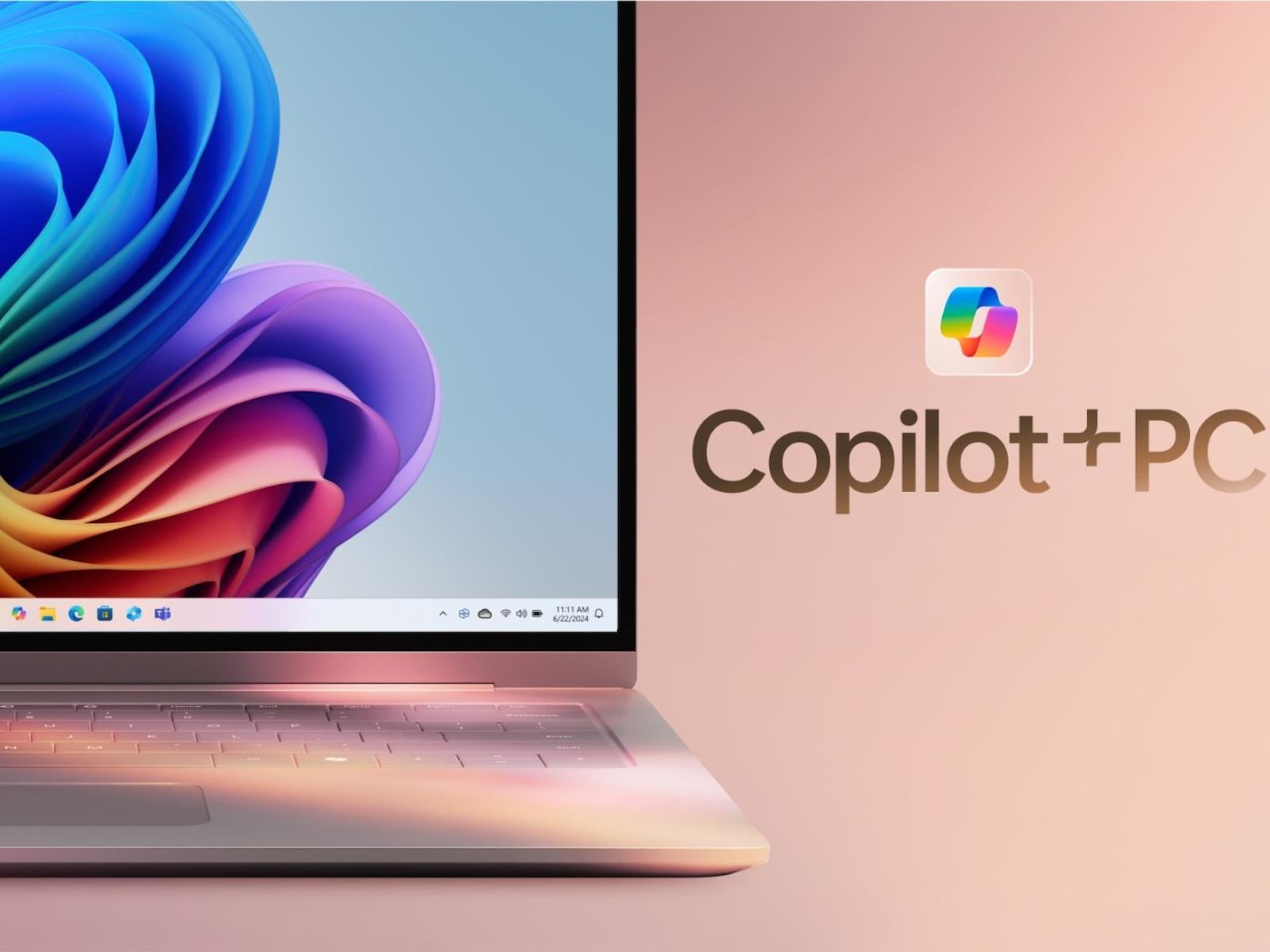
Many users have decried the rapid and pervasive integration of AI features in Windows 11. For many, the final straw was when Microsoft Copilot-ified the humble Notepad application. “Enough’s enough,” folks said as they downloaded sketchy scripts like Remove Windows AI to rip out the very foundations of Microsoft’s AI push. Surprisingly, Microsoft
Since last week’s Fedora 44 Beta release I have been testing out this upcoming Fedora Linux version on a few systems in the lab, most notably with the Framework Desktop powered by the powerful AMD Ryzen AI Max+ 395 “Strix Halo”. Fedora Workstation 44 Beta has been looking nice and running stable albeit in some instances seeing lower performance at this point than Fedora Workstation 43 but overall in good shape.
When Apple takes the virtual stage in June for WWDC 2026, avid fans might expect the company to announce a number of new features for updates like iOS 27, iPadOS 27, and macOS 27. And while these updates will almost assuredly sport some key features and changes from the “OS 26” era, the best new feature might not be a feature at all. In fact, it might be the exact opposite.
In his Power On newsletter on Sunday, Bloomberg’s Mark Gurman ran through some of Apple’s thought processes with its upcoming updates, per Gurman’s sources. It seems that following the company’s big delays and stumbles in rolling out big AI features, and its Liquid Glass design overhaul, the company is in a position to focus more on iterative updates rather than sweeping changes. As such, Gurman expects “years of gradual improvements,” starting with iOS 27, which he has said since November will be a “Snow Leopard-like” release.
For those out of the loop, Mac OS X Snow Leopard is a famous OS update in Apple world. Apple announced Snow Leopard as having zero new features, as the update was intensely focused on delivering bug fixes and stability updates to Mac OS (now macOS). Snow Leopard didn’t actually ship with zero new features—there was a new QuickTime player and a fresh version of Safari—but the emphasis was really on shipping a new OS for the Mac that felt the same as before, but just worked better.
If that’s the philosophy Apple wants to carry onto iOS 27, I’m all for it. iOS 26 hasn’t been too buggy in my experience, but I keep encountering other users who swear the update has negatively impacted their iPhones. The one complaint I keep hearing is about the keyboard, which users allege is buggy beyond belief. While there are general steps you can take to make the iOS keyboard work better for you, any software bugs affected it will require Apple’s intervention—not the end user.
I would also like Apple to extend those plans to its other big updates this year, as well. The first couple of versions of macOS 26 (Tahoe) received an even poorer reception online than iOS 26, from what I’ve seen. The negative reviews kept me from updating my M1 iMac until macOS 26.3, which beta testers found to be less buggy than previous versions. Indeed, my M1 Mac can handle macOS 26.3, but it’s still a bit laggy at times. While you could chalk that up to the five-year-old chip, I’d bet Apple could optimize its OSes across the board to make the experience a bit smoother for any devices that will be compatible with any of the OS 27 updates. If Apple can make macOS Tahoe run smooth on the MacBook Neo, running a binned, two-year-old iPhone chip, I imagine my iMac could run macOS 27 with some grace.
iOS 27 will have actual new features, too
Like Snow Leopard, Apple won’t actually have zero new features to ship with iOS 27. The biggest feature of all will be rolling out its new “AI Siri,” which despite being announced in 2024 for iOS 18, has encountered delay after delay. But Gurman says the other big iOS 27 “feature” will be support for Apple’s upcoming foldable iPhone, introducing things like split-screen apps for the first time on iOS. It’d be great if Apple extended this support to standard iPhones as well (especially the Max), but Gurman seems to think this will remain a foldable perk only.
Remember, this year marks Apple’s 50th anniversary, and the company likely has some big plans in store. But I think the best thing the company could do to celebrate is make sure that all of its devices are running optimized versions of their respective OSes. Happy Birthday, Apple!