
Like its big brother the Koppenberg, the Paterberg is a cobbled climb known for its inclusion in the Tour of Flanders spring classic.
The Boys: Trigger Warning Coming To Quest 3 Next Week
The Boys: Trigger Warning is coming to Quest 3 & Quest 3S next week.
ARVORE Immersive Games and Sony Pictures Entertainment have announced that The Boys: Trigger Warning will release on Quest 3 headsets on March 26. The made-for-VR game is adapted from the successful Amazon show, and features voice acting by several of the show’s cast.
The Boys: Trigger Warning presents a totally new story set in the world of The Boys. Players will choose stealth or chaos, use unstable Supe powers like telekinesis and laser eyes, and engage in brutal fights against enemy Supes.
0:00
/2:13
The immersive VR title comes just weeks ahead of the fifth and final season of the TV series.
The Boys: Trigger Warning launches on the Meta Horizon Store on March 26. The game will cost $29.99, with a limited-time pre-order price of $23.99.
The game is also coming soon to PlayStation, where it can now be wish listed.
“Bone fractures, joint displacements and lacerations”: Shimano agrees to pay $11.5m penalty over crankset failures
Shimano faces an $11.5 million penalty after the US Consumer Product Safety Commission (CPSC) concluded the company failed to promptly report a defect in its 11-speed road cranksets.
The regulator claims Shimano received “thousands” of warranty claims globally between 2013 and 2022, alongside reports of injuries “including bone fractures, joint displacement, and lacerations”.
According to the CPSC, Shimano possessed information that “reasonably supported the conclusion that the bicycle cranksets contained a defect which could create a substantial product hazard,” but did not immediately report this to the commission as required.
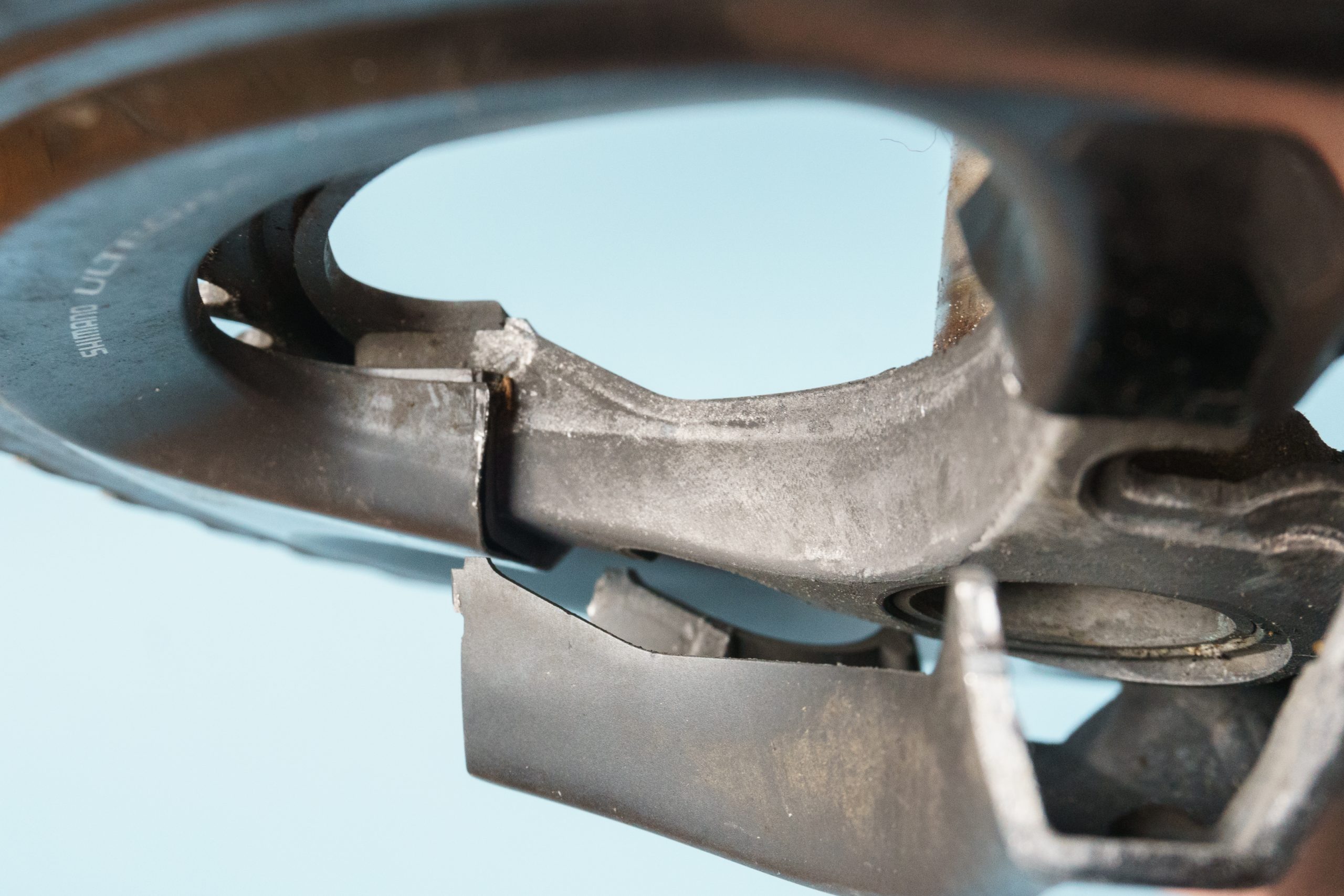
The penalty follows a large-scale recall announced in 2023, which saw a reported 2.8 million 11-speed Shimano cranksets returned globally as part of an inspection and replacement programme.
Affected cranks commonly saw the compound bonding the two cast halves fail, leading to delamination and potential crank failure.
In addition to the civil penalty, the settlement requires Shimano to maintain internal controls and procedures to ensure compliance with the Consumer Product Safety Act.
The company has also agreed to submit annual reports on its compliance programme, internal controls and audits.
The settlement has been provisionally accepted by the CPSC and remains subject to public comment.
A Shimano representative told Bicycle Retailer and Industry News the company could not comment beyond what was included in the public settlement.
Your Switch 2 Just Received A Massive Upgrade For Playing Switch 1 Games

Handheld Mode Boost will let you play last-gen games in 1080p on your undocked console
Senators tell ByteDance to shut down Seedance 2.0 AI video app ‘immediately’
After ByteDance suspended the global rollout of its new Seedance 2.0 AI video generator on the weekend, US senators have now told the company to “immediately shut down” the app. “Seedance 2.0 poses a direct threat to the American intellectual property system and, more broadly, to the constitutional rights and economic livelihoods of our creative community,” Senators Marsha Blackburn and Peter Welch wrote in a letter to the company.
The letter reflects an increasing worry in government about AI companies training their apps on copyrighted materials from artists, actors and filmmakers without permission. “Responsible global companies follow the law and respect core economic rights, including intellectual property and personal likeness protections,” the senators wrote. They cited Seedance AI examples including an AI generated Thanos and Superman battle, a rewritten Stranger Things ending and that famous (fake) Tom Cruise and Brad Pitt battle.
After pulling Seedance 2.0, ByteDance said on the weekend that it “respects intellectual property rights” and that it is “taking steps to strengthen current safeguards as we work to prevent the unauthorized use of intellectual property and likeness by users.”
However, Blackburn and Welch called that pledge “a delay tactic to continue to abuse the innovators and profit from their success,” adding that its regard for American IP is “part of a larger trend of artificial intelligence companies stealing protected work at the expensive of the creative community.”
Filmmakers have also taken action against Seedance 2.0, including the Motion Picture Association with recently sent a cease-and-desist letter to ByteDance. Yesterday, senators including Blackburn and Welch unveiled a partisan bill to help artists protect their IP by allowing them to access training records used for AI models, among other measures.
This article originally appeared on Engadget at https://www.engadget.com/ai/senators-tell-bytedance-to-shut-down-seedance-20-ai-video-app-immediately-112146241.html?src=rss
The Morning After: Apple’s surprise AirPods Max refresh
You may have a little Apple fatigue after last week’s barrage of Macs, iPhones and iPads. The company wasn’t done, however. Surprise! Here is an updated pair of AirPods Max. It’s a predictable surprise, perhaps, but one I wasn’t expecting after so many other new devices.
It’s also the first true update. The AirPods Max 2 look identical to their predecessor, but now have an H2 chip. First, the AirPods Pro 2 improve noise cancellation by 50 percent and add support for Adaptive Audio and Live Translation. It’s a much-needed update for headphones that, barring a USB-C option, haven’t changed since 2020.
They’re still priced at $549. In Apple’s recent press images for its cheapest MacBook ever, a child was using AirPods Max while working on their $599 MacBook Neo. Love it.
The new headphones are up for pre-order on March 25 and will ship in early April.
– Mat Smith
The other big stories (and deals) this morning
-
Samsung ends Galaxy Z TriFold sales three months after launch
-
NVIDIA claims DLSS 5 will deliver ‘photoreal‘ image quality with AI this fall
MacBook Pro M5 Max 16-inch review
Still the pinnacle.
Engadget
What did I just say? Wrapping up the barrage of reviews of all that new Apple hardware (besides those new AirPods), we test out Apple’s most powerful new MacBook. The new Pro has an M5 Max chip, plenty of memory and is a beast. Thankfully, it still has all the ports you’d want.
xAI is being sued by teens who say Grok created CSAM using their photos
The class action lawsuit says that the lives of three teens have been “shattered.”
xAI is facing a class-action lawsuit in California, after its Grok AI reportedly generated sexualized images of children. Three teenagers filed suit, alleging Grok used their photos to create child exploitation material. One teen was alerted in December that AI-generated, sexually explicit images of her and other minors were being shared “in settings with which she was familiar, but morphed into sexually explicit poses.” The Center for Countering Digital Hate estimated in January that Grok produced millions of sexualized images, including 23,000 potentially depicting children.
Finally, Android tablets and foldables are getting a Chrome bookmark bar
Hello, power users.
Google is rolling out a new feature for Chrome that will add a bookmark bar to the browser on Android foldables and tablets. Spotted by 9to5Google, this move will make the browsing experience on larger mobile devices more akin to that of laptops and desktops running Chrome. Perfect if you managed to grab Samsung’s Galaxy Z TriFold before it disappears forever.
This article originally appeared on Engadget at https://www.engadget.com/general/the-morning-after-engadget-newsletter-111501781.html?src=rss
“National disgrace”: it would take 12 years and £18.62 billion to repair local roads in England and Wales
It would cost £18.62 billion and take 12 years to repair all the local-authority controlled tarmac in England and Wales, according to a report published today by the Asphalt Industry Alliance (AIA).
Each year, the AIA commissions an independent survey of local authority highway departments in England and Wales to “take a snapshot of the general conditions of the local road network”.
This year, the Annual Local Authority Road Maintenance (ALARM) report found a total of 1.9 million potholes were filled in 2025 – more than 5,200 every day – at a total cost of £149.3m.
But local authorities say they do not have the budget to maintain their networks, despite a 17 per cent increase in the average annual highway maintenance budget.
- Read more: Ending the UK’s pothole plague “will save lives” but government funding boost is only the start
“National disgrace”

David Giles, chair of the AIA, says in his introduction to the report that the condition of local roads in the two countries “has become a national disgrace”.
“Tracking ALARM data over the last decade shows that the amount needed to bring the carriageway up to scratch has increased dramatically, not helped by the inconsistent funding levels that local authorities have reported over this period.”
“Meanwhile, our ageing network has become more fragile and vital resurfacing takes place less frequently – now reportedly only once every 97 years on average,” adds Giles.
The report says that just over half of the local road network is now reported to be in good structural condition, while 49 per cent of the network is said to have less than 15 years’ structural life remaining.
AIA says its estimate of £18.62 billion to fix the backlog of local road repairs has increased by more than 54 per cent from the £12.06 billion reported in 2016.
The report found there is a £1.37 billion shortfall in the total carriageway maintenance budget, which is roughly £8.1 million per local authority.
The government has allocated £1.6 billion to local highway maintenance for this financial year, and has pledged to allocate £7.3 billion over the next four years.
Alongside additional allocations from local authorities’ own sources, this financial commitment has led to an increase in the average highway maintenance budgets in England and Wales.
But this has “only resulted in marginal improvements in condition”, with highway engineers telling the AIA that it is not a “silver bullet that will clear the backlog of repairs any time soon”.
The risk to cyclists
The condition of roads in England and Wales can pose particular risks to cyclists. In February, the cycling insurance specialist Cycleplan revealed that the damage to bikes caused by potholes leads to costs that are 50 per cent higher than the average claim.
After analysing a decade of internal claims, Cyclepan found pothole-related incidents – such as buckled wheels and twisted bicycle frames – result in an average repair cost of £1,017.74.
“Many cyclists reported being forced to ride over potholes after vehicles passed too closely or at speed, leaving them little room to manoeuvre safely,” Cycleplan said.
“Another concern highlighted by the data is delayed awareness of damage. Riders often did not realise their bike had been compromised until days later, sometimes continuing to ride with hidden faults that could pose safety risks,” it added.
Alan Thomas, CEO of Cycleplan, said: “Potholes remain a major frustration for everyone on the road, but cyclists can face far greater consequences.
“Beyond repair costs, there is a genuine risk of serious injury when a rider hits a pothole – particularly during colder months when freeze-thaw cycles worsen road surfaces.”
Bills Would Ban Liability Lawsuits For Climate Change
An anonymous reader quotes a report from Inside Climate News: Republican lawmakers in multiple states and Congress are advancing proposals to shield polluters from climate accountability and prevent any type of liability for climate change harms — even as these harms and their associated costs continue to mount. It’s the latest in a counter-offensive that has unfolded on multiple fronts, from the halls of Congress and the White House to courts and state attorneys general offices across the country.
Dozens of local communities, states and individuals are suing major oil and gas companies and their trade associations over rising climate costs and for allegedly lying to consumers about climate change risks and solutions. At the same time, some states are enacting or considering laws modeled after the federal Superfund program that would impose retroactive liability on large fossil fuel producers and levy a one-time charge on them to help fund climate adaptation and resiliency measures. But many of these cases and climate superfund laws could be stopped in their tracks, either by the conservative majority on the U.S. Supreme Court or by the Republican-controlled Congress.
Last month the court decided to take up a petition lodged by oil companies Suncor and ExxonMobil in a climate-damages case brought against the companies by Boulder, Colorado. The petition argues that Boulder’s claims are barred by federal law, and if the justices agree, it could knock out not only Boulder’s lawsuit but also many others like it. The court is expected to hear the case during its upcoming term that starts in October. There is also a possibility that Republicans in Congress will take action before then to gift the fossil fuel industry legal immunity, similar to that granted to gun manufacturers with the 2005 Protection of Lawful Commerce in Arms Act. Sixteen Republican attorneys general wrote (PDF) to U.S. Attorney General Pam Bondi in June suggesting that the Department of Justice could recommend legislation creating precisely this type of liability shield. And last month, one Republican congresswoman announced that such legislation is indeed in the works. “The ultimate democratic institution in America is the jury,” said former Washington Gov. Jay Inslee. Enacting policies that prevent or block climate-related lawsuits against polluters, he said, would effectively shutter “the doors of the courthouse to Americans that have been injured by oil and gas company pollution and by their lies and deceit about that pollution.”
“I really think it’s an un-American effort to deny Americans the traditional right of access to a jury,” Inslee said. Oil and gas executives are “terrified” by the prospect of having to stand before a jury and face evidence of their climate-change lies and deception, he added. “You’ll see the steam coming out of the jury’s ears when they hear about how they’ve been lied to for decades. [Oil companies] understand why juries will be outraged by it, and they are shaking in their boots. The day of reckoning is coming, and that’s why they’re afraid.”


Read more of this story at Slashdot.
Crimson Desert Looks A Lot More Ordinary Running On A Regular PS5

We’ve finally seen console footage of the much-hyped action-adventure, and it’s…fine
Denon’s DP-500BT turntable combines premium design with Bluetooth streaming for $899
Denon is addressing an omission in its current turntable lineup: Bluetooth streaming. With the new DP-500BT, the company combines refined design, analog sound and high-resolution wireless connectivity. With its semi-automatic operation and switchable phono preamp, this model has the features to suit beginners and experienced vinyl listeners alike.
The DP-500BT has a belt drive system, a balanced S-shaped tonearm and an aluminum die cast platter. There’s also a pre-installed moving magnet (MM) cartridge with a CN-6518 stylus and a built-in preamp that can be disabled in favor of a more robust external unit or powered speakers. Semi-automatic operation combines auto lift with playback stop to simplify the listening process for both novice and advanced vinyl lovers. This feature also protects both the stylus and your records.
In terms of design, Denon says it took inspiration from its DP-3000NE turntable for the DP-500BT. The similarities are clear, but more importantly, this decision gives the new $899 model a much more refined look compared to the company’s more affordable record players. The DP-3000NE is a $2,799 turntable, after all.
Bluetooth streaming is what sets the DP-500BT apart in the Denon lineup. Here, you’ll have the option of aptX, aptX HD and apt Adaptive when you need to streaming wirelessly to speakers or headphones. This turntable also works with the company’s HEOS amplifiers and Home speakers, which allow for multi-room audio while listening to that record collection.
The DP-500BT is available today from Denon and other retailers for $899.
This article originally appeared on Engadget at https://www.engadget.com/audio/denons-dp-500bt-turntable-combines-premium-design-with-bluetooth-streaming-for-899-080000144.html?src=rss
Vite team boasts 10-30x faster builds with Rust-powered Rolldown
Native code build tools now dominate for TypeScript or JavaScript projectsVite 8.0 has been released, and it uses Rust-built Rolldown as its single bundler, replacing both esbuild and Rollup, to enable faster builds.…
Hydropower Line From Quebec Could Power a Million NYC Homes
The Champlain Hudson Power Express, a $6 billion, 339-mile buried transmission line, will soon deliver Canadian hydropower from Hydro-Quebec to New York City. The project could supply up to 20% of the city’s electricity and power roughly one million homes throughout the year. “This is far and away the largest project I have ever worked on,” said Bob Harrison, who has worked in infrastructure for 40 years and is the head of engineering for the Champlain Hudson Power Express. “We like to say it’s the largest project you’ll never see.” The New York Times reports: The massive power project, expected to provide energy to a million New York City customers a year, travels underground and underwater, from the northern plains at the Canadian border to the filled-in marshlands of coastal Queens, much of it loosely following the Hudson River. Its construction included the underwater installation of more than two million feet of cable imported from Sweden. It also required special boats, loaded with equipment that could shoot water jets deep into the sediment, to create trenches for the cable. Then, when it came to placing cable beneath the landscape, more than 700 land-use easements were needed, plus an additional 1.55 million feet of cable.
The Champlain Hudson Power Express has found a way to plug into the city, but it wasn’t easy. The work included 10 new manholes and more than three miles of new underground circuitry, according to Con Edison, the city’s primary electricity provider. “It was literally a hand weave under the streets of Queens,” said Jennifer Laird-White, the head of external affairs for Transmission Developers. The hydropower travels from Canada via two buried cables that are as round as cantaloupes. Those lines snake for hundreds of miles under a lake, several rivers (including the Hudson for about 90 miles) and through buried trenches alongside train tracks and roads. The cables resurface in Astoria, Queens, where a converter station shapes, filters and refines the raw power into a product that New Yorkers can consume.
In two cavernous rooms that could be mistaken for “Star Wars” sets, the electricity flows through 30 hanging structures encased in what look like metallic, dinosaurlike exoskeletons. Each one weighs about as much as a small humpback whale and contains microprocessors, thousands of valves and fiber wires. “I am still wowed when I walk into that facility,” said Mr. Harrison, the engineer. “I mean, it is just mind-boggling.”


Read more of this story at Slashdot.
The Myth of Linux Optimization Tools, and Why You Really Don’t Need Them At All
Learn why Linux often doesn’t need extra optimization tools and how simple, built-in utilities can keep your system running smoothly.
Lightpanda Promises a Faster, Lightweight Alternative to Headless Chrome
Lightpanda is a new open-source headless browser that claims up to 9× faster automation while using up to 16× less memory than Chrome.
Boox’s new Go E Ink tablet includes a 10-inch display and runs Android 15
There are many E Ink tablets out there, but most of them are basically digital notebooks. They are great for reading and handwriting notes, but not so great for doing all of that regular tablet stuff like checking emails and doomscrolling. Boox, however, has released a number of E Ink tablets that can access the Google Play Store, opening up users to the wide world of traditional smartphone apps.
The company’s latest product is a refresh of the Go 10.3 tablet, called the Go 10.3 Lumi. This introduces plenty of new features and, as the name suggests, one is a front light. The tablet has been designed for both natural sunlight and low-light environments. The previous model was great, but it turns into a useless paperweight without access to ambient light.
Boox
Despite the front-facing light, the Go 10.3 Lumi is still lighter than its predecessor, at 12.8 ounces. It’s also on the thinner side, with a 4.8mm profile.
The basic specs are similar to the Go tablet, with an octa-core processor, 4GB of RAM and 64GB of internal storage. It runs on Android 15, which is a massive improvement for both security and access to apps. The previous iteration ran on Android 12, and Google stopped officially supporting that OS last year. That means no more critical security updates.
In addition to beefed up security, Boox promises the upgrade to Android 15 offers users improved memory management, better multitasking and smoother UI interactions. E Ink devices can be sluggish so I’m all for anything that speeds things up.
It integrates with external keyboards and boasts integrated speakers, which will certainly come in handy when navigating apps downloaded from the Play Store. Despite the screen technology, this is an Android tablet. It should be able to run just about any app available.
However, the E Ink technology will likely run into hiccups with video-based apps and games. It’s just not made for that. This could be a great little gadget for emails and text-based social media, but not for something like TikTok. It should be able to handle non-animated games just fine, like crossword puzzles and stuff like that.
Boox says the tablet gets “substantial battery life” and has been “optimized for extended usage cycles.” The company hasn’t announced detailed battery specs, but did say people “can work all day without looming battery anxiety.” E Ink devices tend to last a good while, so I’m not worried about that.
The Boox Go 10.3 Lumi is available to order right now and costs $450. If you want to save a few bucks and have no interest in a front light, there’s a stripped down version that also runs Android 15 but costs $420.
This article originally appeared on Engadget at https://www.engadget.com/mobile/tablets/booxs-new-go-e-ink-tablet-includes-a-10-inch-display-and-runs-android-15-020009621.html?src=rss
NVIDIA Debuts Agent Toolkit And NemoClaw At GTC For Faster, Safer AI Agents

During his keynote at GTC 2026, NVIDIA CEO Jensen Huang introduced a wide array of new products, services, AI models, and software to a massive audience at the SAP Center in San Jose, California. The Vera Rubin ecosystem with Groq integration made its debut, along with an array of new silicon, and Jensen gave a sneak peek at DLSS 5 as well.
Meta Renewing Investment Into The jemalloc Memory Allocator
The jemalloc memory allocator “malloc” implementation has been popular for HPC and server use down to desktop use in apps like Firefox. Jemalloc has proven over the years to be effective on delivering better performance and scalability while enjoying lower memory usage and less fragmentation than alternative malloc implementations. Meta recently announced that they are renewing their investment into jemalloc…
Canonical Plans To Integrate NVIDIA DOCA-OFED Into The Ubuntu Archive
An interesting Linux detail from today’s NVIDIA GTC 2026 kickoff is that Canonical will be integrating NVIDIA’s DOCA-OFED software framework into the Ubuntu Linux archive for leveraging the high-speed networking stack for HPC and AI…
River 0.4 Wayland Compositor Debuts Pluggable Window Managers
River 0.4 introduces a new architecture separating the Wayland compositor from the window manager and stabilizes the river-window-management-v1 protocol.
‘Pokemon Go’ Players Unknowingly Trained Delivery Robots With 30 Billion Images
More than 30 billion images captured by Pokemon Go players have helped train a visual mapping system developed by Niantic. The technology is now being used to guide delivery robots from Coco Robotics through city streets where GPS often struggles. Popular Science reports: This week, Niantic Spatial, part of the team behind Pokemon Go, announced a partnership with Coco Robotics, a company that makes short-distance delivery robots for food and groceries. Soon, those robot couriers will scoot around sidewalks using Niantic’s Visual Positioning System (VPS)– a navigation tool that can reportedly pinpoint location down to a few centimeters just by looking at nearby buildings and landmarks. Niantic trained that VPS model on more than 30 billion images captured by Pokemon Go users, and claims it will help robots operate in areas where GPS falls short. […]
Instead of helping users navigate the way that GPS does, VPS determines where someone is based on their surroundings. That makes Pokemon Go particularly useful as a data source, because players had to physically travel to specific locations and point their phones at various angles. That mapping effort got a significant boost in 2020, when the app added what it called “Field Research,” a feature prompting players to scan real-world statues and landmarks with their cameras in exchange for in-game rewards. A portion of the data also reportedly came from areas known as “Pokemon battle arenas.” Whether players knew it or not, those scans were creating 3D models of the real world that would eventually power the Niantic model. More data means better accuracy, and because Niantic was collecting images of the same locations from many different users, it could capture the same spots across varying weather conditions, lighting, angles, and heights. […]
The idea is that Coco’s robots can use VPS and four cameras mounted around the machine to get a far more precise read on their surroundings. In turn, the well-equipped robot will deliver food on time. On a broader level, Niantic says its partnership with Coco Robotics is part of a longer-term effort to build a “living map” of the world that updates as new data becomes available. Once VPS-equipped delivery robots hit the streets, they will collect even more info that can be fed back into the model to bolster its accuracy further. This kind of continuous, real-world data collection is already central to how self-driving vehicle companies like Waymo and Tesla operate, and is a large part of why that technology has improved so significantly in recent years.


Read more of this story at Slashdot.