
For those fond of the COBOL programming language and continuing to make use of it in new development efforts, GnuCOBOL 3.2 was released on Friday as the latest feature update for this 21+ year old free software effort around being an open-source COBOL implementation…
Source: Phoronix – GnuCOBOL 3.2 Released After 2+ Years In Development
Monthly Archives: July 2023
Latest version of Canonical's Wayland compositor arrives
Mir 2.14 and its easily installable sibling Miriway. Canonical is still working away on its own Mir display server, used in several of its IoT product lines. Version 2.14 gains more functionality useful for full desktop environments.…
Source: LXer – Latest version of Canonical’s Wayland compositor arrives
I Gazed Into Worldcoin’s Orb and Saw a Boring Dystopia Staring Back

OpenAI CEO Sam Altman’s buzzy startup Worldcoin has a relatively straightforward pitch to prospective users. First, you fork over a scan of your eyeball to one of several thousand iris-scanning, basketball-sized metal computers called “Orbs.” In exchange, you’ll receive a one-of-a-kind “World ID” that could one day be…
Source: Gizmodo – I Gazed Into Worldcoin’s Orb and Saw a Boring Dystopia Staring Back
Should You Use Apple CarPlay or Android Auto for Your Car's Dashboard?

Google and Apple enjoy taking each other on in as many different arenas as possible: mobile phones, maps, cloud storage, music streaming, photo management, note taking, smart assistants, tablets, smartwatches, calendars, web browsers, word processors, email, and more besides. In cars, we have Android Auto and Apple…
Source: Gizmodo – Should You Use Apple CarPlay or Android Auto for Your Car’s Dashboard?
Instead of obtaining a warrant, the NSA would like to keep buying your data

National Security Agency headquarters. (credit: Trevor Paglen, Wikimedia Commons)

An effort by United States lawmakers to prevent government agencies from domestically tracking citizens without a search warrant is facing opposition internally from one of its largest intelligence services.
Republican and Democratic aides familiar with ongoing defense-spending negotiations in Congress say officials at the National Security Agency (NSA) have approached lawmakers charged with its oversight about opposing an amendment that would prevent it from paying companies for location data instead of obtaining a warrant in court.
Introduced by US representatives Warren Davidson and Sara Jacobs, the amendment, first reported by WIRED, would prohibit US military agencies from “purchasing data that would otherwise require a warrant, court order, or subpoena” to obtain. The ban would cover more than half of the US intelligence community, including the NSA, the Defense Intelligence Agency, and the newly formed National Space Intelligence Center, among others.
Read 15 remaining paragraphs | Comments
Source: Ars Technica – Instead of obtaining a warrant, the NSA would like to keep buying your data
The 2023 Porsche Cayman GT4 RS is the best sports car on sale today

Enlarge / Everyone always said Porsche would never put its best flat-six engine in the Cayman or it would overshadow the 911. Maybe that’s exactly what’s happened. (credit: Bradley Iger)

Judging by recent projects like the Mission R and 718 Cayman GT4 ePerformance, Porsche looks poised to introduce an electrified version of the Cayman in the not-too-distant future. While it’s likely that such a sports car will raise the bar for certain measures of performance, it’s also safe to assume that the driving experience will be altered significantly. Thus far, high-performance EVs have struggled to deliver the kind of emotional connection that enthusiasts have grown accustomed to from their ICE-motivated counterparts—a factor that’s undoubtedly top of mind for the designers who are working on the next generation of the automaker’s lineup. In the meantime, though, the folks in Porsche’s GT division have ensured that the current era of the Cayman will not go gentle into that good night.
A vocal contingent of the Weissach faithful long insisted that a model like the GT4 RS would never be produced. Since its introduction in 2005, the Cayman has been positioned as Porsche’s entry-level sports coupe relative to the 911, and many posited that this mid-engine platform would never realize its full potential due to concerns that it might upstage its iconic older brother. Although the debut of the 981-generation Cayman GT4 back in 2016 was arguably the first piece of evidence that effectively refuted this theory, the 718 GT4 RS puts the notion to bed. Not only is this the most visceral and capable Cayman ever produced, it also makes a strong case for itself as the most compelling sports car on sale today, full stop.
The GT4 RS benefits from a wide variety of upgrades, but the engine is undoubtedly the star of the show. While it shares the same displacement as the naturally aspirated 4.0 L flat-six in the standard 718 GT4, it’s actually an entirely different engine that’s borrowed from the latest 911 GT3. Output is down slightly from that rear-engine application due to the backpressure created by the Cayman’s longer exhaust system, but peak figures of 493 hp (368 kW) and 331 lb-ft (449 Nm) of torque still make this the most powerful factory-produced Cayman ever offered by a wide margin and bestow it with a searing 9,000 rpm redline.
Read 12 remaining paragraphs | Comments
Source: Ars Technica – The 2023 Porsche Cayman GT4 RS is the best sports car on sale today
Linux 6.5-rc4 Fixes Support For Reporting Negative Temperatures On AMD Industrial CPUs
Going back to May I wrote about AMD’s “k10temp” Linux temperature driver being updated to handle negative temperature readings and now finally merged on Friday as a fix ahead of Linux 6.5-rc4 is a change to that open-source driver for properly displaying negative temperatures…
Source: Phoronix – Linux 6.5-rc4 Fixes Support For Reporting Negative Temperatures On AMD Industrial CPUs
Communal stargazing using your phone: The Unistellar eQuinox 2, reviewed

Enlarge / The eQuinox 2 is ready for sundown in central Illinois. No eyepiece here, so have your smartphone handy if you want to stargaze. (credit: Eric Bangeman/Ars Technica)

When we reviewed the Unistellar eVscope a couple of years ago, we came away impressed. It offered a communal stargazing experience that takes our ubiquitous smartphones and turns them into a way to view the heavens. Unistellar’s newest offering is the eQuinox 2, a lower-cost alternative to eVscope 2, taking all of the features from its original telescope, improving the technology, and dropping the price to $2,499.
Unistellar’s smart telescopes are designed to make astronomy more accessible by automating skywatching and using digital sensors to “collect” light from faraway objects, making light pollution a small nuisance instead of a deal-breaker.
-
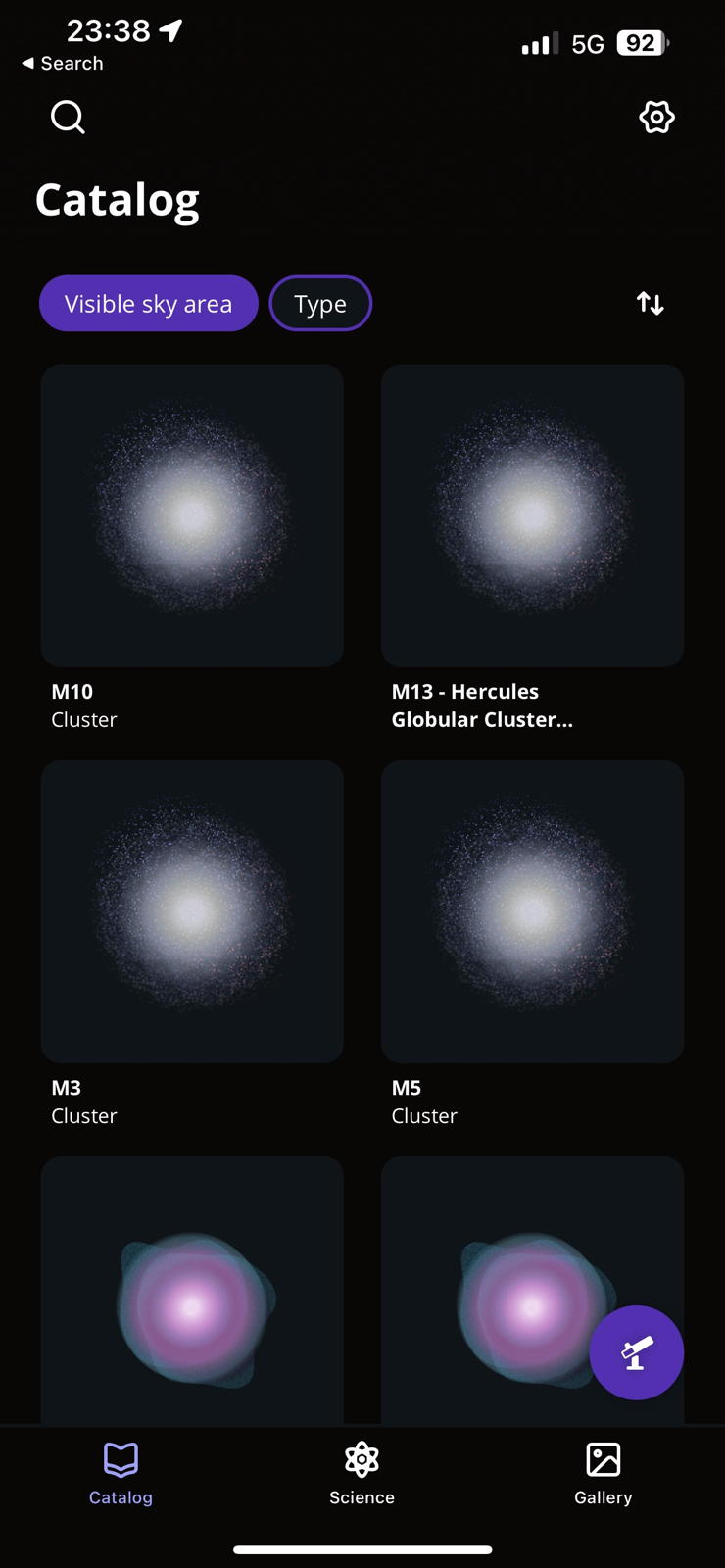
Unistellar’s catalog contains over 5,000 celestial objects. [credit:
Eric Bangeman/Ars Technica ]
At a glance, the biggest difference between the eQuinox 2 and its predecessor is the former’s lack of an eyepiece. Unistellar got rid of the eyepiece, which isn’t much of a loss. Instead of taking turns peering through the eyepiece, up to 10 people can stargaze simultaneously with the Unistellar app. Connect to the telescope’s built-in Wi-Fi network, launch the app, and you’re ready to scan the skies. One person controls the telescope and everyone else can watch. The operator can give control of the telescope to anyone else easily.
Read 8 remaining paragraphs | Comments
Source: Ars Technica – Communal stargazing using your phone: The Unistellar eQuinox 2, reviewed
KDE Plasma 6 Making Progress On Sound Themes, Lower Cursor Latency On Wayland
With most developers having recovered from the recent Akademy KDE developer conference, Plasma 6 is back to seeing a lot of new development activity for what will be the next major open-source desktop release likely debuting in early 2024…
Source: Phoronix – KDE Plasma 6 Making Progress On Sound Themes, Lower Cursor Latency On Wayland
Happy SysAdmin Day, Linux Wizards!
Happy SysAdmin Day to all the fantastic Linux admins out there! You are the true heroes of our servers, the guardians of our data, and the masters of our networks. You rock!
Source: LXer – Happy SysAdmin Day, Linux Wizards!
Italian Pirate IPTV Customers Risk a 5,000 Euro Fine Starting August 8, 2023
An anonymous reader quotes a report from TorrentFreak: Italy’s brand new anti-piracy law has just received full approval from telecoms regulator AGCOM. In a statement issued Thursday, AGCOM noted its position “at the forefront of the European scene in combating online piracy.” The new law comes into force on August 8 and authorizes nationwide ISP blocking of live events and enables the state to issue fines of up to 5,000 euros to users of pirate streams .
In a statement published Thursday, AGCOM welcomed the amendments to Online Copyright Enforcement regulation 680/13/CONS, which concern measures to counter the illegal distribution of live sports streams, as laid out in Resolution 189/23/CONS. The new provisions grant AGCOM the power to issue “dynamic injunctions” against online service providers of all kinds, a privilege usually reserved for judges in Europe’s highest courts. The aim is to streamline blocking measures against unlicensed IPTV services, with the goal of rendering them inaccessible across all of Italy.
“With such measures, it will be possible to disable access to pirated content in the first 30 minutes of the event broadcast by blocking DNS resolution of domain names and blocking the routing of network traffic to IP addresses uniquely intended for illicit activities,” AGCOM says. “With this amendment, in perfect synchrony with the changes introduced by Parliament, AGCOM is once again at the forefront of the European scene in combating online piracy activity,” says AGCOM Commissioner Massimiliano Capitanio.


Read more of this story at Slashdot.
Source: Slashdot – Italian Pirate IPTV Customers Risk a 5,000 Euro Fine Starting August 8, 2023
LLVM 17.0-rc1 Released With Nearly 38k Commits
The first release candidate of LLVM 17 is now available for testing as what will be the next half-year update to this innovative open-source compiler stack…
Source: Phoronix – LLVM 17.0-rc1 Released With Nearly 38k Commits
NASA's Voyager 2 Is Experiencing an Unplanned 'Communications Pause'
A routine sequence of commands has triggered a 2-degree change in Voyager 2’s antenna orientation, preventing the iconic spacecraft from receiving commands or transmitting data back to Earth, NASA announced earlier today. Mission controllers transmitted the commands to Voyager 2 on July 21. Gizmodo reports: Voyager 2, one of two twin probes launched in the 1970s to explore planets in the outer solar system, is located some 12.4 billion miles (19.9 billion kilometers) from Earth and is continually moving deeper into interstellar space. The glitch has disrupted the probe’s ability to communicate with ground antennas operated by the Deep Space Network (DSN), and it’s unable to receive commands from the mission team on Earth, NASA explained.
The communications pause is expected to be just that — a pause. Voyager 2 is “programmed to reset its orientation multiple times each year to keep its antenna pointing at Earth,” the space agency says. This procedure should — fingers crossed — re-establish the lost connection and allow routine communications to resume. The next reset is scheduled for October 15, which is 79 days from now. Undoubtedly, this will be 79 agonizing days for NASA and the Voyager team. Despite the current communication hiatus, the mission team remains confident that Voyager 2 will stay on its planned trajectory. Voyager 1, situated nearly 15 billion miles (24 billion kilometers) away from Earth, “continues to operate normally,” NASA added.


Read more of this story at Slashdot.
Source: Slashdot – NASA’s Voyager 2 Is Experiencing an Unplanned ‘Communications Pause’
Best Free and Open Source Alternatives to Apple Keychain Access
Keychain Access is an app that stores your passwords and account information, and reduces the number of passwords you have to remember and manage.
Source: LXer – Best Free and Open Source Alternatives to Apple Keychain Access
GNOME Devs Are Working on a New Window Management System
During the GUADEC 2023 conference, GNOME developer Tobias Bernard showcased a new window management system that it’s scheduled to replace GNOME’s traditional windowing system in a future release.
Source: LXer – GNOME Devs Are Working on a New Window Management System
AI Helps Crack Salt Water's Curious Electrical Properties
sciencehabit shares a report from Science: Water is a near-universal solvent, able to dissolve substances ranging from limestone to the sugar in your coffee. That chemical superpower originates, oddly enough, in water’s electrical properties. It can oppose and almost entirely cancel electric fields — including attractions among dissolved ions that might otherwise pull them together. Curiously, dissolving salt in water weakens that electrical response. Now, a team of physicists has figured out exactly why this happens, using state-of-the-art computer simulations bolstered by artificial intelligence (AI).
‘This is a fundamental property of water and one can finally do a calculation in which this can be entirely predicted from first principles,’ says Roberto Car, a physicist at Princeton University who was not involved in the work. The AI-aided approach should allow physicists to probe in other settings, he says, such as batteries and fuel cells. […] The results show that most of the salinity effect comes from the disruption of the clustering and correlations produced by hydrogen bonding, the team reports in a paper in press at Physical Review Letters. The researchers can pull out even more detail, explaining exactly how disruptions propagating through the network of water molecules make the dielectric constant vary with the salt concentration in a complex, nonlinear way.
“They can distinguish all the different contributions and identify which effect is dominant over the other,” Car says. Yuki Nagata, a physicist at the Max Planck Institute for Polymer Research, says, “This is more or less conclusive.” More important than this specific result may be the AI-based method, Nagata adds. It could be used for more practical problems, such as analyzing the interactions of water with membranes or surfaces. Zhang says she’s doing just that, analyzing the splitting of water into hydrogen and oxygen along the surface of a titanium dioxide catalyst, one potential way to generate hydrogen for fuel.


Read more of this story at Slashdot.
Source: Slashdot – AI Helps Crack Salt Water’s Curious Electrical Properties
'Tor's Shadowy Reputation Will Only End If We All Use It'
Katie Malone writes via Engadget: “Tor” evokes an image of the dark web; a place to hire hitmen or buy drugs that, at this point, is overrun by feds trying to catch you in the act. The reality, however, is a lot more boring than that — but it’s also more secure. The Onion Router, now called Tor, is a privacy-focused web browser run by a nonprofit group. You can download it for free and use it to shop online or browse social media, just like you would on Chrome or Firefox or Safari, but with additional access to unlisted websites ending in .onion. This is what people think of as the “dark web,” because the sites aren’t indexed by search engines. But those sites aren’t an inherently criminal endeavor.
“This is not a hacker tool,” said Pavel Zoneff, director of strategic communications at The Tor Project. “It is a browser just as easy to use as any other browser that people are used to.” That’s right, despite common misconceptions, Tor can be used for any internet browsing you usually do. The key difference with Tor is that the network hides your IP address and other system information for full anonymity. This may sound familiar, because it’s how a lot of people approach VPNs, but the difference is in the details. VPNs are just encrypted tunnels hiding your traffic from one hop to another. The company behind a VPN can still access your information, sell it or pass it along to law enforcement. With Tor, there’s no link between you and your traffic, according to Jed Crandall, an associate professor at Arizona State University. Tor is built in the “higher layers” of the network and routes your traffic through separate tunnels, instead of a single encrypted tunnel. While the first tunnel may know some personal information and the last one may know the sites you visited, there is virtually nothing connecting those data points because your IP address and other identifying information are bounced from server to server into obscurity.
Accessing unindexed websites adds extra perks, like secure communication. While a platform like WhatsApp offers encrypted conversations, there could be traces that the conversation happened left on the device if it’s ever investigated, according to Crandall. Tor’s communication tunnels are secure and much harder to trace that the conversation ever happened. Other use cases may include keeping the identities of sensitive populations like undocumented immigrants anonymous, trying to unionize a workplace without the company shutting it down, victims of domestic violence looking for resources without their abuser finding out or, as Crandall said, wanting to make embarrassing Google searches without related targeted ads following you around forever.


Read more of this story at Slashdot.
Source: Slashdot – ‘Tor’s Shadowy Reputation Will Only End If We All Use It’
Mount Drives with Ease: A Guide to Automounting in Linux GUI and CLI
Understanding how to efficiently automate tasks on Linux can significantly simplify your daily operations. One such routine task is mounting drives, which can be performed automatically, saving you precious time. If you’re a GNOME user, you will be pleased to know that this interface makes auto-mounting drives particularly effortless. By following the steps outlined below, you’ll be on your way to becoming proficient at auto-mounting drives on Linux with GNOME in no time.
Source: LXer – Mount Drives with Ease: A Guide to Automounting in Linux GUI and CLI
Inside the World's Largest 3D-Printed Neighborhood In Texas
The world’s largest community of 3D-printed homes, located in Texas, has unveiled its first completed house. CNN reports: With walls “printed” using a concrete-based material, the single-story structure is the first of 100 such homes set to welcome residents starting September. The community is part of a wider development in Georgetown, Texas called Wolf Ranch. It’s located about 30 miles north of Austin, the state capital, and is a collaboration between Texas construction firm ICON, homebuilding company Lennar and Danish architecture practice Bjarke Ingels Group (BIG). On Saturday prospective buyers toured around the finished model home at the project’s grand opening, and some of the units have already sold, ICON spokesperson Cara Caulkins told CNN via email.
Images of the newly completed building shared by the company show brightly lit interiors and curved gray walls. The walls are made from a concrete mix called Lavacrete, which is piped into place using 46-foot-wide robotic printers. After the walls are printed, the doors, windows and roofs — all of which are equipped with solar panels — are installed. ICON says more than a third of the homes’ walls have now been printed, and the properties currently on offer are being sold at $475,000 to $599,000. The 3D-printed homes range in size from 1,500 to 2,100 square feet and have three to four bedrooms.


Read more of this story at Slashdot.
Source: Slashdot – Inside the World’s Largest 3D-Printed Neighborhood In Texas
MOVEit Hackers Accessed Health Data of 'At Least' 8 Million Individuals
An anonymous reader quotes a report from TechCrunch: U.S. government services contracting giant Maximus has confirmed that hackers exploiting a vulnerability in MOVEit Transfer accessed the protected health information of as many as 11 million individuals. Virginia-based Maximus contracts with federal, state and local governments to manage and administer government-sponsored programs, such as Medicaid, Medicare, healthcare reform and welfare-to-work. In an 8-K filing on Wednesday, Maximus confirmed that the personal information of a “significant number” of individuals was accessed by hackers exploiting a zero-day vulnerability in MOVEit Transfer, which the organization uses to “share data with government customers pertaining to individuals who participate in various government programs.”
While Maximus hasn’t yet been able to confirm the exact number of individuals impacted — something the company expects to take “several more weeks” — the organization said it believes hackers accessed the personal data, including Social Security numbers and protected health information, of “at least” 8 to 11 million individuals. If the latter, this would make the breach the largest breach of healthcare data this year — and the most significant data breach reported as a result of the MOVEit mass-hacks. Maximus has not confirmed which specific types of health data were accessed and has not responded to TechCrunch’s questions. In its 8-K filing, the company said it began notifying impacted customers and federal and state regulators, adding that it expects the security incident to cost approximately $15 million to investigate and remediate. Clop, the Russia-linked data extortion group responsible for the MOVEit mass-hacks, claims to have stolen 169 gigabytes of data from Maximus, which it has not yet published. The report notes that “more than 500 organizations have so far been impacted by the MOVEit mass-hacks, exposing the personal information of more than 34.5 million people.”


Read more of this story at Slashdot.
Source: Slashdot – MOVEit Hackers Accessed Health Data of ‘At Least’ 8 Million Individuals