YouTube rabbit holes can take you to some pretty weird places, and for me, one of those weird places has been the darker side of ambient noise. What set me on this path was my endless pursuit of good background music to play while working. Finding something that fits the bill can often be difficult because, in…
This week was word of the Intel Arc Graphics A770 launching for $329+ on 12 October, yesterday was the embargo lift on the Arc Graphics A750 also shipping on 12 Ocrober for $289+, and now today is another embargo lift concerning Intel Arc Graphics…..
In 2022, Tony Hawk is a household name, skateboarding is an olympic sport and it’s possible to master digital laser flips in any number of video games on TV. It wasn’t always like this, though. Early skate screen media consisted mostly of skeptical documentaries or whimsical California dreaming-style chronicles. Things changed when, in 1983, Stacy Peralta – who managed the ragtag team of skaters that Tony Hawk was a member of – effectively invented the modern skate video. Thanks to its performative nature, skateboarding would soon form a symbiotic relationship with the technology that showcased it.
The VHS invasion
Peralta claims he hoped a few hundred copies of his first video might find their way into the new VHS players that were taking the US by storm. “From the get go, videos were more lucrative than they thought they were going to be: It’s this sort of famous thing that Stacy [Peralta] says that the first Bones Brigade video, they thought they were just gonna write the costs off as a marketing cost, but actually they made a load of money on it.” Author, professor and skateboarder Iain Borden told Engadget. The success of The Bone Brigade Video Show, and the titles that followed, exposed skateboarding to many more new eyes along with an all new revenue stream for the struggling “sport”.
Al Seib via Getty Images
In the ‘80s Peralta and his Bones Brigade team dominated on-screen skateboarding, typically on vert ramps, including several moviecameos. But Peralta’s polished style and squeaky-clean team wasn’t for everyone. Right at the end of the ‘80s, H-Street – a more grassroots skateboarding outfit – released Shackle Me Not and Hokus Pokus with a focus on street skating. Not everyone had access to a ramp, but everyone lived on a street, meaning this new style was much more accessible with the videos almost serving as a how-to manual.
According to Borden, H-Street put cameras in skaters’ hands to film each other and the change of pace and dynamic in videos shifted away from Peralta’s more conventional approach. This new format – skaters shooting skaters – complete with slams, skits, music and pissed-off security guards would become the template for the next decade. Not least thanks to another new technology that was about to land.
The VX1000
In 1995, Sony released a camera that would define how the skate video looks (and sounds) right to this day. At around $3,000; the DCR-VX1000, was the first digital camcorder in Sony’s consumer lineup. The relatively affordable price, coupled with its small form-factor and new, digital tapes – MiniDV – made it the perfect camera for gonzo filmmakers seeking professional results. The fact that footage could be easily transferred to a PC with a nascent technology called i.Link (which you might know as “FireWire”) meant anyone with a computer could now make videos entirely at home.
The VX1000 only really solidified its legendary status among skaters once it was coupled with the Century Optics fish-eye lens. “The fisheye was amazing. The audio was incredible. The colors look great. It had a handle built into it so you can follow somebody while riding a skateboard,” videographer Chris Ray told Engadget. “There hasn’t been another impactful camera in skateboarding like that. I don’t think there ever will be.”
Sony
Ray says he still uses audio from the VX1000 on his modern productions. “I pull a library of VX audio and I add those to the snaps, the lands, the grinds, things like that into my skate films because nobody has made a camera that has audio that’s even close to as good.” Ray clearly isn’t the only one to think so, as this $300 modern replica VX1000 mic just for skateboarding attests.
To complement the sound, the colors the VX1000 put out would also become something of a hallmark of a good skate video. The bright, punchy hues the camera produced were the perfect match for the blue Californian sky contrasted against the beige and asphalt found in strip mall parking lots and other urban, skate-friendly locations. Before long, footage shot with anything else felt passé. “People were still making skateboard videos on other cameras,” Ray said, “but this was, like, the one you were taking a lot more seriously.”
Ask any skater what the golden era of skate videos is and you’ll get a different answer, but objectively the year 2000 ushered in a period of where some of the most impactful, high budget skateboarding movies ever were made, and most of them were shot with the trusty VX1000.
Chris Ray
Menikmati, from shoe company éS and Modus Operandi by Transworld set the tone. Both came out in 2000 and heavily showcased the VX1000’s distinctive look and sound. Both are also very high profile releases in the skate scene, which only serves to fully solidify the camera’s status as the de facto tool of choice. Not to mention a badge of cool in its own right. “I mean, it’s on skateboards. I’ve got skateboards on my wall with the camera on it. People make keychains, there’s tattoos.” Ray said. “It’s still iconic to this day.’
Redefining the standard
Of course, there’s a problem looming over the horizon. A 16:9, High-Definition problem to be precise.
For all the VX’s strengths, the whole TV industry was undergoing its biggest change in standards, perhaps ever. Widescreen TVs had been steadily replacing 4:3 CRTs and the new “HD” resolutions were making SD content look horribly outdated. Not everyone was a fan of the new aspect ratio, either. “I couldn’t get myself to fully go HD because it was a lot harder. You’re talking about a 16:9 image. You don’t want to cut the wheels off and you don’t want to cut their head off when you’re filming skateboarding.” Ray said.
Worse, in 1999 Sony did release a follow-up to the much-loved camera, the VX2000, but it was a flop with skateboarders. Not only was the new aspect ratio harder to work with, the VX2000 had an inferior mic and, crucially, wasn’t compatible with the Century Optics fisheye (or specifically the “Mk1” of that lens that everyone wanted). Skateboard filmers needed to find a new sweetheart.
“It’s funny because the Panasonic HVX200 came out. That was really hated by a lot of skateboarders. But now, today, the HVX200 is the preferred camera of HD by skateboarders.” Ray said. In fact, filmers weren’t pleased about having to give up their precious VX1000 at all. “I was working on a Transworld film, and we talked about how there’s this transition between VX1000 and going HD. And skateboarding was not happy about it.” Ray added. (Years later a petition was also started to campaign for Century Optics to re-issue the Mk1 lens, which it ultimately did – albeit a limited run of 300).
Around the same time, a little gaming franchise known as Tony Hawk’s Pro Skateboarder was taking the gaming world by storm. The popularity of the PlayStation 2, and its ability to play DVDs, was the perfect way for a whole new generation to discover skateboarding. (Not to mention one of the goals was to “unlock” various bonus skate videos.)
Tony Hawk might have been luring in new blood, but in 2007, the hotly anticipated (in skate circles) film, Fully Flared, was about to signal another big change in skate video history. Renowned skate Director, Ty Evans, was still using the VX1000 but this would be its last outing in one of his productions, Ray said. Evans championed the VX from the start with Modus Operandi, but Fully Flared (which Ray also worked on) represented the passing of the camera baton. The send off was marked with explosions and effects never seen before in a skate movie.
For the ‘gram
There was another important event in 2007: The launch of the first ever iPhone. Within a few years, almost everyone had an HD camera in their pocket. Likewise, a whole other product category would come along to change how we record things – the action cam. Between the smartphone and the GoPro, suddenly everyone was a skate videographer. Or as we call them today, a “creator.”
Unlike many sports, professional skateboarding is mostly financed through individual sponsorship deals. Some skateboarders do compete for prize money, but brand deals are typically the primary source of income. This means that being on video is directly related to your standing among potential sponsors. Thanks to slow-mo on the iPhone and the popularity of GoPros, being in a skate video wasn’t reserved for the stars any longer, in fact, you’d have a hard time being noticed by sponsors at this point if you weren’t making yourself seen in videos.
The rise of the internet was transformative for most industries, but skateboarding is nothing if not adaptive. YouTube was first, but before long Instagram became the spiritual home for all things skate video. Now you can attract fans directly, see your stats in real time and record your best tricks without having to lug about a large camcorder or hit the editing suite. And thus, the 30+ minute skate video was swiftly usurped by short, often single-take clips or even individual tricks.
No longer did you have to wait months or even years between doses of on-screen skateboarding, now it was on demand, bite sized and in never-ending supply. But with this convenience and supply came a dramatic shift in focus.
The social media age hasn’t just changed how the media is made and consumed, it’s changing who gets to be seen and sponsored. “What I’m seeing now is kids are inspired by other kids, kids that are their age. I’m not seeing the like, 35 year old pros inspiring. The 15 year old kid, his favorite skater is this guy that’s not even pro, that I’ve never heard of,” Ray said.
Like with other industries that fell foul to the internet, the age of big budgets and splashy releases might be gone, but other opportunities have filled their place. Two of the most followed skaters on Instagram right now are Nyjah Huston and Leticia Bufoni. Both are accomplished, exciting skateboarders who have cultivated their own personal brand and style over recent years. Bufoni, in particular, has played a hugely important role in making skateboarding more accessible to young women.
“I think the rise of female skaters has absolutely been aided by the fact that people can access and see people like them skating,” Borden said. But with new technology comes new pressures, especially for creators. “They have to produce something every day, every week. And we you know, I mean, the pressure to do that must be extraordinary.” Borden added.
The shift to Instagram also echoes how vert skating in the late ‘80s lost favor to the new and exciting urban skating that emerged in the early ‘90s. Just how street took place in spots that were accessible to the viewer, Instagram places videos from your skater friends neatly in between clips (or “parts”) from the pros, blurring the lines between you and “them” even further.
For many years, what tricks were cool, who was cool at doing them and what that coolness looked like was heavily influenced by what was in the skate videos of the time. Today, that has reversed and now we get to see skaters from different backgrounds and influences taking their favored pastime to new places.
This movement from the media fringes to social media platforms could have killed the “classic” skate video off, and some might argue it mostly has. In reality, it’s given directors and videographers more license to address broader issues in skateboarding culture. Skategoat (2021) for example follows Venice-native Leandre Sanders through his teenage years where the only thing stopping him following his siblings into gang culture is skateboarding and his journey to turning pro nearly a decade later. There’s no VX1000 audio samples or crunchy color or fisheye shots, just a sincere look at someone’s life being saved by their passion for skateboarding. Likewise, Netflix’s Stay On Board, follows trans-man Leo Baker as he navigates developing a career skateboarding with his own very public journey of self-discovery.
Of course, the more traditional video does live on, it just no longer holds the monopoly on what skateboarding should look like. Love for the past obviously lives on, meaning you can, of course, find VX1000s modded to bring them up to modern standards but the industry has realized there’s more to be gained from current tech than that of the past.
More than almost any other marginal entertainment genre, the skate video has repeatedly proven it’s happy to reinvent itself. “I think technology has been nothing but helpful. I think that we have to embrace it,” Ray said. “There’s more people out there filming, there’s more people out there being noticed. There’s more people skateboarding and there’s more people buying skateboards. I think it’s a win for everybody.”
An anonymous reader quotes a report from The Verge: The Federal Trade Commission is facing mounting pressure to block Amazon’s proposed $1.65 billion purchase of iRobot, the company behind Roomba autonomous vacuums. In a letter (PDF) to FTC Chair Lina Khan on Thursday, a group of Democratic lawmakers argued that the proposed merger would unfairly bolster Amazon’s dominance in the smart home market by acquiring one of the company’s leading competitors. They also criticized Amazon’s data privacy and security practices following past acquisitions of companies like Ring, including data sharing partnerships with over 600 law enforcement agencies across the country. “iRobot is a powerful market incumbent, and Amazon, given its vast resources, history of producing smart vacuums… and powerful platform, is an extraordinarily significant ‘potential entrant’ into the market,” the lawmakers wrote on Thursday. “Amazon’s ability to acquire iRobot would cause substantially less competition.” Sen. Elizabeth Warren (D-MA) led Thursday’s letter along with four other House lawmakers, including Rep. Pramila Jayapal (D-WA), who represents thousands of Amazon workers in Seattle.
Earlier this month, The Wall Street Journal reported that antitrust enforcers at the FTC were already reviewing the proposed deal. iRobot confirmed in recent securities filings that the FTC formally requested any documents outlining the proposed purpose and scope of the merger. “Given Amazon’s record of infringing on consumers’ privacy, and their ongoing history of anticompetitive mergers to increase their monopoly power, the FTC should use its authority to oppose the Amazon — iRobot transaction,” the lawmakers wrote. These investigations would be led by Chair Khan, whose criticisms of Amazon’s market power led to her rise in prominence. Khan published a legal paper in 2017 arguing that the federal government may need to pass new antitrust statutes to properly address the market dominance of online tech platforms like Amazon.
October 2022 is overflowing with fright flicks, like ten pounds of guts in a five-pound bag. There’s something for every kind of horror fan. If you’re into making discoveries, there are obscure-but-promising, streaming-only flicks like Deadstream and Piggy. If you’re a more mainstream fan, there are new entries from…
The Ubuntu-based Linux Mint operating system has been working to enhance its Driver Manager utility for dealing with proprietary and other out-of-tree kernel hardware drivers…
This week, Cherlynn and Devindra dive into the massive amounts of news from Amazon’s recent event. There’s a Kindle you can write on! And Amazon also wants to track your sleep on bed. We discuss what’s interesting about all of this gear, as well as why we still don’t trust Amazon with some of our data. Also, Cherlynn tells us what she likes (and doesn’t) about the Apple Watch Ultra, and Devindra explains why the Sonos Sub Mini is a pretty great value.
Stay tuned to the end for our chat with Josh Newman, VP of Mobile Innovation at Intel. He discusses Unison, Intel’s new app for sending texts and taking calls on your PC via your iPhone or Android phone. It’s something PC users have been waiting for, and it sounds like Intel is serious about making it work smoothly.
Listen above, or subscribe on your podcast app of choice. If you’ve got suggestions or topics you’d like covered on the show, be sure to email us or drop a note in the comments! And be sure to check out our other podcasts, the Morning After and Engadget News!
Amazon hardware event unveils a writable Kindle, QLED Fire TV, and Alexa improvements – 1:19
Google’s Search On event details new features for search and maps – 26:29
Apple Watch Ultra, Fitbit Sense 2, and Sonos Sub reviews – 39:54
Intel and Samsung debut a PC with a slidable screen – 58:37
Intel’s 13th gen CPUs look impressive – 59:54
NASA’s Dart mission might have smacked an astroid out of orbit – 1:05:32
Oura releases 3rd generation smart ring – 1:06:42
Working on – 1:07:34
Pop culture picks – 1:08:24
Intel Unison interview – 1:15:26
Livestream
Credits Hosts: Cherlynn Low and Devindra Hardawar Producer: Ben Ellman Music: Dale North and Terrence O’Brien Livestream producers: Julio Barrientos Graphic artists: Luke Brooks and Brian Oh
Twitch is testing a new feature that gives viewers a way to make sure their favorite streamer (and their fellow fans) can see their message in the chatbox. The livestreaming platform has given select channels access to an experimental feature called “Elevated Chat,” which pins a viewer’s message for visibility if they’re willing to pay for it. Similar to YouTube’s Super Chat, the more people pay, the longer their message stays highlighted. A payment of $5 will elevate their message for 30 seconds, while $10 will get them a minute. If they want 1.5 minutes, they’ll have to pay $25. Two minutes? That’s $50. And if they want their message to stay highlighted for 2.5 minutes, they better be prepared to pay $100 for it.
Paying $100 on YouTube’s Super Chat is typically enough to highlight a message for an hour. That said, while the features are similar, their implementations aren’t exactly the same. YouTube adds markers to the top of the chatbox for each Super Chat, and clicking on them will take viewers to the donor’s message. Meanwhile, Twitch is testing two potential locations for elevated chats. Streamers who’ve been chosen to participate will see the highlighted messages appear either at the top of the chatbox or at the bottom of the video. Also, it sounds like there can only be one highlighted message at a time, since Twitch said in the feature’s support page that viewers will enter a queue if multiple people pay for elevated chats at the same time.
Twitch
Of course, $100 for 2.5 minutes of visibility sounds pretty outrageous no matter what — especially if you can just pay for five 30-second elevated messages for $25. The experiment will last for four weeks, after which Twitch will likely look at data from the test to decide whether to give the feature a wider rollout.
🔬 We’re experimenting with a new way for viewers to pay to support their favorite streamers!
💬 Elevated Chat will be available on select channels today. ⌛ Keep your messages visible in chat a for a longer period of time!
Conservative politicians, energy industry groups, Fox News, and think tanks funded by oil and gas donors have answered recent critical coverage of Texas’ power failures with full-throated condemnations of renewable energy. They inaccurately blame rising consumer prices and reduced reliability on green power sources.…
Inspired by the functioning of pulsed lasers, scientists from France and Japan have developed an acoustic counterpart that enables the precise and controlled transmission of single electrons between quantum nodes.
Riding the waves
The spin of an electron can serve as a basis for creating qubits—the basic unit of information of quantum computing. In order to process or store that information, the information in qubits may have to be transported between quantum nodes in a network.
One option is transporting the electrons themselves, something that can now be done by having them ride sound waves. “More than 10 years ago, we demonstrated it for the first time,” said lead researcher Christopher Bauerle of the Grenoble-based Institute Néel.
Despite denials until mid-2022, Stadia is winding down. The technically impressive game streaming service, which delivered current-gen games through smartphones, PCs, tablets and even Chromecast, is the latest victim of Google’s long list of service casualties. Google said the service “hasn’t gained the traction with users that we expected.” That’s entirely true. Google closed its internal game development studios early last year, and the company sadly failed to turn things around, even as rumors swirled that Stadia wasn’t long for this world. It’s a shame, as the service worked incredibly well, especially at the nascent beginnings of cloud gaming.
The good news is if you invested in the standalone games, Google “will be refunding all Stadia hardware purchases made through the Google Store, and all game and add-on content purchases made through the Stadia store.” This was outlined by Stadia vice president and general manager Phil Harrison in a blog here.
If you subscribed to Stadia Pro and built up a catalog of games, there are no reimbursements. You’ll be able to play your games until January, but it’ll serve as a reminder that streaming services, if they go, can leave you with nothing. Except maybe a Chromecast.
The first time both telescopes observed the same celestial target at the same time.
NASA made history this week when it slammed its DART (Double Asteroid Redirection Test) spacecraft into an asteroid nearly seven million miles away. Now, we can see the test from afar, thanks to the James Webb and Hubble space telescopes. JWST and Hubble picked up different wavelengths of light (infrared and visible, respectively), and NASA says that observing data from multiple wavelengths will help scientists figure out if big chunks of material left Dimorphos’ surface or if it was mostly fine dust. This is an important aspect of the test: The ultimate aim is to develop a system that can divert incoming asteroids away from Earth. Like 1998’s Armageddon, just with less Bruce Willis and Aerosmith.
Finally, after only 10 years, Sonos has launched the Sub Mini, and at $429, it’s relatively affordable. It’s perfectly sized for apartments and small rooms, and it’s a simple upgrade to your Sonos Beam or Ray. Finally, you have a viable, moveable way of beefing up your sound, which isn’t obscenely expensive. Check out our full review.
Meta unveiled its Make-a-Scene text-to-image generating AI in July, which, like Dall-E and Midjourney, can create fantastical depictions based on written prompts. On Thursday, Meta CEO Mark Zuckerberg revealed Make-a-Scene’s more animated contemporary, Make-a-Video. Functionally, Video works the same as Scene – combining natural language processing and generative neural networks to convert non-visual prompts into images – it’s just pulling content into a different format.
The Swedish brand, best known for electronic music toys and tools, has released the decidedly more analogue PO-80 Record Factory. As the name implies, it can cut vinyl records as well as play them back. The orange and white design is cute, as is the simplicity. You just need to plug an audio device into the 3.5mm jack and start recording. You’re limited to monophonic sound, and you won’t be cutting more than a single with a B-side. The Record Factory is available for $149.
Dorsey asked Musk to join Twitter’s board long before he tried to buy the company.
A tranche of Elon Musk’s private messages has been made public as part of his ongoing lawsuit with Twitter. The messages, revealed in a court filing Thursday, shed new light on Musk’s behind-the-scenes negotiations with Twitter’s leadership, discussions with former CEO Jack Dorsey, and how Musk talks with CEO Parag Agrawal quickly soured. The messages include the moment Musk tells Agrawal he wants to acquire Twitter and take it private, rather than join the board, as well as Agrawal confronting Musk about an April 9th tweet questioning if “Twitter is dying.”
Elon Musk’s private texts were included in new court filings on Thursday as part of the lawsuit brought by Twitter to make the billionaire buy the social media company. And whatever you think of Musk’s weird attempt to back out of the deal to buy Twitter for $44 billion, the texts provide a fascinating…
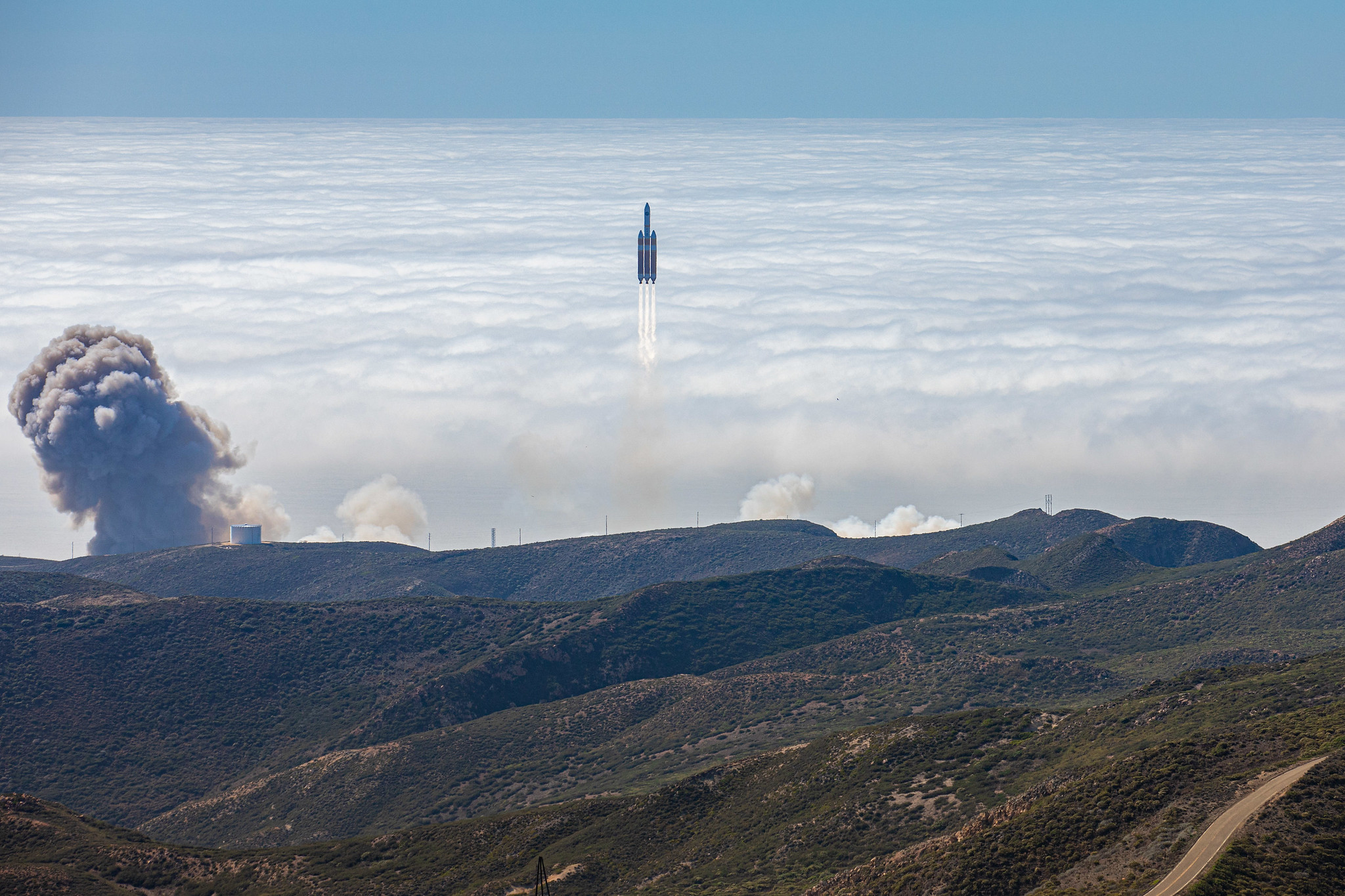
Enlarge/ A Delta IV Heavy rocket carrying a payload for the National Reconnaissance Office lifted off from Space Launch Complex-6 on Sept. 24. (credit: United Launch Alliance)
Welcome to Edition 5.12 of the Rocket Report! As a bit of late breaking news, Firefly attempted to make its second orbital launch attempt with the Alpha rocket early Friday, at 3 am EST (07:00 UTC) from California. However in the final moments before liftoff the vehicle went into “auto abort” after engine ignition. Firefly is reviewing data from the scrub to determine its next attempt.
As always, we welcome reader submissions, and if you don’t want to miss an issue, please subscribe using the box below (the form will not appear on AMP-enabled versions of the site). Each report will include information on small-, medium-, and heavy-lift rockets, as well as a quick look ahead at the next three launches on the calendar.
Virgin Orbit faces “difficult” licensing in Britain. The next launch of Virgin Orbit’s LauncherOne rocket, which fires its engines after being dropped from a carrier aircraft, is due to occur no earlier than October 29 from Spaceport Cornwall in southwestern England. A report in Cornwall Live says that the launch window that opens at the end of October is viable for several weeks and that the company still aims to launch during the fourth quarter of this year. During a Cornwall Council meeting earlier this month, Louis Gardner, cabinet member for the economy, provided details about licensing issues that are still being worked through.
Recently the open-source AMD OpenGL driver “RadeonSI” enabled OpenGL threading by default for the “glthread” option that has long been opt-in on a per-game/app basis. Along with that has been a number of glthread-related improvements to this code that punts executing OpenGL calls to a separate CPU thread. The Zink OpenGL-on-Vulkan driver has now unconditionally enabled OpenGL threading too…
In a global first, wind and solar energy combined to generate more than 10 percent of the world’s electricity in 2021 — though coal-fired power plant generation and emissions jumped to new highs in the same period, too. The Register reports: The 2022 Power Transition Trends report by Bloomberg New Energy Fund (BNEF) found that power generation emissions in general leapt up in 2021 as the global economy rebounded from the COVID-19 pandemic. Much of that new power generation came from renewable sources, with wind and solar accounting for three quarters of capacity added in 2021. When accounting for hydro, nuclear, and other zero-carbon power sources, that number rises to 85 percent of 2021’s new capacity.
Those gains were spoiled by a resurgence in coal-fired power plants, use of which BNEF said was up by a record 8.5 percent between 2020 and 2021. BNEF cites rapidly rebounding energy demand (which rose 5.6 percent year-on-year in 2021), reduced hydro generation due to droughts, and high natural gas prices in Europe as primary drivers of the coal surge. […] For the first time since 2013, BNEF said in the report (PDF), “coal-fired power plants were the top contributor to top-line power generation growth.” The report said that coal accounted for the majority of additional generation in 2021 — not to be confused with newly added generation, of which coal was a small component.
Still, coal continues to occupy the largest single share of global electricity generation at 27 percent, and it may continue to rise in 2022 “as European nations seek short-term solutions to compensate for droughts and extremely high gas prices,” BNEF said. While European coal plants might be earning the blame, they aren’t responsible for most of the coal generation, BNEF said. That honor belongs to three countries that account for 63 percent of burned coal: China, India, and the United States. China holds the crown for coal-fired power generation, accounting for 52 percent of total coal usage in the world. India accounts for 11 percent of coal, while the US burns approximately 9 percent. The US could see itself slip out of the top three, however, as BNEF said it’s the only country in the top 10 coal burners to reduce its coal generation since the beginning of the decade.
Microsoft engineers continue working on improving their Direct3D 12 driver within Mesa for benefiting Windows Subsystem for Linux (WSL2) usage and similar…
The US Federal Communications Commission (FCC) has adopted new rules to address the growing risk of “space junk” or abandoned satellites, rockets and other debris. The new “5-year-rule” will require low-Earth operators to deorbit their satellites within five years following the completion of missions. That’s significantly less time than the previous guideline of 25 years.
“But 25 years is a long time,” FCC Chairwoman Jessica Rosenworcel said in a statement. “There is no reason to wait that long anymore, especially in low-earth orbit. The second space age is here. For it to continue to grow, we need to do more to clean up after ourselves so space innovation can continue to respond.”
Rosenworcel noted that around 10,000 satellites weighing “thousands of metric tons” have been launched since 1957, with over half of those now defunct. The new rule “will mean more accountability and less risk of collisions that increase orbital debris and the likelihood of space communication failures.”
However, some US representatives don’t necessarily agree with the decision. Members of the Committee on Science, Space, and Technology said in a letter that such decisions are often taken by NASA. By acting unilaterally, the FCC “could create uncertainly and potentially conflicting guidance” for the space industry. They asked the FCC to explain the decision to Congress, saying “this would ensure that procedural measures such as the Congressional Review Act are not necessary.”
NASA has said there are “23,000 pieces of debris larger than a softball orbiting the Earth.” It noted that China’s 2007 anti-satellite test “added more than 3,500 pieces of large, trackable debris and many more smaller debris to the debris problem.”
Cloud-Hypervisor as what started as an open-source project by Intel and now run under the Linux Foundation umbrella as a Rust-based, modern-focused hypervisor for cloud workloads keeps on advancing. In addition to Intel, Microsoft and Arm continue investing significant resources into Cloud-Hypervisor for this security-focused VMM for running Windows and Linux guests…