FCC puts Kaspersky on security threat list, says it poses “unacceptable risk“

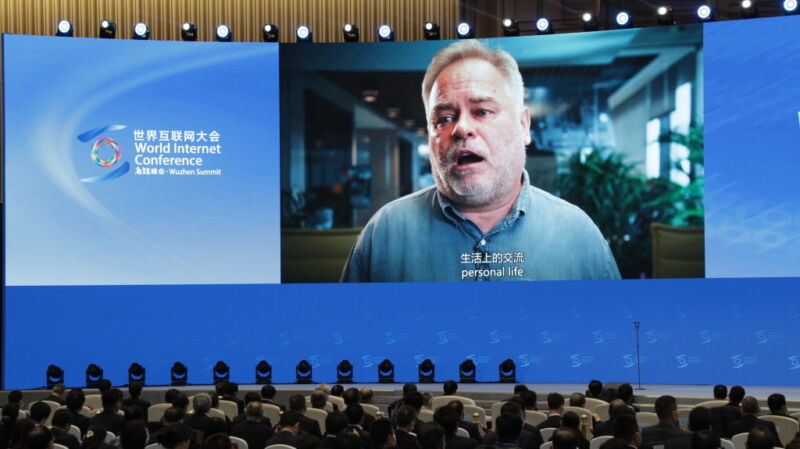
Eugene Kaspersky, CEO and founder of Moscow-based Kaspersky, at the 2020 World Internet Conference (WIC) at Wuzhen, China.

Enlarge / Eugene Kaspersky, CEO and founder of Moscow-based Kaspersky, at the 2020 World Internet Conference (WIC) at Wuzhen, China. (credit: Getty Images)

The Federal Communications Commission on Friday effectively barred sales of security products from Moscow-based Kaspersky, determining that they pose an unacceptable risk to US national security.

The move adds Kaspersky to the same covered list that Huawei and ZTE landed on in 2021. Besides its Moscow headquarters, the company’s founder, Eugene Kaspersky, attended a KGB-sponsored technical college and has long been accused of having ties to Russian military and intelligence services.

Kaspersky, which was already banned from all US government networks, was one of three firms added to the covered list on Friday. China Mobile and China Telecom were the other two.

Read 4 remaining paragraphs | Comments


Source: Ars Technica – FCC puts Kaspersky on security threat list, says it poses “unacceptable risk“

Celebrate Women Making Sci-Fi and Fantasy Films and TV With This Streaming List

March is Women’s History Month, so it seems like the perfect moment to celebrate women who are making history in genre film and television. We’ve compiled a handy list of movies and series, broken down by streaming service, that all highlight the bold (and sometimes legendary) voices of the women behind a lot of our…

Read more…


Source: Gizmodo – Celebrate Women Making Sci-Fi and Fantasy Films and TV With This Streaming List

Whistleblower says Microsoft spent millions on bribes abroad

In an essay published Friday on the whistleblower platform Lioness, former Microsoft manager Yasser Elabd alleged that Microsoft fired him after he alerted leadership to a workplace where employees, subcontractors and government operators regularly engaged in bribery. He further alleges that attempts to escalate his concerns resulted in retaliation within Microsoft by managers, and eventual termination from his role.

Elabd claims in his essay that he worked for Microsoft between 1998 and 2018, and had oversight into a “business investment fund ” — essentially a slush fund to “cement longer-term deals” in the Mid-East and Africa. But he grew suspicious of unusual payments to seemingly unqualified partners. After examining several independent audits, he discovered what he believes is a common practice: After setting up a large sale to entities in the region, a “discount” would be baked in, only for the difference between the full-freight cost and discounted fee to be skimmed off and divided between the deal-makers.

“This decision maker on the customer side would send an email to Microsoft requesting a discount, which would be granted, but the end customer would pay the full fee anyway. The amount of the discount would then be distributed among the parties in cahoots: the Microsoft employee(s) involved in the scheme, the partner, and the decision maker at the purchasing entity—often a government official,” Elabd alleged.

The former Microsoft manager gave several examples of suspicious transactions and red flags he witnessed over his two decades working for the company abroad. In one audit, Microsoft gave the Saudi Ministry of the Interior a $13.6 million discount which never reached the agency’s doors. In 2015, a Nigerian official complained that the government paid $5.5 million for licenses “for hardware they did not possess.”

In another example, Qatar’s Ministry of Education paid $9.5 million, over a period of seven years, for Microsoft Office and Windows licenses that went unused. Auditors later discovered that employees at that agency didn’t even have access to computers.

“We are committed to doing business in a responsible way and always encourage anyone to report anything they see that may violate the law, our policies, or our ethical standards,” Becky Lenaburg, a VP at Microsoft and deputy general counsel for compliance and ethics, wrote in a statement to The Verge. “We believe we’ve previously investigated these allegations, which are many years old, and addressed them. We cooperated with government agencies to resolve any concerns.”

Elabd claims his attempts to alert managers resulted in his being shouted at by one manager, iced out of certain deals and told by an executive that he had effectively set himself up to be let go after attempting to involve CEO Satya Nadella. After being terminated, Elabd wrote that he brought his documentation before the Securities and Exchange Commission and Department of Justice. He claims the DoJ refused to take up his case. According to Protocol, the SEC dropped the case earlier this month due to a lack of resources.

“As I alleged in my complaint to the SEC, Microsoft is violating the Foreign Corrupt Practices Act, and continues to do so brazenly. And why wouldn’t they?” wrote Elabd. “By declining to investigate these allegations and the evidence I’ve given them, the SEC and DOJ have given Microsoft the green light.”


Source: Engadget – Whistleblower says Microsoft spent millions on bribes abroad

Russia Considers Accepting Bitcoin For Oil and Gas

An anonymous reader quotes a report from the BBC: Russia is considering accepting Bitcoin as payment for its oil and gas exports, according to a high-ranking lawmaker. Pavel Zavalny says “friendly” countries could be allowed to pay in the crypto-currency or in their local currencies. Earlier this week, Russian President Vladimir Putin said that he wanted “unfriendly” countries to buy its gas with roubles. The move is understood to be aimed at boosting the Russian currency, which has lost over 20% in value this year. Sanctions imposed by the UK, US and the European Union, following the invasion of Ukraine, have put a strain on Russia’s rouble and raised its cost of living.

Mr Zavalny, who heads Russia’s State Duma committee on energy, said on Thursday that the country has been exploring alternative ways to receive payment for energy exports. He said China and Turkey were among “friendly” countries which were “not involved in the sanctions pressure.” “We have been proposing to China for a long time to switch to settlements in national currencies for roubles and yuan,” said Mr Zavalny. “With Turkey, it will be lira and roubles.” Mr Zavalny added: “You can also trade bitcoins.”

Analysts said Russia may benefit from accepting the popular cryptocurrency, despite the risks. “Russia is very quickly feeling the impact of unprecedented sanctions,” said David Broadstock, a senior research fellow at the Energy Studies Institute in Singapore. “There is a need to shore up the economy and in many ways, Bitcoin is seen as a high growth asset.” However, he noted that the value of Bitcoin has swung by as much as 30% this year. In comparison, the dollar has traded within 5% against the euro. “Clearly accepting Bitcoin, compared with other traditional currencies, introduces considerably more risk in the trade of natural gas,” Mr Broadstock said. “Moreover, one of the major ‘friendly’ trade partners for Russia is China, and cryptocurrency is banned for use in China,” he added. “This clearly limits potential for payment using Bitcoin.”

Read more of this story at Slashdot.


Source: Slashdot – Russia Considers Accepting Bitcoin For Oil and Gas

iFixit’s Mac Studio teardown reveals monster cooling system

iFixit’s teardown of the Mac Studio found a monstrous thermal management system attached to a relatively small computer, among other things.

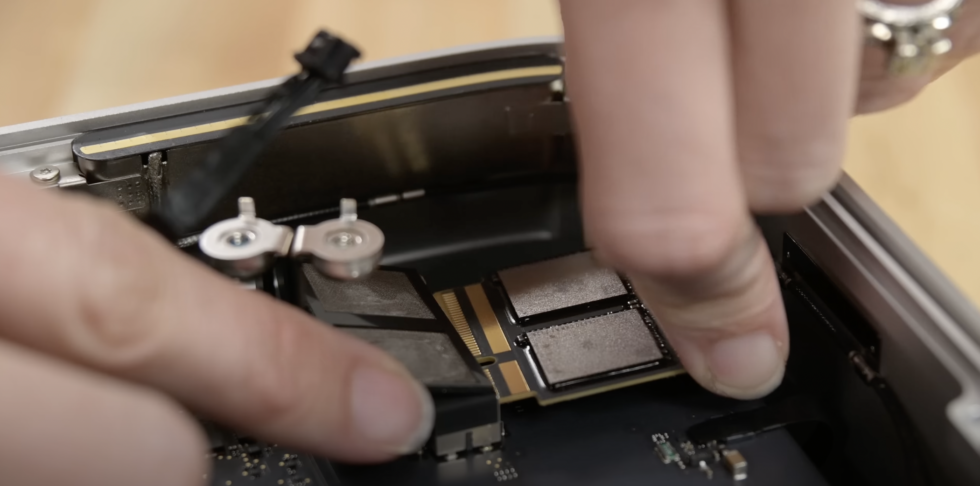
The teardown video depicted a somewhat complicated but not insurmountable process for getting inside that little metal rectangle, and there weren’t too many surprises. The video identified some ports, showed the removal of the logic board, and perhaps most notably, uncovered a dual-fan cooling system inside the machine.

Further, iFixit talked about the much-discussed SSD swapping situation. It is possible to swap out of the storage provided you’re using storage of the same size and type, at least—but that requires using a device firmware update (DFU) restore. (Read our article on the subject for more about that.)

Read 5 remaining paragraphs | Comments


Source: Ars Technica – iFixit’s Mac Studio teardown reveals monster cooling system

Google Working On New Nest Hub With Detachable Tablet Form Factor For 2022

To date, Google has released three Assistant Smart Displays. 9to5Google can now report that the company is working on a new Nest Hub for 2022 with a dockable tablet form factor where the screen detaches from a base/speaker. From the report: According to a source that has proven familiar with Google’s plans, the next Nest Smart Display will have a removable screen that can be used as a tablet. It attaches to the base/speaker for a more conventional-looking smart home device. This new form factor comes as Google has spent the last few months adding more interface elements to the 2nd-gen Nest Hub and Nest Hub Max. Swiping up from the bottom of the screen reveals a row of “apps” above the settings bar. You can open a fullscreen grid of icons from there. Applications and games on the Nest Hub are essentially web views, so this is technically a launcher for shortcuts.

Speaking of the web, Google also spent the end of last year adding a more feature-rich browser that even features a Gboard-esque keyboard. You can also send sites directly to your phone and enable text-to-speech. Both of these additions can be seen as laying the groundwork for a tablet-like experience, with web browsing obviously being a popular task on big screens. Many questions about the implementation remain unknown, including what OS/experience the undocked tablet will run. Chrome OS is likely too power-hungry (and as such costly) considering the affordability of Nest devices, while Android would open the door to existing apps and the Play Store.

Read more of this story at Slashdot.


Source: Slashdot – Google Working On New Nest Hub With Detachable Tablet Form Factor For 2022

YouTube Rippers Appeal $83 Million Piracy Verdict

An anonymous reader writes: The operator of YouTube rippers FLVTO.biz and 2conv.com has announced that he will appeal the piracy verdict, where the RIAA won $83 million in damages. According to his attorneys, the legal process has gone off the rails, as the music companies didn’t have to prove a single instance of copyright infringement. More context on the verdict, from TorrentFreak: Last October, the RIAA secured a major victory in its piracy lawsuit against YouTube-rippers FLVTO.biz and 2conv.com and their Russian operator Tofig Kurbanov. A Virginia federal court issued a default judgment in favor of several prominent music companies after the defendant walked away from the lawsuit. According to the order, there is a clear need to deter the behavior of Kurbanov who failed to hand over evidence including server logs. “A less drastic sanction is unlikely to salvage this case,” the judge wrote.

Following this win, the RIAA asked for an injunction to stop the sites’ worldwide stream-ripping activities. In addition, the music group demanded nearly $83 million in damages. Both of these requests were taken up in a report and recommendation issued by Magistrate Judge Buchanan last December. “Defendant’s Websites caused the Plaintiffs to lose profits and streaming revenue because of the enormous internet traffic to and use of the Websites’ stream-ripping functions,” Judge Buchanan wrote. Mr. Kurbanov’s legal team opposed this recommendation, arguing that the music companies failed to provide evidence that any infringing activity actually took place in the United States. Also, if the court believes that damages are appropriate, they should be substantially lower. The RIAA predictably disagreed and asked the court to stay the course and take over the recommendation. After weighing the positions from both sides, that’s exactly what happened.

Read more of this story at Slashdot.


Source: Slashdot – YouTube Rippers Appeal Million Piracy Verdict

Honda And Acura Replay Attack Lets Hackers Remotely Unlock And Start These Cars

Honda And Acura Replay Attack Lets Hackers Remotely Unlock And Start These Cars
We can sometimes forget how deeply computers are integrated into our lives beyond standard computing devices like phones, laptops, and desktop PCs. The hackability of computer systems beyond these devices can be a stark reminder of the ubiquity of computer systems. Just last week, a hacker was found to have stolen 400 gallons of fuel from

Source: Hot Hardware – Honda And Acura Replay Attack Lets Hackers Remotely Unlock And Start These Cars

Russia Launched Ukraine Invasion With Hack of Thousands of Satellite Modems

“The Washington Post reports that at the outset of Russia’s invasion of Ukraine, Ukrainian military communications, as well as that of customers across Europe, was accomplished by the compromise of tens of thousands of satellite modems provided by Viasat’s KA-SAT service,” writes longtime Slashdot reader An Ominous Cow Erred. “Viasat is now having to replace the insecure modems for all affected customers. This raises questions about the vulnerability of other broadband services with poorly-maintained firmware on their customer network infrastructure.” From the report: Earlier this month, Zhora described the impact of the sabotage as “a really huge loss in communications in the very beginning of war.” Dmitri Alperovitch, a cyber expert and chairman of the Silverado Policy Accelerator think tank, said satellite communications “have been used extensively by Ukrainian military not just for command and control of forces but also for tactical missions such as use of drones against Russian armor.” Said Alperovitch: “We can’t know for sure, but this KA-SAT attack may have had a serious impact on degrading Ukrainian military capabilities at the outset of the war.”

Read more of this story at Slashdot.


Source: Slashdot – Russia Launched Ukraine Invasion With Hack of Thousands of Satellite Modems

Big Fists, Big Chins, and Big Pecs Are the Big News in This Week's Toys

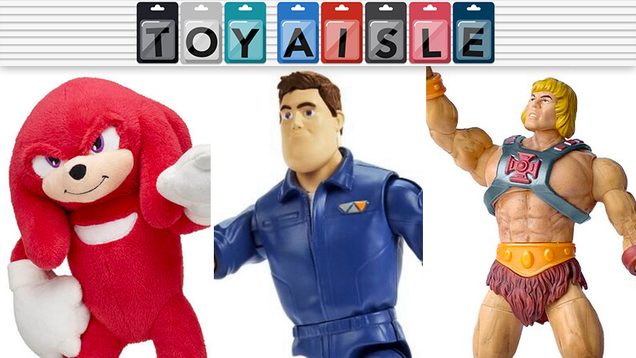
Welcome back to Toy Aisle, io9’s round up of the latest and greatest in wallet-draining plastic fun. This week, Hasbro returns to Mighty Morphin nostalgia with new retro Zords, we get our first glimpse of Lightyear’s toy line, and Mattel’s Masters of the Universe toys revisit a classic. Check it out!

Read more…


Source: Gizmodo – Big Fists, Big Chins, and Big Pecs Are the Big News in This Week’s Toys

Russians are panic-buying medicines amid Western sanctions, boycotts

A woman wearing a face mask leaves a pharmacy in the town of Podolsk some 40 kilometers outside Moscow on November 12, 2021.

Enlarge / A woman wearing a face mask leaves a pharmacy in the town of Podolsk some 40 kilometers outside Moscow on November 12, 2021. (credit: Getty | YURI KADOBNOV )

As Western countries continue to ratchet up sanctions and boycotts against Russia, the country’s citizens are panic-buying medicines, such as antidepressants, sleeping pills, and contraceptives, according to Reuters.

Between February 28 and March 13, Russians bought 270.5 million pharmaceutical items worth about $104 billion, according to sales data compiled for the Russian business newspaper Vedomosti. That two weeks’ worth of buying was comparable to what Russians bought at pharmacies for the entire month of January, which saw purchases of 280 million pharmaceutical items worth about $100 billion.

The analysis, carried out by Russian analytics company DSM Group, found that demand increased sharply for medicines, including antidepressants, sleeping pills, insulin, cancer and heart drugs, hormones, and contraceptives.

Read 10 remaining paragraphs | Comments


Source: Ars Technica – Russians are panic-buying medicines amid Western sanctions, boycotts

Australia's Great Barrier Reef Is Suffering Yet Another Mass Bleaching

Australia’s Great Barrier Reef is experiencing its fourth mass bleaching in only six years, with corals severely damaged by warming sea temperatures. Earlier today, Australia’s Great Barrier Reef Marine Park Authority, which oversees the reef system, confirmed the mass bleaching and expressed hope for a potential…

Read more…


Source: Gizmodo – Australia’s Great Barrier Reef Is Suffering Yet Another Mass Bleaching

Galactic Starcruiser Is Basically Star Wars: Choose Your Own Adventure (Sort Of)

By now, Star Wars fans have all read reviews of Galactic Starcruiser, the new immersive (and expensive) attraction at Walt Disney World set aboard the Halcyon, a hotel designed to make guests feel like they’re traveling within the galaxy far, far away. As you might imagine, the “journey” required a hell of a lot of…

Read more…


Source: Gizmodo – Galactic Starcruiser Is Basically Star Wars: Choose Your Own Adventure (Sort Of)

AMD Ryzen 7950X Zen 4 CPU Specs Leak Claims 170W TDP And 16 Cores

AMD Ryzen 7950X Zen 4 CPU Specs Leak Claims 170W TDP And 16 Cores
AMD’s next line of desktop processors will be named the Ryzen 7000 series, and they’ll be a complete break from Socket AM4 and the previous gen Ryzen platform that it hosts. Ryzen 7000 processors will be based on the Zen 4 CPU architecture and use an LGA socket design rather than the micro-PGA used by Socket AM4.

If rumors are correct,

Source: Hot Hardware – AMD Ryzen 7950X Zen 4 CPU Specs Leak Claims 170W TDP And 16 Cores