Myst remake impressions: Handsome island touch-ups, launch-week woes

Welcome back, yet again, to Myst Island.

Enlarge / Welcome back, yet again, to Myst Island. (credit: Cyan Worlds, Inc.)

This week, eight months after a touched-up version of 1993’s Myst landed exclusively on the Oculus Quest VR system, the same remake has been further touched up and made available on more devices—including non-VR options. This remade version of the puzzle classic, simply titled Myst, is included on Xbox Game Pass on both consoles and PC, and that subscription option may be easier for some longtime fans to swallow than another $30 retail purchase (on Xbox, Steam, or GOG).

This release goes beyond the touch-ups found in 2014’s realMyst Masterpiece Edition, but it’s equal parts refined and iffy. Cyan has so far been proactive on its Steam forums, suggesting that fans should expect fixes and responses to some of this release’s first-week woes in short order. In the meantime, certain returns to Myst Island are already easy to recommend. Others merit a wait-and-see approach.

Changes mild and major since realMyst

On the most basic level imaginable, this week’s Myst is the same as the CD-ROM Myst you know and (possibly) love. Should you have the original game’s puzzles and steps memorized, load the game in its default state, and you can either unravel every puzzle and story as you remember it or skip the hunt for clues and instantly expose every age attached to Myst Island.

Read 21 remaining paragraphs | Comments


Source: Ars Technica – Myst remake impressions: Handsome island touch-ups, launch-week woes

The weekend’s best deals: Samsung microSD cards, gaming chairs, and more

The weekend’s best deals: Samsung microSD cards, gaming chairs, and more

Enlarge (credit: Ars Technica)

Our latest Dealmaster includes a nice one-day sale on Samsung microSD cards, as the 256GB and 512GB variants of the company’s Evo Select card are down to $28 and $60 at Amazon, respectively. The former discount is the best we’ve seen since January, while the latter matches the lowest price we’ve ever tracked. As we’ve noted before, this certainly isn’t the fastest card on the market, but it’s reliable and performant enough for most casual needs, making it a good value when it’s on sale.

Elsewhere, our deals roundup has a couple of steep discounts on Anda Seat’s Kaiser 2 and T-Pro 2 gaming chairs. You can read our review from earlier this year for more details. While they’re better suited for taller folks (think 5 feet, 8 inches or more), those who can fit into them should find them to provide sturdy frames and firm-but-generally-comfortable padding, regardless of whether they call themselves “gamers.” Again, they’re particularly solid value at these prices.

Beyond that, we also have deals on Apple’s wireless MagSafe charger, recommended webcams, Razer’s handheld Kishi game controller for iOS, a couple of AMD Ryzen processors, and more. You can see the full rundown for yourself below.

Read 2 remaining paragraphs | Comments


Source: Ars Technica – The weekend’s best deals: Samsung microSD cards, gaming chairs, and more

Vaccine mandates work, especially when they’re done right

Vaccine mandates work, especially when they’re done right

Enlarge (credit: Mario Tama | Getty Images)

On Monday, the US Food and Drug Administration gave formal, full approval to the Covid-19 vaccine made by the drug companies Pfizer and BioNTech. You might’ve already gotten a dose of it, of course; millions of Americans have, thanks to an “emergency use authorizationawarded in December 2020. But the new designation was more than just a formality. “If you’re one of the millions of Americans who said they will not get the shot until it has full and final approval from the FDA, it has now happened,” President Joe Biden said when he announced the approval. And, in the same speech: “If you’re a business leader, a non-profit leader, a state or local leader who has been waiting for full FDA approval to require vaccinations, I call on you now to do that—require it.”

Pretty much right away, a lot of places did. Vaccines are safe, effective, and free, but somewhere around 30 percent of Americans haven’t got their shots. Carrots didn’t work; here come the sticks. And they might be able to crush the fourth wave of the Covid pandemic in the US—if they’re done right.

Like the other vaccines still available under EUA, the Pfizer drug is extraordinarily good at keeping people from getting really sick or dying from Covid. But with more than 100,000 people in the hospital with Covid in the US—the most since January—and with the vast majority of them unvaccinated, it’s clear that alone isn’t enough. States, localities, and businesses have tried inducements like prizes, cash, or lotteries, little tricks designed to corral people into doing what’s good for them. In the language of behavioral economics, that’s called a nudge. But in states with low vaccine uptake, those nudges didn’t change the momentum. So now, it’s time for mandates. If you’re one of the 30 percent or so of Americans who haven’t gotten vaccinated yet, get ready for a good hard shove.

Read 16 remaining paragraphs | Comments


Source: Ars Technica – Vaccine mandates work, especially when they’re done right

It’s a Summer Film! is the most fun we’ve had “at” the movies in years

The trailer for It’s a Summer Film!

When’s the last time you had pure fun at the movies? For a lot of us, it has probably been at least 1.5 years, given the whole global health pandemic that has been shutting down theaters and prompting distributors to withhold the types of movies that may deliver such joy (please, hold on Bond, please). Throughout 2020 and early 2021, the state of the industry sort of meant only extremes were released—prestige dramas vying for hardware and big budget blockbusters that cost so much they must push ASAP for ticket sales or a big streaming deal. Stumbling upon the unfettered pleasure of, say, something like Palm Springs became a rarity.

But if you can find It’s a Summer Film!—a genre mashup from Japan that’s centered on some samurai-obsessed high school girls—prepare for 90+ minutes of nonstop grinning. This film recently screened as part of Fantasia Fest, perhaps the world’s finest genre film event. It’s a festival that routinely features the type of work that catches viewers off guard but ends up landing among the year’s best (see The Columnist, from 2020). Within another unusual film year in progress, It’s a Summer Film! has already comfortably secured that very fate. In fact, it might be one of the most feel-good films we’ve come across in the last five years (up there with Bill & Ted 3, Coco, a documentary about Highlights for Children, and a high school zombie Christmas musical).

Filmed on (maybe) iPhone

Read 8 remaining paragraphs | Comments


Source: Ars Technica – It’s a Summer Film! is the most fun we’ve had “at” the movies in years

Samsung seemingly caught swapping components in its 970 Evo Plus SSDs

You can't see the part number which distinguishes the newer, slower drive from the older, faster one on the box—you need to check the PN field in the top center of the label on the drive itself.

Enlarge / You can’t see the part number which distinguishes the newer, slower drive from the older, faster one on the box—you need to check the PN field in the top center of the label on the drive itself. (credit: Jim Salter)

Recently, major SSD vendors Crucial and Western Digital have both been caught swapping out TLC NAND in their consumer SSDs for cheaper but much lower-performance, lower-endurance QLC NAND. Samsung appears to be joining them in the part-swapping corner of shame today, thanks to Chinese Youtuber 潮玩客, who documented a new version of the Samsung 970 Evo Plus using an inferior drive controller.

Although the consumer-facing model number of the drives did not change—it was a 970 Evo Plus last year, and it’s still a 970 Evo Plus now—the manufacturer part number did. Unfortunately, the manufacturer part number isn’t visible on the box the SSD comes in—as far as we’ve been able to determine, it’s only shown on a small label on the drive itself.

Falling off the write cliff

We tested the 970 Evo Plus (alongside the 980, and the older 970 Pro) in March, clocking it at write speeds of 1,600+ MiB/sec on 1MiB workloads. Our benchmarking was done with he old version, part number MZVLB1T0HBLR. The newer version—part number MZVL21T0HBLU—is considerably slower. According to 潮玩客’s test results, the newer version only manages 830MiB/sec—half the performance of the original.

Read 6 remaining paragraphs | Comments


Source: Ars Technica – Samsung seemingly caught swapping components in its 970 Evo Plus SSDs

“Worst cloud vulnerability you can imagine” discovered in Microsoft Azure

Cosmos DB is a managed database service offering—including both relational and noSQL data structures—belonging to Microsoft's Azure cloud infrastructure.

Enlarge / Cosmos DB is a managed database service offering—including both relational and noSQL data structures—belonging to Microsoft’s Azure cloud infrastructure. (credit: Microsoft)

Cloud security vendor Wiz announced yesterday that it found a vulnerability in Microsoft Azure’s managed database service, Cosmos DB, that granted read/write access for every database on the service to any attacker who found and exploited the bug.

Although Wiz only found the vulnerability—which it named “Chaos DB”—two weeks ago, the company says that the vulnerability has been lurking in the system for “at least several months, possibly years.”

A slingshot around Jupyter

In 2019, Microsoft added the open-source Jupyter Notebook functionality to Cosmos DB. Jupyter Notebooks are a particularly user-friendly way to implement machine learning algorithms; Microsoft promoted Notebooks specifically as a useful tool for advanced visualization of data stored in Cosmos DB.

Read 10 remaining paragraphs | Comments


Source: Ars Technica – “Worst cloud vulnerability you can imagine” discovered in Microsoft Azure

Amazon and SpaceX fight over Starlink plan for 30,000 more satellites

Read 11 remaining paragraphs | Comments


Source: Ars Technica – Amazon and SpaceX fight over Starlink plan for 30,000 more satellites

Engineering a second genetic code in parallel with the normal one

A cartoon of the process that translates the genetic code in DNA into a protein.

Enlarge / A cartoon of the process that translates the genetic code in DNA into a protein. (credit: BSIP / Getty Images)

All living things on Earth use a version of the same genetic code. Every cell makes proteins using the same 20 amino acids. Ribosomes, the protein-making machinery within cells, read the genetic code from a messenger RNA molecule to determine which amino acid to put next into the particular protein they are building.

This code is universal, which is why the ribosomes in our cells can read a piece of viral messenger RNA and make a functional viral protein from it. There are plenty of other amino acids, though. While life does not generally use them, scientists have been incorporating these into proteins. Now, researchers have figured out a way to greatly expand the genetic code, allowing widespread incorporation of these non-biological amino acids. They accomplish this by running a second set of everything—proteins and RNAs—needed to translate the genetic code.

A system apart

Non-canonical amino acids can serve a number of functions. They can act as labels so a researcher’s particular protein of interest can more easily be tracked within cells. They can help to regulate a protein’s function, allowing researchers to activate and inactivate it at a specific time and place of their choosing and then observe the downstream effects. If enough of these non-canonical amino acids are strung together, the resulting proteins would constitute an entirely new class of biopolymers that might carry out functions that traditional proteins cannot—for research, therapeutic, or other purposes.

Read 7 remaining paragraphs | Comments


Source: Ars Technica – Engineering a second genetic code in parallel with the normal one

DeSantis’ ban on school mask mandates violates Constitution, judge rules

Florida Governor Ron DeSantis speaks at a press conference.

Enlarge / Florida Governor Ron DeSantis speaks at a press conference. (credit: Getty | SOPA)

A Florida judge on Friday struck down Governor Ron DeSantis’ controversial executive order barring school districts from mandating masks in schools.

Reading from his notes, Leon County Circuit Judge John Cooper said DeSantis’ ban “does not meet constitutional muster,” according to a CBS affiliate in south Florida. Cooper’s ruling has not yet been put in writing, but he said he plans to sign the order Monday. He added that he expects the ruling to be appealed, which DeSantis vowed to do on Thursday in advance of his loss.

In his decision, Cooper sided with eight parents who sued DeSantis, Education Commissioner Richard Corcoran, the Florida Department of Education, and the Florida Board of Education. The parents claimed that the ban prevented educators from ensuring a safe learning environment for their children and “endangered all Floridians.”

Read 8 remaining paragraphs | Comments


Source: Ars Technica – DeSantis’ ban on school mask mandates violates Constitution, judge rules

Man robbed of 16 bitcoin hunts down suspects, sues their parents

Read 11 remaining paragraphs | Comments


Source: Ars Technica – Man robbed of 16 bitcoin hunts down suspects, sues their parents

You’ll be able to run Windows 11 on older PCs—if you install the update manually

Microsoft won't officially support running Windows 11 on old PCs, but the company won't stand in the way, either.

Enlarge / Microsoft won’t officially support running Windows 11 on old PCs, but the company won’t stand in the way, either. (credit: Andrew Cunningham)

Microsoft officially announced some small additions to Windows 11’s official CPU support list today, along with additional details about the operating system’s security requirements. But another, quieter announcement should quell more of the system requirement-related angst: the Verge reports that Microsoft won’t stop you from performing manual installs of Windows 11 on systems that don’t meet the official requirements. That means that people running Windows 10 on unsupported systems won’t be offered Windows 11 through Windows Update, but you’ll still be able to update if you download an ISO file and perform an upgrade or a clean install manually.

This will be a particular boon to PCs right on the border of Windows 11’s system requirements, like those running 6th- or 7th-generation Intel Core CPUs or first-generation AMD Ryzen processors. These chips are missing support for a few esoteric optional security requirements but can otherwise meet the performance and Secure Boot and TPM 2.0 requirements and still get modern DCH driver support from Intel, AMD, and most PC OEMs.

Microsoft is still actively recommending that you don’t run Windows 11 on any system that doesn’t meet the official support criteria. According to data from PCs running the Insider Preview builds, Microsoft says that PCs that didn’t meet the requirements had “52% more kernel mode crashes” than PCs that did and that first-party apps crashed 43 percent more often on unsupported hardware. But allowing users to make the decision for themselves is arguably what the company should have done in the first place—people who don’t seek out the Windows 11 update will never be offered it if their hardware isn’t up to snuff, but advanced users, testers, and IT departments who do want to run the latest software on their computers can evaluate the trade-offs and make the decision for themselves.

Read 1 remaining paragraphs | Comments


Source: Ars Technica – You’ll be able to run Windows 11 on older PCs—if you install the update manually

Why Windows 11 has such strict hardware requirements, according to Microsoft

Why Windows 11 has such strict hardware requirements, according to Microsoft

Enlarge (credit: Microsoft)

Windows 11 promises to refine window management, run Android apps, and to unify the look and feel of the operating system’s built-in apps after years of frustrating hodgepodge. But none of that matters if your computer can’t run the software, and Microsoft has only promised official Windows 11 support for computers released within the last three or four years. Anyone else will be able to run the operating system if they meet the performance requirements, but they’ll need to jump through the hoop of downloading an ISO file and installing the operating system manually rather than grabbing it through Windows Update.

This is a break from previous versions of Windows, which up until now have had more or less the same system requirements for a decade. Microsoft actually used the ability to run on older hardware as a selling point for Windows 10, making it available as a free upgrade to all computers running Windows 7 and Windows 8—if you get as many people as possible using the newest version of Windows, the reasoning went, it would be easier to get developers to take advantage of the latest features.

Microsoft’s rationale for Windows 11’s strict official support requirements—including Secure Boot, a TPM 2.0 module, and virtualization support—has always been centered on security rather than raw performance. A new post from Microsoft today breaks down those requirements in more detail and also makes an argument about system stability using crash data from older PCs in the Windows Insider program.

Read 8 remaining paragraphs | Comments


Source: Ars Technica – Why Windows 11 has such strict hardware requirements, according to Microsoft

Microsoft will support some, but not most, 7th-gen Intel Core CPUs in Windows 11

Microsoft will support some, but not most, 7th-gen Intel Core CPUs in Windows 11

Enlarge

If you were hoping for Microsoft to backtrack on Windows 11’s stringent security-focused new system requirements, we have good news and bad news. The good news is that a small handful of 7th-generation Intel Core processors have been added to the support list, and systems that use those chips will officially support the final version of Windows 11 when it comes out in the fall. The bad news is that they are the only processors being added to the support list, and Microsoft “will maintain the minimum system requirements as originally set.”

Intel’s 7th-generation Core processors, codenamed Kaby Lake, were launched mostly in late 2016 and through 2017, though many computers that use them were available for purchase long after that. The specific 7th-generation processors that have been added to the compatibility list are:

  • X-series processors based on the Skylake-X and Kaby Lake architectures, like the Core i5-7640X and Core i7-7800X
  • W-series Xeon processors
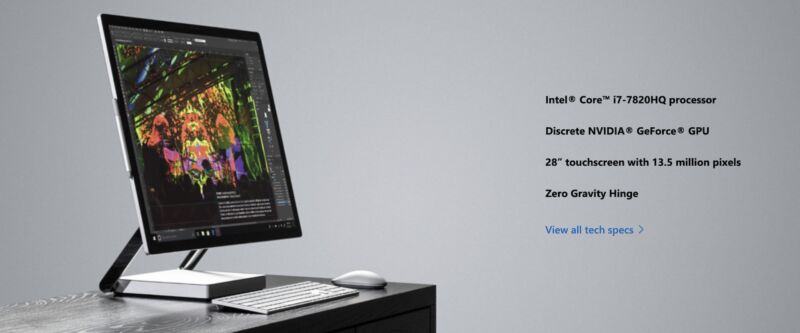
  • The Core i7-7820HQ specifically, with the caveat that systems with this processor must be using DCH drivers

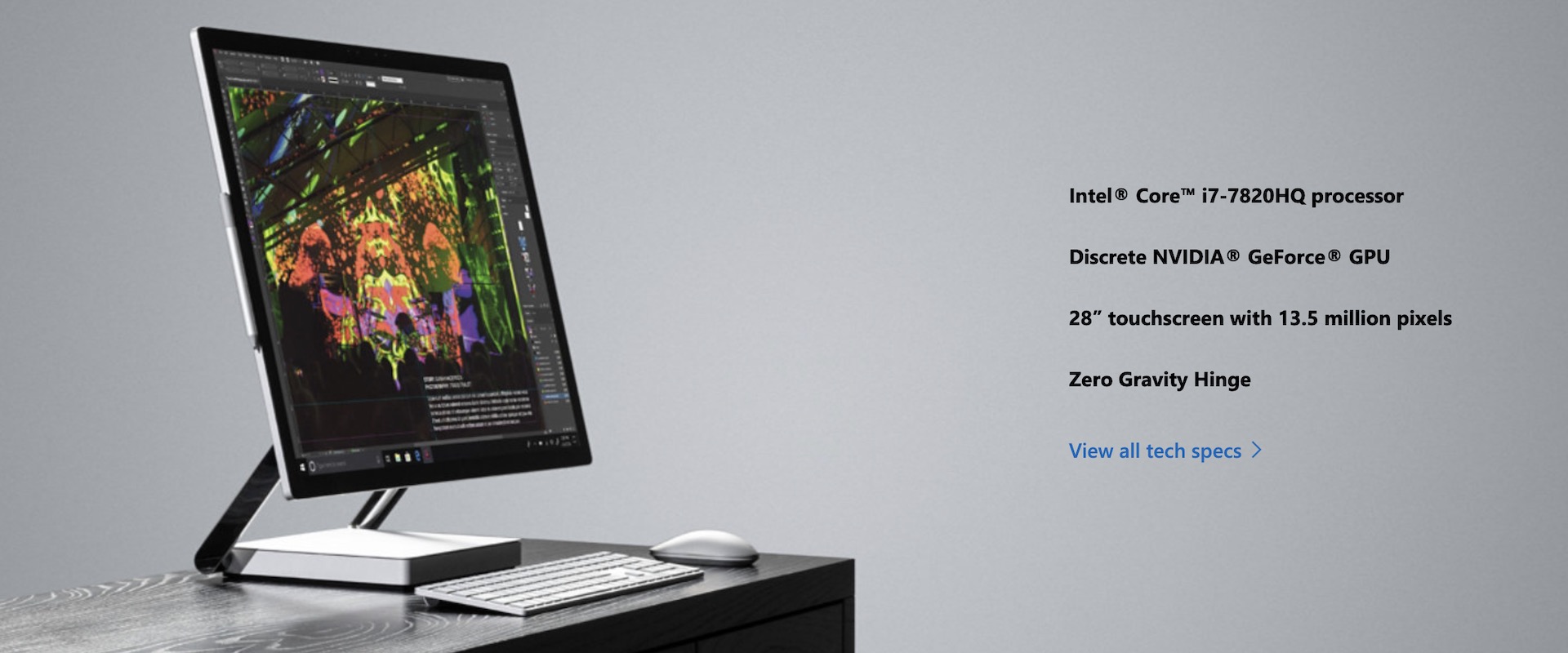
If the decision to support one specific 7th-generation Core i7 laptop processor strikes you as odd, you don’t need to look far for an explanation—this just happens to be the CPU included in Microsoft’s Surface Studio 2, which Microsoft still sells but has not updated in three years. That Microsoft was about to stop supporting a PC it is currently selling and for which it controls everything from the firmware to the drivers earned the company some well-deserved scorn from users and the press. Adding support for it is laudable, but it’s also the bare minimum—Windows 11 will still leave behind Surface products as recent as 2017’s 5th-generation Surface Pro and 1st-generation Surface Laptop and the cheapest configurations of 2017’s Surface Book 2 (higher-end configurations used 8th-generation processors, but the cheapest models did not).

Read 4 remaining paragraphs | Comments


Source: Ars Technica – Microsoft will support some, but not most, 7th-gen Intel Core CPUs in Windows 11

Pixel 5a teardown shows a surprising amount of metal

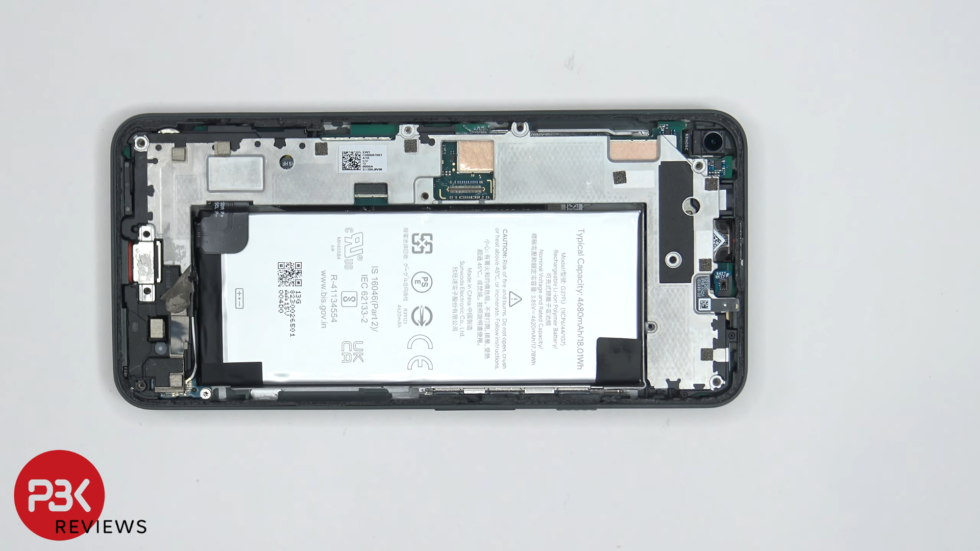
iFixit seems to have given up on full teardowns for the Pixel line, but we still have YouTubers! PBKreviews has ripped apart the Pixel 5a on camera, exposing the water-resistant innards for all to see.

The Pixel 5a’s construction is not all that different from the Pixel 5. The screen is again held on with Google’s unique combination of glue and rectangular clips. While that combo seems like it would result in better screen adhesion than most smartphones, the methodology actually didn’t fare well on the Pixel 5, as users complained about uneven panel gaps. The Pixel 5a display tabs are now a lot bigger, and there are more of them, so hopefully, that will prevent similar alignment problems.

For a phone with a plastic exterior, there’s a surprising amount of metal in the Pixel 5a. One of the first things you’ll see after prying off the screen is a metal cover over the motherboard. Like the Pixel 5a, the whole back of the phone is metal, but that metal is hidden in a plastic coating Google calls a “bio-resin.”

Read 4 remaining paragraphs | Comments


Source: Ars Technica – Pixel 5a teardown shows a surprising amount of metal

Please stop adding more lanes to busy highways—it doesn’t help

The intersection of Interstates 10 and 610 in Houston, Texas, during evening rush hour.

Enlarge / The intersection of Interstates 10 and 610 in Houston, Texas, during evening rush hour. (credit: Getty Images)

You often hear people say that the definition of insanity is doing the same thing over and over again and expecting different results. I bring this up because of an interesting—if infuriating—thread I read this morning about Texas’ plan to widen I-35 as it cuts through the heart of Austin.

Unsurprisingly, the state wants to build more lanes, which it thinks will ease congestion. At some points, this could leave I-35 as much as 20 lanes wide; this will require bulldozing dozens of businesses along the way. An alternative that would have buried 12 lanes of the highway in two levels of underground tunnels was apparently considered too costly.

But it would be wrong to single out this 8-mile proposal as an outlier. In Houston, the state plans to widen I-45 despite plenty of opposition, including from the Federal Highway Administration. And you don’t have to look far to see other state governments wanting to build new roads to reduce congestion.

Read 5 remaining paragraphs | Comments


Source: Ars Technica – Please stop adding more lanes to busy highways—it doesn’t help

EU set to launch formal probe into Nvidia’s $54 billion takeover of Arm

Read 6 remaining paragraphs | Comments


Source: Ars Technica – EU set to launch formal probe into Nvidia’s billion takeover of Arm

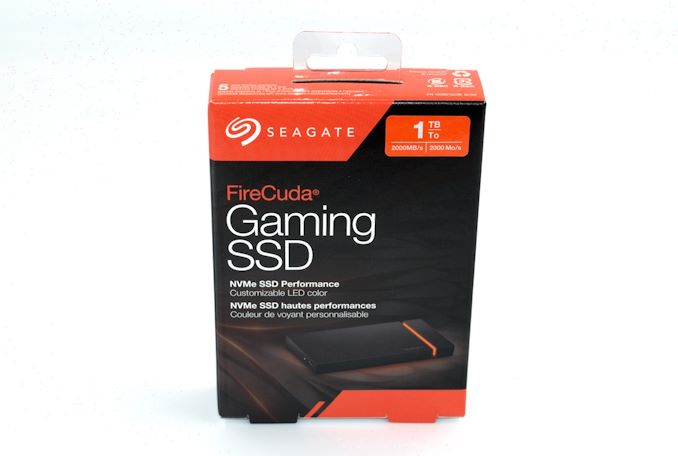
Seagate FireCuda Gaming SSD Review: RGB-Infused USB 3.2 Gen 2×2 Storage

The gaming market has experienced significant growth over the last decade. In addition to boosting PC sales, the peripherals market associated with the segment has also expanded. Installed sizes for games now regularly run into hundreds of gigabytes, thanks in large part to support for increased resolutions and more detailed graphics. The data also needs to be loaded into memory as fast as possible in order to improve the gaming experience.

Unsurprisingly then, gamers want the fastest possible portable SSDs to store their games. The 20 Gbps transfer rates promised by USB 3.2 Gen 2×2 has an instant appeal in this market segment. Keeping this in mind, many vendors have introduced USB 3.2 Gen 2×2 bus-powered portable SSDs targeting the gaming crowd. Last year, we looked at Western Digital’s WD_BLACK P50. Seagate’s FireCuda Gaming SSD was available in the market around the same time, but it didn’t make it to our testbed in time for that review.

We recently got the Seagate offering into our latest testbed, and took the opportunity to refresh the numbers for the WD_BLACK P50 with our latest test suite as well. Read on for our hands-on review of the Seagate FireCuda Gaming SSD.


Source: AnandTech – Seagate FireCuda Gaming SSD Review: RGB-Infused USB 3.2 Gen 2×2 Storage

Overwatch’s cowboy will be renamed after namesake’s sexual assault claims

Video game image of a grizzled Old West gunfighter.

Enlarge / The cowboy formerly known as McCree is currently the “Man with No Name.” (credit: Blizzard)

Overwatch’s cowboy is getting a new name.

This is Blizzard’s latest attempt to salvage its image. The studio is dealing with a lawsuit filed by the State of California in July over employee claims of sexual discrimination and harassment, and its recent public defense was ill-received. The cowboy’s namesake was Diablo 4‘s former lead designer Jesse McCree, who was fired after images showed him inside “the Cosby suite,” where female employees reported they were harassed. The announcement comes a day after the Golden State accused the company of shredding HR documents in an amended complaint.

The cowboy McCree is a gun-for-hire loner in Overwatch lore. In-game, one interaction jokingly casts doubt about McCree’s first name being Joel, but it was officially Jesse.

Read 2 remaining paragraphs | Comments


Source: Ars Technica – Overwatch’s cowboy will be renamed after namesake’s sexual assault claims

Rocket Report: Webb telescope ready for launch, LOX shortage slows SpaceX

A suggestively shaped model rocket.

Enlarge / Estes is now selling a New Shepard model rocket for $69.99. (credit: Estes)

Welcome to Edition 4.13 of the Rocket Report! While there may be a LOX shortage in launch, there is no shortage of launch news this week. So this report runs long.

As always, we welcome reader submissions, and if you don’t want to miss an issue, please subscribe using the box below (the form will not appear on AMP-enabled versions of the site). Each report will include information on small-, medium-, and heavy-lift rockets as well as a quick look ahead at the next three launches on the calendar.

Virgin Orbit to go public, expand offerings. Virgin Orbit will use the proceeds of a merger with a special-purpose acquisition company to expand its launch business and develop a satellite constellation for Internet-of-things and Earth-observation services. After merging with NextGen Acquisition Corp. II, in a deal expected to close at the end of this year, Virgin Orbit will receive as much as $483 million in capital before transaction expenses. The deal includes $100 million in funding from Boeing and AE Industrial Partners, SpaceNews reports.

Read 32 remaining paragraphs | Comments


Source: Ars Technica – Rocket Report: Webb telescope ready for launch, LOX shortage slows SpaceX

The 2021 BMW X5 xDrive45e—a big battery gives this hybrid a useful range

It’s been a while since we spent time with BMW’s plug-in hybrid X5. Since then, the German automaker replaced the X5 with an all-new model called the X5 xDrive45e. The brand has returned to its iconic inline six-cylinder engine configuration under the hood and has doubled the traction battery in capacity, usefully boosting the SUV’s electric-only range.

Styling-wise, the X5 xDrive45e is similar to its non-hybrid sibling. It’s a big vehicle that looks particularly tall on the road. I think it lacks the handsomeness of the original X5, but the Internet already has enough takes on BMW styling and doesn’t need another one from me.

On the inside, all the materials you sit on or touch feel high-quality, and the driver’s seat has good forward and rear visibility. However, I felt a little like I was sitting on the car (in an overstuffed armchair) rather than in it. Ahead of the driver is a thick-rimmed multifunction steering wheel and a 12.3-inch digital main instrument display.

Read 9 remaining paragraphs | Comments


Source: Ars Technica – The 2021 BMW X5 xDrive45e—a big battery gives this hybrid a useful range