Facebook Shares Shoot Up After Strong Q4 Earnings Despite Scandals

Despite Facebook’s recent scandals, such as the site’s biggest data breach, the social media company managed to beat Wall Street’s estimates in its Q4 earnings. “Facebook hit 2.32 billion monthly users, up 2.2 percent from 2.27 billion last quarter, speeding up its growth rate,” reports TechCrunch. “Facebook climbed to 1.52 billion daily active users from 1.49 billion last quarter for a 2 percent growth rate that dwarfed last quarter’s 1.36 percent.” From the report: Facebook earned $16.91 billion off all those users with a $2.38 GAAP earnings per share. Those numbers handily beat Wall Street’s expectations of $16.39 billion in revenue and $2.18 GAAP earnings per share, plus 2.32 billion monthly and 1.51 billion daily active users. Facebook’s daily to monthly user ratio, or stickiness, held firm at 66 percent where it’s stayed for years, showing those still on Facebook aren’t using it much less. Facebook shares had closed today at $150.42 but shot up over 9 percent following the record revenue and profit announcements to hover around $162. A big 30 percent year-over-year boost in average revenue per user in North America fueled those gains. Yet that’s still way down from $186 where it was a year ago and a peak of $217 in July.

Facebook’s monthly active user plateaued in North America but roared up in Europe. That was shored up by a reversal of last quarter’s decline in Rest Of World average revenue per user, which fell 4.7% in Q3 but bounced back with 16.5 percent growth in Q4. Facebook raked in $6.8 billion in profit this quarter as it slowed down hiring and only grew headcount 5 percent from 33,606 to 35,587. It seems Facebook has gotten to a comfortable place with its security staff-up in the wake of election interference, fake news, and content moderation troubles. Its revenue is up 30 percent year-over-year while profits grew 61 percent, which is pretty remarkable for a 15-year old technology company.

Read more of this story at Slashdot.


Source: Slashdot – Facebook Shares Shoot Up After Strong Q4 Earnings Despite Scandals

Samsung earnings reveal sharp drop in profit for the end of 2018

Samsung warned people when it released its earnings projection for the four quarter of 2018 that it’s expecting a sharp earnings drop. Turns out the tech giant really did have a relatively rough fourth quarter due to a drop in demand for memory chips…

Source: Engadget – Samsung earnings reveal sharp drop in profit for the end of 2018

New York settles with company selling fake social media followers

The state of New York’s Attorney General has settled a case with a company that made millions of dollars selling likes, comments and followers on social media, according to CNN. The activity of the now-defunct Devumi was discovered as part of a probe…

Source: Engadget – New York settles with company selling fake social media followers

Sheryl Sandberg: The Teens 'Consented' to Putting Facebook Spyware on Their Phones

On Tuesday, news broke via TechCrunch that Facebook ran a sketchy “Research” program involving paid participants who downloaded an app onto their phones that was capable of monitoring virtually everything that they did—including in some cases teens as young as 13, who were recruited via social media ads that appeared…

Read more…


Source: Gizmodo – Sheryl Sandberg: The Teens ‘Consented’ to Putting Facebook Spyware on Their Phones

Facebook Employees Panic After Apple Revokes the Company's Enterprise Certificate

Thousands of Facebook employees have lost all access to internal iOS corporate apps because Apple has revoked the company’s enterprise license that allows Facebook to develop apps outside of the Apple App Store for internal use only. This has caused widespread panic at the social media giant as employees are unable to use their iPhone devices to open iOS beta apps in development and other apps such as the lunch menu and transportation.

Facebook ran a scheme to pay teens and others $20 a month for the right to data mine their phones using an app that violated Apple App Store rules. It circumvented the Apple App Store rules by using its enterprise certificate from Apple to develop the apps that used a VPN to track people’s phone activity and web traffic in exchange for money. To further hide its rules violations, Facebook instructed victims to sideload the Facebook Research app onto their iOS devices. Apple says the enterprise certificate is only to be used to develop apps for a company’s internal use. Since Facebook blatantly broke the rules, Apple revoked the company’s enterprise license.


The reports have only escalated tensions between Apple and Facebook. The streaming news network Cheddar on Wednesday described Facebook employees as saying they thought their company was being “unfairly targeted” by Apple.

Discussion

Source: [H]ardOCP – Facebook Employees Panic After Apple Revokes the Company’s Enterprise Certificate

Canada doesn't trust social networks to warn of election interference

Social networks like Facebook and Twitter have set up war rooms and disclosure systems to warn of potential election meddling, but the Canadian government doesn’t believe that’s good enough. The country’s Democratic Institutions Minister has establis…

Source: Engadget – Canada doesn’t trust social networks to warn of election interference

Foxconn Is Reconsidering Plan For Wisconsin Factory

An anonymous reader quotes a report from The New York Times: Foxconn, the giant Taiwan-based company that announced plans for a $10 billion display-making factory in Wisconsin, now says it is rethinking the project’s focus because of “new realities” in the global marketplace (Warning source may be paywalled; alternative source). The company said Wednesday that it remained committed to creating as many as 13,000 jobs in Wisconsin, and continued to “actively consider opportunities” involving flat-screen technology. But it said it was also “examining ways for Wisconsin’s knowledge workers to promote research and development.” “The global market environment that existed when the project was first announced has changed,” Foxconn said in a statement. “As our plans are driven by those of our customers, this has necessitated the adjustment of plans for all projects, including Wisconsin.” But the company said its presence in Wisconsin remained a priority, and said it was “broadening the base of our investment” there. The statement followed a Reuters report quoting Louis Woo, a special assistant to Foxconn’s chairman, Terry Gou, as saying that the costs of manufacturing screens for televisions and other consumer products are too high in the United States. “In terms of TV, we have no place in the U.S.,” Mr. Woo told Reuters. “We can’t compete.” Some Wisconsin Republicans blamed the company’s change in plans on the election of Gov. Tony Evers, a Democrat, to succeed Mr. Walker, a Republican, in November. In a joint statement, Assembly Speaker Robin Vos and the Senate majority leader, Scott Fitzgerald, said it was “not surprising Foxconn would rethink building a manufacturing plant in Wisconsin under the Evers administration.” The lawmakers added: “The company is reacting to the wave of economic uncertainty that the new governor has brought with his administration.”

Read more of this story at Slashdot.


Source: Slashdot – Foxconn Is Reconsidering Plan For Wisconsin Factory

New York Attorney General Finds That Sale of Social Media Bots, Fake Engagement Is Illegal

The New York Attorney General’s office has announced a settlement with Devumi LLC, a social media-marketing firm whose tactics were exposed by the New York Times last year, in what the office wrote is “the first finding by a law enforcement agency that selling fake social media engagement and using stolen identities…

Read more…


Source: Gizmodo – New York Attorney General Finds That Sale of Social Media Bots, Fake Engagement Is Illegal

Ask Slashdot: Could An AI Conceivably Create Futureproof Product Designs?

dryriver writes: Whether you are into consumer electronics, cars, furniture or other manufactured things, one aspect of them doesn’t change — the physical design or “look” of the product tends to age badly in our perception as newer products are released. When you first buy the product it looks “sexy and new”; 5 years down the road, it just looks kind of “old” or “less sophisticated” compared to the newer, sleeker products. To the question: Could you get an artificial intelligence powered by a neural network to train on hundreds of product designs created over the last 20 years — possibly by laser-scanning products in 3D or providing 3D CAD files — and learn with great sophistication how product design or “product looks” evolve as time passes? Could that AI then be coaxed into making fairly educated guesses about how a particular product might look if it were designed in the future, in say 2030? In other words, could a suitably trained AI give a laptop, car, or designer chair to be manufactured in 2020 the “design look of the 2030s” ten years early by extrapolating forward from the training dataset of past product designs?

Read more of this story at Slashdot.


Source: Slashdot – Ask Slashdot: Could An AI Conceivably Create Futureproof Product Designs?

Bloomberg report reveals details about iOS 13, plus iPhones and iPads through 2020

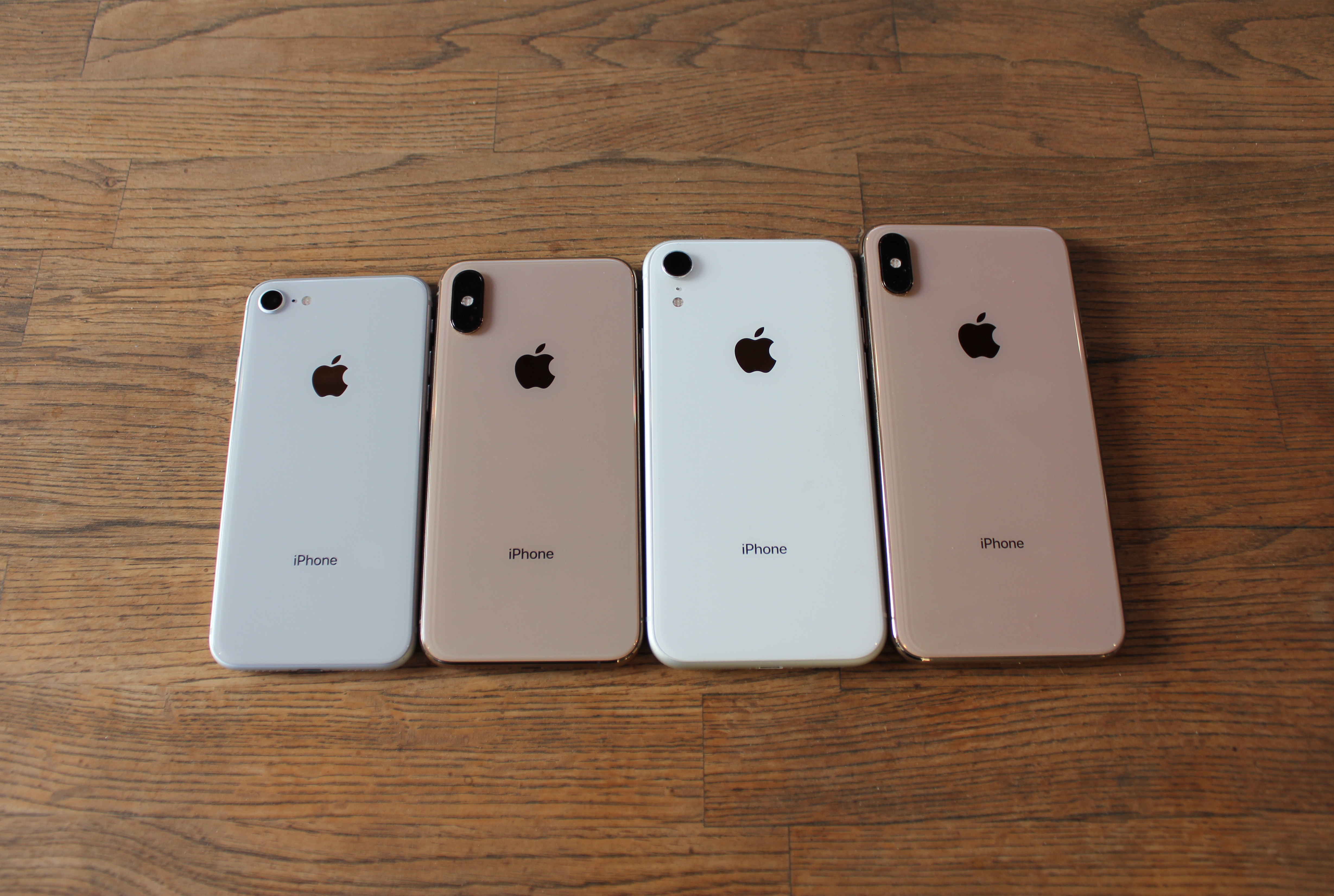
The iPhone 8, the iPhone XS, the iPhone XR, and the iPhone XS Max.

Enlarge / From left to right: the iPhone 8, the iPhone XS, the iPhone XR, and the iPhone XS Max. (credit: Samuel Axon)

Bloomberg reporters Mark Gurman and Debby Wu, who have a track record of accurately reporting major Apple product features before they are announced, published a new report today describing features in 2020’s iPhones and iPad Pros, as well as some new features expected in iOS 13 and new iPhones later this year. They also added to a growing number of reports that claim an updated base iPad and a long-awaited iPad mini follow-up are expected this spring.

Citing several people familiar with Apple’s plans, Bloomberg wrote that Apple plans to add a rear-facing 3D camera to the iPhone and iPad Pro. The 3D camera will scan the environment and create 3D models of it in a similar way to how the front-facing TrueDepth camera on recent iPhones scans a user’s face and tracks their expressions, but it would use a laser scanner instead of the dot-projection technology in current iPhones. This is because the dot-projection tech is not suitable to longer ranges; the new rear-facing 3D cameras would have a range of up to 15 feet.

The camera would add useful depth-sensing data to photos and make augmented reality applications more powerful and more accurate, which Apple has made a major priority internally and in its communications with app developers.

Read 12 remaining paragraphs | Comments


Source: Ars Technica – Bloomberg report reveals details about iOS 13, plus iPhones and iPads through 2020

Today’s selection of articles from Kotaku’s reader-run community: I Want To Finish More Games In 201

Today’s selection of articles from Kotaku’s reader-run community: I Want To Finish More Games In 2019 Resident Evil 2 Remake Is Refreshing…And TerrifyingWarped Pipes: A Note On More Non-Canon GamesTAY Retro: Intellivision – B-17 Bomber [TV Commercial, NA]

Read more…


Source: Kotaku – Today’s selection of articles from Kotaku’s reader-run community: I Want To Finish More Games In 201

Google Chrome Is Testing a Feature to Warn Users About Suspicious URLs

As phishing scams become increasingly sophisticated, Google’s engineers have been exploring ways to help users better identify potentially nefarious URLs. Google Chrome is currently testing a new warning to flag these types of domains, CNET reported Tuesday.

Read more…


Source: Gizmodo – Google Chrome Is Testing a Feature to Warn Users About Suspicious URLs

FBI, Air Force investigators mapped North Korean botnet to aid shutdown

Stylized photograph of a suspicious character at a laptop.

Enlarge / Computer Hacker (credit: ilkaydede / iStock / GettyImages)

On January 30, the US Department of Justice announced that it, the Federal Bureau of Investigation, and the Air Force Office of Special Investigations were engaged in a campaign to “map and further disrupt” a botnet tied to North Korean intelligence activities detailed in an indictment unsealed last September. Search warrants obtained by the FBI and AFOSI allowed the agencies to essentially join the botnet, creating servers that mimicked the beacons of the malware.

“While the Joanap botnet was identified years ago and can be defeated with antivirus software,” said United States Attorney Nick Hanna, “we identified numerous unprotected computers that hosted the malware underlying the botnet. The search warrants and court orders announced today as part of our efforts to eradicate this botnet are just one of the many tools we will use to prevent cybercriminals from using botnets to stage damaging computer intrusions.”

Joanap is a remote access tool (RAT) identified as part of “Hidden Cobra”, the Department of Homeland Security designator for the North Korean hacking operation also known as the Lazarus Group. The same group has been tied to the WannaCry worm and the hacking of Sony Motion Pictures. Joanap’s spread dates back to 2009, when it was distributed by Brambul, a Server Message Block (SMB) file-sharing protocol worm. Joanap and Brambul were recovered from computers of the victims of the campaigns listed in the indictment of Park Jin Hyok in September.

Read 4 remaining paragraphs | Comments


Source: Ars Technica – FBI, Air Force investigators mapped North Korean botnet to aid shutdown