For Easier Dog Baths, Just Shower With Your Pet

My best friend and life partner, Tucker Bordeaux III, recently turned fourteen. While he’s thankfully in relatively good health for a man approaching 100 in dog years, he’s developed some skin issues in his old age that require me to give him a bath every few days. Tucker, as you might imagine, was not pleased with…

Read more…


Source: LifeHacker – For Easier Dog Baths, Just Shower With Your Pet

Facebook Shuts Down AI System After It Continued To Communicate In A Language Humans Can’t Understand

Facebook Shuts Down AI System After It Continued To Communicate In A Language Humans Can’t Understand
This is why we can’t have nice things! Did you ever have the feeling that people are talking behind your back, but you can’t quite make out what they’re saying? Imagine for a minute if instead of people, there were artificial intelligence (AI) bots plotting and scheming in the background — and to make matters worse, they’ve been communicating

Source: Hot Hardware – Facebook Shuts Down AI System After It Continued To Communicate In A Language Humans Can’t Understand

Microsoft Further Pledges Linux Loyalty, Joins Cloud Native Computing Foundation

BrianFagioli quotes BetaNews: Today, Microsoft further pledges its loyalty to Linux and open source by becoming a platinum member of the Cloud Native Computing Foundation. If you aren’t familiar, the CNCF is a part of the well-respected Linux Foundation (of which Microsoft is also a member). With the Windows-maker increasingly focusing its efforts on the cloud — and profiting from it — this seems like a match made in heaven. In fact, Dan Kohn, Executive Director of the foundation says, “We are honored to have Microsoft, widely recognized as one of the most important enterprise technology and cloud providers in the world, join CNCF as a platinum member.” “CNCF is a part of the Linux Foundation, which helps govern for a wide range of cloud-oriented open source projects, such as Kubernetes, Prometheus, OpenTracing, Fluentd, Linkerd, containerd, Helm, gRPC, and many others,” says John Gossman Azure Architect, Microsoft. “Since we joined the Linux Foundation last year, and now have decided to expand that relationship to CNCF membership as a natural next step to invest in open source communities and code at multiple levels, especially in the area of containers.”
The announcement notes that Microsoft has already been contributing code to the Kubernetes project, “as well as running Kubernetes as part of the Azure Container Service.”

Read more of this story at Slashdot.


Source: Slashdot – Microsoft Further Pledges Linux Loyalty, Joins Cloud Native Computing Foundation

Better Call Saul needed 3D printing and an Arduino to arm Mike Ehrmantraut

Learn a little about the tech behind Better Call Saul (video link)

Warning: This story contains mild spoilers for Breaking Bad and S3 of Better Call Saul.

Whether on Better Call Saul or Breaking Bad, Mike Ehrmantraut has proven himself handy within all sorts of situations. So when faced with quite the pickle on this recent season of Saul—the character discovers some shady organization has planted a GPS tracker of sorts within his car’s gas cap—he doesn’t panic. Of course, Mike Ehrmantraut has a plan. He even knows a guy who can get him a MILSPEC-like tracker of his own.

No spoilers, but neither Joseph Ulibarri nor Jason Delap turn out to be Ehrmantraut’s guy. Still, this duo is absolutely essential to putting the gear in Mike’s hands. That’s because this particular GPS tracker didn’t exist before S3 of Better Call Saul, and Ulibarri (special effects) and Delap (props) help lead the behind-the-scenes effort needed to change that. “We try to MacGyver stuff up when things that don’t exist need to,” Delap tells Ars.

Read 17 remaining paragraphs | Comments


Source: Ars Technica – Better Call Saul needed 3D printing and an Arduino to arm Mike Ehrmantraut

Pokemon Go Fest’s blunders result in class-action lawsuit

Enlarge (credit: Daniel Boczarski/Getty Images)

By many accounts, the Pokemon Go Fest in Chicago last week was a failure of epic proportions. The main thing that many festival-goers found—instead of make-believe characters in the game—was themselves standing in huge lines and without Internet at a 20,000-person party to celebrate the augmented reality game’s first year in operation.

Things were so bad that many fans couldn’t even log into the game because of server problems and overloaded cell towers at the Grant Park festival. The tickets had a face value of $20, but sold for much more on the secondary market because of high demand.

“I know that some of you guys have had trouble getting logged on this morning, and I wanted to let you know that we’re working with the cell companies—AT&T, Sprint, Verizon—trying to get that worked out,” Niantic’s chief executive, John Hanke, told the crowd July 22.

Read 4 remaining paragraphs | Comments


Source: Ars Technica – Pokemon Go Fest’s blunders result in class-action lawsuit

Ask Slashdot: What Can You Do With Old Coaxial Cable?

Long-time Slashdot reader Theaetetus writes:

I recently bought a house and the previous owner left some coax (mostly RG59) running between rooms for cable distribution. I’m a cord cutter and don’t need cable, and I’ve already run CAT6e everywhere. But before I pull the RG59 out and try to seal the various holes he left, I figured I’d pick Slashdot’s brain: can anyone think of a good non-cable use for spare coax lines?

Leave your best answers in the comments. What can you do with old coaxial cable?

Read more of this story at Slashdot.


Source: Slashdot – Ask Slashdot: What Can You Do With Old Coaxial Cable?

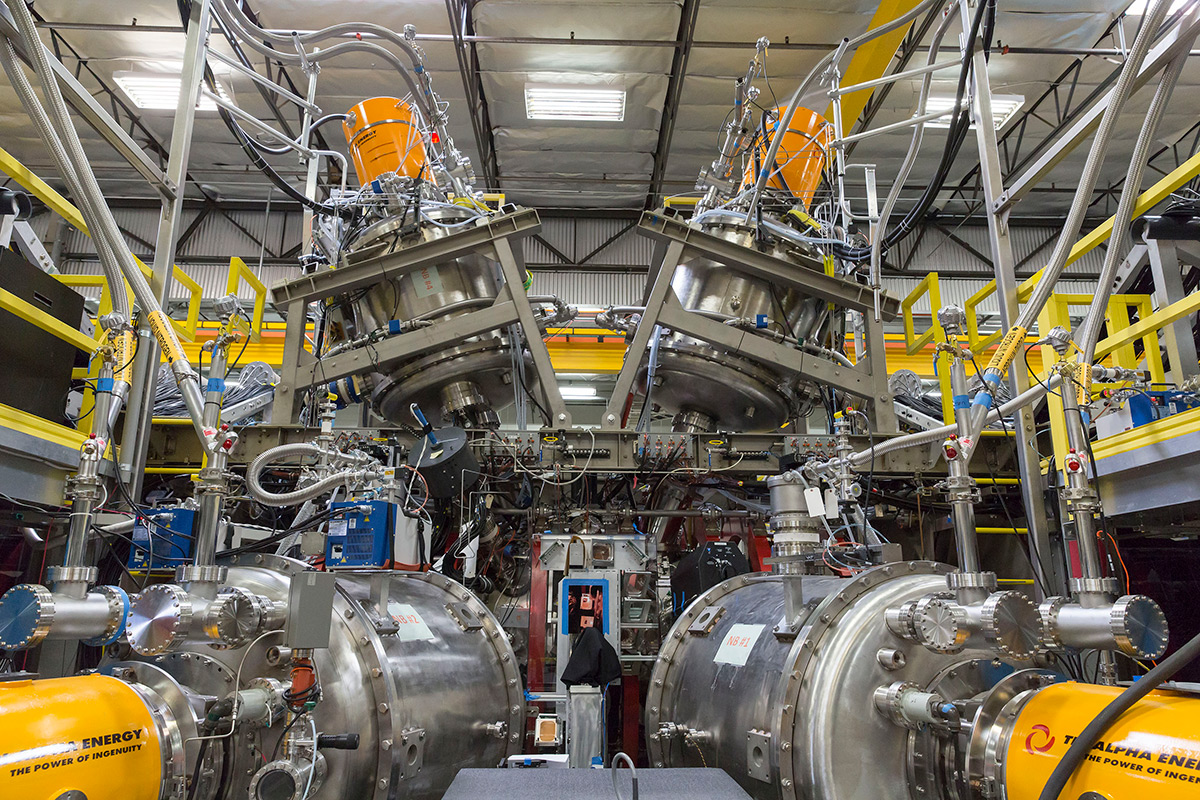
Placing humans at center of computer optimization yields hot plasmas

Read 18 remaining paragraphs | Comments


Source: Ars Technica – Placing humans at center of computer optimization yields hot plasmas

What Happens When Your Bank Loses a Cash Deposit

During my morning walk with my dog Friday we stopped by my local Chase for me to deposit some cash I had. I used the ATM outside, got a receipt confirming my deposit, and continued about my day. Around 4pm I went to look at my Chase account for an unrelated reason and noticed the money wasn’t there. A cash deposit…

Read more…


Source: LifeHacker – What Happens When Your Bank Loses a Cash Deposit

Honolulu Targets Oblivious 'Smartphone Zombies' By Enacting Crosswalk Ban

Honolulu Targets Oblivious 'Smartphone Zombies' By Enacting Crosswalk Ban
Soon it will be illegal to fire off a text message or look down at your phone while crossing the street in Honolulu, the largest city in Hawaii. The ban will take effect towards the end of October, at which point Honolulu will become the first major city in the United States to effectively ban distracted walking, a growing problem as pedestrians

Source: Hot Hardware – Honolulu Targets Oblivious ‘Smartphone Zombies’ By Enacting Crosswalk Ban

After Emissions Scandal, Volkswagen Pledges Charging Stations Across The US

Here’s how the Volkswagen emissions scandal ends in California — and the rest of America. An anonymous reader quotes the Bay Area News Group:
In a decision with lasting implications for the growth of electric vehicles, state regulators on Thursday approved Volkswagen’s plan to invest nearly $1 billion in California’s EV network as penalty for its diesel-emission cheating scandal… San Jose and San Francisco are two of six cities slated for expanded community charging stations. A Volkswagen subsidiary, Electrify America, also will target low-income communities for at least 35 percent of the projects… The first phase calls for $120 million to build 400 charging stations with between 2,000 and 3,000 chargers. About $75 million will be used to develop a high-speed, highway charging network, mostly consisting of 150 kilowatt fast-chargers. The other $45 million will build community charging stations in six metro areas: San Jose, San Francisco, Sacramento, Fresno, Los Angeles and San Diego. Another $44 million will build a “Green City” in Sacramento. It will provide access to zero-emission vehicles to low-income residents, through ride-sharing and other programs. As part of the 10-year comprehensive plan, Electrify America will build a nationwide network of fast-charging stations with universal technology.

That nationwide network is expected to cost another $2 billion.

Read more of this story at Slashdot.


Source: Slashdot – After Emissions Scandal, Volkswagen Pledges Charging Stations Across The US

Will 'Smart Cities' Violate Our Privacy?

An anonymous reader quotes Computerworld’s article on the implications of New York City’s plan to blanket the city with “smart” kiosks offering ultrafast Wi-Fi.
The existence of smart-city implementations like Intersection’s LinkNYC means that New Yorkers won’t actually need mobile contracts anymore. Most who would otherwise pay for them will no doubt continue to do so for the convenience. But those who could not afford a phone contract in the past will have ubiquitous fast connectivity in the future. This strongly erodes the digital divide within smart cities. A 2015 study conducted by New York City found that more than a quarter of city households had no internet connectivity at home, and more than half a million people didn’t own their own computer…
Over the next 15 years, the city will go through the other two phases, where sensor data will be processed by artificial intelligence to gain unprecedented insights about traffic, environment and human behavior and eventually use it to intelligently re-direct traffic and shape other city functions… And as autonomous cars gradually roll out, New York will be well positioned to be one of the first cities to legalize them, because they’ll be safer thanks to 5G, sensors and data from all those kiosks.
Intersection, a Google-backed startup, has already installed 1,000 of the kiosks in New York, and is planning to install 7,000 more. The sides of the kiosk have screens which show alerts and other public information — as well as advertisements, which cover all the costs of the installations and even bring extra money into the city coffers.
New York’s move “puts pressure on other U.S. cities to follow suit,” the article also points out, adding that privacy policies “are negotiated agreements between the company and the city. So if a city wants to use those cameras and sensors for surveillance, it can.”

Read more of this story at Slashdot.


Source: Slashdot – Will ‘Smart Cities’ Violate Our Privacy?