Qualcomm, Microsoft announce Snapdragon 835 PCs with gigabit LTE

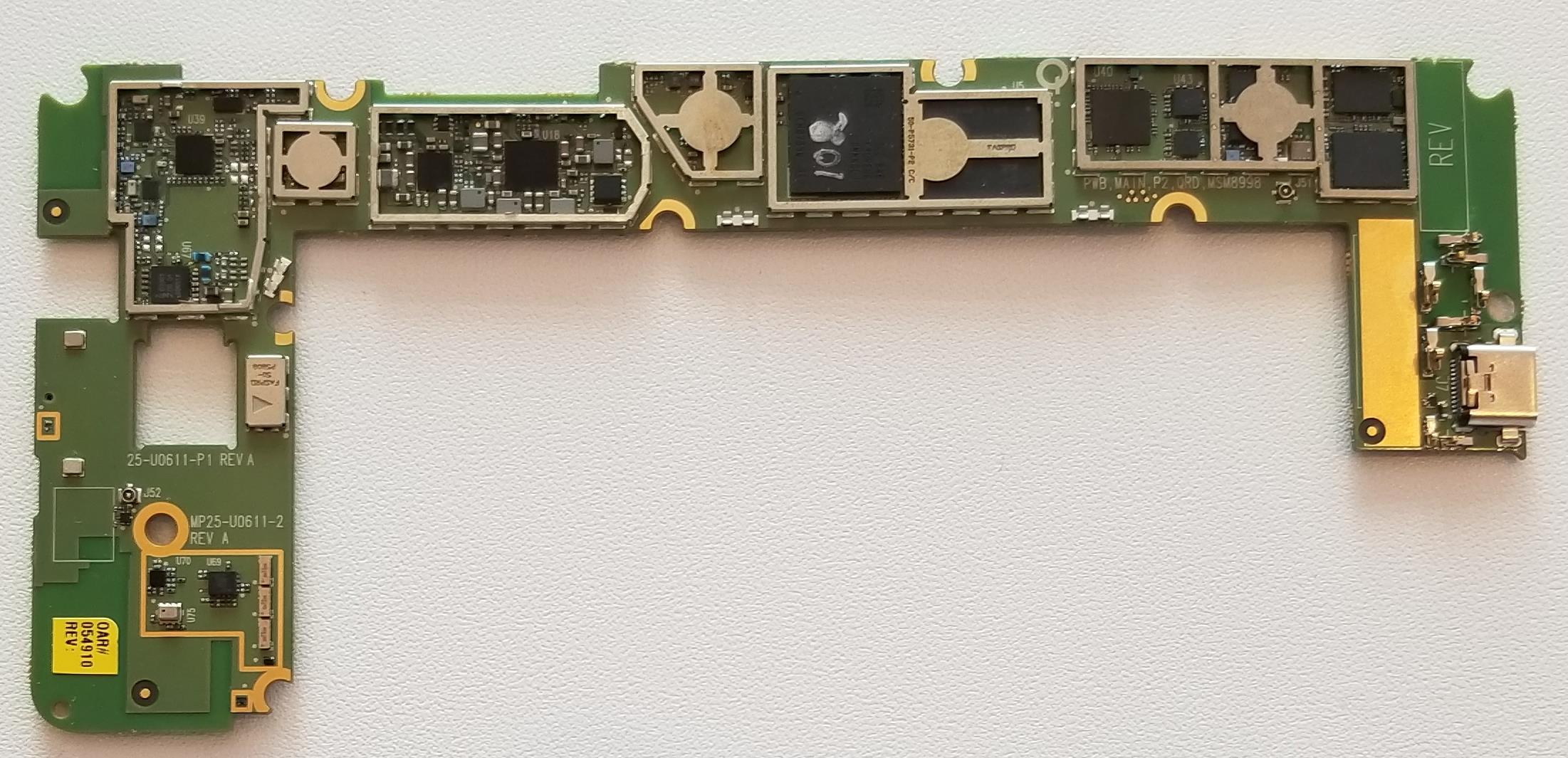
Enlarge / Qualcomm’s prototype of a Snapdragon 835 motherboard has an area of 50.4 square centimetres. (credit: Qualcomm)

Qualcomm’s Snapdragon ARM-based systems-on-chips are mainstays of the smartphone world, but the company is now positioning them as more than just smartphone processors: in conjunction with Microsoft and the new Windows 10 for ARM processors, Qualcomm is now pitching the chips as components of a new PC platform that brings together the best of the PC and the smartphone.

The Snapdragon 835 chip, incorporating Qualcomm’s latest X16 LTE modem, forms the basis of the Snapdragon Mobile PC Platform. Qualcomm claims that using the Snapdragon platform will offer a combination of the PC form factor and breadth of software, with features that are standard in smartphones: on-the-go connectivity, light weight, silent operation, long battery life, and no fan.

Qualcomm says that PCs built using the new chips will offer up to 50 percent more battery life than x86 systems, with four- to five-times longer standby times. They’ll take the Connected Standby capability already found in some Windows PCs—this allows the system to do things like sync mail and receive notifications even when “sleeping”—and make it better, thanks to their LTE connectivity.

Read 3 remaining paragraphs | Comments


Source: Ars Technica – Qualcomm, Microsoft announce Snapdragon 835 PCs with gigabit LTE

Qualcomm Announces First OEMs for Windows 10 on Snapdragon 835

Today, as part of Computex 2017, Qualcomm and Microsoft are joint announcing the next steps for their Windows on Snapdragon strategy. As previously reported, Qualcomm and Microsoft have collaborated to emulate x86 on the Snapdragon 835 SoCs to the extent where Windows 10 is now functional for devices to come to market.


ASUS, HP and Lenovo will be the first OEMs to adopt the platform, which means we will see devices (laptops, clamshells, 2-in-1s) with Windows 10 but running on ARM. Qualcomm notes that the ubiquitous connectivity akin to smartphones is becoming an important aspect to how users use their computers as well as consume content – introducing the Snapdragon 835 on a productivity platform combined with the integrated Gigabit LTE baseband (Qualcomm’s X16) is a step in that direction along with mobile SoC levels of power draw.


When we first heard about Windows on Snapdragon, we instantly thought that Qualcomm and Microsoft would be going after the Chromebook market but the announcement today is clear that both companies are going for something a bit more substantial along with all-day battery life. The official press release states that ‘Sleek, thin and fanless PCs running a Windows 10 experience’, with the 10nm SoC, sounds something more than a basic Chromebook.


One might suggest that the Snapdragon 835 is a premium SoC, and Qualcomm certainly wants to promote their hardware in high-end premium devices. With Snapdragon 835 in high-end smartphones, one of the elements Qualcomm is promoting is the fact that their SoC solution has a smaller PCB footprint: OEMs can use the extra space and weight for extra battery. This is part of the story which Qualcomm states allowing a ‘truly always on’ device such that updates can run in the background when the system is in sleep modes.


Part of the demonstrations at the Computex show floor, Qualcomm was showing Windows 10 being used with UWP applications but also some non-UWP apps being used, such as 7-zip. The OS element is something we’re likely to hear during Microsoft’s announcements during the week, which I feel might be a tipping point for these sorts of platforms. I’ve been using the MateBook X this week during Computex, and the battery life is actually fairly decent for an 1800 Euro ultraportable with a 15W CPU: but there’s still a small amount of battery anxiety for sure, especially during network use. Qualcomm’s value-add is their baseband experience, which they say is a big plus on this new platform.


Having a proper productivity device is a plus, but big questions still surround performance, especially when emulating x86. It’s a problem that has been tackled and failed several times before. The Qualcomm issue here is somewhat smaller than previous attempts, because as far as we understand it only has to target Windows 10, and they’ve worked directly with Microsoft in order to support it. Qualcomm and Microsoft say that this combination is now a solved problem with minimal overhead.


The carousel image at the top shows the S835 compared to a 14nm equivalent, showing the ‘board space’ savings of up to 30%. Qualcomm is keen to point out that a competitor’s platform will need things like M.2 in order to add storage, which they say also take up board space compared to a Qualcomm solution.


Footprints


As part of our briefing, Qualcomm showed off an example reference PCB design that might go into the devices that they are targeting. 


On the left is an Intel solution, with on the right being from Qualcomm: 96.1cm2 compared to 50.4cm2 respectively. Here’s a closer image of the Qualcomm solution (click through for high resolution):


The SoC is on the top right, with storage and memory to the left. It’s worth noting on the far right is a USB Type-C connection, which would be the power input as well as how to connect other devices. There is no SIM card, as Qualcomm is integrated a multi-region eSIM which is activated at the time of purchase.


Source: AnandTech – Qualcomm Announces First OEMs for Windows 10 on Snapdragon 835

Nest Cam IQ is a $300 indoor camera with a 6-core processor

Ron Amadeo

Nest is adding a third camera to its lineup, after the Nest Cam and Nest Cam Outdoor. The new Nest Cam IQ occupies a premium spot over the other two, and it is an indoor-only $300 “sort-of 4K” camera.

I say “sort-of 4K” because the Nest Cam IQ does have a 4K (8MP) sensor, but to reduce storage and wireless data needs, it only records in 1080p. The 4K sensor is used for a digital zoom feature, and with a fancy cloud-powered “enhance!” mode, Nest is promising a “12x digital zoom.” Zooming happens automatically when the Nest Ca IQ detects a person, at which point the camera will start saving two video streams, one at full crop and one zoomed in. Recording two video streams at once means the IQ is doing a significant amount of on-board processing, which is powered by a surprisingly beefy six-core Qualcomm processor.

Read 5 remaining paragraphs | Comments


Source: Ars Technica – Nest Cam IQ is a 0 indoor camera with a 6-core processor

Sony Ships Its Last Ever PlayStation 3 In Japan

After 11 years, Sony has stopped shipping the PlayStation 3 to retailers in Japan. The country stopped production on the 500GB model in December last year, but now a recent update on PlayStation Japan’s website suggests that the other lingering units have all been shipped as well. It’s only a matter of time before the console stops being produced altogether in other parts of the world. Engadget reports:
Selling over 70 million units in just seven years, the PlayStation 3 was certainly a console to be reckoned with. Yet, for all its achievements, the long-surviving gaming machine initially made a name for itself for all the wrong reasons. With Sony riding high on the PlayStation 2’s market-leading sales numbers, its successor launched at the eye-watering price of $499 — and consumers weren’t too happy about it. Luckily for Sony, publishers stuck with the pricey console, and exclusive games like Uncharted, Heavy Rain, The Last Of Us and Metal Gear Solid 4 helped to right the course of Sony’s initially water-riddled ship. With the sun-setting on the aging console in the East, the news doesn’t bode well for the future of the PlayStation 3 across the rest of the world. Sony has previously announced that PS Now will soon move exclusively to PS4 and PC. While few players will be mourning the loss of the pricey service, there are many PS3 owners still benefitting from free games on PlayStation Plus and downloading new content from the PS Store. As Sony slowly begins to start winding the console down, it’s unlikely that gamers will be able to continue to use these services for much longer on the aging gaming system.

Read more of this story at Slashdot.


Source: Slashdot – Sony Ships Its Last Ever PlayStation 3 In Japan

WannaCry Theory Points To Currency Manipulation

Wannacry Ransomware delivered on its namesake a few weeks ago after being unleashed into the digital realm. Chaos ensued. Infosec professionals around the globe could be found curled up in the fetal position and dehydrated from crying out their bodily fluids as they lamented the patch policies of their corporate overlords. Or perhaps not. Some companies fared well.

In the weeks that followed, declarations of attribution began to fly from all corners of the media. Some claimed that the attack was carried out by a Nation State like Russia, while others pointed out snippets of code that invoked names like the Lazarus group. There was no shortage of blame going around. There is also no shortage on disagreement as to who conducted this attack and why.


One interesting theory that has emerged comes from Digital Forensics Expert Joseph Carson. To put it simply, Wannacry was used as a tool for currency manipulation and the insider trading of BitCoin.

Carson laid out his thoughts in an interview with SecurityWeek:
“WannaCry, was a sleight of hand, a deception. The ransomware was merely a mechanism to get a large number of people to open a Bitcoin wallet — and that by itself would drive up the value of Bitcoin.”

It sounds a bit far fetched until you look at the numbers. Over the course of the outbreak, Bitcoin currency value nearly doubled.

If he’s right, the authors of WannaCry may have just socially engineered planet Earth into giving them exactly what they wanted all along.

You can find the interview here.

Discussion

Source: [H]ardOCP – WannaCry Theory Points To Currency Manipulation

AMD CPU Updates: 16 Core ThreadRipper w/64 PCIe Lanes This Summer, Epyc Launching June 20th

Wrapping up just a bit ago was AMD’s annual Computex press conference. AMD brings their A-game to Computex, and for a good reason: as a PC focused show, it gives them great exposure, but it also allows them to promote their OEM relationships, the latter of which are crucial to AMD’s survival as the CPU underdog. Computex in turn isn’t a venue for deep technical announcements, but it’s a good place to get clarity on AMD’s CPU roadmap.


Starting things off then, let’s talk about ThreadRipper. AMD’s previously announced many-core CPU for the high-end PC desktop and workstation market was first announced at Financial Analyst Day a few weeks back. AMD is now in the process of slowly releasing information about the chip to build up interest ahead of its launch – which, before you ask, hasn’t been set yet and is still “this summer”.


At today’s press conference, AMD has confirmed that the 16 core processor will for most purposes be half of an Epyc processor. This means that the two die MCM chip will feature 4 DDR4 channels and a whopping 64 lanes of PCIe, with all 64 lanes being enabled for all ThreadRipper SKUs. This will be broken up into 60+4: 60 lanes directly from the CPU for feeding PCIe and M.2 slots, and then another 4 lanes going to the chipset (with an undisclosed number of lanes then coming off of it) to drive basic I/O, USB, and other features. AMD seems to be particularly relishing the point on PCIe lanes in light of the yesterday’s Intel HEDT announcement, which maxes out at 44 lanes and no chip below $1000 actually has all of them enabled.


The launch chipset for ThreadRipper will be the X399 chipset (ed: at this point AMD and Intel are literally trying to one-up each other). No details have been released on it thus far, so we’ll have to see what AMD has up their sleeve. But coming so close to the Ryzen launch, it doesn’t sound like it’ll be radically different. Otherwise we’re hoping to grab some pictures of X399 boards at the show today, as those should be on display. The ThreadRipper/Epyc socket in particular should be interesting; the chip is nothing short of massive, and in the one photo AMD has released so far of an Epyc motherboard, the socket looks equally huge.


Finally, not to be outdone, AMD’s 32 core & 128 PCIe lane Epyc CPU for servers has also received some news of its own. AMD’s first promising product in the server space in nearly half a decade will be launching on June 20th.


Source: AnandTech – AMD CPU Updates: 16 Core ThreadRipper w/64 PCIe Lanes This Summer, Epyc Launching June 20th

Intelligence Officials Disturbed By Trump's Attempts to Get World Leaders to Call His Personal Cellphone

Donald Trump just wants to be everyone’s best bud and he’d rather they skip the formalities and give him a call on his personal cellphone. For many reasons, this is very worrisome to the people who get paid to worry about this sort of thing.

Read more…


Source: Gizmodo – Intelligence Officials Disturbed By Trump’s Attempts to Get World Leaders to Call His Personal Cellphone

Experts Call For Preserving Copper, Pneumatic Systems As Hedge For Cyber Risk

chicksdaddy quotes a report from The Security Ledger: The United States should invest resources in preserving aging, analog infrastructure including telecommunications networks that use copper wire and pneumatic pumps used to pump water as a hedge against the growing threat of global disruption resulting from a cyber attack on critical infrastructure, two researchers at MITRE argue. The researchers, Emily Frye and Quentin Hodgson with The MITRE Corporation, note that critical infrastructure is increasingly run from converged IP (Internet Protocol) based networks that are vulnerable to cyber attack. That includes so-called “lifelines” — essential functions like water, electricity, communications, transportation and emergency services. That marks a critical departure from the past when such systems were isolated from the internet and other general purpose networks. “Each lifeline rides on, and is threaded together by, digital systems. And humans have yet to design a digital system that cannot be compromised,” they write. With such civilization-sustaining functions now susceptible to attack, the onus is on society to maintain a means of operating them that does not rely on digital controls, Fry and Hodgson write. In many cases, that means preserving an older generation of analog infrastructure and management systems that could be manually operated, The Security Ledger reports. From their article: “In the case of communications, for instance, what is required is the preservation of a base core of copper-enabled connectivity, and the perpetuation of skills and equipment parts to make analog telephones work. Today, we see a move to decommission the copper-wire infrastructure. From a pure business standpoint, decommissioning copper is the right thing to do; but from a public-safety and homeland security perspective, we should reconsider. Decommissioning copper increases homeland security risk, because failover planning calls simply for relying on another server, router, or data center that is also subject to compromise.”

Read more of this story at Slashdot.


Source: Slashdot – Experts Call For Preserving Copper, Pneumatic Systems As Hedge For Cyber Risk

Qualcomm Recruits ASUS, HP And Lenovo For Snapdragon 835 Powered Always-Connected Windows 10 PCs

Qualcomm Recruits ASUS, HP And Lenovo For Snapdragon 835 Powered Always-Connected Windows 10 PCs
Microsoft turned a lot heads late last year when it announced that Windows 10 would soon bring native support for ARM processors. More specifically, support has only been granted for Qualcomm’s Snapdragon family of SoCs, which are typically reserved for smartphones and tablets.

Today, Qualcomm announced that it has signed up three major

Source: Hot Hardware – Qualcomm Recruits ASUS, HP And Lenovo For Snapdragon 835 Powered Always-Connected Windows 10 PCs

AMD Vega Updates: Vega Frontier Edition Available June 27th, Vega RX to be launched at SIGGRAPH at end of July

With Computex in full swing this week, AMD’s press conference just wrapped up for the morning. While the bulk of the news in the conference was on AMD’s CPU and APU plans – where the company continues to roll out new Ryzen products – the company’s CEO, Dr. Lisa Su did have a bit to say on the GPU side of matters.


First off, the previously announced Vega Frontier Edition card will be available on June 27th, just making AMD’s previous H2’17 commitment for Vega. The Frontier Edition is AMD’s first batch of Vega-based cards, and is being marketed specifically towards early adopters in the professional segment. A price has not been announced, but expect it to be high.


Second up, Lisa promised more information on the Vega-based Radeon Instinct MI25 on June 20th. This is when the company will be launching their Epyc processor for servers, so they are aligning server/datacenter announcements across product lines. Instinct won’t be launching here, but we should get at least a few more details on configurations and positioning.


Finally, in the piece of news that pretty much everyone has been on the edge of their seats for, AMD has finally announced a date where they’ll announce the consumer-oriented Radeon RX Vega. The mythical card’s launch will be taking place at SIGGRAPH this year, the Association for Computing Machinery’s annual graphics conference. SIGGRAPH is an interesting choice for a venue, as it’s not a consumer event (as opposed to say E3 or IFA), but AMD is no stranger to the show, having launched their Radeon WX professional products there last year. SIGGRAPH runs from July 30th to August 3rd, so it’s almost exactly 2 months out.


For anyone looking for any further details on RX Vega however, you’re out of luck. To AMD’s credit, they are clearly well aware of pent-up consumer interest in the card and they did show a demo of CrossFired RX Vegas playing Prey at 4K, but they are not revealing any additional information on the card or its specifications at this time. This information is presumably all going to come at the same time at SIGGRAPH. The million dollar question now being whether the SIGGRAPH event is a hard launch, or whether AMD will unveil the products and then have them ship a few weeks later, which would be similar to how the Polaris launch went down.


Source: AnandTech – AMD Vega Updates: Vega Frontier Edition Available June 27th, Vega RX to be launched at SIGGRAPH at end of July

ASUS Reveals The Ultra-Slim ROG Zephyrus Laptop With GTX 1080 Max-Q

Hot off the heels of NVIDIA announcing the GTX Max-Q design, ASUS is announcing the latest laptop in their Republic of Gamers lineup, with the ROG Zephyrus GX501VI and GX501VS featuring an Intel Core i7-7700HQ and NVIDIA GTX 1080 Max-Q in a design which is less than 1.7 cm thick, and weighs in at only 2.2 Kg. Although not everyone needs to go thin and light, those that do will appreciate even more performance in a new slim laptop.


ASUS has a great lineup of gaming laptops, with everything from low cost, to desktop replacement designs. The ASUS ROG Zephyrus takes the high performance premium segment to a smaller, lighter design. Thanks to the GTX Max-Q GPU launch from NVIDIA, some better binning, coupled with lowered GPU frequencies, bring most of the performance of the GTX 1080 to even smaller notebooks, which would have struggled to dissipate the heat generated by this graphics solution without the larger volume for cooling a larger, heavier laptop provides.


ASUS isn’t the only one to bring GTX 1080 to a thin and light design, of course, and the key will be their cooling implementation. ASUS is touting its Active Aerodynamic System (AAS) to keep the laptop cool and quieter, and when the Zephyrus is opened, the chassis actually opens up slightly to allow greater airflow in without sacrificing the laptop thickness when it’s closed for travel, and ASUS says it allows 20% more airflow with this flexible design. Other thin and light GTX 1080 designs have been pretty loud though, so hopefully the combination of Max-Q and AAS can keep the noise levels under control.


ASUS ROG Zephyrus
CPU Intel Core i7-7700HQ
GPU NVIDIA GTX 1080 Max-Q
Display 15.6-inch 120Hz 1920×1080 w/G-SYNC
Memory Up to 24 GB DDR4-2400
Storage PCIe NVMe 256GB/512GB/1TB
Wireless 802.11ac with Bluetooth
Connectivity 1 x Thunderbolt 3 Type-C

4 x USB 3.1 Type-A

1 x HDMI 2.0

1 x 3.5mm headset
Keyboard Aura RGB Backlit with 30-key rollver and 1.4mm travel
Battery 50 Wh
Dimensions 379x262x16.9 mm
Weight 2.2 Kg
Price GX501VS: $2299 and up

GX501VI: $2699 and up

The ROG Zephyrus features a 15.6-inch display, with a 1920×1080 resolution and 120 Hz refresh rate, and it features NVIDIA G-SYNC. Honestly, at this resolution, the GTX 1080 is generally overkill, but at least the high refresh panel should help it there. ASUS claims 100% sRGB coverage, although they tend not to worry much about panel accuracy and grayscale, so hopefully we can check it out.


The rest of the laptop is what you’d expect with plenty of mobile performance. Intel’s Core i7-7700HQ provides the processing grunt, and ASUS will pair it with up to 24 GB of DDR4-2400. Storage is all M.2 PCIe based SSDs with 256GB/512GB/1TB options.


ASUS has been big on the Thunderbolt train, and it’s nice to see that the Zephyrus continues this trend with one USB-C port with Thunderbolt 3 and USB 3.1 Gen2, and because that’s more the future and less the present, they also include four USB 3.1 Type-A ports. HDMI 2.0 is also available so this laptop should be VR ready if you’re into that.


ASUS has moved the keyboard to the front of the notebook, which helps with their cooling and makes it feel more like a desktop system, and the keyboard features RGB lighting which appears to be in zones rather than per-key, although they do have customizable effects for the WASD and QWER key groups. As a gaming notebook, it also features anti-ghosting keys which can support up to 30 keys pressed at the same time, in case you sprout a whole bunch more fingers.


The ROG Zephyrus will be available at the end of June in the USA and Canada. The GX501VI model will start at $2699 USD, and the GX501VS will start at $2299. ASUS doesn’t specify what the two models designate, but the VS likely downgrades the GPU to a GTX 1070.


Source: ASUS


Source: AnandTech – ASUS Reveals The Ultra-Slim ROG Zephyrus Laptop With GTX 1080 Max-Q