Crucial Annouonces P5 and P2 NVMe SSDs: Going In-House for the High-End

Micron’s consumer brand Crucial has introduced two new NVMe SSD product lines, including their first high-end NVMe SSD which features Micron’s in-house SSD controller design. However, Crucial’s adoption of NVMe continues to lag behind most brands as both new models are still using PCIe 3 interfaces while the high-end market is migrating to PCIe 4.
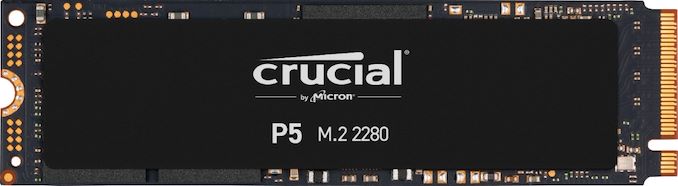


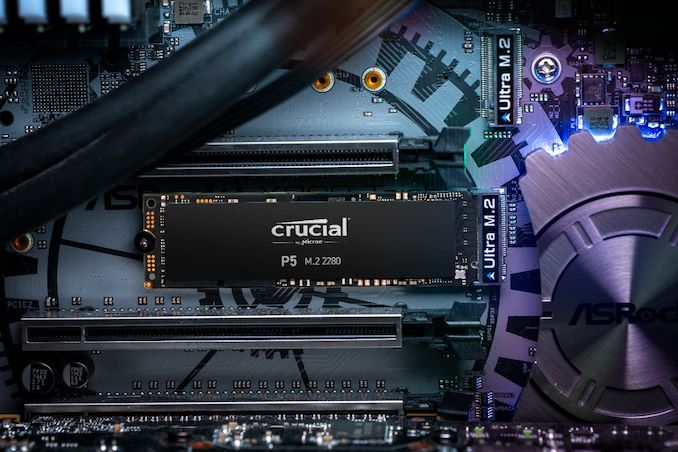
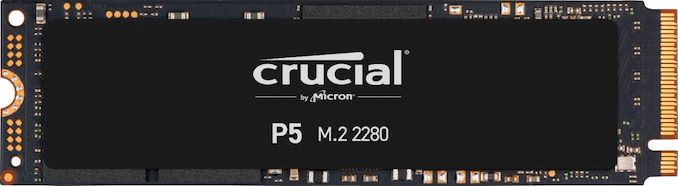
The Crucial P5 is the first retail SSD to use a controller designed by Micron. Their in-house SSD controller design efforts date back at least as far as their 2015 acquisition of Tidal Systems, but the first product with a Micron-designed SSD controller only showed up a year ago: the Micron 2200 series client OEM SSD. The Crucial P5 is a clear step up from that, but still uses a PCIe gen3 interface, so it won’t be setting any performance records and will face an increasing number of PCIe gen4 competitors as the year goes on. However, it should still deliver solid performance for all but the most demanding prosumer use cases, especially since it looks like Intel won’t be offering PCIe gen4 host support this year. The P5 also includes support for all the usual encryption standards, features that are missing from many high-end NVMe SSDs that target the consumer market exclusively and not business customers.


Crucial P5 SSD Specifications
Capacity 250 GB 500GB 1 TB 2 TB
Form Factor M.2 2280
Interface PCIe 3.0 x4, NVMe
Controller Micron in-house design
NAND Flash Micron 96L 3D TLC*
DRAM Yes
Sequential Read 3400 MB/s
Sequential Write 1400 MB/s 3000 MB/s
Random Read IOPS 210k 390k 430k
Random Write IOPS 355k 500k
Max Power 7 W
Encryption TCG Opal 2.0, IEEE 1667, eDrive
Warranty 5 years
Write Endurance 150 TB

0.3 DWPD
300 TB

0.3 DWPD
600 TB

0.3 DWPD
1200 TB

0.3 DWPD

The Crucial P2 is their second entry-level NVMe SSD, but it is not a direct replacement for the QLC-based P1. The P2 is at least initially only available in low capacities of 250GB and 500GB, and cuts costs by using a DRAMless controller with TLC NAND rather than the P1’s combination of cheaper QLC NAND but a controller with a DRAM cache. Micron hasn’t disclosed what controller is used on the P2, but it seems likely they’re sourcing from a third party as with previous Crucial SSDs—and it might not even be the same controller for both capacities. While both capacities have performance specs that fall within the ranges we expect for a four-channel DRAMless NVMe SSD, the 500GB model is actually the slower one by most metrics.  This indicates that at least one of either the NAND or the controller is meaningfully different from the 250GB model. The 500GB might be using NAND parts with a higher per-die capacity and thus not have any greater parallelism, or it may be using an entirely different controller (or both). The 500GB model’s endurance rating is also the same 150TB as the 250GB model, which puts it in QLC territory (though still better than the 500GB P1’s 100TBW rating).
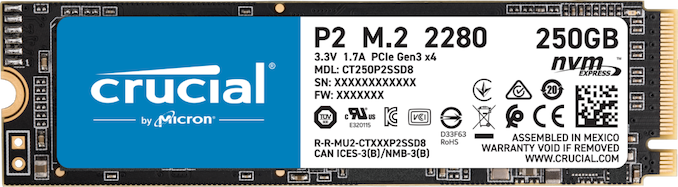


Micron’s press release for the P2 mentions that it will be available in capacities up to 1TB, but the spec sheets make no mention of the 1TB model. This may be another situation like the 2TB Crucial P1 that was announced as coming a bit later than the rest of the lineup, but never hit the market.


Crucial P2 SSD Specifications
Capacity 250 GB 500GB
Form Factor M.2 2280
Interface PCIe 3.0 x4, NVMe
Controller undisclosed
NAND Flash Micron 96L 3D TLC*
DRAM No
Sequential Read 2100 MB/s 2300 MB/s
Sequential Write 1150 MB/s 940 MB/s
Random Read IOPS 170k 95k
Random Write IOPS 260k 215k
Max Power 2.5 W 3.5 W
Encryption None
Warranty 5 years
Write Endurance 150 TB

0.3 DWPD
150 TB

0.16 DWPD
MSRP $54.99

(22¢/GB)
$64.99

(13¢/GB)

Micron has confirmed that both the P2 and P5 are currently using their 96L 3D TLC NAND, but they reserve the right to change that in the future. It’s unlikely that the P5 will be switched to QLC NAND, but much like the MX500 SATA drive this model might stick around for years even after a replacement with a faster interface (PCIe 4) is introduced. In that case, it would be reasonable to expect the P5 to be updated with a newer generation of TLC NAND, and performance probably won’t change significantly. The P2 product line could easily become a mix of TLC and QLC, which Micron has done with the entry-level BX500 SATA SSDs. If/when the P2 gets 1TB or larger capacity options those would seem likely to use QLC NAND, and the 500GB model could probably also be switched to QLC given that its rated performance is not too different from the 500GB P1. We encourage Micron to be more transparent about their controller and NAND choices and especially any post-launch changes.


The Crucial P5 is not yet listed on online retailers, but Crucial.com has the P2 available for direct purchase and it’s starting to show up on some online retailers. Launch prices of $55 and $65 are similar to competitors like the WD Blue SN550, but Western Digital has set a performance standard for entry-level NVMe drives which the Crucial P2 may have trouble beating.


Source: AnandTech – Crucial Annouonces P5 and P2 NVMe SSDs: Going In-House for the High-End
Crucial Announces P5 and P2 NVMe SSDs: Going In-House for the High-End
Micron’s consumer brand Crucial has introduced two new NVMe SSD product lines, including their first high-end NVMe SSD which features Micron’s in-house SSD controller design. However, Crucial’s adoption of NVMe continues to lag behind most brands as both new models are still using PCIe 3 interfaces while the high-end market is migrating to PCIe 4.


The Crucial P5 is the first retail SSD to use a controller designed by Micron. Their in-house SSD controller design efforts date back at least as far as their 2015 acquisition of Tidal Systems, but the first product with a Micron-designed SSD controller only showed up a year ago: the Micron 2200 series client OEM SSD. The Crucial P5 is a clear step up from that, but still uses a PCIe gen3 interface, so it won’t be setting any performance records and will face an increasing number of PCIe gen4 competitors as the year goes on. However, it should still deliver solid performance for all but the most demanding prosumer use cases, especially since it looks like Intel won’t be offering PCIe gen4 host support this year. The P5 also includes support for all the usual encryption standards, features that are missing from many high-end NVMe SSDs that target the consumer market exclusively and not business customers.


Crucial P5 SSD Specifications
Capacity 250 GB 500GB 1 TB 2 TB
Form Factor M.2 2280
Interface PCIe 3.0 x4, NVMe
Controller Micron in-house design
NAND Flash Micron 96L 3D TLC*
DRAM Yes
Sequential Read 3400 MB/s
Sequential Write 1400 MB/s 3000 MB/s
Random Read IOPS 210k 390k 430k
Random Write IOPS 355k 500k
Max Power 7 W
Encryption TCG Opal 2.0, IEEE 1667, eDrive
Warranty 5 years
Write Endurance 150 TB

0.3 DWPD
300 TB

0.3 DWPD
600 TB

0.3 DWPD
1200 TB

0.3 DWPD

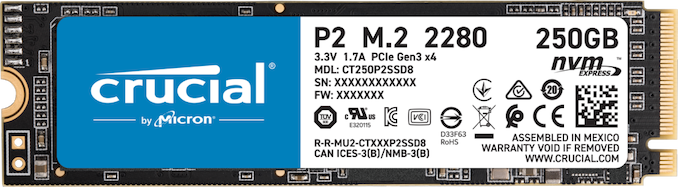
The Crucial P2 is their second entry-level NVMe SSD, but it is not a direct replacement for the QLC-based P1. The P2 is at least initially only available in low capacities of 250GB and 500GB, and cuts costs by using a DRAMless controller with TLC NAND rather than the P1’s combination of cheaper QLC NAND but a controller with a DRAM cache. Micron hasn’t disclosed what controller is used on the P2, but it seems likely they’re sourcing from a third party as with previous Crucial SSDs—and it might not even be the same controller for both capacities. While both capacities have performance specs that fall within the ranges we expect for a four-channel DRAMless NVMe SSD, the 500GB model is actually the slower one by most metrics.  This indicates that at least one of either the NAND or the controller is meaningfully different from the 250GB model. The 500GB might be using NAND parts with a higher per-die capacity and thus not have any greater parallelism, or it may be using an entirely different controller (or both). The 500GB model’s endurance rating is also the same 150TB as the 250GB model, which puts it in QLC territory (though still better than the 500GB P1’s 100TBW rating).


Micron’s press release for the P2 mentions that it will be available in capacities up to 1TB, but the spec sheets make no mention of the 1TB model. This may be another situation like the 2TB Crucial P1 that was announced as coming a bit later than the rest of the lineup, but never hit the market.


Crucial P2 SSD Specifications
Capacity 250 GB 500GB
Form Factor M.2 2280
Interface PCIe 3.0 x4, NVMe
Controller undisclosed
NAND Flash Micron 96L 3D TLC*
DRAM No
Sequential Read 2100 MB/s 2300 MB/s
Sequential Write 1150 MB/s 940 MB/s
Random Read IOPS 170k 95k
Random Write IOPS 260k 215k
Max Power 2.5 W 3.5 W
Encryption None
Warranty 5 years
Write Endurance 150 TB

0.3 DWPD
150 TB

0.16 DWPD
MSRP $54.99

(22¢/GB)
$64.99

(13¢/GB)

Micron has confirmed that both the P2 and P5 are currently using their 96L 3D TLC NAND, but they reserve the right to change that in the future. It’s unlikely that the P5 will be switched to QLC NAND, but much like the MX500 SATA drive this model might stick around for years even after a replacement with a faster interface (PCIe 4) is introduced. In that case, it would be reasonable to expect the P5 to be updated with a newer generation of TLC NAND, and performance probably won’t change significantly. The P2 product line could easily become a mix of TLC and QLC, which Micron has done with the entry-level BX500 SATA SSDs. If/when the P2 gets 1TB or larger capacity options those would seem likely to use QLC NAND, and the 500GB model could probably also be switched to QLC given that its rated performance is not too different from the 500GB P1. We encourage Micron to be more transparent about their controller and NAND choices and especially any post-launch changes.


The Crucial P5 is not yet listed on online retailers, but Crucial.com has the P2 available for direct purchase and it’s starting to show up on some online retailers. Launch prices of $55 and $65 are similar to competitors like the WD Blue SN550, but Western Digital has set a performance standard for entry-level NVMe drives which the Crucial P2 may have trouble beating.


Source: AnandTech – Crucial Announces P5 and P2 NVMe SSDs: Going In-House for the High-End
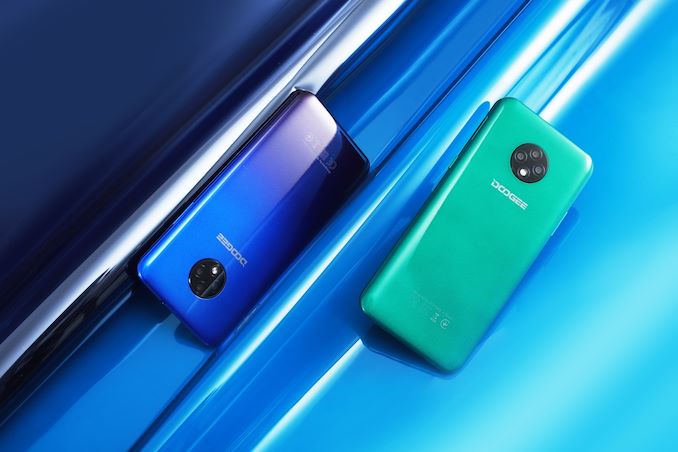
How Cheap Can You Get a 6.52-inch Smartphone? DOOGEE’s X95 is only $60

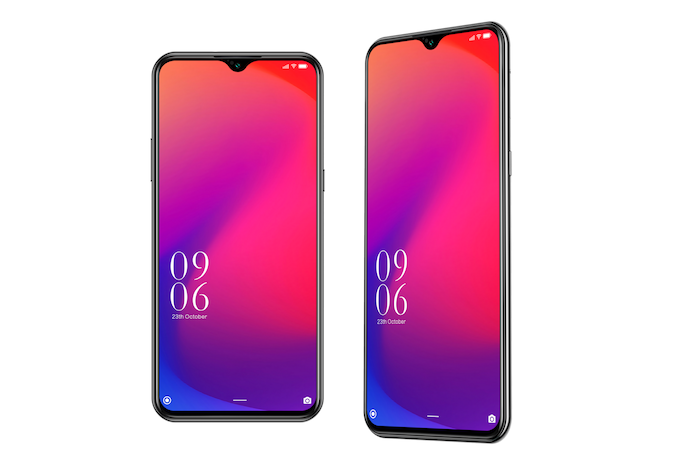
Even in 2020, I would have never have guessed you could build a 6-inch or above large display smartphone for anything less than $100. We have seen a number of devices around the low 5-inch mark, such as the Alcatel models, that skirt around $100-$120, but to both offer a bigger screen at half that price? DOOGEE has gone a bit crazy. The new X95 is listed as only $60, but affords a 6.52-inch full teardrop display with an impressive 90% screen-to-body ratio and 600 nits brightness.


Now, for $60, the rest of the device has to be bargain basement, surely? The display actually only has a resolution of 1200×540, which means 202 pixels-per-inch. There’s the quad-core Mediatek A53 MT6737 SoC inside, running at 1.3 GHz, and only 2 GB of DRAM. There will be two models, of 16 GB or 32 GB storage, but the X95 does support a microSD card up to 128 GB. The battery is a sizeable 4350 mAh with 10W fast charging over microUSB, and it offers Android 10 along with 4G connectivity on bands 1/3/7/8/10.


For cameras, there are three on the back: a 13MP main camera, a 2MP portrait camera, and a 2x optical zoom camera. Together these offer a bokeh effect for portraits. The front facing camera is a 5MP unit, which also enables face unlocking which DOOGEE states can be achieved in ~0.2 seconds. We’re not going to be winning any awards for camera quality here (it is unlikely DOOGEE has any AI accelerated camera features), but for $60 there is actually more than I expected.


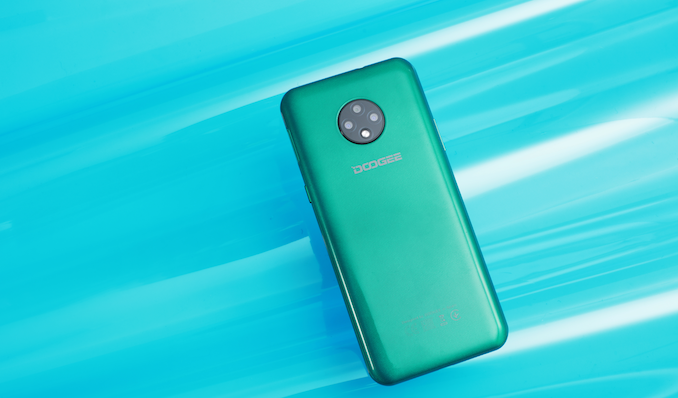
The case uses a ‘glass-like’ plastic material, and the X95 will come in a range of bright colors including black, green, and blue.


Doogee officially lists the price at launch as $60/£50 for the 2+32 GB model, however the links provided to its own store show that this price for the 2+16 GB model, reduced from $100, and for AliExpress it is $70 for 2+16, while at Gearbest it is $100 for the same 2+16 model. I’ve reached out to the PR team to qualify where the 2+32 models are, and how much they will cost. Orders from the Doogee store also have a limited time $5 coupon and ‘free’ N95 mask. I guess that’s one way to entice orders, given the current global situation.


Despite all the low-end components here, a $60 device might be perfect for an older family member who just needs something in case of emergencies.


Related Reading


Source: AnandTech – How Cheap Can You Get a 6.52-inch Smartphone? DOOGEE’s X95 is only

Motorola Announces New edge And edge+: Re-entering the Flagship Market with a Bang

Today Motorola announced its newest high-end devices for 2020 – and the company delivered quite the surprise, not only returning back to the flagship market, but also delivering some quite incredibly competitive hardware in this range for the first time in years.

The new edge and edge+ from Moto are respectively premium and no-compromise flagship phones that are clearly meant to lure in customers who over the last few years might not have considered a Motorola phone in these categories.

The edge+ essentially sports all bells and whistles you can imagine in a 2020 device – a new Snapdragon 865 phone, a triple camera-setup along with a massive 108MP camera sensor, a 90Hz high refresh-rate screen, 5000mAh battery, wireless charging, IP68 rating, and even a headphone jack. The more cost-sensitive edge sports the same design and screen, but comes with a Snapdragon 765 SoC and sheds a few other features from the package.


Source: AnandTech – Motorola Announces New edge And edge+: Re-entering the Flagship Market with a Bang

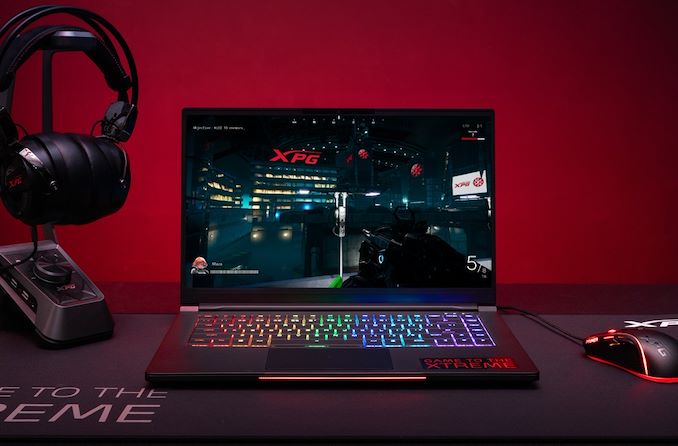
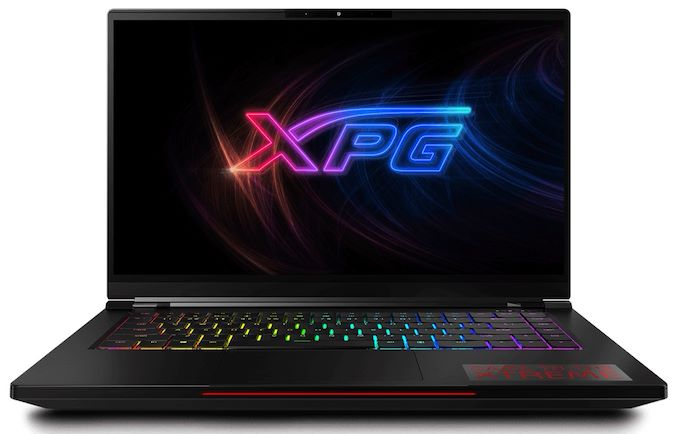
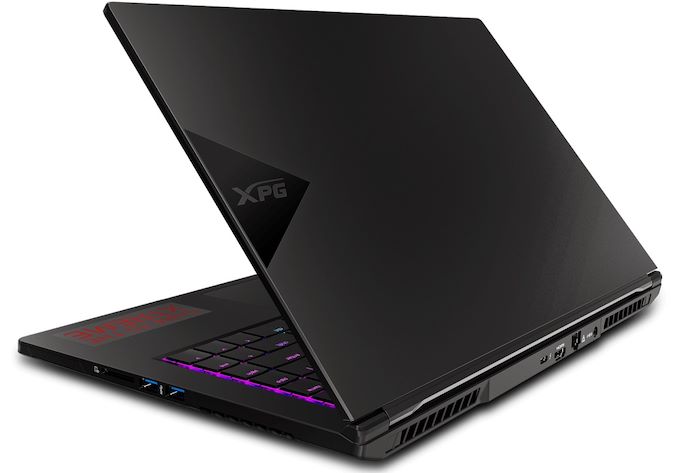
XPG Enters the Gaming Notebook Market with the 15.6-inch XENIA

XPG, the gaming arm of prolific storage vendor ADATA, has just announced its first-ever gaming notebook, the XENIA. Designed in collaboration with Intel, the 15.6-inch XENIA is based on Intel’s 9th Gen Core platform and is paired with NVIDIA’s graphics cards. Internally, the laptop uses XPG/ADATA parts throughout, including from XPG’s high-performance SX8200 PCIe 3.0 M.2 1 TB SSD, as well as 32 GB of XPG DDR4-2666 SO-DIMM memory. And while XPG is entering a very crowded market for gaming notebooks, the group is none the less looking to make their start a memorable one.


For their first gaming laptop XPG has taken a pretty popular tack, starting things off with a 15.6-inch laptop based on an Intel + NVIDIA platform. The black laptop is available in two configurations – changing out the NVIDIA GPU used – with XPG building out a fairly beefy notebook to keep up with the kind of heat that comes from a powerful gaming notebook. And, because it’s a gaming notebook, it comes with a 144Hz display as well as RGB keyboard lighting.


Starting at its foundation, the XPG XENIA uses an Intel i7-9750H hex-core Coffee Lake Refresh processor. This isn’t exactly a new processor, and it raises some questions about why XPG has not to opted for Comet Lake; none the less Comet Lake didn’t move the needle significantly, so the i7-9750H is still plenty capable with a base core clock of 2.6 GHz, with a turbo core clock of up to 4.5 GHz.


The i7-9750H is in turn paired with XPG’s own high-end storage and memory parts. On the memory front, all models come with 32 GB of DDR4-2666 memory in SO-DIMM form; and while XPG hasn’t gone into details of the memory configuration, 2 x 16 GB DIMM configuration is a safe bet. Meanwhile storage is provided by an XPG SX8200 Pro 1 TB NVMe M.2 SSD, a Silicon Motion SM2262EN-based drive which is rated for read and write speeds of up to 3500/3000 MB respectively.


As previously mentioned, the XPG XENIA includes a 15.6-inch IPS 1080p panel with a 144 Hz maximum refresh rate. Unfortunately the company hasn’t published much more about it, so it’s not clear what the color gamut and typical performance characteristics are like. Being a gaming-focused laptop, it’s likely only capable of covering the sRGB gamut. Also notably absent is any listed support for variable refresh rates.


Driving that high refresh rate display, in turn, are a pair of NVIDIA GeForce GPUs. The base model XENIA comes with a GTX 1660 Ti with 6 GB of VRAM, while the high-end SKU comes with a more powerful GeForce RTX 2070 Max-Q with 8 GB of VRAM. 


As for the keyboard, XPG is using silent optical-mechanical switches, with per-key RGB LED backlighting to allow users to customize the design and look of the XENIA. For mouse movement, it has a glass precision click trackpad. 


In terms of connectivity, on the wireless front the laptop comes with Intel’s latest AX200 wireless adapter, which offers support for Wi-Fi 6 as well as BT 5.0 devices. Meanwhile wired connectivity includes a single Thunderbolt 3 -capable USB Type-C port, a USB 3.2 G2x2 Type-A port, and two USB 3.2 G2x1 Type-A ports. And for display and audio, there’s an HDMI port as well as separate headset out and mic in jacks. The laptop even offers Gigabit Ethernet, via an RJ45 port on the back of the machine.


Overall, the XENIA is not the lightest and most portable of 15-inch gaming notebooks on the market; even with magnesium alloy frame, you’re looking at a weight of up to 1.85 kg, contained in a laptop 356.4 x 233.6 x 20.5 mm in size. However XPG does put that space to good use, including a 6-cell 94 Wh battery; so while this isn’t going to be a laptop that is going to be gaming all day on a battery, it comes with about as much power as a laptop can legally contain. For lighter workloads, XPG has rated the laptop to run for up to 10 hours.


XPG XENIA Gaming Notebook Specifications
  XPG Xenia (RTX) XPG Xenia (GTX)
CPU Intel Core i7-9750H (2.6 GHz Base, 4.5 GHz Turbo)
GPU NVIDIA GeForce RTX 2070 8 GB Max-Q NVIDIA GeForce GTX 1660 Ti 6 GB
Display 15.6-inch IPS 144 Hz 1080p
Memory XPG 32 GB DDR4-2666 SO-DIMM
Storage XPG SX8200 PCIe 3.0 x4 M.2 NVMe 1 TB SSD
Networking Intel AX200 Wi-Fi 6 /w BT 5.0
Battery 6-cell 94 Wh
Ports 1 x Thunderbolt 3-capable USB Type-C

1 x USB 3.2 G2x2 Type-A

2 x USB 3.2 G2x1 Type-A

1 x HDMI

1 x Gigabit Ethernet
Dimensions (WxDxH) 356.4 x 233.6 x 20.5 mm
Weight < 1.85 kg
Price (USD) ~$1699 ~$2199

Rounding out the XENIA is XPG’s software, which includes the XPG Prime application. Though still in beta, XPG Prime allows users to select between performance, balanced, and battery-saving power modes. The software can also be used to monitor system information such as current clock speeds and temperature, and even allow users to customize the RGB LEDs within the keyboard.


Wrapping things up, while XPG has not published any official MSRP information for the laptops, a quick look at the first retail listings shows the GTX 1660 Ti model going for $1699, while the RTX 2070 model is showing up at $2199. The laptop is set to be available in the US, Mexico, and Taiwan imminently, while XPG also states that other markets outside of these three countries will see the XENIA hit retail shelves towards Q3.


Related Reading


Source: AnandTech – XPG Enters the Gaming Notebook Market with the 15.6-inch XENIA

Arm Development For The Office: Unboxing an Ampere eMag Workstation

One of the key elements I’ve always found frustrating with basic software development is that it can often be quite difficult to actually get the hardware in hand you want to optimize for, and get a physical interaction that isn’t delayed by networking or logging in or anything else. Having a development platform on the desk guarantees that direct access, and for the non-x86 vendors, I’ve been asking for these for some time. Thankfully we’re now starting to see some appear, and Avantek, one of the Arm server retailers, have built an Ampere eMag workstation out of a server board, with some interesting trickery to get it to fit. We were sent one to have a look at.


Source: AnandTech – Arm Development For The Office: Unboxing an Ampere eMag Workstation

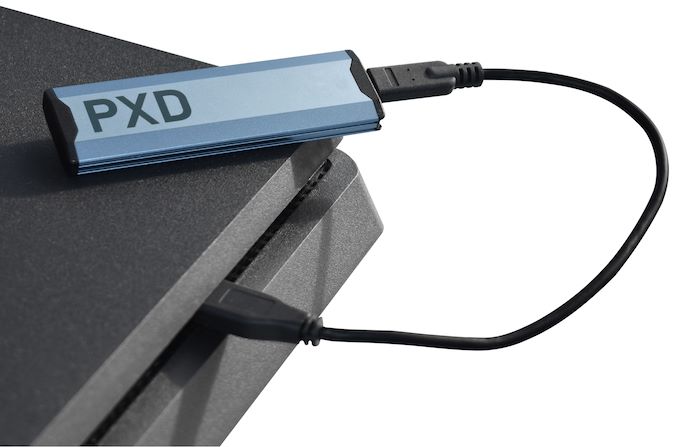
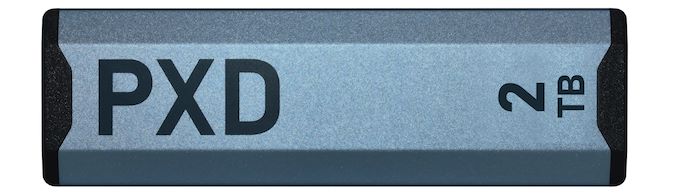
Patriot Launches External PXD M.2 PCIe Type-C SSDs: Up to 2 TB

Back at CES 2020, we revealed that Patriot Memory was displaying one of its next generation of storage products, the PXD External SSD with USB Type-C. Now available to buy, the PXD M.2 PCIe 3.0 x4 Type-C SSDs are available in a trio of capacities at 512GB, 1TB and 2TB, all featuring an industrial-grade aluminium casing. 


The drives support both Windows 10 and Mac OS 10.13, and come inside of a light blue aluminium chassis weighing only 35g. Patriot states that for older operating systems, a driver may be required, but doesn’t state which. Bundled with each PXD drive is a Type-C to Type-A cable, meaning the drive can be natively used across many devices including desktop, notebooks, and games console such as the PS5 when it hits release. 


As we reported on back at CES, the new Patriot PXD SSDs are based on the Phison PS5013-E13T DRAM-less controller with 3D NAND memory. It uses a USB 3.2 G1 bus which tops out at 10 Gb/s, which is consistent with its reported sequential read speeds of up to 1000 MB/s. It is designed for users looking for a high-speed and lightweight portable storage device, with much faster read and write speeds than conventional USB flash drives, or even portable SATA based SSDs. 


The Patriot PXD external PCIe 3.0 Type-C SSDs vary in price, with the 512 GB retailing for $100, the 1 TB for $180, and the largest available model, the 2 TB available for $300. All three models can be purchased at Newegg, while users looking to buy on Amazon will currently experience COVID-19 related delays as the company is prioritizing essential shipments only in some countries. Alternatively, users can purchase the PXD drives directly at the Patriot Web Store.


Related Reading


Source: AnandTech – Patriot Launches External PXD M.2 PCIe Type-C SSDs: Up to 2 TB

Two New Razer Blade Steath 13 Notebooks: With Intel 10th Gen Ice Lake & GTX 1650 Ti

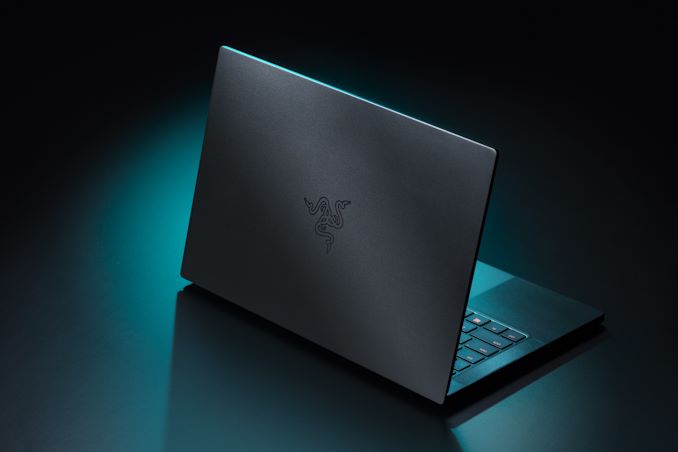
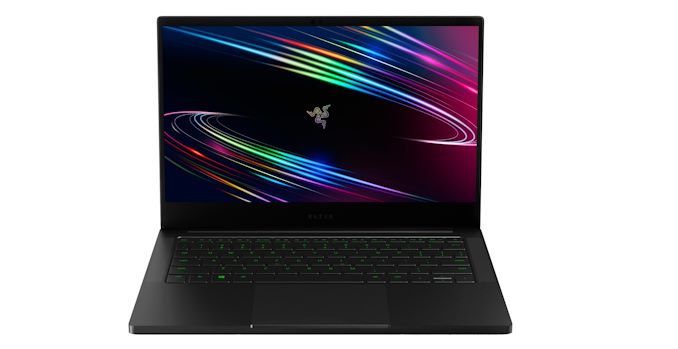
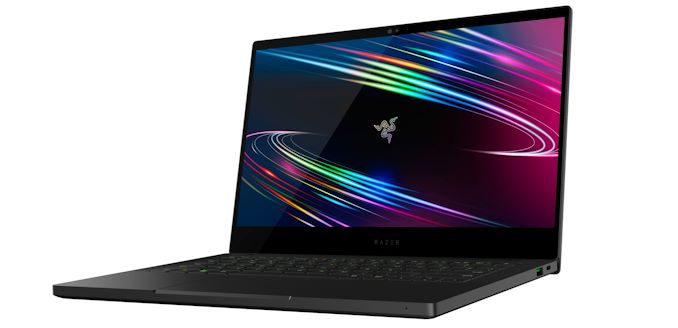
Off the back of the release of two new Blade 15 series (NVIDIA GeForce RTX and Intel 10th Gen models), Razer has also unveiled two new variations of its slightly smaller Blade Stealth 13 models. Splitting them down the middle, one is designed for gamers, while the other is for content creators on the go, with both featuring an Intel Core i7-165G7 quad-core processor, NVIDIA’s GeForce GTX 1650 Ti 4 GB graphics card, and a 512 GB PCIe 3.0 NVMe M.2 storage drive. 


Kicking things off with the main differences between the two new models, the gamer-focused Razer Blade Stealth 13 model comes with a high-spec 13.3-inch FHD 1080p screen with a 120 Hz refresh rate. For those looking for a creator-focused notebook, the new Blade 13 is also available with a 13.3″ 4K touch display, with both models variants including factory display calibration with 100% sRGB coverage, and 4.9 mm slim side bezels.


The other minor difference between the two new variants is that the 4K touchscreen does make that model slightly heavier, with a total weight of 1.48 kg, compared to 1.41 kg on the 120 GHz 1080p model. The dimensions of both Razer Blade Stealth 13 models sit at 304.6 x 210 x 15.3 mm (WxDxH).


Razer claims the Blade Stealth 13 features the world’s fastest 13.3-inch display with a 120 Hz refresh rate, marketing it as the world’s thinnest 13-inch ultrabook with such specifications.


Included within the Temper 6 CNC precision milled anodized aluminium frame is an Intel Core i7-1065G7 quad-core Ice Lake processor which operates with a base core clock speed of 1.3 GHz, boosting up to 3.9 GHz, and sporting a TDP of just 25 W.


Powering the 4K touchscreen and 1080p 120 Hz screens is an NVIDIA GeForce GTX 1650 Ti with 4 GB of GDDR6 VRAM, with an Max-Q efficiency design and a 35 W TDP. For memory there’s 16 GB of low-power DDR4-3733 as a 2 x 8 GB dual channel configuration which is soldered in and can’t be upgraded. For users that demand high-speed storage, Razer has preinstalled a 512 GB PCIe NVMe M.2 SSD as standard. An Intel AX201 Wi-Fi 6 wireless interface is installed which includes support for BT 5.1 connectivity as well.


The Razer Blade Stealth 13 models include a keyboard with single-zone full key backlighting powered by Razer’s popular Chroma RGB, and a Microsoft Precision glass touchpad. There is a single Thunderbolt 3 USB Type-C port which uses 4 PCIe lanes, a USB 3.1 G2 Type-C which can provide power via PD, and two USB 3.1 G1 Type-A ports. It includes an HD 720 infrared webcam installed into the top bezel, with a 3.5 mm headphone/microphone combo port, and an integrated array microphone. 


Razer Blade Stealth 13 Intel 10th Gen Refresh Specifications
  Razer Blade Stealth 13 (4K Touch) Razer Blade Stealth 13 (1080p)
CPU Intel Core i7-1065G7 (1.3 GHz Base, 3.9 GHz Turbo) – 25 W TDP
GPU NVIDIA GeForce GTX 1650 Ti 4 GB Max-Q – 35 W TDP
Display 13.3 Inch 4K Touchscreen 13.3 Inch 1080p 120 Hz
Memory 16 GB (2 x 8 GB) LPDDR4-3733
Storage 512 GB PCIe NVMe M.2 SSD
Networking Intel AX201 Wi-Fi 6 /w BT 5.1
Power 100 W USB Type-C Power Adapter
Battery 53.1 Wh 
Ports 1 x Thunderbolt 3 USB Type-C

1 x USB 3.1 G2 Type-C (Powered)

2 x USB 3.1 G1 Type-A

1 x 3.5 mm Headphone/Microphone
Dimensions (WxDxH) 304.6 x 210 x 15.3 mm
Weight 1.41 kg 1.48 kg
Price (USD) Starts at $1800 Starts at $2000

Expanding upon the two previously announced Razer Blade 15 series models, the two new Stealth 13 models come with a 25W CPU and a 35W GPU.


In general, the new Stealth 13s fall into the second category of premium laptops available today, starting off from 15W Athena compatible Ultrabooks, 25W CPU + 35-50W GPUs such as today’s models in up to 13″ form-factors, 35W+65W 14″ models, and finally the higher-end 45W+80W 15″ devices.


Prices for the new Razer Blade Stealth 13 start at $1800 for the 1080p 120 Hz version, with a higher $2000 starting point for the 4K touchscreen model. Both can be purchased and customized at Razer.com, with stock expected to filter into retailers around the world soon.


Related Reading


Source: AnandTech – Two New Razer Blade Steath 13 Notebooks: With Intel 10th Gen Ice Lake & GTX 1650 Ti

European Processor Initiative Backed SiPearl Announces Licensing of Arm Zeus Neoverse CPU IP

SiPearl, a new France-based company that is being backed and receiving grants from the European Comission’s European Processor Initiative project, has announced that is has licensed Arm’s next-generation Neoverse processor, codename Zeus.


SiPearl is still in its infancy as it’s only been founded in January of this year, but the new company has lofty goals as it aims to be the design house for Europe’s HPC goals.


Maisons-Laffitte, France, 21 April 2020 – SiPearl, the company that is designing the high-performance, low-power microprocessor for the European exascale supercomputer, has signed a major technological licensing agreement with Arm, the global semiconductor IP provider. The agreement will enable SiPearl to benefit from the high-performance, secure, and scalable next-generation Arm® Neoverse™ platform, codenamed ‶Zeusʺ, as well as leverage the robust software and hardware Arm ecosystem.


Taking advantage of the Arm “Zeus” platform, including Arm’s POP™ IP, on advanced FinFET2 technology enables SiPearl to accelerate its design and ensure outstanding reliability for a very highend offering, in terms of both computing power and energy efficiency, and be ready to launch its first generation of microprocessors in 2022. 


The announcement today more specifically covers the company’s licensing deal with Arm – pronouncing that they will be using the new “Zeus” core. Zeus follows up on the Neoverse N1 core “Ares”, and should be the infrastructure sibling to Arm’s Cortex-A77 mobile cores.


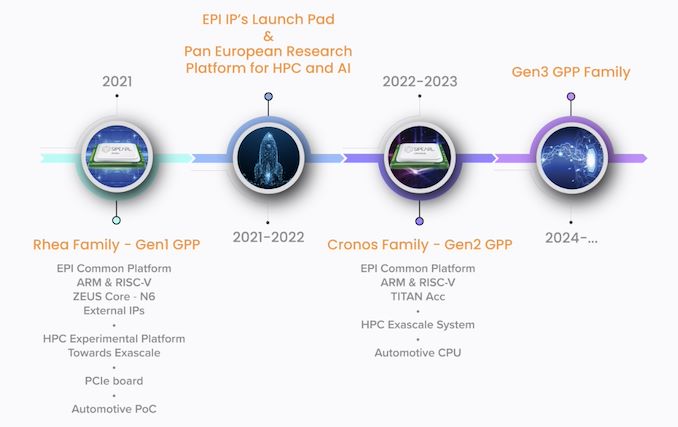
On the EPI website, the EC also details a roadmap of the project, with the detail of “N6” alongside the Zeus core description, which likely means the chip will be designed on TSMC’s N6 process node – an improved and evolved variant of the manufacturers N7 node which retains design compatibility.


The project is another boost to the Arm server ecosystem after the latest success of Amazon’s Graviton2 chip as well as Ampere’s announcement of the Altra platform which we’ll be seeing in a few months’ time.


Related Reading:


Source: AnandTech – European Processor Initiative Backed SiPearl Announces Licensing of Arm Zeus Neoverse CPU IP

AMD Ryzen 3 3300X and Ryzen 3 3100: New Low Cost Quad-Core Zen 2 Processors From $99

If one were critiquing AMD’s current line of Zen 2 processors, one of the things to note is that the cheapest option is $199, for the six-core Ryzen 5 3600. This puts the latest hardware from AMD out of reach for anyone building a gaming $900 system or below. In order to redress this balance, AMD is set to launch two new quad core designs in May, starting at $99. The new Ryzen 3 hardware will each feature one Zen 2 core chiplet, run at up to 4.3 GHz, and offer PCIe 4.0 connectivity.


A few years ago, the quad core processor was at the top of the market, and you would need $500 for one. When AMD started launching its quad core parts for as little as $99, the market became interested in what would become the new normal. These new Ryzen 3 parts from AMD, the new low-end quad cores, are helping define that normal, especially with high frequencies and taking advantage of the latest features such as high-speed DDR4, Zen 2 levels of IPC at high frequencies, and PCIe 4.0.


AMD ‘Matisse’ Ryzen 3000 Series CPUs
AnandTech Cores

Threads
Base

Freq
Boost

Freq
L2

Cache
L3

Cache
PCIe

4.0
Chiplets

IO+CPU
TDP Price

(SEP)
Ryzen 9 3950X 16C 32T 3.5 4.7 8 MB 64 MB 16+4+4 1+2 105W $749
Ryzen 9 3900X 12C 24T 3.8 4.6 6 MB 64 MB 16+4+4 1+2 105W $499
Ryzen 9 3900 12C 24T 3.1 4.3 6 MB 64 MB 16+4+4 1+2 65W OEM
Ryzen 7 3800X 8C 16T 3.9 4.5 4 MB 32 MB 16+4+4 1+1 105W $399
Ryzen 7 3700X 8C 16T 3.6 4.4 4 MB 32 MB 16+4+4 1+1 65W $329
Ryzen 5 3600X 6C 12T 3.8 4.4 3 MB 32 MB 16+4+4 1+1 95W $249
Ryzen 5 3600 6C 12T 3.6 4.2 3 MB 32 MB 16+4+4 1+1 65W $199
Ryzen 5 3500X 6C 6T 3.6 4.1 3 MB 32 MB 16+4+4 1+1 65W OEM
Ryzen 3 3300X 4C 8T 3.8 4.3 2 MB 16 MB 16+4+4 1+1 65W $120
Ryzen 3 3100 4C 8T 3.6 3.9 2 MB 16 MB 16+4+4 1+1 65W $99

This is all well and good, and AMD has plenty of options at these price points to compete against Intel, however AMD’s biggest competition is going to be with itself. At these prices, $105 and $120, there are a number of AMD processors from the previous generations on offer that might be more appealing. For example, the 12nm+ version of the Ryzen 5 1600, called the ‘AF’ because the processor descriptor ends in AF, has slightly lower frequencies and IPC but has six cores and is only $85. Users will have to decide between more cores for throughput with the 1600AF, or more frequency/IPC with the 3100 for $15.


Not only this, but we are also awaiting the launch of AMD’s new APUs, called Renoir, for the desktop space. The performance of these parts at 15 W, a quad-core Zen 2 up to 4.3 GHz with Vega8 graphics (and no extra latency due to the chiplet) is going to be a compelling option when it moves to 65 W on the desktop. As a result, we might see the Renoir processors priced above the Ryzen 3, in that $125-$190 area that AMD currently doesn’t have any Zen 2 processors in.


For the rest of the year it seems there’s going to be some interesting competition in this low cost space. Intel also has Comet Lake-S on the horizon we believe, taking another crack at 14nm, and these new Ryzen 3 products might result in some interesting line-ups due to price.


We’re expecting to get these CPUs in for testing sometime soon. They are set to be launched in May.


B550 Launch Coming Soon


One of the often talked topics, since January, is when AMD is going to launch its more mid-range B550 motherboards for the Ryzen 3000 processors. Today AMD is announcing that B550 is coming on June 16th this year, with all the main motherboard manufacturers coming out with a variety of models, up to 60 for launch. AMD is also confirming that B550 will offer PCIe 4.0 connectivity. More details to come at a later date.


Related Reading


Source: AnandTech – AMD Ryzen 3 3300X and Ryzen 3 3100: New Low Cost Quad-Core Zen 2 Processors From

LG Teases "Velvet" Phone with Snapdragon 765

We’ve already been quite surprised by the fact that to date LG still hasn’t talked much about a successor to the G8. Last year, LG had explained that going forward with 5G smartphones, the new V series would become the new flagship devices of the company, and the G series would be relegated to 4G models. It seems that now a year later, that plan has been slightly altered and LG is planning to drop the G series naming altogether in favour of a new direction – both in marketing as well as product design.


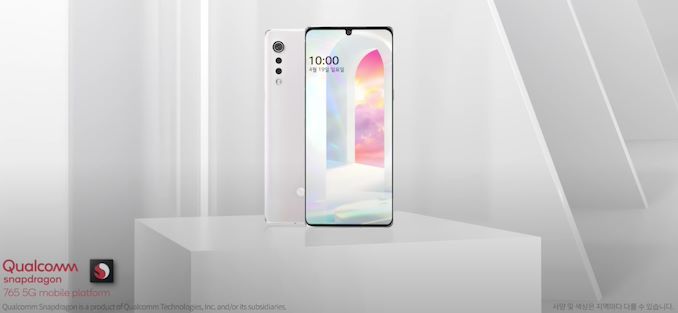
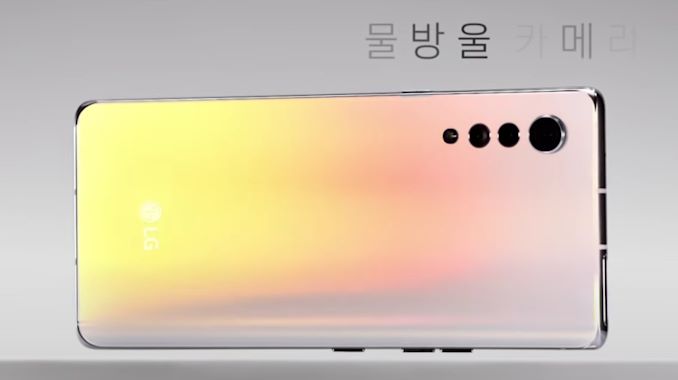
Last weekend, LG teased its new “Velvet” smartphone design in an YouTube video on its Korean channel. It’s not a launch per-se, but it’s pretty much a complete unveil of the phone’s design as well as a disclosure that it’s being powered by Qualcomm’s Snapdragon 765 SoC platform.


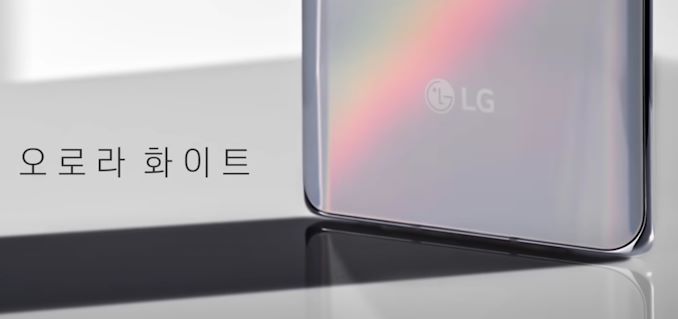
The phone’s design is its most striking aspect, as it’s a complete design language overhaul for LG and a fresh breath of air which we haven’t seen from the company in several years now.


The design isn’t something we haven’t seen before from other vendors; however, LG’s execution here just looks like a more refined execution – a stark contrast to LG’s design language on what is seemingly a very bulky and industrial V60 series.


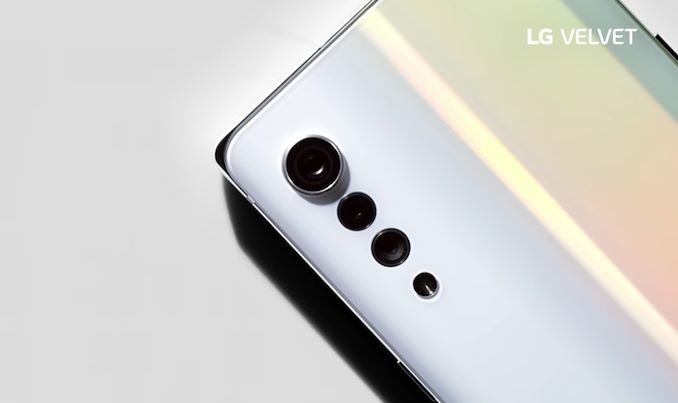
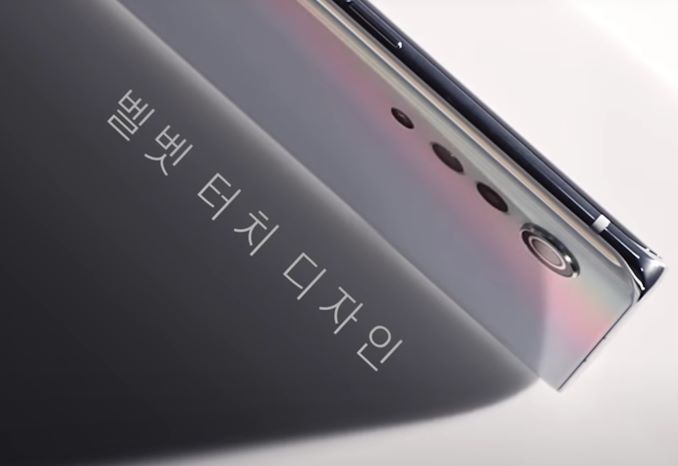
Particularly LG’s aesthetics on the cameras on the Velvet are quite unique as it houses a triple camera setup in a way that departs from the usual camera housing group and large bumps seen from other devices today. The main sensor seemingly is still of a larger size and requiring more z-depth and thus a camera protrusion, however the two other sensors are flush against the back glass of the phone – similar to what we saw on the G8.


The Velvet still keeps the 3.5mm headphone jack – which now makes LG essentially on of the very last vendors to even sport the feature anymore.


If LG is able to provide the Velvet with a good quality screen, a good camera experience and price the phone at a reasonable level – it looks like quiet the striking device that I’m sure would have a lot of success. We’re expecting a full device launch in the next few weeks.


Source: AnandTech – LG Teases “Velvet” Phone with Snapdragon 765

The ASRock Rack EPYCD8-2T Motherboard Review: From Naples to Rome

It’s no secret that AMD is looking to carve out a bigger share in the server market with their enterprise EPYC processors, and much fanfare has been made about the high core-count offered for the price when compared to Intel’s Xeon range of processors. The ASRock Rack EPYCD8-2T looks to utilize all of the processing power offered by AMD’s EYPC, and the EPYCD8-2T has a professional-centric feature set built into its ATX design. We also have eight memory slots, up to nine SATA ports, has two OCuLink to U.2 slots, dual 10 G Ethernet, and seven PCIe 3.0 slots. This model also supports both AMD’s EPYC 7001 Naples and 7002 Rome Processors.


Source: AnandTech – The ASRock Rack EPYCD8-2T Motherboard Review: From Naples to Rome

HP Updates Pavilion x360 14 Series, A 10th Gen Ice Lake Convertible

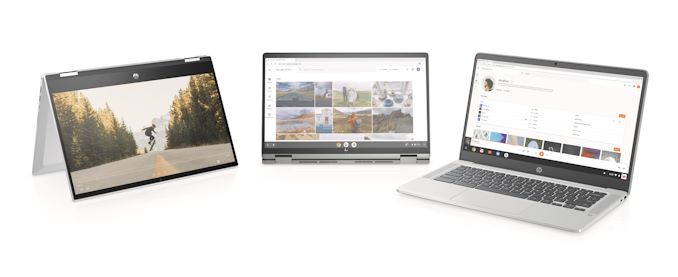
In what has become a busy month for HP, the company has continued to update its array of laptops and other portable PCs with new Intel processors. The latest HP laptops to get the refresh treatment are the Pavilion x360 14″ convertibles, which are being retooled to use Intel’s 10th generation Ice Lake processors. Launching today, the two new HP Pavilion x360 14 series models are aimed at increasing productivity on the move with a couple of interesting features, including optional support for 4G LTE offering better connectivity on the go. Based on an improved lightweight design, the new HP Pavilion x360 14 is one of its thinnest yet, with a depth of just 18 mm and weight of 3.55 lb.


The new HP Pavilion x360 14 will be available in two configurations – a mid-range config and a low-end config – both sharing the same compact and lightweight frame, but with differing specifications. Both feature a 14″ diagonal IPS touch screen panel which can be flipped 360 degrees to be used as a traditional laptop, or as a tablet with its edge-to-edge glass. Integrated into both models is a set of premium Bang & Olufsen speakers with the onus on entertainment, with HP claiming up to 13-hours of battery life based on FHD video playback.


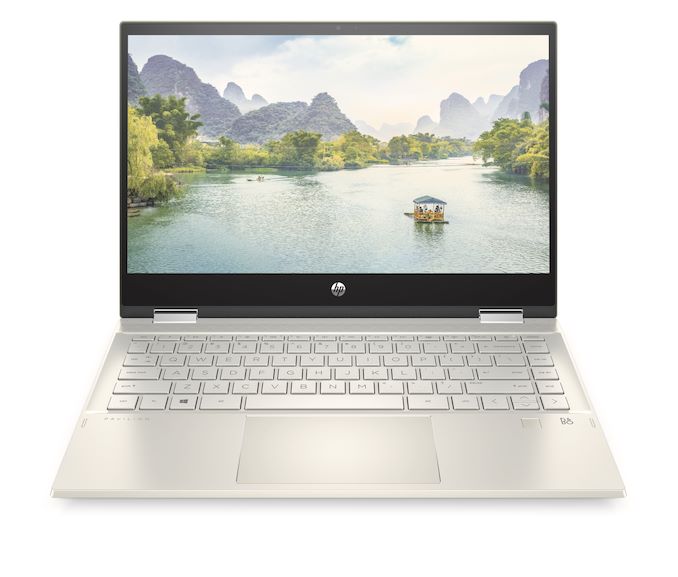
The HP Pavilion x360 14 in warm gold


As for the individual configurations, starting with the mid-range config, we have the HP Pavilion x360 14M-DW0023DX. This model is based on an Intel i5-1035G1 quad-core processor and comes with Intel AX201 Wi-Fi 6 wireless interface, 8 GB of DDR4-3200 memory in single-channel mode, and a 256 GB PCIe 3.0 M.2 SSD. It uses Intel’s integrated UHD graphics to power a FHD 1080p IPS panel, which offers a brightness of up to 250 nits, and benefits from a luminous gold aluminium anodized frame; for those who demand elegance.


Meanwhile the lower-spec model, the HP Pavilion x360 14M-DW0013DX, includes an Intel i3-1005G1 dual-core Ice Lake processor, with 8 GB of DDR4-3200 memory (also in running in single-channel mode), and a slightly lower capacity 128 GB SATA based M.2 drive. This model also has a lower resolution 1366 x 768 screen, which has a brightness of 220 nits and a vertical brush patterned finish. For wireless connectivity it uses an Intel AC 9461 802.11ac wireless interface which also has support for BT 5.0 devices.


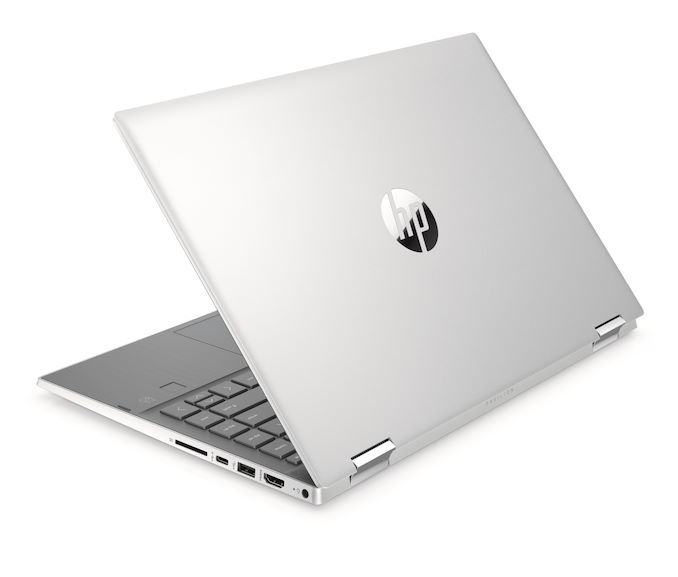
The HP Pavilion x360 14 series in natural silver


Since both configurations use the same body, they have the same 32% screen to body ratio, with a weight of just 3.55 lb and a thickness of 18 mm. There is also an HP Wide Vision HD webcam with a dual array digital microphone integrated, an HP Imagepad with multi-touch gesture support, and both models include a 3-cell 43 Wh Li-ion polymer battery. As for I/O, both models include a single USB 3.2 G2 10 Gbps Type-C port with DisplayPort 1.4 support, two USB 3.1 G2 Type-A ports, a headphone/microphone combo port, and a single HDMI 2.0 video output.


On top of the two models that’s been launched, HP notes that the Pavilion x360 14 series will support up to 1 TB of SSD based storage, and be available with optional 4G LTE support. HP hasn’t unveiled specifics as of yet, but we expect models to be available from HP featuring this soon.


Prices start at $499 for the Intel Core i3 Ice Lake model in a natural silver finish, with the higher-spec Core i5 model launching at $749 in warm gold. Both models are available now at Best Buy, and come next month HP will also be offering models in Forest Teal, with prices there starting at $550.


Related Reading


Source: AnandTech – HP Updates Pavilion x360 14 Series, A 10th Gen Ice Lake Convertible

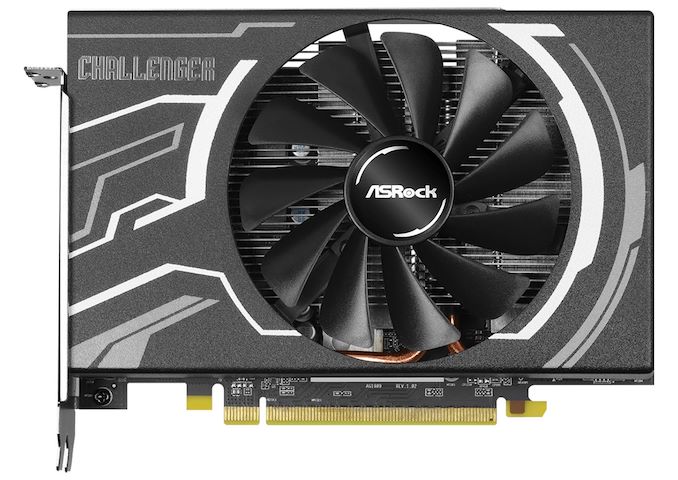
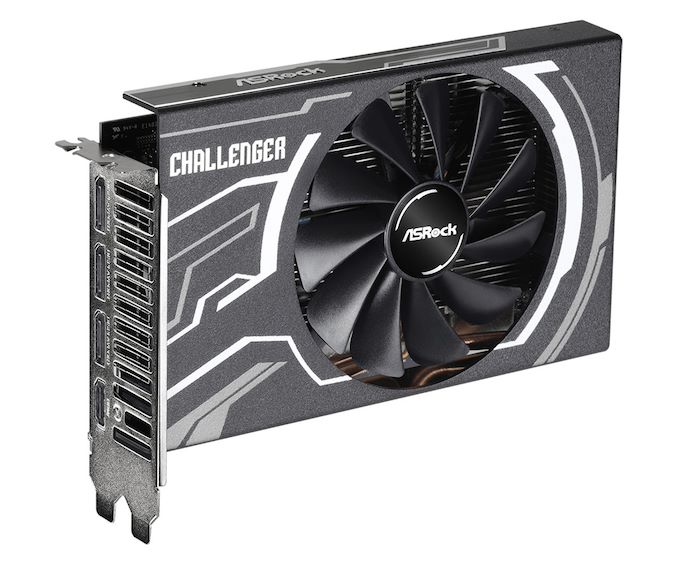
ASRock Unveils Radeon RX 5500 XT Challenger ITX 8 GB Graphics Card

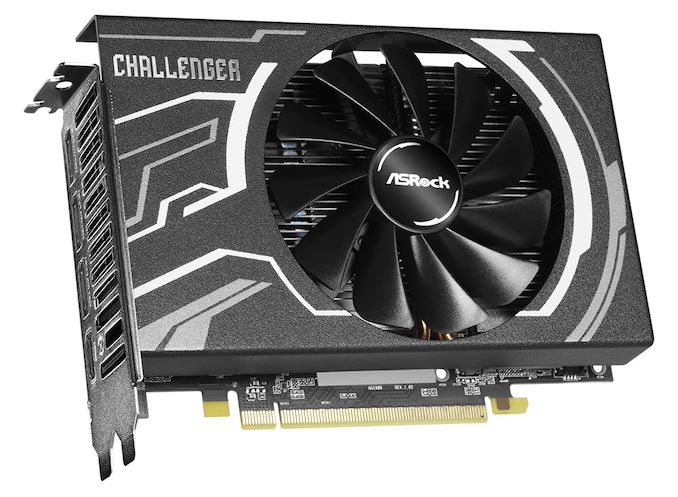
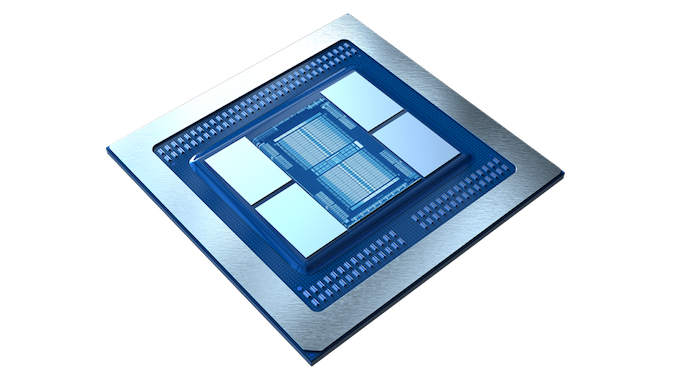
ASRock has announced its latest ITX graphics card for small form factors, the Radeon RX 5500 XT Challenger ITX. This new mini-ITX card is based on AMD’s Navi 14 GPU and offers 8 GB of GDDR6 memory attached to a 128-bit bus, with the same core and memory clock speeds as a reference model.


Finding a graphics card for a small form factor system can be tiresome with very little on the market to choose from. One of the big trade-offs of graphics cards designed for small form factor systems is that beefier models such as AMD’s RX 5700 XT, and NVIDIA’s GeForce RTX 2080 Ti are too large in design to accommodate such a small PCB, which is where smaller cards designed particularly for the ITX form factor come in.


Focusing on the ASRock RX 5500 XT Challenger ITX 8G, it is very small for its power with dimensions of 190 x 139 x 42 mm, meaning that it is just under 7.5 inches in length. It features a single 10 cm cooling fan on its front, embedded in a white and silver dual-slot cooler, which is designed to direct hot air out of the rear of a chassis. The cooler on the ASRock RX 5500 XT Challenger ITX 8 G is actually longer than a reference model (7.5 vs 7.1 inches) but is still much smaller than most aftermarket designs from other vendors.


Physical size aside, the card is very similar in specifications to other 5500 XT cards on the market. The Challenger ITX ships with a base core clock of 1607 MHz and acn boosts up to 1845 MHz. Meanwhile the effective memory core clock speed of 14 Gbps. Unsurprisingly then, with its reference-like clocks, the card is targeted towards 1080p gaming.


As for display outputs, ASRock has outfitted the card a trio of DisplayPort 1.4 connectors as well as a single HDMI 2.0b port. Feeding the mini monster is a single 8-pin 12 V ATX PCIe power connector, which is more than sufficient to meet its 130 W TDP.


ASRock hasn’t announced when the Radeon RX 5500 XT Challenger 8G will be available at retailers, nor has it provided any information about its price.


Related Reading


Source: AnandTech – ASRock Unveils Radeon RX 5500 XT Challenger ITX 8 GB Graphics Card

AMD COVID-19 HPC Fund: Initial $15m Donation of EPYC and Radeon Hardware

One element to the recent pandemic has been the number of organizations banding together to unite for specific research into SARS-CoV-2 and COVID-19. We are in an era now where masses of computing power can help direct physical research into potential vaccines, or help analyse interesting molecular active sites to spur further research. The COVID-19 High Performance Computing Consortium is one example of this, with 25 active products, 31 members, and approximately 418 PetaFLOPs of compute power – this is compared to the world #1 supercomputer, Summit, which has only around a third to a half of this processing power. The latest news is that AMD is setting up a unique COVID-19 fund to provide additional computing resources where they are needed most.


The fund will initially start with a $15 million USD donation of systems powered by EPYC processors and Radeon Instinct GPUs to some key research institutions. Those institutions interested in gaining access to this hardware will have to contact the fund (COVID-19HPC@amd.com) with proposals, and it appears that AMD will provide systems on a meritorious basis. AMD is also set to contribute resources to the ‘Corona’ system at Lawrence Livermore National Laboratory, separate to the fund, in order to double the peak system performance there. AMD is also donating $1m to a variety of other funds to help in efforts, in addition to medical equipment, employee donation matching, and prioritizing shipments of embedded processors for use in medical equipment such as ventilators.


Other tech companies with significant donations to COVID assistance include Intel who has offered one million protective items for healthcare, $6m for Coronavirus relief, $40m in learning initiatives, $10m to support partner and employee-led initiatives, and also opened up some of its IP to researchers and scientists. Xilinx has donated $1.1m, split between several funds including the WHO and closer-to-home funds. Qualcomm has donated an undisclosed amount to several funds, including supplying laptops and devices to schools and non-profits tackling the issue.


For compute, Alibaba is offering cloud services to COVID-19 research free of charge, while Amazon’s AWS, NVIDIA, and VMWare and is donating unused GPU compute time to help Folding@Home. The NVIDIA one is interesting, as it seems that they have put the Saturn V supercomputer, consisting of 125 DGX-1 nodes, onto the problem. The entire of the Folding@Home processing power is now north of 2.5 ExaFLOPs, despite only hitting the 1 ExaFLOP barrier just over two weeks ago. RIKEN’s new supercomputer, Fugaku, in Japan, was set to be fully installed by 2021, however the portion that is currently built is now being made available to researchers who can use the resources.


The COVID-19 High Performance Consortium is currently the biggest culmination of off-site compute resources for researchers that need time on supercomputers. XSEDE’s website has a guide for researchers to submit proposals for compute time.


Source: AnandTech – AMD COVID-19 HPC Fund: Initial m Donation of EPYC and Radeon Hardware

Victory Lap: Team AnandTech Fights COVID, Beats Tom’s Hardware in Folding Race

Just under a month ago, I put out the call: AnandTech’s readers were needed once more to defend the honor of the site in the most nerdy of contests: a Folding@Home race.


The distributed computing platform has been around for over a decade now, and it has taken on a new life as the novel coronavirus, SARS-CoV-2, has shut down a significant party of society. In light of the now global pandemic, the project has turned its eyes to trying to simulate the virus and potential treatment avenues for it, in order to hopefully speed up the development of a cure. A task that has been met with great enthusiasm from the public, as the combined power of the Folding@Home project has recently surpassed 2.4 ExaFLOPS, making it over an order of magnitude more powerful than any supercomputer in the world.


Overall, the project’s coronavirus research has come not a moment too soon, as many of us find ourselves essentially confined to our homes. And, after more than a month of this, we’re all starting to go more than a little mad. So mad, in fact, that AnandTech and Tom’s Hardware agreed to race each other over a four week period to see who could contribute the most to the Folding@Home project.


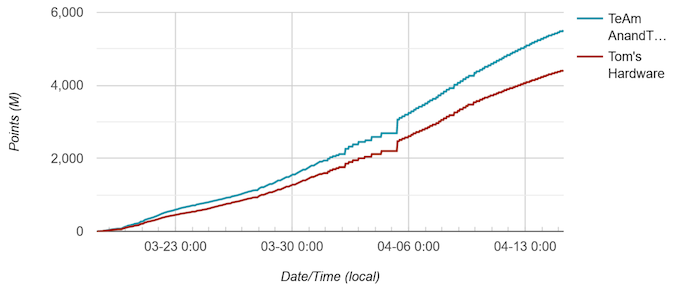
Those four weeks are finally up, and I am proud to report that Team AnandTech has emerged victorious, defeating our loyal opposition by over a billion points. It was, perhaps, never too close of a race, but I also know that the Tom’s Hardware readership (and its leadership) is never one to underestimated. So while Team AnandTech can take this moment to enjoy a victory lap in defeating its favorite punching bag for the third time in a row, it was a hard-fought race on both sides, and ultimately it all went to a good cause.


Folding@Home Race Results
Team Points
Team AnandTech 5,513,255,966
Tom’s Hardware 4,419,576,007

As always, I’d like to thank the AnandTech readers who chipped in to help with this race, as well as the Team AnandTech members who supplied their own computing power, as well as contributing to the stats tracking and other functions needed to host a proper race. To say that AnandTech couldn’t have done it without all of you is an understatement, and this is ultimately your victory.


Meanwhile, although we’re still not out of our home quite yet, hopefully the combined 9.9 billion points worth of work completed by Team AnandTech and Tom’s Hardware gets us one step closer to developing effective treatments for COVID, and getting everything at least a little bit back to normal.


Carousel Image Courtesy of: CDC/Alissa Eckert, MS


Source: AnandTech – Victory Lap: Team AnandTech Fights COVID, Beats Tom’s Hardware in Folding Race

UL Delists MediaTek Powered Devices Due To Benchmark Whitelisting

Last week we detailed an article covering MediaTek’s seemingly widespread default inclusion of a benchmark whitelist in their chipset BSP (board support package) – a mechanism that enables more aggressive performance tuning of a device’s power management once it detects that a benchmark application is running.


Yesterday, UL, the developers of the PCMark and 3DMark benchmarking suites, have followed up on our investigation and analysed a wider range of devices, and have made the decision to temporarily delist all devices powered by a wide range of MediaTek SoCs, a list of over 50 devices from over 25 different vendors.


We had worked with UL early on in the investigation, with them providing us alternative anonymised versions of the benchmarks which bypass the whitelist detection, thus exposing the cheating behaviour.


The UL news post states:


Using hidden mechanisms to detect benchmarking apps by name and make app-specific performance optimizations is not an “accepted industry standard.” It is, in fact, the very opposite of the accepted standard.


Likewise, benchmark scores based on hidden app-specific optimizations and settings that are enabled by default and not available to the user do not accurately reflect a device’s true performance in everyday use. 


Simply put, a device must run a benchmark as if it was any other application. Performance gains must come from reacting to the nature of the workloads in the test rather than the name of the app itself.


As it has with similar cases in the past, we hope this delisting will help persuade MediaTek to change its approach and join the rest of the industry in adopting benchmarking best practices.”


The statement is a harsh rebuttal of MediaTek’s public response to our article, again pointing out that the practice is anything but an “industry standard” – especially damning since it’s coming from one of the major benchmark developers in the industry.


As UL stated in their blog post, and what we also pointed out in our original piece, we hope that the negative reactions to the matter will convince MediaTek to abandon such practices and reconsider their view of what the “industry standard” is.


Related Reading:


Source: AnandTech – UL Delists MediaTek Powered Devices Due To Benchmark Whitelisting

Intel Ghost Canyon NUC9i9QNX Review: NUC 9 Extreme Realizes the SFF Dream

Small form-factor PCs and gaming systems have emerged as bright spots in the mature PC market over the last decade or so. Intel’s NUC form-factor introduction was the turning point in the small form-factor (SFF) market. Over several generation of products, the NUC family has expanded to address different market segments. But even with those developments, DIY enthusiasts have traditionally given the NUCs a cold shoulder by pointing to the lack of flexibility and limitations such as the inability to use a discrete GPU. At CES 2020, Intel officially announced the Ghost Canyon NUC series of products (NUC 9 Extreme Kits), which are based on the Intel NUC 9 Extreme Compute Elements.

To that end, today we’re taking a detailed look at the top-end consumer-focused Ghost Canyon configuration, the NUC9i9QNX. A solid product in its own right, Ghost Canyon also gives us a hint of how the broader PC market could change with the introduction and widespread availability of the Compute Element and associated products.


Source: AnandTech – Intel Ghost Canyon NUC9i9QNX Review: NUC 9 Extreme Realizes the SFF Dream

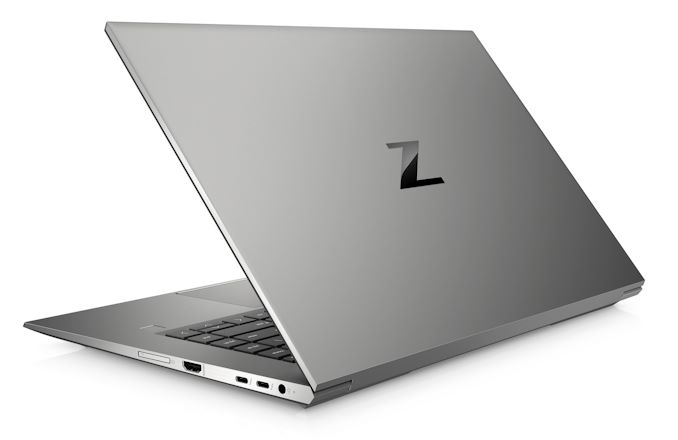
HP Announces ZBook Studio And ZBook Create Notebooks: Targeting The Top

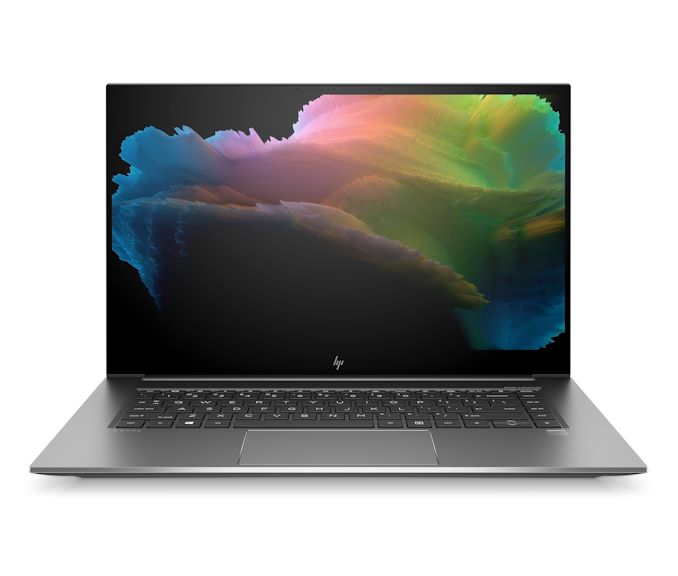
HP has announced the new ZBook Studio and ZBook Create notebooks today, along with their ENVY refresh. The HP Envy 15 announced today targets creators and prosumers, but the ZBook steps up a notch, aiming at the prosumer and professional market where features like Quadro graphics and Xeon processors transition are necessary.


The HP Zbook Create and Studio are the same notebook, but the Studio offers NVIDIA Quadro, up to the Quadro RTX 5000, whereas the Create model is stuck with “only” RTX 2080 Super graphics, and both feature the NVIDIA Studio drivers. HP hasn’t released all of the specifications yet, but they will offer up to Core i9 or Xeon CPUs as well. These will be true mobile workstation level devices, and offer MIL-STD tested CNC aluminum chassis to go along with them.


HP is bringing the first DreamColor display to their notebook lineup with these 15.6-inch models. There is a UHD DreamColor HDR-400 display with Pantone validation and 10-bit color , with 100% P3, along with sRGB and Adobe RGB modes. For those that need even more contrast, HP also has an HDR-500 OLED display that is also UHD resolution.


The notebook itself, despite the power packed in, is 22% smaller than previous designs and offers an 87% screen-to-body ratio. Despite the small size, HP’s Z Predictive Fan Algorithm and new vapor cooling chamber, coupled with the Z Power Slider, allows the user to choose the cooling requirements for their workload.


All this performance still comes with great battery life, with HP rating the new ZBook at up to 17.5 hours of battery. Clearly this rating will not be with the GPU powering through a workload, but is impressive nonetheless.


The new ZBook Studio and ZBook Create will be available in August, with pricing to be announced closer to that date.


Source: AnandTech – HP Announces ZBook Studio And ZBook Create Notebooks: Targeting The Top

HP ENVY Laptop Refresh Adds OLED And RTX For 2020

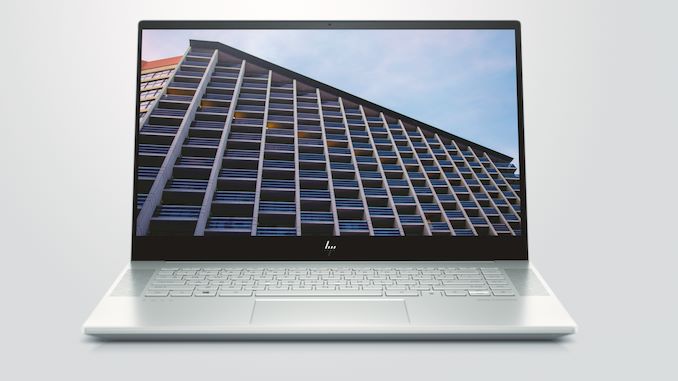
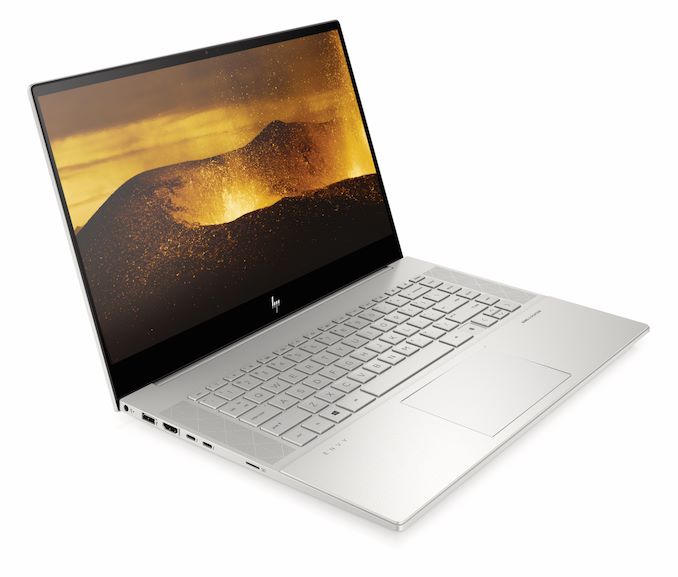
While HP’s Spectre lineup is what HP would probably consider their top-tier brand, the ENVY series has quietly become a very potent competitor, with premium-grade materials, and even discrete graphics, while still coming in sometimes hundreds of dollars less than the Spectre models. For 2020, HP is ramping up the ENVY lineup, refreshing all of the models, but the company has put special focus on the 15.6-inch ENVY 15 for this year.


ENVY 15


The creator market has become one of the new battlegrounds in the PC space, and for 2020 HP is clearly focusing the ENVY 15 on that market. The new ENVY 15 is the powerhouse in the ENVY lineup, with Intel’s H-Series processors coupled with NVIDIA graphics. Offering up to a Core i9 with 8 cores and sixteen threads, coupled with NVIDIA GPUs up to the RTX 2060 Max-Q gives the new ENVY 15 some serious performance for creative workflows like Lightroom, or video rendering. The ENVY 15 is also a member of the NVIDIA Studio program, meaning it offers the Studio drivers. You can pick up the ENVY 15 with up to 32 GB of RAM and 2 TB of PCIe storage in RAID if needed.


One of the standout features on the new ENVY 15 is the 15.6-inch UHD OLED display, offering 100% P3 gamut coverage, and factory calibrated for a Delta E < 2. The OLED display is certified for VESA DisplayHDR 400 TrueBlack, thanks to the incredible contrast OLED provides, and the display is rated for up to 600 nits of brightness as well.


Packing this much performance into a thin and light chassis is always going to push the cooling to the limits, and HP has outfitted it with a new vapor chamber cooling which they say offers 33% more processing power than traditional heatpipe designs, and HP offers DynamicPower to allocate TDP between the CPU and GPU to balance workloads.


Creators also require connectivity, and HP provides two Thunderbolt 3 ports, as well as two USB 3 ports, HDMI, and a multi-format media reader. Wi-Fi 6 is available as well, and HP has a new QuickDrop app which allows you to directly transfer files from your iOS or Android smartphone directly to the laptop via Wi-Fi. HP rates the ENVY 15 at up to 16.5 hours of battery life, so despite the performance under the hood, the 4.74 lb laptop should be able to last all day on a charge when needed.


The new ENVY 15 will be available in June starting at $1349.99.


ENVY 13


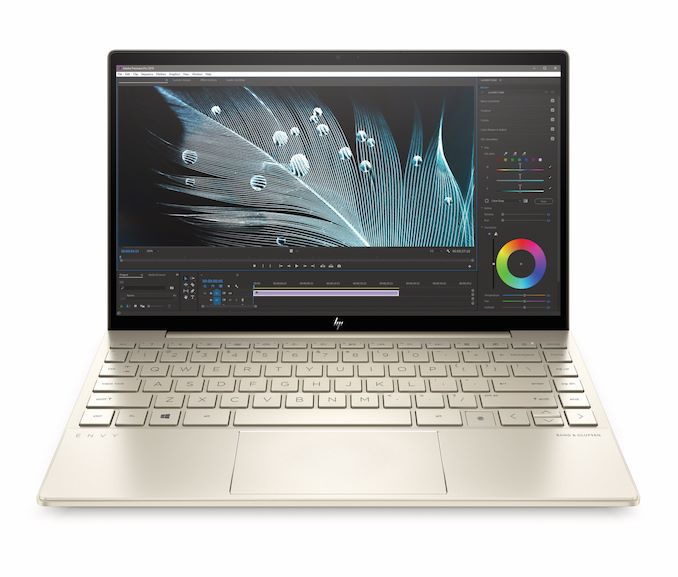
HP’s ENVY 13 is one of the company’s gems, offering a thin and light Ultrabook built with premium materials for a very good price. For 2020 the refresh moves to Ice Lake processors up to the Core i7-1065G7, and optional NVIDIA MX330 graphics. The laptop offers an 88% screen-to-body ratio, optional UHD display, and up to 19.5 hours of battery life. It will be available in May starting at $999.


ENVY x360 13


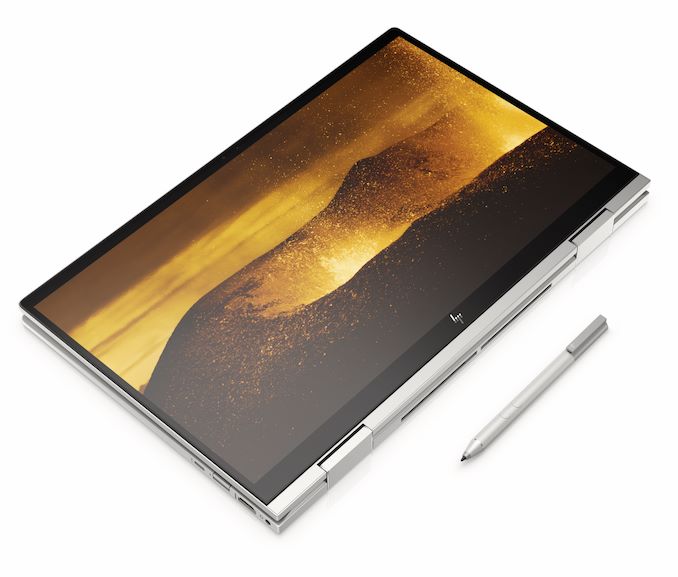
The convertible version of the ENVY 13 offers the same 88% screen-to-body ratio, but moves to AMD’s new 4000 series APU, with up to 17.5 hours of battery life. It will be available early May starting at $699.99.


ENVY x360 15


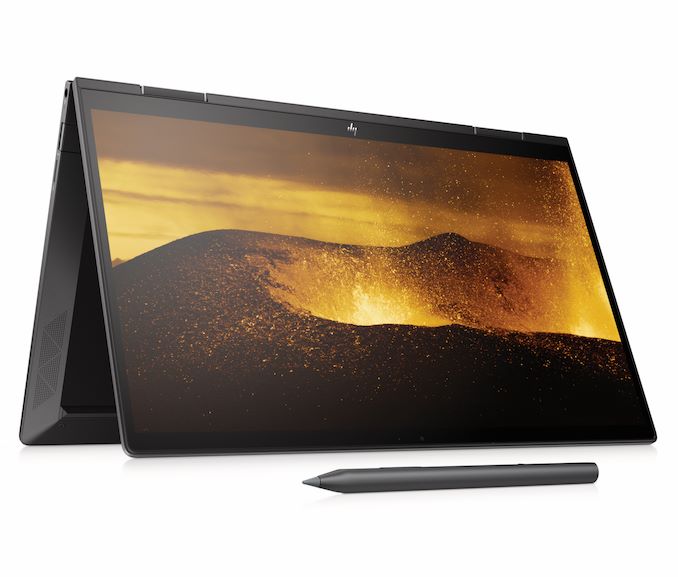
The larger convertible offers a choice of 10th gen Intel Core coupled with NVIDIA MX330 graphics, or the AMD Ryzen 4000 APU. Buyers can also opt for the OLED UHD display, and this model is rated for up to 18.5 hours of battery life. Unlike the non-convertible ENVY 15, this model will be the 15-Watt range of CPUs. It will be available early Mat starting at $699.99.


Source: AnandTech – HP ENVY Laptop Refresh Adds OLED And RTX For 2020