Chinese brand Whaleroad has launched a new wireless drivetrain called R7, which features a whopping 14-speed cassette.
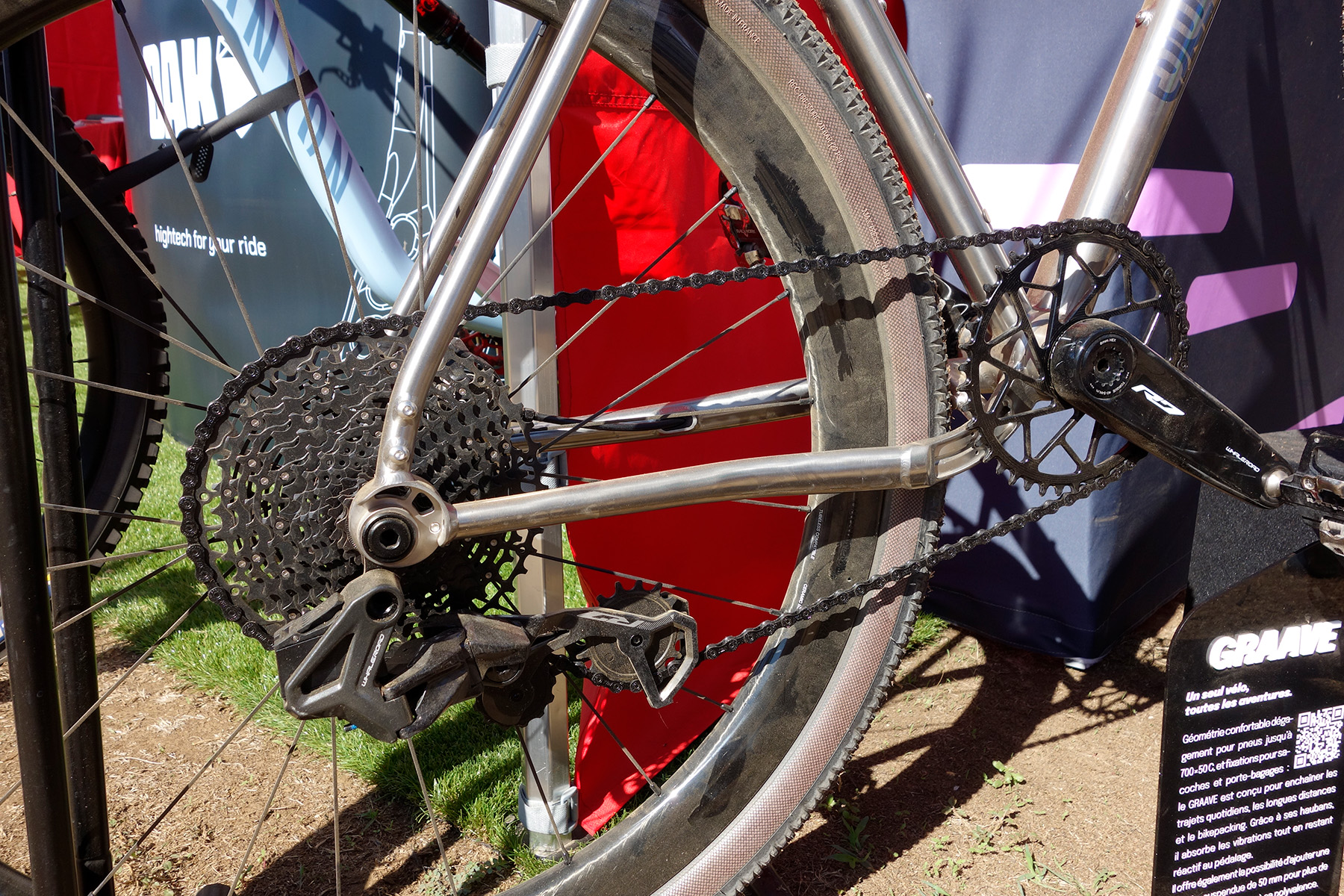
We spotted the new Whaleroad R7 drivetrain fitted to a Cykl Graave at the Sea Otter Europe trade show in Girona.
Whaleroad isn’t the only Chinese cycling brand to release a drivetrain that’s compatible with 14 speeds. Wheeltop’s EDS derailleurs can also be configured for up to 14 gears. But this is the first time we’ve seen such a system paired with an actual 14-speed cassette.
Antoine Delmur, the founding director of Cykl, said of the R7 drivetrain: “We’ve been testing it for a little while now and, so far, it’s really impressed us.”
418% gear range
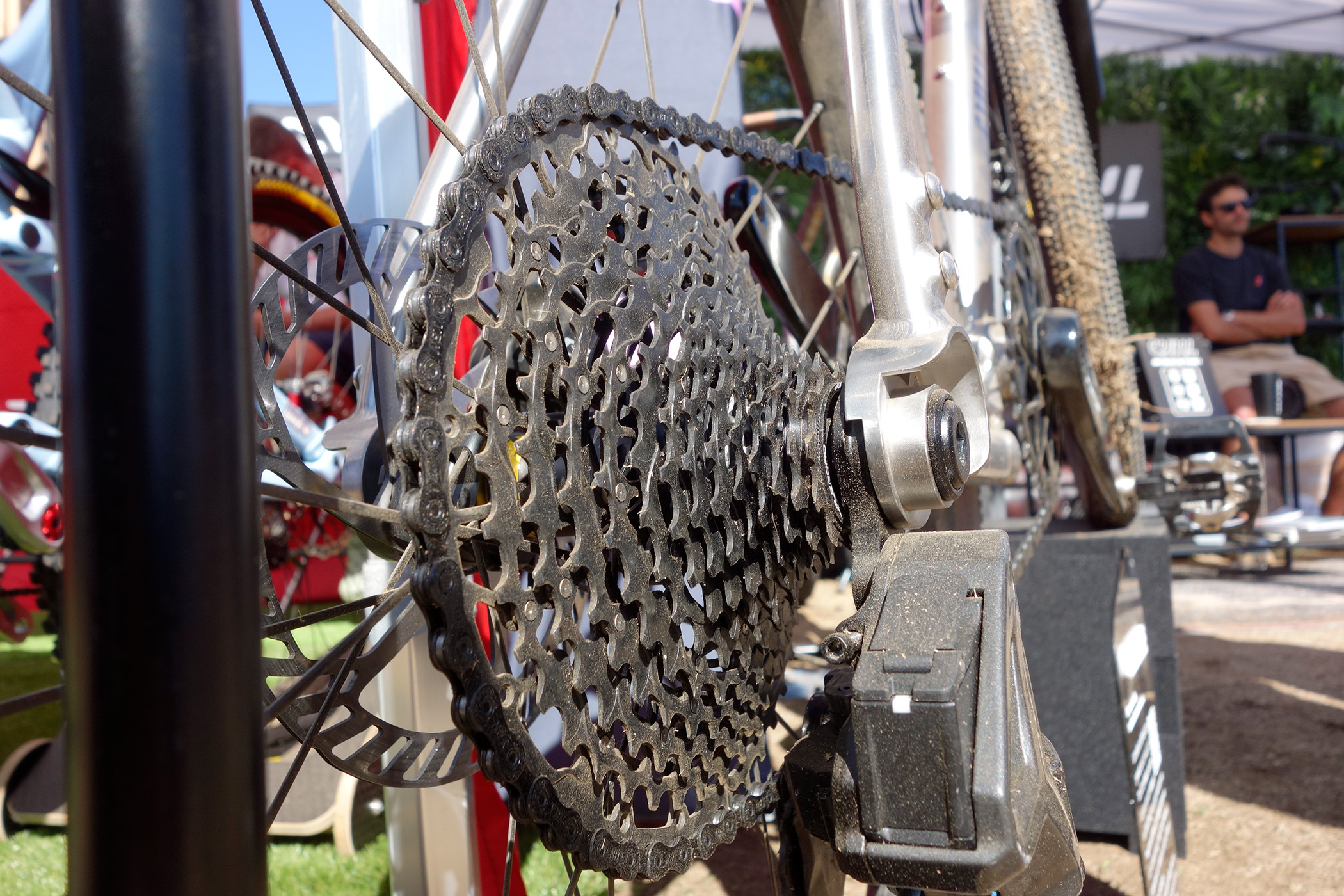
This is the first 14-speed cassette we’ve seen. Nick Clark / Our Media
Whaleroad says its 1×14-speed cassette offers a 418 per cent gear range, spanning from an 11-tooth smallest sprocket to a 46-tooth largest sprocket.
The cassette fits a conventional Shimano HG freehub body, meaning there’s no change needed to proprietary standards.
Squeezing the extra gears into that space has seen the cogs on the bottom of the block become significantly narrower.
Wireless derailleur
The drivetrain comes also comes with a crank. Nick Clark / Our Media
Whaleroad’s R7 derailleur is wireless and uses a removable 725mAh battery. Whaleroad claims up to 1,500km of riding from a charge.
The battery uses a USB-C port, and Whaleroad says that a 10-minute charge is enough for 200km of riding.
An accompanying app enables riders to customise shifting and update the firmware.
Similar to Wheeltops EDS, Whaleroad says the derailleur can be programmed to work with anything from a three-speed to a 14-speed cassette.
The rear derailleur also features an adjustable clutch, IP67 weatherproofing and what Whaleroad calls an “Impact Protection System”, designed to enable the derailleur to realign itself following an impact.
Is 14-speed the next frontier?
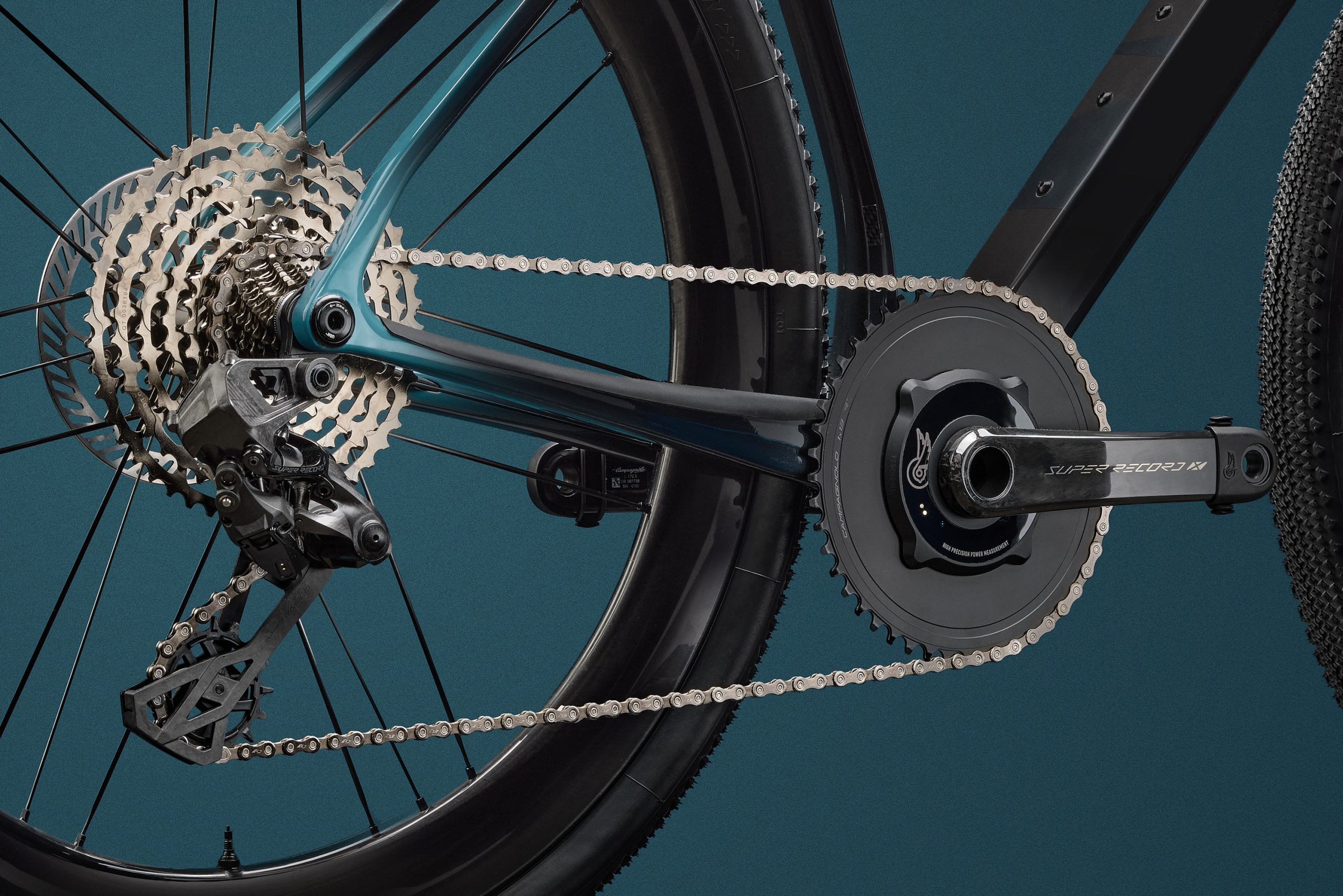
Campagnolo Super Record 13 X features 13-speeds. Campagnolo
The arrival of another 14-speed drivetrain comes as the established drivetrain manufacturers continue to add sprockets of their own.
SRAM’s flagship road groupset remains 12-speed, although its 1x Red XPLR AXS gravel groupset moved to 13 speeds in 2024, pairing a 10-46t cassette with a direct-mount rear derailleur.
Campagnolo went one step further in 2025, launching Super Record 13 as the first 2×13-speed wireless electronic road groupset.
The current Shimano Dura-Ace R9200 groupset has 12 speeds, but that looks set to change.
Kraftwerk have always been into bikes, right since the group’s Tour de France was released, back in 1983. Now another Kraftwerk bike has come up for auction.
There’s no record of Kraftwerk co-founder Ralf Hütter having actually ridden the bike in the current lot. But the Canyon Ultimate CF SLX Kraftwerk is one of a limited edition of just 21 with graphics designed by Hütter as part of a collaboration ahead of the 2017 Tour de France Grand Départ in Düsseldorf, Kraftwerk’s home city.
At the time, Roman Arnold, Canyon’s founder, said he had been moved to work with Hütter by “memories of partying in friends’ basements as a teenager [listening to] Kraftwerk’s groundbreaking sounds.”
One of 21
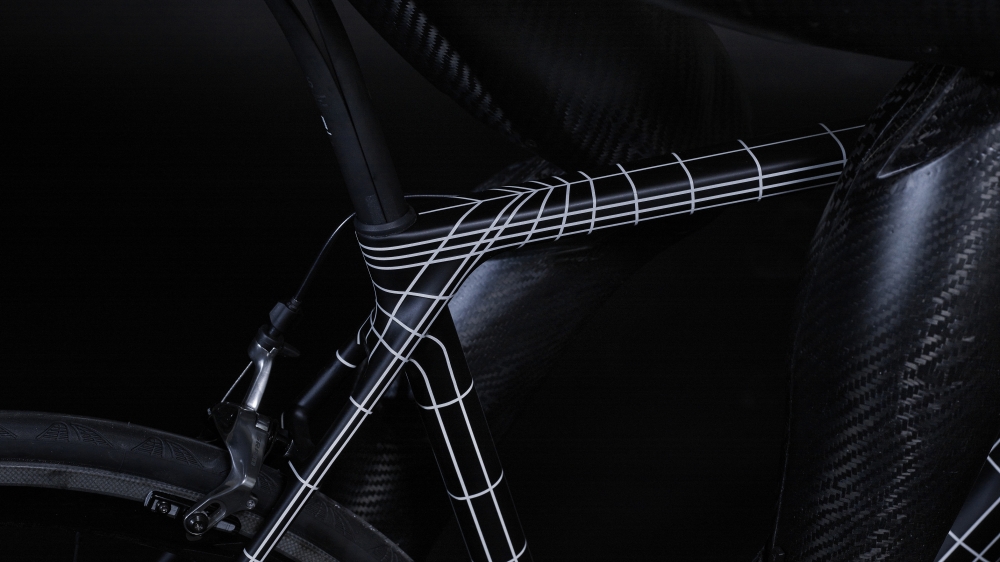
Canyon claimed the reflective tape graphics took over seven hours per frame to apply. Canyon Bicycles/Tino Pohlmann
The Canyon Ultimate CF SLX Kraftwerk was originally sold by Canyon for €10,000, so it will be interesting to see if its value has increased in the intervening nine years. The bike at auction, numbered 5 of 21, has a pre-sale estimate of £10,000 to £20,000, so there’s a good chance it has.
It is decked out in SRAM and Zipp’s finest, with Hütter’s intricate geometric pattern of reflective tape on the matt black frame claimed by Canyon to have taken over seven hours of work per frame.
The bike is accompanied in the lot at auction by a Kraftwerk cycling jersey, tee shirt, water bottle and other bits and pieces, including its numbered certificate and original packaging.
Florian Schneider’s Speedwell titanium bike sold for 57,600 last year.
A year ago, the titanium Speedwell bike ridden by the late Florian Schneider in the band’s 1984 Tour de France video sold at auction for $57,600, plus 28% buyer’s premium, so there’s clearly an active market for Kraftwerk-related cycling memorabilia.
If you want a piece of the Kraftwerk action, Propstore’s auction takes place on 1 and 2 October, with a pre-sale exhibition at the Cumberland Hotel in London from 24 to 27 September.
Last week, I shared Zwift’s Fall 2026 “This Season on Zwift” press release. But there’s actually more to TSOZ than I shared! Zwift held a call with cycling/fitness media days before the announcement, and that call covered upcoming features and changes that weren’t included in the press release.
(On top of that, there are other features and changes coming, some of them quite big, which Zwift didn’t mention at all. I can’t talk about those yet, but will of course spill the tea as soon as possible.)
Here’s everything else Zwift discussed on that media call…
Zwift Stats
Zwift kicked off the call with a run through some platform statistics, which are always fun.
Pro users: Over 300 professional athletes are active on Zwift, including WorldTour riders, World and Olympic Champions, and IRONMAN Triathletes. Many of these users are far from “casual” Zwifters, including:
Lucy Charles Barclay, Level 111, 67,000km
Jonas Abrahamsen: Level 102, 53,000km
Sarah Gigante: Level 109, 62,000km
Lionel Sanders, Level 102, 95,000km
Sir Mark Cavendish: Level 61, 21,000km
Global community stats: The Zwift community is massive, and the numbers we record are quite impressive:
More than 1 million riders come to Zwift to improve their fitness
88 million indoor activities on the platform in the past 365 days
Over 25 million outdoor activities uploaded since May 2025
The average Zwifter: Along the lines of the recent GCN video, Zwift shared the numbers for “the average Zwifter Power Profile”:
5 sec power – 567 watts
1 min power – 314 watts
5 min power – 237 watts
20 min power – 206 watts
How we train: With Zwift’s Fitness Metrics being a fairly new feature, it’s interesting to see some aggregated data of the community’s metrics.
95% of Zwifters have a Fresh or Productive Training Status
Less than 2% are Detraining and <3% are Overreaching
~60% of Zwifters complete a workout monthly
Over the past 365 days, Zwifters have completed:
Free Rides: 25,309,968
Races: 2,695,829
Climb Portal: 1,339,158
RoboPacers: 5,048,084
Group Rides: 5,184,652
Lastly, while discussing the upcoming new Halo bikes, it was mentioned that ~9k Zwifters have earned a Halo Bike through Bike Upgrades.
Workout Cleanup
Not the most glamorous news item (which may explain its absence from the press release), but important nonetheless, given how popular workouts are on Zwift! Zwift says October will bring updates to the workout library, including 40 new Endurance, Recovery, and VO2Max workouts. We’ll also see a fresh look to the library, including refreshed collections with more options in each collection.
(Lastly, I know from personal internal contacts that Zwift has tasked folks with cleaning up existing workouts – fixing minor errors like typos, instructions that don’t quite match the current interval, etc.)
Companion Home Screen Update
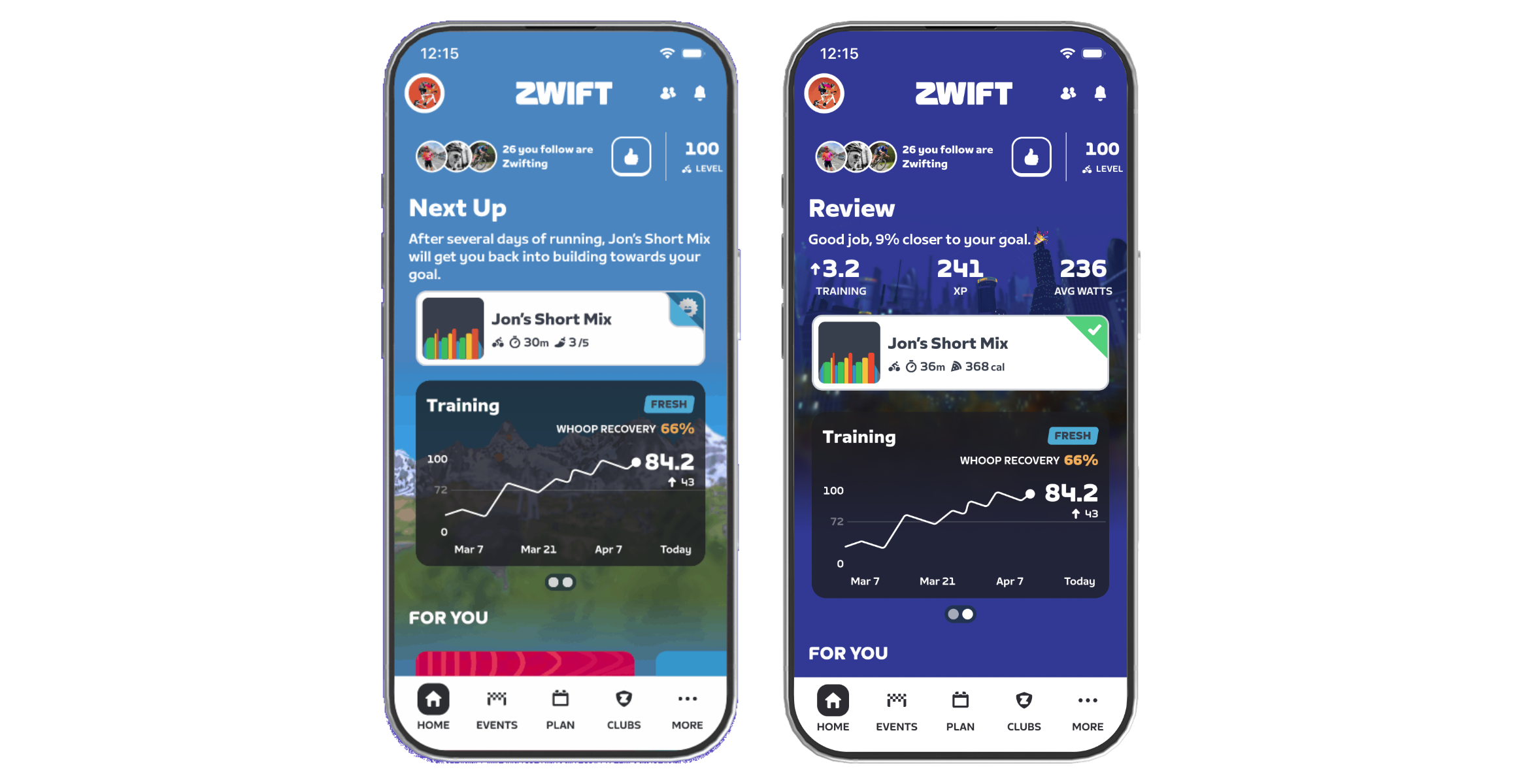
The Companion app is getting a refresh in October – that was mentioned in Zwift’s press release. But the release didn’t include the screenshot on the right below, which is shows the current state of development for the new “activity review” screen we’ll see after finishing our session.
You can see it shows how much the activity increased your training score, how much XP you earned, and your average watts. Of course, this screen will probably change before it’s released to the general public… but I like where it’s going.
Zwift + ROUVY
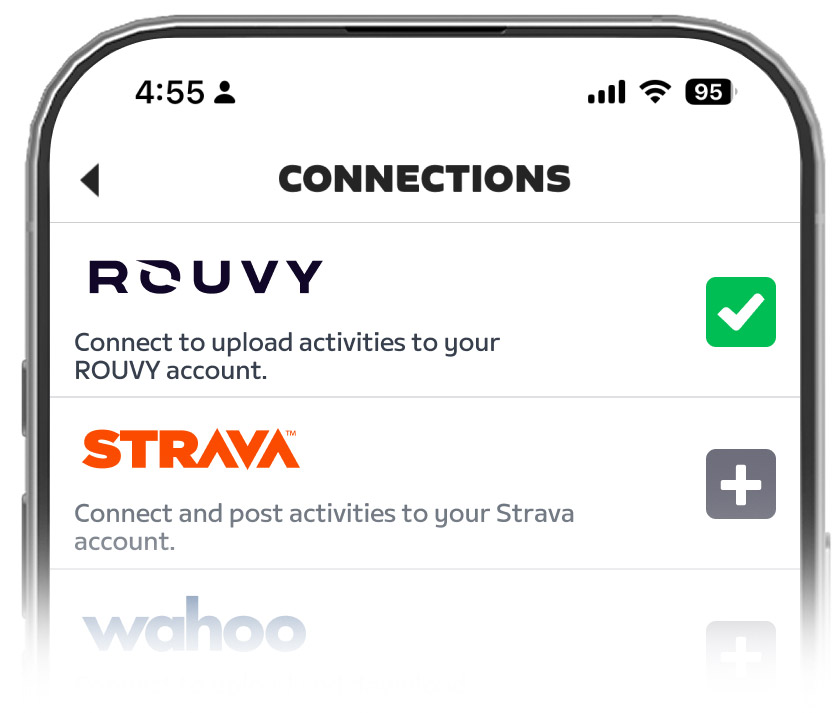
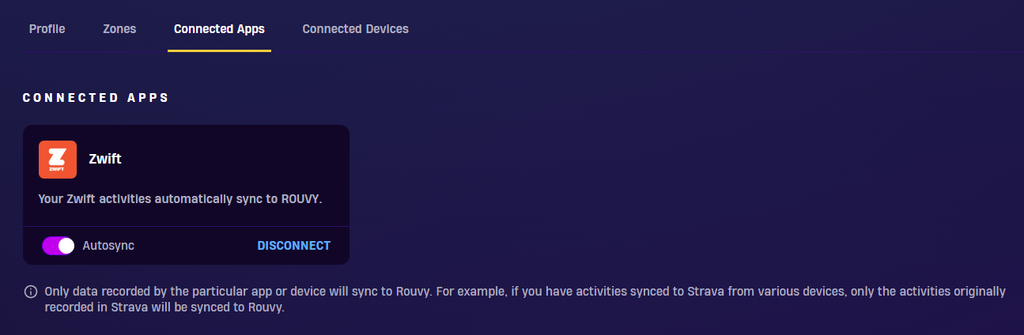
Zwift announced their acquisition of ROUVY back in April, but we haven’t seen any news of the two platforms working together since. On the TSOZ call, Zwift mentioned that, starting in late October, Zwifters will be able to connect their ROUVY accounts to Zwift in the same way we connect other apps (Strava, Wahoo, Garmin, etc). Your ROUVY rides will then accrue Zwift XP at the same rate as outdoor rides (5 XP per km).
ROUVY has already rolled out a Zwift connection which does the same thing, but in the other direction (that is, your Zwift rides will count towards ROUVY level progression). ROUVY says, “Only XP is shared between the two platforms. Your subscriptions, routes, workouts, and activity history stay separate.” Furthermore, “XP is shared only while you have an active subscription in ROUVY and an active membership in Zwift. Connecting the accounts does not give you access to the other platform, and there is no combined or discounted plan for the two.”
You can find instructions for connecting your Zwift account to ROUVY on this support page.
Background Pairing
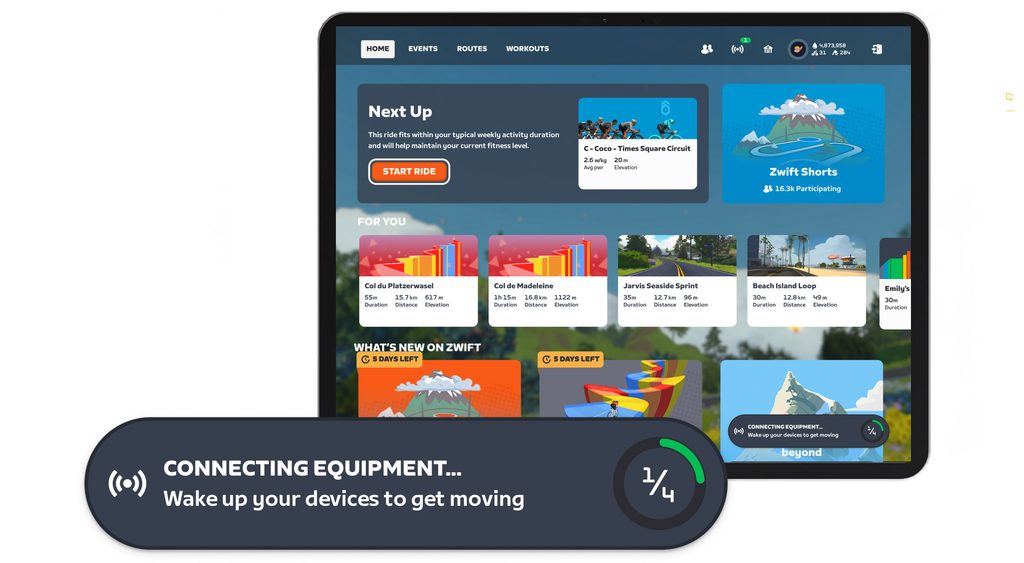
While I’m often swapping trainers or other devices as I test hardware for Zwift Insider reviews, the vast majority of Zwifters connect the same trainer, heart rate monitor, and controllers before each session via the pairing screen. But next week, that will change! Automatic “background pairing” is coming to Zwift. I’ve been using it for several weeks now, and have no complaints. Now, instead of the pairing screen popping up before you reach the homescreen, a small dialogue pops up to show you connection progress:
It will warn you if it doesn’t reconnect all the hardware used in your previous session, and it stays out of the way if everything connects as expected. Easy.
Initially slated for a September 9 release, this feature is now planned for the next game release, v1.122, slated for this Tuesday (September 22).
Racing Changes
Lastly, while there were some mentions of upcoming racing changes and events in Zwift’s press release, it left out three racing-related items which I think are actually the most exciting.
First, Zwift has developed a Racing API that lets approved partners access results and register riders for events. Zwift told us that seven of the largest community organizers are already on the API, and there are more coming onboard. This API is what’s behind powerful new platforms like LeadoutEsports.com, which hosts our VO2sday results since ZwiftPower can’t handle duration-based events!
Next, Zwift told us they are “Actively working on bringing native points racing to Zwift.” (I already knew this, because I was on a call with various community organizers a couple of months ago. But now we can talk about it!) Zwift didn’t give an ETA for this release, but they are working with “several community organizers” to make sure what they build is fit for the task. Exciting stuff!
Lastly, the racing portion of our personal profiles at Zwift.com continues to grow richer, with the recent addition of a league results row, and the ability to click a race to see some personal metrics (see below). Zwift says the dashboard will soon include a chart of our Zwift Racing Score (ZRS) history, which I’m very much looking forward to. (I’ve seen mockups, and they look great!)
Your Thoughts
I hope you found some of the items above interesting… or even exciting. While most of them aren’t groundbreaking on their own, these types of small changes, when combined with many others over months and years, lead to that rich, engaging, yet easy-to-use experience that is the holy grail of software platforms.
Got thoughts about what Zwift has planned? Share below!
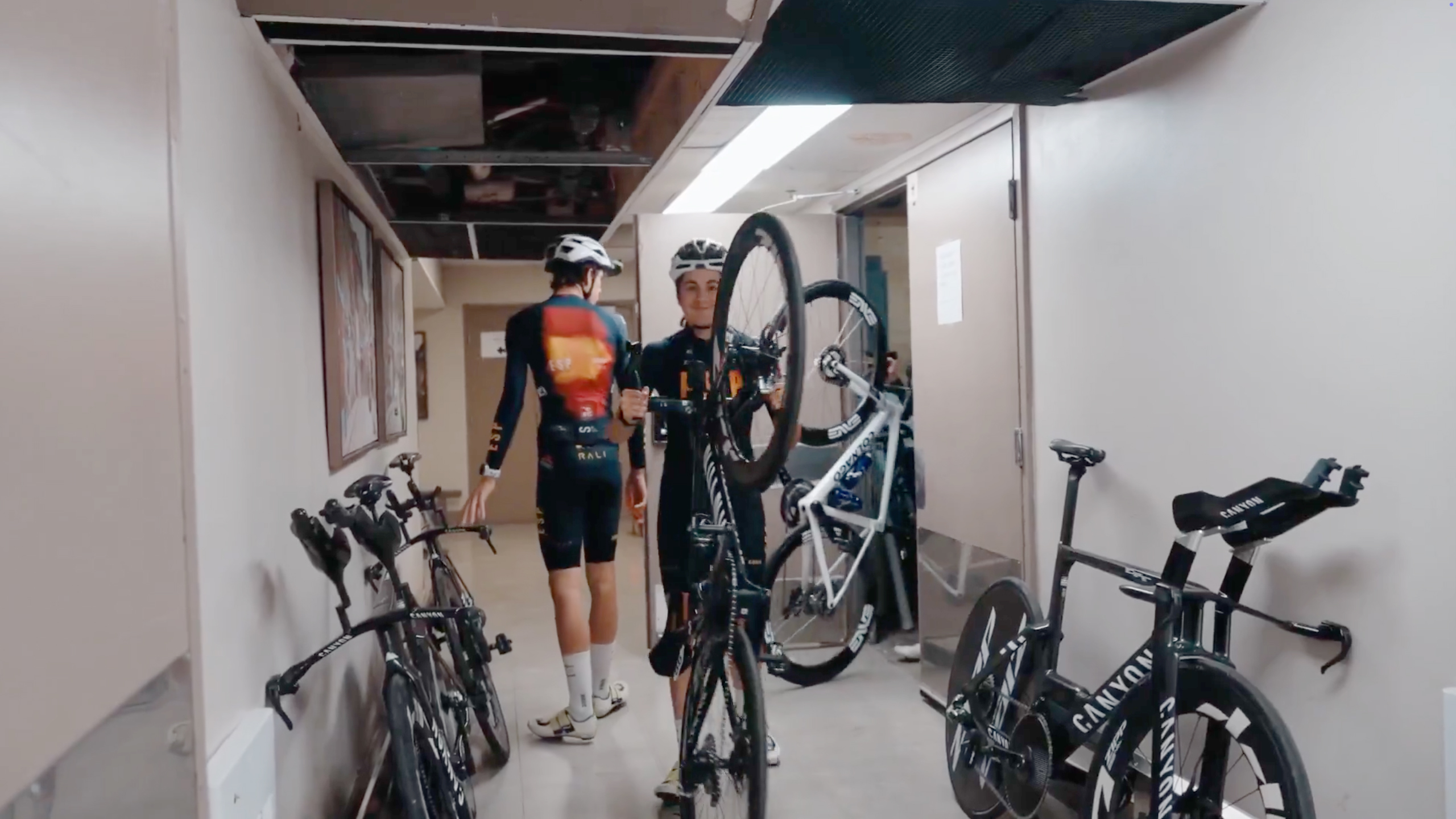
An unreleased Canyon time trial bike with a wide stance, dual-crow fork has been leaked in a video posted on X by Eurosport España and the Spanish cycling federation.
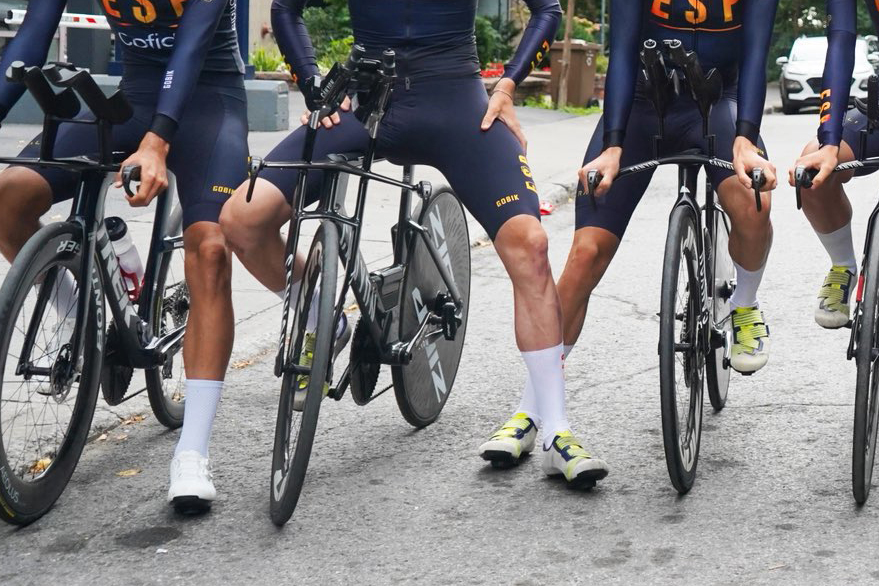
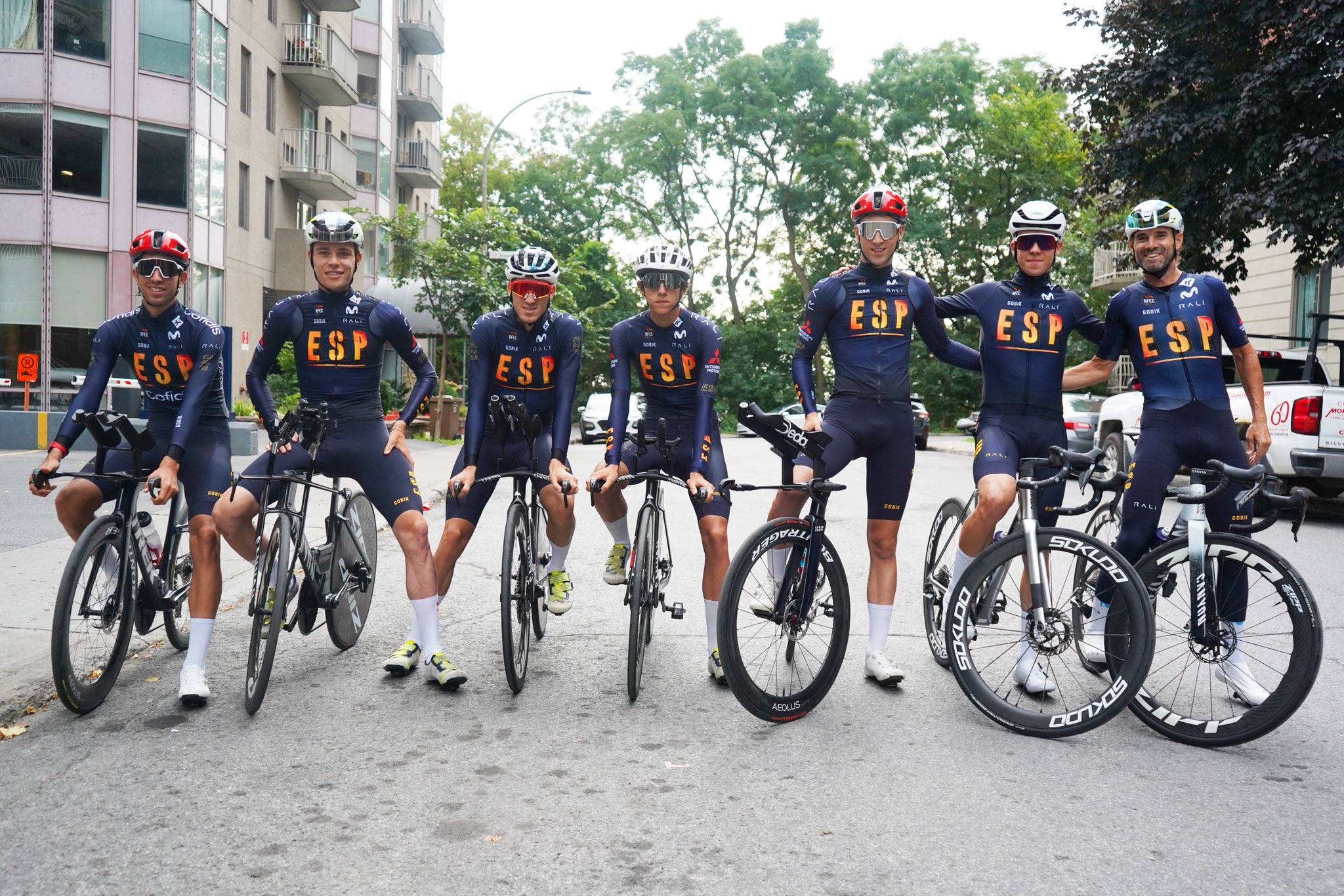
The video shows riders from the Spanish national team heading out to train ahead of the upcoming UCI Road World Championships in Montreal, Canada.
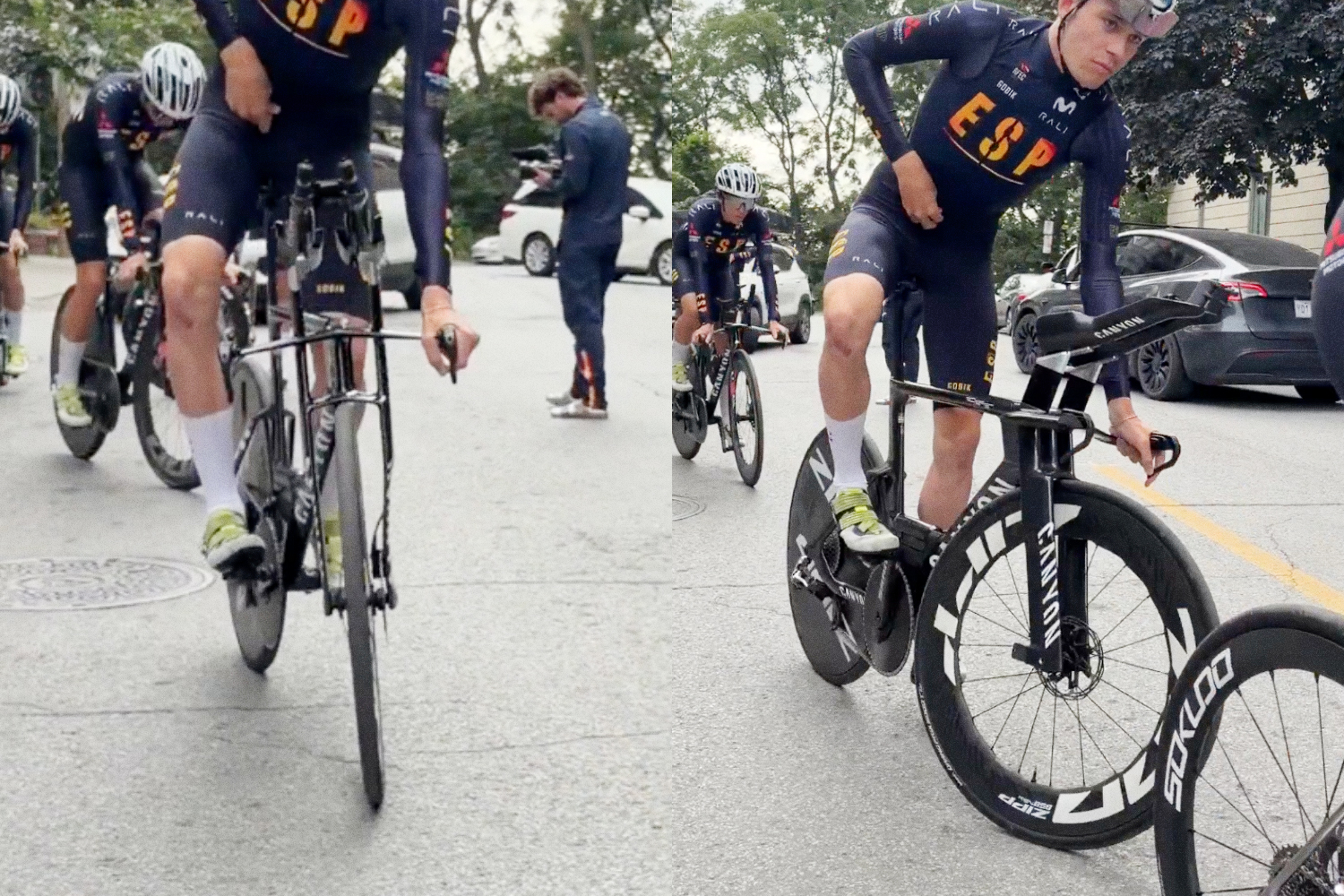
The bike is first shown leaning up against a wall in the team hotel, before Iván Romeo, the 2024 under-23 time trial world champion, rides it out of the underground car park and onto the road.
Although we’ve only got a few low-resolution images to go by, here’s what we can surmise about the new bike so far.
Canyon backtracks on wide forks
The wide stance fork uses an asymmetric deisgn. @RFECiclismo
The most notable design feature is the bike’s wide stance, dual-crown fork, that’s clearly inspired by the fork on Team Great Britain’s Hope HB.T.
The fork is significantly wider than that on the current Speedmax CFR TT, but appears to narrow as it extends towards the front hub – especially on the non-driveside – rather than staying wide and arching in, as on the Hope bike.
At the top, the fork extends beyond the lower crown, meeting the base bar, while the head tube appears to have been narrowed significantly compared to the existing model.
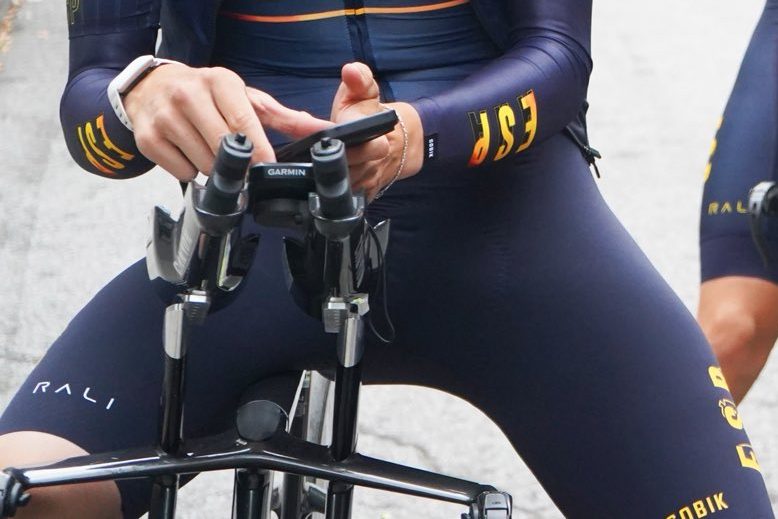
Integrated aero extensions look to be stacked directly on top of where the fork meets the base bar, on either side of the head tube.
On the Hope HB.T, the wide stance fork is designed to break the airflow over the riders legs – for a net reduction in aerodynamic drag – so it’s possible Canyon is looking for a similar effect here.
The head tube appears to have been narrowed aggressively. @RFECiclismo
This approach is particularly notable because Canyon previously told BikeRadar that it “couldn’t see the reason” for wide forks, when it launched the Speedmax CFR Track in 2023.
The Speedmax CFR Track has an extremely narrow fork and wide seat stays. Lukas Schuchnigg, Canyon’s development lead for the Speedmax CFR Track, told Bikeradar: “From [Canyon’s] perspective, we couldn’t see the reason for the wide stance design”, adopted by the likes of Hope.
“A narrower stance offers the same aerodynamic advantages, while also being stiffer.”
Dual risers help lift the aero extensions off the base bar, for a high stack position. @RFECiclismo
That bike also used a mono-riser setup for aero extensions, instead of dual extensions.
It seems the German brand has had a change of heart, then, or at least a change of testing methodology that has unlocked some new and previously unknown insight into this design.
Colnago-inspired aero bottle
The unreleased bike, right, is seen here with the current model on the left. @RFECiclismo
Although there are big changes at the front of the new bike, the rear looks more or less unchanged compared to the current version.
There are the same deep-section, truncated aerofoil tubes, aero seatpost and aero seat stays dropped low on the seat tube.
One interesting detail, however, is the presence of a filled-in section above the bottom bracket.
The current UCI technical regulations wouldn’t permit the frame tubes to be that large, so we suspect this is a water bottle designed to integrate with the aerodynamic shaping of the frame.
To our eye, it looks a lot like the water bottle used on Tadej Pogačar’s old time trial bike, the Colnago TT1.
Though the Italian brand has now moved away from this design with the new TT2, Canyon clearly thinks there’s still something to it.
Iván Romeo is training on the new bike ahead of this weekend’s world championships. @RFECiclismo
This particular bike appears to belong to Movistar’s Iván Romeo, a former under-23 time trial world champion.
Given Romeo is training on it in Montreal, ahead of this weekend’s racing, and the current model is currently on sale on Canyon’s website (with 25 per cent off), we suspect Canyon is using the world championships as a teaser ahead of an official launch soon afterwards.
The 2026 UCI Road Cycling World Championships are coming to Montreal, Canada, with men’s and women’s time trial and road races spread over a week from 20 September to 27 September.
Over that time, there are 13 competitions for national teams in different age categories, as well as a Team Time Trial Mixed Relay. They culminate in the 180.4km elite women’s road race on Saturday 26 and 273.4km men’s road race on Sunday 27 September, which will decide who will wear the coveted rainbow stripes throughout the next year in the WorldTour’s elite races.
If you want to catch all the action wherever you live, we have a how to watch guide for the Montreal World Championships. Here, we’ll set out the schedule of events and times, all in Montreal’s Eastern Daylight Time time zone, which is 4 hours behind GMT, along with a route breakdown and riders to watch.
Road Cycling World Championships: Schedule of events
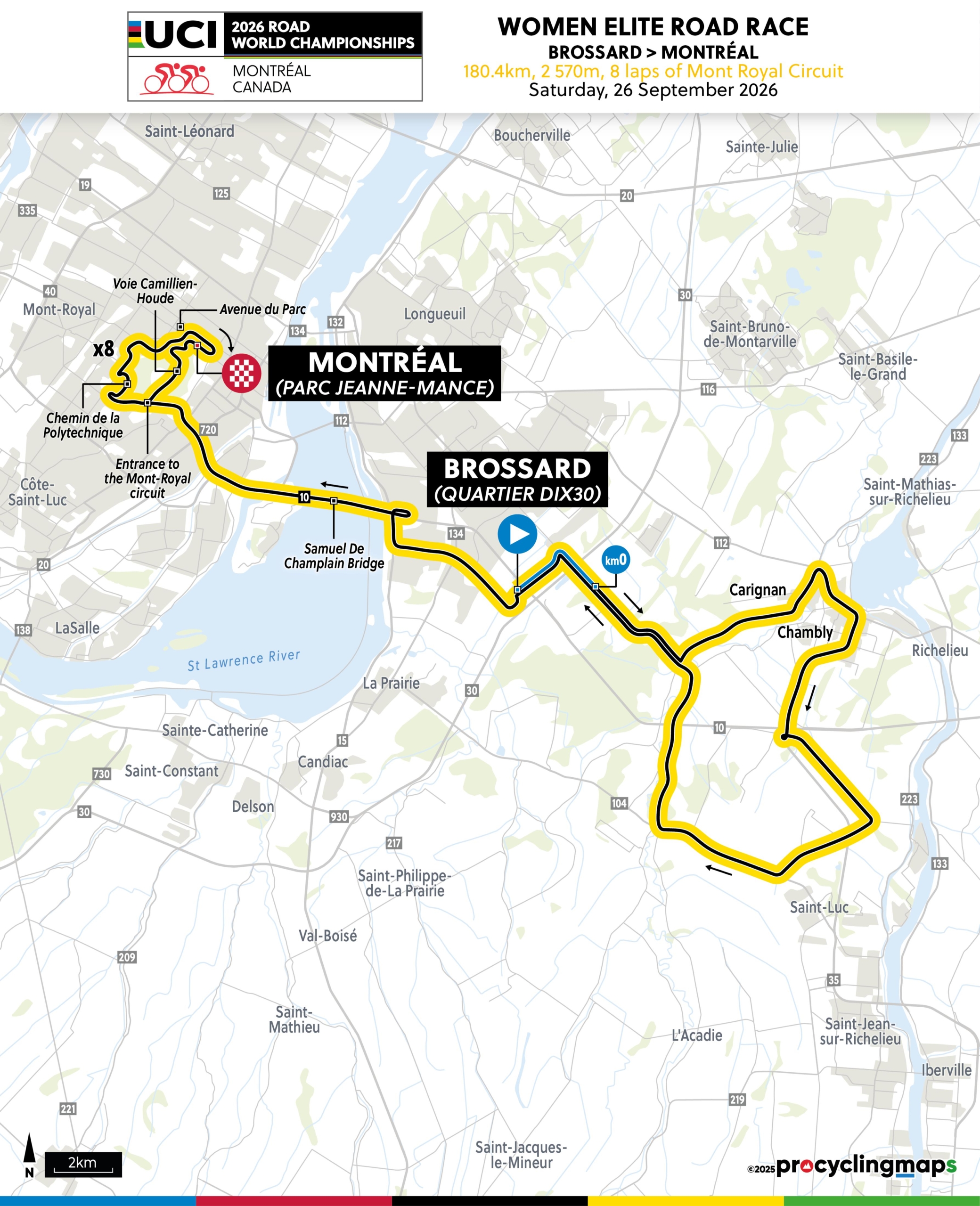
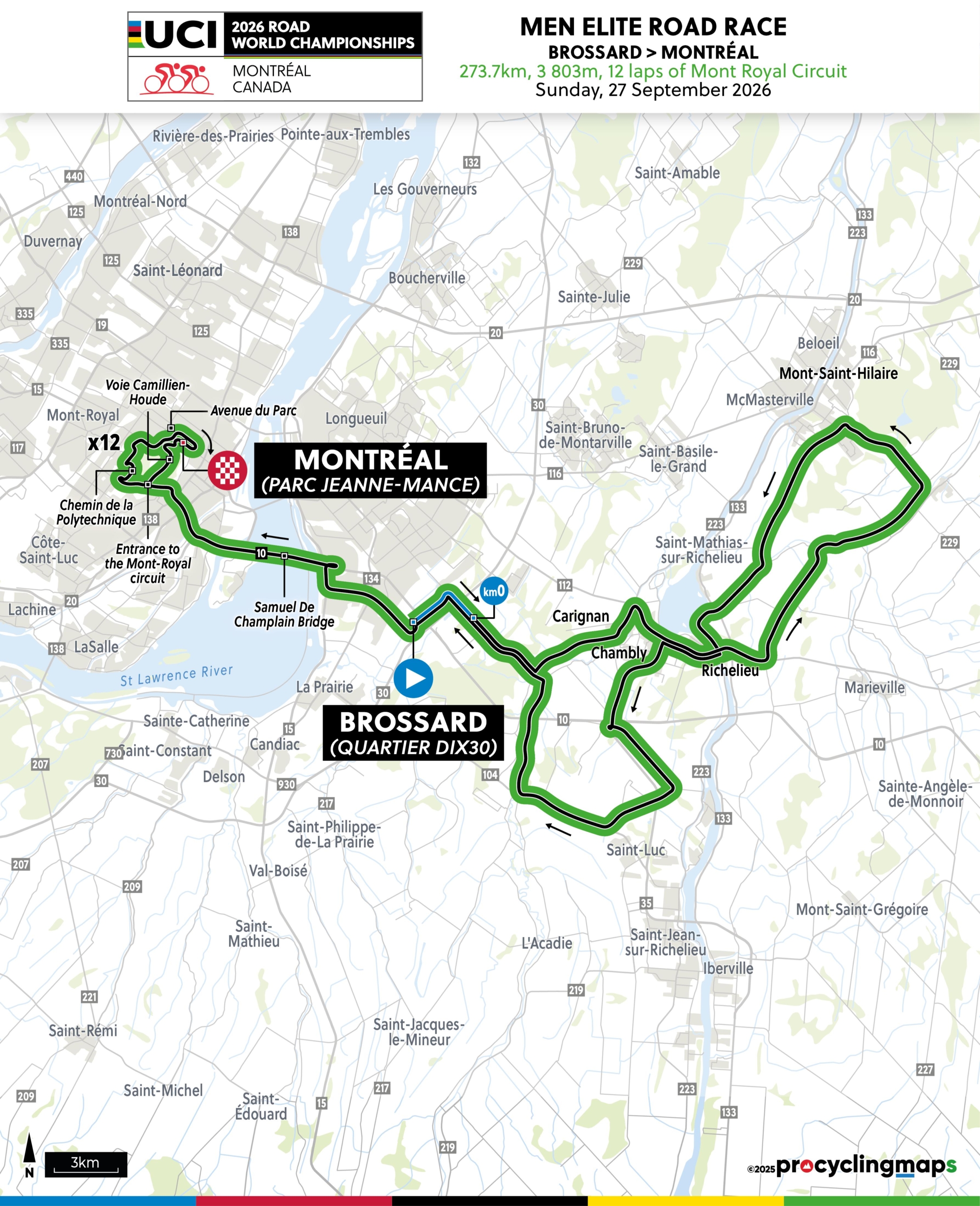
All the road races, including the elite women’s, shown here, finish on a circuit through the Mont Real district. UCI The elite men’s road race route. UCI
All the routes for the road races focus on two circuits. Longer races such as the men’s elite and women’s elite start with a long loop out from the Brossard district of Montreal.
That’s followed by crossing the Samuel de Champlain bridge to a circuit through central Montreal, completed 12 times for the elite men and eight times for the elite women. Shorter races such as the men’s U23 road race take place solely on multiple laps of the shorter Mont Real circuit.
Time trial
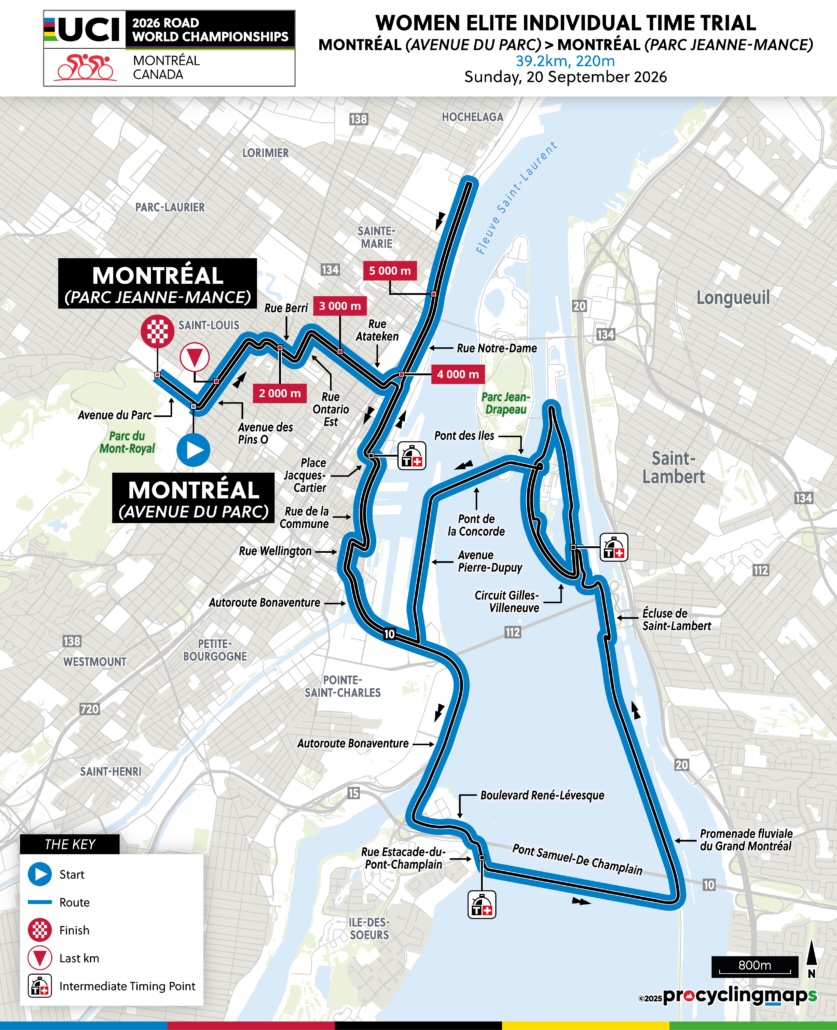
The time trial routes follow a twisting circuit through central Montreal, with shorter races omitting the further parts of the complete circuit. All finish at the same line in the Parc Jeanne-Mance also used for the road races.
Riders to watch
Remco Evenepoel looks likely to take a fourth elite men’s time trial title. Anne-Christine Poujoulat/AFP via Getty Images)
There’s no shortage of talent, despite the absence of the 2024 and 2025 road race winner, Tadej Pogačar.
Look out for Remco Evenepoel in the men’s individual time trial. He’s worn the rainbow jersey in the discipline since 2023 and doesn’t look inclined to relinquish it, based on current form. He’s a prospect for the men’s road race too, even if he was bested by Isaac del Toro in the recent GP de Montreal, who’s another hot prospect.
The Mexican, unlike the Belgian, doesn’t have a strong team behind him in the road race. Wout van Aert is another option for the Belgians. He looks to be in peak form following his two stages and points classification wins in the Vuelta a España.
Demi Vollering is a strong time trialist as well as the dominant women’s road rider. Jeff Pachoud / Getty Images
In the women’s road race, it’s hard to look past Demi Vollering to win her first rainbow jersey, having so far this year won both the Tour de France Femmes and Giro d’Italia Women, as well as a cluster of one day races including the Women’s Tour of Flanders and Liege-Bastogne-Liege. Again, she has strong team backing in the road race from her Netherlands team. Don’t rule out a win in the women’s elite time trial too.
For UK-based race watchers, the focus will be on Zoe Bäckstedt both in the elite women’s time trial, where she’s a strong competitor, and the road race. Tom Pidcock will lead the charge for Team GB’s elite men and is supported by a strong GB team. He has mixed road and XC MTB racing in 2026 and is the current XC Olympic MTB world champion.
Have you done 25 laps of the Volcano Circuit yet? This week’s top pick has hundreds of riders signed up to knock out this achievement together. We’re also featuring a unique new chase event from Zwift, a ride to honor the Milligan University Cycling Team, ZRL Recon Rides and more! See our picks below…
Jessica’s 100km Volcano Party
Popular Beginner-Friendly Achievement Badges
Far and away the biggest ride happening this weekend, YouTuber Jessica Strange‘s 100km Volcano Party looks like a great way to knock out some distance and even grab those volcano circuit multi-lap badges if you haven’t yet!
Jessica will have the leader beacon, cruising at a cat D/E pace. Ride with her, or ride ahead or behind. With so many riders on such a small circuit (only 4.1km long) there will always be someone to ride with!
This is a new style of event Zwift spun up in recent days. Technically classified as a group ride and not a race, these events are made up of two groups: the Party People (category D) who start first and wear fun costumes, and the Party Crashers (category E) who start a few minutes later and push hard to catch the Party People and crash the party before the ride ends.
Ride leaders from the community will have beacons and attempt to keep each group together while working toward beating the other group across the line. Hop in and have fun!
You don’t have to have known someone personally to feel loss or fear when cyclists are killed, particularly when the crash involves a vehicle. We are all part of the same cycling community.
“Team Giant invites cyclists everywhere to join us on Zwift for a special memorial ride honoring the Milligan University cycling team and remembering those whose lives were tragically lost, while supporting those who continue to recover.”
Join the ZABI group for a banded ride that allows you to go as hard or as easy as you’d like. “Your level or watts don’t matter. What matters here is friendship, fun, and enjoying virtual cycling as a group.”
We choose each weekend’s Notable Events based on a variety of factors including:
Is the event unique/innovative in some way?
Are celebrities (pro riders, etc) attending/leading?
Are signup counts already high, meaning the event is extra-popular?
Does the ride include desirable unlocks or prizes?
Does the event appeal to ladies on Zwift? (We like to support this under-represented group!)
Is it for a good cause?
Is it just plain crazy (extra long races, world record attempts, etc)?
Is it a long-running, popular weekly event with a dedicated leader who deserves a shout out?
In the end, we want to call attention to events that are extra-special and therefore extra-appealing to Zwifters. If you think your event qualifies, comment below with a link/details and we may just include it in an upcoming post!
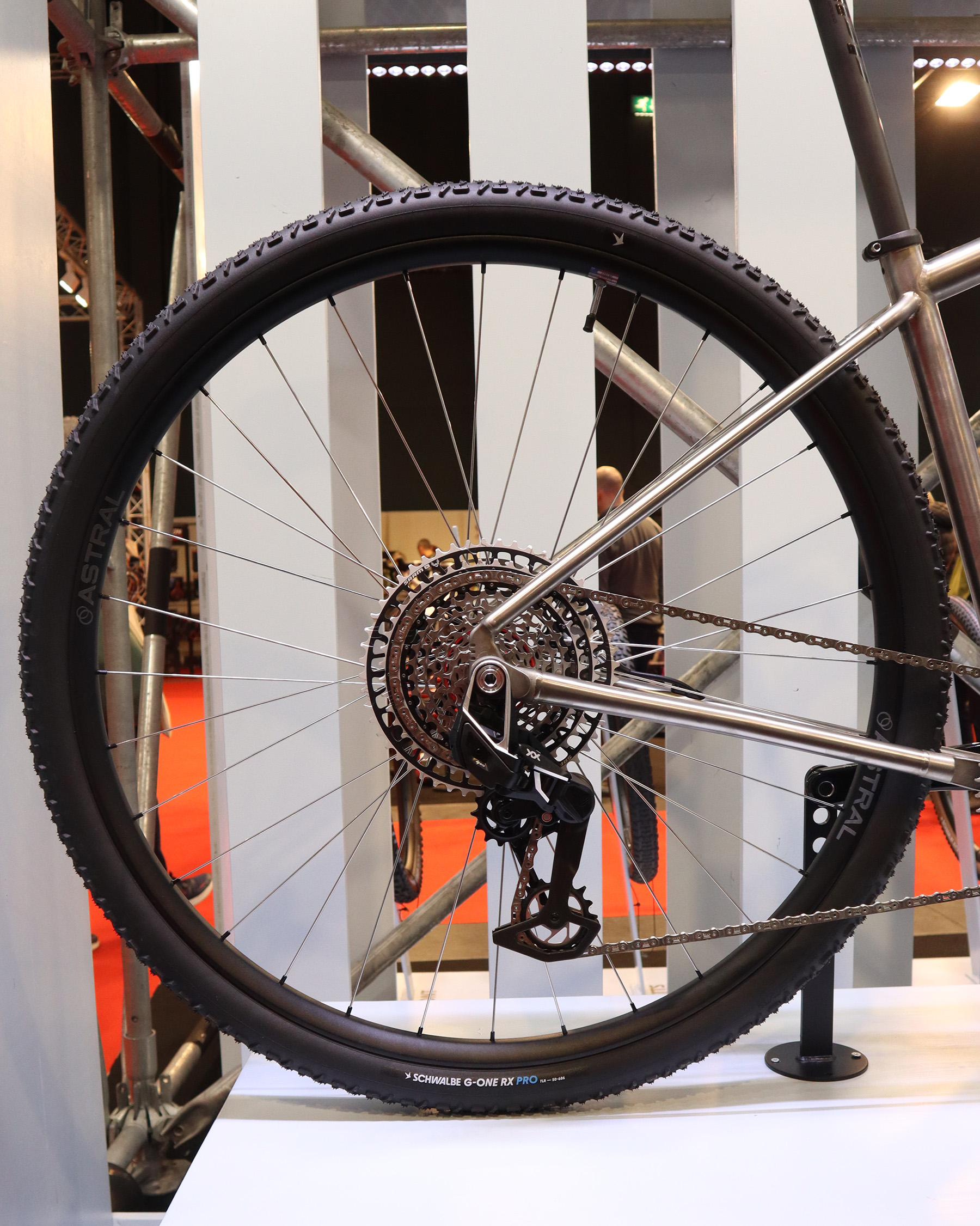
Schwalbe will release two 32in gravel tyres, the G-One RS Pro and G-One RX-Pro, in April 2027.
The company says the decision to release the tyres is driven by the growing trend towards 32in gravel bikes.
“The topic of 32-inch wheels has been the subject of intense discussion for many months, fueled by early race successes on 32-inch wheels,” Schwalbe says.
Schwalbe already had its 32in G-One RX Pro gravel tyre on display at Velofollies. Stan Portus / Our Media
Schwalbe adds that Robin Gemperle won Unbound XL, one of the toughest gravel races in the world, using prototypes of the G-One RX Pro on his 32in Scott gravel bike.
The tyres have already appeared on several 32in bikes, including the Singular Pterodactyl.
Felix Schäfermeier, head of product management at Schwalbe, says: “At first, we were sceptical about whether 32 inches would be a meaningful addition. But the more we tested, the clearer the conclusion became: riders on 32-inch wheels definitely notice a difference.”
At the Velofollies trade show in January, Schwalbe already said that it was “fully convinced” by the oversize wheelsize.
Schwalbe said at the time that it had been testing 32in tyres in its lab, and Schäfermeier now echoes the same advantages that the company outlined earlier this year.
“In terms of tyre setup, the new wheel size delivers more stable handling, better traction, and increased comfort, particularly in gravel riding,” says Schäfermeier. “This also opens up potential for other categories, without diminishing the relevance of other sizes.”
While Scott revealed a 32in gravel bike for Unbound and Canyon recently made a one-off 32in gravel bike for LeBron James, no mainstream brand is yet to release a 32in wheel bike to the mass market.
In addition to the gravel tyres, Schwalbe says it will release 32in inner tubes and 32in mountain bike tyres in April next year.
Millions of years ago, continental collisions created enormous mountains in what’s now Antarctica. As they eroded, Earth’s life thrived from their nutrient-rich deposits.
Zwift launched Gravel Mountain back in April, but quickly pulled it due to a buggy race experience. Zwifters have been wondering when it would return, and the answer is: last week! Zwift Labs events have been set up, allowing riders to test the updated map. Read on for details…
Races
Friday Night Fun Races are being held on the Red Rock Loop and Red Rock Loop Reverse routes, with six different time slots to choose from. These events have been set up by Zwift’s James Bailey, so you may encounter silly stuff like dino suits or forced bikes.
These races use the “Boost” powerup, which delivers a burst of speed. Additionally, it sounds like some of the races will be held on the arcade version of the circuit, which requires steering and includes boosts and hazard pads, similar to the arcade version of Crit City.
Some Zwifters have asked what surface is used on Gravel Mountain, since it appears to be dirt, but less dusty than the Jungle. The surface is in fact, dirt (in terms of Crr), but with the dust and camera shake reduced for an improved experience.
So which bike is fastest in Gravel Mountain? I tested three top bikes, one in each category. Here are the lap times at 4 W/kg:
Zwift says they’ve fixed the bugs reported when Gravel Mountain was released back in April. That includes avatars bouncing on screen, erratic left/right movements and acceleration, riding through rocks, and a lack of rider placings. Most notably, though, Zwift has reduced the “visual speed” from 2.5x faster than normal to 2x.
This “visual speed” (I’m not sure what else to call it, so I’m calling it that) is accomplished by scaling the GPS coordinates. This allows your actual recorded speeds to remain accurate, while changing the speed at which you pass through the on-screen environment. So you get accurate speeds, but a faster, more exciting experience.
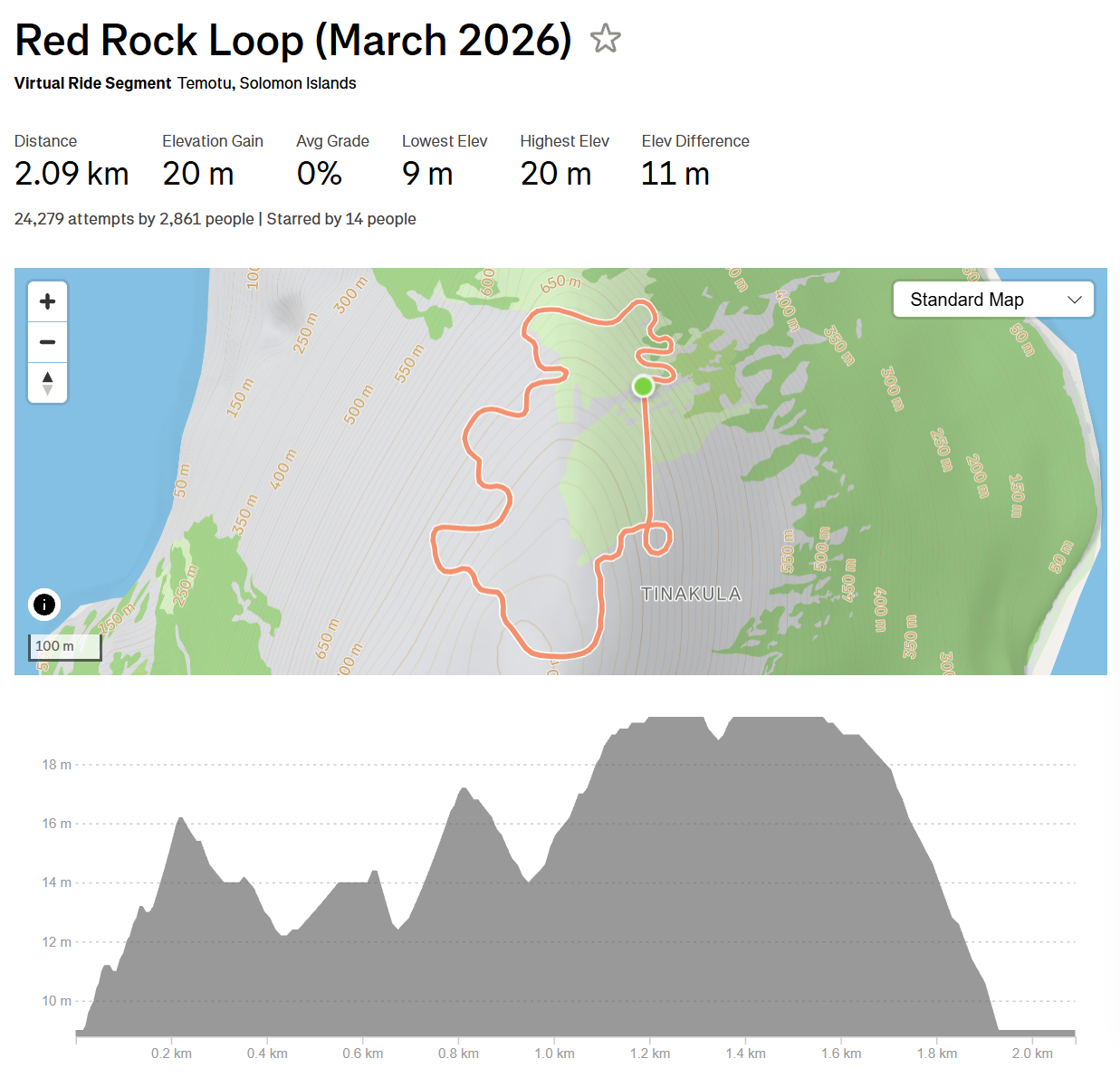
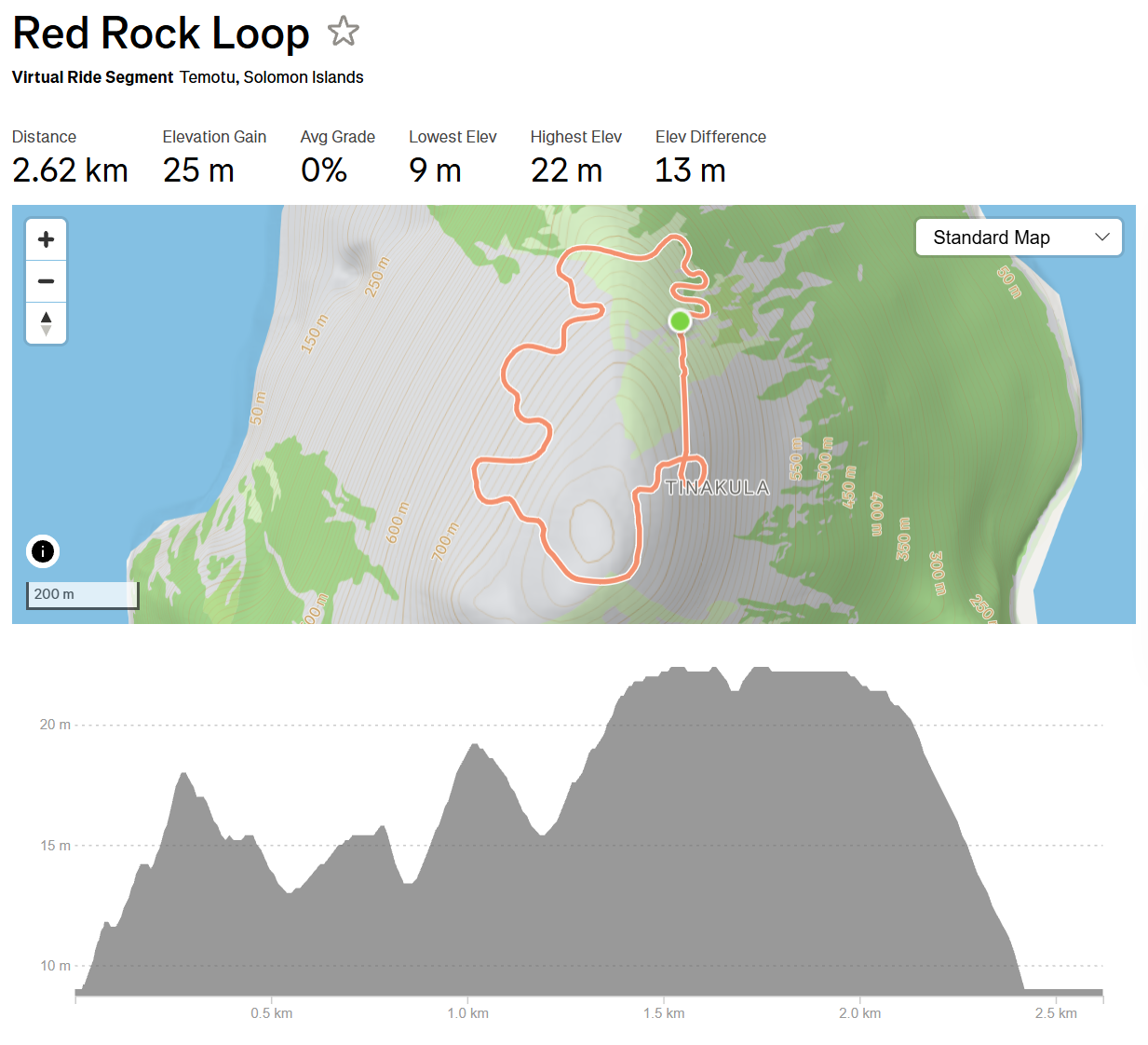
You can see the effect of this GPS scaling by comparing the Red Rock Loop from back in March to the new, slightly slower loop. Here’s the older version – note the length, and its dimensions on the map:
Here’s the new version. Note the increased length and dimensions on the map compared to the map above.
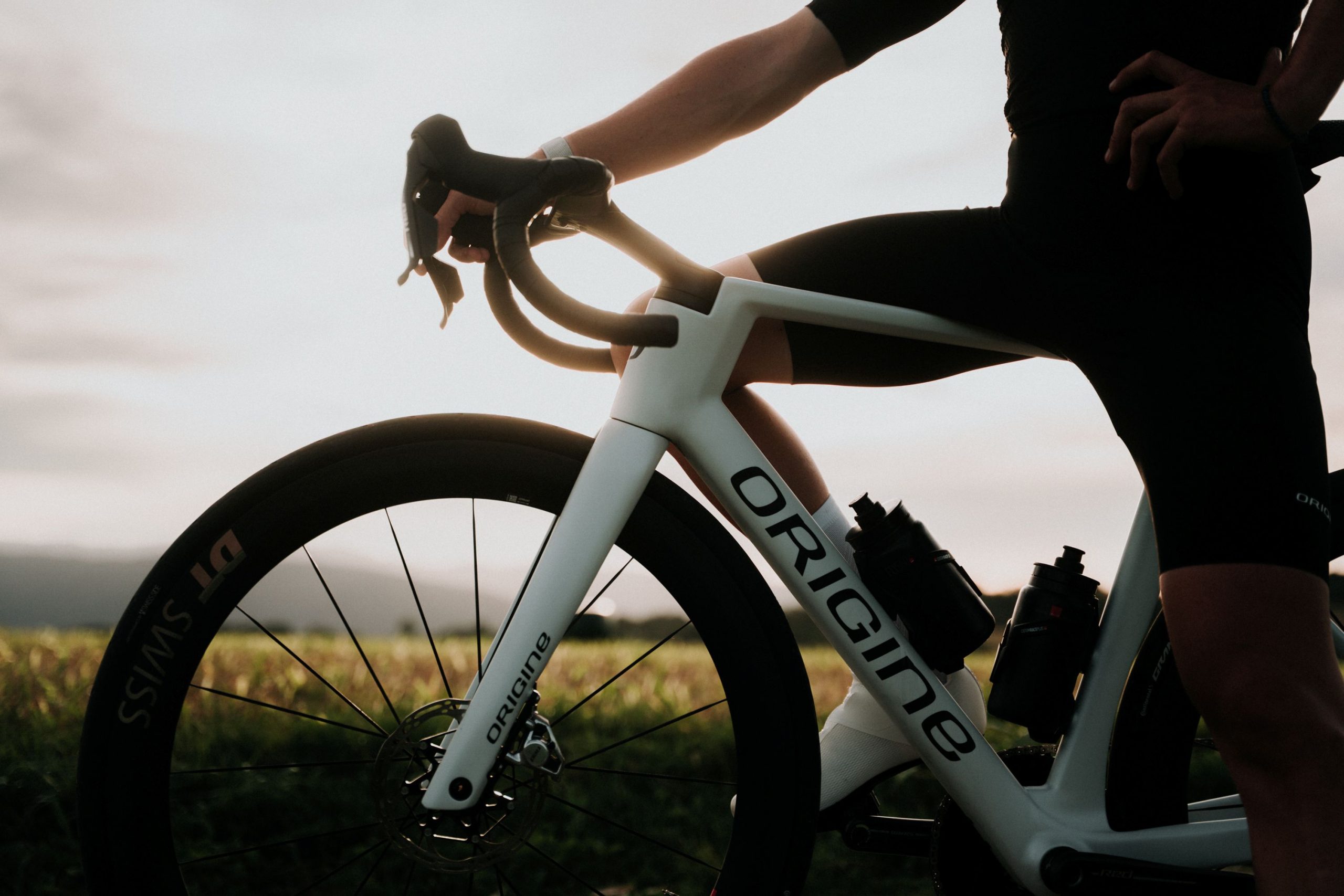
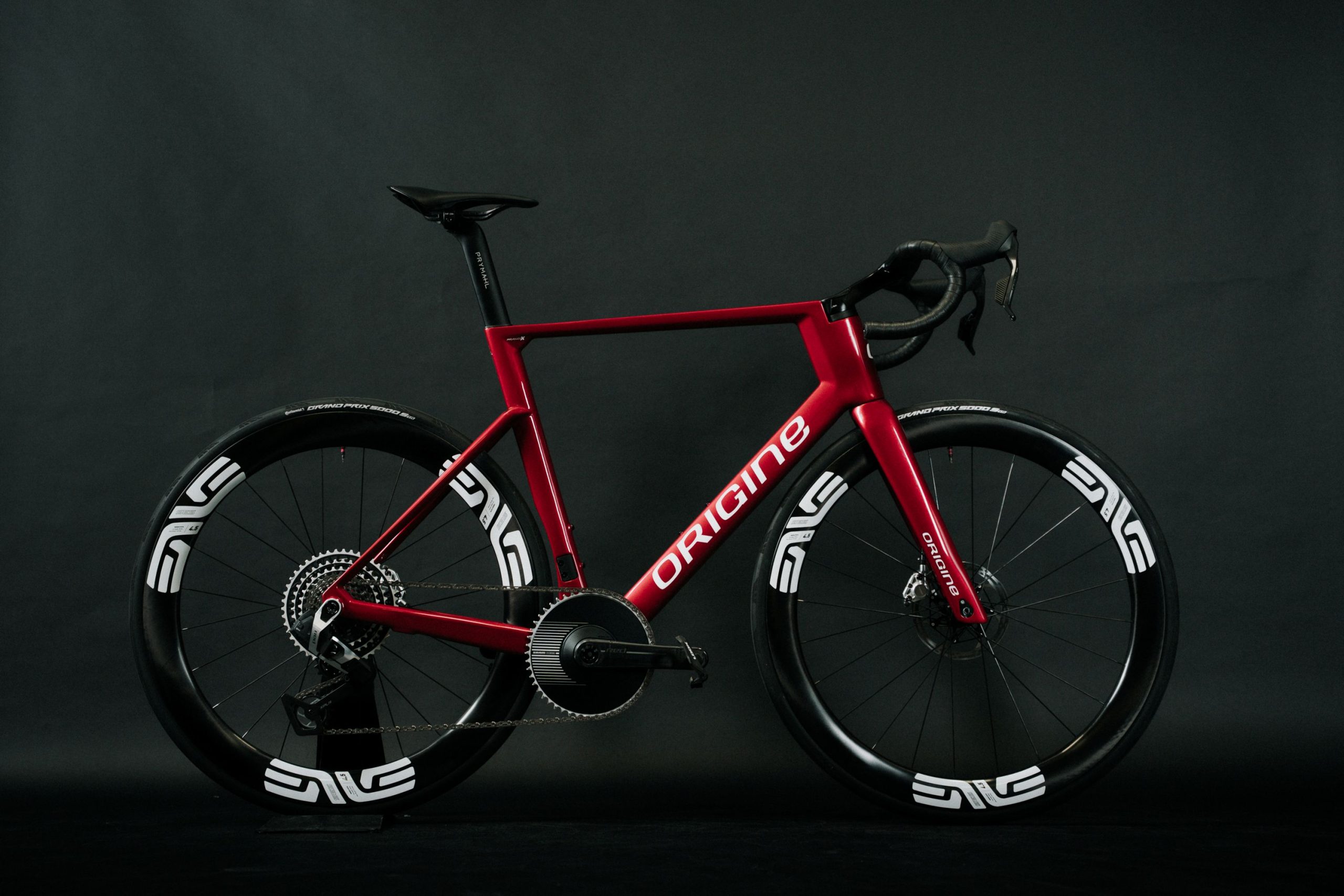
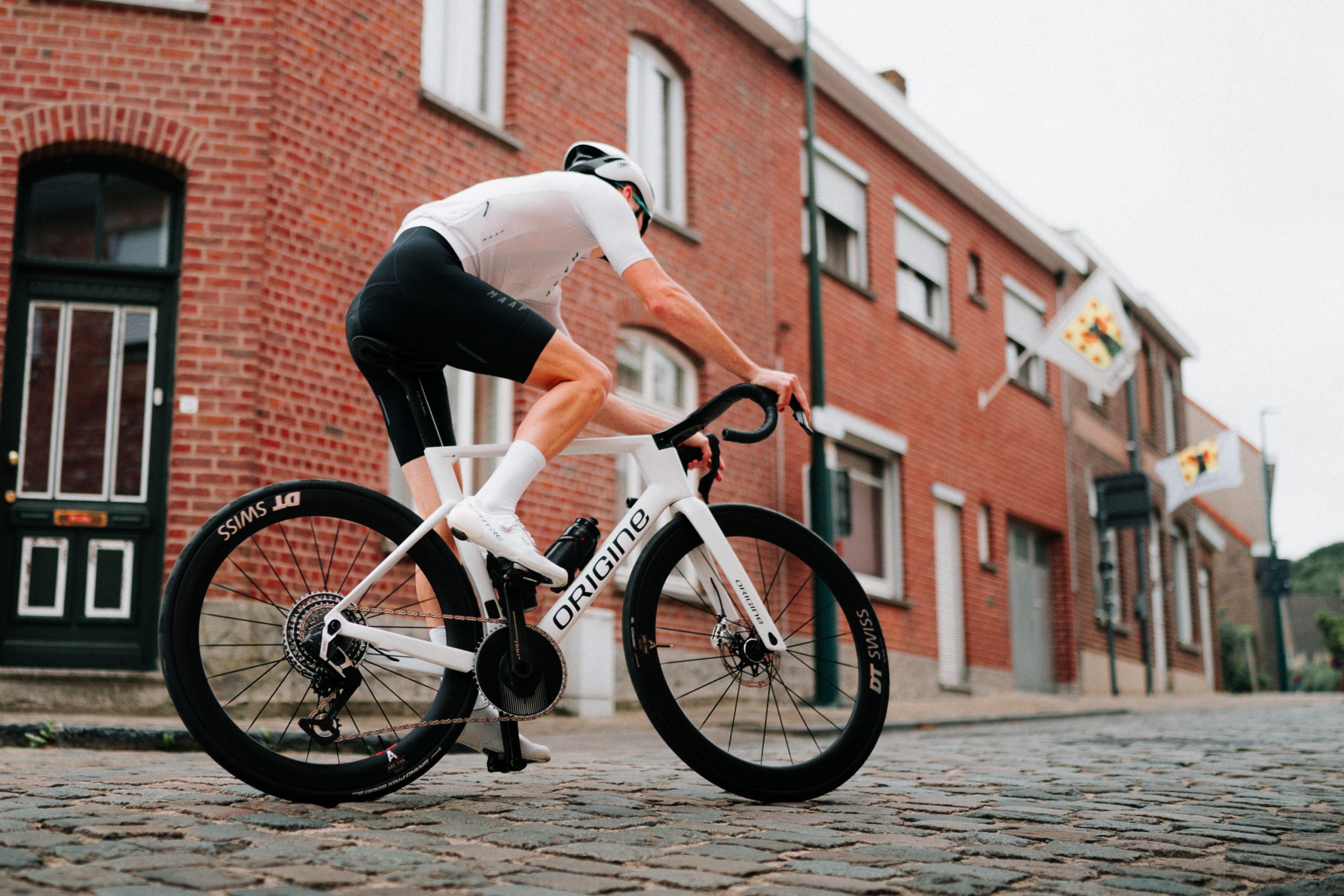
French direct-to-consumer brand Origine is launching in the UK today and, to coincide, it’s also launching a new aero road bike, the Fraxion X.
Origine claims the Fraxion X is its most aero road bike to date, with a 15-watt drag reduction at 40km/h versus its Fraxion GTR predecessor. Origine says it has designed the bike for real-world conditions, not only to be fast in CFD simulations and the wind tunnel.
The Fraxion X is available in two carbon grades, with the higher-modulus frame having an 875g claimed weight, which Origine says represents a 5% reduction from the Fraxion GTR. It also claims significant stiffness increases at the head tube and bottom bracket.
Origine claims the Fraxion X’s deep head tube and fork contribute to a 15-watt saving over its previous-generation Fraxion GTR aero bike.
Tyre clearance is 32mm and the bike can be set up with either mechanical or electronic shifting, with the Di2 battery on Shimano electronic builds housed in the down tube, to enable the seatpost to be kept narrow and lower the bike’s centre of gravity.
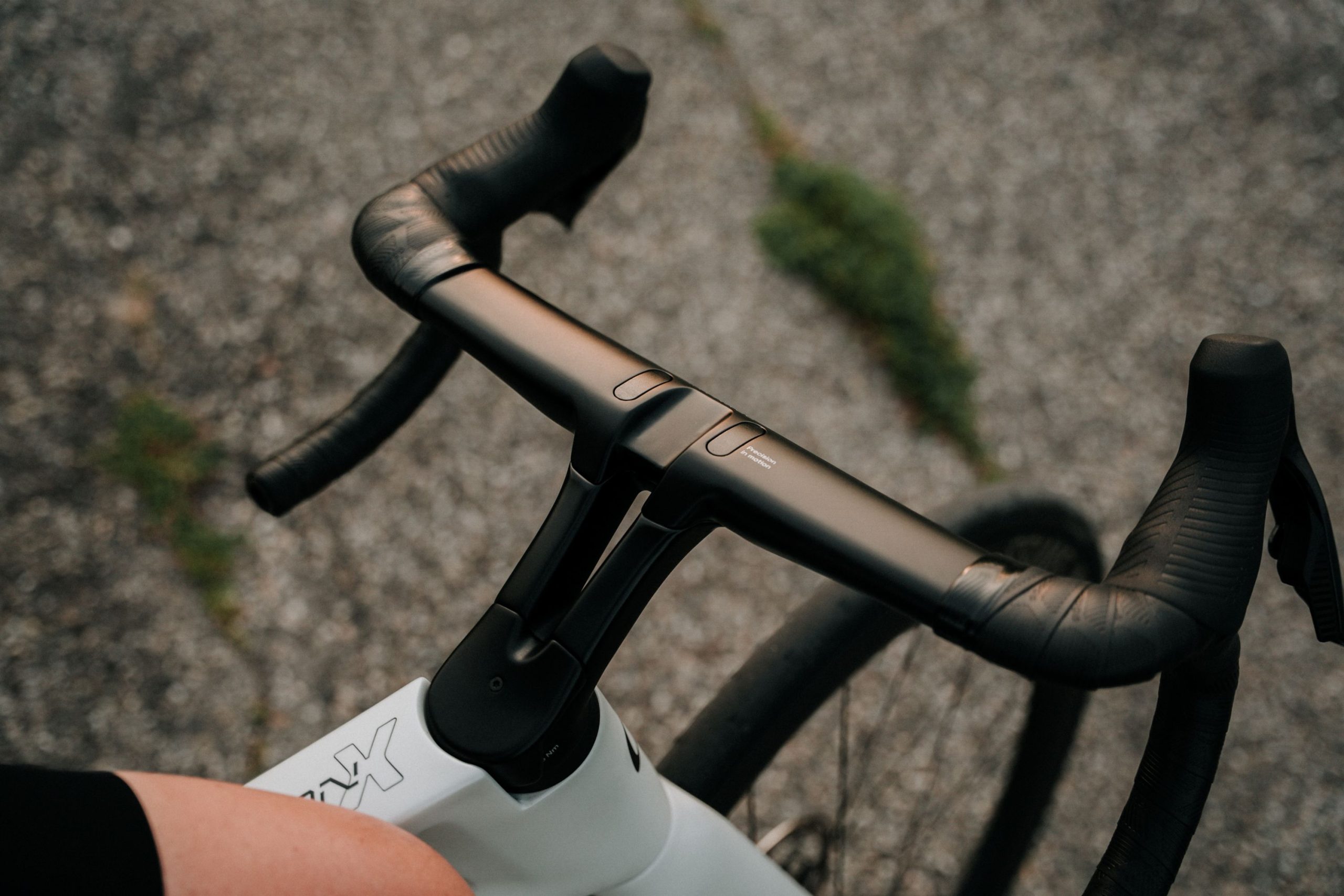
The bike has Origine’s one-piece AeroFlow cockpit, which is available in no fewer than 45 width/length/rise combinations. A steering limiter and tab to protect the frame from a dropped chain lower the risk of frame damage.
There are 45 width/length/rise options for the Fraxion X’s cockpit.
Origine calls the two carbon grades available for the Fraxion X Core and Lite, offering a standard-modulus and a higher-modulus frameset, the latter stiffer and saving 150g.
There’s also an RR option that, based on the Lite frame, adds ceramic bearings, titanium hardware and lighter axles and seatpost clamp. Built up with SRAM Red AXS and DT Swiss ARC 1100 wheels, Origine claims the bike can weigh as little as 6.6kg, which it says makes it among the lightest aero road bikes available.
Fraxion X example specs, weights and prices
There are many different configuration options, including 1x with ENVE wheels.
The top-spec Lite frameset, built up with SRAM Red AXS and DT Swiss ARC 1100 55mm wheels, has a claimed 6.69kg weight and is priced at €9,980.
Other groupset choices include Shimano Dura-Ace, Ultegra, 105 Di2 and 105, while quoted SRAM specs extend to Force AXS as well as Red AXS.
A 105 Di2 spec on the Core frameset, with Origine’s own Prymahl Orion C40 wheelset has a 7.81kg claimed weight and is priced at €5,374. Switch to mechanical 105 and the price drops to €4,830.
The Fraxion X is available in sizes XS to XL.
What is Origine?
Origine is based in northern France, close to the route of Paris-Roubaix.
Based since 2012 near Valenciennes in northern France, Origine’s development centre and factory is 8km from the famed five-star Troueé d’Arenberg secteur of Paris-Roubaix. It was previously the provider of neutral service bikes to Shimano, although more recently its bikes have been superseded by the 2016 Canyon Ultimate CF SLX, which we took a look at ahead of the 2026 Tour de France.
Origine sells the full range of bike categories: road, gravel, mountain and electric, all of which are hand-assembled in Valenciennes.
Its online fitting app helps you choose the right bike size and components and select from more than 17 million configuration options and hand-painted finishes. Its bikes are delivered ready to ride, so there’s no assembly needed.
It’s been selling its bikes in France, Switzerland and Benelux for years, but alongside the UK is now expanding into Germany, Italy and Spain.
Origine backs up its bikes with a lifetime guarantee on the frame, a 30-day return window, a network of 400 service centres Europe-wide and an adjustment guarantee.
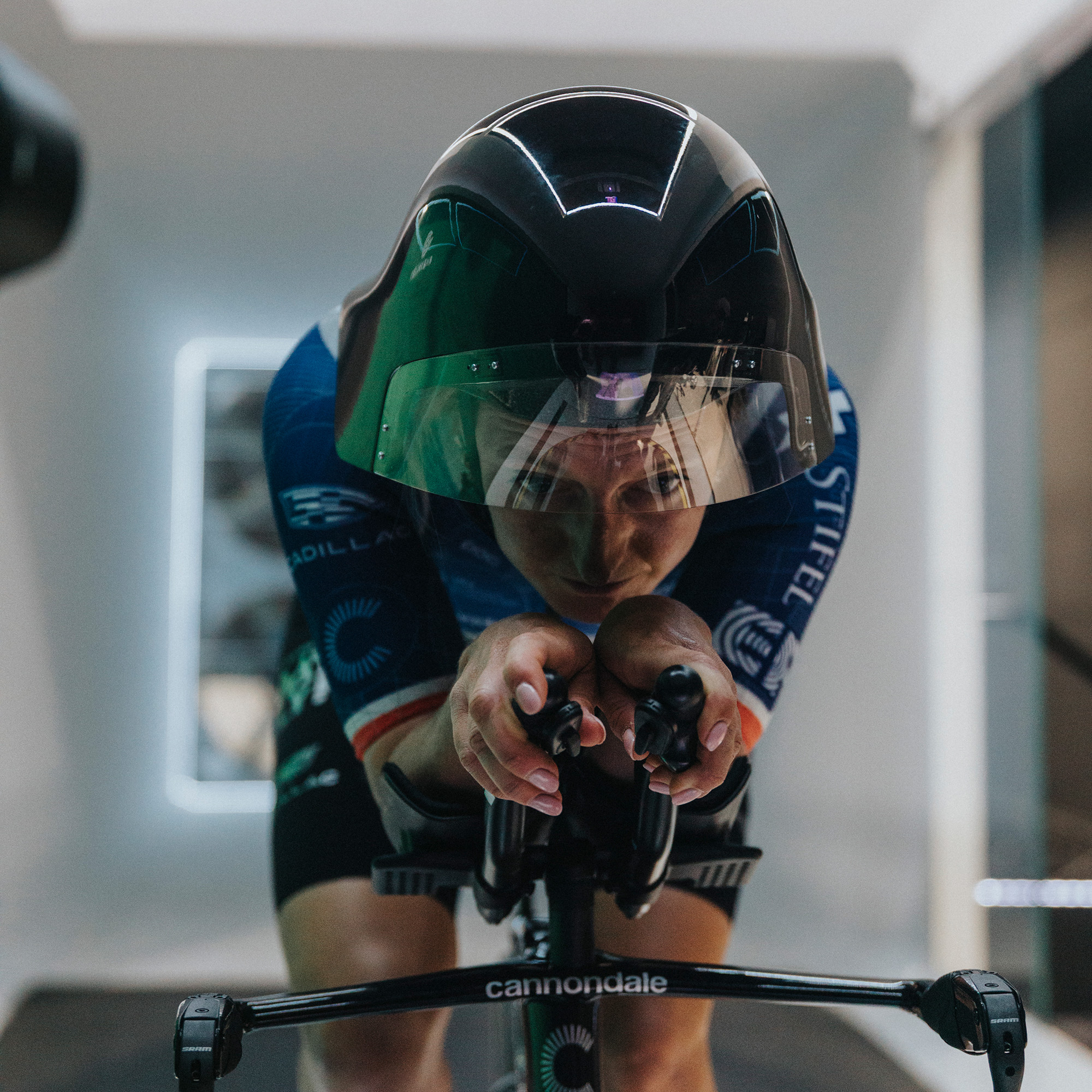
The new POC Sonal time trial helmet has an elongated design and comes in two widths to unlock as much speed as possible.
POC was the first brand to bring out an oversize time trial helmet, the Tempor, back in 2012. The Tempor changed the consensus on how these specialised helmets should perform.
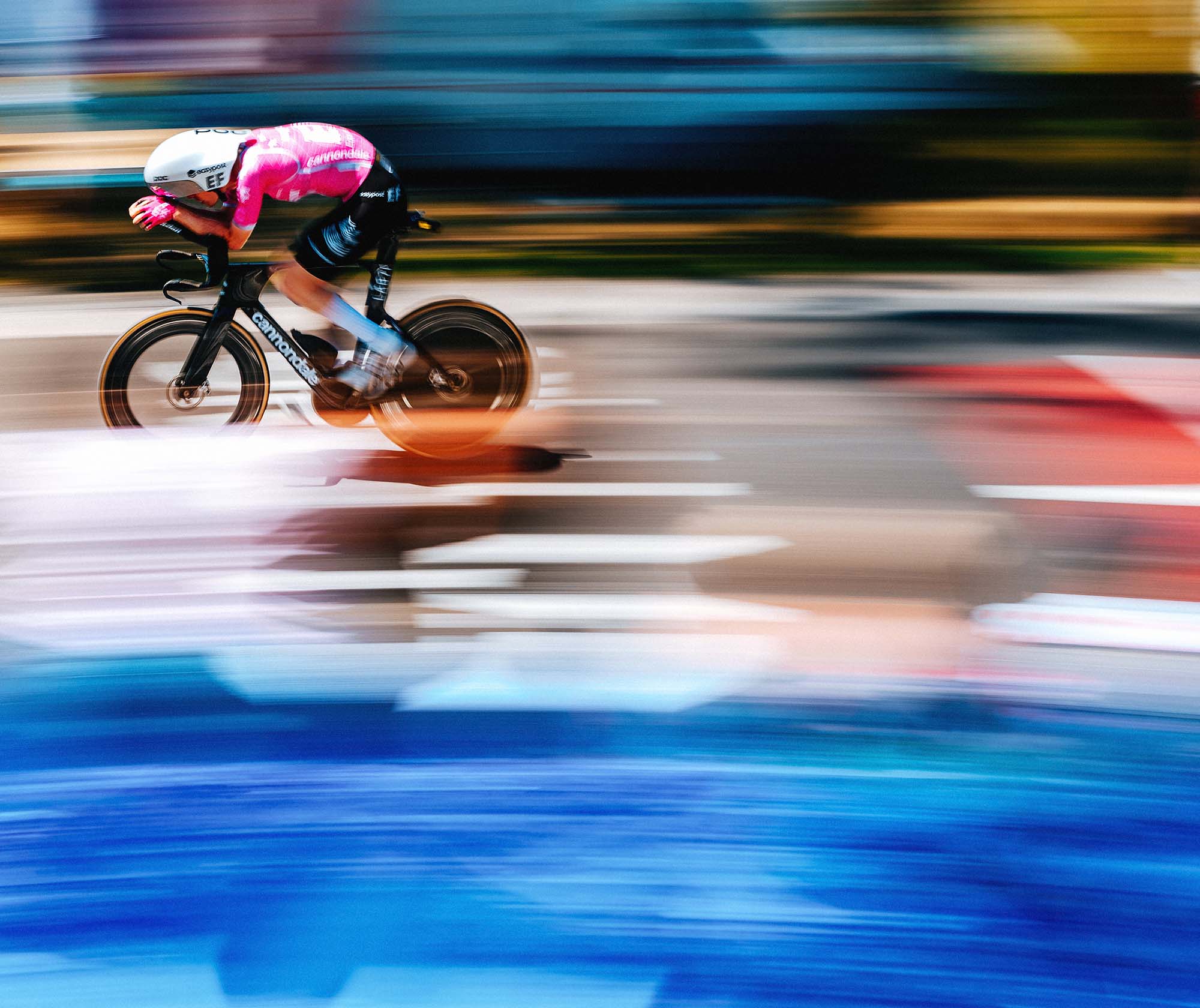
Other brands have released huge helmets in recent years. But it wasn’t until EF Pro Cycling asked for a new time trial helmet for the 2026 Tour de France that POC began to work on one. Now the Swedish company has officially launched the new helmet.
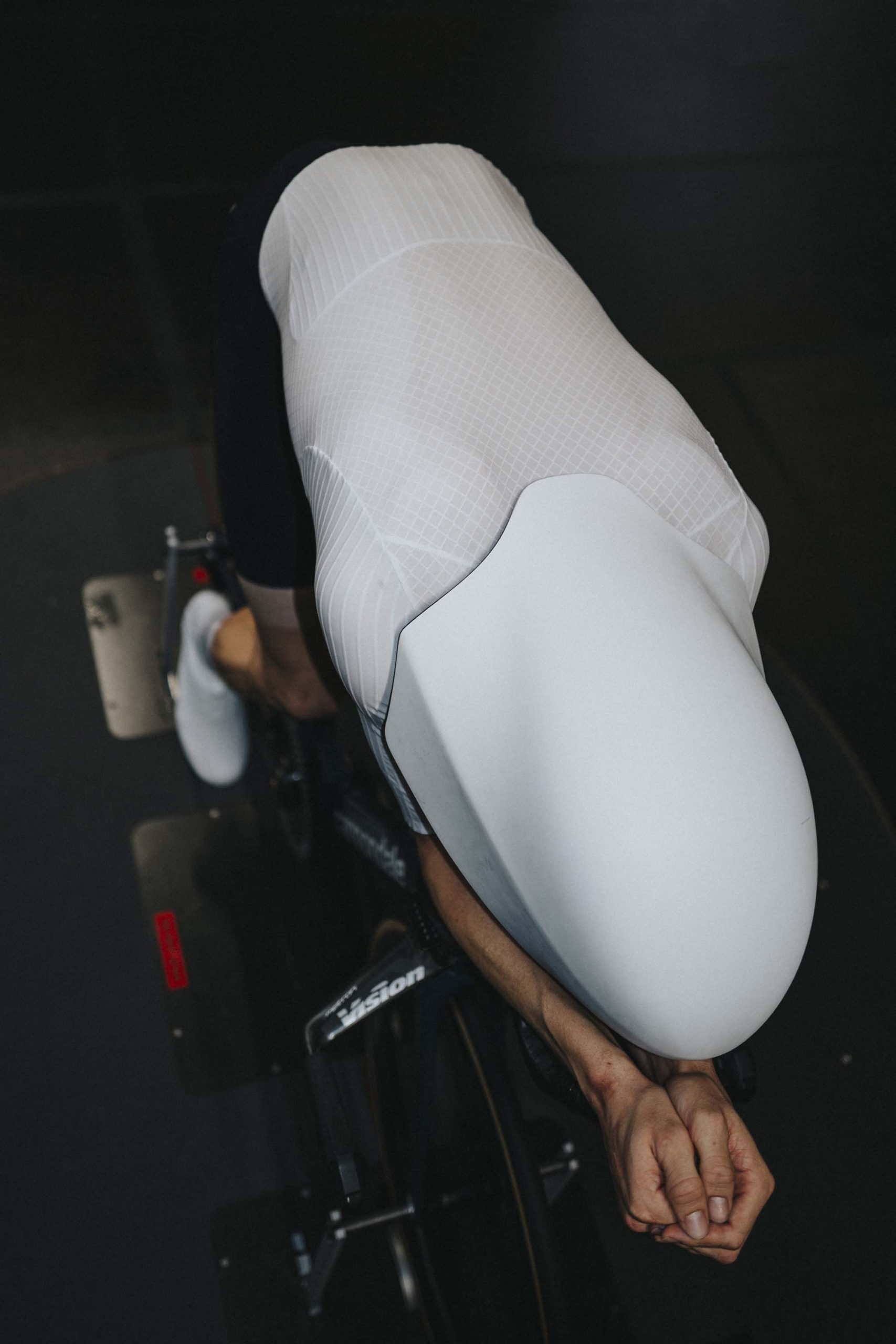
“The Sonal takes a new view of rider aerodynamics by focusing on a rider’s whole body rather than the head in isolation and uniquely comes in two sizes matched to shoulder width rather than head size,” POC says.
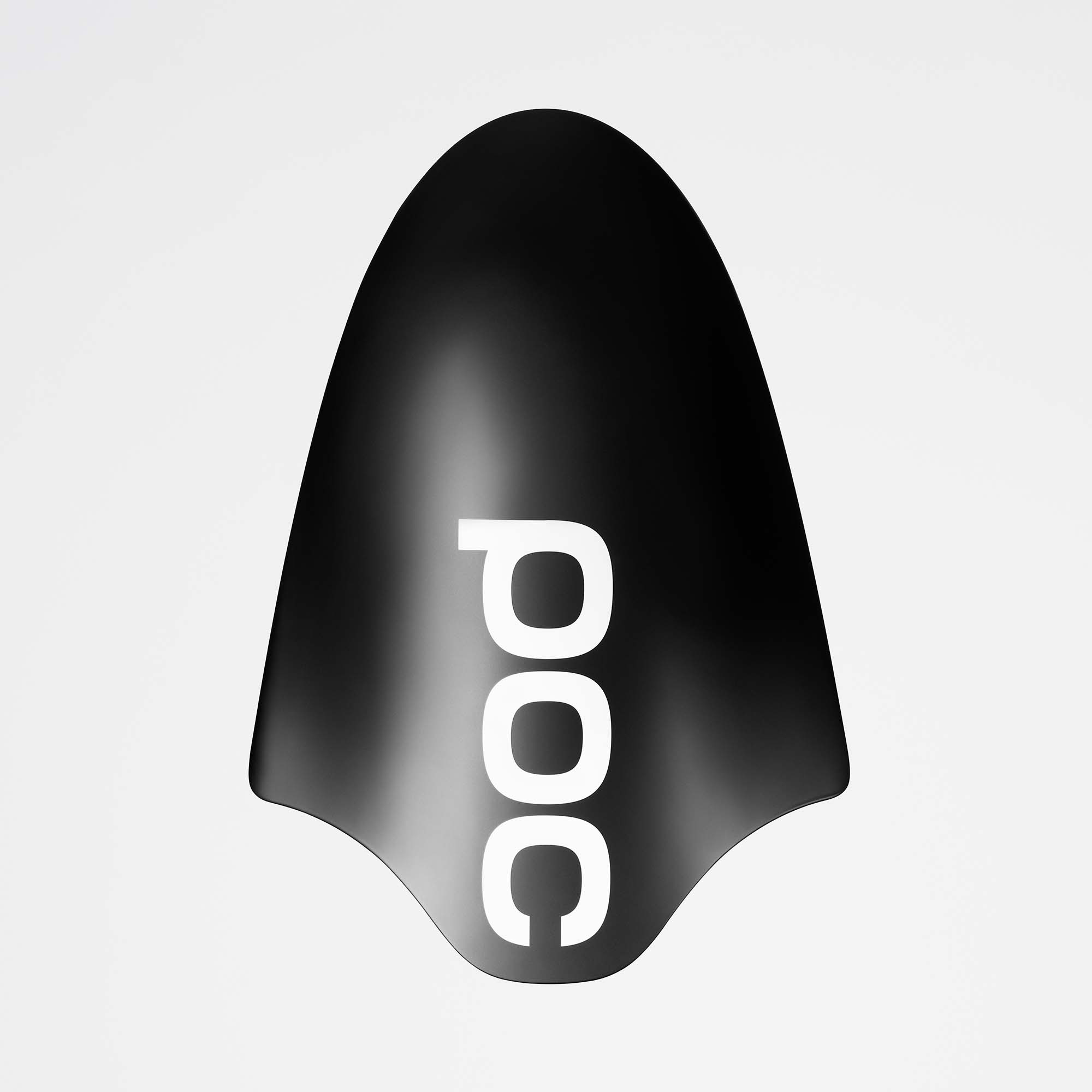
“It features an elongated front designed to deflect air flow at the high-pressure zone that typically forms at the front of a helmet, which adds drag, instead it guides the airflow smoothly around the helmet and over the rider’s body.”
Two widths
The helmet treats the head and body as a single aerodynamic unit. POC
The Sonal comes in two shell widths to treat the head and body as a single aerodynamic unit.
Mangus Gustavsson, POC’s director of hard goods, says: “Our objective with the Sonal was to create the fastest, most aerodynamic helmet possible – and to make it work for more riders, because we know a one-size-fits-all approach doesn’t work in time trial.
“That’s what led us to develop two distinct helmet sizes based on body and shoulder width, since airflow over the whole body – not just the head – is what ultimately creates the right aerodynamic profile.”
POC says riders with shoulders narrower than 37cm in a time-trial position should opt for the narrow Sonal; riders with shoulders wider than 37cm should go with the regular size.
The helmet comes in two wdiths. POC
It adds that the shells have the same internal size for heads spanning 51-59cm, which covers most small to medium-sized helmets.
“This means riders get a shell matched to their shoulder width without needing to worry about head-size fit separately,” POC says.
So how fast is it?
The helmet provides a “significant improvement” in aerodynamics. Jered Gruber / POC
POC says aerodynamic performance always depends on the specific rider. But it claims testing shows the Sonal provided a “significant improvement” in aerodynamic performance in both widths.
“Tested against the already very fast POC TT helmets and at speeds we typically see in modern TT and track events, 60 km/h, the Sonal delivers average savings of 15 to 20 watts,” POC says.
Vision and comfort
POC says the Sonal was designed to provide a full range of forward and peripheral vision. POC
POC says another important aspect of the Sonal’s development was vision.
The helmet is designed to offer a full range of forward and peripheral vision. “This has been achieved by designing the helmet’s forehead angle to match the rider’s line of sight without requiring head movement,” POC says.
The helmet comes with a clear lens and a tinted lens for use in different light and weather conditions. These are secured by magnets so you can “swap lenses quickly and securely in seconds”.
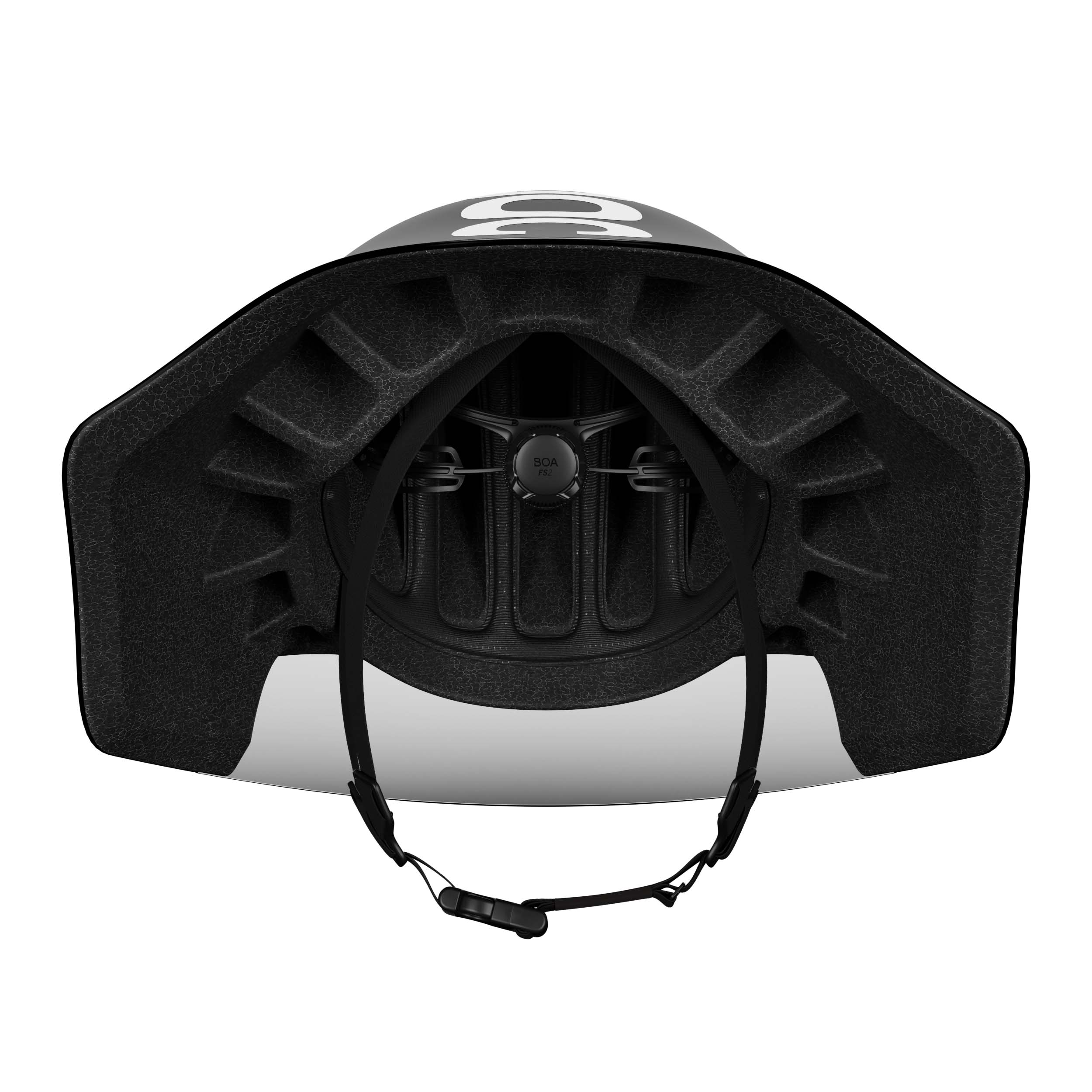
The helmet fit can be adjusted at the rear via a Boa dial. POC The POC Sonal has an elongated body. POC
Despite its size, the helmet is also said to be comfortable to wear for extended periods. This is thanks to its weight (440g and 490g for the small and regular widths, respectively), light padding, Boa adjustment and its balance on your head while in a TT position.
The Sonal will be available from POC’s website in October, with full availability next spring. It costs £550 / $660 / €600 / AU$1,000.
Trek has teased a 32in XC prototype on social media, with the new bike appearing to feature an unreleased 32in RockShox SID Flight Attendant fork.
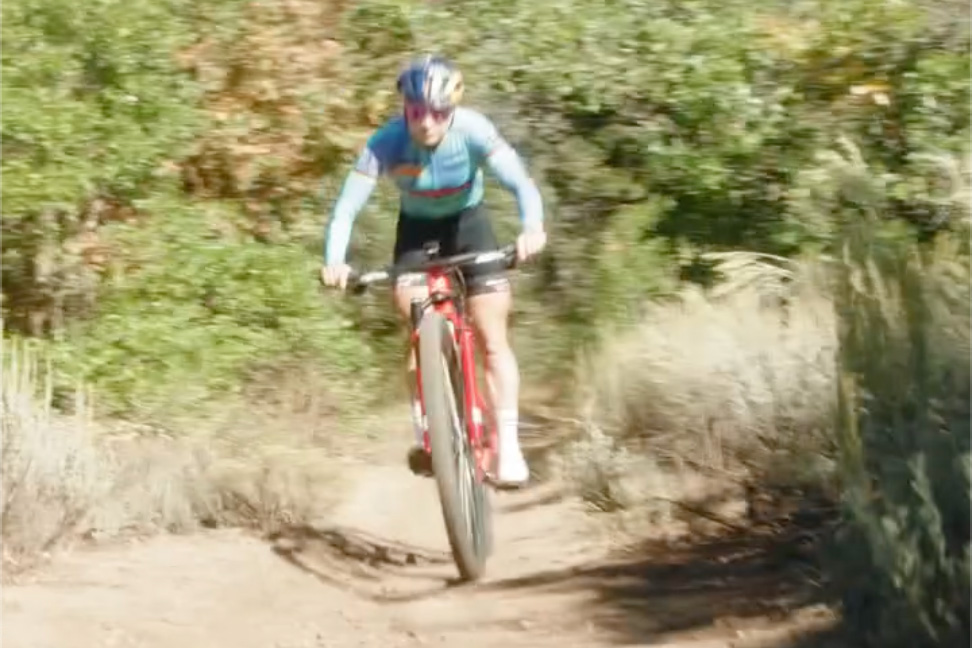
The brand says the new bike will be ridden by Trek Factory Racing for the first time at this weekend’s penultimate UCI World Cup in Soldier Hollow, Utah, with Evie Richards seen riding it in an Instagram post.
A new 32in cross-country bike had been expected from the brand, with Trek suggesting at the start of the season that its current 29in prototype raced by the team this year “may never hit store shelves”.
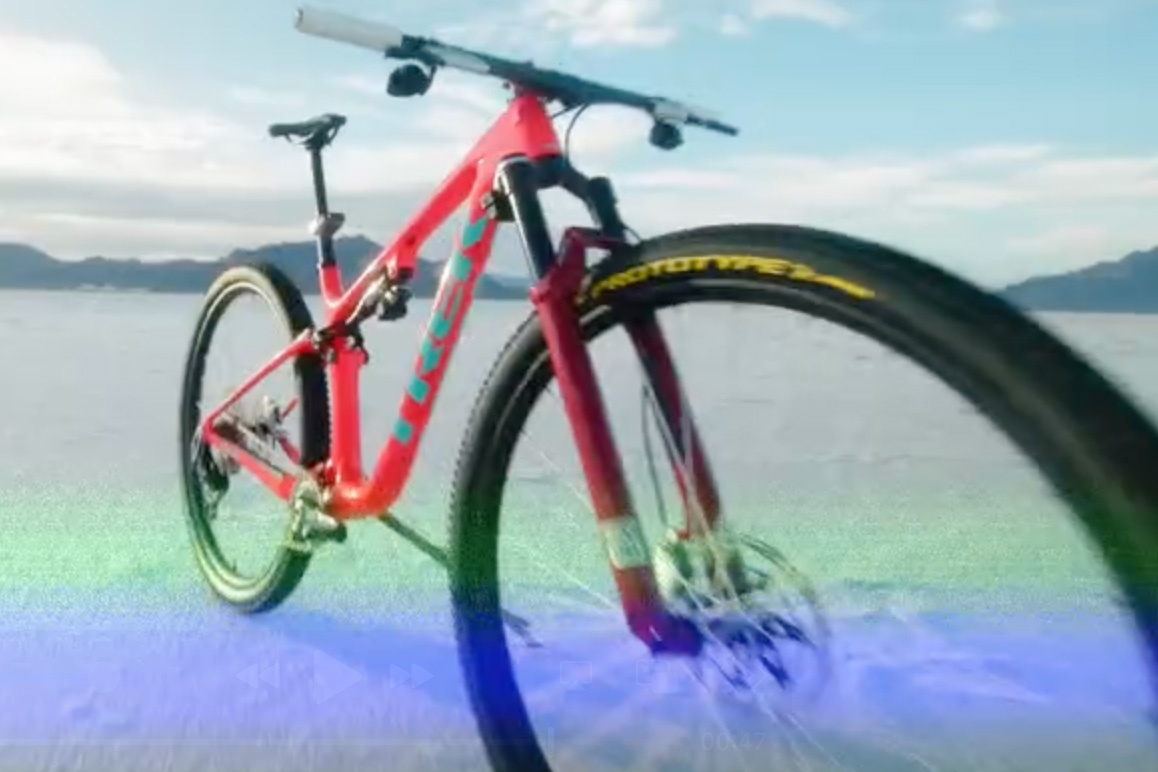
A variation of the bike was also spotted in the background in Trek’s 50th-anniversary documentary.
Alongside the bike is a new 32in RockShox SID fork with what appear to be extended dropouts to fit the new wheel size.
While we’ve seen Fox’s RAD 32in prototype fork already in action on Andreas Seewald’s World Cup winning KTM Scarp Evo 4 32 prototype, it’s the first time we’ve seen anything 32in from rival RockShox.
Big wheels
The bike looks very similar to the 29in prototype we’ve seen Trek Factory Racing on this year. trekbikes / Instagram
The new bike has a similar suspension layout to the prototype the team has been racing, sharing the a top-mounted rear-shock design with flexstays in the rear triangle.
This shape of frame is very common in cross-country, because packaging the rear suspension high in the frame leaves space for two water bottles in the front triangle – perfect for marathon races where feed stops can be few and far between.
Smaller riders have raised concerns that the larger wheel size might not be suited to smaller frame sizes. trekbikes / Instagram
Having Evie Richards ride the bike in the video, and race it this weekend, suggests Trek has worked out one of the more difficult issues with the 32in wheel size.
Worries have spread that the new wheel size will put smaller riders at a disadvantage, but at 164cm, Richards appears to be countering that argument.
While we don’t have a full list of frame sizes, it appears Trek may have solved the issue of making small frames with 32in wheels.
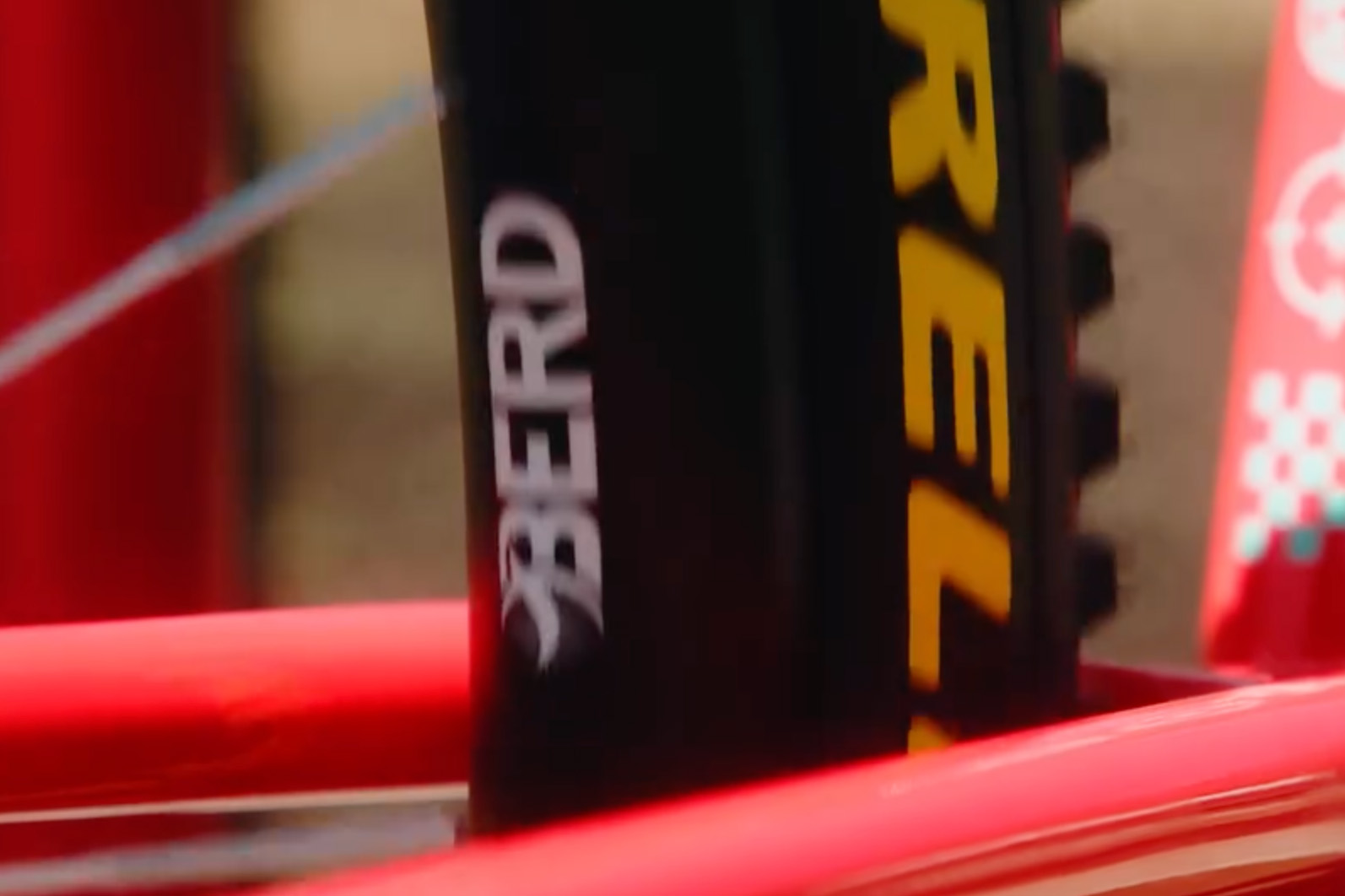
Berd logos appear on the wheels. trekbikes / Instagram
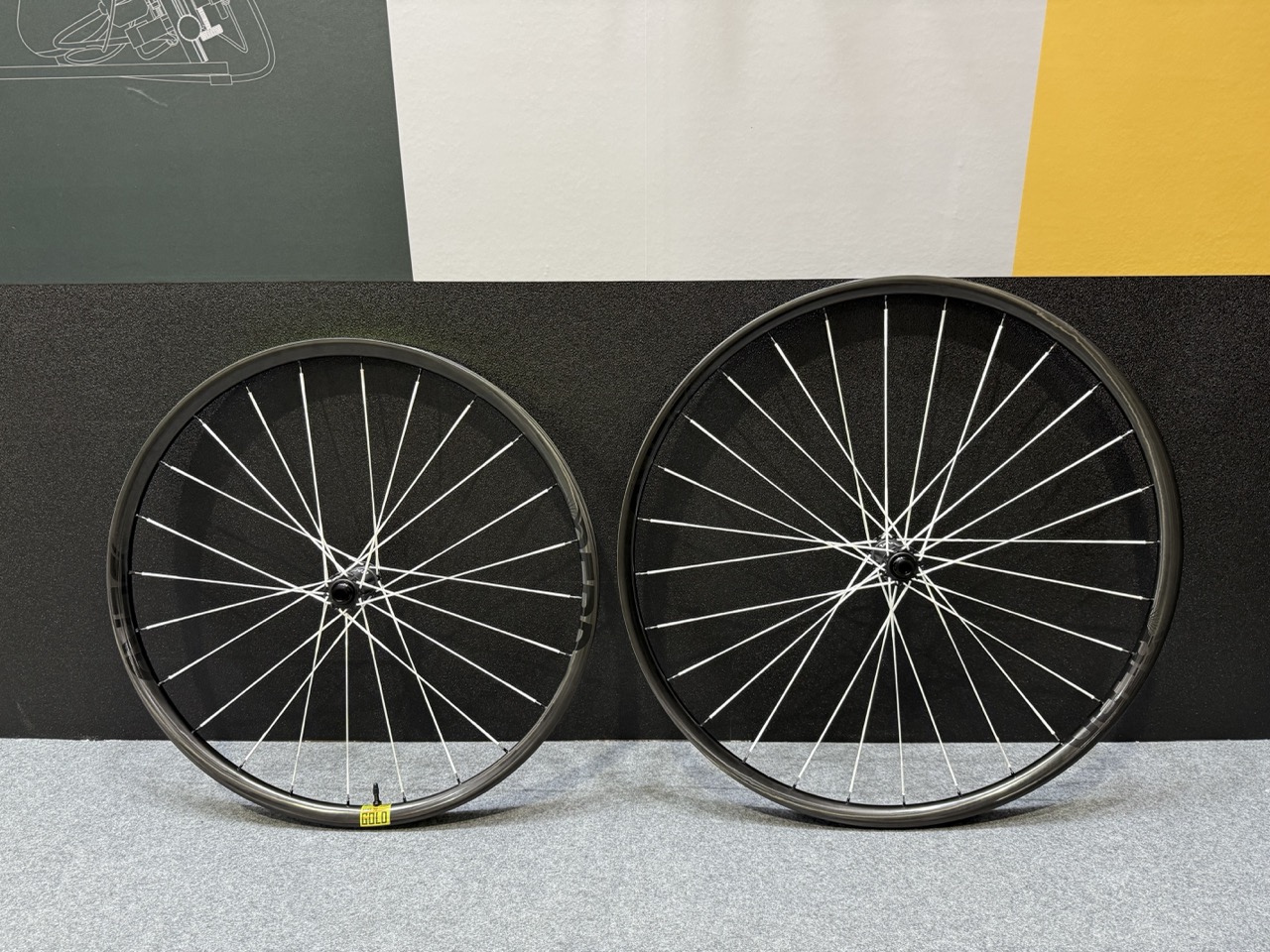
The wheels of the bike look to be laced together with PolyLight braided Dyneema polyethylene spokes, which we saw on Berd’s 32in Hawk32 Gold wheelset in Taiwan earlier this year.
It appears to be a different rim profile from those wheels, so we expect these to be Trek or Bontrager’s own prototype.
The tyres look to be Pirelli prototypes.
RockShox SID Ultimate Flight Attendant 32in
Little is shown of the new SID Ultimate, but there are some takeaways. trekbikes / Instagram
Out of all the brands, RockShox has seemed the most secretive with its ambitions for 32in, with this being the first fork we’ve seen from the brand with the new wheel size.
From the teaser, the new SID appears to inherent some of the design cues from the new ZEB and Lyrik forks, with a plastic portion featuring on the arch that likely covers mounts for a mudguard.
It also features Flight Attendant, which we assume will have been optimised for the new 32in wheel size.
32in tipping point
32in looks big when compared to 29in. Nick Clark / Our Media
It has felt as though 32in wheels have been coming for a little while now, but the addition of Trek and RockShox to the bandwagon feels like another layer of credibility has been given to the wheel size.
It seems certain now that the future of XC racing is bound in 32in rubber, but the proof will be found between the tapes during the transition period.
For those with a Framework Laptop 13 Pro or another Intel Core Ultra Series 3 “Panther Lake” laptop, the upcoming Ubuntu 26.10 release is delivering some nice out-of-the-box improvements over Ubuntu 26.04 LTS.
The F-Droid project has announced
the release of F-Droid 2.0, which is a complete redesign of the official
app. Notable changes in the release include making it easier to discover and
install applications, more useful app categories, improved search, and
much more.
For more than a decade, F-Droid has helped people discover and install free
and open source Android apps. F-Droid 2.0 builds on that foundation with a
modern interface, better app discovery, improved search, and a simpler
experience that works well, whether you’re new to F-Droid or have been using it
for years.
This isn’t just a visual refresh. The user experience was redesigned to
integrate smoothly with current Android patterns, like Material Design, while
keeping familiar F-Droid interactions in place. Key components were reworked and
rewritten using Kotlin Compose, the standard toolkit these days, creating a
foundation that will help us deliver improvements more quickly in the years
ahead.
Sudheendra Raghav Neela, a member of a group of researchers from Graz University of Technology, has announced the
release of research into file-notification attacks that would allow spying on
user activity on Android, Linux, macOS, and Windows. The group has published a paper with
details on the research as well as a web site
with demonstrations of the vulnerabilities.
On Linux, an attacker can use inotifywatch to
monitor a directory to conduct an inter-keystroke timing attack—even if
they do not have read access to the files within a directory. The group also
discovered a method to conduct a UI-redress
attack (or “clickjacking” attack) on
KDE 5 and KDE 6 by monitoring /usr/bin/pkexec to detect when Polkit spawns an authentication
prompt. An attacker could draw a fake password window on top of the real window
to collect a user’s credentials.
Both of these flaws are still present today,
though the Linux kernel did partially mitigate the issue with a
fix that was included in the 5.10.248, 5.15.198, 6.1.160, 6.6.120, 6.12.65,
and 6.18.3 kernels shipped in January. See the web site for more information and
a mitigation to prevent password-prompt windows from losing focus.
One of the livelist Fedora Discourse community discussions in recent days — or even in quite a period of time for that matter — comes down to a user having suggested that Fedora replace LibreOffice by default with the downstream Collabora Office…
Meta’s annual XR and AI focused Connect conference is in full gear this week. The biggest news dropped during the opening keynote, while day two will feature the Developer State of the Union keynote.
Watch the Meta Connect Developer State of the Union Keynote on September 24th at 10AM PT (your timezone here)
On day two of Connect, Meta is hosting its Developer State of the Union keynote which is more focused on developers. We expect to hear the latest on developer tools (especially AI-based tooling), programs, and features to make it easier to build content for Meta’s glasses and headsets. You can watch the livestream embedded above.
Watch the Meta Connect Keynote From Day One
Meta Connect 2026 kicked of with its usual opening keynote which saw the reveal of the company’s newest ‘VR Glasses’. Check out the first round of coverage:
Beyond the headlining keynotes, the Connect 2026 agenda includes additional sessions along four tracks: VR, AI glasses, AI, and Horizon. Meta has confirmed all of these sessions will be viewable on-demand online once released.
Many of the transmissions sent over the radio spectrum can
be decoded with a relatively cheap hardware dongle. Thomas Eckert presented at
RustConf 2026 in Montreal about his hobby:
decoding radio transmissions with Rust.
In his presentation, he
covered all of the math necessary to get started with
software-defined radio,
and gave demonstrations of listening to AM and FM radio, as well as decoding
transmissions from
aircraft transponders. His slides and example code are
available on GitHub.
After a two-year hiatus, LWN’s Jonathan Corbet presented an updated edition
of his Kernel
Report at the Kernel
Recipes conference. Corbet looked at what is happening in the kernel
community, how it’s dealing with a period of accelerated change, and where
things might go in the future. Video of the talk is
available on YouTube for those who’d like to tune in.


 Jessica’s 100km Volcano Party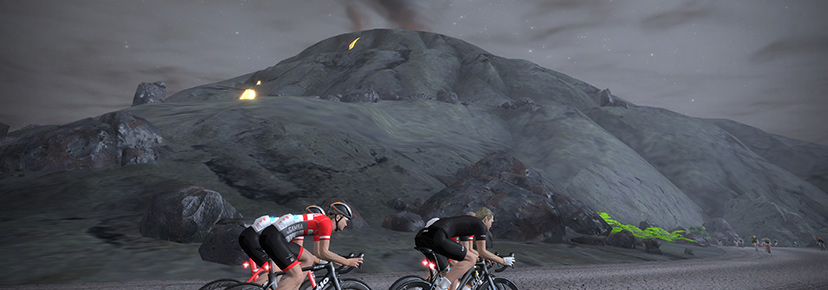
 Popular
  Party Crashers