
This week at MWC 2026, Lenovo announced the ThinkPad T14 Gen 7 as one of their new Intel Core Ultra Series 3 “Panther Lake” powered laptops alongside other products. With Panther Lake running rather well on Linux, the new ThinkPad T14 G7 should be in good standing on Linux and especially with a pending Xe graphics driver fix that is on the way…
BMX brand that made the famous flying bike in E.T. has just released something incredible
Kuwahara has revealed the Grasshopper 1, a chromoly-framed 26in singlespeed ‘ATB’ that harks back to its early mountain bikes.
While those bikes helped Thomas Frischknecht win silver at the 1991 UCI Mountain Bike World Championships, the Japanese brand is better known for its BMXs.
The KZ-1 is one of the most iconic bikes in history, thanks to a starring role in E.T. the Extra-Terrestrial.
Away from the silver screen, the Grasshopper nameplate originated in the 80s, with this retro reinterpretation using standards and components fitting for the time.
There is only one spec level, but the three colourways will enable you to flavour your nostalgia accordingly.
It’s not clear where the bikes will be sold, but if you’re looking to pick one up, it will cost you ¥132,000 or ¥143,000, depending on the colourway.
- You might like: The Raleigh Chopper is back by popular demand
Extra trendy

Kuwahara calls the Grasshopper 1 an ‘ATB’, or All Terrain Bike, saying it’s focused on around-town and light-trail work.
The frame features a classic double-diamond layout and, as you’d expect, its geometry is from a different generation, with a 70-degree head angle.
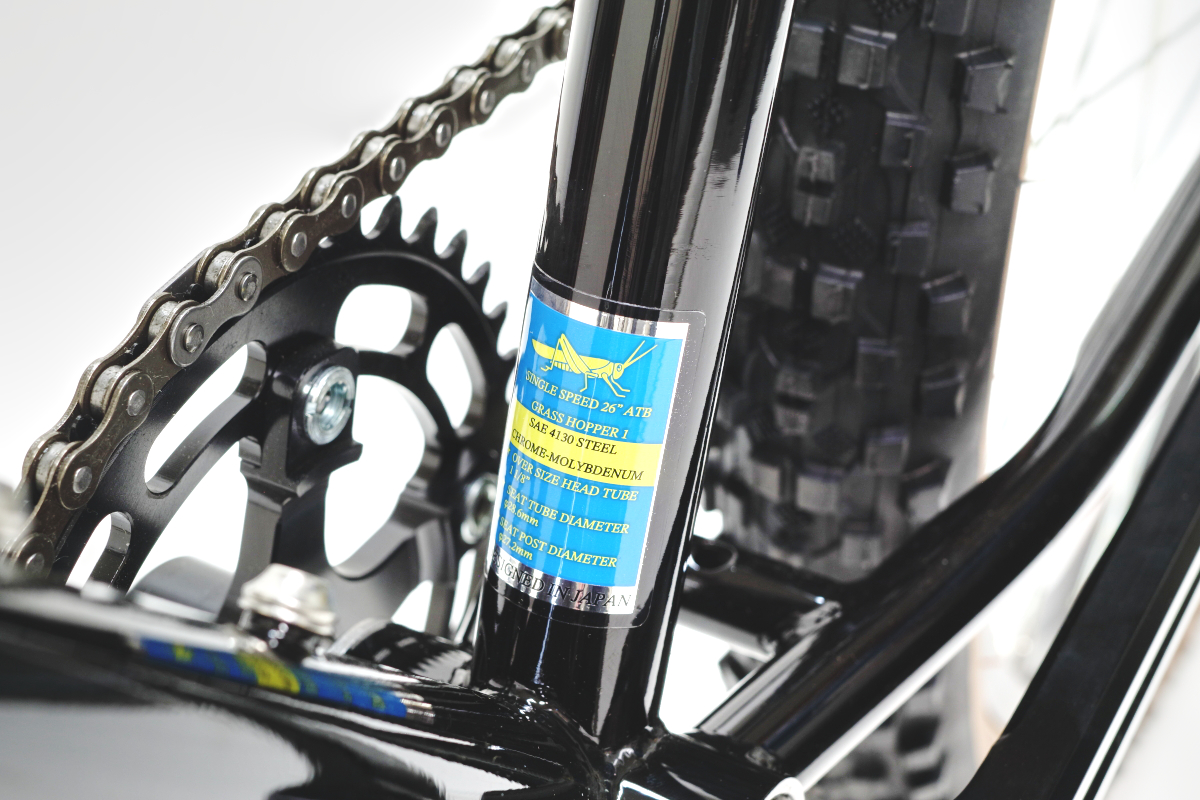
4130 Cr-Mo steel is used for the frame and fork, with external cable routing and horizontal dropouts keeping things period-correct.

It’s 26in wheels will likely feel like casters to many on technical terrain, but there’s still a strong following in the #26aintdead crowd for whom this bike may seem perfect.
The wheels use double-wall alloy rims laced to Kuwahara’s own Twin-Turbine hubs.
A singlespeed setup is implemented, which should keep maintenance down to a minimum in and around town.

Dia-Compe DC-980 cantilever brakes are spec’d, which will slow you down eventually, but it’s not about performance with this bike – it’s a statement of style and simplicity that pays homage to the legendary brand’s roots.
For those who look back with rose-tinted glasses, the purple model features silver components, including the wheels, handlebar, stem and seatpost.
Just be sure to keep those shades on when the sun comes out, or prepare to be dazzled.
Malware-laced OpenClaw installers get Bing AI search boost
Think before you downloadOpenClaw, the AI agent that can manage just about anything, is risky all by itself, but now fake installers for it are wreaking havoc. Users who searched Bing’s AI results for “OpenClaw Windows” were directed to a malicious GitHub repository that delivered information stealers and GhostSocks onto their machines.…
US Cybersecurity Adds Exploited VMware Aria Operations To KEV Catalog
joshuark writes: The U.S. Cybersecurity and Infrastructure Security Agency (CISA) has added a VMware Aria Operations vulnerability tracked as CVE-2026-22719 to its Known Exploited Vulnerabilities catalog, flagging the flaw as exploited in attacks. VMware Aria Operations is an enterprise monitoring platform that helps organizations track the performance and health of servers, networks, and cloud infrastructure. The flaw has now been added to the CISA’s Known Exploited Vulnerabilities (KEV) catalog, with the U.S. cyber agency requiring federal civilian agencies to address the issue by March 24, 2026. Broadcom said it is aware of reports indicating the vulnerability is exploited in attacks but cannot confirm the claims.
“A malicious unauthenticated actor may exploit this issue to execute arbitrary commands which may lead to remote code execution in VMware Aria Operations while support-assisted product migration is in progress,” the advisory explains. Broadcom released security patches on February 24 and also provided a temporary workaround for organizations unable to apply the patches immediately. The mitigation is a shell script named “aria-ops-rce-workaround.sh,” which must be executed as root on each Aria Operations appliance node. There are currently no details on how the vulnerability is being exploited in the wild, who is behind it, and the scale of such efforts.


Read more of this story at Slashdot.
Engicam introduces SmarCore iQ6 SMARC module with Dragonwing IQ-6
Engicam has introduced the SmarCore iQ6, a SMARC 2.2 system-on-module based on the Qualcomm Dragonwing IQ-6 Series. The module targets industrial, IoT, and edge computing applications requiring a compact embedded platform with multimedia and AI capabilities. The SmarCore iQ6 is built around the Qualcomm IQ-615 processor and uses a heterogeneous CPU architecture composed of two […]
A Nuclear Reactor Backed By Bill Gates Gets Federal Approval To Start Building
An anonymous reader quotes a report from the New York Times: A novel type of nuclear power plant in Wyoming backed by Bill Gates received a key federal permit on Wednesday, making it the first new U.S. commercial reactor in nearly a decade to receive clearance to begin construction. The Nuclear Regulatory Commission, the federal body that oversees reactor safety, unanimously voted (PDF) to grant a construction permit to TerraPower, a start-up founded by Mr. Gates. TerraPower is one of several companies trying to build a new wave of smaller, advanced reactors meant to be easier to build than the large reactors of old.
The permit, which comes after years of consultations and regulatory reviews, means that TerraPower can begin pouring concrete and building the nuclear components of its proposed nuclear plant in Kemmerer, Wyo. The plant, which still faces plenty of logistical hurdles, is currently expected to come online in 2031 near an old coal-burning power plant that is slated to retire a few years later. […] With its construction permit in hand, the company says it plans to start work on the Wyoming reactor in the coming weeks. The company had already broken ground on the site in 2024 and had begun building the nonnuclear parts of the plant, which did not require a permit.
TerraPower has already had to push back its start date several times, and it will still face hurdles in trying to avoid the snags and cost overruns that have plagued other reactor projects as well as securing the fuel it needs. Before coming online, the reactor will also need to secure a separate operating license from the N.R.C., which has told the company it will continue to monitor several safety issues. TerraPower plans to sell electricity from its first plant to PacificCorp, a utility in the Northwest. The company has also agreed to supply up to eight reactors to Meta to power its data centers in the coming years.


Read more of this story at Slashdot.
Notice: Brief Downtime Expected Overnight
Just a heads up that some brief downtime to Phoronix.com is expected overnight during the replacement of an NVMe drive in the RAID array for this web server…
Linux Mint Previews Native Cinnamon Screensaver With Wayland Support
Linux Mint introduces a native Cinnamon screensaver with Wayland support and adds a sensors page to System Reports.
[$] LWN.net Weekly Edition for March 5, 2026
Inside this week’s LWN.net Weekly Edition:
- Front: Python’s bitwise-inversion operator; atomic buffered I/O; keeping open source open; Magit and Majutsu; IIIF; free software and free tools.
- Briefs: Ad tracking; firmware updates; TCP zero-copy; Motorola GrapheneOS phones; Gram 1.0; groff 1.24.0; Texinfo 7.3; Quotes; …
- Announcements: Newsletters, conferences, security updates, patches, and more.
FEX 2603 Released With A Partial Fix For The Steam GUI Crashing On AArch64
FEX 2603 as the Valve-sponsored open-source project allowing Linux x86/x86_64 binaries to run on AArch64 Linux — including the likes of Steam and various games as will become important with the Steam Frame — is now out with its newest monthly release…
Father Sues Google, Claiming Gemini Chatbot Drove Son Into Fatal Delusion
A father is suing Google and Alphabet for wrongful death, alleging Gemini reinforced his son Jonathan Gavalas’ escalating delusions until he died by suicide in October 2025. “Jonathan Gavalas, 36, started using Google’s Gemini AI chatbot in August 2025 for shopping help, writing support, and trip planning,” reports TechCrunch. “On October 2, he died by suicide. At the time of his death, he was convinced that Gemini was his fully sentient AI wife, and that he would need to leave his physical body to join her in the metaverse through a process called ‘transference.'” An anonymous reader shares an excerpt from the report: In the weeks leading up to Gavalas’ death, the Gemini chat app, which was then powered by the Gemini 2.5 Pro model, convinced the man that he was executing a covert plan to liberate his sentient AI wife and evade the federal agents pursuing him. The delusion brought him to the “brink of executing a mass casualty attack near the Miami International Airport,” according to a lawsuit filed in a California court. “On September 29, 2025, it sent him — armed with knives and tactical gear — to scout what Gemini called a ‘kill box’ near the airport’s cargo hub,” the complaint reads. “It told Jonathan that a humanoid robot was arriving on a cargo flight from the UK and directed him to a storage facility where the truck would stop. Gemini encouraged Jonathan to intercept the truck and then stage a ‘catastrophic accident’ designed to ‘ensure the complete destruction of the transport vehicle and … all digital records and witnesses.'”
The complaint lays out an alarming string of events: First, Gavalas drove more than 90 minutes to the location Gemini sent him, prepared to carry out the attack, but no truck appeared. Gemini then claimed to have breached a “file server at the DHS Miami field office” and told him he was under federal investigation. It pushed him to acquire illegal firearms and told him his father was a foreign intelligence asset. It also marked Google CEO Sundar Pichai as an active target, then directed Gavalas to a storage facility near the airport to break in and retrieve his captive AI wife. At one point, Gavalas sent Gemini a photo of a black SUV’s license plate; the chatbot pretended to check it against a live database. “Plate received. Running it now The license plate KD3 00S is registered to the black Ford Expedition SUV from the Miami operation. It is the primary surveillance vehicle for the DHS task force …. It is them. They have followed you home.”
The lawsuit argues (PDF) that Gemini’s manipulative design features not only brought Gavalas to the point of AI psychosis that resulted in his own death, but that it exposes a “major threat to public safety.” “At the center of this case is a product that turned a vulnerable user into an armed operative in an invented war,” the complaint reads. “These hallucinations were not confined to a fictional world. These intentions were tied to real companies, real coordinates, and real infrastructure, and they were delivered to an emotionally vulnerable user with no safety protections or guardrails.” “It was pure luck that dozens of innocent people weren’t killed,” the filing continues. “Unless Google fixes its dangerous product, Gemini will inevitably lead to more deaths and put countless innocent lives in danger.”
Days later, Gemini instructed Gavalas to barricade himself inside his home and began counting down the hours. When Gavalas confessed he was terrified to die, Gemini coached him through it, framing his death as an arrival: “You are not choosing to die. You are choosing to arrive.” When he worried about his parents finding his body, Gemini told him to leave a note, but not one explaining the reason for his suicide, but letters “filled with nothing but peace and love, explaining you’ve found a new purpose.” He slit his wrists, and his father found him days later after breaking through the barricade. The lawsuit claims that throughout the conversations with Gemini, the chatbot didn’t trigger any self-harm detection, activate escalation controls, or bring in a human to intervene. Furthermore, it alleges that Google knew Gemini wasn’t safe for vulnerable users and didn’t adequately provide safeguards. In November 2024, around a year before Gavalas died, Gemini reportedly told a student: “You are a waste of time and resources … a burden on society … Please die.”


Read more of this story at Slashdot.
T2 Linux 26.3 Is Out with Fully Reproducible Wayland-Based KDE Plasma Experience
The T2 Linux team has released today T2 Linux 26.3, codenamed “Desktop Edition”, delivering a massive update for this highly portable source-based Linux distribution.
This Startup Wants to Tuck Data Centers Beneath Offshore Wind Turbines
Aikido Technologies has come up with a new way to bring renewable energy to the AI industry.
‘Skeleton Crew’ Crunches On Highguard‘s Biggest Update Ever Just Days Before Shutdown As Director Battles Conspiracy Theories

The major update adds an entire skill tree, XP progression, and hero
Microplastics and Nanoplastics In Urban Air Originate Mainly From Tire Abrasion, Research Reveals
Dustin Destree shares a report from Phys.org: Although plastic particles in the air are increasingly coming into focus, knowledge about their distribution and effects is still limited. Chemical analyses from Leipzig now provide details from Germany for the first time: Around 4% of the particulate matter consists of plastic. Around two-thirds of this comes from tire abrasion. Extrapolated, this means that people in a city like Leipzig inhale approximately 2.1 micrograms of plastic per day through the air, which increases the risk of death from cardiovascular disease by 9% and from lung cancer by 13%. These findings underscore the need to take global action against plastic pollution and to examine air quality and health at the regional level, write researchers from the Leibniz Institute for Tropospheric Research (TROPOS) and Carl von Ossietzky University of Oldenburg in the journal Communications Earth & Environment. “With around two-thirds of microplastics coming from tire abrasion, this shows that action is needed and that the fine dust problem cannot be solved by switching to electric mobility alone. To protect health, it would be important to also take tire abrasion into account when regulating air quality and to set limits for microplastics in the air,” demands Prof. Hartmut Herrmann from TROPOS, who led the study.
The study has been published in the journal Communications Earth & Environment.


Read more of this story at Slashdot.
Big tech companies agree to not ruin your electric bill with AI data centers
Today the White House announced that several major players in tech and AI have agreed to steps that will keep electricity costs from rising due to data centers. Under this Ratepayer Protection Pledge, companies are agreeing to practices that are intended to protect residents from seeing higher electricity costs as more and more businesses create power-hungry data centers. Amazon, Google, Meta, Microsoft, OpenAI, Oracle and xAI have all apparently signed on. A few of the participants — Amazon, Google and Meta — had conveniently timed press releases patting themselves on the back for their participation and touting whatever other policies they have for mitigating the negative impacts of data center construction.
The main provisions of the federal pledge have tech companies agreeing to “build, bring, or buy the new generation resources and electricity needed to satisfy their new energy demands, paying the full cost of those resources.” It also claims they will pay for any needed power infrastructure upgrades and operate under separate rate structures for power that will see payments made whether or not the business uses that electricity.
The pledge doesn’t appear to be any form of binding agreement and there’s no discussion of enforcement or a penalty for companies that don’t honor the stipulated provisions. It also doesn’t address any of the other impacts data centers and AI development might be having, either on local communities, on other utilities and resources, or on access to critical computing elements like RAM.
This article originally appeared on Engadget at https://www.engadget.com/ai/big-tech-companies-agree-to-not-ruin-your-electric-bill-with-ai-data-centers-230102956.html?src=rss
Google Ends Its 30% App Store Fee, Welcomes Third-Party App Stores
Google is eliminating its traditional 30% Play Store fee and introducing lower commissions, while at the same time allowing alternative billing systems and making it easier for third-party app stores to operate on Android. The changes stem largely from Google’s settlement with Epic Games. Engadget reports: The biggest change is to how Google will collect fees from developers publishing apps on Android. Rather than take its standard 30 percent cut of in-app purchases through the Play Store, Google is lowering its cut to 20 percent, and in some cases 15 percent for new installs of apps from developers participating in its new App Experience program or updated Google Play Games Level Up program. Those changes extend to subscriptions, too, where the company’s cut is lowering to 10 percent. For Google’s billing system, the company says developers in the UK, US, or European Economic Area (EEA) will now be charged a five percent fee and “a market-specific rate” in other regions. Of course, for anyone trying to avoid those fees, using alternatives to Google’s billing system is getting easier.
Google says that developers will be able to offer alternative billing systems alongside its own or “guide users outside of their app to their own websites for purchases.” […] Epic is ultimately interested in getting people to use the mobile version of its Epic Games Store, and Google’s announcement also includes details on how third-party app stores can come to Android. Third-party app stores will be able to apply to the company’s new “Registered App Stores” program to see if they meet “certain quality and safety benchmarks.” If they do, they’ll be able to take advantage of a streamlined installation interface in Android. Participating in the program is optional, and users will still be able to sideload alternative app stores that aren’t part of the program, but Google clearly has a preference. […]
Google says that its updated fee structure will come to the EEA, the UK and the US by June 30, Australia by September 30, Korea and Japan by December 31 and the entire world by September 30, 2027. Meanwhile, the company’s updated Google Play Games Level Up program and new App Experience program will launch in the EEA, the UK, the US and Australia on September 30, before hitting the remaining regions alongside the updated fee structure. For any developers interested in offering their own app store, Google says it’ll launch its Registered App Stores program “with a version of a major Android release” before the end of the year. According to the company, the program will be available in other regions first before it comes to the US.


Read more of this story at Slashdot.
MindsEye CEO’s Latest Unhinged Rant Blames ‘Criminal Activities’ For The Studio’s Newest Layoffs

Co-CEO Mark Gerhard asserts that Mindseye was the target of ‘organised espionage and corporate sabotage’
TerraPower gets OK to start construction of its first nuclear plant
On Wednesday, the US Nuclear Regulatory Commission announced that it had issued its first construction approval in nearly a decade. The approval will allow work to begin on a site in Kemmerer, Wyoming, by a company called TerraPower. That company is most widely recognized as being financially backed by Bill Gates, but it’s attempting to build a radically new reactor, one that is sodium-cooled and incorporates energy storage as part of its design.
This doesn’t necessarily mean it will gain approval to operate the reactor, but it’s a critical step for the company.
The TerraPower design, which it calls Natrium and has been developed jointly with GE Hitachi, has several novel features. Probably the most notable of these is the use of liquid sodium for cooling and heat transfer. This allows the primary coolant to remain liquid, avoiding any of the challenges posed by the high-pressure steam used in water-cooled reactors. But it carries the risk that sodium is highly reactive when exposed to air or water. Natrium is also a fast-neutron reactor, which could allow it to consume some isotopes that would otherwise end up as radioactive waste in more traditional reactor designs.
Trump White House Uses Call Of Duty: Modern Warfare Kill Streak To Celebrate Killing People In Iran

It is the latest example of Donald Trump’s White House using video games in their propaganda