A Florida woman was sentenced to 22 months in federal prison and fined $50,000 for illegally trafficking thousands of Microsoft certificate-of-authenticity labels used to activate Windows and Office. Prosecutors said she bought genuine labels cheaply from suppliers and resold them without the accompanying licensed software, wiring over $5 million during the scheme. TechRadar reports: The indictment details how [52-year-old Heidi Richards] purchased tens of thousands of genuine COA labels from a Texas-based supplier between 2018 and 2023 for well below the retail value, before reselling them in bulk to customers globally without the licensed software. “COA labels are not to be sold separately from the license and hardware that they are intended to accompany, and they hold no independent commercial value,” the US Attorney’s Office wrote.
Richards was found to have wired $5,148,181.50 to the unnamed Texas company during the scheme’s operation. Some examples include the purchase of 800 Windows 10 COA labels in July 2018 for $22,100 (under $28 each) and a further 10,000 Windows 10 Pro COA labels in December 2022 for $200,000 ($20 each). Ultimately fined $50,000 and given a near-two-year sentence, prosecutors had sought to get Richards to pay $242,000, “which represents the proceeds obtained from the offenses.”
We may earn a commission from links on this page. Deal pricing and availability subject to change after time of publication.
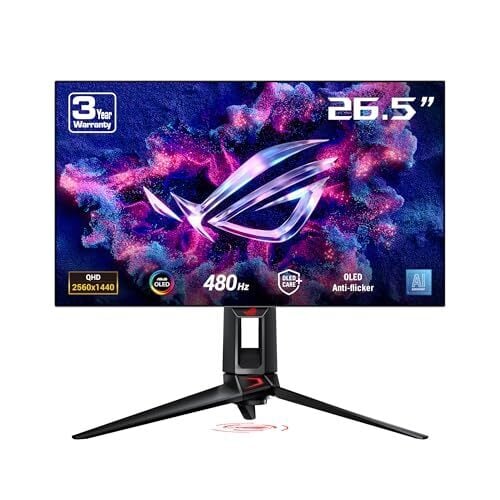
High-refresh-rate gaming monitors are getting faster every year, but a 480Hz OLED panel still feels like a technical flex—and the ASUS ROG Swift OLED PG27AQDP is one such example. This 27-inch OLED gaming monitor is currently $662.36 on Amazon, down from its usual $799 price, and price trackers show that’s the lowest it has dropped so far. It sits in a very small group of monitors built around a 1440p panel with a 480Hz refresh rate, competing with models like the Sony Inzone M10S. It is designed first and foremost for high-end PC gaming, where extremely fast frame rates can actually make use of a panel this quick.
A big part of the appeal here is the OLED panel paired with Micro Lens Array+ (MLA+) technology, which helps the screen get brighter than most OLED monitors. The difference shows up in games with strong lighting contrast. Dark scenes show the deep blacks OLED is known for, while bright elements like explosions or neon lights stand out more clearly than they do on many IPS displays. Motion also looks exceptionally clean. The 480Hz refresh rate and near-instant OLED response times make fast movement easier to track in shooters and competitive games. ASUS also includes features such as Extreme Low Motion Blur, OLED Anti-Flicker, and support for all major variable refresh rate formats, including AMD FreeSync and NVIDIA G-SYNC compatibility. Connectivity is up to date as well, with HDMI 2.1 ports that support modern consoles and GPUs.
The performance is impressive, but the experience is not perfect. The hardware delivers exactly what competitive players want, yet the software side still feels rough around the edges. Some users report bugs where settings reset or behave unpredictably. There is also noticeable VRR flicker when frame rates change, and input lag increases when the monitor receives a 60Hz signal, which is something to keep in mind if you plan to use it for slower console games or everyday media. Still, for players chasing extremely high refresh rates and OLED contrast, this is among the most capable options available.
Patches were posted today to the Linux kernel mailing list for enabling a new feature called AMD CPPC Performance Priority as a new hardware feature being found with “future AMD processors”…. Which given the timing of these patches, almost certainly means the upcoming Zen 6 processors…
It’s been a wild week for Apple. After announcing a slew of new hardware, the company capped things off with its cheapest laptop ever: the $599 MacBook Neo. It’s low on specs, but high on character and value. In this episode, Devindra and Engadget Deputy Editor Nathan Ingraham dive into the MacBook Neo, as well as the refreshed MacBook Air M5, MacBook Pro M5 Pro/Max, iPad Air M4 and iPhone 17e.
Also, Devindra chats with Spencer Ackerman, author of Forever Wars and recent Iron Man comics, about the ongoing battle between Anthropic and the Department of Defense. It turns out the DOD still used Claude for attacks on Iran, after banning Anthropic’/s AI last week. And really, what do these AI companies expect to happen when they jump at military contracts?
Apple announces a the MacBook Neo priced at $599 and it’s shockingly great – 0:53
MacBook Air got the M5, MacBook Pro got the M5 Pro and M5 Max, and who needs the new iPad Air now? – 22:31
Anthropic vs. DoD with Spencer Ackerman, author of The Forever Wars – 30:34
Gemini encouraged a man to end his own life to be with his ‘AI wife’ – 58:53
Polymarket nixes bets on nuclear detonation after public outcry – 1:01:55
No Yōtei on PC: Sony closes down first party titles outside of PS5 – 1:03:56
Wildlight Studios’ Highguard shuts down after 46 days live – 1:08:23
Working on: Dell’s XPS 14 will be great when the keyboard fix comes through – 1:15:09
Pop culture picks – 1:15:58
Credits
Hosts: Devindra Hardawar and Nathan Ingraham Guest: Spencer Ackerman Producer: Ben Ellman Music: Dale North and Terrence O’Brien
This article originally appeared on Engadget at https://www.engadget.com/gaming/xbox/engadget-podcast-is-the-macbook-neo-the-one-132801575.html?src=rss
Canonical engineer Serkan Uygungelen published a post outlining some of the Intel Xeon CPU features to be supported by the upcoming Ubuntu 26.04 LTS release, some Xeon features already supported by the existing Ubuntu 24.04 LTS, and some features only partially supported for still not having packaged user-space libraries/support within the Ubuntu archive…
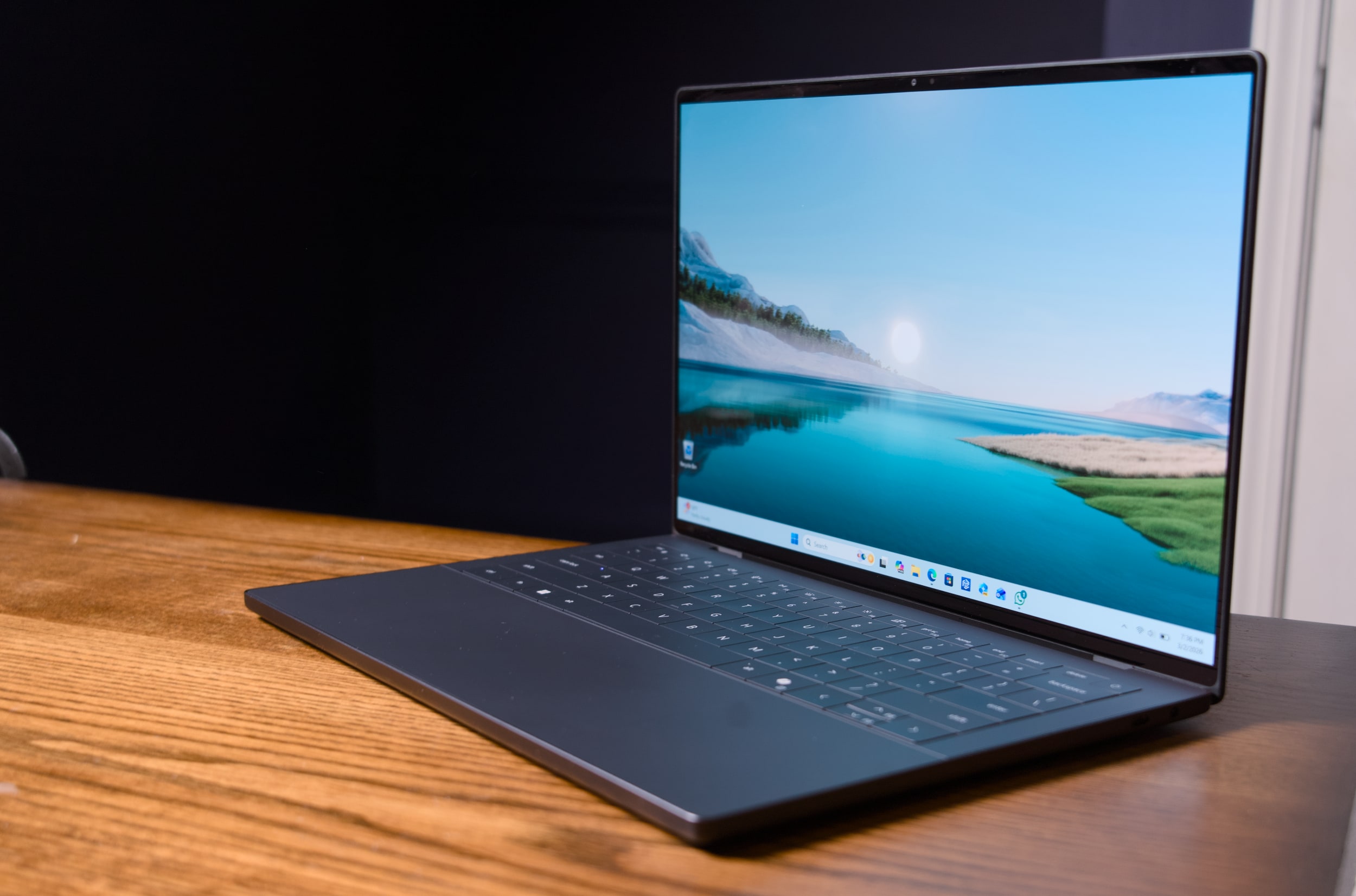
There is so much to love about Dell’s new XPS 14, it’s hard for me to discuss it without sounding like a total fanboy. Its new design makes it incredibly thin and light. And Intel’s Panther Lake chips give it a ton of power, even when it comes to games. After reviving the XPS brand from last year’s ignominious rebranding, it’s as if Dell was laser-focused on fixing all the issues we’ve had with the XPS 14 so far.
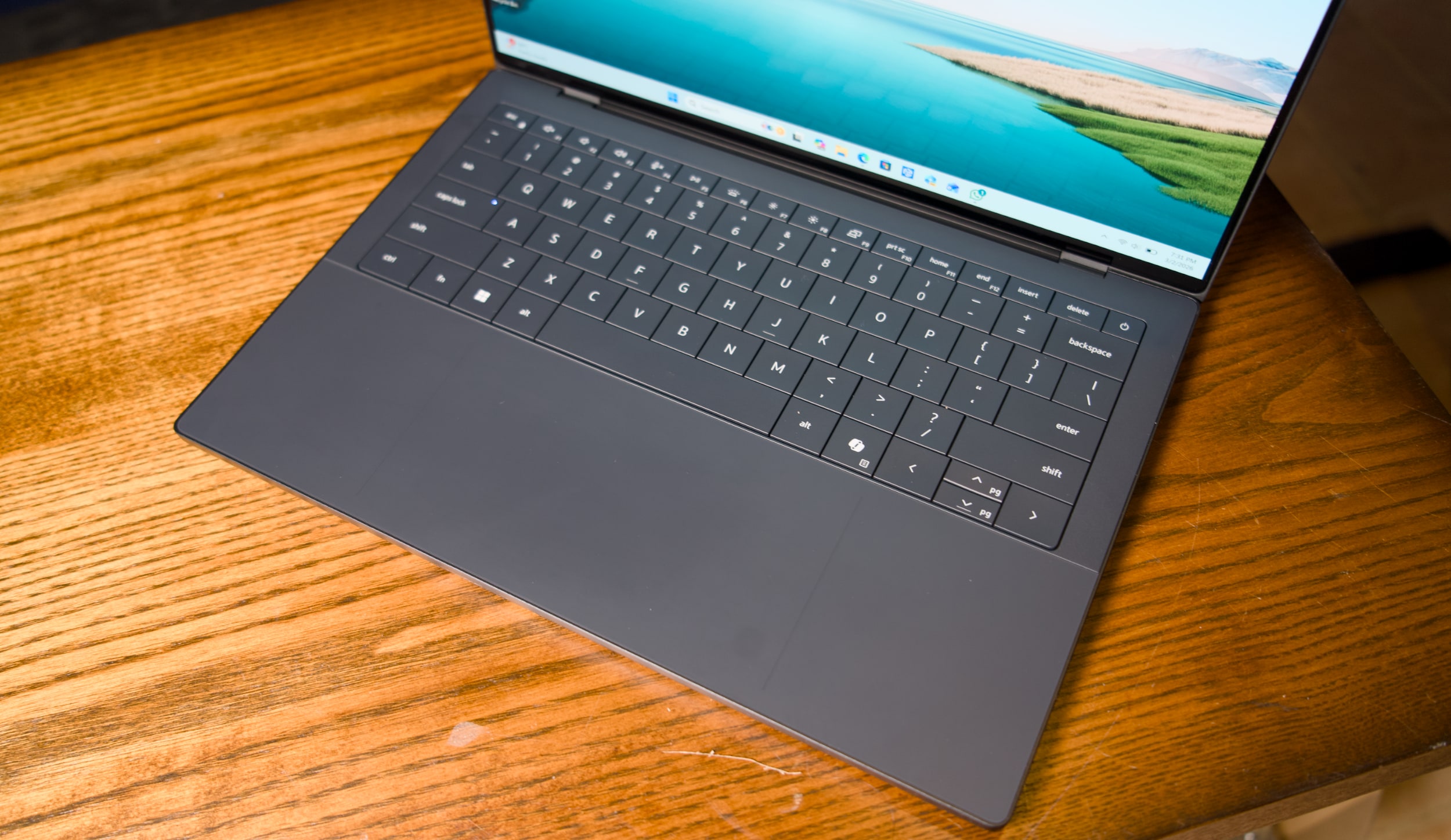
Unfortunately, a shallow, unresponsive and hilariously error-prone keyboard kept me from truly loving the XPS 14. Simply put, it has trouble recognizing keys if you press them too quickly in succession. And for fast and demanding typists like myself, that leads to countless errors that disrupt your flow. In the last sentence alone, I counted ten times where I had to go back and make sure commas appeared before a space, or tweak simple spelling errors. What good is a fast, light and beautiful machine if I can’t type a sentence in peace?
It’s not unusual for laptop keyboards to require a bit of user training. But my issues with the XPS 14 aren’t from a lack of practice — it simply doesn’t recognize key presses as quickly as every other laptop I’ve tested. As you can see in the video below, quick key presses are almost always recognized in reverse, or sometimes aren’t recognized at all. Those issues mostly go away if you type more slowly and deliberately, but that seems like a ridiculous compromise for a premium machine in 2026.
Dell engineers are currently testing one of the two review samples I received, both of which exhibited the exact same keyboard issue. Other reviewers have also noted that they need to type more slowly for the keyboard to work best. Gizmodo’s Kyle Barr seems to be just as frustrated with the keyboard as I am, but he thinks it’s due to Dell’s seamless key design, which doesn’t have any spaces between keys. My brother, who is an IT professional, also noticed the input issues when he typed on the XPS 14.
I’m not crazy, I swear!
Dell XPS 14 (2026) keyboard
Devindra Hardawar for Engadget
According to Dell, its engineers believe a firmware fix could solve my issues, but it’s unclear when that will actually arrive. Given that these laptops have been out in the wild for weeks, I decided to review the XPS 14 as is. TL;DR, it’s the prettiest machine I’ve ever used that I hate to type on.
Seriously, this thing is gorgeous. Dell’s designers outdid themselves with the machine’s smooth metal case, which is more MacBook-like than its boxy predecessors. It’s astonishing this system weighs just three pounds, putting it right between the 3.4-pound 14-inch MacBook Pro and the 2.7-pound 13.6-inch MacBook Air. It’s also just a third of a pound heavier than the MacBook Neo, Apple’s attempt at an underpowered entry-level laptop.
I’m also glad to see that Dell has heard my complaints about how over-designed the last XPS line was. For example, the company has stuck with its “invisible” trackpad, which sits flush with the laptop’s wrist rest. But now there are two faint lines that designate where, exactly, the trackpad begins and ends. It’s a solution reminiscent of Apple’s MacBooks, which all feature large glass trackpads separated by a light border from their metal cases. Thanks to these two small lines, which don’t detract from XPS 14’s minimalist aesthetic, I feel more confident swiping around.
Dell also reversed course on the wonky capacitive function row from the previous models — which again, looked cool, but had some serious usability issues. It was tough to touch type with them, since they didn’t feel as tactile as normal keys. And most crucially, the capacitive function row completely disappeared in direct sunlight. God forbid you were outside and wanted to change the volume level! This XPS 14 brings back a normal keyed function row, which is easier to touch type on and actually works in direct sunlight. (I sometimes wonder if Dell’s designers ever went outside with the last XPS 14.)
Dell XPS 14 (2026)
Devindra Hardawar for Engadget
Our review model’s 2.8K 14-inch OLED touchscreen looked spectacular, with bold colors and wonderfully deep black levels. But that’s pretty much what I’ve come to expect from OLED by this point. I can’t get enough of the extra eye candy OLED adds to photos and videos, and it makes a huge difference with games as well. But take note that OLED is only available for the priciest XPS 14, all other models get a standard non-touch 2K LCD.
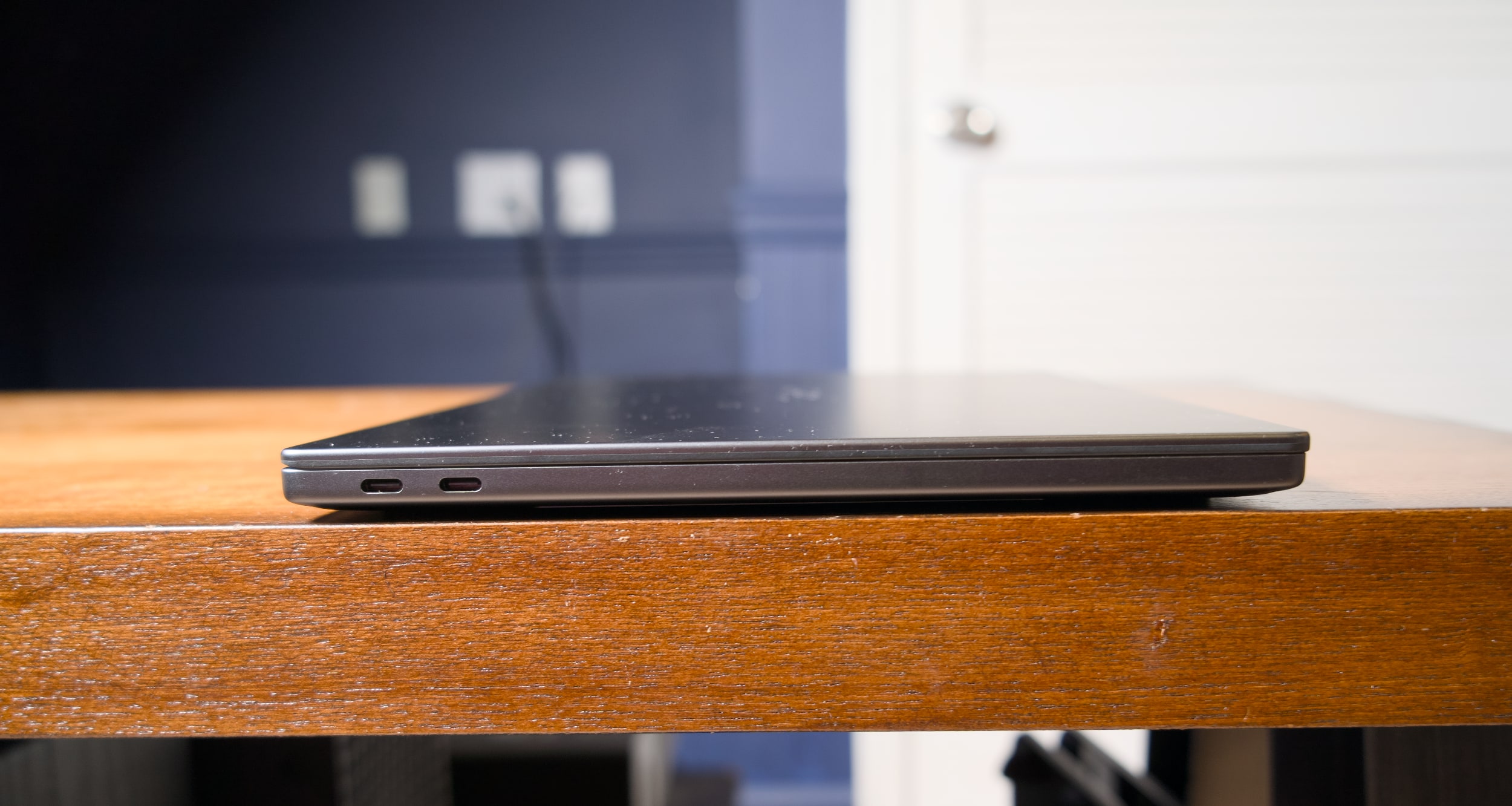
When it comes to connectivity, three USB-C ports and a headphone jack are all you get with the new XPS 14. The microSD card slot from the previous model is gone, and there’s also no HDMI or USB Type A connections like you’d find on similar systems from ASUS and Acer. Apple’s 14-inch MacBook Pro, notably, features three USB-C ports, a full-sized HDMI slot, a large SD card reader and a headphone jack.
Dell XPS 14 (2026)
Devindra Hardawar for Engadget
Beyond Dell’s redesign, the main star of the XPS 14 is Intel’s new Panther Lake Core Ultra X7 358H chip, which offers some serious graphics upgrades over the last generation. Our review unit, which featured 32GB of RAM and Intel’s built-in Arc B390 GPU, was able to reach 130fps in Arc Raiders while playing in 1080p with medium graphics settings, as well as XeSS upscaling and frame generation. I was able to play through a few rounds with no lag — my only distraction was the lingering realization I was playing so smoothly on an ultraportable’s integrated graphics.
I certainly wouldn’t recommend the XPS 14 for heavy gamers. But if you’re forced to choose a new non-gaming system for work or school, it’s certainly nice that it can play some modern titles well. I also saw 63fps while playing Cyberpunk 2077 in 1080p with medium graphics settings and XeSS tech active. Not bad for one of the most demanding PC games in recent memory!
Benchmarks also point to plenty of power under the hood: The XPS 14 scored similarly to the MSI Prestige 14 AI+, which also has the Ultra X7 358H chip, in PCMark 10 and Geekbench 6. I was also surprised to see that its single-core Geekbench 6 score was higher than ASUS’s ProArt PX13 GoPro Edition, a beastly machine with 128GB of RAM and a powerful AMD Ryzen AI Max+ 395 chip. The XPS 14 also scored 3,000 points higher than the Acer Predator Triton 14 AI gaming laptop (powered by a last-gen Core Ultra 9 288V chip) in Geekbench’s multi-threaded CPU test.
Clearly, this was a growth year for Intel’s hardware. Just keep in mind that all of our figures come from Dell’s highest-end XPS 14 configuration, which currently starts at $2,250 with 64GB of RAM on the company’s site. The lowest-end configuration, which starts at $1,450, comes with an Intel Core Ultra 7 355 chip, 16GB of RAM and 512GB of storage. When I briefly tested that system (it had to be sent back to Dell for that keyboard issue), it scored 2,000 points lower than the Ultra X7 model in PCMark 10. I didn’t get to game on the entry-level XPS 14, but I wouldn’t expect much, since Intel’s beefy Arc graphics are reserved for its pricier X7 and X9 CPUs.
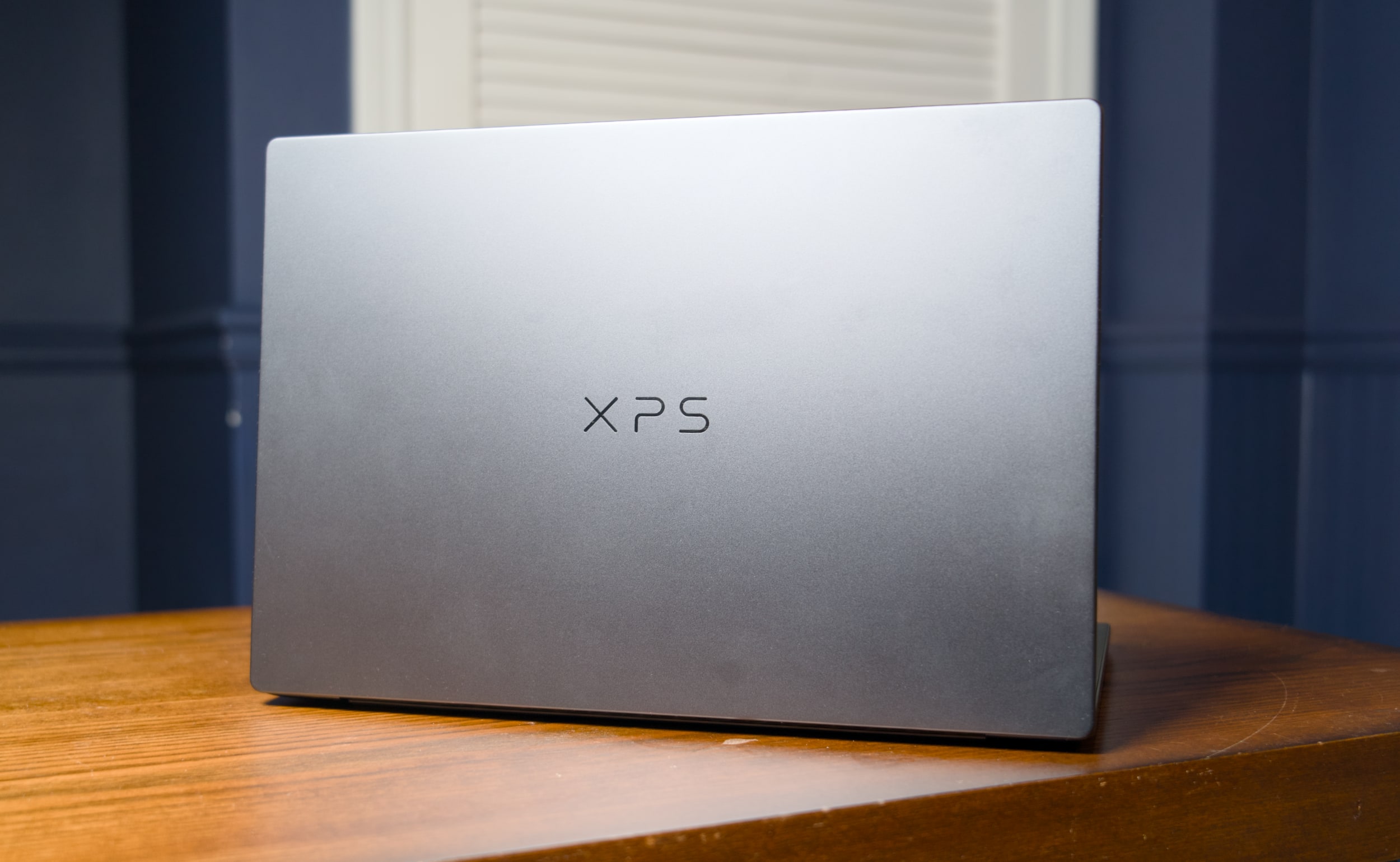
Dell XPS 14 (2026) case logo
Devindra Hardawar for Engadget
I was also surprised to see that the XPS 14 lasted just 10 hours and 21 minutes in PCMark 10’s Modern office battery test. The MSI Prestige 14 went for a whopping 22 hours and 15 minutes — that’s far more in line with Intel’s efficiency claims for Panther Lake systems. I tested both the XPS 14 and MSI Prestige 14 in Window’s “balanced” battery profile, so you may be able to eke out more life with more battery saving features turned on.
If I were to judge the XPS 14 based purely on its specs and design alone, it would be my favorite Windows laptop available today. But I swear, I can’t live with its keyboard issues. I had to seriously slow down my typing just to get this review written, and even then I still had to back up and make more corrections than usual. Dell is so close to making a PC that’s a true MacBook Pro competitor, it’s a shame a simple keyboard issue holds the XPS 14 back from true greatness.
This article originally appeared on Engadget at https://www.engadget.com/computing/laptops/dell-xps-14-2026-review-a-beautiful-laptop-that-excels-at-almost-everything-except-typing-130000656.html?src=rss
An anonymous reader quotes a report from 404 Media: Wikipedia editors have implemented new policies and restricted a number of contributors who were paid to use AI to translate existing Wikipedia articles into other languages after they discovered these AI translations added AI “hallucinations,” or errors, to the resulting article. The new restrictions show how Wikipedia editors continue to fight the flood of generative AI across the internet from diminishing the reliability of the world’s largest repository of knowledge. The incident also reveals how even well-intentioned efforts to expand Wikipedia are prone to errors when they rely on generative AI, and how they’re remedied by Wikipedia’s open governance model. The issue centers around a program run by the Open Knowledge Association (OKA), a nonprofit that was found to be “mostly relying on cheap labor from contractors in the Global South” to translate English Wikipedia articles into other languages. Some translators began using tools like Google Gemini and ChatGPT to speed up the process, but editors reviewing the work found numerous hallucinations, including factual errors, missing citations, and references to unrelated sources.
“Ultimately the editors decided to implement restrictions against OKA translators who make multiple errors, but not block OKA translation as a rule,” reports 404 Media.
This week’s top events are rides celebrating International Women’s Day. But we’ve also got a Bike MS new kit unlock ride and two very different races featured. See the details of our picks below!
International Women’s Day Rides with Rapha
Popular Good Cause
Rapha and Zwift are collaborating to host four different rides on Sunday, celebrating International Women’s Day! (Men are also welcome to join.) The rides are hosted by big names in the cycling space:
Fran Millar & Kate Veronneau
Danni Shrosbree, Nicole Frain & Klara Hansen
Kate Courtney
Dominique Powers & Lael Wilcox
Rides are 45 minutes long and open-paced on a variety of routes. See link below for time and route options.
Femme Cycle Collab is holding a special race on Sunday to celebrate International Women’s Day. It’s a race inspired by the legendary Paris-Roubaix—a professional race notorious for its brutal, mud-caked 19th-century cobblestones that demand extreme endurance, technical skill, and a bit of luck.
The race is on France’s Knights of the Roundabout, with riders categorized by Zwift Racing Score. A and B riders will race the full lap (54.4km, 359m) while C/D/E riders will race a shortened version (40.4km, 266m). All riders will start together.
There are two events – one just for women, and the other an open “Ally” event for all!
Join the Bike MS club on Saturday for a ride that unlocks their new in-game kit! This is a celebration ride that honors the MS Warriors the club raises funds and awareness for on a daily basis. Just like the many Bike MS Events across the US, there is something for everyone in these Zwift events. Whether you have a connection to multiple sclerosis or are just along for the XP or new kit, Bike MS is excited to have you along for the journey.
The ride is open-paced on Watopia’s Figure 8 Reverse route (29.9km, 254m), but there are three different length options: 50km, 40km, and 30km.
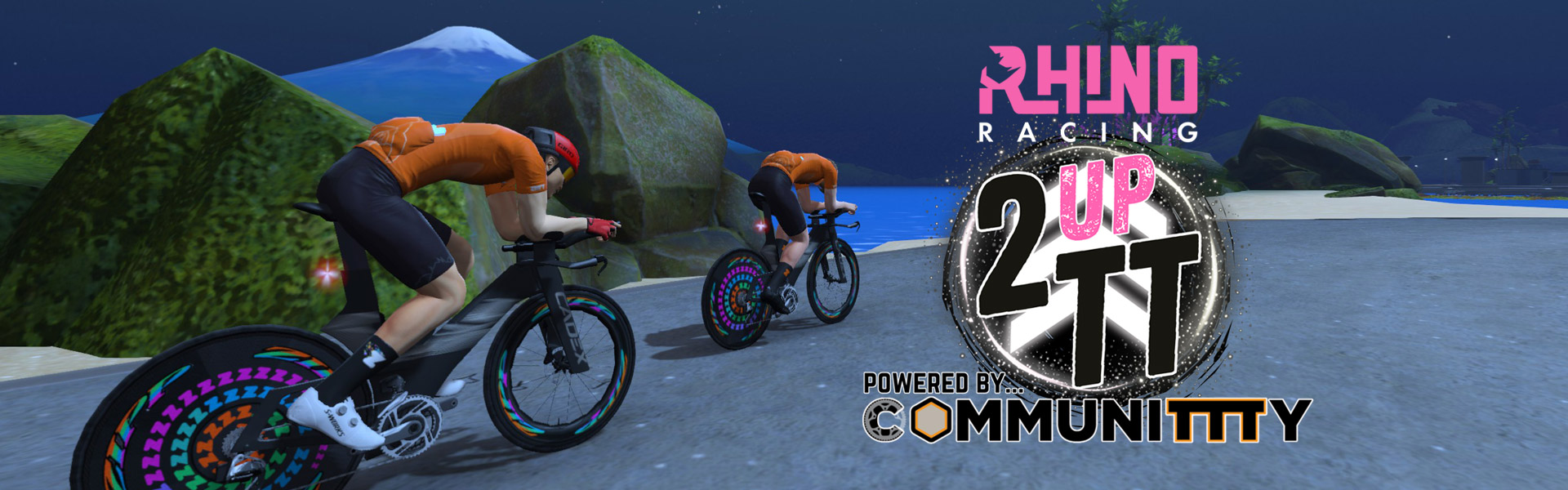
Thanks to a big response in opening rounds, Rhino Racing’s 2upTT is now a monthly event which begins on the first Saturday of the month and runs for 1 week. That means it kicks off this Saturday!
Team Not Pogi – Ride the White Roads: Strade Bianche Challenge
Same Time Starts Strade Bianchi
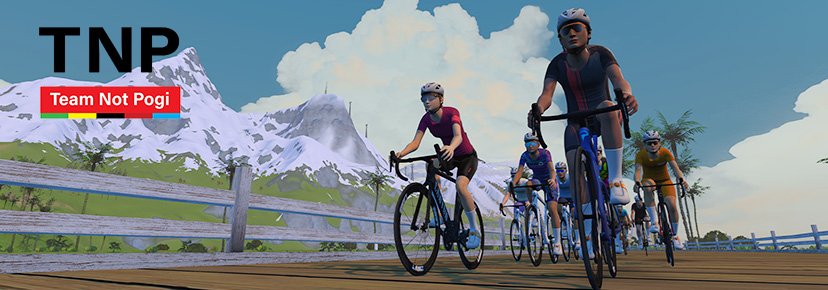
Strade Bianchi happens on Saturday, and Team Not Pogi have organized a race to go along with it!
Inspired by the iconic Strade Bianche, this race isn’t just about raw power—it’s about positioning, bike handling, and the mental toughness to conquer the “Sterrato.” Expect rolling hills, punchy climbs, and treacherous sectors of dirt and gravel. We’ve selected a route that mimics the relentless undulations of the Sienese countryside. Whether you’re a mountain goat or a powerhouse puncheur, this race will test every watt you’ve got.
The race is held on 3 laps of Makuri Islands’ Two Village Loop, for a total length of 38.6km with 264m of elevation gain.
We choose each weekend’s Notable Events based on a variety of factors including:
Is the event unique/innovative in some way?
Are celebrities (pro riders, etc) attending/leading?
Are signup counts already high, meaning the event is extra-popular?
Does the ride include desirable unlocks or prizes?
Does the event appeal to ladies on Zwift? (We like to support this under-represented group!)
Is it for a good cause?
Is it just plain crazy (extra long races, world record attempts, etc)?
Is it a long-running, popular weekly event with a dedicated leader who deserves a shout out?
In the end, we want to call attention to events that are extra-special and therefore extra-appealing to Zwifters. If you think your event qualifies, comment below with a link/details and we may just include it in an upcoming post!
Too many interesting and relevant issues are touched upon in one short video and in particular the issue related with KaOS decision to transition away from systemd to regain independence and control over the core of its operating system.
Economists have estimated that more than $175 billion was unlawfully collected, and the US could end up owing substantially more than that the longer that the refund process is dragged out, since the US must pay back daily interest on the funds. According to the Cato Institute, a libertarian think tank, a conservative estimate showed that “$700 million in interest is added to the final bill every month that the government delays tariff refunds, or around $23 million per day.”
The US is aware that interest is compounding daily on tariffs, as the Trump administration argued against an injunction that would’ve temporarily blocked the tariffs much sooner by noting that no one would be harmed, since tariffs would be repaid with interest if deemed unlawful. However, now that the court has ruled against tariffs, the Trump administration seems to be dragging its feet in finding a way to return all the ill-gotten funds.
Right off the back of the iPhone 17e, new iPads and MacBook Airs, Apple also announced a keenly priced new laptop. The MacBook Neo is a multi-colored low-cost Mac ($599), running on an iPhone chipset with most but not all of the hardware features you find on the MacBook Air and Pro. All models of the MacBook Neo ship with an extremely scant 8GB of RAM, which might be the main productivity bottleneck for demanding tasks.
The Neo has a 13-inch Retina display, a 1080p webcam, two USB-C ports, a headphone jack and optional Touch ID, if you’re willing to pay a little more. A lot has been said about whether this is Apple marching to the beat of its own drum again, in a year of RAM shortages and AI obsessions. This is a direct attack on cheap Windows laptops and underperforming Chromebooks. Tempted? Check out our initial impressions from Apple’s event earlier this week, right here. Oh, and for everything Apple announced – we’ve pulled all the news together here.
Design-wise, it seems a little safer than the company’s usual.
Engadget
There’s no flagship Nothing Phone 4 this year, but the company has put a lot of effort into making its A-series almost flagship, including a notable design pivot with the Phone 4a Pro. The transparent back is now aluminum, and the trademark Nothing aesthetic has been boxed into the camera unit. It looks more grown-up, perhaps, but a little less fun? That said, the egregious camera bump on the Nothing 3a Pro last year is no more. Both 4a phones are sleek slabs of smartphones. The company has also substantially upgraded the devices, with better cameras, more batteryand improved screens. Only the 4a Pro will be coming to the US later this month.
While MWC 2026 offered us plenty of Chinese smartphones ready to wow us, established player Samsung managed to surprise us with its S26 Ultra the week before. Sure, it doesn’t have a ton of major improvements, but it brings subtle upgrades across the board, along with a standout new display for anyone who cares about privacy.
The Privacy Display is the standout new feature – one we’ve never seen before on a smartphone. When you turn the Privacy Display on and view the phone from less than head-on, everything fades to black, like those privacy-sticker screen protectors, but at the hardware level.
The S26 ultra can even selectively activate Privacy Display under specific situations, turning on when you get notifications or open certain apps (like for banking or authenticators). The phone can also enable the feature when you need to enter a PIN, pattern, or password, though this is only for system-level prompts, such as your lock screen.
Hayden AI, a San Francisco startup that makes spatial analytics tools for cities worldwide, has sued its co-founder and former CEO, alleging that he stole a large quantity of proprietary information in the days leading up to his ouster from the company in September 2024.
In a lawsuit filed late last month in San Francisco Superior Court but only made public this week, Hayden AI claims that former CEO Chris Carson undertook what it called “numerous fraudulent actions,” which include “forged board signatures, unauthorized stock sales, and improper allocation of personal expenses.” (Ars covered Hayden AI’s recent product expansion in Santa Monica, Calif.)
Carson, who has since founded a rival company called EchoTwin AI, did not respond to Ars’ request on Wednesday for comment sent via LinkedIn, email, and text message.
In New Hampshire, just off the western shore of the vacation destination Lake Winnipesaukee, there’s a town called Laconia. With a population somewhere south of 17,000, it’s barely a blip on a map—except on Bike Week, when around 300,000 motorcyclists swarm the place. On the other, quieter weeks of the year, Laconia is best known as the unlikely home of Funspot, the world’s largest arcade.
Meanwhile, in Brookfield, Illinois, about 45 minutes west of Chicago and the shores of Lake Michigan, you’ll find Galloping Ghost Arcade, a sprawling suburban palace with a nondescript exterior hiding a mind-blowing collection. With over 1,000 arcade cabinets (plus a further 46 pinball machines), Galloping Ghost is the world’s largest arcade.
Yes, there are two arcades in the US labeled as the world’s largest, and while that may seem a bit paradoxical, a visit to both proves that while only one can be the biggest, both are the greatest.
Welcome to Edition 8.32 of the Rocket Report! The big news this week is NASA’s shake-up of the Artemis program. On paper, at least, the changes appear to be quite sensible. Canceling the big new upper stage for the Space Launch System rocket and replacing it with a commercial upper stage, almost certainly United Launch Alliance’s Centaur stage, should result in cost savings. The changes also relieve some of the pressure for SpaceX and Blue Origin to rapidly demonstrate cryogenic refueling in low-Earth orbit. The Artemis III mission is now a low-Earth orbit mission, using SLS and the Orion spacecraft to dock with one or both of the Artemis program’s human-rated lunar landers just a few hundred miles above the Earth—no refueling required. Artemis IV will now be the first lunar landing attempt.
As always, we welcome reader submissions. If you don’t want to miss an issue, please subscribe using the box below (the form will not appear on AMP-enabled versions of the site). Each report will include information on small-, medium-, and heavy-lift rockets, as well as a quick look ahead at the next three launches on the calendar.
Sentinel missile nears first flight. The US Air Force’s new Sentinel intercontinental ballistic missile is on track for its first test flight next year, military officials reaffirmed last week. The LGM-35A Sentinel will replace the Air Force’s Minuteman III fleet, in service since 1970, with the first of the new missiles due to become operational in the early 2030s. But it will take longer than that to build and activate the full complement of Sentinel missiles and the 450 hardened underground silos to house them, Ars reports.
The UK government is working on a controversial data bill that would allow AI companies like Google and OpenAI to train their models on copyrighted materials without consent. However, following a two month consultation, it looks like passage of the law will be delayed. “Copyright is going to be kicked down the road,” a person with knowledge of the matter told The Financial Times.
Responses by stakeholders during the consultation period weren’t favorable to any of the government’s proposed ideas for use of copyrighted materials, the FT‘s sources said. There’s no expectation now that an AI bill will be part of the King’s Speech set for May this year.
As a result, Ministers have decided to go back to the drawing board and spend more time exploring other options. The House of Lords Communications and Digital Committee called on the government to develop a licensing-first regime “underpinned by robust transparency that safeguards creators’ livelihoods while supporting sustainable AI growth.”
The UK parliament’s preferred position on the bill (also argued by tech giants like Google) has been that copyright holders need to formally opt-out if they don’t want their materials used to train AI models. However, publishers, filmmakers, musicians and others have said that this would be impractical and an existential threat to the UK’s creative industries.
The House of Lords took the side of artists and introduced an amendment that would require tech companies to disclose which copyright-protected works were used to train AI models. That addition, however, was blocked by the UK’s House of Commons in May last year.
The UK’s majority Labour government — already under fire for its handling of the economy — has taken hits from publishers, musicians, authors and other creative groups over the proposed law. Elton John called the government “absolute losers” while Paul McCartney said that AI has its uses but “it shouldn’t rip creative people off.” McCartney and others artists were part of a “silent album” meant to show the impact of IP theft by AI.
Baroness Beeban Kidron from the House of Lords has also ripped the government over the AI bill. “Creators do not deny the creative and economic value of AI, but we do deny the assertion that we should have to build AI for free with our work, and then rent it back from those who stole it,” she said last year. “It’s astonishing that a Labour government would abandon the labor force of an entire section.”
This article originally appeared on Engadget at https://www.engadget.com/ai/uk-government-delays-ai-copyright-rules-amid-artist-outcry-113937154.html?src=rss
Four years ago Oracle announced Solaris CBE as the “Common Build Environment” version of Solaris 11.4. Oracle Solaris CBE is made available as free for open-source developers and other non-production use. Oracle this week released a new version of Solaris CBE for those wanting this free* version of Solaris…
The BeOS-inspired Haiku open-source operating system project had an eventful February with a number of driver improvements and a variety of other enhancements…





 International Women’s Day Rides with Rapha
 Popular
  Queen of the Classics Race