
There’s a reason Mystery Science Theater 3000 instructed fans to “keep circulating the tapes”

There’s a reason Mystery Science Theater 3000 instructed fans to “keep circulating the tapes”
Remember when Japan sent a spacecraft to an asteroid 180 million miles away to scoop some dirt off the surface? Six years on from its arrival to Earth, that sample has yielded some insights about what may have seeded life on our planet. Read on to learn more about the latest findings, and other science news we found interesting this week.
In 2020, a capsule from the Japanese space probe Hayabusa2 returned to Earth with samples collected from the surface of asteroid Ryugu, and scientists have spent the subsequent years analyzing those materials for clues about the conditions that existed in the early solar system. This week, researchers from Japan reported an exciting discovery: the Ryugu samples contain the five building blocks of DNA and RNA. The findings, coupled with those from other recent studies, could put us closer to understanding how the ingredients for life first made it to Earth billions of years ago.
The study, published in the journal Nature Astronomy, found the nucleobases adenine, guanine, cytosine, thymine and uracil — all of which were also found in samples gathered from a different asteroid, Bennu, last year, and before that in meteorites dubbed Murchison and Orgueil. This suggests these nucleobases were widespread in the early solar system, and supports the hypothesis that carbonaceous asteroids like Ryugu and Bennu transported them to Earth, the authors explain in the paper. Ammonia was discovered in the samples as well, which may play a role in how these nucleobases formed.
The discovery of these building blocks “does not mean that life existed on Ryugu,” Toshiki Koga, the study’s lead author from the Japan Agency for Marine-Earth Science and Technology, told AFP. “Instead, their presence indicates that primitive asteroids could produce and preserve molecules that are important for the chemistry related to the origin of life.”
Researchers in Germany have identified a trio of bacteria that can digest a common plastic additive, but only when working together. The study published in the journal Frontiers in Microbiology found that a “consortium” of bacterial strains (two from species in the genus Pseudomonas and one from Microbacterium) was able to break down several phthalate esters (PAEs), which are often used to make plastic materials more flexible. These chemicals are increasingly finding their way into the environment as plastic pollution grows, and research suggests they can have harmful effects on human health and that of wildlife.
The team focused on microbes that could be found right at home in their own lab, taking a sample of biofilm that had formed on the polyurethane tubing of a bioreactor. This sample was then incubated in a growth medium containing the PAE diethyl phthalate (DEP) as the main source of carbon and energy. They eventually ended up with a stable culture of bacteria that could break down DEP, as long as the DEP concentration didn’t exceed 888 milligrams per liter, according to a press release. The consortium could gobble up all the DEP in 24 hours at 30 degrees C. It was also able to grow on the PAEs dimethyl phthalate, dipropyl phthalate and dibutyl phthalate.
The researchers identified the bacteria in the consortium through DNA sequencing, but found that they were not individually able to tackle the PAEs, suggesting they break down the chemicals through a “cooperative process” known as cross-feeding. The consortium could make for another tool in the pollution-fighting toolbox, with potential to help break down PAEs in contaminated areas or speed up the degradation of plastics that contain PAEs by making them more brittle. “This approach may also be effective in treating industrial plastic waste streams,” they note.
Newly released images from the Hubble Space Telescope show the unexpected breakup of Comet C/2025 K1 (ATLAS) — Comet K1, for short — as it made its way out of the solar system back in November. A team of researchers that initially set out to observe a different comet ended up switching targets due to technical issues, only to catch Comet K1 right after it started crumbling. Hubble captured three 20-second images between November 8 and November 10 2025, the first of which the team estimates was about eight days after the fragmenting started. During the observation period, one of the comet’s smaller pieces began to break up too. Talk about being in the right place at the right time.
“Never before has Hubble caught a fragmenting comet this close to when it actually fell apart,” said John Noonan, a research professor in the Department of Physics at Auburn University, in a statement. “Most of the time, it’s a few weeks to a month later. And in this case, we were able to see it just days after.” You can read more about the rare sighting here.
This article originally appeared on Engadget at https://www.engadget.com/science/dna-building-blocks-on-asteroid-ryugu-bacteria-that-eat-plastic-waste-and-more-science-news-150000975.html?src=rss
Jeff Bezos “is in early talks to raise $100 billion,” reports the Wall Street Journal, “for a new fund that would buy up manufacturing companies and seek to use AI technology to accelerate their path to automation.”
“The Amazon.com founder is meeting with some of the world’s largest asset managers to raise funding for the project.”
A few months ago, [Bezos] traveled to the Middle East to discuss the new fund with sovereign wealth representatives in the region. More recently, he went to Singapore to raise funding for the effort as well, according to people familiar with the matter. The fund, described in investor documents as a “manufacturing transformation vehicle,” is aiming to buy companies in major industrial sectors such as chipmaking, defense and aerospace…
Bezos was recently appointed co-CEO of Project Prometheus, a new startup that is building artificial-intelligence models that can understand and simulate the physical world. Bezos plans to use the company’s technology to boost the efficiency and profitability of businesses owned by the fund, a playbook that some investment firms are similarly deploying in sectors such as accounting and property management… [Prometheus has also hired employees from OpenAI and Google DeepMind, the article points out.]
While much of the AI revolution has been focused on large language models, billions of dollars have begun to flow to companies that are seeking to apply spatially focused AI systems toward industries including robotics and manufacturing… Amazon, one of [America’s] largest employers, has closed in on the milestone of having as many robots as humans.


Read more of this story at Slashdot.
A Linux HID driver is being developed for Pulsar branded gaming mice to expose additional information and capabilities…
Twitter is officially 20 years old. In another reality, that might make me kind of nostalgic. I’ve been lurking and scrolling and tweeting for 16 years; most of my adult life. There was a time when Twitter was a place where some internet strangers became my IRL friends, when I was excited to “live-tweet”. When my infinitely more well-adjusted friends would send me memes, I would smugly say “I saw that on Twitter days ago.”
Twitter stopped being that place a long time ago, but I don’t have any nostalgia for it. I don’t really feel anything at all, actually.
Because I can already hear the comments: Yes, I’m still on X. I don’t spend as much time there as I did a decade ago, but it’s still quite a lot of time, an unhealthy amount, if I’m being honest. My job is to report on social media companies, so I keep (doom)scrolling. That’s what I tell myself anyway.
A few of my favorite posters are still around. Dril’s still got it. The memes are still, occasionally, good, even though X’s recommendation algorithm seems to prefer pointing me toward endless AI slop, boring hot takes from thirsty mid-tier tech execs and blatant engagement bait. X’s algorithm — what little we can learn about it, anyway — now relies on Grok’s predictions about what you’ll like.The same Holocaust-loving Grok that has spewed racism and referred to itself as MechaHitler and declared Elon Musk “the single greatest person in modern history.” The same Grok that allegedly generated thousands of images of child abuse material. Hey @grok is that true?
X is not Twitter but it’s also not not-Twitter. Last year, an online marketplace startup bought the 560-pound Twitter bird that once adorned the company’s San Francisco office and blew it up in a Nevada desert surrounded by Tesla CyberTrucks as part of an elaborate publicity stunt. Dumb? Yes. But also a somehow fitting adieu for “Larry.”
just setting up my twttr
— jack (@jack) March 21, 2006
It’s been 20 years since Jack Dorsey sent the first-ever tweet, which was never even a good tweet anyway. It’s been five years, by the way, since he turned that tweet into an NFT (remember NFTs??) and auctioned it for nearly $3 million. It’s now functionally worthless. Another chapter in Dorsey’s confusing, complicated legacy.
This article originally appeared on Engadget at https://www.engadget.com/social-media/twitter-turned-20-and-i-feel-nothing-140000602.html?src=rss
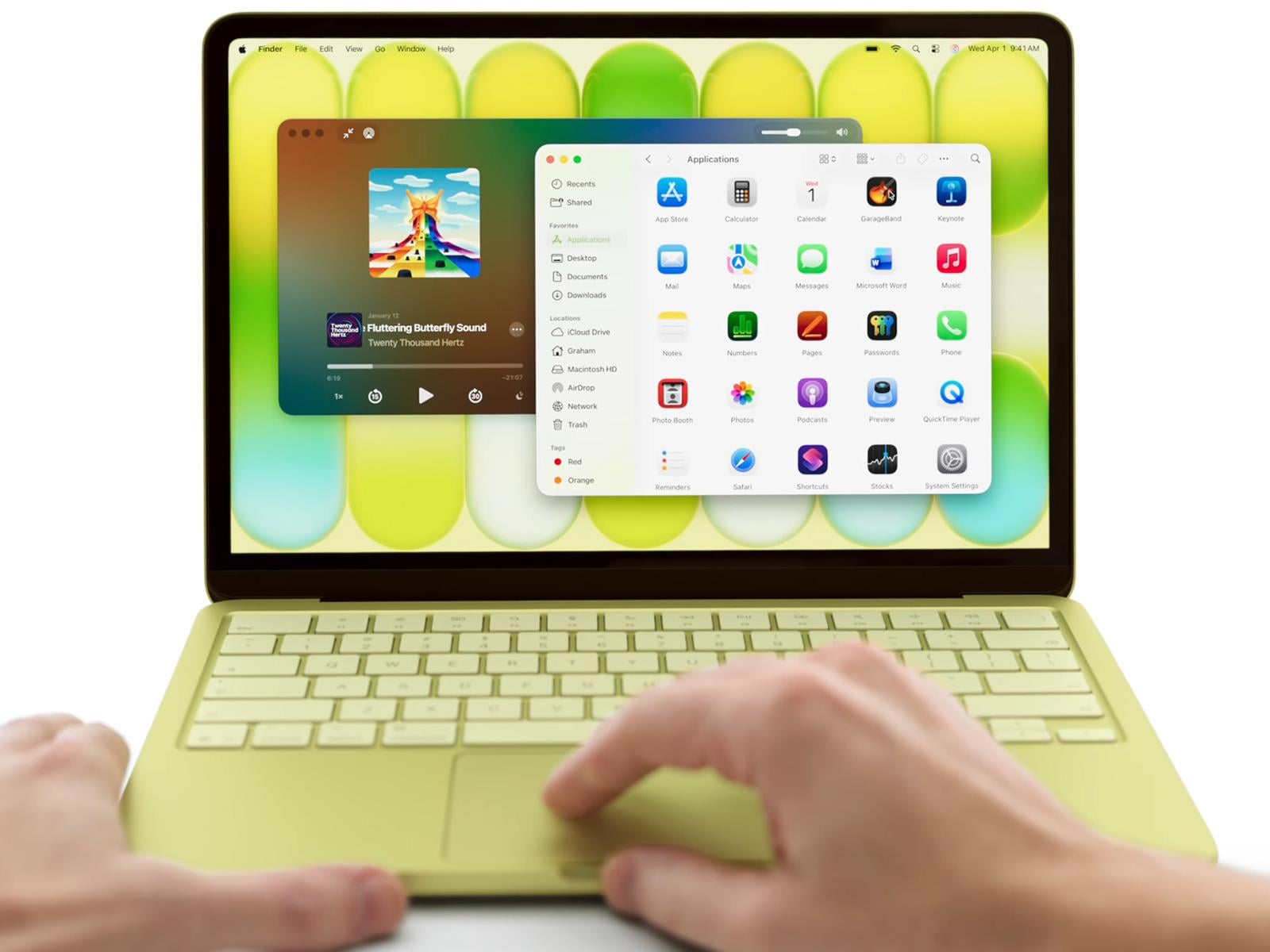
Sure,
openSUSE’s new Agama Linux installer v19 arrives with a redesigned core architecture, new API foundation, improved web UI, and more.
LibreOffice 26.8 merged initial support for adding a donation banner to its Start Center. This initial UI when launching LibreOffice aims to make users aware of the community-driven focus of the project and to hopefully solicit additional donations from the community…
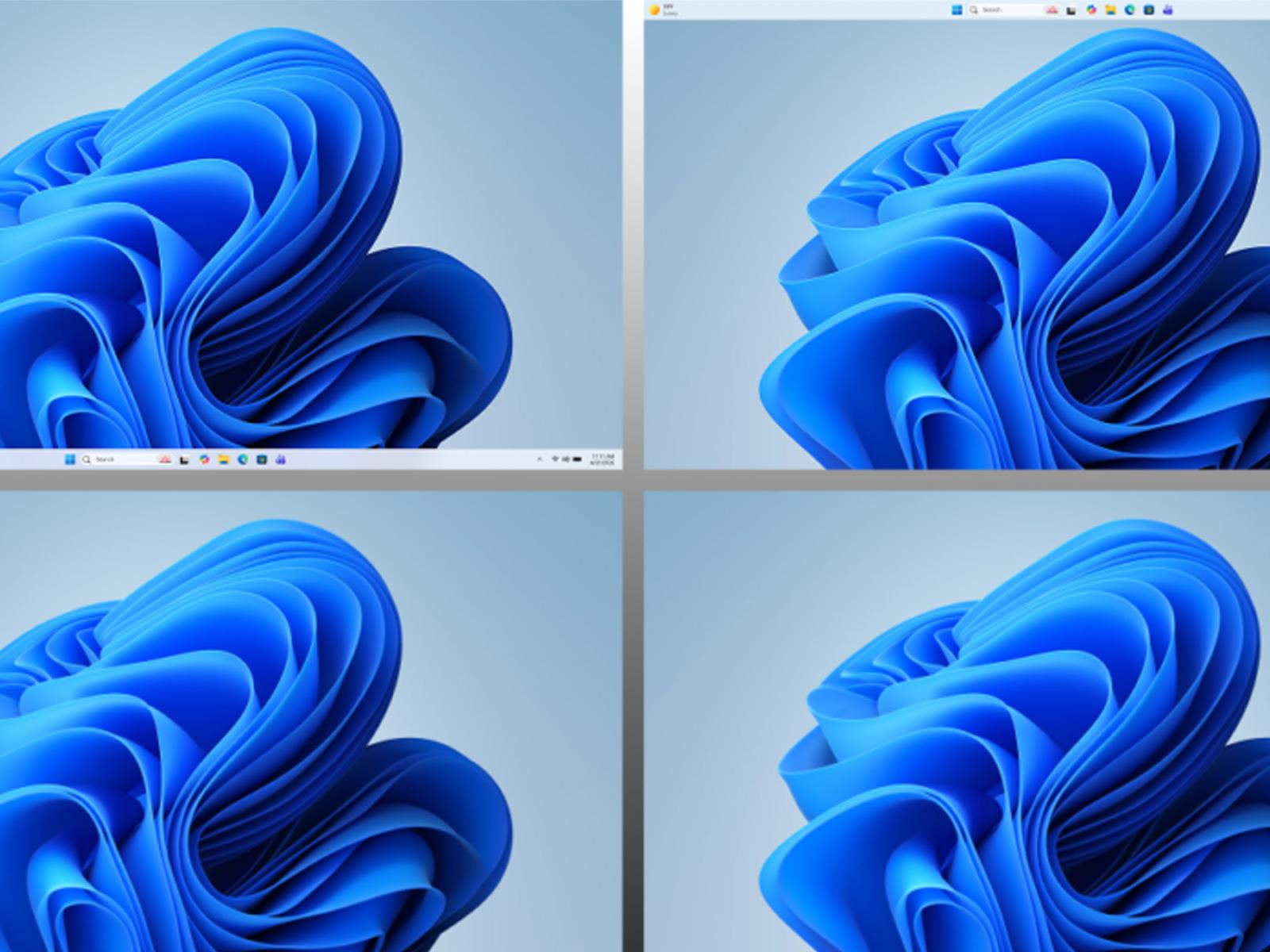
In a blog post to Windows Insiders, Pavan Davuluri, Executive Vice President of Microsoft’s Windows + Devices division, outlined the development plan

The
Apple already announced a lot of new devices in 2026 and we’ve been busy reviewing them all. In this installment of our bi-weekly roundup, we revisit the MacBook Neo, iPhone 17e and more, in addition to the “regular” Galaxy S26 and Dell XPS 16. There’s even more than those gadget to catch up on, so sit back, relax and cozy up to some fresh reviews.
The main attraction for Apple’s early device deluge was the $599 MacBook Neo. The company is finally giving us something we’ve been begging for: a low-cost Mac laptop that’s good enough for most people. “It’s a $599 computer that can handle basic workloads just fine, all the while looking like one of the company’s more expensive notebooks,” senior reporter Devindra Hardawar said. “Most importantly, it delivers more speed, a brighter screen and an overall better user experience than any competing $600 Windows PC.”
The MacBook Neo wasn’t the only affordable device Apple announced recently. The company also debuted the iPhone 17e, which is also $599 and offers an economical choice for iOS devotees. “The name “iPhone” carries its own premium, and the iPhone 17e is a solid entry-level handset for those who need a basic, no-frills path into the Apple ecosystem,” managing editor Cherlynn Low said.
The remainder of the new Apple devices were primarily chip upgrades. The company added the M4 to the iPad Air, which deputy editor Nathan Ingraham still argues is the best Apple tablet overall. Apple also put the M5 chip inside the MacBook Air and the M5 Pro and M5 Max silicon in the MacBook Pro,. Our staff maintains that those two laptops are among the best choices in their respective categories.
We also tested Apple’s claims on the Studio Display XDR, where we discovered the high price could be worth it for pros who need supreme color accuracy and high brightness.
The Galaxy S26 Ultra may get the bulk of the attention in Samsung’s 2026 lineup thus far, but the “regular” S26 is capable in its own right. However, it’s time for bigger updates on this model. “There’s nothing wrong with this safe, solid Android phone, but you could pick up last year’s S25 and get an experience that’s 99 percent the same for $99 less,” UK bureau chief Mat Smith said.
Dell pulled a 180 after nixing its XPS brand last year. Enter the XPS 16. Thankfully, the first devices after the fiasco show an expected return to form, albeit with one issue. “My one complaint is that I wish Dell would bring back the chiclet-style keyboards we got on models from the early 2020s,” senior reporter Sam Rutherford said. “Though as long as the company can release updated software to fix the ghosting issues I’ve encountered, what’s on there now is more than good enough.”
If portable projectors are more your speed, contributing reporter Steve Dent put the Soundcore Nebula P1i through its paces. Mat also spent some time with the Nothing Phone 4a Pro, which is undoubtedly the most uniquely designed handset we’ve tested this year. Lastly, Sam used an upgraded version of Belkin’s Switch 2 charging case to keep his gaming handheld safe and topped up in transit.
This article originally appeared on Engadget at https://www.engadget.com/engadget-review-recap-lots-of-apple-devices-galaxy-s26-dell-xps-16-and-more-120000820.html?src=rss
Welcome to our latest roundup of what’s going on in the indie game space. There are a whole bunch of neat new games out this week, as well as updates on some interesting upcoming projects.
In case you missed it, the Steam Spring Sale is under way. There are lots of solid deals here, and my credit card is already screaming at me. I’ve picked up a bunch of games from my wishlist. For instance, at just $3, I couldn’t resist snagging Teenage Mutant Ninja Turtles: Splintered Fate.
Meanwhile, over on Bluesky, a prototype from developer Freya Holmér caught my eye. It’s for a falling-block game, but instead of filling a container to create straight lines that disappear, it’s based around a pivot point. As tetrominos join the mass, it rotates left or right by 90 degrees, adding a new dimension to a well-established format. I’m really hoping Holmér turns this into a full game, as it’s a rad concept.
Given all the bug slaughtering and the jingoistic satire, any Starship Troopers project is going to draw comparisons with Helldivers 2. Fortunately, Starship Troopers: Ultimate Bug War! is entirely its own thing.
This is a retro first-person shooter from Auroch Digital (the studio behind Warhammer 40,000: Boltgun) and publisher Dotemu. The framing of the game is quite meta: it’s based on the experiences of Major Samantha Dietz, who was on the frontlines against the bugs, and it’s effectively being used as a military recruitment tool.
Starship Troopers: Ultimate Bug War! is a blast. I thoroughly enjoyed my time with it. Not that I needed one, but it gave me an excuse to watch Paul Verhoeven’s original film again since the game (while having an original story) hits some of the same beats.
The tone is spot on. The writing in the cutscenes, in which Casper Van Dien reprises his role as Johnny Rico from the movies, is funny. You can’t tell me that it isn’t a thrill to blow up a giant bug with a tactical nuke. Plus, I was tickled by the consequences of “accidentally” shooting a fellow soldier in the training base and all hell breaking loose.
Alas, the pacing feels off — there’s a bit too much space between objectives in some levels — and it’s a little one-note. Still, it only takes around four or five hours to beat, particularly if you don’t care about hunting for secrets.
Starship Troopers: Ultimate Bug War! is out now on Steam, PS5, Xbox Series X/S and Nintendo Switch 2. It’ll usually cost $25, but there’s a 20 percent discount until March 24.
Retro Rewind is a solid name for a video store rental sim. You’ll manage a store in the early ’90s — the heyday of VHS — by doing everything from decorating the place, filling shelves with tapes and buying bootleg films to hiring staff, making recommendations to customers and collecting late fees.
My first job was behind the counter of a convenience store that had a small movie rental section, so I’ve got a tiny bit of experience with calling up customers who have overdue films. That part of the job wasn’t exactly fun, but like the idea of running an entire rental store, an experience that’s sadly almost extinct.
Retro Rewind – Video Store Simulator is available on Steam (normally $20, with a 20 percent discount until March 24). You can try it out by playing a demo.
In Their Shoes looks like an intriguing spin on the visual novel. From We Are Muesli, this is billed as a mumblecore narrative vein, indicating that it’s influenced by films from that subgenre (such as the works of the Duplass brothers, Lynn Shelton and, especially in the early part of her career, Greta Gerwig). Through a few dozen interactive scenes, it follows the intertwined lives and intimate moments of seven people in Milan. Each of these dialogue-focused segments lasts around five minutes. There are timed choices and you can arrange the scenes into a timeline.
You can pick up In Their Shoes on Steam now. The full price is $13, but there’s a 25 percent discount until March 31.
For this week’s dog game, here is World’s Goodest Pup. It’s another pooch-based roguelike deckbuilder. This time around, you’ll be trying to succeed in the realm of competitive dog shows. After selecting a dog from among three breeds, you’ll start building a deck of accessories, tricks and poses and combine them in strategic ways to be most effective in competitions and challenges, which are procedurally generated.
This is a cozy game first and foremost, though. You can spoil puppers in a pet resort that you’ll build and treat them with a visit to a dog spa. Cute.
World’s Goodest Pup — from Pandamander — is out on Steam (normally $7, with 10 percent off until March 26). You can try it out via a demo.
The release trailer for Bonnie Bear Saves Frogtime made me chuckle, so I had to include it. The latest project from Bonte Avond (the team behind Once Upon A Jester) is a comedy adventure game.
As Bonnie Bear, a bear in a frog onesie, you set out to defeat a local bully in a tactical frog-battling game called Frogtime. As with many real-life trading card games, you’ll buy and collect frogs to build a strong army. Most importantly, it seems to be a game about the power of community, friendship and self-worth.
Bonnie Bear Saves Frogtime is out now on Steam and Nintendo Switch for $17.
Gunbrella studio Doinksoft is back with another game that has a fantastic name. It’s a roguelite, side-scrolling action platformer with shoot-em’-up elements. And it’s called Dark Scrolls. It’s such a good title that I’m almost mad I didn’t think of it first.
There’ll be nine heroes to choose from, including a pup named Biscuit and a rat with a saxophone. The game features procedurally generated runs with branching paths, and there’s multiplayer support for two-player online co-op. I’m into the Master System-era art style and the utter chaos shown in the trailer.
The Devolver Digital-published Dark Scrolls (still not over that name) is coming to Steam and Switch later this year.
If you think about it, Scrabble is already a roguelike strategy game. Beyond Words takes that a bit further, with tiles that shift and explode, and boards that change up the rules. Much like in Balatro, you’ll be modifying, destroying and duplicating tiles as you seek powerful synergies and massive score multipliers. There are more than 300 modifiers and abilities, along with boss battles and optional time-based challenge boards.
What makes Beyond Words particularly interesting is that it’s from Steve Ellis and Dr David Doak — who made their names at Rare and Free Radical Design with the likes of GoldenEye 007, Perfect Dark and TimeSplitters — and their small team at MindFuel Games. PQube is the publisher of Beyond Words, which will hit Steam, PlayStation 5, Xbox Series X/S and Nintendo Switch on April 9. A demo is available on Steam now.
We’ve learned about a bunch of upcoming music rhythm games lately, and here’s another one from Guitar Hero, Rock Band and DJ Hero veterans. Echo Foundry Interactive seems to be hoping that the community-driven focus will help Sound System stand out.
When it goes into early access on Steam (October 16, $25), Sound System will have local multiplayer support. Echo Foundry Interactive plans to add online multiplayer with co-op and competitive modes. Players will be able to create charts for any song they like too.
We’ve had a dog game (or two) and a frog game. Now it’s time to wrap things up with a cat game. In Cat Me If You Can — great title, again — the Earth has frozen and lost its color. Only cats remain. By time-travelling and taking photos of them, you’ll gradually restore color to the world.
It’s a hidden cat puzzle game from Cosmic Stag Games that’s coming to PC, Switch and Xbox in the summer. You’ll be able to check out a demo on Steam on April 8.
This article originally appeared on Engadget at https://www.engadget.com/gaming/a-retro-starship-troopers-shooter-a-video-store-sim-and-other-new-indie-games-worth-checking-out-113000133.html?src=rss
Merged overnight for Linux 7.0 and set to be back-ported to existing Linux stable kernel versions is a fix for aging AMD GCN 1.0 “Hainan” GPU models. This closes a 2021 bug report that was long neglected and ended up being just a small tweak to fix the issue reported of GPU hangs…
On Monday, a paper announcing that all four DNA bases had been found on an asteroid sparked a lot of headlines. But many of the headlines omitted a key word needed to put the discovery in context: “again.” The paper itself cited similar results dating back to 2011, and the ensuing years have seen various confirmations and more rigorous studies. The new work was less notable for showing that we had found these bases in Ryugu than for solving a previous mystery: earlier studies had failed to detect them there, despite their presence in many other asteroid samples.
Outside the headlines, though, the new work provides some interesting details, as it may answer an important question: how these bases got there in the first place. Understanding that better may be critical for getting a better picture of how the raw materials for life ended up on Earth in the first place.
Let’s start with a description of what the researchers found. Both DNA and RNA, the two nucleic acids used by life, share a similar structure. That includes the backbone, a chain that alternates between sugars and phosphates that are all chemically linked together. While the specific sugar differs between DNA and RNA, the chain itself varies only in length; otherwise, the backbone of every DNA or RNA molecule is identical.
NASA’s Hubble Space Telescope unexpectedly captured a rare, early-stage breakup of comet C/2025 K1 (ATLAS) just days after it first began disintegrating. Phys.org reports: “Sometimes the best science happens by accident,” said co-investigator John Noonan, a research professor in the Department of Physics at Auburn University in Alabama. “This comet got observed because our original comet was not viewable due to some new technical constraints after we won our proposal. We had to find a new target — and right when we observed it, it happened to break apart, which is the slimmest of slim chances.”
Noonan didn’t know K1 was fragmenting until he viewed the images the day after Hubble took them. “While I was taking an initial look at the data, I saw that there were four comets in those images when we only proposed to look at one,” said Noonan. “So we knew this was something really, really special.” Hubble caught K1 fragmenting into at least four pieces, each with a distinct coma, the fuzzy envelope of gas and dust that surrounds a comet’s icy nucleus. Hubble cleanly resolved the fragments, but to ground-based telescopes, at the time they only appeared as barely distinguishable, bright blobs. […]
“Never before has Hubble caught a fragmenting comet this close to when it actually fell apart. Most of the time, it’s a few weeks to a month later. And in this case, we were able to see it just days after,” said Noonan. “This is telling us something very important about the physics of what’s happening at the comet’s surface. We may be seeing the timescale it takes to form a substantial dust layer that can then be ejected by the gas.” The findings have been published in the journal Icarus.


Read more of this story at Slashdot.
Fedora Asahi Remix 43 distribution is now available for Apple Silicon Macs based on Fedora Linux 43 and the KDE Plasma 6.6 desktop environment. Here’s what else is new!
Did you miss this week’s top articles? Here are the five most read article on FOSS Force for the week that just ended.
The post FOSS Force’s Top Five Articles — For the Week Ending March 20, 2026 appeared first on FOSS Force.
Last summer, a group of officials from the Department of Energy gathered at the Idaho National Laboratory, a sprawling 890-square-mile complex in the eastern desert of Idaho where the US government built its first rudimentary nuclear power plant in 1951 and continues to test cutting-edge technology.
On the agenda that day: the future of nuclear energy in the Trump era. The meeting was convened by 31-year-old lawyer Seth Cohen. Just five years out of law school, Cohen brought no significant experience in nuclear law or policy; he had just entered government through Elon Musk’s Department of Government Efficiency team.
As Cohen led the group through a technical conversation about licensing nuclear reactor designs, he repeatedly downplayed health and safety concerns. When staff brought up the topic of radiation exposure from nuclear test sites, Cohen broke in.
Discover a step-by-step guide to install the latest version of Rust via the Rustup installer script on Ubuntu and other Linux distros.
For years, cyclists were seen by many as pariahs and I had plenty of road-rage abuse thrown at me. Tropes such as ‘pay road tax or get off the road’ were hurled at me by people driving worse cars than I do – and mostly not worth as much as the bike I was riding. I had lots of near misses too, either from ignorance or – I’m sure of it – sometimes malice.
Then, the London 2012 Summer Olympics saw incredible success for Britain’s cyclists, with no fewer than 12 medals won by British legends Sir Chris Hoy, Sir Bradley Wiggins, Dame Laura Kenny (nee Trott), Sir Jason Kenny, Victoria Pendleton, Geraint Thomas, Ed Clancy, Joanna Rowsell, Dani Rowe (nee King) and more. That year also saw Sir Bradley Wiggins winning the Tour de France, with Chris Froome rolling in second.
This led to British Cycling gaining a foothold in the mainstream media and our riders rightly being celebrated as national heroes. There was an upsurge in cycling participation, too, with claims of cycling being ‘the new golf’.
For me and my long-time riding friends, we started to notice a new-found respect on the roads. Other road users seemed more considerate and courteous. They gave us more room, and were just generally nicer.
But while I thought the sunny uplands of the post-2012 world would last, sadly, that hasn’t been the case.

Politics and society in general have become much more polarised, and the same has happened on our roads.
Instead of the mainstream media celebrating success from the new generation of riders such as Tom Pidcock or Junior world road champion Harry Hudson (I bet you never saw any reports of that in a national newspaper or news website), what do we get now?
Apparently, London is full of balaclava-wearing, cycling terrorists who’ll steal your phone, watch or necklace as soon as you step outside. We’re told ULEZ is bad, Lime bikes are a nuisance, that “cyclists are turning UK roads into death traps”, and more.

This is all rather than reporting that London is cleaner than ever thanks to 1.5 million daily bike journeys in 2025, an upshift of 43% since 2019. At the same time, the reduction in traffic has made it better for motor vehicle users.
Meanwhile, pollution can have a devastating effect on the health of the young and elderly. And guess what: cycling can help reduce that.
You’d think people would be grateful for cyclists, not targeting them for hate.

When you consider electric bikes, things get even worse. Apparently, ebikes are both ticking time bombs that’ll burn down your house and the silent tools of those balaclava-adorned thieves, even though in almost all footage I’ve seen of any said criminal activity it’s been a Surron.
For those who don’t know, a Surron isn’t an ebike. It’s a basic electric off-road e-moto, its speed regulated by a throttle with no human effort at all.
It’s illegal to ride them on the road in the UK, unless it’s a registered road-legal model with a Vehicle Identification Number, insurance and you have a licence (full or CBT). The standard model is off-road only, supposedly sold only to be used on private land. Surely that’s a legal loophole that should be closed as soon as possible.
But this confusion over ebikes and e-motos is further proof of how anti-cycling rhetoric is whipped up, regardless of the facts.

In the last year, the abuse has returned, I’ve had SUV drivers screaming at me to get out of the way. I’d suggest they buy smaller cars if they don’t think they have space to overtake a solitary cyclist. I’ve had bags of fast-food trash thrown from moving vans, and I’ve even been purposely squeezed against the kerb when riding in traffic.
Now, I’m not an advocate of the complaining near-miss culture we see in some other cycling media. It simply doesn’t achieve anything other than creating more division. Neither do I see the GoPro-wearing cycle vigilantes doing anything but stir up hate on both sides.
But this animosity from drivers puts lives at risk, and I can’t help but feel that it’s a consequence of how cycling and cyclists are discussed across the country.
If you happen to capture abuse, threats or dangerous road users, don’t post the footage on social media, just inform the police via your local police website or Operation Snap, where you can submit footage of driving offences.
I wouldn’t advocate any direct action or confrontation; we are the more vulnerable road user compared to car and van drivers. The law now reflects that, too. Amendments to the Highway Code in 2022 enforced a hierarchy of road users, placing pedestrians, cyclists and horse riders at the top and increasing responsibility on drivers of larger vehicles.
I know how hard it is to take the high road, but I just tend to be as courteous as I can be. If I’m on a climb and traffic is building up behind me, I’ll soft pedal at a layby, or pull in and wave traffic through. I’ll also pull over on single-lane rural roads to let traffic pass.
And don’t give cause for other road users to get irate. That means not jumping traffic lights. Ever.
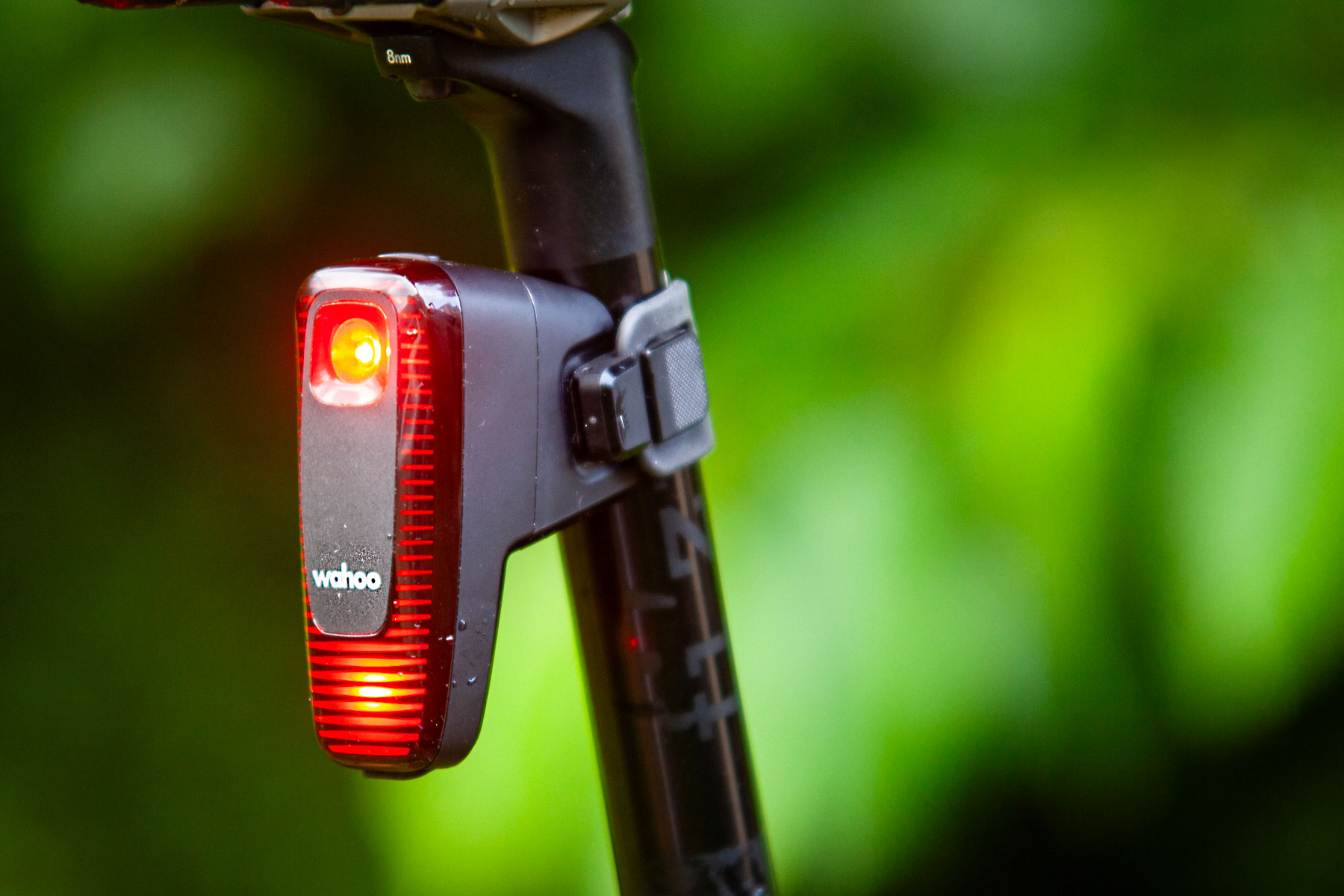
You should protect yourself, too, with the right clothing choices (don’t ride head-to-toe in black, for instance), bike lights even in the daytime, and maybe even a rear-view radar if you can afford one.
As well as making sure you’re safe on the road, there are other tactics we can all employ.
If your chosen mainstream media, newspaper or website continually runs anti-cycling rhetoric, boycott it. Don’t buy the paper, don’t give them clicks online. And if brands seem to endorse anti-cycling rhetoric by advertising with the same media, don’t put their products in your shopping trolley.
Comment on and correct media ebike crime reports if it’s not an ebike, and especially if it’s an illegal, unregistered electric moto.
I’ve been riding and writing about bikes for a long time, so I know how depressing experiencing aggression out on the road and reading anti-cyclist rhetoric can be. But I’m hopeful that soon we’ll see a shift back to greater tolerance as people realise the benefits of cycling as a mode of transport, especially when they’re faced by rising fuel costs.
And who knows? Maybe the Tour de France starting in the UK next year will help change people’s perception of cycling, just as London 2012 did.