Uber is aggressively partnering with multiple robotaxi companies to avoid a future dominated by Waymo or Tesla. The ride-hailing giant has struck deals with at least a dozen autonomous vehicle players in recent years. Just last week, it announced a $1.25 billion partnership with Rivian, with plans to deploy up to 50,000 driverless vehicles over the next decade. Business Insider reports: Uber announced three new robotaxi partnerships in the past few weeks with Zoox, Wayve-Nissan, and Rivian. In less than half a decade, the company has secured at least a dozen deals, including with WeRide, AVride, May Mobility, Momenta, Pony.AI, Wayve, Baidu’s Apollo Go, Motional, and Lucid-Nuro. Still, less than a half-dozen of Uber’s partners have deployed fully driverless, paid robotaxi operations, and only one, Waymo, operates in the US. Uber has a joint deployment with Waymo in Atlanta, Austin, and Phoenix, but in other cities, Waymo is a competitor.
Uber’s partnership spree is less about seeking the singular, dominant player of autonomous driving. Instead, analysts told Business Insider that Uber is ensuring multiple vendors can participate in the expensive business of robotaxis — fending off the real risk of a Waymo or Tesla scaling on its own — and giving itself a stake in the robotaxi economy by being the aggregator of choice. “The more diversified the supplier base, the better for the network in the middle, which is Uber,” Mark Mahaney, an Uber analyst for Evercore ISI, told Business Insider.
Sony’s lead systems architect, Mark Cerny, has confirmed that AI-powered frame generation is indeed on the roadmap for PlayStation hardware, stressing that the feature isn’t yet ready for prime time in 2026. While the PlayStation 5 Pro recently introduced a PlayStation Spectral Super Resolution (PSSR) 2 upscaler that gave the APU a chance
With Intel’s new Core Ultra Series 3 “Panther Lake” laptop SoCs, the Xe3-based Arc B390 graphics and much improved CPU performance capture much of the spotlight. One new capability with Panther Lake that isn’t featured as much though is the new FRED capability with Flexible Return and Event Delivery. Today’s Intel Panther Lake testing is looking at the very interesting performance impact of FRED on Linux.
Elon Musk’s latest industrial gambit, called Terafab, aims to interrupt the semiconductor supply chain by building a massive $25 billion chip fabrication facility in Austin, Texas. As a joint venture between Tesla, SpaceX, and xAI, the ambitious project has ambitions of producing a terawatt of computing power yearly to fuel Musk’s most ambitious
Forget for a moment that PC memory and storage prices are getting out of control. If you’re building a new gaming PC or upgrading and existing one, you could do a lot worse than assembling a system around AMD’s spunky Ryzen 7 9800X3D (see our review). It’s a stout chip for gaming, and even better, it’s on sale for the lowest price it’s ever
Apple and Google have recently been removing barriers and implementing features that make it easier for users to switch between rival platforms, which includes finally opening up compatibility between Quick Share and AirDrop. The latter first became available on the Pixel 10 late last year, with Google promising to bring this feature to the
M5Stack has added the M5StampS3 BAT, a compact embedded module based on the ESP32-S3 platform with integrated battery power management. The module is intended for IoT and low-power applications requiring wireless connectivity and flexible GPIO access in a small form factor. The module is built around the ESP32-S3-PICO-1-N8R8 system-in-package, featuring a dual-core Xtensa LX7 processor […]
Rock sample analysis from the asteroids Ryugu and Bennu (collected in 2018) has confirmed that the entire library of the chemical code for DNA and RNA exists in space.
The space-delivery theory for life’s origins has been missing several chapters. While meteorites that crashed into Earth often contained some of these ingredients, scientists
When the Uber Black isn’t premium enough, New Yorkers now have the option to call for a Wheely instead. Whimsical name aside, the London-based company is breaking into the US market by offering its chauffeur-hailing services to residents of New York City first, as first reported by Bloomberg. Think of it like Uber, but for business executives and VIPs who prefer better service and riding in Cadillacs and Mercedes.
“New York has long been requested by our customers, whether that be New Yorkers who have traveled with us in Europe and the Middle East, or our international clients who regularly visit the city,” Anton Chirkunov, founder and CEO of Wheely, said in a press release.
Wheely
Besides its black car Business SUV service, New Yorkers can opt for Wheely First that offers a Mercedes-Benz S-Class W223 filled with amenities like Fiji water and towels. For a more dedicated service, Wheely has its Perfect Airport Pickup where drivers will track flights to line up a pickup, and the Chauffeur for a Day option that lets users reserve a chauffeur that will also pick up friends and family or run errands for you. For interested drivers in New York City, Wheely will port over its in-house “Chauffeur Academy,” which is expected to grow to a network of 5,000 qualified drivers over the next five years.
While Wheely currently operates in London, Paris and Dubai, the company plans to expand to five major US cities within the next three years. According to Bloomberg, Wheely is considering markets in Texas, Miami and Palm Beach, Fla. as well as Washington, D.C. Wheely’s entry into the US market comes about a week after the announcement of the Uber Elite program, which targets a similar demographic. However, Uber Elite is only available in Los Angeles and San Francisco currently, with plans to expand to New York soon. However, Uber may have Wheely beat when it comes to hailing a helicopter, thanks to its upcoming Uber Air option.
This article originally appeared on Engadget at https://www.engadget.com/transportation/wheely-an-on-demand-chauffeur-app-makes-its-us-debut-in-nyc-143233840.html?src=rss
One of the most prominent VR game piracy groups has been shut down following a DMCA notice which was apparently issued by Meta.
As first reported by Heise Online, the game piracy group ‘VRPirates’ issued a statement on its public Discord last week notifying members that it was ceasing operations.
“Due to a recent DMCA notice from Meta, VRP will be shutting down. As a result, we will no longer accept donations, provide sponsored mirrors, or host content publicly. All related operations are being discontinued effective immediately,” the group said.
The group also offered its own ‘Rookie’ sideloader for Quest, which, much like SideQuest, allowed users to browse a library of content and sideload APKs directly.
While the group has been in operation since at least late 2023, VRP admin ‘Maxine’ says in a recent r/QuestPiracy subreddit post that it was actually the release of a cracked version of Beat Saber (2018) that was the last straw.
“[A]s much as I hate to say, they’re well within their right,” Maxine said, referring to Meta pursuing legal action against piracy of its first-party game.
According to UploadVR, Rookie Sideloader still allows users to sideload self-sourced APKs, however the library of VRPirate-hosted cracked content is now officially offline.
Linus has released 7.0-rc5 for testing.
“It looks like things are starting to calm down – rc5 is smaller than
the previous rc’s this merge window, although it still tracks a bit larger
than rc5s historically do.“
Firefox 149.0 release binaries are now available with a wide assortment of improvements for this month’s update to the cross-platform Mozilla web browser solution…
I’ve loved puzzle games for decades. Myst showed me the immersive storytelling potential of video games. Intelligent Qube on the original PlayStation taught me new ways to think under pressure. Lumines opened my mind to the emotional impact of music, and Echochrome proved the healing power of games when it helped me process unmanageable grief.
But those are stories for another time. The point is, that at this stage of my life it’s almost impossible for a puzzle game to really surprise me. But Interlocked has been just this: a pleasant surprise.
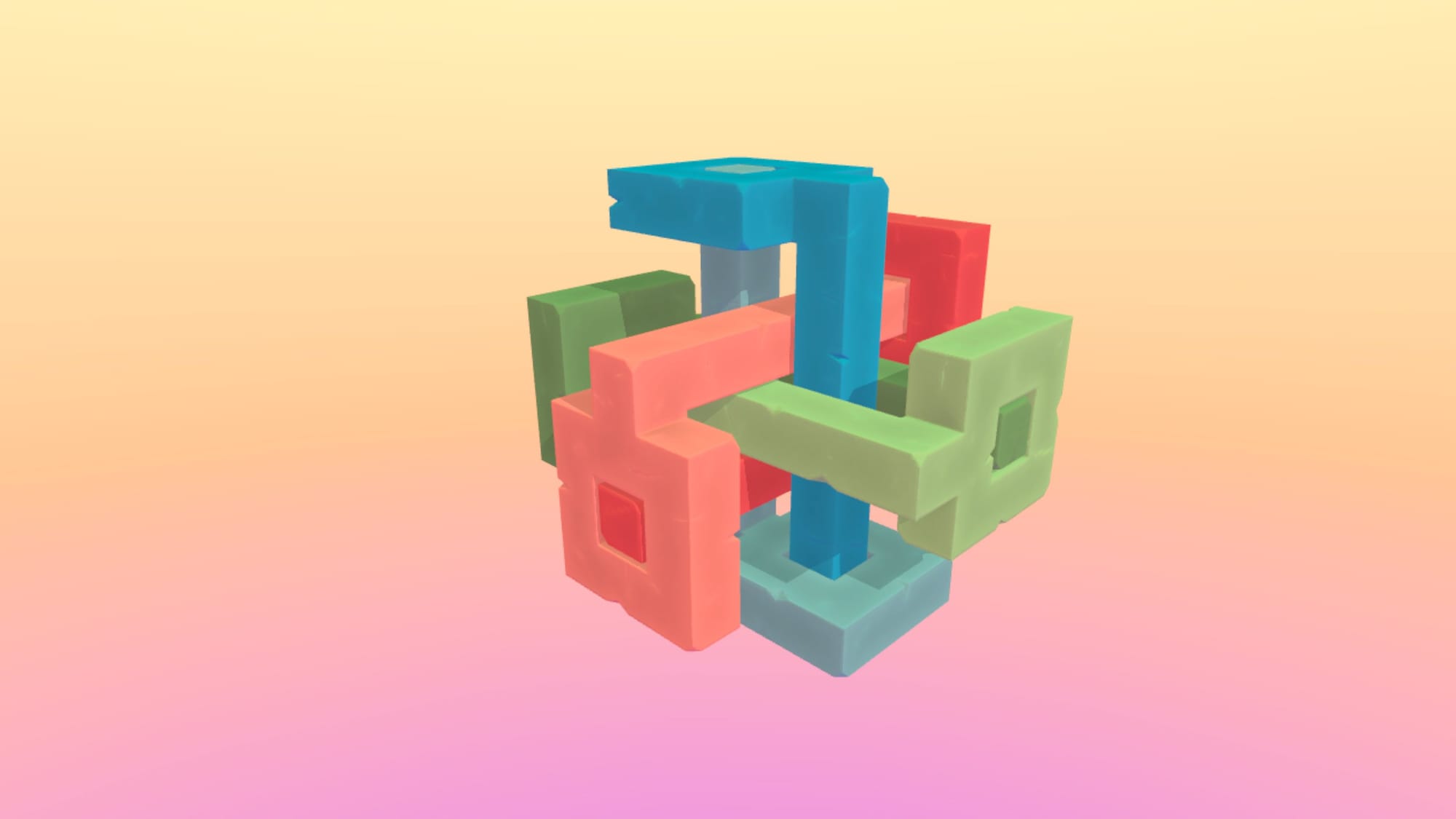
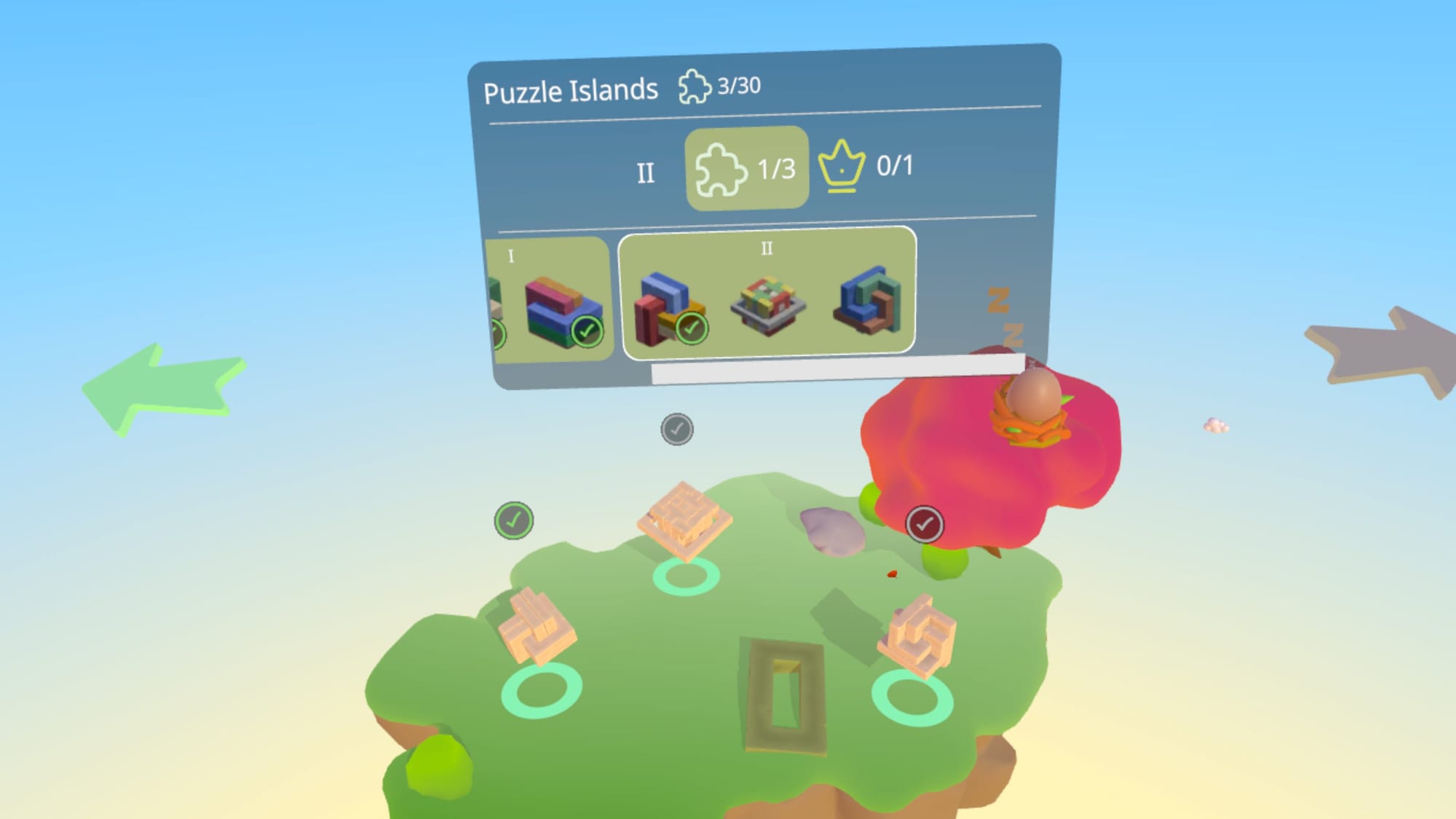
The object of Interlocked: Puzzle Islands is ostensibly simple: solve a succession of increasingly complex burr puzzles. These are assemblies of notched blocks interlocked into intricate three-dimensional shapes. Each puzzle begins with pieces locked into the others by clever geometry, and your job is to study the shape, then push, pull, twist, slide, and somehow remove every piece from the assembled whole. Do this and you win. Do this 30-odd times, and you beat the game.
0:00
/0:45
Interlocked: Puzzle Islands gameplay captured by UploadVR
The Facts
What is it?: A peaceful, challenging puzzle game, with a mini story involving a growing bird. Platforms: Meta Quest, Coming later to PC VR via Steam Release Date: March 24, 2026 Developer: Puzzle Dev Publisher: Armor Games Studios Price: $11.99
What is Interlocked?
Interlocked: Puzzle Islands is a sort of sequel to the unsurprisingly named Interlocked, a game originally released in 2011 as a browser-based game, then later released as an app on iOS and Android, where it has been downloaded by over 5 million users.
Now it’s out on Quest and coming soon to Steam, where VR has transformed it into something greater. Being able to lean in, change your perspective simply by moving your head and body, to manipulate the structures directly with your handheld controllers, it all adds a layer of immersion that flat screen versions of this and similar puzzlers simply can’t match.
There’s tactile satisfaction in testing a piece for movement, finding it locked in place, reapplying yourself and finally discovering the one directional movement that begins to unravel the knot. That core physical loop of test, fail, repeat, succeed is executed extremely well.
The controls are simple and intuitive in VR, where you can grab and manipulate the puzzle directly, turning the shapes naturally in your hands as if they were a real object sitting on your desk. You twist and poke and prod with perfect accuracy.
Video gamey controls are available at the same time: by simply twiddling the control stick and pressing some buttons, you can manipulate the puzzle without directly touching it in virtual space. Either methodology works intuitively.
0:00
/0:44
Interlocked: Puzzle Islands gameplay captured by UploadVR
While you’re puzzling, there’s no real urgency. There’s no ever-dwindling timer, no penalty for failure. You’re free to sit with a puzzle for as long as you like, rotating it slowly, thinking through the possibilities, touching each piece to see its silhouette shining through its fellow blocks, making moves or thinking about them or simply sitting and enjoying the pastel beauty and ambient tunes of the lovely world around you. It’s all quite pretty.
And then there’s the bird.
Very early in the game you’re introduced to a hatchling, a tiny chick that bursts from its shell to blink enormous black eyes at you as it flitters about the first of the game’s puzzle islands. It chirps and nudges your surrogate hands, flaps its wings, and eventually takes flight.
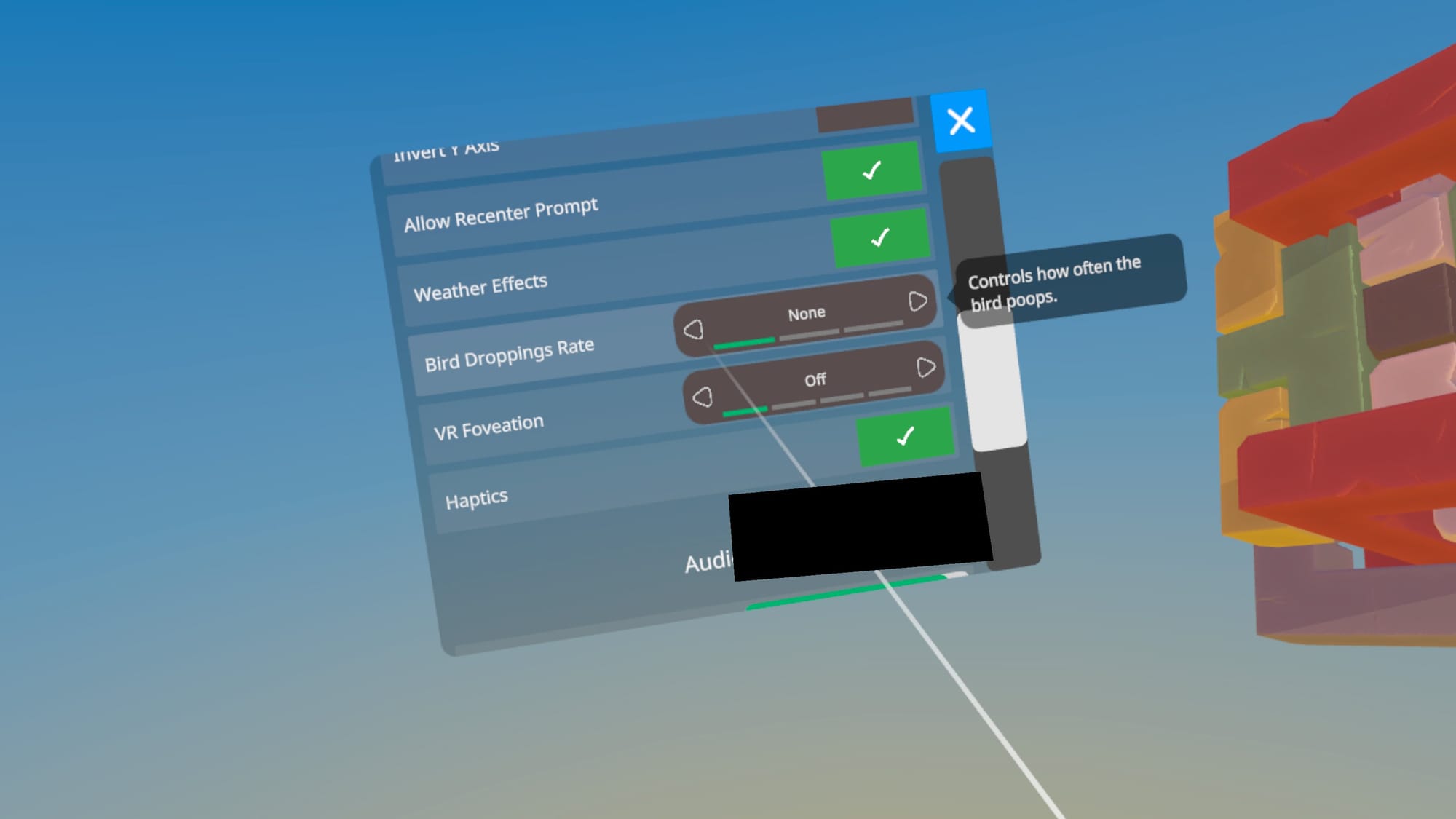
To say that this bird is a deeply written character may be a stretch. There’s a story here, but it’s told with an extremely light hand. Rather, the bird is a sort of ever-present companion that flits from island to island, occasionally growing or changing, keeping you company. It takes what may have felt like a lonesome, solitary experience and turns it into something warm and charming. Small companionship is just that, small, but it can have outsized meaning.
0:00
/0:22
Interlocked: Puzzle Islands gameplay captured by UploadVR
Immaculate Vibes, Solid Core
The bird, the world, the music, the puzzles: they all combine so that just a few moments in the world of Interlocked reveals the real object of the game.
As an ambient soundtrack of gentle strings ebbs and swells, as the weather changes and the sunshine or the rain washes your small diorama island, as the fall foliage drops away making way for snow to kiss the dark branches of the trees, there is a feeling of peace.
This is the real object of Interlocked. It’s a game that allows you to breathe and relax, to lower the heart rate and stretch the mind and feel that things maybe aren’t quite so difficult if you just slow down, hold the problem in your hand, and solve it one move at a time.
The facts that the game is so pleasant and lovely, and that you’re hanging out with a cute-as-hell bird are only icing on the proverbial cake. Because the game’s core mechanic, its puzzles, are great.
The game starts out, as you’d expect, pretty easy. You unlock a few interlocked blocks, clear the first island, and move on to increasingly challenging shapes. The difficulty curve is thoughtfully modulated so that new configurations and complications pop up at a steady and linear pace. Later puzzles become decidedly more intricate, requiring multi-step sequences and plenty of trial and error.
There are moments of genuine satisfaction, where you’ve been stuck for a minute or two, turning the complicated structure over and over, convinced you’ve tried everything only to suddenly realize a subtle solution had eluded you. You make a small adjustment and a piece slides free, and suddenly the entire structure begins to unlock. These classic “aha” moments are critical to the best puzzle games, and Interlocked delivers them consistently.
0:00
/2:01
Interlocked: Puzzle Islands gameplay captured by UploadVR
That said, if you’re an impatient person, Interlocked may frustrate you. There’s no avoiding that by the midway point of the journey, puzzles can be downright wild in their complexity. While the ambient surroundings will do their best to keep you calm, wiggling the same blocks over and over and getting nowhere closer to solving the puzzle may cause certain personality types to snap like a celery stick.
Then again, it may just teach you patience.
Comfort
Interlocked: Puzzle Islands can be played seated or standing, and in room scale. The game is controlled with controllers and can be manipulated with analog sticks and buttons.
Interlocked: Puzzle Islands – Final Verdict
In a medium that often prioritizes excitement, tension, horror, and dopamine drip, Interlocked: Puzzle Islands feels radical in its serenity. It reminds me of what makes games like Lumines and Echochrome so impactful, not just as puzzles to be played and solved, but as experiences.
It’s a brief game (about four hours long), and a relatively simple one. It’s a journey across floating islands, meandering through seasons of the year and seasons of life accompanied by soft music and a curious little bird. It’s a place of comfort, a place to unwind, where your hands are busy, your mind engaged, and where everything else disappears for a little while. In today’s world, that might be the best gift any game can give.
UploadVR uses a 5-Star rating system for our game reviews – you can read a breakdown of each star rating in our review guidelines.
The big news today is that reviews of Intel’s Core Ultra 7 270K Plus and Core Ultra 5 250K Plus processors are live, including our own, and of course these Arrow Lake Refresh parts slot into the same LGA 1851 socket as their regular, non-Plus Arrow Lake counterparts. What about future generation CPUs, though? This is probably the end of the