Huawei Unveils MateBook D14 & D15 Laptops: AMD Ryzen or Intel Comet Lake Inside

Huawei this morning has introduced its latest-generation MateBook D laptops. The laptops, which use processors from both AMD and Intel, as well as discrete graphics from NVIDIA, will be offered with both Microsoft’s Windows 10 operating system, as well as Linux on certain SKUs.


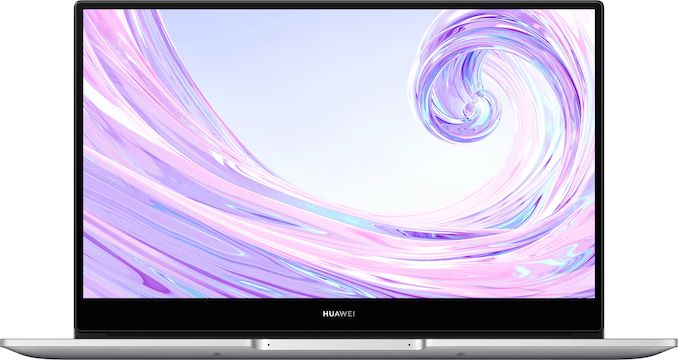
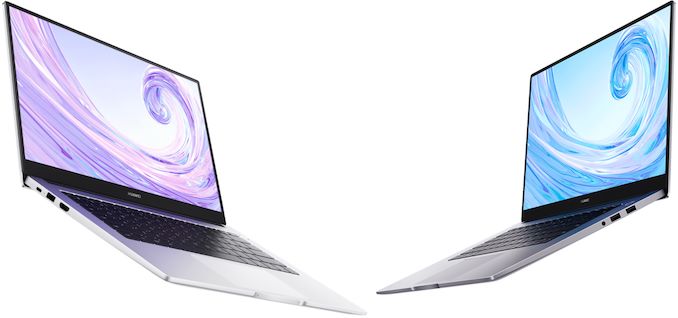
Huawei’s latest MateBook D14 and MateBook D15 notebooks come in an aluminum chassis that houses a 14-inch and 15.6-inch IPS Full-HD display panels respectively. The displays offer a max brightness of 250 nits and a 800:1 contrast ratio. Inside many of the systems is Intel’s quad-core 10th Generation Core i5/i7 (Comet Lake) processor paired with NVIDIA’s GeForce MX 250 GPU, 8 GB or 16 GB of DDR4 memory, as well as an a 256 GB or 512 GB PCIe SSD. Meanwhile, Huawei will also offer SKUs powered by AMD’s Ryzen 5 3500U processors with built-in Radeon Vega graphics, possibly in a bid to reduce risks associated with tight supply of processors by Intel.


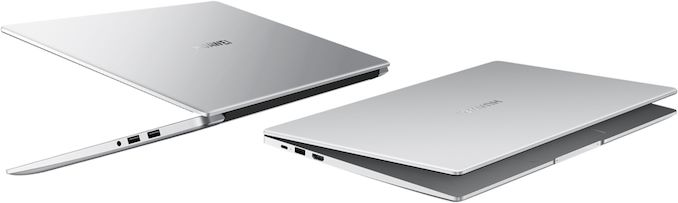
When it comes to connectivity, the Huawei MateBook D14 and D15 laptops feature 2×2 Wi-Fi 5 with up to 1.73 Gbps throughput, Bluetooth 5, one USB 3.0 Type-C connector, three USB 2.0/3.0 Type-A ports, an HDMI output, and a 3.5-mm connector for headsets. The notebooks also have a fingerprint reader, a webcam that hides in a key, stereo speakers and a microphone array.
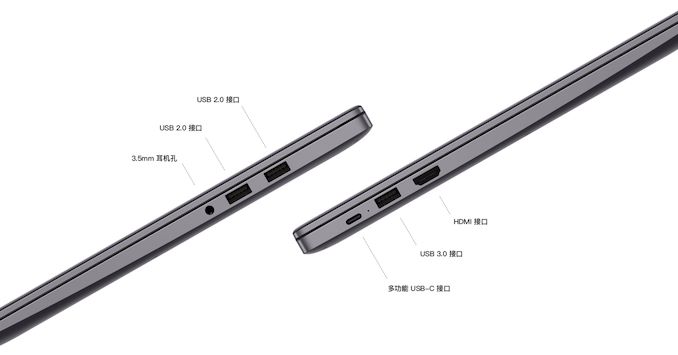


As far as portability is concerned, the MateBook D14 is 15.9 mm thick and weighs 1.38 kilograms, whereas the MateBook D15 is 16.9 mm thick and weighs 1.62 kilograms. Surprisingly, the former features a 56 Wh battery, whereas the 15-inch model comes with a smaller 42 Wh battery. In its stead, Huawei is offering a 1TB HDD.


Huawei’s 2019 MateBook D
  MateBook D14 MateBook D15
Display 14-inch 1920×1080 15.6-inch 1920×1080
CPU Intel Core i5-10210U

Intel Core i7-20510U

AMD Ryzen 5 3500U
Graphics NVIDIA GeForce MX 250

AMD Ryzen 5 3500U
RAM 8 GB or 16 GB
SSD 512 GB SSD 256 GB SSD + 1 TB HDD
Wi-Fi Wi-Fi 5 (802.11ac)
Bluetooth Bluetooth 5
USB 2 × USB 2.0 Type-A

1 × USB 3.0 Type-A

1 × USB 3.0 Type-C
GbE
Card Reader
Other I/O HDMI, microphone, stereo speakers, audio jack
Battery 56 Wh 42 Wh
Dimensions Width: 322.5 mm

Depth: 214.8 mm

Thickness: 15.9 mm
Width: 357.8 mm

Depth: 229.9 mm

Thickness: 16.9 mm
Weight 1.38 kilograms 1.62 kilograms
Additional Information Link Link
Price ? ?

Huawei will start sales of its new MateBook D14 and MateBook D15 laptops on December 2 in China. It is unclear whether and when the company plans to begin shipments of its new notebooks to other countries, but since Microsoft now has a license to sell software from Huawei, it is entirely possible that the new notebooks will make it to other markets at some point.


Huawei’s MateBook D14 and MateBook D15 Configurations
CPU GPU RAM Storage
Intel Core i5-10210U NVIDIA GeForce MX 250 8 GB 256 GB SSD + 1 TB HDD


or


512 GB SSD

Intel Core i5-10210U 16 GB
Intel Core i7-20510U 8 GB
AMD Ryzen 5 3500U AMD Radeon Vega 8 Graphics 8 GB
16 GB

Related Reading:


Sources: Huawei (1, 2), Liliputing, GSMArena


Source: AnandTech – Huawei Unveils MateBook D14 & D15 Laptops: AMD Ryzen or Intel Comet Lake Inside
Huawei Launches Flagship MatePad Pro Tablet with Punch-Hole Display

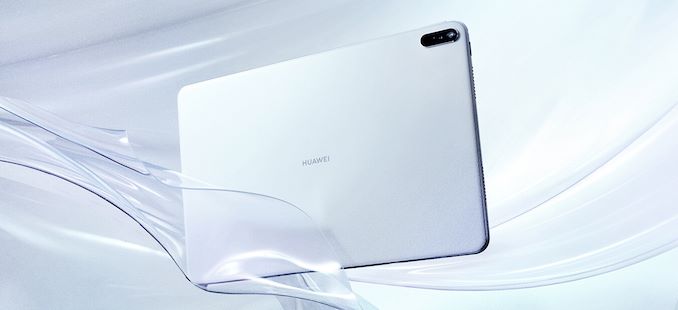
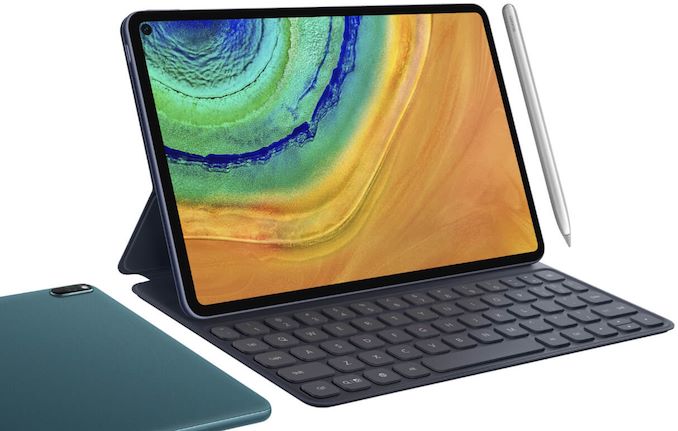
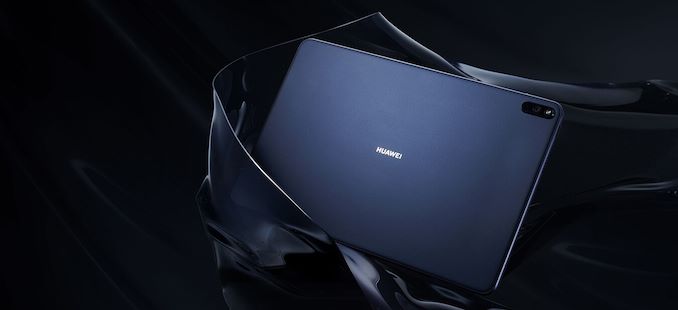
Huawei is among a few manufacturers who still competes on the market of high-end tablets against Apple and Samsung. This week the company introduced its MatePad Pro, a high-end tablet which is being positioned to rival Apple’s iPad Pro as well as Samsung’s Galaxy Tab S6. The tablet features a large display with a punch hole camera for selfies as well as Huawei’s top-of-the-line SoC.


Huawei’s MatePad Pro comes in an aluminum chassis that is 7.2 mm thick with 4.9-mm bezels, holding a 10.8-inch, 16:10 aspect ratio AMOLED display with a 2560×1600 resolution. The display has a punch hole for an 8 MP selfie camera, whereas the main camera on the backside of the tablet has a 13 MP CMOS sensor and a LED flash. The tablet is based on Huawei’s HiSilicon Kirin 990 application processor paired with 6 GB or 8 GB of RAM as well as 128 GB or 256 GB of NAND flash storage. Meanwhile, Huawei will initially offer the tablet in Wi-Fi only configurations as well as a Wi-Fi with 4G/LTE version, with a 5G model due in the first quarter of next year.


Being aimed at demanding users who are after more than a portable television, the Huawei MatePad Pro will come with the company’s M-Pen stylus for drawing and precise interaction with programs. To maximize the battery life of the device, Huawei equipped it with a 7,250 mAh battery, which in turn can be charged with Huawei’s 40 W SuperCharger or 15 W wireless charging.


On the software side of matters, Huawei’s MatePad Pro is based on Google’s Android 10 with EMUI 10, but lacks Google’s Play and Mobile Services suite, which is likely to make it considerably less competitive outside of China. The good news, at least, is that the tablet has a laptop mode, which will make it easier to use for productivity applications.


Huawei MatePad Pro
  Specifications
SoC HiSilicon Kirin 990

2x Cortex-A76 @ 2.86 GHz

2x Cortex-A76 @ 2.36 GHz

4x Cortex-A55 @ 1.95 GHz
Graphics Arm Mali-G76
Display 10.8-inch

sAMOLED

2560×1600
Storage 128 GB

256 GB

512 GB

Nano Memory card slot
Memory 6 GB or 8 GB of RAM
Wireless Wi-Fi 802.11 a/b/g/n/ac 2.4G+5GHz, MU-MIMO, Wi-Fi Direct,

Bluetooth v5.1
GPS A-GPS, Glonass, Beidou, Galileo, QZSS
Connectivity USB 3.1 Type-C for data and charging
Camera Rear Camera: 13 MP

Front Camera: 8 MP
Video Recording: UHD 4K (3840×2160) @ 30 fps

Playback: ?
Audio 4 × Speakers

USB-C headset
Sensors Accelerometer, Gyro Sensor, Proximity Sensor, Compass
Battery 7250 mAh
Dimensions 246 × 159 × 7.2 mm

460 grams
Color White, Black, Green and Orange
OS Android 10 with EMUI 10
Price Starts at $392 in China
Accessories various

Huawei is currently taking pre-orders on its MatePad Pro in China with the aim to start actual shipments on December 12. Depending on the version, the MatePad Pro will cost from CNY 3,299 to CNY 4,499 ($392 ~ $533 without VAT). As for colors, the company will offer its premium tablet in White, Black, Green and Orange colors. Huawei yet has to formally announce the MatePad Pro outside of its home market.


Related Reading:


Sources: Huawei, GSMArena, TechRadar


Source: AnandTech – Huawei Launches Flagship MatePad Pro Tablet with Punch-Hole Display

Panasonic to Cease LCD Production by 2021

Over the past two decades we’ve seen an explosion of growth in the market for liquid crystal displays, but this growth has also led to its maturation. Companies have scaled up and merged, new firms have brought down costs and production technology has continued to advance, resulting in a cut-throat market for LCDs that offers negligible profit margins. So as we often see in these cases, another competitor is getting ready to bow out: Panasonic is announcing that it will exit production of LCDs by 2021.


This has been a long time in the marking for Panasonic; the company once used to be a leading maker of televisions, but because of intense competition from Chinese and South Korean manufacturers, previously ceased making LCD TVs in 2016. Instead, in recent years the company has focused on production of LCDs for industrial and automotive applications in order to find a more profitable niche of the LCD market. But it looks like even specialization did not produce the kind of returns required by Panasonic, and as a result they are exiting the LCD market altogether. It is interesting to note, however, that they aren’t leaving the displays market entirely; the company will continue offering OLED televisions.


Panasonic Liquid Crystal Display Co. — the IPS LCD plant in Himeji, Hyogo Prefecture — was established in 2010 and absorbed all of Panasonic’s LCD assets in 2014. According to Nikkei, Panasonic plans to repurpose the factory to produce automotive batteries and keep all of its 500 employees. Workers who will not be needed at the new facility will be relocated to other facilities that belong to Panasonic and/or will get labor management consultations.


Related Reading:


Source: Panasonic, Nikkei


Source: AnandTech – Panasonic to Cease LCD Production by 2021

MediaTek Announces Dimensity 1000 SoC: Back To The High-End With 5G

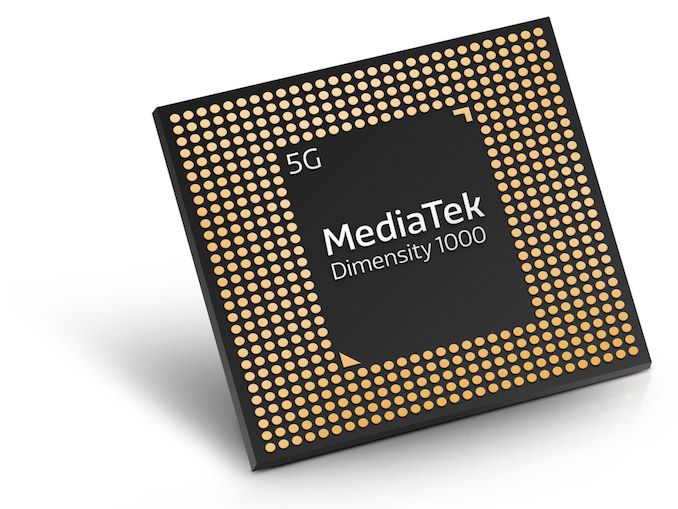
Today MediaTek is announcing the new Dimensity 1000 SoC – the company’s new 5G flagship SoC for 2019 and early 2020. The announcement really isn’t too much of a surprising new reveal, as the “5G SoC” was announced some time ago in May with the company describing its 5G capabilities as well as the inclusion of the new Cortex-A77 and Mali-G77 IPs. What MediaTek does today however is to officially name the new chipset, and go into a few more details on the specifications.


Source: AnandTech – MediaTek Announces Dimensity 1000 SoC: Back To The High-End With 5G

Intel Releases SSD 665p: Second-Gen QLC

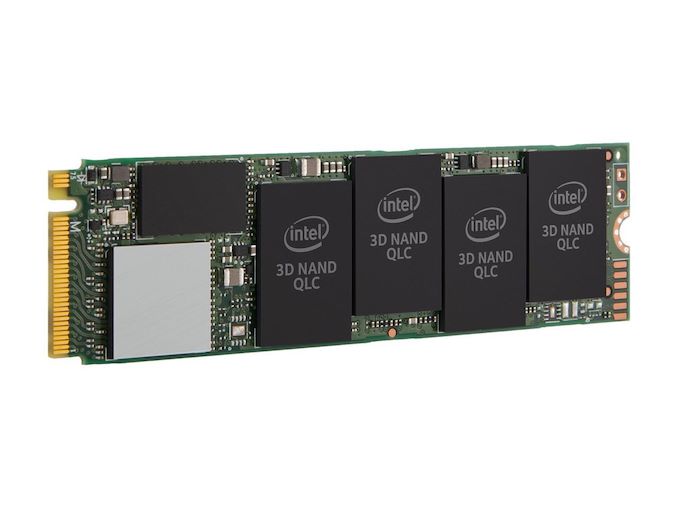
Two months after being announced, the Intel SSD 665p is set to be released today. The 665p is the successor to the 660p, the most (only?) successful consumer SSD based on four bit per cell (QLC) NAND flash memory. The 665p makes minimal changes to the design of the 660p; the most important of which is switching from Intel’s 64-layer 3D QLC NAND to their newer 96-layer 3D QLC NAND.


Intel claims to have the first 96L QLC in production, though Western Digital has already announced they are shipping products using their own 96L QLC (albeit not in internal SSDs yet). It appears that production of Intel’s 96L has not ramped up much yet, because today we are only getting the 1TB SKU of the 665p—the 2TB model won’t be arriving until Q1 of 2020. The 512GB model won’t be happening at all. The 512GB 660p was much more susceptible to the performance downsides of QLC NAND than the larger models, and given the pricing of 512GB-class TLC-based drives, it’s reasonable for QLC product lines to start with a minimum of 1TB.


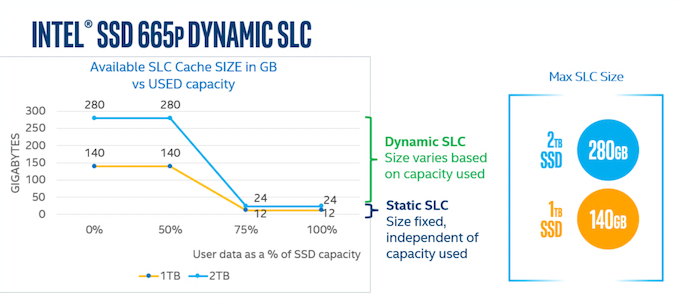
The 665p continues to use the Silicon Motion SM2263 NVMe SSD controller, with a small DRAM cache and a massive variable-size SLC cache:


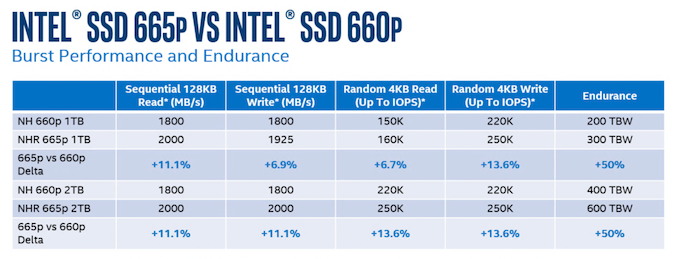
The switch to 96L QLC has enabled minor performance improvements. The basic performance specs have been boosted by up to 13.6%, which isn’t enough to noticeably impact real-world use cases. This is still an entry-level NVMe SSD that could get by just fine with a mere PCIe 3.0 x2 connection even though it supports an x4 link. As usual, these specs are for burst performance where the SLC cache is in use; post-SLC write speeds are still slower than what any vendor wants to put on a spec sheet. When Intel announced the 665p in September, they showed CrystalDiskMark results for the 660p vs the 665p that cast the 665p in a much better light, but their numbers for the 660p were suspiciously low.


Much more important than the performance changes is the write endurance boost the 665p brings compared to the 660p. Both capacities of the 665p have 50% higher rated write endurance than the 660p, bringing them up to about 0.16 drive writes per day (DWPD) from the 660p’s 0.11 DWPD. This is still a lot lower than the 0.3 DWPD that is typical for low-end consumer SSDs that use TLC NAND, but the increase does show that Intel’s feeling more confident in their second generation of QLC.


Looking to the future, Intel’s next step after 96 layers will be to 144 layers. That generation of 3D NAND will be QLC-only at first and will arrive in the second half of 2020. So Intel may end up doing a second refresh of this SSD about a year from now before this product segment is ready to move to PCIe 4.0.


Newegg is currently selling the 1TB 660p for $82.99 as part of their Black Friday sales, making it one of the cheapest SSDs on a per-GB basis, in any form factor, interface or capacity. We’re not expecting the 665p to debut at such a low price, but after the holiday sales are over the 665p will probably overtake the 660p as the most affordable NVMe SSD.


Intel is not sampling the 1TB 665p for review at this time, but we’ve asked for a review sample of the 2TB model when it becomes available.


Related Reading:


Source: AnandTech – Intel Releases SSD 665p: Second-Gen QLC

Intel and MediaTek Announce Partnership To Bring 5G Modems to PCs

Today Intel has announced they’ve entered a partnership with MediaTek with the goal of “development, certification and support of 5G modem solutions” for next generation PC platforms. The announcement comes 5 months after the announcement that Intel is selling off its own modem and division to Apple for $1B.


The partnership with MediaTek clears up Intel’s plans for the future of connectivity on PC platforms, and how the company is planning to go forward with supporting cellular connectivity in the next generations of devices.


“5G is poised to unleash a new level of computing and connectivity that will transform the way we interact with the world. This partnership with MediaTek brings together industry leaders with deep engineering, system integration and connectivity expertise to deliver 5G experiences on the next generation of the world’s best PCs.”


— Gregory Bryant, Intel executive vice president and general manager of the Client Computing


What is surprising about the announcement isn’t that Intel is partnering with an external supplier, but rather that MediaTek has managed to get the design win, rather than the usual suspects such as Qualcomm or Samsung. Under the deal, Intel is said to “define” the 5G solution specification that will be developed and delivered by MediaTek. The wording of the announcement sounds more akin to a semi-custom deal, rather than just MediaTek providing their own product design or part which was on their roadmap. Depending on the specifications and how it diverges from MediaTek’s existing portfolio, the company’s willingness to enter such a deal with Intel might be a reason they won the contract, as maybe Qualcomm and Samsung wouldn’t be that open to such a collaboration.


While MediaTek will be wholly responsible for the design and manufacturing of the modem, Intel will be working on the platform-side integration as well as OS host driver development. Fibocom will also be cooperating with Intel and MediaTek to develop M.2 modules with the new chipset and integrating them with Intel’s client platforms.  


The first products of the partnership are said to be targeting availability in early 2021.


Related News:


Source: AnandTech – Intel and MediaTek Announce Partnership To Bring 5G Modems to PCs

AMD Pre-Announces 64-core Threadripper 3990X: Time To Open Your Wallet

Ever since AMD announced its latest enterprise platform, Rome, and the EPYC 7002 series, one question that high-end desktop users have been wondering is when the 64-core hardware will filter down into more mainstream markets. White today AMD is announcing their Threadripper 3000 platform with 24-core and 32-core processors, the other part of AMD’s announcement today is that yes, they will be selling 64-core hardware to the masses, in the form of the Threadripper 3990X.


Source: AnandTech – AMD Pre-Announces 64-core Threadripper 3990X: Time To Open Your Wallet

The AMD Ryzen Threadripper 3960X and 3970X Review: 24 and 32 Cores on 7nm

One of the constant themes of 2019 has been to ask AMD employees about the future of its Threadripper line of products. Since the start of the year we’ve seen AMD advertise for a new head of workstation products, we’ve seen AMD accidentally use an old roadmap slide which didn’t have Threadripper listed (leading to speculation it was canceled), and during August I was promised that we would hear more this year. Today that time has come, with AMD launching its 3rd Generation Threadripper platform for the high-end desktop market. With two processors and 12+ motherboards available, AMD is going above and beyond the previous definition of high-end desktop.


Source: AnandTech – The AMD Ryzen Threadripper 3960X and 3970X Review: 24 and 32 Cores on 7nm

It’s a Cascade of 14nm CPUs: AnandTech’s Intel Core i9-10980XE Review

The most profitable process node in the history of Intel has been its 14nm process. Since 2014, the company has been pumping out CPUs built on a variety of configurations of its 14nm – slowly optimizing for power and frequency. We used to call these variants 14+ and 14++, but as the next process node isn’t yet ready, rather than draw attention to a soon-to-be 6-year old process, Intel just calls it all ‘14nm class’. The latest launch on 14nm is Intel’s new Cascade Lake-X processors: high-end desktop hardware that gives a slight frequency improvement over Skylake-X from 2017 but it also has the first round of hardware mitigations. Today we’re testing the best CPU of the new list, the Core i9-10980XE.


Source: AnandTech – It’s a Cascade of 14nm CPUs: AnandTech’s Intel Core i9-10980XE Review

Intel Launches Cascade Lake-X Processors: 18-core Review Later Today

Earlier in October, Intel announced that it would be launching its next generation high-end desktop processors in November. That day has come, and Intel expects its hardware to be available worldwide starting today. The new processors are effectively speed bumps of the previous generation Skylake-X Refresh hardware, but with a cunning twist: pricing has been substantially cut in order to compete with other hardware available in the market. Intel’s 18-core processor now has OEM pricing of $979, almost half of the $1900+ value it had in the previous generation. Reviews will be going out today too, but we’re withholding ours for a few hours, for one very special reason.


Today Intel is formally launching four new CPUs, from 18-core down to 10-core, all built on its HCC Xeon silicon but aimed at the high-end desktop market. These CPUs are very much like the previous generation, except for some extra frequency, a handful of extra PCIe lanes, better memory support, some hardware security fixes, and the slashed pricing.


Intel Cascade Lake-X
AnandTech Cores

Threads
Base All

Core
TB2 TB3 TDP Price

(1ku)
Core i9-10980XE 18C / 36T 3.0 3.8 4.6 4.8 165 W $979
Core i9-10940X 14C / 28T 3.3 4.1 4.6 4.8 165 W $784
Core i9-10920X 12C / 24T 3.5 4.3 4.6 4.8 165 W $689
Core i9-10900X 10C / 20T 3.7 4.3 4.5 4.7 165 W $590
Skylake-X (previous generation)
Core i9-9980XE 18C / 36T 3.0   4.5 4.7 165 W $1979
Core i9-9940X 14C / 28C 3.3   4.5   165 W $1387
Core i9-9920X 12C / 24T 3.5   4.5   165 W $1189
Core i9-9900X 10C / 20T 3.5   4.5   165 W $989

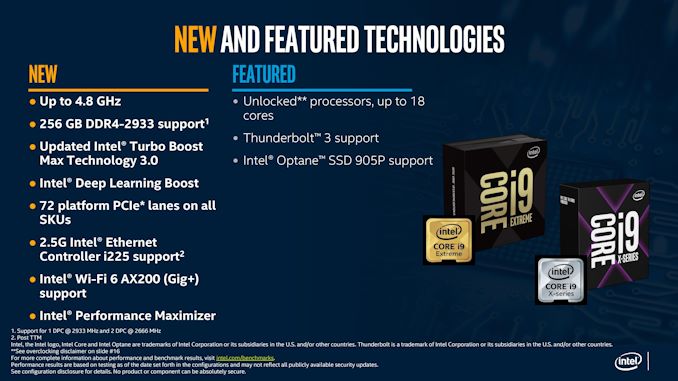
These new CPUs now support up to 256 GB of DDR4-2933 (up from 128 GB of DDR4-2666), and 48 PCIe 3.0 lanes (up from 44). The base frequency of the halo Core i9-10980XE part stays the same, but the turbo values go up +100 MHz as part of a more aggressive binning strategy.


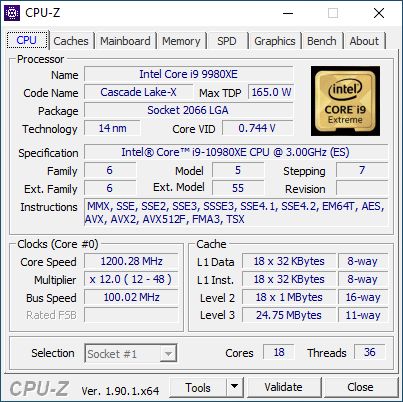
Core i9-10980XE Not Fully Detected in CPU-Z Yet


For security fixes, Intel has now fixed in hardware Spectre/Meltdown variants 2, 3, 3a, 4, and L1TF. This is the same level of hardware protection as the Cascade Lake Xeon Scalable family, now available in the high-end desktop. This hardware does not contain fixes for the recent disclosure of the Zombieload v2 exploit, it should be noted, so that will be patched in firmware in due course.


‘2.5G Ethernet’ and ‘Wi-Fi 6’ support are dependent on additional system controllers;

For some reason despite previous systems also supporting these, Intel felt the need to add them to this slide


Intel is set to push these new processors on several fronts, one of which will be its AVX-512 VNNI support, along with DL Boost support for AI researchers looking to accelerate their CPU codes. Another angle for Intel will be that they offer high-performance hardware with more I/O than AMD in that sub-$1000 range. AMD is also launching its new high-end desktop processors later today, but those start at $1399 as was previously announced, and as a result Intel has that HEDT market under $1000. AMD does have a 16-core processor at $749, with 24 lanes of PCIe 4.0, which means that for users that are not IO limited, there is a lot of choice in that sub-$1000 category.


Reviews for the new Cascade Lake-X processors are set to go live today. We are delaying ours by a few hours, until the embargo for AMD’s new Threadripper processors also lifts. Not only is it odd to have both companies launch their HEDT products on the same day, but originally they were set to launch at the same time – Intel since moved their launch forward a few hours, but we’re going to wait until AMD’s embargo has also been lifted so we can provide graphs with all the CPUs together in their respective reviews.


Please keep this page bookmarked, as we will update here later today with our full review of the Core i9-10980XE.


Source: AnandTech – Intel Launches Cascade Lake-X Processors: 18-core Review Later Today

New NVIDIA GPU Variant Found at Supercomputing 2019: Tesla V100S

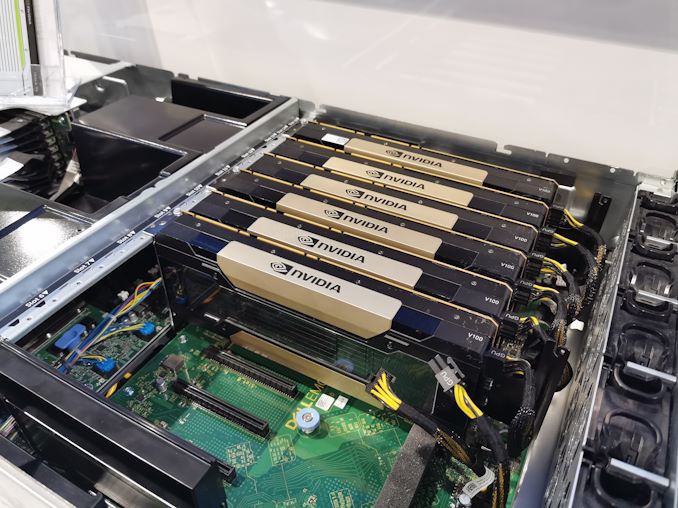
NVIDIA announced a number of things at Supercomputing, such as CUDA on Arm. Despite the show being the major hub event for high-performance computing/supercomputers, it isn’t often the location where NVIDIA launches a GPU. Nonetheless we saw a new model of NVIDIA’s high performance V100 at multiple booths at Supercomputing.


Source: AnandTech – New NVIDIA GPU Variant Found at Supercomputing 2019: Tesla V100S

Biostar Launches M700 SSDs: Entry-Level PCIe SSDs

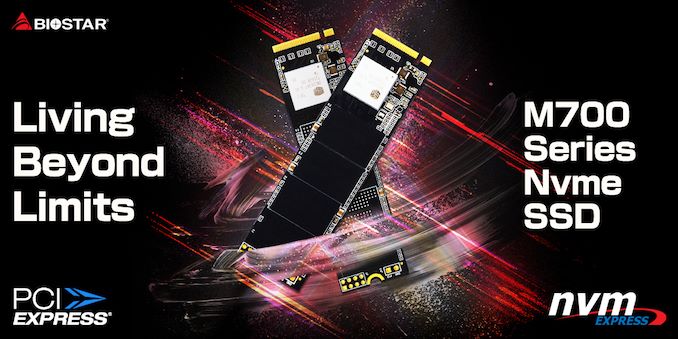
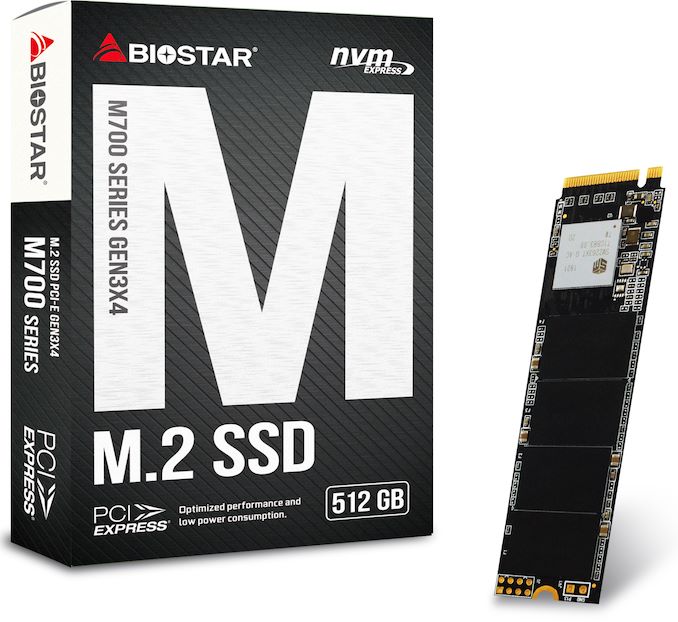
After entering the SSD market a couple of years ago, Biostar has been playing things cautiously, only offering low-cost SATA drives. But as the prices of PCIe SSD controllers and 3D TLC NAND memory continue to drop, it gets possible to build cheap PCIe drives to address the entry-level market with better products. To that end, this week Biostar introduced its M700-series SSDs, its first set of PCIe 3.0 x4 drives.


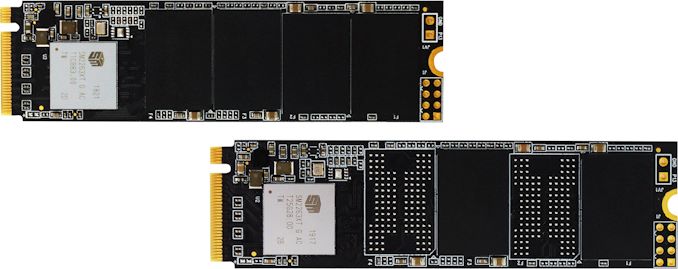
Biostar’s M700 SSDs are based on Silicon Motion’s proven DRAM-less SM2263XT controller, whose value proposition today may sound like a ‘PCIe drive at a price of a SATA SSD’. Targeting entry-level builds, M700 SSDs come with 256 GB or 512 GB of usable 3D TLC NAND flash memory. The drives fully support contemporary SSD feature set like the end-to-end data protection, NVMe 1.3a protocol, L1.2 low power mode, AES256 encryption, and come in an M.2-2280 form-factor without a heat spreader to maintain compatibility with laptops.


As far as performance is concerned, Biostar says that the SSDs are capable of up to 2000 MB/s sequential read speed as well as up to 1600 MB/s sequential write speed (in case of the 512 GB SKU), which is in line with capabilities of the controller and way higher than any SATA SSD. As for random performance numbers, Biostar isn’t listing anything in the official spec sheet, but based on other SM2263XT drives, we’re likely looking at something around ~240K/260K random read/write IOPS here.


General Specifications of Biostar’s M700 SSDs
Capacity 256 GB 512 GB
Model Number M700-256GB M700-512GB
Controller Silicon Motion SM2263XT
NAND Flash 3D TLC NAND
Form-Factor, Interface M.2-2280, PCIe 3.0 x4, NVMe 1.3a
Sequential Read 1850 MB/s 2000 MB/s
Sequential Write 950 MB/s 1600 MB/s
Random Read IOPS ~200K IOPS ~240K IOPS
Random Write IOPS ~260K IOPS ~260K IOPS
Pseudo-SLC Caching Supported
DRAM Buffer No
TCG Opal Encryption No
Power Management L1.2 power mode support for ultra-low power consumption

Idle: 0.2 W

Active: 2 W
Warranty ? years
MTBF 1,500,000 hours (?)
TBW ? ?
Additional Information Link Link
Launch Price ? ?

Biostar will start selling its M700 256 GB and M700 512 GB SSDs in the near future. The company does not reveal official MSRPs, but expect these to hit the market at a price similar to other entry-level SSDs.


Related Reading:


Source: Biostar


Source: AnandTech – Biostar Launches M700 SSDs: Entry-Level PCIe SSDs

Apple Joins Intel in New Antitrust Suit Against SoftBank-Controlled Fortress

Apple and Intel this week filed a new lawsuit against Fortress Investment Group, a patent assertion entity controlled by SoftBank, in response to patent infringement lawsuits brought by the firm against the two technology giants in recent years. The companies are accusing Fortress of anticompetitive stockpiling of patents in a bid to enforce them, and have asked the court to ‘remedy the harms that they had already suffered’ from Fortress and unravel Fortress’s operations.


Intel already filed a lawsuit against Fortress in the U.S. District Court for the Northern District of California back in October. In that lawsuit, Intel contested the legality of Fortress’s massive patent aggregation business through a network of patent assertion entities (PAEs) in a bid to license them (usually in packages) to Intel and other high-tech companies. In particular, Intel said that it had to license patents originally owned by NXP Semiconductors after the latter were acquired by Fortress. That lawsuit has since been withdrawn, and replaced with the new lawsuit from Intel and Apple.


The new lawsuit filed by the two companies in the same court makes the same accusations, but mentions a different set of patents, which includes patents originally issued to companies like Philips, Huawei, Panasonic, Seven Networks, and Nokia. Apple claims that so far PAEs associated with Fortress have filed 25 lawsuits against the company demanding $2.6 – $5.1 billion in damages. Meanwhile, the plaintiffs note, just one of Fortress’s PAEs — Uniloc — has been a plaintiff in more than 130 patent infringement cases since February 2013, so the scale of operations appears to be gargantuan.


Intel and Apple claim that Fortress’s patent aggregation business violates Section 1 of the Sherman Antitrust Act, Section 7 of the Clayton Act (an antitrust law covering unethical business practices), and California Business Provision Code § 17200 (an unfair competition law). To that end, the plaintiffs ask the court to declare the business practices as unlawful, return royalties that Apple and Intel have paid to the defendant (and its entities), transfer all of the claimed patents back to the transferors, declare those patents unenforceable, and award to Intel and Apple their expenses associated with the lawsuit.


Teaming up with Apple against the patent trolls is a logical, yet a relatively unexpected move from Intel. Overall, the chip giant is leading a legal war against Fortress and the more allies it can get the better. Meanwhile, there are some hitches. Fortress is controlled by SoftBank, a Japanese conglomerate which owns Arm. Meanwhile, Intel competes against Arm, whereas Apple uses Arm’s architecture in its SoCs, which makes the coalition look rather odd. On the other hand, the patents mentioned mainly cover telecommunication technologies, a sphere where Intel and Apple have interests, but not going to compete against each other.


Intel’s and Apple’s prayer for relief (for the Intel Corporation et al v. Fortress Investment Group LLC et al, case number 3:2019cv07651) reads as follows:


a) That Defendants’ unlawful conduct be declared a violation of Section 1 of the Sherman Act, 15 U.S.C. § 1; Section 7 of the Clayton Act, 15 U.S.C. § 18; and Cal. Bus. Prov. Code § 17200, et seq.;


b) That Intel and Apple recover damages against Defendants in an amount to be determined and multiplied to the extent provided by law, including under Section 4 of the Clayton Act;


c) That all contracts or agreements Defendants entered into in violation of the Sherman Act, Clayton Act, or Cal. Bus. Prov. Code § 17200, et seq. be declared void and the patents covered by those transfer agreements be transferred back to the transferors;


d) That all patents transferred to Defendants in violation of the Sherman Act, Clayton Act, or Cal. Bus. Prov. Code § 17200, et seq. be declared unenforceable;


e) Award to Intel and Apple their costs and expenses associated with this case, together with interest; and


f) Grant such other and further relief as the Court may deem just and proper under the circumstances.


Related Reading:


Sources: Reuters, USCourts.gov

Image Source: Quince Media via Wikimedia Commons


Source: AnandTech – Apple Joins Intel in New Antitrust Suit Against SoftBank-Controlled Fortress

Acer Launches Six Chrome Enterprise PCs: Notebooks, Convertibles, Desktops

Acer on Thursday introduced its Chrome Enterprise portfolio, which includes six PC models, one of the broadest in the industry. Acer’s Chrome Enterprise family includes laptops, convertibles, and desktops, all supporting security, management, and deployment features required by businesses.


Acer’s Chrome Enterprise computers are equipped with Google’s H1 secure microcontroller that enables verified boot, multi-layer security capabilities, battery cutoff, guaranteed reset, and closed case debugging. Meanwhile, Chrome Enterprise-powered machines also feature antivirus protection, sandboxing, guaranteed updates, and remote management/fleet control capabilities (via Google Admin) among other things. Besides, Google provides a 24/7 IT admit support for administrators of Chrome Enterprise computers.


At this time, Acer is not disclosing the exact specifications of its business-grade Chrome PCs, and instead has only detailed their key features and designs. One thing to note here is that instead of developing Chrome Enterprise systems from scratch, Acer took some of their existing designs and enhanced them with appropriate software and hardware.


The Chromebook Enterprise 13


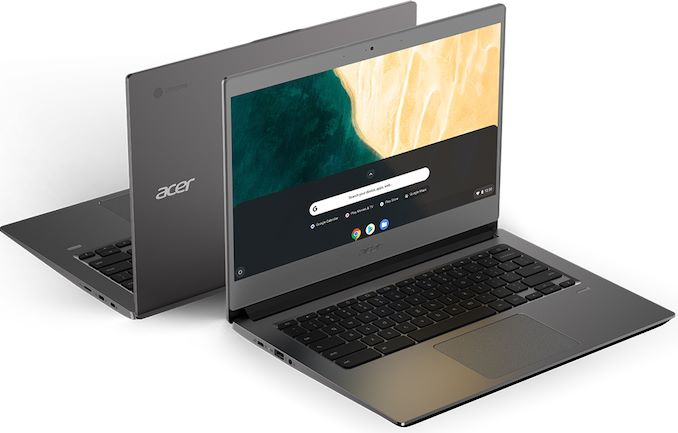
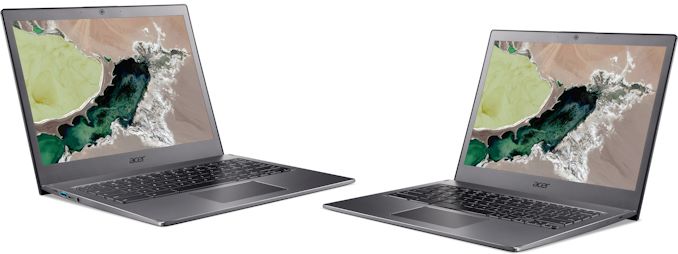
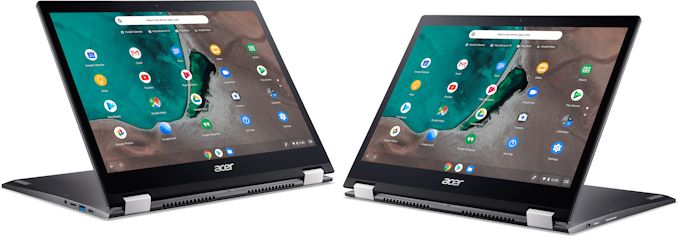
Starting things off is the Chromebook Enterprise 13, which also happens to be in various consumer versions as well. The laptop comes in a slim aluminum chassis, has a 13.5-inch IPS display of a 2256×1504 resolution with a 3:2 aspect ratio, and packs Intel’s 8th Generation Core processors with up to 8 GB of LPDDR3 memory as well as up to 32 GB of soldered-down solid-state storage. Like most modern mobile PCs, this one has Wi-Fi, Bluetooth, USB Type-A & Type-C, a micro-SD card slot, a 3.5-mm headset jack, and a webcam with IR sensors.


The Chromebook Enterprise Spin 13


The convertible Chromebook Enterprise Spin 13 is very similar to its non-convertible peer (consumer models are also available), but it naturally has 360-degree hinges, a touch-enabled 13.5-inch display, as well as an embedded stylus. The machine uses Intel’s 8th Generation Core CPUs, LPDDR3 memory, and solid-state storage.


The Chromebook Enterprise 714


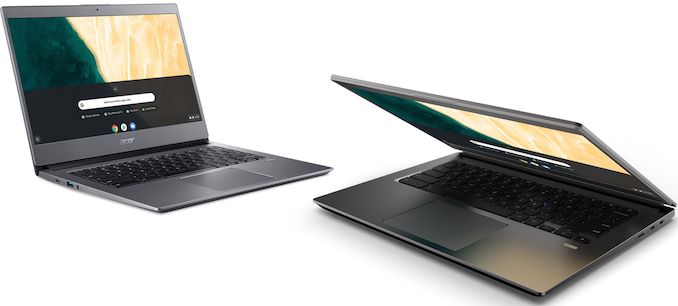
Time to talk about higher-end mobile systems starting from the Chromebook Enterprise 714 (consumer SKUs are available). Being a premium laptop, this one comes in a metallic chassis and, as the name suggests, has a 14-inch Full-HD IPS panel display with thin bezels. Inside, there is a familiar 8th Generation Core CPU with DDR4 RAM and NAND flash storage. As for connectivity, the system has Wi-Fi 6 as well as Bluetooth 4.2 on the wireless side of things, whereas its wired department includes GbE (with a dongle), USB Type-A, USB Type-C, microSD, and a 3.5-mm headset connector. Due to the fact that this is a fairly large system, it packs a higher-capacity battery that is rated for up to 12 hours of battery life.


The Chromebook Enterprise 715


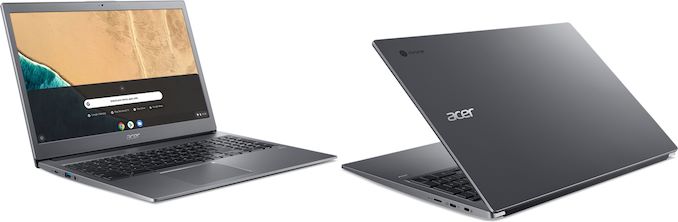
Being the only machine in the family that does not have consumer analogues (at least, not on the US), the Chromebook Enterprise 715 comes with a 15-inch display, a keyboard with a numpad, and presumably a high-capacity battery. Other than that, the laptop is indistinctive from its smaller 14-inch counterpart, so expect Intel’s 8th Generation Core processor with DDR4 memory and solid-state storage.


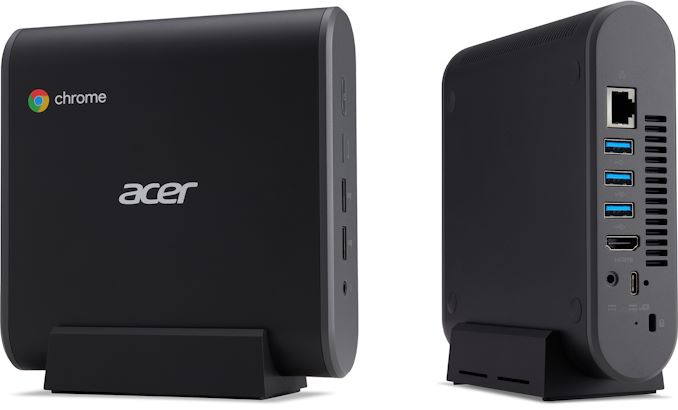
The Chromebox Enterprise CX13


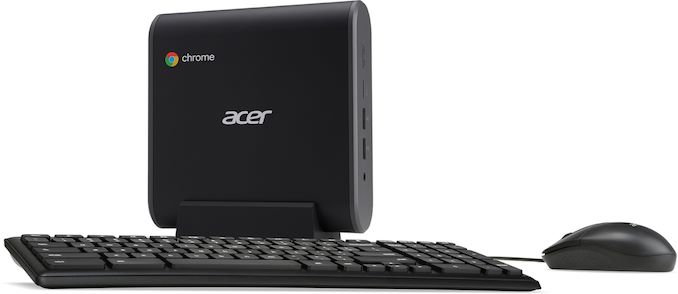
The Chromebox Enterprise CX13 is a revamped version of the Chromebox CX13 launched earlier this year that now features Chrome OS with Chrome Enterprise Upgrade. Based on one of Intel’s 8th Generation Core processor paired with DDR4 RAM and an SSD, the CX13 has a host of ports required by a desktop computer, including GbE, USB 3.0 Type-A, USB 3.0 Type-C, HDMI, microSD, and a 3.5-mm audio jack.


Officially, Acer calls the Chromebox Enterprise CX13 a media player, implying on its capabilities in the digital signage and embedded spaces. Meanwhile, the system ships with a keyboard and a mouse, so it will work perfectly as an ultra-compact form-factor desktop PC.


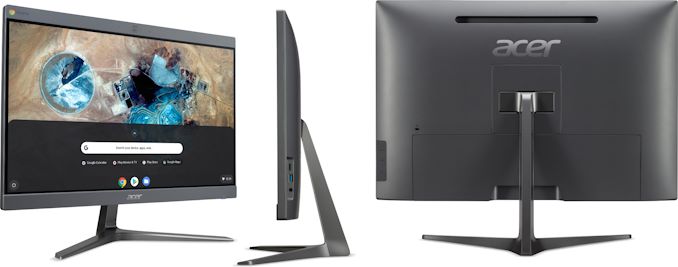
The Chromebase Enterprise CA2412


The all-in-one Chromebase Enterprise CA2412 was also not developed from scratch and there is a version without enterprise features. The AIO PC itself comes in a premium-looking chassis, has a webcam with IR sensors, and plenty of I/O ports one expects from a modern desktop. Inside this 24-inch Full-HD AIO machine is Intel’s 8th Generation Core processor accompanied by up to 8 GB of DDR4 memory and an SSD.

Availability


Google’s Chrome Enterprise computers will start to become available this month and will roll out in the near future depending on the region. Pricing will depend on exact configurations and other factors.


Related Reading:


Source: Acer


Source: AnandTech – Acer Launches Six Chrome Enterprise PCs: Notebooks, Convertibles, Desktops

Colorful Unveils CVN X570M Gaming Pro Micro-ATX Motherboard

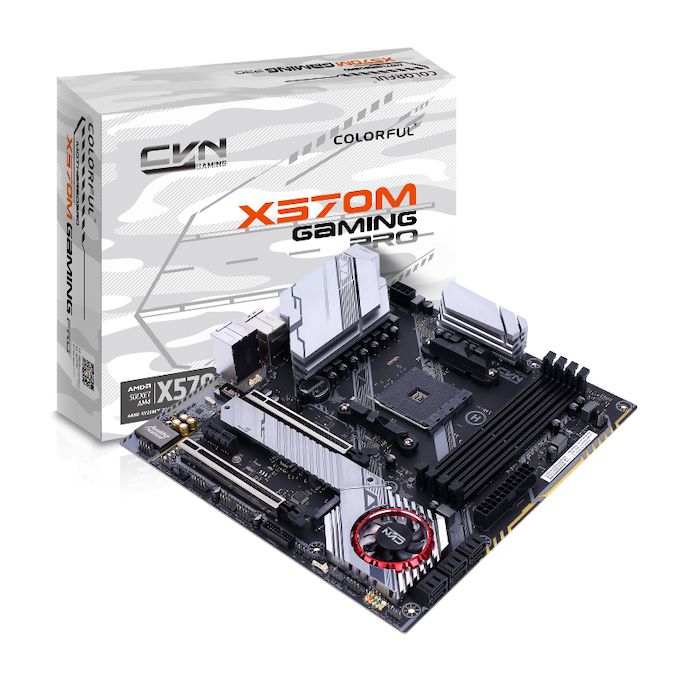
With all the attention turned to AMD and its platforms for the impending Ryzen Threadripper 3000 processor launch, Colorful has announced its latest micro-ATX motherboard for the X570 chipset, the Colorful CVN X570M motherboard. Building on its CVN X570 Gaming Pro V14 ATX model, it uses a similar feature set, but with a smaller footprint with its micro-ATX frame. Its design revolves around the CVN class of aircraft carriers, looking to fly gamers into the battle that use AMD’s Ryzen 3000 processors.


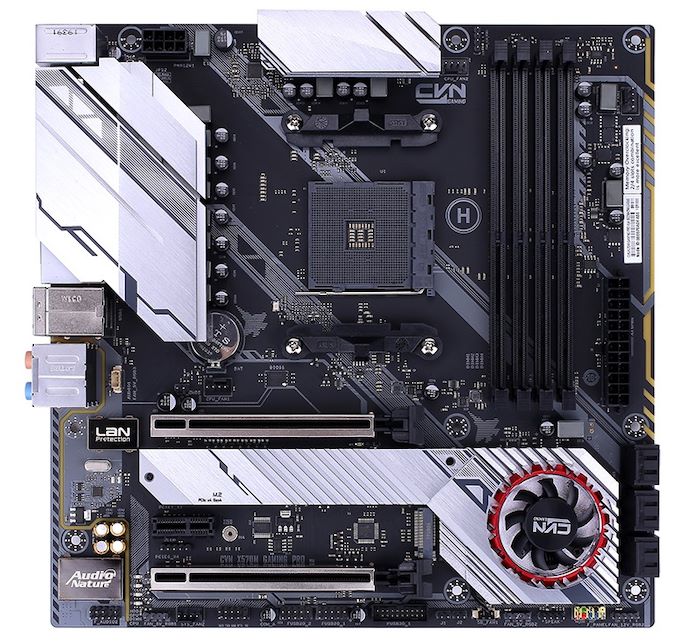
While Colorful hasn’t officially launched a detailed list of specifications, we do know that the CVN X570M Gaming Pro has two full-length PCIe 4.0 slots which are likely to run at x16 and x16+x4 or x16+x8, with two PCIe 4.0 x4 M.2 slots. The X570 chipset heatsink includes active cooling, while the power delivery is cooled by a pair of two-tone silver heatsinks, with one doubling up as the board’s rear panel cover. Providing power to the CPU is a single 8-pin 12 V ATX power input, while a standard 24-pin ATX 12 V ATX input delivers power to the rest of the board. The Colorful CVN X570M Gaming Pro has six SATA ports which support RAID 0, 1, and 10 arrays, while the board also includes four memory slots with support for DDR4 memory.


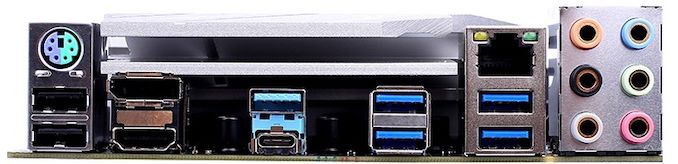
On the rear panel is one USB 3.1 G2 Type-C, a single USB 3.1 G2 Type-A, four USB 3.1 G1 Type-A, and two USB 2.0 ports. While it’s hard to determine the full USB specifications, this is likely the configuration on the Colorful CVN X570M Gaming Pro. Taking care of the six 3.5 mm audio jack is a Realtek audio codec, likely ALC892 judging by the lack of an S/PDIF optical output, while an HDMI and DisplayPort pair of video outputs allow this model to be used with compatible Ryzen APUs. Also featured is a single PS/2 combo port, while the single Ethernet port is powered by a Realtek RTL8111H Gigabit controller.


At the moment, there is no information about the price or availability for the Colorful CVN X570M Gaming Pro, but it is expected to sit towards the bottom of the X570 product stack in terms of pricing. It’s unique in its militaristic CVN aircraft design, but if availability is similar to the Colorful CVN X570 Gaming Pro V14, it might not filter into retail channels in the US and EU as quickly as anticipated, if at all.


Related Reading


Source: AnandTech – Colorful Unveils CVN X570M Gaming Pro Micro-ATX Motherboard

GIGABYTE Aorus RTX 2080 Ti Gaming Box: Liquid-Cooled TB3 eGFX Box

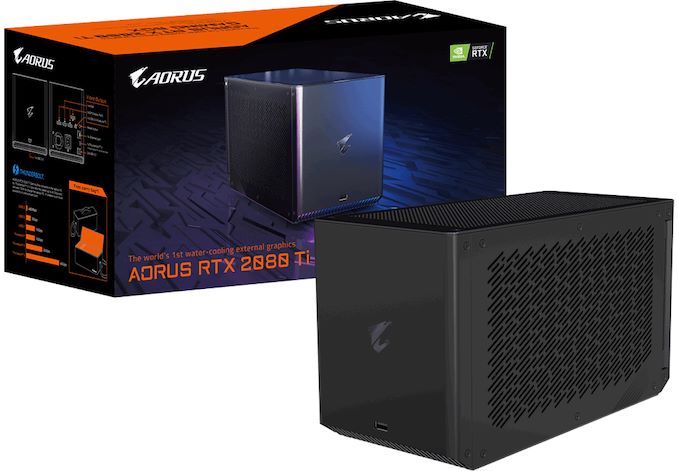
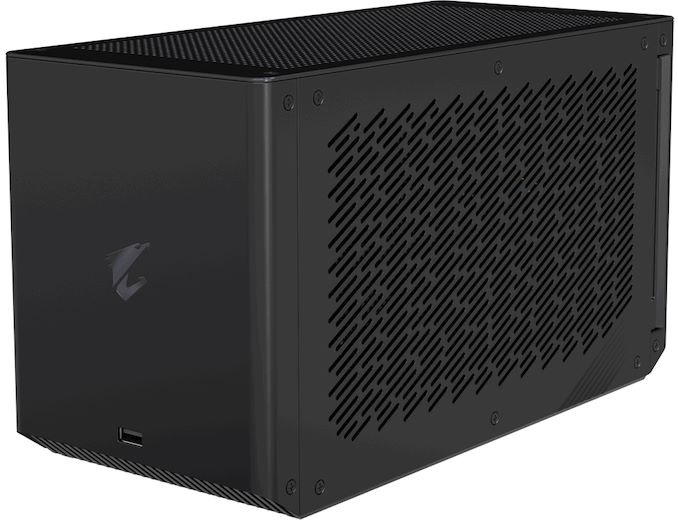
GIGABYTE has introduced a new Thunderbolt 3 eGFX box that promises to be one of the most powerful eGPUs on the market. The Aorus RTX 2080 Ti Gaming Box packs NVIDIA’s GeForce RTX 2080 Ti graphics card equipped with a closed-loop WaterForce liquid cooling system that is designed to maximize its overclocking potential.


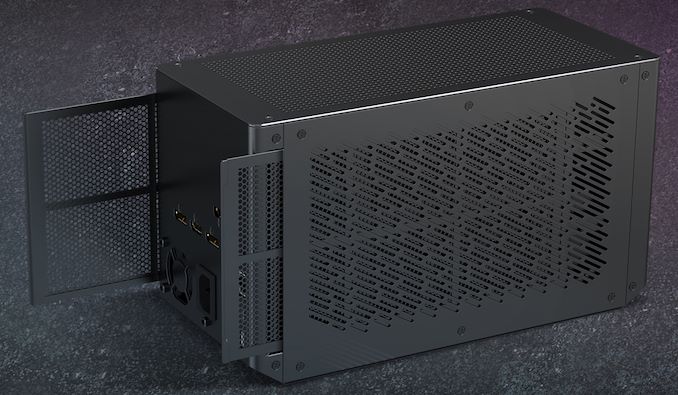
GIGABYTE’s Aorus RTX 2080 Ti Gaming Box carries fairly typical GeForce RTX 2080 Ti video card, with the clocks running at NVIDIA’s reference speeds. Instead, focusing on end-user overclocking, the Aorus RTX 2080 Ti Gaming Box uses a custom closed-loop WaterForce liquid cooling system that the graphics processor, VRM, and RAM. I will not hazard a guess about overclocking potential of a graphics board in a small box with a liquid cooler, but it’s certainly a dense cooling operation.


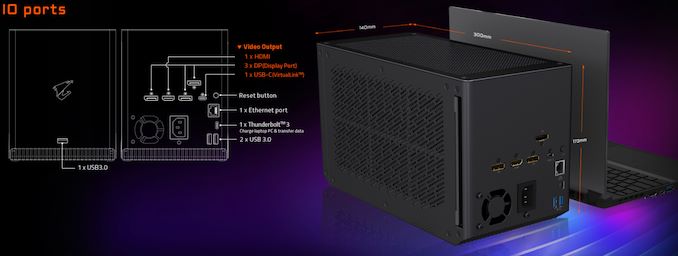
Just like regular GeForce RTX 2080 Ti cards, the Gaming Box has three DisplayPort 1.4 outputs, one HDMI 2.0b port, and one VirtualLink (USB-C) output that provide compatibility with all modern desktops and the latest VR headsets. Further, the Gaming Box has a triple-port USB 3.0 hub and an GbE port. As an added bonus, the eGFX solution has, as does practically everything else these days, addressable RGB lighting.


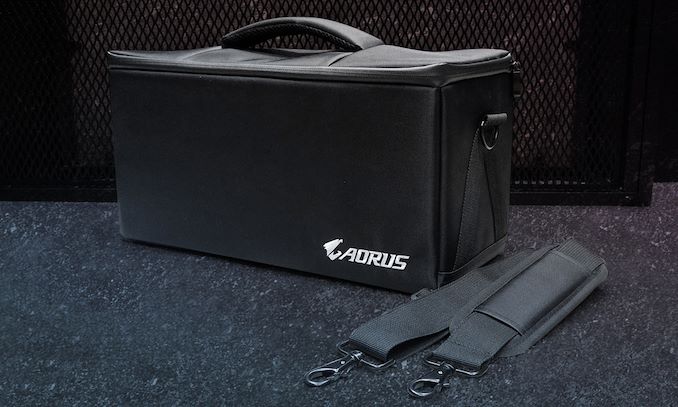
Measuring 300×173×140 mm, the Aorus RTX 2080 Ti Gaming Box resembles a Mini-ITX PC, though very few of the latter can pack so much graphics and compute performance into this small of a space. Taking full advantage of the size and intending for their Gaming Box to be more than just a home docking solution, GIGABYTE ships the 3.8-kilogram eGPU with a special carry on bag.


For a unique graphics solution that will highly likely be a low volume product, the Aorus RTX 2080 Ti Gaming Box seems to be priced rather reasonably. GIGABYTE’s MSRP of the device is $1,499, which is consistent or slightly better than BYO eGFX solutions after factoring in the 2080 Ti and the liquid cooling system.


Related Reading:


Source: GIGABYTE


Source: AnandTech – GIGABYTE Aorus RTX 2080 Ti Gaming Box: Liquid-Cooled TB3 eGFX Box

Philips Unveils Brilliance 439P9H SuperWide 32:10 Curved Prosumer Monitor

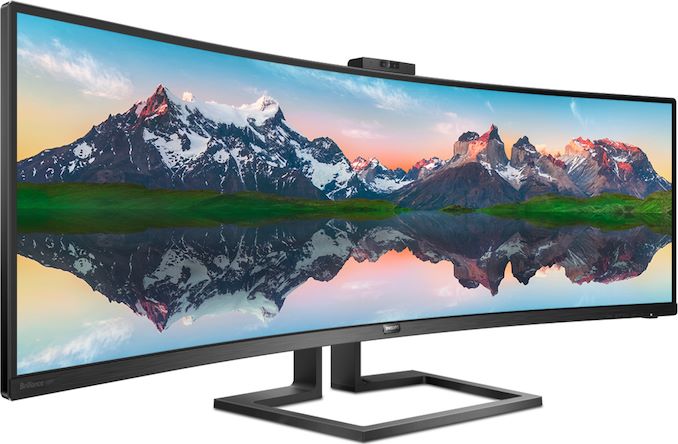
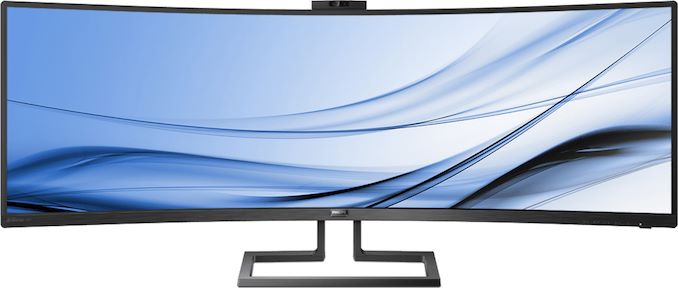
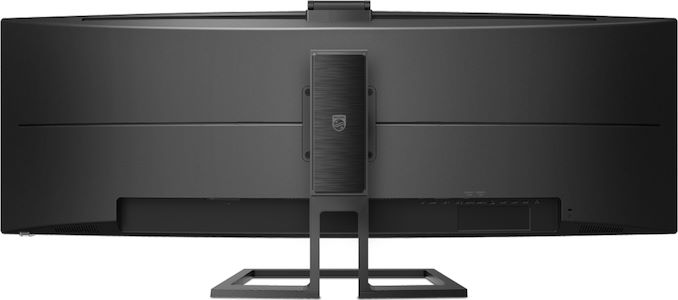
Philips this week announced a new ultra-wide display aimed at prosumers. The curved Brilliance 439P9H brings together a large 32:10 aspect ratio panel with USB Type-C docking capabilities, an integrated KVM switch, a wide color gamut, factory calibration, and more. And while the monitor is not aimed at color-critical workloads, many users who need accurate colors may actually consider it.

The Philips Brilliance 439P9H uses a curved VA panel featuring a 1.8-meter radius curvature, and a 3840×1200 resolution. Other characteristics of the LCD include a max brightness of 450 nits, a 3000:1 contrast ratio, 178º/178º vertical/horizontal viewing angles, a 4 ms GtG contrast ratio, and up to a 100 Hz refresh rate. The display can reproduce 123% of the sRGB, 95% of the DCI-P3, 91% of the AdobeRGB, and 105% of the NTSC color spaces. Furthermore, it comes factory calibrated to a Delta<2 accuracy in case of the sRGB color gamut.


The Brilliance 439P9H has a rather interesting positioning. Being a P-line monitor, it is aimed at professionals and prosumers, which is why it has a built-in KVM switch to appeal to those who are going to use the display instead of two smaller LCDs with two PCs. It also offers a pop-up 2 MP webcam with IR sensors for Windows Hello, USB-C docking with up to 90 W power delivery, a GbE port, built-in speakers, and a USB 3.0 hub. On the other hand, VESA DisplayHDR 400 certification and Adaptive-Sync support will certainly please gamers. Given the intersection of features, Philips clearly wants to address a rather wide audience of prosumers with its 439P9H, yet not exactly professionals with color-critical workloads or demanding gamers with a need for an ultra-high refresh rate.


Given the nature of the Brilliance 439P9H, it is not surprising that Philips equipped it with a host of ports, including two DisplayPort 1.4 inputs, one HDMI 2.0b ports, and one USB 3.2 Gen 1 Type-C (with DP Alt Mode and 90 W PD) inputs. Furthermore, it also has a quad-port USB 3.0 hub (with two downstream ports), a GbE port, and a headphone output.


One indisputable advantage of the Brilliance 439P9H is its stand that can adjust height, swivel, and tilt. Typically, ultra-large displays come with basic stands that can only regulate tilt, so the Brilliance 439P9H stands out of the crowd.


Philips ‘SuperWide’ 43″ Display
  Brilliance 439P9H
Panel 43″ VA
Native Resolution 3840 × 1200
Maximum Refresh Rate 100 Hz
Response Time 4 ms
Brightness up to 450 cd/m²
Contrast up to 3000:1
Backlighting W-LED
Viewing Angles 178°/178° horizontal/vertical
Curvature 1800R
Aspect Ratio 32:10 (3.2:1)
Color Gamut sRGB: 123%

DCI-P3: 95%

AdobeRGB: 91%

NTSC: 105%
Dynamic Refresh Rate Tech Adaptive-Sync
Pixel Pitch 0.2715 mm²
Pixel Density 93 PPI
Inputs 2 × DisplayPort 1.4

2 × HDMI 2.0
Audio 3.5 mm output
USB Hub 4 × USB 3.0 Type-A connectors (with two downstream port)
Ethernet 1 GbE port
Webcam 2 MP with IR sensors
Stand Height: 130 mm

Swivel: -/+ 20 degree

Tilt: -5~10 degree
MSRP £879/$950 (preliminary)

The monitor is being first released in the UK for £879. Which will likely translate into an MSRP of around $950 in the US.


Related Reading:


Source: Philips


Source: AnandTech – Philips Unveils Brilliance 439P9H SuperWide 32:10 Curved Prosumer Monitor

Oculus Link Software Available: Oculus Quest Can Now Tether to PCs

Oculus VR this week started to distribute its Oculus Link software, enabling owners of the standalone Oculus Quest VR headsets to connect them to gaming PCs and play games originally developed with the Rift and Rift S in mind. For now, VR gamers will have to use a quality third-party USB 3.2 Gen 1 Type-C cable, but later on the company promises to release its own long cable.


From now, a beta version of the Oculus Link application for Oculus Quest is available from Oculus VR as a part of the Gear VR Build 11.0 software update. To connect the Oculus Quest to a PC, one needs a high-quality USB 3.2 Gen 1 Type-C cable, though since most USB 3.x cables are around 1.5 meters long, you’ll want to track down a longer specialty cable. Otherwise, Oculus promises to release a five-meter long USB-C cable in the near future to provide more freedom. Meanwhile, PC users will want to pay particular note to the fact that only NVIDIA cards are supported with the Link software at this time; Oculus will be adding AMD support at a later date.


The Oculus Quest is a standalone VR HMD featuring a display of a 3200×1440 (1600×1440 per eye) and powered by the Qualcomm Snapdragon 835 application processor. The device comes with Touch controllers bundled with the original Rift, yet relies on its inside-out 6-degree-of-freedom (6DoF) positional and controller tracking that does not require any external sensors.


In theory, making Oculus Rift games available to owners of the Oculus Quest and a compliant PC is a big deal for Oculus VR as it expands total available market of VR PC games and therefore strengthens the entire platform. This clearly does not hurt in the light of the fact that the Half-Life: Alyx game is coming and many fans of the series will have to use a VR headset to enjoy it. Meanwhile, it remains to be seen how good the actual PC gaming experience offered by the Oculus Quest will be provided that it has a higher-resolution display (when compared to both Rift and Rift S) and uses a different tracking system.


Related Reading:


Source: Oculus VR


Source: AnandTech – Oculus Link Software Available: Oculus Quest Can Now Tether to PCs

SK Hynix Sampling 128-layer 3D NAND SSDs

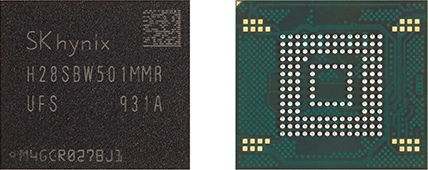
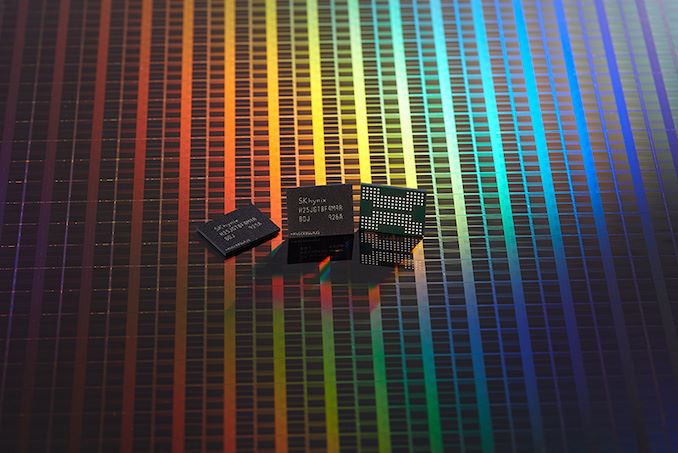
SK Hynix announced this week that they have started sampling products based on their 128-layer 3D NAND flash memory, which will soon start showing up in end-user devices. A year ago, they launched their 96-layer 5th generation 3D NAND, but low prices prompted them to cut output and their 4th generation 72L 3D NAND is still their main flash product. SK Hynix announced back in June that their 128L 3D NAND had moved from development to mass production, and now it has been incorporated into SSDs and UFS modules that are sampling to major customers.


The 96L generation represented a major technological advance for SK Hynix, with a switch to a denser “peripheral under cell” structure and a big jump in per-die IO speeds. The peripheral under cell structure is a significant enough change that SK Hynix used it as justification for branding their flash as “4D NAND”, but Intel and Micron have been doing pretty much the same thing since their first generation of 3D NAND. The 128L generation from SK Hynix promises a further speed increment from 1.2GT/s to 1.4GT/s (though this may not be achieved in the first round of products due to lagging controller support), and debuts with an industry-leading 1Tb (128GB) capacity TLC die. In the near term, SK Hynix plans to introduce the new generation of 3D NAND into market segments with the highest margins, while their more mature 72 and 96-layer processes stick around for the more cost-sensitive products.


1TB UFS 3.1 for smartphones


Using eight of those 128L 1Tb TLC dies, SK Hynix has developed a 1TB USF 3.1 module that is just 1mm thick. They expect smartphones using this storage to be in mass production in the second half of 2020.


2TB Client NVMe SSD


In the client SSD market, OEMs are now qualifying SK Hynix’s latest generation M.2 NVMe SSDs with capacities of up to 2TB and power draw of around 3W, compared to 6W for their previous generation SSDs that use 96L TLC. SK Hynix expects these SSDs to start showing up in notebooks in the first half of 2020. SK Hynix’s NVMe SSD controller is still using PCIe 3.0 instead of PCIe 4.0, unsurprising given their focus on mainstream market segments and power efficiency. This SSD is described as operating the flash with a 1.2GT/s interface running at 1.2V, so either SK Hynix’s chips aren’t actually ready to run at 1.4GT/s as planned, or they backed off a bit to save power.


16TB Enterprise EDSFF E1.L SSD


The 128L 3D NAND will take a bit longer to work its way into the enterprise storage market. SK Hynix is planning to offer capacities of up to 16TB in the EDSFF E1.L form factor; mass production of these drives is planned for the second half of 2020. As with the client NVMe SSDs, SK Hynix is still using PCIe 3.0 instead of PCIe 4.0, but they plan to deliver support for the latest NVMe 1.4 protocol. The enterprise SSD market is a particular area of focus for SK Hynix. The arrival and cost-effectiveness of their 72-layer enterprise SSDs helped them increase market share to 10.3% for Q2 of this year compared to just 1.8% the year before, and they hope to keep the momentum going.


All of the above-mentioned products use SK Hynix controllers in addition to SK Hynix memory (NAND and DRAM). They are one of just three companies capable of this degree of vertical integration, and for years Samsung has been showing just how powerful that strategy can be. SK Hynix has been held back by poor execution for their first several generations of 3D NAND, but lately they seem to have been catching up. We recently tested their consumer SATA drive and found its performance to be adequate and the power efficiency to be quite good; we also have some enterprise drives on the way from SK Hynix to see how they are doing in that market.


Related Reading:


Source: AnandTech – SK Hynix Sampling 128-layer 3D NAND SSDs

AMD Clarifies "Best Cores" vs "Preferred Cores" Discrepancies For Ryzen CPUs

Over the last several weeks there’s been increasing discussions in the AMD enthusiast community about how the company’s new Ryzen 3000 processors interact with Windows, and in particular on how the new CPUs’ boost behaviour behaves in relation to a discrepancy between what tools such as Ryzen Master showcase as the best CPU cores, and what operating systems such as Windows interpret as being the best CPU cores. Today AMD is officially commenting on the situation and why it arises, whilst also describing what they’re doing to remedy the discrepancies in the data.


Source: AnandTech – AMD Clarifies “Best Cores” vs “Preferred Cores” Discrepancies For Ryzen CPUs