Amazon, Apple, Google, Zigbee Alliance to Develop Connectivity Standard for Smart Home

Smart home devices have been around for many years, but have never become very widespread to a large degree. One of the reasons for this is likely the incompatibility between different wireless interconnection standards and technologies, limiting widespread adoption. Things are set to change, as several leading high-tech companies from the US have agreed to develop a royalty-free connectivity standard for smart home devices. The new technology will put an end to the standards war in the smart home space, and will make devices more attractive eventually.


Nowadays, smart home hardware uses various communication protocols, including Wi-Fi, Zigbee, and Z-Wave. The devices are also controlled using different apps and voice services. Usage of incompatible technologies greatly slows down their adoption by end users as well as the development of infrastructure. This week Amazon, Apple, Google, IKEA, Legrand, NXP Semiconductors, Resideo, Samsung SmartThings, Schneider Electric, Signify (formerly Philips Lighting), Silicon Labs, Somfy, and Wulian joined forces to form the Connected Home over IP framework.


The new standard is designed to facilitate communication between smart home devices, apps, cloud services, and to outline a set of IP-based networking protocols for hardware certification. Ultimately, this will simplify development of smart home devices for manufacturers, and improve compatibility for consumers.


The Connected Home over IP project will have multiple layers. On the hardware side of things, the companies will work on a unified open-source interconnection protocol using contributions from market-tested technologies. This protocol is not supposed to eliminate the existing ones, but complement them, which will allow owners of existing devices to add new hardware to their homes without problems.


On the software and services side of matters, the companies will work to ensure that all devices are supported by cloud and voice services, including Amazon’s Alexa, Apple’s Siri, Google’s Assistant, and others. Essentially, this may mean that smart home devices will have to support the same control protocol (which will be complementing existing protocols).


The Connected Home over IP project is in an early stage of development, and it remains to be seen when the first devices supporting the new standard will be emerging in the market. 


Related Reading:


Source: Press Release


Source: AnandTech – Amazon, Apple, Google, Zigbee Alliance to Develop Connectivity Standard for Smart Home
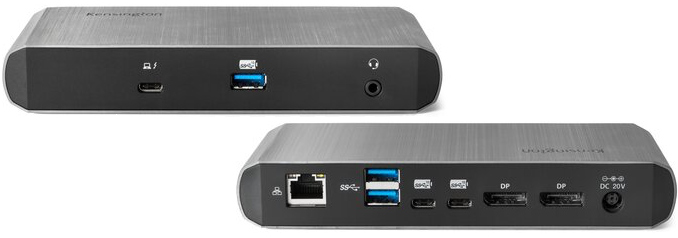
Kensington’s SD5500T TB3/USB-C Hybrid Docking Station: Titan Ridge Inside

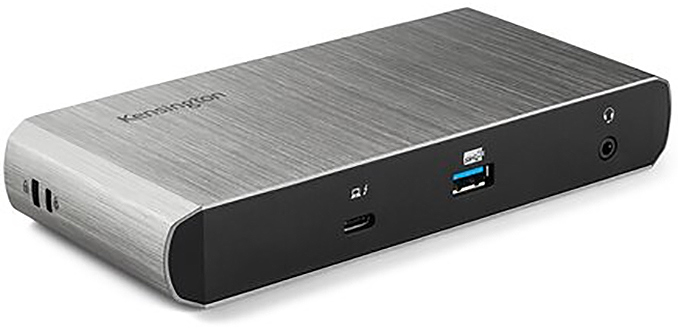
Kensington has introduced its new Thunderbolt 3 dock that is guaranteed to work with all USB Type-C hosts. The SD5500T docking station has nine popular ports, which woukd be sufficient for most home and office users who do not use exotic hardware.


Most of Thunderbolt 3 docks released to date are based on Intel’s Alpine Ridge controller that may not work with all USB Type-C hosts. By contrast, the SD5500T TB3/USB-C hybrid docking station (and some other docks) is powered by Intel’s Titan Ridge controller that was designed to work both with all Thunderbolt 3, and all USB Type-C hosts (albeit at respective data transfer rates). In addition, Kensington’s SD5500T is compatible both with Apple macOS 10.14 (and higher) and Microsoft Windows 10 PCs.


Kensington’s SD5500T Thunderbolt 3/USB-C hybrid dock has three USB 3.1 Gen 2 Type-A ports, two USB 3.1 Gen 2 Type-C connectors (in addition to the main TB3/USB-C connector), a GbE adapter, two DisplayPort outputs (supporting two 4Kp60 monitors), and a 3.5-mm audio jack for headsets. Meanwhile, the main connector can deliver up to 60 W to the host, which is enough for 13.3-inch notebooks.


Kensington’s SD5500T TB3/USB-C hybrid docking station is now available directly from the company for $259.99. The price is on the high side, however considering the fact that the manufacturer guarantees broad compatibility with a wide range of PCs, it makes sense for companies with large fleets of PCs as well as individuals who want to ensure seamless operation with various PCs.


Related Reading:


Source: Kensington


Source: AnandTech – Kensington’s SD5500T TB3/USB-C Hybrid Docking Station: Titan Ridge Inside

The ADATA XPG SX6000 Pro 1TB SSD Review: Realtek's Entry-level NVMe Solution

Realtek’s second-generation NVMe SSD controllers are ready for prime time, and ADATA decided to try them out. The XPG SX6000 Pro is an entry-level DRAMless NVMe SSD with competitive performance, but the power efficiency needs to improve.


Source: AnandTech – The ADATA XPG SX6000 Pro 1TB SSD Review: Realtek’s Entry-level NVMe Solution

Samsung Kicks Off Mass Production of AI Chip for Baidu: 260 TOPS at 150 W

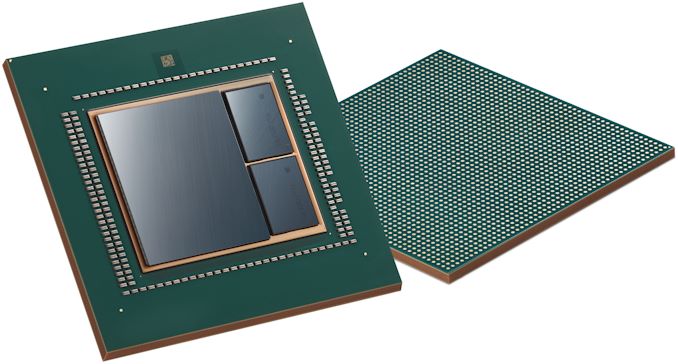
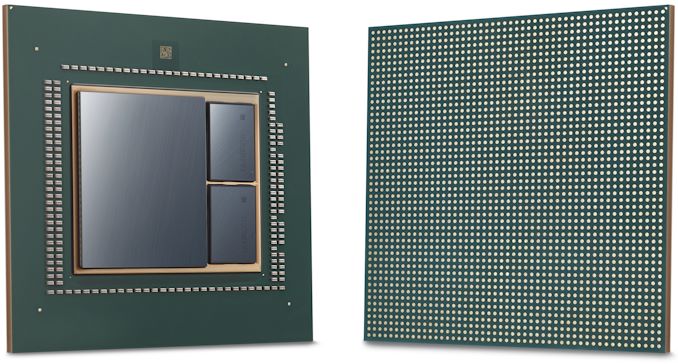
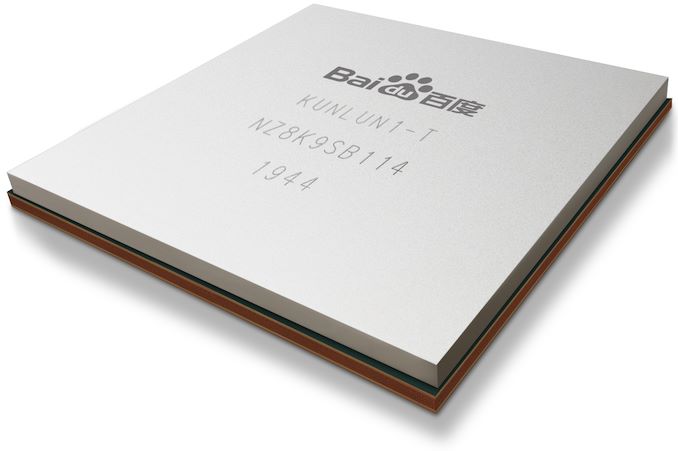
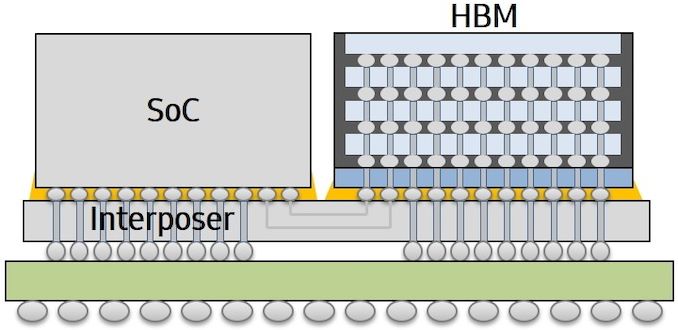
Samsung Foundry and Baidu this week said that the companies were about to start mass production of an AI accelerator chip early in 2020. Baidu’s Kunlun chip is to be made using Samsung’s proven 14 nm process technology, and make use of the company’s Interposer-Cube 2.5D packaging structure.


The Baidu Kunlun AI accelerator is based on the company’s XPU neural processor architecture that uses thousands of small cores that can be used for a wide variety of applications in the cloud and on the edge of networks. The chip provides up to 260 Trillion operations per second (TOPS) at 150 Watts, and features 512 GB/s memory bandwidth using two HBM2 memory packages. It is noteworthy that when the SoC was introduced back in mid-2018, its TDP was described at falling in at 100 Watts, so it seems the final product missed the initial power consumption goals.


According to Baidu, its Kunlun chip is three times faster in the ERNIE (Enhanced Language Representation with Informative Entities) inference application than a traditional GPU or FPGA. In addition, it can be used for autonomous driving (assuming that its 150 W TDP can be mitigated), speech recognition, image processing, and deep learning.


The Kunlun is one of the first AI accelerator that uses I-Cube packaging and is made by Samsung Foundry. The 2.5D packaging uses an interposer and is expected to enable Samsung to build other accelerator chips that require high memory bandwidth, and therefore make use of their HBM2 memory offerings. In addition, the company is developing other advanced packaging solutions, including redistribution layers (RDL), as well as denser HBM packages.


Ryan Lee, vice president of foundry marketing at Samsung Electronics, said the following:


“Baidu Kunlun is an important milestone for Samsung Foundry as we are expanding our business area beyond mobile to datacenter applications by developing and mass-producing AI chips. Samsung will provide comprehensive foundry solutions from design support to cutting-edge manufacturing technologies, such as 5LPE, 4LPE, as well as 2.5D packaging.”


Related Reading:


Source: Samsung


Source: AnandTech – Samsung Kicks Off Mass Production of AI Chip for Baidu: 260 TOPS at 150 W

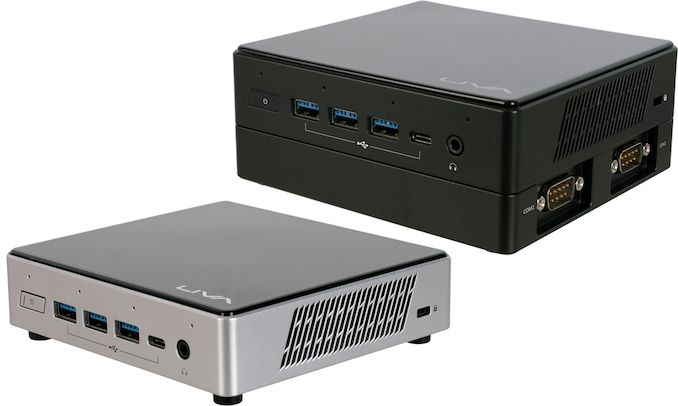
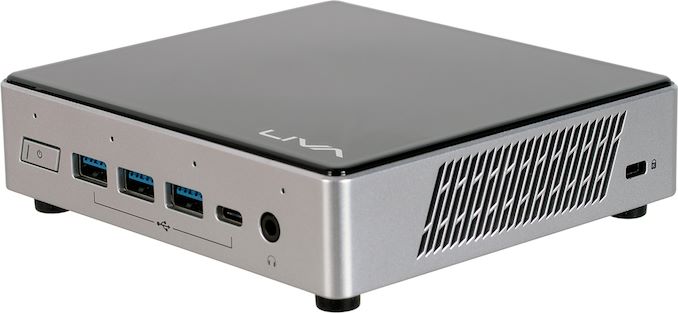
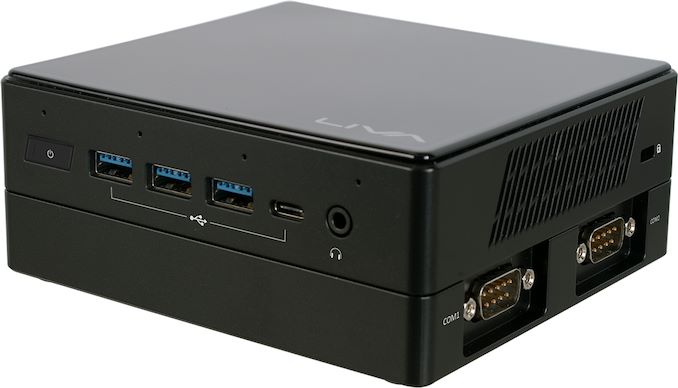
ECS to Unveil LIVA Z3 Plus & LIVA Z3E Plus UCFF PCs at CES: Intel’s 10th Gen Core Inside

ECS this week disclosed plans to introduce new LIVA ultra-compact form-factor (UCFF) PCs based on Intel’s 10th Gen Core processors. Set to be fully unveiled at CES next month, the new LIVA Z3 Plus and LIVA Z3E Plus systems are designed to fit in the usual UCFF niches for regular office PCs, media streamers, digital signage players, and industrial applications.


As things stand, ECS’s LIVA Z3 Plus & LIVA Z3E Plus UCFF PCs will be among the most compact desktop computers based on Intel’s 10th Generation Core processors. The systems will belong to the company’s Premium LIVA series, offering advanced features like Wi-Fi 6, USB Type-C, and out-of-box Amazon Alexa assistant support. Furthermore, the larger LIVA Z3E Plus will have two COM ports.


In addition to higher-end LIVA Z3 Plus & LIVA Z3E Plus computers, ECS also plans to introduce special-purpose 0.6-liter to 1.6-liter LIVA systems. The upcoming LIVA Q1L, Q1D, and DH310 are expected to feature an integrated 4G/LTE modem, two GbE ports, and multiple display outputs.


Last but not least, ECS also intends to reveal its first LIVA-branded all-in-one PCs at CES trade show in January. The company yet has to disclose specifications of these systems and the only thing that the company tells us right now is that its LIVA AIO PCs will be aimed at both the consumer and commercial markets.


Related Reading:


Source: ECS


Source: AnandTech – ECS to Unveil LIVA Z3 Plus & LIVA Z3E Plus UCFF PCs at CES: Intel’s 10th Gen Core Inside

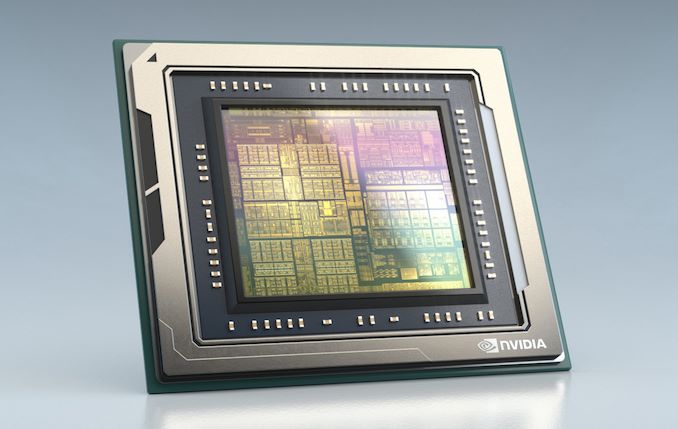
NVIDIA Details DRIVE AGX Orin: A Herculean Arm Automotive SoC For 2022

While NVIDIA’s SoC efforts haven’t gone entirely to plan since the company first started on them over a decade ago, NVIDIA has been able to find a niche that works in the automotive field. Backing the company’s powerful DRIVE hardware, these SoCs have become increasingly specialized as the DRIVE platform itself evolves to meet the needs of the slowly maturing market for the brains behind self-driving cars. And now, NVIDIA’s family of automotive SoCs is growing once again, with the formal unveiling of the Orin SoC.


Source: AnandTech – NVIDIA Details DRIVE AGX Orin: A Herculean Arm Automotive SoC For 2022

ADATA Reveals XPG Hunter SO-DIMMs: Up to DDR4-3000, Up to 32 GB

ADATA has introduced its new family of SO-DIMMs for laptops and small form-factor desktops. The XPG Hunter DDR4 SO-DIMMs offer data transfer rates of up to 3000 MT/s and capacities from 8 GB to 32 GB, allowing typical dual-channel (dual slot) systems to go up to 64 GB of RAM in total.


ADATA’s XPG Hunter DDR4 SO-DIMMs are based on cherry-picked memory chips as well as high-quality PCBs. Like other enthusiast-class memory modules, the XPG Hunter SO-DIMMs feature XMP 2.0 SPD profiles to make it easier to set the correct speed settings. Also, to maximize stability, the modules come equipped with heat spreaders.


The XPG Hunter SO-DIMMs are set to be available in 8 GB, 16 GB, and 32 GB sizes and will be rated for DDR4-2666 CL18 and DDR4-3000 CL17 at 1.2 V operation.


ADATA’s XPG Hunter SO-DIMMs
  Size Latency Voltage
DDR4-2666 8 GB CL18 18-18 1.2 V
DDR4-2666 16 GB
DDR4-3000 8 GB CL17 19-19
DDR4-3000 16 GB
DDR4-3000 32 GB

ADATA did not announce MSRPs for its XPG Hunter DDR4 memory modules, but considering the fact that we are not dealing with SO-DIMMs designed for extreme PCs, it is unlikely that the new modules will be particularly spendy.


Related Reading:


Source: ADATA


Source: AnandTech – ADATA Reveals XPG Hunter SO-DIMMs: Up to DDR4-3000, Up to 32 GB

Samsung to Expand 3D NAND Fab in China

Samsung reportedly plans to invest billions of dollars to expand its 3D NAND production facility in Xian, China. If the company proceeds with the plan, bit production capacity of the fab would increase significantly.


According to Chinese media, the world’s largest supplier of NAND flash memory reportedly intends to spend $8 billion on expansion of its fab in Xian. Back in 2017, Samsung already announced plans to invest $7 billion over the following three years to boost the production capacity of its Xian facility, so the new investment will be spent on a third expansion of the fab.


Physical expansion of the Xian production facility will allow Samsung to further increase its 3D NAND bit output, giving Samsung more physical capacity and helping to offset the longer and more intensive manufacturing process required for high layer counts in 3D NAND. According to a media report, Samsung’s Xian fab can now process 120,000 wafer starts per month. After the expansion, it will reportedly increase its output to 130,000 wafer starts per month, but it is likely that these will be 3D NAND wafers with a higher number of layers.


Samsung has not formally confirmed the $8 billion investment plan, but earlier this year the company indicated that it would be ‘flexible’ in expanding the Xian production facility.


Samsung currently produces 3D NAND at three sites: in Hwaseong and Pyeongtaek in South Korea and Xian in China.


Related Reading:


Sources: Reuters, Pulse News


Source: AnandTech – Samsung to Expand 3D NAND Fab in China

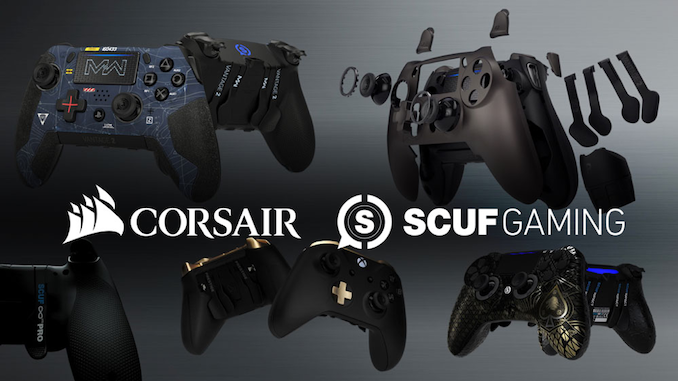
Corsair to Acquire SCUF Gaming

Corsair this week has announced that it will take over SCUF Gaming, a manufacturer of advanced gaming controllers for PCs and consoles. By acquiring SCUF, Corsair not only expands its products portfolio, but also gains further intellectual property and patents related to game controllers. The transaction is projected to be completed by the end of December 2019.


SCUF’s controllers are designed to shorten players’ hand movements, which in turn is intended to improve their performance. Controllers from SCUF are modular: they feature removable back paddles, customizable thumbsticks, interchangeable magnetic faceplates, exchangeable D-pads, and other components that allow owners to tailor their devices for themselves.


Corsair is not disclosing the financial terms of the private transaction, but says that SCUF will remain a separate brand within Corsair, and that SCUF will continue to operate from its headquarters in Atlanta. Since Corsair already sells mice and keyboards for gamers, SCUF will be a natural fit for the company.


Corsair has been on acquisition spree since it sold its majority stake to EagleTree and partners in mid-2017. Last year the company took over Elgato, a maker of video capture and docking solutions, whereas this year it bought Origin PC.


Andy Paul, founder and CEO of Corsair, said the following:


“We are thrilled to greatly expand our portfolio of industry-leading peripherals and enter the gaming controller space to help gamers play at their best. SCUF leads the market for performance controllers and are a key ingredient to the success of countless esports professionals. SCUF will make an excellent and winning addition to the vast lineup of award-winning CORSAIR and Elgato products.”


Related Reading:


Source: Corsair


Source: AnandTech – Corsair to Acquire SCUF Gaming

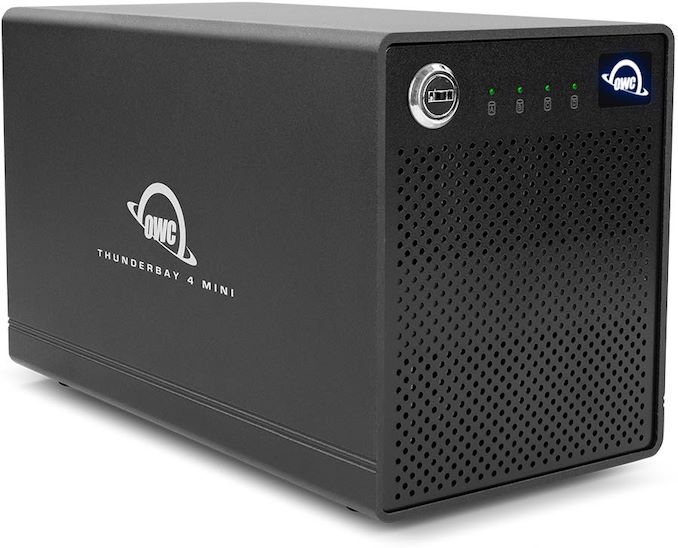
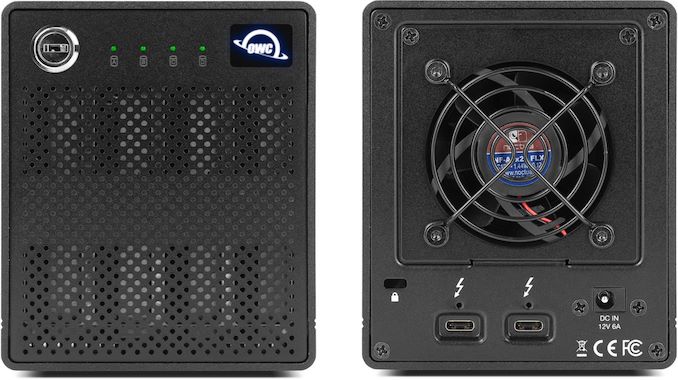
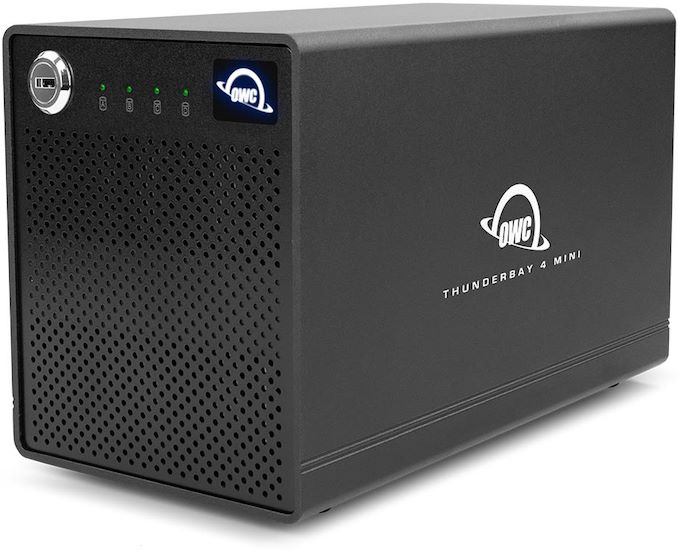
OWC Launches ThunderBay 4 Mini DAS: 4 SATA Bays With SoftRAID, Up to 1.5 GB/s

OWC has introduced a new small form factor high performance, high redundancy DAS for the professional market. The ThunderBay 4 Mini incorporates 4 2.5-inch storage bays, allowing it to store up to 16 TB of data, and with OWC touting transfer speeds of up to 1.5 GB/s. The device is aimed at various creative professionals who need an ample amount of reliable storage space, but in a relatively small package.


The OWC ThunderBay 4 Mini DAS can accommodate four 2.5-inch/15.5 mm storage devices and is based on Intel’s JHL6540 (dual-port TB3) and ASMedia’s ASM1062 (PCIe 2.0 x2 => two SATA 6 Gbps bridge) controllers. Given constraints imposed by a SATA 6 Gbps interface and the ASM1062 chip, the ThunderBay 4 Mini can offer up to 1556 MB/s read/write performance when equipped with four SATA SSDs, or around 560 MB/s when populated with four Seagate’s 2.5-inch 4 TB hard drives. To ensure stable operation and consistent performance, the DAS comes equipped with a fan.


OWC’s SoftRAID
  SoftRAID XT SoftRAID XT Lite
RAID Levels RAID 0

RAID 1

RAID 4

RAID 5

RAID 0+1
RAID 0

RAID 1
Disk Certification + +
Disk Monitoring + +
Email Alerts +
Command Line Interface +
Tech Support Free Online Forum

Layered on top of the hardware to provide both multi-disk performance and redundancy is OWC’s SoftRAID software. OWC will offer the ThunderBay 4 Mini with either its SoftRAID XT or SoftRAID XT Lite software, depending on the model and required RAID level. The applications support both Apple macOS and Microsoft Windows operating systems, so the DAS is compatible with a wide variety of computers available today.


OWC Thunderbay 4 Mini
  HDD Models

SoftRAID XT
HDD Models

SoftRAID XT Lite
4 TB $669.99 $599.99
8 TB $719.99 $649.99
16 TB $1,019.99 $949.99
  SSD Models

SoftRAID XT
SSD Models

SoftRAID XT Lite
2 TB $819.99 $749.99
4 TB $1,149.99 $1,079.99
8 TB $2,069.99 $1,999.99
  Enclosure Only

SoftRAID XT
Enclosure Only

SoftRAID XT Lite
0 TB $379.99 $299.99

The barebones OWC ThunderBay 4 Mini with SoftRAID Lite XT costs $299.99, whereas a version with SoftRAID XT is priced at $379.99. Enclosures populated with SSDs or HDDs are priced depending on capacity and type of software that comes with them.


Related Reading:


Source: OWC


Source: AnandTech – OWC Launches ThunderBay 4 Mini DAS: 4 SATA Bays With SoftRAID, Up to 1.5 GB/s

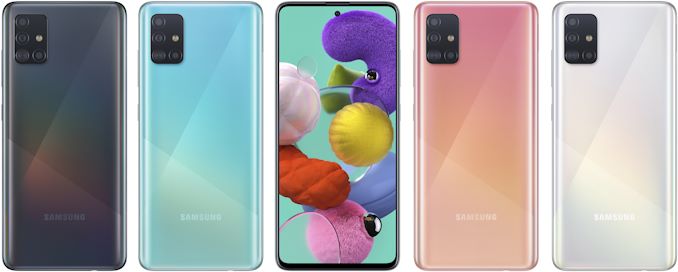
Samsung Unveils Galaxy A51 & Galaxy A71 Mid-Range Smartphones: 6.5/6.7-Inches With 4-Module Cameras

While Samsung draws most of its smartphone reputation from its high-end phones, the bulk of the phones that the company sells are are not the $700+ Galaxy S series, but rather the cheaper phones that fill out the lower parts of its product stack. To that end, Samsung has unveiled its new mid-range Galaxy A51 and Galaxy A71 smartphones, which are designed to strike a better balance between features and the handset’s cost.


As their model numbers suggest, Samsung’s Galaxy A51 and Galaxy A71 smartphones are designed for different price points, yet they have many similarities. Both handsets come in a plastic body, which depending on the model houses either a massive 6.5-inch (A51) or a 6.7-inch (A71) Infinity-O Super AMOLED. Both models get similar panels, each sporting a 2400:1080 resolution as well as an ultrawide 20:9 aspect ratio. The display in turn is protected with Corning’s Gorilla Glass 3, which although not the latest and greatest there, is not particularly surprising (nor a bad choice) since, unlike the S-series, these smartphones are not water-tight.


Meanwhile, with cameras being one of the big selling points for flagship phones this past year, Samsung has tried to bring as much of this down to their mid-range phones as possible. Both smartphones feature a quad-module rear camera setup, consisting of a 48 MP or a 64 MP main module, a 12 MP ultrawide module, a 5 MP depth sensor, and a 5 MP dedicated macro module. As always, we’ll have to see how well these camera modules actually work once the phones are shipping, but it’s a surprisingly aggressive number of modules to ship a cheaper phone with. Finally, rounding out the camera collection for both phones is a 32 MP punch-hole selfie camera.


As for internal hardware, the Galaxy A51 is powered by the Exynos 9611 SoC, which offers 4 Cortex-A73 cores plus 4 Cortex-A53 cores. This is paired with paired with 6 GB of RAM and 128 GB of NAND flash storage. Meanwhile the Galaxy A71 is based on the Snapdragon 730 – a 2x Cortex-A76 plus 6x Cortex-A55 SoC – accompanied by 6 GB or 8 GB of memory, as well as 128 GB of NAND. The new smartphones obviously support 4G/LTE, Wi-Fi 5, Bluetooth 5.1, navigation, a USB 2.0 Type-C port, an under-screen fingerprint reader, and integrate a 4,000 or 4,500 mAh battery respectively.


Samsung’s Galaxy A51 & Galaxy A71 Smartphones

Brief Specifications
  Galaxy A51 Galaxy A71
Display SAMOLED

6.5″

2400×1080

20:9

Corning Gorilla Glass 3
SAMOLED

6.7″

2400×1080

20:9

Corning Gorilla Glass 3
SoC Samsung Exynos 9611


4 x Arm Cortex-A73 @ 2.3 GHz

4 x Arm Cortex-A53 @ 1.7 GHz

Arm Mali-G72 MP3

Qualcomm Snapdragon 730


2 x Kryo 470 Gold (CA76)

@ 2.2 GHz

6 x Kryo 470 Silver (CA55)

@ 1.8 GHz

Adreno 618

RAM 6 GB 6 GB or 8 GB
Storage 128 GB of NAND flash

microSD
128 GB of NAND flash

microSD
Local Connectivity Wi-Fi  802.11ac Wi-Fi
Bluetooth Bluetooth 5.0
Data/Charging USB 2.0 Type-C
Audio 3.5-mm jack

stereo speakers

active noice cancellation
NFC depending on the market
4G/LTE Yes
Navigation  A-GPS, GLONASS, BDS, GALILEO
Rear Camera Main 48 MP, f/2.0, 1/2″, 0.8µm

PDAF
64 MP, f/1.8, 1/1.7″, 0.8µm, 26 mm

PDAF
Ultrawide 12 MP, f/2.2, 13mm
Depth 5 MP, f/2.2
Macro 5 MP, f/2.4
Main Lense Assembly ? ?
Front Camera 32 MP, 1.28″, f/2.2, 0.8µm
Battery Capacity 4000 mAh

15 W fast charging
4500 mAh

25 W fast charging
Expected Life ? ?
SIM Size Nano SIM, single or dual
Sensors accelerometer, gyro, proximity, compass
Biometric Security Fingerprint Under display
Facial Recognition
Dimensions Height 158.5 mm | 6.24 inches 163.6 mm | 6.44 inches
Width 73.6 mm | 2.90 inches 76 mm | 2.99 inches
Thickness 7.9 mm | 0.31 inches 7.7 mm | 0.3 inches
Weight 172 grams 179 grams
Colors Prism, Crush Black, White, Blue, Pink
Protection Drop ? ?
Splashes
OS Google Android 9.0 with One UI
Launch Countries Vietnam, Poland Poland
Price ~€310 ?

So far, Samsung has introduced its Galaxy A51 and Galaxy 71 in Poland and Vietnam and while other markets have not yet been announced, it’s only a matter of time (and presumably after the new year). The A51 will be available in Vietnam in late December, so expect the A71 to hit the market a bit after that.


Related Reading:


Sources: Samsung Poland, Samsung Vietnam, GSMArena, GSMArena, Liliputing


Source: AnandTech – Samsung Unveils Galaxy A51 & Galaxy A71 Mid-Range Smartphones: 6.5/6.7-Inches With 4-Module Cameras

The Snapdragon 865 Performance Preview: Setting the Stage for Flagship Android 2020

Earlier this month we had the pleasure to attend Qualcomm’s Maui launch event of the new Snapdragon 865 and 765 mobile platforms. The new chipsets promise to bring a lot of new upgrades in terms of performance and features, and undoubtedly will be the silicon upon which the vast majority of 2020 flagship devices will base their designs on. We’ve covered the new improvements and changes of the new chipset in our dedicated launch article, so be sure to read that piece if you’re not yet familiar with the Snapdragon 865.

As has seemingly become a tradition with Qualcomm, following the launch event we’ve been given the opportunity to have some hands-on time with the company’s reference devices, and had the chance to run the phones through our benchmark suite. The QRD865 is a reference phone made by Qualcomm and integrates the new flagship chip. The device offers insight into what we should be expecting from commercial devices in 2020, and today’s piece particularly focuses on the performance improvements of the new generation.


Source: AnandTech – The Snapdragon 865 Performance Preview: Setting the Stage for Flagship Android 2020

LG Updates Ultralight Gram Laptops & Convertible: Ice Lake Inside

Along with their flagship 17-inch model, LG this week has also given its 14 and 15.6-inch LG gram laptops an Ice Lake upgrade. The updated machines pair Intel’s Ice Lake processors with up to 24 GB of RAM, all contained within the gram’s minimalist, ultra-thin carbon magnesium alloy body, with a total weight of around 1 kilogram. The new LG gram notebooks and convertible will be available next year.


The 2020 LG gram mobile PCs are powered by Intel’s 10th Generation Core processor (Ice Lake) with up to Iris Plus Graphics. The CPU is cooled down using LG’s Mega Cooling System, though the only thing that the company says about it is that it runs cool and quiet ‘under all usage scenarios’. The updated notebooks can be equipped with up to 24 GB of DDR4-2666 memory, whereas the convertible only supports up to 16 GB of RAM. Meanwhile, all the machines feature two M.2 slots for a couple of NVMe SSDs to provide both speed and capacity.


Being premium consumer laptops, LG’s next year gram systems come equipped with a robust set of I/O capabilities, which includes Wi-Fi 6, Bluetooth, Thunderbolt 3, USB 3.1, HDMI, microSD/UFS slot, and a 3.5-mm audio jack for headsets. As far as multimedia features are concerned, the notebooks have a webcam, DTX X Ultra-badged speakers, and a microphone array. Finally, they also have a fingerprint reader.


One of the key selling points of LG’s gram mobile PCs is their long battery life. The new 14-inch machines will use a 72 Wh battery, whereas the 15.6-inche will come with an even larger 80 Wh battery. The maker says that the convertible LG gram 2-in-1 machine will work for over 20 hours on one charge, and the 15.6-inch model should be able to last for even longer.


The LG Gram 2020 Brief Specifications
  LG Gram 2-in-1

14T90N
LG Gram 14

14Z90N
LG Gram 15

15Z90N
Size 14-inch IPS 15.6-inch IPS
Screen Resolution 1920×1080
Touch Support LG’s IPS In-Cell Touch technology
Color Gamut ? over 96% sRGB
Protection Corning Gorilla Glass 6
CPU Family 10th generation Intel Core processors (Ice Lake)
Model various
Graphics Intel UHD Graphics Intel UHD Graphics or Intel Iris Plus Graphics
RAM up to 16 GB DDR4-2666

onboard + SO-DIMM
up to 24 GB DDR4-2666

onboard + SO-DIMM
Storage up to two M.2 NVMe SSDs
Wi-Fi + BT Wi-Fi 6 + Bluetooth
USB 2 × USB 3.1 Type-A

1 × USB 3.1 Gen 2 via TB3
3 × USB 3.1 Type-A

1 × USB 3.1 Gen 2 via TB3
Thunderbolt 3 1 × Thunderbolt 3
Fingerprint Sensor Yes
Audio Microphone array, DTS X Ultra stereo speakers, TRRS jack
Other I/O MicroSD card reader, webcam, etc.
Battery 72 Wh 80 Wh
Battery Life over 20 hours many hours many hours
Dimensions Width 324.6 mm | 12.78 inch 323.4 mm | 12.73 inch 357.6 mm | 14.08 inch
Depth 210.8 mm | 8.3 inch 209.8 mm | 8.26 inch 225.3 mm | 8.87 inch
Thickness 17.9 mm | 0.7 inch 16.8 mm | 0.66 inch 16.8 mm | 0.66 inch
Weight 1145 grams | 2.52 lbs 999 grams | 2.2 lbs 1120 grams | 2.47 lbs

LG will demonstrate its new portables at CES 2020 in early January. Expect the company to disclose more information about pricing and availability timeframes there as well.


Related Reading:


Source: LG


Source: AnandTech – LG Updates Ultralight Gram Laptops & Convertible: Ice Lake Inside

Western Digital Rolls-Out Two New SweRV RISC-V Cores For Microcontrollers

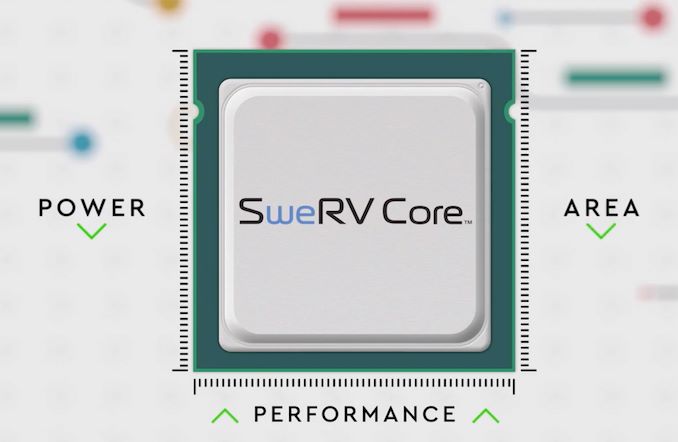
Western Digital has added two new processor cores — the SweRV Core EH2 and the SweRV Core EL2 — into its SweRV portfolio of microcontroller CPUs. And, keeping in line with past parts, and the company has made their register-transfer level (RTL) design abstraction available to the industry for free. In addition, the company has also introduced the first hardware reference design for OmniXtend cache coherent memory over Ethernet protocol, and transferred management and support of the architecture to Chips Alliance. 


Source: AnandTech – Western Digital Rolls-Out Two New SweRV RISC-V Cores For Microcontrollers

The Microsoft Surface Laptop 3 Showdown: AMD's Ryzen Picasso vs. Intel's Ice Lake

Occasionally the stars align. It is very rare in the laptop space that we’re able to test two devices, with two very different CPU platforms, with the fewest number of variables possible. But those stars have aligned in 2019, and thanks to Microsoft’s Surface Laptop 3 family, we have a rare opportunity to compare AMD and Intel’s current-generation laptop platforms in a way that wouldn’t normally be possible.

To that end, today we’re having the ultimate laptop showdown of 2019: Surface Laptop 3 vs. Surface Laptop 3, pitting AMD’s Ryzen Picasso platform against Intel’s Ice Lake platform. Both companies have made significant gains this year with their latest laptop platforms, and now we’re finally getting the chance to see, in an apples-to-apples-fashion, just how the two platforms compare.


Source: AnandTech – The Microsoft Surface Laptop 3 Showdown: AMD’s Ryzen Picasso vs. Intel’s Ice Lake

Microsoft Announces Xbox Series X: Available Holiday 2020

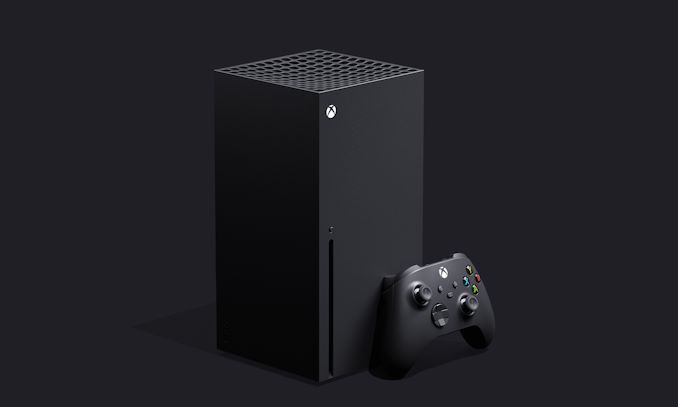
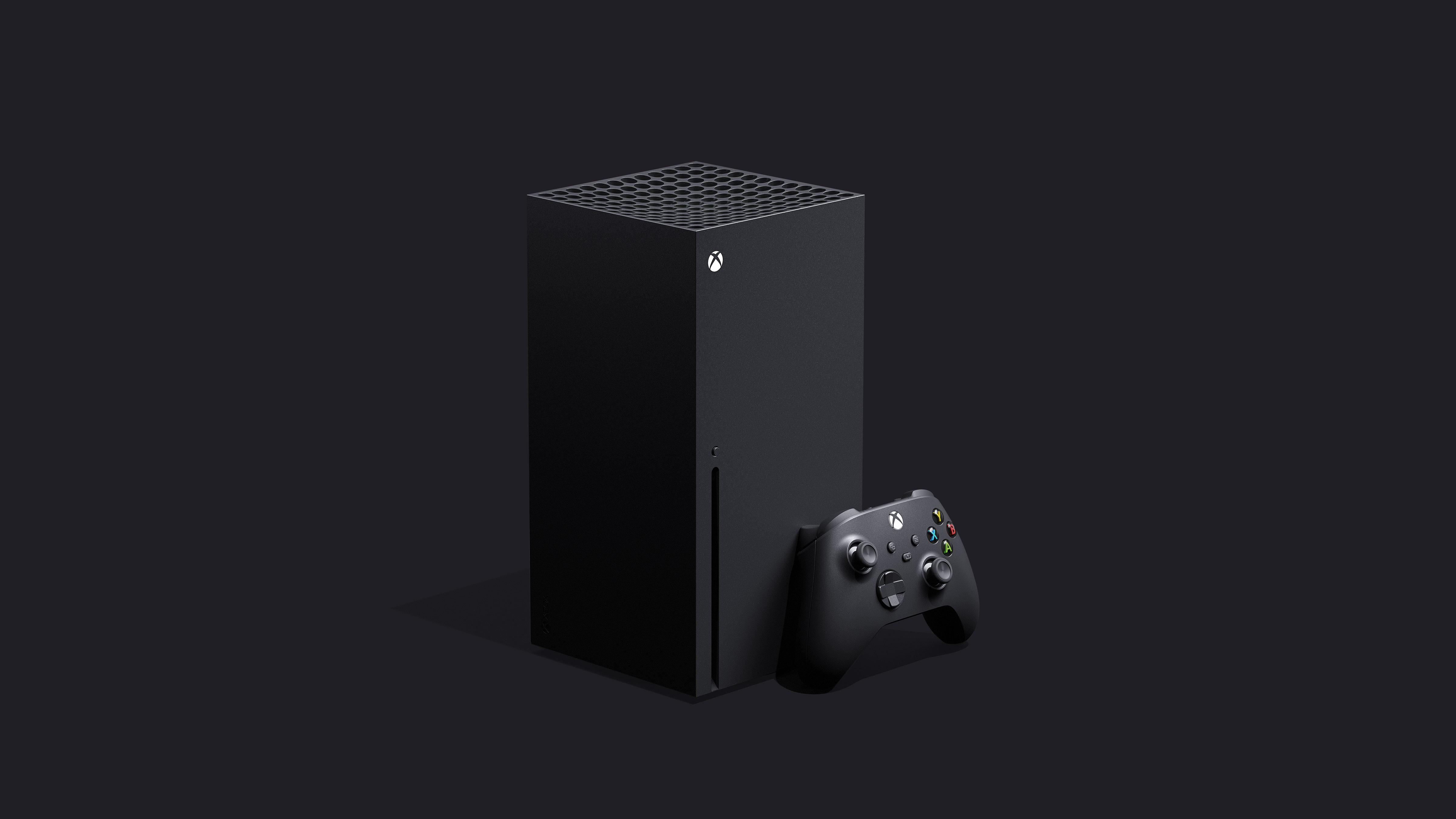
Microsoft this evening has finally given their long-awaited next generation gaming console a name, announcing the Xbox Series X. The device, formerly known as Project Scarlett, is said to be four times more powerful than the current Xbox One X, and along with its new Xbox Wireless Controller will be available in the Holiday 2020 timeframe.


Microsoft has been drip-feeding information about their forthcoming console for the better part of a year now, so today’s announcement of the name and revealing the final design is the latest element in that campaign. The black, monolith-shaped box is certainly unlike any previous Xbox console design, and while touching it probably won’t make you smarter, Microsoft has definitely evolved the design of their hardware. The same goes for the new Xbox Wireless Controller that ships with the console, which incorporates an unusual D-Pad derived from the Xbox Elite Series 2 Wireless Controller. The controller will be compatible with Windows 10 as well.


While Microsoft is still not offering a detailed breakdown of hardware specifications at this time, the company has reiterated their E3 announcement – that the box is powered by an AMD APU combining their Zen 2 processor cores and next generation RDNA architecture – while revealing the first performance estimate for the console: four times the processing power of the Xbox One X. It’s not clear here whether Microsoft is talking about CPU performance, GPU performance, or both – but given that even AMD’s fastest discrete GPUs today don’t exceed 10 TFLOPS, it is likely a reference to the CPU side of matters and AMD’s much faster Zen 2 CPU cores (and going by comments made to GameSpot, this seems to be exactly the case).


As well, the company is reiterating the technical features for the console: hardware raytracing, variable rate shading, Xbox One backwards compatibility, and a “next-generation” SSD. All of which will be used to offer games at 4K@60fps or better, with Microsoft indicating that 120fps will also be an option for developers (no doubt driven by the high refresh rates allowed by HDMI 2.1). In their press release Microsoft is also announcing a new feature called “Dynamic Latency Input” (DLI), which although no specific details about the technology are being made available, is intended to minimize console latency in order to make it “the most responsive console ever”. I would expect to hear more about this in 2020 as the console gets closer to launch.


Finally, along with announcing the console itself, Microsoft has also released a separate video announcing a new Hellblade game, Senua’s Saga: Hellblade II. The trailer for the game is designed to show off the power of the console and is based off of in-engine footage; though it’s not clear at this time if it was captured in real-time or rendered offline.


Expect to hear a lot more about the Xbox Series X over the next year, as Microsoft ramps up to launch it for Holiday 2020.


Source: AnandTech – Microsoft Announces Xbox Series X: Available Holiday 2020

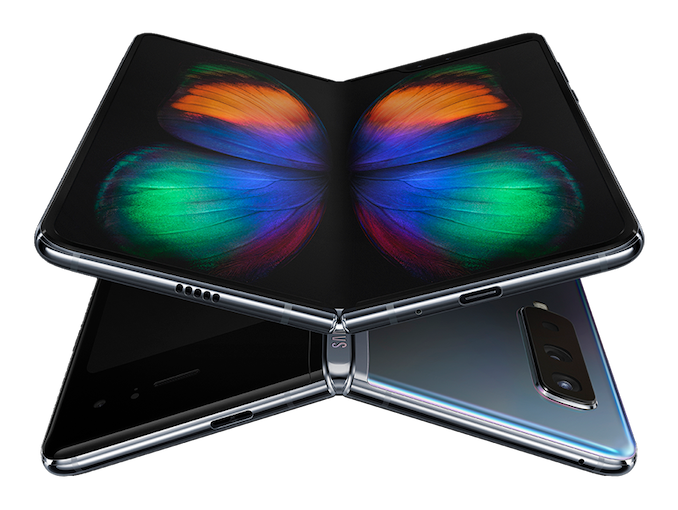
Sales of Samsung Galaxy Fold Top 1 Million Units

While Samsung may have suffered a rather unforgettable snafu with their first attempt to launch their Galaxy Fold smartphone, following its re-launch a few months back, it looks like shipments of the cutting edge folding phone have turned out to be rather decent. Speaking at TechCrunch Disrupt Berlin, Young Sohn, the president and chief strategy officer of Samsung Electronics, stated that the company has sold about a million of the Galaxy Fold smartphones since its launch in September, a good start for the ultra-expensive phone.


Samsung formally introduced its Galaxy Fold at MWC 2019 in January and planned to start its sales in April. However, after it was discovered that its hinge needed reinforcements and the top protective layer of the Infinity Flex Display had to be redesigned, the company had to delay the device. In the end, the firm finished with refinements by late July and started shipments in late September after all re-qualifications had been made.


Samsung did not comment on how this delay affected the demand for its flagship smartphone. However, since the Galaxy Fold is the only foldable smartphone currently available outside of China, for the moment at least Samsung’s $2000 foldable phone has the western market to itself.


Here is what Mr. Sohn said:


“And I think that the point is, we are selling [a] million of these products. There is a million people that want to use this product at $2,000.”


Related Reading:


Source: TechCrunch


Source: AnandTech – Sales of Samsung Galaxy Fold Top 1 Million Units

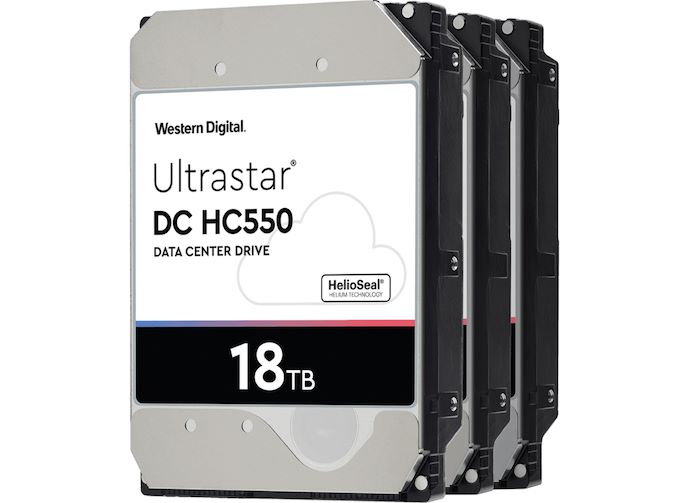
Western Digital: Expect More Energy-Assisted Tech For 24 TB & Beyond

Western Digital has been promoting its microwave assisted magnetic recording (MAMR) technology for over a couple of years now, yet surprisingly, its upcoming 18 TB and 20 TB drives are not really using the tech. The reason for this lies in the company’s decision to use what they consider to be the right technology at the right time. To that end, Western Digital not only plans to use MAMR in the future, but is open to use heat assisted magnetic recording (HAMR) technology when time comes.


Energy assisted magnetic recording (EAMR) technologies will enable future nearline hard drives with extreme capacity and areal density, there are no doubts in the industry about that. But HDD manufacturers have different opinions about when to introduce these technologies. Seagate believes that heating the platters using laser (HAMR) is the way to go now, whereas Western Digital is confident that using microwaves to change their coercivity (MAMR)  better for the foreseeable future. And both agree, at least, that in the long run HAMR will enable a higher areal density.


Having invested an ample amount of R&D money into various EAMR technologies, Western Digital discovered that transition to HAMR is a hard one as it requires the introduction of new heads as well as use all-new platters, whereas MAMR needs new heads and slightly different platters. While working on MAMR, Western Digital found that it was possible to only partially implement the technology and still get the desired result – an increase in areal density. In fact, the company’s Ultrastar HC550 HDDs (and 20 TB drives) will be the first products to use this type of EAMR technology that is currently called energy-enhanced PMR (EPMR).


According to Western Digital, EPMR is particularly easy to incorporate into hard drives, especially considering the fact that it does not use a spin-torque oscillator, which is a key element of Western Digital’s MAMR technology.


And while EPMR has changed Western Digital’s roadmap slightly, at the end of the day the company says it hasn’t changed the development philosophy: the various magnetic recording technologies that they’re researching will be used once they are needed to hit certain capacities. For the moment, then, the company has indicated that they’re looking at their options for 24 TB and 30 TB drives, and what they’ll need to do to make those capacities practical.


Here is what Siva Sivaram, president of technology and strategy at Western Digital, said at the Wells Fargo Technology, Media and Telecommunications Summit earlier this month:


“The 18 TB product that is going out this December will use a variant of the MAMR technology. We are agnostic as to which technology we will have to succeed in the long term. We will introduce the right technology at the right point when it gets to 24 TB and 30 TB. We see a path to get to 50 TB in our hard drive roadmap. As we go to 50 TB, we will introduce the right technology at the point when it actually makes sense.”


Related Reading:


Source: Western Digital (via Blocks & Files)


Source: AnandTech – Western Digital: Expect More Energy-Assisted Tech For 24 TB & Beyond

Samsung to Use SiFive RISC-V Cores for SoCs, Automotive, 5G Applications

At the annual RISC-V Summit this week, Samsung disclosed the use SiFive’s RISC-V cores for upcoming chips for a variety of applications. The company is joining a growing list of leading high-tech companies that have adopted the RISC-V architecture.


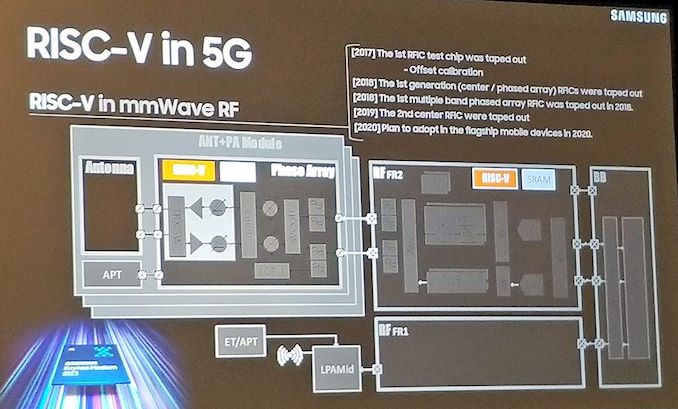
One of the applications that Samsung is using RISC-V cores in is mmWave RF processing by its upcoming 5G RF front-end modules. The latter will be used for Samsung’s flagship 5G smartphones due in 2020. The RISC-V cores will also be used for AI image sensors, security management, AI computing & control.


It is noteworthy that Samsung taped out its first chip with a RISC-V core(s) as early as in 2017, so it started to work on it even earlier. In three years, Samsung has iterated on its designs and is now planning to adopt RISC-V cores for commercial applications, starting from mmWave RF processing in mobiles and expanding beyond them.


Besides the announcement of the RISC-V core integration, it’s also Samsung’s first instance of them talking about their mmWave modules in public. Unlike Qualcomm, Samsung tends to remain quiet about their developments until it’s nearing commercialisation, and even then in a lot of cases we don’t know too much about their designs. Nevertheless, it looks like the company has had mmWave designs for some time.


Samsung will be the fourth major company that has publicly disclosed its plans to adopt the open-source RISC-V architecture after Western Digital, NVIDIA, and Qualcomm. Western Digital intends to use the technology for a variety of applications, including SSD and HDD controllers. NVIDIA reportedly plans to use it for GPU memory controllers, whereas Qualcomm is set to use RISC-V for mobile SoCs.


All of the said companies have historically used processing cores based on architectures developed by Arm, and will likely continue to use them in the foreseeable future alongside RISC-V implementations. The advantage of RISC-V and the rationale for the vendors like Samsung choosing SiFive designs over Arm designs might be financial, as the former is likely undercutting its big competitor in price. For vendors doing their own microarchitecture designs, such as WD, RISC-V comes with no royalties attached, and offered more flexibility for vendors in terms of implementation. Arm only recently changed course in allowing vendor to implement their own custom instructions to the Cortex designs and architecture. Custom instructions developed by SoC vendors might be a huge benefit for efficient handling of ECC and RF processing among other things.


Related Reading:


Sources: The Register, Chris Williams/Twitter


Source: AnandTech – Samsung to Use SiFive RISC-V Cores for SoCs, Automotive, 5G Applications

Logitech Releases 4K Pro Magnetic Webcam for Apple Pro Display XDR

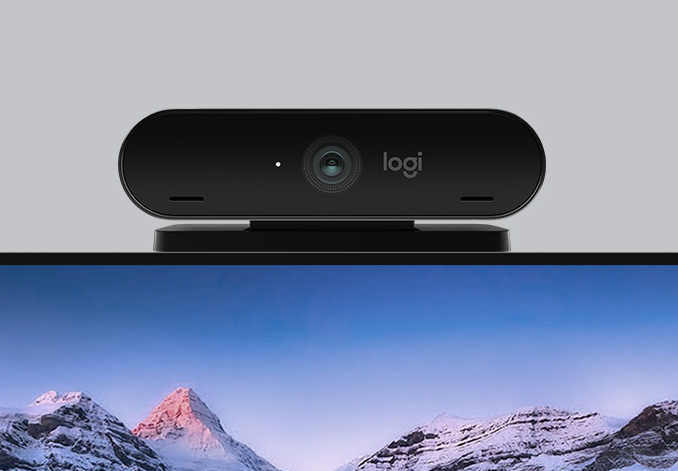
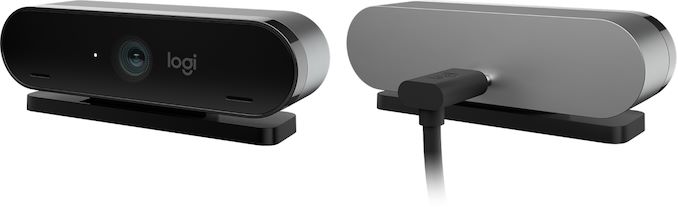
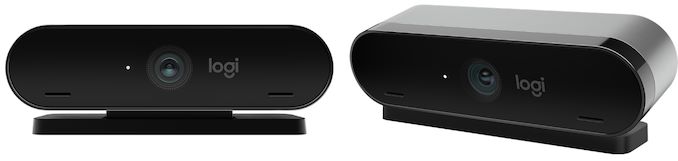
This week Apple launched its all-new Pro Display XDR monitor that happens to be one of the most advanced LCDs around, but one thing it lacks is a built-in webcam. When Apple releases its all-new products, in many cases it creates opportunities for other companies to capitalize on its devices. To enable owners of the $4,999 display to communicate stylishly, Logitech introduced its 4K Pro Magnetic Webcam, specifically designed for the Pro Display XDR.


On the hardware side of things, the 4K Pro Magnetic Webcam is based on the Logitech 4K sensor featuring the RightLight 3 with HDR backlighting technology. The webcam supports autofocus, 5X digital zoom, and has two omni-directional microphones with noise cancellation options.


The unit can capture video at up to 4096×2160 resolution at 30 fps or 1920×1080 at 60 fps. From internal hardware point of view, the 4K Pro Magnetic Webcam basically uses the same set of technologies as the BRIO 4K Pro launched two years ago. Meanwhile, since Apple’s macOS does not support facial recognition, the new webcam does not have infrared sensors for Windows Hello.


The key features of the webcam for the Pro Display XDR are its stylish design and mounting mechanism. As the name suggests, the Logitech 4K Pro Magnetic Webcam attaches to the top of the Apple Pro Display XDR using a magnet. The mount secures the webcam to the top of the monitor so steady that it can be adjusted up or down effortlessly. Furthermore, it can hold it even when the display is operated in a portait mode. Meanwhile, the device connects to the host using a USB-C to USB-C cable.


Speaking of the host system, the 4K Pro Magnetic Webcam is only compatible with Apple’s macOS and can work with MacBooks released in 2018 or later as well as iMac and Mac Pro launched in 2019 or later. As for software, it can work with Facetime, Skype, and Zoom.


Logitech has started taking pre-orders on its 4K Pro Magnetic Webcam for Pro Display XDR monitor and aims to ship it in January. The unit costs the same amount of money as the BRIO 4K Pro: $199.99, when bought directly from the manufacturer.


Related Reading:


Source: Logitech


Source: AnandTech – Logitech Releases 4K Pro Magnetic Webcam for Apple Pro Display XDR