
Following various Intel open-source projects recently being archived with Intel formally discontinuing their development, another wave of Intel open-source projects were formally sunset on Monday…
Monthly Archives: February 2026
Google claims it’s building data centers that barely use any water
Google is building another data center in Texas and says this one will use “advanced air-cooling technology” to limit water consumption. Google is claiming that water use will be limited to “critical campus operations” like kitchens.
These specifics follow the previously announced two-year $40 billion investment the company has pledged in the Lone Star State. The company is also touting some 7,800 megawatts of net energy generation and capacity it has contracted with utility providers to add to the Texas grid.
The company’s resource-conscious commitments come as communities nationwide are pushing back on data center construction, amid concerns that they are raising electric bills, worsening global greenhouse gas emissions and often using gargantuan amounts of fresh water. But don’t worry, because OpenAI CEO Sam Altman says the water concerns are “fake” and that “it also takes a lot of energy to train a human.”
A growing number of voices in tech, most notably Tesla CEO Elon Musk, have said that building data centers in space would address many of these concerns. But some experts believe the potential environmental downside could be devastating.
This article originally appeared on Engadget at https://www.engadget.com/ai/google-claims-its-building-data-centers-that-barely-use-any-water-171411965.html?src=rss
Inside the quixotic team trying to build an entire world in a 20-year-old game
Despite being regarded as one of the greatest role-playing games of all time, The Elder Scrolls III: Morrowind disappointed some fans upon its release in 2002 because it didn’t match the colossal scope of its predecessor, The Elder Scrolls II: Daggerfall. Almost immediately, fans began modding the remaining parts of the series’ fictional continent, Tamriel, into the game.
Over 20 years later, thousands of volunteers have collaborated on the mod projects Tamriel Rebuilt and Project Tamriel, building a space comparable in size to a small country. Such projects often sputter out, but these have endured, thanks in part to a steady stream of small, manageable updates instead of larger, less frequent ones.
A tale of (at least two) mods
It’s true that Daggerfall included an entire continent’s worth of content, but it was mostly composed of procedurally generated liminal space. By contrast, Morrowind contained just a single island—not even the entire province after which the game was named. The difference was that it was handcrafted.
This App Will Detect People Wearing Smart Glasses Near You
Smart glasses aren’t just the stuff of Hollywood anymore: You can buy a pair right now. Devices like Ray-Ban Metas come equipped with speakers, a microphone, embedded cameras, and connectivity to your smartphone—all in a package that largely looks like a normal pair of glasses. That’s great for enthusiasts who want a hands-free smartphone experience when out and about, but not so great for anyone who dislikes the idea of invisible cameras everywhere.
There are two sides to these privacy worries. One is the personal angle. Many of us don’t want the people around us shoving their smartphone cameras in our faces when we’re out in public, but at least then we’d know we’re being recorded. These embedded cameras are tough to spot unless you know what you’re looking for, which means there’s a feeling of always being watched by anyone walking past wearing glasses. On the other hand, there’s the larger privacy concern that comes with the territory of a huge company like Meta. Just last week, we learned the company plans to bring facial recognition tech to its Ray-Ban and Oakley smart glasses with a feature called “Name Tag,” which would give the wearer insights into the people they encounter using Meta AI. Taken together, smart glasses pose an unprecedented privacy and security risk for those of us living our lives, when both our neighbors and law enforcement have the accessibility to spy on us without our knowledge.
Of course, what can you do? If these glasses are legal, and they’re relatively inconspicuous, how can you protect yourself from the average Ray-Ban Meta-wearing Joe? By the time you get close enough to tell whether or not they’re wearing smart glasses, you’re already in view of the camera.
“Nearby Glasses” tells you when someone is wearing smart glasses in your area
Enter “Nearby Glasses,” a new app that spills the beans on smart glasses wearers near your location. As reported by 404 Media, the app is made by developer Yves Jeanrenaud, and scans for smart glasses’ “distinctive Bluetooth signatures” (also known as “advertising frames”) to identify them in your immediate area. Jeanrenaud was able to use a directory of Bluetooth Low Energy (BLE) manufacturers to build a list of smart glasses the app can scan for, including devices from Meta, Luxottica Group S.p.A, and Snap. If the app spots one, it sends you a push notification.
The app can’t currently distinguish between smart glasses and mixed reality headsets, however. As such, you may get an alert saying there are smart glasses nearby, but because the app picked up the Bluetooth signals from a Meta Quest headset. That said, these are much easier to spot than smart glasses, and are far less likely to be worn inconspicuously in public spaces.
Nearby Glasses is available for Android today, on both the Play Store as well as Github. Jeanrenaud says an iOS port “is in the making.”
Microsoft Execs Worry AI Will Eat Entry Level Coding Jobs
An anonymous reader shares a report: Microsoft Azure CTO Mark Russinovich and VP of Developer Community Scott Hanselman have written a paper arguing that senior software engineers must mentor junior developers to prevent AI coding agents from hollowing out the profession’s future skills base.
The paper, Redefining the Engineering Profession for AI, is based on several assumptions, the first of which is that agentic coding assistants “give senior engineers an AI boost… while imposing an AI drag on early-in-career (EiC) developers to steer, verify and integrate AI output.”
In an earlier podcast on the subject, Russinovich said this basic premise — that AI is increasing productivity only for senior developers while reducing it for juniors — is a “hot topic in all our customer engagements… they all say they see it at their companies.” […] The logical outcome is that “if organizations focus only on short-term efficiency — hiring those who can already direct AI — they risk hollowing out the next generation of technical leaders,” Russinovich and Hanselman state in the paper.


Read more of this story at Slashdot.
YouTube’s Premium Lite tier gets background play and downloads
YouTube is adding new features to its Premium Lite plan. The tier will offer background play and downloads for the mostly ad-free plan. The update comes a year after YouTube first launched the lower-cost plan.
The Premium Lite tier is notable because for $8 per month you get most videos ad-free, emphasis on most. Currently, it still uses ads for YouTube music (along with random other videos), but the new update is bringing more Premium tier features without the $14 per month price tag.
As a Lite user, you will be able to use background play on most videos. Notably, this announcement comes less than a month after Google cracked down on free workarounds to access background play on YouTube. “Background playback is a feature intended to be exclusive for YouTube Premium members. While some non-Premium users may have previously been able to access this through mobile web browsers in certain scenarios, we have updated the experience to ensure consistency across all our platforms,” Google told Android Authority. Now, it’s for Premium Lite users as well.
YouTube Premium Lite users are also getting access to downloads. They can watch — here it comes again — most videos offline. These new features will roll out starting today and in the coming weeks to Premium Lite subscribers.
This article originally appeared on Engadget at https://www.engadget.com/entertainment/youtubes-premium-lite-tier-gets-background-play-and-downloads-170051755.html?src=rss
Apple Is Finally Making Texting Between iPhone and Android Secure
Perhaps the best thing to happen to smartphones in the past five years was Apple’s decision to start supporting RCS. Ever since, texting between iPhone and Android hasn’t been a nightmare caused by SMS: Group chats function as they should, photos and videos can be sent in high quality, and you can even see when the other person is typing—though the messages are still green.
While the experience is miles better than it used to be, it isn’t perfect. There are still some key functions missing from RCS on iPhone. For instance, you can’t unsend messages, reply to a thread, or edit iPhone messages. The latter can only happen on the Android side, while only iPhones can react with emojis right now. The biggest omission, however, is support for end-to-end encryption (E2EE). This is arguably the most important advantage RCS has over SMS. E2EE “scrambles” your messages, and only you and the recipient(s) have the “keys” to unscramble them. If a hacker were to remotely access your messages from an untrusted device, they wouldn’t be able to read them: The only way to see these messages in plain text is to have access to the trusted device associated with them.
If you have an Android device, and you text with other Android devices using Google Messages, you likely have this advantage. You may see a small lock icon next to your messages as you send them, indicating that texts are sent with E2EE. iPhones have this advantage when texting other iPhones, as iMessage is E2EE as well. But when you text from an iPhone to an Android, whether or not you’re using RCS or SMS, those messages are not protected by encryption, which leaves you vulnerable to hacking.
End-to-end encryption support for RCS is live in the iOS 26.4 beta
That’s now changing. Apple is currently testing E2EE support for RCS on iPhone. Not only that, anyone can try it out right now—assuming you’re fine taking on the risks of beta software.
The change comes with the second beta for iOS 26.4, which Apple released on Monday. Apple’s first beta for 26.4 added an initial layer of support, but only for iPhones texting each other with iMessage disabled. The second beta now supports E2EE for RCS communications with Android devices. As long as your Android friends are running the latest version of Google Messages, and you’re running the second iOS 26.4 beta, you can rest easy knowing your messages are protected by end-to-end encryption.
However, this doesn’t mean that those of us waiting for the official iOS 26.4 release will enjoy the same. While beta features are always subject to change, Apple explicitly says in its release notes that, “This feature is not shipping in this release and will be available to customers in future iOS, iPadOS, macOS, and watchOS 26 releases.” It seems the company is getting a jump on testing in anticipation of a future iOS 26.4.1, iOS 26.5, or maybe even an iOS 27 release.
Don’t install the iOS 26.4 beta without knowing the risks
You’ll need to install the latest beta on your iPhone to give this encryption a try—but don’t do that without thinking it through. Beta software is in testing, which means there may be bugs and other instabilities you aren’t used to dealing with in iOS. If something goes wrong, and you need to uninstall the beta, you’ll need to reset your iPhone entirely. Unless you have a full backup of iOS 26.3 on your computer, you could lose data. As such, I never recommend installing betas on your primary device. It’s your choice, of course: Just understand the risks.
If you do decide to try the beta, you’ll also have access to other new features in iOS 26.4—namely, a new Apple Music experience with an AI playlist generator, fresh design, and the ability to add songs to multiple playlists at once.
Could Specialized’s new short-travel eMTB leave the original Levo redundant?
The new Specialized Levo R uses the same, powerful and punchy motor as the Levo 4, but has 130mm of travel, 29in wheels front and rear, a lighter frame and a less burly parts package.
This is a trail bike through and through, designed to be agile and fun whether you’re riding up or downhill.
But get the new ‘Rally’ onto the trail, and it’s far more capable than you might expect. So much so, in fact, I wonder whether it’s going to tread on the toes of the existing Levo.
Although, on paper, it may appear there’s a decent enough difference between the two bikes, there’s a good chunk of common ground, too.
Take the two top-end S-Works bikes, for example. There’s only a couple of kilos separating them when it comes to weight, with the Levo R tipping the scales at a claimed 21.16kg.
The Levo R is also incredibly capable and rides like a bike with more than 130mm of travel. It’s lively and fun, as promised, but get it pointed down something tricky and it’ll more than handle it.
The existing Levo still rides like a bigger bike should, but the differences might not be as drastic as you’d expect.
So, with the Levo R being as good as it is, has Specialized shot itself in the foot here, or is there still room for the Levo, too?
Lower weight, less travel, but still very capable

When Specialized presented the new Levo R, it was keen to show us where on the riding spectrum it sits.
The current Levo – a bike that uses mixed wheels, some tough tyres and a chunky 160mm-travel fork – is referred to as “capable, versatile and rugged” with a bias towards descending. The Levo R is said to be “fast, agile, low and light”, and is intended to be more of an all-rounder when it comes to going up, along and down.
The new bike uses 29in wheels at the front and rear, with 20mm less rear-wheel travel than the standard Levo, at 130mm. This is paired with a 140mm fork, although Specialized says you can run up to a 150mm fork if you’re looking to boost capability a little more, closing the gap between the two eMTBs further.
Although the bikes look similar, the Levo R has a whole new frame.
In all, Specialized says it has saved 530g against the previous bike, shaving weight wherever possible, including the use of a carbon shock extension.
This new chassis is built around 29in wheels and designed to be used with a 140mm fork. Despite this and the fact that it’s meant to be a different offering from the Levo, Specialized says it’ll take up to a 150mm fork if you’re looking to boost comfort or broaden the margin for error.
Like the Levo, there’s plenty of opportunity to alter the Levo R’s geometry. The head angle can be adjusted via the angled headset cups, giving three options, with the middle position measuring a claimed 65 degrees.
A flip chip down at the Horst-link pivot enables to you to lengthen the chainstays by 6mm, with 447mm being the longer of the two options. This’ll also tweak the bottom-bracket height by 5mm and in the lowest setting, sit it up at 339mm off the floor.
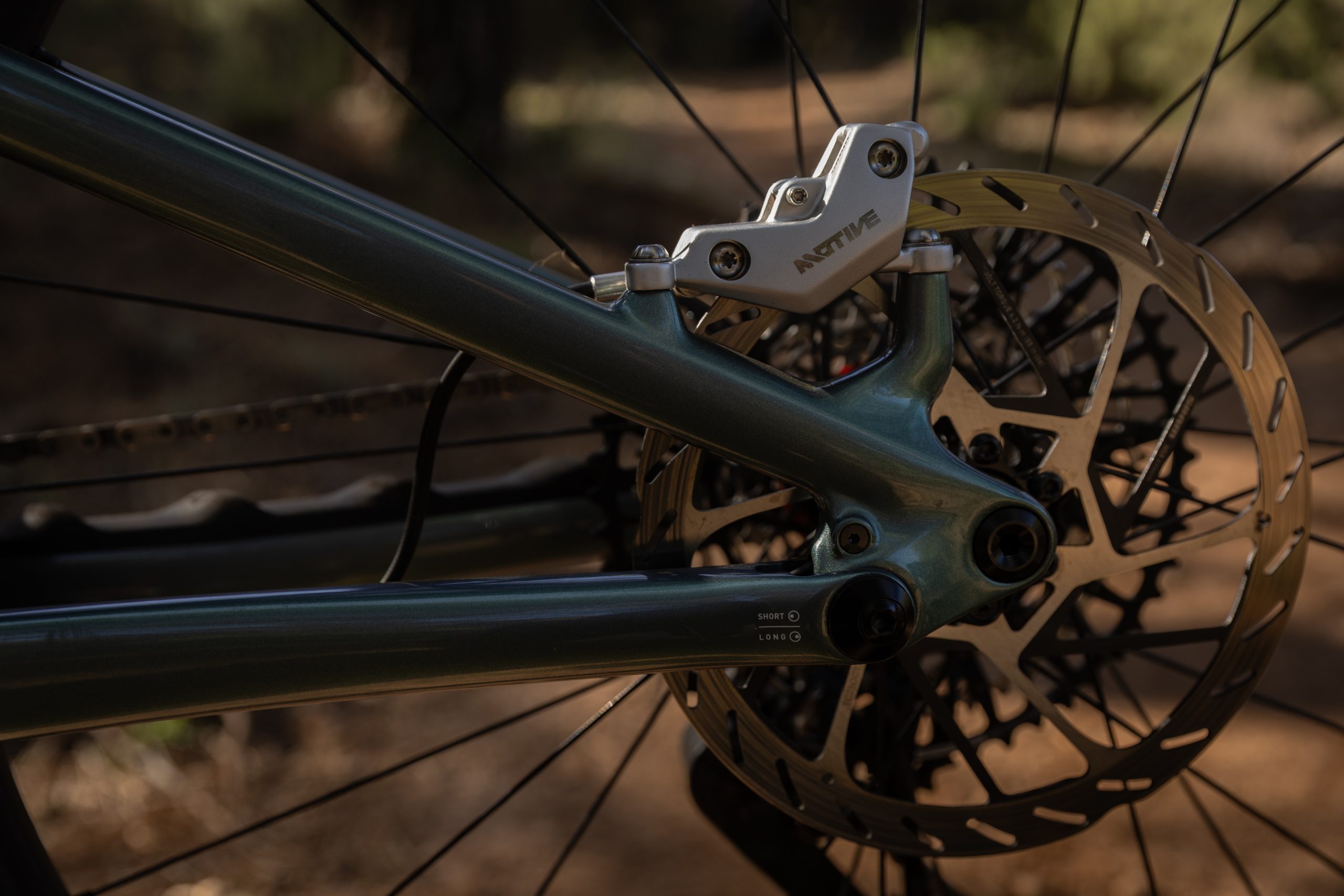
At 77 degrees, the seat tube angle should provide a decently efficient seated position for lapping up the trail miles.
In short, then, with the travel on offer, the ability to run a bigger fork if you wish and a host of geometry adjustment, the Levo R should be able to handle a lot.
Big power and range
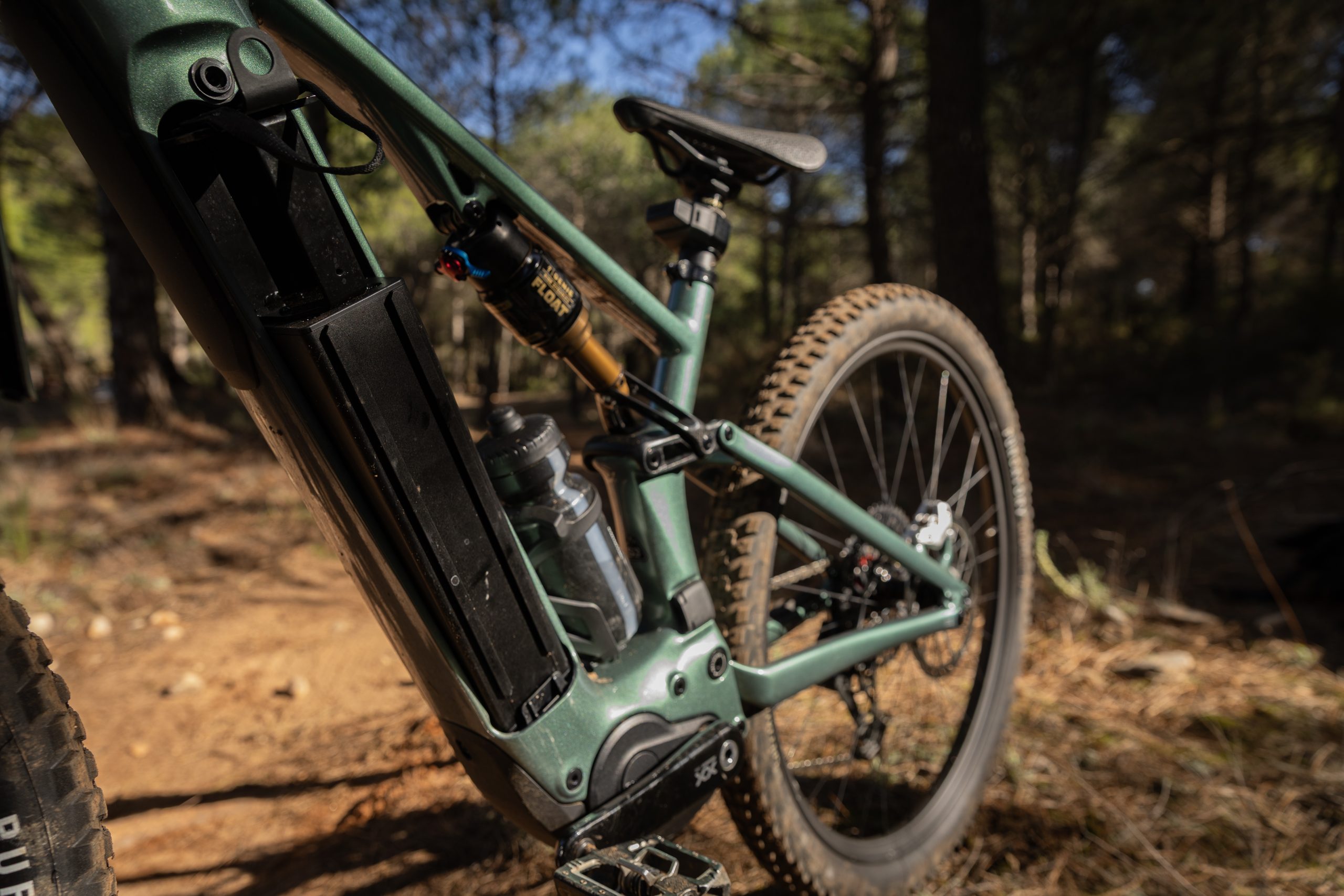
While the travel figures and geometry stats may differ slightly from the Levo R to the Levo, one thing that remains the same is what the motor is capable of pumping out.
After Specialized’s recent update, the S-Works 3.1 motor on the top-end model delivers a staggering 111Nm of torque and 850 watts of peak power. If you opt for any of the cheaper models, those numbers are reduced to 105Nm of torque and 810 watts of power.
We’re still not talking Avinox figures here, but the Specialized motor is certainly one of the gutsiest out there. It’s quiet, too, thanks to the lengths the team went to. The driveside housing has been decoupled from the motor mechanism to lessen vibrations, along with applying various surface coatings and treatments to the components within it in a bid to make it run as smoothly as possible.
Powering the motor is, as standard, an 840Wh battery. There is also the option to buy a lighter 600Wh battery or boost range by adding a 280Wh range extender.
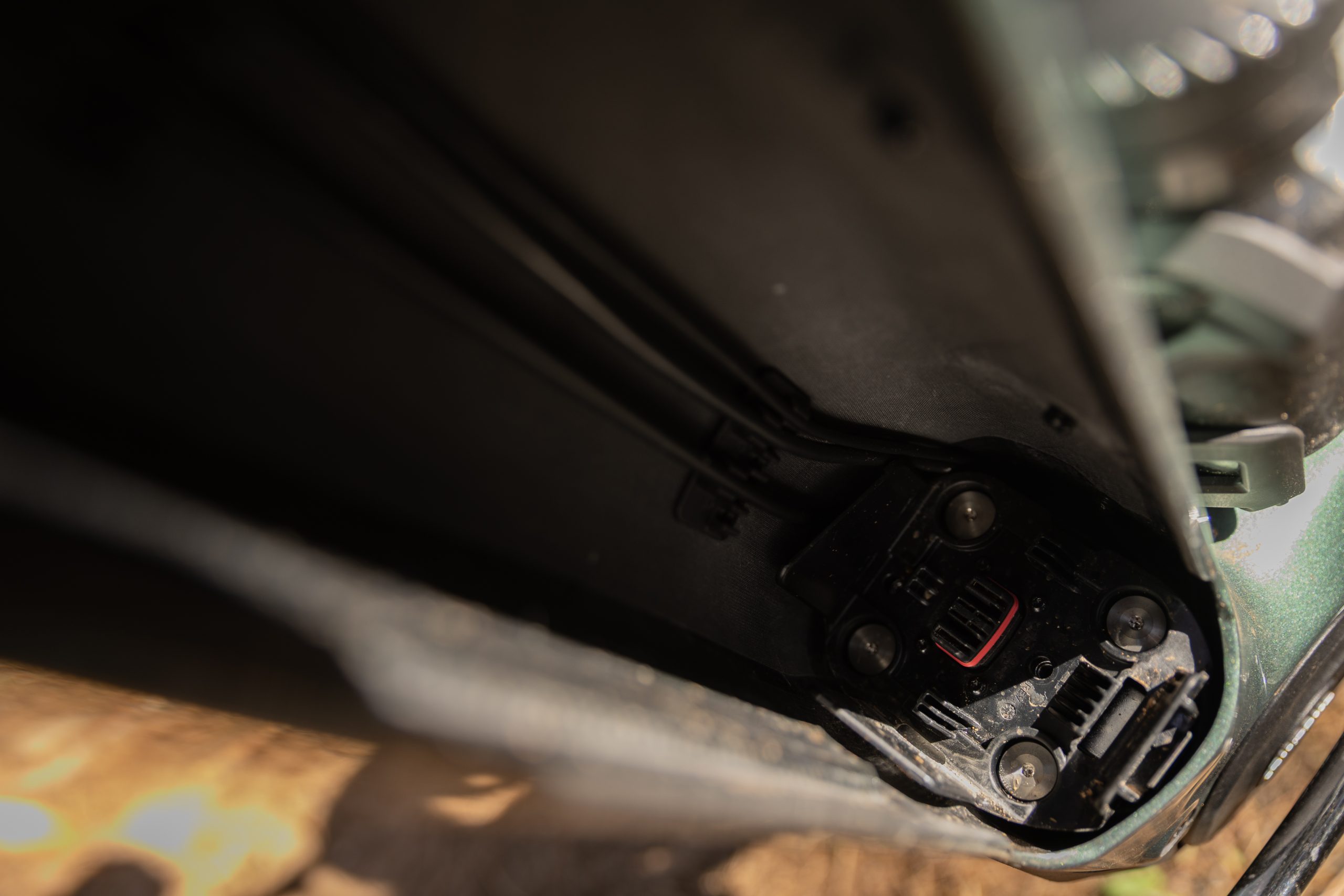
Within the side-loading battery compartment, Specialized has crammed in some of its SWAT storage, complete with a bag to stow your essentials.
For the most part, motor modes remain the same as we’ve seen on the Levo, although Specialized has added the Micro and Dynamic Micro Tune modes.
In these settings, you’re able to adjust assistance in 10 per cent increments. Now, though, there’s a new 0/0 (in Micro Tune) or 0/100 (Dynamic Tune) on offer, for those looking for more of a workout or to eke out as many miles as possible from one charge.
As with the Levo, there’s an integrated top-tube display with all the ride data you could possibly need, and plenty of tuning options.
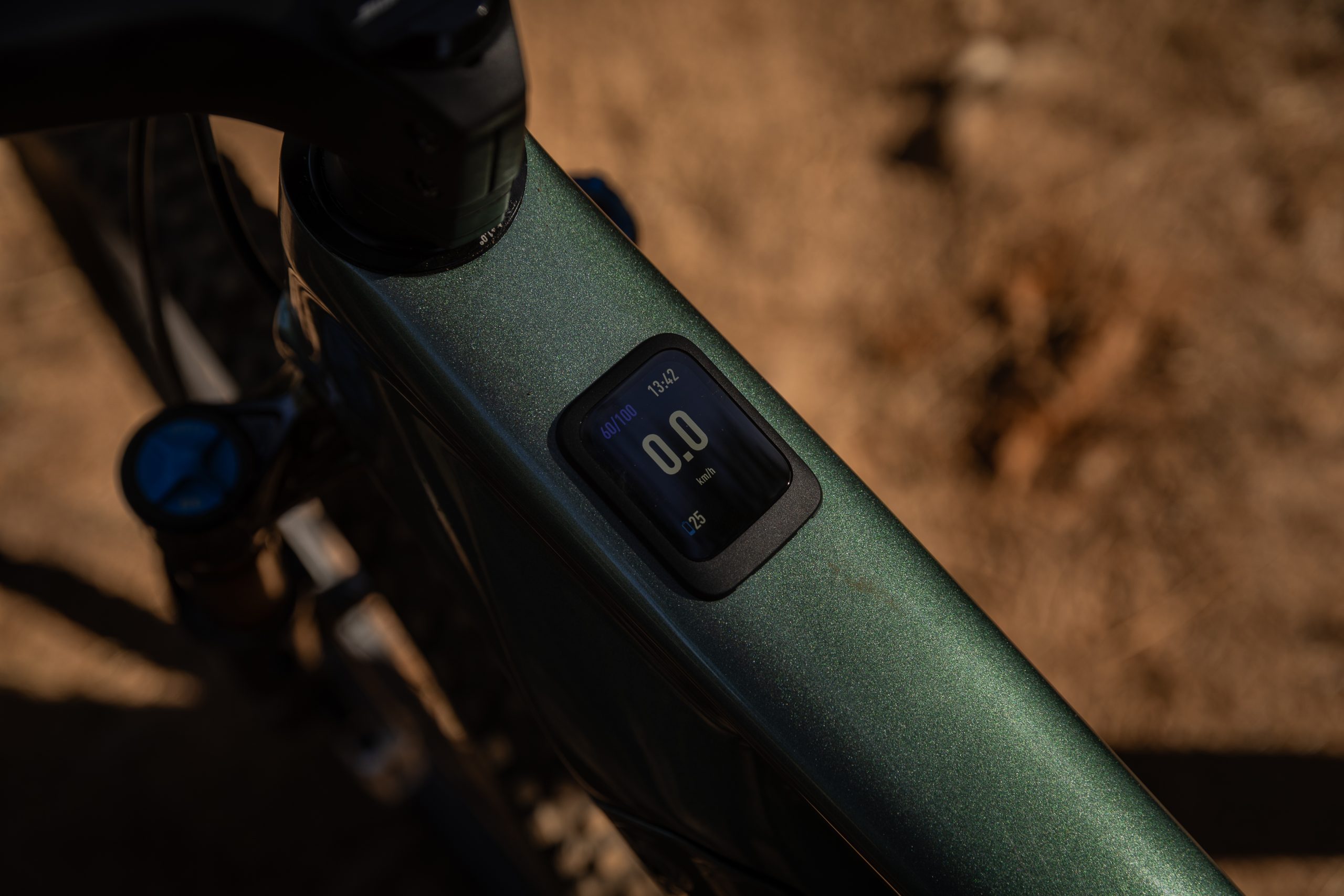
Tuning can also be done via the Specialized app, where you can apply the Turbo System Lock for better security and keep tabs on your bike via Apple Find My.
When it comes to topping up the battery, Specialized offers its 12A Smart Charger (sold separately), which’ll get you up to 80 per cent in less than an hour. The standard 5A charger can manage 80 per cent in a claimed 90 minutes.
Capable suspension
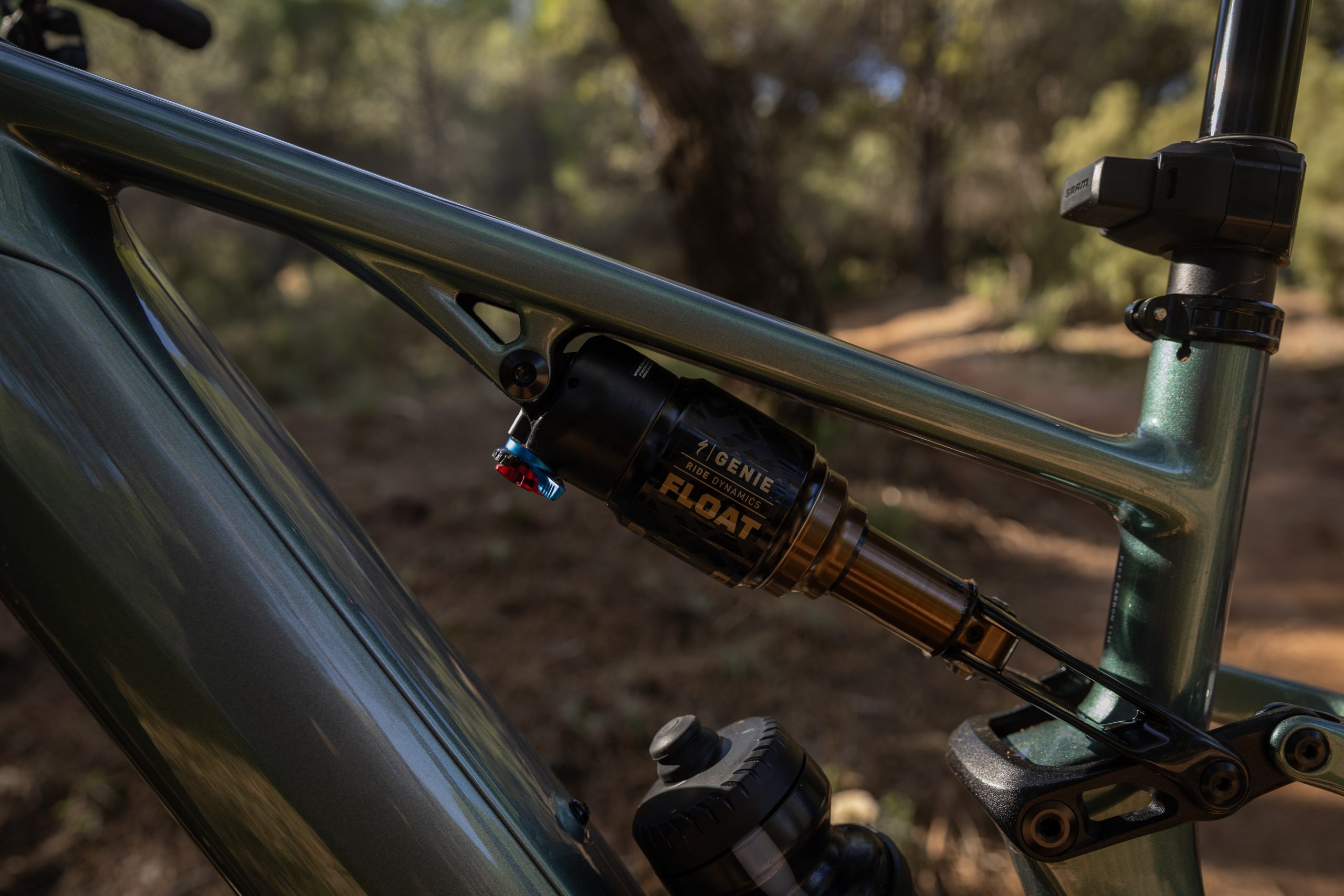
It might not be able to match the Levo when it comes to rear-wheel travel, but the 130mm the Levo R has on tap manages to feel deeper and more plentiful on the trail.
The trail-smoothing sensation is likely elevated by the use of the larger 29in rear wheel (compared to the 27.5in featured on the Levo), which rolls over smaller chatter more easily.
And let’s not forget the supple, incredibly smooth Fox shock with Genie technology. The dual-stage air spring enables you to tune the first 70 per cent and final 30 per cent separately from one another, and delivers a more linear, coil-like feel earlier in the stroke, helping keep the rear wheel tracking the trail more effectively compared to a standard air shock.
The 130mm of travel is dictated by the four-bar, Horst-link suspension system. A very nice touch from Specialized is the lifetime-replacement bearing policy (for the original owner), which should help breath new life into well-used rigs without costing riders a fortune.
The conundrum
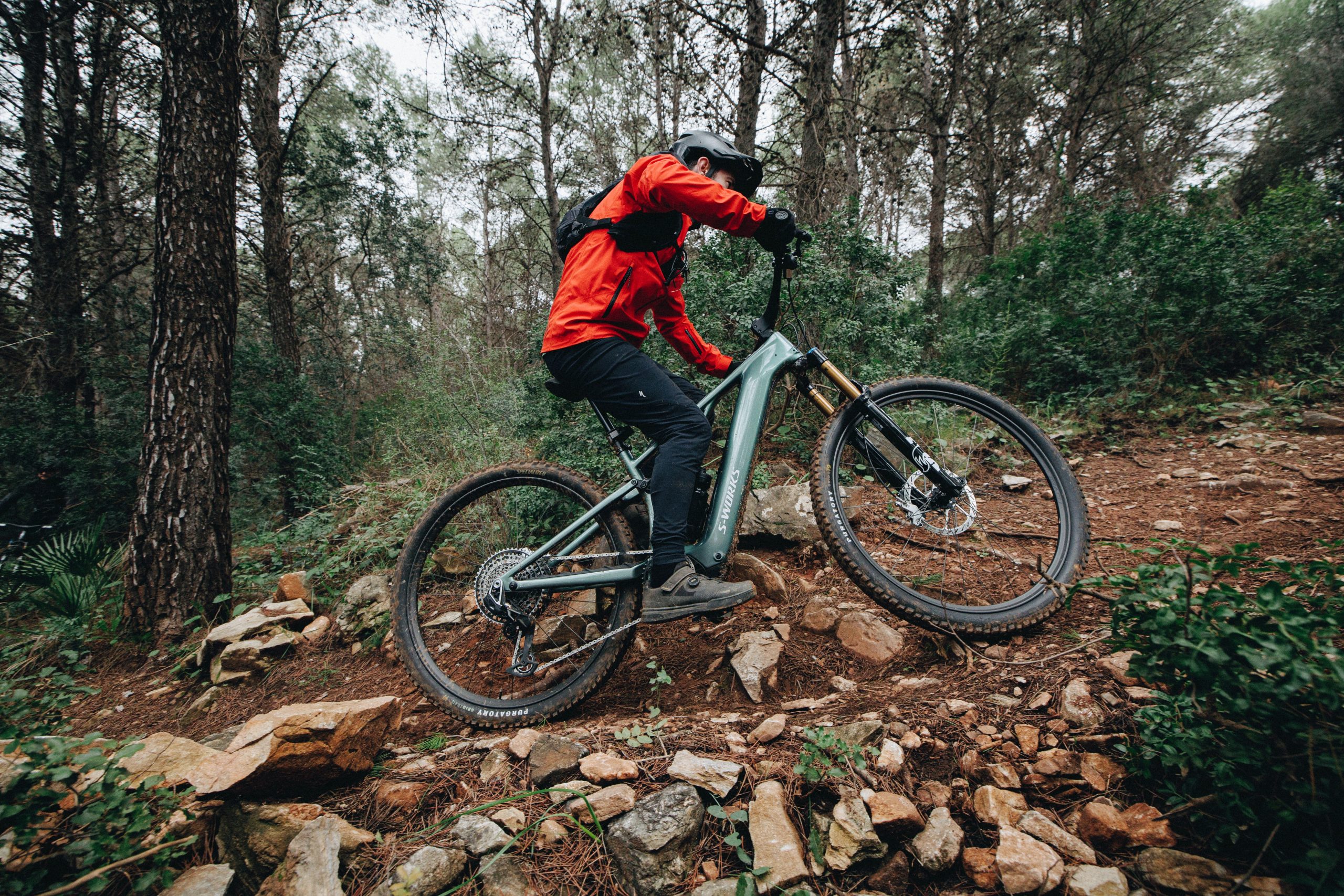
I get what Specialized is trying to do with the Levo R. It’s designed to offer a more lively trail-bike feel for those looking to clock some big miles and have fun while they’re doing it.
But perhaps it has made the bike too capable, too powerful and too close to the standard Levo in doing so.
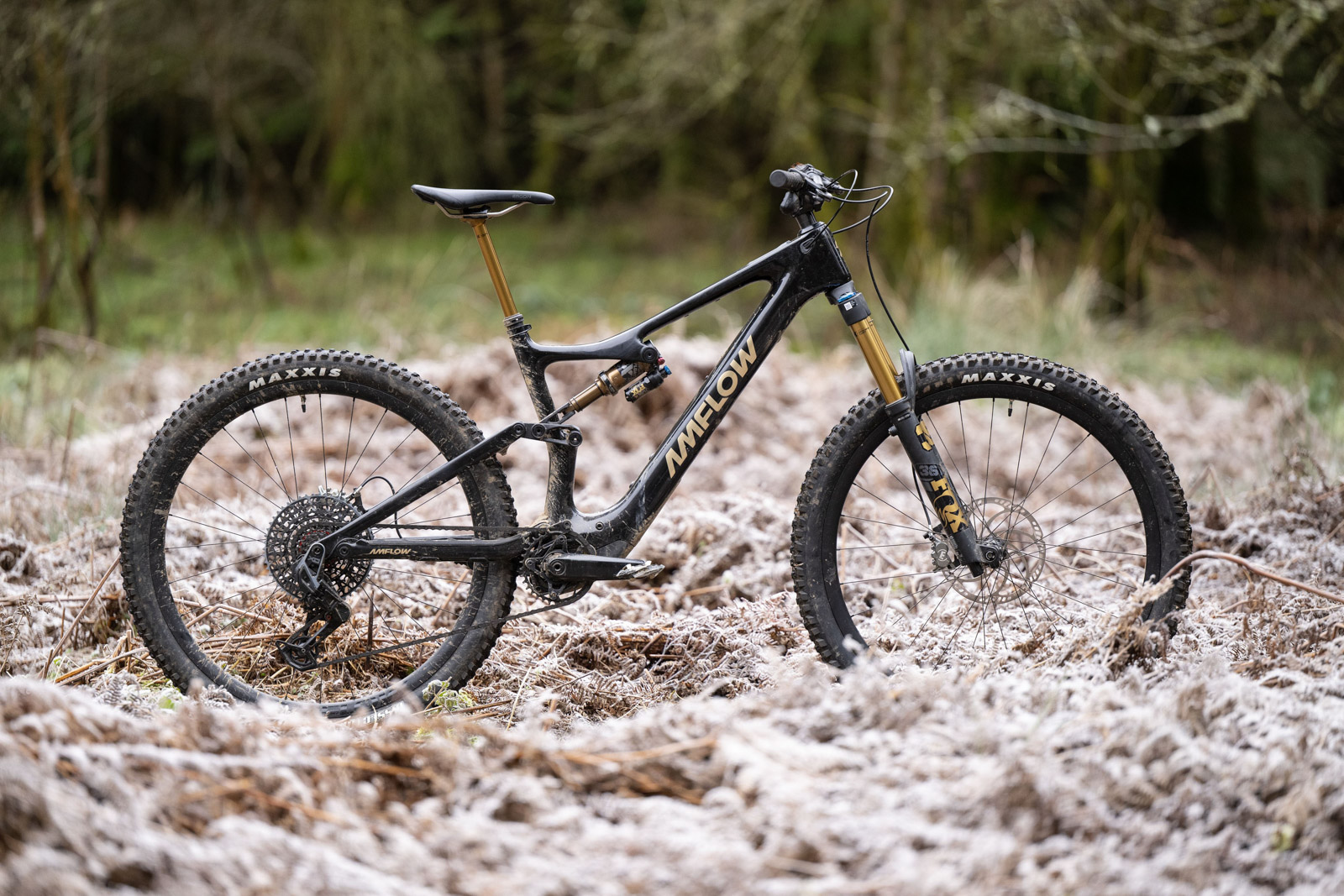
Yes, it’s lighter, but it’s not a million miles off the Levo’s weight and doesn’t crack that sub-20kg mark. It’s still heavier than the Amflow PL, arguably the best eMTB in this category.
It also has all the power and torque of the bigger bike, and even though the spec is more trail-focused, it’ll still take a right belting down some serious tracks if you want it to.
OK, the Levo is burlier, chunkier and likely a safer bet if you’re looking to hammer bike-park laps or ride enduro-style downhill trails, but you’ll be surprised by what the Levo R can take.

That’s why I feel the Levo R might be the better option for most riders. That’s not to say the Levo isn’t a good bike – I’ve really enjoyed my time aboard it. But as an all-rounder, the Levo R offers a little more versatility and is still very capable, making the Levo a little less appealing in my eyes.
Range overview
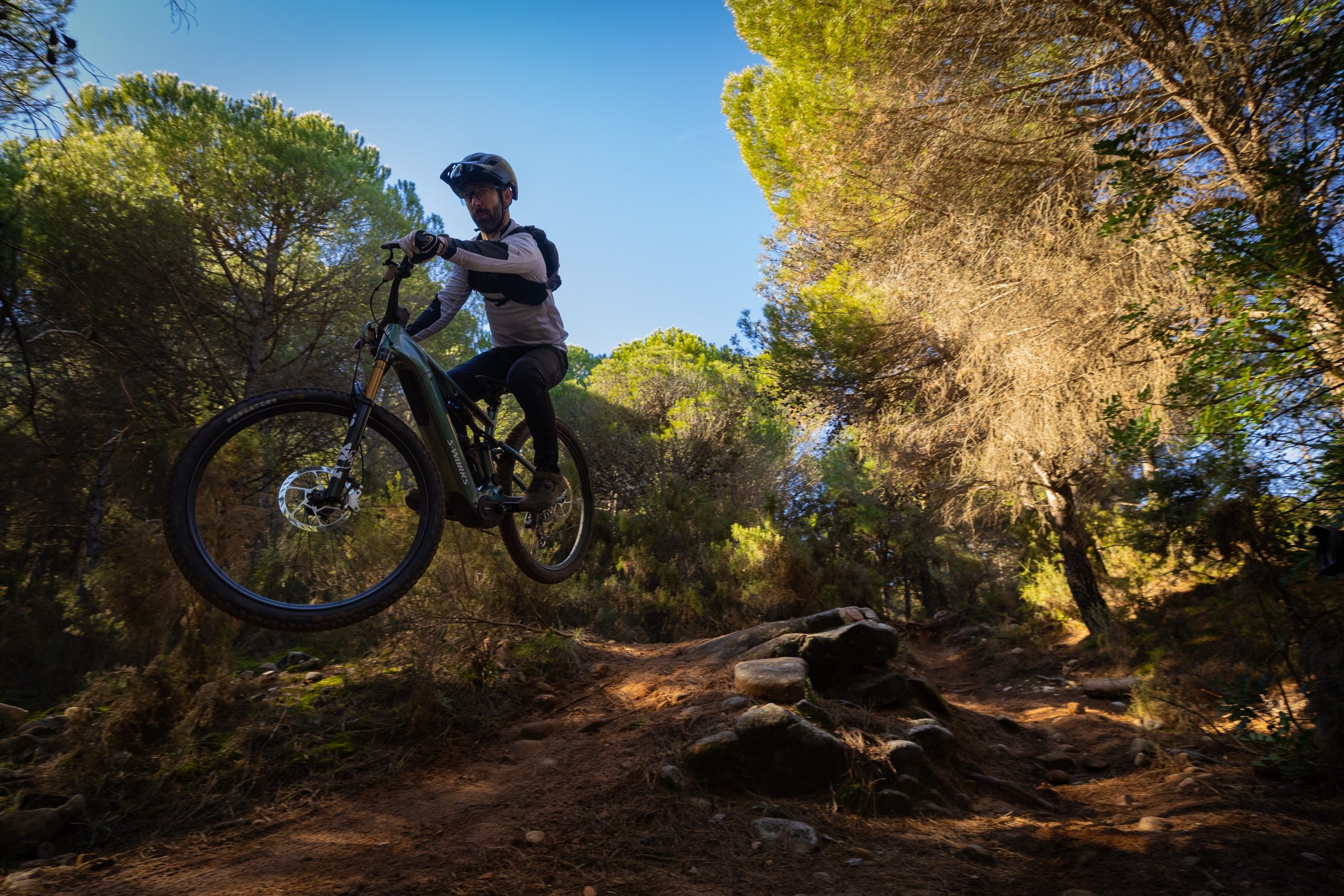
While only the S-Works model gets the S-Works motor, the two cheaper bikes share the 3.1 motor, which delivers 101Nm of torque and 810 watts of peak power.
The S-Works bike also gets the integrated carbon bar and stem, which you won’t see on any other bikes in the line-up.
Specialized Levo R Comp
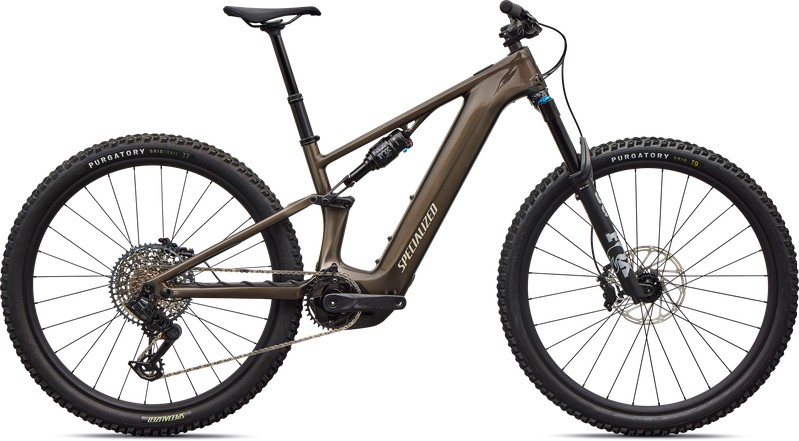
- Frame: FACT 11m carbon, 130mm travel
- Fork: Fox 36 SL Performance, 140mm travel
- Shock: Fox Float Performance Genie
- Motor: Specialized 3.1 (101Nm / 810W)
- Battery: Specialized Turbo X2 840Wh
- Drivetrain: SRAM S-1000 derailleur, GX Eagle Transmission cassette and chain, SRAM Eagle 70 crankset
- Brakes: SRAM Motive Bronze
- Wheels: Specialized
- Price: £TBC / $9,200 / €7,999
- Weight: 22.34kg (S3, without pedals)
Specialized Levo R Expert
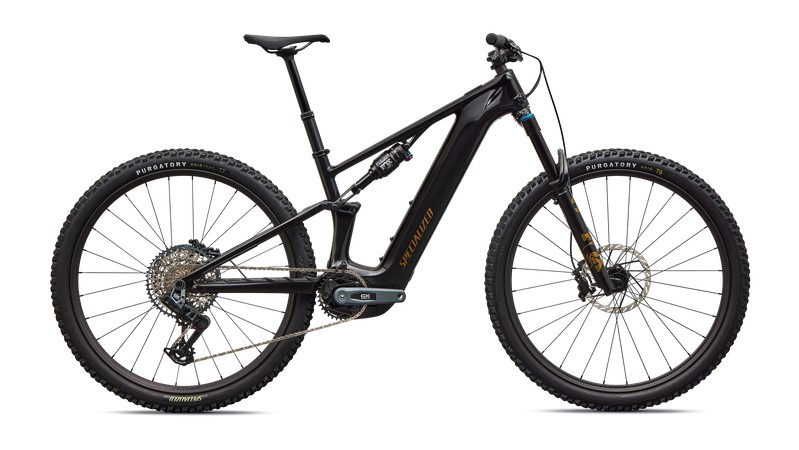
- Frame: FACT 11m carbon, 130mm travel
- Fork: Fox 36 SL Performance Elite, 140mm travel
- Shock: Fox Float Performance Elite Genie
- Motor: Specialized 3.1 (101Nm / 810W)
- Battery: Specialized Turbo X2 840Wh
- Drivetrain: SRAM GX Eagle AXS Transmission
- Brakes: SRAM Motive Bronze
- Wheels: Roval Traverse SL II
- Price: £8,499 / $10,800 / €9,999
- Weight: 21.76kg (S3, without pedals)
Specialized Levo R S-Works
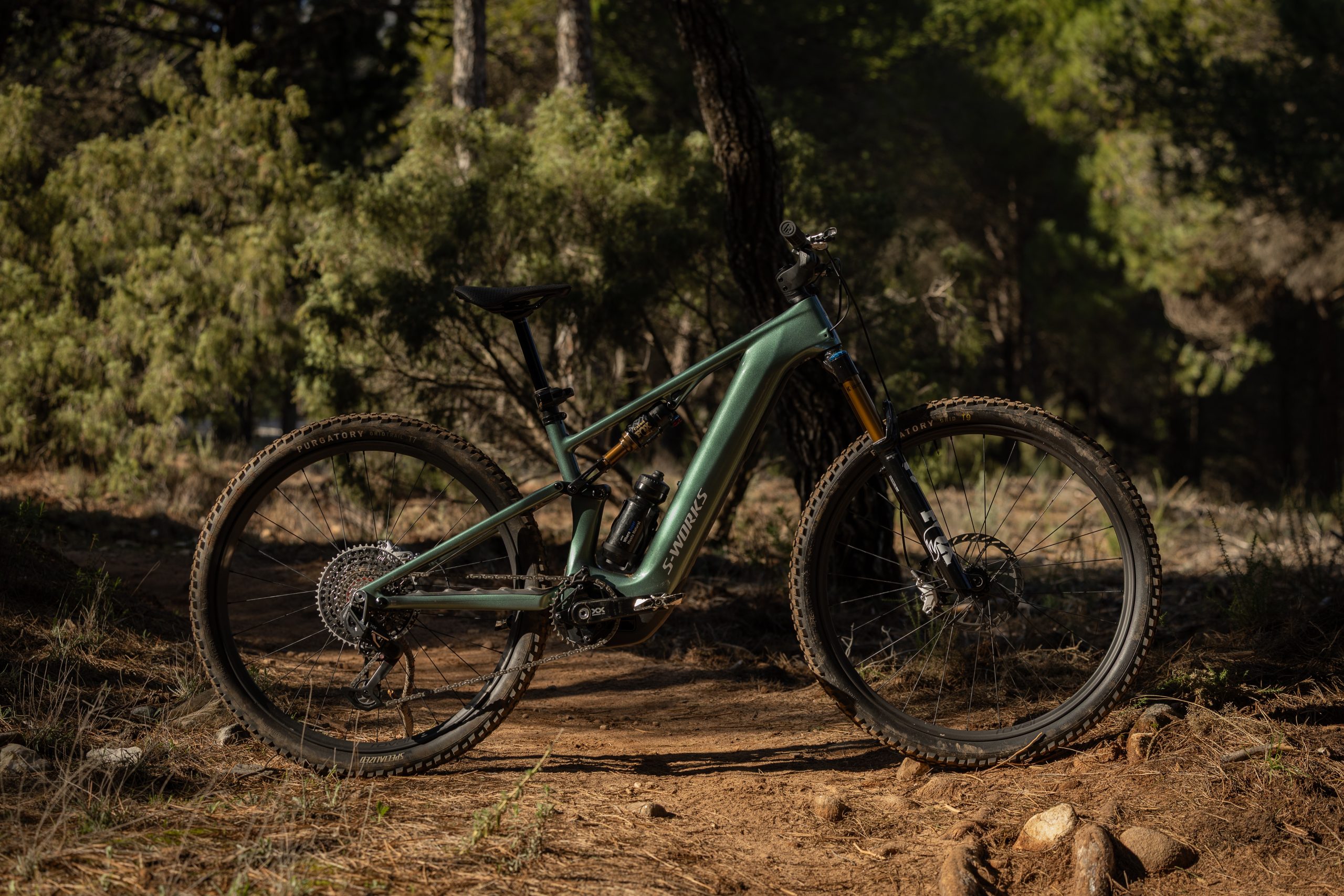
- Frame: FACT 11m carbon, 130mm travel
- Fork: Fox 36 SL Factory, 140mm travel
- Shock: Fox Float Factory Genie
- Motor: Specialized 3.1 (105Nm / 850W)
- Battery: Specialized Turbo X2 840Wh
- Drivetrain: SRAM XX Eagle AXS Transmission
- Brakes: SRAM Motive Ultimate
- Wheels: Roval Traverse SL II
- Price: £12,499 / $15,650 / €13,999
- Weight: 21.16kg (S3, without pedals)
50 mpg in a Nissan crossover? Testing the new E-Power hybrid system.
While Toyota and Honda’s showrooms are littered with electrified offerings, Nissan hasn’t had much to counter. Globally, Nissan offers a series hybrid system called E-Power, but the company has been reluctant to offer it Stateside. If you ask anyone at the company about it, they’ll tell you that while it makes sense in Europe, Japan, and other parts of Asia, it is not optimized for the type of driving we do this side of the pond.
Nissan’s hybrid offerings in North America have been lackluster at best. There was the Altima that borrowed Toyota’s hybrid system from the Camry, and there was the Rogue hybrid that failed to deliver noticeably better fuel economy. And that’s really it.
That, however, is about to change with the company’s third-generation system.
NASA’s Curiosity Rover Captures Stunning Images Of Mysterious Martian Spiderwebs

NASA’s Curiosity rover has finally completed its focused survey of the so-called spiderwebs of Mars, providing us the first close-up look at a massive network of geologic ridges on Mount Sharp that have puzzled scientists since they were first spotted from orbit years ago.
Curiosity rover captured this panorama of boxwork formations—the
Zwift Update Version 1.108 (159025) Released
Zwift version 1.108 begins its phased rollout today. This is a minor update, but there are a few new Climb Portals included that we’ll get to ride in the coming months, plus changes to Coffee Stops which regular users will want to know about. See details below…
New Climb Portals
Although not mentioned in the release notes, today’s update includes three new climbs for the Climb Portal. These are the first climbs added to the library since April 2025!
All three are short Belgian climbs known for their inclusion in iconic sprint classics. My guess is we’ll see these on the Climb Portal calendar for April 2026:
| Name | Length | Elevation Gain | Gradient |
| Paterberg | 0.4km | 45m | 11.9% |
| Koppenberg | 0.6km | 63m | 10.8% |
| Mur de Huy | 1.3km | 124m | 9.8% |
In case you’re wondering: yes, these are very short climbs! Look how close together the 10 arches are on the Paterberg:
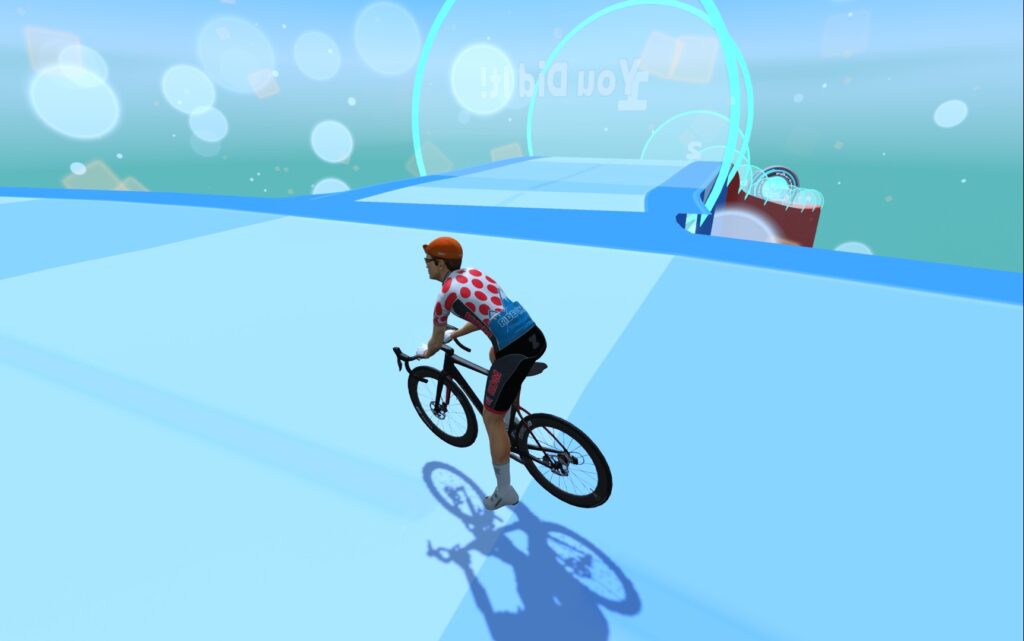
The Paterberg is now the shortest climb in the library, with the Koppenberg 2nd-shortest and Mur de Huy 4th.
Coffee Stop Fixes/Changes
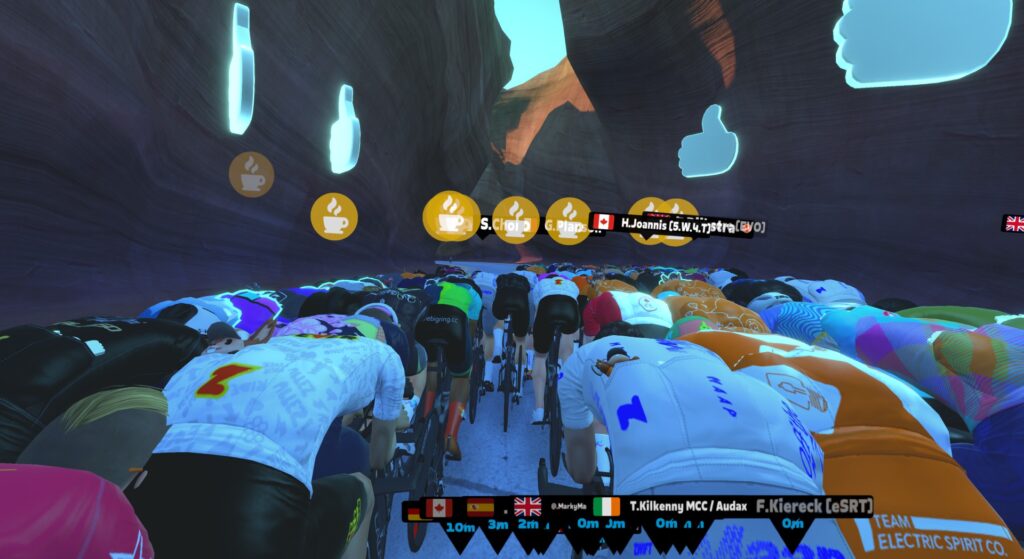
Today’s release, as well as the previous update, contains several changes and fixes for Zwift’s Coffee Stop feature, effectively making it “Coffee Stop v2”. Here’s the full list of what has changed…
Bug Fixes
- Game v1.107: Fixed issues where Coffee Stop was permanently greyed out throughout the activity, but was supposed to be available. (This happened when users jumped from a workout to an event through the ‘join event’ pop-up.)
- Game v1.108: Fixed issues where towing abruptly stopped, and shouldn’t have:
- When triggered before the final 5km of a distance-based event, or the final 15 minutes of a time-based event. Where towing used to abruptly stop when you hit 5km or 15 minutes to go, it will now continue through the end of the Coffee Stop timer.
- When finishing the cooldown portion of an event, the activity automatically transitions into a free ride. If you triggered your Coffee Stop during the cooldown, towing used to suddenly stop right when the cooldown ended and the free ride began. It will now continue through the end of the Coffee Stop timer.
- Your momentum and selected route will now continue after an intersection if your “tow truck” turns onto a different route.
What’s New
- Earlier Availability: The 3-minute Coffee Stop is now available starting at the 5-minute mark, instead of 30 minutes into the ride. It will be available at the 5-minute mark even if you use the 30-second Coffee Stop in those first 5 minutes. (Hurray!)
- Hover Tooltips: If the Coffee Stop icon is greyed out/disabled, hovering over it will now display the reason.
- Activity Reset Logic: Coffee Stop timers and availability are now correctly reset whenever switching between different activity types where Coffee Stops are allowed (i.e. non-competitive group rides, and rides that don’t involve a structured workout), or returning to the Home Screen.
Note: These behaviors remain unchanged:
- Coffee Stop is disabled in all competitive events and structured workouts.
- Full 3-minute Coffee Stops regenerate 30 minutes after the previous one ended.
- You need at least one other Zwifter nearby headed in the same direction.
Revised Strava Activity Descriptions
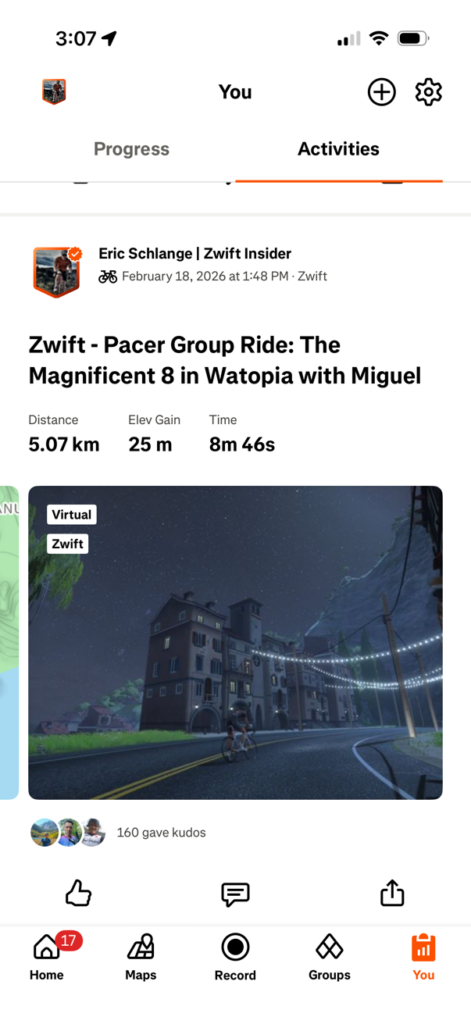
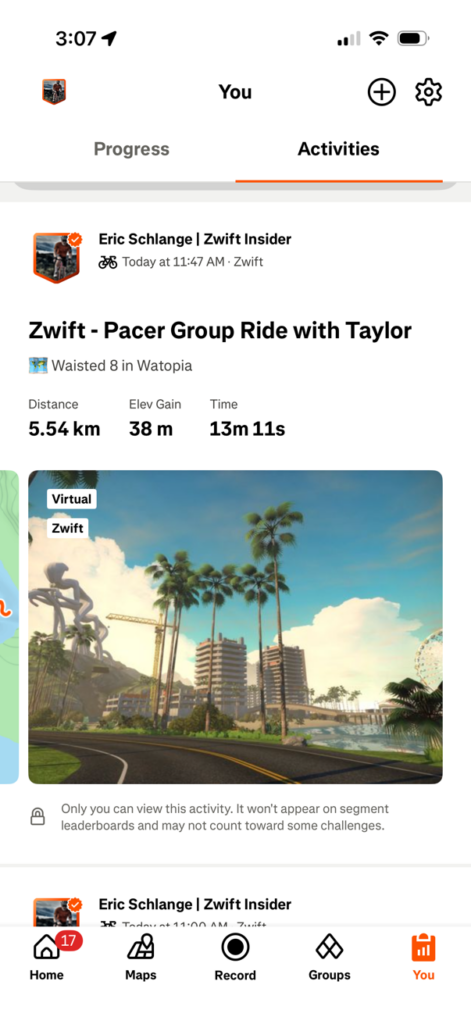
Zwift says, “We’ve simplified how Zwift activities appear on Strava by shortening activity titles and moving the route and world into the description. This change applies only to events, workouts, and RoboPacer rides.”
Here are shots of a Robopacer ride before and after this change. Nice change!
Computrainer Connection Fix
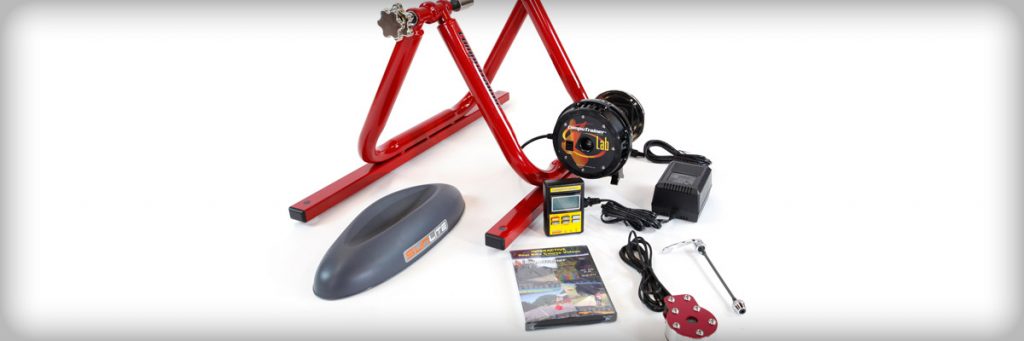
Racermate earned legend status years ago in the indoor cycling community due to their bombproof CompuTrainers. And even though Racermate closed up shop in 2017 (after 40 years making trainers!), there are still a number of Zwifters rolling CompuTrainers.
Unfortunately, back in January, Windows released a driver update for Win10 users that broke Zwift’s connection to CompuTrainer devices. (Or was it a Zwift update that caused the issue? Read the 120+ comment thread and decide.) Whatever the cause, today’s update includes a fix. Zwift says, “Windows: Improved an issue that could cause CompuTrainer devices to not appear in the Pairing screen after a recent Windows Update driver update.”
Release Notes
Zwift supplied the following additional release notes:
- Fixed an issue that could cause the Goal Met notification banner to incorrectly appear in-game.
- Fixed an issue that could cause the level-up visual effect to display the wrong level.
- Fixed an issue that could cause level-up notifications to not appear in the Zwifters Nearby list when riding in Climb Portal.
- Fixed an issue that could cause Apple Watch to appear as “UNKNOWN DEVICE” in the Pairing Screen.
- Fixed an issue that could cause workout arches to render incorrectly in the Watopia volcano.
- Fixed an issue that could cause minor visual discrepancies between the Race Score shown in the Zwift post-ride progress report vs. Zwift Companion. This only affected the display of Race Score – the underlying values were unaffected.
Discuss this update in Zwift’s forum > (link coming soon)
Questions or Comments?
If you spotted any other changes or bugs in the update, please comment below!
Blizzard finally revealed its long-rumored Overwatch mobile game
Blizzard is finally bringing Overwatch to mobile devices, but not exactly in the way you think. The company isn’t making a port of the mainline game. Rather, it just announced a spinoff called Overwatch Rush, which is being described as a “top-down hero shooter designed specifically for mobile set in the Overwatch universe.”
There have been rumors about an Overwatch mobile game for what seems like a lifetime. Most people assumed this would appear as a straight port, but a brand-new game is also great. It’s not being developed by Team 4, the group that works on the mainline game, but is being made internally.
Overwatch Rush features many of the heroes of Overwatch battling on familiar-looking maps, according to a gameplay video. The game offers 4v4 matches, though the characters are more cartoonish and stylized than the mainline game. This is likely to accommodate smaller screens and the top-down view.
This is a mobile game, so the battles are described as “bite-sized” and the controls are touchscreen-based. Blizzard says it’s still in the early stages of development but that it’s going to offer “fast-paced, on-the-go play, with hero-centric combat and playstyle customization that suits both team and solo players.”
Overwatch Rush will be playable soon, as part of a beta testing process. It’ll be free to play and available for both Android and iOS whenever the full game is ready to go.
Blizzard says that a “new, separate, dedicated team” will be “focused exclusively” on Overwatch Rush. That’s industry code for “we aren’t draining resources from the main game to make the mobile spinoff.” Oddly, the company recently held a series of panels to discuss the future of its franchises and didn’t mention this mobile game.
This isn’t the company’s first foray into mobile game development. It’s had a hand in stuff like Diablo Immortal and Warcraft Rumble.
This article originally appeared on Engadget at https://www.engadget.com/gaming/blizzard-finally-revealed-its-long-rumored-overwatch-mobile-game-162938590.html?src=rss
GNU Awk 5.4.0 released
Version
5.4.0 of GNU awk
(gawk) has been released. This is a major release with a change in
gawk’s default regular-expression matcher: it now uses MinRX
as the default regular-expression engine.
This matcher is fully POSIX compliant, which the current GNU matchers
are not. In particular it follows POSIX rules for finding the longest
leftmost submatches. It is also more strict as to regular expression
syntax, but primarily in a few corner cases that normal, correct,
regular expression usage should not encounter.Because regular expression matching is such a fundamental part of
awk/gawk, the original GNU matchers are still included in gawk. In order
to use them, give a value to the GAWK_GNU_MATCHERS environment variable
before invoking gawk.[…] The original GNU matchers will eventually be removed from
gawk. So, please take the time to notice and report any issues in the
MinRX matcher, so that they can be ironed out sooner rather than later.
See the release announcement for additional changes.
Horizon Multiplayer Game Gets Surprise Playtest The Same Weekend As Marathon Server Slam

Two upcoming Sony live-service games have competing betas for some reason
Space Control Coming to Meta Quest & PC VR Soon, Demo Out Now
Inspired by animated series like Rick & Morty and Futurama, Space Control is an absurd and comic VR game with a Steam Next Fest demo available now.
MoonMonster Studios has just announced a playable demo of Space Control, a ridiculous and hilarious VR adventure inspired by animated comedies like Futurama and Rick & Morty.
In Space Control, you’ve been abducted by an intergalactic megacorporation, which has unceremoniously thrust upon you a massive debt. Over three unique episodes, you must take on a variety of unpleasant jobs set in the corporate space station.
0:00
/1:02
Work off your debt with your alien crew, abduct new recruits, take care of alien babies, and cook up some highly questionable snacks. The game’s key features include physics-based VR gameplay, an episodic narrative, a cast of outrageous companions, and a delightfully dystopian universe in which to toil away.
MoonMonster Studios plans to bring Space Control to Meta Quest and Steam VR this April. You can wishlist the game at those storefronts, and sample the demo now as part of Steam Next Fest.
Stay tuned for our full impressions piece on Space Control in the coming days.
Earth’s Largest Land-Based Carbon Sink Has Sprung a Disturbing Leak
The Congo Basin’s peatlands have stored carbon for millennia, but new research suggests much of it is now escaping.
Life Is Strange: Reunion Is A Risky Thought Experiment That Could Easily Go Wrong

Deck Nine is meddling with the multiverse, and it’s risking a lot of good will to do it
KDE Plasma 6.6 isn’t forcing systemd but the arguments rage on
BSD support improves, FreeBSD eyes a desktop option, and the init wars refuse to dieThe latest KDE desktop environment is out. Among other things, it comes with a pledge that it won’t require systemd, and this version has improved OpenBSD support. FreeBSD 15.1’s installer offers KDE too.…
The Western US Is in a Snow Drought. What Comes Next Is Even Scarier
Major snowpack deficits could set the stage for widespread water scarcity and heightened wildfire risk across the American West this summer.
Billions of Dollars Later and Still Nobody Knows What an Xbox Is
Microsoft has spent more than $76 billion acquiring game studios and publishers over the past few years in an attempt to turn Xbox into a Netflix-like subscription platform, and the result is that nobody — possibly not even Microsoft — can clearly articulate what Xbox actually is anymore, The Verge writes.
The brand started as a powerful video game console, but Game Pass and cloud gaming pushed it toward a hazier identity: the “This is an Xbox” ad campaign tried to redefine it as any device that could play Xbox games, whether a PC, a smart TV, a phone, or a Windows handheld. Microsoft then went further and started publishing its biggest franchises on PlayStation, making it one of the largest third-party publishers on a rival’s platform.
Phil Spencer, who led the division for over a decade and drove the subscription pivot, announced his retirement last week, and incoming CEO Asha Sharma has pledged “the return of Xbox” — though her memo also talks about expanding across PC, mobile, and cloud, which sounds a lot like the status quo.


Read more of this story at Slashdot.