Best Black Friday streaming deals for 2025: One year of the Disney+ Hulu bundle for $60, plus save on Apple TV+, HBO Max and more

Streaming deals come and go throughout the year, but they are most abundant around Black Friday. It’s been a testy year for streaming services to say the least, and one big manifestation of that has been continuously rising prices. Disney+ and HBO Max were just a couple of the streaming services that bumped up prices, which means it’s more important than ever to subscribe if and when you can get a discount. These are the best Black Friday streaming deals you can get this year; just note, though, that most require you to be either a new subscriber to get the deal, or a returning subscriber who hasn’t been a paid customer in a hot minute.

Best Black Friday streaming deals

Apple TV+ — 6 months for $36: Apple TV+ is offering six months of access for only $36 for Black Friday, which comes out to a discounted price of $6 per month for the six-month period. The deal is live now for new and eligible returning subscribers and runs through December 1, giving you a chance to stream shows like Silo, The Morning Show and For All Mankind for less. The biggest caveat to the deal is that you must subscribe directly through Apple and not through a third-party service.

HBO Max — one year for $36: HBO Max’s Black Friday deal gives subscribers one year streaming for $36 through December 1. This Black Friday streaming deal is on the ad-supported option, which normally goes for $11 per month. With this discount, you’re getting it for $3 per month for one year. You can sign up via HBO Max’s website or, if you’re a Prime Video subscriber already, via that service as an add-on.

Sling TV Orange — day pass for only $1: Sling TV launched Day Passes earlier this year, giving users one-day access to a variety of its packages. This deal cuts $4 off the normal price of a day pass for Sling Orange. With that, you get unlimited access for 24 hours to Orange’s more than 30 channels that includes ESPN, CNN, TBS and others.

MasterClass — up to 50 percent off annual subscriptions: The MasterClass Black Friday deal discounts most subscription tiers by 50 percent when you pay for one year upfront. The Premium tier, the most expensive option, usually costs $20 per month but now only sets you back $10 per month for one year. That gives you access to the entire MasterClass content library, offline viewing and up to six simultaneous streams.

Audible — three months for $3 + $20 Audible credit: For literally $1 per month, you can get access to Audible’s enormous library of published audiobooks, podcasts and Audible Originals (which can be anything from never-before-heard books to live performances). It’s only three months, after which you’ll have to cancel or renew at the regular price, but an audiobibliophile can cram a lot of listening into 90 days.

Plex — lifetime pass for $150: Plex offers personal media servers you can use to organize your digital collection — imagine your own curated Netflix homepage that nothing ever vanishes from. It’s also a streaming platform in its own right, with movies and TV from all genres and eras. Plex did just raise its prices, so now’s your chance to get a lifetime pass for close to what it used to cost.

Fubo TV — up to $30 off your first month: Fubo is arguably the best live TV streaming service for sports, and now new subscribers can save up to $30 on their first month. You’ll get that discount if you subscribe to the Elite plan, which normally costs $95 per month and provides access to 325 channels including ABC, NBC, CBS and Fox, and it includes ESPN Unlimited as well. If you’re looking for a more affordable plan, the News + Sports tier has a $10 discount for new subscribers.

Starz — one year for $24: Pay upfront for one year and you can get more than $40 off a Stars annual subscription. There’s a month-to-month option too, which costs $3 per month for the first three months if you don’t want to commit to the full year. Either option gives you access to the entire Starz TV and movie library with offline viewing and no ads.

DirecTV — starting at $50/month for one month: All of DirecTV’s signature packages are up to $45 off right now for your first month when you sign up. If you opt for the base “Entertainment” package, you’ll spend $50 for the first month and get access to over 90 channels, including many local stations as well as ESPN, ESPN 2 and Fox Sports 1. You’ll also be able to watch on the go with the DirecTV mobile app.

This article originally appeared on Engadget at https://www.engadget.com/deals/best-black-friday-streaming-deals-for-2025-one-year-of-the-disney-hulu-bundle-for-60-plus-save-on-apple-tv-hbo-max-and-more-094257206.html?src=rss

Get the Disney+ and Hulu bundle for $60 for one year in this Black Friday streaming deal

The Disney+ and Hulu (with ads) bundle is officially on sale for $5 per month for one year (for a total of $60) through December 1, giving new and returning subscribers a full year of both streaming platforms for less than the cost of a few movie tickets. The bundle includes Disney+ and Hulu’s basic plans with ads, so if you’ve been waiting for a sign to catch up on Only Murders in the Building or dive into the Star Wars universe, this is it.

Disney+ and Hulu make one of the most balanced streaming pairs available, blending family-friendly favorites with acclaimed originals and network TV staples. Disney+ brings a vast library of animated classics, blockbuster franchises and exclusive content from Marvel, Pixar, Star Wars and National Geographic. It’s the place to stream nearly every Star Wars film and series, plus the full Marvel Cinematic Universe lineup and Disney’s most recent theatrical releases.

For families, it doubles as a reliable destination for animated favorites, from Encanto to Inside Out 2, and its kid-friendly interface makes it simple to hand over the remote without worrying about what’s queued next.

Hulu balances things out with a more adult-oriented lineup of current TV shows, next-day network episodes and a growing roster of award-winning originals. The platform hosts series like The Bear, The Handmaid’s Tale and Only Murders in the Building, alongside comedies, thrillers and documentaries that regularly feature in awards conversations. It’s also the home for next-day streaming of ABC and FX shows, making it especially useful if you’ve already cut the cable cord but still want to keep up with primetime TV.

The Duo Basic bundle ties these two services together under a single subscription, offering a simple way to expand your library without juggling multiple accounts. This tier includes ads on both platforms, but the trade-off is significant savings compared with paying for each service separately. For many households, that’s an acceptable compromise when it means access to such a wide range of content.

Both platforms also integrate smoothly across devices. Disney+ is available on nearly every smart TV and streaming stick and Hulu’s interface is built around customizable profiles, so everyone in the household can keep separate watch lists. The bundle login works seamlessly between the two, and since they’re both owned by Disney, it’s easy to switch from a Marvel marathon to a new episode of The Great or Abbott Elementary without leaving the ecosystem.

If you prefer a more premium experience, you can upgrade to the Duo Premium bundle for ad-free viewing, but the Basic plan remains the best value for most users. It’s an especially practical pick if you’re looking to consolidate your streaming subscriptions without losing access to major franchises or hit series.

If you’re still comparing options or thinking about how to simplify your lineup, our guide to the best streaming services outlines how Disney+, Hulu and others stack up. But for those already invested in Disney’s worlds or Hulu’s critically acclaimed originals, this annual Duo Basic deal offers one of the easiest and most affordable ways to keep it all in one place.

This article originally appeared on Engadget at https://www.engadget.com/deals/get-the-disney-and-hulu-bundle-for-60-for-one-year-in-this-black-friday-streaming-deal-094131027.html?src=rss

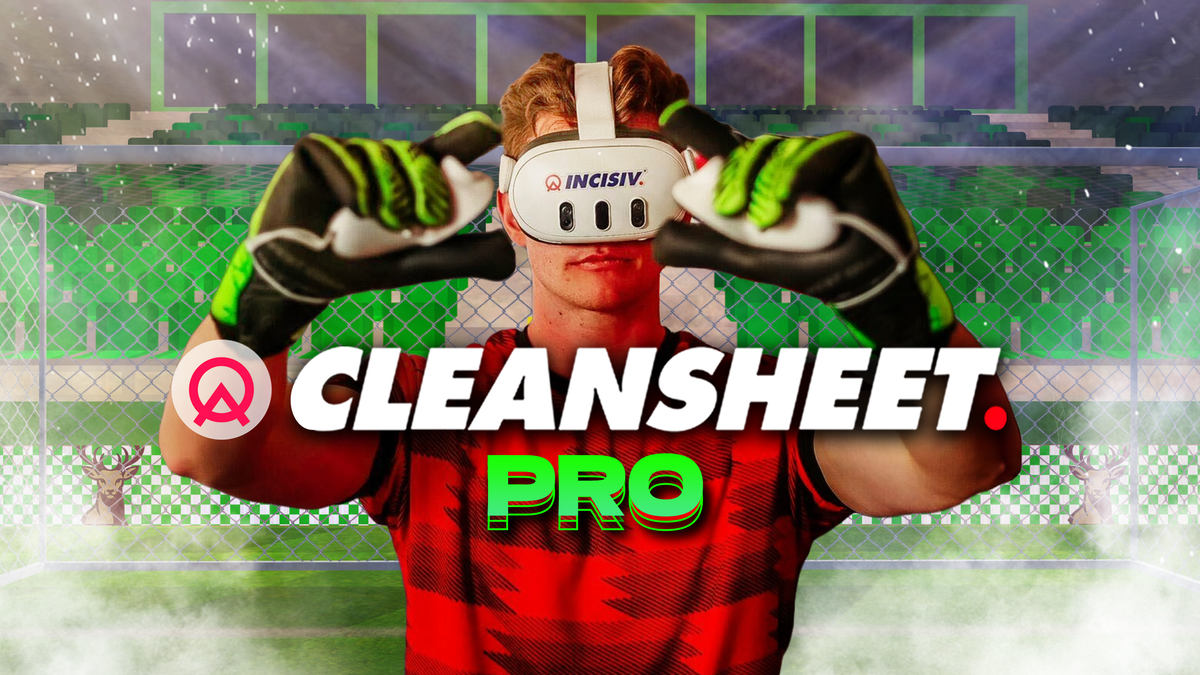
VR Goalkeeping Sim CleanSheet Pro Is Out Now On Quest

CleanSheet Pro, a subscription-based VR soccer sim for goalkeepers, is now available on Quest.

Developed by Belfast studio INCISIV, we first learned about this CleanSheet Soccer successor back in May. Described as a simulator built for serious athletes, CleanSheet Pro sees you moving between five divisions in a progression-based career mode as you hit promotion targets to move up the ranks. Similarly, poor performance gives you relegation targets to avoid dropping.

0:00

/1:11

Progressing through this career mode gradually unlocks more stadiums, new cosmetics for the footballs and gloves, and the ability to transfer to new clubs. This comes with three fictional teams: Forgehill Rovers, Waveport City, and Stanton United, each with its own identity and environment. Different clubs offer different coaches, stadiums, and more.

Further CleanSheet Pro features include scenarios designed to emulate real-life soccer moments, seeing you face corner kicks and penalty shootouts alike. INCISIV states these are based off motion-captured data from professional footballers.

Other options include a custom shot creator, mixed reality support, and a monthly standardized test through a ‘Profiler Mode’ to recalibrate the game’s difficulty. A companion app for tracking progress and scheduling sessions is also available on iOS and Android.

CleanSheet Pro is now available on Quest through monthly ($29.99) and annual ($239.99) subscriptions, with a free seven-day trial and 50% off the first month. You can find out more in our previous interview below.

CleanSheet Pro Is A Subscription-Based VR Goalkeeping Sim Coming To Quest 3
CleanSheet Pro is a subscription-based VR soccer sim for training goalkeepers, and the sequel arrives this year on Quest 3.
UploadVRHenry Stockdale

Ozone Hole Ranked As 5th Smallest In More Than 30 Years

Scientists report that the Antarctic ozone hole in 2025 is the fifth-smallest since 1992, thanks largely to decades of global restrictions on ozone-depleting chemicals under the Montreal Protocol. ABC News reports: The ozone hole reached its greatest one-day extent for 2025 in early September, measuring 8.83 million square miles, about 30% smaller than the largest hole on record in 2006. NOAA and NASA scientists emphasize that recent findings show efforts to limit ozone-depleting chemical compounds can have a significant impact. The regulations are established by the Montreal Protocol, which went into effect in 1992. Subsequent amendments are driving the gradual recovery of the ozone layer, which remains on track to fully recover later this century as countries worldwide replace harmful substances with safer alternatives.

For decades, chlorofluorocarbons (CFCs) and other ozone-depleting compounds were widely used in aerosol sprays, foams, air conditioners and refrigerators, causing significant reductions in ozone levels. Natural factors, such as temperature and atmospheric circulation, also influence ozone concentrations and are likely to have contributed to a smaller ozone hole this year, according to researchers. “This year’s hole would have been more than one million square miles larger if there was still as much chlorine in the stratosphere as there was 25 years ago,” said Paul Newman, a senior scientist at the University of Maryland system and longtime leader of NASA’s ozone research team.


Read more of this story at Slashdot.

How to install Cloudpanel on Debian 13

This tutorial is about installing a CloudPanel on Debian 13 OS. Managing servers with a control panel has never been easier, especially with user-friendly control panels like CloudPanel. CloudPanel is one of the best free hosting control panels, offering a variety of features. The installation requires only a script and a clean server.

Trump’s Genesis Mission aims to build a centralized AI platform to power scientific breakthroughs

President Donald Trump has issued a new Executive Order that launches the “Genesis Mission,” an AI-focused initiative that will be led by the Department of Energy. It will “harness the current AI and advanced computing revolution to double the productivity and impact of American science and engineering within a decade,” the DOE explained. One of the mission’s main goals is to build a centralized platform that will house a huge collection of datasets collected “over decades of federal investments,” as well as datasets from academic institutions and partners from the private sector.

Those datasets will then be used to train scientific foundation models and to create AI agents, automate research workflows and accelerate scientific breakthroughs, the administration said in its announcement. “The platform will connect the world’s best supercomputers, AI systems, and next-generation quantum systems with the most advanced scientific instruments in the nation,” the Energy department said.

Based on that statement, the platform will be linked to the two sovereign AI supercomputers the agency is building at the Oak Ridge National Laboratory, its famous research and development center. The machines, to be built by Hewlett Packard Enterprises, are meant to be the Trump AI Action Plan’s flagship supercomputers. The DOE previously revealed that the machines will be powered by AMD chips and will help tackle the biggest challenges in energy, medicine, health and national security.

“The Genesis Mission marks a defining moment for the next era of American science. We are linking the nation’s most advanced facilities, data, and computing into one closed-loop system to create a scientific instrument for the ages, an engine for discovery that doubles R&D productivity and solves challenges once thought impossible,” said Dr. Darío Gil, the Under Secretary for Science and Genesis Mission Director.

In the next four months, the Energy department must identify its initial set of data and model assets for the Genesis platform. The department must be able to demonstrate “an initial operating capability of the platform for at least one of the national science and technology challenges” the government has identified within nine months. While the list of challenges is pretty long, the Genesis Mission will focus on addressing three key challenges overall. First, it aims to accelerate nuclear and fusion energy, as well as to modernize the energy grid using AI. It also aims to power scientific discoveries for decades to come. Finally, it aims to create advanced AI technologies for the purpose of national security, such as systems that can ensure the reliability of America’s nuclear weapons and can accelerate the development of materials for defense.

This article originally appeared on Engadget at https://www.engadget.com/ai/trumps-genesis-mission-aims-to-build-a-centralized-ai-platform-to-power-scientific-breakthroughs-043506089.html?src=rss

Hacker Conference Installed a Literal Antivirus Monitoring System

An anonymous reader quotes a report from Wired: Hacker conferences — like all conventions — are notorious for giving attendees a parting gift of mystery illness. To combat “con crud,” New Zealand’s premier hacker conference, Kawaiicon, quietly launched a real-time, room-by-room carbon dioxide monitoring system for attendees. To get the system up and running, event organizers installed DIY CO2 monitors throughout the Michael Fowler Centre venue before conference doors opened on November 6. Attendees were able to check a public online dashboard for clean air readings for session rooms, kids’ areas, the front desk, and more, all before even showing up. “It’s ALMOST like we are all nerds in a risk-based industry,” the organizers wrote on the convention’s website. “What they did is fantastic,” Jeff Moss, founder of the Defcon and Black Hat security conferences, told WIRED. “CO2 is being used as an approximation for so many things, but there are no easy, inexpensive network monitoring solutions available. Kawaiicon building something to do this is the true spirit of hacking.” […]

Kawaiicon’s work began one month before the conference. In early October, organizers deployed a small fleet of 13 RGB Matrix Portal Room CO2 Monitors, an ambient carbon dioxide monitor DIY project adapted from US electronics and kit company Adafruit Industries. The monitors were connected to an Internet-accessible dashboard with live readings, daily highs and lows, and data history that showed attendees in-room CO2 trends. Kawaiicon tested its CO2 monitors in collaboration with researchers from the University of Otago’s public health department. The Michael Fowler Centre is a spectacular blend of Scandinavian brutalism and interior woodwork designed to enhance sound and air, including two grand pou — carved Mori totems — next to the main entrance that rise through to the upper foyers. Its cathedral-like acoustics posed a challenge to Kawaiicon’s air-hacking crew, which they solved by placing the RGB monitors in stereo. There were two on each level of the Main Auditorium (four total), two in the Renouf session space on level 1, plus monitors in the daycare and Kuracon (kids’ hacker conference) areas. To top it off, monitors were placed in the Quiet Room, at the Registration Desk, and in the Green Room.

Kawaiicon’s attendees could quickly check the conditions before they arrived and decide how to protect themselves accordingly. At the event, WIRED observed attendees checking CO2 levels on their phones, masking and unmasking in different conference areas, and watching a display of all room readings on a dashboard at the registration desk. In each conference session room, small wall-mounted monitors displayed stoplight colors showing immediate conditions: green for safe, orange for risky, and red to show the room had high CO2 levels, the top level for risk. Colorful custom-made Kawaiicon posters by New Zealand artist Pepper Raccoon placed throughout the Michael Fowler Centre displayed a QR code, making the CO2 dashboard a tap away, no matter where they were at the conference. Resources, parts lists, and assembly guides can be found here.


Read more of this story at Slashdot.

Mind-Altering ‘Brain Weapons’ No Longer Only Science Fiction, Say Researchers

Researchers warn that rapid advances in neuroscience, pharmacology, and AI are bringing “brain weapons” out of science fiction and into real-world plausibility. They argue current arms treaties don’t adequately cover these emerging tools and call for a new, proactive framework to prevent the weaponization of the human mind. The Guardian reports: Michael Crowley and Malcolm Dando, of Bradford University, are about to publish a book that they believe should be a wake-up call to the world. […] The book, published by the Royal Society of Chemistry, explores how advances in neuroscience, pharmacology and artificial intelligence are coming together to create a new threat. “We are entering an era where the brain itself could become a battlefield,” said Crowley. “The tools to manipulate the central nervous system — to sedate, confuse or even coerce — are becoming more precise, more accessible and more attractive to states.”

The book traces the fascinating, if appalling, history of state-sponsored research into central nervous system (CNS)-acting chemicals. […] The academics argue that the ability exists to create much more “sophisticated and targeted” weapons that would once have been unimaginable. Dando said: “The same knowledge that helps us treat neurological disorders could be used to disrupt cognition, induce compliance, or even in the future turn people into unwitting agents.” The threat is “real and growing” but there are gaps in international arms control treaties preventing it from being tackled effectively, they say. […]

The book makes the case for a new “holistic arms control” framework, rather than relying on existing arms control treaties. It sets out a number of practical steps that could be taken, including establishing a working group on CNS-acting and broader incapacitating agents. Other proposals concern training, monitoring and definitions. “We need to move from reactive to proactive governance,” said Dando. Both men acknowledge that we are learning more about the brain and the central nervous system, which is good for humanity. They said they were not trying to stifle scientific progress and it was about preventing malign intent. Crowley said: “This is a wake-up call. We must act now to protect the integrity of science and the sanctity of the human mind.”


Read more of this story at Slashdot.

Trump Launches Genesis Mission, a Manhattan Project-Level AI Push

BrianFagioli writes: President Trump has issued a sweeping executive order that creates the Genesis Mission, a national AI program he compares to a Manhattan Project level effort. It centralizes DOE supercomputers, national lab resources, massive scientific datasets, and new AI foundation models into a single platform meant to fast track research in areas like fusion, biotech, microelectronics, and advanced manufacturing. The order positions AI as both a scientific accelerator and a national security requirement, with heavy emphasis on data access, secure cloud environments, classification controls, and export restrictions.

The mission also sets strict timelines for identifying key national science challenges, integrating interagency datasets, enabling AI run experimentation, and creating public private research partnerships. Whether this becomes an effective scientific engine or another oversized federal program remains to be seen, but the administration is clearly pushing to frame Trump as the president who put AI at the center of U.S. research strategy.


Read more of this story at Slashdot.

Vacation Mode

I’m on vacation with family this holiday week and the internet is just two rusty soup cans and several pieces of yarn tied together so posting will be very light if at all until Monday. Please reread the archives and I will be back to cyber on Monday.

Jony Ive and Sam Altman Say They Finally Have an AI Hardware Prototype

Sam Altman and Jony Ive say they’ve settled on a prototype for OpenAI’s first hardware device that could ship in “less than” two years. The Verge reports: In an interview with Laurene Powell Jobs at Emerson Collective’s 2025 Demo Day, they said they are currently prototyping the device, and when asked about a timeframe, Ive said it could arrive in “less than” two years. Little has been revealed so far about the OpenAI device in development, but it’s rumored to be screen-free and “roughly the size of a smartphone.”

Altman described the design as “simple and beautiful and playful,” adding that, “There was an earlier prototype that we were quite excited about, but I did not have any feeling of, “I want to pick up that thing and take a bite out of it,’ and then finally we got there all of a sudden.” Ive similarly emphasized simplicity and whimsy, saying, “I love solutions that teeter on appearing almost naive in their simplicity, and I also love incredibly intelligent, sophisticated products that you want to touch, and you feel no intimidation, and you want to use almost carelessly, that you use them almost without thought, that they’re just tools.” Altman went on to comment, “I hope that when people see it, they say, ‘That’s it!,'” to which Ive responded, “Yeah, they will.”


Read more of this story at Slashdot.

Meta Black Friday Sale Gives 40% Off Hundreds Of Quest Games

The Meta Horizon Store’s Black Friday sale, now on, offers 40% off hundreds of Quest games via the discount code BFCM25.

There are far too many eligible titles for us to reasonably list, but you can see the full selection here.

Eligible games range from blockbusters like Assassin’s Creed Nexus, Reach, Asgard’s Wrath 2, Metro Awakening, Alien: Rogue Incursion, Resident Evil 4, and Arizona Sunshine 2 to indie gems like Ghost Town, Superhot VR, Dungeons of Eternity, Walkabout Mini Golf, Real VR Fishing, and GOLF+.

Seriously folks, we could go on all day here, but the TL;DR is: you can get 40% off almost every major title on Quest for the next week. A notable exception is Deadpool VR, which isn’t eligible since it only came out last week. You’ll still need to fork out $50 for it.

To apply the 40% discount for the eligible titles, just enter the code BFCM25 at checkout.

You can use it as many times as you want, up until 11:59 pm PT on December 2, a week from now.

Quest 3S Is $250 At Best Buy And Comes With $110 Of Black Friday Perks
Quest 3S is on sale for $250 at Best Buy, and comes with a $50 gift card, 1 month of Xbox Game Pass Ultimate, and The Walking Dead: Saints & Sinners.
UploadVRDavid Heaney

Sale Bundles

Separately, Meta is also offering 11 sale bundles, letting you get multiple games and/or DLC together for a lower price than buying them individually:

If you already own one of the games in a bundle, the price is lowered to reflect that.

Japan’s High-Stakes Gamble To Turn Island of Flowers Into Global Chip Hub

An anonymous reader quotes a report from the BBC: The island of Hokkaido has long been an agricultural powerhouse — now Japan is investing billions to turn it into a global hub for advanced semiconductors. More than half of Japan’s dairy produce comes from Hokkaido, the northernmost of its main islands. In winter, it’s a wonderland of ski resorts and ice-sculpture festivals; in summer, fields bloom with bands of lavender, poppies and sunflowers. These days, cranes are popping up across the island — building factories, research centers and universities focused on technology. It’s part of Japan’s boldest industrial push in a generation: an attempt to reboot the country’s chip-making capabilities and reshape its economic future.

Locals say that beyond the cattle and tourism, Hokkaido has long lacked other industries. There’s even a saying that those who go there do so only to leave. But if the government succeeds in turning Hokkaido into Japan’s answer to Silicon Valley — or “Hokkaido Valley”, as some have begun to call it — the country could become a new contender in the $600 billion race to supply the world’s computer chips. At the heart of the plan is Rapidus, a little-known company backed by the government and some of Japan’s biggest corporations including Toyota, Softbank and Sony.

Born out of a partnership with IBM, it has raised billions of dollars to build Japan’s first cutting-edge chip foundry in decades. The government has invested $12 billion in the company, so that it can build a massive semiconductor factory or “fab” in the small city of Chitose. In selecting the Hokkaido location, Rapidus CEO Atsuyoshi Koike points to Chitose’s water, electricity infrastructure and its natural beauty. Mr Koike oversaw the fab design, which will be completely covered in grass to harmonize with Hokkaido’s landscape, he told the BBC. Local authorities have also flagged the region as being at lower risk of earthquakes compared to other potential sites in Japan.


Read more of this story at Slashdot.