
Linux kernel 6.17 merges essential Asahi patches, improving reboot handling, GPU support, and device compatibility for Apple Macs.
Monthly Archives: October 2025
Japan Launches a New Cargo Spacecraft to ISS for the First Time
“Japan’s new HTV-X cargo spacecraft launched on its first-ever mission to the International Space Station on Saturday,” reports Space.com:
The robotic HTV-X lifted off atop an H3 rocket from Japan’s Tanegashima Space Center at 8 p.m. EDT (0000 GMT and 9 a.m local Japan time on October 26). It is expected to arrive at the station for its capture and berthing on Wednesday (Oct. 29) at about 11:50 a.m. EDT (1550 GMT)…
The HTV-X’s potential uses also extend beyond the ISS, according to JAXA. The agency envisions it aiding “post-ISS human space activities in low Earth orbit” as well as possibly flying cargo to Gateway, the space station NASA may build in lunar orbit as part of its Artemis program.
HTV-X’s debut increases the stable of ISS cargo craft by one-third. The currently operational freighters are Russia’s Progress vehicle and Cygnus and Dragon, spacecraft built by the American companies Northrop Grumman and SpaceX, respectively. Only Dragon is reusable; the others (including HTV-X) are designed to burn up in Earth’s atmosphere when their missions are over.


Read more of this story at Slashdot.
FFmpeg Introduces Vulkan Acceleration For Apple ProRes Video Decoding
The talented FFmpeg developers continue to be quite innovative with their performance optimizations and other features for this widely-used, open-source multimedia library. The latest addition to FFmpeg this weekend is introducing Vulkan accelerated video decoding for Apple ProRes content…
EXT4 Patches Enable Block Size Greater Than Page Size Support
Following the initial VFS changes last year for supporting block sizes larger than the kernel’s page size along with the initial XFS file-system patches, Btrfs recently landed its support for block sizes greater than the page size. Now EXT4 is preparing to join the party too for allowing larger block sizes…
Intel Sends Out Initial Graphics Driver Patches For Multi-Device SVM
As part of their Project Battlematrix effort, Intel has been working on enhancing their Linux graphics driver support for multi-device usage scenarios with wanting to support up to eight Intel Arc Pro graphics cards per system to help with AI LLMs and other larger use-cases. The latest code posted from Intel engineers is their initial implementation of multi-device Shared Virtual Memory (SVM) support…
Linux Prepping For “Extreme” Mode On Lenovo Legion Devices
Derek Clark who has been leading the efforts around Lenovo Legion gaming drivers for Linux and ensuring good support for the Lenovo Legion Go handheld on Linux sent out a new Linux patch series this weekend…
Mozilla to Require Data-Collection Disclosure in All New Firefox Extensions
Starting November 3, all new Firefox extensions must declare whether they collect or share user data, ensuring greater transparency for users.
25 Years Ago Today: A PlayStation Shopping Frenzy – But Would Microsoft’s Xbox Make It Obsolete?
25 years ago today on Slashdot…
Hemos linked to a site called Joystick101 describing the
crowd camping out to buy the limited number of just-released PlayStation 2 consoles (and games). “500,000 lucky members of the American gaming public are sneaking a few minutes of playing Madden 2001, Tekken, or Ridge Racer V before school or work…” wrote Joystick101. That same day CmdrTaco posted reports PS2s were selling for over $1,000 on eBay. And then Timothy updated that post to note someone saw one selling for $5,000.
But there was a third PS2 link posted on October 26, 2000… Hemos wrote a post titled “The PS2 — A Betamax In the Making?” — linking to an article by
Mark Pesce (co-inventor of VRML and, in 1993, an Apple consulting engineer). “Microsoft promises Xbox will deliver ten times the performance of the PS2,” Pesce wrote, noting Microsoft had partnered with Intel and “upstart video-chip developer Nvidia”:
The strangest thing about this battle of giants is that Microsoft has become a champion of open standards, encouraging developers to write Xbox titles without requiring them to pay any licensing fees. In comparison, Sony charges a minimum of $25,000 for access to the documentation and technology of the PlayStation2, plus a hefty license fee on every game sold. In the video-game industry, the Big Three — Sony, Nintendo, and Sega — sell the hardware at a loss (the PS2 costs nearly the $300 it will retail for) and recover their investment in the stiff licensing fees paid by game developers for the “key” that allows their software to work on Sony’s platform…
Having committed an astounding $500 million to market the Xbox next Christmas, it’s clear that Microsoft doesn’t mind taking a short-term loss to ensure an eventual win. If Sony’s not careful, this could turn into “Betamax, the Sequel.” Twenty years ago, Sony tightly controlled the titles made available for its technically superior videocassette player — specifically, no adult content — and found themselves quickly locked out of an incredibly lucrative market for adult and family content. If Sony keeps a tight grip on the PS2, they may actually help Microsoft create the new VHS. But even if Sony loses this round (and no one wants to wager which way this battle will turn), they’ve already set their sights on the PlayStation3, to be released five years from now. Sony promises it will be a thousand times faster than the PS2.
Ironically, Pesce’s warning about possible threats to the PS2’s longevity was published by online magazine Feed– which seven months later went out of business.
And this week it was announced that even Microsoft’s Halo Campaign Evolved will now be coming to PlayStation 5, with Slashdot publishing six PlayStation-related stories in just the last three months in 2025.
Thanks to long-time Slashdot reader crunchy_one for suggesting a “25 Years Ago” Slashdot post..


Read more of this story at Slashdot.
Radxa Rolls Out Dragon Q6A Featuring Qualcomm QCS6490, 12 TOPS NPU, and 6th-Gen AI Engine
Radxa has rolled out the Dragon Q6A, a compact single-board computer built on Qualcomm’s QCS6490 octa-core platform. Designed for industrial, IoT, and edge computing environments, the board combines high-performance CPU and GPU cores with integrated AI acceleration, multiple display interfaces, and flexible storage options. Similar to the RUBIK Pi 3, the Dragon Q6A integrates an […]
DavMail 6.5 Exchange Gateway Brings Interactive Office 365 Login
DavMail 6.5 open-source exchange gateway enhances Office 365 login security and refines Linux RPM packages.
Are Network Security Devices Endangering Orgs With 1990s-Era Flaws?
Critics question why basic flaws like buffer overflows, command injections, and SQL injections are “being exploited remain prevalent in mission-critical codebases maintained by companies whose core business is cybersecurity,” writes CSO Online. Benjamin Harris, CEO of cybersecurity/penetration testing firm watchTowr tells them that “these are vulnerability classes from the 1990s, and security controls to prevent or identify them have existed for a long time. There is really no excuse.”
Enterprises have long relied on firewalls, routers, VPN servers, and email gateways to protect their networks from attacks. Increasingly, however, these network edge devices are becoming security liabilities themselves… Google’s Threat Intelligence Group tracked 75 exploited zero-day vulnerabilities in 2024. Nearly one in three targeted network and security appliances, a strikingly high rate given the range of IT systems attackers could choose to exploit. That trend has continued this year, with similar numbers in the first 10 months of 2025, targeting vendors such as Citrix NetScaler, Ivanti, Fortinet, Palo Alto Networks, Cisco, SonicWall, and Juniper. Network edge devices are attractive targets because they are remotely accessible, fall outside endpoint protection monitoring, contain privileged credentials for lateral movement, and are not integrated into centralized logging solutions…
[R]esearchers have reported vulnerabilities in these systems for over a decade with little attacker interest beyond isolated incidents. That shifted over the past few years with a rapid surge in attacks, making compromised network edge devices one of the top initial access vectors into enterprise networks for state-affiliated cyberespionage groups and ransomware gangs. The COVID-19 pandemic contributed to this shift, as organizations rapidly expanded remote access capabilities by deploying more VPN gateways, firewalls, and secure web and email gateways to accommodate work-from-home mandates. The declining success rate of phishing is another factor… “It is now easier to find a 1990s-tier vulnerability in a border device where Endpoint Detection and Response typically isn’t deployed, exploit that, and then pivot from there” [says watchTowr CEL Harris]…
Harris of watchTowr doesn’t want to minimize the engineering effort it takes to build a secure system. But he feels many of the vulnerabilities discovered in the past two years should have been caught with automatic code analysis tools or code reviews, given how basic they have been. Some VPN flaws were “trivial to the point of embarrassing for the vendor,” he says, while even the complex ones should have been caught by any organization seriously investing in product security… Another problem? These appliances have a lot of legacy code, some that is 10 years or older.
Attackers may need to chain together multiple hard-to-find vulnerabilities across multiple components, the article acknowleges. And “It’s also possible that attack campaigns against network-edge devices are becoming more visible to security teams because they are looking into what’s happening on these appliances more than they did in the past… ”
The article ends with reactions from several vendors of network edge security devices.
Thanks to Slashdot reader snydeq for sharing the article.


Read more of this story at Slashdot.
Finally, You Can Now be a ‘Certified’ Ubuntu Sys-Admin/Linux User
Thursday Ubuntu-maker Canonical “officially launched Canonical Academy, a new certification platform designed to help professionals validate their Linux and Ubuntu skills through practical, hands-on assessments,” writes the blog It’s FOSS:
Focusing on real-world scenarios, Canonical Academy aims to foster practical skills rather than theoretical knowledge. The end goal? Getting professionals ready for the actual challenges they will face on the job. The learning platform is already live with its first course offering, the System Administrator track (with three certification exams), which is tailored for anyone looking to validate their Linux and Ubuntu expertise.
The exams use cloud-based testing environments that simulate real workplace scenarios. Each assessment is modular, meaning you can progress through individual exams and earn badges for each one. Complete all the exams in this track to earn the full Sysadmin qualification… Canonical is also looking for community members to contribute as beta testers and subject-matter experts (SME). If you are interested in helping shape the platform or want to get started with your certification, you can visit the Canonical Academy website.
The sys-admin track offers exams for Linux Terminal, Ubuntu Desktop 2024, Ubuntu Server 2024, and “managing complex systems,” according to an official FAQ. “Each exam provides an in-browser remote desktop interface into a functional Ubuntu Desktop environment running GNOME. From this initial node, you will be expected to troubleshoot, configure, install, and maintain systems, processes, and other general activities associated with managing Linux. The exam is a hybrid format featuring multiple choice, scenario-based, and performance-based questions…”
“Test-takers interested in the types of material covered on each exam can review links to tutorials and documentation on our website.”
The FAQ advises test takers to use a Chromium-based browser, as Firefox “is NOT supported at this time… There is a known issue with keyboards and Firefox in the CUE.01 Linux 24.04 preview release at this time, which will be resolved in the CUE.01 Linux 24.10 exam release.”


Read more of this story at Slashdot.
Rust Coreutils Bug That Broke Automatic Ubuntu 25.10 Updates Is Now Fixed
Rust Coreutils bug that broke Automatic Updates in Ubuntu 25.10 Questing Quokka is now fixed. Here’s what happened and how developers fixed it.
Exxon Sues California Over Climate Disclosure Laws
“Exxon Mobil sued California on Friday,” reports Reuters, “challenging two state laws that require large companies to publicly disclose their greenhouse gas emissions and climate-related financial risks.”
In a complaint filed in the U.S. District Court for the Eastern District of California, Exxon argued that Senate Bills 253 and 261 violate its First Amendment rights by compelling Exxon to “serve as a mouthpiece for ideas with which it disagrees,” and asked the court to block the state of California from enforcing the laws. Exxon said the laws force it to adopt California’s preferred frameworks for climate reporting, which it views as misleading and counterproductive…
The California laws were supported by several big companies including Apple, Ikea and Microsoft, but opposed by several major groups such as the American Farm Bureau Federation and the U.S. Chamber of Commerce, which called them “onerous.” SB 253 requires public and private companies that are active in the state and generate revenue of more than $1 billion annually to publish an extensive account of their carbon emissions starting in 2026. The law requires the disclosure of both the companies’ own emissions and indirect emissions by their suppliers and customers. SB 261 requires companies that operate in the state with over $500 million in revenue to disclose climate-related financial risks and strategies to mitigate risk. Exxon also argued that SB 261 conflicts with existing federal securities laws, which already regul
“The First Amendment bars California from pursuing a policy of stigmatization by forcing Exxon Mobil to describe its non-California business activities using the State’s preferred framing,” Exxon said in the lawsuit.
Exxon Mobil “asks the court to prevent the laws from going into effect next year,” reports the Associated Press:
In its complaint, ExxonMobil says it has for years publicly disclosed its greenhouse gas emissions and climate-related business risks, but it fundamentally disagrees with the state’s new reporting requirements. The company would have to use “frameworks that place disproportionate blame on large companies like ExxonMobil” for the purpose of shaming such companies, the complaint states…
A spokesperson for the office of California Gov. Gavin Newsom said in an email that it was “truly shocking that one of the biggest polluters on the planet would be opposed to transparency.”


Read more of this story at Slashdot.
AMD Begins Sending In “New Stuff” For Their Graphics Driver In Linux 6.19
AMD on Friday sent in their first patch of AMDGPU kernel graphics driver changes they are ready to begin queuing in the DRM-Next tree until the Linux 6.19 merge window kicks off in December and leading to a stable release around February…
Samsung Galaxy XR’s Hidden USB-C Port Connects Accessories & Hubs
A covered USB-C port on the right strap of the Samsung Galaxy XR headset can be connected to a wide range of accessories.
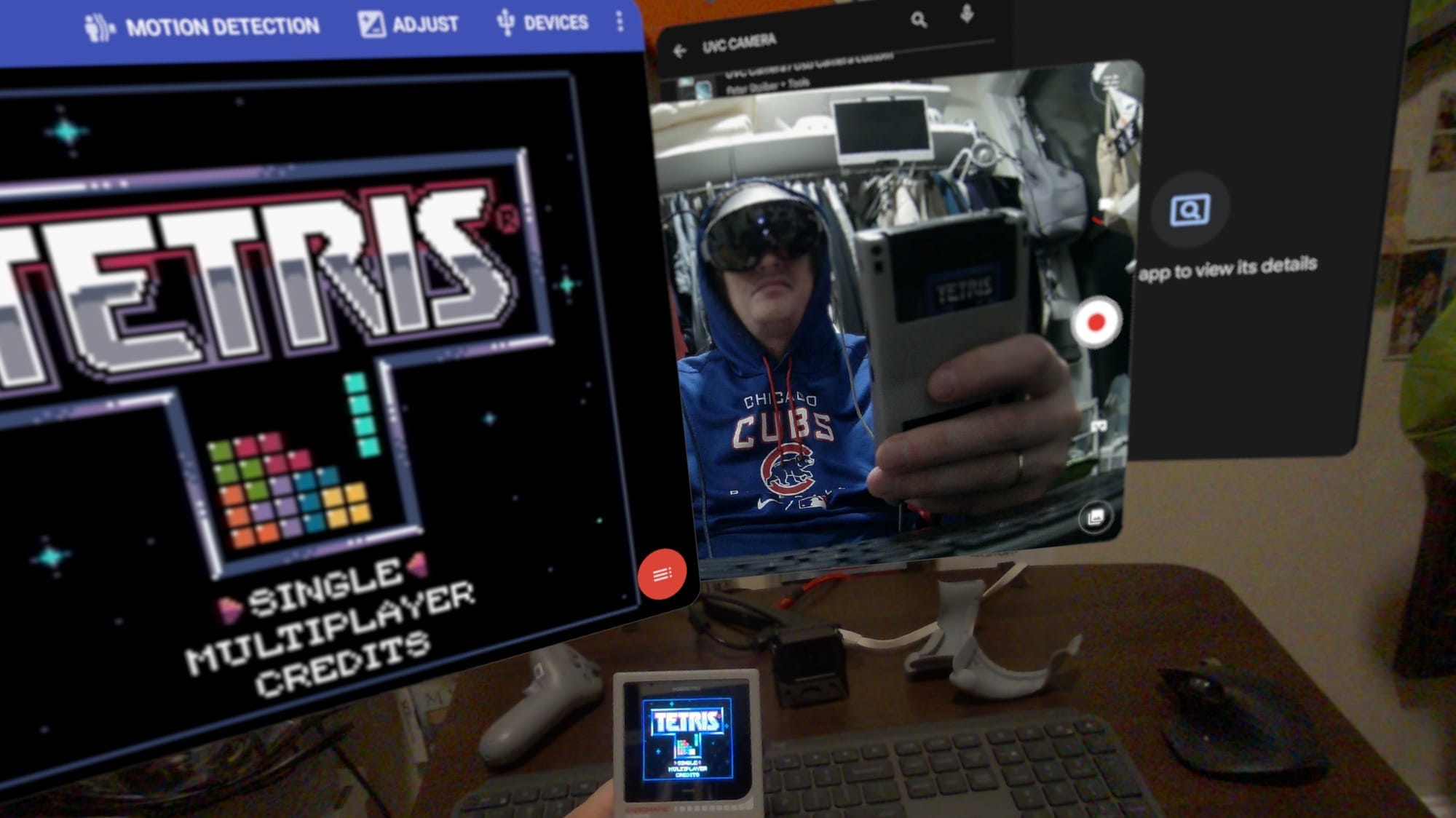
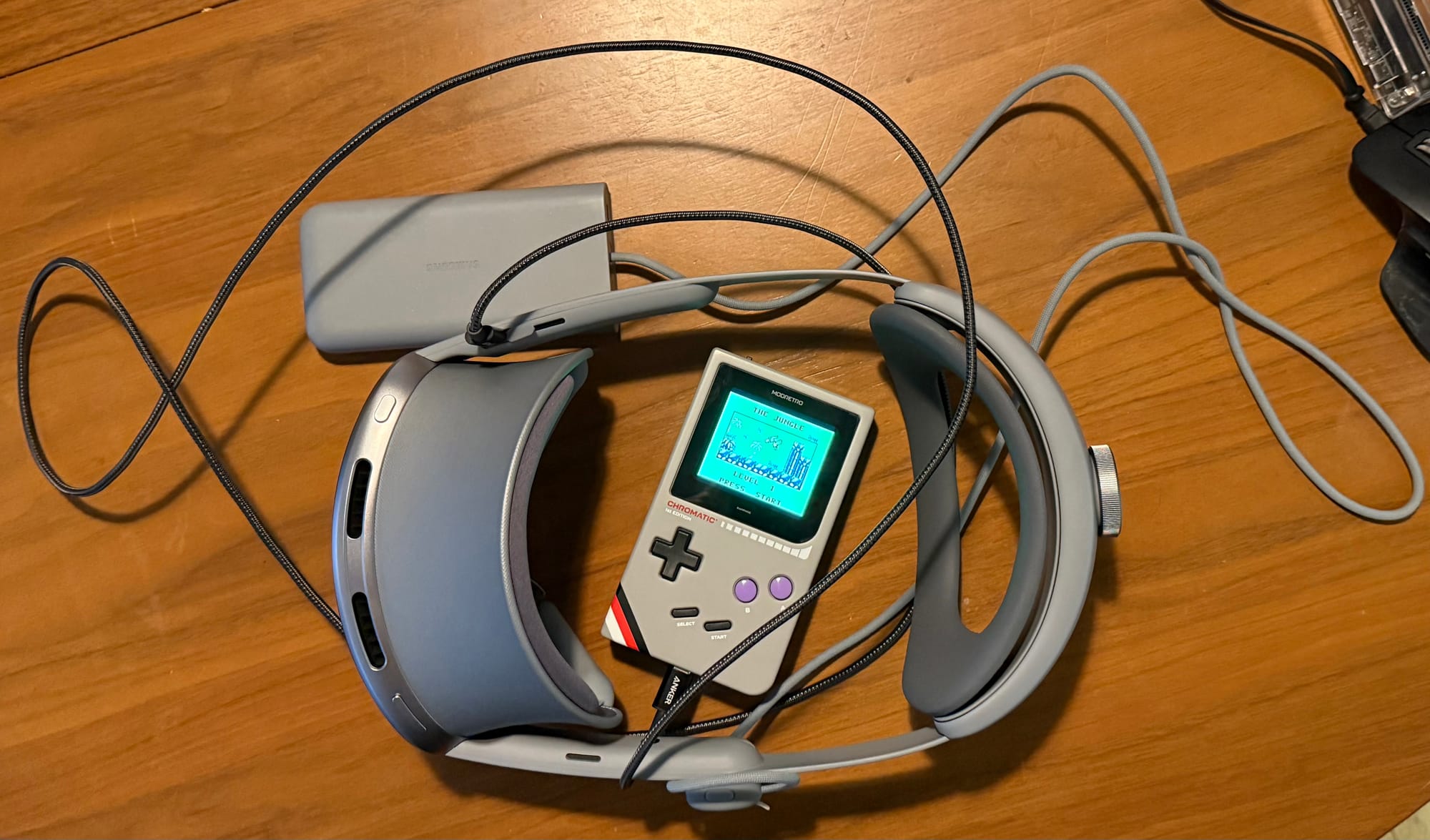
Hidden behind a flush cap that can be pushed out of place, there is a useful USB-C port for Ethernet, webcams or to pull the view from a ModRetro Chromatic. It surely can be used with all manner of USB accessories, but the three listed are connected to the Galaxy XR headset as I publish this writing to the Internet via Ethernet, with Wi-Fi turned off.
Both Meta’s Horizon OS and Apple’s visionOS support USB devices, but Quest headsets have only one USB port that draws in power too and to get a USB-C port on a Vision Pro headset requires a payment to register as a developer first followed by the purchase and installation of a $300 add-on to put the port in place over the right ear. The Apple route is meant for developer use and the Meta route with Quest isn’t the easiest for long sessions, given the power situation.
Now there’s Android XR from Google running on Samsung’s Galaxy XR headset. Galaxy XR requires a dedicated battery pack like Vision Pro but, different from Quest headsets, its hidden USB port isn’t required to take in power, freeing it up for accessory data.
In the past, we’ve tested capture cards in similar scenarios on other standalone headsets. It can be hugely useful to bring in local media with the reliability of a wired connection. Using an HDMI splitter, for instance, can offer a route to watch media on a physical television before putting on the headset and continuing the viewing without missing a moment.
I haven’t tested that with Galaxy XR yet, but with UVC cameras, I can keep an eye on my nearby physical environment without having to rely on passthrough views from my specific viewpoint. Do you have a cat in your space? A wired webcam makes it easy to keep a window in the background showing when kitty is approaching to attack your fingers as they pinch in the open air.
Samsung Galaxy XR Has Easy Sideloading & An Open Bootloader
Samsung Galaxy XR supports sideloading APKs by default, without needing a PC or developer mode, and has an open bootloader too.
 UploadVRDavid Heaney
Samsung Galaxy XR Has Easy Sideloading & An Open Bootloader
Samsung Galaxy XR supports sideloading APKs by default, without needing a PC or developer mode, and has an open bootloader too.
That makes Google’s Android XR – on the first headset to use it at least – the most open of the three major standalone XR platforms by far.
Apple’s visionOS doesn’t allow sideloading at all, except for developers compiling their own app from Xcode on their Mac for testing purposes. Meanwhile, sideloading on Meta’s Horizon OS requires registering as a developer, which involves providing Meta either your phone number or payment card details for verification. And even then, you need to connect an external device like a PC to your Quest to start sideloading.
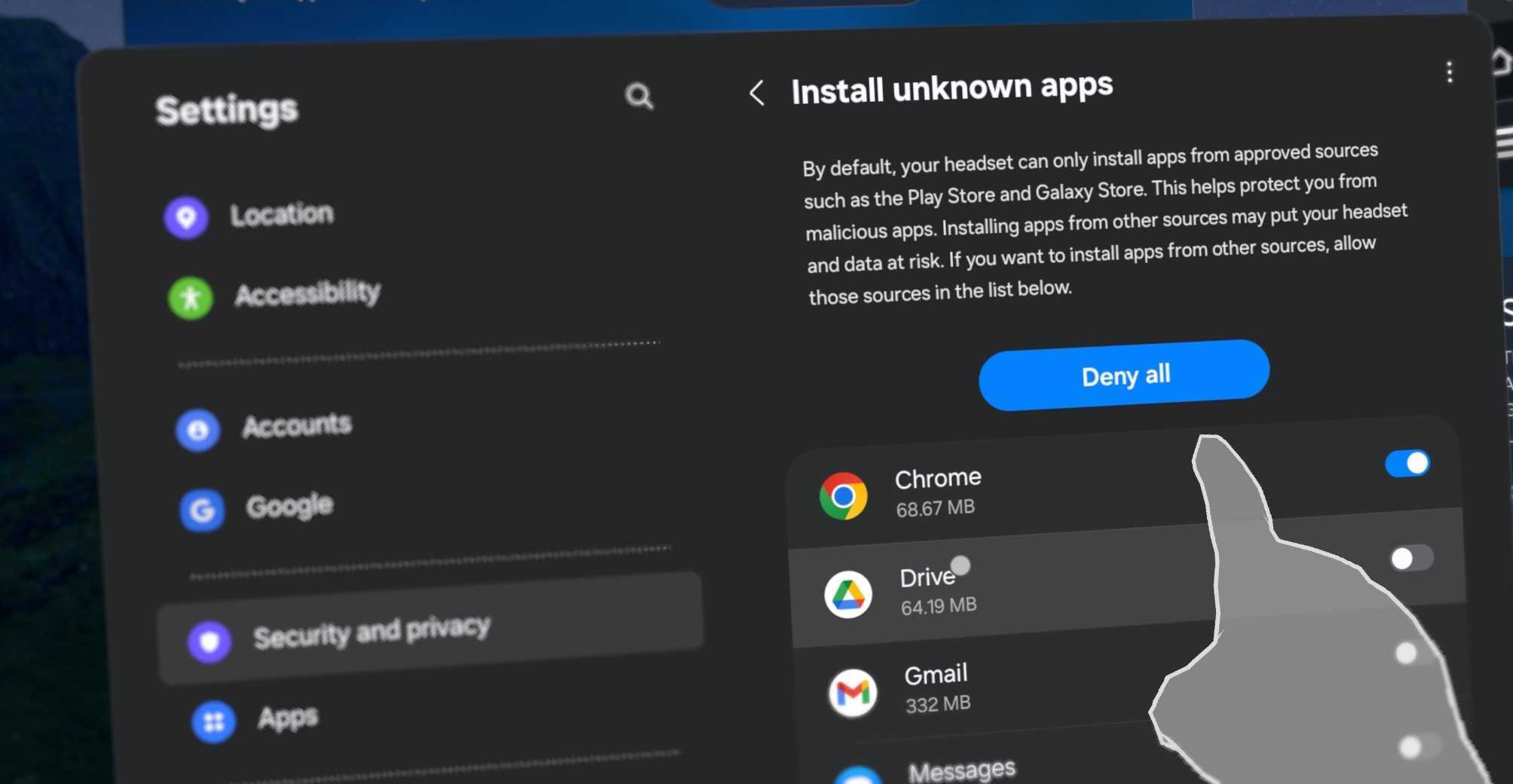
On Samsung Galaxy XR, UploadVR has confirmed that you can sideload without even needing to enable Developer Mode. You can simply download an Android APK in a web browser such as the built-in Google Chrome, and as long as you’ve given the browser permission to install “unknown apps” in the Security and Privacy section of Settings, you can install it.
Further, as first publicly noted by Brad Lynch, you can seemingly even unlock the bootloader on Galaxy XR, meaning you could, in theory at least, install a custom operating system. In practice, though, to be clear, there are no general-purpose standalone XR operating systems, and issues like driver compatibility mean that the most likely path to one would be a modification of the Android XR that runs on the headset. We’ll keep an eye out for any such projects.
You can actually unlock the bootloader on the Samsung Galaxy XR headset � pic.twitter.com/XATJOmkgdn
— Brad Lynch (@SadlyItsBradley) October 24, 2025
Mark Zuckerberg and Meta executives have repeatedly described Horizon OS as the Android of XR, touting their platform’s relative openness compared to Apple’s visionOS.
But now Android XR has arrived, hoping to be the actual Android of XR. And Google’s platform is notably more open than Meta’s.
In the long run, though, what may matter more for which earns the crown of the alternative to Apple Vision is manufacturer adoption. Asus and Lenovo are working on Horizon OS headsets, while Xreal, Lynx, and Sony are working on Android XR devices. When consumers have affordable Android XR and premium Horizon OS options to choose from, and thus hardware is no longer the differentiator, which platform will they choose? And will the differences in openness be a deciding factor?
Foot Terminal: Lightning-Fast, Lightweight, and Made for Wayland
Foot is a lightning-fast, minimalist terminal emulator built for Wayland, focusing on speed, simplicity, and low resource usage.
Slashdot Reader Mocks Databricks ‘Context-Aware AI Assistant’ for Odd Bar Chart
Long-time Slashdot reader theodp took a good look at the images on a promotional web page for Databricks’ “context-aware AI assistant”:
If there was an AI Demo Hall of Shame, the first inductee would have to be Amazon. Their demo tried to support its CEO’s claims that Amazon Q Code Transformation AI saved it 4,500 developer-years and an additional $260 million in “annualized efficiency gains” by automatically and accurately upgrading code to a more current version of Java. But it showcased a program that didn’t even spell “Java” correctly. (It was instead called ‘Jave’)…
Today’s nominee for the AI Demo Hall of Shame inductee is analytics platform Databricks for the NYC Taxi Trips Analysis it’s been showcasing on its Data Science page since last November. Not only for its choice of a completely trivial case study that requires no ‘Data Science’ skills — find and display the ten most expensive and longest taxi rides — but also for the horrible AI-generated bar chart used to present the results of the simple ranking that deserves its own spot in the Graph Hall of Shame. In response to a prompt of “Now create a new bar chart with matplotlib for the most expensive trips,” the Databricks AI Assistant dutifully complies with the ill-advised request, spewing out Python code to display the ten rides on a nonsensical bar chart whose continuous x-axis hides points sharing the same distance. (One might also question why no annotation is provided to call out or explain the 3 trips with a distance of 0 miles that are among the ten most expensive rides, with fares of $260, $188, and $105). Looked at with a critical eye, these examples used to sell data scientists, educators, management, investors, and Wall Street on AI would likely raise eyebrows rather than impress their intended audiences.


Read more of this story at Slashdot.
Superhero workplace comedy, more powerwashing and other new indie games worth checking out
Welcome to our latest roundup of what’s going on in the indie game space. It’s been a packed week with lots of tasty new games arriving, and news and reveals of upcoming projects. So, let’s take a look at a bunch of them.
Before we get started though, Engadget senior editor Jessica Conditt spoke with Maxi Boch, one of the core trio behind Baby Steps, about how the game came together. Boch offered some fascinating insights into the game’s development process (which started in 2019), especially on the audio side.
New releases
Dispatch is a superhero workplace comedy from AdHoc Studio, a team that includes former Telltale Games developers. It adopts the narrative-heavy, dialogue-driven gameplay of Telltale’s games, with your choices having a bearing on how everything plays out. Dispatch has a packed cast as well, as it includes the likes of Aaron Paul, Laura Bailey and Jeffrey Wright.
I really dug the demo, so I’m hoping to carve out some time to play Dispatch soon. As with many of Telltale’s games, AdHoc Studio went with an episodic approach for this one, but the developer is releasing them on a weekly basis. The first two episodes of Dispatch are out now on PS5 and Steam, and reviewers’ impressions so far are generally positive.
We’ve got a trio of titles that just hit Game Pass Ultimate and PC Game Pass to talk about, including PowerWash Simulator 2. I don’t typically listen to music or podcasts while I’m playing games. I prefer to listen to the game audio and I’m a terrible multitasker, anyway.
However, I did catch up on a bunch of podcast episodes while playing the original PowerWash Simulator. I’m looking forward to doing that once again while blissfully ignoring IRL chores as I blast away virtual gunk with a pressure washer.
“More of the same, but better” is exactly what I wanted from PowerWash Simulator 2, so I was very glad to read some reviews indicating that’s the case. As well as Xbox Series X/S, this sequel from FuturLab is also available on Steam, Epic Games Store, PlayStation 5 and Nintendo Switch 2.
Next up, we have a surprise Game Pass addition as Pacific Drive arrived on the Ultimate, Premium and PC tiers without prior warning this week. It wasn’t available on Xbox at all until now. Pacific Drive turns the title of Netflix’s F1 docuseries into an actual “drive to survive” horror game. You’ll roam the Pacific Northwest in a station wagon to search for parts to upgrade your vehicle and stay alive.
Ironwood Studios and publisher Kepler Interactive brought Pacific Drive to Xbox on the same day they released an expansion called Whispers in the Woods. The game (and DLC) is also available on PS5 and Steam. I’ve been meaning to play Pacific Drive for a while but, as always, there are too many games and not enough time to check everything out. Perhaps I’ll finally try this now that it’s on Game Pass, but I might just end up waiting for the TV show instead.
Here’s something interesting from DinoGod and publisher Annapurna Interactive. Bounty Star is a blend of mech action game, farming sim and base builder. As war veteran Clem, you’ll try to become a force for good in a “post-post-apocalyptic version of the American Southwest.”
I’m interested to see how the core aspects of Bounty Star play off each other as you take care of your homestead and hunt down bounties in your mech (which you can customize). It’s out now on PS5, Xbox Series X/S, Steam and Epic Games Store. Bounty Star is on Game Pass Ultimate and PC Game Pass too.
Ila: A Frosty Glide is a chill, 3D platform adventure from Magic Rain Studios and publisher First Break Labs. As a young witch-in-training named Ila, you’ll explore a snowy mountainous island while searching for your missing cat.
My favorite thing about the game, at least based on the trailer and what I’ve read, is that instead of a broom, Ila uses a “skatebroom” to get around. It’s a skateboard and a flying broomstick in one! I’d like one of those.
As it happens, developers Ítalo and Yesenia met while skateboarding. They started making games with skateboarding elements a few years later. Ila: A Frosty Glide is out now on Steam, Epic Games Store, Xbox Series X/S, PS5 and Nintendo Switch.
After reading one sentence of a pitch for The Bench, I was sold: “In The Bench, you played as a retired secret agent on one last mission: escaping the retirement home and unfolding a pigeon conspiracy.” Wonderful stuff, there.
As said pensioner, you’ll amass a flock of customizable pigeons to help you during your adventure as you explore some parks. Along the way, you’ll solve puzzles, play bowls and chess, doodle in your notebook, play pranks and go fishing.
The Bench — from Voxel Studios and Noovola Publishing — is out now on Steam. I hope I don’t have to wait until I’m retired to have time to play it.
Upcoming
No More Robots unveiled two games this week, and one of them is a step in an (almost) entirely new direction for the publisher of Descenders Next and Little Rocket Lab. It’s now making games internally, and the first one to see the light of day is Cruise Control. This is a cruise liner management sim in which you’ll try to make your guests happy by fulfilling their needs and wants. It looks quite charming. I’m a big fan of the oversized bingo cage device.
This is actually the third game No More Robots has worked on in-house, but it’s the first one that the company has unveiled. The publisher noted that Cruise Control isn’t quite ready. Still, playtests should start later this year ahead of an early 2026 release.
The other upcoming game No More Robots showed off is Thank You For Your Application from IceLemonTea Studio. Here, you’ll review job candidates’ resumes and make decisions whether to bring them on board based on the hiring company’s criteria.
This has an air of Papers, Please and No More Robots’ own Not Tonight series about it — you’ll have to deal with bills, rent and otherwise managing your life too. It also seems quite timely given that the job application process is now so onerous for many people. Thank You For Your Application will arrive in 2026 and there’s a demo available on Steam now.
Finite Reflection Studios, the developer of last year’s acclaimed Void Sols, has revealed its next game. Mouseward is another Soulslike, but it’s one in the vein of ’90s collectathon platformers like Banjo-Kazooie. As a reincarnated Royal Mouse Guard, you set out to save the kingdom from a curse.
I love the aesthetic here. There’s no release window for Mouseward as yet. It’s coming to Steam and you can play an early build on Itch right now.
Speaking of games inspired by ’90s platformers, there’s danger that Windswept could become my entire personality for a spell. It’s coming to Steam, Nintendo Switch, PS4, PS5, Xbox One and Xbox Series X/S on November 11.
Windswept — from WeatherFell and publisher Top Hat Studios — is a precision platformer which sees animal buddies Marbles (a duck) and Checkers (a turtle) trying to get back home after a storm whisks them away. The 40-plus stages are full of collectibles and have secrets for you to discover.
The glimpses of levels where you have to navigate sticky walls and ceilings, thorny brambles and pirate ship masts are very reminiscent of Donkey Kong Country 2. I’m not exactly complaining though, as that’s one of my favorite games of all time.
We’ve known for a while that a beat-’em-up based on the splatterfest movie series Terrifier was on the way and now we have a release date. Unfortunately, it’s not coming your way in time for Halloween, but you will be able to gingerly set foot into Terrifier: The ARTcade Game on November 21.
Yes, yes, even Art the Clown is in Fortnite now, but you can also play as the brutal killer in his own game from Relevo and publisher Selecta Play. There’s support for local co-op for up to four players (and you can turn on each other, if you like. Terrifier fans will probably be pleased that they can use weapons like chainsaws and cleavers to cause bloody carnage. Terrifier: The ARTcade Game is bound for Steam, PS5, Xbox Series X/S and Nintendo Switch.
This article originally appeared on Engadget at https://www.engadget.com/gaming/superhero-workplace-comedy-more-powerwashing-and-other-new-indie-games-worth-checking-out-230000337.html?src=rss