
Microsoft today released Azure Linux 3.0.20251021 as the latest update to their in-house Linux distribution…
Monthly Archives: October 2025
Flight Unlimited Wants To Be The First “Full-Fledged” Flight Simulator On Quest
Flight Unlimited wants to be the first “full-fledged” flight simulator available standalone on Quest headsets.
Set to arrive sometime in November, developer TAS Systems promises 10 aircraft with “4K HD cockpits” created “from the ground up” and accurate flight physics.
0:00
/0:23
Flight Unlimited over the Grand Canyon.
According to TAS Systems, those aircraft will be:
- Boeing 747
- B-2 Spirit
- Ultralight
- C-130 Hercules
- F/A-18 Hornet
- Cessna 172
- Pitts Special
- Challenger Learjet
- Douglas DC-3
- Curtiss P-40E
0:00
/1:03
Aircraft available in Flight Unlimited.
TAS Systems already has a flight simulator on the Horizon Store for Quest, called Flight 74, which is also available on Steam and the Meta PC VR Store. Flight 74 is a story-based flight sim focused on a single aircraft wherein you land somewhere in South America and are forced to work with a cartel. It was released last year and saw a significant update five months ago.
Flight Unlimited sounds like it will have a wider and more general scope than Flight 74, with many more aircraft and more places to fly. TAS Systems also promises “campaign-style missions”, but hasn’t yet detailed what that will mean.
While Flight 74 supports hand tracking, the store page for Flight Unlimited suggests it will require controllers.
Year Walk, Device 6 and other early Simogo games are coming to Steam and Nintendo consoles
Simogo is celebrating its 15th anniversary with some retrospective projects, which include bringing its games to more platforms. The studio has put together the Simogo Legacy Collection for Steam, Nintendo Switch and Switch 2. This includes all seven of the mobile games that the developer released between 2010 and 2015, including Year Walk and Device 6. The collection will be available on December 2 — the 15th anniversary of the release of Simogo’s first game, Kosmo Spin — and it costs $15.
Co-founder Simon Flesser noted that the studio’s mobile games were in “constant danger of disappearing or ending up being unplayable.” (Year Walk was ported to Wii U but we all know what happened with that console.) The idea behind Simogo Legacy Collection is to preserve them and “keep the experience as close as possible to the original games,” Flesser said. As such, the team has made as few changes as possible while still making sure the games work on PC and Nintendo’s consoles.
You can use touchscreen controls on Switch and Switch 2 to play the games as they were originally intended. Simogo has also added support for mice, controllers, motion controls and, on Switch 2, dual mouse controls. The bundle includes a bunch of extras too, such as an ebook of Year Walk side stories, a podcast for The Sailor’s Dream, additional music, playable prototypes of the games and more.
That’s not all, though. Simogo is working on Switch 2 versions of its two most recent games, Lorelei and the Laser Eyes and Sayonara Wild Hearts. Expect those to arrive in early 2026. The studio is also bringing Sayonara Wild Hearts back to iOS as a paid app next year. That was a launch game for Apple Arcade in 2019, but it left the service in 2024. I’m very much looking forward to having my favorite game available on a device I carry with me everywhere again, even though it’s available on PC and consoles as well.
As well as those projects, the studio has teamed up with Lost in Cult to create a coffee table book about the history of Simogo. Heartbeats, Dreams and Laser Eyes: 15 years of Simogo is a softback book with around 250 pages. A deluxe edition with a semi-translucent wrap, a bookmark, commemorative stamp set and (for the first 300 units) a signed bookplate will be available too. Pre-orders open today and the book is expected to ship in late 2026.
This article originally appeared on Engadget at https://www.engadget.com/year-walk-device-6-and-other-early-simogo-games-are-coming-to-steam-and-nintendo-consoles-160056076.html?src=rss
Zillow Now Has DMs, and They Might Actually Be Useful
I’ll say it: There are too many messaging apps out there. There’s WhatsApp, Messenger, Snapchat, Discord, Signal, Telegram, and iMessage (if you’re on iPhone), and that’s just the dedicated chat apps. You might have to keep up with new messages on Instagram, TikTok, Threads, even Spotify. If I install one more app with a messaging feature, I’m going off the grid.
As it happens, another non-chat app is joining this list. On Tuesday, Zillow—yes, Zillow—announced its app will also now support messaging. Starting today, you can send people messages in the app you use to look at houses you will most likely never actually buy. We live in interesting times, indeed.
Of course, Zillow’s goal here isn’t to become the next WhatsApp. In fact, you can only choose to chat with one other person on Zillow—at least, that’s the case for now. The idea of Zillow messaging is strictly to chat about listings you find through the app, without needing to leave Zillow to do so. The goal for most app developers is to keep users on the platform for as long as possible, so there’s a cynical case to make here for Zillow trapping its users within the app. If you don’t move to another chat app to talk about a listing, you’re more likely to interact with additional houses on the app.
But I actually see the logic here: If you’re in a housing market with a lot of listings, you’re probably firing off a number of them every day to interested parties—namely, whoever you’re buying the house with. Keeping those conversations in the same app as those listings could be a smart way to keep track of all those houses, instead of the usual routine of “wait, which house was that? I can’t find the text you sent me.” And the fact that Zillow is limiting this experience to one chat partner at this time means you’re not going to be DMing a number of people about houses in your area. This does seem designed for people who are trying to buy a house together to do so with a bit more convenience.
How to try Zillow messaging
This feature is live as of this article. To get started, open Zillow on your smartphone or in your web browser. On the app, tap “Inbox;” on the web, click your profile in the top-right, then choose “Inbox.”
In order to start a chat, you need to invite the other person to join you. To do so, choose “Invite now,” which will pull up a pop-up about the feature. This screen explains the invite link is good for 24 hours, and that you can only invite one person for now.
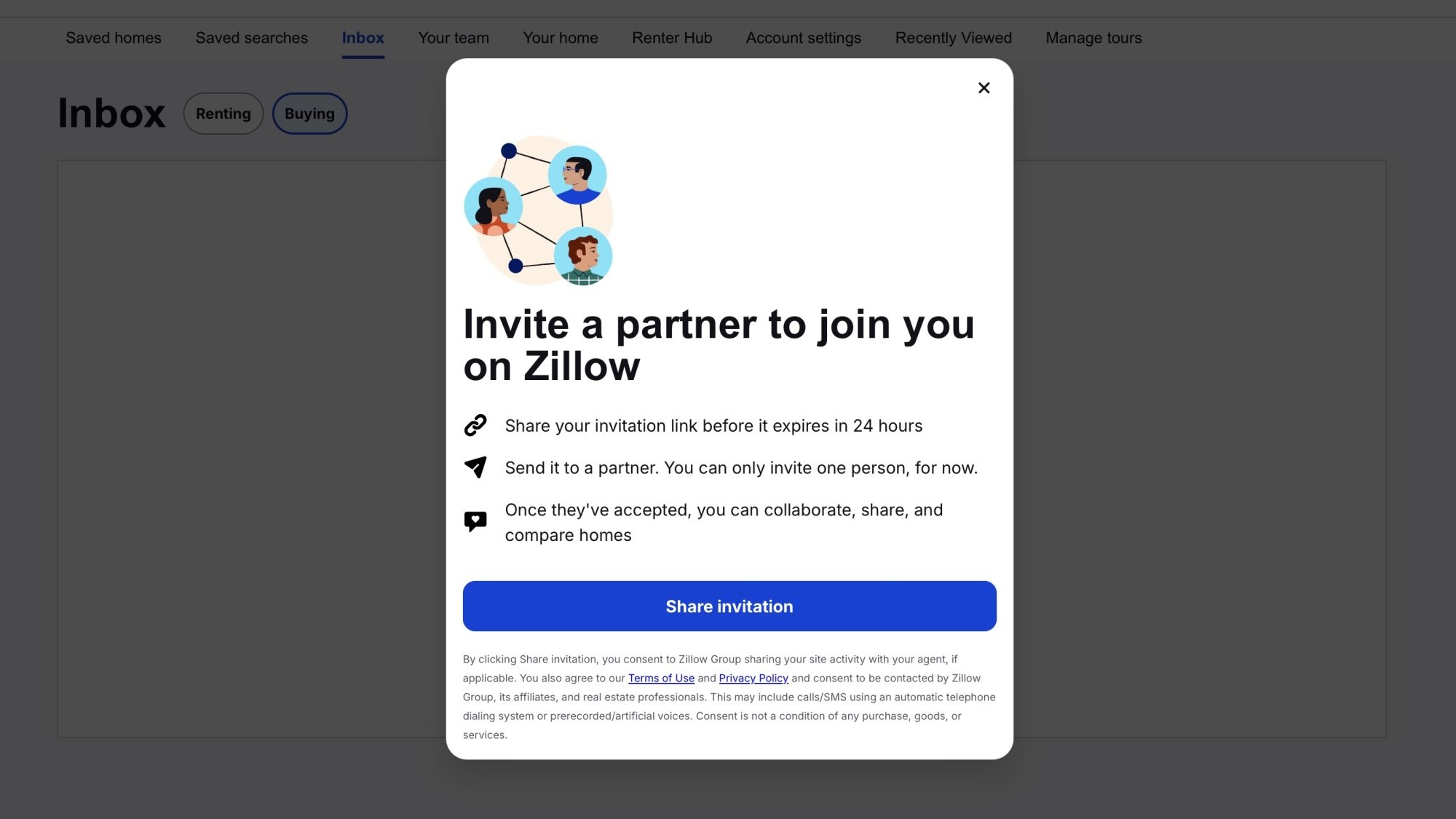
Credit: Lifehacker
Choose “Share invitation,” and Zillow will let you share it wherever you’d like. You can copy the link, and paste it in another chat app, or choose a destination for Zillow to share the link to directly.
Oppo’s Find X9 Pro has a detachable telephoto lens and a gigantic battery
Oppo’s latest flagship phone, like the sleek (but hard to buy) Find N5 foldable, goes hard on the tech specifications. In fact, the Find X9 Pro’s specs read like a wishlist of what many want to see in their phones, with a huge 7,500mAh battery, a 200-megapixel telephoto camera and a bright 6.78-inch screen with tiny, almost one-millimeter bezels, all while still measuring in at 8.25mm in thickness. Oh, and an optional telephoto lens add-on that boosts camera zoom to 10x.
The Find X9 Pro will be priced at 1,399 Euros (we’re waiting on further pricing). The biggest drawback may be that, despite the Find X9 series being Oppo’s biggest phone launch yet, it won’t be available in the US. Still, with everything that’s crammed into this phone, I had to try it out. Do I really want a thinner smartphone? Or one that lasts multiple days before it needs recharging? And man, this telephoto lens is certainly eye-catching.
Display and design
Image by Mat Smith for Engadget
The Find X9 Pro has a 6.78-inch display, with peak outdoor brightness at 3,600 nits. On paper, that beats the iPhone 17 Pro, but most people with phones older than a year or two will notice how much brighter phones like the X9 Pro are. Another notable feature is a 1-nit minimal brightness to reduce eye strain when using the phone in the dark. Or in bed. Which we shouldn’t do, but we all do. Oppo has also included high-frequency pixel dimming to further reduce the screen’s harshness.
Like recent phones from its business cousin, OnePlus, Oppo has added a new button on this year’s Find X model. The Snap key is on the left of the device, and can be customized to launch apps like the voice recorder, translation apps and flashlight. Meanwhile, the right edge houses the Find X9’s Quick Button, which is ostensibly the camera button. Double-tapping it launches the camera app. While it’s not as elaborate as the iPhone’s Camera Control, you can swipe on the button to zoom in and out while using the camera, which is a simple, welcome addition.
Alongside Mediatek’s new Dimensity 9500 chip, the Find X9 Pro is another flagship phone with a silicon-carbon battery. With a higher energy density than graphite-based batteries, this means longer battery life without making the phone bigger or thicker. At 7,000mAh, the battery is huge. That’s far bigger than the battery found in foldables like Samsung’s Z Fold 7 (4,400 mAh) and the Pixel 9 Pro Fold (4,650 mAh). It’s even bigger than the one in the OnePlus 13 (6,000 mAh). Fortunately, the Find X9 supports suitably swift charging speeds, with support for 80W SUPERVOOC and 50W wireless charging. During my time with the phone, it would often last two days on a charge. Even after a day of heavy camera use, Google Maps and streaming video, I didn’t need to recharge the Find X9 Pro until late afternoon on the second day.
Cameras
Image by Mat Smith for Engadget
The Find X9 Pro’s camera consists of a 50-megapixel main sensor with f/1.5 lens and optical image stabilization. There’s also a 50MP ultrawide camera and arguably the most technically impressive part: a 200MP periscope camera with an f/2.1 lens and OIS. This is further augmented with an attachable teleconverter lens — more on that later.
Oppo’s Hasselblad collaboration focuses on telephoto, though the company calls its entire camera setup the Hasselblad Master Camera System. I’m not sure it needed such a label.To make the most of the high-resolution sensor, the camera app includes a new Hi-Res mode to capture at 200MP for the telephoto lens and 50MP when using the other two camera sensors. The company warns that the mode is best used in well-lit environments, as it strips out pixel binning and other computational photography techniques that are used when there’s limited light.
But that’s not really the point: it’s all about the zoom. The telephoto has a base 3x optical zoom, which can be cropped to a 6x zoom with a 50MP image. It’s worth noting that all the cameras on the Find X9 can capture at 50MP. If the phone detects more challenging shooting conditions, it automatically drops down to 25MP or 12MP shots. In reality, I didn’t notice the resolution jump in most photos I took, although the rich foliage in some of my landscape shots showcases how much detail the camera system is able to capture.
Image by Mat Smith for Engadget
Oppo says its computational photography know-how pushes the zoom here to 13.2x, but its algorithms can get a little aggressive and messy with faces and detail at the higher digital zoom settings. Take a look at these pictures taken across a hillside. While the foliage appears crisp and detailed, the walkers are blurry and there’s a halo effect around them. At other times, computational photography turned pedestrians into nightmarish faces.
In yet another opportunity to mention the Hasselblad collab, there’s also an XPAN shooting mode for cinematic 65:24 images. Conversely, if you’re into a disposable camera aesthetic, the Find X9 series can also trigger an aggressive double-flash to mimic ‘00s photography.
The same zoom capabilities are available in video capture, too, and the company has added a new Sound Focus mode to strip out ambient noise, which worked better than I expected it to. There are several more video recording upgrades, including full LOG recording (activated in settings) and an integrated LUT preview to check color grading in real time.
Image by Mat Smith for Engadget
Then there’s the attachable lens. Oppo’s Hasselblad Teleconverter is a solid, premium peripheral, with a metal barrel and some heft. It extends the Find X9’s optical zoom to 10x, with an equivalent focal length of 230mm. Thanks to the high-res 200MP Telephoto camera sensor, you can punch in at up to 200x digital zoom for stills and 50x zoom for video, although the sweet spot is certainly more in the middle. The add-on teleconverter lens, while not entirely new (Vivo did it first), may be the most intriguing part.
You need to use a specific case and mounting plate to securely attach the lens to the phone, but when it’s locked in, it feels solid and very secure. It also looks, well, how it looks. Because it’s such a slender lens, it looks like something you might use for espionage. It doesn’t even look like a point-and-shoot camera. It’s… eye-catching, but also so much fun.
Image by Mat Smith for Engadget
I’ve been testing the Find X9’s camera chops for a few weeks, and it’s been a lot of fun to zoom in with optical zoom clarity, whether at concerts, movie premieres or taking pictures of my nieces during hectic Play-Doh sessions. What’s particularly attractive is the combination of high detail and bokeh effect. With the leap in zoom, I had to ensure I was far enough away in order to use the teleconverter, or it would struggle to focus.
Image by Mat Smith for Engadget
Oppo is pitching its new flagship as the ultimate phone for concerts and live events, and the zoom range is very impressive. Perhaps understandably, when zooming so much, there is a high risk of blurry shots. Oppo includes a special tripod mount that attaches to the lens barrel to ensure the whole thing doesn’t tip over, but it’s one step too far for me. Carrying around the teleconverter and mounting plate is already a lot. It’s also a bit of a chore to have to detach the plate when using the camera without the teleconverter. Oddly, the plate covers the other sensors, meaning that if you want a closer focal point (or want to use anything besides the telephoto sensor), it’s an additional pain point before you can take the photo.
It’s unusual that a phone’s “main” camera isn’t the star of the show, but that may be the case with the Find X9 Pro. However, it’s still technically impressive. With a new 1/1.28 sensor codeveloped with Sony, the 50MP main camera can capture triple exposures on each frame before merging them. Oppo claims that it gives images 17 stops of dynamic range. There’s also a fourth camera, a True Color camera, dedicated to precisely measuring color temperatures across all the other sensors. Combined, it’s an impressive system, but you’ll get the most out of it if you’re willing to pay for the additional teleconverter.
Image by Mat Smith for Engadget
While we wait for the price to inform our verdict on the Find X9, what’s stopping Oppo from breaking into the US? Trade turbulence and competition, probably. If it can refine the experience (and maybe keep its next phone compatible with the same teleconverter), it has a good chance at charming the obsessive smartphone photographer away from their iPhones and Pixels.
This article originally appeared on Engadget at https://www.engadget.com/mobile/smartphones/oppos-find-x9-pro-hands-on-detachable-telephoto-lens-7000mah-battery-160006373.html?src=rss
What People Are Getting Wrong This Week: All These Football-Related Rumors
Football season is in full swing, but these are such strange days that even of game day, Americans can no longer put their political differences aside to enjoy the savage ballet. Yes, the National Football League has once again become a flashpoint in the endless, maddening culture wars—and surprisingly, the NFL seems to be on the “woke” side of the board.
Right now, there’s a lot of misinformation being spread about the game, the league, and the personalities within. Here are some of the biggest I’ve encountered.
Did Andy Reid refuse pledge to not attend the 2026 Super Bowl over a planned Charlie Kirk tribute?
The questionable Facebook pages of both Kollam’s Media and Together We Rise both recently claimed that Andy Reid, head coach of the Kansas City Chiefs, “ignited one of the most explosive controversies in sports history” when he refused to attend the 2026 Super Bowl because of a tribute to Charlie Kirk planned for the opening ceremonies. But that didn’t happen. There are multiple levels of deception at work here. First, we have no reason to think that the NFL has planned its opening ceremonies this early, and if they have, there’s no reason they would have shared them with Andy Reid anyway. So it follows that Reid did not preemptively announce a boycott of the 2026 Super Bowl, and there is no evidence of him doing so aside from those Facebook posts.
It is true that Reid most likely won’t be attending the Super Bowl this year: His team is currently battling the Raiders for third place in a four-team division.
Did Dolly Parton, Alan Jackson, and George Strait refuse to perform a Charlie Kirk tribute at Super Bowl 2026?
Together We Rise’s Facebook page is evidently on the cutting edge of fake stories about the Super Bowl and Charlie Kirk, as another post there reports Alan Jackson, Dolly Parton, George Strait, Vince Gill, and Reba McEntire all declined to perform at the Super Bowl halftime show over a planned tribute to Charlie Kirk. But again, there is no known “tribute to Charlie Kirk” planned for the Super Bowl, and the performer for halftime is Bad Bunny anyway, meaning there’s nothing for this random cadre of vaguely left-leaning country artists to boycott.
Did Coca-Cola pull its sponsorship of the 2026 halftime show?
Speaking of Bad Bunny, according to a Facebook post from PR Informa, Coca-Cola CEO James Quincey responded to the announcement of Bad Bunny’s halftime gig by pledging, “I will end my sponsorship of the Super Bowl if they let Bad Bunny to perform at halftime.” Quincey never said this, and Coca-Cola hasn’t advertised during the Super Bowl since since 2020 anyway. All the advertising has been purchased already for the game, and no company has announced plans to pull out over Bad Bunny’s performance, nor for any other reason.
Did Carlos Santana object to Bad Bunny playing at the Super Bowl?
Despite post circulating on social media suggesting music icon Carlos Santana objected to Bad Bunny playing the Super Bowl, it’s just not true. Santana addressed the rumor on his own Facebook page, posting, “Fear is the flavor right now. Fear is what motivates ignorant people to put words in my mouth—saying that I didn’t want Bad Bunny to be represented at the Super Bowl. I never said that, nor would I ever.”
Is the NFL considering pulling Bad Bunny’s halftime show?
When asked about the rumors that the NFL was considering pulling Bad Bunny from the 2026 halftime show, NFL Commissioner Roger Goodell made it clear the league stands behind Bad Bunny. “He’s one of the leading and most popular entertainers in the world,” Goodell told ESPN. “I’m not sure we’ve ever selected an artist where we didn’t have some blowback or criticism.”
Did Travis Kelce sue Karoline Leavitt, buy a diner for homeless people, and announce he impregnated Taylor Swift?
Travis Kelce did not sue Karoline Leavitt, buy a diner for homeless people, or announce that he and Taylor Swift are having a child. He didn’t donate his bonus to a homeless non-profit, threaten to “twist Elon Musk into a pretzel,” or rent out Disneland for a day. Dude’s just a football player, damn. That Kelce is a center for misinformation is clearly because he’s among the highest profile players out there, he has a high-profile fiancée, and he doesn’t completely hide his political views. Not that Kelce is anything like an activist, but having done a commercial encouraging people to get vaccinated is enough to put a celebrity in certain crosshairs.
The Super Bowl is rigged in favor of…
This is a preemptive debunking: We don’t yet know who is going to be in the big game, but when we find out, there are bound to be conspiracy theories suggesting the game is being rigged in favor of one team, for whatever reason. But as far as we know, the Super Bowl hasn’t been rigged in the past, and it probably won’t be this time, either. Remember: Last season’s pre-Super Bowl rumor was the game would be fixed in favor of The Chiefs, and it didn’t exactly work out that way.
Why is football suddenly so controversial?
Maybe I’m looking at the past with astroturf-colored glasses, but football used to be something like a shared national pastime. Sure, there were a ton of false beliefs about the game out there, but they were things like, “The refs cheat,” or “The Raiders are a lock.” It didn’t matter whether you were a Democrat or a Republican, we all laughed at the Jets. But like every other cultural event or institution, football is also being sorted into Team Red and Team Blue, neither of which has attractive jerseys. It’s such a drag that we can’t just enjoy the circus without someone turning it into the next political crisis.
Awesome Steam Deck Mod Turns PC Handheld Into A Dual-Display Nintendo DS Clone
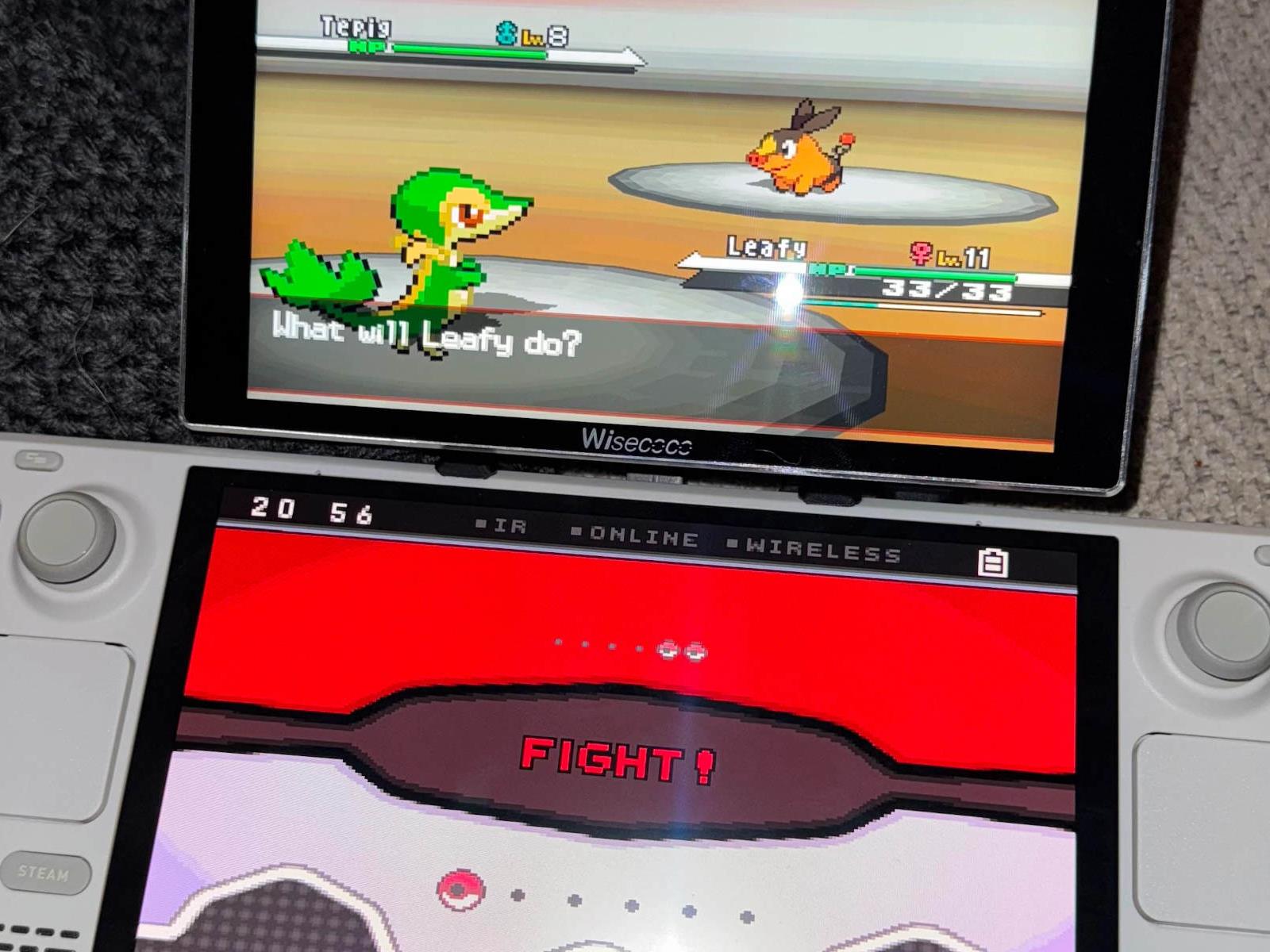
Yet another dual-screen “DS” handheld has been born, though this time it’s through user modification of the Steam Deck OLED rather than a dedicated clone like the Anbernic RG DS.
This particular Steam Deck DS modding project is the most recent of its kind, but not the only one—there have been plenty of these posted to the r/SteamDeck subreddit
Solseek Brings a Fast, TUI-Based Package Manager to Solus Linux
The freshly released Solseek app gives Solus Linux users a fast, fzf-powered TUI for managing eopkg, Flatpak, and Snap.
How to cancel your HBO Max subscription
It keeps happening. HBO Max just raised prices again, around 16 months after the last price increase. If your debit card is feeling the pain, or if you’re just not excited about that weird Harry Potter remake nobody asked for, you may decide to take a break from the perpetually renamed platform. Here’s everything you need to know about canceling your HBO Max subscription, so you can streamline those entertainment options.
How to cancel via web
The simplest way to end your HBO Max subscription is if you’re being billed directly by the company. You can follow these steps in a web or mobile browser to say goodbye to the house that Tony Soprano built.
-
Go to max.com/subscription in a web browser.
-
Sign in to your account.
-
Click on your profile picture.
-
Select Subscription.
-
Click Cancel Your Subscription. This should be at the bottom of the page.
-
Follow the prompts to confirm.
That was pretty dang easy, but things get a bit more complicated if you originally subscribed via a third-party platform.
How to cancel via third-party provider
Like most modern streaming platforms, HBO Max has partnerships with third-party providers like Apple and Amazon. This lets users sign up for the service through a totally different platform, like Prime Video or directly through iOS. Cancelling has to also go through this third party. The basic idea here is to sign into that account and find a place to manage billing and subscriptions, looking for HBO Max. Here are specific steps for some of the more common providers.
Cancel via Apple
-
Go to the Settings app on your iOS device.
-
Tap on your name at the top of the screen.
-
Tap Subscriptions.
-
Select HBO Max to manage and make changes.
Cancel via Amazon
-
Go to Amazon in a web browser.
-
Sign in to your account.
-
Click on Amazon Memberships and Subscriptions.
-
Find the HBO Max subscription and hit Cancel Subscription.
-
Follow the prompts.
Cancel via Google Play
-
Go to the Google Play store on a web browser.
-
Confirm that you’re signed in to your Google account.
-
Click on Payment & Subscriptions, which should be on the top right.
-
Click the Subscriptions tab.
-
Select HBO Max.
-
Click Manage.
-
Select Cancel Subscription.
How to cancel a bundle subscription
There are a couple of bundles that include HBO Max, in addition to platforms like Disney+ and Hulu. It’s corporate synergy at its finest. However, this does make cancelling slightly more complicated. If you previously had an HBO Max subscription and upgraded to a bundle, cancelling the bundle might not cancel HBO Max. It could just cancel the platforms that were added in the bundle. Just make sure to double-check that HBO Max went away along with the bundle. As for canceling the bundle itself, follow the steps above.
Can I pause an HBO Max subscription?
No, you can’t pause a subscription to HBO Max. The best way to approximate this is to simply cancel a subscription and resubscribe at a later date. Whatever works, right?
What happens after you cancel?
Cancelling your subscription to HBO Max doesn’t immediately end the service. There are no partial refunds in this world, so you’ll have full access to the account until the next payment date. This means that if you change your mind before the next pay period, it’ll be easy to get things going again. Just look for a Restart Subscription button somewhere on the Account page. After the next payment date passes, the service sails off into that Westeros sunset.
This article originally appeared on Engadget at https://www.engadget.com/entertainment/how-to-cancel-your-hbo-max-subscription-155047857.html?src=rss
JBL Clip 5 Bluetooth Speaker Now Costs Next to Nothing as Amazon Clears Shelves Ahead of Black Friday

Save 25% on the JBL Clip 5 portable Bluetooth speaker over at Amazon for a limited time.
The post JBL Clip 5 Bluetooth Speaker Now Costs Next to Nothing as Amazon Clears Shelves Ahead of Black Friday appeared first on Kotaku.
Battlefield 6‘s Biggest Update And Its Free Battle Royale Mode Are Now Live

Redsec as well as BF6‘s Rogue Ops update are both out today on PS5, Xbox, and PC
The post <i>Battlefield 6</i>‘s Biggest Update And Its Free Battle Royale Mode Are Now Live appeared first on Kotaku.
I can’t believe Doctor Who is back so soon
The BBC has today announced Doctor Who will return for a Christmas Special in 2026, with news of the next series to be revealed “in due course.” The broadcaster says the special will be written by current executive producer Russell T. Davies, putting to rest more than a year’s worth of doubt.
For the unaware, Doctor Who has been a mainstay in the BBC schedules since its 2005 revival, but the BBC felt it couldn’t sustain the show’s budget alone. In 2022, it partnered with Disney, which bankrolled the show in exchange for the right to stream it globally on Disney+.
The Disney deal lasted for two years, plus the yet-to-be-broadcast spin-off The War Between The Land And The Sea. Unfortunately, the revived series was not the world-swallowing hit its backers were hoping for, and there were big question marks about the show’s future.
Behind the scenes rumors suggested an unhappy set, with the companion role recast just weeks before production began on the second season. With the show’s fate uncertain, the series’ long-running storyline was tweaked and re-shot beyond the point of incoherence as star Ncuti Gatwa opted to leave.
Since then, more details about the series’ originally planned conclusion have leaked out, as reported by Den of Geek, validating the stories of disharmony. And since then, many figures connected to the show have claimed that the series was dead in the water as the BBC lacks the funds to properly afford it.
The news of a new special and new season will, naturally, provoke plenty more questions as to how the BBC will be able to keep the show going, and how Davies will be able to un-tangle the knot he hastily tied at the conclusion of “The Reality War.”
This article originally appeared on Engadget at https://www.engadget.com/entertainment/i-cant-believe-doctor-who-is-back-so-soon-153050935.html?src=rss
Hollow Knight: Silksong: The Kotaku Review

The long-awaited sequel is a bold, defiant game with thrilling encounters and a gorgeous world, but it’s also burdened by excess and the weight of expectations
The post <i>Hollow Knight: Silksong</i>: The <i>Kotaku</i> Review appeared first on Kotaku.
Harvard Says It’s Been Giving Too Many A Grades To Students
An anonymous reader shares a report: More than half of the grades handed out at Harvard College are A’s, an increase from decades past even as school officials have sounded the alarm for years about rampant grade inflation. About 60% of the grades handed out in classes for the university’s undergraduate program are A’s, up from 40% a decade ago and less than a quarter 20 years ago, according to a report released Monday by Harvard’s Office of Undergraduate Education.
Other elite universities, including competing Ivy League schools, have also been struggling to rein in grade inflation. The report’s author, Harvard undergraduate dean Amanda Claybaugh, urged faculty to curtail the practice of awarding top scores to the majority of students, saying it undermines academic culture. “Current practices are not only failing to perform the key functions of grading; they are also damaging the academic culture of the college more generally,” she said in the report.


Read more of this story at Slashdot.
AMD shores up its budget laptop CPUs by renaming more years-old silicon
As newer, more efficient silicon manufacturing processes have gotten more expensive and difficult to develop, chipmakers like Intel and AMD have repeatedly rebranded some of their older processors with new model numbers. This has allowed both companies to release “new” products that aren’t actually new at all, muddying the waters for people trying to buy lower-end and midrange laptops.
As spotted by Tom’s Hardware, AMD has quietly rebranded a swath of its Ryzen laptop chips with new model numbers without changing the silicon. The rebranded processors use either Rembrandt-R silicon with Zen 3+ CPU cores and RDNA 2 graphics cores or Mendocino silicon with Zen 2 CPU cores and RDNA 2 graphics cores. Both of these architectures first launched in 2022, but Mendocino’s Zen 2 CPU architecture dates all the way back to 2019. During the company’s model number decoder ring era, these designs had been sold as Ryzen 7035- and Ryzen 7020-series chips, respectively.
This is actually AMD’s second rebranding for the Rembrandt-R silicon, which was launched as the Ryzen 6000 series in 2022. These chips will compete most directly with Intel’s non-Ultra Core 100 series processors, most of which use 2022-vintage Raptor Lake silicon.
Amazon Slashes Up to 60% Off Blink Mini 2 Security Cameras, Practically Free Whether You Buy One or a Bundle

Save 55% on the Blink Mini 2 outdoor indoor security camera over at Amazon.
The post Amazon Slashes Up to 60% Off Blink Mini 2 Security Cameras, Practically Free Whether You Buy One or a Bundle appeared first on Kotaku.
VRChat Is Now Available On iPhone, iPad & Flatscreen Android
VRChat is fully out now on iPhone, iPad, and flatscreen Android, after years of alpha and beta testing.
The social platform first opened a closed alpha on Android for VRChat Plus subscribers almost two years ago. Last year it launched an iPhone closed beta on Apple’s TestFlight system, limited to 10,000 testers, and a few months ago an Android open beta for all launched.
It’s now publicly available as a stable release on both the App Store and Google Play Store.
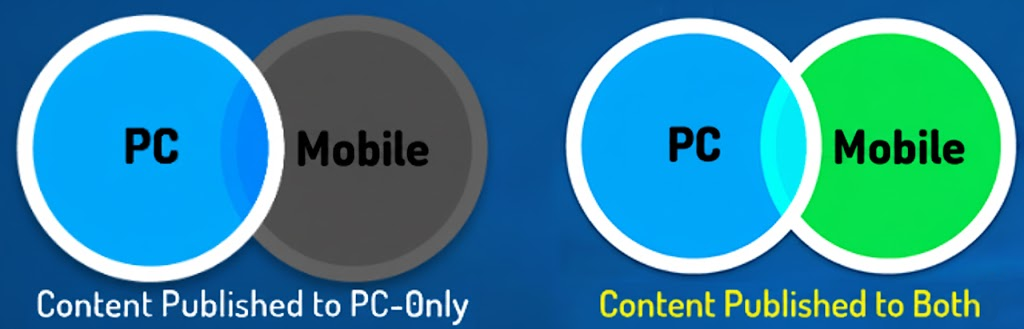
VRChat is already available for PC VR and flatscreen Windows via Steam, as well as mobile VR on Meta Quest, Pico 4, and HTC Vive standalones. The platform was a launch title for the original Oculus Quest, its first foray into mobile platforms.
Some worlds – including some of the most impressive worlds – are PC-only, and mobile platforms are unable to access these worlds.
That was the case for avatars too until December 2023, when VRChat added a system called Impostors to automatically generate fallback versions of PC avatars that mobile users can see, and the quality of these Impostors have been improved over time.
VRChat Now Automatically Generates Mobile Avatar Versions
VRChat can now automatically generate a mobile version of your avatar so Quest, Pico, Vive XR, and phone users can see it.
 UploadVRDavid Heaney
You can find VRChat for free on the App Store and Google Play Store.
On both platforms, you’ll need at least 6GB of RAM. For iOS, that means iPhone 12 Pro / 12 Pro Max and iPhone 13 Pro / 13 Pro Max, or any iPhone 14 or above. For iPadOS, it means 4th gen iPad Pro, 5th gen iPad Air, or 7th gen iPad Mini or above.
If you don’t have 6GB of RAM, on Android you won’t be able to install the app, while on Apple devices you’ll just get “Companion” mode, which just lets you access your friends list, notifications, and other social matters on mobile.
ROG Xbox Ally X Vs Lenovo Legion Go 2: Which Handheld Gaming Device Wins 2025?
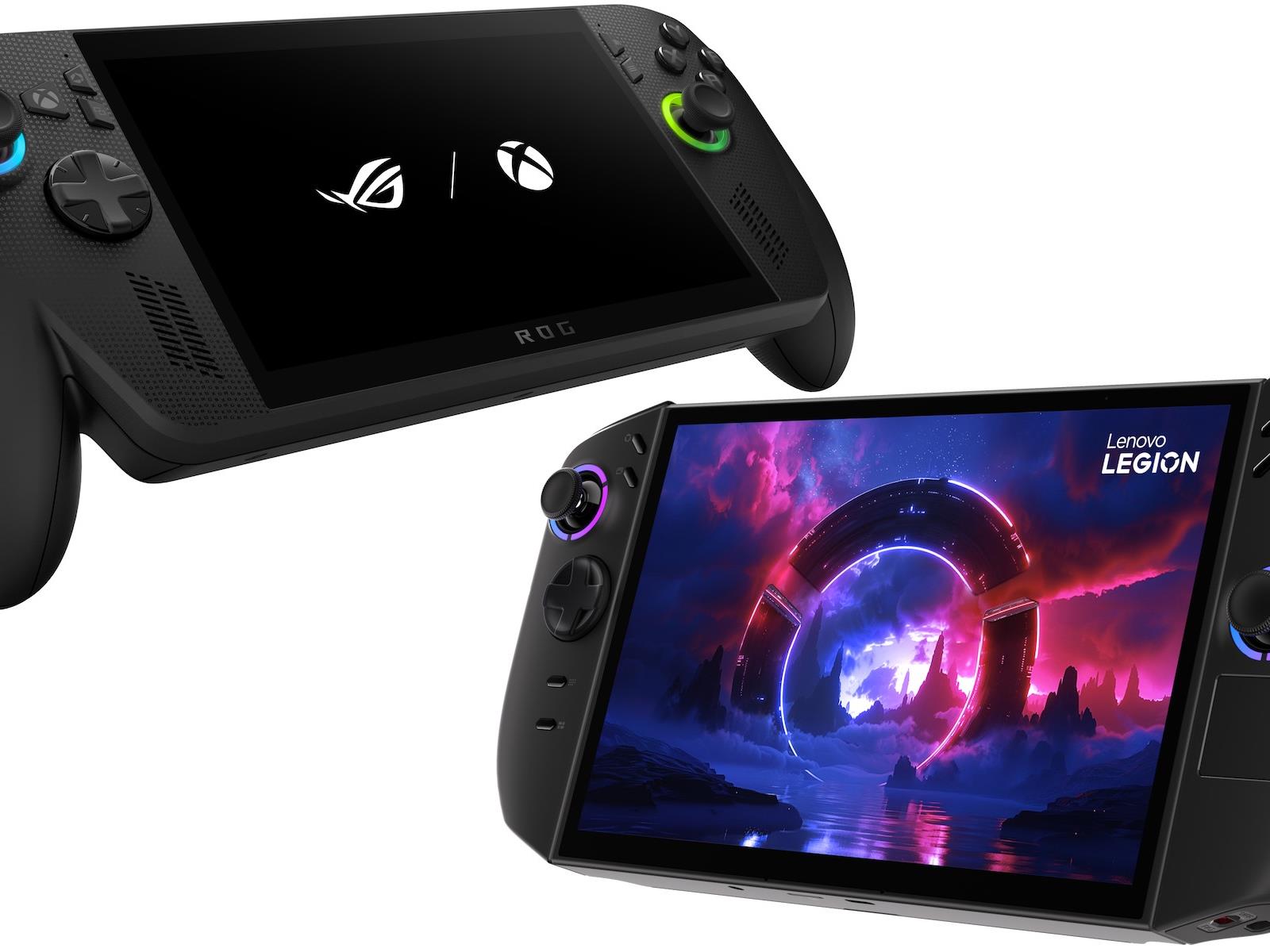
We’re racing toward the end of 2025, and while there’s still over two months left to go, we’re confident in saying that there probably won’t be any more high-profile handheld hardware launches this year. We do expect to see some systems based on Intel’s new Panther Lake processors next year, but for now, the two highest-profile handheld releases
PSA: X users have until November 10 to re-enroll their security keys
If you’re a former Twitter user still using X and rely on a hardware security key for your two-factor authentication (2FA) method, you need to re-enroll it before November 10. As spotted by The Verge, X’s Safety account notified users of the deadline in a post last week. The Elon Musk-owned company eventually intends to retire the twitter.com domain, which hardware keys such as YubiKeys remain tied to until they’re re-enrolled.
“By November 10, we’re asking all accounts that use a security key as their two factor authentication (2FA) method to re-enroll their key to continue accessing X. You can re-enroll your existing security key, or enroll a new one. A reminder: if you enroll a new security key, any other security keys will stop working (unless also re-enrolled),” the account said.
X later clarified that the change only applies to YubiKeys and passkeys, and not 2FA authenticator apps such as Microsoft Authenticator or Authy. Users who fail to re-enroll their affected keys before November 10 will have their accounts locked until they either complete the re-enrollment process, choose a different 2FA method or decide to not use 2FA altogether (which X says it advises against).
To re-enroll your hardware key or add a new one, head to Settings in the X app, then click “Security and account access” and “Manage Passkeys” within the Security section.
Elon Musk rebranded Twitter to X in 2023, and last year fully transitioned the social network’s core systems to X.com, leaving no trace of the blue bird logo that was once synonymous with the platform.
This article originally appeared on Engadget at https://www.engadget.com/cybersecurity/psa-x-users-have-until-november-10-to-re-enroll-their-security-keys-150620766.html?src=rss
Expert panel will determine AGI arrival in new Microsoft-OpenAI agreement
On Monday, Microsoft and OpenAI announced a revised partnership agreement that introduces an independent expert panel to verify when OpenAI achieves so-called artificial general intelligence (AGI), a determination that will trigger major shifts in how the companies share technology and revenue. The deal values Microsoft’s stake in OpenAI at approximately $135 billion and extends the exclusive partnership through 2032 while giving both companies more freedom to pursue AGI independently.
The partnership began in 2019 when Microsoft invested $1 billion in OpenAI. Since then, Microsoft has provided billions in cloud computing resources through Azure and used OpenAI’s models as the basis of products like Copilot. The new agreement maintains Microsoft as OpenAI’s frontier model partner and preserves Microsoft’s exclusive rights to OpenAI’s IP and Azure API exclusivity until the threshold of AGI is reached.
Under the previous arrangement, OpenAI alone would determine when it achieved AGI, which is a nebulous concept that is difficult to define. The revised deal requires an independent expert panel to verify that claim, a change that adds oversight to a determination with billions of dollars at stake. When the panel confirms that AGI has been reached, Microsoft’s intellectual property rights to OpenAI’s research methods will expire, and the revenue-sharing arrangement between the companies will end, though payments will continue over a longer period.