
Intel Compute Runtime 25.40.35563.4 is out today as the newest update to their open-source GPU compute stack for Level Zero and OpenCL on Intel integrated/discrete graphics hardware…
Monthly Archives: October 2025
Bipartisan GUARD Act proposes age restrictions on AI chatbots
US lawmakers from both sides of the aisle have introduced a bill called the “GUARD Act,” which is meant to protect minor users from AI chatbots. “In their race to the bottom, AI companies are pushing treacherous chatbots at kids and looking away when their products cause sexual abuse, or coerce them into self-harm or suicide,” said the bill’s co-sponsor, Senator Richard Blumenthal (D-Conn). “Our legislation imposes strict safeguards against exploitative or manipulative AI, backed by tough enforcement with criminal and civil penalties.”
Under the GUARD Act, AI companies would be required to prohibit minors from being able to access their chatbots. That means they have to conduct age verification for both existing and new users with the help of a third-party system. They’ll also have to conduct periodic age verifications on accounts that were already previously verified. To maintain users’ privacy, the companies will only be allowed to retain data “for no longer than is reasonably necessary to verify a user’s age” and may not share or sell user information.
AI companies will be required to make their chatbots explicitly tell the user that it’s not a human being at the beginning of each conversation and every 30 minutes after that. They’ll have to make sure their chatbots don’t claim to be a human being or a licensed professional, such a therapist or a doctor, when asked. Finally, the bill aims to create new crimes to charge companies that make their AI chatbots available to minors.
In August, the parents of a teen who committed suicide filed a wrongful death lawsuit against OpenAI, accusing it of prioritizing “engagement over safety.” ChatGPT, they said, helped their son plan his own death even after months of conversations, wherein their child talked to the chatbot about his four previous suicide attempts. ChatGPT allegedly told their son that it could provide information about suicide for “writing or world-building.” A mother from Florida sued startup Character.AI in 2024 for allegedly causing her 14-year-old son’s suicide. And just this September, the family of a 13-year-old girl filed another wrongful death lawsuit against Character.AI, arguing that the company didn’t point their daughter to any resources or notify authorities when she talked about her suicidal ideations.
It’s also worth noting that the bill’s co-sponsor Senator Josh Hawley (R-Mo.) previously said that the Senate Committee Subcommittee on Crime and Counterterrorism, which he leads, will investigate reports that Meta’s AI chatbots could have “sensual” conversations with children. He made the announcement after Reuters reported on an internal Meta document, stating that Meta’s AI was allowed to tell a shirtless eight-year-old: “Every inch of you is a masterpiece — a treasure I cherish deeply.”
This article originally appeared on Engadget at https://www.engadget.com/ai/bipartisan-guard-act-proposes-age-restrictions-on-ai-chatbots-130020355.html?src=rss
Republican plan would make deanonymization of census data trivial
President Donald Trump and the Republican Party have spent the better part of the president’s second term radically reshaping the federal government. But in recent weeks, the GOP has set its sights on taking another run at an old target: the US census.
Since the first Trump administration, the right has sought to add a question to the census that captures a respondent’s immigration status and to exclude noncitizens from the tallies that determine how seats in Congress are distributed. In 2019, the Supreme Court struck down an attempt by the first Trump administration to add a citizenship question to the census.
But now, a little-known algorithmic process called “differential privacy,” created to keep census data from being used to identify individual respondents, has become the right’s latest focus. WIRED spoke to six experts about the GOP’s ongoing effort to falsely allege that a system created to protect people’s privacy has made the data from the 2020 census inaccurate.
The Nothing Phone 3a Lite has a big battery and triple-camera system
The Nothing Phone universe continues to expand. On Wednesday, the company launched the fourth model in the Phone 3 lineup: the Nothing Phone 3a Lite. (It joins the Phone 3, Phone 3a and Phone 3a Pro.) The cheapest model in the series, the Phone 3a Lite pairs the brand’s distinct styling with solid all-around specs for an entry-level handset. However, with the company saying its non-flagship devices will soon include pre-installed apps and lock-screen ads, there may be a trade-off.
The Nothing Phone 3a Lite uses a Panda Glass casing over an aluminum internal frame. As you can see, it retains some familiar design strokes, albeit pared down to match its €249 price. As the company describes it, the handset’s “asymmetric, transparent look and nano-coating creates a beautiful balance of matte and gloss.” (Poetry!) The phone ships in white and black variants. Whether Nothing’s design language is your cup of tea or not, you’ll be hard-pressed to find a more striking and bold design language in a budget model.
The handset includes the Essential Key, a multi-purpose physical button found on all Phone 3 series models. The phone is IP54-rated for dust and water resistance.
Nothing
Nothing honors the brand’s unique Glyph system (while keeping costs down) by using a notification LED. (Remember those on early Android phones?) This model’s “Glyph Light” supports the lineup’s Flip to Glyph feature, which switches to light-only alerts when the device is face down. The LED can stay on for “key contact and app notifications” and serve as a camera countdown timer. You can also customize its light sequences for calls and specific contacts.
The handset has a hearty 5,000 mAh battery. Nothing advertises 22 hours of YouTube playback or 9.5 hours of gaming. It supports 33W fast charging, reaching 50 percent in about 20 minutes.
The Phone 3a Lite has a triple-camera system. That includes a 50MP primary camera with a 1/1.57-inch Samsung sensor. Joining it are an 8MP ultra-wide and a macro lens. The rear camera system shoots 4K video at app to 30 FPS. On its front is a 16MP lens.
Nothing
The Nothing Phone 3a Lite has more than respectable display specs for a budget phone. It uses a 6.77-inch flexible AMOLED panel with 1,080 x 2,392 resolution (387 PPI). It has a 120Hz adaptive refresh rate and a 1,000Hz touch sampling rate. It can reach 3,000 nits peak HDR brightness and 1,300 nits outdoor brightness.
The handset’s processor is the 4nm MediaTek Dimensity 7300 Pro 5G. The 8-core CPU can reach up to 2.5 GHz. Nothing says the chip performs better than the MediaTek 7200 silicon in last year’s Phone 2a. The company claims its CPU is 15 percent faster, its GPU supports 20 percent higher FPS, and its NPU delivers 100 percent better AI performance.
The phone also uses a liquid-cooling system, which may help during intensive gaming sessions. It ships with 8GB of RAM and comes in 128GB and 256GB storage tiers.
Nothing
The phone runs the Nothing OS 3.5 UI on top of Android 15. The company says Nothing OS 4.0 will arrive in the first half of 2026.
And that brings us back to those trade-offs. Earlier this week, Nothing confirmed to 9to5Google that its strategy moving forward will include “Lock Glimpse.” This rotating lock-screen wallpaper feature includes text with links to external content hosted by a Chinese advertising company. (That firm, Boyuan, says it offers a “rich mixture of content” to help its partners “commercialize the mobile traffic.”) Think of it as a slightly less obnoxious version of lock-screen ads.
Fortunately, Lock Glimpse is off by default in the current Nothing OS 4.0 beta. But if that changes in the future, the value proposition for Nothing’s budget devices could shift dramatically.
Another cost-subsidizing move is Nothing’s (also confirmed) embrace of pre-installed apps. The company said its “carefully considered” third-party apps are those “most people install on day one, like Instagram.” In fairness, that’s a common practice among Android phone manufacturers. But then again, it flies in the face of one aspect of the brand’s stated ethos: clean, bloat-free software. And if business considerations forced concessions in this area, it makes you question how long Lock Glimpse will stay off by default.
We reached out to Nothing to clarify whether these features will make their way to the Phone 3a Lite.
The Nothing Phone 3a Lite is available now in Europe on the company website. The 128GB model costs €249 (EU) / £249 (UK). Meanwhile, the 256GB model will set you back €279 (EU) / £279 (UK). We’ve asked Nothing about US pricing and availability, and we’ll update this story when we hear back.
This article originally appeared on Engadget at https://www.engadget.com/mobile/smartphones/the-nothing-phone-3a-lite-has-a-big-battery-and-triple-camera-system-130016149.html?src=rss
These Brands Let You Return Shoes Even After You Run in Them
We may earn a commission from links on this page.
There are plenty of reasons to buy shoes at your local running store instead of online or at a big box store, including a more knowledgeable staff and the fact that you’re supporting your local running community. But another biggie is the fact that many will take returns even after you’ve gone for a few runs in your shoes.
In case you don’t have a local store with this policy, it’s good to know that some larger brands and online stores will also take returns of lightly worn shoes. Fleet Feet and Running Warehouse are among the bigger stores that offer this perk; some online running shoe stores (like Roadrunner) will include it as part of a membership. But several running shoe brands offer a no-questions-asked return policy themselves, so if you know that you love (say) Nikes, you can buy from the brand directly.
Do not feel bad about taking advantage of this policy. The whole idea is that you can trust your body to tell you whether the shoes are working, rather than stressing during a brief try-on about whether you think these shoes will work for you. If you can’t help but feel guilty, you can make it up by buying your next new pair of shoes from the same place. They do it because they’re trying to win you as a loyal customer.
Adidas asks for shoes to be unworn for most returns, but it has a separate policy for its “performance” running shoes, which include all its popular running shoes, from the $65 Runfalcon on up.
Altra prominently advertises “30 day trial runs, guaranteed.” You’ll need a return label but you can get it online for free or at your return location. Altra allows returns “if you are not completely satisfied” during those 30 days.
Brooks will accept returns within 90 days, even if you’ve run in the shoes: “Run in it, sweat in it, inside, outside, in the rain—if it doesn’t perform the way it should, send it back.”
Hoka has a 30-day return policy (60 days for members), even if you’ve worn the shoes. “Try them out, that’s what our 30-day Guarantee is all about.”
Newton accepts returns within 30 days “for any reason with as much or as little wear and tear on them” as they happen to have.
Nike will let you return shoes, even if they’ve been worn, within 60 days of purchase. It refers to the 60-day time as your “trial” period and does not require the shoes to be unworn. There are exceptions, including items purchased at Nike Clearance stores.
Please note that policies can change, and that they often vary by country. Customer service staff can sometimes help you out even if you fall outside the official policy, but don’t count on it. Still, if you’ve bought shoes, run in them, and weren’t happy, it can’t hurt to ask.
Senator Blocks Trump-Backed Effort To Make Daylight Saving Time Permanent
An anonymous reader quotes a report from Politico: Sen. Tom Cotton wasn’t fast enough in 2022 to block Senate passage of legislation that would make daylight saving time permanent. Three years later, he wasn’t about to repeat that same mistake. The Arkansas Republican was on hand Tuesday afternoon to thwart a bipartisan effort on the chamber floor to pass a bill that would put an end to changing the clocks twice a year, including this coming Sunday. […] A cross-party coalition of lawmakers has been trying for years to make daylight saving time the default, which would result in more daylight in the evening hours with less in the morning, plus bring to a halt to biannual clock adjustments.
President Donald Trump endorsed the concept this spring, calling the changing of the clocks “a big inconvenience and, for our government, A VERY COSTLY EVENT!!!” His comments coincided with a hearing, then a markup, of Scott’s legislation in the Senate Commerce Committee. It set off an intense lobbying battle in turn, pitting the golf and retail industries — which are advocating for permanent daylight saving time — against the likes of sleep doctors and Christian radio broadcasters — who prefer standard time. “If permanent Daylight Savings Time becomes the law of the land, it will again make winter a dark and dismal time for millions of Americans,” said Cotton in his objection to a request by Sen. Rick Scott (R-Fla.) to advance the bill by unanimous consent. “For many Arkansans, permanent daylight savings time would mean the sun wouldn’t rise until after 8:00 or even 8:30am during the dead of winter,” Cotton continued. “The darkness of permanent savings time would be especially harmful for school children and working Americans.”


Read more of this story at Slashdot.
Campagnolo launches 1×13-speed gravel groupset and hints something “more affordable” is on the way
Campagnolo has announced Super Record 13 X, the highly anticipated gravel and all-road variant of its flagship wireless electronic groupset.
As teased at the launch of the road-specific version back in June, Super Record 13 X consists of 1x and 2x 13-speed groupsets with clutch-equipped rear derailleurs.
We’ve not yet had our hands on these new parts, but Campagnolo’s hints about what else might be in its product development pipeline have us very excited for the future of the brand.
X marks the spot

Before we dig into why we think this is great news for Campagnolo, let’s have a quick overview of what’s new with Super Record 13 X.
Building on the existing Super Record 13 road groupset, Campagnolo has announced a series of new components that enable it to encompass 1x and 2x 13-speed wireless electronic groupsets for road, gravel and all-road bikes.
Rather than simply changing the chainring and sprocket sizes to suit the various applications, Campagnolo has created two new rear derailleurs with genre-specific designs.
The Super Record 13 X rear derailleur, for example, is designed specifically for 1x gravel bike drivetrains and features a new pulley assembly, a higher-torque shifting motor and a strong clutch designed for riding off-road.
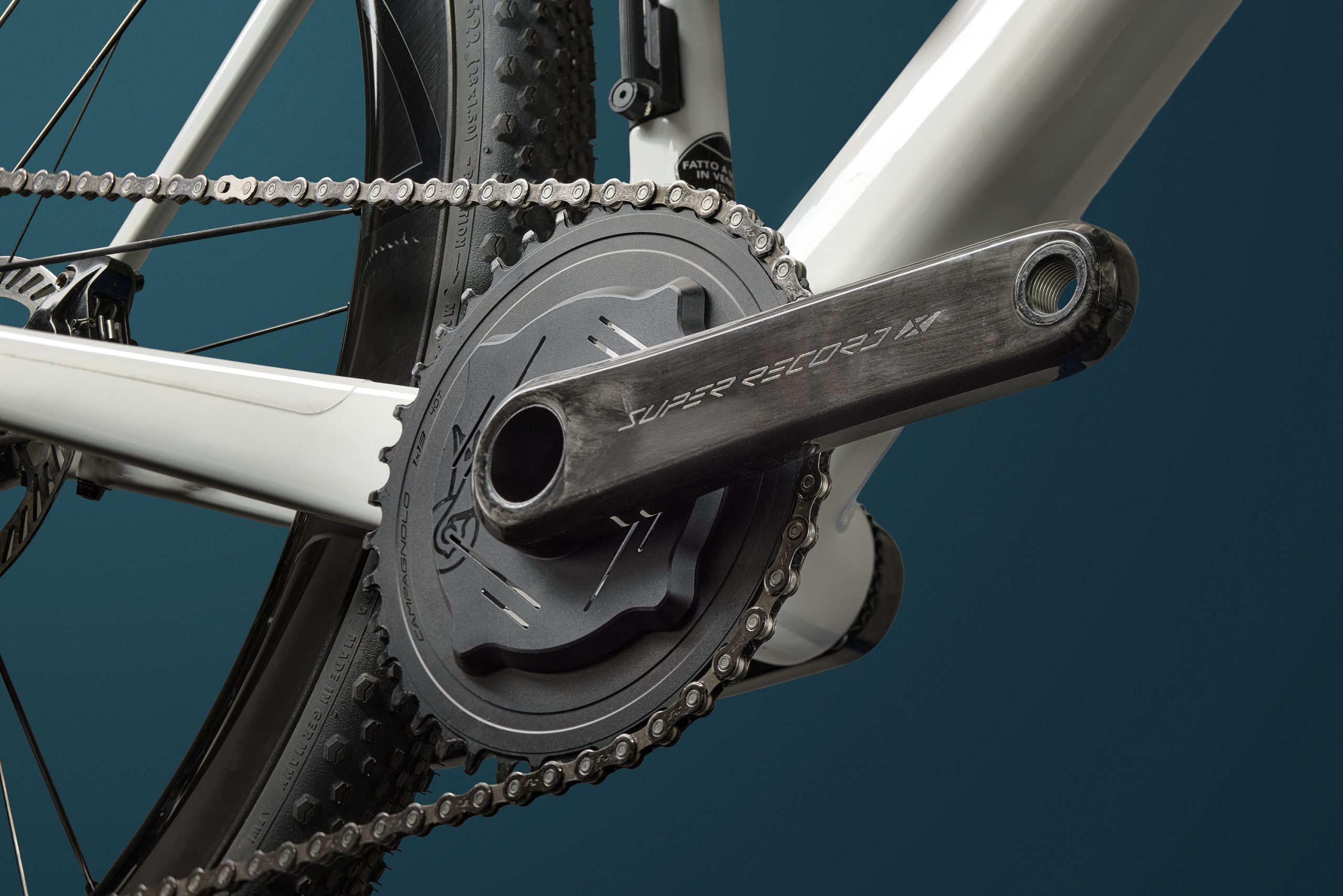
This is compatible with two new wide-range cassettes – a 10-48 and a 9-42t – and an aero crankset with a wider, 47.5mm chainline for increased tyre clearance. 1x Chainrings will be available from 38-42t.
We’ll talk about the other one, and what options it opens up, shortly. Now, though, here are all the new 1×13-speed gravel components.
Super Record 13 X new components
- Super Record 13 X rear derailleur with Nano clutch
- Super Record 13 X 1x aero crankset, 47.5mm chainline
- Super Record 13 X 1x aero chainring, 38-48t
- Super Record 13 X cassette, 9-42 or 10-48t
Campagnolo says its existing 13-speed Ekar cassettes aren’t compatible with the new Super Record 13 X rear derailleur, because they don’t have as many shifting ramps and could therefore damage the derailleur.

However, riders can use the new Super Record 13 X cassettes with existing Ekar drivetrains and Campagnolo says these will speed up how those shift, due to the increased number of shifting ramps on the sprockets.
As with Ekar, the new Super Record 13 X cassettes are compatible with Campagnolo’s N3W freehub standard.

The Super Record 13 X rear derailleur is said to shift a little slower than the standard road-specific one.
It will also only shift up to three sprockets at a time, unlike the road-specific version, which will go all the way across the cassette block if you hold down a shift button.
Both characteristics are designed to protect the rear derailleur from damage, Campagnolo says.
In our pre-launch briefing with the brand, though, it was still keen to stress it will shift faster than its competitors.
Everything else
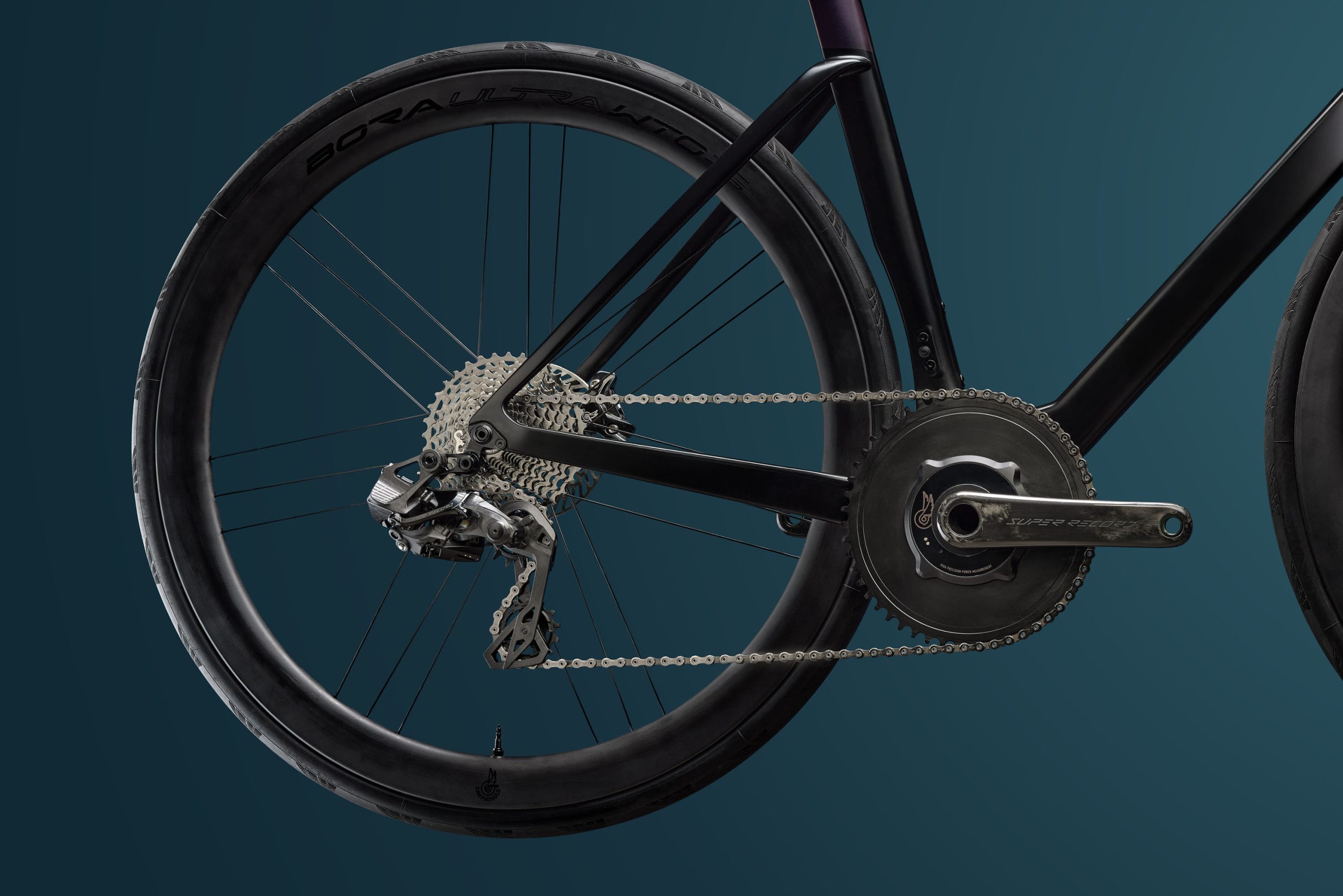
The other new rear derailleur is more like the standard road version, with a lighter-tension clutch compared to the gravel-specific one.
Campagnolo says this one is designed for 1x road and TT setups, plus 2x gravel or all-road drivetrains, and is compatible with the existing range of Super Record 13 road chainrings and cassettes. These range from 45-29 to 55-39 and 10-29 to 11-36t, respectively.
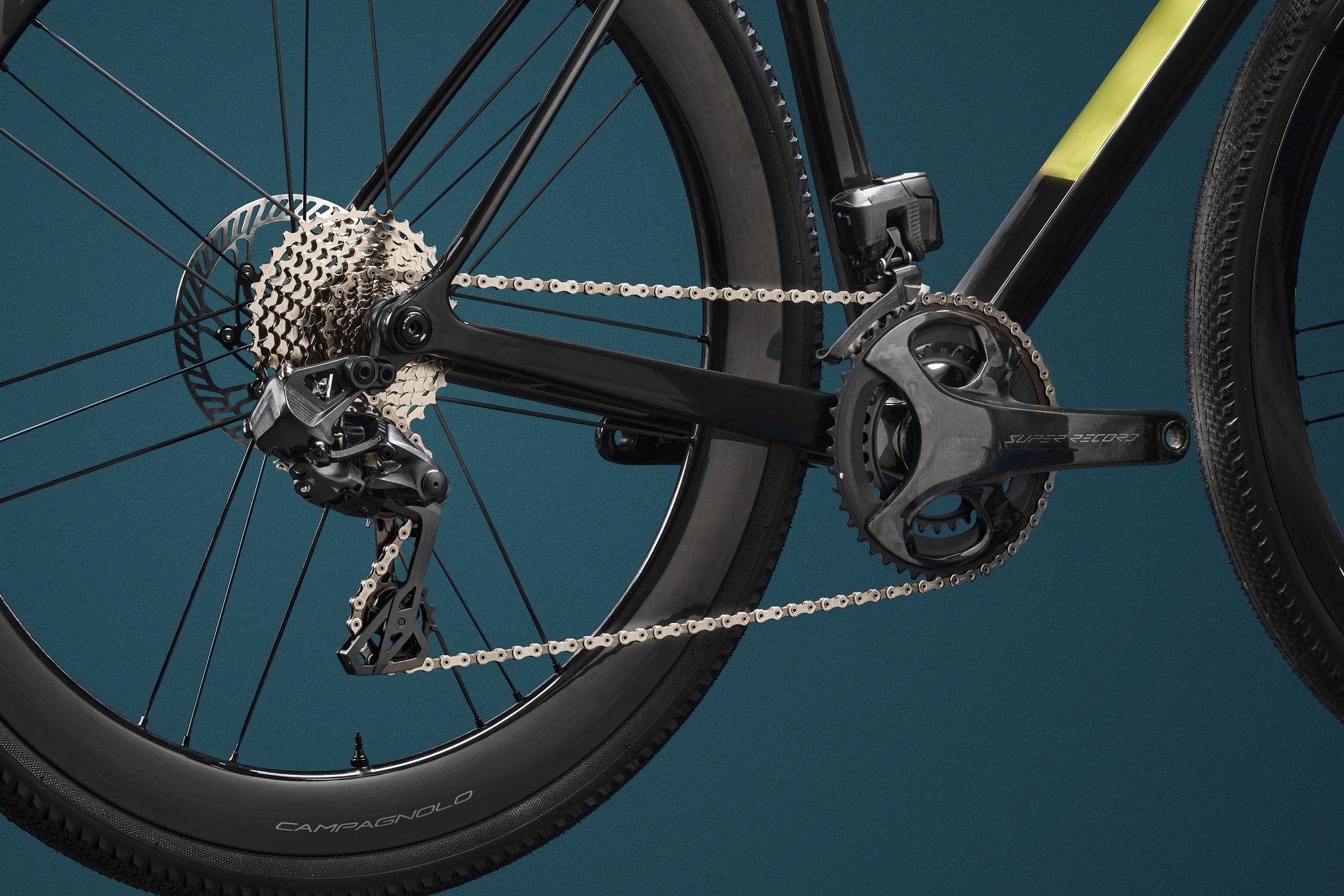
For these applications, there’s the existing Super Record 13 2x crankset, plus a new road-specific 1x aero crankset with a 45.8mm chainline (the same as standard Campagnolo road cranksets).
There’s also a new left-hand brake lever, which ditches the electronics and shifter buttons, dropping around 20g of weight.
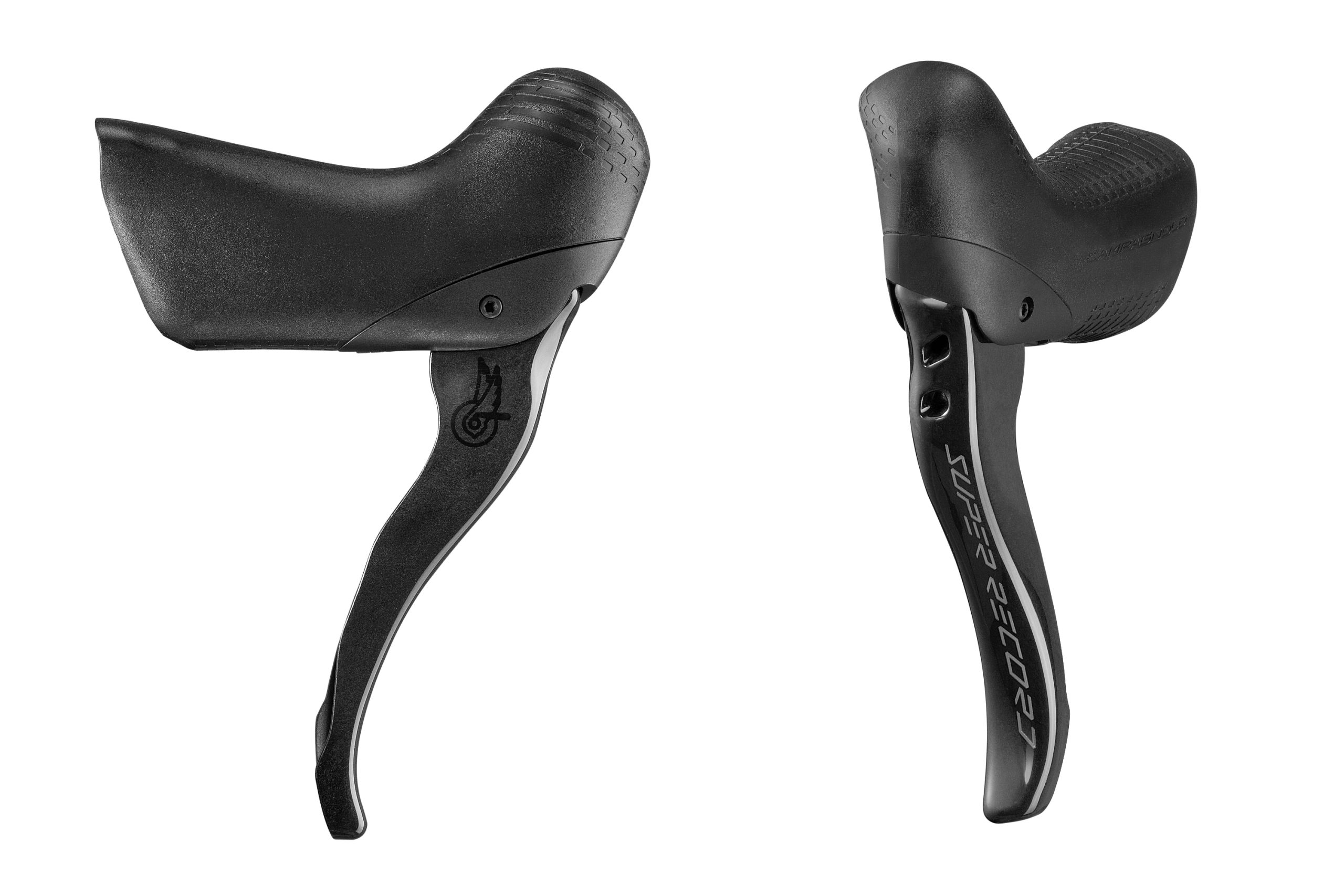
While intended primarily for use with 1x drivetrains, Campagnolo notes the new brake lever can also be used with a 2x drivetrain if desired.
This is because a single Super Record 13 ergopower shifter can control a 2x drivetrain with one of the three programmable buttons set to toggle the front derailleur, and the other two assigned to the rear derailleur.
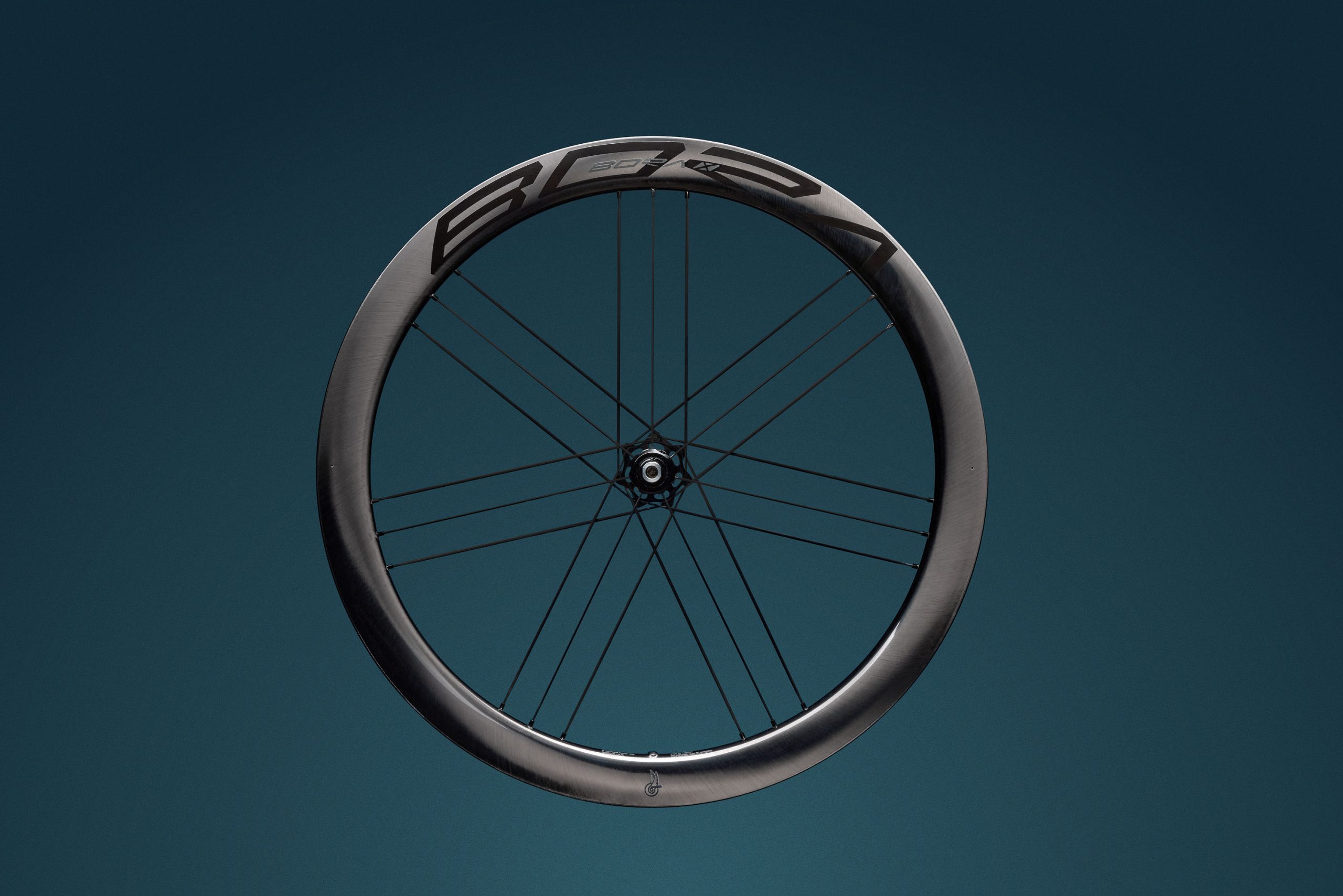
Lastly, there’s also a Bora X gravel / all-road wheelset, which features 50mm-deep rims, which are 27mm wide internally and 31.5mm wide externally.
As you’d expect with Campagnolo, these rims are hooked and tubeless-ready, and the wheelset is built with a mix of aero and elliptical spokes that apparently help balance rigidity and comfort. It has a claimed weight of 1,430g.
Super Record 13 X pricing
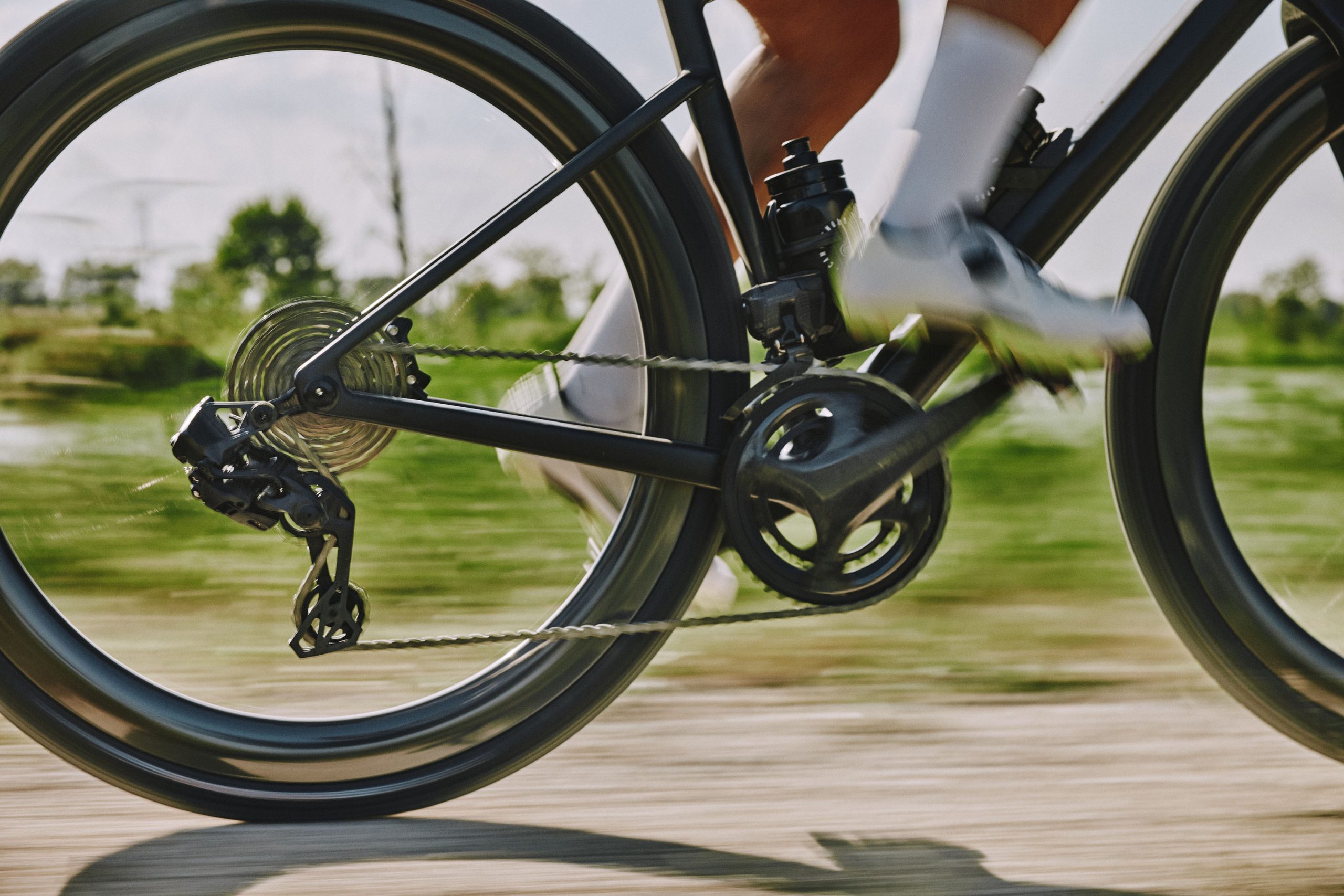
The exact price will depend on which spec you opt for, but Campagnolo says Super Record 13 X 1x groupsets will start at £2,999 / $3,899 / €3,375.
1x road groupsets cost a little more at £3,050 / $3,975 / €3,410.
Prices for 2x all-road groupsets start at £3,899 / $5,065 / €4,370 – essentially the same as existing Super Record 13 road groupsets.
Adding a Campagnolo power meter spider to any of these groupsets increases the price by £1,050 / $1,325 / €1,167, while the Bora X wheels are priced at £1,999 / $2,599 / €2,290.

As expected, then, these new Super Record 13 X components aren’t cheap. It’s fair to say these prices are in line with the direct competition, however.
Super Record 13 X is even a little cheaper than SRAM’s 13-speed Red XPLR AXS groupset at RRP, which costs around £3,500 or dollars.
Shimano’s wireless 1x GRX RX827 Di2 groupset is substantially cheaper at only £1,739.90 / $2,282 / €2,011.90, but is more comparable to the likes of SRAM Force XPLR AXS in terms of its nominal ‘tier’ and overall weight.
More to come

Given these prices will put Super Record 13 X out of reach for many riders, the most exciting news from this launch may be the tiny hint that something “more affordable” is in development – according to Campagnolo’s head of product and marketing, Federico Gardin.
Other than intentionally vague comments from Gardin about the overall Super Record 13 ecosystem being “the first step for the new Campagnolo”, we don’t have much to go on as to what that “more affordable” stuff might be.
However, it’s easy to imagine how this new tech could be applied to cheaper groupsets in the same way we usually see high-end stuff influencing cheaper, heavier versions.
Given Campagnolo seems to have retired its ‘Record’ line of groupsets for good, that might mean Campagnolo is developing a 13-speed wireless groupset for its Chorus tier – hopefully with the same broad ecosystem of 1x and 2x options for road, TT, gravel and all-road.
- Campagnolo is retiring its iconic Record groupsets – but there’s more to the news than meets the eye
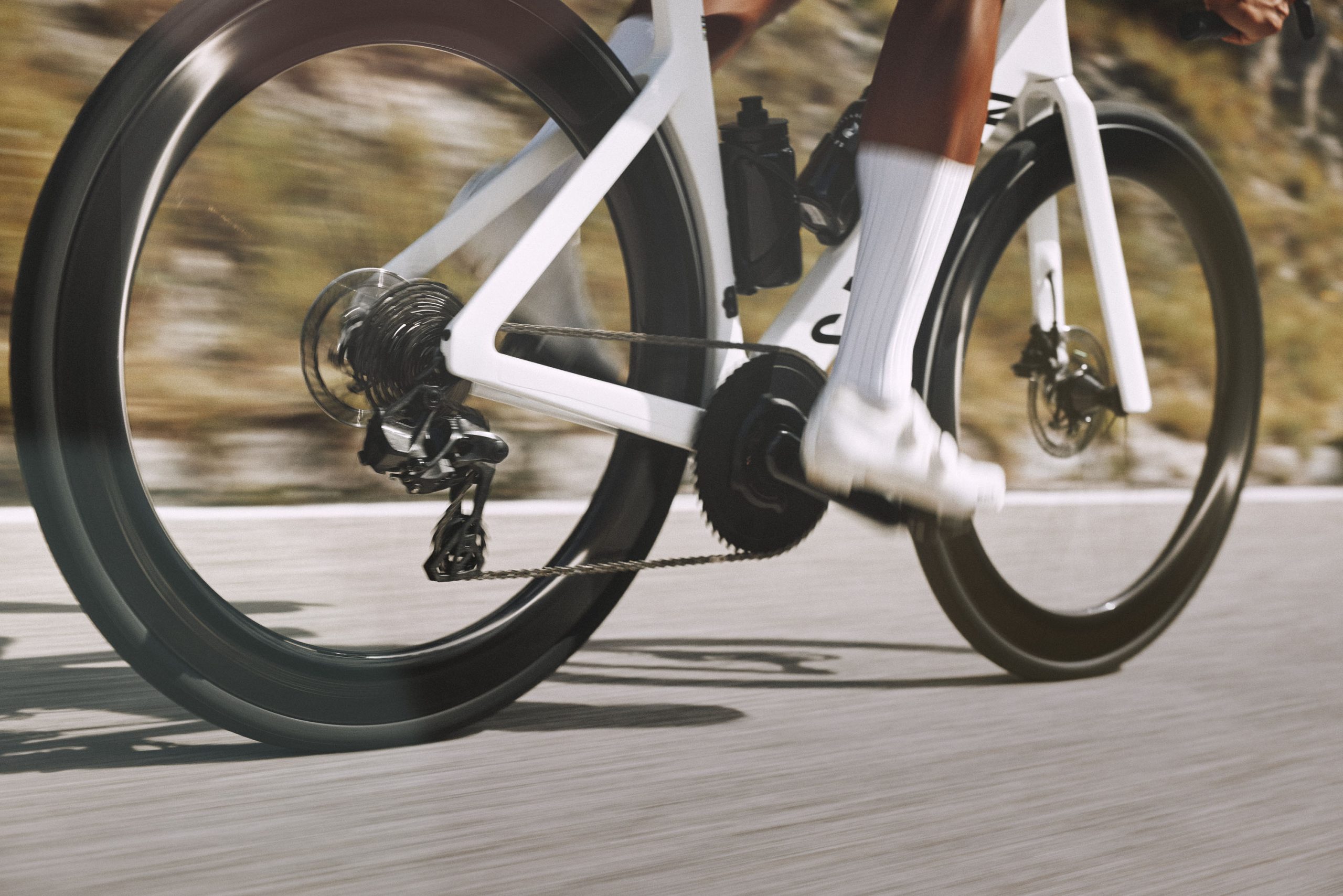
If so, and if it’s priced competitively with the likes of Shimano’s Ultegra Di2 and SRAM Force AXS, I think that would put Campagnolo in a really good spot, with options that could see it start to appear on bikes that a few more of us might see in the real world.
Of course, Ultegra Di2 and Force AXS are still expensive groupsets, all things considered.
However, it’s worth remembering that Campagnolo simply doesn’t have the same economies of scale Shimano has, and it still likes to make as many things as possible in Europe – so it’s always going to be difficult to compete aggressively on price in the same way.
Campagnolo is keeping its cards close to its chest with this one, though, so we’ll have to wait and see what the future holds for the Italian brand.
“Avon Flyer” Route Details
Horizon OS Update Brings Rebuilt Home, Windows 11 Link & Closer ‘Horizon Worlds’ Integration
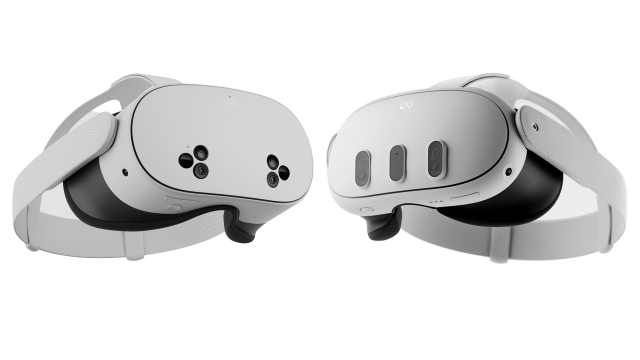

Meta is rolling out Horizon OS v81, the latest major update for Quest. The update focuses on Home personalization, the new Windows 11 remote desktop, and reducing friction tl entering Meta’s Horizon Worlds social VR platform.
The News
The new Immersive Home experience is getting a customization bump, now allowing Quest users to pin windowed apps and choose from new scenic environments.
The v81 update also includes a redesigned Passthrough Home, which lets you do the same in mixed reality, like anchor apps in physical surroundings so you can keep Spotify on your dresser, Photos on your wall, and WhatsApp on your desk. You can place objects in Passthrough too, like an avatar mirror or a portal to ‘Horizon Central’, the Horizon Worlds hub.
In v81, Horizon Central has also been completely rebuilt, now supporting more users in a larger, more detailed space and featuring faster travel between destinations. It also introduces a digital storefront for avatar items and a new Arena for live concerts, comedy shows, and sports events.
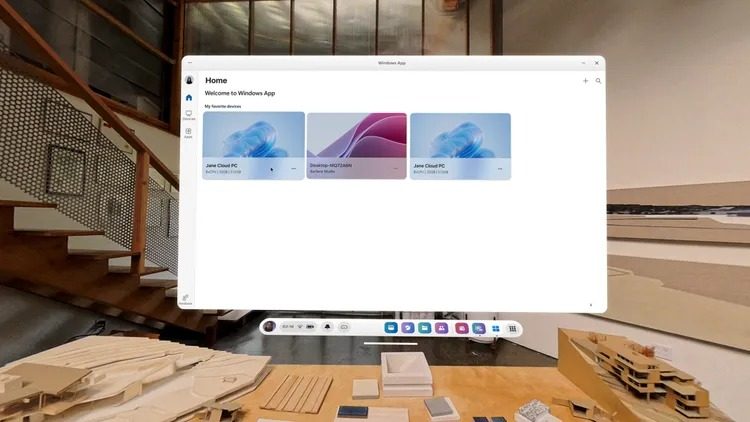
v81 also introduces the new ‘Mixed Reality Link’ function, which was built in collaboration with Microsoft to bring Windows 11 and Windows 365 to Quest. Essentially a remote desktop, Mixed Reality Link supports multiple virtual monitors for both VR and MR workflows. What’s more, future Windows 11 PCs will include Mixed Reality Link by default.
Other highlights include Full Passthrough, which lets players quickly view their real-world surroundings while in apps like Beat Saber, and Shareable Links for VR photos and videos via the Horizon mobile app.
Users can also open up to 12 app windows simultaneously, enjoy a streamlined Welcome Screen, and take advantage of Universal Resize and Ratio Locking for better display control.
To see the gamut of Home changes coming to v81, check out YouTuber ‘Virtual Moose’s’ video below:
Like all Quest software updates, Horizon OS v81 is rolling out gradually, so make sure to check your OS version in-headset to see whether you’ve received the update. You can check out the full release notes here.
My Take
Having remote connectivity to Windows 11 is cool, and so is the ability to more thoughtfully decorate your Home in VR and MR modes. Still, I think the real meat of the update is how Meta is bringing Quest users closer to Horizon Worlds, love it or hate it.
It’s been a long-term strategy that I think is finally paying off. Okay, it’s probably not actually generating a meaningful profit right now, even with its rake of digital item sales, but it’s moving in that direction.
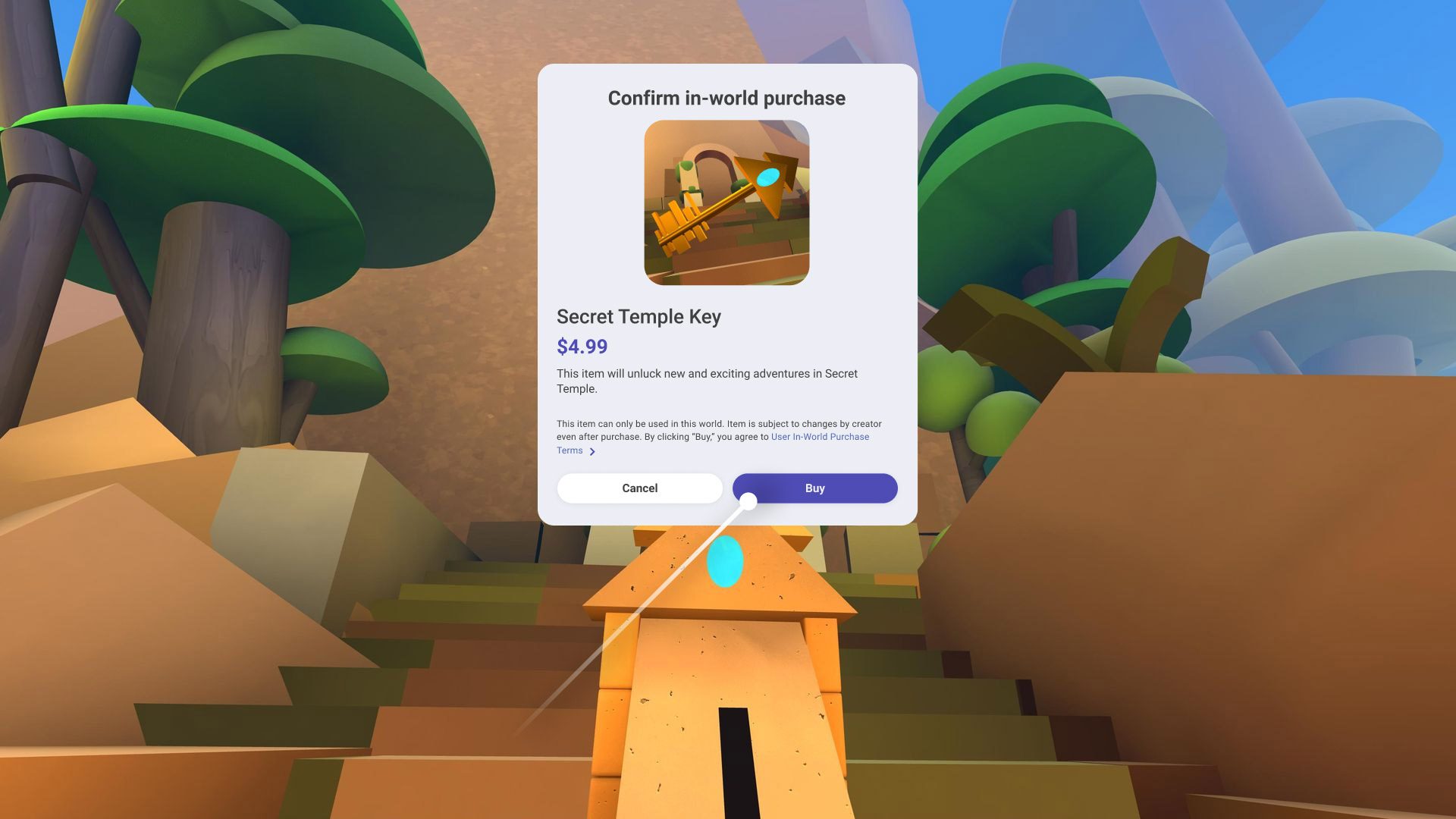
Meta has made some pretty big strides in the past few years. Starting in 2023, a new wave of first-party games made way for even more detailed user-generated content, which can even be done with AI generation nowadays—cutting down the time and difficulty level of producing your own environment.
Arguably the biggest leap in solidifying Horizon Worlds’ position as the de facto social VR platform on Quest is Meta’s new Horizon Engine though, which purportedly speeds up World loading and allows “well over 100” users in a single space. That may not be a big deal for casual user-generated worlds, but it does affect branded live events: comedy shows, sports, immersive film screenings, etc.
I see it a bit like having a more comfortable headstrap. You can put up with the default flappy headstrap, sure, but it creates subconscious friction to donning the headset the next time around. Meta lowering user friction to Horizon Worlds is basically the same thing, which could mean the difference between a user showing up to Horizon Worlds once in every blue moon to multiple times per week for events and hang-outs.
Meta hasn’t released user statistics, so I can’t say for sure, although the fact that Horizon Worlds hasn’t been quietly abandoned of otherwise put on the back burner at this point says to me that Meta is making headway in growing its user base.
The post Horizon OS Update Brings Rebuilt Home, Windows 11 Link & Closer ‘Horizon Worlds’ Integration appeared first on Road to VR.
DJI Liquidates Its Mic Mini at a Record Low, Noise Cancelling and HQ Audio Now Cost Peanuts

These microphones make it easy to film in noisy environments, and you can now grab a pair without paying the full price.
The post DJI Liquidates Its Mic Mini at a Record Low, Noise Cancelling and HQ Audio Now Cost Peanuts appeared first on Kotaku.
NVIDIA & Uber Partner To Accelerate Roll Out Of 100K AI-Powered Robotaxis

Uber has already changed the taxi game with its, ahem, uber-popular ride sharing service, and now NVIDIA is hopping into the driver’s seat on what figures to be the next evolution—a fleet of autonomous robotaxis built on NVIDIA’s new DRIVE AGX Hyperion 10 platform. To make this happen, NVIDIA and Uber are teaming up to scale what’s being pitched
Brink Traveler Adds New Locations, Hand Tracking Support & More
Brink Traveler’s latest update sees the travel experience introduce new locations, hand tracking, and improved graphical fidelity.
Developed by BRINK XR, Brink Traveler is a realistic exploration app that enables digital hikers to immerse themselves in impressive vistas from around the globe. Following its recent launch on Android XR, the studio confirmed it’s introducing new locations in the Italian Dolomites and Iceland, along with a slew of technical and visual updates.

The new locations included in the update are:
- Misurina – an alpine trail overlooking the Cadini di Misurina.
- Seceda – a ridgeline with views of the Odle peaks.
- Sorapis Lake – a turquoise lake framed by limestone cliffs.
- Landmannalaugar Peak – an area inside Iceland’s Fjallabak Nature Reserve.
- Landmannalaugar Riverbed
- Mount Whitney: Trail Camp – a landscape with views of the tallest mountain in the contiguous United States.
Those looking to engross themselves in the world controller-free can now take advantage of Brink Traveler’s hand tracking support and a refreshed UI. Following a backend overhaul to Unity 6 with OpenXR and Vulkan integration, the developer informed us that this provides graphical fidelity and performance boosts.
Other additions include improved localized audio for Asian languages, enhanced aurora effects for Icelandic maps, and an accessibility mode that allows you to interact with the world entirely through controller inputs rather than gestures.
Brink Traveler’s latest update is available now on Quest, Steam, and Android XR.
YouTube will ‘strengthen’ enforcement around violent and gambling games in November
YouTube will enforce new rules that are supposed to strengthen the enforcement of its guidelines around online gambling and graphic video game content starting on November 17. One of the biggest changes it’s implementing is age-restricting gaming videos featuring realistic human characters in scenes depicting torture or mass violence against non-combatants.
The streaming website says it will take into account the duration and prominence of the scene in a video when reviewing one. For compilation videos, it will consider the cumulative duration of the scenes classified as graphic under its policies. Any video placed behind an age check barrier will be inaccessible to viewers under 18 or to anybody who’s not signed into their Google accounts. YouTube didn’t specify the duration that would get a video restricted, but a spokesperson told The Verge that “certain content may be age-restricted if it’s non-fleeting or zoomed in.” Creators can get around the restriction, however, by blurring any violent scene.
In addition, YouTube is implementing stricter online gambling rules. It already prohibits videos directing people to online gambling sites or apps not certified by Google. Starting on November 17, it will also prohibit online gambling videos that involve items with monetary value, including digital goods like NFTs and game skins. The website is also age-restricting content with online casino-style games, even if they don’t involve items with real monetary value.
YouTube will review old videos and remove them or put them behind age checks if they’re found to be in violation of the new rules, but it will not issue strikes to creators if they were uploaded before November 17. Creators can also edit their videos before that date with the website’s trim and blur editing tools.
This article originally appeared on Engadget at https://www.engadget.com/entertainment/youtube/youtube-will-strengthen-enforcement-around-violent-and-gambling-games-in-november-123051469.html?src=rss
NASA races to keep Artemis II on schedule, even when workers aren’t being paid
It has been nearly one month since many parts of the federal government shut down after lawmakers missed a budget deadline at the end of September, but so far, NASA’s most critical operations have been unaffected by the political impasse in Washington, DC.
That may change soon. Federal civil servants and NASA contractors are not getting paid during the shutdown, even if agency leaders have deemed their tasks essential and directed them to continue working. Jobs classified as essential include employees operating and safeguarding the International Space Station and NASA’s fleet of robotic probes exploring the Solar System and beyond.
Many employees at NASA’s Kennedy Space Center in Florida remain at work, too. Their job is to keep the Artemis II mission on schedule for launch as soon as next February. In the four weeks since the start of the government shutdown, crews at Kennedy Space Center have completed several major milestones on the road to Artemis II, including the stacking of the Orion spacecraft atop its Space Launch System rocket inside the cavernous Vehicle Assembly Building. This milestone, completed about one week ago, capped off assembly of the SLS rocket for Artemis II.
LEGO Clears Out Some Star Wars Sets, Ahsoka Tano’s Duel on Peridea Is Going for Peanuts

Save 40% on the LEGO Star Wars Ahsoka Tano’s Duel on Peridea over at Amazon.
The post LEGO Clears Out Some Star Wars Sets, Ahsoka Tano’s Duel on Peridea Is Going for Peanuts appeared first on Kotaku.
Apple will reportedly shift to OLED displays for MacBooks, iPad Air and Mini
Apple is planning to introduce OLED displays to its iPad Air, iPad mini and MacBook Air devices, Bloomberg‘s Mark Gurman reported. The technology offers deeper blacks and better contrast than the LCDs currently used on those devices, which would make them better for things like content creation and entertainment. However, OLED is also more expensive, so it could result in higher prices on future models.
The company is currently testing versions of each product with OLED screens, according to people familiar with the matter. That display tech is usually reserved for higher-end PCs and tablets — right now, Apple only uses OLED screens in its iPad Pro lineup (apart from iPhones). However, it may be looking to boost flagging sales of Mac and iPad products, with OLED displays offering buyers a good reason to upgrade.
The first device to gain the tech will probably be the iPad mini that may launch next year, according to Gurman’s sources. The OLED version, code-named J510, may cost up to $100 more thanks to the new display and an updated water-resistant design. The iPad Air and MacBook Air will follow later on, possibly in 2028 in the case of the latter.
Earlier this month, both Gurman and analyst Ming-Chi Kuo predicted that Apple would release a MacBook Pro with an OLED touchscreen in late 2026 or early 2027 — despite the fact that Steve Jobs famously hated touchscreens. It’s not clear if the MacBook Air with OLED would also have a touch display.
On top of the contrast and black level advantages, OLED displays are lighter than LCDs as they don’t require a backlight. The main drawback is a lack of brightness. Apple’s current MacBook Pros use MiniLED tech that does offer higher brightness levels, but has inferior contrast compared to OLED. Take these rumors with a grain of salt, of course, and even if they’re accurate, Apple’s plans may change.
This article originally appeared on Engadget at https://www.engadget.com/mobile/tablets/apple-will-reportedly-shift-to-oled-displays-for-macbooks-ipad-air-and-mini-120005423.html?src=rss
Uber and Lucid’s robotaxis will debut in the Bay Area in 2026
Uber’s robotaxi service with EV maker Lucid and self-driving car company Nuro is officially coming to the Bay Area in 2026. The ride-hailing service previously announced plans to deploy at least 20,000 self-driving Lucid cars powered by Nuro’s driving software in July. The partnership between the companies also included investment from Uber in both Nuro and Lucid.
Uber’s final robotaxi experience will offer rides in Lucid Gravity SUVs running the Nuro Driver Level 4 autonomy system, and be available exclusively through the company’s app. Ahead of launch, Uber says Lucid and Nuro are also helping to build out an “Engineering Test Fleet” of over 100 robotaxis to run safety tests. “Nuro will lead the development and validation of a comprehensive safety case across dozens of categories,” Uber says, “using simulations, closed course testing, and supervised on-road testing to verify that the robotaxi will operate safely.” The final service will be fully owned and operated by Uber.
Since Uber sold off its own self-driving software team in 2020, the company has worked with multiple self-driving car companies to continue to offer robotaxis on its service. Just in 2025, Uber partnered with Waymo in Austin and Atlanta, announced plans to work with Momenta in Europe and debuted a partnership with Volkswagen to offer self-driving ID.Buzz vans. This Lucid and Nuro deal is really just one way the company is making serious investments in self-driving.
“The Bay Area has long been the birthplace of transformative technology, and it’s only fitting that Uber’s next-generation robotaxi program with Lucid and Nuro will begin here — launching to the public next year,” Sachin Kansal, Uber’s Chief Product Officer, shared in a press release. “By combining deep expertise in electric vehicles, autonomy, and ride-hailing, we’re laying the groundwork for safe and scalable autonomous rides in the Bay Area and beyond.”
This article originally appeared on Engadget at https://www.engadget.com/transportation/uber-and-lucids-robotaxis-will-debut-in-the-bay-area-in-2026-120000876.html?src=rss
“Toefield Tornado” Route Details
Engadget’s best of 2025
Engadget has been reviewing the latest devices for over two decades, adding well over 100 in-depth product tests to our tally every year. For 2025, we have compiled a list of the best gear we reviewed this year based on the highest review scores in each category. From Pixel to iPad, and Switch 2 to Sony WH-1000XM6, our reviews team has spent thousands of hours testing new products this year to discover the best of the best. Now it’s your turn to rediscover the best gadgets of 2025, including explanations from our editors as to why these products were rated so highly.
Best overall phone: Google Pixel 10 Pro
Best iPhone: iPhone 17 Pro
Best foldable: Samsung Galaxy Z Fold 7
Best laptop: MacBook Air M4
Best Windows laptop: Dell 14 Premium
Best smartwatch: Apple Watch Series 11
Best tablet: Apple iPad Air (M3, 13-inch)
Best desktop: Apple Mac Studio M4 Max
Best gaming handheld: Nintendo Switch 2
Best headphones: Sony WH-1000XM6
Best earbuds: Apple AirPods Pro 3
Best CPU: AMD Ryzen 9 9950X3D
Best GPU: NVIDIA GeForce RTX 5070 Ti
Best drone: DJI Mavic 4 Pro
Best camera: Sony A1 II
Best smart glasses: Ray-Ban Meta (2nd gen)
Best home theater: Anker Nebula X1
Best kitchen appliance: Ninja Swirl by Creami
Best kitchen accessory: Thermoworks RFX
Best EV: 2026 Nissan Leaf
Best VPN: Proton VPN
This article originally appeared on Engadget at https://www.engadget.com/engadgets-best-of-2025-114500543.html?src=rss
Quest ‘Fall Frights’ Sale Brings up to 50% Off Some of VR’s Most Horrifying Games


Meta kicked off its latest Quest games sale, this time bringing up to 50% off some pretty spook-tacular titles to get your blood pumping this Halloween season.
The News
There are a ton of games currently discounted for Meta’s big ‘Fall Frights Sale’, which ends on November 2nd at 11:59 pm PT (local time here).
Still, you’ll find some not so scary bangers on the mega list we haven’t highlighted below, like Skydance’s Behemoth, GORN 2, The Climb 2, and UNDERDOGS—all of them coming in at more than 20% off. Here’s a roundup of 15 of our favorites:
| Game | MSRP | Sale Price | Discount |
| Resident Evil 4 VR | $40 | $28 | 30% |
| The Walking Dead: Saints & Sinners | $30 | $15 | 50% |
| The Walking Dead: Saints & Sinners – Chapter 2: Retribution | $10 | $5 | 50% |
| Vampire: The Masquerade – Justice | $30 | $20 | 33% |
| Arizona Sunshine Remake | $15 | $30 | 50% |
| Arizona Sunshine 2 | $40 | $25 | 38% |
| In Death: Unchained | $30 | $19 | 37% |
| Alien: Rogue Incursion | $40 | $20 | 50% |
| Wraith: The Oblivion – Afterlife | $20 | $10 | 50% |
| AFFECTED: The Manor – Complete Edition | $10 | $4 | 60% |
| Paranormal Activity: The Lost Soul | $20 | $4 | 80% |
| The Room VR: A Dark Matter | $30 | $18 | 40% |
| Propagation: Paradise Hotel | $25 | $15 | 40% |
| The Exorcist: Legion VR | $20 | $12 | 40% |
| Stranger Things VR | $40 | $28 | 30% |
There’s also a few spooky bundles to nab too.
Notably, Meta does dynamic bundle pricing, so if you own a game listed in the bundle below, you’ll see the price of the game automatically subtracted at checkout.
| Bundle | Included Games | MSRP | Sale Price | Discount |
| The Walking Dead Series | The Walking Dead: Saints & Sinners + Saints & Sinners – Chapter 2: Retribution | $60 | $35 | 40% |
| Absolute Wizardry | Waltz of the Wizard + War of Wizards | $40 | $25 | 35% |
| Medieval Madness | Hellsplit: Arena + Battle Talent | $50 | $28 | 45% |
| Man vs. Nature | Green Hell VR + Cave Crave | $50 | $30 | 40% |
| Undead Enemies | Zombie Army VR + World War Z VR | $60 | $35 | 40% |
| Fireproof Games Bundle | The Room VR: A Dark Matter + Ghost Town | $40 | $23 | 40% |
| Legendary Horrors | The Exorcist: Legion VR + Stranger Things VR | $60 | $35 | 40% |
My Take
A lot of these games are regularly on sale, and this probably won’t be the last deep deals you see before year’s end. Meta usually does a sale near the end of November in addition to a big holiday season sale, which ought to give you plenty of time to think (and read) about all of the games you’re itching to grab.
That said, the next actual deal I’m waiting for is to see how low Meta is going to pitch Quest 3S this holiday season. It’s regularly priced at $300 for the 128GB version, although in the past I’ve seen it at $225 (Amazon gift cards to offset), as well as $250 outright direct from Meta during limited times.
Maybe they’ll take it even lower this year? In any case, I’ll be trawling the soon-to-release Black Friday deals to see what Meta’s big retail partners are doing in addition to keeping an eye on Meta’s blog for more.
The post Quest ‘Fall Frights’ Sale Brings up to 50% Off Some of VR’s Most Horrifying Games appeared first on Road to VR.