Meta CTO Andrew Bosworth said last May that he would “love” for Quest to have some sort of Discord integration, although it seemed it was up to Discord to make the first move. At Connect this week, Meta announced Discord is officially coming to Quest next year.
While Quest users can technically log into Discord via Quest’s web browser, it’s far from perfect. But in 2026, Discord says a native window app is coming to Quest, which ought to make multitasking even easier. Those window apps allow users to keep apps in view while playing VR games, meaning you don’t need to exit or pause the game in progress.
Meta calls Discord on Quest a “massive opportunity for VR developers,” thanks to the messaging platform’s wide user base among gamers.
“Think about it: Discord is home to a highly engaged community of more than 200 million monthly active players who spend a combined 1.9 billion hours playing games each month across thousands of titles on PC alone,” Meta says in a developer blog post. “With the launch of the Discord app on Quest, VR devs will have an incredible discoverability engine at their disposal.”
Neither company has confirmed anything beyond basic multitasking, however a native app release could point to some greater functionality that PC players already enjoy. Game presence support, or automatically showing what game you’re currently playing to other Discord users, could be on the list. We’re also hoping for improved performance, persistence, and possibly system-level notifications for things like messages and calls.
Still, some of the top wishlist items may be out of reach. While we’ll be waiting for the full release in 2026 to tell, it’s unlikely users will be able to stream headset POV to Discord, either as a game stream or as a video chat input. Another reach may be access to Quest’s ‘avatar selfie cam’ for Discord video chats, which would require the company to integrate Camera2 or CameraX API.
Something else you probably shouldn’t expect: the ability to invite friends to VR games through Discord, which only a handful of desktop games support on Discord at the moment. Whatever the case, we’re holding out hope for the full-fat Discord users experience, which we should learn about more in the coming months.
Getting your hands on Nintendo’s latest console just got easier, as Amazon is now listing the Nintendo Switch 2 for sale outright, no invitation needed. It’s been three months since the release of the Nintendo Switch 2, and the launch day frenzy is just starting to taper off. The handhelds have been selling at a blistering pace, with just under 6 million units sold in the first four weeks.
Online inventories in those initial weeks sold out in a flash, and sparse restocks were gone just as quickly. Amazon was left out of the initial pre-order process and didn’t list the console at all until over a month after its release. This conspicuous absence may have been due to Nintendo’s frustration with third-party sellers undercutting the company’s own pricing for games on the site.
We really loved the Nintendo Switch 2 in our hands-on review, and thought it was a great follow-up to the 2017 console that launched a handheld renaissance. We gave the Switch 2 a score of 93 out of 100, and were particularly impressed with its larger 7-9-inch LCD screen, the magnetic Joy-Cons, better base storage and, of course, significantly improved performance over the original. The pricing is a bit steep, the battery life could be better and the dock could more USB-C ports, but aside from those details the Switch 2 is almost perfect.
If you’ve been waiting to pick up a Nintendo Switch 2 without having to go on a scavenger hunt, then the Amazon listing should be a welcome option. The months since release have also seen a great selection of Switch 2 ports and exclusive games hit the market. Amazon’s listing offers the standalone console for $449 or the Mario Kart World bundle for $499. Sales are limited to one unit per customer.
This article originally appeared on Engadget at https://www.engadget.com/gaming/nintendo/the-nintendo-switch-2-is-for-sale-on-amazon-no-invite-required-132503609.html?src=rss
The UCI has confirmed the use of a GPS tracking system to enhance rider safety at the Road World Championships, which begin this Sunday 21 September in Kigali, Rwanda.
The UCI, cycling’s governing body, announced rider trackers would be used at the World Championships back in August – but the introduction of the tech led to disputes with pro riders and their teams.
As part of the UCI’s SafeR initiative, which is intended to enhance rider safety in professional road cycling, the use of GPS trackers was trialled at the Tour de Romandie Féminin in August.
However, several teams raised concerns with the UCI about the “imposition” of GPS tracking devices on one member of each team.
EF Education–Oatley said the team would “not select a rider ourselves, nor install, remove or maintain the device”.
They added that the UCI chose to impose this measure “without clear consent” and that it is unclear why the UCI did not want to nominate riders to trial the GPS trackers.
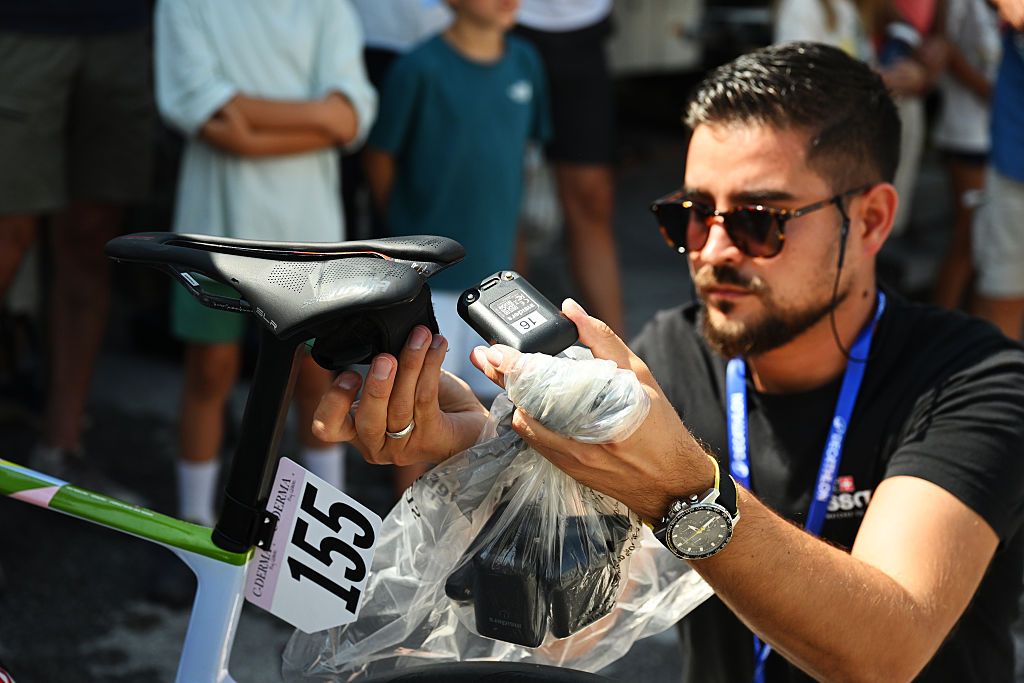
A technician from the UCI checks the GPS security tracker during the 2025 Tour de Romandie Féminin. Dario Belingheri / Getty Images
Five teams refused to nominate a rider, and therefore, the UCI disqualified them, leaving only 63 riders in the race. The UCI said their decision was “deplorable” and undermined “the cycling family’s efforts to ensure the safety of all riders”.
But despite the objections at the Tour de Romandie Féminin, the UCI now says all riders in all categories (the elite men and women, plus under-23s and juniors) will be equipped with a GPS safety tracker attached under their saddles. This will be across the road races, and individual and team time trials.
The system will be operated from the UCI’s control centre and will enable real-time monitoring of rider position. This will allow for the identification of any unusual situations, such as a rider suddenly stopping on the course.
“In such a case, the rider’s exact position will be transmitted to the relevant parties in the convoy – organisers, UCI Commissaires, medical and security services – so that appropriate measures can be taken without delay,” the UCI said in a press release.
The decision to use GPS trackers comes after 18-year-old Muriel Furrer died following a crash in the junior World Championship race last year in Zurich, Switzerland. Furrer reportedly lay alone for almost an hour and a half with a serious head injury.
Race radios are not allowed during the World Championships.
The 2025 Road World Championships will take place between 21–28 September.
Linux 6.17 is an interesting time to carry out fresh file-system benchmarks given that EXT4 has seen some scalability improvements while Bcachefs in the mainline kernel is now in a frozen state. Linux 6.17 is also what’s powering Fedora 43 and Ubuntu 25.10 out-of-the-box to make such a comparison even more interesting. Today’s article is looking at the out-of-the-box performance of EXT4, Btrfs, F2FS, XFS, Bcachefs and then OpenZFS too.
Once upon a time, noise-canceling headphones primarily existed for one purpose: air travel. Bose and Sennheiser were among the first on the scene commercially, blocking unwanted sounds for pilots long before wireless headphones were even a thing. Today, active noise cancellation (ANC) is not just commonplace, it’s practically expected for any consumer headphone.
During the development of its four sets of AirPods with ANC, Apple has harnessed the power of its noise-blocking system to create a natural-sounding transparency mode, develop the automatic Adaptive Audio feature and create accessibility tools like Conversation Awareness. ANC is the basis for a litany of handy AirPods features, and with the AirPods Pro 3, Apple has honed this set of offerings even further.
As director of home and audio product marketing Eric Treski told Engadget. “With ANC, it was really about extending that capability to other use cases.”
The overall redesign of AirPods Pro 3
Billy Steele for Engadget
Before I get into the upgrades to the ANC system and the other tools that those unlock, I’d be remiss not to discuss how the overall redesign of the AirPods Pro 3 factors in. First, Apple adjusted the direction of the sound coming out of the earbuds so it’s going more directly into the ear canal. Next, the updates to the AirPods Pro 3’s fit — including the new foam-filled ear tips — create a better seal that helps make the ANC setup more efficient.
“The better fit allows us to diagnose what’s happening inside the ear canal,” Matthew Costello, vice president of audio and hardware engineering, explained. “We can actually make ANC more precise, compensate for leak and also better understand the geometry of the individual ear canals.”
Costello said that the product design team spent a lot of time on the new ear tips, arriving at a silicone-coated, foam-infused version for the AirPods Pro 3. He noted that these tips provide the best seal of any AirPods so far, which I can confirm, and that the passive noise isolation they provide is one aspect of the new-and-improved ANC performance.
A more precise ANC system
In order to improve the ANC tech, the engineers employed something called headroom control so that Apple could get more feedback from the microphones in the noise-cancelling system. Those internal mics monitor any unwanted noise that sneaks into the ear canal and prompts the ANC setup to make the necessary changes. The team was then able to optimize performance using a combination of software, geometry and acoustics.
An inherent trait of foam ear tips is that they’re better at blocking higher-frequency sounds, which Costello describes as “more challenging,” so I asked how much of the improvement in overall ANC performance was simply due to this new component. Costello was quick to clarify it’s one part of a much wider system.
“It’s a significant contributor, but it’s part of the overall system performance,” he continued. “The understanding of what’s actually happening in the ear canal helps us diagnose when you need more ANC, but the better seal makes the whole experience more reliable.”
The acoustics engineers, which include a dedicated ANC team, also redesigned and repositioned the noise floor microphones. These are the components that detect any unwanted sounds from either the earbuds themselves or your environment. Since there’s now a more direct path into the ear canal, there’s less room for interference or distortion. A new self-tuning algorithm then takes the data from those mics and identifies exactly what’s going on inside of the ear. Again, it’s all in the name of precision.
“It’s essentially a cleaner signal that’s more predictable,” Treski explained.
ANC’s role in other audio features
Billy Steele for Engadget
The evolving ANC setup became the foundation for many of Apple’s features on the AirPods and AirPods Pro. As the noise cancellation system improves, transparency mode does too. Now that the system can account for more frequencies, Costello said that this ambient sound tool is more customized to your hearing.
“We’ve actually been able to personalize transparency, because the pass-through information is much better,” he noted.
Because the AirPods Pro 3’s ANC can now cover a wider frequency range, Adaptive Audio is also more adept at picking up loud, high-pitched sounds. This increased the effectiveness of Apple’s hearing protection tools, which reduce your exposure to dangerously loud noises when, say, walking past a construction site, being bombarded by an ambulance’s siren or attending a concert. The re-tuned audio EQ profile helps the company better understand when you need more ANC in loud environments, and to better balance the mix of noise cancellation and transparency in those situations.
The same changes also support improvements in Apple’s hearing test. Thanks to these tweaks, you can now take the test in slightly louder environments than before without the feature asking you to move to a quieter spot. The hearing aid feature has been expanded as well, as Costello said the team added more gain so that the tool can correct higher levels of hearing loss.
“Because of the improvements to ANC, the [hearing aid] benefits actually extend deeper into mild and moderate hearing loss, to help even more people that have challenges with hearing,” Treski continued. All of the hearing health functionality on AirPods was developed in audio labs and in collaboration with audiologists. Apple tests the features with microphones in people’s ears, for both validation and safety, under the guidance of those clinical professionals. This confirmation lets the product development team know when these types of features may be ready for real-world use.
Billy Steele for Engadget
The most impressive part of Apple’s new Live Translation feature on the AirPods 4 with ANC, AirPods Pro 2 and AirPods Pro 3 isn’t the language conversion. For me, it’s the way active noise cancellation kicks in to ensure you can hear Siri speaking. When you begin a Live Translation session on a compatible set of AirPods, ANC lowers the volume of the person you’re speaking to and reduces environmental noise so that you don’t miss a word from Siri.
“We really wanted to ensure that you were able to hear Siri and have an understanding of the conversation in the best way possible,” Treski explained. “So, the idea is being able to really focus on that voice and not be distracted from other surrounding sounds.” Costello added that real-world testing, with careful attention to hide the unannounced products in public, is inherent to the development process.
“What started out as something that was really only used in an airplane is now doing things to help you translate language, preserve your [hearing] health if you’re at a concert, listen to lower levels of music or even take a hearing test,” Treski said.
Apple has taken the seemingly straightforward ability to block noise and applied it to so many of the features that have become synonymous with AirPods. The company probably still has more plans for its H2 chip, so there are likely even more ANC-powered features to come.
This article originally appeared on Engadget at https://www.engadget.com/audio/headphones/how-apple-used-anc-to-build-its-best-airpods-features-130037859.html?src=rss
SRAM has announced it has filed “a formal complaint” with Belgium’s Competition Authority against cycling’s governing body, the Union Cycliste Internationale (UCI), in dispute of its upcoming ‘Maximum Gearing Protocol’ trial.
Following this, SRAM says the BCA has “initiated formal anti-trust proceedings under EU and Belgian competition laws”.
In a bombshell statement, the American brand says it is challenging the UCI’s upcoming gearing restrictions trial because it will “unfairly disadvantage SRAM riders and SRAM”.
This is because, SRAM says, it is “the only major manufacturer whose current pro team setup will be blocked” by the proposed regulations.
SRAM says its formal complaint comes after multiple failed attempts “to engage the UCI and raise concerns about the impact of the Maximum Gearing Protocol”.
Although SRAM notes it will continue to support its pro teams to comply with the proposed trial event at the Tour of Guangxi in October, a “lack of transparency and collaboration left legal action as the only remaining path forward”, according to SRAM’s statement.
SRAM alleges the UCI’s Maximum Gearing Protocol:
Was adopted without consultation or transparency and lacks supporting empirical evidence, and any safety justification.
Disadvantages SRAM-equipped riders in professional cycling events.
Distorts competition in the road drivetrain market by limiting choice for professional teams and ultimately consumers, because SRAM relies on top-level teams to use and market its products.
Violates EU and Belgian competition law (Articles 101 and 102 TFEU).
SRAM says a “lack of transparency and collaboration left legal action as the only remaining path forward”. Simon von Bromley / Our Media
Speaking on behalf of the brand, SRAM CEO Ken Lousberg, said: “This protocol penalizes and discourages innovation and puts our riders and teams at a competitive disadvantage.”
“We rely on the sport’s governing body to foster an environment that encourages innovation for the benefit of riders and racers today, and riders in the future. We also rely on the governing body to make science-based, impactful changes for rider safety.”
The statement also notes that while the UCI says the 2025 Tour of Guangxi will be a “test” event for the proposed gearing restrictions, SRAM feels “its implementation has already caused tangible harm” to its brand.
“SRAM’s gearing has been publicly labeled as non-compliant, creating reputational damage, market confusion, team and athlete anxiety, and potential legal exposure.”
Lousberg says: “SRAM-equipped teams will have to race at a disadvantage on compromised equipment with a reduced number of gearing options compared to their competitors. It’s also not clear what is being tested.”
As first reported by Daniel Benson, the UCI has said that “relevant data will be monitored and feedback from all stakeholders will be gathered to study the effects” of the restrictions – but exactly what the “relevant data” is remains unclear.
SRAM says it will be forced to race at a disadvantage because of the restrictions. Simon von Bromley / Our Media
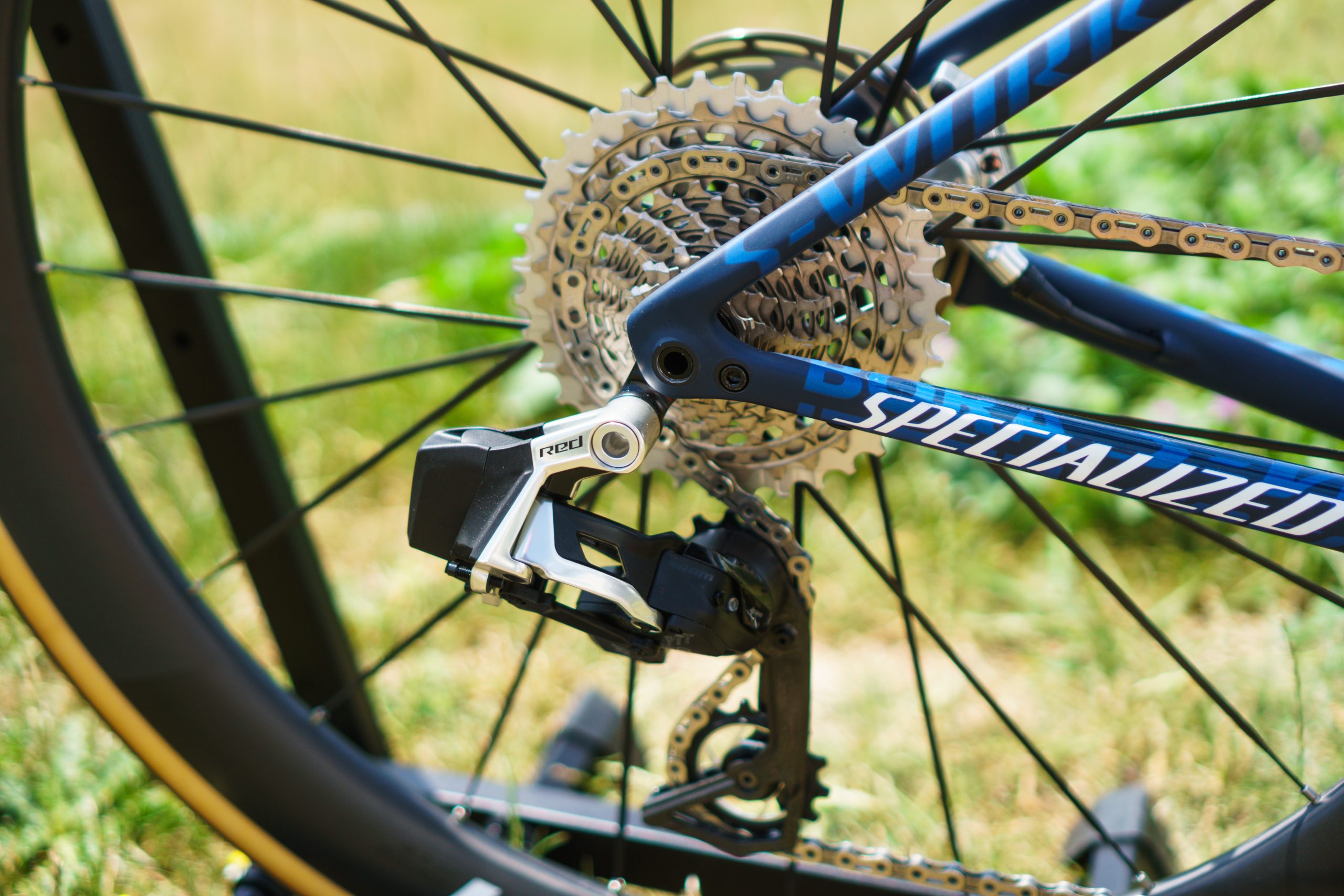
As we noted back in June, the UCI’s proposed restrictions will affect SRAM-sponsored teams most heavily, due to SRAM’s extensive use of cassettes that start with 10t sprockets.
Under the UCI’s proposed rollout limit of 10.46m, SRAM-sponsored athletes would face using chainrings no longer than 49t – and taking a hit to drivetrain efficiency compared to rivals using bigger chainrings – or artificially limiting their derailleurs to 11 out of the 12 available rear sprockets, so that the 10t isn’t accessible.
Alternatively, SRAM could row back on its use of 10t sprockets, and provide teams and riders with cassettes starting with 11t sprockets, but SRAM notes that “complying with the protocol would require a full redesign and technical step back – a process that would take years”.
SRAM is also critical of the UCI’s framing of the trial as “a safety initiative”, noting that “no evidence has been presented to support such claims”.
It claims its own analysis of “crash data” from the 2025 Tour de France “found no correlation between higher rollout configurations and crash risk”.
SRAM says it has requested “the immediate suspension of the gearing restrictions”, as well as “representation” for manufacturers on the board responsible for the UCI’s technical regulations.
Citing recently announced changes to the UCI’s regulations surrounding handlebar width, rim depth and so on, Lousberg says: “Today, the UCI’s actions unjustly penalize SRAM riders and SRAM. But given the way the governing body makes its decisions… It’s impossible to know who may be impacted in the future.
“We hope to create a more transparent and collaborative climate for teams and component suppliers that ultimately leads to a better and safer sport for all.”
During Meta Connect this week, the company released an exclusive 3D trailer of James Cameron’s upcoming film Avatar: Fire and Ash. There’s no confirmation yet that we’re getting the full thing, although Cameron is enthusiastic about Quest’s ability to open up new distribution models.
The short trailer is now available on Meta Horizon TVuntil September 21st, which the company says is “just the beginning of how fans can experience Pandora like never before on Quest, following the film’s theatrical release this December.”
The Avatar 3 clip comes amid a wider partnership with Lightstorm Vision, Cameron’s 3D film studio, which Meta tapped in late 2024 to produce spatial content across multiple genres, including live events and full-length entertainment.
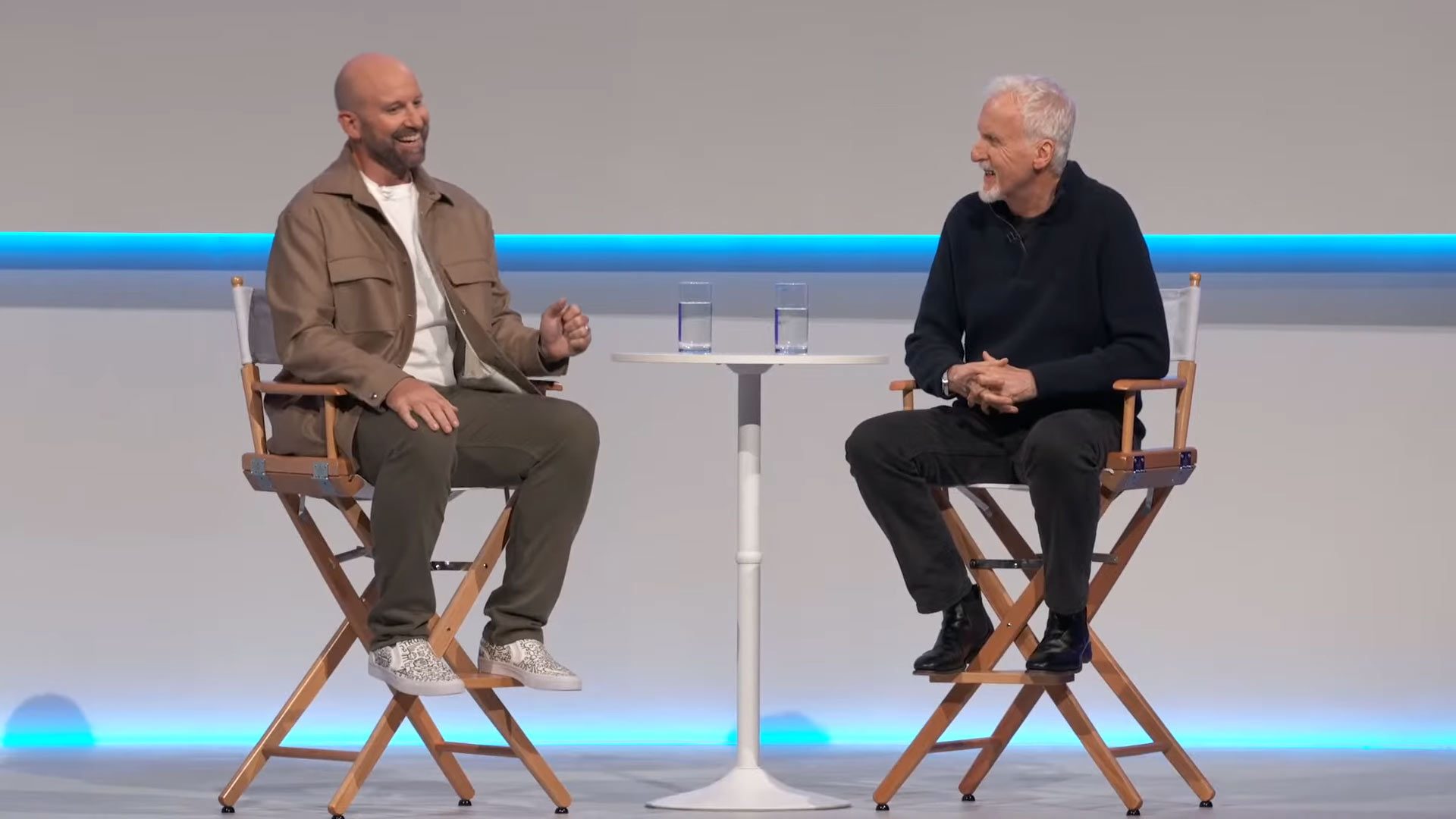
Andrew Bosworth (left), James Cameron (right) | Image courtesy Meta
Talking to Meta CTO Andrew Bosworth on stage at Connect, Cameron says he sees a new distribution model on the horizon that could bring “theater-grade 3D” to VR headsets.
“I just see a future, which I think can be enabled by the new devices that [Meta has], the Quest series, and then some of new stuff that’s hopefully coming down the line,” Cameron says. “I think that we’re looking at a future that’s a whole new distribution model, where we can have theater-grade 3D basically on your head.”
To Cameron, VR headsets like Quest 3 actually outperform traditional movie theaters in a number of ways.
“It’s interesting, I’ve been fighting so hard with movie theaters to get the brightness levels up, to install laser projection, but they’re caught in an earlier paradigm. No business can survive being stuck in technology [that’s] 15 years old.”
And, in comparison to traditional theater projection, Quest 3 is “an order of magnitude brighter,” Cameron says.
“The brightness gives you the dynamic range, it gives you the color space as it was meant to be. And that’s so much more engaging. The work that [Meta] has done in the Quest series to expand the field the view, brightness and spatial resolution. To me, it’s like being in my own private movie theater.”
Cameron especially admires VR’s immersive ability to create a greater connection with audiences, which he envision as a “stereo ubiquity future” coming to all forms of entertainment—not just big budget films, but everything from short-form content to sports and even news.
“You mostly look at flat displays: phones, laptops, wall panels, all that sort of thing. This is going to be, I think, a new age. Because we experience the world in 3D, our brains are wired for it, our visual-neural biology is wired for it, and we’ve been able to prove that there’s more emotional engagement, there’s more sense of presence.”
Provided Meta is indeed bringing the full-fat version of Avatar: Fire and Ash to Quest, we’d expect it sometime after the film’s theatrical debut on December 19th, aligning with its wider release on streaming platforms later down the line.
You can see the full conversation below, time stamped as Cameron and Bosworth take the stage:
Shares of AMD slid following the announcement that Intel and NVIDIA are teaming up to co-develop several generations of datacenter and PC products. The arrangement, which also includes a $5 billion investment by NVIDIA into Intel common stock, prompted speculation and worry (by some) over AMD’s future, and that undoubtedly led to its stock
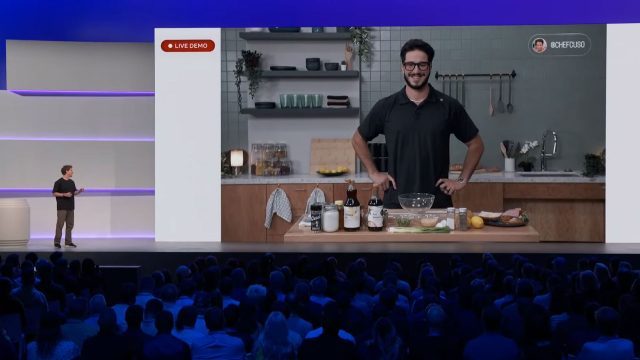
When Mark Zuckerberg announced Meta’s latest smart glasses at the company’s Connect 2025 keynote, he encountered two glitches that prevented him from properly demonstrating some of the devices’ features. Now, Meta’s Chief Technology Officer, Andrew Bosworth, said in an AMA on Instagram that they were demo failures and not actual product failures. The first glitch took place in the middle of a live demo with a cooking content creator, who asked Live AI for instructions on how to make a Korean-inspired steak sauce on his Meta glasses. Instead of giving him detailed instructions, his glasses’ AI skipped ahead by several steps and continued glitching. The chef told Zuckerberg that the “WiFi might be messed up” in the venue.
Bosworth said, however, that it was not the case. Apparently, when the chef said “Hey Meta, start Live AI,” it fired up every single Meta Ray-Ban’s Live AI in the building. And since the event was all about the company’s smart glasses, there were a lot of them in the venue at the time. The company had also routed Live AI’s traffic to its dev server to isolate it, but it ended up routing the Live AI traffic of everyone’s glasses in the building to its server. “We DDoS’d ourselves, basically,” he said. He continued that it didn’t happen at rehearsal, because there weren’t as many people wearing the glasses when they tested it out.
Zuckerberg also ran into an issue when he tried demonstrating taking WhatsApp video calls on the Meta Ray-Ban Display. The audience could see him getting calls on the glasses’ HUD, but he couldn’t answer them to start the call. Bosworth said that it was caused by a “never-before-seen bug” that had put the display to sleep at the very instant that the notifications came in that someone was calling. Even after Zuckerberg woke up the display, there was no option to answer the call. The CTO said Meta had never come across that bug before the demo and that it has since been fixed. “You guys know we can do video calling… we got WhatsApp, we know how to do video calling,” he said, but admitted that it was a missed opportunity to be able to show on stage that the feature actually works.
This article originally appeared on Engadget at https://www.engadget.com/wearables/meta-cto-explains-the-cause-of-its-embarrassing-smart-glasses-demo-failures-123011790.html?src=rss
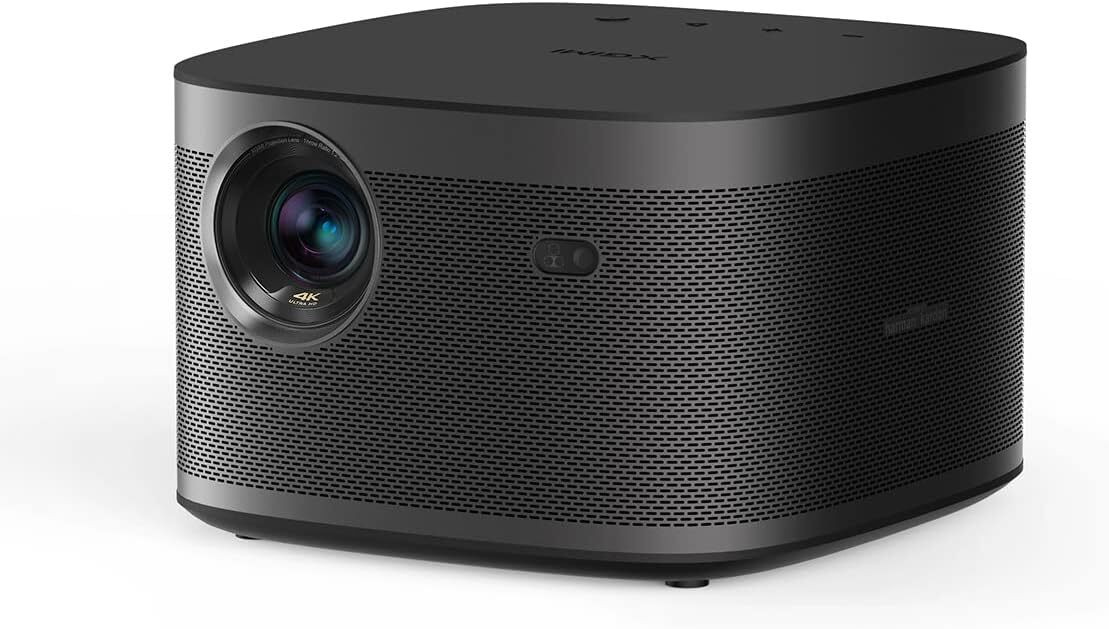
If you’re on the hunt for a high-quality home theater projector with solid image quality, you can currently get an open-box XGIMI Horizon Pro 4K Projector on Woot for 55% off. With impressive visuals and sound (according to PCMag), this is one of the top projectors on the market. It’s a big step up from entry-level, pocket-sized projectors, making it a better choice for videophiles looking to replace a physical screen.
Weighing around 6.4 lbs, the XGIMI is powerful but lightweight. It delivers sharp 4k resolution with XPR pixel shifting, full HD 3D support, and 1500 ISO Lumens. According to PCMag, the colors are reasonably accurate and well-saturated, with strong contrast in brightly lit scenes. However, darker scenes and shadowed parts of a bright scene may lose some shadow detail.
The projector lacks optical zoom (only digital, which can reduce brightness), so you’ll need to manually adjust the position to fit your screen. Otherwise, it’s a quick and easy setup with auto-adjust features like auto keystone (vertical and horizontal), intelligent obstacle avoidance, screen alignment, auto-focus, and more. Its LED light source is designed to last throughout the projector’s lifetime, and the integrated Android TV with Chromecast makes streaming easy on any Apple or Android device. However, you’ll have to use an external streaming device to access Netflix.
There are several predefined picture modes to fine-tune colors; PCMag testers found that Office mode had the best balance of color accuracy, contrast, and shadow detail. Switching to Game mode (enabled by HDMI input) allows for lower input lag at 60Hz, making it ideal for casual gameplay. The built-in audio with two eight-watt Harman Kardon speakers also earns praise from testers and reviewers for sufficiently filling a large family room despite the projector’s small size. You can also connect an external audio system, if desired.
If you’re a home entertainment buff who wants a compact projector with outstanding bright scenes and can live with a bit of lost shadow detail, this open-box XGIMI Horizon Pro 4K Projectoris a great buy at 55% off its list price.
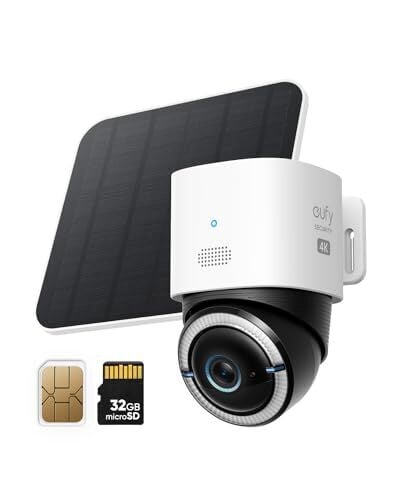
If you’ve been looking for a security camera that works where wifi doesn’t reach, the Eufy Security 4G LTE Cam S330 might be the one to consider. Currently, it’s selling for $161.49, down from its usual price of $249.99 on Amazon.
Like the rest of Eufy’s Solocam line, it avoids the subscription fees that many competitors lock you into. Instead, you can save clips locally on the included microSD card, or if you’re using it on wifi, you can connect it to the Eufy HomeBase S380 for local storage. That makes the S330 a good fit if you want full functionality without committing to another monthly bill. Eufy ships the camera with an EIOT SIM and 100GB of data to test the 4G features.
The S330 builds on the wireless S340 with the same dual-lens setup—a wide-angle macro lens paired with a close-up micro lens. The combination lets you cover a wide space while still zooming in on fine details. Eufy claims its 4K resolution can capture a license plate from 30 feet away, and in practice, the micro lens does deliver striking detail. That means you can catch more than just the shape of a car or a blurry face; you’ll have a clear, usable image. The solar panel keeps the 9,400mAh battery topped up and can be mounted directly on the camera or up to 10 feet away, giving you flexibility for placement. Even in cloudy weather, users have reported the panel keeping the camera running without interruption. The unit is weather-resistant enough for year-round outdoor use, and the swiveling base supports 360-degree viewing with AI tracking to follow people or vehicles across the frame.
There are trade-offs, though. LTE mode offers true off-the-grid freedom, but live viewing is, reportedly, noticeably laggier than on wifi, and the included 100GB data allotment burns up fast. Switching the camera from LTE back to wifi can also take more effort than expected. Still, the flexibility is the real selling point: You can mount it at the edge of your property, along a long driveway, or anywhere a power outlet and router can’t reach.
This week’s event picks are primarily based on sign-up numbers. See below to learn which events are the most popular group rids and races for the weekend!
Bikealicious Rubberband Joy Ride
Banded Beginner-Friendly Endurance Challenge
Which group ride had the most sign-ups when we were compiling this post? This one!
The friendly Bikealicious crew is leading a “keep together” group ride on Watopia’s challenging Four Horsemen route (89.9km, 2,111m). Grab this route badge if you haven’t done so yet, which comes with a whopping 1780 XP!
Women’s Mini Races (3 races in an hour) happen each Sunday, but the ULTIMATE Mini Races are a bigger monthly event. In fact, this race has more signups than any other this weekend!
If you’re looking for punchy women-only racing, these races are the place to be.
This Sunday’s races are rolling courses, with each race longer than the previous. Races are on the Fine and Sandy (3.4km), Jungle Circuit (9.5km), and Handful of Gravel (1 lap, 10.3km) routes.
Here’s a popular, spicy long 100km ride with two pace options: B group at 3-3.3 W/kg, or C at 2.5-2.9 W/kg. The B group will be on Three Musketeers while the C group will be on Petite Douleu. Both groups have optional efforts on some of the intermediate segments if you’d like.
Choose your desired pace, listen to the ride leader, and get that endurance work done! Both categories have a leader (yellow beacon) and sweepers.
Looking for a group ride at an easy pace? This popular event is held on the Makuri Islands Castle to Castle route and is 60 minutes long. While the stated pace is only 1.2-1.7 W/kg, it’s a banded ride, so you can go as hard (or easy) as you’d like, and you’ll stay with the group.
We choose each weekend’s Notable Events based on a variety of factors including:
Is the event unique/innovative in some way?
Are celebrities (pro riders, etc) attending/leading?
Are signup counts already high, meaning the event is extra-popular?
Does the ride include desirable unlocks or prizes?
Does the event appeal to ladies on Zwift? (We like to support this under-represented group!)
Is it for a good cause?
Is it just plain crazy (extra long races, world record attempts, etc)?
Is it a long-running, popular weekly event with a dedicated leader who deserves a shout out?
In the end, we want to call attention to events that are extra-special and therefore extra-appealing to Zwifters. If you think your event qualifies, comment below with a link/details and we may just include it in an upcoming post!
Valve is dropping support for Steam running on 32-bit versions of Windows, starting January 1, 2026. A report adds and comments: Steam has been available on Windows for more than two decades and, therefore, was built with 32-bit systems in mind. Today, every modern computer is 64-bit, with compatibility layers built in to support older 32-bit apps. So, even though 32-bit apps have carried forward, there’s really no place for 32-bit operating systems anymore — which is why Valve is axing support for them.
Meta CEO Mark Zuckerberg’s keynote at this year’s Connect wasn’t exactly smooth—especially if count two big hiccups that sidetracked live demos for both the latest Ray-Ban Meta smart glasses and the new Meta Ray-Ban Display glasses.
Ray-Ban Meta (Gen 2) smart glasses essentially bring the same benefits as Oakley Meta HSTN, which launched back in July: longer battery life and better video capture.
One of the biggest features though is its access to Meta’s large language model (LLM), Meta AI, which pops up when you say “Hey Meta”, letting you ask questions about anything, from the weather to what the glasses camera can actually see.
As part of the on-stage demo of its Live AI feature, which runs continuously instead of sporadically, food influencer Jack Mancuso attempted to create a Korean-inspired steak sauce using the AI as a guide.
And it didn’t go well, as Mancuso struggled to get the Live AI back on track after missing a key step in the sauce’s preparation. You can see the full cringe-inducing glory for yourself, timestamped below:
And the reason behind it is… well, just dumb. Jake Steineman, Developer Advocate at Meta’s Reality Labs, explained what happened in an X post:
So here’s the story behind why yesterdays live #metaconnect demo failed – when the chef said “Hey Meta start Live AI” it activated everyone’s Meta AI in the room at once and effectively DDOS’d our servers
Unfortunate, yes. But also pretty foreseeable, especially considering the AI ‘wake word’ gaffe has been a thing since the existence of Google Nest (ex-Home) and Amazon Alexa.
Anyone with one of those friendly tabletop pucks has probably experienced what happens when a TV advert includes “Hey Google” or “Hey Alexa,” unwittingly commanding every device in earshot to tell them the weather, or even order items online.
What’s more surprising though: there were enough people using a Meta product in earshot to screw with its servers. Meta AI isn’t like Google Gemini or Apple’s Siri—it doesn’t have OS-level access to smartphones. The only devices with default are the company’s Ray-Ban Meta and Oakley Meta glasses (and Quest if you opt-in), conjuring the image of a room full of confused, bespectacled Meta employees waiting out of shot.
As for the Meta Ray-Ban Display glasses, which the company is launching in the US for $799 on September 30th, the hiccup was much more forgivable. Zuckerberg was attempting to take a live video call from company CTO Andrew Bosworth, who after several missed attempts, came on stage to do an ad hoc simulation of what it might have been like.
Those sorts of live product events are notoriously bad for both Wi-Fi and mobile connections, simply because of how many people are in the room, often with multiple devices per-person. Still, Zuckerberg didn’t pull a Steve Jobs, where the former Apple CEO demanded everyone in attendance at iPhone 4’s June 2010 unveiling turn off their Wi-Fi after an on-stage connection flub.
You can catch the Meta Ray-Ban Display demo below (obligatory cringe warning):
Welcome to Edition 8.11 of the Rocket Report! We have reached the time of year when it is possible the US government will shut down its operations at the end of this month, depending on congressional action. A shutdown would have significant implications for many NASA missions, but most notably a couple of dozen in the science directorate that the White House would like to shut down. At Ars, we will be watching this issue closely in the coming days. As for Artemis II, it seems to be far enough along that a launch next February seems possible as long as any government closure does not drag on for weeks and weeks.
As always, we welcome reader submissions, and if you don’t want to miss an issue, please subscribe using the box below (the form will not appear on AMP-enabled versions of the site). Each report will include information on small-, medium-, and heavy-lift rockets as well as a quick look ahead at the next three launches on the calendar.
Rocket Lab to sell common shares. The space company said Tuesday that it intends to raise up to $750 million by selling common shares, MSN reports. This new at-the-market program replaces a prior agreement that allowed Rocket Lab to sell up to $500 million of stock. Under that earlier arrangement, the company had sold roughly $396.6 million in shares before ending the program.
Revealed at Meta’s Connect 2025 conference, the Ray-Ban Display has a small, integrated display on the right lens, designed for quick, discreet glances at notifications, directions and even video calls. The clever part is its subtlety; to an onlooker, you’re just wearing a pair of Ray-Bans, not accessing a tiny screen with your peripheral vision. (Although you will appear to offer multiple pensive stares into the middle-distance)
Paired with a Meta Neural Band, which you wear on your wrist, the glasses respond to subtle hand gestures. A simple swipe of your thumb across your index finger navigates the interface, while a twist of the wrist handles volume control. This system makes interacting with the glasses feel impressively seamless and intuitive.
While these glasses aren’t about to make your smartphone obsolete, they represent a significant refinement of the smart eyewear concept. According to Engadget’s Karissa Bell, who tested them earlier this week, they are a practical step towards integrating digital information more naturally into our daily lives.
She also tested the Conversational Focus feature, which gives you live captions of the person you’re speaking with even in a loud environment that may be hard to hear.
The Ray-Ban Display are priced at $799 — once again a pricey test of new tech. They’re heading to select US store shelves on September 30. Check out our full impressions right here.
Fivver, best known for offering gig economy job listings for all kinds of creative endeavors, is laying off 250 employees. It says it’s pivoting to being an AI-first company.
CEO Micha Kaufman says the ultimate goal is to turn Fiverr into “an AI-first company that’s leaner, faster” — comparing it to “startup mode.” I’m sure Kaufman’s salary and CEO benefits won’t be at startup levels.
While the iPhone Air might be the scene-stealer, for the best specs and cameras, the iPhone Pro remains the pick. And let’s not forget: It got a redesign too! It has a versatile triple-sensor system for rear cameras, while the new aluminum unibody is scratch-resistant and feels sturdy. So do you want the technically more capable new iPhone or the new model?
It’s here. Maybe it’s just a stepping stone on the way towards that first foldable iPhone, but the iPhone Air is officially here. It might not be the most affordable iPhone or the one with the most cameras, but for style and sleekness, the iPhone Air is without a doubt Apple’s coolest smartphone since it ditched the home button. And you know what? Battery life isn’t terrible.
Announced last month was the Ubuntu “Dangerous” Desktop Images as a new form of the Ubuntu Linux desktop images that would ship with leading-edge Snaps atop the latest Ubuntu development images… Basically, pulling in the very latest Snaps to go along with the latest Ubuntu development Debian packages…









 Bikealicious Rubberband Joy Ride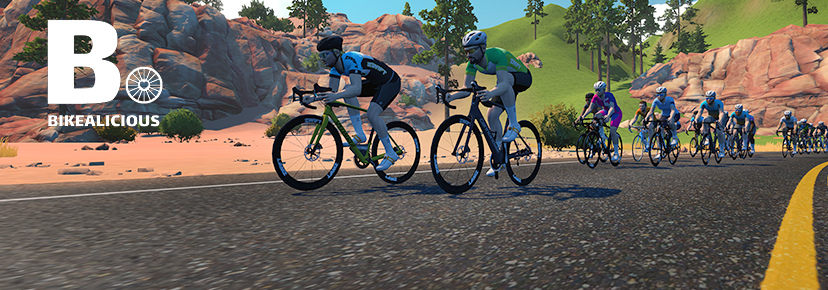
 Banded
  The Ultimate Women’s Mini Races – Eat My Dust





 Meta Connect (@jasteinerman)