
The beta release of the Qt Creator 18 integrated development environment is now available for testing for this Qt/C++-focused IDE…
Monthly Archives: September 2025
Vulkan 1.4.327 Introduces A New Valve Vendor Extension
Version 1.4.327 of the Vulkan API specification was released on Friday and with it comes one new extension, which is a Valve vendor extension…
New Castelli Do.Di.Ci jacket is the “spiritual heir” of the Gabba
Castelli has added to its jacket collection with the Do.Di.Ci, which it says is the “spiritual heir” to the original Gabba.
The Do.Di.Ci has the high breathability of Castelli’s revolutionary Gabba jacket, but without the water resistance. Castelli says this makes it great for dry weather when the temperature is between 8 and 15°C (46 and 59°F).
According to Steve Smith, Castelli’s global brand manager: “There’s never been a jacket like the Do.Di.Ci. We see it as the spiritual heir to the Gabba for the way many people use the Gabba.
“The original Gabba was created for professional riders racing in the rain, but given its phenomenal success, we see that many cyclists use it in conditions that it wasn’t designed for: cool and dry.”
Highly breathable

Castelli rather missed the mark when it launched the Gabba R in 2024. That jacket is super-aero and also waterproof, wind-resistant and very packable. But with minimal insulation and a skin-tight fit, not to mention a sky-high price, it’s one for the racers rather than an everyman piece.
So, the new Do.Di.Ci (minus the dots, the name is Italian for ‘twelve’) skips the waterproofing in favour of good windproofing, paired with plenty of airflow to prevent a boil-in-a-bag feel inside. Castelli says the Do.Di.Ci is 12 times more effective at evaporating sweat than the original Gabba, hence its name.
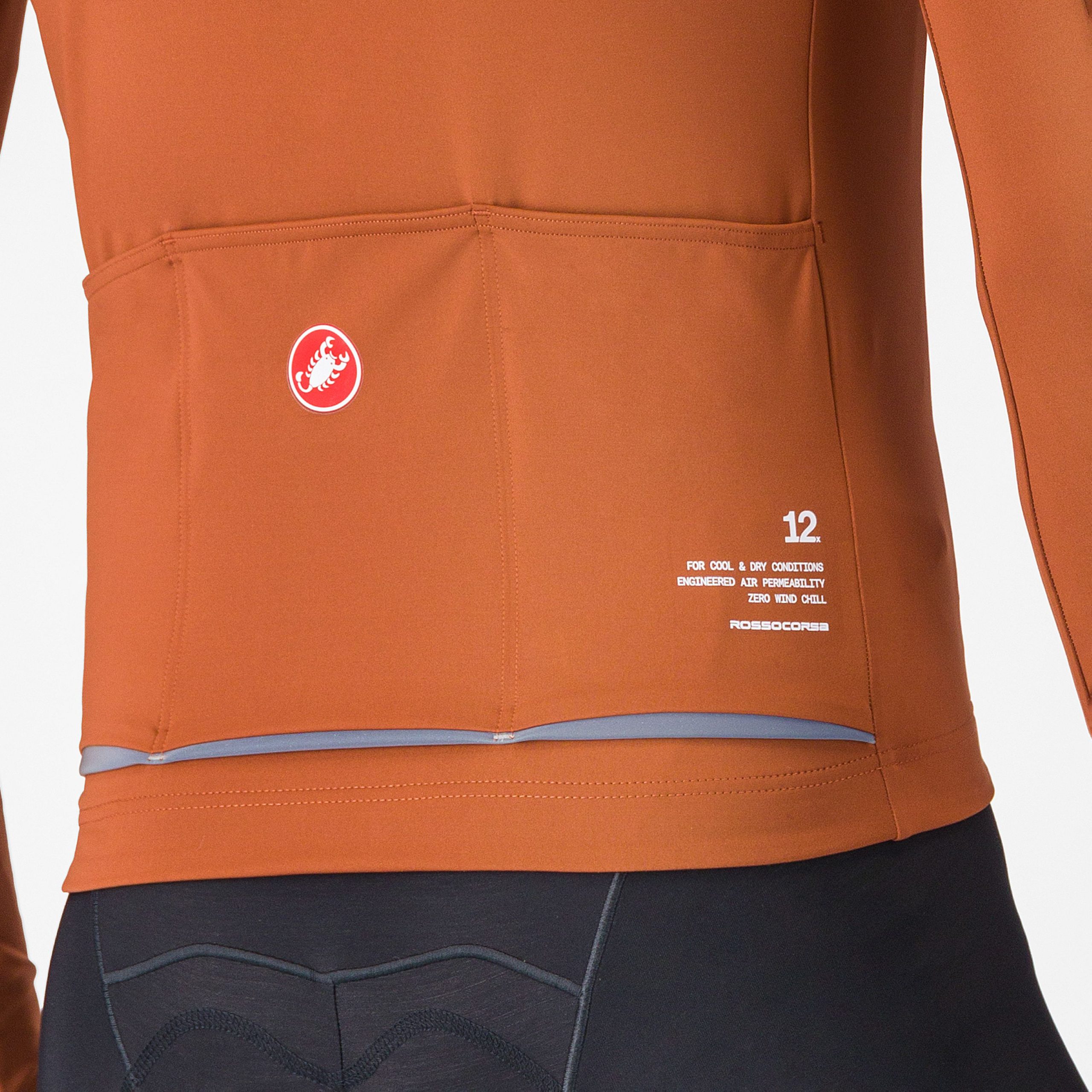
According to Smith: “While the Gabba R provides the ultimate protection for racing in the rain while being as aerodynamic as a speedsuit – the Do.Di.Ci excels in high intensity rides in cool dry conditions.
“With water protection taken out of the equation, we’ve designed the Do.Di.Ci. to make performance cyclists more comfortable than they’ve ever been during high-intensity efforts in cooler, dry conditions.”
The Do.Di.Ci uses Castelli’s Ristretto fabric, which has plenty of stretch and incorporates a PFAS-free membrane to restrict the airflow through the fabric. Castelli says the Do.Di.Ci is the most breathable jacket in its winter range, claiming air permeability of 3 cubic feet per minute.

If you want water repellency, too – not a bad idea for UK riders – Castelli points you to the Perfetto RoS 3. Launched earlier this month, it’s made from Polartec AirCore fabric, which is less breathable with a 0.7 cubic feet per minute rating.
The Do.Di.Ci is not a cheap winter jacket, but is still around £100 / $100 less expensive than the Gabba R. You can choose between men’s and women’s versions with long sleeves, as well as a short-sleeve variant available for men only, with four colours and sizes from XS to 3XL for men, and two colours and sizes from XS to XL for women.
The men’s Do.Di.Ci short-sleeve is priced at £220 / $240 / €199.95, and the men’s and women’s long-sleeve at £250 / $280 / €229.95.
FreeBSD 15.0 Alpha 3 Brings WiFi Driver Updates
The third weekly alpha release of the upcoming FreeBSD 15 operating system is now available for testing…
Raspberry Pi Releases M.2 HAT+ Compact For $15
Raspberry Pi today announced the M.2 HAT+ Compact as a new smaller version of their M.2 HAT+ for these single board computers…
How to Check DNS Server IP Address in Linux
DNS (Domain Name System) is a fundamental facilitator of several networking technologies such as mail servers, Internet browsing, and streaming services e.g., Netflix and Spotify, among others.
It works on a special computer called a DNS server – which keeps a database record of several public IP addresses along with their corresponding hostnames for it to resolve or translate hostnames to IP addresses upon user request.
The post How to Check DNS Server IP Address in Linux appeared first on Linux Today.
Calibre 8.10 Introduces Customizable Column Tooltips
Discover the new customizable column tooltips in Calibre 8.10, enhancing your data management experience with tailored insights and improved usability.
The post Calibre 8.10 Introduces Customizable Column Tooltips appeared first on Linux Today.
Samsung Android XR Headset Rumored to Release Next Month, Undercutting Apple Vision Pro
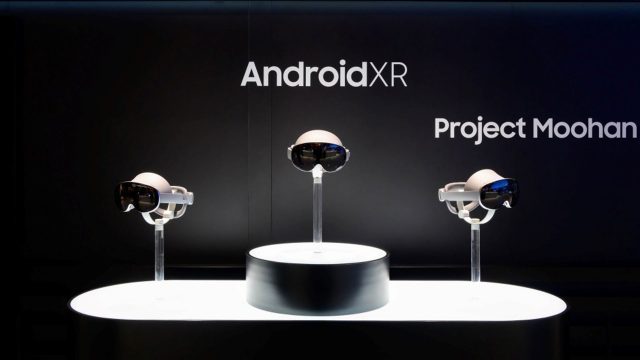

Samsung could be launching its Project Moohan mixed reality headset next month, according to a report from South Korea’s ETNews (Korean), which hopes to take on Apple Vision Pro in the prosumer XR segment.
Citing industry sources, ETNews maintains that Samsung’s Mobile Experience division will unveil Moohan (Korean for ‘Infinite’) online on October 21st—likely in the morning of October 22nd in Korea, which will include specs, price and the ability to purchase the headset.
South Korea’s Newsworks previously reported that Samsung would unveil Moohan during an event scheduled for September 29th, with sales coming on October 13th in a Korea-first debut, however the latest ETNews report maintains the schedule was adjusted due to Samsung’s shifting marketing strategy and final quality checks.
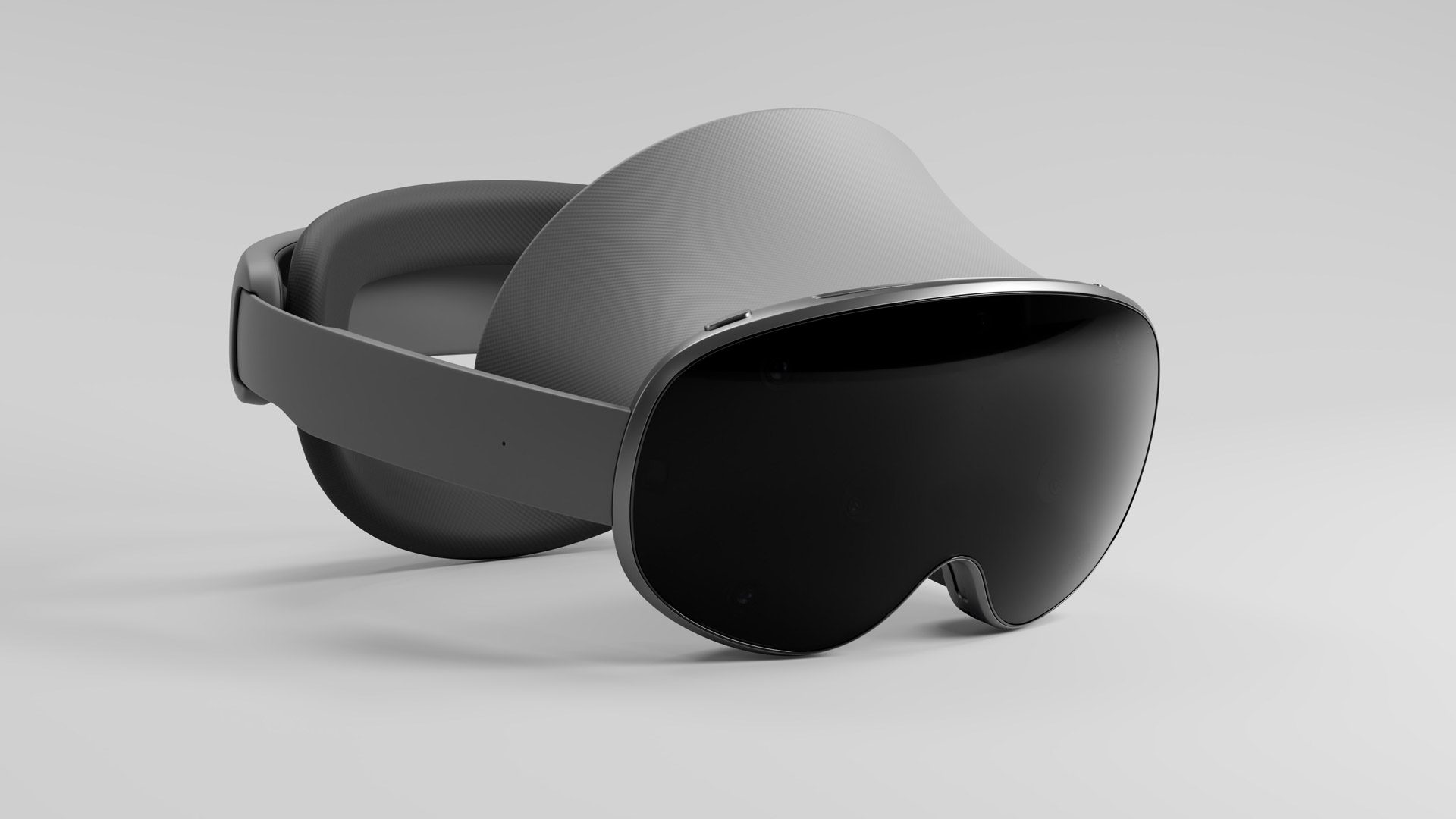
It’s uncertain whether Moohan is now aiming for a global launch out of the gate, or sticking to the previously reported Korea-first strategy. Moohan is expected to be priced between between ₩2.5 and ₩4 million South Korean won—or between $1,800 and $2,900 USD—which is seen as way of undercutting Vision Pro ($3,500).
As the first XR headset running Google’s Android XR operating system, Moohan could serve as a foil to Apple’s VisionOS operating system for Vision Pro, which gives users access to most iOS apps in addition to standalone content created specifically for the device—a sharp contrast from Meta’s Horizon OS for Quest, which requires developers to manually port Android apps to the platform.
The inclusion of Android XR will not only give Moohan access to the massive library of Android smartphone apps and native XR content (ostensibly ported from Quest), but also includes the ability to natively stream PC VR games, like Quest.
The device is expected to integrate Google’s multimodal AI, in addition to supporting voice, hand and eye-tracking as input methods. We’re still waiting to hear about Moohan’s long-promised first-party motion controllers.
As for specs, Moohan is said to feature micro-OLED panels supplied by Samsung Display, packing in a pixel density of 3,800 ppi, running on Qualcomm’s Snapdragon XR2+ Gen 2 chipset with 16GB of RAM. Samsung has been tight-lipped on specs since Moohan was first unveiled late last year, so we’re waiting to hear more.
And it appears Samsung isn’t casting a very wide net with Moohan either, according to the report. The company is allegedly only targeting an initial shipment volume of around 100,000 units, with later targets adjusted according to early demand.
You can learn more by checking out our hands-on with Project Moohan from December 2024, which includes everything from comfort, display clarity, and details on its Android XR operating system.
The post Samsung Android XR Headset Rumored to Release Next Month, Undercutting Apple Vision Pro appeared first on Road to VR.
If Open Source Stops Being Global, It Stops Being Open
Europe wants to buy European, America wants to deregulate the world, China hacks the commons. But code knows no borders… unless we let it.
The post If Open Source Stops Being Global, It Stops Being Open appeared first on FOSS Force.
Silent Hill f: The Kotaku Review

A powerful departure from tradition, Silent Hill f paints an exquisite portrait of knowable and unknowable horrors
The post <i>Silent Hill f</i>: The <i>Kotaku</i> Review appeared first on Kotaku.
Linuxiac Weekly Wrap-Up: Week 38 (Sep 15 – 21, 2025)
Catch up on the latest Linux news: Ubuntu 25.10 Beta, LMDE 7 Beta, Zorin 18 Beta, GNOME 49, Systemd 258, Firefox 143, APT adds native history parsing, Torvalds tinkers with GuitarPedal, and more.
EchoEar Development Kit Targets Voice Interaction and Edge AI Applications
EchoEar is a compact AI development kit for voice interaction and edge AI applications. It targets use cases such as smart toys, voice-enabled speakers, and control systems. The device features a circular touch display, dual microphones with local wake-word detection and sound localization, and supports large model integration from OpenAI, Xiaozhi AI, and Gemini. The […]
9to5Linux Weekly Roundup: September 21st, 2025
The 258th installment of the 9to5Linux Weekly Roundup is here for the week ending on September 21st, 2025, keeping you updated with the most important things happening in the Linux world
Apple Watch’s New High Blood Pressure Notifications Developed With AI
Many Apple Watches will soon be able to alert users about possible high blood pressure, reports Reuters — culminating six years of research and development:
Apple used AI to sort through the data from 100,000 people enrolled in a heart and movement study it originally launched in 2019 to see whether it could find features in the signal data from the watch’s main heart-related sensor that it could then match up with traditional blood pressure measurements, said Sumbul Ahmad Desai [Apple’s vice president of health]. After multiple layers of machine learning, Apple came up with an algorithm that it then validated with a specific study of 2,000 participants.
Apple’s privacy measures mean that “one of the ironies here is we don’t get a lot of data” outside of the context of large-scale studies, Desai said. But data from those studies “gives us a sense of, scientifically, what are some other signals that are worth pulling the thread on … those studies are incredibly powerful.”
The feature, which received approval from the U.S. Food and Drug Administration, does not measure blood pressure directly, but notifies users that they may have high blood pressure and encourages them to use a cuff to measure it and talk to a doctor. Apple plans to roll out the feature to more than 150 countries, which Ami Bhatt, chief innovation officer of the American College of Cardiology, said could help people discover high blood pressure early and reduce related conditions such as heart attacks, strokes and kidney disease. Bhatt, who said her views are her own and do not represent those of the college, said Apple appears to have been careful to avoid false positives that might alarm users. But she said the iPhone maker should emphasize that the new feature is no substitute for traditional measurements and professional diagnosis.
The article notes that the feature will be available in Apple Watch Series 11 models that go on sale on Friday, as well as models back to the Apple Watch Series 9.


Read more of this story at Slashdot.
Astronomers Discover Previously Unknown Quasi-Moon Near Earth
“Astronomers have spotted a quasi-moon near Earth,” reports CNN, “and the small space rock has likely been hanging out near our planet unseen by telescopes for about 60 years, according to new research.”
The newly discovered celestial object, named 2025 PN7, is a type of near-Earth asteroid that orbits the sun but sticks close to our planet. Like our world, 2025 PN7 takes one year to complete an orbit around the sun…
The newly found 2025 PN7 is just one of a handful of known quasi-moons with orbits near our planet, including Kamo’oalewa, which is also thought to be an ancient lunar fragment. Kamo’oalewa is one of the destinations of China’s Tianwen-2 mission launched in May, which aims to collect and return samples from the space rock in 2027. The Pan-STARRS observatory located on the Haleakala volcano in Hawaii captured observations of 2025 PN7 on August 29. Archival data revealed that the object has been in an Earth-like orbit for decades.
The quasi-moon managed to escape the notice of astronomers for so long because it is small and faint, said Carlos de la Fuente Marcos, a researcher on the faculty of mathematical sciences at the Complutense University of Madrid who recently authored a paper about the space rock. The paper was published on September 2 in the journal Research Notes of the American Astronomical Society, which is for timely non-peer-reviewed astronomical observations. The space rock swings within 186,000 miles (299,337 kilometers) of us during its closest pass of our planet, de la Fuente Marcos said…. “It can only be detected by currently available telescopes when it gets close to our planet as it did this summer,” de la Fuente Marcos explained. “Its visibility windows are few and far between. It is a challenging object….”
Astronomers are still trying to figure out 2025 PN7’s size. About 98 feet (30 meters) across is a reasonable estimate, de la Fuente Marcos said. It also has the potential to be 62 feet (19 meters) in diameter, according to EarthSky. The space rock is currently the smallest-known quasi-moon to have orbited near Earth, de la Fuente Marcos said.


Read more of this story at Slashdot.
Why One Computer Science Professor is ‘Feeling Cranky About AI’ in Education
Long-time Slashdot reader theodp writes: Over at the Communications of the ACM, Bard College CS Prof Valerie Barr explains why she’s Feeling Cranky About AI and CS Education. Having seen CS education go through a number of we-have-to-teach-this moments over the decades — introductory programming languages, the Web, Data Science, etc. — Barr turns her attention to the next hand-wringing “what will we do” CS education moment with AI. “We’re jumping through hoops without stopping first to question the run-away train,” Barr writes…
Barr calls for stepping back from “the industry assertion that the ship has sailed, every student needs to use AI early and often, and there is no future application that isn’t going to use AI in some way” and instead thoughtfully “articulate what sort of future problem solvers and software developers we want to graduate from our programs, and determine ways in which the incorporation of AI can help us get there.”
From the article:
In much discussion about CS education:
a.) There’s little interest in interrogating the downsides of generative AI, such as the environmental impact, the data theft impact, the treatment and exploitation of data workers.
b.) There’s little interest in considering the extent to which, by incorporating generative AI into our teaching, we end up supporting a handful of companies that are burning billions in a vain attempt to each achieve performance that is a scintilla better than everyone else’s.
c.) There’s little interest in thinking about what’s going to happen when the LLM companies decide that they have plateaued, that there’s no more money to burn/spend, and a bunch of them fold—but we’ve perturbed education to such an extent that our students can no longer function without their AI helpers.


Read more of this story at Slashdot.
Linux 6.17-rc7 Released: Linux 6.17 Stable Expected Next Week
Linus Torvalds just released Linux 6.17-rc7 as the last planned release candidate of the in-development Linux 6.17 kernel that is expected to go final next weekend…
Kernel prepatch 6.17-rc7
Linus has released 6.17-rc7 for testing.
“Let’s keep the testing going, and we’ll have the final 6.17 in a
“.
week
One of road cycling’s most iconic shoes has finally been updated
Lace-up fans, rejoice – Giro has finally revived an icon with the long-awaited release of the Empire SLX II, the first update to its flagship lace-up road shoe since 2019.
The previous generation Empire SLX was famously favoured by riders like Bradley Wiggins and Taylor Phinney – clearly firm favourites with riders who, among other things, are as stylish as it gets.
We first spotted what looked like an update to the shoe at this year’s men’s Tour de France on the big Dutch feet of double stage winner, Thymen Arensman. They then appeared on the brand’s site, confirming it was the new Empire, without fanfare, but this is the first time we’ve seen them in the flesh.
- Read more: Best cycling shoes 2025
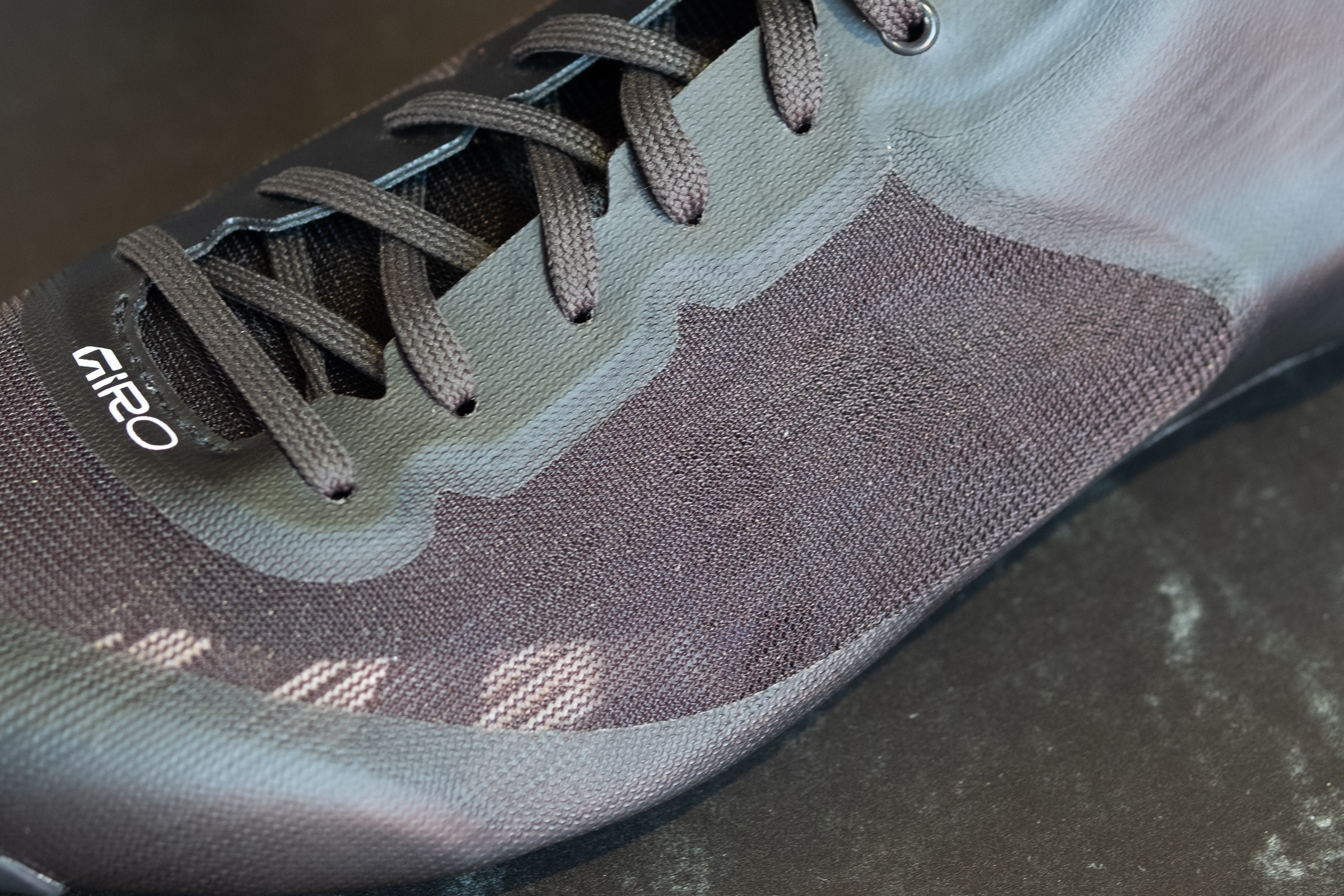
The updated Empire’s upper is made of Synchwire – a seamless material, which Giro says offers “incredible airflow and structural integrity.” This is paired with large mesh panels for lighter weight and more breathability.
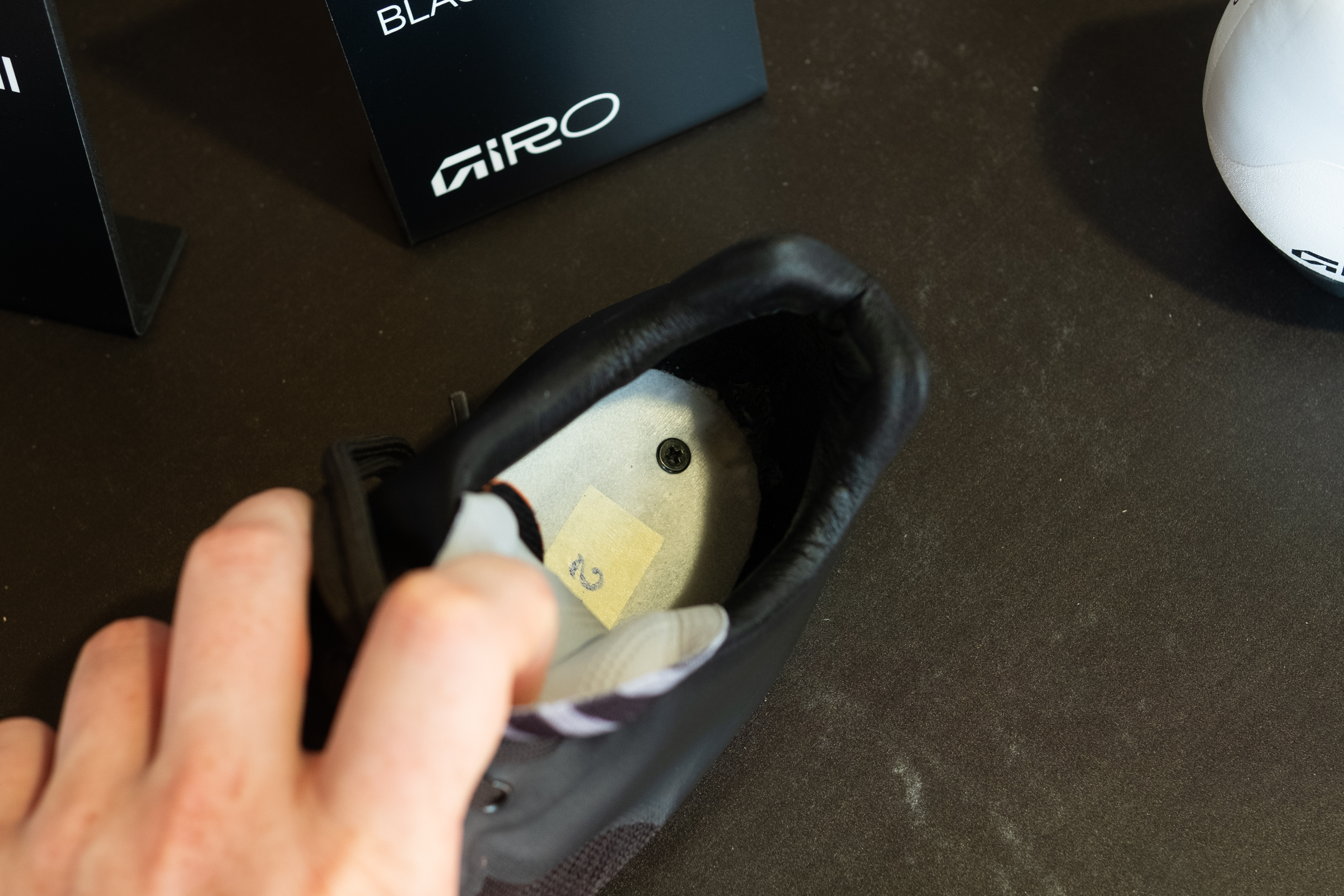
The shoes feature a removable heel block, which should enable riders to eek a bit more life out of their shoes if the sole starts to wear. The outsole is forged carbon, completing what Giro tells us is an “ultra-lightweight, supremely efficient update to the icon that reimagined laces.”
The Empire SLX II has a claimed weight of 195g (size 43). For reference, the previous Empire SLX model was slightly lighter at 185g (size EU 42.5).
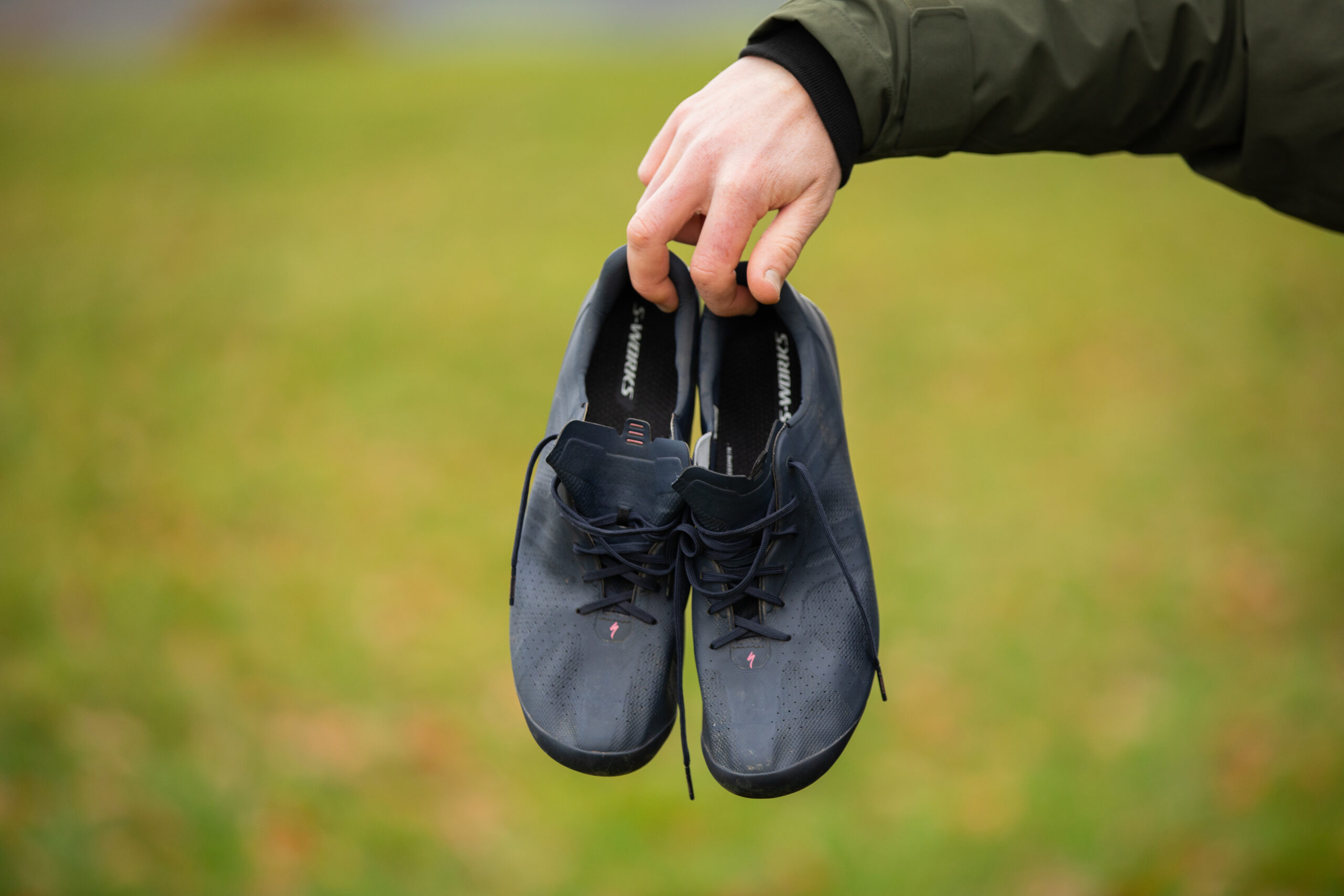
For comparison, the Specialized S-Works Torch Lace shoes have a claimed weight of 200g (size 42).
We’re yet to hear pricing in the UK and Europe, but the Empire SLX II costs $449.95 – a steep price tag, but in-keeping with the broader market for premium road shoes.
Aside from the Specialized Torch Lace, there are few high-end lace-up options available, so no doubt the return of the Empire SLX will please a lot of cyclists looking for the ultra-adjustable fit, low weight, and retro charm of a lace-up shoe.
Amazon Wants You to Ditch Your Old Laptop and Upgrade to the New MacBook Air at a Record Low

This MacBook Air now costs half the price of Windows laptops that barely match its power.
The post Amazon Wants You to Ditch Your Old Laptop and Upgrade to the New MacBook Air at a Record Low appeared first on Kotaku.