On Monday, California Governor Gavin Newsom signed the Transparency in Frontier Artificial Intelligence Act into law, requiring AI companies to disclose their safety practices while stopping short of mandating actual safety testing. The law requires companies with annual revenues of at least $500 million to publish safety protocols on their websites and report incidents to state authorities, but it lacks the stronger enforcement teeth of the bill Newsom vetoed last year after tech companies lobbied heavily against it.
The legislation, S.B. 53, replaces Senator Scott Wiener’s previous attempt at AI regulation, known as S.B. 1047, that would have required safety testing and “kill switches” for AI systems. Instead, the new law asks companies to describe how they incorporate “national standards, international standards, and industry-consensus best practices” into their AI development, without specifying what those standards are or requiring independent verification.
“California has proven that we can establish regulations to protect our communities while also ensuring that the growing AI industry continues to thrive,” Newsom said in a statement, though the law’s actual protective measures remain largely voluntary beyond basic reporting requirements.
Qualcomm engineers have posted the initial patches for bringing up the newest Adreno 800 series graphics IP within the open-source MSM Linux kernel Direct Rendering Manager (DRM) driver…
When it comes to new Echo speakers, Amazon rarely shows something that will appeal to customers who crave premium sound quality. The last time it did, it debuted the Echo Studio, which could handle immersive Dolby Atmos and double as a home theater speaker. At its hardware event in NYC today, Amazon unveiled an updated Echo Studio with new drivers, a new chip and an all-new design.
Amazon says the new model offers “incredible high fidelity sound” thanks to three full-range drivers and an excursion woofer for maximum bass. Like the original Studio, this speaker is designed for Dolby Atmos content, which is available across both movies and music. There’s a new AZ23 Pro chip inside as well, silicon that’s built to power audio features and Alexa+ on the new Studio. Amazon says the component offers advanced speech and audio processing — as well as visual processing on the new Echo Show lineup.
The company also updated the Echo Studio design, ditching the large cylinder for the more spherical shape. The blueish light ring for Alexa is now on the front instead of the top. The controls are now on the front as well, where you’ll find buttons for volume and muting the microphones. Overall, the new Echo Studio is 40 percent smaller than the original and is now covered in a 3D knit fabric for acoustic transparency.
Amazon also announced Alexa Home Theater during its reveal of the Echo Studio. This feature allows you to connect up to five Echo Studio or Echo Dot Max devices to create a more immersive sound setup. The company promises that you’ll simply plug in the speakers and Alexa will handle the rest. The assistant will use OmniSense to automatically tune the speakers based on their position, the size of the room and the space’s acoustic characteristics. As you might expect, Amazon plans to sell these new speakers in Alexa Home Theater bundles so you don’t have to spend too much time shopping for a multi-speaker system.
The new Echo Studio is available for pre-order today for $220, and early adopters will get Alexa+ Early Access with the purchase. The new speaker will ship on October 29.
This article originally appeared on Engadget at https://www.engadget.com/audio/speakers/amazon-reveals-an-updated-echo-studio-speaker-with-a-new-chip-and-upgraded-drivers-150303898.html?src=rss
Amazon has seen the power and potential of Alexa+, its AI-powered smart assistant, and is now launching a raft of devices to support it. Today, at the company’s September 2025 devices event, the company unveiled several new Echo devices, with the Dot Max (pictured, right) leading the pack.
The Echo Dot Max is a $100 smart speaker designed to occupy every room in your home, complete with the usual smart home bonuses. The major changes inside and out are to ensure it’s better able to use Alexa+, which includes new custom silicon, sensors and better sound.
For instance, Dot Max features two drivers which, when combined, produces three times as much bass as the fifth-generation Echo Dot. The sound, which will adapt to the local space, is apparently so good that Amazon’s Daniel Rausch described it as the “most performant” smart speaker at this sort of price.
Similarly, new microphones are paired with a new, custom-made AZ3 chip for improved conversation detection and background noise filtering. AZ3 can also harness Amazon’s “Omnisense” platform that combines Wi-Fi Radar, audio and its accelerometer to monitor what’s going on in your home.
You’ll notice the hardware has been redesigned, with the light ring moved to a new control surface on the front of the sphere.
Amazon’s Echo Dot Max, along with the rest of its Echo devices, are available to pre-order today, with buyers getting early access to Alexa+ as part of the deal. Shipping is expected to commence on October 29 for both the Dot Max and its pricier and bigger sibling, the Echo Studio (pictured, left).
This article originally appeared on Engadget at https://www.engadget.com/home/smart-home/amazons-new-echo-dot-max-is-a-smart-speaker-for-alexa-150222265.html?src=rss
Dimensional Double Shift returns with next month’s New Joysey DLC on Quest.
Marking its third dimension and second paid expansion after last year’s launch, hand tracking co-op game Dimensional Double Shift heads to New Joysey following our prior visits to Treeattle and Hexas. Continuing your work with the Gas N’ Grill, this comes with its own greasy variances on the diner and garage levels, where you serve up food and fix motor vehicles for the locals.
0:00
/0:45
“New Joysey invites players to clock back in for chaos at a busted boardwalk full of greasy diners, greasier garages, and muscle cars with more attitude than horsepower. In true Owlchemy style, players will serve surly locals, sling deep-fried boardwalk staples, and fix up rides while navigating a dimension packed with mischief and nostalgia,” stated Owlchemy in a press release.
Similar to my GDC demo for Hexas, I went hands-on with the latest dimension before its upcoming launch during Gamescom 2025. As someone from the UK who’s never been to real-life New Jersey, I’m immediately reminded of a rundown seaside tourist town as I spot large trash heaps near the boardwalks and arcades outside the diner.
Gameplay differences are relatively minor, though there are a couple of new twists in here that keep this entertaining, like deep-frying ice cream and the accompanying slot machine that this action activates. For a game targeting a younger crowd, I didn’t expect to be reminded of The Sopranos with the garage level through jokes about money laundering.
So, why go for a New Jersey-themed update? Owlchemy Labs CEO Andrew Eiche informed me the studio’s trying to build “a real taste of actual America” across these dimensions, pointing to how Texas “has a lot of big energy and a lot of big issues” that come with that.
“It’s not always the most polished view. One of the fun things is it would’ve been easy to do a New York City dimension, make it beautiful and like the Big Apple. But if you’ve been to New York City, right across the river is New Jersey, and it’s got a very different vibe. It’s very unique, and I think that the unique places and the slightly less glamorous places make for more fun. Like you said, it’s a rundown beach town, but people still love it.”
Describing New Joysey as having “half casino” corruption vibes, Eiche explained that the DLC sticks closely to the existing base gameplay. However, this dimension’s walking the line between carnival activities and feeling like you’re doing something illicit.
“You never really gamble in the game; you just cheat. That was the fun of this dimension.”
Presently, Dimensional Double Shift remains in early access. Owlchemy’s not ready to announce how many dimensions will be in the full release, and there are other things it wants to try before that point.
That isn’t to say everything it’s tried so far has worked, though. Eiche advises that they’ve encountered some players who don’t respect physical space, running into everyone else’s zones to complete orders. This led to Owlchemy creating an out-of-bounds system where the screen will go black if you don’t return to your area.
Dimensional Double Shift is out now in early access on the Meta Quest platform, and the New Joysey dimension is available on October 16 for $4.99. Just like Hexas, only one person in your online party needs to own New Joysey for everyone to access it.
We may earn a commission from links on this page. Deal pricing and availability subject to change after time of publication.
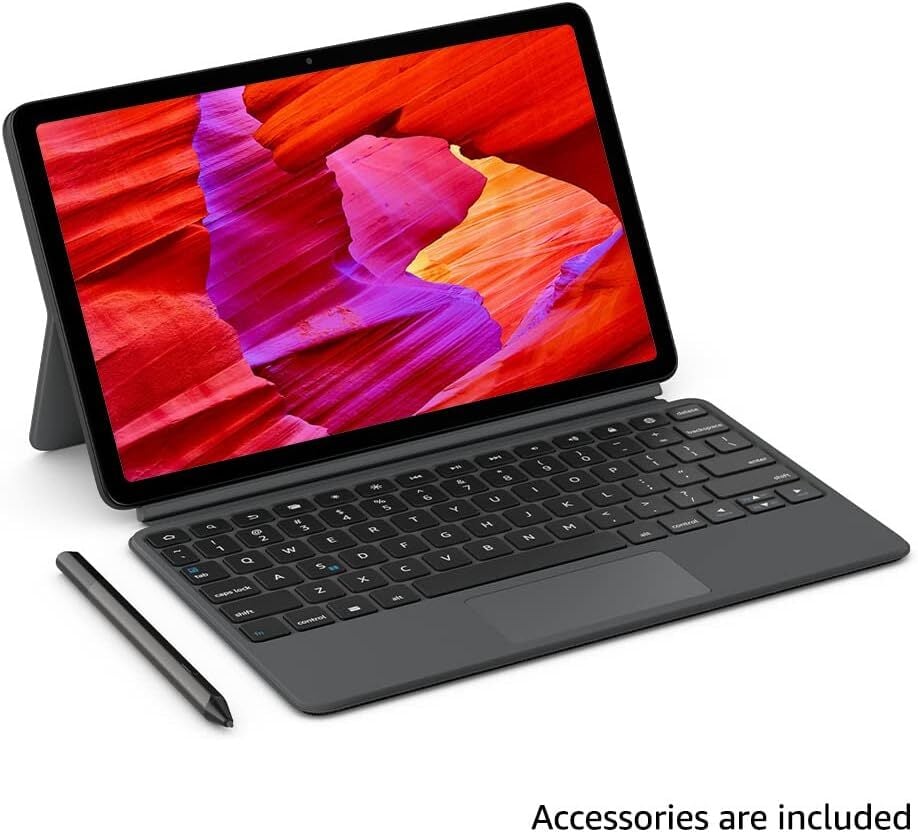
As far as tablets go, the Amazon Fire Max 11 is a well-designed crowd-pleaser with a large, vibrant display. Right now, you can get it for 38% off as part of the Amazon Fire Max 11 Productivity Bundle, which includes a keyboard case and stylus pen that transforms it into a fully functional laptop complete with essential accessories for design, studying, and everyday use.
The tablet features an 11-inch display certified for low blue light with a 2000 × 1200 pixel resolution and 410 nits of brightness, making it bright enough to use in sunny conditions. It has 4 GB of memory, dual-band Wi-Fi 6 (but not 6E), and 64 GB of storage. The octa-core processor is improved and more efficient than that of previous Fire tablets. The 7,500mAh battery lasts around 14 hours, but according to this PCMag review, it takes close to four hours to charge and lasts around eight hours with constant video streaming at maximum brightness.
According to the listing, the aluminum body is three times as durable as the iPad 10.9-inch (10th generation) as measured in tumble tests, and the design with slim, rounded corners makes it both sleek and ergonomic to hold. The Fire Max 11 can capture 1080p video, and the PCMag reviews mention that the 8 MP cameras (one on the front, and another on the back, which has auto-focus) are suitable for video calls and basic snapshots, but they can’t compete with smartphones.
While tablets like the iPad and Samsung Galaxy Tab might have stronger hardware and more mature app ecosystems (you don’t get Google Play), with the included keyboard and stylus, the Amazon Fire Max 11 Productivity Bundle delivers a total package at a comparatively low price point. Beyond included accessories, its strengths lie in the large LCD display, decent hardware for the price, respectable performance, and overall value—especially for those who are already in the Amazon ecosystem.
By the time you read this, the World Endurance Championship will be 100 races old. Once centered on the mega-expensive, mega-fast LMP1 hybrids, it’s all about the Hypercars now. These are purpose-built, closed-top race cars, with some of the most complex hybrid systems you’ll find outside of Formula 1, clad in bodywork that could give the Batmobile a run for its money. These Hypercars are designed to last the distance. During the 24 hours of Le Mans this year, the winning car covered 3,276 miles (5,273 km); for context, an F1 race is usually 190 miles (305 km), and at Monza this year, the race lasted little more than an hour. Here’s another difference with F1: When it comes to endurance racing, Ferrari has been winning a lot.
In fact, it’s taken victory at Le Mans for three years in a row, scoring a hat trick after 50 years away from this corner of the sport. This year has been even better: Ferrari leads the manufacturer’s championship and the driver’s championship with the #51 factory car. Its closest rival for the driver’s title is another 83 Ferrari, this one entered as a privateer car by the AF Corsa team. When the invite arrived to join the team for its race at the Circuit of the Americas in Texas, it seemed like a perfect opportunity to watch it in action and find out the key to that success.
“It has been an amazing challenge for us because after 50 years, it was not simple to restart in the pinnacle of motorsport,” said Antonello Coletta, head of Ferrari’s endurance racing program. Eighteen months after the car was greenlit, it was racing at Sebring in early 2023, a notoriously bumpy WWII bomber base in Florida that is as hard a test on a race car as any. Later that year, the 499P won Le Mans on its first try.
An anonymous reader shares a report: Boeing is planning a new single-aisle airplane that would succeed the 737 MAX, according to people familiar with the matter, a long-term bid to recover business lost to rival Airbus during its series of safety and quality problems. Earlier this year, Chief Executive Kelly Ortberg met with officials from Rolls-Royce in the U.K., two of the people said, where they discussed a new engine for the aircraft. Ortberg appointed a new senior product chief in Boeing’s commercial plane business, whose prior role was developing a new type of aircraft.
Boeing has also been designing the flight deck of a new narrow-body aircraft, according to a person familiar with the plans. This new aircraft is in early-stage development and plans are still taking shape, some of the people said. Boeing’s plans represent a shift for the company, which had put some new aircraft development work on the back burner while it navigated multiple challenges. They are also a sign that the company is betting that a cutting-edge plane design could power its business for the next few decades.
For the third generation of its Kindle Scribe line of reading-and-writing tablets, Amazon is giving the device a makeover and two new configurations. Since its introduction in 2022, the Scribe hasn’t changed much physically, with the sophomore model mostly getting a new color. This year, Amazon is launching three flavors of the Scribe. At the entry level is a model with a monochrome screen and no front light. Next is a version that has LED front lights but with a black-and-white display. Finally, at the top of the line is the Kindle Scribe Colorsoft — Amazon’s first writing tablet with a color display.
I was able to briefly check out the three new tablets ahead of the company’s launch event, and was quite impressed at the responsiveness and color saturation on the demo units I saw. Also, Amazon hasn’t given these devices a name that indicates what generation they are, simply calling them the “all-new Kindle Scribe lineup” and adding the Colorsoft label to the color model. To make things easier for this article, I’ll be occasionally referring to these as the Kindle Scribe 3.
The first thing I noticed was the Scribe 3’s shape. I’m used to the slightly thicker bezel along one long side of the display that, on the older Scribes, has been a handy place to grip the device without touching the screen. But it wasn’t just there for my thumb to hold onto. That area was also where Amazon placed many of the Kindle’s components like the processor and memory.
To reduce the size of the bezel, Amazon’s Kindle vice president Kevin Keith said “we had to engineer basically the electronics to fold behind the display.” The result is a symmetrical-looking device with a barely-there bezel that’s the same size along all sides of the 11-inch display (slightly bigger than its predecessor’s). It weighs 400 grams (or 0.88 pounds), which should make it easier to hold with one hand while taking notes. Keith also said that, at 5.4mm, the new Kindle Scribe is “thinner than the iPhone Air.” I should point out that a lot of tablets are similarly sleek. The 13-inch iPad Pro and Samsung’s Galaxy Tab S11 Ultra both have barely-there profiles of 5.1mm, while the 11-inch iPad Pro measures 5.3mm.
Cherlynn Low for Engadget
Another way Amazon was able to make the latest Scribe so thin and light was by reducing the number of layers in the display. It removed the anti-glare film on the device, using a glare-free display instead, as well as a textured glass that mimics the friction you’d get when putting pen to paper. The company also got rid of a touch layer that was on top of the display before, since it was able to use a screen with integrated touch input support. Keith said that Amazon also considered the size of the casing around the USB port to aid in shrinking the device further.
On models with front lights (all but the entry-level configuration), Amazon had to use miniaturized LED front lights since there was no longer a chunky bezel to contain them. In addition to making them smaller, the company also doubled the number of bulbs to ensure consistency of lighting across the page.
I couldn’t help reaching for the new Kindle Scribe when I saw it, mostly because it looks a lot different than its predecessor. I already found the original Scribe satisfyingly svelte and this latest model is similarly attractive. I do wonder if I might miss having something to grip onto that isn’t the screen, but that might not be a problem if Amazon’s palm rejection technology is effective.
I did notice a slight dullness in the model without the LED front lights, but it remained as easy to read as an older Kindle. The other two certainly looked a lot brighter, with the higher contrast making onscreen text and drawings look fresher and more vibrant. I’ll get to the Colorsoft model in a bit, but I appreciated how clear and saturated colors appeared on its screen.
One of my favorite updates this year is magnets. Specifically, the magnets holding Amazon’s stylus to the Scribe itself have gotten stronger. Keith said “we added more magnetic force so that it’s harder to fall off,” and when I tried pulling the pen off the tablet it required noticeably more effort than with previous models. It also snapped back on more easily. Considering this was one of my complaints about the older Scribes, I’m very encouraged to see this improvement.
The stylus itself has also been refined, with a slightly thicker, rounded silhouette that Keith said is “a little bit more ergonomic.” It still has a rubberized top that works as a digital eraser and when I used it on the new Scribe I felt the urge to brush off eraser dust, just like I did with the predecessors. The programmable action button remains present as well.
Inside the new Kindle Scribes sit a new custom chip and more memory so you can TK. Amazon also added the oxide display from its Paperwhite reader, and together with the new processor, that brings a “40 percent faster overall experience with page turning,” according to Keith. The response rate also makes a significant difference in writing, which on the new Kindle Scribe is now down to under 12 milliseconds. That enables a much smoother writing experience with barely noticeable delay between putting the nib on the screen and the digital ink appearing, and because of the changes to the display, any parallax effect is “virtually gone.”
During the few moments I had to scribble on the new Kindle Scribe, I found it hard to tell if there was a big improvement in fluidity or parallax effects compared to the previous models. It’s about as responsive as before, perhaps just a touch faster at showing what I’ve written. Without a side-by-side comparison, it’s not something I can evaluate right now.
I will say that I found the latest Scribe a lot easier to hold with one hand, even in spite of the thinner bezels. That is with the caveat, of course, that I have yet to spend more than a minute writing on it. I usually have a hard time writing on the Scribe without a surface on which to prop it up, so I’m curious to see if it’ll be easier to do so with the newest model.
The Kindle Scribe Colorsoft is surprisingly vivid
I was able to get a good idea of how the Kindle Scribe Colorsoft’s color rendering compares to some of its competition, though. Every morning, I write three pages of free-flowing thoughts by hand, and I currently do so on the reMarkable Paper Pro. All my entries include highlighting of the date and time, and my experience with the color rendering on that device has been underwhelming. Technically, I can choose from yellow, green, blue, pink, orange and gray, but honestly I can barely tell the difference between yellow and orange, while blue and gray are also very close. So instead of five usable highlighter shades, I really only have three (gray is barely a hint of a tint).
The Kindle Scribe Colorsoft not only renders colors more vividly, but hues are more distinct from each other. I’d say the reMarkable Paper Pro is like reading a faded newspaper’s comic strip while the Colorsoft looks more like a glossy graphic novel. It’s still a bit muted, but you can at least see variations in shades.
Part of what makes the Colorsoft look nice is the fact that the device itself comes in a nice purplish hue that Amazon calls “fig.” With the selection of colors on its screen, I got a very autumnal vibe and was reminded of berries, for some reason. (It’s also possible I was hungry.)
Like the Kindle Colorsoft that Amazon announced in 2023, the Scribe Colorsoft uses a color filter and LEDs. What’s slightly different is a new rendering engine that Amazon said “enhances the color and ensures writing is fast, fluid and totally natural.”
While the Kindle Scribe Colorsoft has the same dimensions and weight as its monochrome counterpart, it has a slightly slower response rate of 14ms. I have only written on the Colorsoft so far, and will wait till I can spend more time with both tablets to see if this different latency makes a big difference.
Cherlynn Low for Engadget
In addition to the new hardware, Amazon also updated the Scribe’s software. All Kindles will be getting a redesigned home page that better surfaces your recently added and edited content. Based on what I saw, instead of having rows of covers on the main screen, there is now a Search bar at the very top, followed by an area on the left half below that for “quick notes.” This is basically a notepad for you to continuously update whenever you need it, so you won’t need to create a new notebook every time you want to jot down a thought. To the right of this top half is the “Jump back into” section, which will show things you were recently working on.
Below those two portions is a row of titles called “Recently added,” where things you just downloaded into your library will appear. So if you have been reading, say, The Body Keeps the Score and just bought Katabasis, you’ll find the first one at the top right and the latter in the “Recently added” section.
The search bar at the top is now powered by AI, because there is no escaping that. Thankfully, Amazon has been fairly cautious about its approach, which is particularly important for a product like the Kindle Scribe where people go to read and produce original content. The new AI feature here is a smarter search that not only indexes all your handwritten notes, but understands and groups common topics so you can search for something like “What have I told Panos Panay before?” The Scribe will scan your notebooks, find all your relevant scribblings and present everything you’ve written down across all your files and summarize its findings for you.
I didn’t have time to try this out but I am intrigued at the potential here. I make so many different to-do lists for Engadget’s events coverage that it would be nice to be able to ask “What are the tasks I need to do by the end of October” and possibly get a neatly organized list. The usefulness of this feature depends almost entirely on how intelligent the AI is, so I’ll have to wait till I can review it more thoroughly to say anything more evaluative.
Amazon is also bringing support for Google Drive and OneDrive, so you can create a folder in either service, add documents to them and the system will download them onto your Kindle Scribe. This is just an easier way to get files onto your Kindle, in addition to sending an email to the associated address or finding a way to add them to your Amazon account. OneNote support is coming as well, and it’ll allow you to export your notes as an embedded image or as a converted text document.
A “Send to Alexa+” feature is coming early next year, so you can share your notes or documents from the Kindle Scribe to the assistant. It will be able to pull information from your pages and remember or refer to them in your conversations, so you can ask it about what’s next on your to-do list or what items are already on your shopping note.
One more update on the redesigned home page: Instead of the existing “Notebooks” tab, Amazon is rolling out the “Workspace” section. Keith described this as “essentially like a new folder system.” Functionally, it didn’t appear too different from the Notebooks setup, other than making it easier to group your related documents so you can access, say, all the lists you’ve written up for your wedding planning or writing projects.
The redesigned home page will be launching later this year, and older Kindle devices will be able to update to the new software. The latest generation of Kindle Scribe will be available later this year, with the entry-level model going for $429, the version with the front light costing $499 and the Scribe Colorsoft starting at $629.
This article originally appeared on Engadget at https://www.engadget.com/mobile/tablets/kindle-scribe-colorsoft-hands-on-vivid-and-responsive-145147981.html?src=rss
Amazon is making two additions to its lineup of writing tablets: the Kindle Scribe 3, and the Kindle Scribe Colorsoft. The company showed off the new ereaders at its fall hardware event in New York.
The Kindle Scribe Colorsoft is the first time Amazon has added a full-color display to its notebook-like ereader. According to the company, the full-color display is meant to look crisp but “subtle,” without the harsh brightness of a typical tablet.
Meanwhile,the new Scribe 3 has been redesigned to be significantly thinner and lighter than its predecessor. It’s also been revamped for a faster writing and page-turning experience, according to Amazon. During the event, the company said that writing latency “is down to under 12 milliseconds.”
Developing…
This article originally appeared on Engadget at https://www.engadget.com/mobile/tablets/amazon-adds-the-kindle-scribe-colorsoft-and-scribe-3-to-its-writing-tablet-lineup-145031938.html?src=rss
It’s hard to muster much excitement for Amazon’s Fire TV hardware these days — the company’s main goal has been to offer cheap TVs and set top boxes for mainstream consumers who haven’t been swayed by more compelling offerings from Roku, Apple and Google. Apparently, not much is changing this year, judging from everything announced during Amazon’s 2025 device launch event. There’s a new lineup of Fire TV sets, as well as the Fire TV Stick 4K Select, which the company describes as “the fastest streaming stick under $40.”
Developing…
This article originally appeared on Engadget at https://www.engadget.com/entertainment/streaming/amazon-unveils-a-new-fire-tv-lineup-including-the-40-fire-tv-stick-4k-select-144541988.html?src=rss
It’s not technically Techtober yet since we’re one day shy, but we’ve already had a bunch of fall hardware events from some of the bigger companies in the tech space. Today, it was Amazon’s turn to step up to the plate.
Going into its event, the company teased new Echo speakers and Kindle news. Rumors suggested Amazon was ready to ditch its long-standing Android-based OS on Fire TVs in favor of the Linux-based Vega OS it’s already using on the Echo Show 5, Echo Hub units and Echo Spot. Indeed, Echo, Kindle and Fire TV are all being featured at the event, along with Ring and Blink devices. Oh, and lots of Alexa+ updates, of course.
Amazon doesn’t usually livestream its product events and that remained the case here. However, we’ve got you covered with all the news and announcements with both our liveblog and this here rundown of everything Amazon announced at its fall hardware event:
Ring
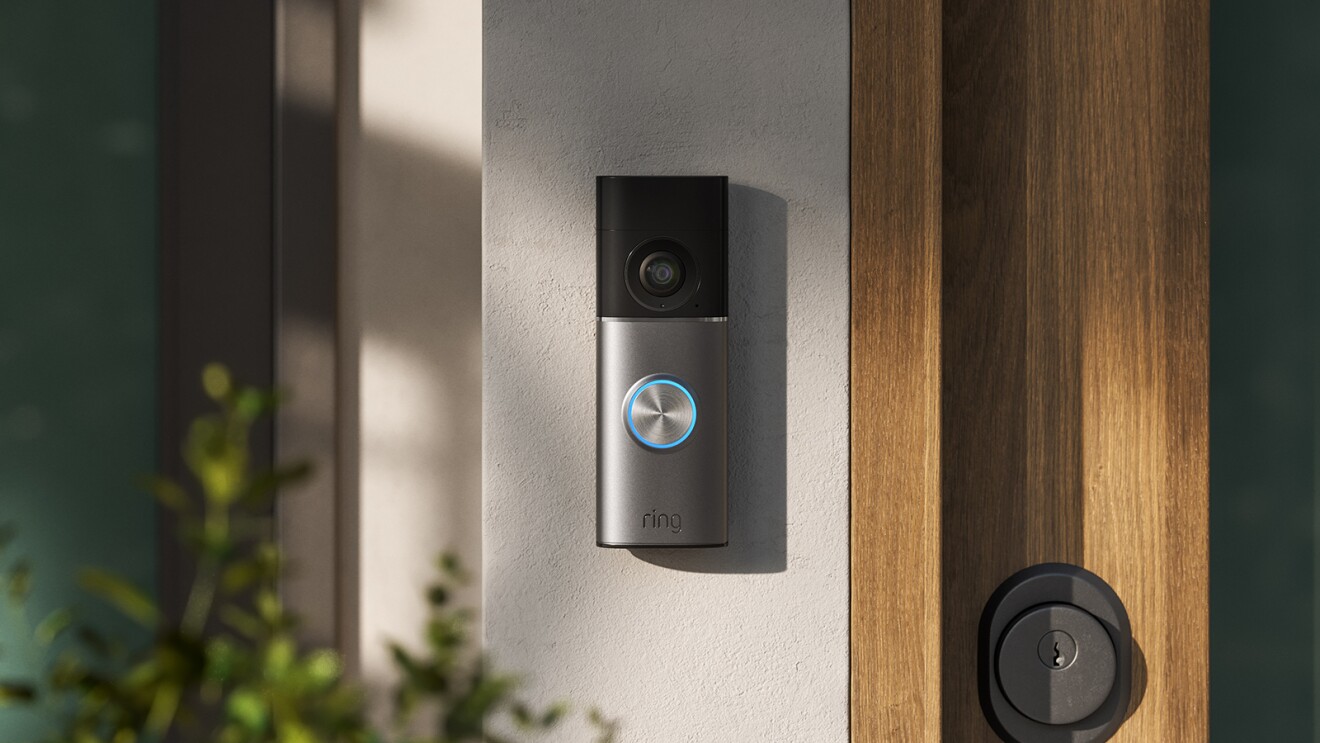
Ring Doorbell
Amazon
Retinal Vision is a concept that Ring has built its latest devices around (for what it’s worth, the name reminds me I’m probably due for an eye exam). The idea is to use AI to optimize image quality. It taps into back-side illumination sensors to deliver superior low-light performance, Amazon says.
An function called Retinal Tuning samples your Ring camera’s video quality several times per day for up to two weeks in a attempt to improve it. Large-aperture lenses in the new devices will help with all of that.
To that end, Amazon has announced a Wired Doorbell Plus with 2K visuals for $180 and the Indoor Plus Cam 2K for $60. There are 4K models too: Outdoor Cam Pro 4K ($200), Spotlight Cam Pro 4K ($250), Wired Doorbell Pro 4K ($250) and Floodlight Cam Pro 4K ($280). Pre-orders for all of them open today.
Of course, there are Alexa+ features embedded into the new cameras. Alexa+ Greetings is a function that will enable the AI to make “informed decisions about how to greet certain visitors.” Amazon will roll this out for the new cameras in December.
Familiar Faces, meanwhile, is a facial recognition feature. It identifies known faces, so Ring will be able to notify you when they’re at your door (or if someone unfamiliar is there). I’m suddenly even more annoyed about my neighbors having Ring doorbells that are impossible to avoid walking past.
There’s another new feature called Search Party, which Amazon says is about helping people find lost dogs. When a neighbor reports a missing pooch in the Ring app, a Search Party commences on nearby Ring cameras. These will keep a look out and notify camera owners if they spot what may be the missing dog. The camera owner will then see a photo of the pet alongside relevant camera footage, and can then choose whether to alert the dog’s owner. Search Party will roll out in November.
This story is developing; refresh for updates.
This article originally appeared on Engadget at https://www.engadget.com/home/everything-announced-at-amazons-fall-hardware-event-143557140.html?src=rss
Amazon just held a hardware event and introduced some new Blink security camera products. These include updates of the Blink Mini and Blink Outdoor. The Blink Mini 2K+ and the Blink Outdoor 2K+ are brand-new entries in the line-up that both capture 2K video, for added detail. The previous versions were locked at 1080p.
The Blink Outdoor 2K+ features 4x zoom, enhanced low-light performance, two-way talk with noise cancellation and a whole lot more. It can detect both people and vehicles, automatically sending smartphone notifications to Blink Plus subscribers. The battery life is on-point and it includes the company’s proprietary Weather Shield.
Amazon is calling the Blink Mini 2K+ its “most advanced plug-in compact camera yet.” It can handle 2K video and can also be used outdoors, if you purchase a weather-resistant power adapter.
Amazon
The company also announced something called the Blink Arc, which is another camera primarily intended for outdoor use. This one can capture a panoramic view of a yard with maximum coverage. The Arc is actually two cameras in one, with an AI-enhanced algorithm that fuses the footage together into a single 180-degree panorama.
All of this stuff is available to pre-order right now. The Blink Mini 2K+ costs $50 and the Outdoor 2K+ costs $90. The Blink Arc costs a cool $100.
This article originally appeared on Engadget at https://www.engadget.com/cameras/amazon-just-revealed-new-blink-security-cameras-including-the-outdoor-2k-144042562.html?src=rss
Today Amazon held its annual Devices and Services event, debuting its next generation of products. While Amazon isn’t live streaming the event, we’re on the floor sharing everything it announces in our live blog, including a slew of new Ring products and features.
Take Ring retinal vision, rolling out retinal vision across Retinol 2K and 4K doorbells and cameras. It uses back-side illumination sensors for clear vision even in low light. Ring pairs these sensors with custom large aperture lenses that it claims will capture more light and maintain sharpness throughout the frame.
This is a developing story…
This article originally appeared on Engadget at https://www.engadget.com/cameras/ring-announces-retinal-4k-vision-and-search-party-for-finding-pets-143314419.html?src=rss
Before it began slowly trickling out Alexa+ to users at the start of February, Amazon promised a smarter, more conversational assistant. It turned out the reality was more complicated, and, more than anything, Alexa+ in its current state is a showcase of the limitations of generative AI. Of course, that’s not stopping from iterating on the digital assistant. During its “Devices and Services” event on Tuesday, Amazon announced a host of Alexa+ updates, with many of them enabling new integrations alongside the company’s brand new devices.
One of those new features is Alexa+ Greetings, which will roll out to Ring’s new 2K and 4K devices this summer. With the help of Ring’s image recognition technology, Alexa+ will be able to make decisions about how to handle different visitors to your home. If it sees one of your friends or family members, it will know to greet them. When it comes to strangers, the digital assistant will ask questions of them to determine the purpose of their visit.
Developing…
This article originally appeared on Engadget at https://www.engadget.com/ai/alexa-at-amazons-2025-event-greetings-and-more-143211291.html?src=rss
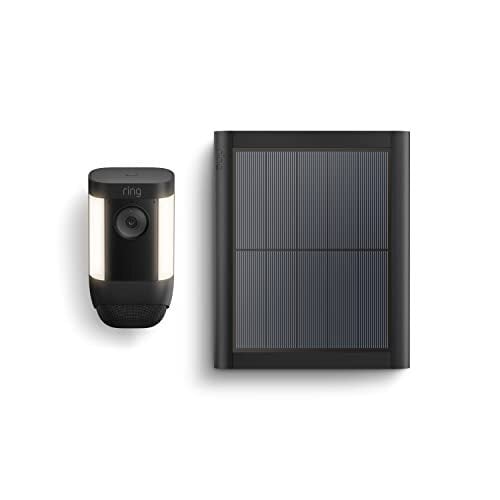
Battery-powered cameras are convenient until you realize how often they need recharging. That’s where the Ring Spotlight Cam Pro Solar Bundle, now $199.98 on Amazon (down from $289.98), makes sense. The included solar panel keeps the battery topped up, even through stretches of cloudy weather, so you don’t have to climb up a ladder every few weeks. At this price—the lowest it’s ever been, according to price trackers—you’re getting both the camera and the panel in one box, which covers power, monitoring, and lighting in a single package.
The camera itself is one of Ring’s more advanced models. It records sharp HDR video at 2K resolution with a wide field of view and offers color night vision when the spotlights kick on. Reviewers note the footage looks crisp, and two-way audio is clear enough for conversations. Ring also adds extras like 3D motion detection and Bird’s Eye View, which maps out the path of movement on your property. Combined with instant alerts, you can see not just that someone approached your yard but exactly where they walked. Bright built-in spotlights act as a deterrent and make night recordings more useful than standard infrared-only clips. The system integrates easily with Alexa and has a long list of IFTTT automations for third-party gear, but it doesn’t support Google Assistant or Apple HomeKit.
That said, there are caveats worth considering. Out of the box, you get live view and motion alerts, but most of the smarter features require a Ring Home subscription. The Basic Plan, at $4.99 per month, unlocks video history, person detection, and the ability to share or download clips. Without it, you’ll lose stored footage once the included 30-day free trial ends. The solar panel also isn’t the most subtle piece of hardware, so it may stand out if mounted in front of your house. And while setup is straightforward through the Ring app, the bundle’s price is still higher than many competing solar cameras. That said, if you want to minimize battery charging and prefer a system that’s easy to install and manage, this deal brings a premium package to its lowest cost yet.
If you’re looking to replace your old alarm clock with an Alexa-powered modern smart alternative then, well, you’re more overwhelmed with options than ever. But a $30 saving on last year’s updated Echo Spot might make your decision a bit easier.
The latest incarnation of the diminutive Spot was introduced in July 2024, and while it’s not quite available for its record low price of $45 right now, $50 is pretty close. For that you get a comfortably bedside-sized device with a sharper display than its predecessor, as well as superior sound. The front face is divided into two halves, with a speaker positioned below the hemispherical display.
What screen you do have is more than enough to display the time and weather information, plus it can show you the song or album title and accompanying artwork when you’re listening to music on those improved speakers. It can naturally be used to boss around your other connected smart devices, too.
Alexa might be baked in, but the Echo Spot is intended to be a fairly bare-bones smart alarm clock, so don’t expect as many features as you’ll find on something like the Echo Show 5. But a lot of people just want a modern alarm clock, and arguably the biggest selling point for the Echo Spot is its total lack of a camera. While that means it can do less than the original 2017 Echo Spot, which Amazon did put a camera in, the decision to remove it from a device that lives right next to your bed was probably for the best.
Amazon’s Prime Day sale returns on October 7, so you can expect a range of deals on its various Echo devices. For our guide to all of the best early deals, head here.
This article originally appeared on Engadget at https://www.engadget.com/deals/amazons-echo-spot-is-on-sale-for-50-ahead-of-prime-day-142550846.html?src=rss