Google might have found a way Gemini could be useful while you’re playing games on your phone. The company is introducing a new software overlay today it calls the Play Games Sidekick that gives you access to Gemini Live while you play, alongside a host of other gaming-focused updates to Google Play that could make the app platform a better home for gamers.
Sidekick exists as a small, moveable tab in games downloaded from the Play Store that you can slide over to show relevant info and tools for whatever game you’re playing. By default, that’s things like easy access to a screenshot button, screen recording tools and a shortcut for going live on YouTube, but you’ll see achievements and other game stats in there, too.
Google
Google is clearly most interested in how Sidekick could serve as a delivery system for Gemini, though, so AI plays a large role in how Sidekick actually helps you while you play. That includes offering a curated selection of game tips that you can swipe through, and a big button that you can press that starts Gemini Live. Based on a demo Google ran for press, Gemini Live does seem like it could be a competent guide for navigating games. It was able to offer strategies for how to best start a game of The Battle of Polytopia and told game-specific jokes that were only funny in how awkward they were. Since Gemini can accept screen sharing as an input, it was also able to offer its guidance without a lot of context from the Google project manager running the demo. Referring to in-game items as “this” or “that” was enough to get Gemini to understand.
Gemini in Sidekick won’t really replace a detailed game guide written by a human, but for a quick answer it’s easier than Googling. It’s also similar in many ways to Microsoft’s Gaming Copilot, which also places a live AI in games with you. For now, Google is taking a restrained approach to rolling out Play Games Sidekick and its AI features. You don’t have to interact with the overlay at all if you don’t want to (you can even dismiss it to the notification shade) and Gemini-powered features will only be available “in select games over the coming months.” That includes games from “hero partners EA and NetMarble,” according to Google, like “Star Wars Galaxy of Heroes, FC Mobile and Solo Leveling Arise.”
Google
Beyond the Sidekick, Google views its updates to Google Play Games as a way to unify what’s a pretty siloed-off gaming experience on mobile. Each game has its own profile, achievements and in-game stats, and few of them connect to each other. In an attempt to fix that, Google is introducing a “platform-level gaming profile” that tracks stats and achievements across Android and PC, and even supports AI-generated profile pictures. Like other gaming platforms, you can follow your friends and see what games they’re enjoying. Google will also host forums for games available in the Play Store where you can ask questions about a game and get answers from other players.
All of these tweaks come with major caveats in that they require players to use them and developers to enable them, but they do suggest Google is trying to take games seriously after bungling more ambitious projects like Stadia. And not just on Android: As part of this rollout, the PC version of Google Play Games is coming out of beta, putting the company in even more direct competition with the Steams of the world.
This article originally appeared on Engadget at https://www.engadget.com/mobile/google-is-turning-gemini-into-a-gaming-sidekick-with-a-new-android-overlay-130052048.html?src=rss
Along with its new 360 Pro 2 Max camera, GoPro has introduced the Lit Hero — a new compact action cam that looks like its entry-level Hero with a built-in LED light. That, along with improved image quality and a price that falls between the Hero and high-end Hero 13 models, could make it a popular option for creators and vloggers.
The GoPro Lit has a similar form factor to the Hero but differs in a few key ways. The built-in light opens up creative options particularly for vloggers, as it can help illuminate your face in somber lighting or shadows. That could make it useful not only for regular vlogging, but as a “B” cam for action creators who want better lighting on their faces. In a further nod to those creators, it now has the record button up front, though the lack of a front display may make it a tough sell for some.
GoPro
Another key improvement over the Hero is with video quality. The Hero Lit can capture 4K video at up to 60 fps instead of 30 fps before, opening up a 2x slow-mo option at the highest resolution. And like the Hero (following an update) the Hero Lit can capture 4:3 video that makes it easier to create vertical video for social media while offering cropping options for regular 16:9 shots. You can also shoot social-ready 12MP 4:3 photos.
Otherwise, the Lit’s feature list lines up closely with the Hero. It’s waterproof down to 16 feet (5m) for underwater action and rugged enough for extreme sports. It uses the same Enduro battery that promises over 100 minutes of 4K 60p video on a charge, though not with the LED lights turned on I imagine. It’s now on pre-order for $270 on GoPro.com, with shipping set to start on October 21.
This article originally appeared on Engadget at https://www.engadget.com/cameras/gopros-lit-hero-is-an-entry-level-action-cam-with-a-built-in-light-130035003.html?src=rss
Google is announcing several updates to Google Play in an attempt to shift the app store from “a place to download apps” to “an experience.” Many of the changes are powered by AI, and most seem like a preemptive attempt to keep the Play Store attractive for users now that it seems increasingly possible Google will be forced to open up Android to third-party app stores.
The most visible update Google is introducing to Google Play is a new tab. It’s called the “You Tab” and it acts like a combination of a profile page and a For You tab, specifically for app store content. You can access Google’s universal game profiles from the tab — part of larger gaming-focused updates Google is bringing to Google Play — along with app recommendations and content recommendations from streaming apps available through the Play Store. The tab seems relatively easy to ignore if you just want to download apps, but Google thinks users could turn to it as a curation tool and a way to take advantage of deals.
Google.
The company is also expanding the ways you can find apps. New regional sections will collect apps and content based on specific interests or seasonal topics. Google has tried a “Cricket Hub” in India and a Comics section in Japan, and now it’s bringing an Entertainment section to Korea that will collect short-form video apps, webcomics and streaming services into a single home. Interestingly, Google is making content from these apps available to sample directly in Google Play, and not just in Korea. You’ll be able to read webcomics and watch short-form K-dramas directly in Google Play, without having to download an additional app in the US, too.
When you’re looking for something in particular, a new “Guided Search” feature will let you search for a goal (for example, “buy a house”) and receive results that are organized into specific categories by Gemini. Those Gemini-based improvements will also extend to individual app pages, where Google continues to expand the availability of its “Ask Play” feature. Ask Play lets you ask questions about an app and receive AI-generated responses, a bit like the Rufus AI chatbot Amazon includes in its store pages.
Google’s Play Store updates start rolling out this week in countries where the company’s Play Points program is available, like the US, the UK, Japan and Korea. They’ll come to “additional countries” on October 1, according to Google.
This article originally appeared on Engadget at https://www.engadget.com/mobile/google-play-is-getting-ai-sorted-search-results-a-you-tab-and-short-form-k-dramas-130005402.html?src=rss
An anonymous reader quotes a report from Bloomberg: MediaTek is launching a mobile processor more capable of handling agentic AI tasks on devices, positioning to better compete with Qualcomm. The new Dimensity 9500 will provide users with better summaries of calls and meetings, improved output from AI models and superior 4K photos, the Taiwanese company said in a statement. The chip is made using an advanced 3-nanometer process by Taiwan Semiconductor Manufacturing Co., according to MediaTek, and handsets carrying the new chip will become available in the fourth quarter.
Xiaomi is set to launch its latest handset range powered by Qualcomm’s newest Snapdragon processor later this week, and the Chinese smartphone maker is aiming to benchmark its upcoming devices against Apple Inc.’s iPhone 17. MediaTek’s processor, meanwhile, is expected to give Xiaomi’s rivals including Vivo a boost in the premium segment. […] Separately, the Taiwanese company is preparing to place chip orders for automotive and more sensitive applications with TSMC’s Arizona plant as some US customers have security concerns, according to the executives.
Are you ready for The Rapture and the days of turmoil to follow? Because, if some corners of the Evangelical Christian community online are correct, it’s happening today (or maybe tomorrow) just in time for Rosh Hashanah, the Jewish feast of trumpets.
Whether true believers will meet Jesus up in the air this week remains to be seen, so I’m keeping an open mind, but I wanted to lay out what to expect, should the Rapture occur. According to the New King James translation of 1 Thessalonians 4:16-17, “The Lord Himself will descend from heaven with a shout, with the voice of an archangel, and with the trumpet of God. And the dead in Christ will rise first. Then we who are alive and remain shall be caught up together with them in the clouds to meet the Lord in the air.”
Dramatic, but it’s not the end of the world (as they say). While both living and dead believers in Christ will be gone, the unrighteous will be left behind on earth to deal with the aftermath. Nicolas Cage starred in a 2014 documentary about it.
Why do people think the Rapture is happening this week?
The basis for this wave of Rapture-mania seems to be an interview with Joshua Mhlakela, a South African man, on CENTTWINZ TV’s YouTube channel and podcast a few months ago. Mr. Joshua said he knows Jesus personally, and had a dream in 2018 where The Lord said to him, “There will be no World Cup 2026.” Later, Jesus appeared bodily in front of him, and said, “On the 23 and 24th of September, 2025, I will come to take My church.” Seven years of tribulation will follow (hence the World Cup cancellation), After this, according to Mr. Joshua, Jesus will return to Earth, presumably to deal with us heathens.
How many Christians are really preparing for the Rapture this week?
While Mr. Joshua’s interview has no doubt influenced some people, the nature of social media makes it difficult to determine how many people are preparing for The Rapture and how many are taking the piss. I’ve spent all day morning watching Rapture-themed videos, and some folks seem sincere, but a lot of people are taking satirical shots at an easy target, and there are a ton of people who illustrate Poe’s Law, because I really can’t tell.
Ultimately I don’t think that many people genuinely think the Rapture is going to happen. More people seem to be pointing and laughing than actually preparing, so everyone is somewhat wrong. Established Evangelical churches tend to dismiss claims of specific dates of The Rapture when they appear in the larger culture, and more importantly for Christians, there’s a Biblical problem with the prediction.
If you think you know the day of the Rapture, you’re wrong
If we’re going by what The Bible says (and why not, right?), either Mr. Joshua and everyone on TikTok who is predicting the date of The Rapture is wrong or the Bible itself is wrong. According to the Apostle Mark, when asked when the End Times would begin, Jesus said, “About that day or hour no one knows, not even the angels in heaven, nor the Son, but only the Father.” He didn’t carve out an exception for people on TikTok.
Mark’s fellow Apostle Matthew concurred, writing, “Watch therefore, for you do not know what hour your Lord is coming” in Matthew 24:42. “If the master of the house had known what hour the thief would come, he would have watched and not allowed his house to be broken into. Therefore you also be ready, for the Son of Man is coming at an hour you do not expect,” Matthew continues.
So if you expect the Rapture, it’s not going to happen; it’s a self-defeating prophecy. And even if you’re not willing to accept the Bible as the word of God Herself, the Rapture seems unlikely based on past predictions.
So many Raptures, so little time
Dr. Joshua and the denizens of RaptureTok aren’t the first to predict the end times, and while I can’t say for certain, they probably won’t be the last. Hippolytus of Rome predicted the end of the world in 500 AD. German monk Michael Stifel predicted October 19, 1533 would be the last day. Baptist preacher William Miller predicted the Rapture would take place on October 22, 1844, leaving between 50,000 and 100,000 Millerites extremely disillusioned on October 23. Of more recent end-time predictors, none have been as influential as Harold Camping.
Harold Camping: King of the Biblical apocalypse
Harold Camping, an engineer and broadcaster, is probably the most high-profile modern predictor of the end of the world. He founded Family Radio in 1958 and built it into a Christian media empire broadcasting to more than 150 U.S. markets across the nation. Then, in the early 1990s, Camping became convinced the Rapture would soon be upon us. Using his own brand of Biblical numerology, Camping calculated the Last Day and published it in his 1992 book, 1994?. The date: September 6, 1994.
When the world stubbornly refused to explode in the mid 1990s, Camping recalculated. The true date, he said, was May 21, 2011. “Camping was 100% sure,” says Dr. Charles Sarno, a sociology professor at Dominican University of California and lecturer at Berkeley. “He said, ‘The Bible guarantees it,’ and what better warranty could one want?”
In the months leading up to May 21, Camping launched an enormous publicity push: billboards, endless radio broadcasts, even RVs shrink-wrapped with doomsday warnings. It worked. “On May 20, the most popular Google search in English was ‘May 21st,’ ABC News and other major networks reported on it, the BBC covered it; so he got nearly global traction,” Sarno says.
May 21 came and went, leaving Camping fielding calls from confused listeners on his radio show asking why he’d gotten it wrong. Camping eventually moved the apocalypse again to October 21, 2011, but that one didn’t pan out either, and soon after, he suffered a debilitating stroke and faded from public view, leaving his underlings squabbling for control of the remains of his media empire.
Why do people believe in the end of the world?
We won’t know for sure until later in the week, but whether you use math, history, or the Bible as your guide, you probably don’t need to cancel your weekend plans. Still, the world really is coming to an end—your world, anyway—and it will probably end with you in a hospital bed instead of flying up to Heaven to meet Jesus.
If I could swallow it, maybe I’d believe in the Rapture, too. End-of-world predictions offer certainty, drama, the joy of having secret knowledge, and the possibility of heaven without dying, so I don’t begrudge TikTok’s Doomsday-stans. I feel pity for them, though, because time is going to pass, and life, inconveniently, is going to keep grinding along, leaving them to try and explain why they’re still down here with the rest of us mugs.
Unless they’re right. In which case, don’t email me; I’ll be up in clouds.
A new helmet technology called RLS (Release Layer System) is said to reduce the risk of concussion by four times, on average, compared with conventional helmets.
With roughly 55 million cases of Traumatic Brain Injury (TBI) reported globally each year, RLS says “it’s never been more important to develop a solution that reduces TBI”.
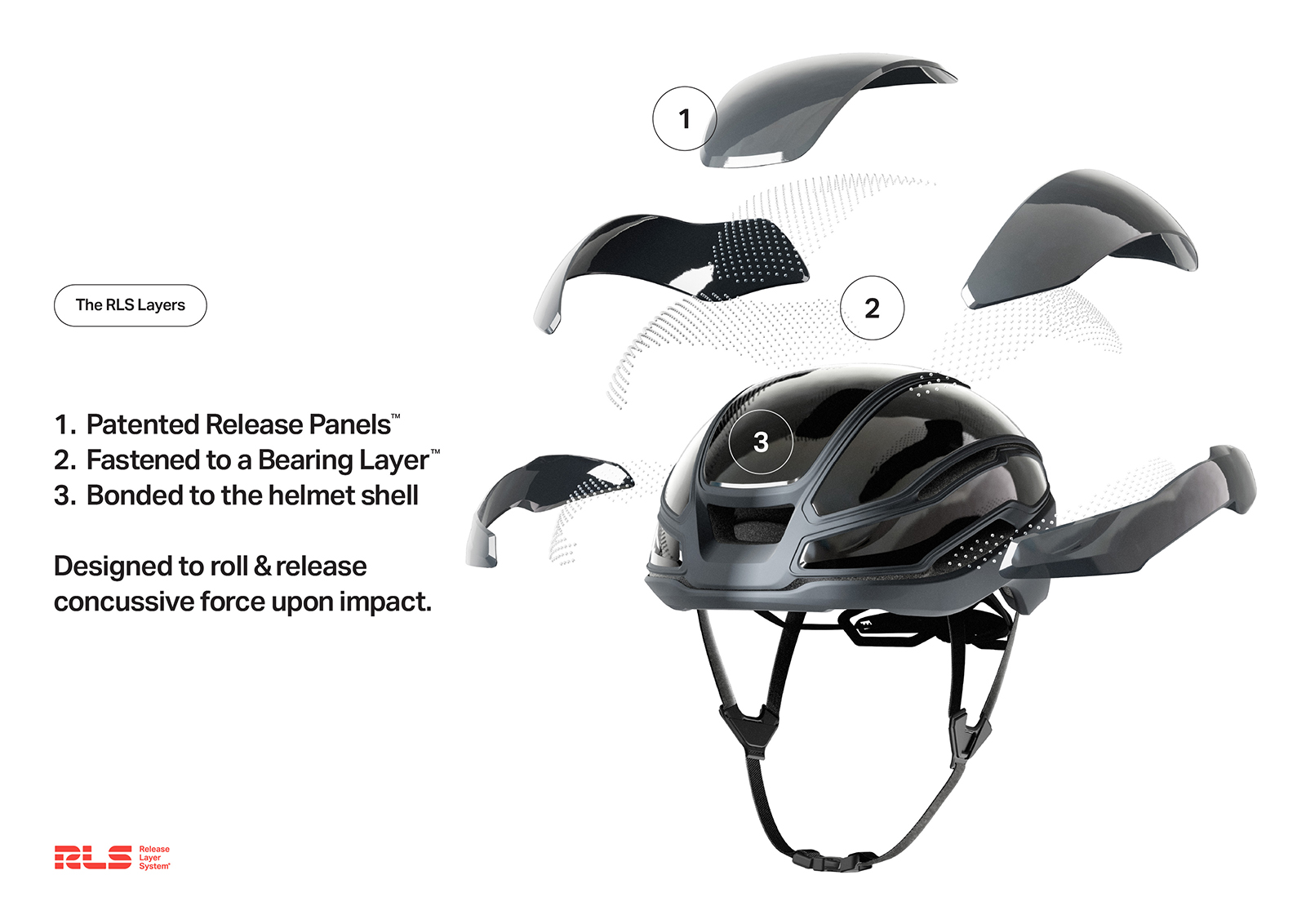
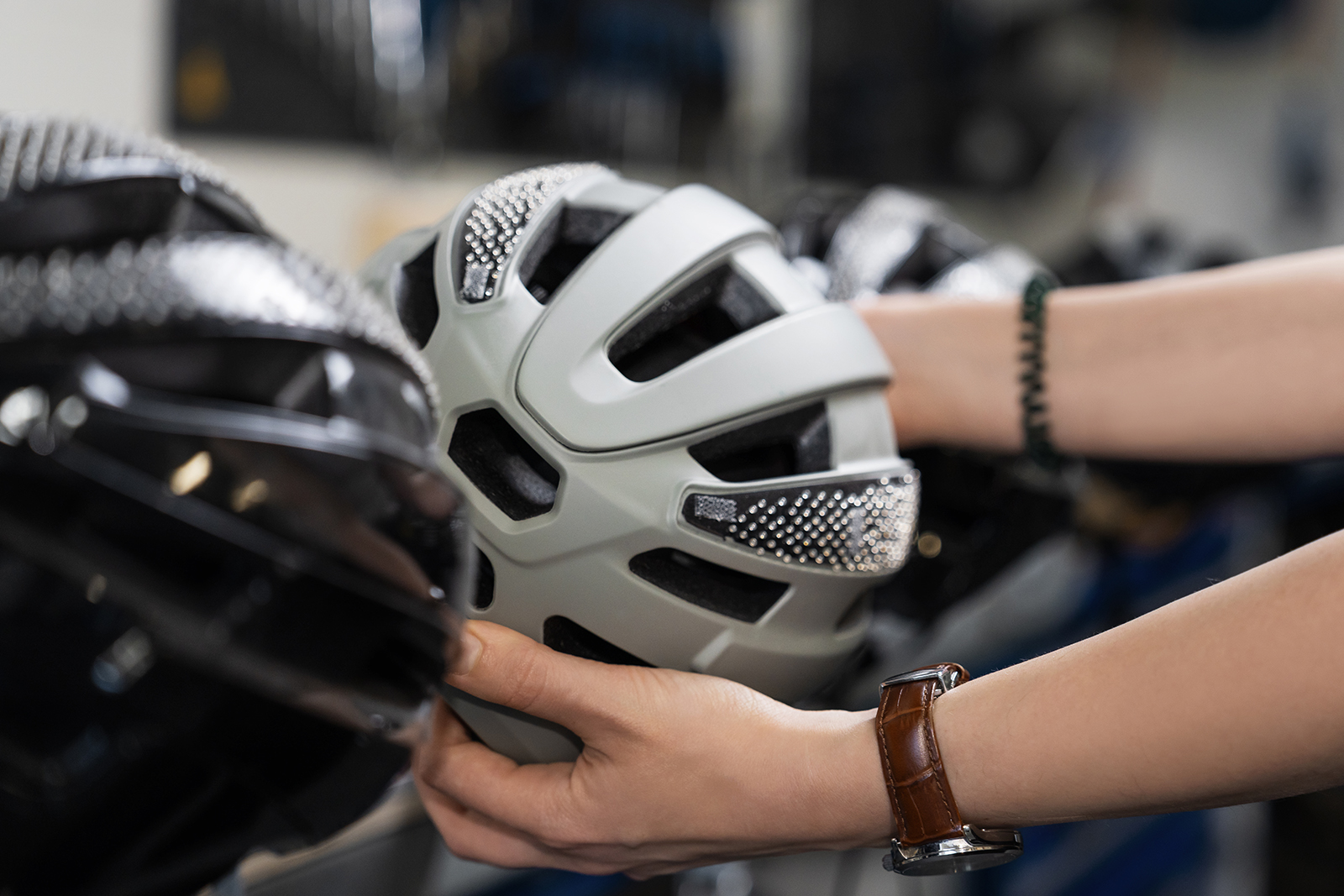
RLS is intended to provide that solution through panels on the exterior of a helmet that “roll and release” on impact.
A graphic showing the components of RLS helmet technology. RLS
The panels are connected to a lightweight polycarbonate bearing layer, which ‘activates’ when a significant impact force has been detected. This redirects rotational energy away from the brain.
The bearings are free to roll in any direction to enable the RLS panels to release, which is said to redirect concussive forces away from the brain.
RLS, based in East London, claims its technology was discovered “almost by accident” by its founder and CEO Jamie Cook.
Cook was the co-founder of HEXR, a 3D-printed custom helmet company. He noticed the outer shells of his colleagues’ 3D-printed helmets were released in an accident, and this action was found to reduce rotational forces and therefore the risk of concussion.
“Jamie and his research team began exploring the most efficient ways of releasing panels which led to the use of small lightweight bearings between the shells,” says RLS.
Sounds familiar?
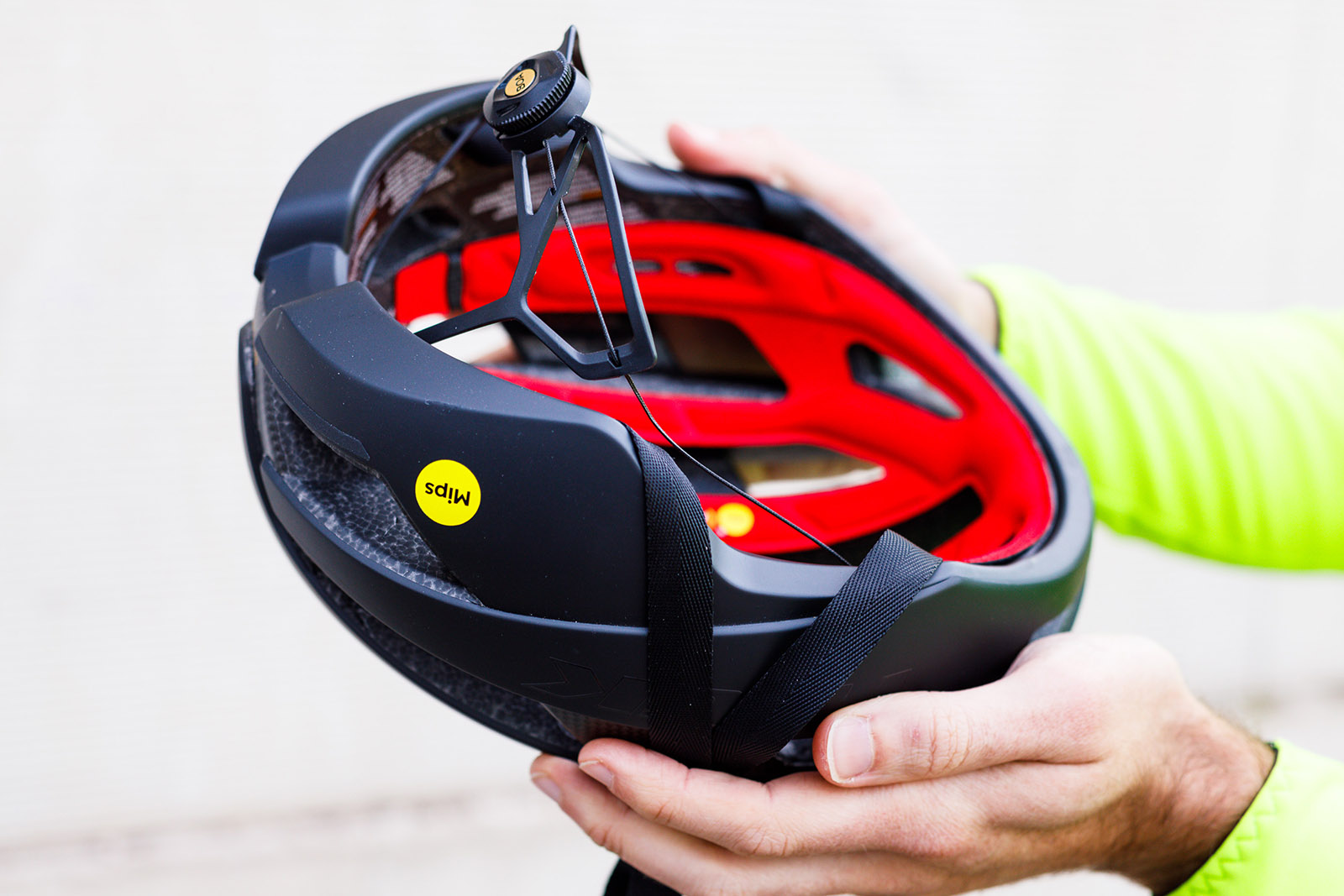
MIPS is a common sight on many of the best helmets. Simon von Bromley / Our Media
If this all sounds familiar, that’s probably because RLS protects against the same kind of impacts as MIPS.
Short for ‘Multi-directional Impact Protection’, MIPS is also a helmet ‘ingredient’ technology, which protects against rotational impacts. The small yellow dot marking that a helmet has the technology has become commonplace across the best road bike helmets, mountain bike helmets and even budget helmets.
Many of the safest cycling helmets tested by the HEAD Lab at Imperial College London include MIPS, but RLS aims to distinguish itself from technologies such as MIPS.
“Some technologies, such as MIPS, aim to mitigate these rotational forces by allowing the helmet to rotate independently from the skull. These technologies, which are generally located on the inside of the helmet, offer a limited range of motion during the critical milliseconds of an impact,” says RLS.
“RLS addresses rotational motion through the free-release of panels located on the outside of the helmet,” it adds.
How safe is RLS?
A helmet with RLS rotational impact protection technology. RLS
Independent testing by the biomechanics research centre ICUBE at the University of Strasbourg reveals that RLS could play a part in reducing TBI.
ICUBE found that helmets with RLS reduced the peak rotational velocity by an average of 56–66 per cent across different impact locations, compared to helmets without the technology.
“This corresponds to a 68–84 per cent reduction in the probability of brain injury as estimated by the Abbreviated Injury Scale – Level 2,” says RLS.
Where can we expect to see RLS?
The first helmet you’ll be able to buy with RLS will be the Canyon Deflectr Trail Helmet, due for release this autumn.
Canyon has been working closely with RLS to build the technology into its forthcoming helmet. RLS says that as a result of the technology, the Deflectr Trail Helmet is already number one on the Virginia Tech helmet safety ratings, as of September 23.
Cook says: “RLS is first and foremost designed to protect what makes you, you. Your memories, your personality, your loves and hates are all in the most fascinating part of the body – the brain – and RLS has been developed to protect what matters most.
“We are incredibly excited to launch this technology today, especially with our launch partners at Canyon as we share a passion for safety and disruption technology.”
RLS says it will reveal further brands and partners that will incorporate the technology over the coming months.
Apple announced its next slate of immersive films for Vision Pro, coming from Audi F1 Project, the BBC, CANAL+, CNN, HYBE, MotoGP, and Red Bull.
The company says its next batch of immersive documentaries are set to launch in the coming months alongside. There are however two new films available today: the next episode of Apple Immersive, and the Moto GP documentary Tour De Force, available on the Apple TV app for Vision Pro.
Here’s the full rundown of what to expect:
Apple Immersive Episodes: New episodes from Apple, including the latest episode of Wild Life, which features young orangutans at a rehabilitation center in Borneo. Now available on Apple TV app. In the next episode of the aerial travel series Elevated, Tim Robbins guides viewers above Maine, sweeping over the state’s nature. Coming October 3rd.
Image courtesy Apple
Tour De Force from CANAL+ and MotoGP: A new immersive documentary that follows MotoGP rider Johann Zarco through his victory in the rain during the French Grand Prix at Le Mans in May. CANAL+ used four URSA Cine Immersive cameras affixed to a mix of pedestals and Steadicams, which were paired with ambisonic microphones to capture Apple Spatial Audio. Now available on Apple TV app.
World of Red Bull: A new series of immersive experiences for Vision Pro, starting with ‘Backcountry Skiing’, featuring the world’s top freeskiers taking on the wilderness of Revelstoke, British Columbia. Coming in December. In the next episode, ‘Big-Wave Surfing’, viewers follow elite surfers off the remote coast of Teahupoʻo, Tahiti. Coming in 2026.
Image courtesy Apple
A Night at the BBC Proms: The film takes you to BBC Proms, the classical music festival taking place at the Royal Albert Hall, where you meet pianist Lukas Sternath for his debut performing Edvard Grieg’s Piano Concerto in A minor with the BBC Symphony Orchestra and their chief conductor, Sakari Oramo. Coming this Fall.
Julaymba from PHORIA: Vision Pro users can step into the heart of the lush Daintree Rainforest of North Tropical Queensland, Australia. Meet the Eastern Kuku Yalanji people and an Elder who tell stories and perform ceremonies. See waterfalls, glowing fungi, and hear the calls of cassowaries. Coming this October.
Experience Paris by The Explorers: An immersive film from The Explorers that celebrates French heritage. Step into a three-Michelin-star kitchen, ascend to breathtaking heights atop the city’s most iconic tower, and experience the timeless charm of Montmartre’s historic streets. Coming this Fall.
Image courtesy Apple
CORTIS (Color Outside The Lines) from HYBE: CORTIS, the newest K-pop boy band from BIGHIT MUSIC, gives you peek at raw, unseen moments in the group’s practice room, where the choreography for their introductory track, “GO!”, comes to life. Coming this Fall.
Journey to Antarctica to Find Emperor Penguins with CNN: CNN’s chief climate correspondent, Bill Weir, joins a scientific expedition to Antarctica, who takes you to meet with emperor penguins emerging from winter with newborn chicks on Snow Hill Island. Weir discusses the impact a warming climate and receding sea ice are having on penguin populations along with researchers, who talk about the challenges of conducting their vital work. Coming Spring 2026.
– – — – –
Users will find all of the exclusive immersive content above when they launch on the Apple TV app for Vision Pro.
Palworld is getting as spinoff that looks both cozy and terrifying — oh, and filled with characters that look exactly like Pokémon. In Palworld: Palfarm, you move to the Palpagos Islands and create a farm alongside Pals. These creatures help with farm work, cook and can even become friends.
According to an announcement on Steam, “Through daily conversations, working together, or giving gifts from time to time, you can gradually deepen your relationships with both the Pals and the people of the island.” Pocketpair, the developer behind both games, adds that they might even play matchmaker — a brand new trailer shows Pals officiating at a human wedding. Notably, the game also supports multiplayer.
However, the game certainly seems to have an air of darkness. For starters, there’s this note in the description: “…Is one of your Pals slacking off? Time to teach them the joy of working.” Ominous, to say the least. Then there’s “nasty Pals,” who will try to raid your farm and must be beaten in combat.
Darkest of all is a black market that sells guns, among other suspicious items. What you would need a gun for in this game is something you can choose to find out, but it certainly seems like the Palpagos Islands are a mixed bag of a place.
This article originally appeared on Engadget at https://www.engadget.com/gaming/palworld-palfarm-might-be-the-creepiest-farming-game-ever-123049220.html?src=rss
Samsung has made a habit of releasing a handful of phones in its Galaxy S line each year, but the Galaxy S25 Edge is something different. Announced alongside the S25, S25+, and Ultra in January, the Edge is thinnest Galaxy S phone yet. Right now, the 256GB model is marked down to $699.99 on Amazon (its lowest price ever, according to price trackers), which makes it the most affordable entry in Samsung’s flagship lineup.
At just 0.23 inches thick, it feels noticeably slimmer in the hand without sacrificing stability. The titanium frame, paired with Gorilla Ceramic 2 on the front and Gorilla Glass Victus 2 on the back, keeps it durable, while the IP68 rating means it will survive dust and water exposure.
What makes the Edge appealing is that it matches the rest of the series in performance, despite its slimmer build and smaller 3,900mAh battery. The Qualcomm Snapdragon 8 Elite for Galaxy chip and 12GB of RAM ensure smooth multitasking, whether that’s gaming at 60fps or editing 8K video. Even with the smallest battery of the family, the Edge outlasts its siblings, lasting over 16 hours in PCMag’s video streaming tests—longer than the S25, S25+, and Ultra. Plus, the 6.7-inch Dynamic AMOLED display is bright and sharp at 3,120 by 1,440 pixels, with a 120Hz refresh rate that makes scrolling and gaming feel fluid.
To round it all off, Samsung’s Galaxy AI features and One UI 7 on top of Android 15 add extra polish, and the seven years of promised updates also mean the phone will stay relevant for a long time. Still, the Edge doesn’t check every box. Unlike the S25+ or Ultra, it skips a telephoto camera, limiting zoom to 2x optical-quality and 10x digital. The stereo speakers sound thin, and charging tops out at 25W wired—half the speed of its siblings. If those details matter, the S25+ at $899.99 or the Ultra at $1,075 are stronger fits. But if you want a slim, premium Android phone that balances power, battery life, and future-proof software, the Galaxy S25 Edge makes a strong case, especially at this price.
The Steam Deck is already one of the best bangs for buck in the PC gaming handheld space and the value proposition just got even better with Valve’s steep discount in play. For a limited time, the base Steam Deck is is 20% off for a low $319.20. The question is, should you bite now that the handheld gaming space is much more crowded than when
Beat Saber’s latest Shock Drop is Gabriela, a TikTok-viral song by girl group Katseye.
The international girl group, composed of members from the US, South Korea, Switzerland, and the Philippines, formed in the YouTube reality show Dream Academy in 2023.
Their new single Gabriela is popular on Spotify, and widely used on TikTok. It’s essentially a Gen Z take on songs like Dolly Parton’s Jolene, and now it’s Beat Saber’s latest ‘Shock Drop’.
0:00
/0:37
Gabriela is available for $1.99 in Beat Saber on the Meta Horizon Store for Quest headsets and Steam for PC VR.
It’s also the third Beat Saber track that you won’t find on PlayStation VR and PS VR2, as Meta announced in June that it would no longer release new content for Sony’s platform.
DJI might be an innovative company, but it has been playing catch-up to rival Insta360 in the action cam world. A perfect example of that is its latest product, the Osmo Nano ($299). It follows a path Insta360 paved with its tiny Go Ultra and Go 3S, which let you separate the cam from the display to shoot with the least weight possible. Like those, the Nano’s tiny camera can be detached from the screen and easily worn to record activities ranging from extreme watersports to cat cam videos.
The Osmo Nano isn’t quite a copy-paste of its rival, though. Rather than inserting the camera into the flip up screen housing like the Go Ultra, the Nano’s screen magnetically clips to the bottom of the camera so you can point it forward to capture action or backward for vlogging. While it still lags behind its rival in some areas, DJI’s Osmo Nano is a solid first attempt at a mini-sized camera thanks to its excellent video quality.
A small size designed for daily activities
With its lightweight detachable camera that can be clipped to your head or worn on your body like a pendant, the Nano can be used in everyday activities like hiking or swimming — with the latter possible thanks to its 33 foot (10 meter) underwater rating. It’s also small enough to be attached to kids and pets to create a visual journal of their activities. At the same time, when attached to the Vision Dock that houses the screen, the Nano functions like a normal action camera.
With that in mind, size is key. The Osmo Nano camera is built from lightweight translucent plastic and weighs just 1.83 ounces (52 grams) by itself. That’s about the same as the Insta360 Go Ultra but a touch heavier than the Go 3S. Its capsule-like shape is similar to the Go 3S (but a bit bigger), while the Go Ultra is more rounded. All of that is to say that the Nano is incredibly small and light compared to a GoPro Hero 13 or DJI’s Action 5 Pro — I barely felt it when using the new headband accessory
They attach together in two ways, with the screen facing either forward or backward, using DJI’s magnetic mount that it’s used for a few years now. Together they weigh 4.37 ounces, still less than a regular action camera. The Vision Dock can wirelessly control the camera without being connected, to a distance of 33 feet. The mount also allows the Nano to connect to DJI’s family of accessories, including a new hat clip and lanyard.
Steve Dent for Engadget
During my testing, the camera and module were easy to connect in either direction thanks to the magnets and latches. To switch from vlogging to the front view, though, you need to detach and reconnect the Vision Dock. Insta360’s system is better, as it just takes a flip of the X5’s screen to change modes.
The difference in camera module sizes can be explained by the sensors. Where the Go 3S has a small 1/2.3-inch sensor, both the Nano and Go Ultra have larger 1/1.3-inch sensors that take up more space but work better in low light. As for optics, the Nano uses an ultra wide angle lens with a 143-degree field of view, giving you the ability to switch between ultra wide and dewarped (square) video. The Go Ultra is slightly wider at 156 degrees, while the Go 3S’s FOV is 125 degrees. I found the Nano’s field of view to be an ideal compromise between the two.
Controls and features
The only physical control on the Nano is the record/power button, with the Vision Dock holding everything else. DJI’s typical screen swiping and tapping actions are used to select things like voice control and screen brightness, along with video resolution, frame rate, RockSteady stabilization and D-LogM capture. Once you get used to swiping and tapping on such a small display, these menus are responsive and let you change settings quickly. However, the navigation isn’t particularly intuitive so settings require some time to learn.
As with other recent DJI products, the Osmo Nano has generous built-in memory, with 64GB (transfers at 400 MB/s) and 128GB (at 600 MB/s) options. Note that those speeds don’t affect video quality; they’re only the rates at which you can transfer footage to your PC. This internal memory is convenient as it means you don’t need to dig around for a microSD card and it makes offloading faster. That said, it’s nice to have a microsSD slot as well — the Go Ultra only has a microSD storage option, and the Go 3S only has internal memory.
Each module has its own non-removable battery with 530mAh and 1,300mAh capacities for the camera and Vision Dock respectively. Those allow operating times of up to 90 minutes for the camera alone, or 200 minutes when paired with the screen module, according to DJI. In comparison, Insta360’s Go Ultra camera can run for 70 minutes or a maximum of 200 minutes when docked to the display.
Steve Dent for Engadget
Note that those specs only apply when recording in 1080p at 24p. When shooting with the Nano at a more typical setting of 4K 60p, I found that battery life was less than half that, around 35 minutes for the camera alone. However, that rose to 49 minutes when using DJI’s endurance mode, with RockSteady stabilization enabled but Wi-Fi turned off. I also noticed that when I shot in 4K at 50p or higher with the camera alone, it shut down after 20 minutes of continuous recording due to overheating.
The Nano’s camera has no USB-C input so it must be connected to the docking station for charging. However, the docking station alone can fast charge the Nano camera to an 80 percent battery in 20 minutes. It takes about 20 minutes to charge both devices together to 80 percent, and 60 minutes for a full charge — 20 minutes more than the Go Ultra.
Other key features include voice and gesture control (tapping or nodding) to start recording, timelapse and Pre-Rec to save footage taken just before the record button is pressed. Insta360’s Go 3S does have a couple of features not found on the Nano, namely Find Me for iPhone if it’s lost and Dolby Vision HDR support.
The Nano can also be controlled using the DJI Mimo smartphone app, though the Vision Dock’s remote control makes that unnecessary most of the time. That app also lets you edit video, but Insta360’s Studio app is superior for that thanks to its more complete editing toolkit and Shot Lab AI module that lets you do some neat effects with little-to-no work required. DJI is definitely well behind its rival in this area.
Video and image quality
A big selling point of the DJI Nano is that it produces high-quality video with faster frame rates than rival cameras. You can capture 4K at up to 60 fps, or 120 fps in slow motion mode, compared to just 4K 30 fps for the Go 3s. It also supports full sensor 4:3 4K video at up to 50 fps. The Go Ultra maxes out at 60 fps at 16:9 4K and 30 fps at 4:3 4K.
Thanks to the big 1/1.3-inch sensor, video is bright and sharp straight out of the camera when shooting in daylight. DJI has improved the color performance compared to its older products, with hues that are more natural. Where sharpening was overly aggressive on models like the Action 5 (which makes video look artificial) DJI has toned that down on the Osmo Nano. And if you don’t like the default application, you can change it in the settings.
Like the Action 5 Pro, the Nano can shoot video with 10-bits of color in both D-LogM and regular modes. The latter gives users extra dynamic range without having to mess with tricky log settings. My preference is still to shoot D-LogM then apply DJI’s LUT in post. That yields more natural colors and gives you up to 13.5 stops of dynamic range in challenging lighting conditions, like tree-lined trails on a sunny day.
The larger sensor also makes the Osmo Nano superior to the Go 3S and about equal to the Insta360’s Go Ultra in low light. When I shot nighttime cityscapes and in indoor bars, it delivered clean video with relatively low noise. For even lower light situations, both the Nano and Go Ultra have night shooting modes called SuperNight and PureVideo, respectively. Both work well if you don’t move the camera too fast, due to the fact that they combine multiple frames into one. If I moved the camera too rapidly, it caused motion blur and other issues. The Insta360 Go Ultra is slightly better in this regard.
DJI’s RockSteady 3.0 reduces camera shake in normal daylight shooting conditions, though it’s not quite up to GoPro’s canny smoothing algorithms. When I tested it while walking, stabilization fell apart a bit in night shooting due to the lower shutter speeds, with noticeable blur and pixelization over sharp jolts and bumps. To avoid that, it’s best to boost the ISO level and shutter speed manually. The company’s HorizonBalancing, meanwhile, reliably corrects tilting up to 30 degrees to keep video level.
As with DJI’s other recent action cams, the Osmo Nano connects to the company’s Mic 2, Mic 3 and Mic Mini via its proprietary OsmoAudio direct connection. That offers higher quality and a more reliable connection than Bluetooth, while allowing you to use two mics at the same time for interviews or multiperson action scenarios. The Nano also has dual built-in microphones for stereo recording, but in my testing, the tinny audio was only good enough for ambient sounds and not voices.
Wrap-up
Steve Dent for Engadget
It’s interesting to watch DJI try to catch up to another company for a change. With the Nano, it leaned on its camera experience and mostly matches or beats its main rival in terms of video quality. However, the company is still lagging behind in a few areas, particularly its editing app — something that’s important for many creators.
DJI seems to be aware of that and priced the Nano much cheaper than rivals. The Nano costs $299 (€279 and £239 in Europe) for the 64GB combo and $329 for the 128GB combo (€309/£259), both of which include the Vision Dock, magnetic hat clip, magnetic lanyard, protective case, high-speed charging cable and dual-direction magnetic ball-joint adapter mount. That compares to €429 for the Insta360 Go Ultra, which has no built-in memory and includes fewer accessories, and €400 for the Go 3S with 128GB of internal storage.
Update September 23, 2025 at 8:50AM ET: The review has been updated to reflect US availability.
This article originally appeared on Engadget at https://www.engadget.com/cameras/dji-osmo-nano-review-high-quality-video-in-a-truly-tiny-action-cam-120040319.html?src=rss
Certifications from Red Hat, Oracle and SUSE are tailored to environments where those Linux distributions are prevalent. Vendor-neutral certifications emphasize core Linux principles applicable across distributions, making them versatile for beginners or those in multi-vendor settings.
After the proclamation of a TikTok ban, which fizzled out, during President Trump’s first term, the idea of a TikTok lockout across the US was back on the table when he returned for a second presidency.
Now, after too much will-they-won’t-they, White House press secretary Karoline Leavitt said a TikTok deal is expected to be signed “in the coming days.” This follows President Donald Trump posting an update on Friday that did little to clarify what the deal actually is.
Trump said both that the two had “made progress” on “approval of the TikTok Deal” and that he “appreciate[s] the TikTok approval.” Trump also told reporters in the Oval Office “he approved the TikTok deal,” according to Reuters.
During an appearance on Fox News’ “Saturday in America” the following day, Leavitt added the deal would mean that “TikTok will be majority owned by Americans in the United States.” She added: “Now that deal just needs to be signed, and the president’s team is working with their Chinese counterparts to do just that.”
The proposed terms reportedly include a brand new app for TikTok’s US users, which will continue to use ByteDance’s technology for its algorithm, US investor control and a multibillion-dollar payday for the Trump administration. But several days later, nothing is yet official.
With a straightforward process to replace batteries.
The new iPhone Air got a provisional 7 out of 10 in iFixit’s teardown critique. As seen in the repair company’s teardown, the iPhone Air’s battery can be easily swapped, has a modular USB-C port and works with day-one repair guides. Apple kept the same battery design introduced with the iPhone 16 lineup, which switched to an electrically released battery adhesive for easier, more clinical removal. Oh, another fun find: iFixit discovered the iPhone Air’s battery is the same cell found in the accompanying MagSafe Battery accessory. iFixit likened it to a “spare tire.”
The Mandalorian and Grogu follows on from the events of Disney+ series The Mandalorian — a show that director Jon Favreau created — and the fall of the Empire in Return of the Jedi. It’s set to hit theaters on May 22, 2026. The trailer does make it seem like the movie will retain the playfulness of The Mandalorian. During the short teaser, Grogu uses the Force to try to steal a snack from Sigourney Weaver’s character, only to be denied. Poor Grogu.
It might be due to the eye-catching edges of the camera unit.
iFixit
Careful, there may be a potentially scratch-prone iPhone 17 models. According to a Bloomberg report, those demoing the latest iPhone in-store noticed the iPhone 17 Pro in Deep Blue and the iPhone Air in Space Black models already had very noticeable scratches and scuffs. In a video by JerryRigEverything, the YouTuber puts the iPhone 17 models to the test with razor blades, coins and keys. The video highlights the edges of the iPhone 17 Pro’s back camera housing as particularly prone to scuffing since the colored aluminum oxide layer from the anodization process tends not to stick to sharp corners.
A set of 13 patches were posted today to the Linux kernel mailing list for optimizing the online defragmentation handling by the EXT4 kernel driver. The online defragmentation improvements for EXT4 can net a nice performance win with a very significant improvement in a variety of scenarios…
Merged to Mesa 25.3-devel on Monday is SPIR-V shader replacement support as a new feature for helping Mesa’s Vulkan drivers in testing and debugging issues…
Bang & Olufsen has launched a new pair of earbuds that could cost more than your phone or your laptop. The Beo Grace, as the model is called, will set you back $1,500, £1000 or €1200, depending on where you are. It has a silver aluminum casing with a pearl finish, which you can protect with a bespoke leather pouch, though the accessory will cost you an additional $400. The company says Beo Grace was “inspired by the elegance of fine jewelry,” with aluminum stems reimagined from its iconic A8 earphones. Bang & Olufsen’s A8 had stems made of metal, as well, but they transition into ear hooks that enable a more and secure and snug fit.
The earphones, the audio manufacturer explains, were “inspired by the acoustic principles” of the $2,200 Beoplay H100 headphones. Beo Grace has Spatial Audio and is optimized for Dolby Atmos, with an Adaptive Active Noise Cancellation technology that’s “four times more effective” than the manufacturer’s previous best earbuds. Specifically, its ANC tech is powered by six studio-grade microphones and can adjust itself in real time, based on the ambient noise. The model comes with tactile controls, so that every press to pause, play or skip is “crisp, deliberate and satisfying,” but you will be able to adjust the volume by simple tapping. When it comes to battery life, the Beo Grace can last up to 4.5 hours of listening with ANC, and up to 17 hours with the charging case.
Beo Grace is now available for pre-order from the Bang & Olufsen website and will be widely available on November 17. The model comes with a three-year warranty, so you at least know that the company will fix your $1,500 earbuds if they break in the near future.
This article originally appeared on Engadget at https://www.engadget.com/audio/headphones/bang–olufsens-beo-grace-earbuds-will-cost-you-1500-103012904.html?src=rss
Beyond the continued flow of new performance optimizations via hand-written Assembly, with the FFmpeg project it’s also interesting to monitor their ever-expanding scope of supported audio/video formats. The newest to land in FFmpeg Git is support for AHX audio files…