Curious to see if those Forza Horizon 6 rumors are true? You may not have long to wait. Xbox’s presentation at the Tokyo Game Show 2025 is fast approaching. You can watch the event live right here on September 25 at 6AM ET.
Forza Horizon 6 is rumored to have a Japan setting, making this week’s event a logical venue for its announcement. That’s not the only thing to go on. Windows Centralreported last month that it had seen official documentation suggesting the game would be announced at the Tokyo Game Show. An Xbox executive producer even posted earlier this month that it would be an event “you don’t want to miss.” (Am I sadistic for hoping he was hyping up something like a new Xbox dashboard feature?)
The Xbox brand could use some positive mojo. Last week, Microsoft announced that it would raise console prices for the second time in less than five months. The increase, which begins on October 3, was “due to changes in the macroeconomic environment.” (That sounds like a copywriter’s answer to “How do you say ‘tariffs’ without actually saying ‘tariffs?'”) It’s all the more reason the company would love to shift your focus to something fun.
You can stream Microsoft’s event below on September 25 at 6AM ET.
This article originally appeared on Engadget at https://www.engadget.com/gaming/xbox/how-to-watch-xboxs-tokyo-game-show-livestream-204657743.html?src=rss
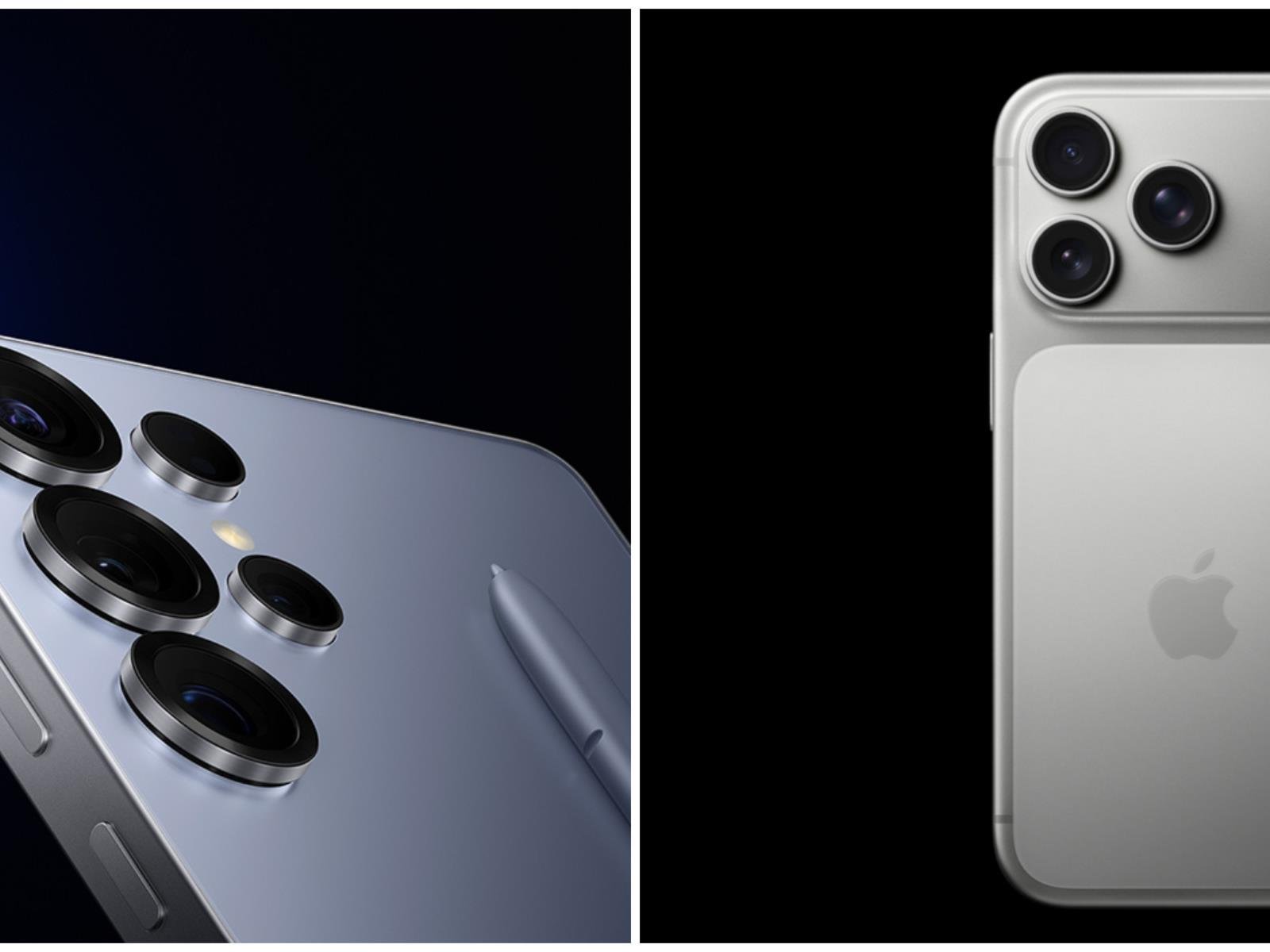
The iPhone Air and Samsung Galaxy S25 Edge are getting most of the attention this year thanks to their ultra-thin designs and powerful hardware. Though, those looking for the ultimate smartphone experience will still need to pick up either the iPhone 17 Pro Max or the Samsung Galaxy S25 Ultra. Here’s what both devices bring to the table.
With the launch of the ROG Xbox Ally only a few weeks away on October 16, the fantasy of a portable Xbox is about to be a lot more real. As a recent video from YouTuber James Channel shows, though, with a first-generation Xbox and the right components, you can make your own version of an Xbox handheld right now. Just don’t expect it to be pretty.
James’ “portable monstrosity” strips away the original Xbox’s large plastic casing and thick internal cables and preserves the bare essentials: a motherboard and the console’s disk drive, with a new flash drive and a display from an iPod video accessory. All those components are precariously mounted between the left and right halves of an Xbox controller, for a complete package that seems less easy to hold than ASUS’ current handheld PCs, but only marginally so. It’s a quick and dirty assembly with a surprising amount of super glue — a far cry from the polished Xbox 360 handheld created by YouTuber Millomaker — but it gets the job done.
You can already stream Xbox games to a multitude of screens, or play their PC versions on a growing number of handheld PCs. You don’t need to turn an original Xbox into a portable device, but considering Microsoft and ASUS have yet to announce pricing for their new handhelds, maybe keep this cheaper alternative in your back pocket.
This article originally appeared on Engadget at https://www.engadget.com/gaming/xbox/theres-more-than-one-way-to-make-an-xbox-handheld-201503415.html?src=rss
Pimax says Dream Air and Dream Air SE are now delayed to at least December, but promises the former will have the widest FOV of any micro-OLED headset.
Pimax announced Dream Air at the very end of last year, and the cheaper Dream Air SE back in May. Pimax claims they will be sub-200-gram tethered PC VR headsets with micro-OLED panels, eye tracking, and integrated audio. Dream Air is set to feature 4K panels, while Dream Air SE will have 2.5K panels and less advanced lenses.
Pimax plans two variants of each, with inside-out computer vision or SteamVR “Lighthouse” base station tracking, for a total of four models.
The Dream Air lineup is also set to introduce a completely unique feature we haven’t yet seen on another headset: a motorized self-tightening head strap, similar to Nike’s self-lacing shoes. Combined with automatic IPD adjustment, Pimax claims this will let buyers quickly and easily put on the headsets with no need to manually adjust anything at all.
What Is Pimax?
Pimax is a China-based VR headset company best known for its 2017 Kickstarter for an ultra-wide field of view PC-based headset, but in recent years it has mostly shifted focus from field of view to resolution.
Crystal Light is priced at $700 and offers 2880×2880 QD-LCD displays, while Crystal Super is priced at $1800 and has 3840×3840 QD-LCD displays with local dimming and integrated eye tracking, as well as wider field of view lenses.
Pimax is using an updated “Pimax Prime” financing system for both devices, wherein you make an initial payment of roughly two-thirds of the price to try the headset for 14 days, after which, should you choose to keep it, you pay the remainder. If you don’t want to keep it, you can return it for a refund.
Note that UploadVR still hasn’t tried a functional prototype of Dream Air, and all the images in this article are renders provided by the company.
Further Delay To December, At Best
When first announcing Dream Air, Pimax claimed it would ship in May. However, repeating its long history of repeatedly failing to meet its deadlines, when May arrived the company revealed a delay to “August or early September”.
Pimax Dream Air SE
Bigscreen Beyond 2
Pixels Per Eye
2560×2560
2560×2560
Field of View
110°
108°
Visor Weight
~140 grams
107 grams
IPD
Automatic
Manually Adjustable
Eye Tracking
✅
+$200 (Beyond 2e)
Strap
Self-Tightening Soft Strap
Soft Strap
Speakers
✅
$130 addon
Price
$900 (Lighthouse)
$1200 (SLAM + Controllers)
$1020 (Lighthouse)
Released
❌
✅
Now that early September has passed, Pimax says that the SteamVR Tracking variants of Dream Air and Dream Air SE will actually start shipping from December, while the inside-out computer vision tracking models won’t ship to customers until next year.
‘ConcaveView’ Lenses & Price Hike
Pimax now claims that the higher-end Dream Air model will have the widest field of view of any headset that uses micro-OLED panels.
While micro-OLED allows for compact headsets with high resolution, punchy colors, and excellent contrast, including true blacks, the small panels are much harder to magnify over a wide field of view.
Pimax calls the lenses it developed for Dream Air ‘ConcaveView’, and as the name suggests, they feature a highly concave shape. This has two advantages: it both takes in light at steeper angles, and lets your eyes get closer to the lens without your eyelashes touching. Both factors improve the field of view.
Pimax is not the first company to take this approach. Apple Vision Pro also features concave pancake lenses.
Pimax Dream Air
Shiftall MeganeX superlight
Pixels Per Eye
3552×3840
3552×3840
Field of View
110°
90°
Visor Weight
~170 grams
185 grams
IPD
Automatic
Manually Adjustable
Diopter Adjustment
❌
✅
Eye Tracking
✅
❌
Strap
Self-Tightening Soft Strap
Forehead Pad + Soft Strap
Speakers
✅
❌
Price
$2000 (Lighthouse)
$2300 (SLAM + Controllers)
$1900 (Lighthouse)
Release
❌
✅
According to Pimax, Dream Air achieves 110° horizontal field of view, which if true, would indeed be the widest yet for a micro-OLED headset.
The current shipping widest is Bigscreen Beyond 2, which, for comparison, claims 108° horizontal.
This increased field of view is coming alongside a price hike, however. For new orders of Pimax Dream Air, the price is $2000 for the SteamVR “Lighthouse” tracking model or $2300 for the computer vision tracking model.
Caution Still Recommended
As always, with the company’s long history of repeatedly failing to meet its deadlines and of shipping products without promised features, we strongly recommend exercising caution by waiting for reviews of the final hardware before placing a preorder for any Pimax headset yet to ship.
It’s not exactly hard to find politically conservative content on YouTube, but the platform may soon skew even further to the right. YouTube parent Alphabet has confirmed that it will restore channels that were banned in recent years for spreading misinformation about COVID-19 and elections. Alphabet says it values free expression and political debate, placing the blame for its previous moderation decisions on the Biden administration.
Alphabet made this announcement via a lengthy letter to Rep. Jim Jordan (R-Ohio). The letter, a response to subpoenas from the House Judiciary Committee, explains in no uncertain terms that the company is taking a more relaxed approach to moderating political content on YouTube.
For starters, Alphabet denies that its products and services are biased toward specific viewpoints and that it “appreciates the accountability” provided by the committee. The cloying missive goes on to explain that Google didn’t really want to ban all those accounts, but Biden administration officials just kept asking. Now that the political tables have turned, Google is looking to dig itself out of this hole.
An analysis of a literature database finds that text-generating AI tools — including ChatGPT and Gemini — can be used to rewrite scientific papers and produce ‘copycat’ versions that are then passed off as new research. Nature: In a preprint posted on medRxiv on 12 September, researchers identified more than 400 such papers published in 112 journals over the past 4.5 years, and demonstrated that AI-generated biomedicine studies could evade publishers’ anti-plagiarism checks.
The study’s authors warn that individuals and paper mills — companies that produce fake papers to order and sell authorships — might be exploiting publicly available health data sets and using large language models (LLMs) to mass-produce low-quality papers that lack scientific value.
“If left unaddressed, this AI-based approach can be applied to all sorts of open-access databases, generating far more papers than anyone can imagine,” says Csaba Szabo, a pharmacologist at the University of Fribourg in Switzerland, who was not involved in the work. “This could open up Pandora’s box [and] the literature may be flooded with synthetic papers.”
Amazon is pivoting its grocery operations in the UK, announcing that it will close 14 of its Amazon Fresh stores in the country. The remaining five Amazon Fresh locations in the UK will be converted to the Whole Foods Market brand. Rather than the brick and mortar shops, Amazon said it will focus on online grocery deliveries within the region. In 2026, the company said it expects to add perishables to its Same-Day Delivery orders for UK customers, which was just introduced in the US last month.
The move echoes a similar contraction in 2023, where Amazon said it would shutter both some Fresh supermarkets and some Go convenience stores. Many of these shops highlighted the Just Walk Out tech from Amazon, which it introduced in the US in 2018 and in the UK in 2021. Just Walk Out eliminated cashiers in those stores and instead charged customers by using a network of cameras, sensors and human observers to calculate the tab for a person’s purchase and then charge them afterwards. However, the approach turned out to have problems with cost, accuracy and privacy to the point of being unsustainable; Amazon stopped using Just Walk Out in the US last year.
This article originally appeared on Engadget at https://www.engadget.com/amazon-is-closing-all-fresh-grocery-stores-in-the-uk-195200222.html?src=rss
Federal Communications Commission Chairman Brendan Carr wants you to know that he never threatened to revoke TV licenses if Disney refused to suspend Jimmy Kimmel. The problem for Carr is that lots of people heard him do exactly that last week.
“There’s a lot of Democrats out there that are engaged in a campaign of projection and distortion,” Carr said during an on-stage interview at the Concordia Summit yesterday. “The distortion is they’re completely misrepresenting the work of the FCC and what we’ve been doing. I saw there’s a letter from some Senate Democrats that said the FCC threatened to revoke the license of Disney and ABC if they didn’t fire Jimmy Kimmel, and that did not happen in any way, shape, or form.”
While Carr complained that Democrats interpreted his comments as a threat to Disney, he didn’t mention that his comments were also interpreted as a threat by several prominent Senate Republicans. Disney suspended Kimmel’s show last week after Carr said ABC affiliates could have licenses revoked for “news distortion,” but reinstated Kimmel yesterday after facing backlash from the public. Kimmel will be back on the air on many ABC-affiliated stations, but not those run by Nexstar and Sinclair, which have replaced Jimmy Kimmel Live! with news and other programming.
Long-time contributor Ellen Davis steps down after GitHub access shake-up and governance disputeA decade-long RubyGems maintainer, Ellen Davis (also known as duckinator), has resigned from Ruby Central following what she described as a “hostile takeover” of the open source project.…
AI is an enormous energy drain, contributing to greenhouse gas emissions at a time when the planet desperately needs progress in the opposite direction. Although most of that comes from running GPUs, cooling them is another significant overhead. So, it’s worth noting when a company of Microsoft’s stature claims to have achieved a breakthrough in chip cooling.
Microsoft’s new system is based on microfluidics, a method long pursued but hard to implement. The company claims its approach could lead to three times better cooling than current methods.
Many data centers rely on cold plates to prevent GPUs from overheating. Although effective to a degree, the plates are separated from the heat source by several layers of material, which limits their performance. “If you’re still relying heavily on traditional cold plate technology [in five years], you’re stuck,” Microsoft program manager Sashi Majety is quoted as saying in the company’s announcement.
In microfluidics, the coolant flows closer to the source. The liquid in Microsoft’s prototype moves through thread-like channels etched onto the back of the chip. The company also used AI to more efficiently direct the coolant through those channels.
Microsoft
Another aspect separating this prototype from previous attempts is that it drew inspiration from Mother Nature. As you can see in the image above, the etchings resemble the veins in a leaf or a butterfly wing.
Microsoft says the technique can reduce the maximum silicon temperature rise inside a GPU by 65 percent. (However, that number depends on the workload and chip type.) This would enable overclocking “without worrying about melting the chip down,” Microsoft’s Jim Kleewein said. It could allow the company to place servers closer together physically, reducing latency. It would also lead to “higher-quality” waste heat use.
Although this sounds good for the environment in a general sense, Microsoft’s announcement doesn’t lean into that. The blog post primarily discusses the technique’s potential for performance and efficiency gains. Green benefits are only alluded to briefly as “sustainability” and reduced grid stress. Let’s hope that’s only a case of a cynical observer overanalyzing framing. Our planet needs all the help it can get.
This article originally appeared on Engadget at https://www.engadget.com/ai/microsoft-claims-a-breakthrough-in-ai-chip-cooling-193106705.html?src=rss
Let it never be said that tariffs don’t work. In a bid to avoid tariffs and satisfy customer requirements for “made in the USA” parts, MediaTek is purportedly pondering a deal with TSMC to have some of its chips created in TSMC’s fabs right here in the US of A. This news comes to us from Nikkei Asia, who reports that the $74.3B chipmaker hasn’t
Microsoft has successfully tested a microfluidic cooling system that removed heat up to three times better than cold plates currently used in datacenters. The technology etches tiny channels directly into silicon chips, allowing cooling liquid to flow directly onto the heat source. In lab tests announced September 23, 2025, the system reduced the maximum temperature rise inside GPUs by 65%. The channels, roughly the width of human hair, were optimized using AI to create bio-inspired patterns resembling leaf veins.
Microsoft collaborated with Swiss startup Corintis on the design. The cooling fluid can operate at temperatures as high as 70C (158F) while maintaining effectiveness. The company demonstrated the technology on servers running Microsoft Teams services, where the improved cooling enables overclocking during demand spikes that occur when meetings start on the hour and half-hour. Microsoft is investigating incorporating microfluidics into future generations of its first-party chips as the company plans to spend over $30 billion on capital expenditures this quarter.
If you’ll indulge me for a moment, here’s some ancient history.
In 2008, when Apple took the very first MacBook Air out of a manila envelope, it was not positioned as Apple’s new entry-level Mac laptop. The innovative but flawed system started at $1,799, far above the $999 price of the entry-level plastic MacBook and well into MacBook Pro territory.
In those early, formative years, the “Air” branding denoted not a midrange or entry-level model but an alternate branching path from the baseline MacBook. Paying Apple more money could get you more computer—the Pro model, with more processor, more screen, more storage, more everything—or it could get you a different kind of computer, with fundamentally different benefits and tradeoffs.
Channels once banned by YouTube for spreading false information regarding the COVID-19 pandemic or the 2020 election may soon have the opportunity to get their channels back, in a decision transparently courting “conservative voices.”
Alphabet, the parent company of Google and YouTube, has sent a letter via counsel to the House Judiciary Committee in which it alleges the company was pressured by the Biden administration to take down misinformation on YouTube related to the COVID-19 pandemic that did not violate the company’s existing policies at the time. It now describes the Biden administration’s actions as “unacceptable and wrong.”
It also informed the committee that YouTube would be offering a path to reinstatement for creators whose channels were banned for repeatedly violating community guidelines on election-integrity-related content, as well as for COVID-19-related content. The guidelines under which those bans were carried out were removed by the company in 2023 and 2024, respectively. Details on exactly what the path for reinstatement looks like were not shared.
“The COVID-19 pandemic was an unprecedented time in which online platforms had to reach decisions about how best to balance freedom of expression with responsibility,” the letter reads. “Senior Biden administration officials, including White House officials, conducted repeated and sustained outreach to Alphabet and pressed the company regarding user generated content related to the COVID-19 pandemic that did not violate its policies.”
Alphabet goes on to denounce any government attempts to “dictate how the Company moderates content,” and says it will always “fight against those efforts on First Amendment grounds.”
Notable YouTube channels banned for either COVID-19 or election-integrity-related content include Steve Bannon’s War Room, Co-Deputy Director of the FBI Dan Bongino’s channel and the channel for Children’s Health Defense, an organization previously linked with Secretary of HHS RFK Jr. “YouTube values conservative voices on its platform and recognizes that these creators have extensive reach and play an important role in civic discourse,” the company wrote. In its letter, Alphabet also expresses concern that the European Union’s Digital Services Act and Digital Markets Act could have a chilling effect on freedom of expression.
The letter was sent in response to subpoenas as part of the House Judiciary Committee’s ongoing investigations into alleged government-directed content moderation. The committee recently held a hearing on “Europe’s Threat to American Speech and Innovation,” among others.
This article originally appeared on Engadget at https://www.engadget.com/big-tech/youtube-may-reinstate-channels-banned-for-spreading-covid-and-election-misinformation-190257602.html?src=rss
Costco has reportedly stopped selling Xbox consoles online throughout the US and UK, according to reports by The Gamer and others. The wholesaler has removed any mention of the console and related accessories and games from its website. I checked this myself and, sure enough, the search yielded no results.
The site still has dedicated sections for both Sony and Nintendo and is selling the PS5 and the Switch family of consoles, along with accessories and games for each system. It’s unclear if online unavailability has extended to brick-and-mortar locations, but some Reddit users noticed a distinct lack of Xbox products at the retailer. We reached out to Costco to ask what’s going on and will update this post when we hear back.
Costco/Engadget
We don’t know why Costco would make this move, but there’s a chance this is in relation to Microsoft’s poor showing this console generation. The PS5 has sold nearly 80 million units, while the Xbox Series X/S has sold around 42 million units.
This article originally appeared on Engadget at https://www.engadget.com/gaming/xbox/costco-reportedly-stops-selling-xbox-consoles-online-184906670.html?src=rss
Pope Leo XIV declined to authorize an AI avatar that would have provided virtual papal audiences to Catholics worldwide. The first American pontiff rejected the proposal during an interview with papal biographer Elise Allen. “Someone recently asked authorization to create an artificial me so that anybody could sign onto this website and have a personal audience with ‘the Pope,'” he said. “This artificial intelligence Pope would give them answers to their questions, and I said, ‘I’m not going to authorize that.'”
The Pope expressed broader concerns about AI’s societal impact. He warned that automation could leave only a few people able to live meaningful lives while others merely survive. These concerns influenced his papal name choice, taking inspiration from Pope Leo XIII, who authored Rerum novarum addressing workers’ rights during the Industrial Revolution. Leo XIV maintained he isn’t opposed to technological innovation but believes links between faith, humanity, and science must be preserved.