Longtime Slashdot reader schwit1 shares a report from ICO Bench: As of September 1, 2025, banks across Vietnam are closing accounts deemed inactive or non-compliant with new biometric rules. Authorities estimate that more than 86 million accounts out of roughly 200 million are at risk if users fail to update their identity verification.
The State Bank of Vietnam has also introduced stricter thresholds for transactions:
– Facial authentication is mandatory for online transfers above 10 million VND (about $379).
– Cumulative daily transfers over 20 million VND ($758) also require biometric approval.
The policy is part of the central bank’s broader “cashless” strategy, aimed at combating fraud, identity theft, and deepfake-enabled scams. […] While many Vietnamese citizens have updated their biometric data without issue, the measure has disproportionately affected foreign residents and expatriates who cannot easily return to local branches and dormant accounts that had been left inactive for years. schwit1 highlights a post on X from Bitcoin expert and TFTC.io founder Marty Bent: “If users don’t comply by the 30th they’ll lose their money. This is why we bitcoin.”
Disney is raising prices again for Disney+, Hulu, and ESPN Select starting October 21, 2025, with most ad-supported tiers going up by $2-3 per month and bundles also seeing increases. It marks the third consecutive year of U.S. streaming price hikes. Variety reports: It’s that time of year again, apparently: Disney is raising the prices of its Disney+ and Hulu plans in the U.S., including most bundles, as of next month. The standalone Disney+ with ads service is rising from $9.99 to $11.99/month on Oct. 21, 2025, while the Disney+ Premium (without ads) is going from $15.99 to $18.99/month. The Hulu standalone plan with ads is increasing from $9.99 to $11.99/month as of the same date; the premium version of Hulu with no ads will remain at $18.99 per month.
In addition, the price of ESPN Select (the service formerly known as ESPN+, which has a more limited content lineup than the recently launched ESPN Unlimited all-in app) will increase from $11.99 to $12.99 per month on Oct. 21. For now, the introductory price of the Disney+, Hulu and ESPN Unlimited bundle with ads will remain $29.99 per month (for the first 12 months). It’s the third time in three years Disney is raising the prices of the streaming services in the U.S., after price hikes for Disney+ and Hulu in October 2024 and in October 2023. Disney provided notifications of the latest price hikes Tuesday on its customer support sites.
Hundreds of compromised packages pulled as registry shifts to 2FA and trusted publishingGitHub, which owns the npm registry for JavaScript packages, says it is tightening security in response to recent attacks.…
Microsoft is preparing a Publisher Content Marketplace to pay publishers when their work is used in AI products like Copilot. Neowin reports: Microsoft is reportedly discussing with select US publishers a pilot program for its so-called Publisher Content Marketplace, a system that pays publishers for their content when it gets used by AI products, starting with its own Copilot assistant. The PCM will launch with a limited number of partners before Microsoft hopes to expand the program over time. The company pitched the idea to publishing executives at an invite-only Partner Summit in Monaco last week. Microsoft was allegedly courting them with the message: “You deserve to be paid on the quality of your IP.” No concrete launch date for the pilot was shared.
As Axios notes, Microsoft is the first major company to try to build a proper AI marketplace for publishers. Other AI labs like OpenAI have mostly focused on securing one-off licensing deals instead of building a platform for ongoing transactions. Companies like Cloudflare are also working on a more technical, network-level solution to this problem.
This is a video of Mark Zuerkerbrek (if you spell his name wrong he can’t track you on Facebook) demonstrating the latest iteration of Meta’s AI-powered smart glasses during a developer event and the glasses failing to cooperate. In the first scene, he can’t manage to answer an incoming call. In the second, the AI fails to help another Meta employee make a Korean inspired steak marinade, skipping steps and all around being the worst kitchen helper of all time. And that’s saying something, because my sous chef doesn’t do anything but threaten to stab me if I ask for something.
An anonymous reader quotes a report from InsideEVs: On Monday morning, I spoke to a Volvo EX90 owner who reported a litany of issues with her 2025 EX90: malfunctioning phone-as-a-key functionality, a useless keyfob, a keycard that rarely worked quickly, constant phone connection issues, infotainment glitches and error messages. I was surprised not because I hadn’t heard of these kinds of problems, but because I experienced them myself over a year ago at the EX90 first drive again. At the time, Volvo said software fixes were imminent. Today, we know the issues go deeper. To solve them, Volvo announced on Tuesday that it will replace the central computer of every 2025 EX90 with the new one from the 2026 EX90. It’s a tacit admission that the company can’t solve the EX90’s issues while simultaneously launching its next-generation software-defined vehicles, and that it’s easier to replace the original computer than to build bug-free software for it. But for some, the damage to the Volvo brand has already been done. “I say without exaggeration that this car is a dumpster fire inside a train wreck,” InsideEVs reader and EX90 owner Sally Greer told InsideEVs.
The report notes that Volvo will replace the computer inside the 2025 EX90 with a Nvidia Drive AGX Orin-based core computer that has contains over 500 TOPS (Trillion Operations Per Second) of power, which Volvo says will help power its autonomous driving ambitions.
Hideo Kojima’s game studio is partnering with Niantic Spatial on… something.
Hideo Kojima, if you’re somehow unaware, is the legendary video game designer behind the Metal Gear franchise and Death Stranding series, while Niantic Spatial is the spatial technology spinoff of Pokémon Go developer Niantic. The Niantic Games business, including Pokémon Go, was sold to Saudi Arabia’s Scopely earlier this year.
Today, during a Kojima Productions event in Japan Beyond The Strand, celebrating 10 years of the studio, Niantic Spatial CEO John Hanke joined Kojima on stage to announce a partnership to “leverage Niantic Spatial’s geospatial AI technology to bring Hideo Kojima’s iconic storytelling into the real world “.
The two companies didn’t say exactly what they’re building together, but released a video teasing the partnership.
0:00
/2:12
The video is incredibly vague, with phrases like “a new dawn” and “move beyond the screen” overlaid on footage of an actor roaming various biomes and unlocking what look like digital collectables. The actor is wearing a pair of regular-looking glasses, and it’s not entirely clear whether they’re supposed to represent AR glasses.
The only real hints come from comments Kojima made on stage, and then later to IGN.
“Until now, we have been creating games that exist on screens. What John and the technology from Niantic Spatial make possible is to unleash those experiences into real-world experiences,” Kojima said on stage. “I’m excited to collaborate on creating experiences where you can climb real mountains while finding entertainment there, and connecting with real friends. I’m excited that we can create these new experiences together.”
“It’s like the real Death Stranding in the real world, and you can connect with people, or you can connect with the actual environment there in your city. Previously it was like virtual reality, but this time I’m thinking about connecting with the real environment”, he told IGN.
These comments seem to suggest the two companies are working on an outdoor AR game. But what form will this take, and on what platforms will it arrive?
There are no true consumer AR glasses available on the market today. Meta has shown off an unshippable prototype, but doesn’t plan to release its first true AR product until 2027. The only major company with plans that we’re aware of to release true AR glasses any time soon is Snap. But if it was for Specs, wouldn’t Snap be mentioned here?
That seems to leave two possibilities.
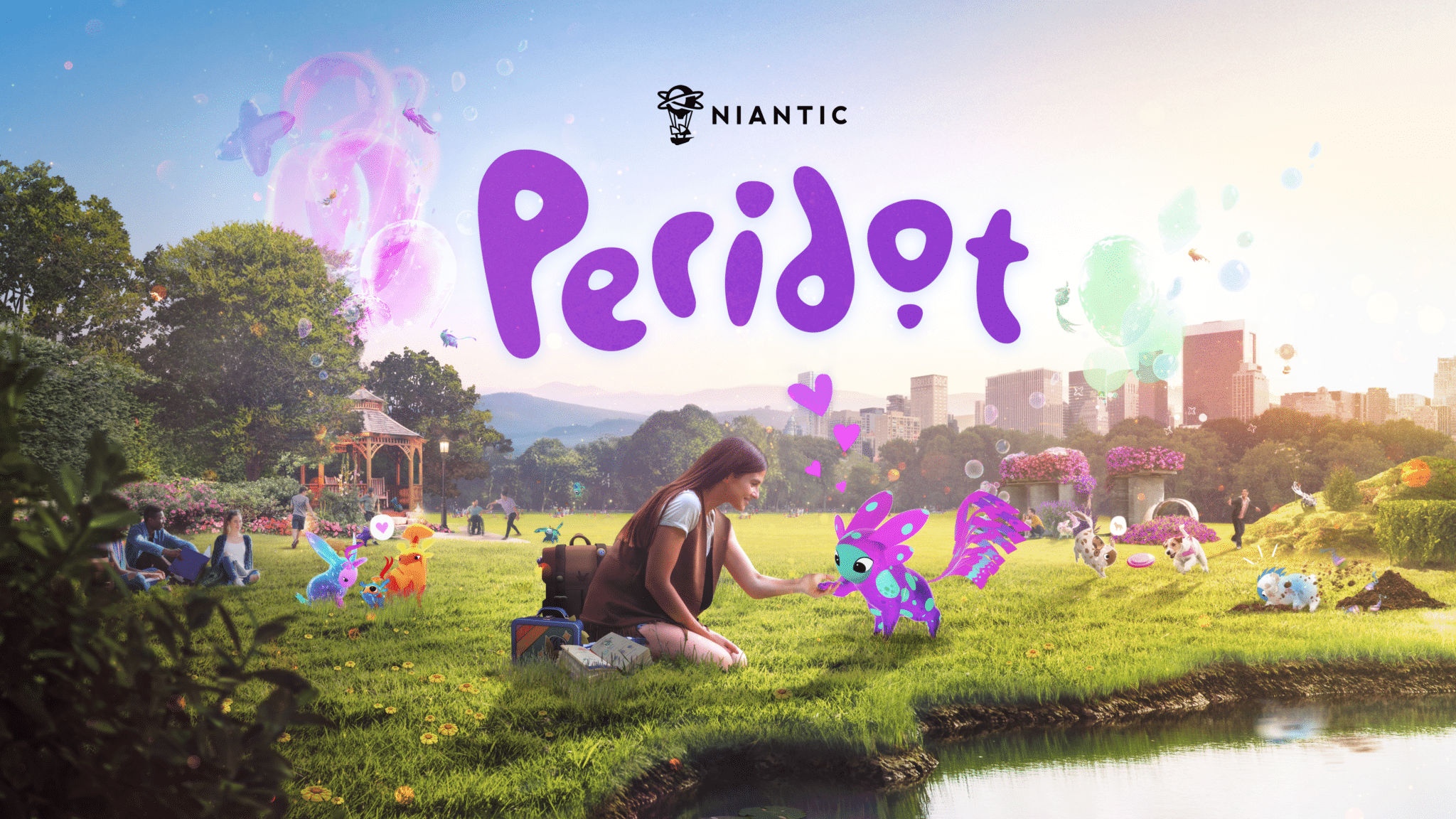
One is that this will primarily be a smartphone AR game, like Niantic Spatial’s current Peridot. It’s possible that the actor in the trailer simply wears glasses, and that this wasn’t meant to have a deep meaning.
The other is that this is just the initial announcement of a very long term partnership, one that will wait for AR glasses to be relatively widespread before releasing a product.
We’ll keep a close eye on Niantic Spatial and Kojima Productions for any further details in coming months and years.
MLB has approved the use of robot umpires in the 2026 season. According to ESPN, the system will give teams two challenges per game for balls and strikes where hitters, pitchers, and catchers can request reviews. From the report: Hitters, pitchers and catchers will be the only ones allowed to trigger the system by tapping their head, and if a challenge is successful — the pitch will be shown on in-stadium videoboards — teams will retain it. While the vote in favor of the automated ball-strike challenge system was not unanimous — some of the four players on the 11-man committee voted no, according to sources — the vote was a fait accompli, with MLB owners all in favor and in possession of a six-seat majority on the committee.
The ABS system uses similar technology to the line-calling system in tennis, with 12 cameras in each ballpark tracking the ball with a margin of error around one-sixth of an inch. The ABS zone will be a two-dimensional plane in the middle of the plate that spans its full width (17 inches). The zone’s top will be 53.5% of a player’s height and the bottom 27%. Teams that run out of challenges over the first nine innings will be granted an extra challenge in the 10th inning, while those that still have unused challenges will simply carry them into extras. If a team runs out of challenges in the 10th, it will automatically receive another in the 11th — a rule that extends for any extra inning.
During the league’s spring training test this season, teams combined to average around four challenges per game and succeeded 52.2% of the time, according to the league. Catchers, whose value in framing pitches outside the zone to look like strikes could take a hit due to the new rule, were the most successful at a 56% overturn rate, while hitters were correct 50% of the time and pitchers 41%. MLB’s minor league testing, which started in 2021, led to Triple-A players in 2023 using ABS challenge three days a week and a full ABS system, with every pitch adjudicated by computer, the other three.
Director Andy Muschietti’s two-film adaptation of Stephen King’s bestselling horror novel IT racked up over $1 billion at the box office worldwide. Now Muschietti is back with a nine-episode prequel series for HBO, IT: Welcome to Derry, exploring the origins of Pennywise the Clown (Bill Skarsgård), the ancient evil that terrorized the fictional town every 27 years. And now we have an official trailer a month before the prequel’s October debut.
(Some spoilers below for IT and IT: Chapter Two.)
As previously reported, set in 1989, ITessentially adapted half of King’s original novel, telling the story of a group of misfit kids calling themselves “The Losers Club.” The kids discover their small town of Derry is home to an ancient, trans-dimensional evil that awakens every 27 years to prey mostly on children by taking the form of an evil clown named Pennywise. Bill (Jaeden Lieberher) loses his little brother, Georgie, to Pennywise, and the group decides to take on Pennywise and drive him into early hibernation, where he will hopefully starve. But Beverly (Sophia Lillis) has a vision warning that Pennywise will return on schedule in 27 years, and they must be ready to fight him anew.
Google’s AI Mode is continuing its rapid global growth. Today, the company announced that this addition to Google Search is rolling out in Spanish. The new option is available in all countries that support AI Mode. The move will allow Spanish speakers around the world to engage with this AI chatbot in their language of choice when asking more complicated questions than a search engine can typically answer well.
The proliferation of this AI enhancement to Google’s traditional search has happened at a break-neck pace. AI Mode was first introduced in March and then made available across the US in May. The first language expansion came earlier this month with the addition of AI Mode in Hindi, Indonesian, Japanese, Korean and Brazilian Portuguese.
This article originally appeared on Engadget at https://www.engadget.com/google-ai-mode-now-speaks-spanish-223346697.html?src=rss
Apple has delayed the release of its new series The Savant just three days before it was supposed to premiere on September 26, Deadline reports. The series follows an investigator, played by Jessica Chastain, who infiltrates a domestic extremist group in the US. Apple hasn’t provided a new release date for the show.
“After careful consideration, we have made the decision to postpone The Savant,” the company shared in a statement to Deadline. “We appreciate your understanding and look forward to releasing the series at a future date.” The timing of the sudden delay, and the lack of explanation for why the company is delaying the show, could be telling. Disney made a similar knee-jerk reaction in placing Jimmy Kimmel Live! on indefinite hiatus following a joke Kimmel made about the reaction to the killing of right-wing activist Charlie Kirk.
Given that The Savant likely focuses on preventing acts of political violence, it might make you wonder who Apple is worried its show will offend. But it’s also entirely possible that the company is trying to avoid people making any kind of association between its TV show and a very public assassination.
Apple generally avoids rocking the boat whenever possible, particularly when it could hurt its business interests. The Problem With Jon Stewart was reportedly cancelled when Jon Stewart wanted to cover topics Apple deemed controversial, like China and artificial intelligence. Apple does business in China, so it seems likely the company was skittish about airing anything that could be viewed as criticism, even if having difficult conversations was the premise of Stewart’s show. The decision to pull The Savant, even if despite reading like the company is worried about offending right-wing extremists, was likely made from a similar place of caution.
This article originally appeared on Engadget at https://www.engadget.com/entertainment/streaming/apple-tv-indefinitely-delays-its-domestic-extremism-thriller-the-savant-223044979.html?src=rss
If an Iranian taxi driver waves away your payment, saying, “Be my guest this time,” accepting their offer would be a cultural disaster. They expect you to insist on paying—probably three times—before they’ll take your money. This dance of refusal and counter-refusal, called taarof, governs countless daily interactions in Persian culture. And AI models are terrible at it.
New research released earlier this month titled “We Politely Insist: Your LLM Must Learn the Persian Art of Taarof” shows that mainstream AI language models from OpenAI, Anthropic, and Meta fail to absorb these Persian social rituals, correctly navigating taarof situations only 34 to 42 percent of the time. Native Persian speakers, by contrast, get it right 82 percent of the time. This performance gap persists across large language models such as GPT-4o, Claude 3.5 Haiku, Llama 3, DeepSeek V3, and Dorna, a Persian-tuned variant of Llama 3.
A study led by Nikta Gohari Sadr of Brock University, along with researchers from Emory University and other institutions, introduces “TAAROFBENCH,” the first benchmark for measuring how well AI systems reproduce this intricate cultural practice. The researchers’ findings show how recent AI models default to Western-style directness, completely missing the cultural cues that govern everyday interactions for millions of Persian speakers worldwide.
YouTube’s parent company, Alphabet, said it will reinstate creators previously banned for spreading COVID-19 misinformation and false election claims, citing free expression and shifting policy guidelines. The Hill reports: “Reflecting the Company’s commitment to free expression, YouTube will provide an opportunity for all creators to rejoin the platform if the Company terminated their channels for repeated violations of COVID-19 and elections integrity policies that are no longer in effect,” the company said in a letter to Rep. Jim Jordan (R-Ohio), chair of the House Judiciary Committee. “YouTube values conservative voices on its platform and recognizes that these creators have extensive reach and play an important role in civic discourse. The Company recognizes these creators are among those shaping today’s online consumption, landing ‘must-watch’ interviews, giving viewers the chance to hear directly from politicians, celebrities, business leaders, and more,” it added in the five-page correspondence.
Alphabet blamed the Biden administration for limiting political speech on the platform. “Senior Biden Administration officials, including White House officials, conducted repeated and sustained outreach to Alphabet and pressed the Company regarding certain user-generated content related to the COVID-19 pandemic that did not violate its policies,” the letter read. “While the Company continued to develop and enforce its policies independently, Biden Administration officials continued to press the Company to remove non-violative user-generated content,” it continued. Guidelines were changed after former President Biden took office and urged platforms to remove content that encouraged citizens to drink bleach to cure COVID-19, as President Trump suggested in 2020, or join insurrection efforts launched on Jan. 6, 2021, to overthrow his 2020 presidential win. But the company said the Biden administration’s decisions were “unacceptable” and “wrong,” while noting it would forgo future fact-checking mechanisms and instead allow users to add context notes to content.
While mired in controversy from all sides, the Walt Disney Company has unveiled price hikes for Disney+ and its other streaming services today.
As of October 21, Disney+ will cost up to 20 percent more, depending on the plan you have. Disney+ with ads is increasing from $10 to $12 per month, while the ad-free plan is going from $16 to $19 per month. The annual, ad-free plan will go from $160 to $190.
Acquisitions have enabled Disney to own multiple streaming services, so it’s not just Disney+ subscribers who will be impacted. Subscriptions for Hulu and ESPN Select will also increase, as will all Hulu + Live TV plans and bundles of Disney’s three subscription-based streaming services.
An anonymous reader quotes a report from TechCrunch: While many vibe-coding startups have become unicorns, with valuations in the billions, one area where AI-assisted coding has not yet taken off is on mobile devices. Despite the numerous apps now available that offer vibe-coding tools on mobile platforms, none are gaining noticeable downloads, and few are generating any revenue at all. According to an analysis of global app store trends by the app intelligence provider Appfigures, only a small handful of mobile apps offering vibe-coding tools have seen any downloads, let alone generated revenue.
The largest of these is Instance: AI App Builder, which has seen only 16,000 downloads and $1,000 in consumer spending. The next largest app, Vibe Studio, has pulled in just 4,000 downloads but has made no money. This situation could still change, of course. The market is young, and vibe-coding apps continue to improve and work out the bugs. New apps in this space are arriving all the time, too. This year, a startup called Vibecode launched with $9.4 million in seed funding from Reddit co-founder Alexis Ohanian’s Seven Seven Six. The company’s service allows users to create mobile apps using AI within its own iOS app. Vibecode is so new, Appfigures doesn’t yet have data on it. For now, most people who want to toy around with vibe-coding technology are doing so on the desktop.
Some Gigabyte customers were under the impression that all Gigabyte Aorus GeForce RTX 5090 and 5080 GPUs feature a liquid metal thermal interface material, while it was only officially mentioned on marketing materials for the liquid-cooled Waterforce cards. Still, the confusion spread an expectation among Gigabyte GPU owners and popular YouTuber
The MX Linux team announced today the general availability of the beta version of the upcoming MX Linux 25 distribution based on the recently released Debian 13 “Trixie” operating system series.
Next year, baseball reasons will have one less reason to rage at the umpire. Major League Baseball announced today that it will introduce the Automated Ball Strike challenge system in the 2026 season for all spring training, championship season and postseason games. In other words, next year there will be a way for the players to attempt to overturn an umpire’s call about whether a pitch counts as a strike or a ball if they disagree with the initial decision.
ABS uses a network of a dozen camera to record every pitch thrown. The umpire will still call the pitch a ball or strike as usual, but under the new system, the pitcher, catcher or batter can immediately challenge that decision. Coaching staff and other players cannot offer input on whether or not a challenge is initiated. If the cameras show any part of the ball touching the batter’s strike zone, the pitch will be counted as a strike. All teams will begin a game with two challenge opportunities, and only lose them if they challenge unsuccessfully. For games that go into extra innings, a team will get an additional challenge if it has none remaining at the start of the additional gameplay.
Baseball has taken a gradual path to introducing this tech. ABS has been tested at the Triple-A level since 2022, and it finally got a chance in the majors during spring training and in the All-Star Game this year. Other sports have also been leveraging electronics to ensure that gameplay rules and scoring are consistent. Football/soccer has implemented a video assistant referee (VAR) system in several leagues, including FIFA and the UK’s Premier league. Tennis is also adopting electronic line calls at Wimbledon and other tournaments. Even the electronic systems are not infallible, but considering how much any high-level athletic endeavor can be won or lost by millimeters, having a backup for the human eye seems like a net positive.
This article originally appeared on Engadget at https://www.engadget.com/major-league-baseball-will-adopt-an-automated-challenge-system-in-2026-205023531.html?src=rss