Microsoft Flight Simulator 2024 developer Asobo Studio announced it’s finally releasing the game on PS5 and PS5 Pro later this year, with PSVR 2 support slated to follow in 2026 as a free update.
Microsoft Flight Simulator 2024 is set to launch on the PS5 platform on December 8th, bringing with it up to 125 aircraft in the ‘Aviator Edition’, including aviation history’s most iconic: from ultralights, fighter jets, helicopters to commercial airliners.
There’s no word yet on whether multiplayer (cross-play or otherwise) will be available at launch, however it looks as though the PS5 port isn’t going to be a ‘lite’ version. Asobo says in a PS blogpost it will let you fly “anywhere on the globe at any time of day or year, land at over 40,000 airports and runways and at over 60,000 helipads.”
The studio says PSVR 2 owners will be able to jump in with Sense controllers when the free update arrives sometime in 2026. There’s no word yet of whether PS5-compatible HOTAS, such as the Thrustmaster T.Flight HOTAS 4, will be supported.
Here’s a breakdown of all versions officially launching on December 8th, including pre-order links:
Notably, if you pre-order any edition, you’ll receive the Northrop T38-A Talon for free. Pre-orders of the Deluxe, Premium Deluxe or Aviator Editions also include early access a few days before official launch (Dec. 3rd).
What’s more, you may be able to take part in a beta test before launch. To apply for the ‘Microsoft Flight Simulator Insider Program’, simply sign up over at the game’s Insider Registration Portal, complete the survey and make sure to check ‘PlayStation 5’ as your preferred platform.
Formula 1 might be riding high these days on a wave of interest not seen since the 1960s, but the Drive to Survive effect has been felt elsewhere in the world of motorsport. Endurance racing like the 24 Hours of Le Mans or the Rolex 24 at Daytona has seen record crowds over the last few years, and a large part of that is down to the sports prototype class, exemplified by cars from the likes of Ferrari and Porsche. And soon, we can add Ford to the list.
Currently, eight different manufacturers are competing against each other in the World Endurance Championship’s Hypercar class: Alpine, Aston Martin, BMW, Cadillac, Ferrari, Peugeot, Porsche, and Toyota. More are on the way—Genesis arrives next year, and at the beginning of the year, Ford announced that it, too, was joining the fray, in 2027. Today, the Blue Oval revealed some more details about the project.
What’s a hypercar?
Compared to the road car-derived machines that race in the GT3 category, the vehicles that contest for overall victory in the Hypercar class are purpose-built prototypes, just for racing. Because endurance racing often has to be needlessly complicated for the sake of being complicated, the Hypercar class is actually made up of a mix of vehicles designed to two different technical rule sets that are performance balanced to create a level playing field.
Meta is starting to move more teens on Facebook and Messenger into dedicated “teen accounts” that have added parental controls and other protections for younger users. The expansion comes as the company says that “hundreds of millions” of teens are already using the accounts across Instagram, Facebook and Messenger.
Meta first brought teen accounts to Instagram a year ago and began rolling them out to teens in the US, Canada, UK and Australia on Facebook and Messenger earlier this year. Now, the specialized accounts will be available to teens globally. The company has made the accounts mandatory for younger teens between the ages of 13 and 15, and uses AI to detect teens that may be lying about their age. The accounts allow parents to supervise how their children use Meta’s apps, including features for monitoring screen time and the ability to view who their kids are messaging with. Teen accounts also come with more restrictive privacy and safety settings meant to limit their contact with adults they don’t know.
Instagram is also expanding its program that allows US middle schools and high schools to expedite reports of bullying and other problematic behavior. Up to now, the company has been piloting the “school partnership program,” with a handful of middle schools and high schools. Meta says that it’s “heard positive feedback from participating schools” and that any US-based school can sign up to join.
The social media company has spent the last few years ramping up parental control features and attempting to close some of the more obvious gaps in its safety features. The company is currently facingnumerous lawsuits and investigations into its track record on child safety.
This article originally appeared on Engadget at https://www.engadget.com/social-media/meta-rolls-out-teen-accounts-for-facebook-and-messenger-across-the-world-120000352.html?src=rss
There I was, sitting on the couch in a nondescript suburban cafe, typing away on a MacBook Pro while staring off into the distance with what looked to be oversized glasses (which also were conspicuously plugged into the computer). To most people, I probably looked a bit silly. Nobody actually commented on my setup, or maybe I was just too focused to notice. From my perspective, I was looking at a massive 222-inch virtual display through Xreal’s One Pro smart glasses, which was mirroring my laptop screen.
Like a visual version of noise canceling, the glasses blotted out the chaos of the cafe so that I could actually concentrate on writing this review. I could also darken the frames a bit to serve as pseudo-sunglasses, further removing distractions. This work session in particular made the idea of smart glasses seem more compelling than anything in Meta’s failure-prone demo for the Ray-Ban Display.
With the One Pro, Xreal is close to making the dream of versatile smart glasses a reality. It’s not trying to be something you wear all day, an aspiration Meta is desperately chasing — instead, it’s meant for specific purposes. Plug the One Pro into your laptop and you can use it as a virtual monitor nobody else can see. Connect it to your phone or tablet and you’ve got your very own personal theater wherever you go. You can even hook it up to some portable game consoles (but not the Switch 2, unfortunately) to play on the move.
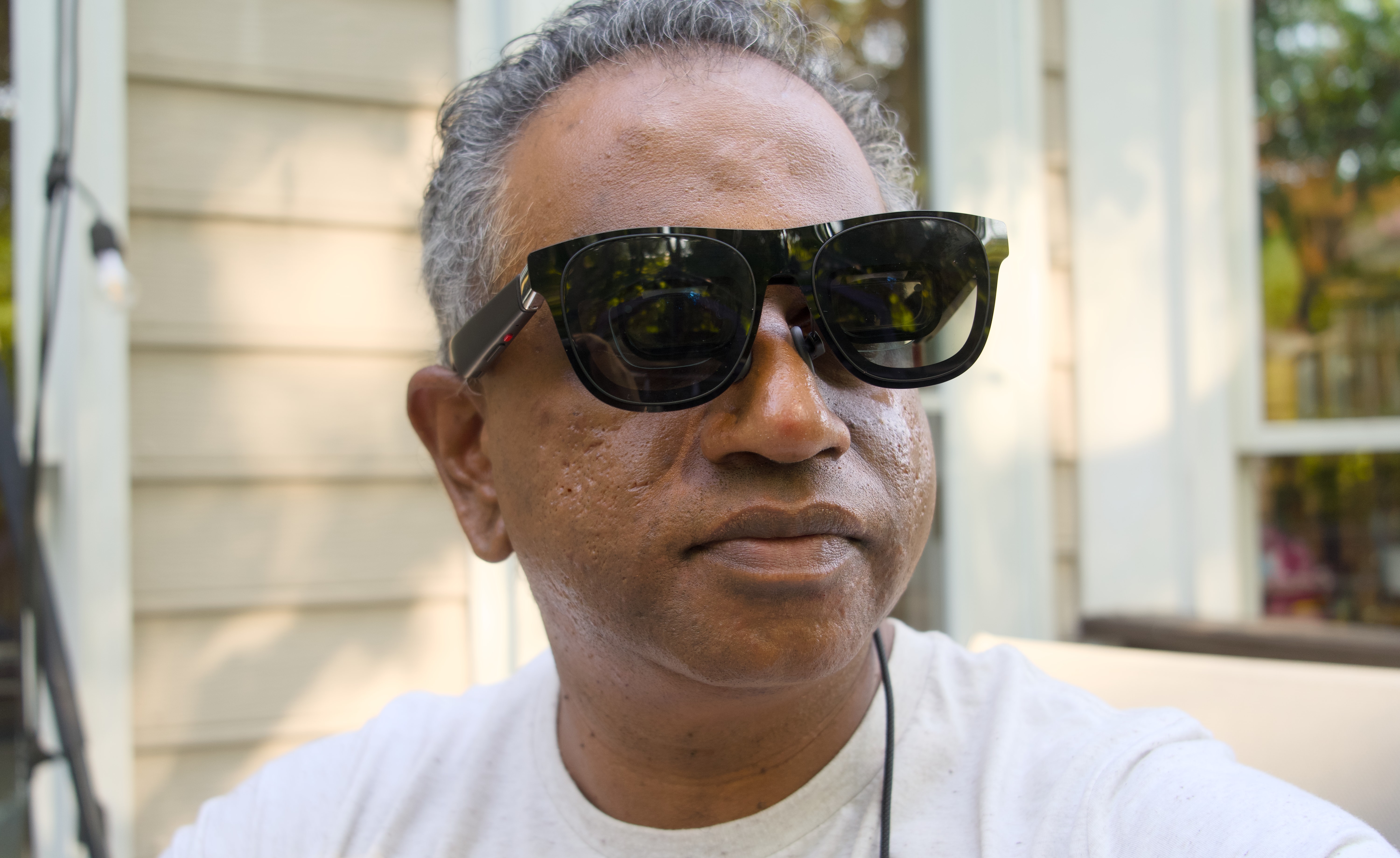
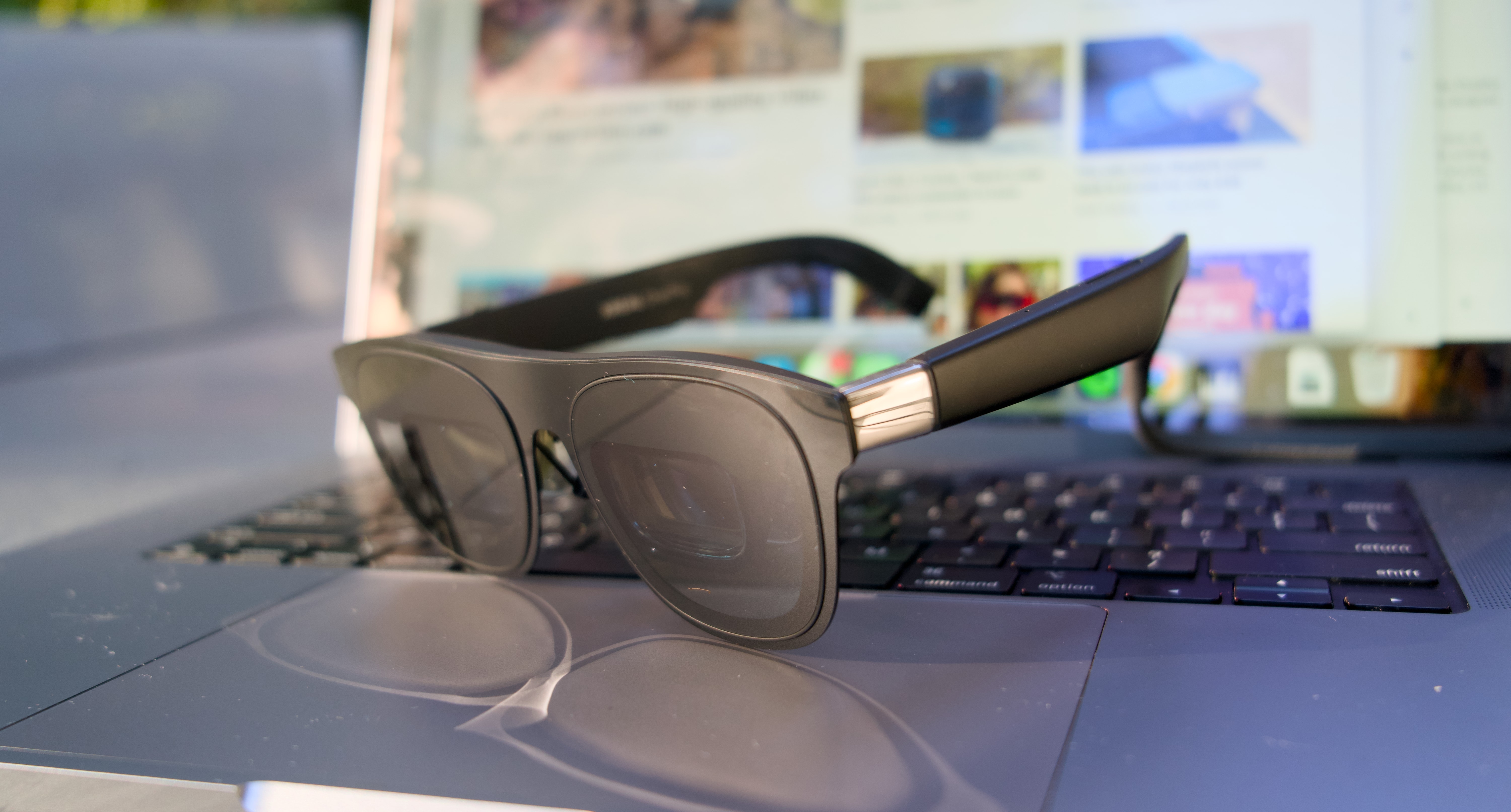
The Xreal One Pro smart glasses look very similar to oversized sunglasses.
Devindra Hardawar for Engadget
Sure, the Xreal One Pro still looks clunky, with its oversized frames, thick arms and annoying USB-C cable. But at $650, it’s also significantly less expensive than the Apple Vision Pro and easier to travel with than any VR headset. And at this point, it’s vastly more useful than the Ray-Ban Display, since its displays work across both of your eyes and can easily mimic a full-sized TV or monitor. Meta’s smart glasses can only show you a very limited amount of information in its single screen.
To be clear, that lines up with the different use case for each product: The Xreal One Pro is more of a monitor you wear on your face while stationary, whereas the Ran-Ban Display glasses aim to overlay your real-time point of view with basic phone notifications and services. Those frames are also meant to be more independent, allowing you to listen to music, take calls and capture photos and videos at a whim. But after seeing Mark Zuckerberg and his team try (and mostly fail) to demonstrate the Ray-Ban Display at its Connect developer conference, I also think the camera-less Xreal One Pro avoids ethical dilemmas inherent in most smart glasses.
Should we normalize wearable devices that can covertly record us at all times? And on a practical level, do we really want to walk around with virtual notifications in our faces all day? Personally, I think we’re better off with specialized tools that leave us in control, and don’t upend our entire social structure.
Xreal One Pro smart glasses
Devindra Hardawar for Engadget
At the most basic level, Xreal’s One Pro smart glasses are just virtual displays you can wear anywhere. You can unlock more augmented reality capabilities with the $99 Xreal Eye camera accessory, but it’s not exactly necessary. The One Pro features dual 0.55-inch Sony Micro-OLED screens running at 1080p with a 120Hz refresh rate and a 57-degree field of view (FOV), the widest we’ve seen yet from Xreal. Modern VR headsets like the Quest 3 typically offer a much more expansive 110-degree FOV, but they also trap you in a dark void.
The One Pro, and all of Xreal’s frames, still let you see the real world outside of its AR screens, and they don’t block out ambient light. But there are also several shades you can use to darken the glasses themselves, which make the virtual display appear brighter and more distinct. At the darkest level, the One Pro can appear almost entirely black, something that’s great for movies. There’s also a helpful auto transparency mode that undims the displays when you look away from your virtual screen.
Xreal One Pro smart glasses
Devindra Hardawar for Engadget
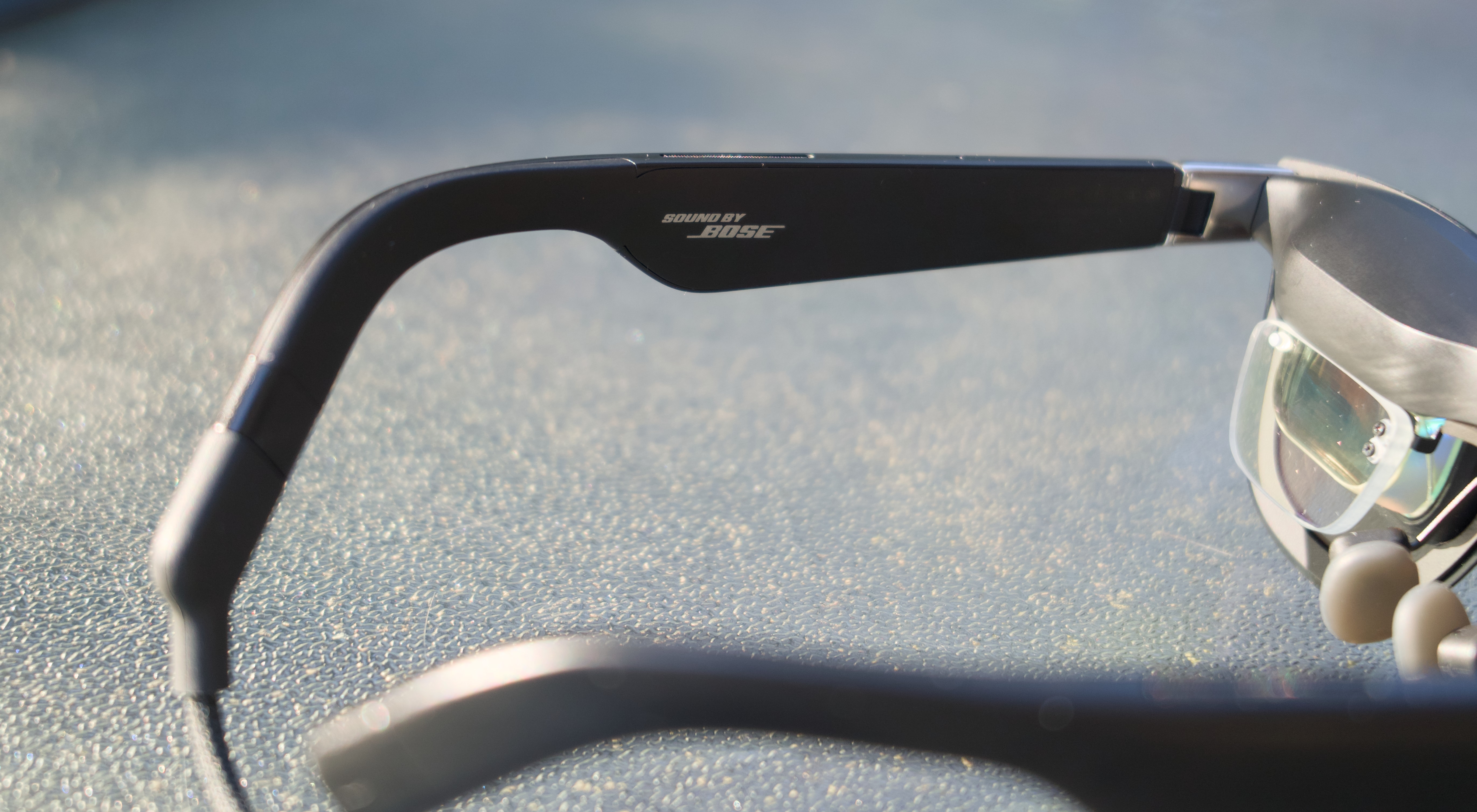
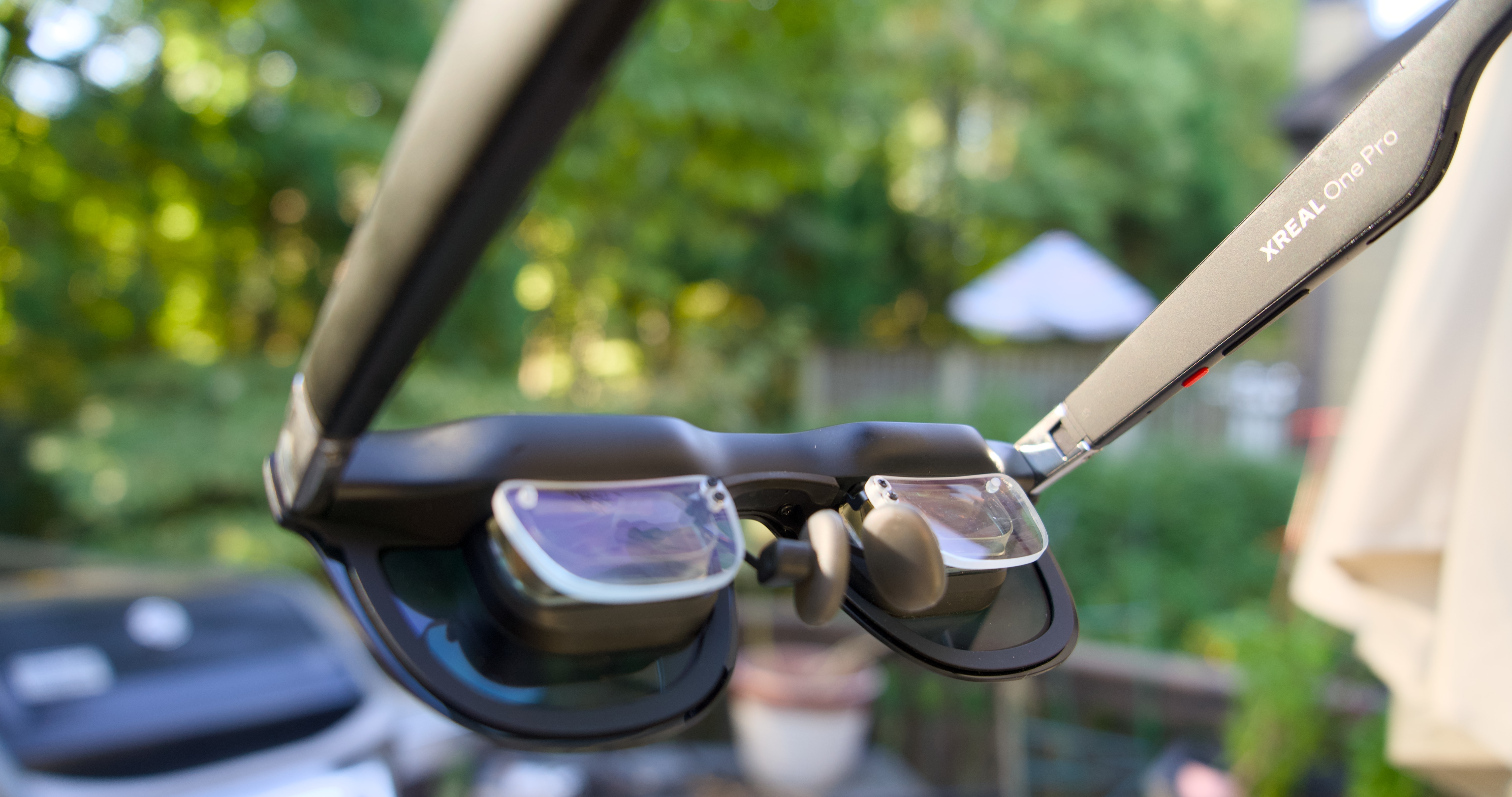
Bose mini-speakers are built into the arms of the glasses, as well as buttons for managing brightness and settings. A single USB-C port sits at the end of the left arm. I figured the cable would be a pain during extended sessions, but most of the time I quickly forgot it was there. Consequently, there’s no wireless support — something I’m totally fine with, since that would inevitably require batteries and additional weight on the glasses. At 87 grams, the One Pro weighs about the same as a deck of playing guards. It sat on my face comfortably, thanks to its sturdy nose pads, and I was able to wear it for hours without much issue.
Since the Xreal One Pro is fashioned after sunglasses, they can’t sit atop normal eyewear like the Quest 3 and other VR headsets. If you have a glasses prescription, you’ll need to buy inserts from HonsVR, which start at $50. They’re a bit annoying to install, but otherwise they did a fine job of letting me see the One Pro’s displays clearly. They do make sharing the glasses annoying, though, since the inserts will need to be removed every time you do so. I’d also be worried about something getting bent or broken with constant removals.
I mostly used the Xreal One Pro as a virtual display while working on laptops, but I also found them incredibly helpful for watching movies and videos when away from home. On the many occasions where I was stuck waiting for my family in the hellscape of a suburban parking lot, all I had to do was put on the Xreal One Pro, plug it into my phone and I could be watching anything on a massive virtual screen.
It was even more helpful while traveling. I could never muster the bravery to wear an Apple Vision Pro on a flight, or justify stuffing it into a bookbag. But that wasn’t a problem at all with the Xreal One Pro, as its bulbous traveling case can fit almost anywhere. Having a portable virtual display you can deploy instantly honestly feels like a superpower.
Xreal One Pro smart glasses
Devindra Hardawar for Engadget
As someone who’s picky about displays, I was surprised how bold and colorful the glasses were when I cranked up the brightness and background shade settings. I’d definitely love to see what sharper 4K screens could look like, but even at 1080p per eye, the Xreal One Pro delivered decently clear text and detailed imagery. Its built-in Bose speakers were also surprisingly clear while watching videos or playing some background tunes. (I would always use my AirPods Pro if I really wanted to immerse myself in the movies I was watching, though.)
In a pinch, the Xreal One Pro were helpful gaming accessories too. At home, I’d rather be staring at my 4K Alienware computer monitor, or the Steam Deck OLED’s native screen. But for slower-paced titles, it was nice to game on a large virtual screen just by plugging the glasses into my Steam Deck.
Getting the device connected to the original Nintendo Switch takes some work though, as it only works when connected to a dock and using an accessory like the Xreal Hub. Unfortunately, the Switch 2 doesn’t work with the One Pro at all right now (unless you start daisy chaining USB-C and HDMI adapters). Xreal says its upcoming Neo accessory will offer video pass-through for the Switch 2, but there’s no word on when that will arrive.
The more I used the Xreal One Pro, the more impressed I was by its sheer versatility. Its only major downsides are its $650 price (up from $600 originally), as well as the fact that you’ll never look cool wearing it. And no, you won’t be walking around while wearing the One Pro, like you could with Meta’s Ray-Ban Display. But hey, that also means you won’t have to worry about people calling you a pervert for wearing spy glasses.
This article originally appeared on Engadget at https://www.engadget.com/ar-vr/xreals-one-pro-intrigues-me-in-ways-metas-smart-glasses-dont-120000554.html?src=rss
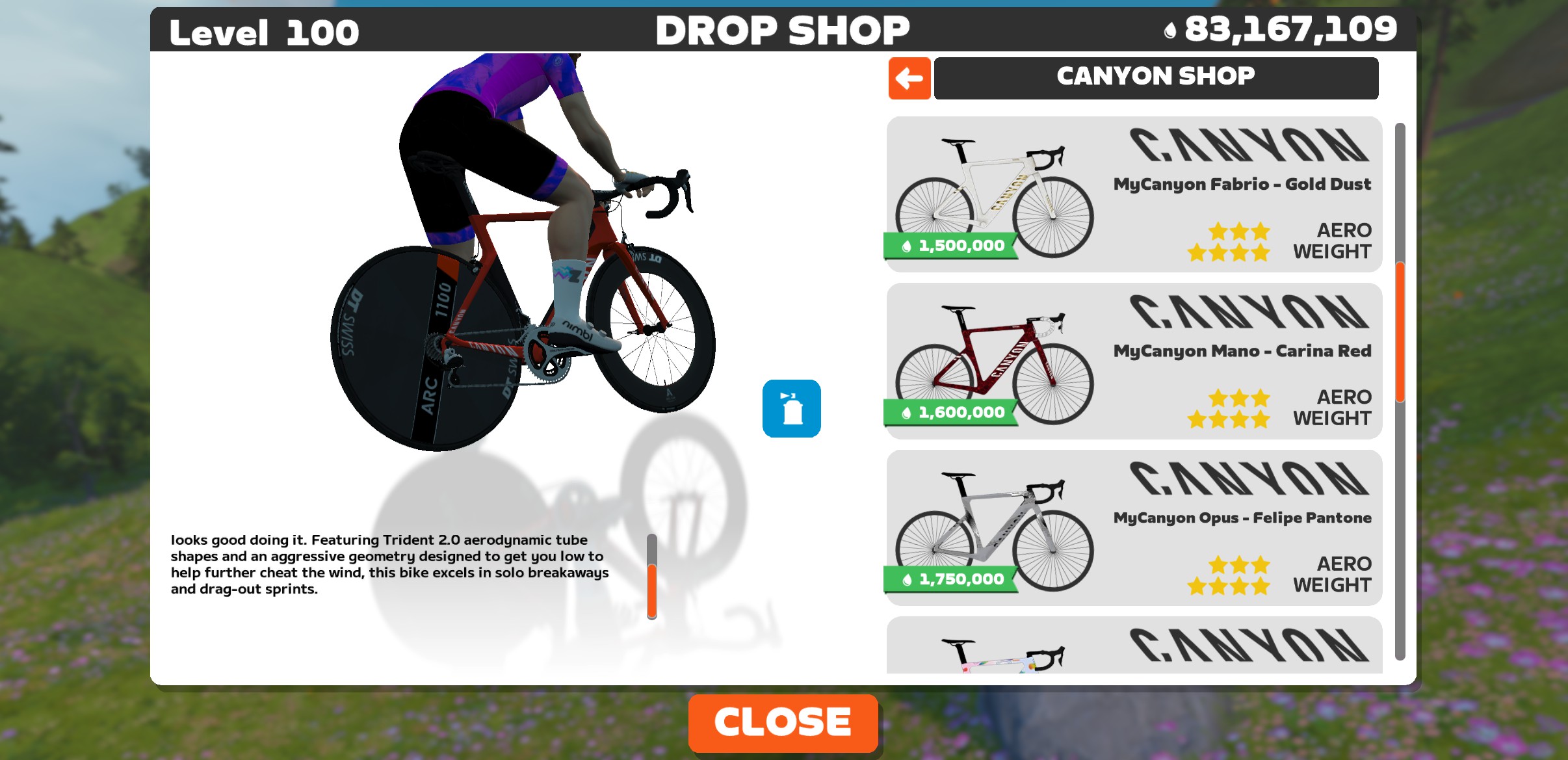
Yesterday, Zwift introduced a new concept in the Drop Shop – four fresh colorways of a frame that is already in game, the slippery Canyon Aeroad 2024. These four new bikes are painted in distinct designs from the MyCanyon collection.
The MyCanyon custom program was announced earlier this year, offering customers the opportunity to create a bike using a personalized mix of components paired with a unique, high-end colorway.
MyCanyon features nine different colorways, but this week’s Zwift release includes a select four:
MyCanyon Fabrio – Gold Dust:“A stunning golden yellow finish couples with striking mirrored decals. It’s a bike that radiates energy, and is as special as gold dust itself.”Read more >
MyCanyon Mano – Carina Red:“Home to many massive stars, including several that are 100 times bigger than the sun, Carina glows bright and bold. Painted using a hand-stamping process, this frame has a deep and fiery red color that looks three-dimensional under the surface.”Read more >
MyCanyon Opus – Felipe Pantone:“Inspired by the interplay of speed and technology, Felipe’s design represents organized chaos with some unexpected twists and turns as the bike moves. It’s modern speed, just like the Aeroad CFR.”Read more >
MyCanyon Opus – Elena Salmistraro:“Imagining a bike in motion, speeding towards the sun, light dancing on its surfaces, Elena used a kaleidoscopic color concept in her design, making a perfect combination of modernity and fun that is ideal for attracting attention.”Read more >
Opinion: An Odd Departure
Zwifters have asked for more bike colorways for years, particularly when it comes to popular race bikes. But Zwift has always been oddly hesitant to release more paintjobs.
The S-Works Venge, the most popular non-Tron race bike on Zwift for years? Available only in a dull gray to this day. The Pinarello Dogma F 2024? We’ll create a fun Zwifty colorway, but if you weren’t there to do all the races in September 2024, you missed your chance! The S-Works Tarmac SL8, the new favorite race bike? You can have it in any color you’d like. As long as it’s white.
It seemed logical to predict Zwift eventually releasing fresh colorways for frames and wheels which we could purchase using Drops.
But this is not that.
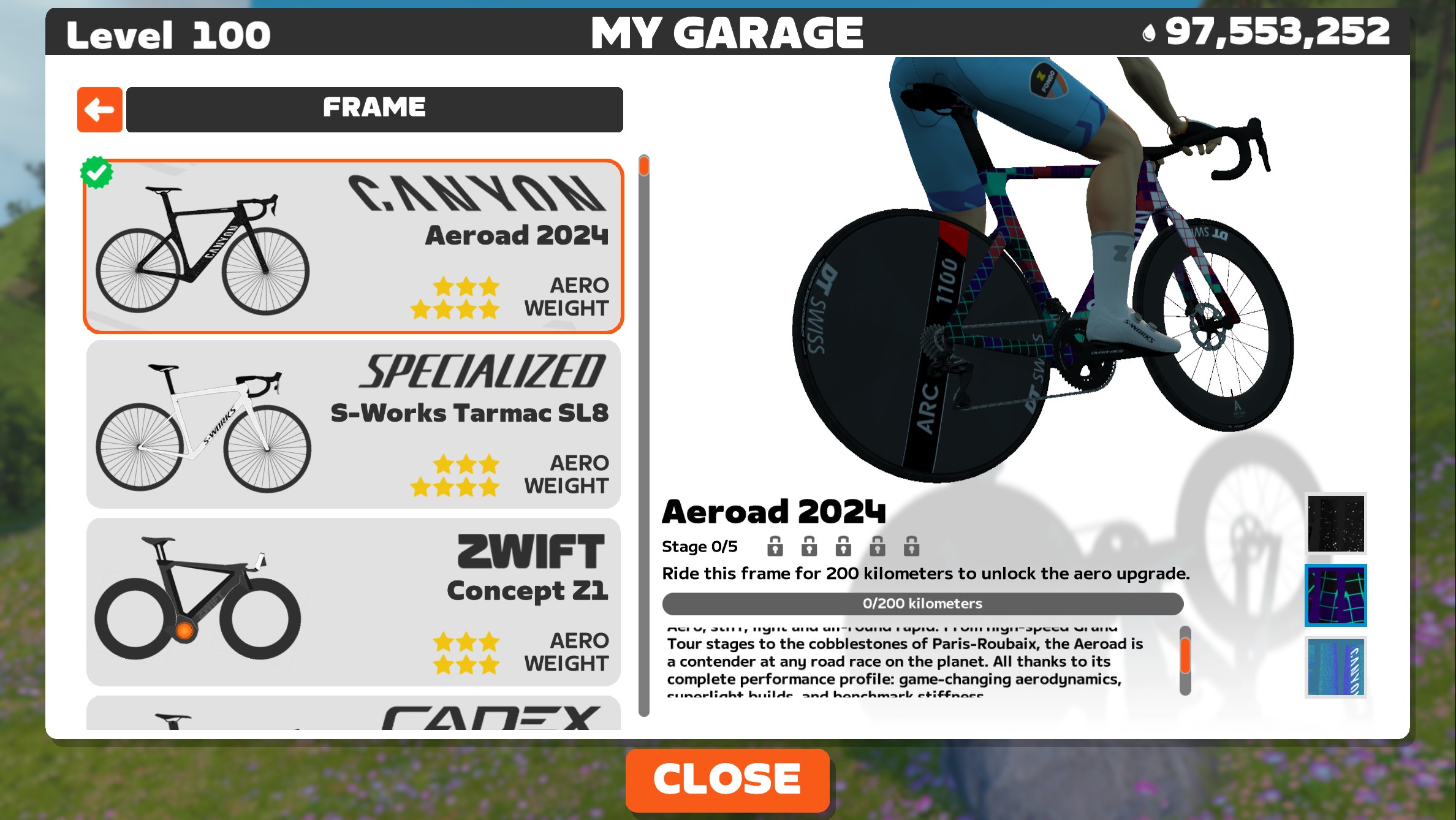
Instead, if you buy one of the new MyCanyon bikes, it adds an entirely new bike frame in your garage:
Sure, this is how it would work in the real world. But why does it need to work that way in Zwift?
Four big issues I foresee with Zwift using this method to release new colorways:
UI confusion (it’s not how the system has worked up until now): Many Zwifters already have multiple colorways unlocked for particular frames in their garage. You select the frame, then select which colorway you’d like. In fact, confusingly, the Canyon Aeroad 2024 has three different in-game colorways that work this way, meaning this week’s change adds four new colorways that work completely differently.
Upgrader anger: If riders love their Canyon Aeroad 2024, then they’ve already worked to upgrade it. Now, if they buy a new colorway, that new bike won’t upgraded at all.
Crowded garages: The request for Zwift to let us clean out our garages – even if it just means deleting items entirely without getting any Drops back – has been echoed so many times that it’s basically a community meme. This setup just makes our garages more crowded, when Zwift could have utilized the existing functionality of consolidating multiple colorways under one frame.
No model names: This is a minor issue, perhaps. But there’s no indication in the Drop Shop of what model of Canyon bike these four new frames actually are, apart from the fact that they look like the Aeroad 2024. But are they actually the same? Do they perform identically? (Zwift tells me yes, but that’s not clear in the UI.)
Let me be clear: I’d be happy if The Drop encouraged me to drop major Drops on a sweet colorway. I’ve got 83 million+ Drops to burn, after all! So please, Zwift, go ahead and create super-exclusive and incredible-looking colorways. Give some of them crazy high prices, in fact. You could even do limited-edition releases. Make it feel special to be one of only a few owners.
But releasing them as standalone bikes just seems all wrong. So I hope Zwift decides to modify the Drop Shop, allowing us to purchase colorways for frames we already own without further crowding our garages.
What’s Next?
Zwift’s This Season on Zwift announcement made it sound like additional colorways would be coming after the initial Canyon release (“Stay tuned for more Drops coming to the Drop Shop this season!”)
I haven’t heard of what’s coming, or when. And frankly, I hope they fix the issue above first. But we’ll just have to wait and see what happens next.
Your Thoughts
What do you think of the look of these new Aeroads? Will you be buying one? What do you think of the whole concept of buying new colorways of frames to add to your garage? Share your thoughts below!
The UCI has backtracked on parts of its controversial handlebar width proposals.
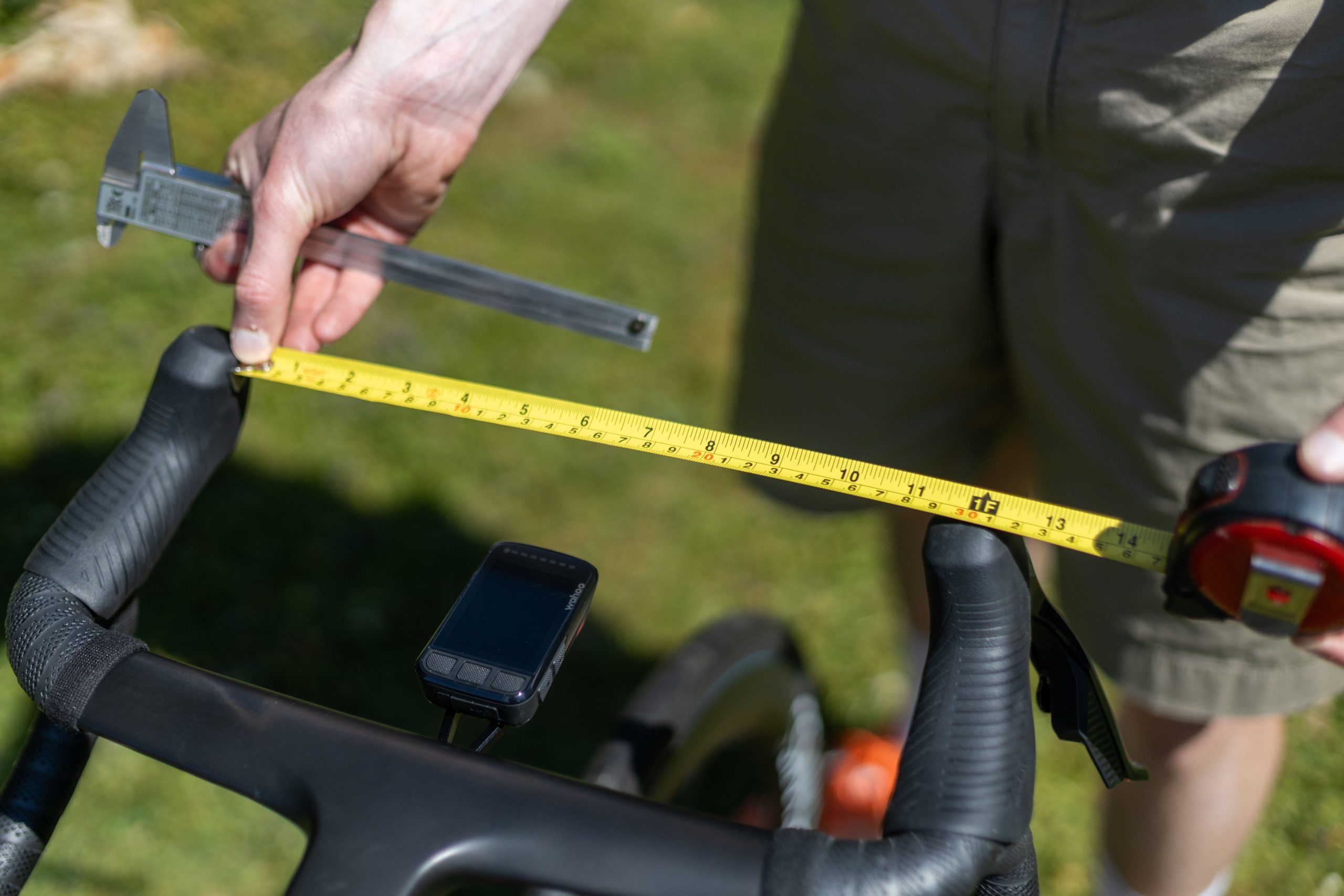
While the UCI confirmed the proposed 400mm width measurement, the minimum distance between the inner edges of the brake hoods has decreased from the proposed 320mm to 280mm, and there’s a new maximum flare figure of 65mm.
This may go some way to winning round critics of the proposed rule, who claimed the original proposals could disadvantage women and smaller riders, although the UCI has also said the updated rule may be modified in the future.
Additional details have also been revealed about how the sport’s governing body intends to distinguish between ‘road’ and ‘time trial’ helmets.
Pro handlebars have been getting narrower in recent years, as riders chase aero gains. Ashley Quinlan / Our Media
The proposed handlebar width measurements proposed back in June were widely decried by professional riders and the bike industry alike.
One source told BikeRadar that the new rules were “hugely discriminatory” against women cyclists and smaller riders in general, who would typically currently ride handlebars narrower than 400mm. It would also force some brands to scrap their current road bike bars and develop new designs to conform to the regulations.
The new hood-to-hood measurement of 280mm should ease these objections somewhat, and the UCI said the new measurement follows consultation with “cycling’s stakeholders including representatives of the cycling industry, findings from extensive verifications of current dimensions used for bikes at UCI Women’s WorldTour and UCI WorldTour events”.
The UCI counters that the proposed regulation was aimed at slowing riders down by increasing the drag on riders and bikes, as part of its goal of controlling race speeds, with the objective of improving rider safety.
There’s already a test of limits on maximum gear ratios slated for this year’s Tour of Guangxi, taking place in October, also aimed at decreasing race speeds.
SRAM recently announced it is taking legal action against the UCI’s proposed maximum gearing test. Simon von Bromley / Our Media
There’s a sting in the tail of the relaxed bar width regs though, with the UCI management committee suggesting that the minimum handlebar width numbers could increase going forward.
It says its management committee has instructed the UCI Equipment and New Technologies Commission to “review” the measurements and consult with stakeholders during the 2026 season, “ with a view to potentially increasing it for future seasons”.
Track riders fare better, with a minimum 350mm width at the drops, 80mm flare and 65mm cross section for their bars.
Clarification of aero helmet regulations
The UCI has revealed details of how it will distinguish between TT and road helmets for 2026 and beyond. Simon von Bromley / Our Media
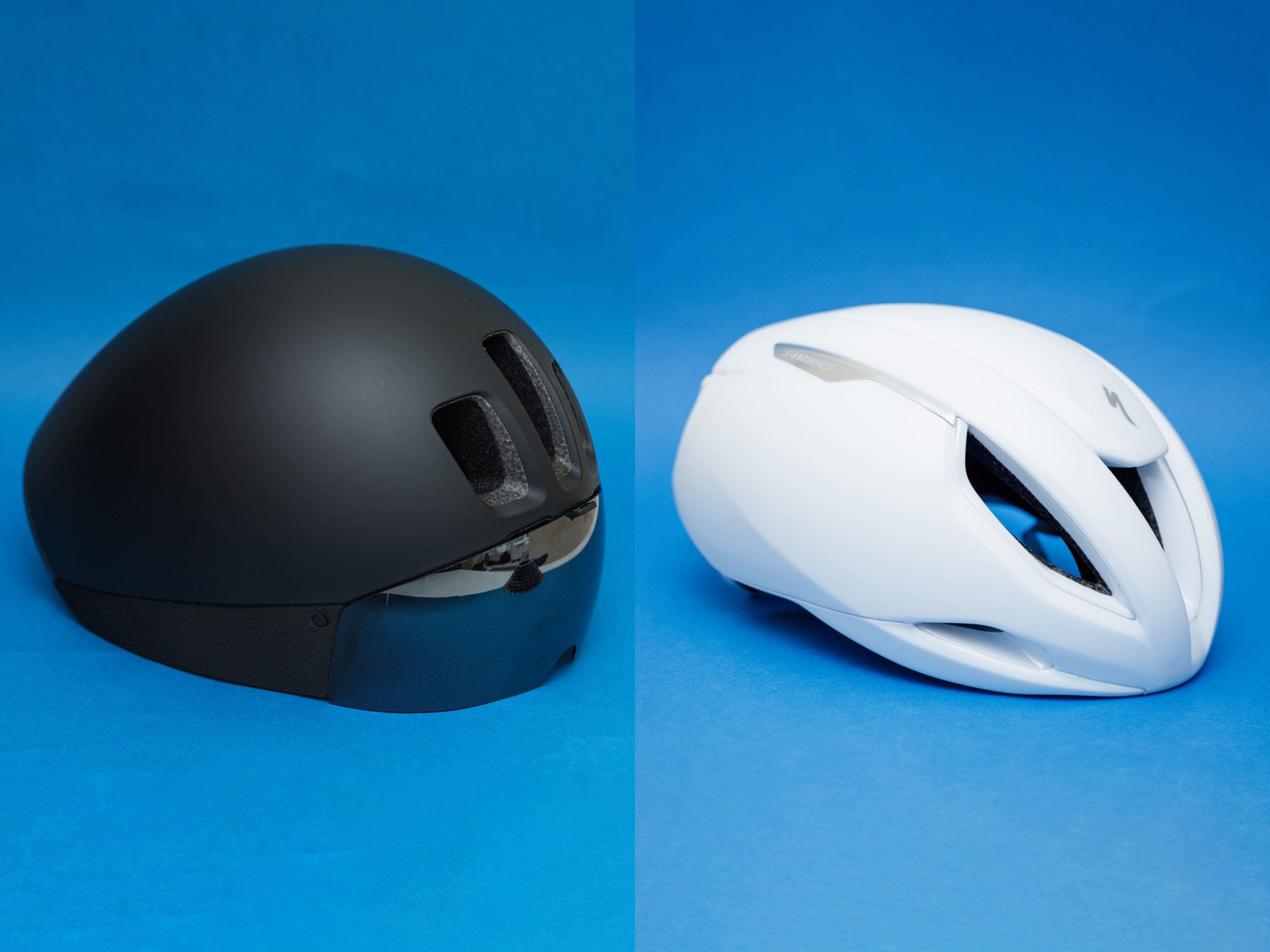
The UCI has also aimed to clarify the new regulation that will distinguish between ‘road’ and ‘time trial’ helmets, as aero road helmets have become steadily more TT helmet-like.
The POC Procen Air helmet worn by the EF Education pro team, for example, encloses the tops of a rider’s ears and there are just three front vents. Victor Campenaerts and his Visma-Lease a Bike teammates have also been wearing the Giro Aerohead MIPS TT helmet, minus its visor, in many mass start road races this season.
It appears both helmets would be banned from January 2026, under the new rules, which stipulate “minimum ventilation requirements, a ban on helmet shells or accessories covering or obstructing the riders’ ears, and a ban on integrated or detachable visors”.
Again, the UCI’s justification is “to contain aerodynamics”, decrease rider speeds and improve safety, as well as to distinguish between helmets used in different disciplines.
A lot of the stuff we use today is largely made by robots—arms with multiple degrees of freedom positioned along conveyor belts that move in a spectacle of precisely synchronized motions. All this motion is usually programmed by hand, which can take hundreds to thousands of hours. Google’s DeepMind team has developed an AI system called RoboBallet that lets manufacturing robots figure out what to do on their own.
Traveling salesmen
Planning what manufacturing robots should do to get their jobs done efficiently is really hard to automate. You need to solve both task allocation and scheduling—deciding which task should be done by which robot in what order. It’s like the famous traveling salesman problem on steroids. On top of that, there is the question of motion planning; you need to make sure all these robotic arms won’t collide with each other, or with all the gear standing around them.
At the end, you’re facing a myriad of possible combinations where you’ve got to solve not one but three computationally hard problems at the same time. “There are some tools that let you automate motion planning, but task allocation and scheduling are usually done manually,” says Matthew Lai, a research engineer at Google DeepMind. “Solving all three of these problems combined is what we tackled in our work”.
The UCI has announced it will cap the prices of track bikes and equipment used at the 2028 Olympic Games in Los Angeles.
Following the 2024 Paris Games, which saw the cost of track bikes and related equipment soar to unprecedented levels, cycling’s governing body says price caps will bolster “the integrity of competitions by preventing excessive cost barriers”.
Though details of exactly how price caps will be implemented – or what level they will be set at – have not been revealed, the UCI says “maximum prices will apply for framesets, forks, wheels, handlebars and their extensions, helmets and skinsuits” from 1 January 2027.
The UCI says this decision has been approved by its management committee, which is headed by UCI president David Lappartient, and is designed to ensure “participants from all nations have fair access to equipment”.
Why does the UCI want to cap the prices of track bikes and kit?
The cost of many track bikes has ballooned in recent years, and the UCI isn’t happy about it. Scott Windsor / Our Media
According to the UCI, the establishment of price caps for track bikes and related equipment will complement its existing rules on commercial availability, which are intended to create a more level playing field in terms of access to equipment.
As before, new bikes and related equipment will need to be registered with the UCI and used in events prior to the Olympics in order to ensure compliance with the rules.
In theory, this gives competing nations a chance to see – and potentially purchase – any bike or item of equipment, clothing and so on, prior to the Games.
It seems the spiralling cost of Olympic track bikes and kit may have prompted the UCI to take action against prices that appear to be designed to discourage or even prevent such kit from actually being purchased by rivals.
The V-IZU TCM2 and TC-M1 track bikes used by the Japanese cycling team, for example, were priced at €126,555 and €112,320, respectively, according to the UCI’s ‘Final Equipment List’.
The UK Sports Institute UKSI-BC1 track bike, used by Team GB, was listed at €64,350 for a frameset alone, while other bikes from top nations were priced at similarly astronomical levels.
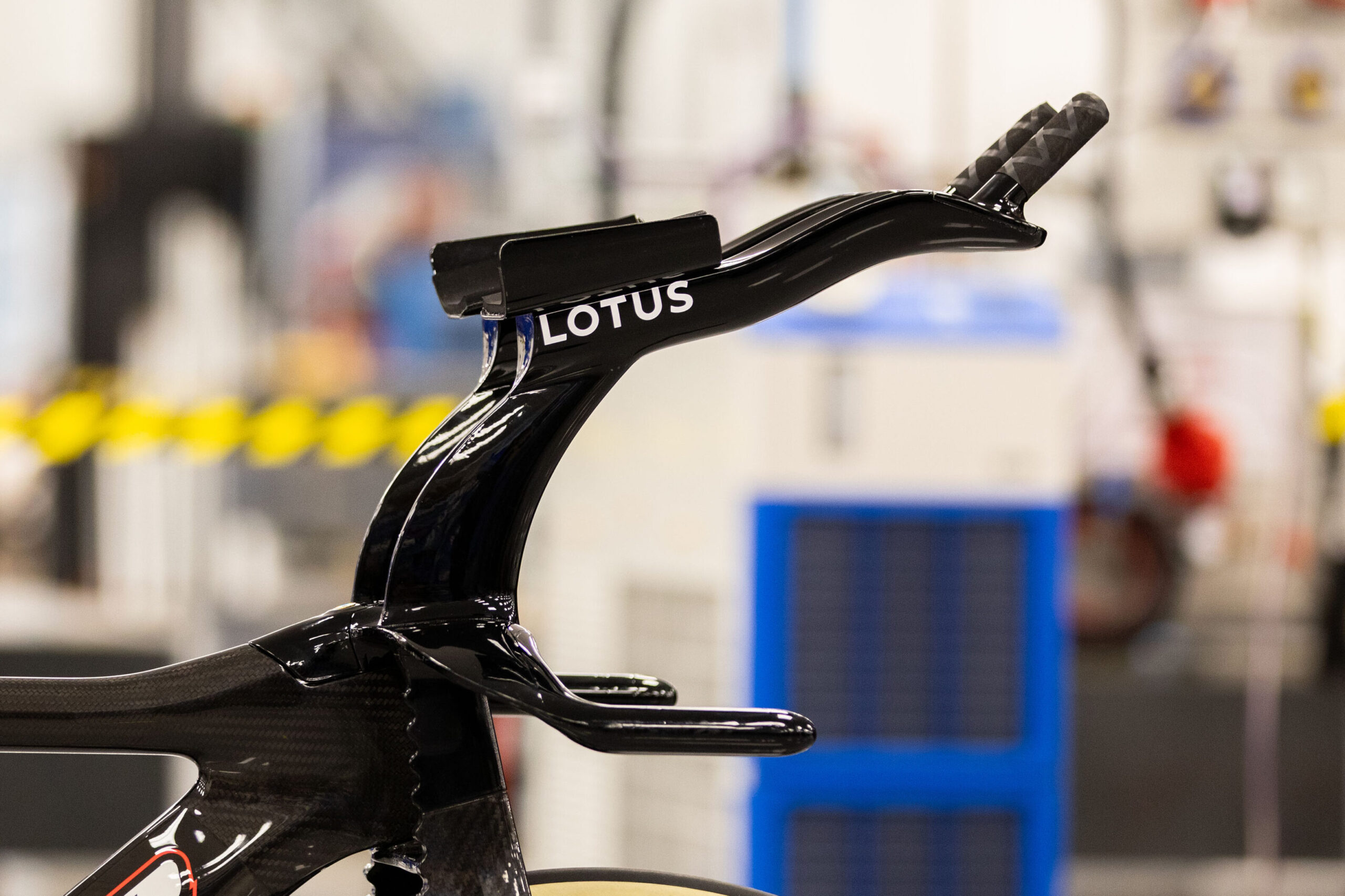
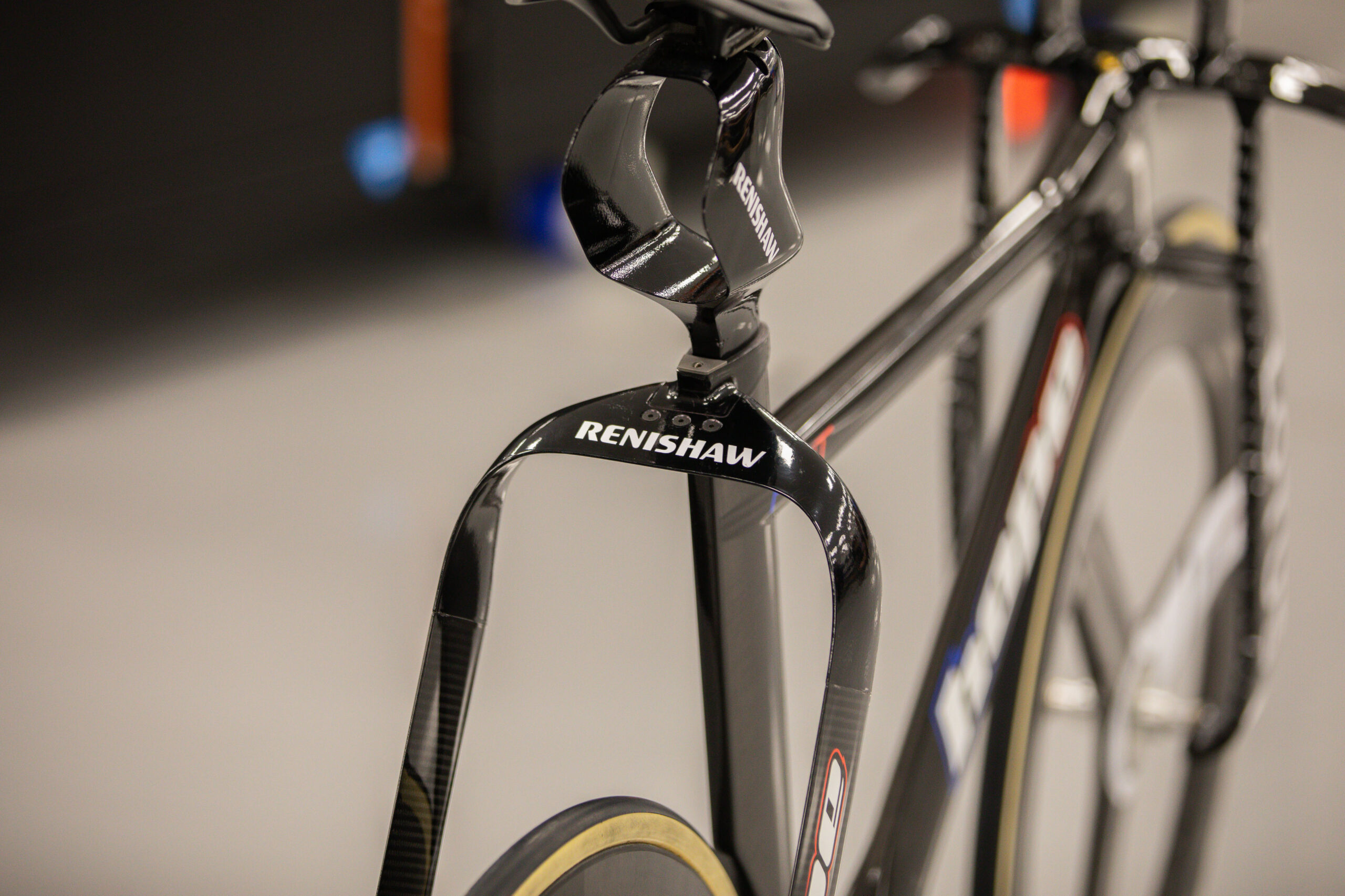
Wild designs and novel constructions methods have put top track bikes and related equipment out of reach for many. Scott Windsor / Our Media
And that’s just bikes and framesets. The Pinarello MOST custom 3D-printed bar extensions used by the Italian cycling team were listed at €22,500, while the Black Inc Zero tubular disc wheelset was priced at €18,400.
In comparison, the most expensive bike listed ahead of the 2020 Tokyo Olympics was the Worx WX-R Vorteq Track, at €28,000.
With incoming regulation changes potentially banning radical track bikes such as the Hope HB.T and Look P24, it looks as if major cycling nations will need to go back to the drawing board and create bikes that are not only fast, but reasonably priced.
What counts as ‘reasonable’ according to the UCI remains to be seen, though nations will doubtless be hoping for clarity sooner than later given the limited time scale to develop new bikes and equipment before the next Olympic Games.
While the Mold linker has been very impressive for its speed the past few years compared to the linkers out of the LLVM and GNU toolchain projects, there is a new high speed linker on the scene and it’s written in Rust: meet Wild…
The Intel Media Driver 2025Q3 release is available today as the quarterly update to this open-source Video Acceleration API (VA-API) driver used by Intel hardware under Linux for video encode/decode…
If you use Proton Mail on your phone, things are about to pick up. The company is rolling out new apps for Android and iOS. The updated mobile applications are rebuilt from the ground up with a “cleaner, faster and more private experience.” Proton first announced in April that it was working on the revamp.
The company says the new Proton Mail lets you scroll, archive and reply twice as fast as before. It also now supports an offline mode, allowing you to read, write and organize messages while away from the internet. A redesigned interface aims for simpler navigation, with areas like the composer button now sitting within easier reach.
The iOS and Android apps, while still native to their respective platforms, now share a common codebase. Proton says they share 80 percent of their code. This should enable faster development and near-simultaneous future updates.
Proton
Product lead Anant Vijay Singh credited the update to Proton’s community and business model. “The new Proton Mail mobile apps reflect this feedback and show what is possible if you build an email app without the constraints imposed by trying to monetize user data, allowing for a cleaner, faster, and more private experience,” he said.
The Proton Mail updates begin rolling out today in the App Store and Play Store.
This article originally appeared on Engadget at https://www.engadget.com/mobile/smartphones/proton-mails-redesigned-mobile-app-is-built-for-speed-100042054.html?src=rss
The Japanese city of Toyoake has passed (PDF) a symbolic ordinance limiting recreational smartphone use to two hours a day, aiming to improve citizens’ sleep — especially for students after summer vacation. The Register reports: “The primary purpose of this ordinance is to ensure that all citizens receive adequate sleep,” states a Council information page, which explains that many Japanese people ignore Ministry of Health, Labor and Welfare recommendations to spend six to eight hours a day dozing. An accompanying FAQ [PDF] explains that Council passed the ordinance because students who return to school after summer vacations sometimes need a nudge the re-establish an appropriate daily regime.
The ordinance also points out “Excessive phone users and their families are facing difficulties in their daily and social lives,” and suggests the two-hours-a-day guidance might help. Council’s documents point out that smartphones have myriad uses beyond recreation, and that the ordinance should not be taken as a suggestion to reduce overall use of the devices. Toyoake is part of the Nagoya megalopolis and is home to around 70,000 people. The town’s government plans to survey residents about the ordinance, and the FAQ also mentions it wants to tackle other digital menaces, among them harmful effects of using smartphones while walking.
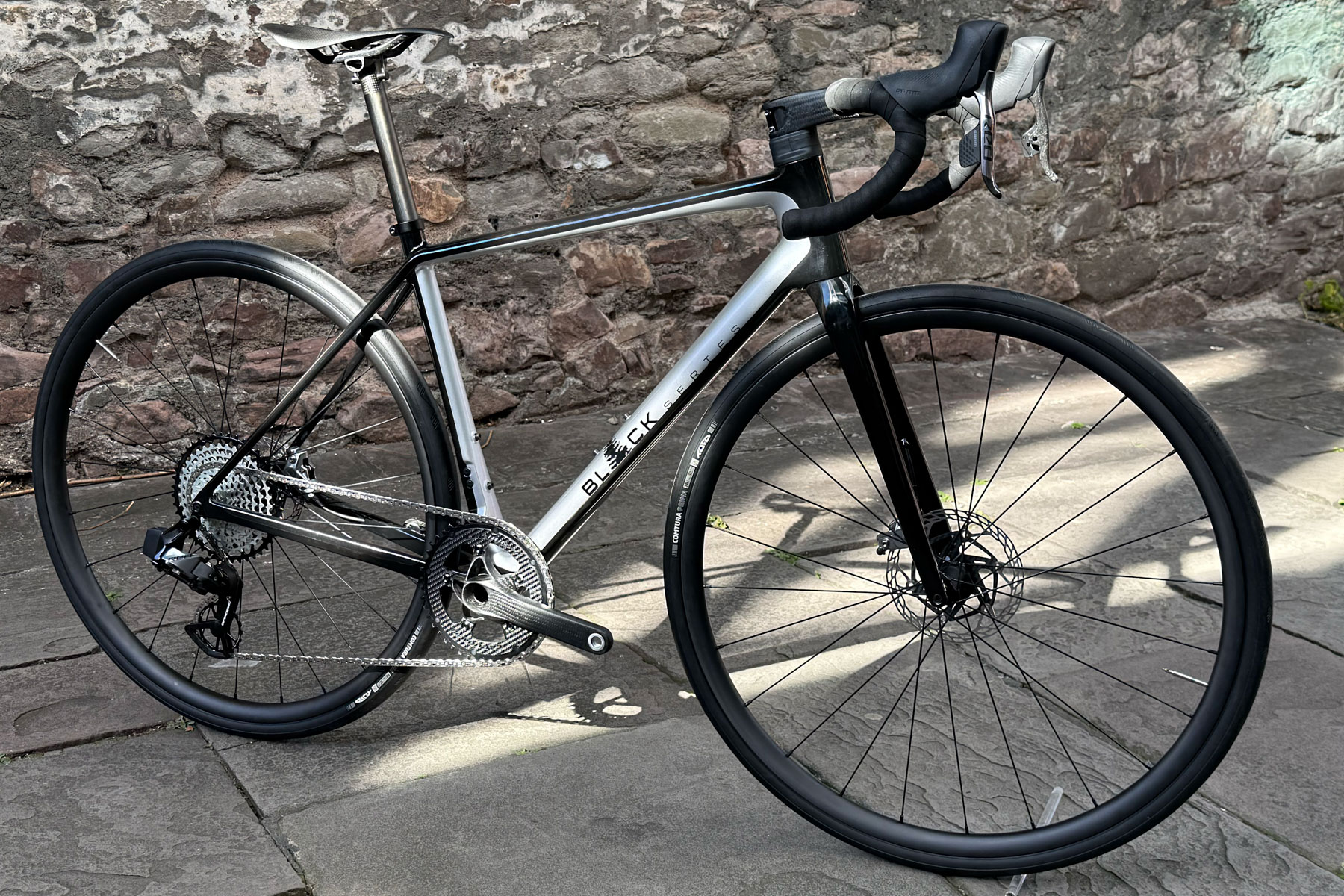
The new Black Series Corsa is the lightest production bike in the world, at 5.24kg, according to its designer, Andy Wallis.
The Black Series range of bikes and components has long been the ’secret’ or ‘special projects’ label of engineer and designer Wallis, the owner of Poshbikes.
Wallis says: “Whenever a new frame, wheelset or component was required to outperform the standard item, or a specific bicycle is required for a factory race team, when one was not available from their current line-up, a custom item was created under the Black Series codename.”
Over the years, this special project division has amassed a collection of frames and components that have proven themselves for pro riders. Yet they’ve never been available to the public, until now.
Wallis is readying a complete line-up of Black Series bikes and components, including road, aero, gravel and hardtail XC mountain bikes. There are also bars, stems, seatposts, wheels, hubs and a host of small parts, all under the Black Series name.
This special-edition Corsa tips our scales at an outlandish 5.338kg (size-medium). That’s with standard butyl inner tubes, as the bike was being studio shot when I came across it.
Wallis claims the bike weighs in at 5.241kg in full tubeless trim.
Frame and fork details
The Garbaruk cassette weighs only 275g for a 10-44. Warren Rossiter / OurMedia
The frame is a single monocoque construction made with a complex dual-mould technology. The Corsa frames are all proportional, meaning the diameter of the tubing expands across the sizes. This is intended to ensure the ride is the same from XS to XL sizes.
The geometry is aggressive, with a super-short back end with 405mm chainstays.
The Corsa frame has generous tyre clearances (conservatively 36mm, although it looks greater than that) and a threaded T47 bottom bracket shell.
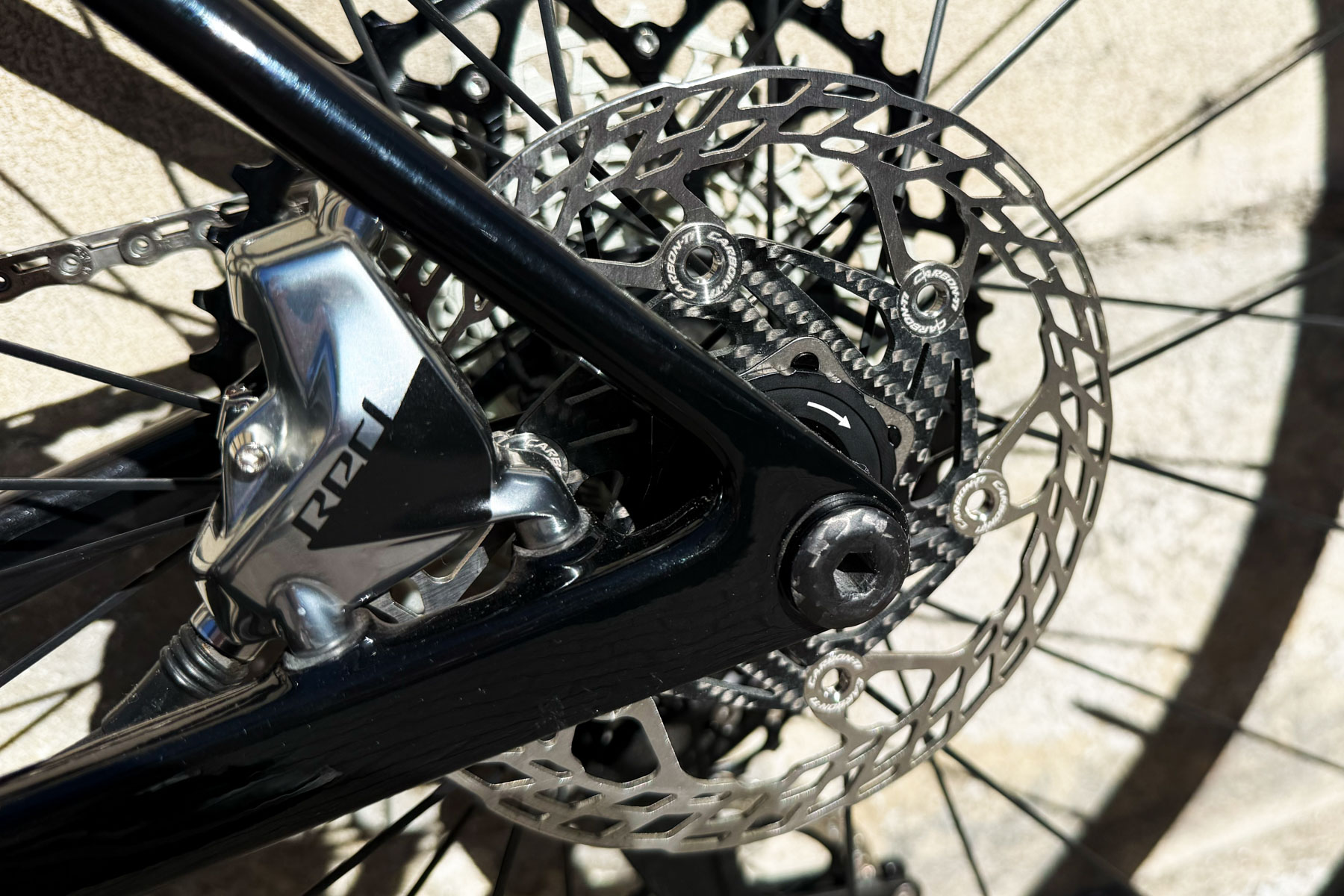
Even the 160/140mm disc rotors sit on carbon fibre carriers. Warren Rossiter / OurMedia
The head angle is race-bike steep, and the front centre is longer than standard road bike geometry.
Wallis tells me the idea behind the Corsa is to build a classic climber’s race bike, yet one that adds stability on descents with the longer front centre.
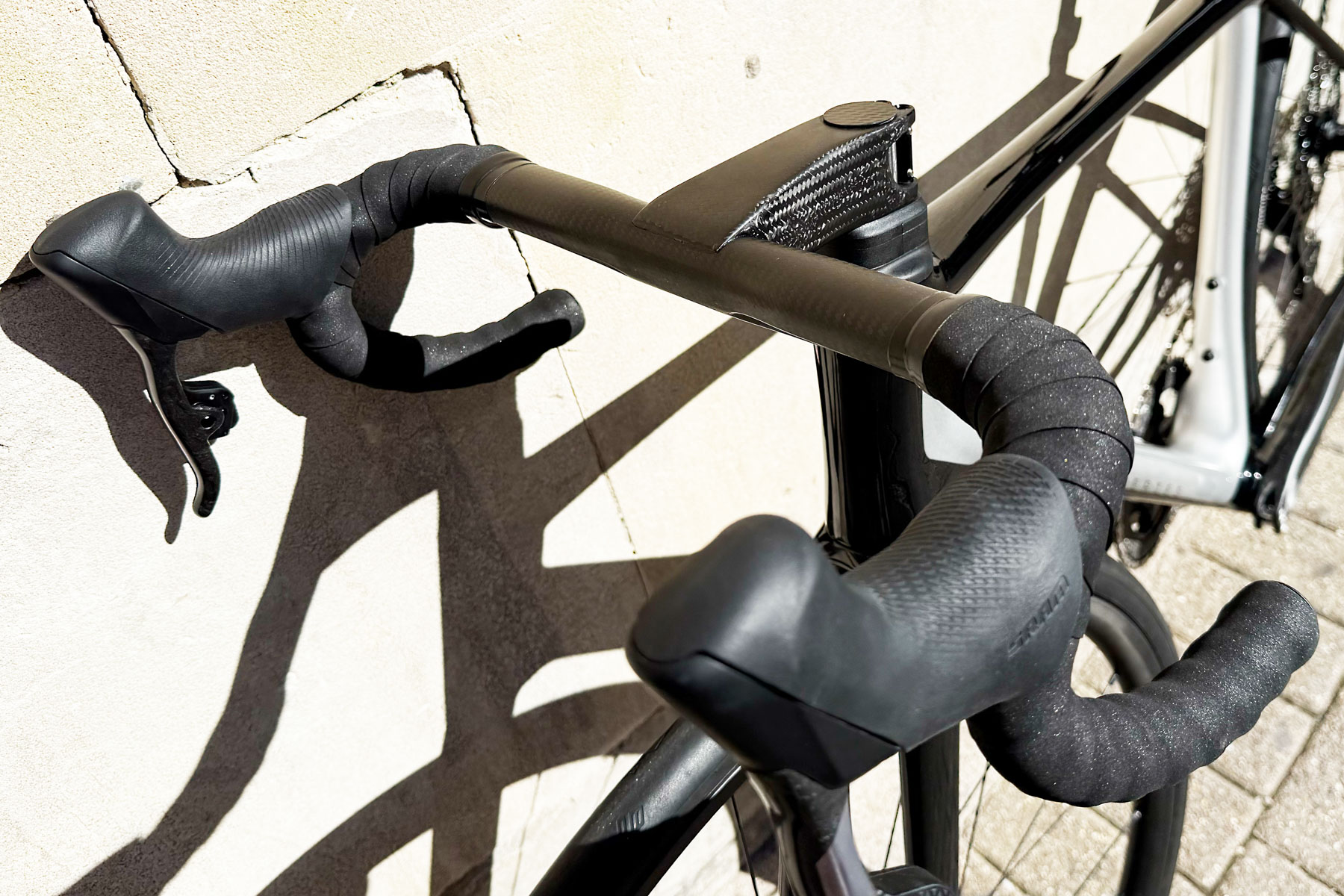
The carbon one-piece cockpit is available in a huge range of sizes and made to order. Warren Rossiter / OurMedia
The frame and fork are light at 595.7g (unpainted, size medium) and 348g (300mm steerer), respectively. That’s impressive for a bike with internal routing and clearance for 36mm tyres. It gives current featherweight bikes such as Scott’s latest Addict RC (640g) and Specialized’s Aethos (585g, size 56cm) a run for their money.
Attention to detail
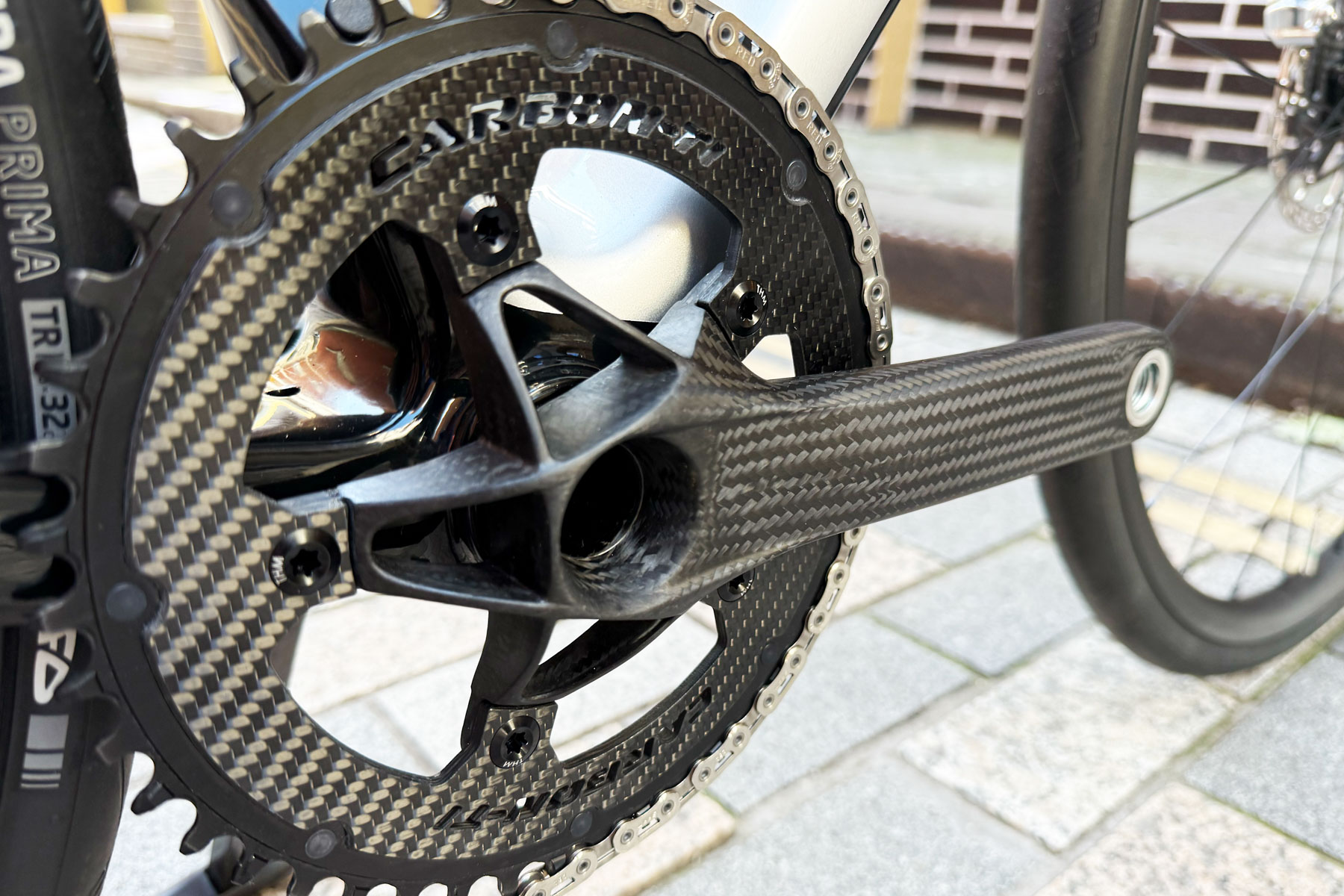
The Black Series Corsa crankset, here fitted with a Carbon-Ti chainring, is one of the lightest you’ll find. Warren Rossiter / OurMedia
This Black Series bike, however, cheats the scales further thanks to its build. The 220g (100mm x 42cm) one-piece bar/stem is made in collaboration with German lightweight specialist Schmolke. The internally routed one-piece design bonds the stem piece to the bar. That means the combination is available in any size you could wish for.
The carbon crankset is also a collaboration, with carbon specialist THM, weighing 289g (172.5mm) with a Carbon-Ti chainring at 112g.
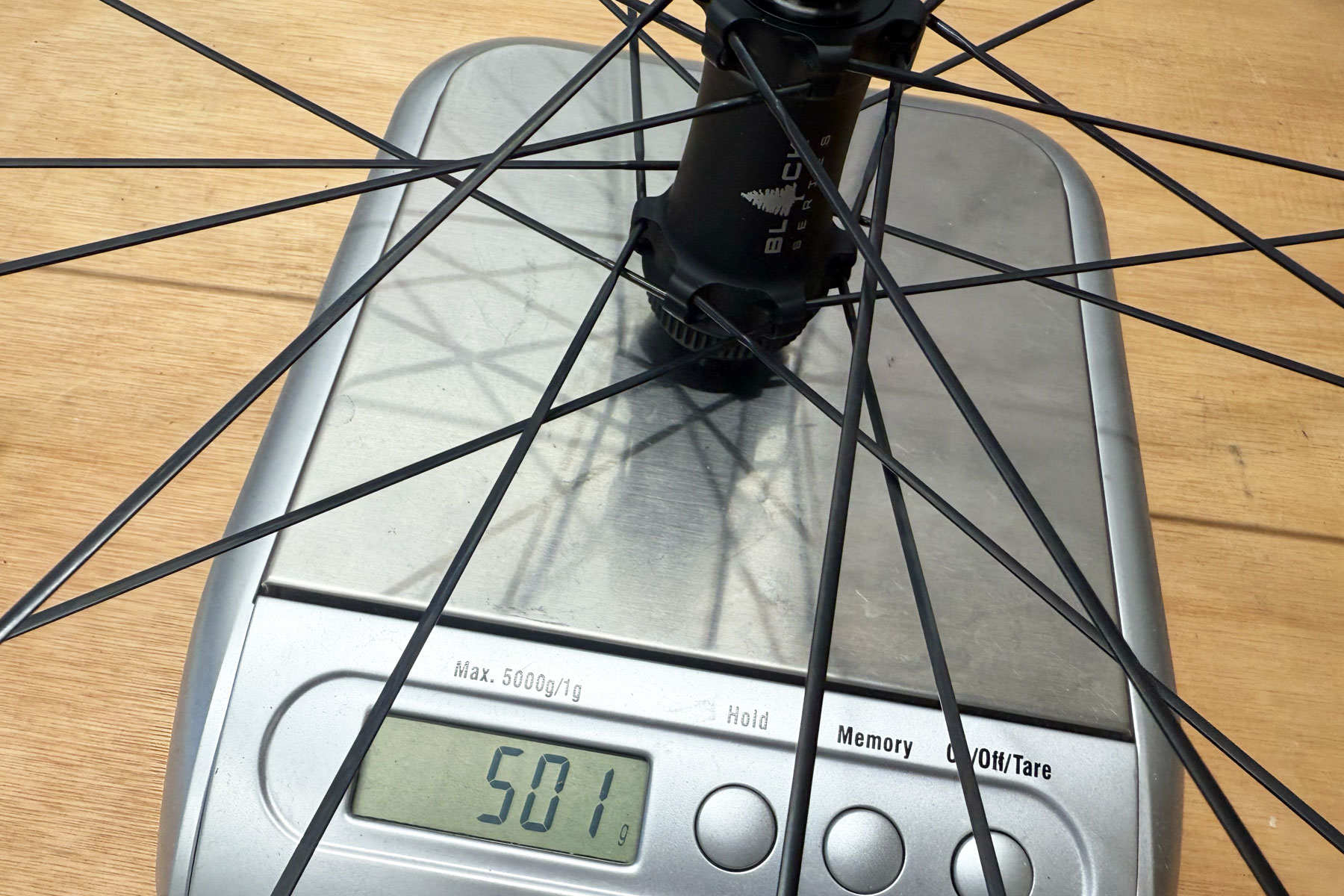
The Black Series Corsa front wheel tips the scales at only 501g. Warren Rossiter / OurMedia
Conventional wheels, unconventional weight
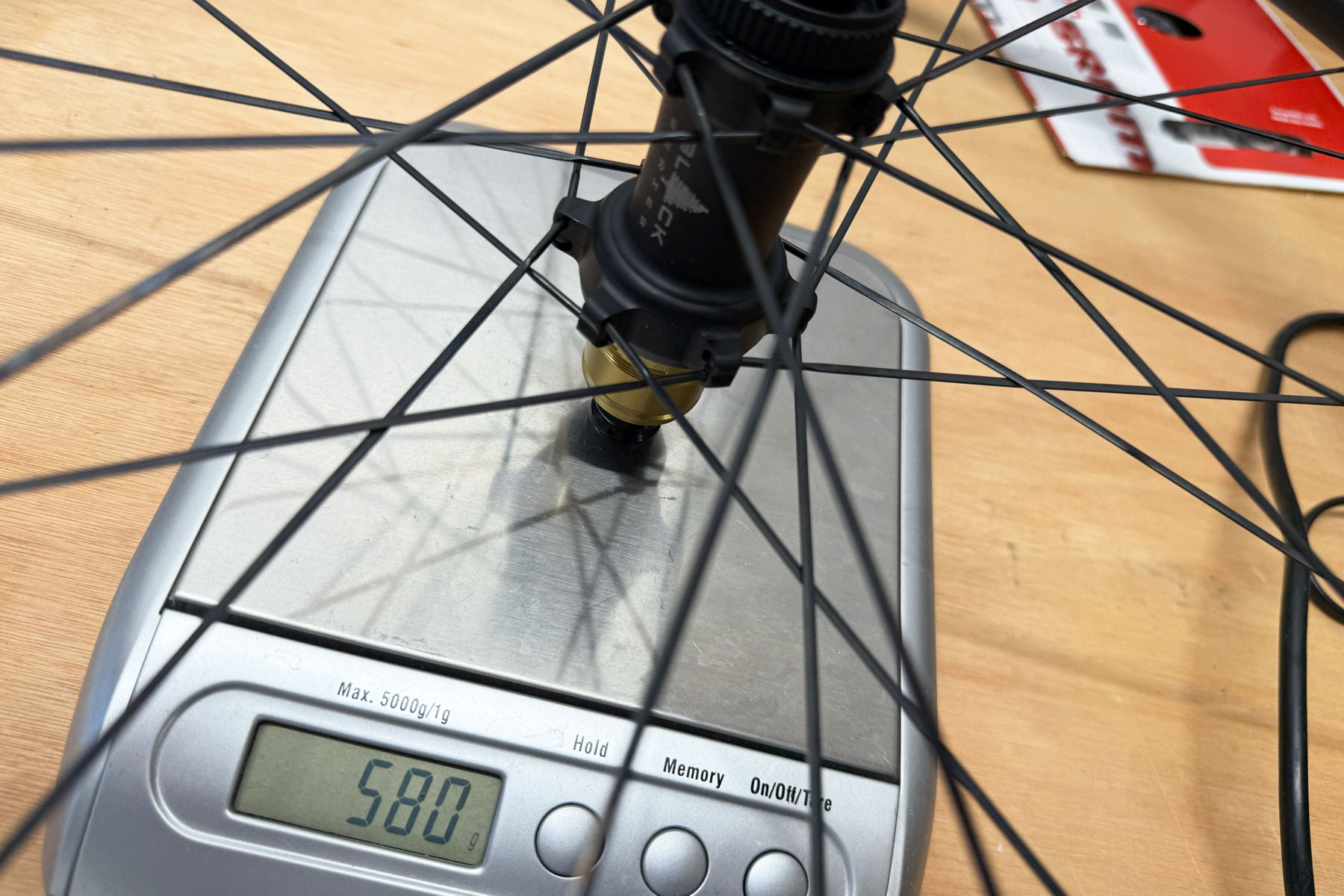
The rear wheel comes in at 580g. Warren Rossiter / OurMedia
The Corsa wheels, which use a conventional 28-spoke build, connect the 280g rims via Sapim CX-Ray spokes, with Black Series’ own ultra-light hubset (64g front, 149g rear). The wheels weigh in at a mere 1,081g a pair, including tubeless rim tape.
They’re shod with Tufo’s 220g Comtura Prima tubeless tyres in a rough-road ready 32mm width.
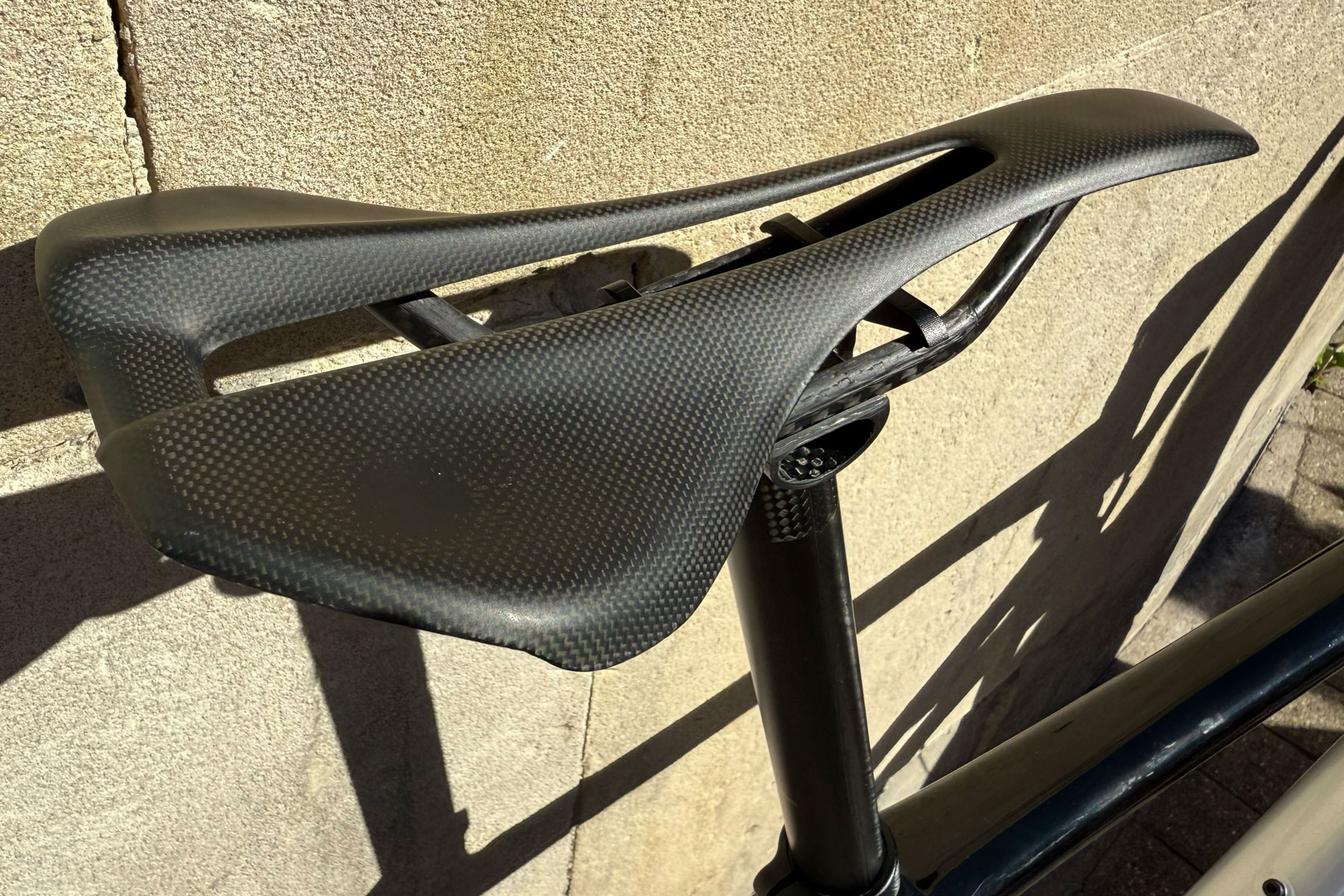
Completing the build is a Corsa seatpost made in collaboration with THM and weighing 85g (27.2x350mm). It’s topped with a Black Series Corsa saddle at an astonishingly light 52g. The 27.2mm-diameter post is available as an inline or offset option.
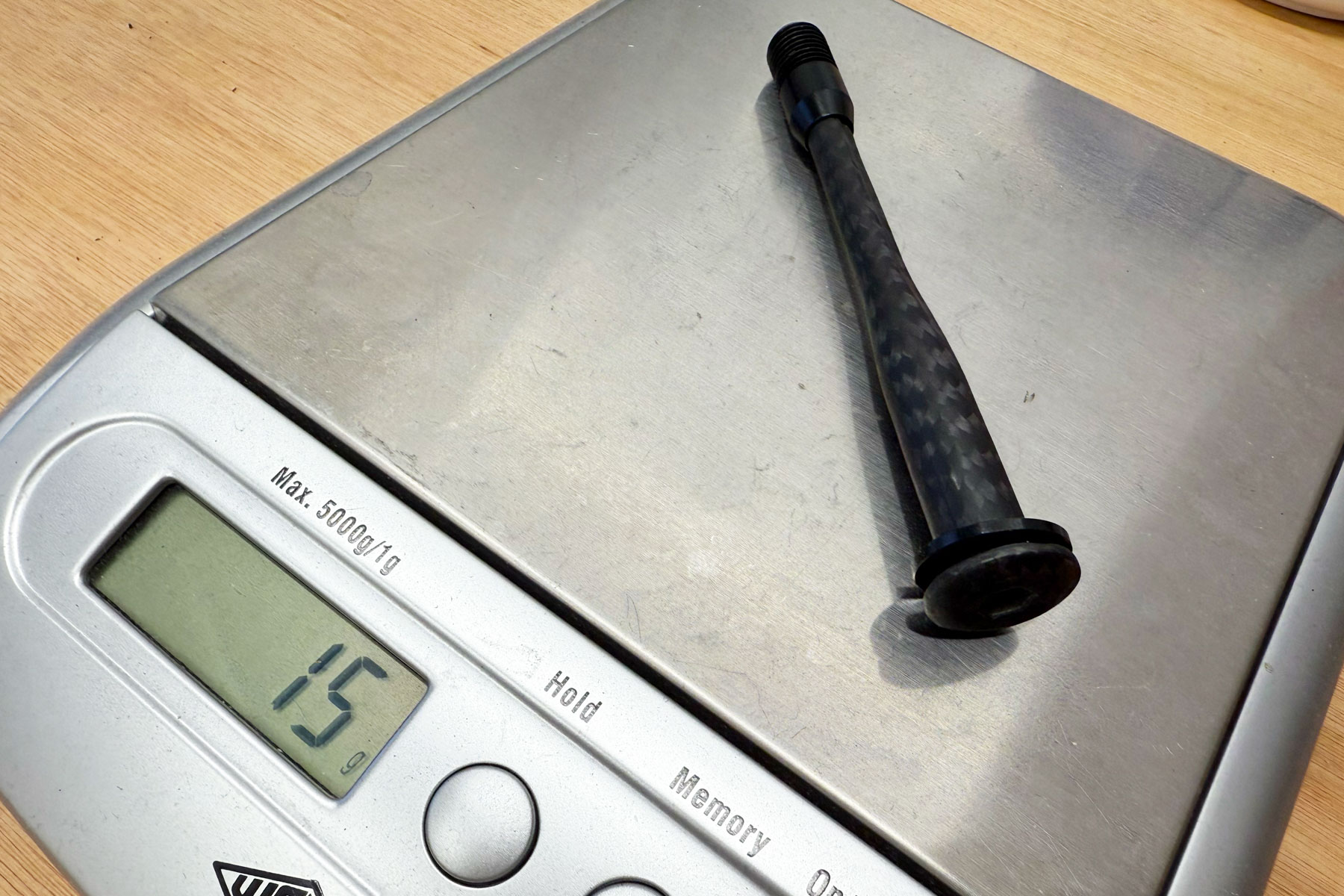
The Black Series front thru-axle weighs only 15g. Warren Rossiter / OurMedia
As you might expect from a brand born out of Poshbikes’ history, the attention to detail goes further in the pursuit of weight reduction than you’ll see from perhaps any other brand.
Take the Black Series Corsa thru-axles, for example.
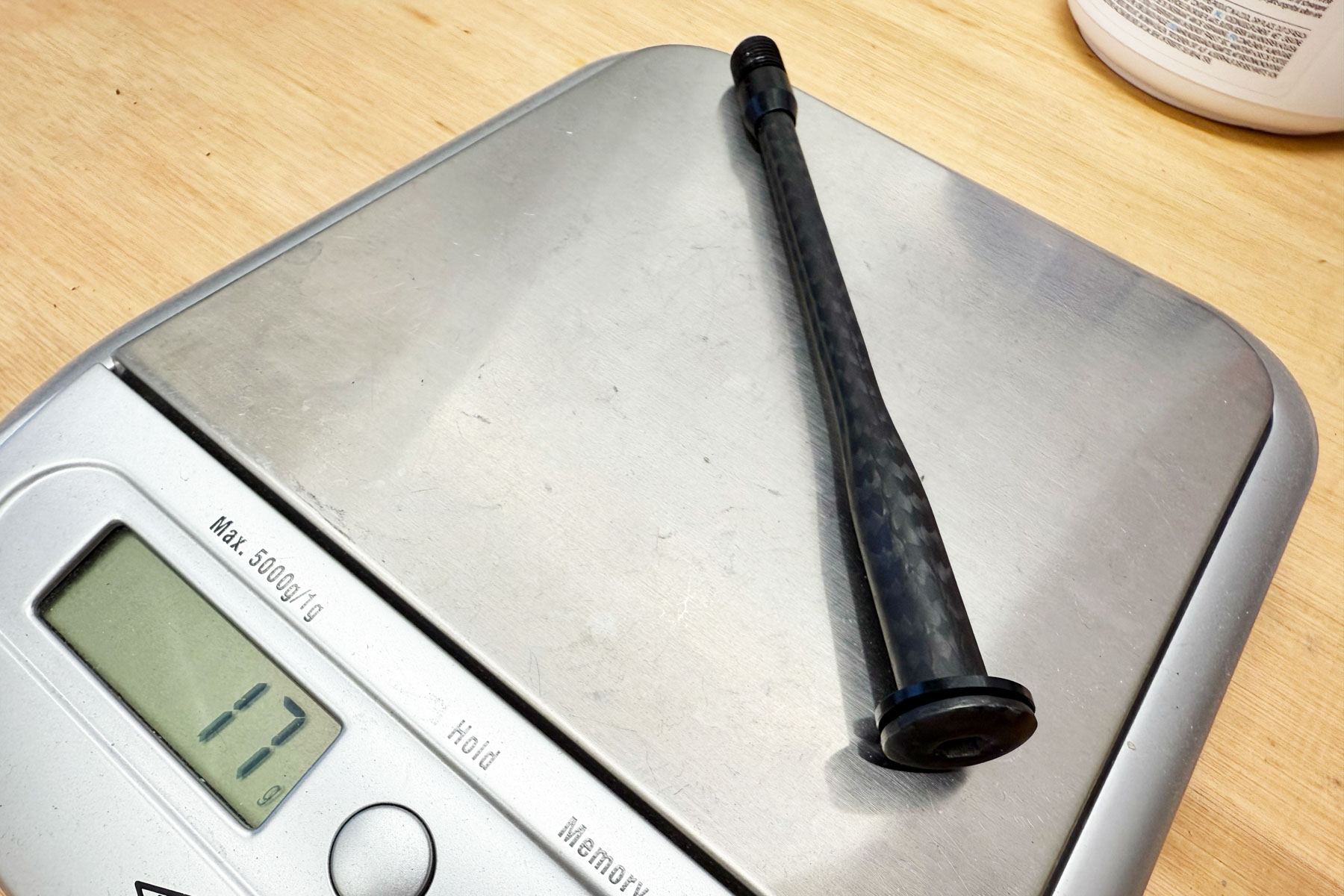
These are made from a moulded carbon shaft with a ceramic insert for the hex key slot. They are tipped with a metal-threaded end piece that’s keyed and bonded to the shaft. The weights for the road versions of these axles are an astonishing 17g (rear) and 15g (front).
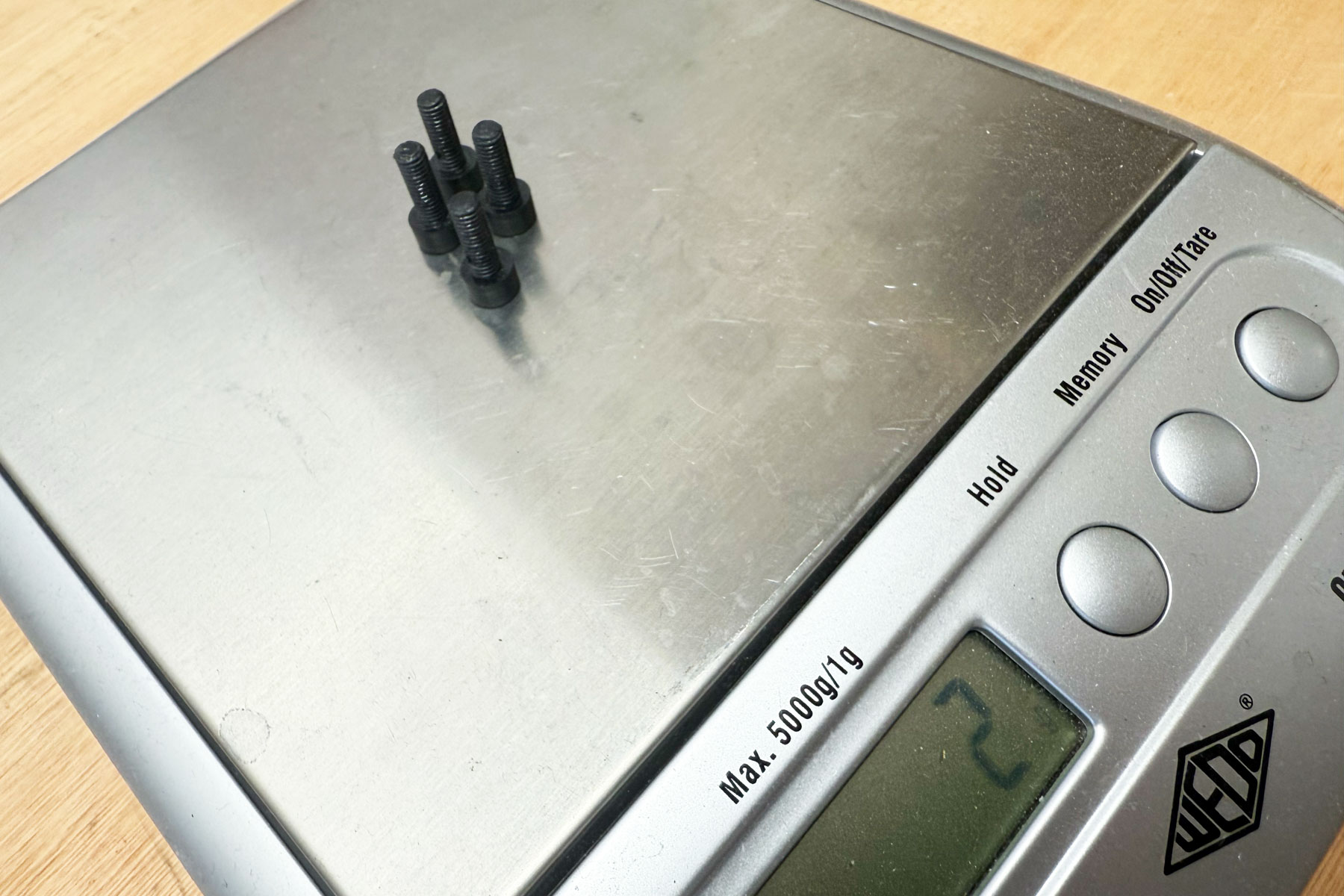
The Black Series rear thru-axle weighs only 17g. Warren Rossiter / OurMedia Four Black Series carbon M5 x 15mm bottle cage bolts weigh 2 grams. Warren Rossiter / OurMedia
Even the bottle cage bolts are the lightest available. These carbon fibre bolts are sourced from the aeronautic industry. A set of four M5 x 15mm bolts weighs only 2g.
The 52g carbon saddle is made in Italy by a carbon motorsport specialist. Warren Rossiter / OurMedia
Availability and pricing
The Black Series Corsa is a seriously lightweight bike. Warren Rossiter / OurMedia
This ‘Ultimate’ SL build will be available from Black Series before the end of the year with an expected retail price of £16,000 / $21,650 / €18,350.
Wallis told me he’s confident he could build an even lighter version of the bike at less than 5kg.
Yesterday at the Snapdragon Summit in Hawaii Qualcomm announced the Snapdragon X2 Elite SoCs for upcoming laptops. In addition Qualcomm announced the Snapdragon 8 Elite Gen 5 mobile platform too. With those announcements out there, the Qualcomm open-source engineers have been busy in rolling out their latest patches for beginning to enable these new platforms with the Linux kernel…
Overnight Intel released IGSC 1.0 as their library for handling graphics system firmware updates for rolling out firmware updates to Intel discrete graphics card devices…
Gunman Contracts – Stand Alone offered a fresh look at gunplay in a new action-packed devlog before this year’s PC VR launch.
Gunman Contracts, a PC VR and flatscreen FPS, just released a devlog showing its latest update dubbed “The Gunman’s Base.” While the previous devlog was released almost a year ago, this new update sheds new light on your hub known as ‘The Hive.’ Earlier videos had shown carefully curated levels full of cutthroat enemies ready to gun you down, and this offers a closer look at target shooting and weapon customization.
With an underground facility where you can choose, customize, and fire your weapons in a private shooting range, Gunman Contracts’ base is ready to welcome all trigger-happy players. This action movie-inspired shooter also hosts a target course with more dynamic on-the-move enemy pop-ups to hone your skills.
A counter awaits at the end of each showdown to weigh up your accuracy, time, and total kills. This devlog also showcases the Combat Arena, pitting players against holo agents that look like real enemies, all of whom are willing to hunt you down.
First taking shape as a Half-Life: Alyx mod, developer ANB_Seth is working on this shooter in partnership with publisher 2080 Games (MiRacle Pool). A Steam FAQ confirms the early access period is currently estimated to last “around 2-3 years,” aiming to include the first contract with “around 5-6” contracts for the full release.
Gunman Contracts – Stand Alone targets a 2025 release on Steam Early Access.