Meta is expanding its use of facial recognition in Europe, the UK and South Korea to crack down on accounts that impersonate public figures. The new facial recognition-powered safety features are now live on Facebook in the regions and will expand to Instagram in the coming months.
The technology was initially put to use last year starting in the US, helping to identify ads that fraudulently use a celebrity’s likeness as well as to help people regain access to hacked accounts. Public figures opt in to this program in Europe, which is also being rolled out in South Korea alongside the new protections against impersonation. This new use case is aimed at scammers who pose as public figures to trick unsuspecting users into sending money or other scams of that nature.
“We’ll now use facial recognition technology to compare the profile picture on the suspicious account to the real public figure’s Facebook and Instagram profile pictures. If there’s a match, we will remove the impostor account,” said a Meta spokesperson.
In addition to the US rollout, the company’s facial recognition technology has been used to aid account recovery in the UK, EU and South Korea since March. This came three years after Facebook decided to shut down its facial recognition system on Facebook, due in large part to public backlash against the technology.
The social media giant touts the benefits of these tools, reporting that in the first half of 2025, user reports of “celebrity bait” ads dropped by 22 percent globally. Facial recognition remains a controversial technology, with differing public opinion on its use in law enforcement and the workplace.
This article originally appeared on Engadget at https://www.engadget.com/big-tech/meta-is-bringing-new-facial-recognition-tools-to-the-uk-eu-and-south-korea-185303065.html?src=rss
At Tokyo Game Show 2025 last week, MSI was proudly showcasing a new GeForce RTX 5070 Ti Ventus model with a unique feature: a rear-mounted 12V-2×6 connector that’s inverted, facing downward, to minimize cable flex caused by the side of your case. This could, in theory, prevent the poor connections that cause melted graphics cards.
Researchers have discovered major security flaws with Tile tracking tags, according to a report by Wired. These flaws could allow both the company itself and tech-savvy stalkers to track a user’s location. The security issue could also let a malicious actor falsely frame a Tile owner for stalking, as the flaw can make it appear as if a particular tag is constantly in the vicinity of somebody else’s tag.
The issue pertains to how Tile tags transmit data during use. Tile tags transmit a lot of data beyond that of other trackers, including the static MAC address and the rotating ID. According to reporting, none of this stuff is encrypted. The rotating ID changes all of the time, but a MAC address doesn’t.
Researchers believe that all of this information is stored in cleartext, making it easy for hackers to get ahold of. This also would theoretically give Tile itself the ability to track its users, though the company says it doesn’t have this capability.
It gets worse. Anyone with a radio frequency scanner can allegedly intercept all of this information as it’s being transmitted, creating another potential security hole. Also, this problem might not even be solved if Tile decides to stop transmitting the MAC address. This is because the company generates its rotating ID in such a way that future codes can be reliably predicted from past ones.
“An attacker only needs to record one message from the device,” one of the researchers behind the findings said, adding that a single recorded message will “fingerprint it for the rest of its lifetime.” The researcher said this creates a risk of systemic surveillance.
The security researchers, who are involved with the Georgia Institute of Technology, reached out to Tile’s parent company Life360 in November of last year to report the findings. Wired said the company stopped communicating with the researchers in February. The company did say it has made a number of improvements to its security but didn’t elaborate further.
This article originally appeared on Engadget at https://www.engadget.com/big-tech/tile-trackers-reportedly-have-a-security-flaw-that-can-let-stalkers-track-your-location-183949165.html?src=rss
Caradise for Apple Vision Pro lets you place Ferraris, Bugattis, Aston Martins, Porsches, Alfa Romeos, and more in your room at miniature or true scale.
Described by its developer as a “spatial car museum”, the visionOS app offers three free cars as a ‘Starter Pack’, and sells a six-car ‘Classic Icons’ bundle for $6.
The cars are rendered in very high detail, and as a Shared Space app are realistically lit based on your real environment’s ambient lighting.
0:00
/0:20
Those three free Starter Pack cars are:
Alfa Romeo Tipo 33 Stradale (1967-1969)
Aston Martin Vanquish (2025)
Bugatti Type 57 SC Atlantic (1936-1938)
And the $6 Classic Icons are:
Jaguar XKSS (1957)
Jeep Wrangler (1987-Present)
Mercedes-Benz 300 SL (1954-1957)
Porsche 356 A Speedster (1955-1958)
Porsche 959 (1986-1993)
Volkswagen Beetle (1938-2003)
For each car, you see a window detailing its history and stats, and a gallery of 3D photos of the vehicle in real life.
A review of 62 scientific studies published in Osteoporosis International found that microplastics weaken bones by disrupting bone marrow stem cells and stimulating osteoclasts, cells that degrade bone tissue. Laboratory experiments found the particles reduce cell viability, induce premature cellular aging, modify gene expression, and trigger inflammatory responses. Animal studies found microplastic accumulation decreases white blood cell counts and deteriorates bone microstructure, creating irregular cell structures that increase fracture risk. Rodrigo Bueno de Oliveira from the State University of Campinas in Brazil said the effects interrupted skeletal growth in test animals.
Amazon’s Fire TV devices have been running a fork of Android since the company began offering these products in 2014, but it’s now ready to move to its own operating system, at least according to a new report from The Verge. This is a move the company has been plotting over several years and looks ready to finally debut on Fire TV devices
Earlier today, OnePlus finally announced the highly anticipated OnePlus 15, which is also debuting in a dune-colored “Sand Storm” skin made of an aerospace-grade “micro-arc oxidation ceramic coating”. This should result in the OnePlus 15 being one of, if not the most durable smartphones ever made, with a mid frame stated to be “3.4 times harder
A new Sherlock Holmes VR game where you search crime scenes and solve puzzles has quietly launched on Quest 3 and 3S.
Released last week by Messworks, Sherlock Holmes: The Master Detective is a new adventure puzzle game where you don the role of Sir Arthur Conan Doyle’s famous fictional detective. Tasked with unraveling a conspiracy behind a recent series of murders, it’s up to Holmes to expose a secret society operating in the shadows. Here’s the announcement trailer.
0:00
/1:16
Letting you explore these crime scenes across a full 3D environment, this involves finding hidden objects using a magnifying glass, fingerprint scanner, and chemical analyzer. Hints are available if you get stuck, while the game’s suspects are all fully voiced and come with branching dialogues. Seated and roomscale gameplay are both supported, too.
It’s not the only time we’ve seen Sherlock Holmes get a VR adaptation, and last year saw The Murder of Sherlock Holmes deliver a short escape room experience using voxel visuals across most platforms. 2023 also brought us Sherlock Holmes: The Case of the Hung Parliament, which uses live-action scenes with professional theater actors while supporting solo play and co-op for up to four players.
Sherlock Holmes: The Master Detective is out now on the Meta Horizon Store for Quest 3 and 3S.
Along with the boatload of new features recently announced, lots of new indoor cycling gear has also been announced. In this week’s top video, learn all about the new Wahoo KICKR Core.
Also included in this week’s top videos are videos about the new KICKR Bike Pro, a rundown of the cheapest Zwift setups, an intro to one Zwifter’s Zwift Racing League team, and a 30-day fitness challenge.
Shane Miller, GPLama, provides an in-depth review of the new Wahoo KICKR CORE. Is it worth the upgrade?
Wahoo KICKR BIKE PRO Review: Quieter Ride, Better Zwift Integration
This past week, Wahoo also launched an updated KICKR Bike (KICKR BIKE PRO). Tariq from Smart Bike Trainers shares a review of this trainer after riding it for some time.
The Cheapest Ways To Get Started On Zwift
Looking to get started on Zwift? GCN briefly covers the most budget-friendly ways to get started on Zwift.
My Zwift Racing League team is faster than yours
Recently, Zwift reached out to Caryl to put together a team of Zwift-fluencers (Zwinfluencers?) for the upcoming Zwift Racing League season. Watch as she introduces the team and covers some of her recent races.
I Cycled Every Day for 30 Days — Here’s What Happened
Indoor cycling is often praised for its convenience and ease of use. After trying indoor cycling with Zwift for 30 days, Jordan shares his thoughts and considers how it has impacted his life.
Got a Great Zwift Video?
Share the link below and we may feature it in an upcoming post!
Google announced policy changes that place more requirements on Android developers last month, which are supposed to make the Android ecosystem a more safe and secure platform. Some say these new rules mean the company is moving its mobile OS to a more locked-down experience, closer to what Apple offers with iOS. Now, F-Droid, a repository
Anthropic’s Claude Sonnet 4.5 ran autonomously for 30 hours to build a chat application similar to Slack or Teams, generating approximately 11,000 lines of code before stopping upon task completion. The model, announced today, marks a significant leap from the company’s Opus 4 model, which ran for seven hours in May.
Claude Sonnet 4.5 performs three times better at browser navigation and computer use than Anthropic’s October technology. Beta-tester Canva deployed the model for complex engineering tasks in its codebase and product features. Anthropic paired the release with virtual machines, memory, context management, and multi-agent support tools, enabling developers to build their own AI agents using the same building blocks that power Claude Code.
WineConf as the annual Wine developer conference, for this open-source software allowing Windows games and applications to run on Linux, took place this weekend in The Hague. Several interesting talks took place including the usual keynote by Wine project leader Alexandre Julliard…
Today’s Iron Rebellion update adds 16-player warzones to the action mech game, also promising performance boosts on Quest and PC VR.
Now live on both platforms, the latest Iron Rebellion update increases the player cap from 8 to 16 across all maps and game modes. Developer Black Beach Studio advised it “had to do an absurd amount of additional optimization” to get this working on Quest, though it confirmed the PC VR edition “shares a lot” of performance benefits from this.
0:00
/2:00
Other changes to Iron Rebellion include a fresh intro screen, a new community map, three new training scenarios, and promised interaction improvements across your mech. Despite the increased player count, Black Beach Studio states it has improved performance on Quest hardware “by up to 25% in some cases.” You can read the full patch notes provided to UploadVR below.
Update 1.15 Patch Notes
Warzone 8v8 mode
Increased player cap to 16 up from previous 8.
This allows for way more action packed matches, supported by all maps and gamemodes.
In order to get this to run on Quest hardware we had to do an absurd amount of additional optimization, but PCVR shares a lot of the benefits here.
New Intro Screen
Updated our old welcome board screen to better onboard new players and show latest features.
Added 3 quick training scenarios for getting to know the basics.
Interaction improvements
Made multiple improvements to hands interaction with UI.
Easier and smoother button clicking.
Hands automatically go into “clicking” pose when near UI, same with grabbable objects.
Implemented button highlight when the hand is hovering close to UI to clearly show what’s clickable.
Tons of optimization
We managed to improve performance on Quest hardware by up to 25% in some cases.
PCVR performance should be significantly better as well.
Community Maps
Added Iron Forge by JakeStateFarmer, Discord faction, Iron Core’s home base. Mech production and lava make for a unique experience.
Added “NK” a sneak peek at a new official map in the works by Kforce to the community maps section.
Misc
Frag launcher nerfed a bit.
New lobby and scoreboard UI to house 16 players.
Various additional UI improvements.
Community requested bug fixes.
Inspired by Titanfall, MechWarrior, and Hawken, Iron Rebellion has seen continued post-launch updates since receiving its full release last December. May’s update introduced a custom camo maker and a new camera toolkit, while last month’s minor update added improved hand functionality and a fully functional coffee machine to your mech.
Iron Rebellion is available now on Quest and Steam.
Fall is often the busiest time for new VR games, so we’ll keep a keen eye on news as it comes in. We’ll refresh this list across the month, and our upcoming VR games list remains regularly updated. Though we wouldn’t classify it in the same way for this list, Forefront kicks off an open beta on October 9, and Steam Next Fest runs from October 13-20. We’ve included individual demos below too.
With that out of the way, here are our highlights for new VR games this October on Quest, PC VR, and PlayStation VR2.
Laser Matrix – October 1 (Quest)
Developed by Breach, Laser Matrix involves dodging laser hazards as you attempt to hit glowing buttons in a dynamically adapting arena, taking a similar approach to Laser Dance. It features scaling difficulty settings with optional gameplay modifiers and two gameplay modes: Survival Mode and Time Trials.
Project Mix is a risqué anime-inspired VR game where you play as Rone, a former thug looking to leave his old life behind, promising a branching narrative based on your choices with various romance routes. Following a successful Kickstarter campaign and April’s PC VR demo on Steam, a Quest 3 and 3S demo is confirmed to launch on October 1.
BlackGate by Fun Train is a 4v1 asymmetric multiplayer horror game that’s heading for an early access launch. This pits four engineers trying to repair the titular space station, restoring crucial systems and unlocking the Armory, against a fifth player who controls an alien. Starting off as a small larva, the alien grows more powerful as it successfully harms the engineers.
One of the older VR titles by Bolverk Games (Genotype, Surviving Mars: Pioneer), 2017’s Dick Wilde is coming back on Quest 3, an arcade shooting game where you take down critters across a swamp. Bolverk states this re-release comes with a price drop and further gameplay balancing.
Developed by Unbinary studio Ludact, My Monsters uses a hand-painted art style for this surreal third-person journey with environmental puzzle solving and platforming. Joined by a small monster called Moti, you must confront creatures designed to represent common psychological struggles that include loneliness, fear, and anxiety.
Star Wars: Beyond Victory – A Mixed Reality Playset – October 7 (Quest 3)
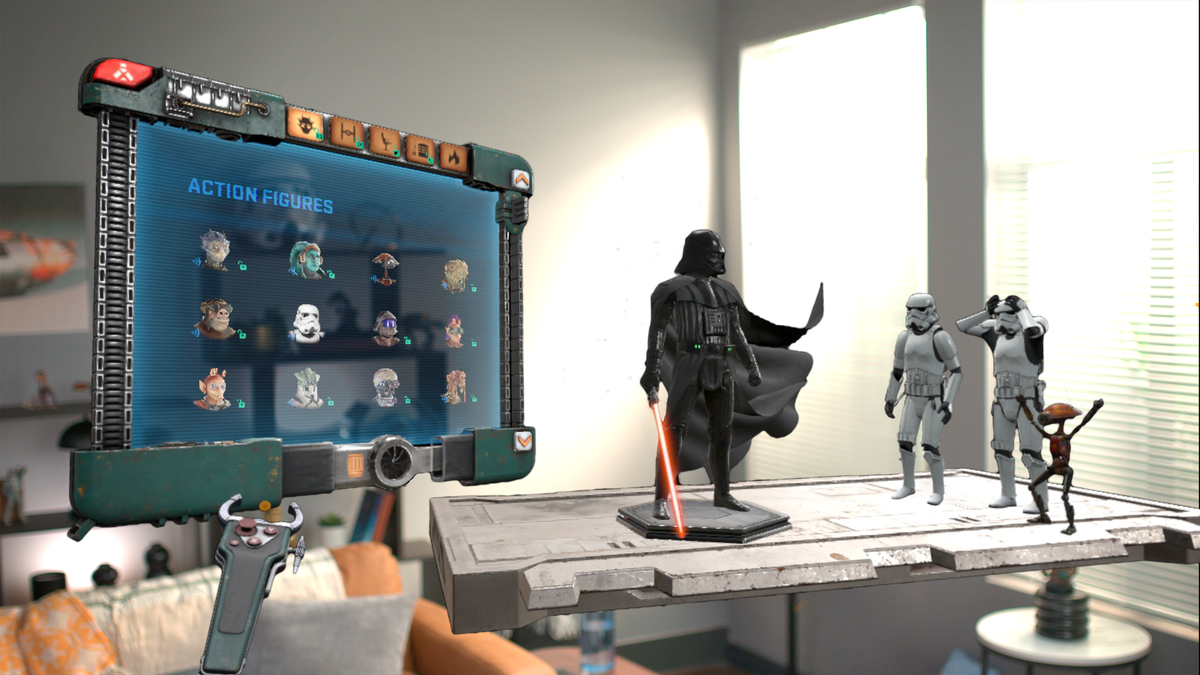
Following Vader Immortal and Tales from the Galaxy’s Edge, the next Star Wars game to reach Quest features both VR and mixed reality gameplay. Beyond Victory takes place around Solo: A Star Wars Story, where you meet “up-and-comer” Volo Bolus as he joins forces with podracer Sebulba from Star Wars: Episode I. You can find out more in our recent hands-on preview.
Super RC, the latest project from the developers behind the Ultrawings series, features 1/5 scale remote-controlled cars you can collect, build, customize, and race through “three hours” of single-player races. Supporting both MR and VR gameplay, this also features a track creator mode, car customization, a sandbox mode, and online multiplayer for up to 8 players.
Inspired by Star Fox and Ikaruga, The Phoenix Gene is a third-person narrative on-rails shooter by HEROmation where you play as Firestorm, a phoenix aiming to protect Jackie after an accident involving an immortality serum. Now heading to PC VR following last week’s Update 1.3 on Quest, this PC edition includes 120fps support. A free Steam demo also is live now.
Developed by Patient 8 Games, Memoreum is a VR action horror game that began life as a Dead Space VR mod. Set in the year 2311, you play as Dr. Otto Hudson as you discover your ship’s inhabitants have succumbed to the Ichor Infection. Steam and PlayStation VR2 versions are coming later on, though a specific release date is unknown.
Scared by Squares is a creepy exploration game where you’re a prisoner who’s been given a life sentence. Giving you one last chance at life, you’ve been sent into a digital prison of perfect squares known as the Cube following reports of dangerous irregularities. You can play the Quest demo now and while a PC VR version is on the way, this month’s early access launch is only on Quest.
Dreams of Another is the next entry in the PixelJunk series coming to PS5 with an exclusive first-person mode for PS VR2. Following the theme of “No Creation Without Destruction,” you create objects by shooting guns rather than destroying them. Take a look at our preview and Q-Games interview to learn more, and it’s worth noting the Steam version doesn’t have PC VR support.
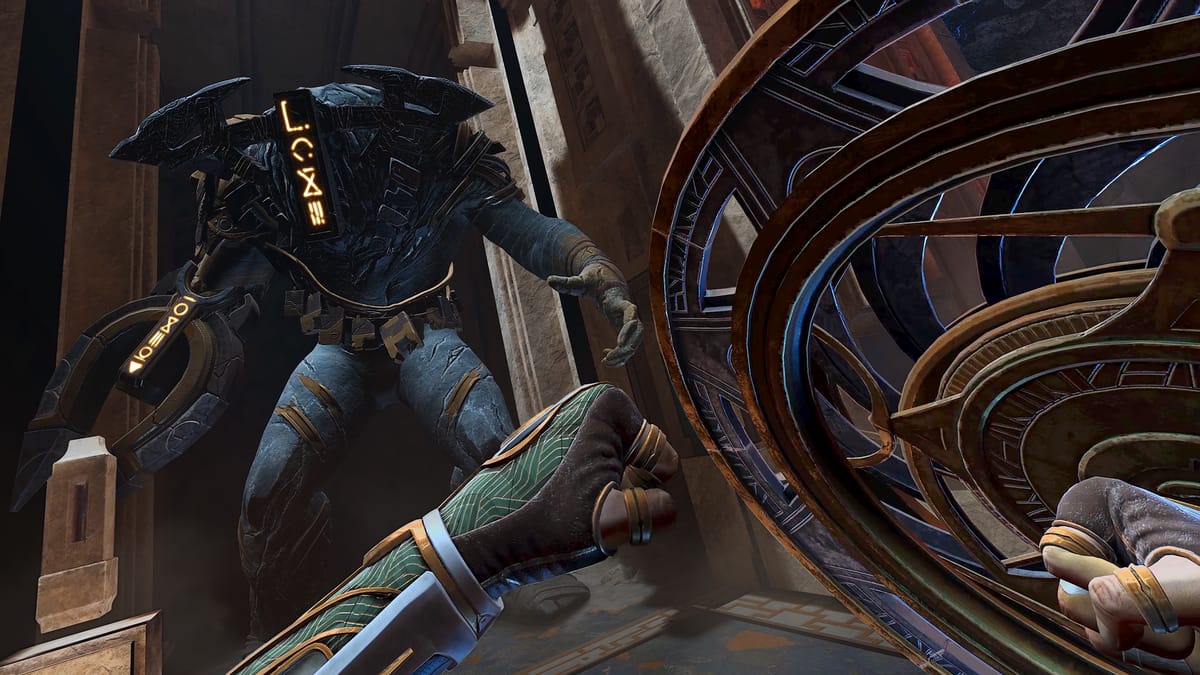
Reach is an ambitious AAA cinematic VR adventure from nDreams Elevation where you portray reluctant hero Rosa. Focused on unearthing the secrets of an underground civilization as you take down a series of mythical threats, we had strong impressions in our recent preview, and we’ll bring you our full review as soon as we can.
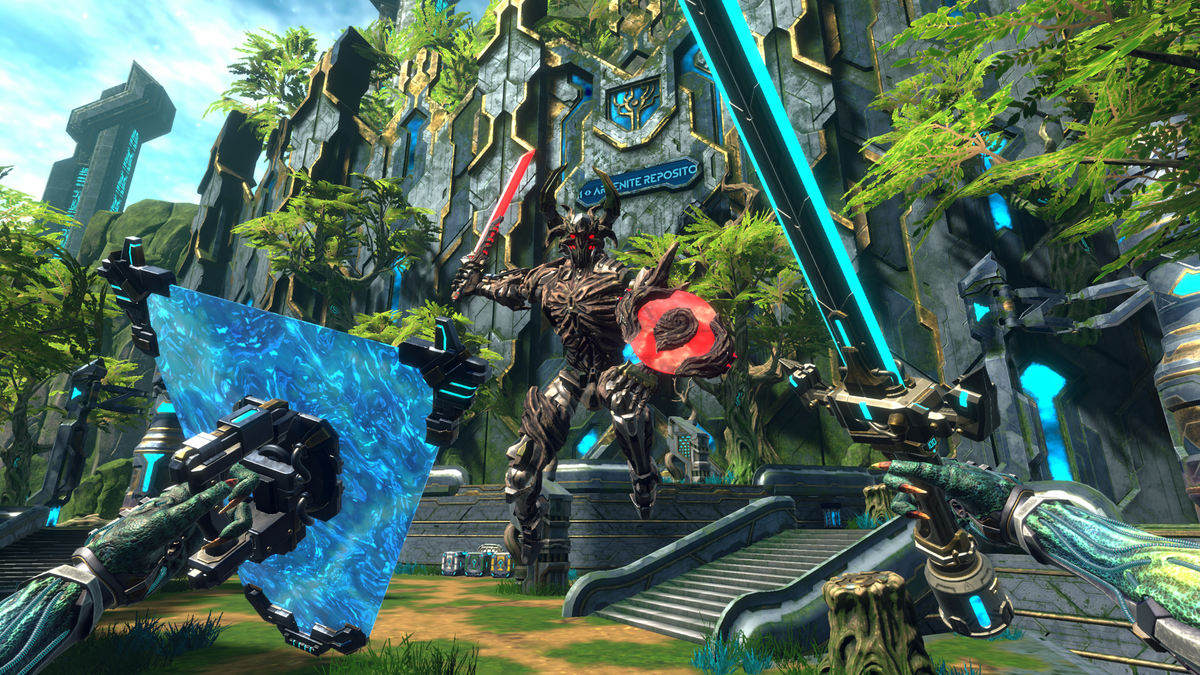
Developed by Nervous Systems and published by Fast Travel Games, Vex Mage aims to deliver a high-speed shooter where you and up to two additional players fight through deadly arenas as enemies emerge from all sides. That’s getting a slightly staggered launch across both platforms with an optional flatscreen mode on Steam, while free Quest and PC VR demos are out now.
Cité Alexandrie by Sirene Rouge Games is a narrative-management game set in an alternate 1980s France, where culture such as books and records has become contraband as you run an “illegal cultural network.” That’s out this month on Quest.
Developed by Steelkrill Studio and published by Perp Games, Trenches VR is a psychological horror game set during World War 1 with a supernatural twist, and it previously launched for flatscreen platforms. The Quest and Steam editions support microphone detection where enemies can hear your real-life breathing, and dying sends you back to the start.
Wanderer: The Fragments of Fate – October 23 (PC VR)
A remake of 2022’s time travel adventure Wanderer, Mighty Eyes is back with Wanderer: The Fragments of Fate. Playing as Asher Neumann, this adventure focuses on escape room-style puzzles as you explore different time periods. Previously released on Quest and PlayStation VR2, it’s now heading to Steam following a PC VR demo launch. However, just be aware that Wanderer has seen repeat delays before, so this timeline may slip.
Created by TitanZGames, The Amygdala Protocol is a puzzle survival game where you portray a private detective as you visit the Crestwood Institute. Tasked with finding a missing neurologist, Dr. Elias Thorne, this promises a dark conspiracy that goes from a missing persons case to investigating highly unethical experiments.
Developed by VitruviusVR, Arken Age is a single-player action-adventure game that previously arrived on Steam and PlayStation VR2. This upcoming Quest 3 port features full content parity with the original release, and our recent preview considered this to be a promising standalone port. You can also check out our full review for the original launch.
Currently in early access, Little Planet by VRWOOD originally arrived in 2023 and has seen a consistent slate of updates ever since. Playable alone and in multiplayer, this social sandbox lets you build a home across different planets with the ability to terraform these worlds. That’s now entering full release later this month, which coincides with a free-to-play transition.
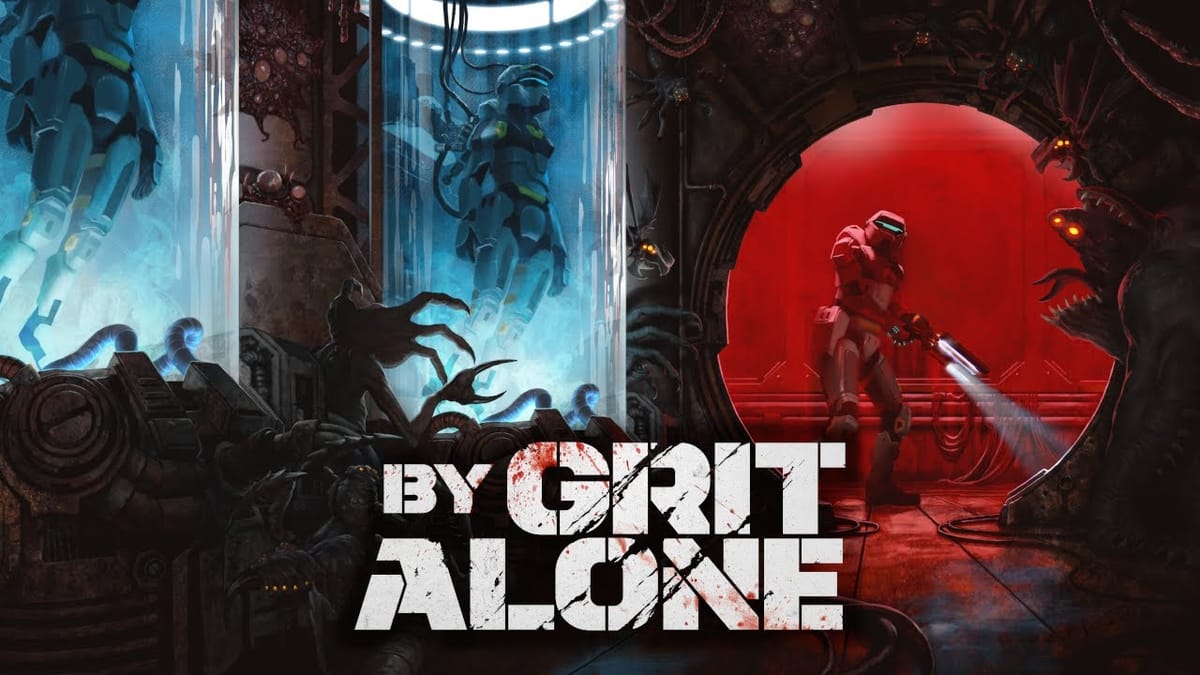
By Grit Alone by Crooks Peak is an intense action horror game that originally launched on Quest last November. Offering a sci-fi anthology of narrative tales, this sees you exploring derelict starships in the “Bermuda Triangle of space” as you fend off vicious aliens to survive. That’s now reaching Steam with a demo launching on October 1, and demo progress carries over to the main game.
Initially launched two years ago on Quest, zombie survival shooter Drop Dead: The Cabin is now heading to PC VR with four-player co-op, cross-platform multiplayer, and a flatscreen mode. Soul Assembly previously confirmed this upcoming port features visual enhancements, and a Steam Next Fest demo will be available on October 13.
Zero Caliber is one of VR’s older FPS hits, and that’s now heading to PlayStation VR2 with a remastered edition. While XREAL Games confirmed it’s aiming for an October launch, a specific release date remains unconfirmed. The studio also plans to bring the sequel, Zero Caliber 2, to Sony’s headset at a later date.
If you’re releasing a new VR game we should know about for this article or future monthly roundups, you can use our contact page or email tips@uploadvr.com with details.
Interested in learning about more upcoming VR games? Take a look at our complete list below, which covers upcoming Quest, PC VR, PlayStation VR2, Pico, Apple Vision Pro, and Android XR games:
Linux ACPI and power management maintainer Rafael Wysocki today sent out all of the feature updates and changes intended for the now-started Linux 6.18 merge window. There are some new Intel additions as well as for the growing range of different ARM-based SoCs and other hardware…