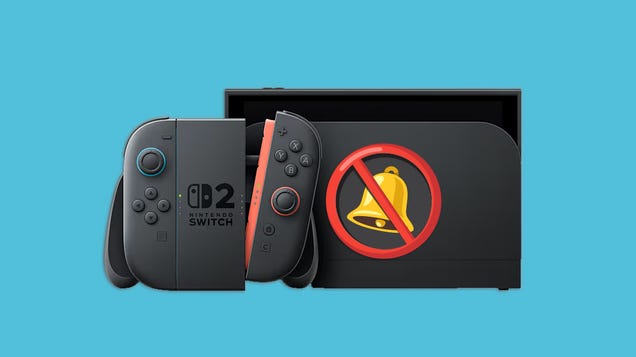
Personally, I usually like receiving notifications about things so I know what’s up with the people in my life. But if you’re playing an immersive game on your fancy new Nintendo Switch 2, you may want to ensure there are no distractions. In that case, maybe you should reduce how many notifications you receive or turn…
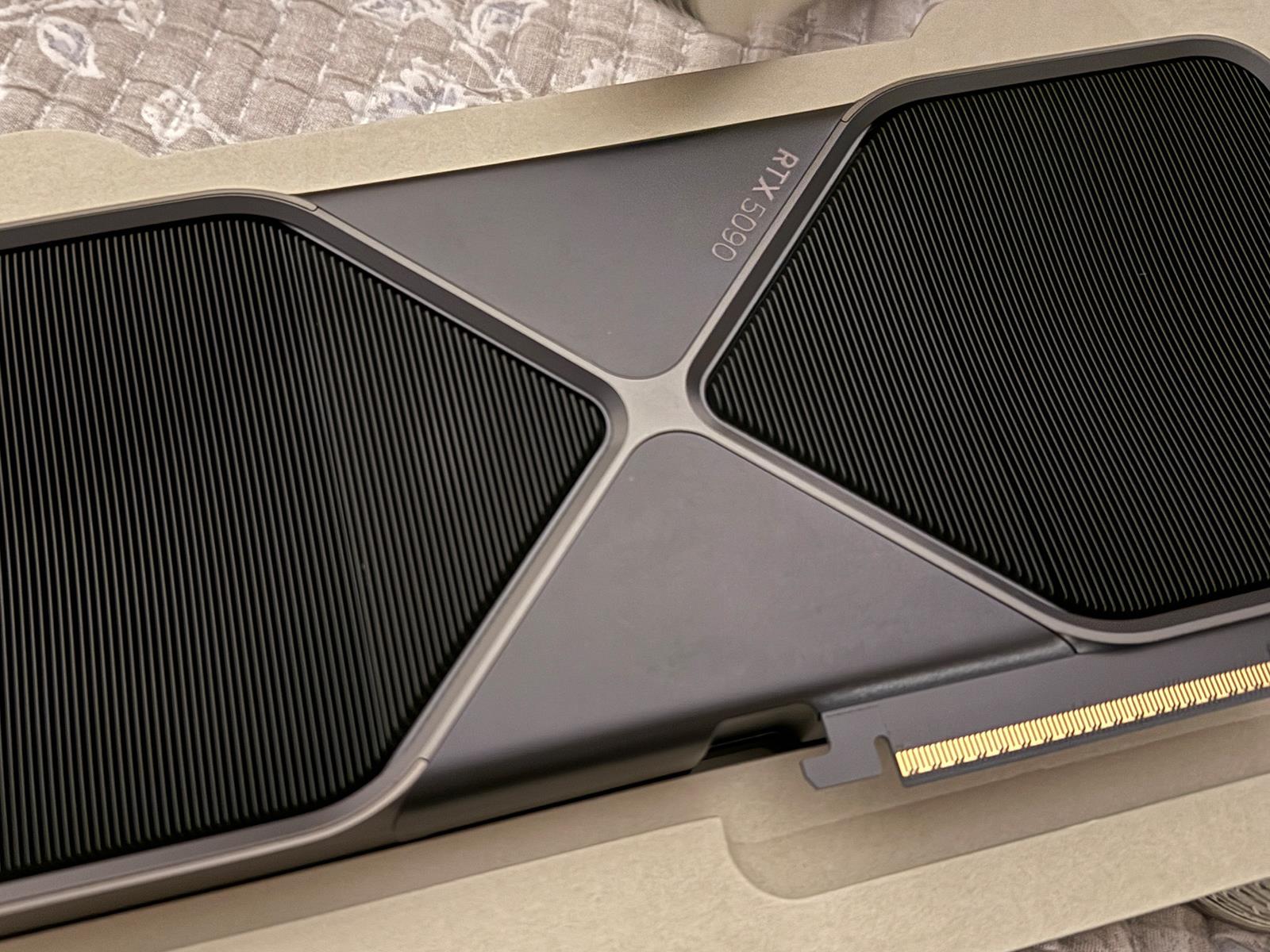
If you’re a PC gaming enthusiast and a fan of NVIDIA’s GeForce GPUs, chances are you’ve dealt with hard-to-find items in the past. Even GPUs such as the GeForce GTX 1080 Ti were sparse during the first few months, which was dwarfed by the frenzy of the GPU shortages later on around 2021. The GeForce RTX 5090 is its own blend of hard-to-find
Nissan has unveiled its third-generation Leaf EV with a completely new design. The 2026 model sheds the last vestiges of its original compact car body and leans fully into crossover SUV territory. The new look offers some design features that are commonly seen in the all-electric vehicle marketplace, allowing it to compete against other models in its class. These include available dual 14.3-inch displays, flush door handles for better aerodynamics, and liquid-cooled lithium-ion batteries.
The new Leaf is also the latest EV to adopt the NACS charging port after Tesla made it open-source in 2022. Since then, just about every major automaker from Ford to Mercedes has adopted the standard, with these brands getting access to Tesla’s Supercharger network on a rolling basis. For added convenience, a J1772 port, the most common standard for Level 2 chargers, is included on the driver’s-side fender. The Leaf’s video announcement highlights bi-directional V2X technology that allows drivers to power their homes, send power to the grid, or provide power when camping, though details are sparse.
In the same video, Nissan’s head of global design, Alfonso Albaisa, explains the lengths the company went to in making the car as aerodynamic as possible in order to achieve the car’s stated 300-mile range. The rear door handles, for instance, are built into the C-pillar, which could make for an awkward angle when trying to open the door with your hands full. The body of the Leaf has a chunky, SUV-like stance, with a wide front reminiscent of the Volkswagen ID.4. In the end, all these design choices helped the new Leaf reduce its drag coefficient by 10 percent from the previous generation.
Nissan
Nissan is also bringing the new Leaf’s battery thermal management to par with other major EV brands, which will improve charging performance in cold weather. The car will capture wasted heat from the drive motor and the on-board charger, and use it to help warm the battery to its ideal temperature for charging. In frigid conditions it can also use the car’s heat pump, and a dedicated battery heater to further maintain battery temperatures.
Design easter eggs throughout the car pay homage to the brand’s name by incorporating “2-3” iconography in the form of stripes, which are meant to represent the kanji writing of two and three in Japanese, pronounced “ni” and “san.”
The new Leaf is built on a 75-kWh, liquid-cooled battery pack and packs a 214-horsepower electric motor. It will be offered in a wide variety of color options along with a slew of optional features like 19-inch wheels, dimming panoramic roof and 64-color ambient lighting. Built-in Google integrating Google Maps, Google Assistant and the Play Store into the Leaf is also an available option. Wireless Apple CarPlay and Android Auto will be standard on the Leaf S and S+. Nissan says a cheaper 52-kWh version with a 174-horsepower motor will become available at a later date.
The 2026 Nissan Leaf will hit showrooms this fall, though pricing has yet to be announced.
This article originally appeared on Engadget at https://www.engadget.com/transportation/evs/nissan-unveils-the-third-generation-leaf-ev-145620303.html?src=rss
Summer is nearly upon us (just a few more days until the official start of the season) and with its comes an annual tradition from Amazon that now dates back a full decade. We’re of course talking about Prime Day, the massive sales bonanza that sees the online retail giant discount millions of items over the course of multiple days, with deals
Because some people actually bother putting their know-how to good use, this is a video of Youtuber Engineezy building and playing a physical version of the Flappy Bird video game. It’s a very impressive build, featuring pipes that rotate on a conveyor belt, randomly adjusting their height as a player attempts to flap their way through. It also dispenses different colored coins for achieving certain scores. I would totally play this at the arcade, especially if those coins were redeemable for a plushie to give my girlfriend. Did you know the creator of the original Flappy Bird removed it from app stores because “he felt guilty over what he considered to be the game’s addictive nature and overusage?” That’s wild, because if I were a betting man (which I am, keep an eye out for my bookie) I’d have bet 100% of the population would have sold that game for top dollar and not cared if it destroyed lives. Are we sure he’s even human? I’ll bet you he’s an alien.
There are a few undeniable truths in this world: the sky is blue, Mario Kart is always a good idea and Sony’s 1000X line of headphones is amazing. The latter was proved true once again when Sony released the WH-1000XM6 edition of its wireless noise canceling headphones in May. The only downside is its price, coming in at $450 — $50 more than its predecessors launch price.
Amazon is throwing all of us a bone, though, and having a sale of sorts. Right now, you can get the Sony WH-1000XM6 headphones and a $30 Amazon gift card for $448. Yes, that is $2 less than the headphones on their own. It’s no secret that the “bundle” serves as a nice incentive to buy Sony’s new headphones from Amazon, but, hey, a $30 gift card never hurt anyone.
Sony released the WH-1000XM6 headphones three years after their predecessor, but the new model quickly proved to be worth the wait. We gave the M6s a 94 in our review thanks to features like improved sound and better active noise cancelation. One of the best things about this model compared to the M5s is the return to a folding design — I love my M5s but it’s very annoying that they don’t shrink at all. The M6s are also very comfy and have a wider headband for easy wear.
This article originally appeared on Engadget at https://www.engadget.com/deals/amazon-includes-a-free-30-gift-card-when-you-buy-the-sony-wh-1000xm6-headphones-144511244.html?src=rss
AI use among U.S. workers has nearly doubled over two years, with 40% of employees now using artificial intelligence tools at least a few times annually, up from 21% in 2023, according to new Gallup research.
Daily AI usage has doubled in the past year alone, jumping from 4% to 8% of workers. The growth concentrates heavily among white-collar employees, where 27% report frequent AI use compared to just 9% of production and front-line workers.
We now know that the 2025 edition of Amazon’s blockbuster Prime Day sales event will start on July 8, and it’s set to be bigger than ever as it will run for four days. But you don’t need to wait until then for tasty deals. There will be plenty in the lead up to the event, including this one for the Levoit Core 400S air purifier. At $185, the device is $35 off.
It’s not quite the lowest price we’ve seen for this model. However, it’s not too far off that mark of $176.
The Levoit Core 400S is our current pick for the best air purifier overall. Sure, it might not have the prettiest design of all the options we have tested and the companion app might have a little too much going on. But the Core 400S does its job and does it well.
This smart air purifier is slated to clean the atmosphere in spaces of up to 1,733 square feet in as little as one hour. The Core 400S has a cylindrical shape with vents at the top and a touch display that shows air quality readings. You’ll be able to get a sense of the current air quality in your space at a glance with a color-changing ring that will light up in blue, green, orange or red. The 360-degree filtration system is said to be capable of capturing over 99.9 percent of pollutants as small as 0.3 microns, such as dust, pet dander and pollen.
There is an auto mode that should suffice for maintaining air quality, but the Core 400S is compatible with Alexa and Google Assistant voice controls too. The fan isn’t too loud, even when it’s operating at maximum speed — the volume topped out at 62dB in our testing. Meanwhile, at $50 each, the air filter replacements aren’t too expensive compared with those from many of Levoit’s competitors.
This article originally appeared on Engadget at https://www.engadget.com/deals/our-top-air-purifier-is-35-off-in-an-early-prime-day-deal-143224919.html?src=rss
The European Space Agency (ESA) has achieved a rather unusual yet cool feat: successfully creating and maintaining artificial solar eclipses in space with its Proba-3 mission. This all comes down to precise formation maneuvering that enables the two-satellite system to create totality as needed, hence providing solar scientists with unprecedented,
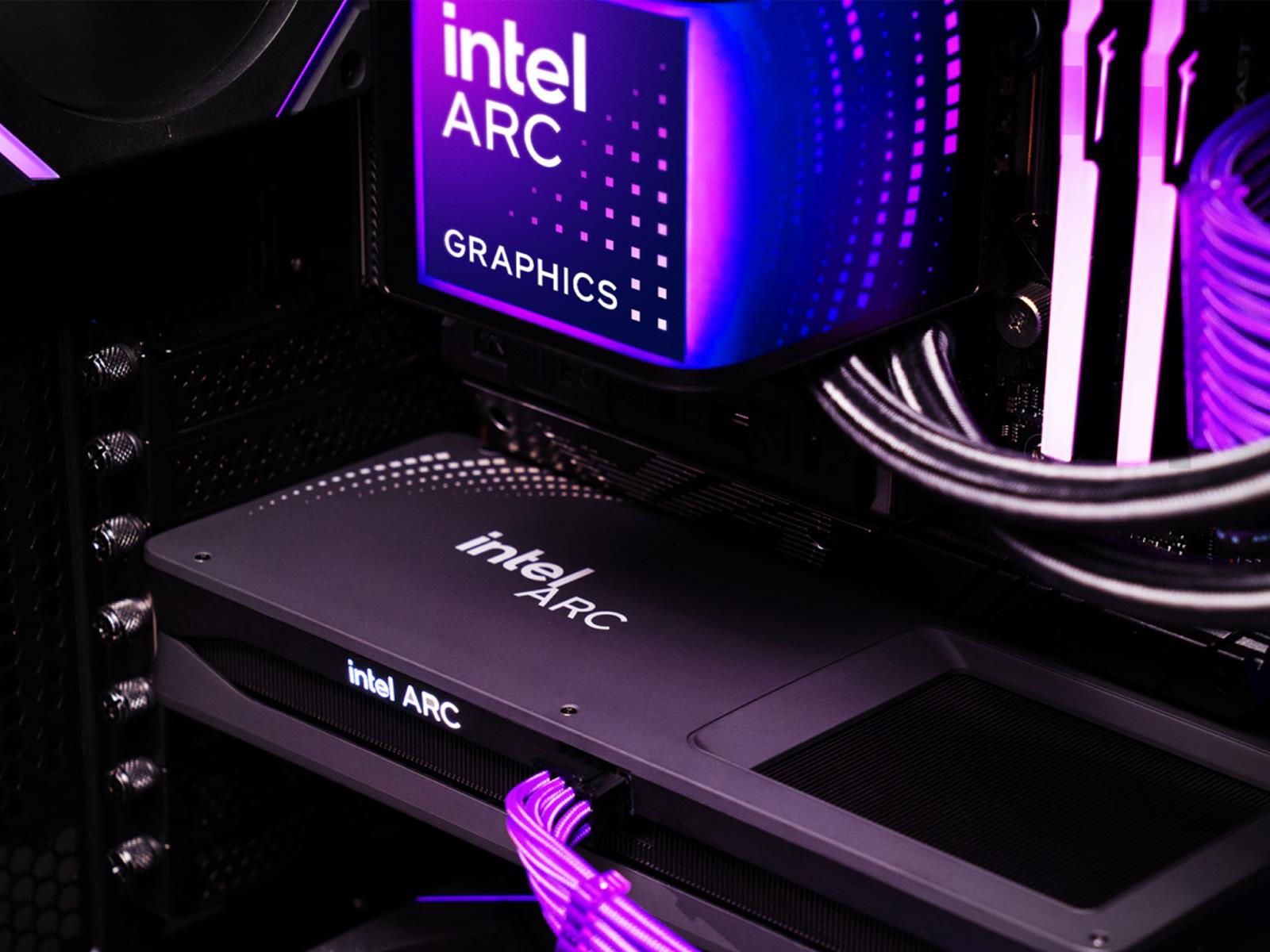
Remember when reports surfaced that Intel had allegedly scrapped plans to launch a so-called ‘Big Battlemage’ GPU to compete with more performant options from AMD and NVIDIA? That was in late March. It didn’t take long to cast doubt on the rumor, as barely a month later, a high-end Battlemage G31 GPU was spotted in a shipping manifest, suggesting
Final Fantasy Tactics – The Ivalice Chronicles will make the PS1 classic playable on modern hardware in September for the first time since the PlayStation 3 generation over a decade ago. Why did it take so long for Square Enix to bring back the beloved strategy spin-off? It might have had something to do with missing…
A new benchmark assembled by a team of International Olympiad medalists suggests the hype about large language models beating elite human coders is premature. LiveCodeBench Pro, unveiled in a 584-problem study [PDF] drawn from Codeforces, ICPC and IOI contests, shows the best frontier model clears just 53% of medium-difficulty tasks on its first attempt and none of the hard ones, while grandmaster-level humans routinely solve at least some of those highest-tier problems.
The researchers measured models and humans on the same Elo scale used by Codeforces and found that OpenAI’s o4-mini-high, when stripped of terminal tools and limited to one try per task, lands at an Elo rating of 2,116 — hundreds of points below the grandmaster cutoff and roughly the 1.5 percentile among human contestants. A granular tag-by-tag autopsy identified implementation-friendly, knowledge-heavy problems — segment trees, graph templates, classic dynamic programming — as the models’ comfort zone; observation-driven puzzles such as game-theory endgames and trick-greedy constructs remain stubborn roadblocks.
Because the dataset is harvested in real time as contests conclude, the authors argue it minimizes training-data leakage and offers a moving target for future systems. The broader takeaway is that impressive leaderboard jumps often reflect tool use, multiple retries or easier benchmarks rather than genuine algorithmic reasoning, leaving a conspicuous gap between today’s models and top human problem-solvers.
Ribble has announced a completely new range of gravel bikes, with the new Ultra-Grit featuring tech borrowed from the Ultra Race.
The revamped range includes aluminium, titanium, alloy and carbon electric and non-assisted gravel bikes.
There is no steel option in the range, a surprise from Ribble – a brand with a long history of producing great-value steel bikes.
However, Ribble’s head of product, Jamie Burrow, told BikeRadar a new steel model will be coming later in the year.
Ribble Ultra-Grit
The Ultra-Grit is an aero-optimised gravel racer that’s available in Ribble’s Outlier team colours. Ribble
The Ultra-Grit has been developed with input from Ribble’s pro-gravel Outliers team, alongside material and aero-design lessons learned from the development of the Ultra Race.
The new frameset is made from a combination of T1000 and M46 fibres, like the lightweight Ultra Race. Here, the materials are combined with an asymmetric seat tube and seatstays designed to provide flex.
With a claimed weight of 900g, it’s one of the lighter gravel framesets we’ve seen.
The frame’s aero-optimisation comes from the aerofoil tube shapes, and a fully integrated cockpit and full internal routing.
SRAM Red AXS XPLR on the Team edition will set you back £7,499. Ribble
Tyre clearances are generous, measuring 53mm at the fork and 50mm at the rear.
Ribble hasn’t stripped back the features to get the Ultra-Grit down to a racing weight either, with triple bottle mounts, down tube storage (in collaboration with fellow British brand Restrap bags), top tube mounts and mudguard eyelets.
The frame uses a BSA threaded bottom bracket and a UDH-compatible rear dropout. It can be built with either 1x or 2x drivetrains, although only 2x is available at launch.
Gravel-racing geometry
The Ultra-Grit’s down tube has the same bottle-shielding shape as the Allroad and Ultra Race. Ribble
Ribble’s approach to geometry on the Ultra-Grit is very much race-oriented and informed by the brand’s pro riders. The bike has a steep 74-degree seat angle and a 71.5-degree head angle. With a low stack and long reach, it looks very much the gravel racer’s option on paper.
The Ultra-Grit has already been posting the fastest times in both the men’s and women’s categories at this year’s Dirty Reiver and gained a podium in the UCI Gravel World Series, too.
The Ultra-Grit’s fork has room for a 53mm tyre. Ribble
The Ultra-Grit is available in both a standard model and the Team edition.
Build options start with SRAM Apex AXS for £2,599 with DT Swiss G1800 wheels. Next comes a Rival XPLR AXS model with DT Swiss G1800 wheels at £3,099, with SRAM Force AXS XPLR and Vision SC45 i23 wheels costing £4,399. The range is topped by a SRAM Red XPLR AXS model with Zipp 303 XPLR wheels at £7,499.
Ribble AllGrit range
The AllGrit AL, with wireless SRAM Apex XPLR AXS, is priced at £1,999. Ribble
The AllGrit is Ribble’s new all-round gravel bike. The range starts with the AllGrit AL, then steps up to the AllGrit Ti with 3D-printed junctions. The range is completed by two electric gravel bikes – in aluminium and carbon.
The AllGrit AL is made from 7005-series aluminium, hydroformed and smooth-welded throughout. It shares a D-shaped carbon seatpost with the AllGrit Ti and features full internal routing and a full-carbon fork.
The down tube uses the same bottle-shielding profile as the Ultra-Grit and Ultra Race, and employs a UDH rear dropout and threaded T47 bottom bracket.
The frame features triple bottle bosses, rack mounts, full-length mudguard mounts, and mounts on the top of the top tube.
AllGrit geometry
The geometry is similar to the Ultra-Grit but with a few subtle changes to the stack, reach and wheelbase. It shares the same large 53/50mm tyre clearances.
The AllGrit AL comes in two standard models: a SRAM Apex XPLR 1×12-speed mechanical bike with DT Swiss G1800 wheels for £1,699 and a SRAM Apex AXS bike with the same wheels for £1,999.
The AllGrit Ti sits at the top of the AllGrit range. Ribble
Ribble’s range-topping AllGrit is a new titanium model that uses the same 3D-printed tech as found on the AllRoad Ti.
The new AllGrit Ti-X shares the same geometry as the AL and has the same generous 53mm front and 50mm rear tyre clearances.
The sculpted titanium tubing is aero optimised and the frame comes with provision for three bottle cages, top tube mounts, a rear rack and mudguards. The fork has triple anything mounts.
The frame is compatible with 1x and 2x drivetrains, and has a threaded T47 bottom bracket and UDH dropouts.
The AllGrit Ti-X has 3D-printed frame junctions. Ribble
The AllGrit Ti-X has three models: SRAM Apex AXS at £3,499, SRAM Rival AXS XPLR at £3,999, and the range-topping Force AXS XPLR model at £5,298.
AllGrit E electric gravel bikes
The Ribble AllGrit AL E uses Mahle’s X30 rear-hub drive and is priced from £2,899. Ribble
Ribble has launched two electric-gravel models, both using Mahle’s ebike motors. The AllGrit E AL shares the same hydroformed 7005 alloy tubing as the AllGrit AL, complete with smooth-welded junctions. Only the down tube has been reshaped to accommodate the internal Mahle 250Wh battery.
The rear-hub motor is Mahle’s X30 drive, with 45Nm torque and a controller built into the top tube. Like the standard AllGrit, the alloy electric model has generous 53mm and 50mm tyre clearances.
The AL E gets two options: a SRAM Apex XPLR 1×12 mechanical bike at £2,899 and a SRAM Apex AXS bike at £3,199.
Ribble’s AllGrit Carbon E uses Mahle’s minimal X20 drive system, making for a light 12.2kg bike. Ribble
The range-topping electric gravel option is the AllGrit E Carbon-X, with a carbon frame made from the same high-grade T1000 and M46 fibres as the Ultra-Grit.
The rear end of the Carbon-X shares the same aero design as the Team bikes. The motor is Mahle’s minimal lightweight X20 system, with a powerful 55Nm of torque and a 350Wh battery secured in the down tube.
It has the same large tyre clearances, fork luggage mounts, rear rack and anything fork mounts as the non-electric AllGrit models.
Prices start at £3,999 for the SRAM Apex AXS model, rising to £4,499 for the SRAM Rival AXS XPLR and £5,299 for the new SRAM Force AXS XPLR drivetrain.
Upgrades on everything
The RockShox Rudy XPLR Ultimate gravel fork is an option. Russell Burton / Our Media
The new gravel range will also showcase Ribble’s expansion of its online Bike Builder service, with many options to upgrade across every model.
The biggest of these is undoubtedly the ability to upgrade any of the gravel bikes to a RockShox Rudy Ultimate 30mm-travel fork (the new models are geometry-corrected for a gravel suspension fork) for £300. That’s a good deal for a fork that retails at £779.
You can upgrade the wheels with a selection of options from Hope, Vision and Zipp. Ribble will also offer three handlebar options: integrated aero gravel, aero road and gravel riser.
There are six saddle options and a whole suite of accessories designed specifically for the bikes, including a range of bags from Restrap.
You’d assume that the latest game from the studio that made Little Nightmares 2 is going to be a bit spooky and dark, and Section 9’s End of Abyss is that. However, it’s also a little easier to describe and explain: an atmospheric sci-fi shooter with Metroidvania-style exploration.
While there’s no shortage of Metroidvanias to draw inspiration from, when I played a demo at SGF 2025, all I could think of was Alien. It might be the scanner, which the protagonist can use to glean information, spot hidden items and tag room details for further exploration once you’ve got new skills or weapons. Mattias Ottvall, co-creator of the game, praised my tendency to scan everything, which netted me several secret item caches during my demo playthrough.
You’ll have to tag between the scanner and your gun pretty often, too, as biped monsters, spidery little parasites and beefier foes swing their literal heads at you. Fortunately, End of Abyss’ isometric layout is paired with the ability to move and shoot with each analog stick. If things get a little too dicey, your character also has a very forgiving dive roll.
After some early teething issues (scanning an alien zombie instead of shooting it down), the control setup eventually became second nature, and I was tumbling out of the way of an alien golem boss, firing shotgun rounds into its flank. The shotgun, unfortunately, has finite ammo (which you can both craft and find in the world), so I resorted to chipping away with my pistol at a distance.
The brief demo (and teaser trailer) suggest a dark and shady atmosphere similar to the studio’s previous games. Naturally, there’s the occasional scare as you explore this rundown facility.
If you do get overwhelmed, the character gets respawned back into the world — as do the monsters — but any doors unlocked and skills gained are saved. Even better, with a game that centers on exploration, when you come across something that you can’t yet interact with (for example, a weakened wall that could be demolished or a security door that requires a key), scanning it in-game will ‘tag’ the feature on the menu map, making it easier to circle back once you have what you need to progress. During the demo, I unlocked explosives for tackling the weakened walls that were tagged, but I also spotted grapple hook fixtures, presumably for a later point in the game.
The tagging is a nice touch for anyone who struggles to keep track of their path in sprawling Metroidvania games, although this is contingent on how expansive End of Abyss turns out to be. The original Little Nightmares turned out to be a short, but sweet escape – how deep will the abyss go?
End of Abyss is coming to PS5, Xbox Series X|S and PC.
This article originally appeared on Engadget at https://www.engadget.com/gaming/end-of-abyss-is-when-metroidvania-meets-space-horror-140049187.html?src=rss
Enough is never enough. Chevrolet has only just released the Corvette ZR1, which at 1,064 horsepower is the fastest, quickest and most outrageous production car ever to wear a bowtie on the hood.
It can keep the neckwear, but its performance crown has already found a new home. Meet the new ZR1X, an even higher-performance Corvette that will take America’s sports car to new heights. It has 1,250HP, all-wheel drive and accelerates to 60MPH in less than two seconds.
Oh, and yes, it’s a hybrid. I got an early look at the thing at a private debut recently, and here’s everything you need to know about America’s new hypercar.
E-Ray Maximus
Tim Stevens for Engadget
The ZR1X joins an increasingly busy lineup of Corvette models that ensures buyers with budgets ranging from generous to extreme all have something to covet. The Stingray is still the base model, with a starting price of just over $70,000 and 490HP.
From a financial standpoint, next up is the Corvette E-Ray, the hybrid model introduced in 2023. It adds a 160HP electric motor to the proceedings, resulting in a total output of 655HP. The E-Ray is positioned as something of a grand tourer: really fast but with a somewhat relaxed attitude. That also starts at a little over $100,000.
From there, you can step up to the higher-performance, more track-focused Z06 model, which, unsurprisingly, is also higher priced. It has a much racier 5.5-liter V8 engine making 670HP and a spendier starting price of just over $110,000.
Those were recently joined by the new ZR1, which adds turbochargers plus numerous engine updates to deliver that whopping 1,064HP and a wild 233MPH top speed. Its asking price is also wild, starting at around $175,000. That already makes it the most expensive Corvette ever, but things are about to get more extreme.
The ZR1X is something of a melding of the ZR1 and the hybrid E-Ray. It borrows the electrical layout from the E-Ray and mounts it inside a ZR1, including that car’s turbocharged V8 and wild aerodynamic appendages. Layer on some tasty upgrades to both the electric drive system and other aspects of the car, and you have the new 1,250HP ZR1X.
Extra upgrades
Tim Stevens for Engadget
Combining the ZR1 and E-Ray gets you a good way towards creating the ZR1X, but there is a lot more to it than that. The ZR1X uses a battery pack with a revised internal construction, resulting in a capacity increase of 26 percent. But keep in mind this isn’t a plug-in hybrid. You’re still talking about something with a battery capacity of less than three kWh. You won’t be driving in your ZR1X emissions-free.
The hybrid system is there for more performance, and to that end, the car has a few new drive modes to help optimize the delivery of energy from that new pack. First is Endurance Mode, where the ZR1X will provide full power to the front motor but not tax the battery so much that you have to worry about running out of charge mid-session.
Then there’s Qualifying Mode. Select this, and the ZR1X will dump all the energy it can through the front motor to give you the outright maximum single-lap pace. There’s also a “Push to Pass” button, providing a brief period of maximum acceleration for those times when you absolutely need to get past that lollygagger ahead who’s costing you precious seconds on your commute.
All that extra speed necessitated some upgrades in the stopping department. The ZR1X wears a set of massive carbon brakes from Alcon, the company that makes these parts for some of Chevrolet’s racing machines. The 16.5-inch discs at the front equate to 1.9G of braking force. Installing a race harness might be a good idea so that you don’t go flying out of the chair the first time you hit that left pedal.
Despite the extra power at the front axle from that electric motor, the ZR1X rolls on the same size tires as the less-powerful, rear-driven ZR1. “We were tempted to go wider,” the Corvette’s chief engineer Josh Holder told me. “That’s a delicate balance between unsprung mass and driving dynamics off-power, and we believe we’ve made the right choice.”
Holder said it came down to working with Michelin on tire development plus some tweaks to the car’s traction management software. “That’s one of the things that we had to tune very carefully, given the power output now in ZR1X, just to make sure that we’re not spinning up the front axle when you’re at a high lateral load,” he said.
Familiar dynamics
Tim Stevens for Engadget
Keith Badgley, development engineer on the ZR1X, said that, despite the extra power and everything else, the ZR1X will still have the same accessible performance feel that defines the Corvette line: “We designed this to be as composed as the Stingray with but with two and a half times the power. We wanted ultimate traction, maximum acceleration.”
“I would say it doesn’t drive differently, in terms of being able to claw out over the corner, being able to balance the car with power delivery from the front axle,” Holder said. “You can do things in the E-Ray and the ZR1X that, if you did in the rear-drive car, would not work out so well for you… But that balance and dynamics, they behave similarly to the ZR1X has more capability.”
But what it probably won’t offer is the same level of attainability that the Corvette has historically been known for. Chevrolet isn’t saying how much the ZR1X will cost when it goes on sale later this year. But it surely won’t be cheap.
Again, the ZR1 starts at about $175,000. The E-Ray carries a price that’s roughly $30,000 over the base Stingray. If we apply the same premium here, we’re in the ballpark of $200,000. Add on the other upgrades, like the fancy Alcon brakes and better battery pack, and it’s easy to assume that this thing will be priced within reach of some European exotics.
Will it be worth it? We’ll have to wait and see until we get a go behind the wheel, but Chevrolet has already been testing the thing extensively around the Nurburgring, covering over 600 miles at the greatest vehicular performance playground on the planet. Hopefully, it does just as well on the streets and circuits closer to home.
This article originally appeared on Engadget at https://www.engadget.com/transportation/meet-the-corvette-zr1x-americas-1250-horsepower-hybrid-hypercar-140018897.html?src=rss
Virtual reality has come a long way since the days of the Oculus Rift CV1, with its Touch motion controllers revolutionizing our interactions and immersing us deeper into strange new virtual worlds.
For a while now I’ve been reminiscing about all those classic gems that are just sitting buried in the depths of the Meta store; thinking how the introduction of motion controls at the time revolutionized immersive gaming, and wondering how many newcomers to the VR community know that these titles even exist? With that in mind, I time traveled back while scrolling through my Meta Link app’s library to find the games showcased here today.
If you’re a newcomer to VR gaming or just want to experience a bit of the nostalgia for those early days, and also see some of the classic titles that kickstarted the evolution of hand presence in VR gaming, then these five early gems have you covered.
The Unspoken
0:00
/0:59
The Unspoken, released by Insomniac Games on December 5, 2016, is an arena battle game that focuses on turning players into powerful spellcasters. Packed with an arsenal of different offensive and defensive spells, the game seamlessly merges its gesture-based control scheme into these highly immersive wizard battles, significantly enhancing immersion.
Playing The Unspoken makes you feel powerful when pulling off a perfect gesture combination just in the nick of time to blast an opponent out of existence and claim victory. While this might sound trivial in comparison to some similar experiences we have today, The Unspoken’s way of having you cast spells through a gesture-based system was new and fresh at the time. The fact that we were finally using hand-tracked controllers in a game this polished just made players feel like true sorcerers, almost like VR versions of Marvel’s Dr. Strange.
Developed by Twisted Pixel Games and released on April 21, 2017, Wilson’s Heart captivated players with its film-noir-style black-and-white aesthetics, exceptional voice acting, and gripping narrative. The game places players in the shoes of Robert Wilson, a patient who wakes up in a run-down hospital to find he now has a removable cursed robotic heart that will become his weapon and means of continued survival. Featuring characters voiced by a cast of A-list actors such as Peter Weller, Rosario Dawson, and Alfred Molina, this immersive experience really comes alive and makes you feel like you’re a part of the unfolding story.
Solving puzzles, fighting off nightmarish creatures, and navigating creepy environments feels more realistic with the addition of hand presence here. The first time I ripped the mechanical heart from my in-game chest was visceral to the point that I swear I could almost feel it happening. Wilson’s Heart’s unique artistic direction emphasizes how VR can be used for deep, narrative-driven storytelling, and it set a high bar for other VR horror and thriller titles that came after. So, whether you’re new to VR gaming or are just looking for a truly unique VR experience, you really need to play this one.
Beginning with the first Lone Echo game in July 2017 and followed up by its sequel in October 2021, Ready at Dawn delivered a pair of amazing story-driven zero-gravity adventures for VR. Lone Echo and its sequel, Lone Echo II, put players into the role of Jack, an android working at the Kronos II Mining Platform floating within the stunning looking rings of Saturn. Along with Jack’s human counterpart, Liv, players set off on an adventure to save the station and solve the mysteries both inside the complex and unfolding in the space all around the looming gas giant.
It was praised for impeccable storytelling, immersive environments, and an innovative locomotion mechanic that relies heavily on the use of your hands. The amplified immersion gained by pulling your virtual body along the surfaces in the game’s environments sets the standard for how deeply immersive a polished narrative VR adventure game with great movement mechanics can be. Combined with stellar graphics and incredible sound design that still hold up even today, plus challenging gameplay, Ready at Dawn set a high bar for what we should expect in a well thought out narrative VR adventure game.
Released by Epic Games on March 1, 2017, Robo Recall offers an intense and visceral first-person shooter-style experience where players engage in combat against seemingly never-ending waves of rogue robots. This game was also brought to the Oculus Quest headset with a version titled Robo Recall: Unplugged that was released in May 2019, making this game the only one from our list to make the transition to standalone VR.
Known for pushing graphical boundaries, Epic Games created a visually stunning, fast-paced experience that puts a focus on fluid actions and fast decision-making. That lets you come up with creative ways to deal with the hordes of oncoming enemies coming at you from all sides. Robo Recall showcases the potential of VR for high-octane, arcade-style gameplay, and everything in it comes together so well, making it a must-play for VR enthusiasts even today.
On November 14, 2019, Insomniac Games, the developers behind other early iconic titles like Edge of Nowhere and The Unspoken, introduced us to Stormland. In this open-world VR game, you play as Vesper, an android gardener who awakens in a post-apocalyptic world with a goal of exploring and reclaiming the planet while uncovering the mysteries surrounding its missing population.
At a time when many games were typically linear, it was refreshing to find a VR experience where players are free to roam and explore large environments, while engaging in some resource collection and combat along the way. Insomniac’s attention to detail and creativity in Stormland’s gameplay really shines through, making it a unique and memorable VR experience even after all these years. The game’s expansive open world and locomotion mechanics set new standards for exploration in VR at the time, providing a template for future open-world VR titles to build upon.
All of these and many other amazing early VR titles are more than just games; they’re milestones in the history of VR that have paved the way for many of today’s advancements. Now that you know about these awesome games, strap on your headset, connect it to your gaming PC, and get ready to explore some timeless PC VR classics. Each one of these is a testament to the innovation and potential that continues to drive the VR gaming industry.
Do you have a personal favorite from the early days of VR gaming? If so, be sure to add to the conversation here or join our live show to let us know about it in the chat.
Cervélo’s new Áspero 5 is a radical departure from the Áspero template that debuted in 2019. While last year’s update was more of an evolution, the 2025 overhaul sees the premium Áspero 5 model join the R5, S5 and P5 as an aerodynamically optimised pure-bred racer.
The new Áspero 5 has already had an outing under the rainbow jersey of 2024 UCI gravel world champion Marianne Vos and will feature in this year’s UCI Gravel World Series.
With two premium SRAM XPLR-equipped bikes available at launch, plus a frame kit, and another model joining the ranks later this month, the Áspero 5 range is concise and somewhat premium. The Force XPLR bike is priced at £8,000 / $8,700 / €8,299 / CA$11,500 / AU$12,900.
The RED XPLR version is £10,000 / $12,500 / €11,499 / CA$16,950 / AU$18,00 and the frame kit (frame, fork, headset, HB16 bar, ST31 stem, SP27 seatpost) is £5,000 / $5,500 / €5,499 / CA$7,500 / AU$7,900.
Marianne Vos has already raced the new Cérvelo Áspero 5. Cérvelo
The SRAM builds both use a mixture of AXS components, with SRAM Red AXS shifters, SRAM Eagle XX SL rear derailleur, SRAM Red 1x aero crankset and a power meter.
The gearing combines a large 48-tooth chainring and 10-52t 12-speed cassette on the premium Red AXS model. The Force AXS model gets the same gearing, but the Red components are replaced by new Force parts and an X0 derailleur and cassette.
All models use Reserve’s turbulent aero wheelsets with a 40mm-deep front rim and 44mm-deep rear.
The Cérvelo Áspero 5 combines a mountain bike derailleur with a 1x aero crankset. Cérvelo
The new bike was designed to be the fastest gravel bike on the market.
The Áspero 5’s aero-optimised design sees full integration at the front end, while not resorting to a one-piece bar and stem. Instead, it uses a combination of the ST31 stem and a new carbon gravel bar called the HB16, which takes its inspiration from the AB04 bar seen on the 2015 S5.
The new HB16 bar mimics the aerodynamics of a one-piece with the practicality of a two-piece cockpit. Cérvelo
The bar’s deep wing-shaped top section includes an aerofoil section in front of the stem clamp that mimics a one-piece design, yet has the adjustability and choice of a standard two-piece setup.
Cervélo claims this detail alone results in a 6-watt drag reduction over the previous Áspero and Áspero 5.
Out has gone the twin-tip adjustable fork dropout, with the new fork having a deeper bladed shape and the crown of the fork locking into the head tube in a much smoother transition.
Instead of the twin-tip fork providing geometry adjustments, the new Áspero 5 was optimised to be run with different tyre sizes front and rear.
In the more aggressive racing position, the front runs a 40mm tyre and the rear 44mm. However, consumers will get the bike with the 42mm tyres front and rear, with the geometry slackened slightly, and the stack and reach growing by a couple of millimetres.
The curved rear-wheel shielding seat tube bears some resemblance to the S5. Cérvelo
The rear-end frame shape takes far more inspiration from the current Cervélo S5 than it does the outgoing Áspero 5, with a truncated aerofoil tube shape and a deep curve that wraps and shields the rear wheel.
This flows into an oversized bottom bracket shell that blends into a deep-section down tube that incorporates a down tube storage compartment, as found on the P-Series triathlon bike and, more recently, the Caledonia 5.
The oversized bottom bracket shell and down tube storage take inspiration from the P-Series triathlon bike. Cérvelo
Wind-tunnel proven
The new frame design and cockpit result in an improvement in aero efficiency by a huge 37 watts. Cervélo claims its wind-tunnel tests show the Áspero 5 is 36 watts more efficient than its nearest competitor, Ridley’s Kanzo Fast, and 46W more efficient than Trek’s latest Checkmate.
New Cervélo Áspero 5 geometry
The Áspero 5’s geometry falls as you’d expect, very much in the race-ready category: a low stack, longer reach and steep seat angle. Cervélo says the Áspero 5 geometry is based on its racing all-rounder, the Soloist, ridden by Wout Van Aert in this year’s Paris-Roubaix.
However, it has a slightly relaxed head angle and short fork offset. When using the same 42mm tyre sizes front and rear, which Cérvelo calls ‘balanced geometry’, the bike gets a little more of an endurance bent.
In the ‘mixed geometry’ incarnation, with different front and rear tyre sizes, the stack lowers, reach grows and the angles steepen for a more race-ready setup.
Two-time Tour de France winner Jonas Vingegaard aboard the new Áspero 5. Cérvelo
The Áspero 5 comes with the same stripped-down ethos as the original Áspero, which launched with the mantra of ‘Haul ass not luggage’. That means no fork mounts, mudguard or fender provision, two bottle mounts, down tube storage, bento box mounts on the top tube – and that’s it.
The bottom bracket uses Cervélo’s threaded T47 BBright standard, and the rear dropout is SRAM’s Universal Derailleur Hanger. The aerodynamic seatpost is the SP27, the same design as found on the current Soloist.
The Cérvelo Áspero 5 frame kit comes with seatpost and cockpit as standard. Cérvelo
Cervélo claims the frame kit is 66g lighter than the previous generation’s 990g frame and 496g fork.
The frame is heavier, at 1,023g, due to its inclusion of down tube storage. The weight savings come from a lighter fork (393g), bar, stem and seatpost, according to Cervélo.
The frame and fork have clearance for 45mm tyres, up from the 42mm of the previous generation. However, that looks a little conservative in light of the current trend for ever-wider tyres of 50 mm+ and even the adoption of mountain bike race tyres for events such as Unbound.
Product
Brand
Cervelo
Price
A$18000.00, €11499.00, £10000.00, $12500.00
Weight
8.27kg
Features
Fork
Cervélo All-Carbon, Tapered Aspero-5 Fork
Stem
Cervélo ST31 Carbon
Chain
SRAM XX SL, 12-Speed
Tyres
Corsa Pro Control TLR G2.0 700x42c
Brakes
SRAM Paceline X Centerlock
Cranks
SRAM Red 1 AXS E1, 48T, DUB Wide, with power meter
SRAM’s new Force and Rival AXS 2x road groupsets bring the improved ergonomics of Red AXS along with updated component design. The second- and third-tier SRAM groups have lost significant weight in the process, too.
It’s not only the weight that has been cut, though. SRAM’s pricing looks competitive, too, with Force AXS and Rival AXS both undercutting their Shimano equivalents.
New Force AXS is £160 cheaper than Ultegra Di2, with new Rival AXS undercutting 105 Di2 by £154 in standard guise – or £9 for the power meter option.
Every component of Force and Rival AXS has seen an overhaul. Each has a new shifter design, a faster-shifting front derailleur with built-in auto trim, and a new crankset, chainring and lighter chain. There’s also a new power meter option on Force that brings the thread-mount chainring design from Red.
SRAM’s Force AXS groupset is lighter than Shimano Ultegra Di2. SRAM
The most important part of each group’s update is the inclusion of the new hood dimensions and lever shape that made Red AXS such a positive step forward for SRAM’s premier road offering.
The new, more compact hood shape combines with a curvier and subtly flared brake lever. This results in an improvement to braking feel, especially from the hoods, where Shimano had taken the lead thanks to its updated lever shape and Servowave braking – tech that first debuted on the previous-generation GRX Di2.
SRAM Force AXS shifters and brakes. SRAM
The hood covers are distinct between Force and Rival, but both share a set of moulded-in indicator lines that will help you set up the hoods on a bar. When the indicator marks are set horizontally, it gives the levers a 7-degree upward pitch, which is how SRAM’s designers intended the shifters to fit.
Force AXS gets the same bonus button on the inner face of the hood that can be customised through the AXS app. That brings Force in line with Shimano Ultegra Di2, which shares the same bonus button atop the hood as Dura-Ace Di2.
In a move that also mirrors Shimano, Rival AXS doesn’t get the bonus button addition, much the same as 105 Di2 doesn’t have the hood-top buttons.
Shifting smoothed
SRAM also offers an Upgrade kit for Force AXS. SRAM
Red AXS’ other major improvement came in the speed and accuracy of the front shifts, with a new front derailleur design that brings faster shifts thanks to a combination of improved architecture and a new narrower cage.
There was also an automated-trim function that set out to eliminate chain rub and rasp at extremes of the gear range. It’s this design that has been adopted across both Rival and Force AXS.
This is combined with new direct-mount one-piece chainring designs, with highly machined tooth profiles. SRAM also claims the new Force and Rival chainrings are significantly lighter and stiffer than their predecessors.
The crank arms on Force are a new carbon design, with SRAM claiming both less weight and improved stiffness.
At the rear, the Force derailleur gets the same design updates as Red, With a new, lighter forged carbon pulley cage and oversized pulley wheels. It’s designed to work with both 1x and 2x drivetrains, and a single-cage option can be used with cassettes from 10-28 up to 10-36 teeth.
The cassette gets a new matt nickel chrome plating that SRAM claims brings quieter running and improved durability.
Even the chain has had a makeover, with a new ‘hard chrome’ plated inner link plate and cut-outs in both inner and outer plates to reduce weight over the previous Force-level chain.
Force AXS launches with a limited-edition full group that includes rear derailleur, front derailleur, shift-brake controls, chain, disc brake calipers, rotors, battery charger and special-edition Hammerhead Karoo finished with a livery to match the Force components.
SRAM has also put together an upgrade kit for existing AXS riders. It consists of the Force AXS shifters/brakes and a Hammerhead Karoo (£949/$1,099).
Rival AXS gets the same lever and hood design as its more expensive cousins. The lever is upgraded to carbon over the alloy of the previous generation, resulting in a weight loss of 64g.
The new Rival crankset looks far more premium than the original Rival version. The new crank arms, with their machined backs and cut-out (taking inspiration from SRAM’s X0 aluminium crankset), also result in a weight drop of 50g on both the standard and spindle power meter options.
SRAM Rival 2x crankset. SRAM
The front derailleur gets the same Yaw cage design as Red and Force, and includes the same auto-trim function, too.
Even Rival’s chain gets a makeover, with new cut-out outer links and a ‘hard chrome’ finish for a 12g reduction in weight. The rear derailleur has had more of a facelift. Being based on an update to the previous Rival design, SRAM has still managed to shed 20g thanks to upgraded material choices.
That means, in total, Force AXS 2x with a power meter weighs in at 2,776g – 183g lighter than the previous generation.
Rival AXS 2x with a power meter weighs 2,993g – 213g lighter than the original Rival AXS 2x drivetrain.
Both the new Force and Rival AXS components are compatible with all existing AXS groupsets.
Weight comparisons
SRAM Force AXS with power meter (46/35, 10-30): 2,776g
The new Force shifters mirror the ergonomic design from Red AXS. SRAM
Force AXS shifters
The new Force AXS shifters feature the hidden bonus button on the inner face of the shifter.
This can be configured through the AXS app to suit your needs. Either use it as a secondary shift button or to switch between screens on your GPS.
The new levers are a reprofiled carbon and the new design has led to a 70g weight saving over the previous Force AXS shifters.
Force Flattop chain
Purple chain, purple chain… SRAM
The new chain features the same slotted link plates as Red, but uses solid rather than hollow pins. SRAM claims it is stronger and more durable than the previous design, thanks to new ‘hard chrome’ plated inner link plates and rollers.
It comes with a claimed 20g weight saving over the previous chain. It’s also available in a special-edition purple chain – Prince would have approved.
Force AXS front derailleur
The new Force front derailleur is based on the latest Red design. SRAM
The design is based on the 2024 Red AXS derailleur and shares the same SRAM Yaw technology, which auto trims the shifting for quiet performance even when cross-chaining.
A new, narrower cage improves both accuracy and speed, and the derailleur is designed to work across a wide range of chainring options – 46/33T, 48/35T or 50/37T.
Force AXS rear derailleur
The new Force AXS rear derailleur is 12g lighter than the previous generation. SRAM
The new rear derailleur combines the pulley cage design and oversized pulley wheels from Red AXS with a new slimmer body compared to the previous version.
The result is a 12g saving. The Force derailleur comes in a single-cage option designed to work with cassettes from 10-28 up to 10–36 teeth and is compatible with both 1x and 2x drivetrains. It features chain-management technology using a spring clutch rather than the orbital fluid damper of old.
Force AXS cranksets and power meters
The new SRAM Force AXS 2x crankset. SRAM
The new crankset uses the same direct-mount tech as SRAM Red and is available with three standard chainring combinations: 46/33, 48/35 and 50/37 teeth.
Aside from this, there’s a spider-based power meter option with the same thread-mount interface as Red AXS (with the same chainring combinations available). There is also a 1x crankset option with both direct-mount aero-rings and a direct-mount aero-ring/power meter combination.
The Force AXS 1x crankset with aero rings and power meter. SRAM
The aero rings come in 44, 46, 48 and 50-teeth sizes.
The 1x options are in addition to the recently announced 1x XPLR versions. All the cranksets now come in a wider range of crank-arm lengths, with 160, 165, 170, 172.5 and 175mm options.
Force XG-1270 cassette
The Force AXS cassette has a tough matt chrome finish. SRAM
The XDR driver-body compatible Force cassette gains a new matt nickel chrome finish. The cassette’s X-Range gearing options are 10-28, 10-30, 10-33 and 10-36. The 10-28, 10-30 and 10-33 tooth cassettes all come with at least five one-tooth jumps.
Rival’s shifters have a new design with carbon levers. SRAM
Rival AXS shifters
Rival gets the same ergonomic upgrades from RED as Force. All three shifters now have the same hood shape and lever profiles. Rival omits the hidden bonus button found on Red and Force for cost reasons, much like Shimano left its bonus buttons off 105 Di2.
Rival also sees an upgrade to carbon fibre brake levers for the first time. That has led to a 64g reduction in weight over the old shifter design.
Rival chain
The new Rival Flattop chain is compatible with 12- and 13-speed drivetrains. SRAM
The new Rival-level Flattop chain gets cut-outs on the outer links and a hard-chrome finish. The changes have led to a 12g reduction in weight over the original Rival chain.
The Rival 2x crankset with spindle-based power meter. SRAM
Rival crankset
SRAM claims the new Rival crankset is the most advanced aluminium crankset it has ever produced, with a new cut-out crank arm design that optimises the stiffness-to-weight ratio.
In a first for SRAM’s third-tier group, the crankset is paired with a one-piece direct-mount chainring design, available in 46/33t and 48/35t combinations.
The new crank-arm design shaves 50g off the previous Rival crankset.
Rival also gains a 1x crankset with aero chainring options. SRAM
Rival also gets a power meter option using the same spindle-based design as the previous Rival AXS, with a single AAA lithium battery for more than 400 hours of use.
Rival AXS front derailleur
The new Rival front derailleur comes with an auto-trim function. SRAM
Rival’s front derailleur uses the same SRAM Yaw cage movement and auto-trim as found on both Red and Force.
The narrower cage shape helps increase shift speed and the auto-trim is designed to cut out any chain rasp, even when cross-chaining gears. The new derailleur is compatible with 46/33T, 48/35T and 50/37T chainring combinations.
Rival AXS rear derailleur
The SRAM Rival AXS rear derailleur is 20g lighter than the previous generation. SRAM
The Rival rear derailleur is based on the same architecture as the previous Rival design, but updates to materials and construction have led to a 20g weight reduction. It’s compatible with both 1x and 2x drivetrains, and cassettes from 10-28 to 10-36 teeth.
Paceline rotor
Both Rival and Force use the latest Paceline disc brake rotors, with brake-track venting and a new aluminium carrier that sheds 20g compared to the previous generation.
Prices
MSRP USD
MSRP EUR
MSRP GBP
MSRP CAD
MSRP AUD
Force 2x with power
2842
2823
2528
3785
4461
Force 2x
2432
2423
2168
3245
3826
Rival 2x with power
1929
1925
1721
2589
3058
Rival 2x
1764
1765
1576
2369
2803
Pricing includes batteries and charger
Force AXS Upgrade kit
1099
1049
949
1699
Complete groupset prices are somewhat irrelevant because significant discounts can be found online. However, Force AXS with a power meter retails at £2,528 / $2,842. Standard Force AXS is £2,168 / $2,432, compared to Shimano Ultegra Di2 at £2,328.88.
Rival AXS comes in at £1,721 / $1,929 with a power meter, or £1,576 / $1,764 without, compared to Shimano’s 105 Di2 at £1,730 / $1,890.
We’ve yet to see how that will pan out in complete bike prices. In the past, Shimano’s original equipment prices have been far more competitive than SRAM’s, thanks to Shimano’s larger market share and economies of scale.
SRAM’s new Force and Rival XPLR groupsets adopt the direct-mount design of Red XPLR, while featuring the improved ergonomics seen in the 2024 Red AXS shifters.
The newly launched gravel groupsets see both Force and Rival XPLR use the full-mount design that fits directly to the UDH (Universal Derailleur Hanger) dropout.
SRAM claims the combination of full mount with the new straight-parallelogram design gives improved shifting accuracy and more resilience to impacts.
The new architecture also aids chain management in conjunction with the clutch spring tensioning and narrow-wide tooth profiling, according to SRAM. Both the Force and Rival XPLR derailleurs are fully rebuildable.
Should you trash your rear derailleur, spares are available, including the mounting assembly, outer link, cage, damper and pulley assembly, battery latch and skid plate.
The new shifters used on Force and Rival have also been inspired by Red AXS, with a new lever shape that allows for comfortable, progressive one-finger braking from both the hoods and the drops.
The same ergonomic hood and lever shape is now shared across the top three SRAM AXS tiers: Red, Force and Rival, for both road and XPLR gravel groupsets.
SRAM’s Rival XPLR brings Red tech to the third-tier gravel groupset. SRAM
Force and Rival also get new hood covers, with distinct patterns for each model and moulded indicators showing the horizontal to help position the shifters on your bars in the optimal 7-degree pitch. This, SRAM claims, provides a neutral wrist position.
Both shifter designs also get reach adjustment for the brake levers.
Force AXS and Rival AXS shifters can also be combined with SRAM’s Eagle Transmission AXS components, should you prefer to run a 10-52t cassette.
The new Force shifters mirror the ergonomic design from Red AXS. SRAM
The new Force AXS shifters work across both road and gravel. They feature a hidden bonus button, as seen on Red AXS, on the inner face of the shifter.
This can be configured through the AXS app to suit your needs. You can either use it as a secondary shift button or to switch between screens on your GPS – or even to operate an AXS dropper post.
The new levers are a reprofiled carbon and the new design has led to a 70g weight saving over the previous Force AXS shifters.
Force XPLR rear derailleur
The Force XPLR rear derailleur, like Red, is rebuildable and repairable. SRAM
The new full-mount derailleur bears a strong resemblance to the Red XPLR unit, sharing the same skeletal design, straight-parallelogram pulley assembly and oversized jockey wheels. That means the same simple fitment and no need for adjustment screws.
Just like the Red XPLR derailleur, it’s designed to work with the 13-speed 10-46t XPLR cassette in conjunction with any SRAM Flattop chain.
Force XPLR crankset
Force XPLR’s power meter is spindle-based. SRAM
The Force XPLR crankset now comes in more crank-arm sizes, with 160, 165, 170, 172.5 and 175mm options.
The direct-mount chainrings are available with 38 to 46 teeth, and are joined by 44, 46, 48 and 50-tooth direct-mount aero options for gravel racers.
The carbon crank arms also come with silicone end cap protection covers.
There is a spindle-based power meter option for the Force XPLR crankset, although you can use a 1x option with a spider-based power meter using the thread-mount system, as found on Red AXS.
Force XPLR cassette
The Force XPLR cassette gets a new hard-wearing matt chrome finish. SRAM
The 13-speed Force cassette is based on the same design as the 13-speed Red cassette and shares the same 460% range 10-46 tooth pattern.
The gear progression of 10, 11, 12, 13, 15, 17, 19, 21, 24, 28, 32, 38 and 46 teeth keeps the gear jumps tight through the most-used range, only widening the jumps as it gets to the upper end.
Force Flattop chain
The Force Flattop chain is abailable in a striking purple version. SRAM
The Force chain for XPLR is the same as the new Force Flattop chain for standard Force AXS.
The new chain features the same slotted link plates as Red, but uses solid rather than hollow pins. The chain weighs in at 12g less than the previous chain, and as well as the standard chrome finish, it is also available in a special-edition purple.
Rival XPLR
SRAM’s Rival AXS XPLR groupset. SRAM
Rival XPLR has undergone the biggest change and could be the smartest choice of SRAM’s gravel offerings.
It employs the same full-mount rear derailleur and shifter design, and a new crankset that drops significant weight and, more importantly, looks far more premium than Rival’s more modest level would suggest.
Rival shifters
Rival shifters are the same across road and gravel. They get the same ergonomic upgrades as Force, to the extent that all three shifters (Red, Force and Rival) now have the same hood shape and lever profiles.
Rival omits the hidden bonus button found on Red and Force for cost reasons. The new design replicates the 80% reduction in force required to activate the brake lever.
Rival also sees an upgrade to carbon fibre brake levers for the first time. That has led to a 64g reduction in weight over the old lever design.
Rival XPLR’s rear derailleur uses the same direct-mount UDH-compatible design as Force and Red. However, the pulley wheels on Rival are a pair of 16-tooth wheels, rather than Force and Red’s oversized bottom pulley wheel.
Rival uses a spring clutch derived from SRAM’s mountain bike offerings to deal with chain management.
Rival XPLR cassette
Rival XPLR’s cassette has a 460 per cent range. SRAM
Rival XPLR’s cassette gets a high-polish nickel chrome plating and shares the same 460% range with its 13-speed 10-46 ratio.
Rival chain
The new Rival-level Flattop chain gets cut-outs on the outer links and a hard-chrome finish. The changes have led to a 12g reduction from the weight of the original Rival chain. The same chain is used on both 12-speed road and 13-speed XPLR groupsets.
Rival XPLR crankset
The Rival XPLR power meter is a spindle-based unit running on a lithium AAA battery. SRAM
SRAM claims the new Rival crankset is the most advanced aluminium crank it has ever produced, with a new crank-arm design that optimises the stiffness-to-weight ratio.
With material only used where it’s needed, that means the cranks have hollow cut-outs in the centre of the arms.
SRAM’s latest X0 Eagle crankset has obviously inspired the design. To me, it is also very reminiscent of the original Austrian-made Roox cranks from the 1990s that still adorn one of my retro bikes.
That’s a good thing, because those cranks were impressively stiff and light. The crank arms are paired with a single direct-mount chainring, available in sizes 38 to 46 teeth with SRAM’s X-Sync wide/narrow-tooth profile.
The DUB crank spindle can accommodate bottom brackets in both road and mountain bike widths. That means 135mm, 142mm and Boost rear spacing, which gives unmatched compatibility for a gravel crankset. The new Rival XPLR crankset looks to be a great option for anyone looking to convert a mountain bike frameset for gravel.
The new crank-arm design shaves 50g from the previous Rival crankset.
Rival also gets a power meter option, using the same spindle-based design as previous Rival AXS, now integrated into the hollow crank arm. That means the same AAA lithium battery powers the meter for up to 400 hours of use.
Weight comparisons
Force XPLR with a power meter weighs a claimed 2,686g. That’s 84g lighter than the previous version with a power meter (2,770g).
Force XPLR claimed weight: 2,648g complete
10-46 cassette, DUB BSA BB, 172.5mm crankset, 44t ring, Force shifters, Force 114-link chain, 2x 160mm brake rotors, SRAM AXS battery, Force XPLR rear derailleur
Compared to Shimano’s latest 2x GRX Di2 12-speed groupset, the new Force XPLR is 244g lighter, with the power meter Force XPLR option 206g lighter than Shimano’s offering – although Shimano, of course, has a front derailleur.
GRX Di2 12-speed 2×12 claimed weight: 2,892g
48/31 crankset, 11-36 cassette, front and rear derailleurs, 140/160mm rotors, 126-link chain, battery and wires, shifters
Rival XPLR with a power meter (2,961g) is 23g lighter than the previous groupset with a power meter (2,984g).