The Best Heat-Resistant Vegetables to Grow in Your Summer Garden

This summer is predicted to be another scorcher, with record breaking temperatures across the U.S. beginning in June. While traditional summer crops do require heat, which is why we wait for summer to grow them, extreme heat waves or heat domes are a different thing altogether.

Plants have a series of behaviors they’ll display when under heat pressure. They can wilt, which is what it sounds like, due to water stress. Leaves will droop, and the solution isn’t necessarily more water, but letting the plant ride out the wave with some shade, if you can provide it. Plants may bolt, which is when they stop growing leaves or fruit and instead, thinking they are at the end of their life, send up a flower, which will quickly go to seed. Once this flower is present, which the plant focuses all its energy on, the fruit and leaves will become bitter. Unfortunately, there’s nothing you can do to “solve” bolting, except pull the plant and start over.

And heat isn’t the only threat: Fruit and leaves can also experience sun scald, which is basically a sunburn. You can see these spots on your tomatoes and pumpkins, which appear white, rather than red like they would on human skin. In most cases, plants will survive sunburn, but it puts the plant under additional stress and makes it more susceptible to other garden threats like disease.

The best solution is to choose plants that will tolerate heat spikes, and then provide some support to your plants by watering evenly, giving shade when you can in the afternoon sun, and not planting, transplanting, or fertilizing during these spikes, all of which are stressful for plants.

Greens that will survive a heat spike

While there are bolt-resistant lettuces you can grow, a true heat dome is simply too much stress, and most lettuce will go to seed. For heat-resistant greens, consider kale, which is hardy in both extreme cold and heat. Collards, known for the greens they produce, are also going to survive a heat wave without wilting, which is why they’re popular across the south. The crop you might not have heard of yet is malabar spinach. While traditional spinach is a spring and shoulder season crop and won’t do well even in an average summer, malabar (which is not actually related to real spinach) is a vining plant from India that tastes remarkably similar and has become popular for its resilience.

Okra and corn are at home in the heat

Considering crops that have been popular in geographies that experience more heat than we’re used to is a good strategy for finding vegetables that’ll survive extreme temperatures. Okra is from Ethiopia, so heat resistance is part of the plant’s DNA. Okra sometimes gets a bad rap for becoming slimy in recipes, but I urge you to consider growing it. There are two varieties of okra: I recommend only planting the spineless variety. The “spines” are spikes that can make touching and harvesting okra painful.

corn growing

Credit: Amanda Blum

Corn may be a resource hog in your garden, requiring a lot of additional nitrogen to be productive, but it is also highly tolerant. Corn can survive in over 110 degree temperatures and still produce crops reliably, so long as those temperature spikes aren’t extended. A true summer crop, corn needs 70 degree weather to grow, which is why you wait until June to plant corn seed.

Vining plants like luffa, tepary beans, and yardlong beans

To be fair, most people don’t eat luffa (though you can); they know it instead as loofah, a sponge-like material used in “natural” scrubbing. But truly, luffa is a form of vining squash, which will grow prolifically, adores the sun, and thrives in prolonged heat. When the fruit is allowed to dry on the vine, the flesh can be stripped off, leaving behind the luffa, which looks precisely like loofah you purchase, and can be used immediately.

There are plenty of pole beans (beans that climb, as opposed to bush beans, which do not) that originated in hot climates and will do well in a heat wave. Tepary beans, for instance: These beans are native to the Southwest U.S. and Mexico, and will spend the summer climbing and producing pods. Harvest them in the fall before the rain starts, and store them as dry beans.

Yardlong beans are closer to a green bean. Still a vining bean, they can produce beans that are well over a foot long, as their name suggests. These summer stars prefer less water, and they will thrive anywhere they have support, like a trellis.

Soybeans need the heat

While not a vining bean, but a bush bean, soybeans are an easy crop to grow if you’ve got enough heat. These sun-tolerant plants will produce a limited amount of pods per plant, so they need to be grown in groups, but they require almost no support except watering. Harvest the pods and eat the beans steamed fresh, as you would in your favorite Japanese restaurant, or dry them to make soy milk or tofu.

Squash and melons love the heat

There are two kinds of squash: summer and winter. Summer squash includes crops like zucchini, yellow squash, and pumpkins. Winter squash includes crops like acorn squash, butternut, spaghetti, and others. Both kinds of squash are traditionally grown in summer, and both are surprisingly resilient in heat. While you might experience sunburn on some fruit, squash is famous for providing shade due to the large leaves, and they will not only take care of most fruit, shielding it, but will also protect nearby plants by shading them, as well.

So long as you keep your melons apart from your cucumbers and squash so they don’t cross pollinate, your vining melons are likely to survive a heat wave with the same caveats as squash: Look for fruit that is exposed and cover it from sunburn, but the plant will mostly take care of that on its own.

Sweet potatoes are built for high temps

Originally from Polynesia, sweet potatoes are an excellent crop for beginning gardeners. They’re easy to cultivate seedlings (called slips) from any sweet potato you bring home from the store. Once planted, they produce prolific above-ground vines that are showy with flowers, while below ground the potatoes grow over 120 days. These plants not only tolerate but thrive in heat.

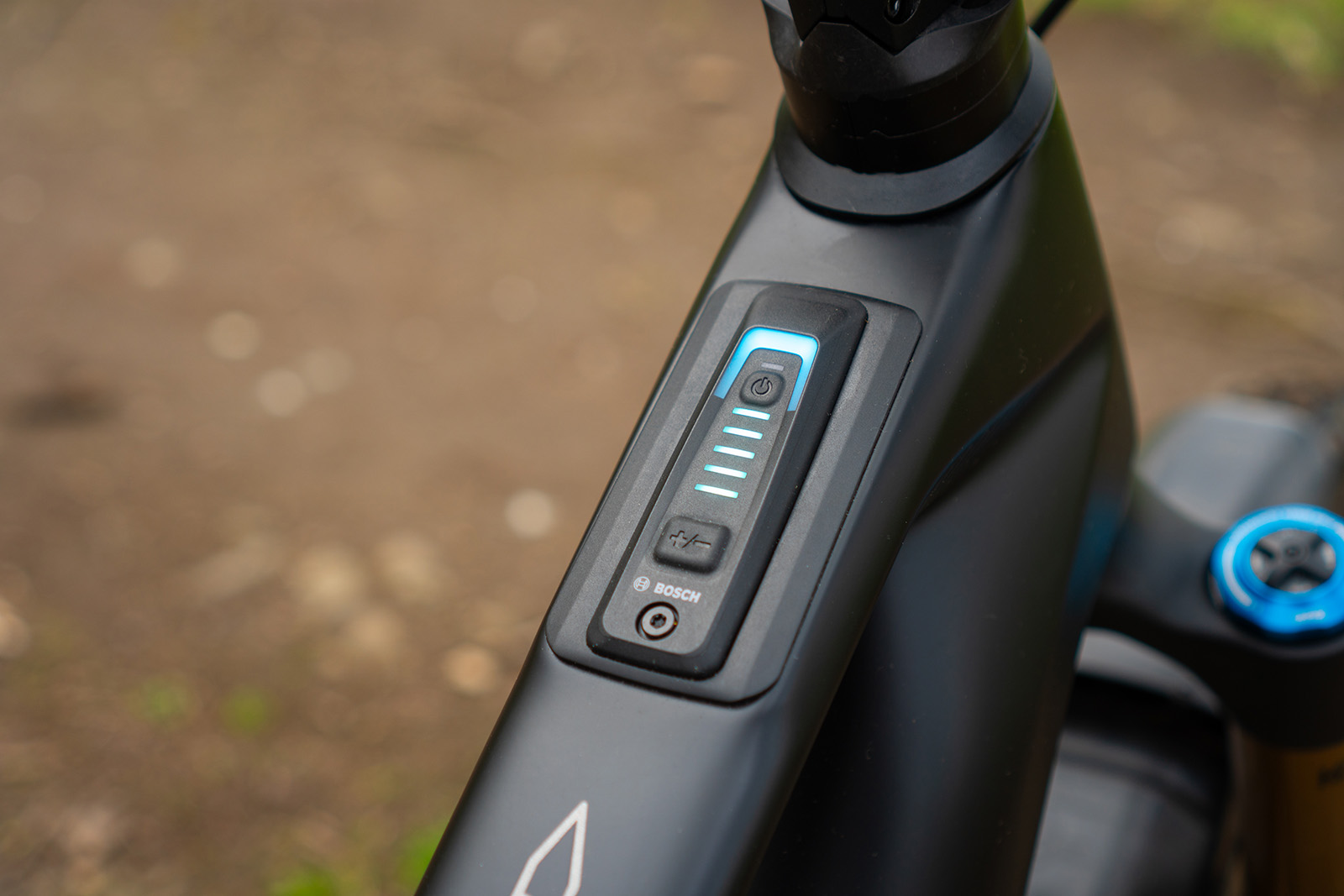
“Gobsmacked”: Bosch accused of protectionism over potential changes to ebike definition

Bosch has been accused of protectionism over its involvement in the proposed changes to electric bike regulations in the European Union. 

In April, Zweirad Industrie Verband (ZIV), the German cycling industry association, published a position paper, setting out what it believes should be the future of ebike regulations. 

The recommendations put forward by ZIV include:

  • A support ratio of 1:4, where a rider’s 100W power output is matched by 400W from an electric motor
  • A maximum assistance power of 750W

Limiting the assistance power of ebikes would ensure they retain their bicycle-like characteristics, which ZIV sees as integral to their success. 

Protectionism

Male cyclist riding the Tern Orox Orox R14 electric cargo bike
Annick Roetynck: “I am gobsmacked with what they’re proposing.” Russell Burton / Our Media

Although Bosch is just one of 140 members in the association, some have said that Bosch is exerting influence over the position to protect its place in the market.

Speaking to BikeRadar, Annick Roetynck, the manager of LEVA-EU, a European trade association for light electric vehicles, said ZIV’s position is: “Protectionism. I’m going to be very straightforward, just true protection.” 

“I am gobsmacked with what they’re proposing,” she said. 

Roetynck singled out Bosch and said it is “trying to stop anything – anything – which would mean competition for conventional electric bicycles.” 

Due to ebikes requiring fidelity with non-assisted bicycles, ZIV’s position has been interpreted as potentially blocking the development of heavier e-cargo bikes, which could be used for logistics or even carrying multiple people. 

Disabled people or those who cannot generate sufficient power could also struggle to use ebikes if ZIV’s recommendations are implemented, according to Roetynck. 

Bosch is using “all its power” 

Orbea Wild M-Team full suspension mountain eBike
Hannes Neupert says Bosch has “fallen behind”. Alex Evans / Our Media

Hannes Neupert, who has worked in the light electric vehicle industry since 1982, echoes Roetynck’s claim of protectionism and sees Bosch as working to preserve its place in the sports ebike market. 

“I cannot accept that Bosch, just for primitive protection of their main market, is attempting to disqualify all others,” he said. 

Neupert has paid particular attention to Bosch, one of the world’s biggest ebike motor and battery manufacturers, since it proposed increasing maximum power to 600W in January 2024. 

“The official reasoning behind this is that there is dangerous competition between the suppliers, making [more powerful] motors all the time,” he claimed.

In May 2025, Bosch released an update to its Performance CX gen 5 motor increasing the maximum power to 750W. 

“Let me say that Bosch is aiming to protect its commercial position here. It has fallen behind in the innovation of ebike motors and is using all its power to try and slow or stop others from gaining market-share at the expense of Bosch,” Neupert told BikeBiz

There has already been pushback against ZIV’s proposals. Roetynck said LEVA-EU members that are also part of the German trade association do not agree with the proposal. 

She said that when ZIV presented the position to the EU working group that deals with EAPCs (electrically assisted pedal cycles) in November last year, it did not receive a majority. 

What do ZIV and Bosch say? 

Tim Salatzki, ZIV’s chief technology officer, said the association’s position has been discussed for more than a year and a half and it was reached through consensus. “Bosch is a member of ZIV but is one of 140 members,” he said. 

Claus Fleischer, CEO of Bosch eBike Systems, said: “We have been involved in the ZIV working groups just like other member companies. Please direct any additional questions to ZIV.”

More on electric bikes

HP Hastens China Exit as Tariffs Kick a Hole in its Profits

An anonymous reader shares a report: HP is close to ending production of North-America-bound products in China, after US tariffs kicked a hole in its quarterly profits. “A quarter ago, we shared that our goal was to have less than ten percent of the products in North America being shipped from China by September,” HP president and CEO Enrique Lores told investors on the company’s Q2 2025 earnings call. “We have accelerated that and we share that now almost no products will be coming from China sold in the US by June. It’s a very significant acceleration of the plan that we have.”

“We accelerated the shift of factories out from China into Southeast Asia, into Mexico to a certain extent in the US to mitigate the impact of the change,” he added. Lores also revealed that HP has removed the US as a distribution hub for products sold in Canada or to Latin America. Doing so means HP doesn’t have to pay tariffs.


Read more of this story at Slashdot.

Nintendo’s updated mobile app will make sharing Switch 2 screenshots a lot easier

Nintendo is gearing up for the launch of the Switch 2 on June 5, and to ensure you’re ready to go when the console arrives at your door, you’ll need to download the latest update for the newly renamed Nintendo Switch App. The app, which was previously called the Nintendo Switch Online app, had added a number of new features, including a more seamless screenshot interface, GameChat functionality and placeholder icons for game-specific services like Zelda Notes. The latter will become usable on launch day.

Arguably the most useful addition is the revamped screenshots and video upload feature, which allows you to link your phone to your Switch 2 and wirelessly upload in-game media to the app, either manually or automatically. This was already possible on the original Switch (and is hardly a revolutionary feature), but doing so involved some needlessly clunky QR code scanning that didn’t always work. Now, screenshots and gameplay clips should just appear in the app, where you can save them locally. Up to 100 files can be stored in the app for 30 days from the point of upload, and once you hit the limit the oldest files will disappear if not saved.

Another big Switch 2 feature is GameChat, Nintendo’s new multiplayer voice chat functionality. Via the Nintendo Switch App you’ll be able to receive notifications for GameChat invites, friends coming online and friend requests. Your added friends will be displayed on the home screen of the app. Again, no one who’s been playing games on a modern PlayStation or Xbox console for the last decade is going to be blown away by any of this stuff, but it looks like playing online with friends on Switch 2 is going to be mercifully less fiddly than on its predecessor.

The Zelda Notes icon now appears when you open the Nintendo Switch App, but it won’t be functional until June 5. The app, which is only compatible with the Nintendo Switch 2 Editions of The Legend of Zelda: Breath of the Wild and Tears of the Kingdom, effectively functions like a sat nav for tracking down missing Koroks and shrines on your save file. You can also share your Autobuild creations in TotK with friends, edit in-game photos and check play records such as the number of enemies defeated and total game overs.

Nintendo is making small tweaks to some of its other services ahead of the Switch 2’s arrival. Over on Nintendo Switch Online (not to be confused with the mobile app), where you can play a selection of emulated classics from Nintendo’s back catalogue, a new Switch 2-exclusive rewind feature will be added to the N64 library, as well as a new CRT filter option. These features were already available for NES and SNES games on the service, and it’s not entirely clear why original Switch owners won’t benefit from the additional N64 options as well.

This article originally appeared on Engadget at https://www.engadget.com/gaming/nintendo/nintendos-updated-mobile-app-will-make-sharing-switch-2-screenshots-a-lot-easier-143842317.html?src=rss

Report: Apple will jump straight to “iOS 26” in shift to year-based version numbers

There may never be an iOS 19 or a macOS 16, according to reporting from Bloomberg’s Mark Gurman. At its Worldwide Developers Conference next month, Apple reportedly plans to shift toward version numbers based on years rather than the current numbering system. This is intended to unify the company’s current maze of version numbers; instead of iOS 19, iPadOS 19, macOS 16, tvOS 19, watchOS 11, and visionOS 3, we’ll get iOS, iPadOS, macOS, tvOS, watchOS, and visionOS 26.

The last time Apple changed its version numbering convention for any of its operating systems was back in 2020, when it shifted from “macOS X” to macOS 11. Note that the numbering will be based not on the year of the software’s release but on the year after; this makes a certain amount of sense since iOS 26 would be Apple’s most-current version of iOS for roughly nine months of 2026 and just three months of 2025.

The update to the version numbering system will be accompanied by what Gurman describes as “fresh user interfaces across the operating systems,” a visual overhaul that will bring Apple’s iPhone, Mac, watch, and TV software more in line with some of the design conventions introduced in Apple’s visionOS software in 2024. Among the changes and additions will be another crack at “Mac-like” multitasking for the iPad.

Read full article

Comments

Everything New in Samsung’s One UI 8 (so Far)

With Google expected to push out its next major Android update to its own Pixel phones sometime next month, Samsung is catching up: Its top-end phones phones got updates to One UI 7 (based on Android 15) this year, and now the beta version of One UI 8 (based on Android 16) is available if you own a Galaxy S25 phone and live in the U.S., UK, Germany, or South Korea.

While there aren’t any revolutionary new features here—at least, not so far—Samsung is promising “a new era of software intelligence” and “a true multimodal AI agent” (which as far as I can tell, means a few tweaks to the Now Bar and the Now Brief).

One UI 8 beta
Look inside the Members app for the beta invite.
Credit: Lifehacker

If you’re in an eligible country and have an eligible device, then you can join the One UI 8 beta now. The usual caveats about beta software apply: Bugs are to be expected, and you shouldn’t run betas on devices that you rely on (you may notice certain apps crash or don’t work properly).

How to join the One UI 8 beta

Open up the Samsung Members app on your phone (you can redownload it if you’ve previously uninstalled the app), and sign in using your Samsung account details. Scroll down the Discover tab, and somewhere on it you should see a Beta Program panel you can tap on.

From there, tap One UI 8 S25 Beta, read through the information provided, and tap Join. After a few moments, you’ll get confirmation that you’re in, and you’ll see a screen where you can Check for software updates. Once the software is ready, you’ll be prompted to reboot your phone to install it.

One UI 8 beta
It takes a few seconds to sign up.
Credit: Lifehacker

As yet, Samsung hasn’t said anything yet about which other phones might be able to join the beta, but considering One UI 8 is expected to launch in full around July time—with the Galaxy Z Fold 7 and Galaxy Z Flip 7, most probably—the program might not be extended much further beyond Galaxy S25 handsets.

You can leave the One UI 8 beta at any time by tapping Beta Program > One UI 8 S25 Beta in the Members app, then the three dots (top right), then Leave One UI 8 S25 Beta.

What’s new in One UI 8

There’s official information from Samsung about what’s new in One UI 8, plus features that users have already spotted during testing. Bear in mind that features can come and go during testing, so none of these changes are guaranteed to still be in place once One UI 8 is ready for mass adoption.

There’s a Bluetooth upgrade with Auracast, for sharing audio streams to multiple devices, as well as improved Quick Share capabilities: full screens for sending and receiving files, and QR code transfer support. You can get to Quick Share through a single tap on the button in Quick Settings.

One UI 8 beta Weather app
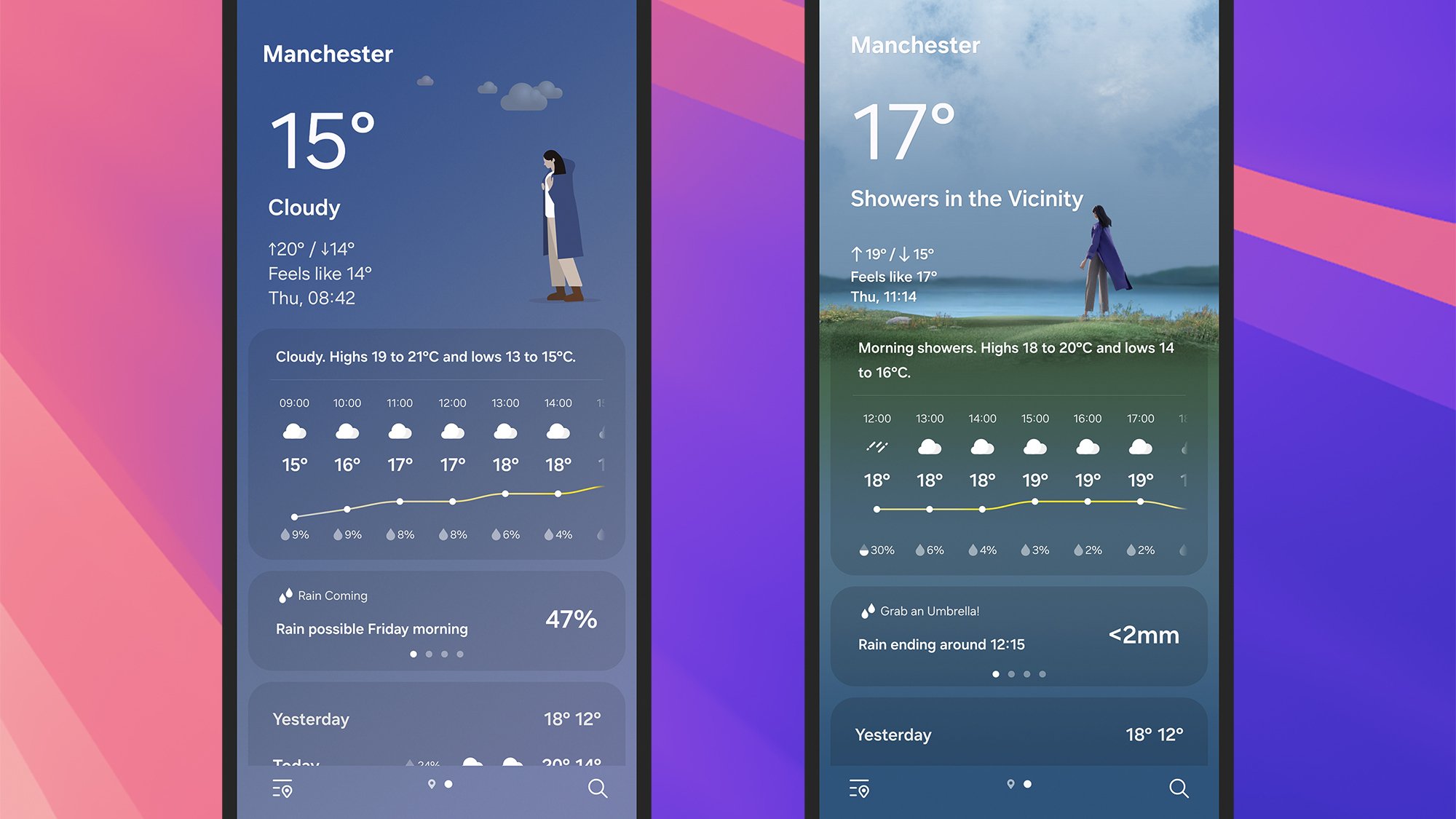
The Weather app in One UI 7 (left) and One UI 8 (right).
Credit: Lifehacker

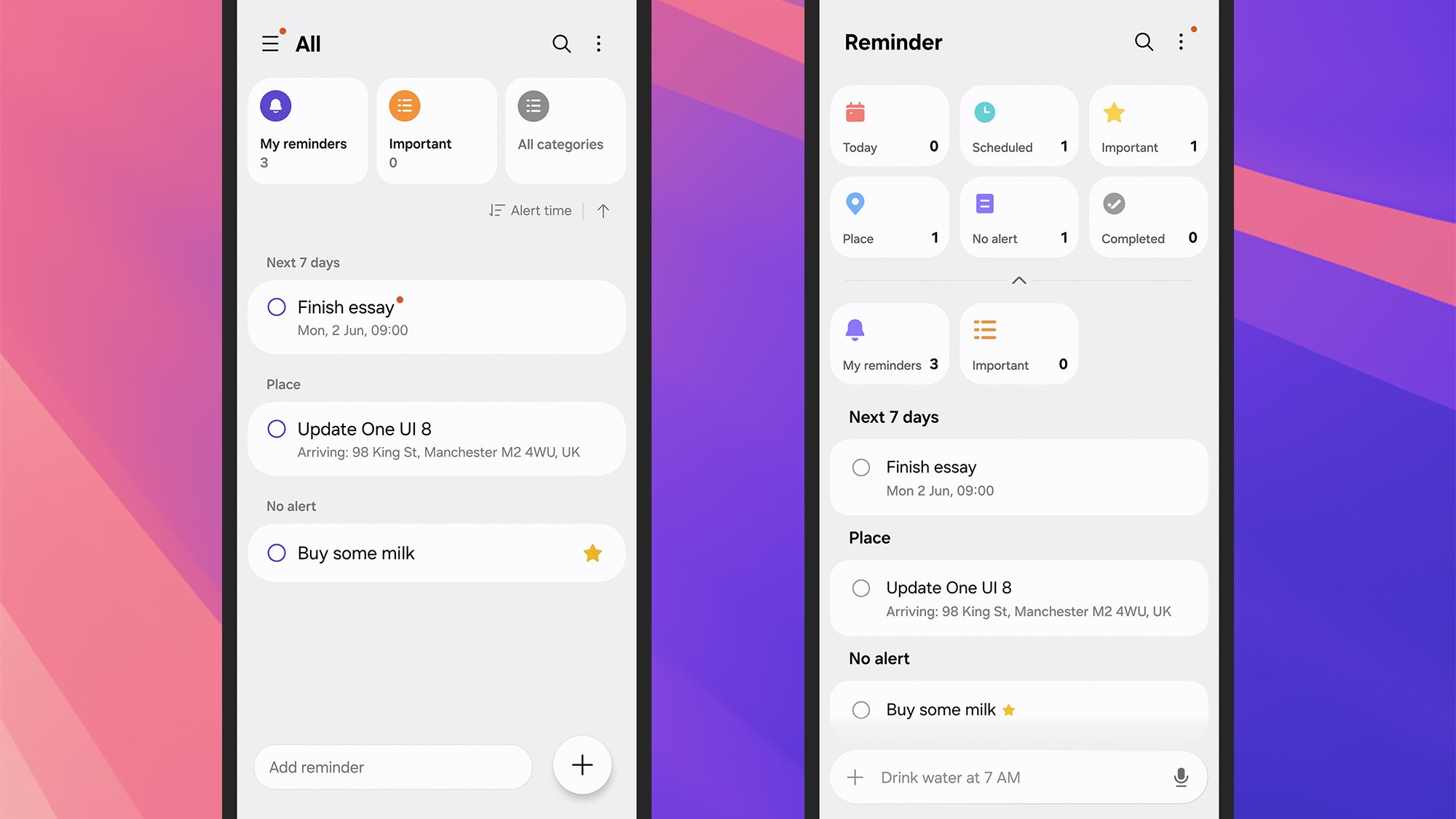
Some apps are getting visual overhauls. They include Weather, which adopts a less cartoony aesthetic with more translucent elements, and Files, which adds a recently edited row and shifts some elements around. Reminders also gets a bit of an overhaul, with the introduction of suggested reminders and more category filters at the top (like Completed and Place).

You’ll notice a revamped menu in the Samsung Internet app too, if you tap on the three horizontal lines in the lower right corner. Shortcuts can be customized and pages can be shared more easily, and—like One UI 8 in general—the overall interface feels a little more modern and fresh.

Samsung says it’s added more resolution options for Samsung DeX, and there are more preset routines to choose from in Modes and Routines on the Settings menu. There are improvements to the Secure Folder as well: Apps can now be moved there and hidden from the app drawer, and the Secure Folder can also be completely hidden.

One UI 8 beta
The Reminders app in One UI 7 (left) and One UI 8 (right).
Credit: Lifehacker

Users are spotting all kinds of other changes: Earbud controls on the lock screen, more customization for home screen widgets, extra options for split-screen mode, and a bunch of other minor tweaks. No doubt more of these will emerge as the beta testing continues.

As for Galaxy AI, I can’t see too much that’s changed. It appears that the Now Bar is able to show calls and Do Not Disturb modes now, but that’s about it. It may be there’s more to come here: Hidden code suggests you’ll soon be able to get your Now Brief read out to you, but the feature hasn’t gone live yet.

Volkswagen ID.Buzz review: A head-turning EV microbus with unfortunate flaws

While we’re still waiting for a true electric minivan to hit the US, VW’s ID.Buzz microbus is close. It’s a unique family hauler that’ll definitely get your neighbors buzzing. No, seriously, during my week of testing I had over a dozen conversations with strangers who were fascinated by the ID.Buzz. One of my neighbors stopped their car dramatically when they saw it, backed up, and just had to give me a thumbs up and praise it as “cool as hell.”

My kids were similarly enamored, they loved its cute design and enormous interior space. In many ways, it’s the family EV I’ve been dreaming of — something that could comfortably seat seven people and carry tons of cargo for road trips. Unfortunately, its high $60,000 starting price and relatively lackluster 234 mile range hold it back from true greatness.

Really, though, those issues were obvious when VW announced its US launch details for the ID.Buzz last year. I was more intrigued to see if it was a complete flop for VW, or if there was something compelling about it despite those flaws. After testing the ID.Buzz for a week, I’ve noticed one surprising thing: It makes everyone smile. It may not look exactly like VW’s classic ’60s microbus, but it elicits a similar amount of joy. And that’s refreshing compared to the response I’ve seen to other large EVs like the Cybertruck (my son calls it the “ugly truck”) and the ridiculous Hummer EV.

Sure, it’s sort of coasting on vibes, but the VW ID.Buzz still has plenty of practical benefits if you don’t mind the high price and charging a bit more often during road trips. And as I’ll explain below, it’ll likely be an enticing option once it hits the used market in a few years.

What is the VW ID.Buzz?

Most cynically, the ID.Buzz is an attempt to milk the brand nostalgia for VW’s hippy-era Type 2 microbus. VW never quite gave up on those vehicles, but its later models dropped the cute rounded aesthetic and looked more like commercial vans. What makes the ID.Buzz truly interesting is that it transforms a beloved classic into a cutting-edge EV, with an enormous infotainment screen and modern features like adaptive cruise control.

It also makes a great first impression, since it doesn’t look like anything else on the road. There’s a rounded front end that evokes the playfulness of the original model, and its two-tone color design (on some trims) simply pops among a sea of boring (and often white) cars in traffic. Sure, VW has done this before, but the Buzz is still a great reminder that EVs don’t have to look like traditional vehicles. There’s no front engine to worry about, just a big battery and electric motors. In the Buzz’s case, you can choose from rear-wheel drive and “4Motion” all-wheel drive dual motors, delivering 282 and 335 horsepower, respectively.

VW ID.Buzz
Devindra Hardawar for Engadget

The ID.Buzz offers the seating of a minivan — with room for six to seven people depending on your configuration, and convenient sliding second-row doors — plus the height and storage capacity more akin to cargo vans. With all of its seats up, the Buzz offers an acceptable 18.6 cubic feet of storage, which is enough for a typical grocery run or a stroller and a diaper bag. Fold the third row down, though, and you get a far more useful 75.5 cubic feet of space. You could also remove the second and third row of seats entirely to get a massive 145.5 cubic feet of space.

Funny enough, you could technically fit three people into the Buzz’s third row, but US regulators have taken issue since that row only has two seatbelts. VW has recalled existing vehicles and says it’ll be adding “unpadded trim parts” to reduce the seating area. Yes, it’s the rare recall where you’ll actually lose a bit of functionality in the name of safety. (Nobody is actually forcing Buzz owners to do that, though…)

As for other niceties, the ID.Buzz offers an enormous 12.9-inch infotainment screen (I’ve never seen Apple CarPlay look so big before), a smaller driving information screen behind the steering wheel and an optional heads-up display. There’s also a panoramic sunroof option, which can’t be opened but can be tinted to look opaque on demand. Our review unit didn’t have that sunroof, unfortunately, and the interior certainly felt a bit gloomier because of that. If I were seriously considering the ID.Buzz, I’d argue the sunroof a is requirement. (Admittedly, it could be a problem if you’re trying to get babies and toddlers to sleep, since the interior will never truly get dark. But kids outgrow napping fairly quickly, and it’s easy to find canopies for car seats.)

VW ID.Buzz
Devindra Hardawar for Engadget

What’s good about the VW ID.Buzz?

The best thing about the ID.Buzz is the vibe you get while driving it around town. People will stop and stare at it, kids will point at it excitedly and harried parents will approach it like the monolith from 2001. It’s as if VW’s designers took Marie Kondo’s advice to heart: It simply sparks joy. As I dropped off my son at daycare one morning, one of the school’s admins dragged me outside and demanded to see the interior. “I wish I could retire in this thing and travel the country,” she said.

The ID.Buzz is also very capable as an EV. Despite its large size, it’s quick to accelerate and incredibly comfortable on the highway and bumpy roads. Parking was a bit annoying, but the Buzz was also easy to maneuver thanks to the large infotainment screen, which could display both single-camera and 360-degree overhead views at the same time. I had a much easier time backing into spots than I did with much smaller cars.

The Buzz’s large second row could easily fit three carseats side-by-side, assuming you get the models with the middle bench seat. I was able to hook up my son’s carseat and my daughter’s booster chair in a few minutes, without the finger-cramping I usually experience with my Volvo XC90 SUV. (One downside to the second row? You can’t open its windows fully, instead only a smaller section of the windows open up.)

VW ID.Buzz
Devindra Hardawar for Engadget

I also instantly appreciated the Buzz’s enormous storage area, as it was able to fit a large pile of charity donations that were sitting in my garage. That included a bike trailer for kids as well as an old high chair. We were able to fully load up the trunk with the third-row seats down, and there was still room in the second row for additional gear. That trip likely would have been possible with my Volvo, but it would have involved cramming in large items more creatively. With the ID.Buzz, I didn’t break a sweat.

Now that I’m several years into being a suburban dad with two kids (sigh), I’ve learned to appreciate the benefits of less flashy and more practical transportation. And there’s no doubt the ID.Buzz is useful. In addition to that donation drop-off, I was also able to comfortably pile my parents into the Buzz along with my kids for a day trip. My dad thought the third row was absolutely huge, and my mom had no trouble sitting in the second row alongside the child and booster seats.

There’s no other EV that’s this flexible. The Rivian R1S is far more expensive, and the Kia EV9 is great but doesn’t offer as much storage. And neither of those cars have minivan-like sliding doors, which are a life-saver in tight parking spots. There’s no true EV minivan in the US at this point, the best you can get is the hybrid Toyota Sienna (which I loved) and the plug-in hybrid Pacifica (which I had to dump because of Chrysler’s terrible build quality).

VW ID.Buzz
Devindra Hardawar for Engadget

What’s bad about the VW ID.Buzz?

The hardest pill to swallow with the Buzz is its $60,000 starting price, which can escalate to over $70,000 if you want all the fixins. Basically, it’s a luxury curiosity for those who can afford it, not something that’s easily attainable for everyone. Its price could be excused if the Buzz also offered everything we see in comparable EVs, but its short 234-mile range is just inexcusable when the EV9 can reach 309 miles for around the same price. For such a large vehicle, you’d think VW would be able to stuff in more batteries.

Realistically, the Buzz’s range only becomes a problem during long road trips, where you’ll have to charge more often compared to other EVs. But that can be an annoying process, since you’ll typically have to spend at least half an hour at a charging station to get ready for the next leg of your trip. VW says the Buzz can go from 10 to 80 percent charge on a 200 kW DC fast charger in 30 minutes, but those aren’t available everywhere. One hour of level 2 AC charging got me 12 percent of additional battery life, while level 1 trickle charging at home added 20 percent of juice over 14 hours.

It’s also worth noting that range estimates vary dramatically in cold weather, or if you’re cranking the Buzz’s heat or air conditioning. That’s why it’s always smart to aim for as much range as you can, even if you don’t think you’ll be driving that much.

VW ID.Buzz
Volkswagen

Beyond the obvious problems, I also hated the Buzz’s capacitive touch controls, which are spread across its steering wheel buttons, infotainment center and window controls. While there are indentations and a bit of haptic feedback when you hit something, like pumping up the volume or choosing the next music track via the steering wheel, it’s hard to differentiate those controls from nearby capacitive buttons. It’s far too easy to tap the cruise control functions while you’re just trying to change the volume, and vice versa.

Since it’s hard to actually feel where certain buttons are, I found myself looking down to make sure I was hitting the right option, which is something I absolutely hate doing while driving. Similarly, trying to adjust HVAC settings on the bottom portion of the infotainment screen can easily trigger the capacitive buttons below them, which was another reason I had to occasionally take my eyes off the road. Thankfully, VW appears to be focusing on physical buttons for future vehicles, but ID.Buzz owners are still left with a frustrating interface.

VW ID.Buzz
The ID.Buzz’s rearview mirror controls… how do they work?
Devindra Hardawar for Engadget

Here are just some of the ways the capacitive buttons infuriated me:

  • It’s difficult to turn on the cruise control and adjust your speed without looking down.

  • It’s tough to control the rear windows from the driver’s seat, since it involves hitting a capacitive “Rear” button. There are only two controls for windows, so you have to choose between controlling the front and second-row windows. Even more annoying, the Buzz would sometimes disable the rear window option after a few seconds.

  • I spent at least 10 minutes trying to figure out how the rear-view mirrors are controlled, and I still have no clue. It’s an inscrutable combination of a joy-stick, turning dial and capacitive controls.

Should you buy the VW ID.Buzz?

At this point, given its price and range, the VW ID.Buzz just doesn’t make sense for most people. If you really want a three-row EV, you’ll likely be better served by the Kia EV9 or the Hyundai Ioniq 9, which offer more range for a similar price. And if you absolutely need something that’s like a minivan, the Toyota Sienna is hard to beat. While it’s not a full EV, its hybrid setup still offers a healthy 36 MPG.

But, I’ve also noticed that used EVs tend to drop in price far quicker than gas cars. You can currently find the Polestar 2, which launched at around $60,000, for $30,000 or less in the used market. While I can’t guarantee the Buzz will drop that far, I wouldn’t be surprised if we see used versions for around $40,000 in a few years. And at that point, it could be a decent purchase even with its relatively low range.

VW ID.Buzz
Devindra Hardawar for Engadget

Wrap-up

It’s clear that the ID.Buzz is a big swing for VW, and it’s truly unique since there aren’t any EV minivans outside of China. It’s just a shame that it’s held back by some obvious issues. The ID.Buzz is still undeniably useful though, especially if you don’t plan on taking many road trips, so there’s a chance it’ll become more compelling as its price falls.

This article originally appeared on Engadget at https://www.engadget.com/transportation/evs/volkswagen-idbuzz-review-a-head-turning-ev-microbus-with-unfortunate-flaws-143024824.html?src=rss

AMD EPYC 4585PX & EPYC 4565P With DDR5-4800 vs. DDR5-5600 Performance

One of the many advantages with the newly announced EPYC 4005 series for entry-level servers is support for DDR5-5600 ECC memory compared to the current Xeon 6300 series being limited to DDR5-4800 memory. With the launch-day EPYC 4005 “Grado” benchmarks earlier this month of the AMD EPYC 4585PX and EPYC 4565P I was running with DDR5-5600 ECC memory modules. But for those wondering about the performance when using DDR5-4800 comparable to the Xeon 6300 / Xeon E-2400 series, here are some comparison benchmarks for reference.

Samsung’s Project Moohan XR Headset Flexes Snapdragon XR2+ Gen 2 In Benchmark Leak

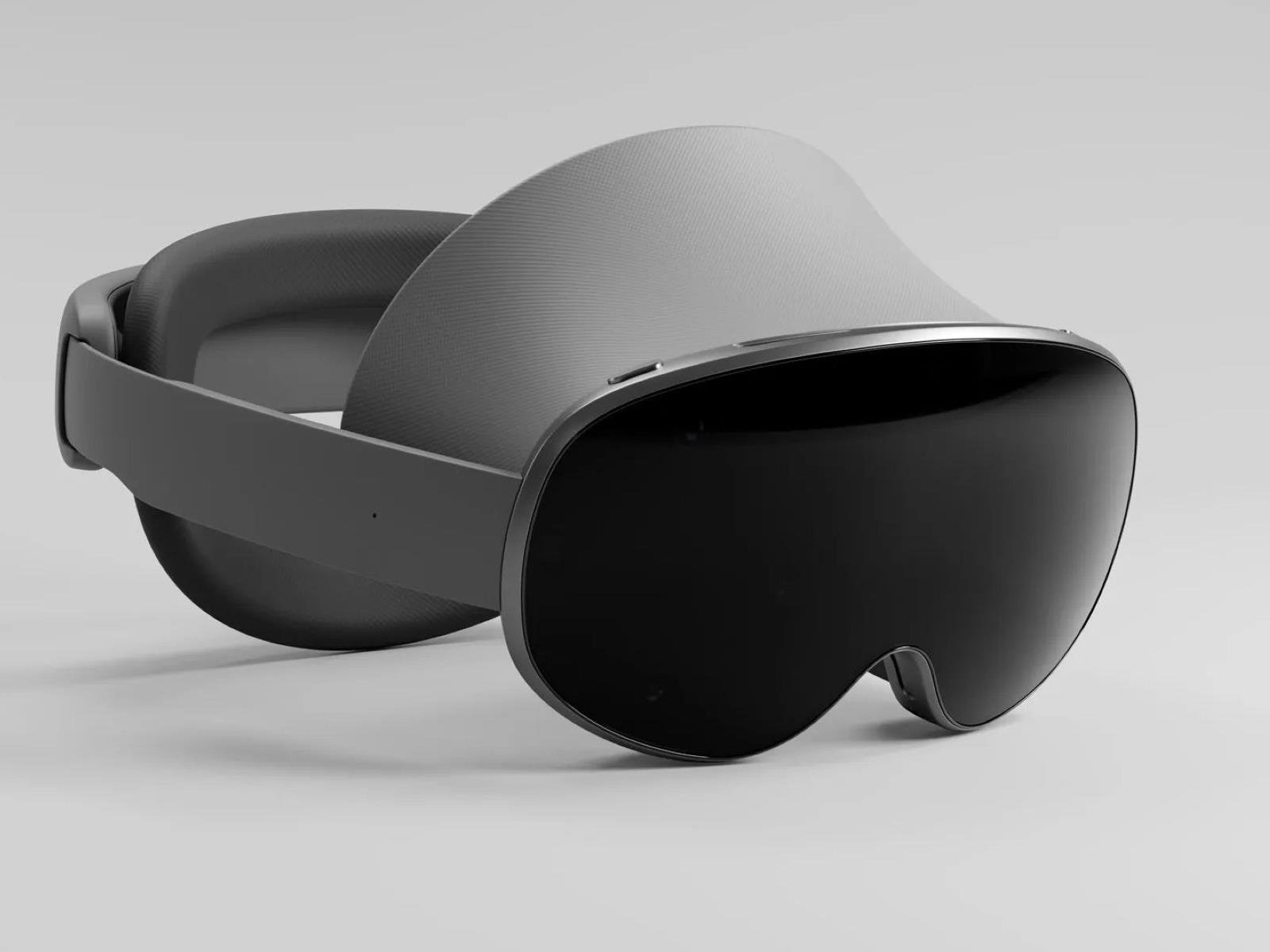
Samsung's Project Moohan XR Headset Flexes Snapdragon XR2+ Gen 2 In Benchmark Leak
Samsung’s inaugural foray into the extended reality (XR) space is taking clearer shape as details emerge about its “Project Moohan” headset. The device recently made an appearance on Geekbench, revealing key specifications such as a Qualcomm Snapdragon XR2+ Gen 2 processor paired with an Adreno 740 GPU running on top of Android 14. The headset

Hauling Buns: All Six Wienermobiles Race At The Indianapolis 500

In speed doggin’ news, all six active Oscar Mayer Wienermobiles raced around the Indianapolis Motor Speedway last weekend as part of the Indy 500 festivities. Is anybody else shocked and outraged there’s more than one Wienermobile? I saw one once IRL but who cares, it’s not even special anymore. This is like finding out Santa Claus is really the Easter Bunny. Each motorized glizzy measures 24-hot dogs tall, 60-hot dogs long, 18 hot dogs wide, and weighs in at 140,500 hot dogs. Of course it doesn’t look like the drivers were really putting the pedal to the metal for fear of crashing their wieners into another’s buns. Me? I’m not afraid of crashing — I came to win and spray myself with chili and cheese in the winner’s circle or die in a fiery mangled wiener trying.

Researchers Warn Against Treating AI Outputs as Human-Like Reasoning

Arizona State University researchers are pushing back [PDF] against the widespread practice of describing AI language models’ intermediate text generation as “reasoning” or “thinking,” arguing this anthropomorphization creates dangerous misconceptions about how these systems actually work. The research team, led by Subbarao Kambhampati, examined recent “reasoning” models like DeepSeek’s R1, which generate lengthy intermediate token sequences before providing final answers to complex problems. Though these models show improved performance and their intermediate outputs often resemble human scratch work, the researchers found little evidence that these tokens represent genuine reasoning processes.

Crucially, the analysis also revealed that models trained on incorrect or semantically meaningless intermediate traces can still maintain or even improve performance compared to those trained on correct reasoning steps. The researchers tested this by training models on deliberately corrupted algorithmic traces and found sustained improvements despite the semantic noise. The paper warns that treating these intermediate outputs as interpretable reasoning traces engenders false confidence in AI capabilities and may mislead both researchers and users about the systems’ actual problem-solving mechanisms.


Read more of this story at Slashdot.

Why PC Shipments Are Suddently Expected To Soar Despite Tumultuous Tariffs

Why PC Shipments Are Suddently Expected To Soar Despite Tumultuous Tariffs
There is a metric ton of uncertainty surrounding U.S. tariffs, and given that this is the case, you would think that PC shipments could take a massive hit as companies attempt to navigate a tumultuous situation (which has seen Nikon hike prices and concerns arise over a potential big increase in iPhone pricing, to give just two examples).

Phasmophobia Overhauls Evidence System In June’s Chronicle Update

Phasmophobia will overhaul the VR co-op horror game’s evidence collection system in next month’s ‘Chronicle’ update.

The next major Phasmophobia update on its 2025 roadmap, Kinetic Games confirmed that ‘Chronicle’ arrives on June 24. This upcoming patch promises a “total overhaul” for evidence collection with three new evidence types. That adds a new ‘Sound’ evidence category to detect audio cues during ghost events, Spirit Box responses and Paranormal Sounds, alongside a three-tiered Sound Recorder.

Another notable change is the redesigned journal that replaces the Photos tab with a new Media tab, which contains photos, videos and these new sound recordings. The first evidence captured for any media quality system will now be marked as ‘Unique’, earning extra money and XP after completing a contract. Tier bonuses based on the equipment used are also provided, and the studio confirms every media capture will count towards your final payout.

Other changes coming alongside Chronicle will see next month’s update introduce a reworked levelling and progression system. A brand-new main menu UI is also mentioned, alongside the usual promised array of bug fixes. Further promised changes still to come in Phasmophobia’s roadmap include a Grafton Farmhouse rework with updated visuals and a redesigned layout, while a player character overhaul will follow later this year.

Phasmophobia’s Chronicle update launches on June 24, and the base game is out now on Steam and PlayStation VR2.

Monster Hunter Bridge: Expo 2025 XR Experience Is Impressive, For Now

The World’s Fair, ever since the 1800s, has existed for two purposes: to bring countries together, and to showcase the technology of the future.

It’s where Walt Disney showcased his animatronic revolution that would later become the star attraction of his Disney theme parks ever since, and even where the mobile phone was first showcased to the public in 1970. These are multinational soft power political events, but the private sector has always had a hand in pushing new technology at every event. So it should come as no surprise that Capcom has a presence at Expo 2025 in Osaka with Monster Hunter Bridge, a special XR technological showcase utilizing the mega-hit franchise.

Although technically a part of the private sector multi-corporation joint venture Osaka Healthcare Pavilion, Monster Hunter Bridge is a multisensory experience almost entirely removed from the health-focused showcases of the core exhibit space. Housed in a separate XD Hall, this utilizes displays on the walls, ceilings and floor, exclusively developed AR glasses are provided for each participant. Immersive sound is projected through the theater and in-ear headphones, as well as haptic flooring, to immerse audiences in the world of the series. This separate experience requires a reservation made either via online lottery in advance or by claiming limited on-the-day slots accessible once inside the convention to participate.

To simplify Bridge’s purpose, this is a technological showcase that uses the Monster Hunter franchise, a trial of future possibilities and immersive consumer technology. Since the global success of Monster Hunter World transformed the series from a domestic hit to a worldwide sales juggernaut, Capcom has been more than willing to expand the series beyond challenging quest-driven hunting towards experiences anyone can enjoy. This fueled development on the Pokémon GO-esque Monster Hunter Now that took the hunter experience into the real world via AR, or their limited-time free roam VR experiences at Universal Studios Japan.

Monster Hunter Bridge is designed in the vein of these experiences, with the intent to create something only possible within a dedicated immersive space such as this. The result is a proof-of-concept, albeit one where the ambitions of the experiment are limited by the technology as it exists today.

For those lucky enough to secure a reservation – at around lunchtime on the day I was lucky enough to secure an 8pm slot – attendees must first secure all luggage inside provided lockers. You must then watch a brief animated safety video provided by your Felyne guides. Once everything has been prepared, you enter the XD Hall and line up in groups of four, where each person will be provided with their own pair of AR glasses and fitted with headphones.

Monster Hunter mural shows several creatures, joined by a Felyne in the bottom right corner

These glasses hold some structural similarity to the Meta Quest in their wrap-around screw-to-secure band design, without the large weight of the screens in the front of the device. Instead, thick transparent lenses house a wide-angle 105-degree screen that projects images on top of the world in front of you. These can be worn over the top of prescription glasses if needed, though it certainly leaves a noticeable gap between your eyes and the projection if required.

During sign-in, it’s possible to request English voiceover or subtitles, with accessibility options and dedicated reserved slots for those in wheelchairs also available. Once confirmed, attendees receive commemorative lanyards they can take home, with anyone requesting anything besides the default Japanese experience receiving a unique card featuring an AR code that staff will scan to change the settings for the experience during set-up.

From here you enter the XR Hall itself, and the space is impressive. Great attention to detail has been taken to mask the transitions between floor, wall, and ceiling to create a seamless world that feels genuinely vast and filled with monsters. Aptonoth graze in the grass or wander through the fields as other monsters fly above, with sounds coming from all around to make you feel like a Hunter stepping into the wilds for the first time. For many fans, this experience here of watching the creatures exist around you is ideal: it’s a Jurassic Park-esque peek into this world, without the threat of a more violent creature crushing you at any moment. No matter where you look, there’s something to see everywhere.

The AR glasses are your window to interacting with this scene. Through this headset, the Felyne will talk you through the scene in front of you through your headphones. A recovery beetle will fly around you, close enough to reach out to it with your hands. By holding out your hands, the beetle will rest in your hands and you can receive the healing effects.

The interactivity is far from perfect. The glasses will sometimes flicker, and the 105-degree screen, while still impressive, is narrow enough to physically notice where the AR aspects begin and end. It makes it possible for a beetle or your Felyne guide to be in front of you within 3D space, but either be partially cut off or invisible as a result of existing beyond the edges of your in-eye screens. For as immersive as it is to see the world of Monster Hunter expand for miles into the distance, these limitations do at-times break the immersion or look noticeably jarring against the rest of your surroundings.

Similarly, due to the number of people participating at one time and to simplify events, it’s not possible to move from your chosen spot once the experience has started. To make it simple enough for all participants and to avoid unfortunate incidents of people running into the distance only to faceplant themselves and this expensive equipment against the nearest wall (and to ensure effective haptic vibrations underfoot), this makes sense. It still feels teasing, showcasing a grand vision that can never be explored, and reminding you of your existence beyond this world.

The experience is not all peacefully watching herbivores graze for 10 minutes. After a few minutes to adjust to this new space, a Rathalos appears, their roar thundering and causing the entire room to shake from its foundations as a pulsating volcano appears behind it. For as intimidating as encountering these towering creatures from the safety of your sofa can be, at no point have I felt as scared meeting this creature as I was at this moment. Rather than stumbling upon this monster from the third-person perspective of an avatar, you are the hunter, or in this case, the hunted. My heart raced as I saw this creature in front of me, sending a shiver down my spine.

Much of the remainder of the experience is scripted, though far from passive. Rather than directly fighting the Rathalos, we throw rocks at it using our hands under the instruction of our Felynes, until a Rajang enters the fray and starts to attack it. The scene transitions to a boat in a storm as we encounter a Lagiacrus that shakes the foundations of our ship until we nearly lose balance as it jumps aboard our rickety vessel. We throw more rocks before a Caedeus jumps across the boat, causing a splash that transitions the entire screen to black.

The final sequence is somewhat existential and removed from the grounded violence of the mainline series, albeit no less impressive. Sent into darkness, it’s as though the world has died and us along with it. Only then, creatures from across the series swim around from all sides as a large tree of life blooms in the darkness. A disembodied voice sings a beautiful melody, until a creature never-before-seen in the franchise makes its appearance.

A Lovecraftian blue blob with a Saturn-esque red ring consuming its face
Myaku Myaku

For those yet to attend Expo 2025, Myaku Myaku is almost certainly unfamiliar. This Lovecraftian blue blob with a Saturn-esque red ring consuming its face and six eyes across its face, this is the fair’s grotesquely yet cute mascot. They appear and tower above us just as everything is darkest to rebuild the world and create life, restoring the world to equilibrium before the experience ends. Whether we take the godlike existence of Myaku Myaku as a world-altering shift in the lore of the franchise or merely an opportunity for Capcom to have fun with the context of the Expo is up to you. Still, it’s a wonder to behold as I craned my neck to see a grinning six-eyed face staring back.

Monster Hunter Bridge has its limitations. The AR glasses hardware makes the interactive elements disjointedly distinct from the beautifully rendered scenery, often breaking the immersion, while the interactivity itself is limited to pretending to throw rocks and hold bugs while stationary. But as a proof-of-concept, it’s a wonder to behold, especially in the moments where its blend of a purpose-built haptic hall, large screens and AR merge to truly feel like magic.

Two Felyne dressed up and looking enthusiastic

Is it worth going to the world’s fair and traveling to Expo 2025 specifically to see Monster Hunter Bridge? No, in part because there’s no guarantee you’ll get in, but also because limiting your trip to a 10-minute tech demo ignores just how much else there is to see. That being said, alongside educating yourself on countries from around the world and trying new things, anyone planning to visit should attempt to cross this bridge, and witness this world of monsters for yourself.

This Highly Rated PS5 Controller Is at Its Lowest Price Ever

We may earn a commission from links on this page. Deal pricing and availability subject to change after time of publication.

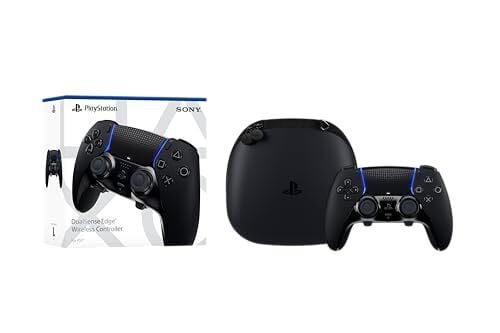
If you’re someone who spends serious time with your PlayStation 5 and wants a controller that can match that energy, the Sony DualSense Edge Wireless Controller is currently down to $169.99 from $199.99 on Amazon—its lowest price yet, according to price trackers.

That’s still a chunk of change, but it’s the first meaningful discount I’ve seen on what PCMag calls the best premium PlayStation controller in their “Excellent” review. It’s built for players who like to fine-tune their setup, with enough customization options and accessories to justify the cost, at least for the right kind of user. For more options, check out PCMag’s roundup of the best controllers for every platform.

At a glance, the Edge looks like the standard DualSense, just with a sharper black-and-white color scheme. But once you start digging in, the differences add up. There are two back buttons you can swap out with different paddles, adjustable trigger stops, and swappable thumbsticks with different heights. You can save multiple control profiles and toggle between them using the Fn buttons near the analog sticks. The system settings on the PS5 walk you through how to do it—no separate app needed. Plus, it ships with a hard case for safe portability and storage, and includes a USB-C cable with a lock to keep it connected during wired play. And if you run into stick drift down the line, you can swap out the analog modules without replacing the whole thing—new ones cost $19.99 from Sony.

Battery life is the main downside here. You’re looking at five to six hours of wireless play before it needs charging. That won’t be ideal for marathon sessions unless you’re okay playing wired. Also, while it works with PCs, you’ll lose fancy features like haptics and adaptive triggers unless the game specifically supports them. That said, if most of your gaming happens on the PS5 and you want more control over how your controller feels and responds, this is about as feature-rich as it gets—and with this discount, it’s a better time than usual to try it out.

Oops! Acer Leaks GeForce RTX 5050 Mobile GPU Specs For Budget Gaming Laptops

Oops! Acer Leaks GeForce RTX 5050 Mobile GPU Specs For Budget Gaming Laptops
As of this moment, NVIDIA still has not added a GeForce RTX 5050 SKU to either its mobile or desktop GPU lineups. However, multiple leaks and rumors suggest it is only a matter of time, the latest of which comes from a major hardware partner—Acer, which jumped the gun by referencing the GeForce RTX 5050 in mobile form on a few of its gaming