Google Lens is coming to YouTube Shorts

YouTube Shorts is beta testing the addition of Google Lens. Integrating this tech into the short-form video platform will allow viewers to search for more information about what they can see in a clip. The functionality will begin rolling out to all Shorts users this week.

Once it’s enabled on your account, the feature can be accessed by pausing the video, selecting Lens from the top menu and then tapping or highlighting an element of the clip to search about. Visual matches and search results will be overlaid on top of the Short. More details are provided in Google’s support pages.

The post announcing the Lens beta notes that advertisements won’t be shown in the results during the test phase. Additionally, it states that “the Lens experience isn’t available for Shorts with YouTube Shopping affiliate links or with paid product promotions.” While the beta test isn’t going to be tied to commerce, this feels like an integration that could very likely become a Shopping-centric resource in the future.

This article originally appeared on Engadget at https://www.engadget.com/entertainment/youtube/google-lens-is-coming-to-youtube-shorts-221803755.html?src=rss

Meta Partner’s with Ousted Oculus Founder’s Company to Build “the world’s best AR and VR systems for the US military”

In a twist that promises to make the inevitable Palmer Luckey documentary even more dramatic, Palmer Luckey’s military tech company Anduril has now officially partnered with Meta to build “the world’s best AR and VR systems for the US military.”

Luckey founded Oculus in 2012, the company whose Rift headset was the spark that rebooted the modern era of VR. As a rapidly growing startup, Oculus attracted the attention of Meta (at the time Facebook), which acquired the company in 2014 for more than $2 billion. Luckey continued in VR under Meta’s roof for several years but was eventually pushed out of the company due to backlash over his politics. After leaving Meta, Luckey went on to found Anduril, a tech-defense startup which itself went on to achieve a multi-billion valuation.

Unsurprisingly, given Luckey’s background, Anduril itself has been developing XR tech alongside more traditional military products like drones and sensors. In February, Anduril announced that it was taking over Microsoft’s beleaguered Integrated Visual Augmentation System (IVAS) program, which seeks to produce AR helmets for the United States Army.

An early version of the IVAS helmet | Image courtesy Microsoft

Now Anduril says it’s working in concert with Meta to build “the world’s best AR and VR systems for the US military.”

“Anduril and Meta are partnering to design, build, and field a range of integrated XR products that provide warfighters with enhanced perception and enable intuitive control of autonomous platforms on the battlefield,” the announcement reads. “The capabilities enabled by the partnership will draw on more than a decade of investment by both companies in advanced hardware, software, and artificial intelligence. The effort has been funded through private capital, without taxpayer support, and is designed to save the U.S. military billions of dollars by utilizing high-performance components and technology originally built for commercial use.”

“I am glad to be working with Meta once again.” says Luckey. “Of all the areas where dual-use technology can make a difference for America, this is the one I am most excited about. My mission has long been to turn warfighters into technomancers, and the products we are building with Meta do just that.”

Both Meta CEO Mark Zuckerberg and CTO Andrew “Boz” Bosworth—who were publicly at odds with Luckey following his prior ousting from Meta—both provided quotes as part of the announcement, further cementing a renewed relationship between Meta and Luckey.

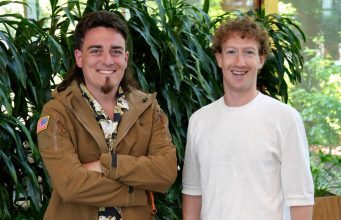
Oculus & Anduril founder Palmer Luckey (left) and Meta CEO Mark Zuckerberg (right) pose for a new image demonstrating their renewed relationship | Image courtesy Palmer Luckey

Thus far it sounds like the work between the companies will largely be around the headset that’s being built for the IVAS project, a $20 billion program to build an AR helmet for ground soldiers. Initially headed by Microsoft, Anduril has purportedly taken a leading role over project, and has now tapped Meta to bring some of its technology to the battlefield.

The post Meta Partner’s with Ousted Oculus Founder’s Company to Build “the world’s best AR and VR systems for the US military” appeared first on Road to VR.

SEC Voluntarily Dismisses Lawsuit Against Binance

The SEC on Thursday voluntarily dismissed its lawsuit against Binance, the world’s largest cryptocurrency exchange. It brings an end to one of the last remaining crypto enforcement actions brought by the agency. Reuters reports: The SEC had accused the defendants in 2023 of artificially inflating trading volumes, diverting customer funds, failing to restrict U.S. customers from Binance’s platform, and misleading investors about its market surveillance controls. It also accused Binance of unlawfully facilitating trading of several tokens that prior SEC leadership deemed unregistered securities. Developing…


Read more of this story at Slashdot.

ASUS Router Backdoors Affect 9,000 Devices, Persists After Firmware Updates

An anonymous reader quotes a report from SC Media: Thousands of ASUS routers have been compromised with malware-free backdoors in an ongoing campaign to potentially build a future botnet, GreyNoise reported Wednesday. The threat actors abuse security vulnerabilities and legitimate router features to establish persistent access without the use of malware, and these backdoors survive both reboots and firmware updates, making them difficult to remove.

The attacks, which researchers suspect are conducted by highly sophisticated threat actors, were first detected by GreyNoise’s AI-powered Sift tool in mid-March and disclosed Thursday after coordination with government officials and industry partners. Sekoia.io also reported the compromise of thousands of ASUS routers in their investigation of a broader campaign, dubbed ViciousTrap, in which edge devices from other brands were also compromised to create a honeypot network. Sekoia.io found that the ASUS routers were not used to create honeypots, and that the threat actors gained SSH access using the same port, TCP/53282, identified by GreyNoise in their report. The backdoor campaign affects multiple ASUS router models, including the RT-AC3200, RT-AC3100, GT-AC2900, and Lyra Mini.

GreyNoise advises users to perform a full factory reset and manually reconfigure any potentially compromised device. To identify a breach, users should check for SSH access on TCP port 53282 and inspect the authorized_keys file for unauthorized entries.


Read more of this story at Slashdot.

Clair Obscur: Expedition 33 Publisher Says Fans Would Never Guess The Hit RPG’s Budget: ‘I’m Sure Mirror’s Edge And Vanquish Cost More’

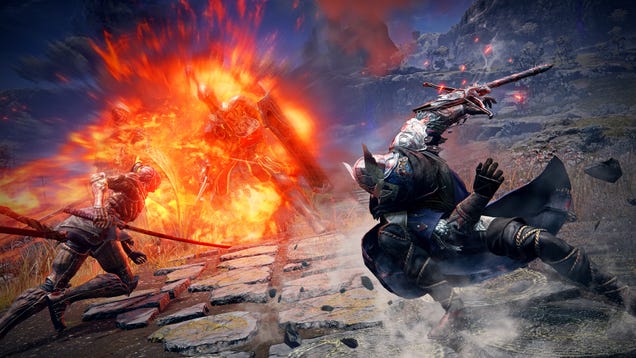
Clair Obscur: Expedition 33 is one of the top-rated games of the year and has sold over 3.3 million copies. And it did it all with a very small budget, according to publisher Kelpler Interactive. How small? Portfolio director Matthew Handrahan isn’t saying, but he thinks everyone’s guesses are probably wrong.

Read more…

“I hope I can finish it”: Thomas De Gendt steps into the unknown at Unbound Gravel

It’s a well-trodden trope at this point. Decorated racers line up at Unbound Gravel, the 200-mile jaunt through the Flint Hills of Kansas, and are surprised at the race dynamics, brutal conditions, and equipment-destroying terrain at the marquee gravel event. 

Last year, there was much hype around the attendance of then-Gravel World Champion Matej Mohoric, but even the rainbow jersey prowess of the Slovenian was no match for Unbound. Mohoric double-punctured, and DNF’d along with his Bahrain Victorious teammates after the halfway mark on the course. 

The latest WorldTour pro to dip his toes into Unbound is Thomas De Gendt. The Belgian is not lacking in tactical know-how or pure power, having won stages in all three grand tours. Will he be able to survive the queen of all gravel races? 

More Unbound news and tech

“I’m not expecting a big result for myself, but you never know.”

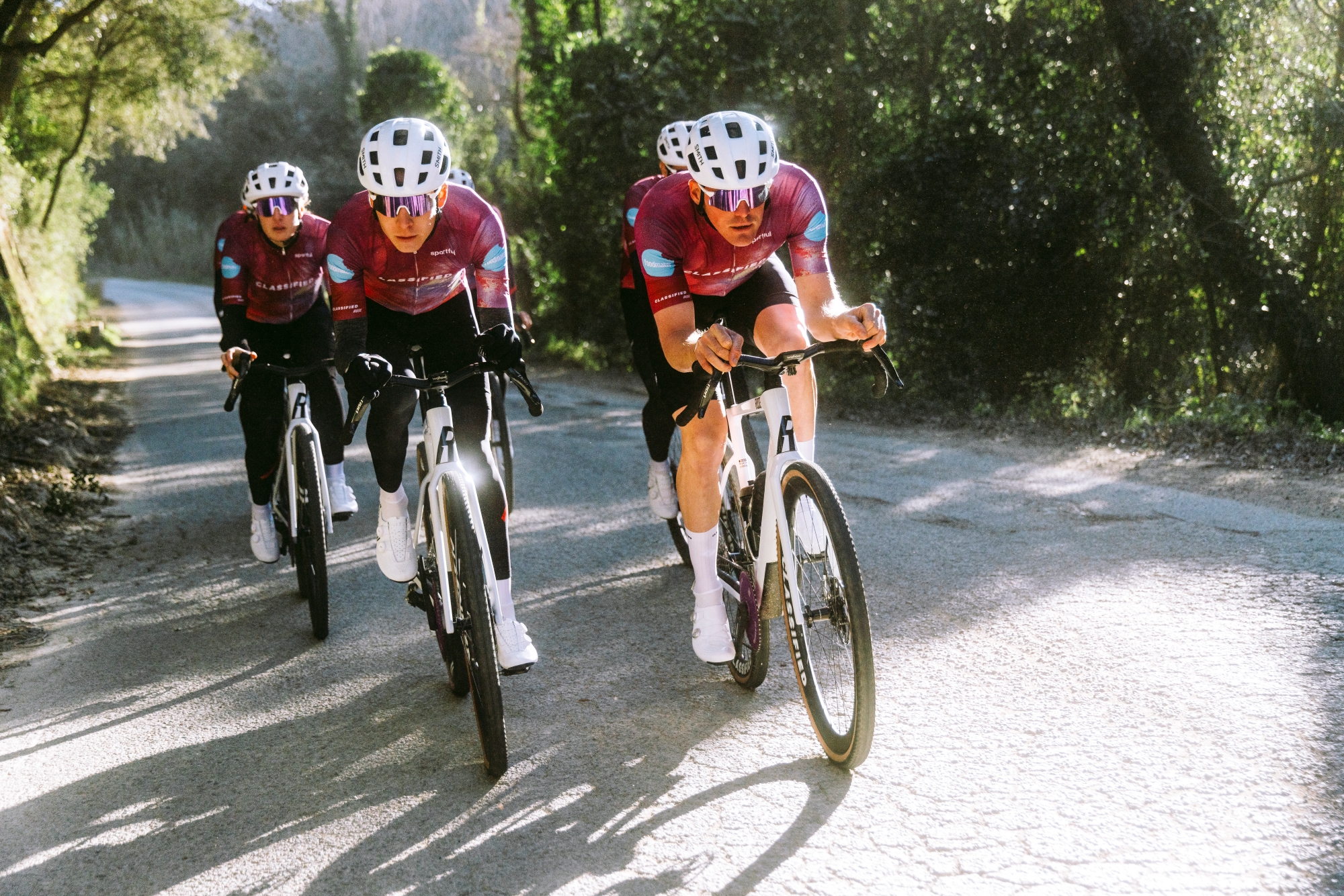
De Gendt is now part of the Classified X Rose Team gravel team. Rose / Classified

Speaking ahead of the race, De Gendt admitted that the length of the race makes it a hard nut to crack. 

“Yeah well I hope I at least can finish it,” De Gendt said in a pre-race press conference.

“That would be already a nice victory for myself. The longest race I [did] on the road was 300 kilometres in Milan-Sanremo, and it was only six hours, 30 or something. [Unbound] will be next level, and it’s more of a race against myself instead of a race against others.

“I’m not expecting a big result for myself, but you never know. I never raced in something this long.” 

Earlier this season, De Gendt finished 5th in the general classification of the four-stage Sahara Gravel in Morocco. He then placed 10th at The Hills gravel race and 3rd on stage 1 of the Ibereolic Gravel Tierra de Campos race. 

De Gendt planned to race the Traka 200 as a part of his preparation for Unbound, but he got sick. After recovering, he did a small training camp in the mountains of France. 

“Everybody has faults during the season, but I hope it will still be enough to just have a good time on Saturday and try to be somewhere in a good position,” he said. “But I don’t think it will be near the top 10 or top 20.” 

A new challenge

Now racing for the Classified x Rose team, De Gendt will have teammates in the race. While Unbound and gravel has seen road tactics appear – notably from Pas Racing last year – team tactics can still be hard to pull off given how many variables there are at Unbound. 

De Gendt said he may be able to help his teammates stay out of the wind, but that tactics will only work for the first half of the race. 

“As far as tactics go, once you get over halfway, then it’s more the legs that will talk. And then as long as you can save some energy in the first five, six hours, and I can help them with that, then maybe they have a bigger chance to have a good result in the end. 

“It’s not like in road racing, where you have somebody closing the gaps. In a race like this, nine to 10 hours, you don’t have the team to close gaps the whole day, so it will be some kind of team tactic in the first three, four hours, but then after that, it’s just everybody for themselves.” 

The Belgian added that it was the prestige as well as the adventure that drew him to Unbound and gravel in general after retiring from his career as a road racer. 

“In Belgium, it’s a really big race,” De Gendt said of Unbound.

“We make documentaries about Unbound. It seemed like something fun to do, but now that I’m here, it just seems very hard. Especially with the rain, it will be a special kind of day on Saturday, so I hope it dries up a little bit. 

“After all these years on the roads, it was time for something new. And gravel takes you on roads that you’ve never been before. I do climbs from a different side, and it’s the more adventurous part of gravel that drew me to this race.”

Amid rising prices, Disney+ and Hulu offer subscribers some freebies

With streaming providers frequently raising prices, subscribers often feel like they’re paying more for the same service—or a lesser version, depending on what’s available to watch that month. In a unique move, Disney is introducing a small, potential financial benefit to Disney+ and Hulu subscribers in the form of some third-party discounts, freebies, trials, and contests.

As of today, Disney+ subscribers can log into Disney’s Disney+ Perks website with their streaming credentials to get access to a revolving selection of discounts and freebies. When I logged in today, I was met with options for several free trials, including a six-month one to DoorDash’s premium subscription offering, a three-month trial to Clear+, and a two-month trial to Duolingo’s premium subscription.

Disney+ subscribers can also get discounts, including to Adidas’ online marketplaces and “select” Disney Resorts Collection hotels (if you stay at least two nights, with most availability occurring between June 29 and July 31). There are also some free virtual rewards for Disney-owned games and the ability to enter sweepstakes, like for going to the premiere of the movie Freakier Friday.

Read full article

Comments

Tinder is testing height preferences

Tinder helped popularize a modern dating culture that puts looks first, and now the app is trying out a new way to capitalize on it. As part of a test, select Tinder Gold and Tinder Platinum subscribers will be able to set a preferred height range for matches they receive in the app, according to TechCrunch. The feature was first spotted by a Reddit user who noticed the option in the app’s “Discovery Settings.”

Deciding that you prefer matches who are 5’10” and up won’t necessarily weed out the short kings in your area, but it will influence the recommendations the app offers as you swipe. Tinder has long included ways to spell out your preferences in your profile, and plenty of people go further in their bio, signaling that they only swipe right on people with specific features or interests. Making height preference part of the official settings just formalizes things.

A new setting slider in the Tinder app that lets you set a preferred height range for matches.
u/Extra_Barracudaaaa

Given how dating apps are already associated with superficiality, though, this feature seems intended to be a bit provocative. It could also reflect how Tinder is approaching its paid subscriptions going forward: not just as a way to increase the reach of your dating profile, but as the official method for exerting granular control over who you match with.

“This is part of a broader effort to help people connect more intentionally on Tinder. Our new product principles guide every decision, and this one speaks directly to a few: prioritizing user outcomes, moving fast, and learning quickly,” Tinder’s VP of Comms Phil Price Fry tells Engadget. “Not every test becomes a permanent feature, but every test helps us learn how we can deliver smarter, more relevant experiences and push the category forward.”

Whether being able to set a height preference becomes a real feature, it doesn’t stop people from lying in their dating profile. Though, as TechCrunch notes, Tinder has joked about implementing height verification in the past.

This article originally appeared on Engadget at https://www.engadget.com/apps/tinder-is-testing-height-preferences-212414694.html?src=rss

China Summons Top Carmakers Over ‘Zero-Mileage’ Used Vehicles

An anonymous reader shares a report: China’s Ministry of Commerce is meeting with some of the country’s biggest automakers to discuss whether the industry is using a loophole to mask weakening sales. Reuters adds: It comes after Great Wall Motor’s Chairman Wei Jianjun said in an interview with Sina Finance last week that a phenomenon called “secondhand cars with zero mileage” had emerged in the Chinese market as a result of the industry’s years-long price war.

The phenomenon, he said, involved cars that had been registered and had licence plates — marking them as sold — but had never been driven being sold in the secondhand market. Wei said that at least 3,000 to 4,000 vendors on Chinese used car platforms were selling such cars. The source said the tactic was seen as a potential method within the industry for automakers and dealers to support new car sales as they try to meet aggressive sales targets.


Read more of this story at Slashdot.

This Is Why Strava Rounds Down Your Miles

You cross the finish line after what feels like a perfect 10-mile run and your watch beeps triumphantly, displaying that beautiful round number: 10.00 miles. You’re already composing your social media post in your head. Then you upload to Strava and—betrayal. Your activity shows 9.99 miles. It might seem like a bug, but as Strava explains, it’s very much by design.

Welcome to the “Strava Tax,” the phenomenon that has spawned memes, advice, and probably a few extra loops around parking lots as runners desperately try to hit that magical round number.

What’s really happening when Strava rounds down?

The Strava Tax isn’t actually Strava being petty or skimming distance off your achievements. It’s more of a collision between mathematical precision and the messy reality of how different devices handle GPS data.

Here’s the thing: when your watch displays 10.00 miles, that’s often not what it actually recorded. The raw GPS data might show 9.993 miles, 9.996 miles, or 10.001 miles. Your watch rounds this to a nice, clean 10.00 for display purposes—because who wants to see 9.99634 miles on their wrist?

So your watch and apps don’t just display raw GPS data—they “improve” it. They smooth out GPS wobbles, correct for obvious errors, and sometimes add their own interpretations of where you actually went. Your Garmin might think you ran through that building (especially as AI maps take over), while your phone’s GPS smooths your route to follow the sidewalk.

Different manufacturers handle this data inconsistency in different ways. Even devices from the same manufacturer can display identical GPS data differently, depending on the model, firmware version, or even the specific algorithms running on each device. Some devices will show 1.00 km as soon as you hit 991 meters (0.991 km), while others wait until you actually complete a full kilometer. It’s like having different definitions of what “close enough” means.

Beyond that, mile definitions aren’t actually universal. You’d think a mile is a mile, right? Not in the world of fitness devices. The precise definition is 1609.344 meters, but some devices use 1609 meters for simplicity. That small difference adds up over longer distances.

But Strava takes a different approach. When displaying distances, Strava rounds down rather than using standard rounding rules. So that 9.993 miles becomes 9.99 miles on your activity page, not 10.00 miles.

Why Strava rounds down

Strava often sits in the middle of different manufacturers and devices. Imagine if Strava applied the same “enhancement” algorithms that your Garmin uses to data coming from an Apple Watch. The Apple data might get double-processed, potentially inflating distances. Or if it used Apple’s data smoothing, it might actually reduce accuracy.

Instead, Strava takes a conservative approach: it displays the data as close to raw as possible, using consistent rounding rules across all devices. This means sometimes your beautiful round numbers get truncated, but it also means a 10K from a Garmin is treated the same as a 10K from an Apple Watch.

Zooming out, when it comes to fitness tracking, it’s helpful to remember that the numbers we see are often more complicated than they appear. We all know GPS isn’t perfect. Think about it: your device is trying to track your position using satellites 12,000+ miles above Earth. Trees, buildings, weather, and even solar activity can affect accuracy. How often to record points, how to connect the dots between points, how to filter out obvious errors, how to handle missing data—each manufacturer makes different choices. Strava’s choice, in its own words, is to “err on the side of caution rather than let the accuracy of our records start to dilute.”

Tips to live with the Strava Tax

At the end of the day, there’s a deeper reason why so many runners bond over Strava Tax memes. The Strava Tax taps into something more than just measurement accuracy—it hits our psychological relationship with round numbers. There’s something deeply satisfying about completing exactly 10 miles, 5K, or 100 kilometers. These numbers feel complete, accomplished, worthy of celebration.

When Strava displays 9.99 miles instead of 10.00, it doesn’t just remove a hundredth of a mile—it removes the psychological satisfaction of hitting that milestone. It’s the difference between “I ran 10 miles!” and “I ran…well, basically 10 miles.”

This is why you see runners doing extra loops around parking lots, cyclists riding circles in their driveways, and forum threads debating whether 9.99 miles “counts” as a 10-mile run. It’s not really about the 0.01 miles—it’s about the story we tell ourselves and others about our achievements.

So what’s a data-obsessed athlete to do? A few strategies:

  • Embrace the range: Instead of fixating on hitting exactly 10.00 miles, think in ranges. A 9.98-10.02 mile run is essentially the same thing—you ran about 10 miles.

  • Know your device: Learn how your specific watch or phone handles distance calculation. Some devices let you calibrate distance measurements or choose different GPS settings that might be more or less aggressive in their processing.

  • Focus on trends: Day-to-day variations in distance measurement matter less than long-term trends. Are you running farther this month than last month? That’s more meaningful than whether Tuesday’s run was 5.99 or 6.01 miles.

  • Plan ahead: If hitting exact distances is important to you, plan routes that give you a small buffer. Aim for 10.1 miles if you want to ensure you hit at least 10.0 on Strava.

The Strava Tax might be annoying, but every time you glance at your watch and see a distance, remember: there’s a satellite constellation, multiple algorithms, and several companies’ worth of engineering decisions all working together to give you that number. And sometimes, despite all that technology, you still end up with 9.99 miles. But hey—you still ran the distance. The GPS satellites aren’t judging you, and neither should you.

India Needs To Turn the Air-Con On

India faces a paradoxical climate challenge that requires embracing air conditioning despite the environmental costs, according to analysis of the country’s warming patterns and pollution crisis. While the past decade marked India’s warmest on record, the nation has warmed at only 0.09C per decade compared to 0.30C globally, with horrific air pollution serving as an unintended cooling agent by intercepting solar radiation and making clouds more reflective.

The cooling effect creates a dangerous trade-off: cleaner air would accelerate temperature rises just as the country desperately needs relief from intensifying heat waves. Only one in ten Indian households owns air conditioning, compared to two-thirds in China and four-fifths in Malaysia, despite air-conditioner sales doubling between 2020 and 2024. During heat waves, cooling systems already account for one-fifth of power demand, mostly supplied by coal plants that worsen the pollution problem India must eventually solve.


Read more of this story at Slashdot.

LEGO Lord Of The Rings Gandalf And Balrog Book Nook

This is upcoming LEGO set #10367, the Lord Of The Rings Balrog Book Nook. The 1,201 piece set begins shipping June 1st, costs $130 *spit-takes Ent-draught* and will make the perfect addition to the your Tolkien book collection. The set can be displayed closed in book nook form, or the two sides hinged opened to reveal the Balrog’s outstretched wings. But does the Balrog’s whip make it look like he’s peeing at Gandalf’s feet? Absolutely. There’s no way that wasn’t intentional and LEGO isn’t hiring a new product photographer right now.