Samsung Announces The Galaxy Z Flip: Foldable Phone With Glass

Today Samsung announced the new Galaxy S20, S20+ and S20 Ultra, but the regular flagship phones weren’t the only devices announce today as we’ve also seen the unveiling of the new Galaxy Z Flip. The new Z Flip is Samsung’s second foldable phone to market after Galaxy Fold, but takes a new approach in terms of design as it comes in a new clamshell design with only a single primary screen.


Samsung Galaxy Z Flip
  Galaxy Z Flip
SoC Qualcomm Snapdragon 855+ 

1x Kryo 485 (CA76) @ 2.95GHz

3x Kryo 485 (CA76) @ 2.42GHz

4x Kryo 485 (CA55) @ 1.80GHz


Adreno 640

Display Main Display:
6.7″ 2636 x 1080 Foldable Glass (!!) Dynamic AMOLED (21.9:9)


Cover display:

1.1″ 300 x 113 Super AMOLED

Dimensions Folded:


73.6 x 87.4 x 17.3mm (Hinge) – 15.4mm (Sagging)


Unfolded:


73.6 x 167.3 x 7.2mm – 6.9mm (Screen)


183g

RAM 8GB LPDDR4X
NAND 256GB
Battery 3300mAH (12.70Wh)
Front Camera 10MP 1.22µm f/2.4 80° FoV
Primary Rear Camera 78° Regular Angle

12MP 1.4µm Dual Pixel PDAF

f/1.8

OIS, auto HDR, LED flash

Secondary Rear Camera 123° Wide Angle

12MP 1.12µm f/2.2
Tertiary Rear Camera 45° / Telephoto lens 2x zoom

12MP 1.0µm f/2.4,

OIS
SIM Size NanoSIM + eSIM
Wireless 802.11a/b/g/n/ac 2×2 MU-MIMO, BT 5.0 LE,

NFC, GPS/Glonass/Galileo/BDS
Connectivity USB Type-C
Features (It Folds Glass)
Launch OS Android 10
Launch Price $1380 / 1480€

The Galaxy Z Flip features a Snapdragon 855+ processor, and in general, the internals of the phone seemingly are more akin to a flagship 2019 phone rather than being in line with the more impressive S20 series processors. It comes with 8GB of RAM and 256GB of storage which is relatively respectable.



What makes the Z Flip extremely impressive though is its display. It’s not the first flexible display out there, and it’s relatively average with a 2636 x 1080 resolution. What makes it special, is that this is the very first display on the market that has an ultra-thin glass cover on it – yes, it’s a foldable glass screen. The implications here are huge when compared to a plastic foldable screen, and the glass should be significantly more scratch resistant than plastic alternatives, making this a much more viable option when it comes to long-term durability of the phone.


Samsung’s hinge mechanism was designed in such as way that it minimises dust ingress into the gears of the system. What’s also special is that the phone clicks in at different angles such as 120°, instead of being freely flexible at any angle.


The formfactor is interesting and falls in at 73.6mm width. Folded, it’s at 87.4mm length and 17.3mm thick at the hinge and 15.4mm at the sagging end. Unfolded, it grows to 167.3mm length and is only 6.9mm thin. In terms of weight, Samsung was able to keep it relatively in check at 183g, however the battery is a bit less impressive at only 3300mAh.



The front camera is achieved through a punch hole in the screen and features a standard 10MP sensor and f/2.4 aperture lens at 80° field of view. The rear cameras feature a 12MP wide and ultra-wide angle module that look similar in specs to what we’ve seen in the S10 and Note10 series.


What’s interesting is, when the phone is folded, you still have a secondary small information screen next to the cameras, but this is meant to only be able to show limited information or to be used as a tiny viewfinder for selfies using the rear cameras, and does not serve as a full blown useable screen such as the cover display on the Galaxy Fold.


The Galaxy Z Flip will be available February 14th starting at $1380 and 1480€. Considering the novel form-factor, it’s a quite attractive price and seemingly competes very hard against the Motorola Razr in the foldable flip-phone market, even undercutting it in price while sporting much better hardware.


Source: AnandTech – Samsung Announces The Galaxy Z Flip: Foldable Phone With Glass

Samsung Announces The Galaxy S20, S20+ and S20 Ultra: 120Hz, 5G, Huge Batteries, Crazy Cameras and $$$

The year is 2020. The 20’s are back (we’ll see if they’ll be roaring or not), and not only is it a new decade, but it’s also time for a new enumeration scheme for Samsung’s newest Galaxy S devices; Today Samsung is announcing the new Galaxy S20, S20+ and S20 Ultra flagship phones. The new phones have some similarities in the external design to last year’s S10 line-up and a clearly a successor – but in terms of specifications and hardware capabilities, it’s one of Samsung’s largest ever updates.


Source: AnandTech – Samsung Announces The Galaxy S20, S20+ and S20 Ultra: 120Hz, 5G, Huge Batteries, Crazy Cameras and $$$

Samsung's Unpacked 2020 Event: Galaxy S20 And More – Live Blog (11am PT)

Today Samsung is hosting the 2020’s first Unpacked launch event in San Francisco. We’re expecting the brand new Galaxy S20 series, a new foldable phone, and maybe a few other surprise products. While we won’t be at the event this year, we’ll be live blogging the event and giving you live commentary on the newest products right as Samsung unveils them. 


The launch event is scheduled for 11am PT / 2pm ET / 8pm CET.


Related Reading:


Source: AnandTech – Samsung’s Unpacked 2020 Event: Galaxy S20 And More – Live Blog (11am PT)

Samsung's New The Wall Display: Is 583 Inches Large Enough?

Samsung has expanded its The Wall lineup of Micro LED-based displays with two models featuring 437 and 583-inch diagonals. The monitors are intended for commercial use, though nothing can stop someone with deep pockets from buying such a ‘television’ for home use.


The new 437 and 583-inch Wall displays from Samsung feature an 8K resolution and are based on new Micro LED modules. Previously, Samsung’s The Wall lineup included 75-inch, 146-inch, 219-inch, and 292-inch models.


Samsung does not disclose exact specifications of its new Wall displays as well as Micro LED-based modules (called cabinets) uses to build them. Previously, Samsung’s Micro LED cabinets featured 250 – 2000 nits brightness (regular/peak), around 10,000:1 contrast ratio, a 16-bit color depth, up to a 100/120 Hz refresh rate, as well as 155°/135° horizontal/vertical viewing angles. Given the overall size of the latest displays, the newest modules probably have a lower pixel density, but for commercial applications like digital signage this may not matter a lot.


The largest versions of Samsung’s Wall displays will be available for pre-order starting this week. Prices are not disclosed, but if you have to ask, you probably can’t afford it.


Related Reading:


Source: Samsung


Source: AnandTech – Samsung’s New The Wall Display: Is 583 Inches Large Enough?

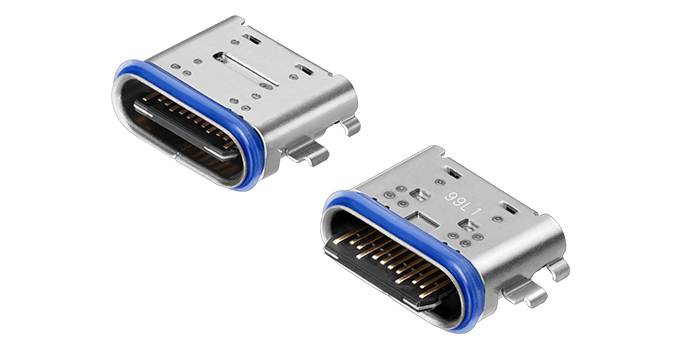
MinibeaMitsumi Launches IP68-Rated USB-C/Thunderbolt 3 Connector

MinibeaMitsumi has unveiled the industry’s first dustproof and waterproof USB Type-C connector that is certified for Thunderbolt 3 speeds. The connector can be used for a variety of applications that require high bandwidth and high reliability in harsh environments.


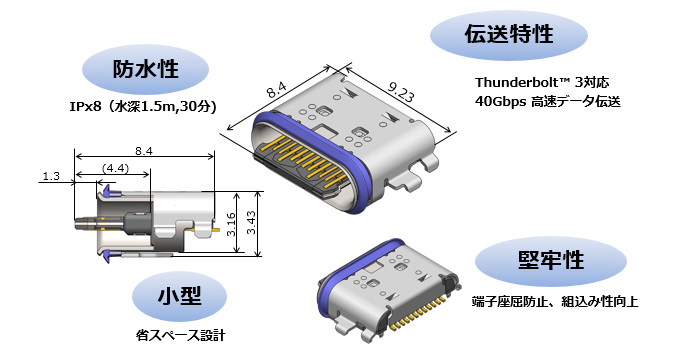
The MinibeaMitsumi CAM-L41-series connector is is formally IP68-certified, and uses a proprietary waterproof structure that allows it to operate for 30 minutes while submerged in up to 1.5 meters of water. The connector has been certified for Thunderbolt 3 technology and all of its features, including a 40 Gbps data transfer rate, and power delivery. The company expects to eventually gain certification for the USB4 specification too.


There are numerous applications nowadays, including those in harsh environments, that use USB-C connectors. Examples include industrial, rugged PCs, wearables, medical devices, automotive infotainment, various home appliances, and outdoor displays, just to name a few. A number of companies have released IP68 and even IP69K USB-C connectors for such applications, but all of them are only certified for 5 Gbps or 10 Gbps operation. By contrast, the CAM-L41 was certified for 40 Gbps data rate and will appeal to applications that require high bandwidth in severe environments.


The new connectors are now available from MinibeaMitsumi.


Related Reading:


Source: MinibeaMitsumi (via PC Watch)


Source: AnandTech – MinibeaMitsumi Launches IP68-Rated USB-C/Thunderbolt 3 Connector

Arm Announces Cortex-M55 Core And Ethos-U55 microNPU

Today Arm announces its newest addition to the Cortex-M series, the new Cortex M55. In addition to the new CPU microarchitecture which brings several new improvements, we also see the introduction of the new Ethos-U55 NPU IP that is meant to be integrated with the new M55 core. Arm’s new IP is meant to advance the machine learning and inferencing capabilities of billions of low-power embedded devices over the next several years, and expand its product portfolio for new use-cases.


We’ve seen Machine Learning become quite the buzzword over the past several years, but today the ecosystem has evolved to the point that it’s no longer just a brand-new novelty, but rather quickly becoming a useful feature to the point that it’s being increasingly deployed in various systems and use-cases in the industry. Arm sees the endpoint AI market particularly an area where we’ll be seeing explosive growth over the coming years, and this is the area that Arm wants to cover with the new IP releases.


The new Cortex-M55 is a new generation IP more closely related to the M33, but brings a few new architectural advances with it that promise some large performance and flexibility improvements when it comes to machine learning as well as vector instructions.


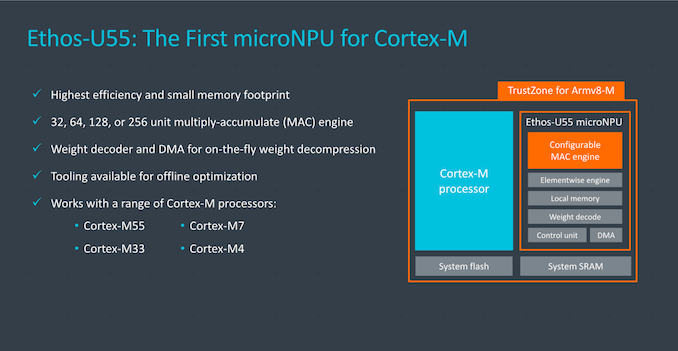
The Ethos-U55 is a dedicated “microNPU” dedicated inference accelerator that ties in with a Cortex-M class CPU and offers the performance and power efficiency of a dedicated NPU, or MAC-engine would usually bring to the table – all in within the similar small footprint of the M-class IPs.

Cortex-M55: First Helium and Custom Instruction capable CPU core


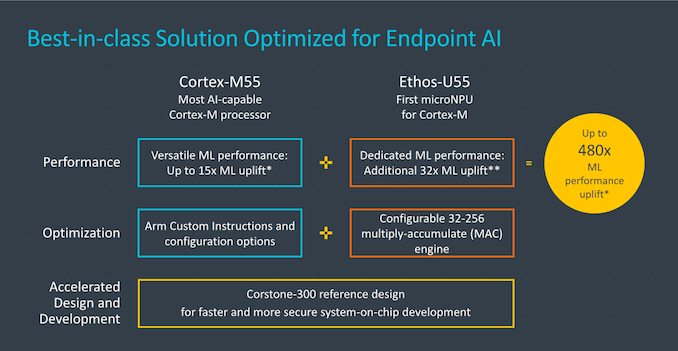
The new Cortex-M55 is important as it’s the first Arm CPU core that is announced with both Helium as well as Custom Instructions capabilities. Helium, whose technical name is actually MVE (for M-Profile Vector Extension), is the new vector extensions and dedicated vector execution units in the M-class processor line-up, making it the first CPU in this range that is capable of SIMD instructions. The addition gives the new core up to a 5x increase in DSP performance, and the optimised instructions for ML workloads in combination with MVE adds up to a 15x performance improvement compared to previous generation M-cores.

In terms of overall microarchitecture, it’s a successor to the M33 and combined µarch as well as frequency improvements will see scalar workloads increase performance by roughly 20%, depending on the vendor’s configuration. The core had been designed with a focus on bandwidth and enabling the new MVE and new ML workloads that require it, so improvements have been made to the memory subsystem, such as having 4x 32-bit interfaces to the TCM (Tightly Coupled Memory).


The Ethos-U55: Arm’s first microNPU


Arm was relatively late to the NPU scene as most vendors had employed their own first-party IP architectures in products, and most vendors today use such implementations. The embedded market however is a bit different and there’s a need for something that is a lot lower area and lower power than what you’re generally used to in “larger” implementation such as in mobile SoCs, which are covered by Arm’s Ethos-N NPU IP.


The new U55 is a small-scale NPU that scales from 32 to 256 MACs, and requires coupling with a Cortex-M class NPU. Arm didn’t go into major specifics of the microarchitecture, but it’s a very lean design that focuses on area and power efficiency, as well as having small memory footprints, including some features that we see in the N-series such as weight decompression. We’re saying the U55 needs to be coupled with an M-class CPU to serve as the controller, but actually this isn’t all too different to what the N-series does as that IP already includes an M-class CPU. When it comes to the architecture of the NPU, it’s said to be different and not related to its bigger brethren, and was designed specifically for low-power use-cases.


In terms of area size, the smallest 32 MAC implementation of the U55 is said to be around 2x the size of an M55. We don’t have absolute figures to present here, but we’re essentially talking about fractions of a mm².


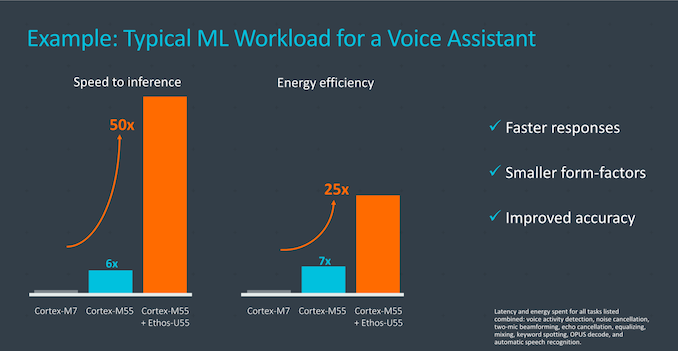
The performance improvements in such systems that use the M55 and U55 represent very major step-function increases over past generation solutions. Figures that Arm provides include up to a 50x performance uplift in a comparison to a Cortex-M7 based system, all while improving energy efficiency by 25x.


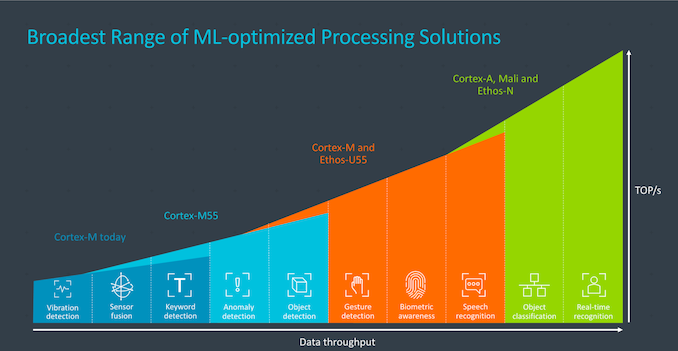
As to where the new IPs will be employed, is a very wide variety of embedded systems. It’s important to understand here that the major volume of such systems will be actually subsystems of current existing chips. If we were to take mobile as an example, you’d see subsystems using the IP inside the fingerprint sensors of a phone, the always-listening audio chip for voice assistant features, or even uses inside the RF systems that would optimise workloads such as antenna tuning. There are hundreds of M-class processors in today’s mobile devices that would benefit from ML capabilities, most of them completely transparent to the user.


Arm has currently licensed the M55 and U55 to its lead partners, and will open up wider range licensing to other customers in the coming months. As usual with IP, you should expect products using the new designs in around 2 years – if vendors ever publicly confirm whether they use the designs in their products.


Related Reading:


Source: AnandTech – Arm Announces Cortex-M55 Core And Ethos-U55 microNPU

A Passively-Cooled GeForce GTX 1650: KalmX by Palit

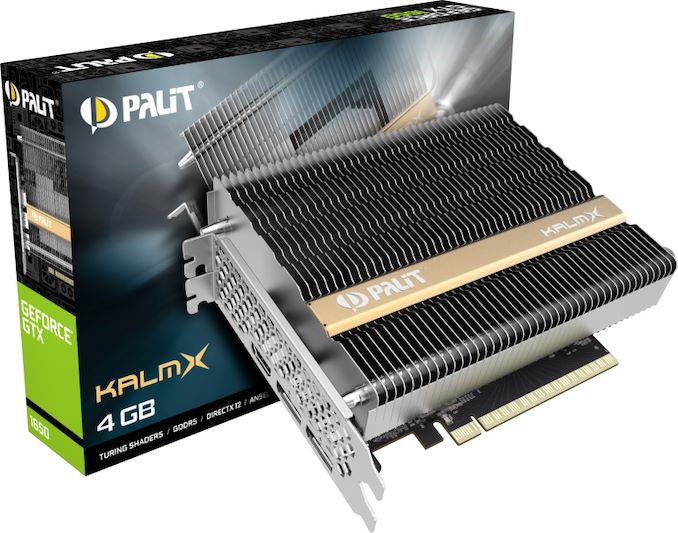
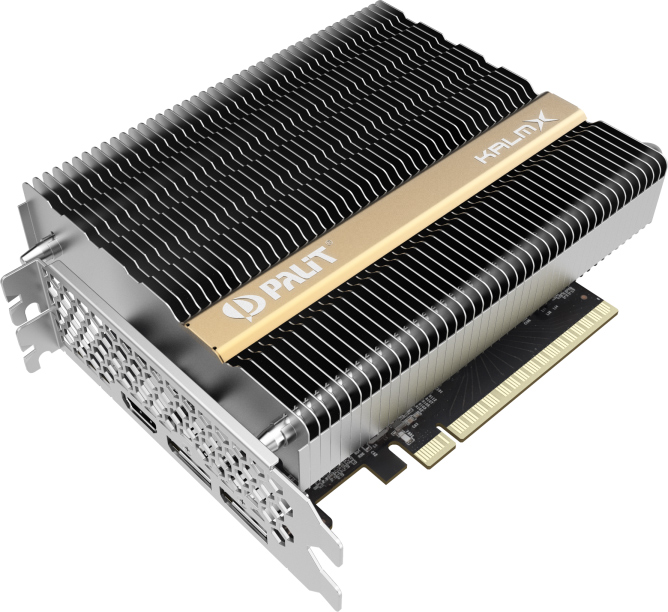
Passively-cooled video cards are rather rare these days, as the bulk of the market has made peace with today’s dual fan actively cooled cards. Luckily, there are a still a few companies releasing passive designs, such as Palit Microsystems, who has introduced its fanless GeForce GTX 1650 KalmX.


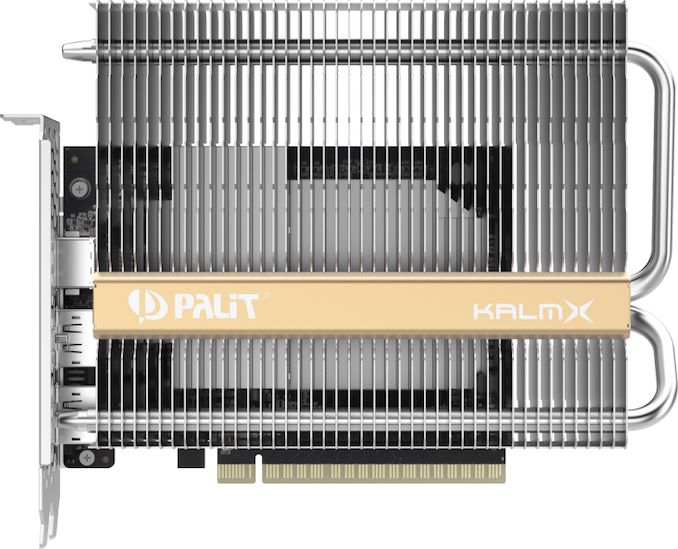
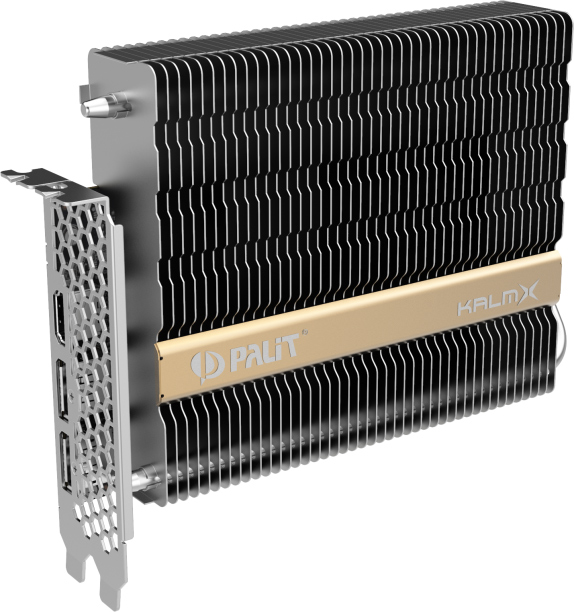
The Palit GeForce GTX 1650 KalmX (NE5165001BG1-1170H) uses a custom PCB and comes with a sizable passive cooling solution. The double-wide heatsink incorporates a pair of heatpipes, and is considerably taller than the card as well. All told, with the heatsink factored in, the card measures 178 mm long and is 138 mm high. And unsurprisingly, given the strict thermal limitations in play, Palit is playing things conservatively here, and the card runs at NVIDIA official GTX 1650 reference clockspeeds of 1485 MHz/1665 MHz (base/boost).


Typical for GTX 1650 cards, Palit is using 4 GB of 8 Gbps GDDR5 memory here. The card has two DisplayPort 1.4a outputs and one HDMI 2.0b port.


Officially, Palit rates the card for a TDP of 75W; and judging from what we’ve seen with other GTX 1650 cards, that’s probably a bit conservative as well. Which is all the better for Palit, since it makes their job of passively cooling the video card all the easier. The other upside of being a sub-75W card is that an auxiliary PCIe power plug isn’t required, so the card can be dropped into a system and immediately used with no further internal wiring.


Palit has not revealed an MSRP for the GeForce GTX 1650 KalmX. NVIDIA’s regular MSRP for the GTX 1650 ($149), though I wouldn’t be too surprised to see Palit charge a premium for a unique, passively-cooled card.


Related Reading:


Source: Palit


Source: AnandTech – A Passively-Cooled GeForce GTX 1650: KalmX by Palit

Intel’s Comet Lake Meets Optical Drive in ASUS X545FA Laptop

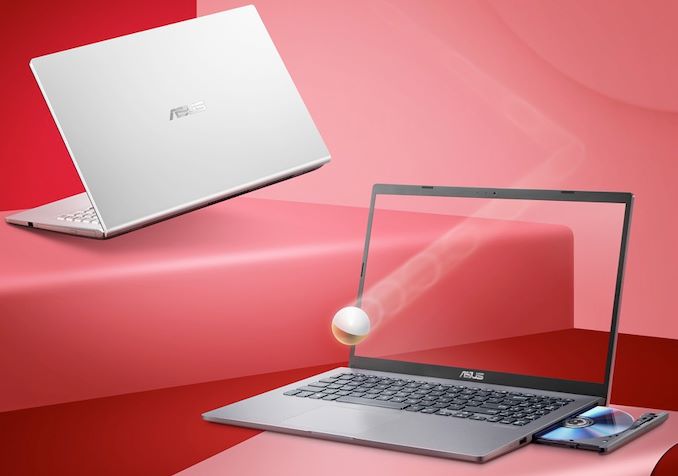
The rise of software distribution over the Internet and content streaming services have greatly reduced the value of optical disc drives for the average consumer. At the same time, the trend towards thinner laptops persuaded PC makers to remove ODDs from notebooks. As a result, it is now rather uncommon to find a new mobile PC with a BD or DVD drive, a pity for those with large collections of discs. But optical drives aren’t entirely dead quite yet, and to address the market for customers who still need a drive, ASUS Japan this week introduced its X545FA laptop, an Intel Comet Lake-based machine that includes a DVD drive.


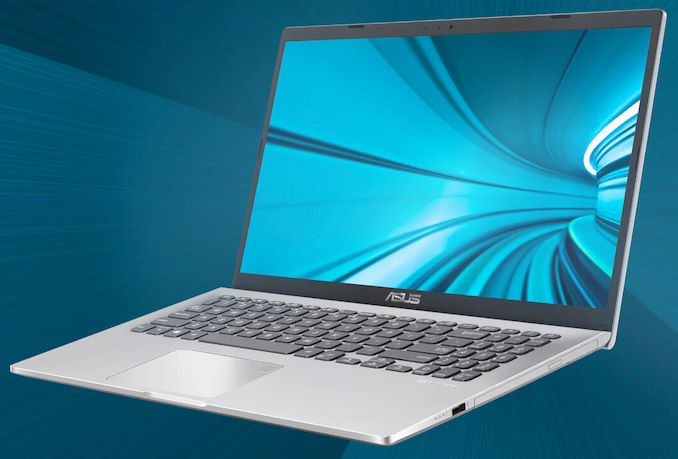
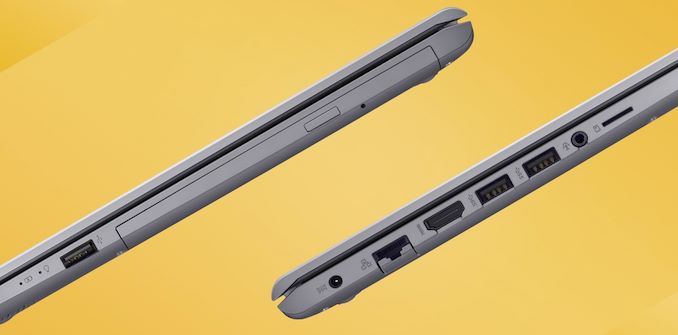
The ASUS X545FA notebook is equipped with a 15.6-inch Full-HD display and comes in a “Slate Gray” or “Transparent Silver” body that is 23 mm thick. In line with other machines in this class, the laptop weighs 1.9 kilograms. At the heart of the mobile PC are Intel’s 10th gen quad-core Core i3-10110U and Core i7-10510U processors with built-in Intel UHD graphics, accompanied by up to 8 GB of DDR4 SDRAM, and a 512 GB M.2 PCIe 3.0 x2 SSD.


The system comes with a Super Multi DVD drive that can read and burn various types of CD and DVD media. Meanwhile, DVD playback software is not included. Yes, you read that right, it’s just a DVD drive in 2020, lacking support for more modern Blu-ray discs. We’re not too sure what ASUS’ rationale here is – it’s possible DVDs are still very popular in Japan?


On the connectivity side of matters, the X545FA notebook supports Wi-Fi 5, Bluetooth, GbE, USB, HDMI, microSD, and an audio jack. As for multimedia, the laptop features a webcam, stereo speakers, and a microphone array. In addition, the machine has a fingerprint reader.


ASUS says that its X545FA notebook can work for 6.7 ~ 6.8 hours on one charge. This is below what you expect from a modern 15.6-inch class machine, but which may indicate that the manufacturer largely positions the notebook as a cheap desktop replacement machine rather than a PC for work on the go.


Depending on exact SKU, the ASUS X545FA costs from ¥77,556 to ¥99,818 ($705 – $908) without tax.


The ASUS X545FA Notebooks
  X545FA-BQ140T

X545FA-BQ075T

X545FA-BQ139T

X545FA-BQ138T
Display 15.6-inch 1920×1080
CPU Intel Core i3-10110U

Intel Core i7-10510U
Graphics Intel UHD Graphics
RAM 8 GB
SSD 512 GB PCIe 3.0 x2 SSD
Wi-Fi Wi-Fi 5 (802.11ac)
Bluetooth Bluetooth 5.0
USB 1 × USB 2.0 Type-A

2 × USB 3.0 Type-A
GbE GbE
Card Reader microSD
Other I/O HDMI, microphone, stereo speakers, audio jack
Battery 6.7 ~ 6.8 hours
Dimensions Width: 360.2 mm

Depth: 234.8 mm

Thickness: 23 mm
Weight 1.9 kilograms
Additional Information Slate Gray or Transparent Silver body
Price Fom ¥77,556 to ¥99,818 without tax

From $705 to $908 without tax

Related Reading:


Source: ASUS (via PC Watch)


Source: AnandTech – Intel’s Comet Lake Meets Optical Drive in ASUS X545FA Laptop

First with Snadragon 865: ZTE Unveils Axon 10s Pro w/ 5G, 6.47-Inch AMOLED, 12 GB LPDDR5

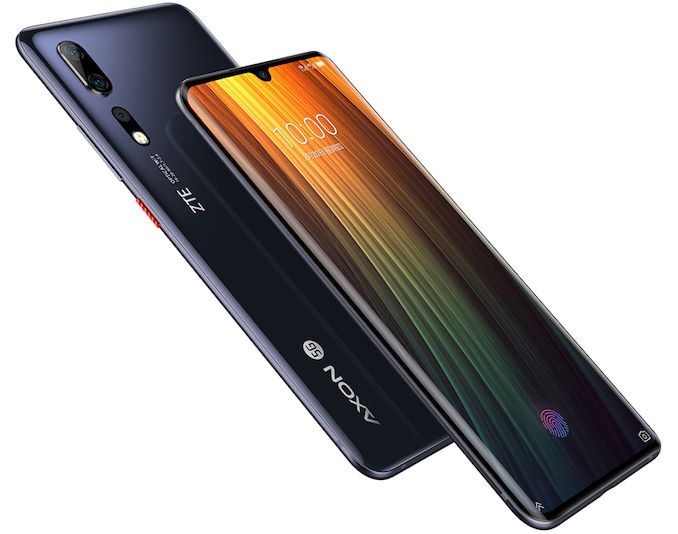
ZTE has announced the industry’s first handset powered by Qualcomm’s new Snapdragon 865 processor, which will be powering the majority of high-end Android smartphones this year. As expected, the Axon 10s Pro is a 5G phone with an advanced camera and a beefy configuration.


The ZTE Axon 10s Pro 5G looks just like its predecessor — the Axon 10 Pro 5G — and comes with the same large 6.47-inch AMOLED display featuring a 2340×1080 resolution, a 19.5:9 aspect ratio, and curved edges. Speaking of similarities between ZTE’s flagship 2019 and 2020 smartphones, it should be noted that the key differences between them are the SoC, the memory and storage subsystems, as well as launch software; everything else is the same.


The Axon 10s Pro 5G smartphone is powered by Qualcomm’s Snapdragon 865 SoC (4x Arm Cortex-A77, 4x Arm Cortex-A55, Adreno 650 GPU, Hexagon 698 DSP/NPU) that is paired with 6 GB or 12 GB of LPDDR5 as well as 128 GB or 256 GB of UFS 3.0 NAND flash storage. And in a bid to to improve the performance of the already powerful system memory and storage subsystems, the handset also supports RAM-Booster and FS-Booster firmware/software capabilities.


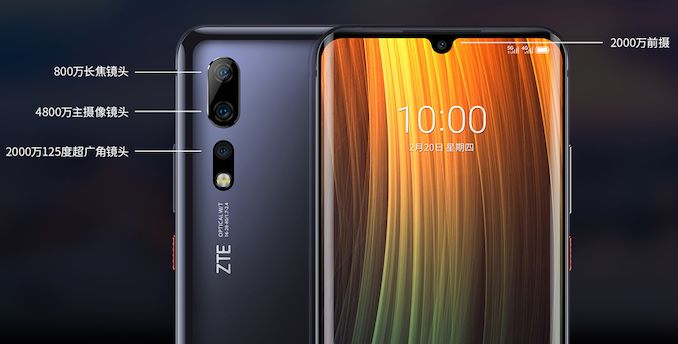
The imaging capabilities of the ZTE Axon 10s Pro are the same as those of its predecessor, so the handset sports a triple-module rear camera system containing a 48 MP main module with OIS, an 8 MP telephoto camera, and an ultrawide 20 MP lens. In addition, the phone has a teardrop 20 MP selfie camera.


Other notable hardware features of the handset include 5G, Wi-Fi 6, Bluetooth 5.0, navigation, a USB 2.0 Type-C port, an under-display fingerprint reader, and a 4,000 mAh battery that can be charged using a wired or wireless charger supporting Quick Charge 4+. The smartphone does not have a 3.5-mm audio jack, but its speakers do support DTX: X Ultra technology.


On the software side of matters, ZTE’s Axon 10s Pro will come with Google’s Android 10 with the MiFavor 10 UI.


ZTE Axon 10s Pro 5G
  Axon 10s Pro 5G
SoC

Qualcomm Snapdragon 865

1x Cortex A77 @ 2.84GHz

512KB pL2


3x Cortex A77 @ 2.42GHz

3x 256KB pL2


4x Cortex A55 @ 1.80GHz

4x 128KB pL2


4MB sL3

GPU Adreno 650 @ 587 MHz
DRAM 6 GB LPDDR5

12 GB LPDDR5
  128 GB or 256 GB UFS 2.0
Display 6.47″ FullView IPS LCD

2340 x 1080 (19.5:9)
Size Height 159.2 mm
Width 73.4 mm
Depth 7.9 mm
Weight 175 grams
Battery Capacity 4000 mAh (Typical)

18 W charging
Wireless Charging Qi
Rear Cameras
Main 48 MP

f/1.7 aperture w/OIS

1/2.0″

0.8µm
Telephoto 8 MP

f/2.4 aperture

3x optical zoom
Wide 20 MP

f/2.2 aperture w/OIS

125° super-wide angle
Front Camera 20 MP selfie camera

f/2.0 aperture

1/2.8″

1.0μm
I/O USB 2.0 Type-C

Fingerprint reader
Wireless (local) Wi-Fi 6

Bluetooth 5.0
Cellular GSM, CDMA, HSPA, 4G/LTE, 5G
Splash, Water, Dust Resistance
Dual-SIM 2x nano-SIM
Launch OS Android 10 with MiFavor 10 UI
Launch Price Starting at CNY 3,200

The ZTE Axon 10s Pro will be available in the near future at prices starting at CNY 3,200 in China (~460 USD). It unclear when the handset is set to hit other markets and how much it is set to cost.


Related Reading:


Sources: ZTE, GSMArena


Source: AnandTech – First with Snadragon 865: ZTE Unveils Axon 10s Pro w/ 5G, 6.47-Inch AMOLED, 12 GB LPDDR5

The 64 Core Threadripper 3990X CPU Review: In The Midst Of Chaos, AMD Seeks Opportunity

The recent renaissance of AMD as the performance choice in the high-end x86 market has been great for consumers by enabling a second offering at the top-end of the market. Where Intel offers 28 cores, AMD offers 24 and 32 core parts for the high-end desktop, and to rub salt into the wound, there is now a 64 core offering. This CPU isn’t cheap: the Ryzen Threadripper 3990X costs $3990 at retail, more than any other high-end desktop processor in history, but with it AMD aims to provide the best single socket consumer processor money can buy. We put it through its paces, and while it does obliterate the competition, there are a few issues with having this many cores in a single system.


Source: AnandTech – The 64 Core Threadripper 3990X CPU Review: In The Midst Of Chaos, AMD Seeks Opportunity

Silicon Power Unveils Stream S07 External Hard Drives: Up to 8 TB

Silicon Power has revealed a new series of consumer-oriented 3.5-inch external USB hard drives. The Stream S07 HDDs can be used with PCs, Smart TVs, and other devices.


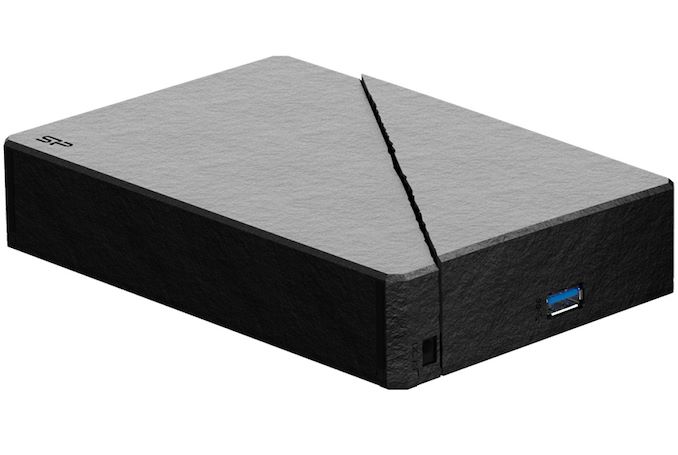
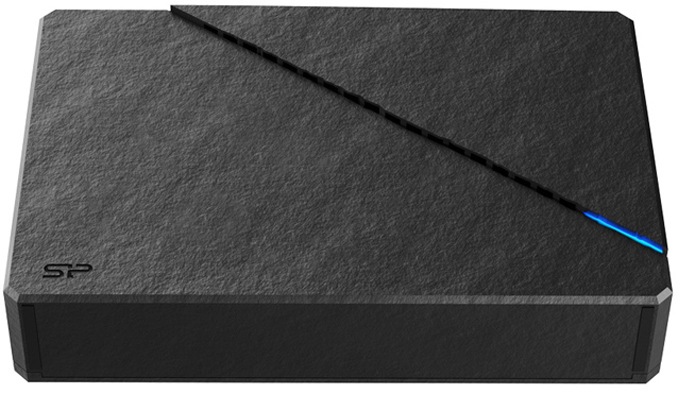
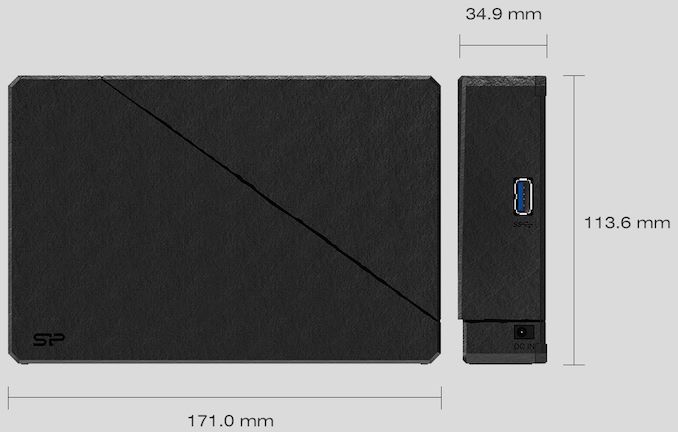
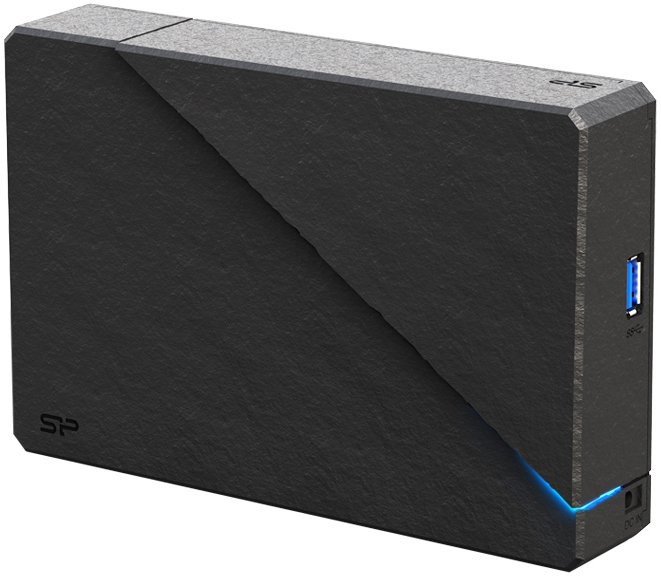
The Silicon Power Stream S07 family consists of four models featuring 3 TB, 4 TB, 6 TB, and 8 TB capacity. All the drives come in a black plastic enclosure with a texture that resembles a stone. To make resemblance with a stone even more realistic, the chassis has an opening that looks like a crack. The opening is used for cooling and it also has a stylish integrated LED that is used as a transfer status indicator.


The manufacturer is not disclosing which hard drives are used for its Stream S07 DAS devices, though given the performance and power needs for the device, they certianly won’t be high-end. If nothing else, since we are not dealing with high-capacity drives, this means they are based on CMR (conventional magnetic recording) technology and won’t incur the greater complexities of using a shingled drive.


Silicon Power’s Stream 07 external hard drives will be available shortly. Prices will vary depending on the capacity.


Related Reading:


Source: Silicon Power


Source: AnandTech – Silicon Power Unveils Stream S07 External Hard Drives: Up to 8 TB

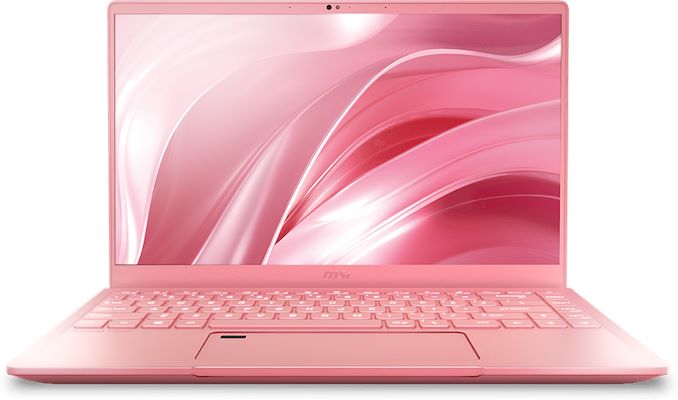
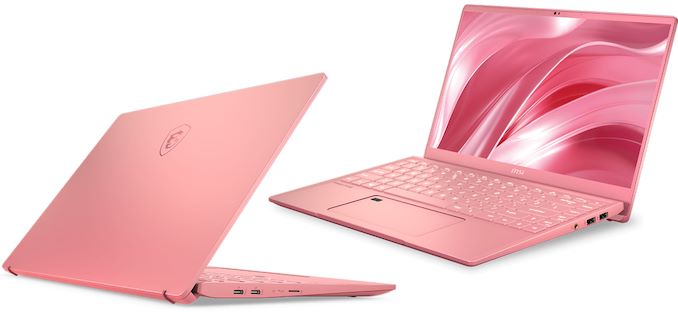
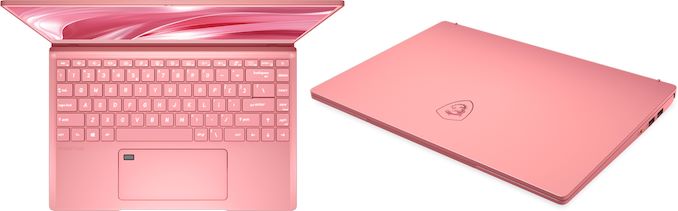
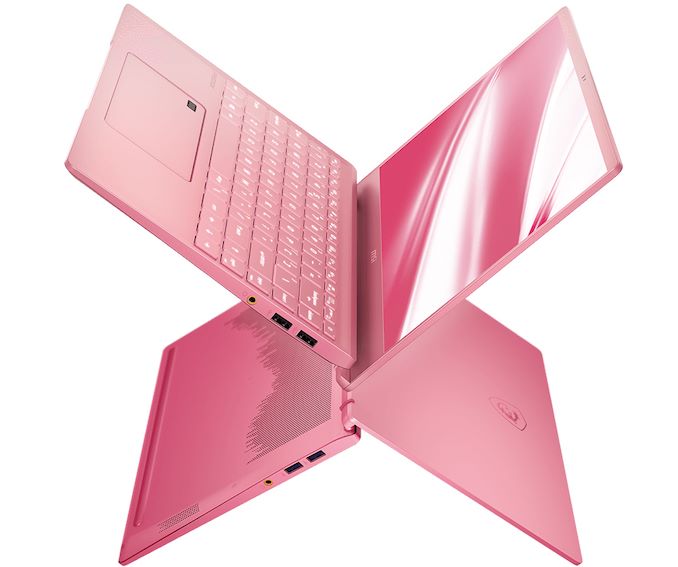
Performance in Pink: MSI’s Prestige 14 Laptop Rose Pink w/ 6-Core CPU & GeForce GTX

For many creative users, style is as important as performance when it comes to electronics, which is a reason why the manufacturers release various special edition versions of their products. This week MSI launched its Limited Edition Rose Pink Prestige 14 notebook that combines and eye-catching look and higher-end components.


MSI’s Prestige 14 is mobile powerhouse equipped with a factory-calibrated 4K Ultra-HD or Full-HD monitor that can display 100% of the AdobeRGB color gamut and is therefore aimed at professionals with color critical workloads. Performance vise, the Limited Edition Rose Pink Prestige 14 machine packs Intel’s six-core Core i7-10710U processor that is paired with 16 GB of LPDDR3-2133 DRAM, NVIDIA’s GeForce GTX 1650 GPU with 4 GB of LPDDR5 memory in Max-Q configuration as well as a 512 GB SSD.


Since we are talking about a high-end system aimed at demanding users, the pink notebook supports a rather distinctive set of technologies that includes a Wi-Fi 6 + Bluetooth adapter, two Thunderbolt 3 ports, two USB 2.0 Type-A connectors, an HDMI 2.0 output, a 3.5-mm audio connector for headsets, and a microSD card reader. When it comes to multimedia capabilities, MSI’s Limited Edition Rose Pink Prestige 14 is equipped with a webcam with IR sensors, stereo speakers, and a microphone array.


MSI’s Limited Edition Rose Pink Prestige 14 laptop with a Full-HD display is now available from retailers like Amazon and Newegg for $1399. Each notebook comes bundled with a pink sleeve bag, pink mouse and key chain so that people could emphasize their style even further.


In addition to the aforementioned version with Intel’s six-core CPU and a discrete GeForce GTX GPU, MSI also plans to release a 4K Ultra-HD version to address a more demanding audience.


Related Reading:


Source: MSI


Source: AnandTech – Performance in Pink: MSI’s Prestige 14 Laptop Rose Pink w/ 6-Core CPU & GeForce GTX

The Road to 80 TB HDDs: Showa Denko Develops HAMR Platters for Hard Drives

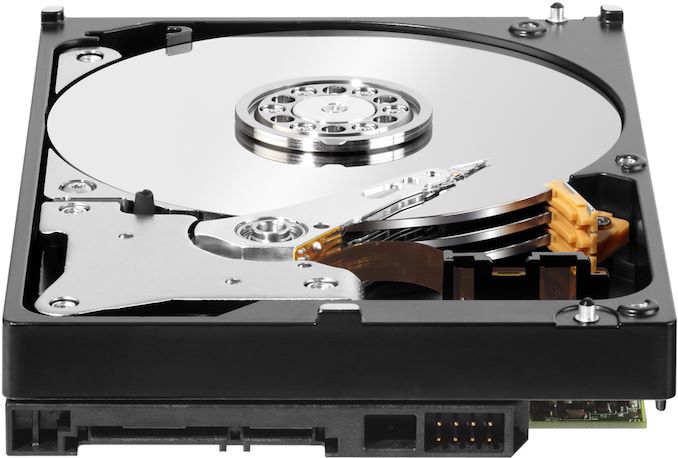
Showa Denko K.K. (SDK) has unveiled the the company has finished the development of its next-generation heat assisted magnetic recording (HAMR) media for hard drives. The platters use all-new magnetic thin films with a very small crystal grain size in order to maximize their areal density, with the goal of eventually enabling 3.5-inch HDDs to be built with capacities of 70 TB to 80 TB.


SDK’s platters for HAMR HDDs are made of aluminum and feature thin film magnetic layer made of an Fe-Pt alloy. To improve the magnetic coercivity of the media by several times over existing platters, Showa Denko used a new structure of magnetic layers and implemented new ways of controlling the temperature of the media during production.


Driving these developments, it’s critical to maximize the magnetic coercivity of next generation HDD platters because the crystal grains used to record data are getting extremely small. This has made them very easy to magnetize, but it has also reduced the strength of the individual magnetic signatures, which creates an unwanted magnetic inter-track interference (ITI) effect that makes it harder for HDD heads to read the data. Platters with high magnetic coercivity require energy assistance during writing and this is what energy assisted magnetic recording technologies (HAMR, MAMR, ePMR, etc.) are all about. Meanwhile, the platters must survive extreme temperatures they are subjected to during heat-assisted recording. According to Showa Denko, its new HAMR platters offer the industry’s highest read-write characteristics and durability.


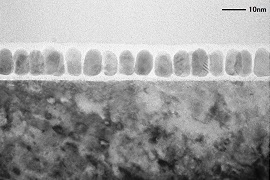
Transmission Electron Microscopy Images of HAMR Media


Plain View                                                          Cross Section


SDK is not disclosing the recording density of its new platters nor are they making specific promises about when it intends to start mass production of next-generation disks. Meanwhile, the company notes that today’s leading-edge conventional magnetic recording (CMR) platters feature recording density of about 1.14 Tb/in2 and it is widely believed that this is not going to grow significantly without using energy assisted recording methods. By contrast, Showa Denko believes, HAMR-based media will achieve areal density of 5-6 Tb/in2 in the future, which will increase capacity of hard drives by several times, all the way to 70 TB – 80 TB per 3.5-inch drive without increasing the number of platters. For comparison’s sake, today’s 16 TB CMR (PMR+TDMR) HDDs use nine disks, so increasing their density by ~5.2X would enable drives featuring capacities higher than 80 TB.


Showa Denko is the world’s largest independent maker of platters for hard drives, selling media to all of the HDD producers. That said, the large manufacturers — Seagate and Western Digital — also produce media themselves and tend to use their own leading-edge platters to cut costs and maximize product margins. So it will be interesting to see which of three remaining hard drive makers will be the first to use HAMR platters from Showa Denko.


Seagate will be the first company to adopt HAMR for commercial 20 TB drives in late 2020, but since Showa Denko now only plans to ‘make preparations for full-scale supply of the new HD media’, it is likely that the first HAMR drives will use Seagate’s own platters. Toshiba is expected to use Showa Denko’s 2 TB MAMR platters for its 18 TB HDDs that are projected to arrive later this year, but in the longer terms it will switch to HAMR (we have no idea when). By contrast, Western Digital uses its so-called energy-assisted PMR (ePMR) technology for its 18 TB and 20 TB HDDs due this year and will gradually move to MAMR and HAMR in the years to come.


Related Reading:


Source: Showa Denko


Source: AnandTech – The Road to 80 TB HDDs: Showa Denko Develops HAMR Platters for Hard Drives

GIGABYTE Launches Designare DDR4-3200 Memory, a 64 GB Kit

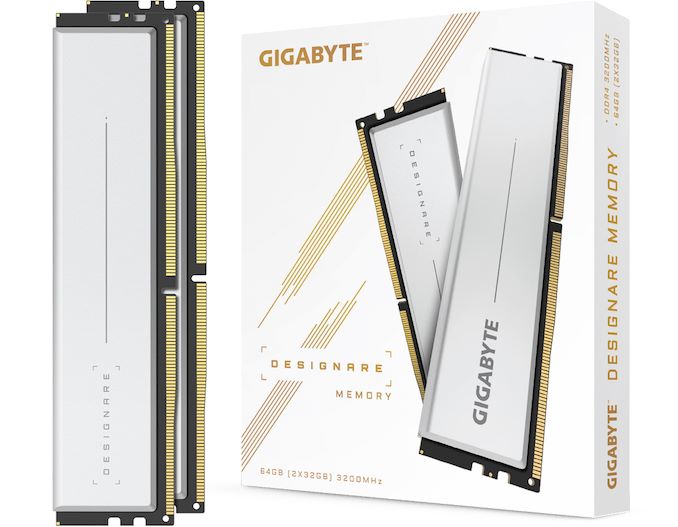
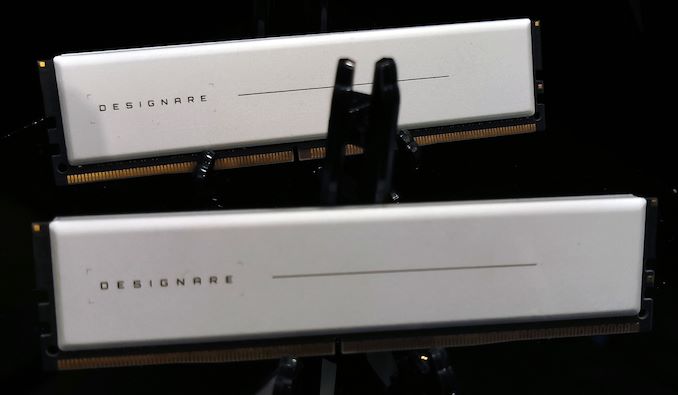
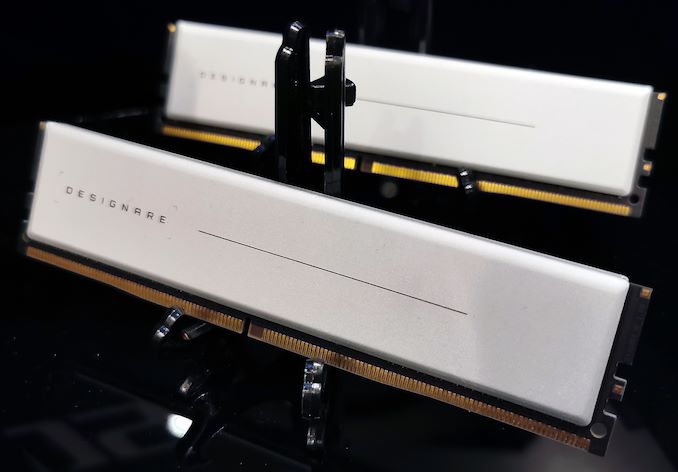
GIGABYTE is a relatively new player on the memory market, yet it clearly wants to participate in the premier league. As seen at CES, this week the company introduced its Designare 32 GB memory that claims to offer both high speed and low latency. The company positions its Designare memory for high-performance systems powered by Designare motherboards.


GIGABYTE’s dual-channel 64 GB Designare Memory kit was tested to operate in DDR4-3200 mode with CL16 18-18-38 latency at 1.35 V. The modules rated for Intel Core as well as AMD Ryzen-based PCs.


The manufacturer does not disclose which memory chips it uses.


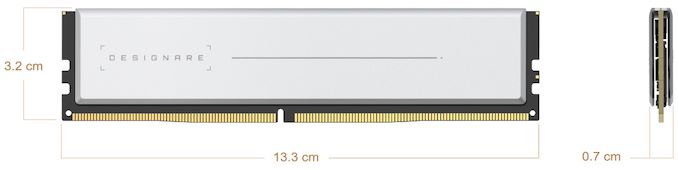
The modules are a standard height and come with modest aluminum heat spreaders that do not affect compatibility with large cooling systems.


GIGABYTE’s Designare 64 GB kit consisting of two 32 GB modules is covered by a lifetime warranty, just like other high-end memory. Expect the kit to hit the market shortly – prices will vary from region to region and will depend on the market conditions.


Related Reading


Source: GIGABYTE


Source: AnandTech – GIGABYTE Launches Designare DDR4-3200 Memory, a 64 GB Kit

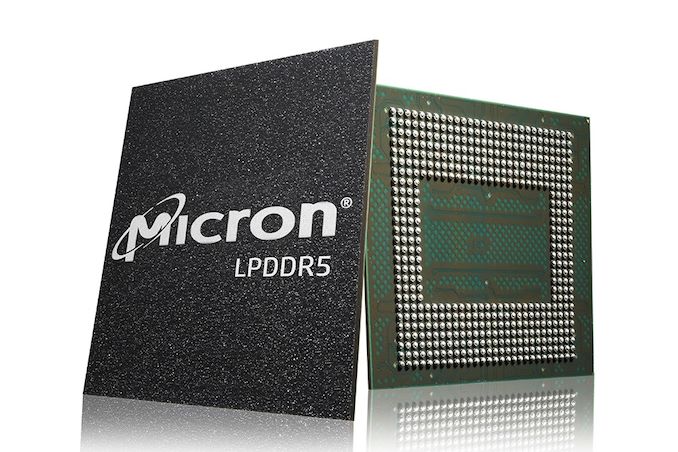
Micron Shipping LPDDR5 DRAM

Micron has announced their first LPDDR5 DRAM is in mass production and now shipping to customers. The new RAM is significantly faster and more power efficient than LPDDR4x. One of the first products to use the new LPDDR5 will be the upcoming Xiaomi Mi 10 smartphone.


Micron’s LPDDR5 is available in 6GB, 8GB and 12GB packages, with speeds of 5.5Gbps and 6.4Gbps per pin. The faster speed grade is a 50% improvement over their fastest LPDDR4x products (4266Mbps per pin), and Micron also claims better than 20% reduction in power use compared to LPDDR4x. Micron will also soon be offering multi-chip packages pairing LPDDR5 with UFS-based flash storage; these products will be available sometime during the first half of the year.


The most visible applications for LPDDR5 will be this year’s crop of flagship smartphones, but Micron is also targeting automotive and networking applications with the obligatory references to 5G and AI driving demand for faster memory.


Related Reading:


Source: AnandTech – Micron Shipping LPDDR5 DRAM

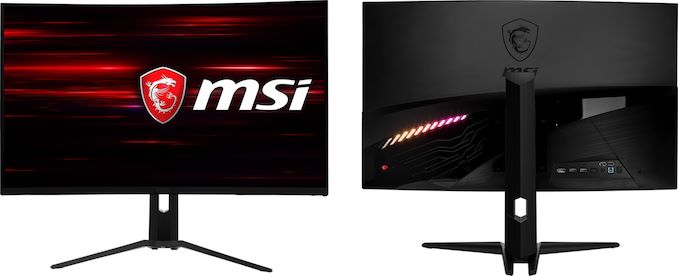
MSI Reveals Optix MAG322CR: A 31.5-Inch Curved Monitor with a 180 Hz Refresh Rate

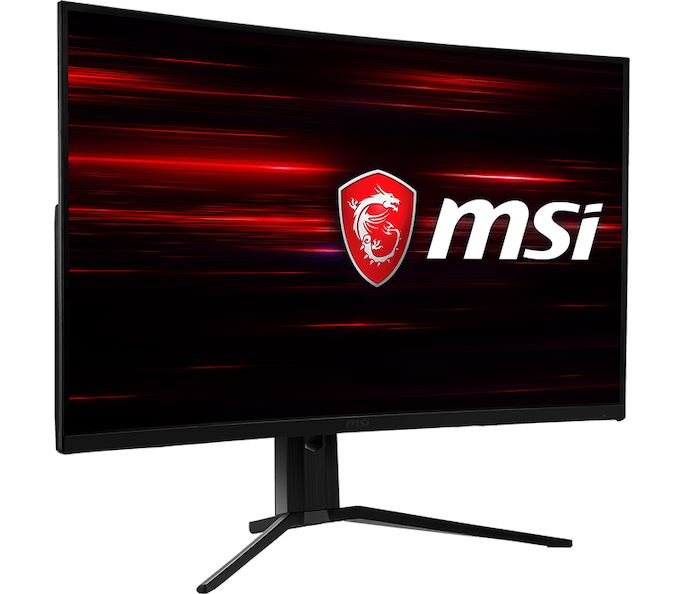
As high refresh rates increasingly become a standard feature in monitors aimed at the gaming market, manufacturers have started to turn their eyes towards what’s next in the ever-ongoing race to stay ahead of their competition. So, with 144Hz displays seemingly conqured, that attention has turned to ever higher refresh rates. Following this trend, MSI this week introduced its Optix MAG322CR LCD, one of the industry’s first displays with a 180 Hz maximum refresh rate.


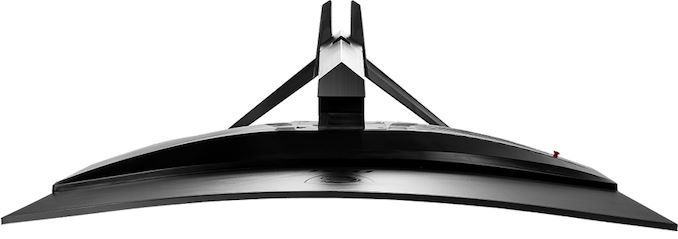
The MSI Optix MAG322CR uses a slightly curved 31.5-inch 8-bit+FRC VA panel with a 1920×1080 resolution. All told, the monitor offers a maximum brightness of 300 nits, a 3000:1 contrast ratio, a 1 ms MPRT response time, and a maximum refresh rate of 180 with VESA Adaptive-Sync support. As well, the monitor is also AMD Freesync certified. Meanwhile MSI is using a wider-gamut backlighting system, so the monitor can display 96% of the DCI-P3 and 125% of the sRGB color gamuts.


The MAG322CR is also marked as ‘HDR Ready’; though with 300 nits peak brightness it doesn’t even meet the VESA’s lowest DisplayHDR tier. So it’s hard to imagine the monitor delivering a quality HDR experience.


As far as connectivity is concerned, the Optix MAG322CR is equipped with one DisplayPort 1.2a, two HDMI 2.0b connectors, and a USB Type-C port (with DP Alt Mode support). Also, the monitor has a dual-port USB 2.0 hub, and an earphone out.


Being aimed at serious gamers who demand not only performance, but also style, the Optix MAG322CR comes equipped with Mystic Light addressable RGB LEDs on the back that support a variety of modes.


The MSI Optix MAG322CR Monitor
  Optix MAG322CR
Panel 31.5″ VA 8-bit+FRC
Native Resolution 1920 × 1080

(16:9)
Refresh Rate 180 Hz OC
Dynamic Refresh Rate Technology VESA Adaptive-Sync

(AMD Freesync Certified)
Range ?
Response Time 1 ms MPRT
Brightness 300 cd/m²
Contrast 3000:1
Color Gamut 96% DCI-P3

125% sRGB
Viewing Angles 178°/178° horizontal/vertical
Curvature 1500R
Inputs 1 × DisplayPort 1.2a

2 × HDMI 2.0b
USB Hub 2 × USB 2.0
Audio earphone out
Stand Height 130 mm
Tilt +20° ~ -5°
Swivel
Power Consumption Idle ?
Typical ?
Maximum ?
MSRP ?

MSI’s Optix MAG322CR is currently listed at the company’s website, so it is reasonable to expect it to hit the market shortly. Amazon.com currently lists the monitor as available for pre-order for $329.99, with the monitor slated to ship within one or two months.


Related Reading:


Source: MSI (via Hermitage Akihabara)


Source: AnandTech – MSI Reveals Optix MAG322CR: A 31.5-Inch Curved Monitor with a 180 Hz Refresh Rate

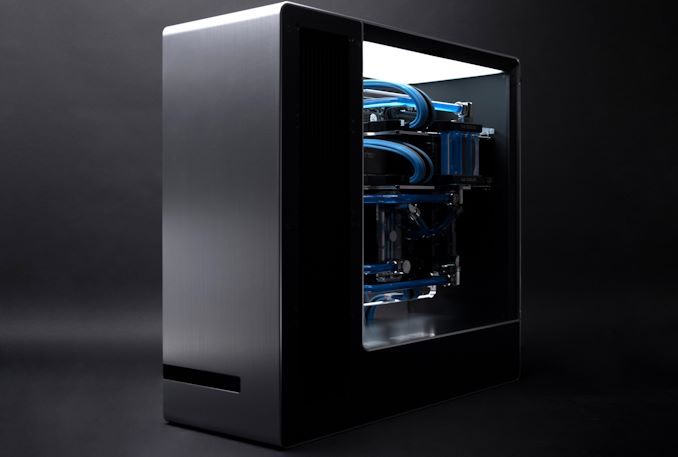
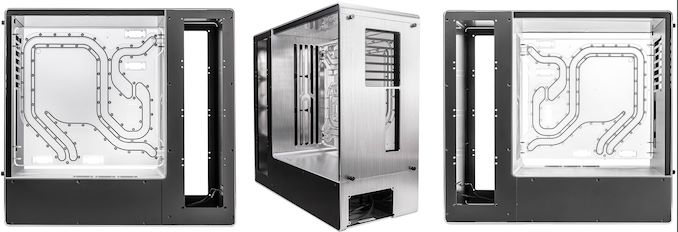
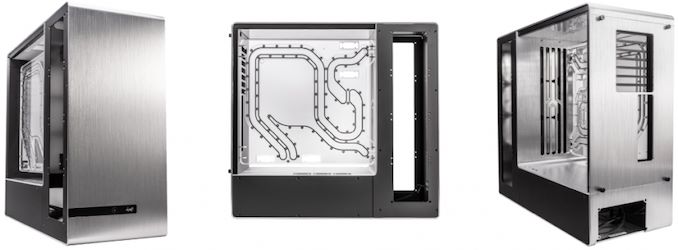
EKWB & InWin Team Up for 909EK: An Ultimate Case for An Ultimate Price

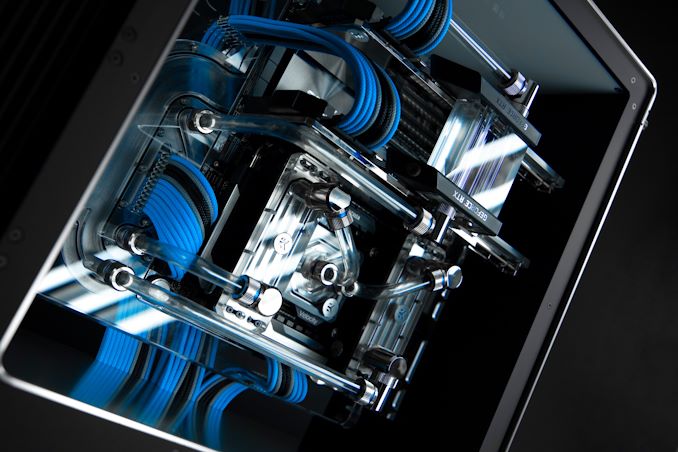
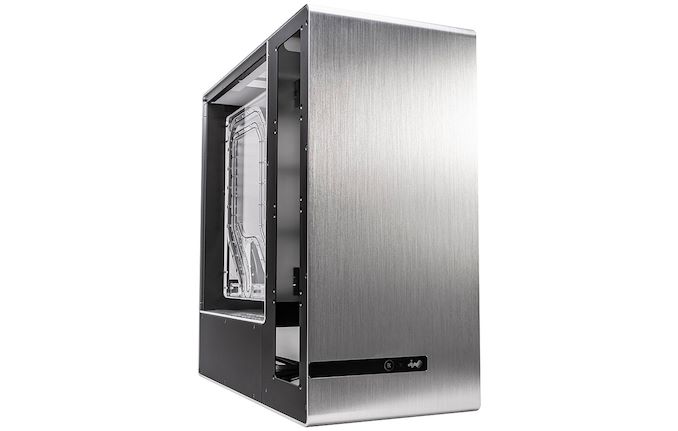
EKWB and InWin this week started sales of their jointly developed EK-Quantum InWin 909EK limited edition chassis. The case is designed to offer ultimate liquid cooling performance required by extreme workstations with a high-performance CPU and multiple GPUs. The companies said that only 200 of the EK-Quantum InWin 909EK chassis will be made.


The EK-Quantum InWin 909EK is a modified version of InWin’s 909 case with increased width in order to fit in two 480 mm XE radiators with fans. The chassis has a ‘floating’ motherboard tray that acts as a coolant reservoir with multiple cable routing points as well as industry-standard G1/4″ threaded inlets and outlets that enable easy installation of hard tubes (and prevent their bending). The case has two dedicated places for EK-D5 pumps for systems with up to four graphics cards.


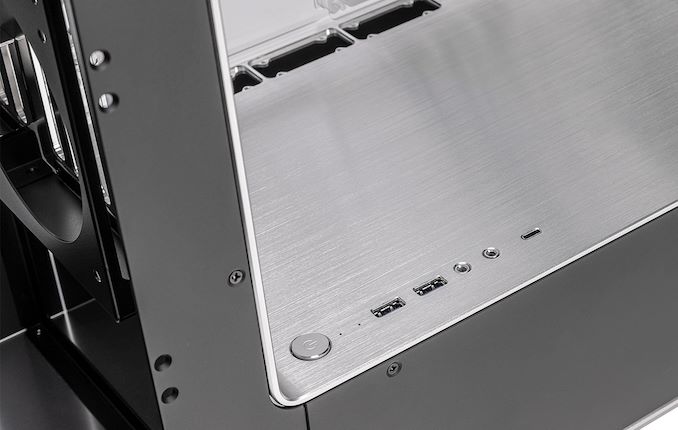
Like other high-end PC chassis, the EK-Quantum InWin 909EK is made of anodized aluminum. Two USB Type-A ports, a USB Type-C connector, a power button and headphone/microphone ports are located inside the case to keep the front panel clean.


The chassis can support up to E-ATX motherboards, up to 365 mm video cards, and up to a 250 mm ATX PSU.


The EK-Quantum InWin 909EK is now available for pre-order from EK Webshop and will ship around the 19th of March 2020. Only 200 units will be made, and each unit will cost €1,500.


Related Reading


Source: EKWB


Source: AnandTech – EKWB & InWin Team Up for 909EK: An Ultimate Case for An Ultimate Price

Quantum to Acquire Western Digital’s ActiveScale Business

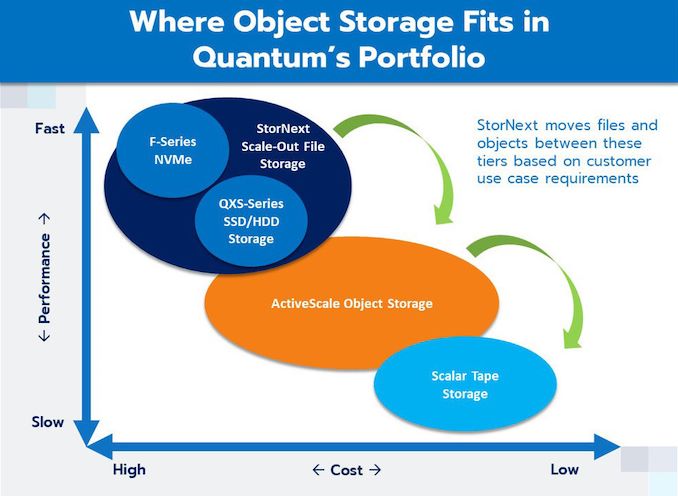
Quantum has announced that it had agreed to acquire ActiveScale object storage business from Western Digital. Western Digital’s ActiveScale cloud storage solutions are used to store unstructured data that requires massive amount of scalable storage space that is cheap, fast, and reliable. ActiveScale has not been growing at Western Digital for a while now, but it will fit quite well into Quantum’s portfolio sitting between high-performance SSD and HDD-powered storage systems and low-cost tape-based storage systems.


Today’s ActiveScale systems can store up to 57.55 PB of data that is protected using technologies like erasure coding, BitSpread, and BitDynamics. Performance wise, ActiveScale can offer up to 75 GB/s throughput in a scale-out configuration. Western Digital has been getting rid of its storage systems business for some time now as competing against such storage systems giants as Dell EMC, HPE, IBM, NetApp, and Hitachi that control over 50% of the market (according to IDC) is very hard these days. Last year the company sold off its IntelliFlash all-flash storage arrays business to DDN and said it would consider various strategic options for its ActiveScale business.


As it now transpires, Western Digital will sell its ActiveScale division to Quantum for an undisclosed sum. Quantum expects to close the transaction by March 31, 2020.


Quantum will continue to support existing ActiveScale customers and devices, though the company stresses that it acquires ActiveScale mostly because of software, technologies, and specialists. The company’s future plans include creation of object storage solutions featuring HDDs and tape.


Jamie Lerner, President and CEO, Quantum, said the following:


“As Quantum returns to a growth path, we will be evaluating strategic acquisitions that bolster our technology portfolio. Object storage software is an obvious fit with our strategy, our go-to-market focus, and within our technology portfolio. We are committed to the product, and to making ActiveScale customers successful, and we look forward to engaging with them to solve their most pressing business challenges around storing and managing unstructured data. With the addition of the engineers and scientists that developed the erasure-coded object store software, we can deliver on a robust technical roadmap, including new solutions like an object store built on a combination of disk and tape.”


Related Reading:


Source: Quantum


Source: AnandTech – Quantum to Acquire Western Digital’s ActiveScale Business

Japan Display Secures ~$0.92 Billion Bailout from Japan’s Ichigo

In recent weeks, Japan Display Inc. (JDI), which absorbed LCD production of Sony, Hitachi, and Toshiba in 2011, has been losing money, has most of its business with Apple. Sales have been dropping of late, to the point of putting the company in jeopardy. Late last week JDI inked a deal to get up to ¥100.8 billion JPY (USD$918.87 million) from Ichigo Asset Management, a Japanese investment company. To that end, the company terminated its memorandum of understanding with Suva Investment Holdings, a group of investors from China and Taiwan, it signed last year to get $715 million.


Under the terms of the deal, Ichigo will invest in Japan Display in and will eventually gain control of the company. The Innovation Network Corporation of Japan (INCJ), which currently controls JDI, will lose control but will retain a stake in the company. Stakes of other investors of JDI will get lower.


Japan Display, which absorbed LCD production of Sony, Hitachi, and Toshiba in 2011, has been losing money for years because until recently it only offered IPS LCD display panels and therefore had to compete against numerous companies from China with lower costs. To make the matters worse, JDI earned over 60% of its revenue selling displays panels to one customer, Apple. JDI’s sales dropped from ¥884.440 million in FY2017 to ¥636.661 million in FY2019. JDI’s OLED division, JOLED, yet has to become a viable player on the market. At present, JOLED’s screens are only used by Apple’s Watch, whereas OLED screens for iPhones are supplied by other companies. To date, JDI owes Apple more than $800 million.


Last year INCJ signed a memorandum of understanding to sell 49.82% of Japan Display for $715 million to Suwa Investment Holdings LLC, a conglomerate of investors consisting of China’s Silk Road Fund and Harvest Tech Investment Management, Taiwan’s TPK Holdings, and Fubon Financial Holdings. Under the terms of the new deal, JDI will get more money, whereas INCJ will retain a higher stake in the company.


Related Reading


Sources: Japan Display, Reuters


Source: AnandTech – Japan Display Secures ~{$permalink}.92 Billion Bailout from Japan’s Ichigo

The Corsair Hydro X Custom Water Cooling Review, on a Ryzen 9 3950X

During Computex 2019, Corsair unveiled its new Hydro X series – a new range of water cooling hardware that markts its first entry into custom water cooling market. The range offers CPU blocks for multiple sockets, multiple fittings, tubing types, and a pump/reservoir combo, allowing users can build a high-performance system with nearly all Corsair branded parts. We used the Corsair Hydro X series in our ASRock X570 Aqua review and built a full system to showcase what Corsair is offering, and here is a build log of that system.


Source: AnandTech – The Corsair Hydro X Custom Water Cooling Review, on a Ryzen 9 3950X