Patriot Releases Cheap P300 M.2 PCIe SSDs: Two Products, Same Name

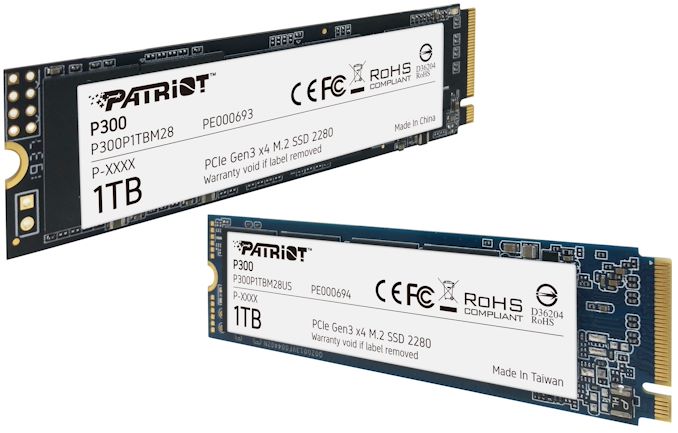
Patriot has launched its new family of entry-level NVMe SSDs with a PCIe 3.0 x4 interface designed for budget PCs. Patriot’s P300 drives come in capacities ranging from 128 GB all the way to 2 TB, but there is a catch. Although all the SSDs carry the same P300 name, they will use different controllers.



For the US market, Patriot offers P300 SSDs on blue PCBs based on the Phison PS5013-E13T controller, whereas for other markets the company rolled out P300 drives on black PCBs powered by the Silicon Motion SM2263XT chip. It is noteworthy that earlier this year the company implied at a meeting that Phison-powered drives might also show up on non-US markets. Patriot did not disclose what type of memory it plans to use with the drives, but what we often see is Phison controllers paired with Toshiba’s BiCS 3D TLC NAND, while SMI silicon is accompanied by Intel’s 3D TLC memory. Meanwhile, we do not known whether there is a plan to use the cheapest 3D TLC NAND memory available at a given time with either controller to reduce costs, but it is a possibility.
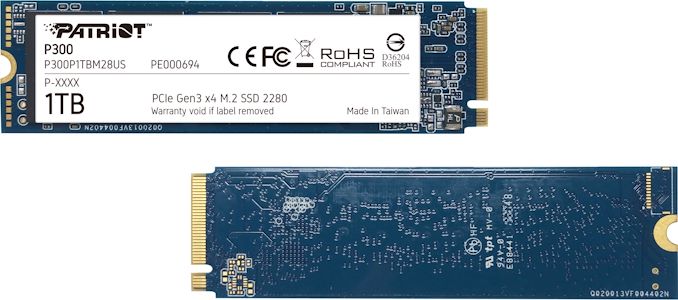


Performance-wise, Patriot promises that SSDs featuring different controllers will demonstrate similar speed and endurance, though it is clear that there will be some variability between models for the US and other markets. In particular, Patriot says that drives feature up to 2,100 MB/s sequential read speed, up to 1,650 MB/s sequential write speed, up to 290K random read IOPS, as well as up to 260K random write IOPS.
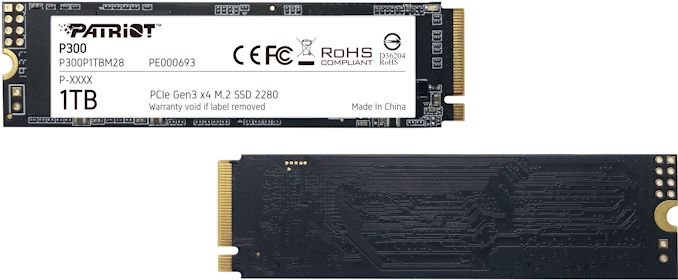


While performance numbers look pretty solid for entry-level products (at least when compared to Patriot’s previous-generation Scorch SSDs), their endurance is not that impressive as the company only rates them for about 0.28 DWPD (drive writes per day) over a three-year period. Consumer workloads are not write-intensive and certainly low-end products will not be used by content creators.


Patriot’s PM300 Entry-Level SSD Specifications
Capacity 128 GB 256 GB 512 GB 1 TB 2 TB
Versions Blue USA
Black Rest of the World
Model Number Blue P300P128GM28US P300P256GM28US P300P512GM28US P300P1TBM28US P300P2TB
Black P300P128GM28 P300P256GM28 P300P512GM28 P300P1TBM28
Controller Blue Phison PS5013-E13T
Black Silicon Motion SM2263XT
NAND Flash 3D TLC NAND from Intel or Toshiba
Form-Factor, Interface M.2-2280, PCIe 3.0 x4, NVMe 1.3
Sequential Read Blue 1600 MB/s 1700 MB/s 1700 MB/s 2100 MB/s 2100 MB/s
Black
Sequential Write Blue 600 MB/s 1100 MB/s 1100 MB/s 1650 MB/s 1650 MB/s
  Black 1200 MB/s
Random Read IOPS 290K 290K
Random Write IOPS 150K 260K
Pseudo-SLC Caching Supported
DRAM Buffer No
TCG Opal Encryption ?
Power Consumption Idle 0.37 W Blue: 0.37 W

Black: 0.38 W
0.38 W
Full 2.07 W Blue: 2.07 W

Black: 2.38 W
2.38 W
Warranty 3 years
MTBF ?
TBW 40 TB 80 TB 160 TB 320 TB 320 TB*
DWPD 0.28 DWPD 0.14 DPWD*
Additional Information Link
MSRP ? $64.99 $104.99 $164.99 ?

*Likely a typo in Patriot’s documents


Initially, Patriot will offer 256 GB, 512 GB, and 1 TB versions of its P300 SSDs. The entry-level 256 GB model carries a $64.99 MSRP, the highest-capacity 1 TB SKU is priced at $164.99, whereas the mid-range 512 GB variant sits between them at $104.99.


Patriot is not the only vendor to release SSDs with different controllers and memory under the same name. Team Group introduced its MP33 drives with the same Phison and SMI controllers back in October. Using different controllers and memory from numerous suppliers within one lineup of SSDs allows the maker to offer the most aggressive prices for all configurations, but the real-world performance of actual products will differ. The latter means difficult qualification process for PC makers as well as uncertainty among end-users.


Related Reading:


Source: Patriot


Source: AnandTech – Patriot Releases Cheap P300 M.2 PCIe SSDs: Two Products, Same Name
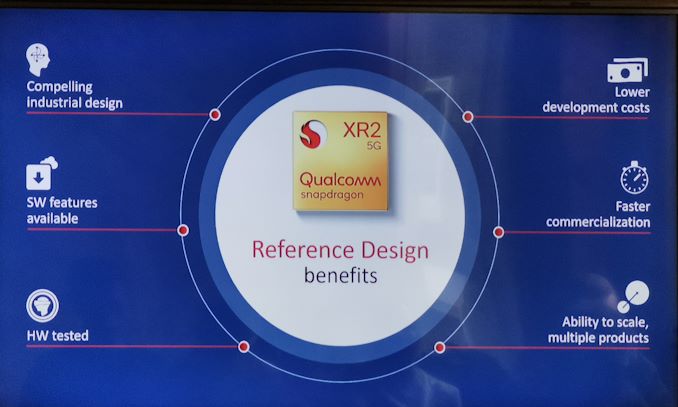
Qualcomm to Start XR2 Reference Design Programme for AR/VR/XR

Today Qualcomm is announcing that it will be reintroducing its Reference Design Programme for its upcoming XR2 chip for AR/VR/XR headsets. The company stated that after the success of its XR1 equivalent programme, they would be initiating with potential customers earlier in the cycle this time around in a similar way to how they approach smartphone vendors with its new handset SoCs.


Source: AnandTech – Qualcomm to Start XR2 Reference Design Programme for AR/VR/XR

Qualcomm’s March on Connection Quality: New RF Filters with up to 0.8 dB Better Performance

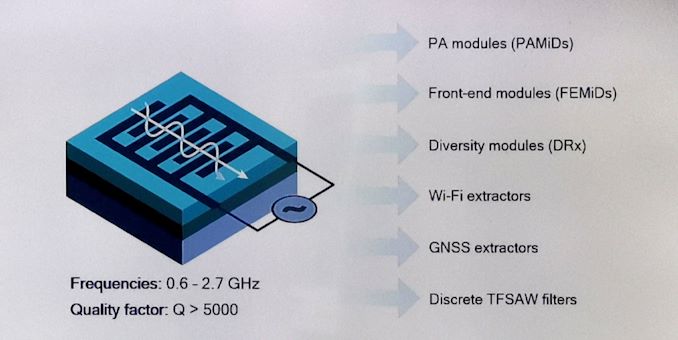
One of the key components to any wireless system is the ability to detect the required frequency and ensure a clean signal with a stable connection. In order to do this, especially with Radio Frequency connections such as those in cell phones, a variety of filters are needed for specific frequency selection. Today Qualcomm is announcing that it has made a new breakthrough in its RF filter design through a novel thin film technology.


Source: AnandTech – Qualcomm’s March on Connection Quality: New RF Filters with up to 0.8 dB Better Performance

Qualcomm’s New 3rd Generation Snapdragon X60 5G Modem, Built on 5nm

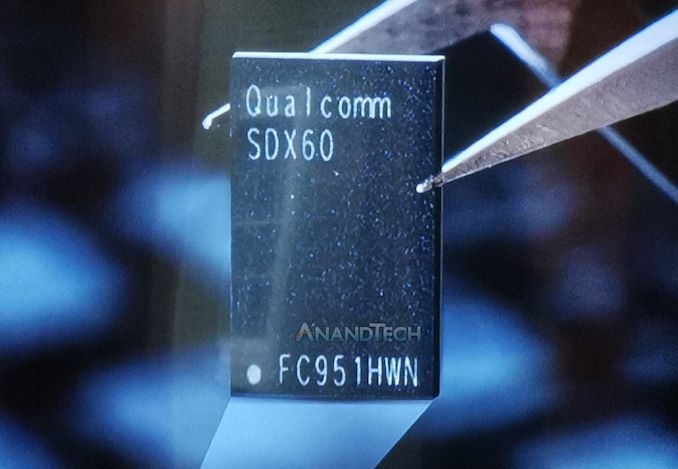
To date Qualcomm has promoted two key standalone 5G modems for widespread adoption: the Snapdragon X50 and the Snapdragon X55. Today the company is disclosing details on its upcoming 3rd generation 5G modem design, the Snapdragon X60, which is being promoted as the premium offering for smartphones, industrial, and commercial designs that require a discrete 5G modem. Key features of this modem include the fact that it is built on a 5nm process, supports carrier aggregation between Sub-6 and mmWave, and offers up to 7.5 Gbps download speeds.


Source: AnandTech – Qualcomm’s New 3rd Generation Snapdragon X60 5G Modem, Built on 5nm

SMART Modular Reveals 32 GB DDR4-3200 Low Profile Mini-DIMMs for Extreme Environments

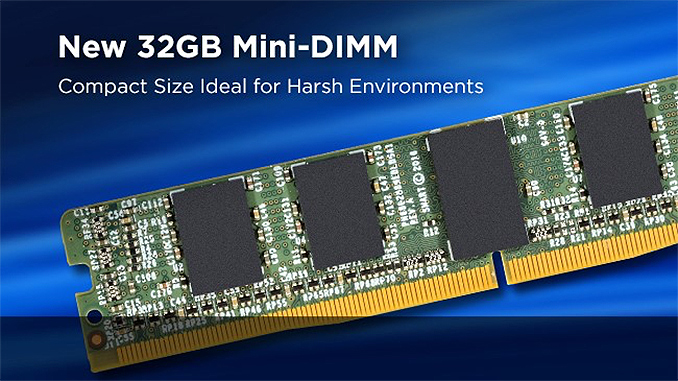
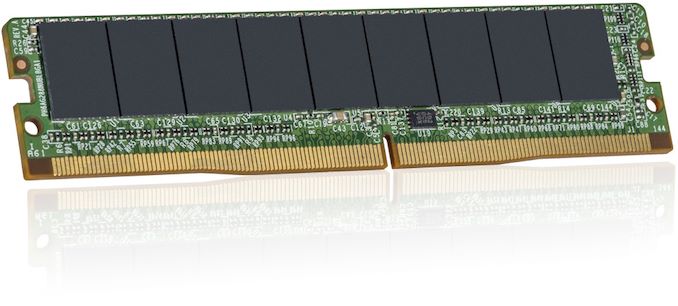
SMART Modular has unveiled a new lineup of 32 GB Mini-DIMMs for extreme environments, such as industrial or telecommunication applications. The new high-density modules come in ULP (Ultra Low Profile) as well as VLP (Very Low Profile) heights and are rated for speeds up to DDR4-3200.


SMART’s DDR4-3200 32 GB Mini-DIMMs are based on 16 Gb memory chips (from an unknown supplier) and utilize a custom-designed PCB with conformal coating and anti-sulfur resistors, which is designed to protect against toxic environments as well as vibration. Depending on the target application, SMART provides the high-density 32 GB Mini-DIMMs with unbuffered or registered ECC options.


The manufacturer offers its industrial 32 GB Mini-DIMMs in ULP height (17.78 mm) and VLP height (18.75 mm). Mini-DIMMs are JEDEC-standard modules with more power and ground pins compared to regular SO-DIMMs for client and server systems. Such modules are supported by special connectors from Foxconn and Molex, and feature an advanced latching mechanism that allows Mini-DIMMs to be installed at uncommon angles.


The key differentiator for these industrial DIMMs is their supported temperature range; SMART’s Mini-DIMM modules are designed (and tested) to operate temperatures ranging from -40°C and +85°C. And while those temperatures are on the extreme side by human standards, telecom and networking equipment is commonly installed in rather unimaginable (and uncontrolled) places where these temperatures will occur. Meanwhile, the company is also offering 32 GB Mini-DIMMs for commercial applications, which support a less extreme temperature range of between 0°C and +70°C.


SMART’s DDR4-3200 32 GB Mini-DIMMs in ULP and VLP heights are available from SMART Modular in the near future.


Related Reading:


Source: SMART Modular


Source: AnandTech – SMART Modular Reveals 32 GB DDR4-3200 Low Profile Mini-DIMMs for Extreme Environments

28 TB of Storage in a Laptop? Eurocom Has It

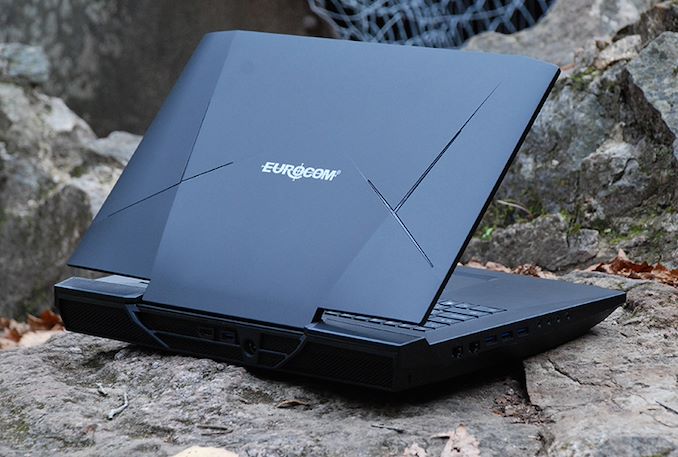
Proving that where there’s a will, there’s a way, these days higher-end desktop replacement laptops can beat mainstream gaming desktops on general-purpose computing performance, graphics performance, and even RAM capacity. But what about storage? For those with deep pockets, Eurocom now offers built-to-order notebooks with up to 28 TB of raw solid-state storage.


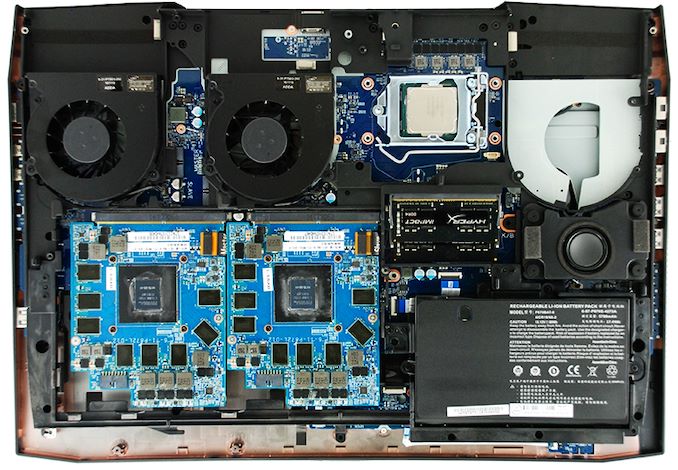
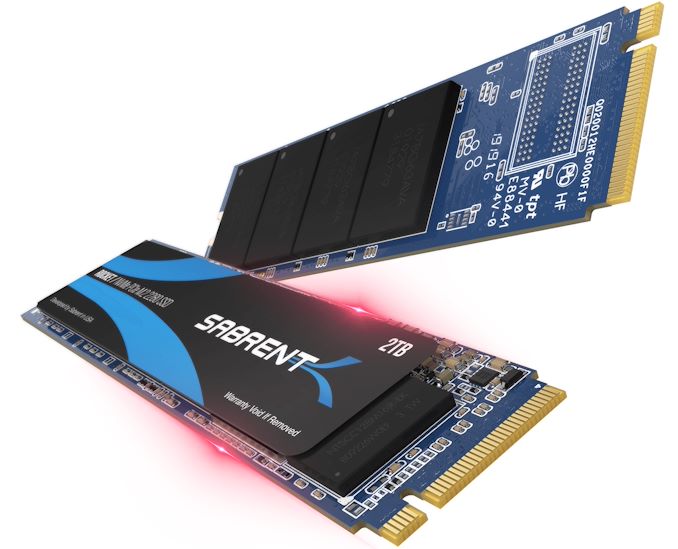
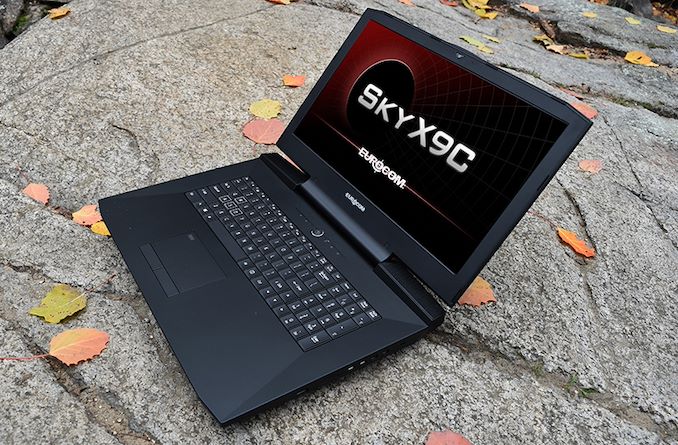
In its arsenal, Eurocom has two 17.3-inch DTR laptops — the Sky X9C and the Tornado F7W — that feature three M.2-2280 slots for SSDs, as well as two 2.5-inch bays for SSDs or HDDs.  Customers requiring extreme storage capacity can now order three Sabrent Rocket 4 TB SSDs (Phison PS5012-E12, 3D TLC NAND, PCIe 3.0 x4) and two Micron 5100-series 8 TB SATA SSDs for a total of 28 TB of raw NAND flash (the usable capacity will be lower). The cost of such a storage subsystem alone is about $10,700 without installation and RAID configurations, but if you need it, it exists: you will just have to open your wallet.


In addition to five storage devices, the Eurocom X9C can also pack Intel’s eight-core Core i9-9900K CPU, 128 GB of DDR4-2666 RAM, and two NVIDIA GeForce RTX 2080 graphics processors. A beefed-up configuration with 28 TB of raw NAND, a 4K panel, and other high-end parts will cost a whopping $20,500. Obviously, packing this amount of horsepower and storage capacity into a clamshell device is not a trivial task and requires usage of expensive components, so the price tag is not particularly surprising.


In addition to the Sky X9C and the Tornado F7W machines, Eurocom has other 15.6-inch and 17.3-inch notebooks that can accommodate more than one storage device. All of them can be equipped with a Sabrent Rocket 4 TB M.2-2280 SSD and/or a Micron 5100 8 TB 2.5-inch SSD to boost their storage capacity beyond that of a regular desktop, even though this is going to cost a small fortune.


Related Reading:


Source: Eurocom


Source: AnandTech – 28 TB of Storage in a Laptop? Eurocom Has It

280 Hz Fast: The ASUS TUF Gaming VG259QM IPS Monitor, It's Love At First Sight

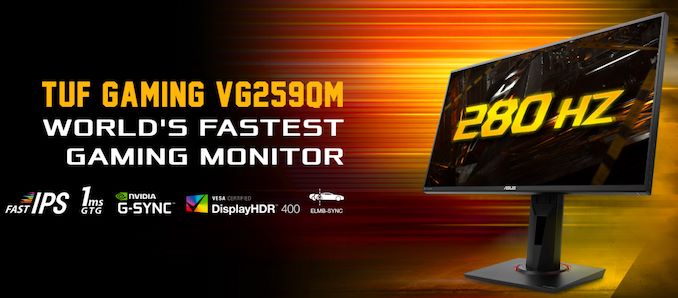
Now that 24.5-inch and 27-inch Fast IPS panels with a 240 Hz maximum refresh rate are in mass production, it is time to overclock them. ASUS was the first company to introduce a 27-inch monitor with a 280 Hz refresh rate in a bid to differentiate itself from other makers of 240 Hz IPS displays late last year. This week, the company added another 280 Hz display to its TUF Gaming lineup that will be smaller and therefore cheaper than the previous model.


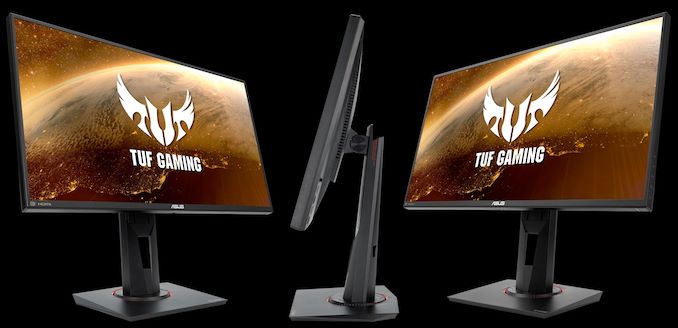
The ASUS TUF Gaming VG259QM is a 24.5-inch display that relies on an IPS panel featuring a 1920×1080 resolution, 400 nits brightness, a 1000:1 contrast ration, a 1 ms GtG response time, and 178°(H)/178°(V) viewing angles. A native refresh rate of the panel is 240 Hz, but ASUS has managed to make it work at a 280 Hz without any problems. The TUF Gaming VG259QM supports VESA’s Adaptive-Sync variable refresh rate technology and so far the device has obtained NVIDIA’s G-Sync Compatible certification. In addition, the monitor supports ASUS’ ELMB technology that makes fast-paced scenes look sharper as well as ELMB Sync that enables the former technology to work with G-Sync.


The TUF Gaming VG259QM can display 16.7 million of colors and covers 72% of the NTSC color gamut. The LCD is VESA DisplayHDR 400 certified, though do not expect any meaningful HDR experience at this peak brightness level. Meanwhile, since the monitor is aimed at gamers, it supports ASUS GamePlus modes (crosshair, timer, FPS counter, etc.), GameVisual modes (FPS, Racing, MOBA, Cinema, etc.), and Dynamic Shadow Boost technology to enhance gaming experience.


Just like its bigger brother — the TUF VG279QM — the 24.5-inch 280 Hz display comes with a stand that can adjust height, tilt, swivel, and can also work in portrait mode. As fas as connectivity is concerned, the monitor has a DisplayPort 1.2 and two HDMI 2.0a connectors. In addition, the monitor has 2W stereo speakers as well as a headphone output.


The 24.5-Inch ASUS TUF Gaming LCD w/280 Hz Refresh Rate
  TUF VG259QM
Panel 24.5-inch class IPS
Native Resolution 1920 × 1080
Maximum Refresh Rate 280 Hz
Dynamic Refresh Technology NVIDIA G-Sync Compatible

VESA Adaptive Sync
Range ?
Brightness 400 cd/m²
Contrast 1000:1
Viewing Angles 178°/178° horizontal/vertical
Response Time 1 ms GtG
Pixel Pitch ~0.2825 mm²
Pixel Density ~89.9 PPI
Color Gamut Support 72% NTSC
Inputs 1×DP 1.2

2×HDMI 2.0a
Audio 2W stereo speakers

headphone output
Stand Height: +/- 130 mm

Tilt: +33° ~ -5°

Swivel: +/- 90°

Pivot: +/- 90°
Warranty ? years
Launch Price in China ?

ASUS has not announced MSRP or availability timeframe of its TUF Gaming VG259QM LCD, but since 24.5-inch IPS panels with a 240 Hz refresh rate are in mass production, it is logical to expect the monitor to arrive rather sooner than later.


Related Reading:


Source: ASUS (via Hermitage Akihabara)


Source: AnandTech – 280 Hz Fast: The ASUS TUF Gaming VG259QM IPS Monitor, It’s Love At First Sight

NVIDIA Quietly Reveals GeForce MX350 & MX330: 2020's Entry-Level Laptop GeForce

For the better part of the past 5 years, NVIDIA has held an extremely solid grip on the market for discrete laptop GPUs. From the top to bottom, unless it’s a MacBook the odds are it’s powered by a GeForce. This is at the case even at the very bottom of the discrete market, where next to the grues and the 4200 RPM hard drives, you’ll find NVIDIA’s series of discrete adapters for entry-level laptops. Designed to be the first step up above Intel’s integrated graphics, these parts do fill an important role in the market, but they don’t get much attention – even from NVIDIA.


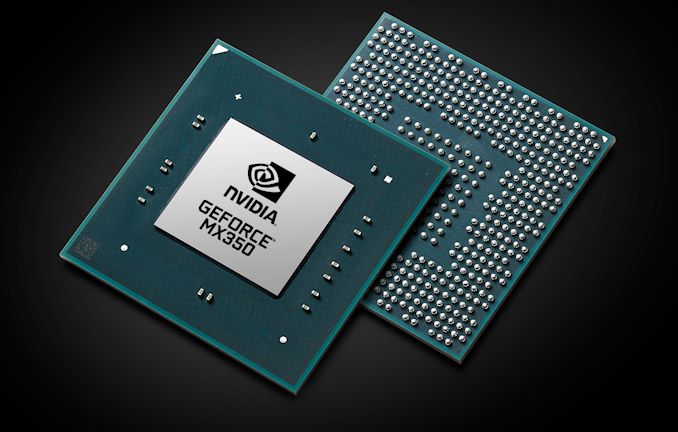
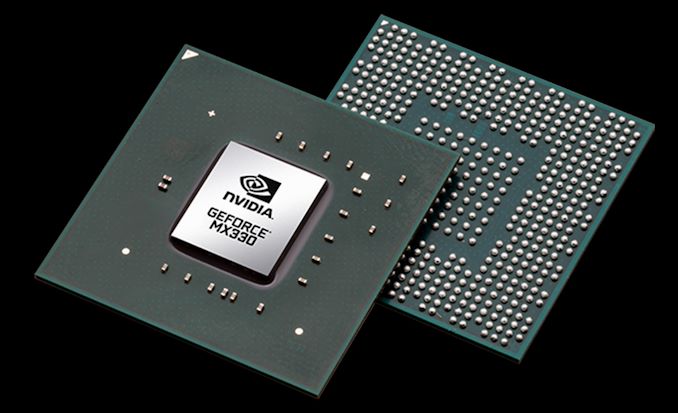
At any rate, this week the company has updated those adapters for 2020 with the release of the Pascal-based GeForce MX350 and MX330.


As has become an annoying tradition for NVIDIA, they’re officially saying very little about the new parts. The official specifications don’t include anything about clockspeeds, CUDA core counts, ROPs, etc. Instead, NVIDIA only confirms a basic set of features: both parts use GDDR5 memory, both feature GPU boost functionality, and both support DirectX12 up to feature level 12_1. Past that you won’t get much else from NVIDIA; even the architecture isn’t officially published in their spec sheets, though in this case we can make a very reasonable assumption that it’s once again Pascal.



Meanwhile, NVIDIA has once again moved up their Intel reference point; for the MX300 series, it’s now Intel’s 64EU Gen11 Iris Plus iGPU found in the Core i7-1065G7. This is Intel’s fastest iGPU for their 15W U-series parts, and is reasonably potent on its own, so it helps to inform what kind of performance NVIDIA needs to hit to offer something that’s a meaningful step up.


NVIDIA Laptop Video Adapter Specification Comparison
  Typical MX350 Typical MX330
CUDA Cores 640 384
ROPs 16? 16?
Memory Type GDDR5 GDDR5
Memory Bus Width 64-bit 64-bit
VRAM <=4GB <=2GB
GPU GP107 GP108
Manufacturing Process Samsung 14nm Samsung 14nm
Launch Date 02/12/2020 02/12/2020

At any rate, while NVIDIA doesn’t publish much in the way of specifications, this year NotebookCheck claims to have the specifications for the parts. We haven’t been able to independently validate these figures, but they are quite reasonable, and very close to what I was expecting anyhow based on NVIDIA’s loose performance claims. In particular, these are both low-end Pascal-based parts, which remain NVIDIA’s smallest (and thus cheapest to produce) GPUs among their current Pascal and Turing product stacks.


Coming from last year’s MX200 series parts, the big change here is at the top. With Intel’s baseline going up, so does NVIDIA’s performance; and as a result NVIDIA has tapped a more powerful GPU than in past years. For the MX350 then, we’re looking at a GP107 GPU, a notably more powerful part than NVIDIA’s normal entry-level parts. Essentially a further cut-down GTX 1050, according to NotebookCheck this part has 640 CUDA cores enabled, as well as half of its usual ROP/memory controller partitions, leaving 16 ROPs and a 64-bit memory bus.


Meanwhile the MX330 is the more traditional GP108 showing. At a high level, take last year’s MX250, tweak the clockspeeds a bit, and you have an MX330. Which means 384 CUDA cores paired with 16 ROPs and a 64-bit memory bus.


Like past MX-series parts, NotebookCheck notes that both the MX350 and MX330 are informally rated for TDPs of 25W. However laptop manufacturers can and will adjust TDPs and clockspeeds to meet the specific power/cooling limitations of their notebooks, so like other laptop discrete graphics implementations, expect to see performance vary from design to design.


Based on NVIDIA’s previous release cadences for their low-end laptop parts, expect to see these new processors show up in laptops in the very near future. Traditionally these parts are paired with Intel U-series processors, and I expect to see the same here.


Source: NVIDIA & NotebookCheck


Source: AnandTech – NVIDIA Quietly Reveals GeForce MX350 & MX330: 2020’s Entry-Level Laptop GeForce

NVIDIA Releases Q4 FY2020 Earnings: A Strong Quarter Closes Our A Weaker Year

Always punctual but moving at their own pace, NVIDIA this afternoon wrapped up their 2020 fiscal year with the release of their earnings for both Q4 and the year. For the last quarter of their fiscal year, NVIDIA booked just over $3.1B in revenue with a profit of $950M, marking a strong end to a weaker fiscal year. On which note, for the year NVIDIA will close the books on $10.9B in revenue, for a net income a hair under $2.8B.


NVIDIA Q4 2020 Financial Results (GAAP)
  Q4’2020 Q3’2020 Q4’2019 Q/Q Y/Y
Revenue $3105M $3014M $2205M +3% +41%
Gross Margin 64.9% 63.6% 54.7% +1.3% +10.2%
Operating Income $990M $927M $294M +7% +237%
Net Income $950M $899M $567M +6% +68%
EPS $1.53 $1.45 $0.92 +6% +66%

Beating analyst expectations, NVIDIA closed their year on a relative high note. The $3.1B in revenue they booked was their best quarter in more than a year, blasting past a particular weak Q4’FY19 for a 44% jump in revenue, and even edging out the traditionally strong Q3. Similarly, the quarter was one of the most profitable for the company in quite some time, beating Q4’FY19’s net income by 68%, and leaving the company just a few percent short of claiming a full billion dollars in net income for the quarter.


This profitability is reflected in NVIDIA’s gross margin as well. At 64.9% for the quarter it’s the highest margins NVIDIA has attained in over a year, beating both Q3 and last year’s Q4. And while there’s no strict limitation for gross margins, it’s worth noting that these kinds of margins are close to some of Intel’s best in previous years, which is often used as a barometer for the overall strength of a major chip company.


NVIDIA Quarterly Revenue Comparison (GAAP)

($ in millions)
In millions Q4’2020 Q3’2020 Q4’2019 Q/Q Y/Y
Gaming $1491 $1659 $954 -10% +56%
Professional Visualization $331 $324 $293 +2% +13%
Datacenter $968 $726 $679 +33% +43%
Automotive $163 $162 $163 +1% 0%
OEM & IP $152 $143 $116 +6% +31%

Breaking down their revenue by segment, the big surprise here in NVIDIA’s earnings is data center revenue. At $968M for the quarter, it’s the best showing from NVIDIA’s data center operations since the inception of the current reporting structure, shooting well past the previous record. According to NVIDIA, the company is seeing a surge in demand for AI hardware, which has been a lucrative and rather profitable venture for NVIDIA over the last several years. This growth comes after data center spending (and AI-related spending in general) plateaued a bit over the past year, as it seems hyperscalers and other data center operators have ramped up their overall buying for 2020.


Otherwise gaming remained NVIDIA’s single biggest segment. Like the quarter overall, gaming revenue is up significantly year-over-year, with NVIDIA booking over $500M more than in Q4’FY19. But it’s a bit of a mixed bag overall, as revenue did drop versus the previous quarter, and NVIDIA is well off their Q4’FY18 performance. Ultimately, data center revenue proved to be NVIDIA’s trump card here, helping to cover for any weakness in gaming revenue.


NVIDIA FY2020 Full Year Financial Results (GAAP)
  FY2020 FY2019 Q/Q
Revenue $10918M $11716M -7%
Gross Margin 62.0% 61.2% +0.8%
Operating Income $2846M $3804M -25%
Net Income $2796M $4141M -32%
EPS $4.52 $6.63 -32%

As for the complete, fiscal year 2020 picture, NVIDIA’s Q4 has helped to prop up what has been a profitable but overall weaker year for the company. The $10.9B in revenue that NVIDIA booked for the year is down 7% from the previous year. And net income fell even more sharply, dropping by 32% to $2.976B on the year.


The year-over-year drop has been influenced by several factors, but arguably the biggest is the crypto hangover, which really only ended a bit earlier this year. So the first half or so of the year for NVIDIA is marked by distributors still trying to get rid of excess inventory, as well as the fact that compared to the unbounded spending on crypto gear in NVIDIA’s FY 2019, anything more normal pales in comparison. Coupled with that has been the previously mentioned softness in the data center market, which while not nearly as dramatic as the crypto hangover, saw much of FY2020 data center spending underperforming FY2019 at similar points.


NVIDIA Yearly Revenue Comparison (GAAP)

($ in millions)
In millions FY2020 FY2019 Y/Y
Gaming $5518 $6246 -12%
Professional Visualization $1212 $1130 +7%
Datacenter $2983 $2932 +2%
Automotive $700 $641 +9%
OEM & IP $505 $767 -34%

There had been some concern that the datacenter market had reached saturation – at least for the current generation of products – but following Q4 at least, it looks like that’s not the case. Overall NVIDIA closes out the year up 2% on data center revenue, with the strong Q4 pulling data center revenues up. Gaming doesn’t fare quite so well, as more exposed to the hangover, NVIDIA still end the fiscal year down 12% in gaming revenue versus FY2019.


The big winner here on a pure percentage basis is actually automotive, which was up 9% year-over-year, followed by NVIDIA’s trusty professional visualization group, which was up 7%. The upshot here, at least, is that NVIDIA has long desired to further diversify its business so that it isn’t quite so reliant on gaming revenue, and that’s certainly where FY2020 has taken them.


Finally, looking ahead to FY2020 and Q1, NVIDIA is seemingly projecting with a bit of caution. The company expects to book $3B in revenue, with a gross margin of 65.0%.


The wildcard factor here is the ongoing COVID-19 (coronavirus) outbreak, which along with getting trade shows like Mobile World Congress canceled, could also hurt overall tech spending in China. Officially, NVIDIA has knocked $100M off of their Q1 projections, though this is ultimately a rough estimate as no one is quite sure what to expect. According to the company, China accounts for around 30% of their gaming sales – which is still NVIDIA’s largest segment – so if the COVID-19 outbreak hurts Chinese spending, NVIDIA is likely to feel it in their gaming revenues.


Source: AnandTech – NVIDIA Releases Q4 FY2020 Earnings: A Strong Quarter Closes Our A Weaker Year

Andy Rubin’s Essential Smartphone Company to Shut Down

Essential, a company founded by Andy Rubin with an aim to create easy-to-use devices tailored for the most important needs, this week announced its cease of operations.


Andy Rubin, the man who headed creation of Google’s Android operating system, founded Essential back in 2015. It took the company two years to develop and build its first Essential PH-1 smartphone that came in a titanium body with a ceramic back, featured a minimalistic iPhone 5-like design, had a large edge-to-edge display with a raindrop camera for selfies, and ran ‘pure’ Android without any fancy UI. The handset looked rather innovative in 2017, but all of its main features (except expensive materials) appeared months later on cheaper or more popular devices, so the product lost a substantial part of its appeal. As a consequence, sales of the PH-1 were negligible.


After the company launched its first handset, it promised to release more hardware and software products, including a smart home assistant, a variety of accessories for the PH-1, and even its own operating system. Eventually, only a 360-degree camera, and a 3.5-mm audio jack adapter emerged on the market.


Back in October, the company introduced its Project Gem mobile experience, which involved a small smartphone with basic functionality, which was supposed to turn the company around, or at least attract new investors. Apparently, Essential does not have ‘a path’ to finish development of Gem, which is why (at least officially) it has to close its doors. (This means they had ‘no avenue to deliver the product to consumers’.)


The statement from the company reads as follows:


“Despite our best efforts, we’ve now taken Gem as far as we can and regrettably have no clear path to deliver it to customers. Given this, we have made the difficult decision to cease operations and shutdown Essential.”


Essential will cease offering updated Android OS to its PH-1 customers starting immediately and its February 3 security update is the last one for the PH-1 to be released by the company. Also, Essential will shut down Newton Mail service on April 30, 2020. Fans of the device who know how to build software, will be able to get prebuilt of the PH-1 vendor image and everything else needed to keep hacking the smartphone on Essential’s github.


Related Reading


Sources: Essential


Source: AnandTech – Andy Rubin’s Essential Smartphone Company to Shut Down

ASUS ROG Huracan G21: A Small PC with 8-core and RTX 2080

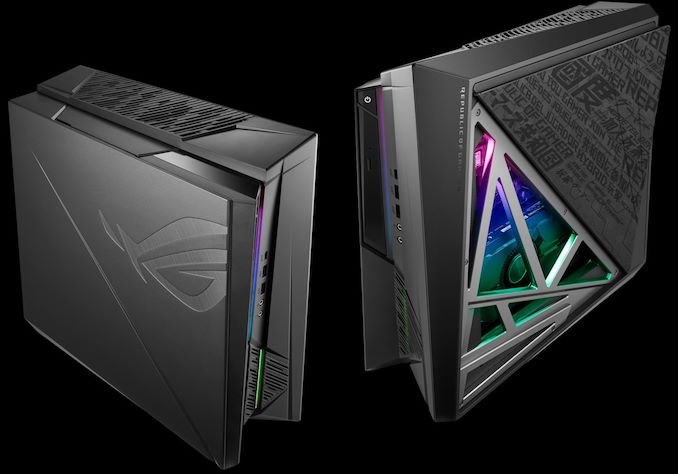
ASUS this week updated its compact ROG Huracan G21 gaming system. The new enthusiast-class machine retains a stylish miniature case that allows easy access to components, but offers more CPU and GPU choices and provides considerably higher performance than before.


The futuristic chassis of the ASUS ROG Huracan G21 measures 129.9×372.4×366.1 mm, which is clearly smaller than a traditional tower desktop. ASUS engineers have managed to pack the machine with everything that its bigger brothers have to offer, including Intel’s eight-core Core i9-9900K CPU, NVIDIA’s GeForce RTX 2080, up to 32 GB of RAM, an M.2-2280 PCIe 3.0 x4 SSD, two 2.5-inch SSDs/HDDs, one 3.5-inch HDD, and even a DVD drive (possibly, to install older games). See general specifications in the table below.


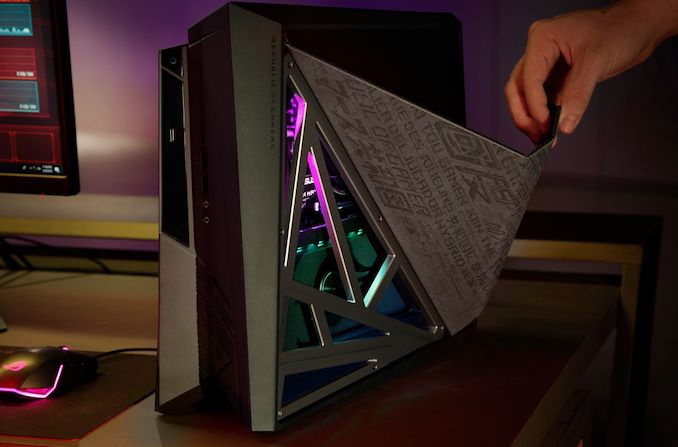
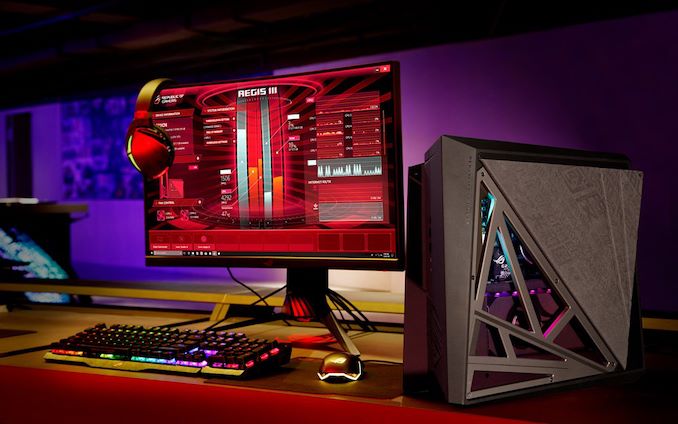
As mentioned above, the chassis allow owners of the ROG Huracan G21 to upgrade the system hassle free. Furthermore, ASUS equipped its ‘baby’ gaming PC with a very well-thought cooling system with multiple inlets, so no component is going to overheat. In fact, the ROG Huracan has a special magnetically attached foldable panel on its side that can be easily opened to further improve thermal and actual performance. Speaking of performance, it is necessary to note that the PC comes with the ASUS ROG Aegis III application that enables easier performance tuning and monitoring of components.


Reasserting its ‘enthusiast-class’ pedigree, the ROG Huracan G21 features a robust set of I/O capabilities, including multiple USB 3.1 Gen 1/2 Type-A/Type-C connectors, Intel’s I219-V GbE adapter, Intel’s Wireless-AC 9560 Wi-Fi 5 solution, various display outputs (depending on the graphics card), and an audio subsystem equipped with the ESS Sabre DAC and offering analog and S/P DIF connectors for a 5.1 speaker system.


The 2020 ASUS ROG Huracan G21
  G21CX
CPU Intel Core i9-9900K

Intel Core i7-9700K

Intel Core i5-9400
CPU Intel Z390
Graphics NVIDIA GeForce RTX 2080 8 GB

NVIDIA GeForce RTX 2070 8 GB

NVIDIA GeForce RTX 2060 6 GB
Memory Up to 32 GB DDR4-2666
Storage M.2 128 GB, 256 GB, 512 GB SSD with SATA or PCIe 3.0 x4 interface
2.5-inch One hot-swap bay
3.5-inch 1 TB or 2 TB HDD
ODD Slim Super Multi DVD drive
Wi-Fi + Bluetooth Intel Wireless-AC 9560 Wi-Fi 5 + Bluetooth 5
Ethernet Intel I219-V
Display Outputs Depends on GPU
Audio Realtek ALC1150 with ESS DAC and amplifier
USB Front 2 × USB 3.1 Gen 2 Type-A

1 × USB 3.1 Gen 1 Type-C
Back 2 × USB 3.1 Gen 2 Type-A

4 × USB 3.1 Gen 1 Type-A
Other I/O Analog and S/P DIF audio connectors
Dimensions Width 12.99 cm
Height 36.61 cm
Depth 37.24 cm
PSU External

2 × 280W adapters

1 × 230W and 1 × 280W adapters

2 × 230W adapters

1 × 180W and 1 × 280W adapters

1 × 180W and 1 × 230W adapters
OS Windows 10 Home or Windows 10 Pro

To make the ROG Huracan system look as good as it performs and enable owners to customize its looks, it also has multiple RGB LEDs that can be controlled using ASUS’ Aura Sync software.


So far, ASUS only lists the 2020 ROG Huracan G21CX computers on its website, so expect the machine to show up shortly. Availability will vary from region to region, but it is reasonable to expect ASUS to launch the systems across the world more or less at the same time.


Related Reading


Source: ASUS (via PC Watch)


Source: AnandTech – ASUS ROG Huracan G21: A Small PC with 8-core and RTX 2080

Broadcom Announces BCM4389 Wi-Fi 6E Client Chipset

The Wi-Fi Alliance announced the new Wi-Fi 6E terminology for 802.11ax operation in the 6 GHz band last month. At CES 2020, Broadcom announced a number of Wi-Fi 6E access point solutions. Today, Broadcom is announcing the BCM4389 client Wi-Fi 6E chipset. Consumers can expect to see the chipset in the next generation of high-end smartphones. We have already covered the advantages of Wi-Fi 6E in terms of lower latency, higher throughput, and the availability of more number of 160 MHz channels in our coverage of the Wi-Fi Alliance announcement at CES.


The BCM4389 builds upon Broadcom’s success with the BCM4375, which happens to be the currently leading client Wi-Fi 6 chipset in the smartphone market. In addition to the new 6 GHz support with tri-band simultaneous operation and 160 MHz channel support, the BCM4389 also brings in additional power efficiency, thanks to its 16nm process technology and architectural improvements.


The BCM4375 is a 28nm chipset with 2×2 2.4 GHz and 2×2 5 GHz support, while the new BCM4389 adds 2×2 6 GHz to the mix. The scanning radio accounts for the additional radio chain.


The Bluetooth 5.0 functionality has also received a boost with MIMO support. Broadcom claims that the new implementation can reduce pairing time by a factor of 2 and also alleviate glitching issues when connected to Wi-Fi at the same time (compared to the BCM4375). The icing on the cake is that the MIMO support works with implicit beamforming ensuring that legacy Bluetooth devices stand to benefit too.


Silicon vendors like Broadcom and Qualcomm have been finding it relative straightforward to add 6 GHz support to their existing 802.11ax product lines. Qualcomm has not yet publicly announced Wi-Fi 6E products, though they did talk a lot about being ready for it at their Wi-Fi 6 Day last year. Broadcom, though, seems to have taken the lead with public announcements. Thanks to silicon availability, device vendors should be able to easily push out Wi-Fi 6E support in their products once the FCC clearance is in place. For consumers, the power efficiency improvements along with tri-band simultaneous operation should be very welcome news.


Source: AnandTech – Broadcom Announces BCM4389 Wi-Fi 6E Client Chipset

Sonnet Introduces CFexpress and XQD Pro Card Reader with Thunderbolt 3

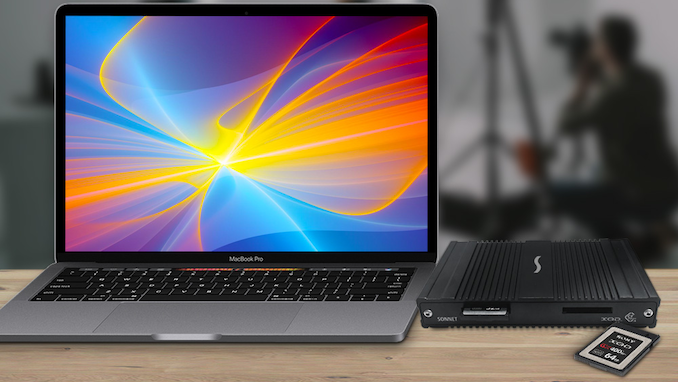
The market of professional memory cards has shrunk in the recent years as many cameras shifted to more compact SD cards, but there are still a good number of high-end cameras that use CFexpress or XQD media. This week Sonnet unveiled the industry’s first card reader with a Thunderbolt 3 interface that supports CFexpress and XQD.


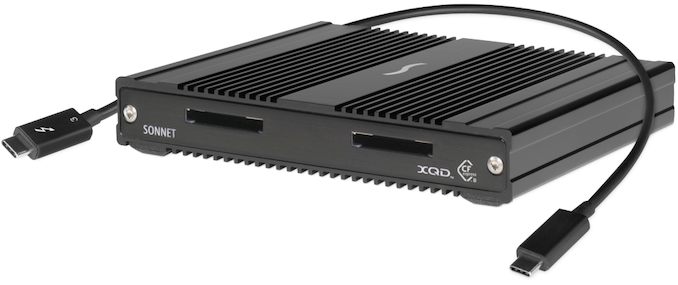
The Sonnet SF3-series CFexpress/XQD Pro Card Reader (SF3-2CFEX) comes in a rugged aluminum enclosure, it supports CFexpress 2.0 Type B and XQD cards, and can read files concurrently from two CFexpress cards at up to 2,600 MB/s or two XQD cards at up to 800 MB/s. The reader has two Thunderbolt 3 ports to enable daisy chaining with other Thunderbolt 3 devices or connect a display.


The Sonnet SF3-2CFEX card reader measures 147 mm × 88.3 mm × 35.6 mm and is compatible with Apple macOS as well as Microsoft Windows PCs.


The Sonnet SF3 CFexpress/XQD Pro card reader is now available directly from the company for $199.99. At present the SF3-2CFEX media reader is the only one to support both CFexpress and XQD (at least according to Sonnet).


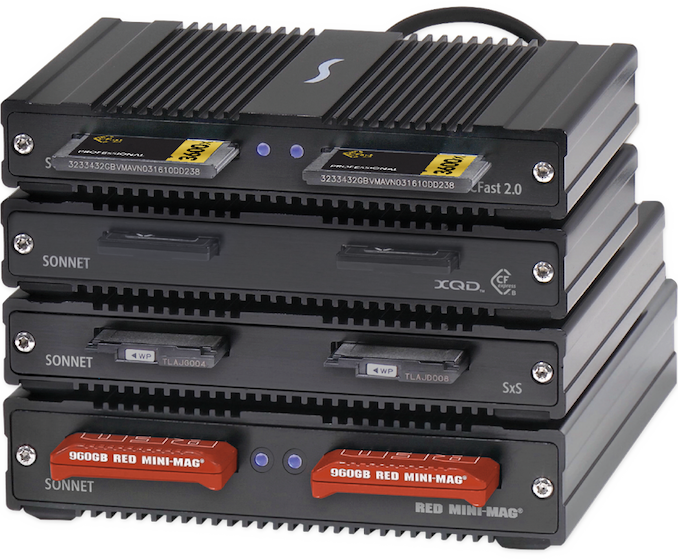
Sonnet’s SF3-series of professional card readers includes readers for CFast 2.0, XQD, SxS, and RED Mini-Mag cards. All of them feature a similar rugged yet compact design and are meant to be stacked and daisy chained.


Related Reading:


Source: Sonnet (via Hermitage Akihabara)


Source: AnandTech – Sonnet Introduces CFexpress and XQD Pro Card Reader with Thunderbolt 3

TerraMaster F2-210 2-Bay Personal Cloud NAS Released

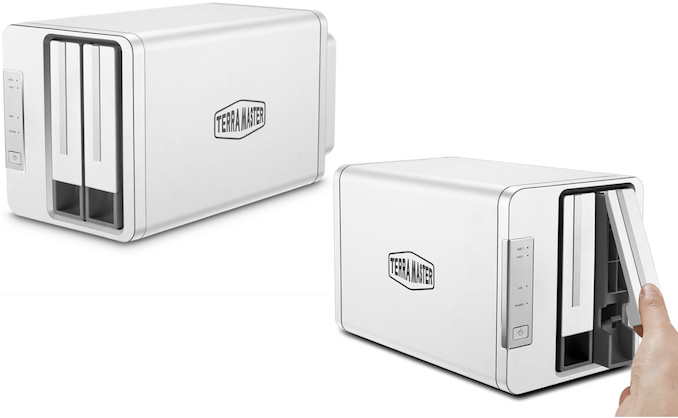
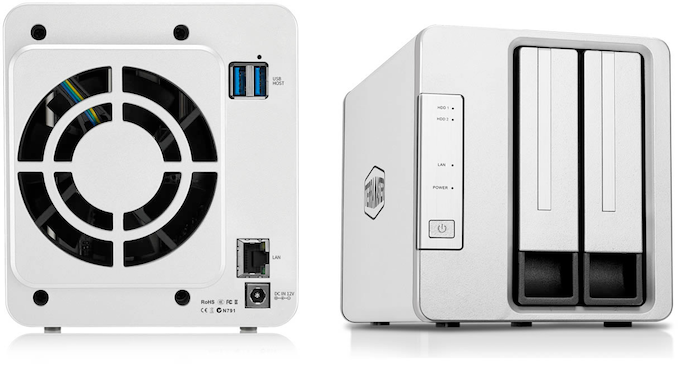
TerraMaster has revealed an entry-level NAS that doubles as personal cloud storage. The F2-210 NAS has two bays and supports up to 32 TB of storage (using today’s hard drives). As a base model, the product comes in under $200.


The TerraMaster F2-210 2-bay NAS is powered by Realtek’s RTD1296 SoC with four Arm Cortex-A53 cores, Arm Mali T820-MP3 graphics, and a multimedia engine supporting hardware of 4Kp60 HDR10 content in H.265 as well as VP9 formats. The application processor is paired with 1 GB of RAM and can support two SATA hard drives along with a GbE port, and two USB 3.0 connectors.


The NAS can house two 2.5-inch or 3.5-inch HDDs (or SSDs) and support capacities of up to 32 TB today and considerably higher with upcoming drives. The HDDs can work in single, JBOD, RAID 0, and RAID 1 modes. Performance wise, the F2-210 supports throughput of up to 124 MB/s with two 5400 RPM drives in RAID 0.


The TerraMaster F2-210 runs the TOS 4.1.0 operating system and supports Emby and Plex multimedia management applications that transform the device into a media center (services like Roku are also supported). In addition, a variety of other programs, including applications for backup, security, web servers and other uses, are available in the TOS Application Center.


The TOS 4.1.0 supports access from the cloud as well as HTTP, SMB/CIFS, AFP, FTP, NFS, and WebDAV protocols. The manufacturer says that setup of cloud access using its TNAS.online service is quick and easy, the access can be tailored for various people and the NAS can also access other cloud storage services when needed.


TerraMaster’s F2-210 2-bay NAS is now available from retailers like Amazon for $149.99. In addition, the company offers a 4-bay version for $249.99.


Related Reading


Source: TerraMaster


Source: AnandTech – TerraMaster F2-210 2-Bay Personal Cloud NAS Released

Mobile World Congress 2020 Cancelled

In the light of the 2019-nCoV coronavirus outbreak, GSMA has decided to cancel its upcoming Mobile World Congress 2020 trade show that was scheduled for late February.


John Hoffman, CEO of GSMA, said that the outbreak had made it impossible to hold the event.


The statement from Mr. Hoffman reads as follows:


12 February 2020, Barcelona: Since the first edition of Mobile World Congress in Barcelona in 2006, the GSMA has convened the industry, governments, ministers, policymakers, operators and industry leaders across the broader ecosystem.


With due regard to the safe and healthy environment in Barcelona and the host country today, the GSMA has cancelled MWC Barcelona 2020 because the global concern regarding the coronavirus outbreak, travel concern and other circumstances, make it impossible for the GSMA to hold the event.


The Host City Parties respect and understand this decision.


The GSMA and the Host City Parties will continue to be working in unison and supporting each other for MWC Barcelona 2021 and future editions.


Our sympathies at this time are with those affected in China, and all around the world. Further updates from the GSMA, are on our website and can be found on www.mwcbarcelona.com.


In the recent days multiple companies decided not to attend the trade show because of the novel coronavirus. The list of companies that decided to pull the plug contains major names on the technology world, including such giants as AT&T, Amazon, BT, Ericsson, Deutsche Telekom, Cisco, Intel, Facebook, HMD Global, Nokia, LG, Sprint, Verizon, Sony, MediaTek, Royole, Marvell, Volvo, NVIDIA, Marvell, McAfee, Sprint, Rakuten, Western Digital, and Vivo. ZTE and TCL had cancelled the press events, but were still planning on attending. Without multiple major companies on board, the show would have lost much of its value to the attendees, so the cancellation makes sense even from this point of view.


GSMA initially wanted the government of Catalonia to call a medical emergency in the state, which would have allowed the organizer to claim insurance, but the mayor of Barcelona refused to because there were no cases of 2019-nCoV in the area.


This is a breaking news. We are adding details as we get them.


Source: Quick Take by Bloomberg


Source: AnandTech – Mobile World Congress 2020 Cancelled

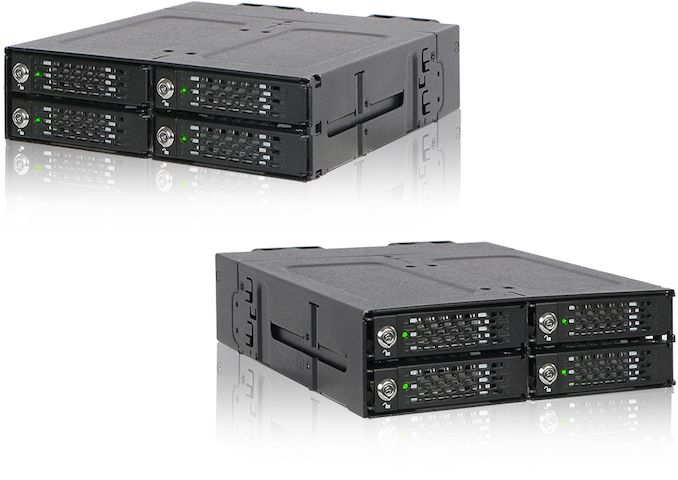
Mobile M.2 with Full Speed: The ICY DOCK ToughArmor MB720M2K-B

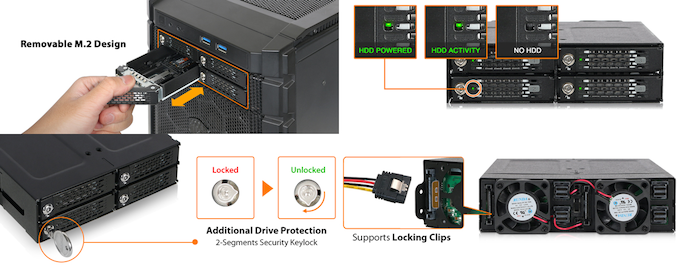
High-performance SSDs are often difficult to transfer them from a system to a system, which is sometimes needed. Removable U.2 drives are easier to use, but they are more expensive and not everyone needs their features. ICY DOCK has introduced its new enclosure that accommodates up to four M.2 SSDs and fits into a conventional 5.25-inch bay, allowing users to quickly remove a drive, and safely transport it.


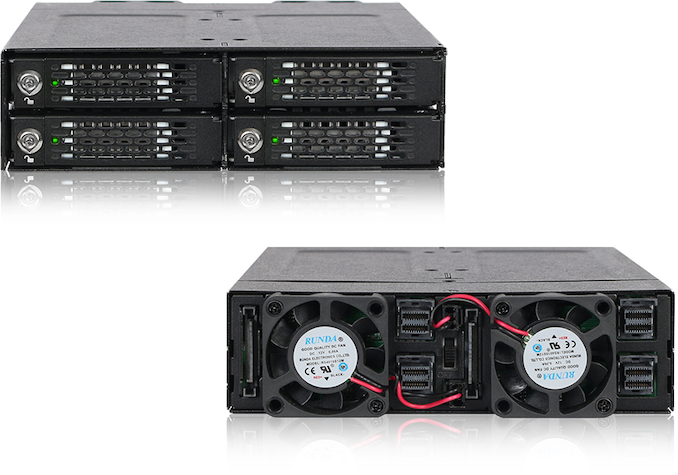
The ICY DOCK ToughArmor MB720M2K-B mobile rack is made of metal, so it is ruggedized, and features a lock to prevent its unauthorized removal. The device has four MiniSAS HD (SFF-8643) connectors on special backplanes and two SATA power connectors with support for locking latches.


To ensure consistent performance of SSDs inside the mobile rack, it has controllable two fans, thermal pads for the M.2 drives, and an integrated aluminum heatsink cover. Furthermore, it has EMI grounding technology and antivibration protection.


The ToughArmor MB720M2K-B is currently listed at ICY DOCK’s website, so expect it to hit the market shortly. Pricing of the device is unclear.


Related Reading


Source: ICY DOCK (via TechPowerUp)


Source: AnandTech – Mobile M.2 with Full Speed: The ICY DOCK ToughArmor MB720M2K-B

G.Skill Launches 256 GB DDR4-3600 CL16 Memory Kit

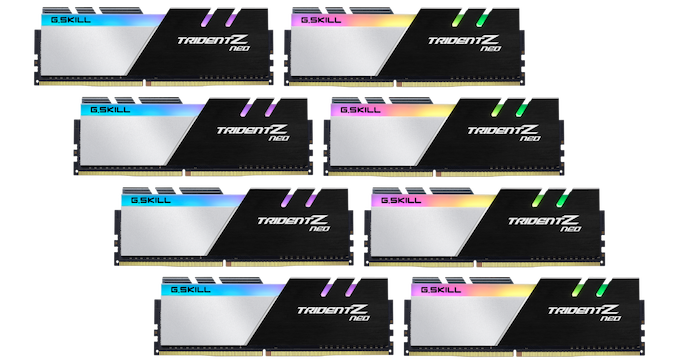
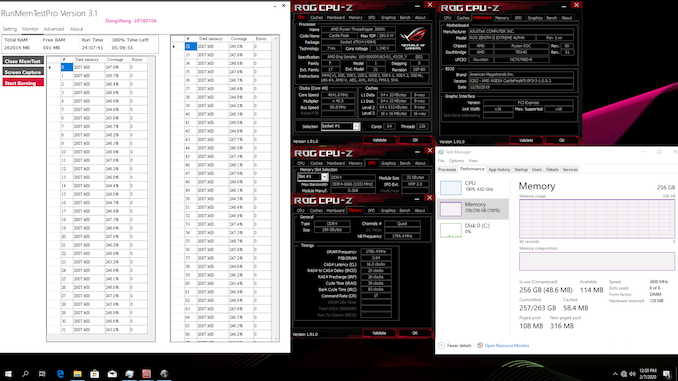
The arrival of 32 GB unbuffered DIMMs has not only allowed mainstream systems to reach 128 GB of memory, but it’s also allowed high-end desktops based on AMD Ryzen Threadripper or Intel Core i9 XE to reach an even larger 256 GB. Unfortunately, high-end, high-capacity kits are not common, with most high-capacity kits sticking to strictly JEDEC specs. G.Skill this week changed that with introduction of a new 256 GB kit, which offers DDR4-3600 speeds at a CL16 latency, and has been designed for AMD’s latest Threadripper platform.


G.Skill’s 256 GB Trident Z Neo kit consists of eight 32 GB modules rated for DDR4-3600 with CL16 20-20 timings, and running at 1.35 V. The modules use 16 Gb DDR4 chips (presumably from Samsung), feature XMP 2.0 SPD profiles for easier set up, and come with aluminum heat spreaders with an RGB LED bar.


The manufacturer has validated its 256 GB kit with the AMD Ryzen Threadripper 3990X processor and the ASUS ROG Zenith II Extreme Alpha motherboard, though it is likely that the kit will work with other AMD Ryzen Threadripper CPUs and platforms. Evidently, to ensure stable operation of 256 GB of memory at DDR4-3600, a motherboard with fine DRAM voltage circuitry is required. It should also be kept in mind that 256 GB of memory will consume a sizeable amount of power.


G.Skill will start sales of its new 256 GB kit sometime in the second quarter.


Related Reading:


Source: G.Skill


Source: AnandTech – G.Skill Launches 256 GB DDR4-3600 CL16 Memory Kit

AT 101: Wi-Fi 6 And Why You Want It

Over the last generation of computing, there has been an explosion of devices that no longer have or need the capability of connecting to a hard-wired Ethernet connection, and that trend shows no intention of slowing down. When Personal Computers first started to utilize wireless Network Interface Cards (NICs) they would almost always be the sole device on the network. Fast forward to today, and practically every home has multiple devices, if not dozens, where the devices communicate using radio waves, either over a cellular connection, or over a home wireless network featuring Wi-Fi.


Source: AnandTech – AT 101: Wi-Fi 6 And Why You Want It

SK Hynix Licenses DBI Ultra Interconnect for Next-Gen 3DS and HBM DRAM

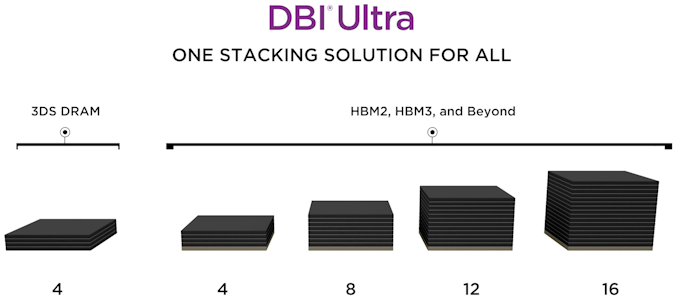
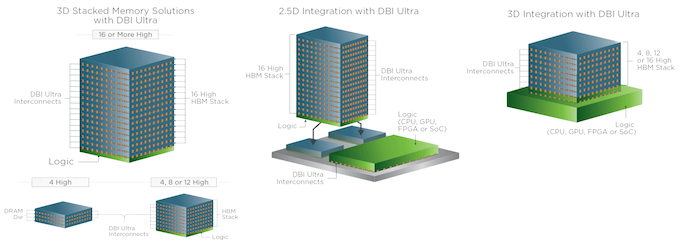
SK Hynix has inked a new broad patent and technology licensing agreement with Xperi Corp. Among other things, the company licensed the DBI Ultra 2.5D/3D interconnect technology developed by Invensas. The latter was designed to enable building up to 16-Hi chip assemblies, including next-generation memory, and highly-integrated SoCs that feature numerous homogeneous layers.


Invensas’ DBI Ultra is a proprietary die-to-wafer hybrid bonding interconnect technology that supports from 100,000 to 1,000,000 interconnects per mm2, using interconnect pitches as small as 1 µm. According to the company, the much greater number of interconnects can offer dramatically increased bandwidth vs. conventional copper pillar interconnect technology, which only goes as high as 625 interconnects per mm2. The small interconnects also offer a shorter z-height, making it possible to build a stacked chip with 16 layers in the same space as conventional 8-Hi chips, allowing for greater memory densities.


Just like other next-generation interconnect technologies, DBI Ultra supports both 2.5D and 3D integration. Furthermore, it allows integration of semiconductor devices of different sizes and produced using different process technologies. Such flexibility will be particularly useful not only for next-generation high-capacity high-bandwidth memory solutions (including 3DS, HBM, and beyond), but for various highly-integrated CPUs, GPUs, ASICs, FPGAs, and SoCs.


DBI Ultra uses a chemical bond that allows for interconnect layers that add no stand-off height, and require no copper pillars or underfill. While the process flow used for DBI Ultra is different when compared to conventional stacking processes, it continues to involve known good dies and does not require high temperatures, which results in relatively high yields.


All of this does come at a cost, however, and that’s something that Invensas keeps to itself. The firm does not disclose how much DBI Ultra costs to use, or how that compares to the technologies used today.


SK Hynix does not disclose how it plans to use the DBI Ultra technology, though it is reasonable to expect the DRAM producer to use the new capability for next-generation memory products.


Craig Mitchell, president of Invensas, said the following:


“As the industry increasingly looks beyond conventional node scaling and turns toward hybrid bonding, Invensas stands as a pioneering leader that continues to deliver improved performance, power, and functionality, while also reducing the cost of semiconductors. We are proud to partner with SK hynix to further develop and commercialize our DBI Ultra technology and look forward to a wide range of memory solutions that leverage the benefits of this revolutionary technology platform.”


Related Reading:


Source: Xperi


Source: AnandTech – SK Hynix Licenses DBI Ultra Interconnect for Next-Gen 3DS and HBM DRAM