Next Generation Arm Server: Ampere’s Altra 80-core N1 SoC for Hyperscalers against Rome and Xeon

Several years ago, at a local event detailing a new Arm microarchitecture core, I recall a conversation I had with a number of executives at the time: the goal was to get Arm into 25% of servers by 2020. A lofty goal, which hasn’t quite been reached, however after the initial run of Arm-based server designs the market is starting to hit its stride with Arm’s N1 core for data-centers getting its first outings. Out of those announcing an N1-based SoC, Ampere is leading the pack with a new 80-core design aimed at cloud providers and hyperscalers. The new Altra family of products is aiming to offer competitive performance, performance per watt, and scalability up to 210 W and tons of IO, for any enterprise positioning.


Source: AnandTech – Next Generation Arm Server: Ampere’s Altra 80-core N1 SoC for Hyperscalers against Rome and Xeon

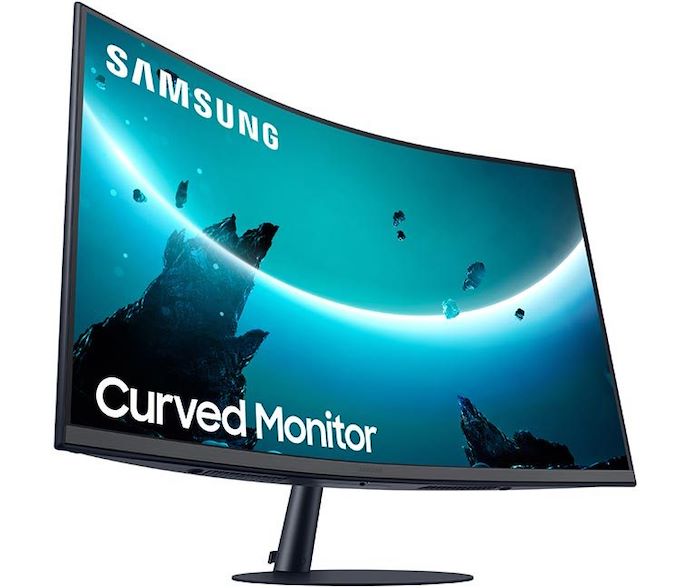
Samsung Announces TD5 Monitors: Aggressive, 1000R Curved Office Displays

As one of the major proponents of curved displays, Samsung has been applying curved panels to numerous monitors over the years. Many of these monitors have been aimed at gamers and prosumers, while for other market segments, such as SOHO, Samsung hasn’t approached them with the same zeal for rounded displays. Last week, however, the company changed that, revealing its new T55 monitors that feature an aggressive 1000R curvature along with TÜV Rhineland’s Eye Comfort certification for certain models.


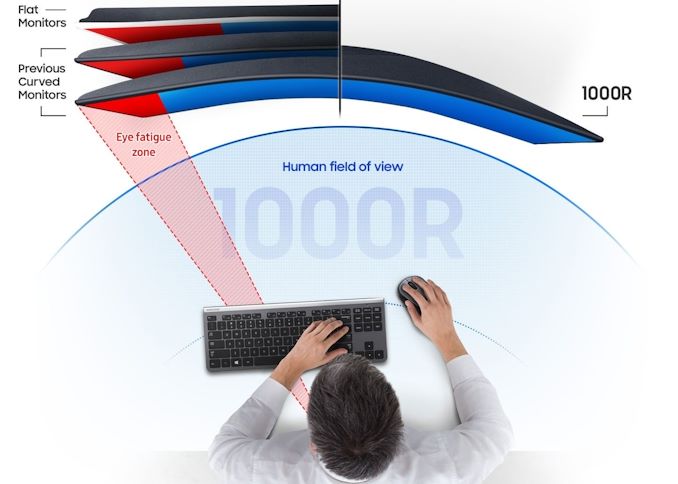
With the monitor market already beyond saturation with traditional displays, the key selling point for Samsung’s TD5 displays is of course the 1000R curve. With most monitors on the market using 1500R or 1800R curves, the TD5s have a noticeably narrower curve than other monitors. Citing a a clinical study conducted by professor Seong-Joon Kim at Seoul National University Hospital, Samsung is promoting the new curved displays as provoking less eye strain than flat monitors, as they bring the whole picture closer to the human eye. Furthermore, Samsung says, because the 1000R curvature radius closely matches the human field of view, this is a more optimal curvature than less aggressive options. To that end, 1000R curvature is the core feature of the whole Samsung T55 lineup.


Overall, the T55 family consists of three models: the C24T55, C27T55 and C32T55, which offer 24-inch, 27-inch, and 32-inch diagonals respectively. All the LCDs use a 1920×1080 VA panel that offers a max brightness of 250 nits brightness, a 3000:1 contrast ratio, 4 ms response time, and a 75 Hz maximum refresh rate. The LCDs can display 16.7 million of colors and reproduce 119% of the sRGB, 88% of the Adobe RGB, and 88% of the DCI-P3 color spaces, which is quite good given their positioning (and the fact that their rivals usually support only the sRGB gamut).


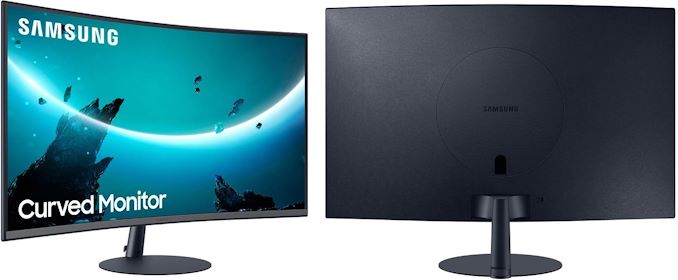
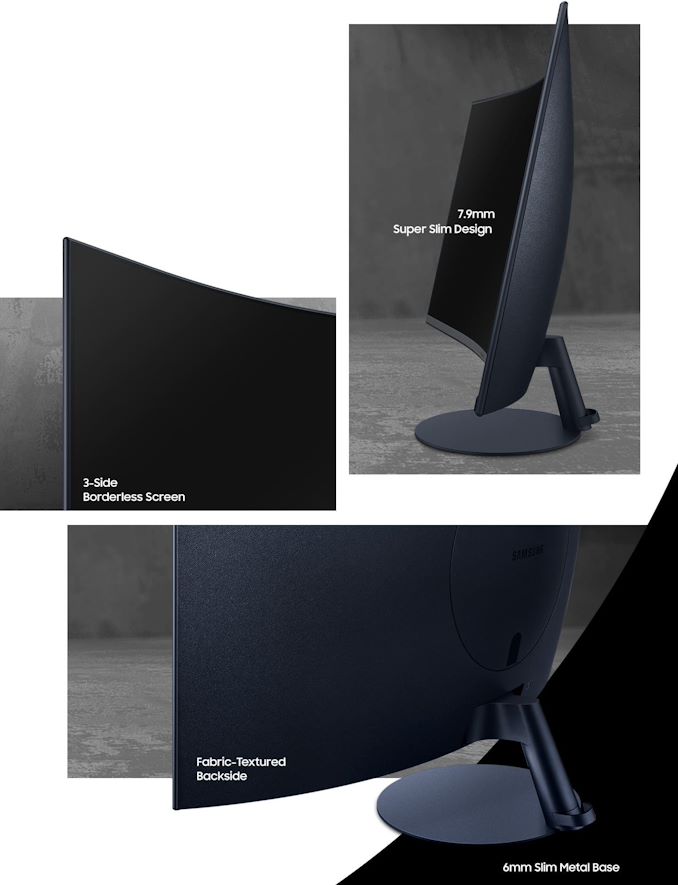
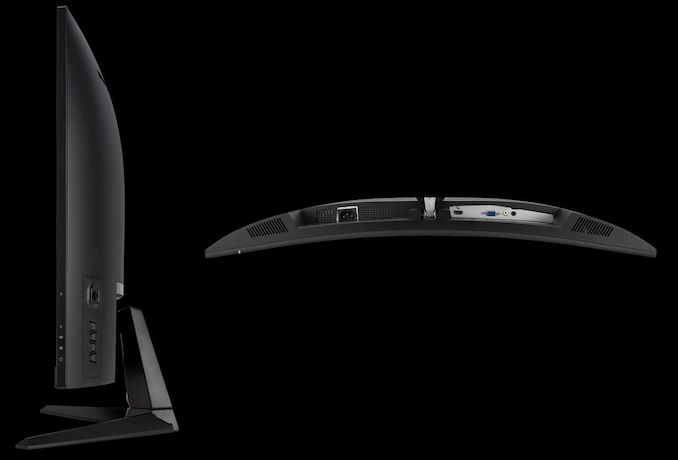
The monitors feature a minimalist ‘3-side borderless’ design with a fabric-textured backside and use stands with a 6-mm slim metal base that can only adjust tilt. As for connectivity, the monitors have a DisplayPort input, a D-Sub input, and an HDMI port to ensure compatibility with both modern and legacy PCs.


Designed primarily for productivity/office workloads, the monitors are not exactly meant for entertainment uses, but Samsung nevertheless equipped them with a scaler that supports VESA’s Adaptive-Sync (and AMD FreeSync) variable refresh rate technology and added speakers to 27-inch and 32-inch models.


General Specifications of Samsung’s T55 Displays
  C24T55

24-inch
C27T55

27-inch
C32T55

32-inch
Panel 24″ VA 27″ VA 32″ VA
Native Resolution 1920 × 1080
Maximum Refresh Rate 75 Hz
Response Time 4 ms
Brightness 250 cd/m²
Contrast 3000:1
Backlighting LED (?)
Viewing Angles 178°/178° horizontal/vertical
Curvature 1000R
Aspect Ratio 16:9
Color Gamut sRGB: 119%

AdobeRGB: 88%

DCI-P3: 88%
Dynamic Refresh Rate Tech VESA Adaptive-Sync

(AMD FreeSync)
Pixel Pitch 0.2767 mm² 0.3113 mm² 0.369 mm²
Pixel Density 91.8 PPI 81.6 PPI 68.8 PPI
Inputs DisplayPort

D-Sub

 HDMI
Audio audio in

audio out
audio in

audio out

5W stereo speakers
USB Hub
MSRP ? ? ?

While Samsung lists all three T55 monitors on its website, the company yet has to reveal their exact launch dates or prices.


Related Reading:


Source: Samsung DisplaySolutions (via Tom’s Hardware)


Source: AnandTech – Samsung Announces TD5 Monitors: Aggressive, 1000R Curved Office Displays

Cypress Announces USB 3.2 & USB4-Ready Controllers: EZ-PD CCG6DF & CCG6SF

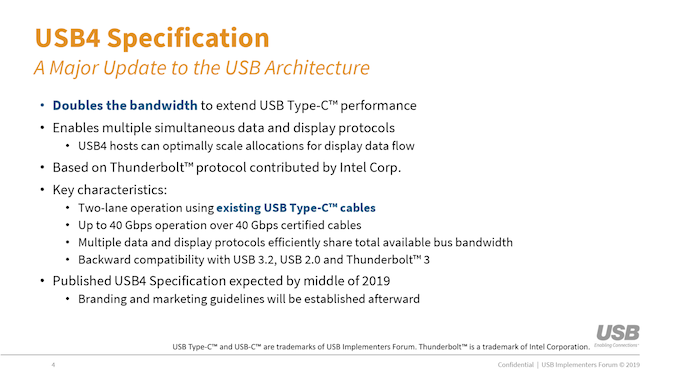
Cypress has unveiled a pair of upcoming USB Type-C controllers for next-generation desktops and laptops. The new EZ-PD CCG6DF and EZ-PD CCG6SF controllers are single-chip solutions that support USB 3.2, DisplayPort, and Power Delivery with fault protection. In addition, the controllers are ready to work with USB4 devices.


Cypress’s EZ-PD CCG6DF and EZ-PD CCG6SF are highly-integrated dual-port and single-port USB-C controllers. Both controllers are based on a 32-bit Arm Cortex-M0 processor, with 64 KB of eFlash to enable enhanced programmability as well as firmware upgrades to gain new functionality or deploy bug fixes. The controllers connect to their host using a PCIe interface and support a variety of protocols, including USB 3.2, DisplayPort, and PCIe.


Meanwhile, the controllers also offer a limited degree of support for USB4; however just what this entails is somewhat murky. According to the company’s press release, the new controllers support “firmware upgrades to support the new USB4 standard”, however we’ve been told sperately by the company that the chips are not USB4 controllers. Further still, the company does use the USB4 logo on the product page. What this may come down to is data rates: USB4 offers both 40Gbps and 20Gbps rates, and while both use the standard’s fully encapsulated packet format, the 20Gbps data rate isn’t any faster (or using any additional wires) than what today’s SuperSpeed USB 20Gbps (Gen2x2) devices can already do. So if Cypress is waiting to enable USB4 support at a future date, it could very well be that they will (eventually) be usable as USB4 20Gbps controllers.


Moving on, one of the other important capabilities of the new chips is an integrated VBUS provider load switch, which allows the chip to support 100 W Power Delivery with fault protection. The integration of switch reduces design footprint and BOM costs, which is helpful for getting wider-spread support for high capacity USB power delivery.


Cypress uses an unknown process technology to build the EZ-PD CCG6DF and EZ-PD CCG6SF controllers and will offer them in 96-pin BGA and 48-pin QFN packages to support various requirements.


Cypress has started sampling of its EZ-PD CCG6DF and EZ-PD CCG6SF controllers with major OEMs. The company expects to start volume production in early Q3, so we may see consumer products by the end of this year.


Related Reading:


Source: Cypress


Source: AnandTech – Cypress Announces USB 3.2 & USB4-Ready Controllers: EZ-PD CCG6DF & CCG6SF

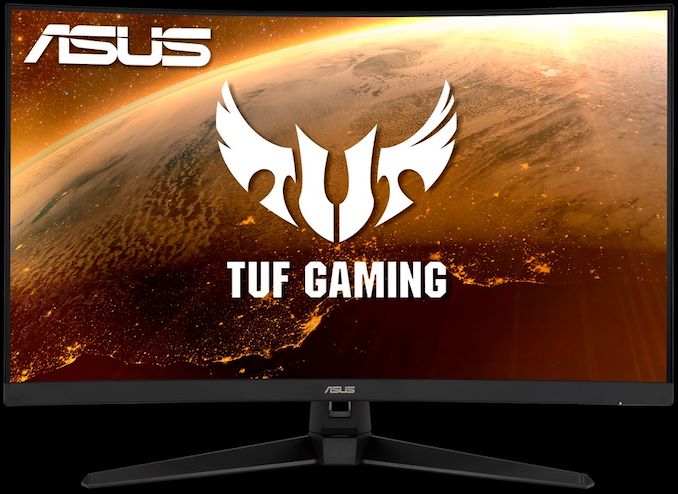
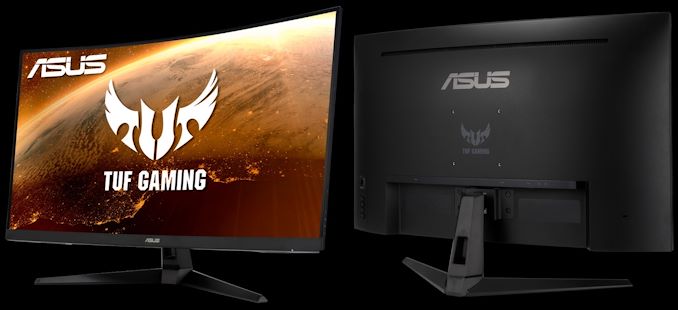
Big, Fast, & Curved: The ASUS TUF VG328H1B, A 31.5-Inch Gaming Display

ASUS has unleashed a new TUF Gaming display, the 31.5-inch VG328H1B. The mainstream-segment monitor is aimed at gamers who are after a combination of a large screen size, a curved panel, as well as a high variable refresh rate, all without breaking the bank in terms of pricing.


The ASUS TUF Gaming VG328H1B monitor uses a Full-HD (1920 x 1080) VA panel that features a 1500R curvature, a maximum brightness of 250 nits, a 3000:1 contrast ratio, a 1 ms MPRT response time, and a 165 Hz refresh rate in overclocked mode. The LCD can display 16.7 million of colors and reproduce 120% of the sRGB and 90% of the DCI-P3 color gamut, which is in line with other modern gaming monitors.  At the same time, considering mediocre resolution and brightness, it is pretty evident that developers of the LCD prioritized size and performance over everything else, keeping in line with the TUF lineup’s mainstream focus and pricing.


The display fully supports VESA’s Adaptive-Sync (with a 48 Hz – 165 Hz range) and carries AMD’s FreeSync Premium badge. But while ASUS says that Adaptive-Sync will work with NVIDIA’s latest GeForce GTX/RTX graphics cards, it has not been certified as G-Sync Compatible. In addition, the TUF Gaming VG328H1B supports ASUS’ ELMB and ELMB Sync technologies designed to make fast-paced scenes look sharper (whether or not variable refresh is activated). Other notable features for gamers supported by the monitor are Shadow Boost (increases brightness in dark areas) as well as GamePlus and GameVisual modes.


For connectivity, the TUF Gaming VG328H1B has one D-Sub input as well as one HDMI 2.0 port, which makes for a rather odd set of inputs. Meanwhile, the device has two 2 W stereo speakers, an audio input, and a headphone output.


As for ergonomics, the ASUS TUF Gaming VG328H1B comes with a stand that can adjust tilt and swivel, but not height. For users who need more than that, the monitor has VESA 100×100 holes, so it can use an appropriate third-party arm or stand.


The 31.5-Inch ASUS TUF Gaming LCD w/165 Hz Refresh Rate
  TUF Gaming VG328H1B
Panel 31.5-inch class IPS
Native Resolution 1920 × 1080
Maximum Refresh Rate 165 Hz
Dynamic Refresh Technology VESA Adaptive Sync

AMD FreeSync Premium
Range 48 Hz – 165 Hz
Brightness 250 cd/m²
Contrast 3000:1
Viewing Angles 178°/178° horizontal/vertical
Response Time 1 ms MPRT
Pixel Pitch ~0.2537 mm²
Pixel Density ~100 PPI
Color Gamut Support sRGB: 120%

DCI-P3: 90%
Inputs 1×D-Sub

2×HDMI 2.0
Audio 2W stereo speakers

headphone output

audio input
Stand Height: –

Tilt: +23° ~ -5°

Swivel: +/- 15°

Pivot: –
Warranty ? years
Launch Price ?

Otherwise, while they are announcing the monitor, ASUS isn’t disclosing any details about pricing and or availability at this time.


Related Reading:


Source: ASUS (via Hermitage Akihabara)


Source: AnandTech – Big, Fast, & Curved: The ASUS TUF VG328H1B, A 31.5-Inch Gaming Display

EIZO Unveils ColorEdge Prominence CG3146 HDR Reference Monitor with Calibration Sensor

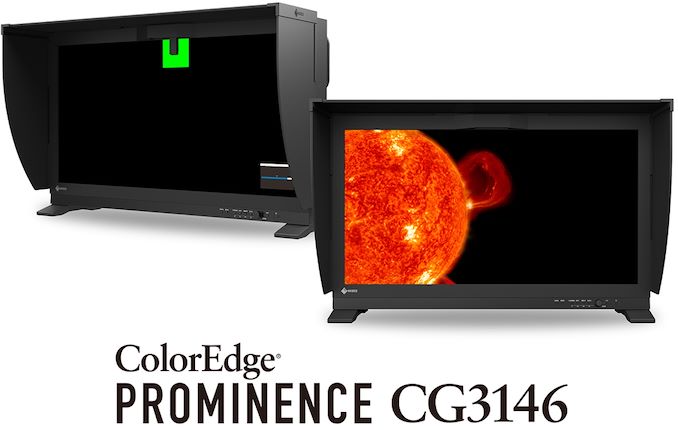
Well known for their high-end and reference-quality monitors, EIZO has introduced their latest reference monitor, the ColorEdge Prominence CG3146, which is designed for HDR content mastering for the broadcast and film industries. The new 31.1-inch monitor largely builds upon technologies developed for its predecessor, the CG3145, but has a number of enhancements, including a built-in calibration sensor and SDI connectivity.


The EIZO ColorEdge Prominence CG3146 monitor is based on a 10-bit IPS panel with a 4096×2160 resolution. All told, the monitor can reproduce 1.07 billion colors, and is assisted by EIZO’s proprietary wide-gamut LED backlighting. According to EIZO, the high-end backlighting tech can control backlight intensity on a per-pixel basis, which enables the LCD to display intensively bright colors and deep blacks without the kind of artifacts seen on monitors with coarser backlighting systems. By the numbers, the CG3146 offers a typical brightness of “just” 1000 nits, but also hits a rather whopping 1,000,000:1 contrast ratio.


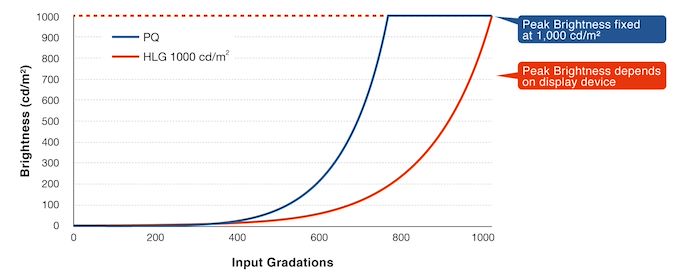
The ColorEdge Prominence CG3146 covers 99% of the DCI-P3 color gamut and also supports sRGB, BT.2020, and BT.2100 color spaces. The monitor features a 24-bit 3D LUT (look-up table) for smooth color gradations and supports HLG (hybrid log-gamma) and the PQ (perceptual quantization) curve so that it can be used with various HDR modes/transports. For example, HLG’s luminance tops at 1000 nits (which is suitable for TVs), whereas  PQ supports considerably higher brightness of up to 10,000 nits, which is required for recorded content.


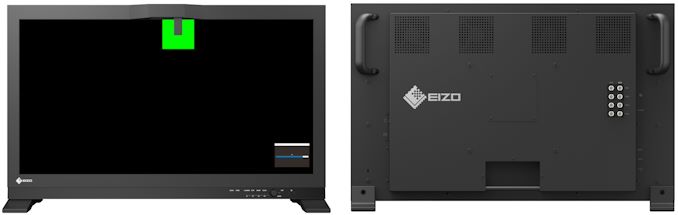
Color accuracy is absolutely crucial for post production and color grading workloads, so the ColorEdge Prominence CG3146 comes with an integrated sensor that calibrates the monitor when needed and eliminates the need for an external calibrator device. Meanwhile, apart from qualities of the panel and backlighting, it depends on such factors as ambient and internal temperature of the monitor. To that end, the ColorEdge Prominence CG3146 is equipped with a temperature sensor that measures temperature inside the monitor and estimates temperature outside of it to adjust LCD’s settings in real time to ensure accurate colors. Moreover, the EIZO’s digital uniformity equalizer (DUE) technology not only ensures the right luminance, color temperature, and tones for stable image display across the screen, but also counterbalances the effects that a changing temperature may have on uniformity. Last but not least, the display has a light shielding hood.


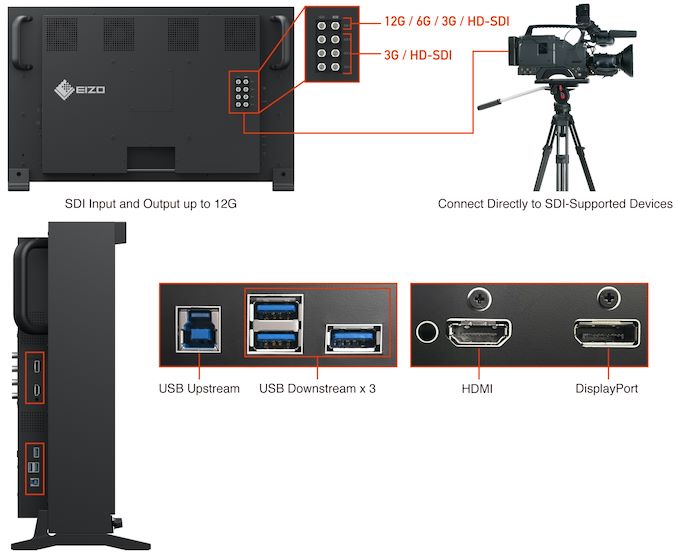
Moving on to connectivity, EIZO’s new flagship HDR reference display offers an important improvement here. As expected, the ColorEdge Prominence CG3146 has a DisplayPort capable of DCI-4K with 4:4:4 chroma subsampling at 50/60 Hz, as well as an HDMI 2.0 input capable of DCI-4K with 4:2:2 at 50/60 Hz. Furthermore, the monitor has 12G/6G/3G/HD-SDI BNC inputs and outputs to connect SDI supporting devices, which is a huge improvement for the film and broadcasting industries.


Specifications of the EIZO ColorEdge Prominence Reference HDR Display
  CG3146
Panel 31.1″ IPS
Native Resolution 4096 × 2160
Maximum Refresh Rate 60 Hz
Response Time 10 ms
Brightness 1000 cd/m² (typical)
Contrast ‘1,000,000:1’
Viewing Angles 178°/178° horizontal/vertical
HDR 24-bit LUT, various transports
Dynamic Refresh Rate none
Pixel Pitch 0.170 mm²
Pixel Density 149 ppi
Display Colors 1.07 billion
Color Gamut Support DCI-P3: 99%

Adobe RGB: ?%

Rec. 2020: ?%

sRGB: ?
Aspect Ratio 1.9:1
Stand to be announced
Inputs 1 × DisplayPort 1.4

1 × HDMI 2.0a/2.0b (HDCP 2.2)

BNC (12G/6G/3G/HD-SDI)

BNC (3G/HD-SDI)

1 × USB-B for monitor control and the USB hub
Outputs BNC (12G/6G/3G/HD-SDI, through-out (active)

BNC (3G/HD-SDI, through-out (active)
USB Hub 3-port USB 3.0 hub
Launch Date April 2020

EIZO will demonstrate its ColorEdge Prominence CG3146 flagship HDR reference monitor at NAB trade show in Las Vegas, Nevada, in in late April. The company intends to start shipments in April too, but the exact availability timeframe will vary from country to country.


The monitor is covered by a five-year warranty. Though it should be noted that, like other reference monitors based on similar tech, the company is only guaranteeing the monitor’s operation for 30,000 hours of usage. The guarantee on brightness and color accuracy, in turn, is even tighter: the monitor’s warranty only covers 10,000 hours there, and only when used at a color temperature of 6500K at 800 nits brightness.


Related Reading:


Source: EIZO (via PC Watch)


Source: AnandTech – EIZO Unveils ColorEdge Prominence CG3146 HDR Reference Monitor with Calibration Sensor

NVIDIA's 2020 GTC Becomes Latest Coronavirus Event Casualty: Now Digital-Only

Following the ongoing saga of technology event cancelations into March and beyond, NVIDIA has now become the latest event host to cancel or substantially alter a planned event due to concerns over the spread of the SARS-CoV-2 coronavirus. The company’s annual GPU Technology Conference (GTC), which as of just last week was still scheduled to take place with enhanced sanitization procedures in place, has now become an all-digital show. As a result, NVIDIA will still be holding certain events – including most critically, CEO Jensen Huang’s keynote talk – just without the physical component.


NVIDIA’s brief (and seemingly hasty) announcement is short but straightforward: out of concern over the virus, the physical event is canceled. In its place the keynote will be delivered via livestream, and NVIDIA is “working with our conference speakers to begin publishing their talks online beginning in the weeks ahead”. Overall, NVIDIA is taking a route very similar to what we’ve seen a few other conferences plan for, allowing interested participants and speakers to still deliver their own presentations digitally. For many of these companies and individuals, they have product announcements or disclosures that have been in the works for months and/or are tied to other announcements, so they still intend to make those announcements in some form.


As for NVIDIA, the company has ample experience delivering keynote presentations via livestream – indeed for the many thousands of GTC attendees watching Huang’s keynote live, many times that number are watching the livestream to begin with. So while Huang may not get to play to a crowd as he likes to do, he won’t be without an audience.


Overall, this year’s GTC is widely expected to include the announcement of a next-generation compute GPU architecture, making it one of the most important GTCs of the last few years. NVIDIA’s current Volta architecture-based GV100 GPU is now a few years old, and supercomputer planning announcements have tipped the fact that NVIDIA will have a new Tesla accelerator ready later this year. The current generation of Tesla accelerators have been a huge success story for NVIDIA, so there’s a great deal of interest in seeing how NVIDIA will keep up that momentum, especially in the face of stiff competition from all directions, from FPGA suppliers to Intel’s Xe GPU family.


NVIDIA has decided to shift GTC 2020 on March 22-26 to an online event due to growing concern over the coronavirus.


This decision to move the event online instead of at the San Jose Convention Center reflects our top priority: the health and safety of our employees, our partners and our customers.


NVIDIA founder and CEO Jensen Huang will still deliver a keynote address, which will be available exclusively by livestream. We’re working to schedule that and will share details once they’re available.


We will be working with our conference speakers to begin publishing their talks online beginning in the weeks ahead. Please visit https://www.nvidia.com/en-us/gtc/ for updates.


Additionally, for those in NVIDIA’s developer program, we plan to schedule availability with our researchers, engineers and solution architects to answer technical questions.


Those who have registered for a GTC pass will receive a full refund. Stay tuned for details.


We’re grateful to the great many individuals and partners who have worked to support this event and thank them for their understanding during these unusual times.


Source: AnandTech – NVIDIA’s 2020 GTC Becomes Latest Coronavirus Event Casualty: Now Digital-Only

UFS 3.1 Storage Devices for Smartphones Unveiled by Kioxia & Western Digital

Less than a month after JEDEC published its UFS 3.1 specification, Kioxia and Western Digital have introduced their first UFS 3.1-compliant storage devices for smartphones. Samples of Kioxia’s UFS 3.1 drives will be available to manufacturers shortly, while Western Digital is on track to ship UFS 3.1 devices commercially next month, just in time for the launch of mainstream 5G smartphones.


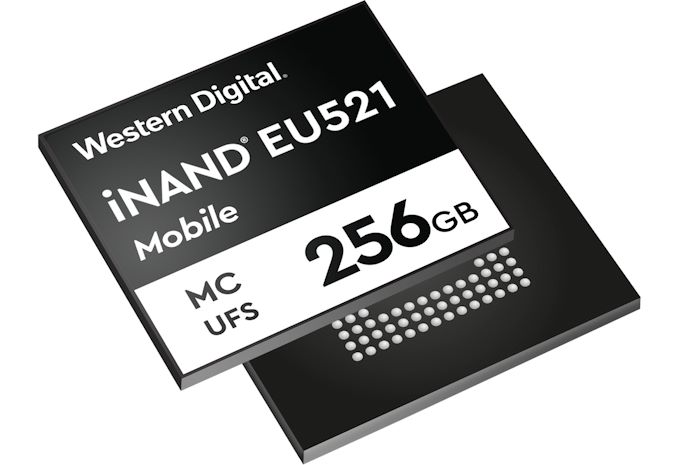
Western Digital’s iNAND EU521: 128 GB and 256 GB Available in March, 512 GB Hinted


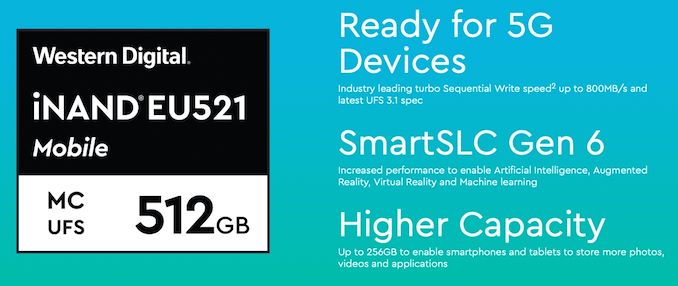
Western Digital’s iNAND EU521 embedded drives will initially offer 128 GB and 256 configurations in an industry-standard 11.5×13×1.0 mm package. The storage device is based on the company’s proprietary controller with two NAND channels as well as two HS-G4 lanes at an 11.6 Gbps data rate, which is coupled with 96-layer 3D TLC NAND memory. Due to a relatively low internal parallelism, the iNAND EU521 is rated for up to 800 MB/s read/write speeds, up from 750 MB/s in case of the iNAND 511 launched last year.


The iNAND EU521 supports three key UFS 3.1 improvements: Write Booster pseudo-SLC caching to improve write performance, Deep Sleep mode, and Performance Throttling Notification. Western Digital stresses that the Write Booster capability has been implemented via a firmware update to the company’s SmartSLC Gen 6 technology that has been used on iNAND devices for years, and which has been refined in multiple ways. Speaking of features, it’s worth noting that the drive does not support any kind of Host Performance Booster tech, as it is not really needed for 128 GB and 256 GB drives.


One thing to note is that while officially the family will offer two capacities, the company also publishes images of an iNAND EU521 512 GB drive, which will likely come later.


Kioxia’s UFS 3.1 Family: Up to 1 TB, Sampling


Kioxia has a little bit different UFS 3.1 strategy than its production partner Western Digital. The company will offer a range of UFS 3.1-compliant drives featuring four configurations — 128 GB, 256 GB, 512 GB, and 1 TB — in a 11.5×13×1.0 mm package. The drives naturally use BiCS 3D NAND flash memory, though Kioxia does not reveal which devices.


The Japanese manufacturer will use its own UFS 3.1 controller that will support Write Booster, Deep Sleep, Performance Throttling Notification, and Host Performance Booster technology. The company is not disclosing any actual performance numbers of its UFS 3.1 drives, though it is stressing that their sequential read performance is about 30% higher when compared to Kioxia’s UFS 3.0 products. Also, HPB should boost the random read performance of the device.


Kioxia is currently sampling its UFS 3.1 devices with smartphone manufacturers, but it is unclear when the  devices are set to be available.


Related Reading:


Sources: Kioxia, Western Digital


Source: AnandTech – UFS 3.1 Storage Devices for Smartphones Unveiled by Kioxia & Western Digital

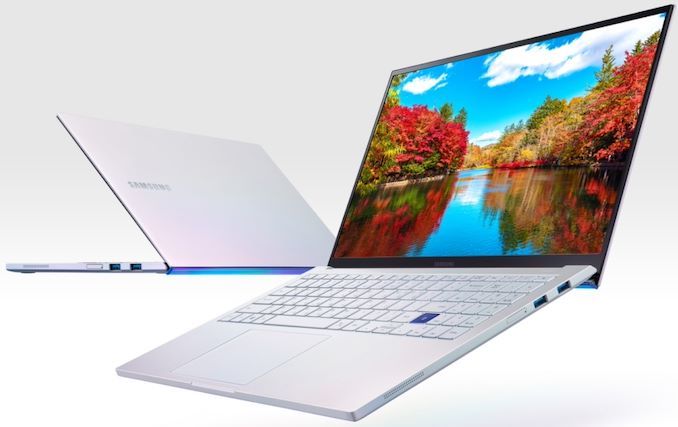
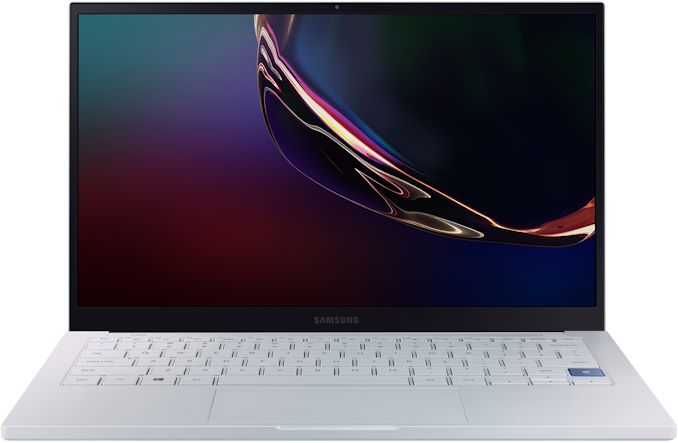
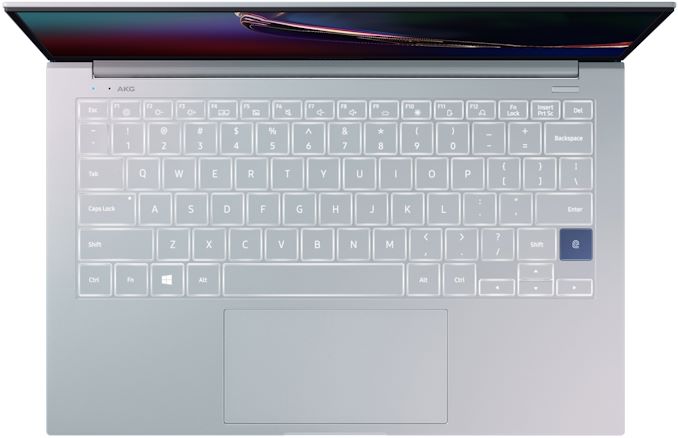
Samsung Updates Galaxy Book Ion: First with Comet Lake & LPDDR4X

Samsung has revealed a new version of its Galaxy Book Ion 13.3-inch ultra-light notebook based on Intel’s 10th Generation Core (Comet Lake) processor. Of particular interest, the model of the laptop is coupled with LPDDR4X memory, making it one of the first Comet Lake devices to ship with the newer memory. Promising, among other things, a longer battery runtime thanks to the use of LPDDR4X, the laptop should hit the market shortly.


When Intel first introduced its Comet Lake-U and Comet Lake-Y CPUs with up to six cores last August, the company announced that the parts supported LPDDR4X memory, which provides significant power savings over older LPDDR3 and DDR4 memory. Unfortunately, the first production stepping did not actually support LPDDR4X, so notebook makers had to stick to slower LPDDR3 or power hungry DDR4. Only recently did Intel start shipments of their Comet Lake K1 stepping processors, which are fully validated for LPDDR4X memory.


Originally introduced in late October, Samsung’s 13.3-inch Galaxy Book Ion was among several ultra-thin and light notebooks based on Intel’s Comet Lake processors that had to use DDR4 memory due to the limitations of the earlier chips, and as a result ended up sacrificing some battery life compared to what it could have done with LPDDR4X (or even LPDDR3). But with Intel’s K1 stepping in hand, Samsung can finally move this laptop over to the lower-power memory.


In fact, the only hardware difference between Samsung’s Galaxy Book Ion 2019 and Galaxy Book Ion 2020 is the LPDDR4X memory inside the latter. So the new version should be just as fast as the previous one (or even faster due to LPDDR4X’s higher memory clocks), as well as offering a longer battery life.


So far, Samsung has only unveiled its new Galaxy Book Ion 13.3-inch 2020 model in China. The notebooks are available for pre-order at JD.com, so we expect they’ll arrive in other markets shortly.


Related Reading:


Sources: GizChina.com, TechGenyz


Source: AnandTech – Samsung Updates Galaxy Book Ion: First with Comet Lake & LPDDR4X

Kingston Releases DC1000M U.2 Datacenter SSD

Kingston has announced that their latest and fastest datacenter SSD is now available. The new DC1000M is a 2.5″ U.2 NVMe SSD, taking over the top spot in Kingston’s datacenter SSD lineup. Last year, Kingston introduced the DC500M, DC500R and DC450R SSDs for the SATA market, but they have had few NVMe offerings. Back in 2017, Kingston partnered with Liqid on multi-controller NVMe add-in cards, but the DC1000M is Kingston’s first foray into the more mainstream datacenter U.2 market segment.


Kingston’s DC1000M uses the Silicon Motion’s SM2270 controller, a 16-channel design that is SMI’s first really large SSD controller. The internal architecture is a bit unusual: it consists more or less of the two 8-channel controller backends (derived from their consumer-grade controllers) behind a unified front-end with support for PCIe 3.0 x8 (though the DC1000M’s U.2 connector limits it to only using an x4 link). That controller layout means the SM2270 has a total of three pairs of ARM Cortex R5 CPU cores: one pair for the front-end that handles the NVMe protocol, and one pair for each half of the backend handling lower level NAND management. Each half of the backend also has its own 32-bit DRAM controller. The SM2270 features the same third-generation LDPC encoder as SMI’s upcoming PCIe 4.0 controllers, a step forward from what’s in the current SM2262(EN) consumer controllers.


The flash memory used by the DC1000M is Kioxia’s 64-layer BiCS3 3D TLC, so performance and power efficiency might be slightly worse than if they’d gone with the latest 96L NAND. Capacities range from 960 GB up to 7.68 TB, all with endurance ratings of 1 drive write per day (DWPD). That’s a bit lower than the 1.3 DWPD rating their DC500M gets, but still twice what their -R models for heavily read-oriented workloads are rated for.


Kingston DC1000M SSD Specifications
Capacity 960 GB 1.92 TB 3.84 TB 7.68 TB
Controller Silicon Motion SM2270
Form Factor 2.5″ 15mm U.2
Interface, Protocol PCIe 3.0 x4, NVMe
NAND Flash Kioxia (Toshiba) BiCS3 64L 3D TLC
Sequential Read 3100 MB/s
Sequential Write 1330 MB/s 2600 MB/s 2700 MB/s 2800 MB/s
Random Read IOPS 400k 540k 525k 485k
Random Write IOPS 125k 205k 210k 210k
Power

Draw

(Watts)
Idle 5.14 5.22 5.54 5.74
Avg Read 5.25 5.31 5.31 5.99
Max Write 9.80 13.92 15.50 17.88
Write Endurance 1 DWPD
Warranty 5 years
MSRP $356.20

(37¢/GB)
$552.50

(29¢/GB)
$975.00

(25¢/GB)
TBD

The sequential and random read performance ratings for the DC1000M both fall a bit short of saturating the PCIe 3.0 x4 interface, even for the larger capacity models. Sequential write performance is also a bit slow for a 16-channel drive, but random write speeds are competitive for the 1 DWPD market segment. Power consumption is fairly low for a drive with a 16-channel controller, with typical read performance in the 5-6W range and maximum power draw varying from about 10W up to 18W depending on capacity—all figures that are only slightly higher than we usually see on U.2 drives using 8-channel controllers.


The DC1000M supports the typical features expected for a datacenter U.2 drive, including hot-plug, end to end data path protection, and power loss protection. The smaller capacities of the DC1000M are currently available for purchase direct from Kingston or through distributors like CDW. The 7.68 TB model will be available soon.


Source: AnandTech – Kingston Releases DC1000M U.2 Datacenter SSD

Intel NUC10i7FNH Frost Canyon Review: Hexa-Core NUC Delivers a Mixed Bag

Small form-factor (SFF) PCs and gaming systems have represented the bulk of the growing segment in the PC market over the last few years. Intel’s NUC line-up has enjoyed unprecedented success, prompting the company to branch off the NUC family to target a variety of market segments and price points. Continuing that momentum, in November 2019, Intel announced the NUC10 series in their line of mainstream ultra-compact form-factor (UCFF) systems, bumping up their NUCs to using the company’s latest Comet Lake processors.

More recently, Intel finally began sampling the systems for review, sending us the NUC10i7FNHAA – an Intel NUC10 Mini-PC with Windows 10. Read on for a detailed analysis of how a system based on that SKU compares with other SFF PCs evaluated earlier.


Source: AnandTech – Intel NUC10i7FNH Frost Canyon Review: Hexa-Core NUC Delivers a Mixed Bag

Marvell Announces OCTEON Fusion and OCTEON TX2 5G Infrastructure Processors

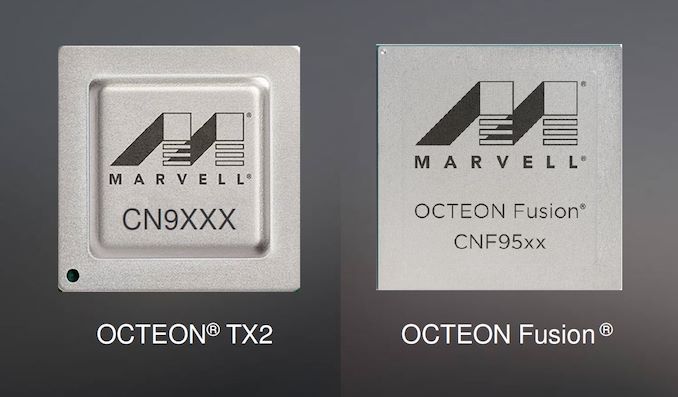
Today Marvell is announcing the release of its new next-generation OCTEON Fusion CNF95XX baseband processors, as well as introducing a new generation of OCTEON TX2 infrastructure processors. Together, the two products aim at enabling 5G infrastructure equipment providers in a synergistic fashion, greatly improving upon the capabilities of Marvell’s product stack.


OCTEON Fusion CNF95XX: A 5G Baseband Processor


We don’t tend to cover such announcements very often, so first things first is to define what a baseband processor actually is.
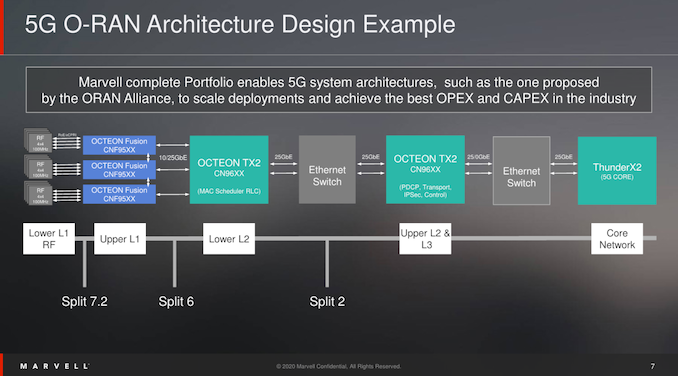


5G’s O-RAN (Open RAN or Open Radio Access Network) architecture is defined at different layers representing different functions of the protocol stack. The stack is divided into 3 layers, with the first layer being the physical layer (PHY), essentially handling encoding, modulation and RF processing related to actually transforming digital signals to the analog RF system. In essence, this is your “modem” part of the baseband system, and it’s here where Marvell’s new CNF95XX baseband processor fall in. We’ll be getting to layers 2 and 3 a bit later in the article.
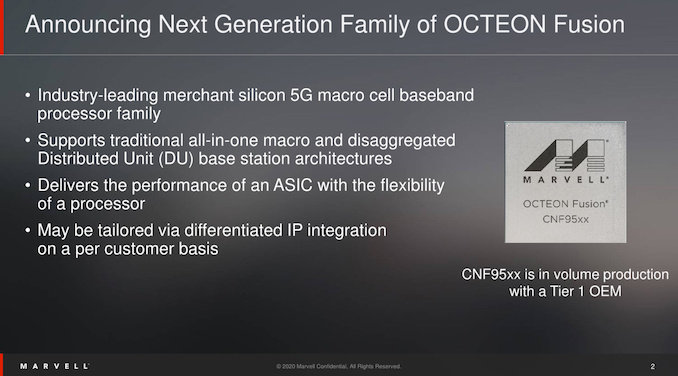


The new OCTEON Fusion family is Marvell’s first baseband processor line-up designed with support for 5G capability, following several years of successful 3G and 4G products. It’s to be mentioned that Marvell is still a relative newcomer to the macro cell business with their first products, the CNF75XX, only being released back in 2015. Marvell is also one of the rare “merchant” providers of such solutions, as most other vendors in the industry largely rely on in-house designs.


Among the big network equipment provider names such as Huawei, Nokia, Ericsson and ZTE, Marvell’s big win here is being the silicon provider for Samsung’s 5G base station equipment, which Marvell says they’re in volume production now for today’s announced products.
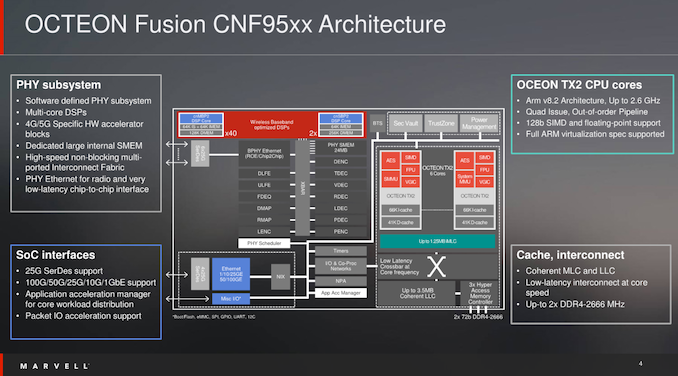


Enabling the cellular 5G PHY capabilities of the chip are 40+2 DSP cores which handle the software-defined architecture of the subsystem. Alongside the custom VLIW DSP cores, we see a plethora of fixed function 4G/5G specific hardware accelerator blocks related to encoding and decoding of signals. The various blocks are interconnected by a high-speed fabric and the memory subsystem here is backed by a large 24MB shared memory cache. Interfacing to the radio units (RF) is enabled by 6x 25G SerDes links, enabling an industry standard RoE (Radio over Ethernet) / eCPRI connection.


On the control side of the chip, we find Marvell employing their in-house microarchitecture they’ve inherited from Cavium in the form of TX2 Arm v8.2 CPU cores. We don’t have too much information on the cores, but it does seem they do differ a bit from the IP used in the ThunderX2 server chip, as we see the cache configuration being divulged as being 66KB instruction cache and a 41KB L1D. Those are odd numbers; the L1D probably ends up as being 5-way associative, but I can’t figure out the instruction cache configuration as we haven’t had time to reach out to Marvell on this peculiarity. Another possibility is that they’re counting parity and ECC bits to end up at the current figures.


There’s 6 of these CPU cores and they’re clocked in at 2.6GHz. On the CPU cluster side we see a shared 1.25MB MLC, essentially acting as an L2 to the CPUs, and the CPU complex is connected to a low-latency crossbar interconnect to the memory subsystem. Here we see an up to 3.5MB last-level cache in front of triple-channel PC-level 72b DDR4-2666 memory controllers (We have yet to confirm with Marvell the discrepancy between 2x and 3x channels in the slide deck).


Connecting the CNF95XX to the lower layers and networking are 4x 25G SerDes links, enabling Ethernet support for up to 100G, and there’s of course packet acceleration support.
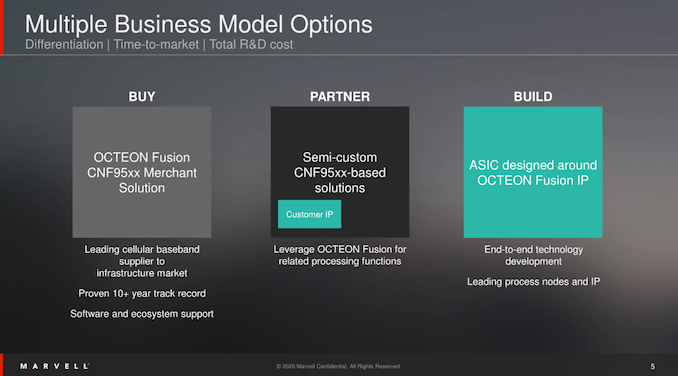


Alongside offering complete merchant silicon solutions such as the CNF95XX, Marvell has an interesting business model where they are offering various levels of customisation to enable costumers to differentiate themselves in the products and to adhere to their exact needs. A semi-custom approach would be to have Marvell integrate a customer’s IP into a custom solution, but what’s even more interesting and disruptive here is that Marvell is open to licensing their OCTEON Fusion IP for customers to design their own full custom chips on their own. We don’t know if the likes of Samsung are doing this, but for Marvell to actually offer such a business model it means there must have been interest in the industry.
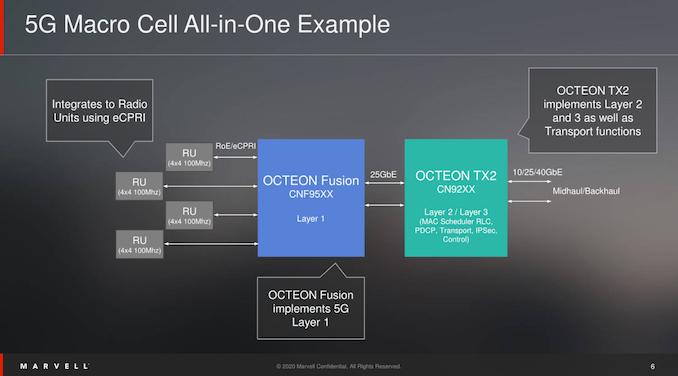


Putting things together, a baseband station as what you would see in the wild on cell towers would look like the above setup, with the CNF95XX sitting at the centre enabling the radio units, and paired with a layer 2 & 3 processor such as the TX2 CN92XX.


OCTEON TX2: A Infrastructure Processor For Networking


Sitting behind the baseband processor in 5G deployments, but also designed to be used in various other infrastructure and network applications, sits the new OCTEON TX2. The aim for such designs is relatively simple, but hard to achieve: move around and process enormous amount of data as fast as possible.
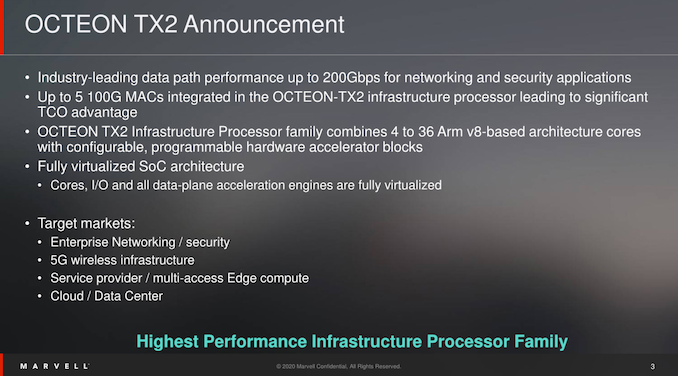


At the heart of the designs we see up to 5 100G media access controllers, enabling up to 200Gbps of data path throughput with the help of TX2 custom processors, scaling up from 4 cores to 36 cores in the biggest design.


The products aren’t just a fit for 5G deployments, but cover various other networking, compute and data-centre markets as inherently their design is flexible as to what kind of workloads they’re employed for.
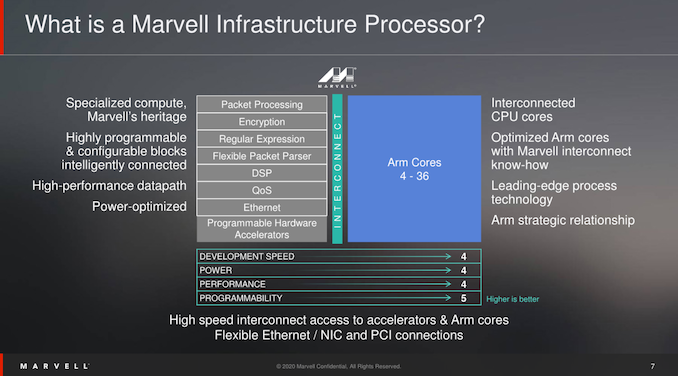


We see specialised packet processors and hardware accelerators implemented in the design, helping power efficiency and performance of the solution. Here Marvell claims the chipsets are manufactured on a “leading-edge” process technology, but the company wouldn’t comment on the specifics of what this actually meant.
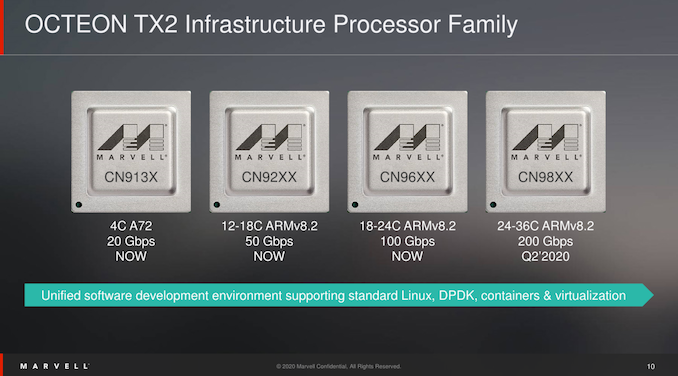


The new SKUS announced today actually include 4 SKU families, all differing in their processing power and throughput capabilities.
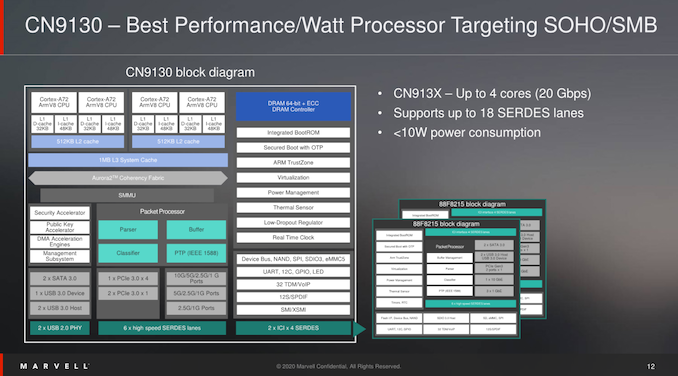


The lower-end CN913X system is a quite small and targets SOHO (small office / home office) as well as SMB (Small medium business) deployments, is comprised of 4 Cortex-A72 CPU cores, but still manages to deliver significant network throughput of up to 3x 10G Ethernet plus an additional 6x 1 / 2.5G connections, all in a small power package of only 9-14W.


Today’s more interesting products are the new CN92XX, CN96XX and CN98XX line-up, offering significant processing and throughput capabilities.
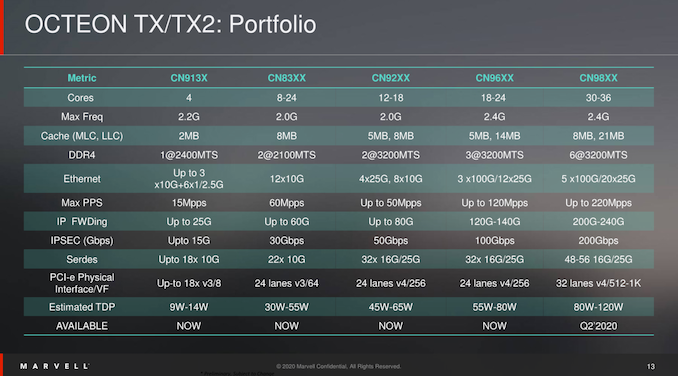


The chip designs here scale up to 36 processor cores, again using Marvell’s own TX2 microarchitecture Arm v8.2 CPUs. The shared MLC inside the CPU cluster goes up to 8MB in the 30-36 core CN98XX and up to 5MB in the CN92XX and CN96XX models. The memory subsystem also scales with the core count across the SKUs: the last-level cache ranges from 8MB, 14MB and 21MB, while the memory controllers also increase their count from 2-channel on the lower model to 3-channel to up to 6-channels on the biggest design, all offering DDR-3200 capability.


Marvell claims to have the highest SPECint_rate SoC in its class with the new design.
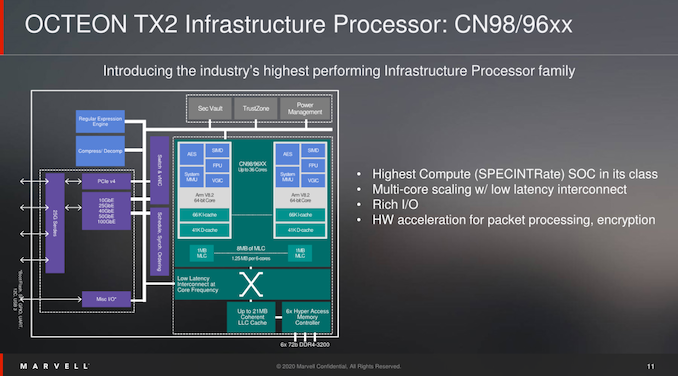


The most important part of the new products is their network throughput and acceleration capabilities. The CN96XX and higher offer 100G integrated Ethernet capability, in configuration of 3x 100G or 12x 25G, up to 5x 100G or 20x 25G.


Marvell also boasts a lot of packet processing throughput with IPSEC handling of up to 200Gbps in the highest tier.


The Competition


Marvell’s competition in the space here are vendors such as Intel which offer similar products. It’s to be noted that the following comparisons here are a bit outdated in the presentation as they’re positioned against Intel’s previous generation solutions which included combinations such as Xeon-D processors combined with dedicated NICs as well as FPGAs for packet processing – such solution have been now superseded by the recently announced “Snow Ridge” / Atom P5900 processors which essentially compete in the same target market as Marvell’s processor line-up.
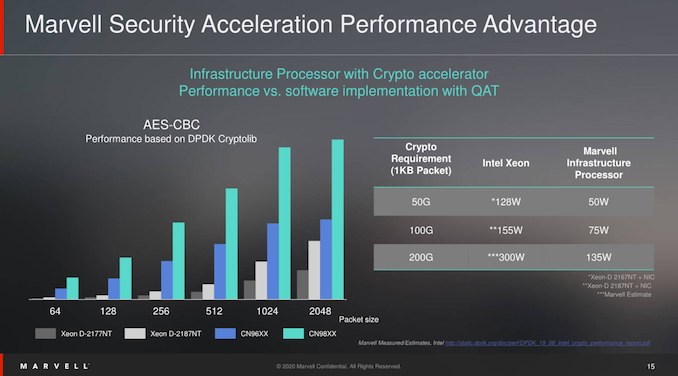


However, Intel didn’t talk in detail about availability of its new Snow Ridge platform, while Marvell’s chips are in mass production and being deployed right now. In terms of performance comparisons to Intel’s previous gen solution, it’s a very one-sided battle in favour of Marvell, at significantly lower power. As a note, Intel still hasn’t published any figures on Snow Ridge TDPs.
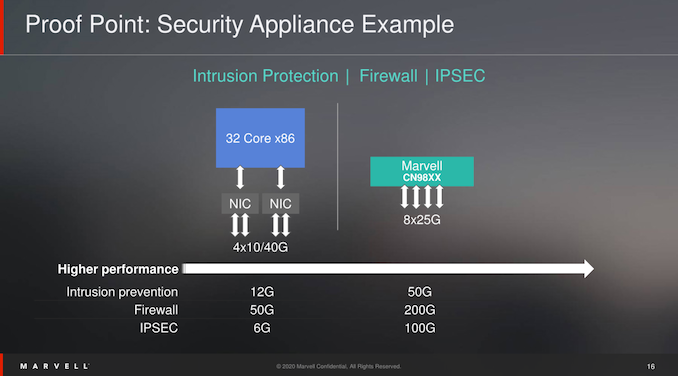
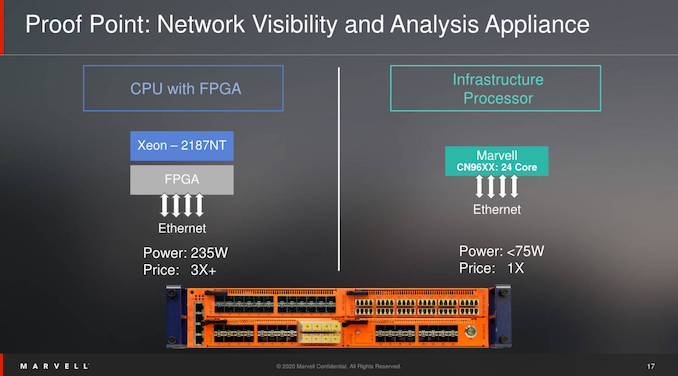

Whilst again the comparison here will be outdated for later deployments in the year, it again shows Marvell’s advantage on the connectivity side by integrating packet acceleration as well as networking all in a single SoC, massively reducing power and total cost of the system.


Overall, Marvell is confident that they’re able to hold a leadership position in the market, and the Q2 upcoming CN98XX does seemingly scale beyond what competitors are able to offer. With 5G and cloud data-centres exploding over the coming years, we’ll be sure to hear a lot more of such products, and it’s definitely an interesting part of the industry.


Source: AnandTech – Marvell Announces OCTEON Fusion and OCTEON TX2 5G Infrastructure Processors

GDC & Open Compute Project Global Summit Latest Events Scrubbed Due to Coronavirus

Following the ongoing global spread of the SARS-CoV-2 virus, there has been ongoing pressure on event organizers from both attendees and local groups to curtail or cancel events out of concern of major events rapidly propagating the virus. We’ve already seen major international shows like Mobile World Congress canceled due to these reasons, and now with the novel coronavirus spreading in more western countries as well – including the United States – the spread is now leading to additional, more local events being canceled.


This afternoon the organizers behind the 2020 Game Developers Conference (GDC), as well as the organizers behind the 2020 Open Compute Project (OCP) Global Summit have announced that they have scrubbed their respective events, which were scheduled to take place next month. OCP’s event has been canceled entirely, meanwhile the GDC organizers are officially postponing their event, with hopes of still holding it in the summer.


The latest cancelations come as additional vendors have been pulling out of GDC. Sony and Facebook had previously pulled out last week, and this week has seen Microsoft, Epic Games, Amazon, and Activision all pull out of the show as well. Which would still leave a large show like GDC with a significant content slate, but none the less the giants of the show have a great importance to it.


In lieu of holding their events as planned, both groups are looking at what they can to help their participants still make their respective announcements and hold their talks. The OCP team has told participants that they “would like to work with you on following through with those announcements to the Community, and the industry at large, over the next week.” Meanwhile on top of conducting a summer event, GDC organizers are hoping to distribute talks over their YouTube channel and their content vault, telling attendees that “In order to allow our conference speakers to still participate in the event, we are intending to make many of the presentations that would have been given at GDC 2020 available for free online.” Both groups seem to be flying by the seat of their pants to a certain degree, but hopefully we’ll see their remote presentation plans come to fruition.


These cancelations are among the latest events to get canceled in the technology industry. On top of these large, public events, within AnandTech we’ve seen some smaller, press-only events canceled as well. So while not every last event has been canceled at this time – notably, NVIDIA’s 2020 GPU Technology Conference is still on – it’s increasingly looking like the tech industry is going to be taking a widescale break on events throughout March.


Sources: Open Compute Project, GDC

Carousel Image Courtesy of: CDC/Alissa Eckert, MS


Source: AnandTech – GDC & Open Compute Project Global Summit Latest Events Scrubbed Due to Coronavirus

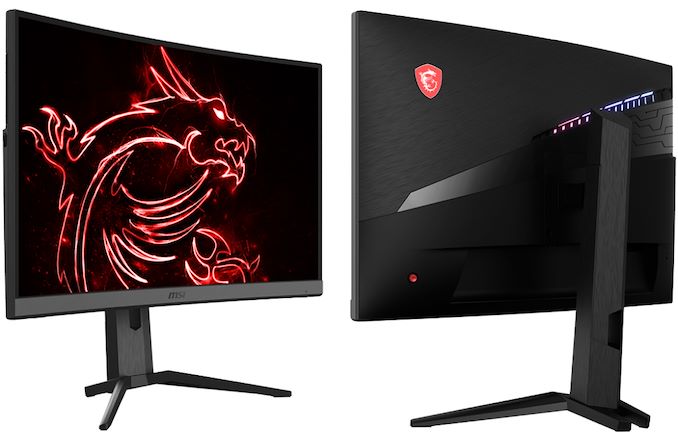
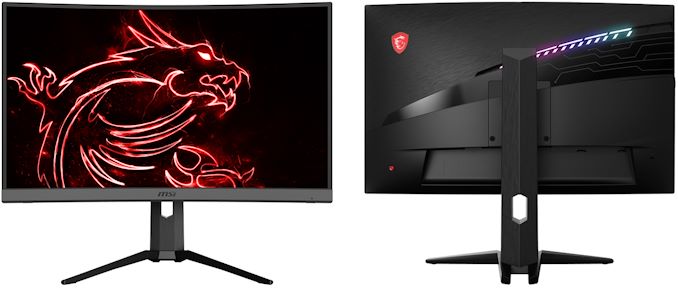
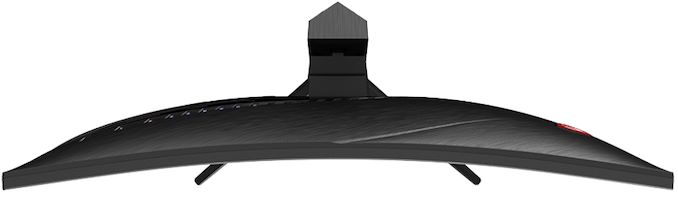
MSI Launches Optix MAG272CRX: A 27-Inch, 240Hz Curved Monitor with USB-C

Having announced a number of interesting displays recently, MSI this week unveiled a yet another monitor featuring a rare combination of capabilities. The Optix MAG272CRX is a 27-inch curved monitor that has a maximum refresh rate of 240 Hz and only one direct rival on the market. The launch of the LCD corresponds with MSI’s general strategy to release monitors in less common configurations/markets to avoid the race to the bottom of highly commoditized markets.


The MSI Optix MAG272CRX display is designed for gamers and eSports professionals looking for high-end performance. To that end, the LCD relies on an 8-bit+FRC VA panel featuring a rather aggressive 1500R curvature, a 1920×1080 resolution, 300 nits maximum brightness, a 3000:1 contrast ratio, 178°/178° viewing angles, a 1 ms response time, and a 240 Hz maximum refresh rate. The monitor can display 16.7 million colors and reproduce 89% of the DCI-P3 and 113% of the sRGB color spaces, which is something one expects from a fast VA panel.


A panel with very similar characteristics is used by the Samsung CRG5 and considering the fact that the South Korean company is one of the primary makers of VA panels, it is highly likely that the model Optix MAG272CRX uses the same panel as the CRG5. As a result, the latter has only one direct competitor on the market (at least from a well-known brand), which is positive for MSI.


Being aimed at gamers, the Optix MAG272CRX naturally supports VESA’s Adaptive-Sync technology and is AMD FreeSync certified (for a 48 Hz to 240 Hz range). In addition, the monitor is marked ‘HDR Ready’ (though without elaborating about supported HDR transport) and features MSI’s customizable Mystic Light RGB LEDs on the back.


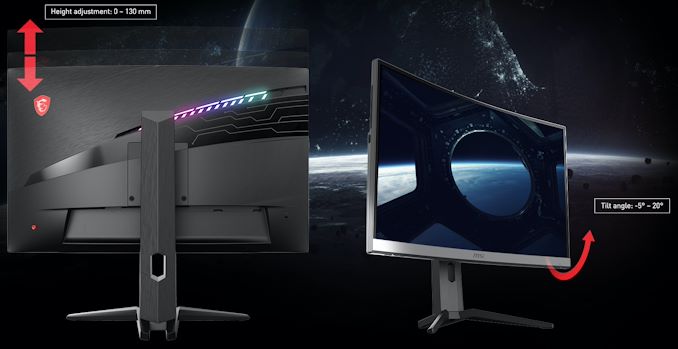
On the connectivity side of things, the LCD has one DisplayPort 1.2a inputs, two HDMI 2.0b ports, and a USB Type-C input (with DP Alt mode and Power Delivery). The monitor also has a dual-port USB 3.2 Gen 1 hub, and a headphone out. As for ergonomics, the stand used by the Optix MAG272CRX can adjust height and tilt, but not swivel.


The MSI Curved Gaming Display w/ 240 Hz Refresh
  Optix MAG272CRX
Panel 27″ VA
Native Resolution 1920 × 1080
Maximum Refresh Rate 240 Hz
Response Time 1 ms
Brightness 300 cd/m² (typical)
Contrast 3000:1
Backlighting LED
Viewing Angles 178°/178° horizontal/vertical
Curvature 1500R
Aspect Ratio 16:9
Color Gamut 89% DCI-P3

113% sRGB
HDR ‘HDR Ready’

No DisplayHDR tier
Dynamic Refresh Rate Tech VESA Adaptive-Sync

AMD FreeSync certified

48 Hz – 240 Hz
Pixel Pitch 0.3113 mm²
Pixel Density 81 PPI
Inputs 1 × DisplayPort 1.2

2 × HDMI 2.0
Audio 3.5 mm output
USB Hub 1 × USB 3.0 Type-A input
Stand Adjustments Height: 130 mm

Tilt: -5˚ – 20˚

Swivel: no
MSRP ?

MSI has announced neither pricing nor availability timeframe of its Optix MAG272CRX curved display. Meanwhile, Samsung’s CRG5 monitor that presumably uses the same panel is available directly from the manufacturer for $369.99, which at least gives us a baseline for expectations.


Related Reading:


Source: MSI (via Hermitage Akihabara)


Source: AnandTech – MSI Launches Optix MAG272CRX: A 27-Inch, 240Hz Curved Monitor with USB-C

AMD Posts Radeon Software 20.2.2 Drivers: Focusing on Bug Fixes and Stability

Finding themselves under some fire as of late for driver quality, AMD has released their second Radeon driver update for February. Focused on improving driver stability, today’s release, 20.2.2, incorporates a number of quality-of-life fixes for the drivers, including resolving system hangs and Chrome issues.


As this is essentially a bugfix driver, there are no new features to speak of. Instead, AMD’s focus, according to their release notes, is all about cataloging and fixing various driver bugs. Along with immediate stability issues, the drivers also make note of fixing issues with The Witcher 3, Metro Exodus, AMD’s software overlay, and Battlefield V.


As always, AMD’s latest drivers can be found on their driver download page.


  • Performing a task switch with some Radeon Software features enabled or some third-party applications with hardware acceleration running in the background may cause a system hang or black screen.
  • Improvements have been made that allow for more responsive fan ramp up or fan ramp down times on Radeon RX 5700 series graphics products.
  • Performance Metrics Overlay and Radeon WattMan incorrectly report lower than expected clock speeds on Radeon RX 5700 series graphics products during gaming workloads.
  • When Instant Replay is enabled, a TDR or black screen may occur when launching games or applications.
  • A black screen may occur when toggling HDR on in the game settings of Battlefield™ V.
  • The Witcher 3: Wild Hunt™ may experience an application hang or black screen during certain parts of the game or intermittently during gameplay.
  • Some video content in Chrome™ may appear as a black screen or be unresponsive on Radeon RX 5000 series graphics products when hardware acceleration is enabled.
  • Metro Exodus™ may experience an application hang or TDR when choosing some specific dialogue prompts in the Sam’s Story DLC.
  • Grand Theft Auto™ V may experience an application crash when invoking Radeon Software’s overlay with third party OSD applications running.
  • Monster Hunter World™: Iceborne may experience intermittent crashes while idle or on the character creation screen.
  • Some games colors may appear washed out when HDR mode has been enabled in game and Windows® on Radeon RX 5700 series graphics products
  • After a Factory Reset installation with the ‘Keep My Settings’ option chosen, Instant Replay could fail to function if it was enabled in the previous Radeon Software installation.
  • When invoking Radeon Software’s overlay while a game is open users may observe flickering in the game or in the Radeon Software interface.
  • Radeon Software may experience a crash and error message when locking Windows® or performing a sleep or hibernate with the Radeon Software Streaming tab open.
  • A loss of display with working audio may be experienced on a limited number of displays when performing a mode change on Radeon RX 5000 series graphics products.
  • Radeon Software may fail to launch if Radeon Software’s overlay is disabled and a game is running in the background.
  • Battlefield™ V may experience an application hang or TDR after extended periods of play.
  • Some Origin™ games may fail to be detected or may detect the incorrect game title in Radeon Software.
  • Some productivity applications are being detected and listed in the Radeon Software games tab.
  • The Radeon Chill hotkey could sometimes continue to remain enabled once the user has removed or disabled the hotkey.
  • Red Dead Redemption™ 2 may exhibit blocky textures on snow covered terrain.
  • After resuming from sleep, Chrome™ may experience an application crash if video content was previously playing on Radeon RX 5700 series graphics products.
  • Radeon FreeSync status in Radeon Software may sometimes fail to update when enabling or disabling the feature through the display itself.
  • Fortnite™ may experience an application crash on Radeon RX 500 series Hybrid Graphics system configurations.


Source: AnandTech – AMD Posts Radeon Software 20.2.2 Drivers: Focusing on Bug Fixes and Stability

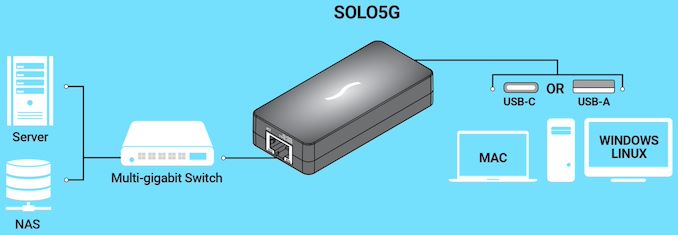
Sonnet Unveils Solo5G: A USB-C to 5 GbE Network Adapter

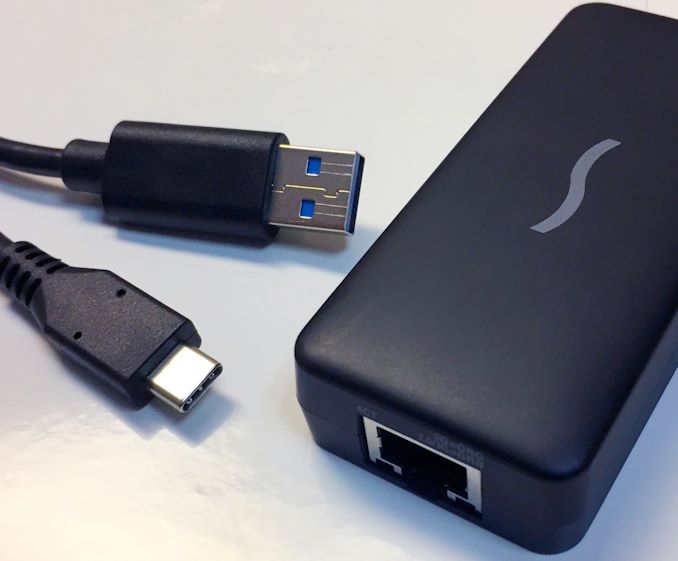
Sonnet has started sales of its Solo5G, one of the industry’s first 5 Gigabit Ethernet USB-C dongles. Designed to quickly and easily add support for faster networking to any laptop or desktop with a USB interface, the device is compatible with all three of the major OSes.


Adoption of NBASE-T networks is proceeding slowly due to two reasons: expensive Multi-Gig Ethernet switches and sporadic support of NBASE-T by PCs. Fortunately, higher-end desktops as well as gaming laptops are finally getting native NBASE-T support, but when it comes to mainstream and ultra-thin machines, such support is a rare occurrence; so to gain Multi-Gig support they need external USB adapters. A couple of years ago Aquantia (an independent company back then) developed its AQtion AQC111U and AQtion AQC112U USB-to-Ethernet chips along with reference designs for USB 3.0 to 2.5GbE/5GbE adapters to simplify production of such devices.


Sonnet’s Solo5G is based on the Marvell AQC111U controller (since Aquantia is now a part of Marvell), allowing 5GbE support to be added to any PC with a USB port. The device supports 5GBASE-T, 2.5GBASE-T, 1000BASE-T, 100BASE-TX networks over Cat5e cables at up to 100 meters. The dongle also supports advanced LAN features such as flow control or 802.11p QoS and works like a typical network adapter, so a driver for an appropriate OS is required.


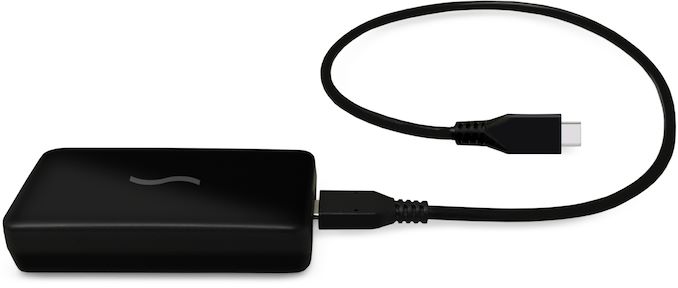
The Sonnet Solo5G comes bundled with 0.5-meter USB-C to USB-C and USB-C to USB-A cables to maintain compatibility with new USB-C and legacy USB-A-enabled computers. As for portability, the dongle weighs 70 grams, so it should be easy to carry around.


The Solo5G USB-C to 5 GbE adapter is available now directly from the company at an MSRP of $79.99, which is not particularly cheap, but which is affordable enough to add NBASE-T capabilities to a PC without breaking the bank.


Related Reading:


Source: Sonnet


Source: AnandTech – Sonnet Unveils Solo5G: A USB-C to 5 GbE Network Adapter

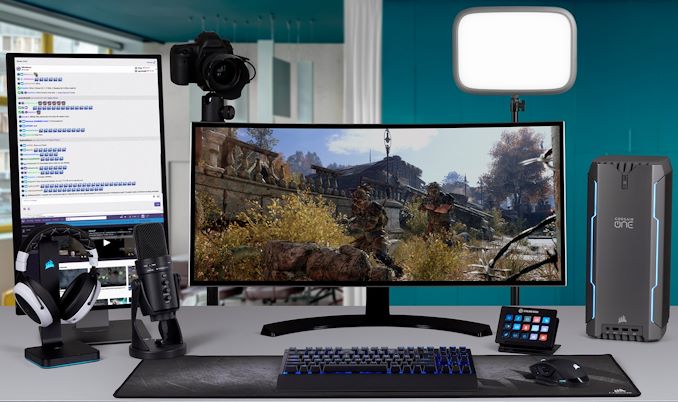
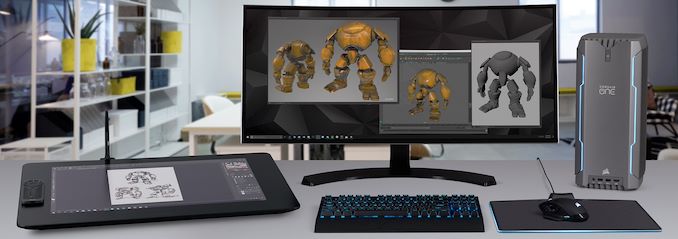
Corsair’s One Pro i200: A Compact HEDT with Intel’s 10th Gen 14-Core CPU & NVIDIA’s RTX 2080 Ti

Corsair has introduced a new version of its One Pro i-series compact high-end desktop (HEDT) that further improves performance for prosumers and gamers. The new Corsair One Pro i200 machine packs a 14-core Intel Core X-series processor as well as NVIDIA’s top-of-the-range GeForce RTX 2080 Ti graphics card. Interestingly, Corsair’s new flagship desktop PC costs $500 less than the company’s previous HEDT machine at launch.


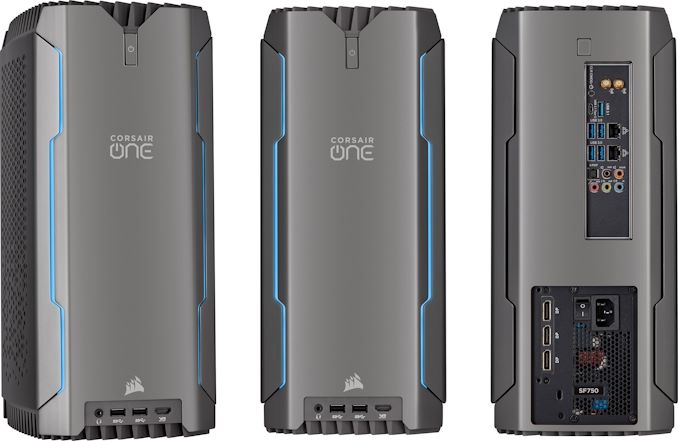
The Corsair One Pro i200 high-end desktop comes in the same 12-liter grey chassis with two RGB stripes as the Corsair One Pro i180. The new system continues to use ASRock’s X299E-ITX/ac motherboard, which now houses the 14-core Core i9-10940X processor (Cascade Lake) as well as the GeForce RTX 2080 Ti. The CPU and the GPU are cooled down using individual closed-loop liquid cooling systems, dissipating a total of ~400 W of thermal power.


Being based on standard PC parts, the system is fully upgradeable, including the CPU, GPU, and other parts. That said, the i200 lives up to the ‘compact’ name, so maneuvering room as well as overall TDPs need to be taken into consideration before any significant alterations.


Designed for the performance-hungry users, the Corsair One Pro i200 comes with 64 GB of DDR4-2666 memory, and a 2 TB M.2/NVMe SSD (the manufacturer no longer uses a 2.5-inch SATA HDD). Connectivity wise, the system is equipped Intel’s Wireless-AC 8265 802.11ac + Bluetooth 4.2 controller, two GbE ports (driven by Intel’s I219-V and I211-AT), six USB 3.0 Type-A connectors, one USB 3.1 Gen 2 Type-C port, a TRRS audio jack, and four display outputs (three DisplayPort 1.4 and one HDMI 2.0b).


Specifications of the Corsair One Pro i200 HEDT PC
Model Corsair One

Pro i200
Product ID CS-9040004
CPU Core i9-10940X

14C/28T

3.30 GHz Base

4.60 GHz Turbo

165 W
GPU GeForce RTX 2080 Ti

1350-1545 MHz

11 GB GDDR6

14 Gbps

250 W
Cooling Custom closed-loop air+liquid cooling systems
DRAM 64 GB DDR4-2667
Motherboard mini-ITX, X299 chipset
Storage SSD 2 TB NVMe
HDD
I/O Intel’s Wireless-AC 8265 802.11ac + Bluetooth 4.2 adapter

2 × GbE ports (driven by Intel’s I219-V and I211-AT)

6 × USB 3.0 Type-A connectors

1 × USB 3.1 Gen 2 Type-C port

1 × TRRS audio jack

1 × DisplayPort 1.4

3 × HDMI 2.0b
PSU 750W SFX
Warranty 2 years
MSRP $4,499

The Corsair One Pro i200 with Intel’s 14-core Core i9-10940X CPU and NVIDIA’s GeForce RTX 2080 Ti GPU is available immediately for $4,499. The system is covered by a two-year warranty.


Related Reading:


Source: Corsair


Source: AnandTech – Corsair’s One Pro i200: A Compact HEDT with Intel’s 10th Gen 14-Core CPU & NVIDIA’s RTX 2080 Ti

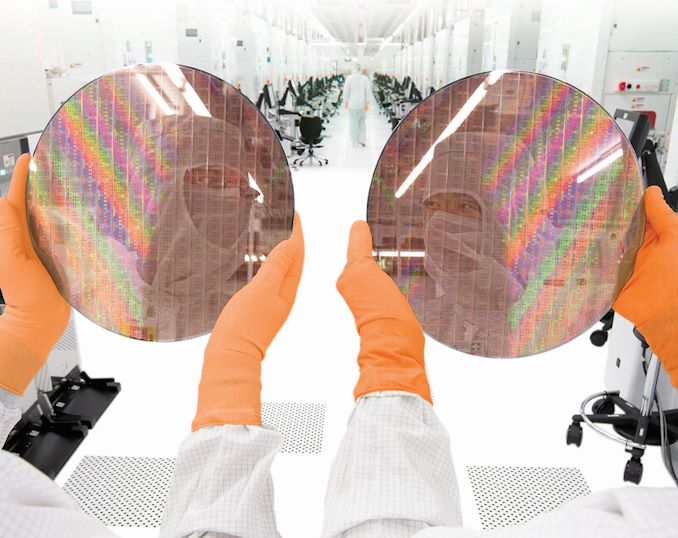
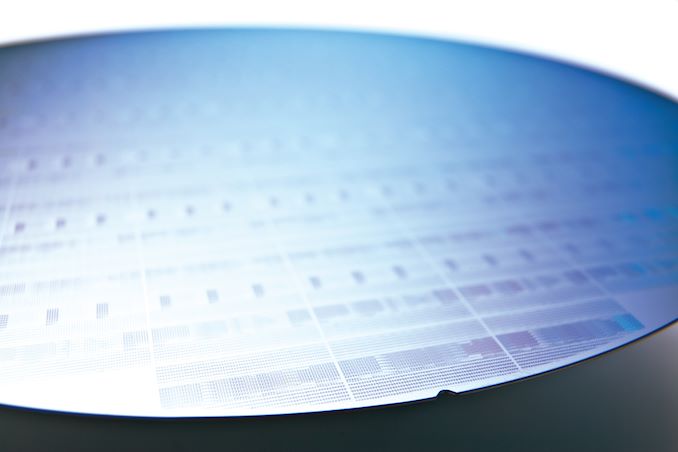
A Big Bet on SOI: GlobalFoundries Preps Another Supply Agreement for 300mm SOI Wafers

Having dropped out of the race for leading-edge manufacturing technologies in order to focus on specialty fabrication processes, GlobalFoundries has pinned some big hopes in manufacturing RF-SOI chips for various 5G applications, as well as FD-SOI chips for low-power devices. This week the company signed a memorandum of understanding (MOU) with GlobalWafers Co. (GWC) to develop a long-term supply contract for 300 mm SOI wafers, GloFo’s second long-term SOI wafers supply agreement (WSA) in less than a year.


Once primarily used to build leading-edge processors, silicon-on-insulator (SOI) technology is used today for a wide variety of applications, including those that need an ultra-low power consumption (SoCs and MCUs for IoT applications), high voltages (analog/mixed signal), or high resistivity (4G and 5G front-end modules [FEMs] for smartphones). All of these are made using so-called specialty manufacturing technologies, and to that end they are of tremendous interest for GlobalFoundries. Meanwhile, considering the rise of 5G and IoT, RF-SOI and FD-SOI are the most promising technologies when it comes to producing the necessary chips in high volumes.


Nowadays, GlobalFoundries operates seven fabs: four 300-mm fabs (including the Fab 10 in East Fishkill, New York) and three 200-mm fabs. The company’s largest 300-mm Fab, Fab 1, is used exclusively to make SOI products, Fab 7 in Singapore uses both bulk and SOI technologies, and Fab 10 can also process wafers using SOI-based processes. In addition, GlobalFoundries is building another 300-mm fab in Chengdu, China, which will also be used to make chips using its 22FDX technology. Finally, the foundry’s 200-mm facilities can all use SOI wafers as well.


Being the largest consumer of SOI wafers in the world, GlobalFoundries sources 200-mm and 300-mm substrates from both Soitec, the world’s largest producer of SOI wafers, as well as GlobalWafers Co. In fact, in just the last year GloFo and Soitec signed a multi-year 300-mm SOI wafer supply agreement, which builds upon a WSA signed in 2017. As it turns out, GlobalFoundries needs even more 300-mm SOI wafers for its advanced RF SOI technologies, so the company is going as far as agreeing to help GWC ‘significantly expand’ its SOI wafer manufacturing capacity as part of the new contract.


GlobalFoundries, Soitec, and GlobalWafers Co. naturally do not disclose how many wafers are consumed by the chip maker. Regardless, it looks like we are talking about a significant expansion of SOI usage at GlobalFoundries.


Bami Bastani, senior vice president for mobile and wireless infrastructure at GlobalFoundries:


“Mobile, wireless, and 5G represent a significant opportunity for GlobalFoundries, and our vital RF technology is featured in more than 85% of smartphones on the market today. We are pleased to collaborate with GlobalWafers, and look forward to working with them to develop and qualify an additional supply of 300mm SOI wafers to integrate into our manufacturing processes and help meet the growing demand for our RF SOI solutions.”


Tom Weber, senior vice president and chief procurement officer at GlobalFoundries said the following:


“Given our market position, it is in our best interest – and the best interest of our clients – to build out and diversify the supply chain for 300mm SOI wafers. GlobalWafers is the right partner for us to make this happen.”


Related Reading:


Source: GlobalFoundries


Source: AnandTech – A Big Bet on SOI: GlobalFoundries Preps Another Supply Agreement for 300mm SOI Wafers

AMD Launches Ultra-Low-Power Ryzen Embedded APUs: Starting at 6W

While it doesn’t get the same attention as their high-profile mobile, desktop, or server CPU offerings, AMD’s embedded division is an important fourth platform for the chipmaker. To that end, this week the company is revealing its lowest-power Ryzen processors ever, with a new series of embedded chips that are designed for use in ultra-compact commercial and industrial systems.


The chips in question are the AMD Ryzen Embedded R1102G and the AMD Ryzen Embedded R1305G SoCs. These parts feature a 6 W or a configurable 8 W – 10 W TDP, respectively. Both SoCs feature two Zen cores with or without simultaneous multithreading, AMD Radeon Vega 3 graphics, 1 MB L2 cache, 4 MB L3 cache, a single channel or a dual-channel memory controller, and two 10 GbE ports.


AMD Ryzen Embedded R1000-Series APUs
AnandTech Cores

Threads
Base

Freq
Turbo

Freq
L2 L3 GPU

SPs
IGP

Freq
DRAM TDP
Ryzen Embedded R1606G 2C / 4T 2600 3500 1MB 4MB 192 1200 Dual Channel

with ECC
12W – 25W
Ryzen Embedded R1505G 2C / 4T 2400 3300 1MB 4MB 192 1000 Dual Channel

with ECC
12W – 25W
Ryzen Embedded R1305G 2C / 4T 1500 2800 1MB 4MB 192 1000 Dual Channel 8W – 10W
Ryzen Embedded R1102G 2C / 2T 1200 2600 1MB 4MB 192 1000 Single Channel with ECC 6W

AMD says that a low TDP and reduced number of supported DIMMs (in case of the R1102G) enable system makers to simplify their designs and make them cheaper as compared to machines that run AMD’s higher performing and higher TDP Ryzen Embedded processors.


AMD’s first customers to use the Ryzen Embedded R1102G and the Ryzen Embedded R1305G SoCs will be Kontron, which has a scalable D3713-V/R Mini-ITX platform, and Simply NUC, which has its Red Oak miniature PC. Other makers may get a 4×4 motherboard from Sapphire based on AMD’s new Ryzen Embedded R1000-series APUs.


Both ultra-low-power AMD Ryzen Embedded APUs will be available for the next 10 years, meaning availability will stretch all the way till 2030.


Related Reading:


Source: AMD


Source: AnandTech – AMD Launches Ultra-Low-Power Ryzen Embedded APUs: Starting at 6W

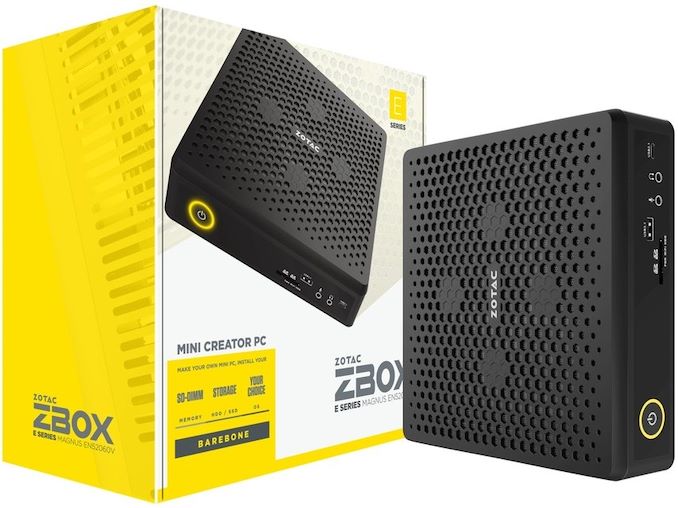
ZOTAC Unveils Zbox Magnus EN52060V: A UCFF PC with GeForce RTX 2060 & 2.5 GbE

Zotac has quietly added a new mainstream gaming barebones system into its lineup of ultra-compact systems. With its quad-core Intel processor and NVIDIA’s GeForce RTX 2060 graphics card, the new Zbox Magnus EN52060V promises the performance of a mid-range mobile PC for gamers, but at a lower price and with all advantages that a desktop can offer.


The new barebones system comes in ZOTAC’s regular 2.65-liter Zbox Magnus EN chassis, which is just 62.2 mm (2.45 inches) tall. The Zbox Magnus EN52060V UCFF PC barebones is based on Intel’s quad-core Core i5-9300H processor (4C/8T, 2.40 GHz – 4.10 GHz, 45 W) accompanied by NVIDIA’s GeForce RTX 2600 discrete GPU with 6 GB of GDDR6 memory. The system can be equipped with up to 32 GB of DDR4-2600 memory, an M.2-2280 SSD with a PCIe 3.0 x4 or SATA interface, and a 2.5-inch storage device.


The barebones system uses a mobile processor in an FCBGA1440 packaging, so it cannot be upgraded. Meanwhile, it is unclear whether the system uses a soldered-down discrete GPU, or an MXM module that could theoretically be upgraded.


When it comes to connectivity, the Zbox Magnus EN52060V supports a Wi-Fi 6 + Bluetooth 5 adapter, two RJ-45 cores (2.5 GbE + GbE), two USB 3.1 Type-C connectors, four USB 3.0 Type-A ports, four display outputs (a DP 1.4, two HDMI 2.0b, one USB-C), an SD card reader, and two 3.5-mm audio jacks for headphones and a microphone.


ZOTAC’s Zbox Magnus EN-Series GeForce RTX Barebones
  Magnus EN52060V

Zbox-EN52060V
CPU Intel Core i5-9300H

4C/8T

2.4 GHz – 4.1 GHz

8 MB

45 W
GPU NVIDIA GeForce RTX 2060
Memory 2 × DDR4 SO-DIMM slots

up to 32 GB of DDR4-2600 memory
Storage M.2 M.2 2280 slot for PCIe/SATA SSD
DFF 1 × 2.5″ SSD/HDD
Card Reader SD
Wireless Killer 1650 802.11ax Wi-Fi + BT 5
Ethernet 1 × Gigabit Ethernet with RJ45

1 × 2.5 Gigabit Ethernet with RJ45
Display Outputs 1 × DisplayPort 1.4

2 × HDMI 2.0b

1 × USB-C
Audio 3.5 mm audio-in

3.5 mm audio-out
USB 5 x USB 3.1 Type-A

1 x USB 3.1 Type-C
Thunderbolt 3
PSU External
OS ?
Additional Details Link

ZOTAC already lists its Zbox Magnus EN52060V on its website, so it is reasonable to expect it to become available shortly. As for pricing, while Zotac has not announced anything at this time, based on its specifications we expect that this should end up the cheapest of Zotac’s GeForce RTX-equipped Magnus EN-series PCs.


Related Reading:


Source: ZOTAC (via Hermitage Akihabara)


Source: AnandTech – ZOTAC Unveils Zbox Magnus EN52060V: A UCFF PC with GeForce RTX 2060 & 2.5 GbE

Testing a Chinese x86 CPU: A Deep Dive into Zen-based Hygon Dhyana Processors
In 2016, through a series of joint ventures and created companies, AMD licensed the design of its first generation Zen x86 processors to be sold into China. The goal of this was two-fold: China wanted a ‘home grown’ solution for high-performance x86 compute, and AMD at the time needed a cash injection. The outcome of this web of businesses was the Hygon Dhyana range of processors, which ranged from commercial to server use. Due to the Zen 1 design on which it was based, it has been assumed that the performance was in line with Ryzen 1000 and Naples EPYC, and no-one in the west has publicly tested the hardware. Thanks to a collaboration with our friend Wendell Wilson over at YouTube channel Level1Techs, we now have the first full review of the Hygon CPUs.


Source: AnandTech – Testing a Chinese x86 CPU: A Deep Dive into Zen-based Hygon Dhyana Processors