SanDisk Launches Max Endurance microSD Cards: 3 to 15 Years Warranty

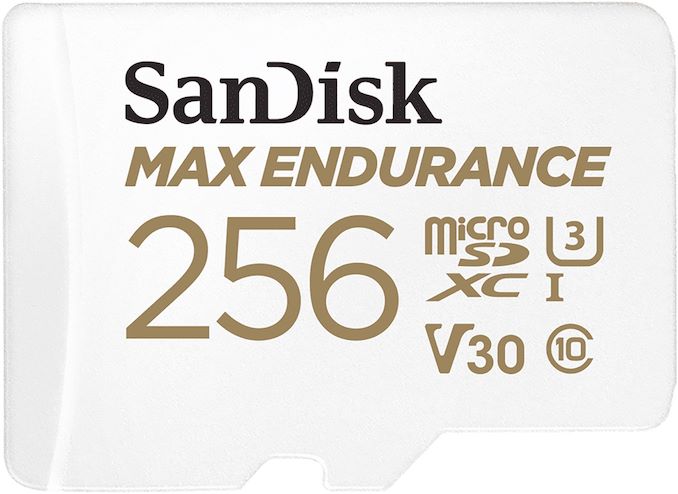
In a world where NAND storage density, capacity, and low cost matter the most, key metrics that take a back seat include endurance and retention rates. For users who want high endurace and retention rates, who want to ensure that their memory cards last for a long time, Western Digital’s SanDisk has recently launched its Max Endurance microSD cards that promise increased endurance, reliability, and are covered with a massive warranty.


The SanDisk Max Endurance lineup of microSD cards includes models featuring a 32 GB, 64 GB, 128 GB, and 256 GB capacity. Western Digital does not indicate which type of 3D NAND memory it uses for these cards or their terabytes-to-be-written (TBW), but it is reasonable to think that these products have some additional NAND flash for overprovisioning and, perhaps, extra controller capabilities.


Sandisk now has the following warranties on its microSD cards:


  • Max Endurance: 3 to 15 year
  • High Endurance: 2 year
  • Regular microSD: limited lifetime with limitations

To maximize longevity of the SanDisk Max Endurance devices, they are waterproof, shockproof, X-ray-proof, and can work an extreme temperature range between -25°C and 85°C (-13°F to 185°F).


As far as performance is concerned, the SanDisk Max Endurance cards use the UHS-I bus and are rated for up to 100 MB/s reads as well as 40 MB/s writes. The cards in the lineup support the Video Speed Class 30 spec, therefore offering at least 30 MB/s sequential write speeds. Also, the products carry the Class 10 and UHS Speed Class 3 logos.


Sandisk Endurance microSD Cards
  256 GB
SDSQQVR-256G-AN6IA
128 GB
SDSQQVR-128G-AN6IA
64 GB
SDSQQVR-064G-AN6IA
32 GB
SDSQQVR-032G-AN6IA
Warranty 3 Years 5 Years 10 Years 15 Years
Sequential Read Speed 100 MB/s
Sequential Write Speed 40 MB/s
Minimum Sequential Write Speed 30 MB/s
Minimal Random Read IOPS ? IOPS
Minimal Random Write IOPS ? IOPS
Operating Temperatures -25° to 85° C

(-13°F to 185°F)
Interface UHS-I
Availability Q1 2020
SDA Labels Class 10, Video Class 30, Speed Class U3
Launch Price $12.99 $21.99 $42.99 $84.99

The SanDisk Max Endurance cards are now available directly from Western Digital. The 32 GB model with a three-year warranty costs $12.99, whereas the most advanced 256 GB device with a 15-year warranty is priced at $84.99.


Related Reading:


Source: SanDisk (via Hermitage Akihabara)


Source: AnandTech – SanDisk Launches Max Endurance microSD Cards: 3 to 15 Years Warranty

Apple Doubles Storage Capacity of Mac Mini Desktops

In addition to launching its new MacBook Air and iPad Pro, Apple on Wednesday refreshed its Mac Mini lineup of ultra-compact desktops. This time around, the company doubled storage capacity on systems featuring standard configurations, so the cheapest Mac mini now features a 256 GB SSD.


Source: AnandTech – Apple Doubles Storage Capacity of Mac Mini Desktops

The Ultimate Tool for a WFH Lockdown : A 200,000 mAh Battery for 108hrs of Switch Gaming

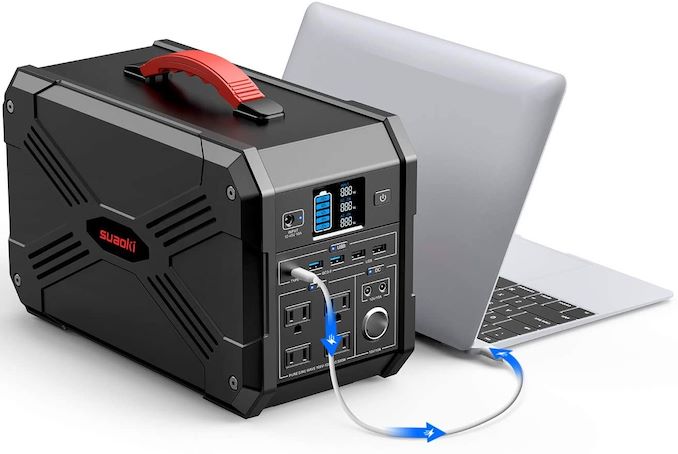
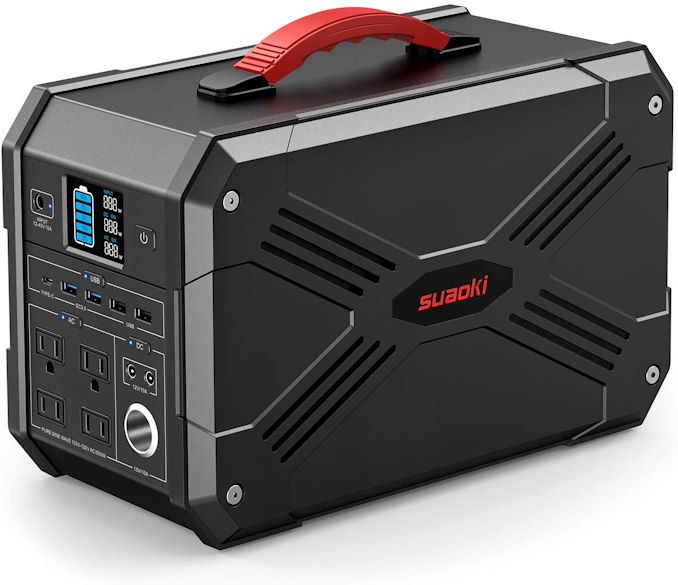
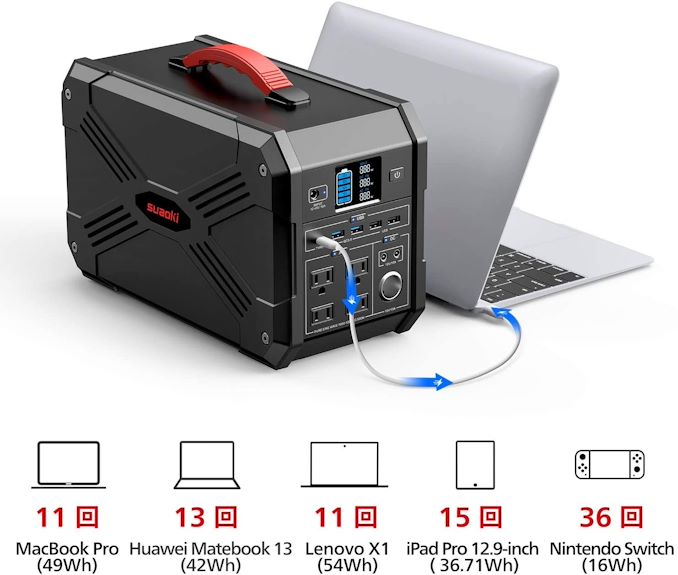
Suoaki, a Japanese company, has released a semi-portable battery pack rated at 200,000 mAh or 720 Wh. With this battery, it should be capable of charging a laptop for 11 times or a Nintendo Switch for 36 times. This kind of battery pack could be needed for those who need to travel a long distance on car, work somewhere away from the power grid, somewhere with an intermittent power supply, or just ensure that there is some extra power at home or in a remote cottage where one might want to spend the coronavirus quarantine.


The Suoaki S670 is rated at 720 Wh (200,000 mAh), which is why it is a complete overkill. You can’t travel on a plane with it, because the legal limit for a battery on an aircraft is 100 Wh, but for those who need charging when travelling by car, or working from an isolated location, this is meant to be a tool to use. To put the 720 Wh capacity into perspective, this is enough to charge a modern laptop for 11 – 13 times, or an iPad Pro for 15 times, or a Nintendo Switch for 36 times. As an added bonus, the battery has two LEDs (sorry, no RGB).


The Suoaki S670 device has four AC outlets, two DC power connectors, two USB 5V/3A Type-A connectors, two USB QC 3.0-compatible ports, one USB 15V/3A Type-C connector that supports a 45 W Power Delivery, and one cigar socket (13V/10A). The battery pack can output up to 500 W of power to multiple devices at once. As for charging, the S670 can use a car charging socket (which takes seven to eight hours) or an AC adapter (which takes five to six hours). As for dimensions and weight, the unit measures 170mm×350mm×235mm and weighs 7.85 kilograms.


Number of charges, according to the manufacturer.


The high-capacity battery pack integrates multiple batteries, it has a microcontroller unit (MCU) and a battery management system (BMS) to support overcharge, overload, overheat/uderheat, overvoltage, and short circuit protection.


The Suoaki S670 720 Wh battery pack is available now in Japan. The unit is available for ¥79,880.


Related Reading:


Sources: Suoaki, Hermitage Akihabara


Source: AnandTech – The Ultimate Tool for a WFH Lockdown : A 200,000 mAh Battery for 108hrs of Switch Gaming

On The Wings of an Eagle: GIGABYTE's X570 I Aorus Pro WIFI Motherboard Tested

The mini-ITX form factor is an interesting one as it allows users to create a small form factor system with the ability to integrate some of the top-performing hardware from the desktop segment. Usually small form factor comes with a premium, but the GIGABYTE X570 I Aorus Pro WIFI looks to change that with a modest price of just $220, which is an aggressive price against the competition in the X570 market. With features including an Intel AX200 Wi-Fi 6 wireless interface, support for DDR4-4400 memory, and two HDMI 2.0 video outputs, this X570 motherboard looks to have the mid-range market in its sights.


Source: AnandTech – On The Wings of an Eagle: GIGABYTE’s X570 I Aorus Pro WIFI Motherboard Tested

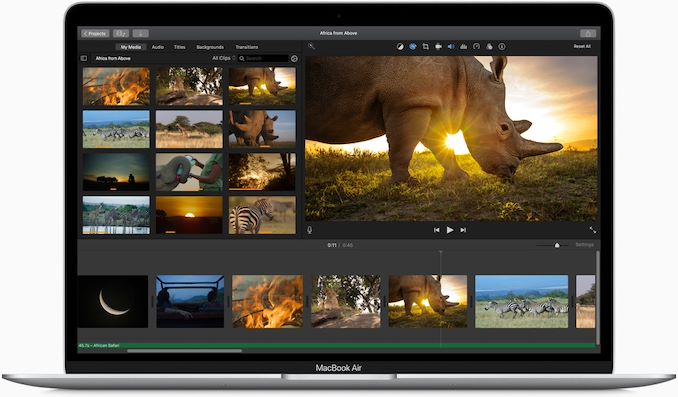
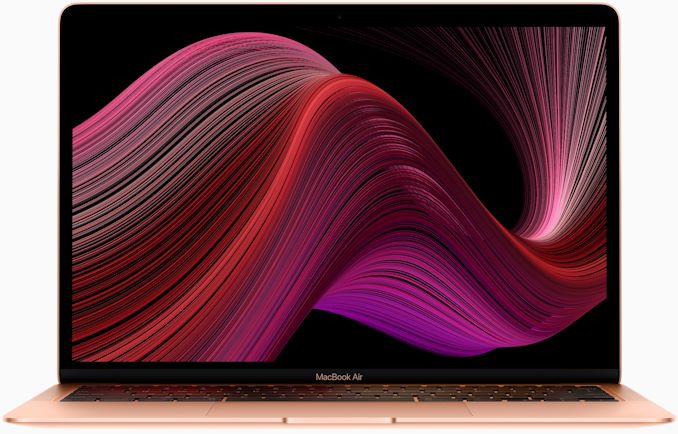
Apple Reveals MacBook Air 2020: 10th Gen Intel Quad-Core and Scissor Keyboard, Starting At $999

Apple has unveiled its new generation MacBook Air lineup that features a number of long-awaited upgrades, including Intel’s newest processors with up to four cores as well as Iris Plus graphics, a keyboard with scissor mechanism, more memory, as well as more storage space.


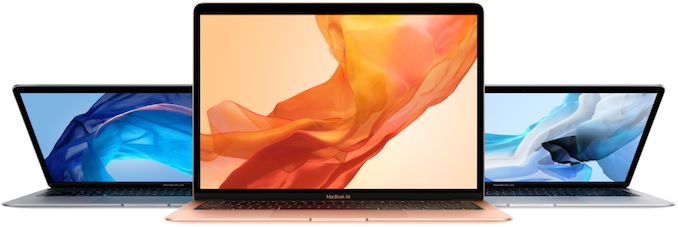
Apple’s early-2020 MacBook Air laptops come in silver, space gray, as well as gold aluminum chassis that are slightly thicker and slightly heavier when compared to enclosures used for the 2018 and 2019 machines. We are still dealing with systems that are up to 1.61 cm thick and weigh no more than 1.3 kilograms, so they are still more portable than MBAs from, say, 2017.


But the slightly different dimensions and weight also brings a big performance gain, as the new MacBook Air notebooks are based on Intel’s new 10th Generation Core processors, with up to four cores as well as Iris Plus Graphics, a significant upgrade when compared to low-voltage 8th Gen dual-core Core i5 CPUs with UHD Graphics 617 used for previous-gen MBAs.


Apple doesn’t specifically mention which variants of Intel’s 10th gen processors it uses, but given that they describe the graphics being Iris Plus, these parts must be based on the 10nm Ice Lake lineup, as the Comet Lake products don’t feature such a GPU.


The new processors are paired with 8 GB or 16 GB of LPDDR4X-3733 memory, providing substantial performance impovements and energy savings. Meanwhile, the new systems can be equipped with a 256 GB, 512 GB, 1 TB or 2 TB PCIe SSD.


While Apple completely redesigned the guts of the new MacBook Air notebooks, it did not touch their display. The new laptops still feature a 13.3-inch IPS LCD of a 2560×1600 resolution and a 227 PPI pixel density that supports True Tone technology which automatically changes white balance depending on the surrounding environment and illumination.


Connectivity wise, the new 2020 MacBook Air are generally similar to their predecessors: they have two Thunderbolt 3 ports, a Wi-Fi 5 + Bluetooth 5 controller (a minor upgrade), Touch ID fingerprint reader powered by the Apple T2 chip, and a headset jack.


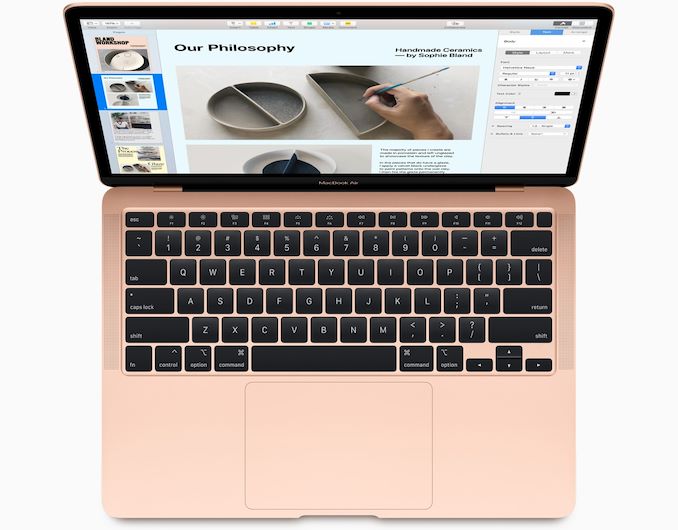
As many people have complained about Apple’s keyboards with butterfly switches, the company is now moving on back to good-old scissor switches that promise to be more reliable. To that end, the new MacBook Airs feature the company’s latest ‘scissor’ Magic Keyboard as well as the signature oversized trackpad with Force Touch.


The new MBAs are equipped with the same 49.9-Wh battery as previous-generation Airs, but now Apple rates them for a slightly lower 11 ~ 12 hours of battery life.


MacBook Air Specifications
Model 2020 (General) 2019 (Base) 2018 (Base) 2017 (Base)
Dimensions Width 30.4 cm  32.5 cm
Depth 21.2 cm 22.7 cm
Height 0.41 – 1.61 cm 0.41 – 1.56 cm 0.30 – 1.7 cm
Weight 2.8 lbs (1.29 kg) 2.75 lbs (1.25 kg) 2.96 lbs (1.35 kg)
CPU 2C/4T Core i3

1.10 – 3.20 GHz


4C/8T Core i5

1.10 – 3.50 GHz


4C/8T Core i7

1.20 – 3.80 GHz

1.6 GHz (3.60 GHz Turbo)

Core i5

2 CPU Cores
1.8GHz (2.90GHz Turbo)

Core i5-5350U

2 CPU Cores
GPU Intel Iris Plus Intel UHD Graphics 617 Intel HD Graphics 6000
Display 13.3-inch 2560×1600 IPS LCD

DCI-P3 with True Tone
13.3-inch 2560×1600 IPS LCD

DCI-P3
13.3-inch 1440×900 TN LCD
Memory 8 – 16 GB LPDDR4X-3733 8 GB LPDDR3-2133 8 GB LPDDR3-1600
SSD 256 GB – 2 TB 128 GB PCIe 128 GB PCIe
I/O 2x USB 3.1 Type-C

w/Thunderbolt 3

3.5mm Audio

Touch ID
2x USB 3.0 Type-A

1x Thunderbolt 2

SDXC Card Reader

3.5mm Audio
Battery Capacity 49.9 Wh 50.3 Wh 54 Wh
Battery Life 11 – 12 Hours 12 Hours 12 Hours
Price $999 $1099 $1199 $999

When Apple introduced its 2018 MacBook Air notebooks, it increased their entry-level price to $1,199 (up from $999), which was not exactly a customer-friendly move. Last year the company dropped the price of its cheapest MBA model to $1,099, and this year it is finally back where it was several yeas ago, with the new MacBook Airs starting at only $999. Meanwhile, a quad-core Intel Core i5-based MacBook Air with 8 GB of LPDDR4X and 512 GB of storage is priced at $1,299.


Related Reading:


Source: Apple


Source: AnandTech – Apple Reveals MacBook Air 2020: 10th Gen Intel Quad-Core and Scissor Keyboard, Starting At 9

Microsoft Now Offers Azure NVv4 Virtual Machines with AMD EPYC & Radeon Instinct

AMD’s 2nd Generation EPYC processors have gained a strong recognition among cloud computing companies, and today numerous instances are powered by AMD’s latest server CPUs. By contrast, however, the company has not been particularly successful with its datacenter GPUs, so instances powered by EPYC CPUs and Radeon Instinct accelerators are rare. Things are getting better for AMD, though, and this week Microsoft Azure began to offer virtual machines that offer both AMD’s CPUs and GPUs.


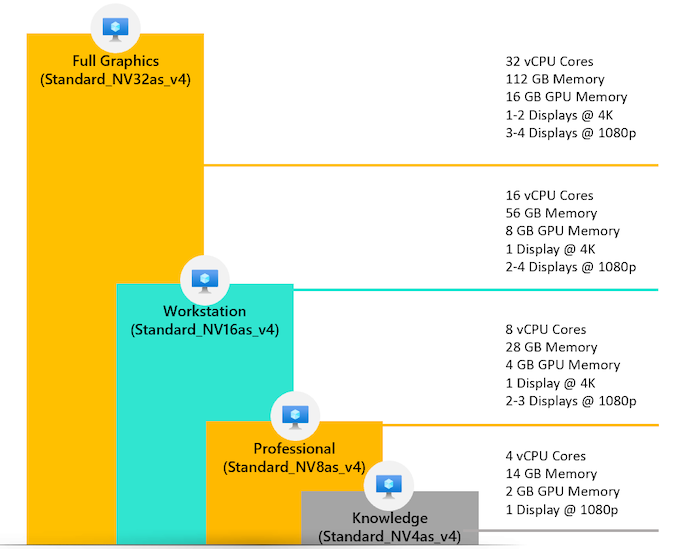
An all-AMD affair, Microsoft’s new Azure NVv4 Virtual Machines offer 32 cores from AMD 2nd gen EPYC processors paired with AMD’s Radeon Instinct MI25 GPU. EPYC at this point is a known quantity as the latest and greatest CPU architecture from AMD, living up to the expectations that come from it. Pairing it with the Radeon Instinct MI25, however, is an unusual choice. The MI25 is from AMD’s first generation of Instinct accelerators, and uses the company’s 14nm Vega 10 GPU. This is in contrast to the newer MI50/MI60 accelerators, which are based on the newer 7nm Vega GPU, and incorporate some new server-specific features. So the NVv4 instance’s GPU offering is admittedly less than AMD’s best showing from a performance and power efficiency standpoint.


The virtual machines are meant to run virtual desktops and to be used for a variety of desktop and workstation workloads that take advantage of multi-core CPUs as well as high-performance GPUs. Depending on requirements, the systems offer four resource-balanced configurations, from 1/8th GPU and four CPU cores, to a full GPU with 32 CPU cores. Microsoft notes that for security reasons one VM can only access the GPU resources assigned to them and the secure hardware partitioning blocks unapproved access by other VMs.


These new instances will be available in South Central US, East US, and West Europe regions starting April 1. Microsoft intends to offer more AMD-powered NVv4 VMs in other regions on the coming months.


In addition to the NVv4 VMs, Microsoft Azure offers Dav4, Eav4, HBv2, and Lsv2 instances based on AMD’s EPYC processors.


Related Reading:


Sources: AMD, Microsoft Azure


Source: AnandTech – Microsoft Now Offers Azure NVv4 Virtual Machines with AMD EPYC & Radeon Instinct

Apple Unveils New iPad Pro: A12Z Bionic, Camera w/ Depth Sensor for AR, Keyboard w/ Trackpad

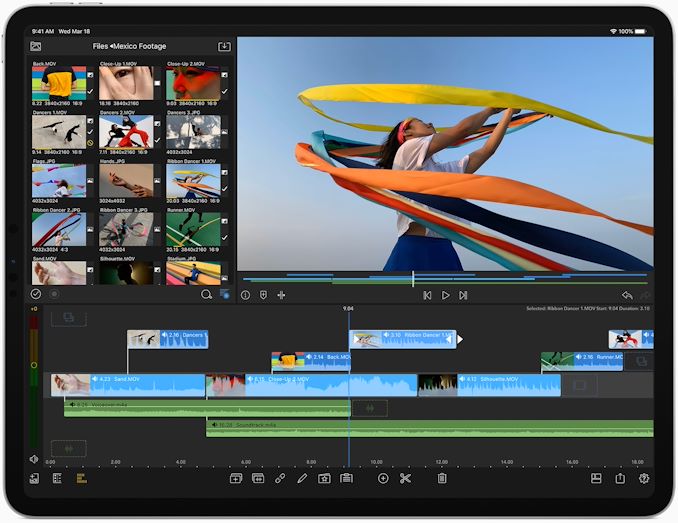
Apple’s iPad Pro has always been about bringing tablets closer to laptops, in a bid to cater professional users and satisfy their requirements. Today, Apple announced its 4th Generation iPad Pro, that on one hand further blurs the gaps between tablets and notebooks, but on the other hand uses the key advantage of the former over the latter — portability — to enable new use cases. Among the highlights of the 2020 iPad Pro are its improved camera with a depth sensor (which Apple for describes as a LiDAR module, more on that later), trackpad support (which requires a new keyboard), and faster connectivity.


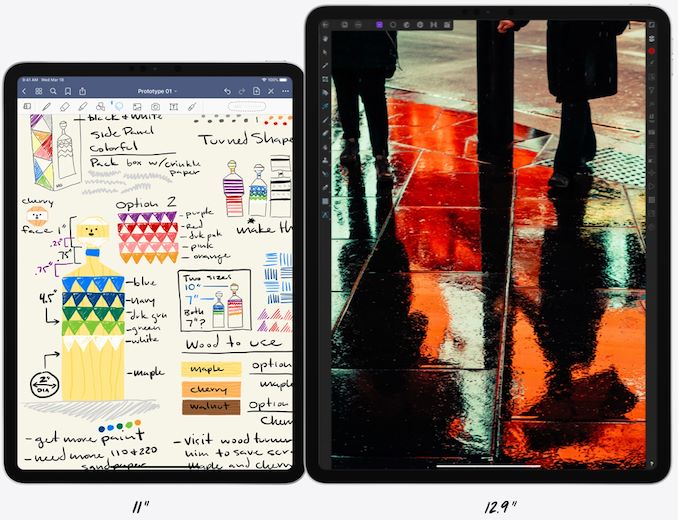
The new Apple iPad Pro 2020 resemble the company’s previous-generation professional tablets introduced 1.5 years ago: the latest iPad Pros feature the same design with relatively thin bezels, coming in Space Gray or Silver aluminum chassis, and featuring 11-inch (2388×1668) or a 12.9-inch (2732×2048) Retina display with a smooth 120 Hz refresh rate, 600 nits brightness. Since the new tablets use exactly the same chassis as their predecessors, they have the same dimensions, however their weight has increased due to the new internals — 473 grams (1.04 pounds) for the 11-inch Wi-Fi+4G model, and 643 grams (1.41 lbs) for the 12.9-inch Wi-Fi+4G model.


Speaking of architecture, it is necessary to note that the new 4th Generation Apple iPad Pro tablets are based on the A12Z Bionic application processor, a revamped version of the A12X Bionic system-on-chip that powers previous-generation iPad Pros. The new SoC received an eight-cluster GPU (vs. a seven-cluster GPU in case of the A12X), tuned performance controllers, and an enhanced thermal architecture, which might mean higher clocks for eight general-purpose CPU cores. We don’t have any more specific information on the A12Z, with the most important question whether this is actually a new design, or just a re-binned variant of the A12X.


With improved CPU and GPU performance, the 2020 Apple iPad Pro gets closer to advanced notebooks as horsepower provided by the A12Z promises to be similar to that of mainstream x86 CPUs.


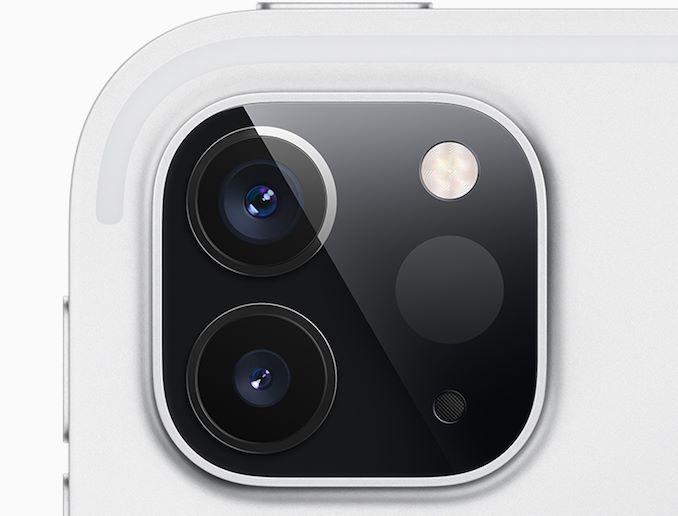
In addition to the new SoC, one of key improvements of the new iPad Pro tablets is their new main camera that now features a 12 MP wide camera module, a 10 MP ultrawide camera module, a LED flash, and a 3D depth sensor that can measure the distance to surrounding objects up to 5 meters away both indoors and outdoors.


Apple calls the new module a LiDAR scanner, however we don’t know if this actually is an actual LiDAR – the technical definition of a LiDAR is a module that uses an illuminator (Most of the time, a laser, hence the name) and a scanning beam. If Apple has been able to actually include such technology, that would quite a novelty and first in the industry. It’s however also possible that Apple is doing a marketing experiment here and the technology behind the sensor would simply be similar to the time-of-flight (ToF) sensors that we’ve seen from other vendors out in the market for the last year.


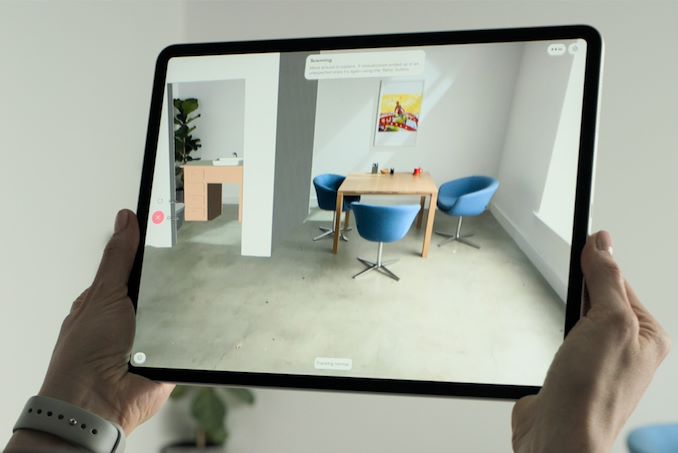
A depth sensor can be used to make photos with Bokeh effect, or for various augmented reality (AR) applications, which enhances use cases for Apple’s professional tablets.


On the connectivity side of matters, the new iPad Pros feature a USB Type-C connector, a Wi-Fi 6 chip that supports transfer speeds up to 1.2 Gbps, Bluetooth 5.0, and an optional 4G/LTE modem that now supports up to 30 bands. Apple does not disclose which modem it uses, but it looks like it is going to offer some improvements when compared to the modem used for previous-generation professional tablets from the company.


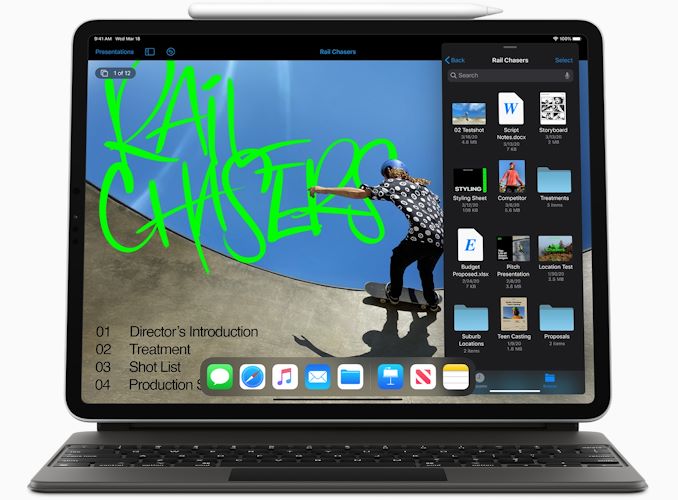
The fourth key enhancement that the new iPad Pro tablets have over predecessors is not a hardware advance, but rather an iPadOS 13.4 improvement. The new version of the operating system now supports keyboards with trackpads. Apple says that the cursor on iPadOS does not mimic its behavior on macOS, but is optimized for iPad’s realities. Meanwhile, multi-touch gestures are fully supported. The manufacturer says that the addition of a trackpad — which again brings the tablet closer to laptops — is meant to improve performance in applications that require typing, as now users will not have to take their hands off the keyboard to interact with UI. Apple claims that the trackpad works smoothly with existing applications for iPadOS, but developers can further adjust their products to take advantage of multi-touch gestures and other perks that trackpads provide.


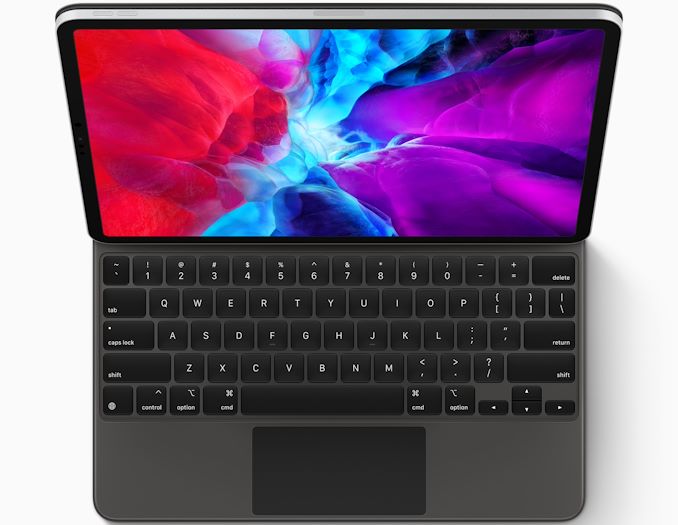
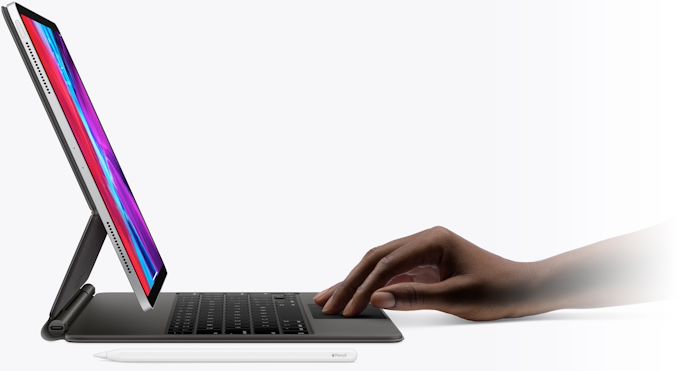
The first keyboard for iPad Pro to feature a trackpad is Apple’s own Magic Keyboard for iPad Pro. The unit features backlit keys with a scissor mechanism and a 1 mm travel distance. The keyboard attaches to the tablet magnetically and can be adjusted to a comfortable viewing angle when typing. The device even has charging capabilities with USB-C port to enable a passthrough charging, which allows to connect an external display or a storage device to tablet’s own USB-C interface. In addition to the latest iPad Pros, the new Magic Keyboards for 11-inch and 12.9-inch tablets are fully compatible with previous-generation iPad Pro 11 and iPad Pro 12.9 devices.


Other highlights of the new 2020 iPad Pro tablets include Face ID (enabled by a 7MP TrueDepth camera), compatibility with Apple Pencil, four speakers, five microphones, a three-axis gyro, an accelerometer, an ambient light sensor, and a barometer.


Apple iPad Pro Comparison

  iPad Pro 11″

(2020)
iPad Pro 12.9″

(2020)
iPad Pro 11″

(2018)
iPad Pro 12.9″

(2018)
SoC Apple A12Z

4x Apple Vortex

4x Apple Tempest


8-cluster GPU

Apple A12X

4x Apple Vortex

4x Apple Tempest


8-cluster A12 GPU

Display 11-inch

2388×1668

IPS LCD

DCI-P3, 120Hz
12.9-inch 2732×2048

IPS LCD

DCI-P3, 120Hz
11-inch

2388×1668

IPS LCD

DCI-P3, 120Hz
12.9-inch

2732×2048

IPS LCD

DCI-P3, 120Hz
Dimensions 247.6 x 178.5 x 5.9 mm

471 / 473 grams (WiFi / LTE)
280 x 214.9 x 5.9 mm

641 / 643 grams (WiFi / LTE)
247.6 x 178.5 x 5.9 mm

468 / 468 grams (WiFi / LTE)
280 x 214.9 x 5.9 mm

631 / 633 grams (WiFi / LTE)
RAM ? ? ? ?
NAND 128 GB / 256 GB / 512 GB / 1 TB 64 GB / 256 GB / 512 GB / 1 TB
Battery ? Wh ? Wh 29.37 Wh 36.71 Wh
Front Camera 7MP, f/2.2, Auto HDR, Wide Color Gamut, Retina Flash 7MP, f/2.2, Smart HDR, Wide Color Gamut, Retina Flash
Rear Camera 12MP,  f/1.8, PDAF, wide-angle

10MP, ƒ/2.4 aperture,  ultra-wide-angle 125° FOV


Depth sensor (LiDAR)

Smart HDR

Wide Color Gamut

True Tone Quad-LED flash

12MP,  f/1.8, PDAF,


Smart HDR

Wide Color Gamut

True Tone Quad-LED flash

Cellular 2G / 3G / 4G LTE (30 bands) 2G / 3G / 4G LTE (29 bands)
SIM Size NanoSIM NanoSIM
Wireless Wi-Fi 6 2×2 MIMO,

Bluetooth 5,

GPS/GLONASS
Wi-Fi 5 2×2 MIMO,

Bluetooth 5,

GPS/GLONASS
Connectivity USB-C

Apple Smart Connector
Launch OS iOS 13.4 iOS 12.1
Launch Price Wi-Fi:

$799 (128GB)

$899 (256GB)

$1099 (512GB)

$1299 (1TB)


Wi-Fi + LTE:

$949 (128GB)

$1049(256GB)

$1249 (512GB)

$1449 (1TB)

Wi-Fi:

$999 (128GB)

$1099 (256GB)

$1299 (512GB)

$1499 (1TB)


Wi-Fi + LTE:

$1149 (128GB)

$1249 (256GB)

$1449 (512GB)

$1649 (1TB)

Wi-Fi:

$799 (64GB)

$949 (256GB)

$1149 (512GB)

$1549 (1TB)


Wi-Fi + LTE:

$949 (64GB)

$1099 (256GB)

$1299 (512GB)

$1699 (1TB)

Wi-Fi:

$999 (64GB)

$1149 (256GB)

$1349 (512GB)

$1749 (1TB)


Wi-Fi + LTE:

$1149 (64GB)

$1299 (256GB)

$1499 (512GB)

$1899 (1TB)

Now, time to talk about pricing of the new iPad Pro. Entry level Wi-Fi-only and Wi-Fi+LTE models now feature 128 GB of NAND flash storage, yet carry the same price tags as their predecessors: the cheapest iPad Pro 11-inch comes in at $799, whereas the cheapest iPad Pro 12.9-inch is $999. More advanced SKUs with 256 GB, 512 GB, or 1 TB of storage actually became more affordable than their direct predecessors, as some got $50 cheaper, whereas others lost a rather whopping $250, which will please users with significant storage requirements. The new units are available for pre-order at Apple.com and Apple Store app today with retail availability starting next week.


As far as the price of the Magic Keyboard for iPad Pro is concerned, the unit is going to cost $299 for the 11-inch model, $349 for the 12.9-inch model, and will start shipping this May. The addition of this keyboard to a decently configured iPad Pro naturally makes the whole package cost like an entry-level laptop, which, again, blends the difference between the iPad Pro and the MacBook Air.


Related Reading:


Source: Apple


Source: AnandTech – Apple Unveils New iPad Pro: A12Z Bionic, Camera w/ Depth Sensor for AR, Keyboard w/ Trackpad

Help Fight COVID-19 and Tom's Hardware: Join The Great Folding@Home Coronavirus Race

Stuck at home for the foreseeable future, we here at AnandTech are doing the only thing that we can do: getting into trouble and picking fights. And we want your help! Please read on to learn about our “friendly” race with Tom’s Hardware, as we work towards using the power of distributing computing to help combat COVID-19.


For most of this month, it’s been difficult to have a conversation without invoking the word “coronavirus” at some point. The novel coronavirus, SARS-CoV-2, and the COVID-19 disease it causes, has quickly brought life to a standstill in much of the West, after already having a similar chilling effect in parts of China earlier this year. And while the ramifications of this virus are going to be felt far and wide for months to come, there’s one, more immediate and inescapable problem: we’re all stuck at home, and we’re all going mad!


AnandTech’s publisher, Future Plc, has closed its offices for the foreseeable future, assigning everyone to work from home. So all of the editors, photographers, and other employees who would normally be congregating at work are now home – whether they want to be or not – and the cabin fever is real. And that effect is, apparently, especially strong among the staff at Tom’s Hardware, our loyal compatriots and competitors.


Against all logic and good sense, the chaps over at Tom’s Hardware have challenged the mighty AnandTech to a distributed computing race. And, of course, given everything that has been going on, it’s all about coronavirus. Not one to back down – especially after winning our previous two races – AnandTech has accepted their challenge, and starting today we are going to be racing Tom’s Hardware to see whose team can contribute the most work towards finding treatments for COVID-19!


Now what is all of this about, you might be asking? Folding@Home, a long-standing distributed computing project, recent added COVID-19-related research tasks to its list of projects. Organized by Washington University, Folding@Home (FAH) allows individuals to contribute computing time to Stanford’s research efforts. This in turn helps the researchers in combating the illnesses that are related to proteins and protein (mis)folding, such as Alzheimer’s disease, Huntington’s disease, and COVID-19. Folding@Home has now been going on for almost two decades. And along with a long-standing AnandTech folding team, we’ve even used it in GPU benchmarks for several years now.



With the global pandemic going on, the researchers behind Folding@Home have decided to shift gears, and use the massive power of their distributed computing project to simulate SARS-CoV-2 in order to better understand how it works, and ultimately try to find treatments for it. And, given the significance of what’s going on right now – and the fact that we all, really, really want out – it seems only appropriate that AnandTech and Tom’s Hardware join the fight, for as much as a bunch of tech nerds can, at any rate.


Kicking off today, March 18th, we are holding a four-week Folding race to see which team is better. The more computer time donated to Folding@Home – the more protein folding work completed – the more points a team will score, with the highest scoring team being crowned the winner.


AnandTech of course is no slouch when it comes to distributed computing. Our team, the aptly named Team AnandTech, has been at it since late 1998, which is almost as long as AnandTech has operated. Among its notable accomplishments is beating the likes of the Macintosh evangelists, Slashdot, Tweakers.net, and more across over a dozen distributed computing projects ranging from computer science to biology to hunting for alien signals. And, of course, we’ve beaten Tom’s Hardware a couple of times as well.


Which is why I’m all the more surprised that Tom’s Hardware was willing to challenge us to a race. Under the auspicious leadership of Avram “third time’s a charm” Piltch, Tom’s Hardware is attempting to rally its forces to not only help deal with COVID-19, but beat Team AnandTech in the process. And while we respect our Tom’s Hardware colleagues, someone has to knock some sense into them every now and then. Distributed Computing is Team AnandTech’s home turf, and Team AnandTech will not be surpassed.


So I am once again calling on the readership of AnandTech and the intrepid members of Team AnandTech to come together for a good cause: beating Tom’s Hardware! Oh, yeah, and perhaps finding ways to reduce the impact of COVID-19 on the globe at large…



Ultimately this race is for fun, but it’s also for a good cause. The SARS-CoV-2 virus is a world-changing event, and, along with the immediate medical risks of the novel virus, the containment measures it requires are intense. The Folding@Home project is working on several simulations to improve humanity’s understanding of the virus and the disease it causes, with a goal of jump-starting new treatments and to bring the virus under control. It’s a worthy cause, as a result I’d like to encourage everyone to take part in our race over the next month.


The full details on the contest, including how to download the Folding@Home client and join Team AnandTech, our distributed computing team, can be found here.


I should also quickly note that, as the project has picked up a lot of attention over the last few days (we see you there, PCMR!), the Folding@Home servers themselves are under a bit of load as the team behind it works to keep new work units flowing. So if you aren’t immediately receiving COVID-19 work units after setting up the client, don’t despair. Work units are going out, and any (and all) Folding@Home work counts towards this race.


Finally, once you’re setup, be sure to drop on by our distributed computing forum and say hello. The team captain is keeping track of how many people sign up, and it’s the best place to go to connect with the other team members and to get answers to any questions.


Source: AnandTech – Help Fight COVID-19 and Tom’s Hardware: Join The Great Folding@Home Coronavirus Race

Samsung Begins Mass Production of 512 GB eUFS 3.1 Storage: Up to 2.1 GB/s

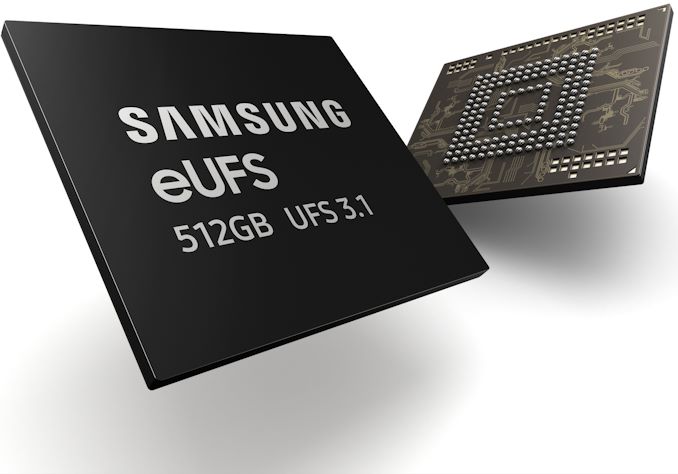
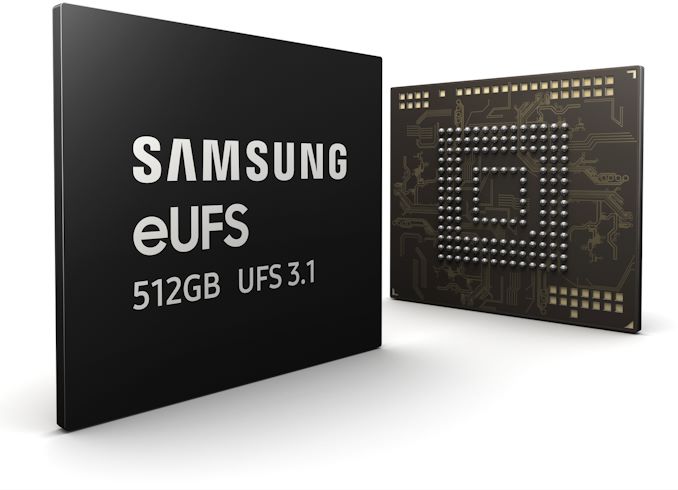
Samsung has kicked off mass production of its new, high-performance eUFS 3.1 storage modules. Designed primarily with high-end smartphones in mind, the embedded storage drives offer some of Samsung’s fastest speeds yet, with read and write speeds similar to those of midrange SSDs for PCs.


Initially, Samsung’s eUFS 3.1 family of devices will include a 512 GB drive rated for sequential read speeds of up to 2100 MB/s, sequential write speed up to 1200 MB/s, as well upwards of 100,000 IOPS and 70,000 IOPS for random reads and writes respectively. Eventually, the lineup will also gain 128 GB and 256 GB drives to address less expensive premium smartphones.


Samsung does not disclose which of the new UFS 3.1 features are supported by its eUFS 3.1 512 GB drive, but given a considerably higher sequential write speed — 1200 MB/s vs. 410 MB/s offered by the previous-generation eUFS 3.0 devices — it is more than likely that the devices support Write Booster pseudo-SLC caching.


Like other memory and storage manufacturers, Samsung announces volume production of a new product after it delivers the first batch to a customer. But, while we had been hoping that this meant these new eUFS 3.1 drives would be used in Samsung’s new Galaxy S20 series of phones, teardowns have already confirmed that those devices are using 3.0 drives. So whatever Samsung’s newest storage modules are going into, it hasn’t been released to consumers quite yet.


Overall, with the addition of a 512 GB eUFS 3.1 drive to its lineup, Samsung now offers one of the most comprehensive families of embedded storage devices, with products running the full gamut of performance levels and capacities.


Related Reading:


Source: Samsung


Source: AnandTech – Samsung Begins Mass Production of 512 GB eUFS 3.1 Storage: Up to 2.1 GB/s

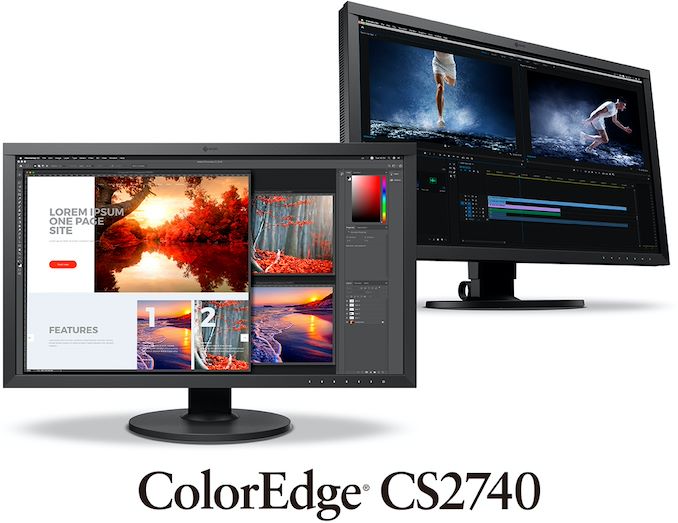
EIZO Launches ColorEdge CS2740: A 27-Inch 4K Professional Monitor with USB-C

USB Type-C is slowly but surely taking over the display market as the connector of choice. At first, it was added primarily to mainstream office models, but recently manufacturers started to use it on other SKUs too. This month EIZO introduced its new ColorEdge CS2740 professional display with a USB-C connector, one of the first monitors in this class to feature a USB-C interface.


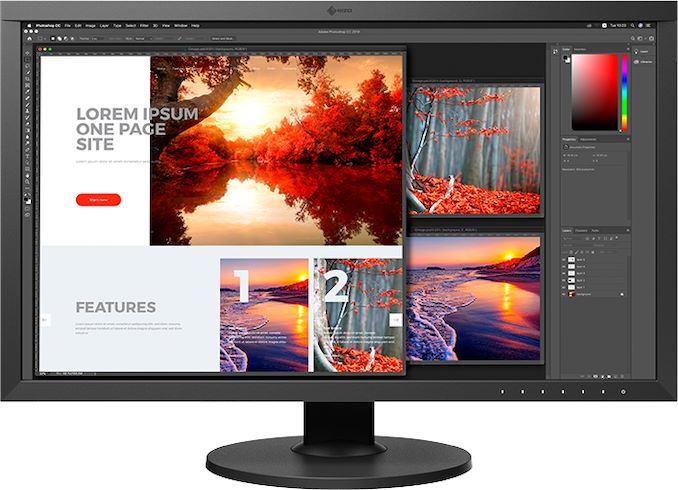
The EIZO ColorEdge CS2740 is a 27-inch 10-bit IPS LCD featuring a 3840×2160 resolution, a typical brightness of 350 nits, a 1000:1 contrast ratio, a 10 ms GtG response time, a 60 Hz maximum refresh rate, and 178°/178° viewing angles. The monitor is aimed at graphics professionals with color critical workloads, so it has a 16-bit lookup table (LUT) for smooth color gradations and covers 99% of the Adobe RGB color gamut. Furthermore, the display is factory calibrated and supports EIZO’s digital uniformity equalizer (DUE) that corrects nonconformities of color tones on the entire LCD.


In addition to professional-grade image quality, the ColorEdge CS2740 boasts advanced connectivity, including a DisplayPort 1.2 input (HDCP 1.3), one HDMI 2.0 port (HDCP 2.2/1.4), and one USB 3.1 Type-C (HDCP 1.3) input. The latter can deliver up to 60 W of power to host PC, which is enough for most laptops. Meanwhile, the LCD also has a dual-port USB 3.0 Type-A hub.


When it comes to ergonomics, the ColorEdge CS2740 comes with a stand that can adjust height, tilt, and swivel. The stand also supports portrait mode.


Specifications of the EIZO ColorEdge 27-Inch USB-C LCD
  ColorEdge CS2740
Panel 27″ IPS
Native Resolution 3840 × 2160
Maximum Refresh Rate 60 Hz
Response Time 10 ms
Brightness 350 cd/m² (typical)
Contrast 1000:1
Viewing Angles 178°/178° horizontal/vertical
HDR none
Dynamic Refresh Rate none
Pixel Pitch 0.1557 mm²
Pixel Density 163 ppi
Display Colors 1.07 billion
Color Gamut Support Adobe RGB: 99%

sRGB: ?
Aspect Ratio 16:9
Stand Height: +/-155 mm

Tilt: 35° Up, 5° Down

Swivel: 344°

Pivot: 90°
Inputs 1 × DisplayPort (HDCP 1.3)

1 × HDMI 2.0/2.0b (HDCP 2.2)

1 × USB-C (HDCP 1.3)
Outputs
USB Hub 2-port USB 3.0 hub
Launch Date Q1 2020

EIZO’s ColorEdge CS2740 is covered by a five-year warranty and is currently shipped to the company’s partners, so expect it to hit the shelves shortly. Pricing of the product is unknown, but it will naturally vary from region to region.


Related Reading:


Source: EIZO


Source: AnandTech – EIZO Launches ColorEdge CS2740: A 27-Inch 4K Professional Monitor with USB-C

Intel’s Cooper Lake Plans: The Chip That Wasn’t Meant to Exist, Fades Away

Following an exclusive report from SemiAccurate, and confirmed by Intel through ServeTheHome, the news on the wire is that Intel is set to can wide-spread general availability to its Cooper Lake line of 14nm Xeon Scalable processors. The company is set to only make the hardware available for priority scale-out customers who have already designed quad-socket and eight-socket platforms around the hardware. This is a sizeable blow to Intel’s enterprise plans, putting the weight of Intel’s future x86 enterprise CPU business solely on the shoulders of its 10nm Ice Lake Xeon future, which has already seen significant multi-quarter delays from its initial release schedule.


Source: AnandTech – Intel’s Cooper Lake Plans: The Chip That Wasn’t Meant to Exist, Fades Away

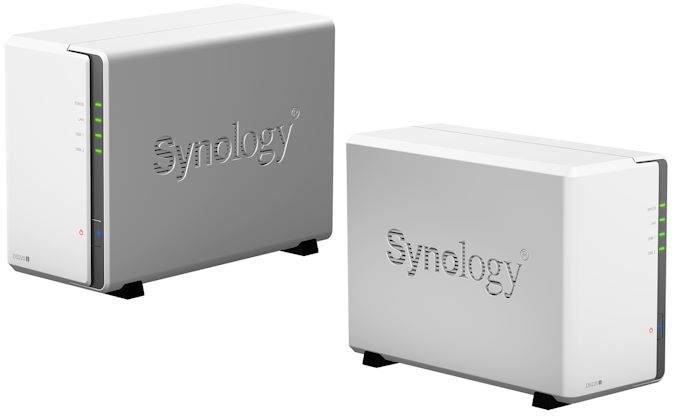
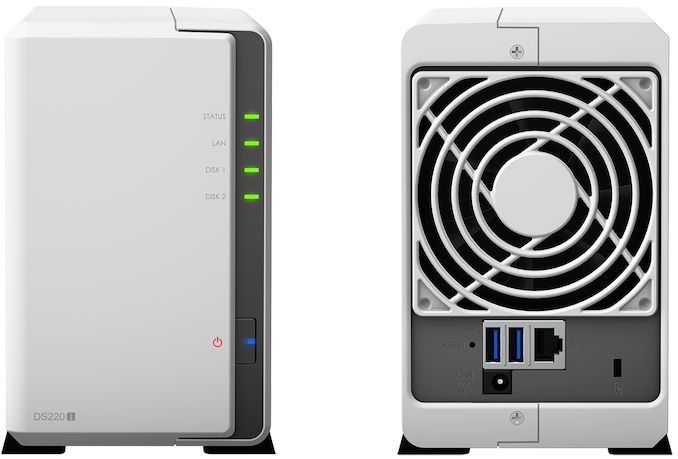
Synology Unveils DiskStation DS220j Dual-Bay NAS: A Basic NAS For the Home

Coming in on the heels of TerraMaster’s recently introduced entry-level dual-bay NAS, Synology has announced its own basic NAS, the DiskStation DS220j. Synology’s latest NAS can store up to 32 TB of data using modern hard drives, from which it can stream media, automatically backup data, and offers web-based access, covering all of the bases for an inexpensive NAS device.


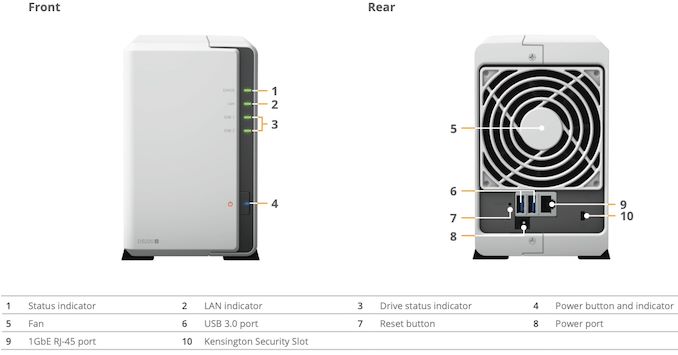
The Synology DiskStation DS220j is based on Realtek’s quad-core RTD1296 system-on-chip, which is paired with 512 MB of DDR4 RAM. The NAS has two 3.5-inch bays (which can also house 2.5-inch devices), one GbE port, and two USB 3.0 Type-A ports. The DS220j can operate its drives in Synology Hybrid RAID (SHR), Basic, JBOD, RAID 0, or RAID 1 modes. Internally, the device uses the ext4 file system, but externally it supports ext4, ext3, FAT, NTFS, HFS+, and exFAT file systems. From performance point of view, the NAS is said to support sequential read/write speeds of ‘over 112 MB/s’.


The DiskStation DS220j can be accessed locally from PCs running Linux, macOS, or Windows, and it also supports automatic backup functionality, such as Apple’s Time Machine. Also, the Synology DiskStation Manager software supports various networking protocols, such as FTP, SMB2, SMB3 (encrypted), AFP, NFS, and WebDAV, so the data can be accessed from everywhere assuming that the NAS is connected to the Internet. Furthermore, the software supports cloud synchronization as well as such services as Dropbox, Google Drive, Microsoft OneDrive, Baidu, and Box.


Synology’s DiskStation DS220j will be available shortly. Pricing is unknown, but as we are dealing with an entry-level NAS, it shouldn’t be too expensive.


Related Reading:


Source: Synology


Source: AnandTech – Synology Unveils DiskStation DS220j Dual-Bay NAS: A Basic NAS For the Home

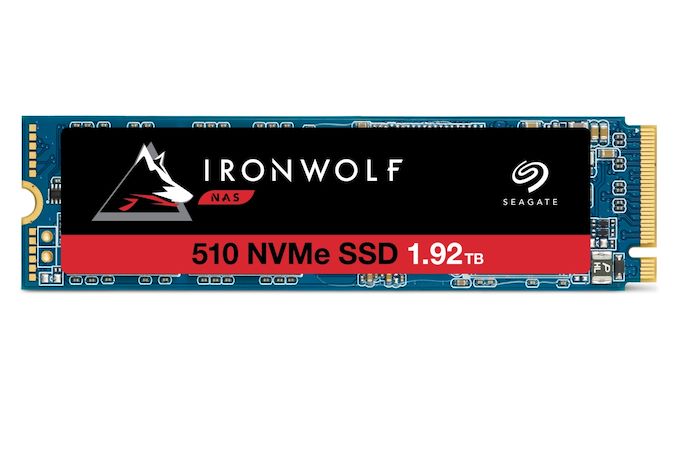
Seagate Introduces IronWolf 510 M.2 NVMe SSDs for NAS Systems

Seagate was one of the first vendors to introduce SSDs targeting the consumer / SMB / SME NAS markets with the IronWolf SSD 110 series at the 2019 CES. Western Digital put up their offerings in the market segment in the form of the WD Red SA500 in Q4 2019. Both SSD families are SATA-based – however, while the WD Red SA500 comes in both 2.5″ and M.2 form-factors, the IronWolf 110 family comprises of 2.5″ drives only.


Seagate is again taking the lead with the launch of the IronWolf 510 SSD series today. This is a M.2 NVMe with a 1 DWPD rating – significantly higher than other SSDs targeting the market segment today. Key confirmed specifications are captured in the table below. We are in the process of gather more information to fill up the pending entries in the table.


The Seagate IronWolf 510 SSDs for NAS
Capacity 240 GB 480 GB 960 GB 1920 GB
Model Number ZP240NM30011 ZP480NM30011 ZP960NM30011 ZP1920NM30011
Controller ?
NAND Flash 3D TLC NAND
Form-Factor, Interface M.2-2280, PCIe 3.0 x4, NVMe 1.3
Sequential Read 3150 MB/s
Sequential Write ? MB/s
Random Read IOPS ?
Random Write IOPS ? ?
Pseudo-SLC Caching ?
DRAM Buffer ?
TCG Opal Encryption No
Power Consumption Avg Active ? ? ?
Max. Read ? ? ?
Max. Write ? ? ?
Slumber ? ?
Warranty 5 years (including 2 years of Rescue Data Recovery Services)
MTBF 1.8 million hours
TBW 438 876 1752 3504
DWPD 1
UBER 1E10^17
Additional Information Link
MSRP $120 $170 $320 $540

Seagate states that the drives are available for purchase today at prices ranging from $120 (for the 240GB model) to $540 (for the 1.92TB version). Two years of Rescue Data Recovery services are bundled in the five-year warranty. SOHO / SMB NAS units with a large number of M.2 NVMe SSD slots are rare right now. Some QNAP NAS units do support expansion capabilities with add-in cards (like the QM2-2P-384, and the IronWolf 510 is a perfect fit for usage with those expansion cards.


Source: AnandTech – Seagate Introduces IronWolf 510 M.2 NVMe SSDs for NAS Systems

Intel & Micron Sign New 3D XPoint Wafer Supply Agreement

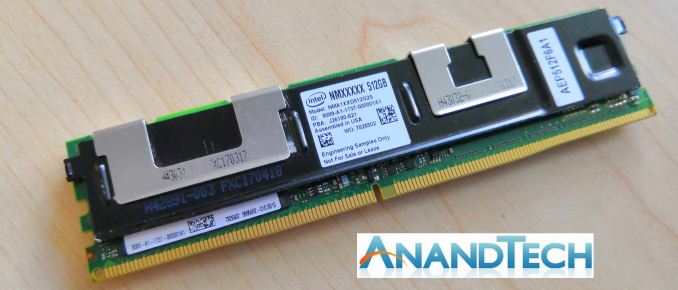
Intel and Micron have inked a new 3D XPoint memory wafer supply agreement. Analysts believe that Intel will now have to pay Micron more than it did previously as it is now the only maker of 3D XPoint. The new pact also shows that Intel wants to continue making products based on 3D XPoint, but details about the products remain to be seen.


Having ended its NAND and 3D XPoint partnerships with Micron, Intel sold its former partner its stake in their mutually owned fab in Lehi, Utah. Since the company yet has to move production of 3D XPoint memory used for its Optane-branded products to its Fab 68 in Dalian, China, the chipmaker had to sign a supply agreement with Micron, under which the latter would sell the memory to its former ally at pre-agreed prices for one year after it gains ownership of the fab.


Micron gained ownership back in October, which is when the agreement came into effect. As it turns out, the two companies terminated the deal on March 9 and signed a new one ‘with changes to pricing and forecast terms’. The companies did not reveal additional details, but Micron said that the deal was ‘not material to Micron and does not change Micron’s previously-communicated outlook’.


Meanwhile, market analysts believe that Intel loses rather massive amounts of money on its 3D XPoint products despite their premium pricing.


Jim Handy, an analyst with Objective Analysis, told Blocks & Files the following:


“Intel is losing money in its NVM Solutions Group (NSG) because 3D XPoint is proving very unprofitable to produce. By my estimate Intel lost about $2 billion on 3D XPoint in each of 2017 and 2018, and $1.5 billion in 2019.”


Perhaps, indirectly, not very favorable costs of 3D XPoint are confirmed by Micron’s reluctance to build products on their base. So far, Micron has announced only one SSD series featuring 3D XPoint memory, the X100. The new deal indicates that Intel has plans to proceed with its 3D XPoint-based Optane family of products, which play an important role to its datacenter business. Unfortunately, it is unclear from the announcement how Intel plans to develop its 3D XPoint lineup going forward.


The official statement from Intel and Micron reads as follows:


On March 9, 2020, Micron Technology, Inc. (“Micron”) and Intel Corporation (“Intel”) agreed to terminate, effective March 6, 2020, the Product Supply Agreement, dated April 6, 2012, among Micron, Intel, and Micron Semiconductor Asia Pte. Ltd. (the “PSA”). The PSA set forth the terms under which Micron agreed to supply 3D XPoint wafers to Intel at prices determined under a defined formula and in accordance with a negotiated forecast. Contemporaneous with the PSA’s termination, Micron and Intel entered into a new 3D XPoint wafer supply agreement with changes to pricing and forecast terms. The new agreement is not material to Micron and does not change Micron’s previously-communicated outlook that underutilization charges associated with Micron’s Lehi, Utah fab will average approximately $150 million on a quarterly basis in fiscal year 2020.


Related Reading


Sources: Micron, Blocks & Files


Source: AnandTech – Intel & Micron Sign New 3D XPoint Wafer Supply Agreement

AMD Details Renoir: The Ryzen Mobile 4000 Series 7nm APU Uncovered

The notebook market has not been kind to AMD over the last decade – for a long, long time the company was only ever seen as the discount option for those on a strict budget. It didn’t help that OEMs only saw AMD in that light, fitting bulky units with sub-standard displays and storage options meant that even retailers were only presenting AMD as something for the budget conscious.

All that seems set to change. Fast forward to 2020, and notebook users are eagerly awaiting the arrival of products based on AMD’s latest Ryzen Mobile 4000 series processors, which combine up to eight Zen 2 cores and upgraded Vega graphics into a small CPU for the notebook market. AMD has already made waves with its Zen 2 cores in the desktop and enterprise space, and the company has already announced it plans to put eight of those cores, along with a significantly upgraded graphics design, into a processor that has a thermal design point of 15 W. These 15 W parts are designed for ultraportable notebooks, and AMD has a number of design wins lined up to show just how good an AMD system can be.


Source: AnandTech – AMD Details Renoir: The Ryzen Mobile 4000 Series 7nm APU Uncovered

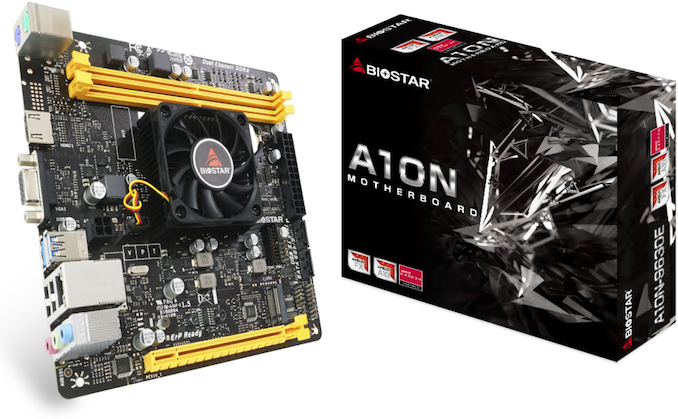
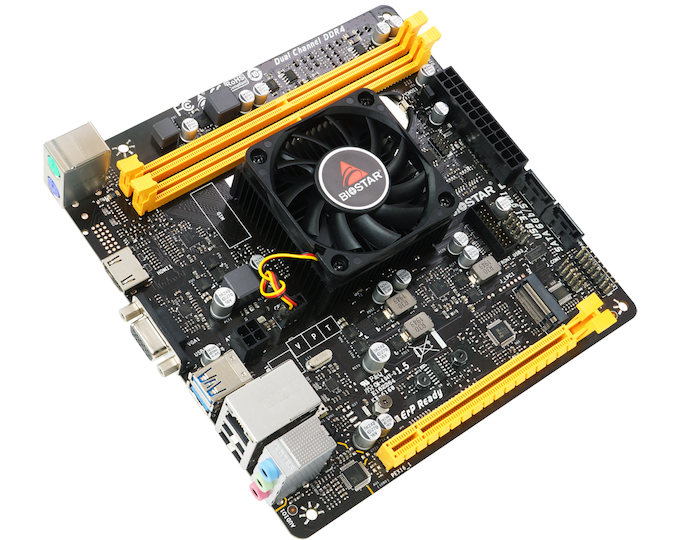
Biostar Launches Low-Power A10N-9630E Mini-ITX Motherboard

AMD’s Bulldozer microarchitecture was originally designed with mainstream and high-performance applications in mind, but eventually its development took a turn to focus solely on mainstream mobile and desktop PCs. Today, processors based on AMD’s Excavator architecture — the pinnacle of Bulldozer’s evolution — are positioned as entry-level solutions and compete against lower-end products from Intel, including those powered by Atom-class processors that were designed from the ground up to be cheap and energy-efficient. Looking to fill a need for fully integrated motherboards for this market, Biostar has launched a Mini-ITX motherboard that is based on AMD’s Bristol Ridge APU and is meant to compete against Intel’s Gemini Lake-based offerings.


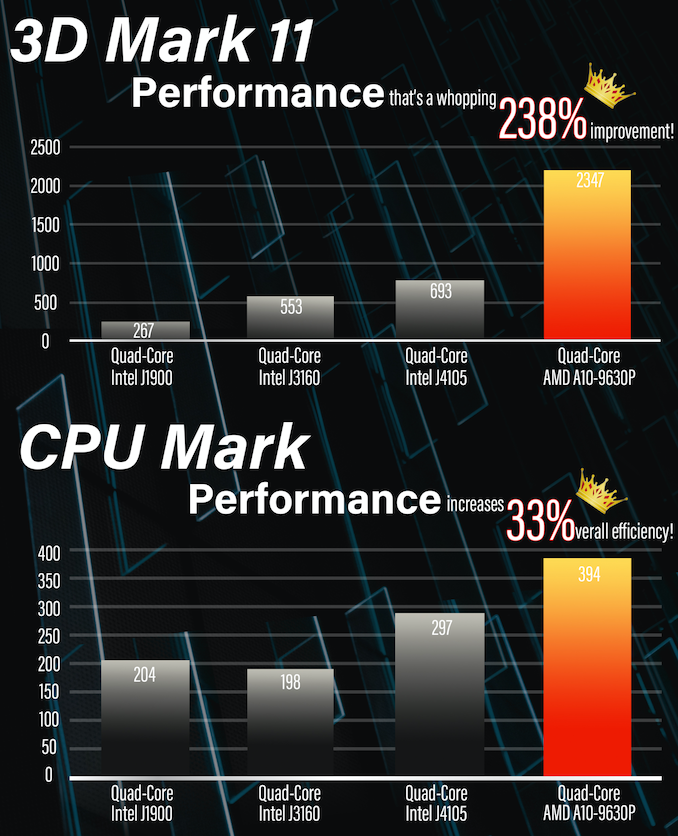
The Biostar A10N-9630E Mini ITX Quad Core SoC motherboard is powered by the A10-9630P with two Piledriver modules clocked at 2.60 GHz – 3.30 GHz (four cores in Bulldozer’s classification) with 1 MB L2 cache per module as well as AMD Radeon R5 GPU with 384 stream processors (GCN 3rd Gen). The SoC has a TDP of 35 W and it was initially designed for laptops as well as compact desktops.


Overall, Biostar compares CPU and GPU performance of the SoC to that of Intel’s Celeron J4105 SoC with four Goldmont Plus cores clocked at 1.50 GHz – 2.50 GHz as well as Intel’s UHD Graphics 600 with a TDP of 10W. Based on Biostar’s benchmarks, AMD’s processor offers a significantly higher CPU efficiency as well as a massively higher GPU performance (see performance figures below).


While AMD’s Bristol Ridge platform is clearly more power hungry than Intel’s Gemini Lake, it is also considerably faster, which is fine for desktop machines. But there is a catch. AMD’s Bristol Ridge has the company’s UVD 6.0 decoder that supports up to H.265 codec version 1 main profile (for 4K content) for 8-bit content, but not VP9. By contrast, Intel’s Gemini Lake has a video decoder that supports both H.265 and VP9 as well as 10-bit HDR (for 4K content). Considering that low-power desktops are usually used primarily for media playback, the Gemini Lake has an edge over the Bristol Ridge.


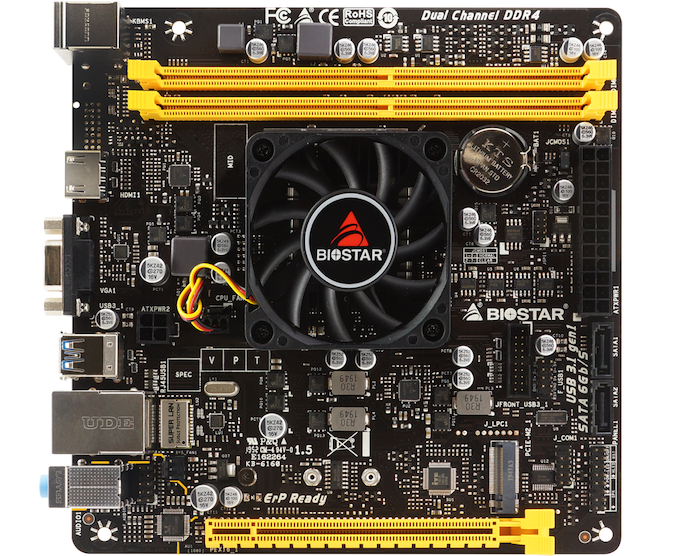
Since AMD’s Bristol Ridge uses a BGA form-factor, the A10-9630P chip cannot be upgraded. Meanwhile, the A10N-9630E board has everything a typical inexpensive platform does, including a PCIe 3.0 x16 slot that runs in x8 mode (as Bristol Ridge has 8 PCIe lanes for graphics) and allows to install a graphics card that supports all the latest and greatest video decoding capabilities, two DDR4 memory slots supporting two 16 GB DDR4-2400 modules, an M.2-2280 slot supporting SSDs with a PCIe 3.0 x4 or SATA 6 Gbps interface, and two SATA 6 Gbps connectors.


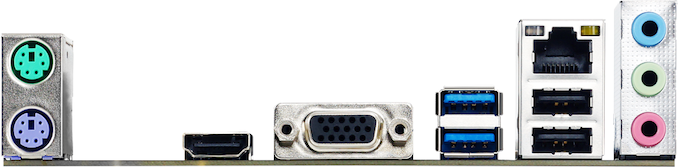
I/O capabilities of the Biostar A10N-9630E are fairly standard for entry-level PCs, so it has two display outputs (a D-Sub for legacy monitors and an HDMI for modern screens with HDCP support), a GbE port with LAN surge protection (controlled by the Realtek RTL 8111H chip), four USB Type-A connectors (two USB 2.0, two USB 3.0), PS/2 ports for mice/keyboards, and 7.1-channel audio connectors.


Brief Specifications of Biostar’s Bristol Ridge Mini-ITX Motherboards
  A10N-9630E
CPU AMD A10-9630P APU
PCH integrated
Memory  2 × SO-DIMM slots, up to 32 GB of DDR4-2400
Storage M.2 1 × M.2-2280 SSD with SATA or PCIe 4.0 x4 interface
SATA 2 × SATA HDDs or SSDs
Graphics AMD Radeon R5 integrated GPU

PCIe 3.0 x16 slot operating in x8 mode
Wi-Fi
WWAN
Ethernet 1 × GbE (Realtek RTL 8111H)
Display Outputs 1 × D-Sub

1 × HDMI
Audio 7.1-channel audio (Realtek ALC887)
USB Internal 2 × USB 2.0 Type-A

2 × USB 3.1 Gen 1 Type-A
External 2 × USB 2.0 Type-A

2 × USB 3.1 Gen 1 Type-A
Additional I/O
Power 24-pin ATX

Biostar has not announced pricing of its A10N-9630E Mini-ITX motherboard, though it made it fairly clear that we are dealing with an entry-level product, so one can make guesses.


Related Reading:


Source: Biostar


Source: AnandTech – Biostar Launches Low-Power A10N-9630E Mini-ITX Motherboard

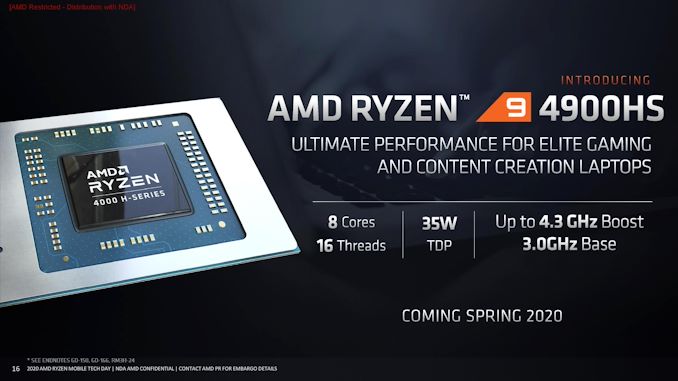
AMD Announces Ryzen 9 4900H and 4900HS: The Halo 35 W and 45 W Mobile APUs

As part of the disclosures on AMD’s Ryzen Mobile 4000 portfolio, the company is also lifting the lid on perhaps one of the worst kept secrets in mobile computing: the new top-of-the-line Ryzen 9 4900H family. This family consists of two processors, the standard H model built for 45 W operation, and the HS model at 35 W. These parts will offer more frequency and more graphics performance than the rest of AMD’s offerings, and are the only APUs from AMD to carry the weight of the Ryzen 9 branding.


Source: AnandTech – AMD Announces Ryzen 9 4900H and 4900HS: The Halo 35 W and 45 W Mobile APUs

Marvell Announces ThunderX3: 96 Cores & 384 Thread 3rd Gen Arm Server Processor

The Arm server ecosystem is well alive and thriving, finally getting into serious motion after several years of false-start attempts. Among the original pioneers in this space was Cavium, which went on to be acquired by Marvell in 2018. Among the company’s server CPU products is the ThunderX line; while the first generation ThunderX left quite a lot to be desired, the ThunderX2 was the first Arm server silicon that we deemed viable and competitive against Intel and AMD products. Since then, the ecosystem has accelerated quite a lot, and only last week we saw how impressive the new Amazon Graviton2 with the N1 chips ended up. Marvell didn’t stop at the ThunderX2, and had big ambitions for its newly acquired CPU division, and today is announcing the new ThunderX3.

The ThunderX3 is a continuation and successor to then-Cavium’s custom microarchitecture found in the TX2, adopting a lot of the key characteristics, most notably the capability of 4-way SMT. Adopting a new microarchitecture with higher IPC capabilities, the new TX3 also ups the clock frequencies, and now hosts up to a whopping 96 CPU cores, allowing the chip to scale up to 384 threads in a single socket.


Source: AnandTech – Marvell Announces ThunderX3: 96 Cores & 384 Thread 3rd Gen Arm Server Processor

Apple’s WWDC Confirmed For June; Becomes Latest Conference To Go Digital-Only Due to Coronavirus

In a busy week for SARS-CoV-2-related developments, the virus has caused yet another major industry conference to change their plans. Today Apple has announced that the company’s annual World Wide Developers Conference (WWDC) will be taking place in June after all, but that it will now be a digital-only show. Calling it an “entirely new online format”, Apple is promising news and events for consumers, the press, and of course, developers.


One of the major fixtures of summer trade shows, Apple normally holds WWDC every June in the San Francisco Bay Area. For the last few years the company has been holding the event at the San Jose Convention Center – a convenient 15 minutes from their campus – which is now caught in the crossfire of coronavirus. The normal format of the show has largely been developer-focused, however Apple has typically used the first morning of the show for a public keynote that offers high-level details about software changes to come, along with some irregular hardware and service announcements.


But with coronavirus continuing to cause issues around the globe, and no one being quite sure where things will stand in June, Apple has pulled the plug on their traditional San Jose show entirely. Instead, the company is pivoting over to a digital-only format.


The brief announcement doesn’t offer a whole lot of details about how the new format will work – Apple says that additional information will be coming later – but it’s interesting to note that Apple is specifically calling out content for consumers and the press, and not just developers. For numerous reasons, it’s to Apple’s benefit to stick with having a public keynote (or equivalent) in order to promote their brand and build up consumer interest. But the format shift offers new opportunities to do more consumer-facing events, especially as the physical capacity of the San Jose Convention Center, already bursting at the seams during regular WWDCs, is no longer a limiting factor.


Overall, WWDC’s shift to a digital-only format makes it the latest of several shows to be altered due to the coronavirus pandemic. With Microsoft and Google also taking their shows virtual, while E3 has been canceled, WWDC was one of the last shows to remain undecided on the matter. Which leaves all eyes on Computex, the major Taiwanese hardware show, as the last remaining major trade show or conference that is still set to take place in the first half of this year.


Source: AnandTech – Apple’s WWDC Confirmed For June; Becomes Latest Conference To Go Digital-Only Due to Coronavirus

GlobalFoundries & Everspin Extend MRAM Pact to 12nm

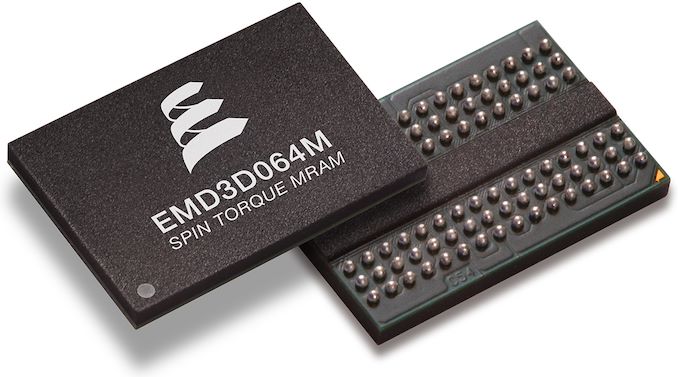
GlobalFoundries and Everspin have announced that the two have extended their Spin-transfer Torque (STT-MRAM) joint development agreement (JDA) to 12LP (12 nm FinFET) platform. The extension will enable GlobalFoundries to produce discrete MRAM chips using their 12nm processes as well as to embed MRAM into chips designed for its 12LP manufacturing technology, which is being used for numerous applications.


The two companies have a long collaboration history that goes back to 40 nm bulk fabrication process and extends to 28 nm HKMG as well as 22 nm FD-SOI (22FDX). Today, chips made using GloFo’s technologies can feature embedded MRAM (eMRAM), whereas Everspin’s 256 Mb and 1 Gb standalone MRAM devices are also fabbed using 40 nm and 28 nm bulk nodes. Scaling STT-MRAM down to 12 nm will allow the two to cut down costs of 1 Gb chips and produce devices of higher capacities in a cost-effective manner.


While existing MRAM chips do not offer huge capacity, they are quite popular for their niche uses. Everspin says that it has shipped 125 million units of discrete MRAM chips to over 1000 clients. Furthermore, based on a report cited by the company, discrete MRAM sales will reach $4 billion by 2029. Meanwhile, as demand extends to higher capacity standalone MRAMs, more advanced process technologies will be needed to make discrete MRAM components.


The addition of eMRAM to GlobalFoundries’s 12LP platform — which includes 12LP and 12LP+ technologies — greatly enhances competitive positions of the nodes, particularly for controller/microcontroller applications that will be released in the coming years. For example, some upcoming enterprise SSD controllers from Phison as well as Sage will use Everspin’s eMRAM, and these two companies will not be alone in using this type of embedded non-volatile memory.


eMRAM is expected to replace embedded flash (eFlash) in devices produced using advanced manufacturing technologies, as NAND made using thin fabrication processes has a number of issues, such as endurance and performance. MRAM can be built using modern nodes and still offer good performance and endurance as it does not use electric charges or current flows, but has magnetic storage elements and relies on sensing the magnetic anisotropy (orientation) of two ferromagnetic films separated by a thin barrier. eMRAM has its limitations, but until other technologies are here, it will be used for numerous devices in the coming years.


Kevin Conley, President and CEO of Everspin, said the following:


“Due to our industry leading partnership with GlobalFoundries, we were first with the commercialization of Spin-transfer Torque MRAM. Further scaling to GF’s 12nm FinFET platform will continue to solidify not only our mutual technology leadership but will provide the next step for STT-MRAM as the future of memory technology.”


Related Reading:


Source: Everspin


Source: AnandTech – GlobalFoundries & Everspin Extend MRAM Pact to 12nm