AKiTiO Launches Node Titan eGFX Thunderbolt 3 Enclosure

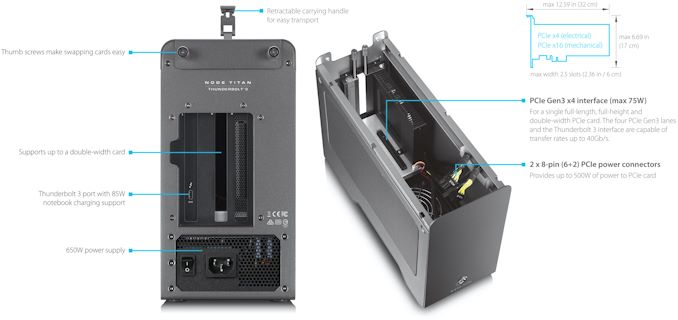
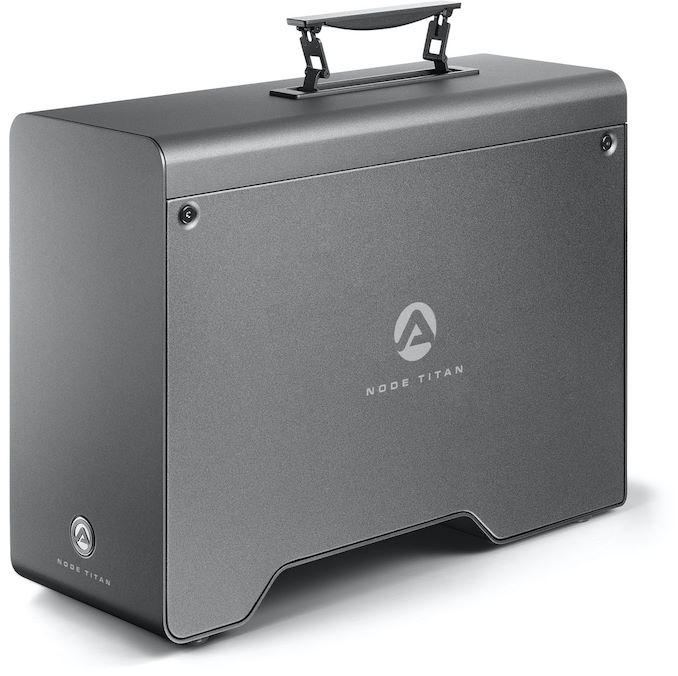
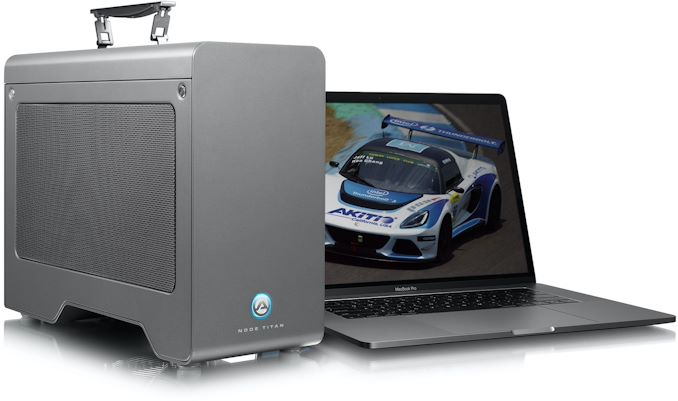
AKiTiO has introduced a new Thunderbolt 3 eGFX enclosure that has been designed specifically with professional users in mind. The Node Titan can house power-hungry professional-grade graphics cards due to its 650 W power supply unit.


AKiTiO was among the first companies to introduce a TB3 eGFX chassis for video cards back in late 2016. A little over three years later, after learning from its customers about their needs, AKiTiO comes up with its Node Titan that upgrades the original Node in every possible way. The new enclosure is somewhat more compact, yet it can house full-length (32 cm) full-height (17 cm) 2.5-wide (6 cm) graphics cards that consume up to 500 W of power and need two 8-pin PCIe power connectors.  In particular, the box can accommodate all the latest video cards from AMD and NVIDIA and is certified for high-end professional boards, including NVIDIA Quadro RTX 4000.


To ensure that the cards used inside AKiTiO’s Node Titan get enough cooling, the enclosure is equipped with two fans: one is used for the PSU and the other cools down the board itself. Meanwhile, the enclosure has a handle to make it easier to carry it around. As for dimensions, the enclosure measures 35.7 × 13.5 × 26.6 cm (14.06 × 5.31 × 10.47 inches), so it is actually more compact than the predecessor. Still, since the box is made of stainless steel, not aluminum, so it is not exactly lightweight.


Comparison of Thunderbolt 3 eGFX Chassis
    AKiTiO

Node
AKiTiO

Node Titan
Chassis Dimensions Length 42.8 cm

16.85 in
35.7 cm

14.06 in
Height 22.7 cm

8.94 in
26.6 cm

10.47 in
Width 14.5 cm

5.71 in
13.5 cm

5.31 in
Max Dimension of Compatible Graphics Card Length 32 cm

12.59 in
Height

(PCB+Cables)
17 cm

6.7 in
Width 6 cm

2.36 in
Maximum GPU Power 300 W (?) 500 W
PSU Wattage 400 W 650 W
Form-Factor SFX ?
Cooling Fans 1 × 120 mm 2 × ?? mm
Connectivity Thunderbolt 1 × TB3 1 × TB3
Ethernet
USB
SATA
DisplayPort
Availability December 2016 March

2020
Price $299 $334.75

AKiTiO’s Node Titan is available directly from the company as well as from its partners. Notably, the Node Titan is a pure eGFX enclosure and does not feature a GbE port or a USB hub, so it is relatively cheap by eGFX chassis standards at $334.75.


Related Reading:


Source: AKiTiO


Source: AnandTech – AKiTiO Launches Node Titan eGFX Thunderbolt 3 Enclosure

Maingear Releases New RUSH System With Extremely High-End Specs

The latest among a surprisingly busy week for PC hardware, Maingear has released a new and improved version of its RUSH gaming system. Catering to the high-end gaming market, Maingear is launching models with both Intel and AMD desktop/HEDT processors. Furthermore the company has partnered with ASUS to certify its RGB LED capabilities for better integration and seamless support through the system.


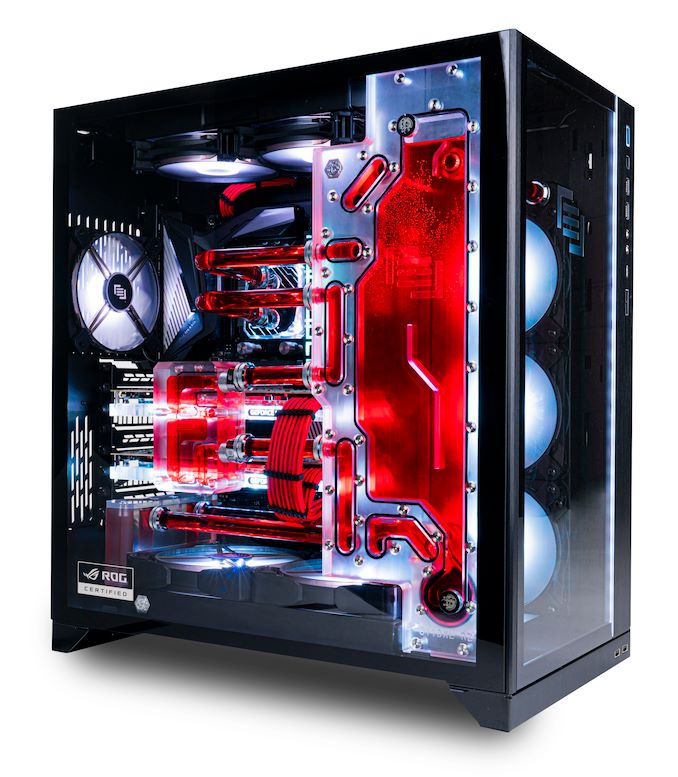
The latest RUSH systems are built inside the highly customizable Lian Li PC-011D XL chassis. Maingear is also offering a custom painting services which users can have their RUSH system coated in a luxury automotive paint within its custom workshop. Each custom RUSH system is advertised as being hand-crafted and built by a ‘single master craftsman’ for a unique take which Maingear state as “One man, one machine”. 


The Maingear RUSH using its Apex Custom Liquid Cooling Solution


Touching on the specifications, Maingear allows buyers to customize RUSH systems with a variety of CPU and chipset options, with both AMD and Intel systems available. These options range from desktop parts up to the AMD Ryzen 3950X (X570) and Intel Core i9-9900K (Z390), This also stretches to the more powerful HEDT platforms, including the AMD Threadripper series featuring the 3990X (TRX40) and Intel’s Core i9-10980XE (X299), which of course bumps the price up massively. Keeping in mind the ASUS collaboration, each configuration of the RUSH regardless of chipset and platform selected is based around an ASUS ROG motherboard, for maximum compatibility with its ROG Aura RGB ecosystem.


For graphics, users can select an AMD or NVIDIA setup including up to dual NVIDIA GeForce Titan RTX 24 GB graphics cards, as well as up to a dual AMD Radeon VII 16 GB setup. As for memory, all setups can be configured to run up to 128 GB of DDR4 memory, with AMD’s TRX40 for Threadripper offering up to 256 GB. The storage options vary – being dependent on the motherboard chipset – but most allow for up to two NVMe SSDs to be installed, with up to seven SATA 2.5″ drives, or four SATA 3.5″ drives. 


The most notable aspect of the new RUSH gaming system is can be configured to Maingear’s profound Apex liquid cooling solution. The Apex is a fully custom cooling solution which features an integrated pump designed for silent operation, with flow-rate sensing and a high capacity reservoir. We reported on the Apex integrated cooling solution back at CES 2018 when Maingear refreshed its F131 system. It uses a custom milled acrylic baseplate for striking aesthetics, with a parallel graphics card bridge and a custom radiator bridge. This encompasses ASUS’s ROG certification which all of the components used feature, including the Lian Li PC-O11D XL chassis. 


The new and updated RUSH series from Maingear starts from $1899 for the base models, while for those with especially deep pockets, configurations adding custom paint jobs and ultra-high-end hardware such as the AMD Threadripper 3970X and NVIDIA GeForce Titan RTX graphics card run for over $15000.


Related Reading


Source: AnandTech – Maingear Releases New RUSH System With Extremely High-End Specs

Ryzen Roundup: A Quick Overview of Ryzen Mobile 4000 Laptops From Acer, ASUS, Dell, & MSI

Originally announced back at CES 2020, AMD this week has finally launched its new “Renoir” Ryzen Mobile 4000 APUs. And with it, AMD’s laptop partners have begun rolling out their first wave of Ryzen 4000 laptops.


While we’re still working on our full review for next Monday, we wanted to take a moment to take stock of the laptop market thus far, and look at the Ryzen Mobile 4000 laptops that have been released this week or are due in the coming weeks. So far, Acer, ASUS, Dell, and MSI have introduced their notebooks, and between the four OEMs, they’re aiming for a wide range of the consumer market.


Acer’s Swift 3 and Aspire 5 Laptops Introduced


Acer was among the first to introduce its AMD Ryzen Mobile 4000-based laptops earlier this year, and this month, Acer finally started sales of its new notebooks, which are available in 14 and 15-inches.



The Acer Swift 3 (SF314-42) is a 14-inch ultraportable laptop that weighs 1.17 kilograms and runs (up to) AMD’s eight-core AMD Ryzen 7 4700U APU that is paired with 8 GB of LPDDR4 memory as well as an SSD. The PC has everything that one comes to expect from a 2020 ultrathin notebook, including Bluetooth 5.0, Wi-Fi 6, USB 3.2 Gen 2 ports, and a fingerprint scanner.
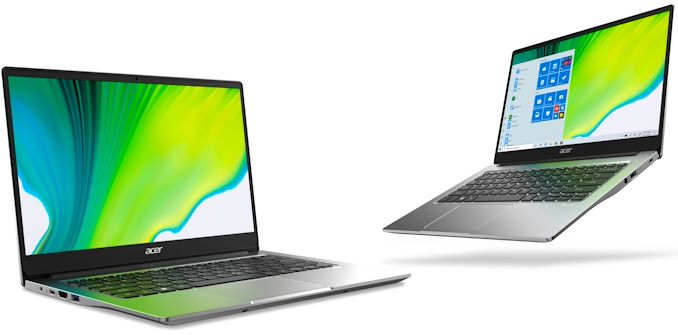


The laptop comes with an IPS Full-HD display panel with thin bezels, so it is pretty portable. Since the Swift 3 is designed primarily with roadwarriors in mind, it can work for 11.5 hours on one charge, according to the manufacturer. The Swift 3 SF314-42 will be available this April at a price starting at $629.99
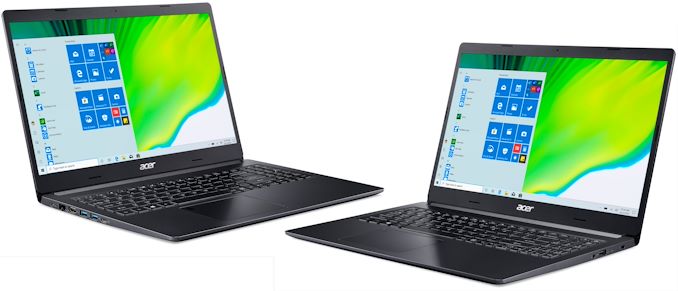


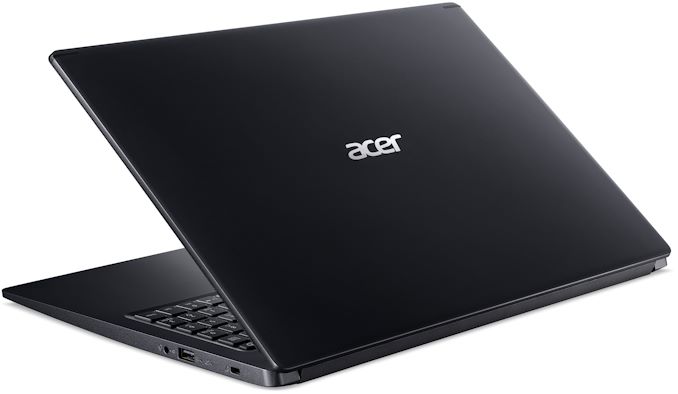
Acer’s Aspire 5 (A515-44) is aimed at  those looking for something bigger and less portable. This machine is equipped with a Full-HD IPS 15.6-inch LCD and uses AMD’s six-core Ryzen 5 4500U mobile CPU that is accompanied by up to 24 GB of RAM, up to 1 TB PCIe SSD, and a 2 TB hard drive. This system will hit the market in June at an MSRP starting at $519.99.


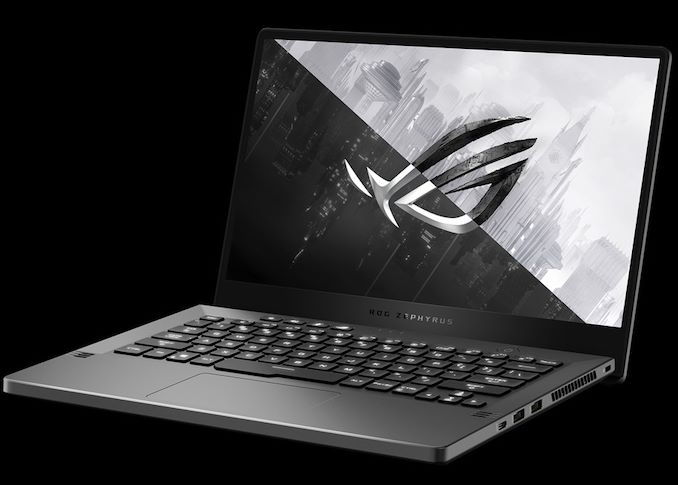
ASUS’s ROG Zephyrus G14: An Ultimate Gaming Laptop


Among gaming notebook vendors, ASUS was the first company to start using AMD’s desktop Ryzen CPUs with eight cores inside its ROG laptop. So it is not surprising that the company is also among the first with its high-end ROG Zephyrus G14 notebook powered by AMD’s Ryzen 9 4900HS and Ryzen 7 4800HS mobile APUs.



The eight-core Ryzen Mobile 4000-series processor works together with up to 32 GB of DDR4-3200 RAM, an up to 1 TB M.2 NVMe SSD, and NVIDIA’s GeForce RTX 2060 or GTX 1660 Ti discrete graphics processor. The powerful guts are accompanied by rather decent connectivity technologies, including Wi-Fi 6, Bluetooth 5.0, USB 3.1 Gen 1/2 Type-A/Type-C ports, and a DisplayPort 1.4 output.
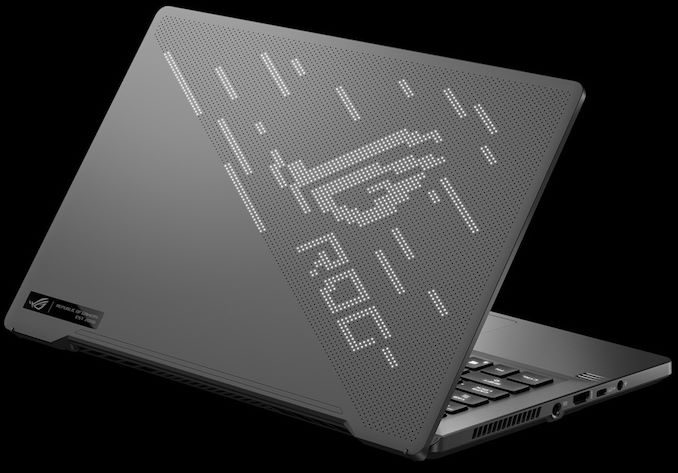


The ASUS ROG Zephyrus G14 is obviously meant for gamers on the go, and so ASUS has set out to strike a balance between performance and portability. As the name suggests, the laptop comes with a 14-inch display featuring a 2560×1440 or 1920×1080 resolution as well as a 60 Hz or 120 Hz refresh rate with VESA Adaptive-Sync on top. Interestingly, select SKUs even come with Pantone Validated LCDs to appeal to those who want to do color-critical workloads on their Republic of Gamers laptop. The machine weighs 1.7 kilograms and is 1.79 cm – 1.99 cm thick depending on the version.


ASUS’s TUF Gaming A15: Ryzen Mobile Gaming in Budget


The ROG Zephyrus G14 is not ASUS’s only AMD Ryzen Mobile 4000-series-based notebook aimed at gamers and performance-demanding enthusiasts. The company also has lower-tier TUF Gaming A15 machine, which also brings decent specifications and performance.



The ASUS TUF Gaming A15 is based on AMD’s Ryzen 7 4800H and Ryzen 5 4600H processors that are paired with NVIDIA’s GeForce RTX 2060 or GTX 1660 Ti discrete GPUs, up to 32 GB of DDR4-3200 memory, an SSD up to 1 TB in capacity, and a 1 TB 5400 RPM HDD. On the I/O side of things, the laptop has Wi-Fi 5, USB 3.2 Gen 1/2 Type-A/Type-C, a GbE port, and an HDMI output.
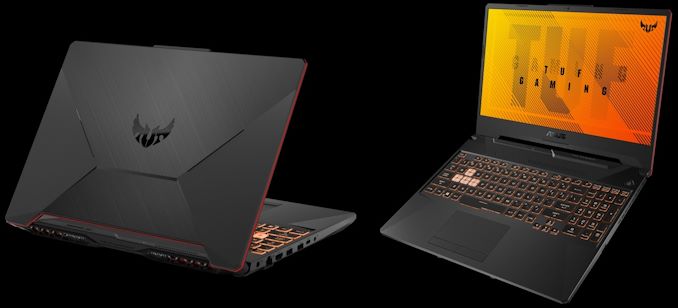


As per its name, the TUF Gaming A15 is equipped with a 15.6-inch Full-HD IPS panel with a 60 Hz or a 144 Hz refresh rate that is supported by VESA’s Adaptive-Sync technology.
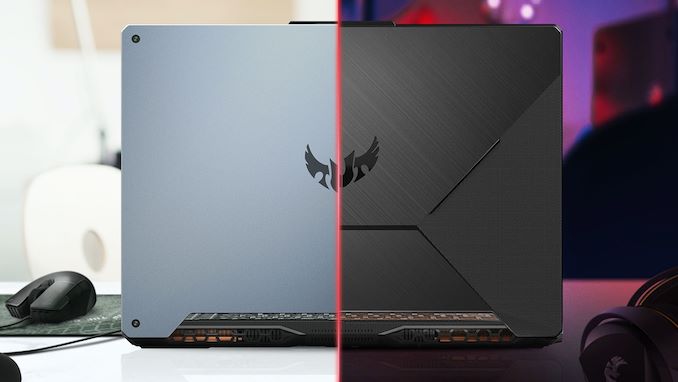


One interesting thing to note about the TUF Gaming A15 laptops is that in addition to being ruggedized, these machines will be available in two different finishes: one Fortress Gray looks minimalistic, whereas another — Bonfire Black — looks futuristic.


The ASUS TUF Gaming A15 is already available from retailers like Amazon starting at prices of $999.99.


Dell’s G5 15 Special Edition Ryzen: An AMD-Only Gaming Laptop


Dell introduced its G5 15 SE gaming laptop ahead of all of its rivals back at CES 2020. What is, perhaps, more important is that this machine uses key components only from AMD, so along with a Ryzen 4000 APU it also comes with AMD’s Radeon RX 5600M discrete GPU (Navi architecture). The notebook is currently the only PC that supports AMD’s SmartShift technology that dynamically shift power and thermal headroom between the CPU and the GPU to maximize performance.
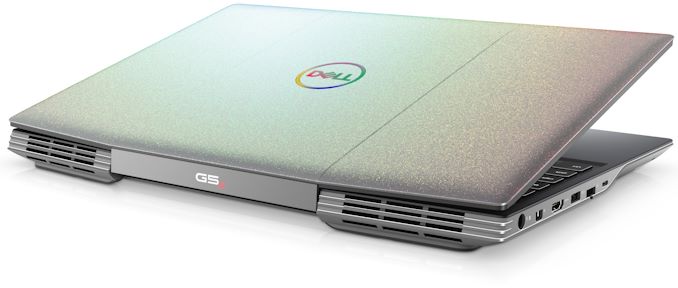


The 15.6-inch G5 15 Special Edition Ryzen gaming notebook is equipped with a Full-HD panel with a 144Hz maximum refresh rate as well as variable refresh support. Meanwhile, the system comes with DDR4 DRAM, a SSD up to 1TB in size, and a 2 TB 5400 RPM HDD. As far as I/O is concerned, the mobile PC features Wi-Fi, Bluetooth, GbE, USB-A, USB-C, mDP, HDMI, SD card reader, a 3.5-mm audio jack, and a webcam with IR sensors.
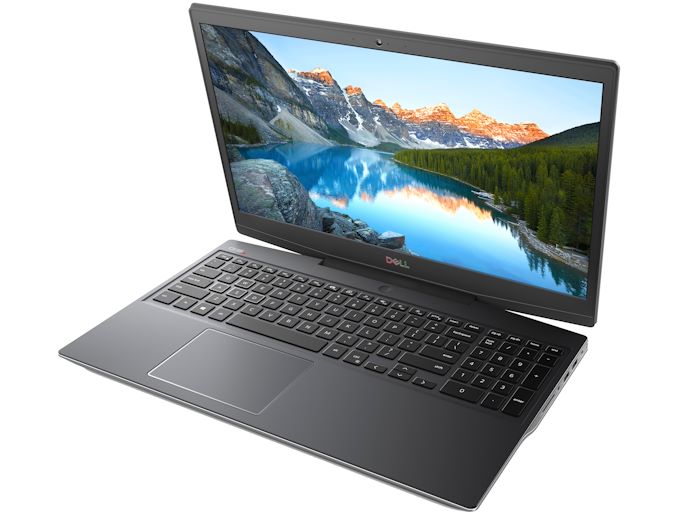


Dell’s G5 15 Special Edition Ryzen yet has to make it to the market, but back in January it was said that the notebook is due in early April. As for pricing, it is expected that the machine will cost starting at $799.


MSI’s Bravo 15: A Budget Gaming Laptop


MSI is a yet another company that uses AMD’s latest six-core Ryzen 5 4600H and eight-core Ryzen 7 4800H APUs paired with the company’s latest Radeon RX 5500M discrete GPU. Though it is unclear whether the latest Bravo 15 notebook actually supports SmartShift technology.



MSI’s Bravo 15 laptops that are currently available for pre-order are equipped with 16 GB of DDR4 memory as well as a 512 GB NVMe SSD, which is in line with what we expect from sub-$1000 gaming notebooks. Meanwhile, the systems are equipped with a 15.6-inch Full-HD IPS LCD panel featuring a variable refresh rate of up to 120 Hz with VESA’s Adaptive-Sync on top.



Some Thoughts


So far, PC makers have introduced several higher-end midrange gaming laptops based on AMD’s Ryzen Mobile 4000 processors. And given AMD’s ongoing success with the similar Zen 2-based Ryzen 3000 CPUs on the desktop, the company is certainly putting its best foot forward for the mobile space as well. So as supplies ramp up (and Coronavirus ramps down) expect more computer manufacturers introduce Ryzen 4000 notebooks in the coming months.


Traditionally, AMD has done well with gamers, so it is likely that at some point we are going to see true desktop replacement notebooks featuring the company’s latest processors paired with top-of-the-range GPUs. Meanwhile, what remains to be seen is how successful will AMD be with ultraportables, which is a traditional Intel stronghold. To date, only Acer has unveiled an ultrathin Ryzen 4000 notebook, and companies like Lenovo should catch up shortly.


Related Reading:


Sources: AMD, Acer, ASUS, Dell, MSI


Source: AnandTech – Ryzen Roundup: A Quick Overview of Ryzen Mobile 4000 Laptops From Acer, ASUS, Dell, & MSI

Transcend Launches microSD Cards with SLC Caching

Transcend has unveiled a new series of microSD memory cards that support pseudo-SLC caching to boost burst write speeds. The new USD230I memory cards offer data transfer speeds of up to 100 MB/s as well as random read/write performance of up to 3,400 IOPS.


Transcend’s USD230I lineup includes microSD cards featuring 8 GB, 16 GB, 32 GB, and 64 GB capacities. The cards carry the A1 as well as the V30 badges, so they can be used to install Google Android applications and guarantee a minimum write speed of up to 30 MB/s, which is good enough for 4K video shooting.


Pseudo-SLC caching was introduced into the standard by the SD Association back in early 2017, but so far no actual memory cards have used this technology. Meanwhile, since Transcend’s USD230I use 3D TLC NAND memory, the only way to boost their writing performance is indeed through pSLC caching. Unfortunately, the manufacturer does not specify the sizes of its pSLC cache.


As far as endurance is concerned, the 8 GB model is rated for 36 terabytes to be written (TBW), the 16 GB/32 GB models are speced for 70 TBW, whereas the 64 GB variant is rated for 140 TBW.


Related Reading:


Source: TechPowerUp


Source: AnandTech – Transcend Launches microSD Cards with SLC Caching

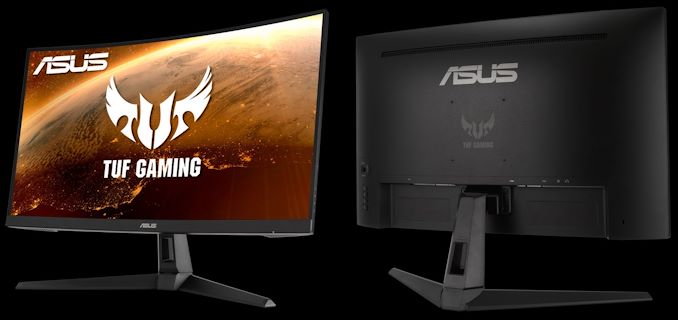
TUF Goes FreeSync Premium: ASUS TUF Gaming VG27VH1B 27-Inch 165Hz DCI-P3 Monitor

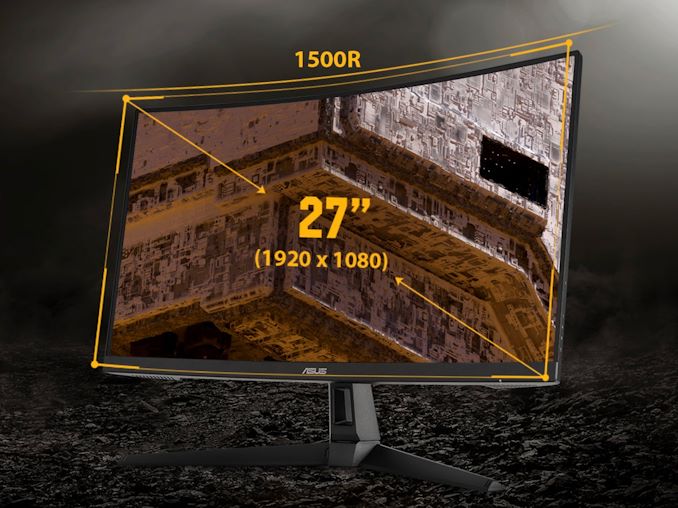
ASUS brought its TUF Gaming sub-brand to the market a couple of years ago to address needs of mainstream gamers. But as requirements evolve, the company has added premium features to TUF Gaming-branded products every now and then. This time around ASUS has introduced a new TUF-branded 27-inch curved monitor that boasts with AMD’s FreeSync Premium certification, a wider-than-sRGB color gamut, and a 165 Hz refresh rate.


The ASUS TUF Gaming VG27VH1B monitor is based on a 27-inch curved VA panel featuring a 1920×1080 resolution, 250 nits luminance, a 3000:1 contrast ratio, 178°/178° viewing angles, a 1 ms MPRT response time, and a 165 Hz maximum refresh rate. The LCD can reproduce 120% of the sRGB as well as 90% of the DCI-P3 color gamuts, which is rather good for a monitor that is supposed to be (at least relatively) inexpensive.


One of the key selling points of the TUF Gaming VG27VH1B is that the monitor features a scaler that supports VESA’s Adaptive-Sync variable refresh rate technology. The display is also certified to meet AMD’s FreeSync Premium requirements, which, as you’d expect for a high refresh rate display, means it officially supports low framerate compensation (LFC) mode. All told, the monitor supports refresh rates from 50 Hz up to 165 Hz.


As for other technologies, the TUF Gaming VG27VH1B also fully supports ASUS’s ELMB (extreme low motion blur) technology, which is designed to make fast-action scenes look sharper. What is particularly important about this ELMB implementation is that it can work together with Adaptive-Sync/FreeSync, so that it isn’t an either/or situation. Other notable capabilities of the new TUF monitor include in-game enhancements techniques like Shadow Boost, GamePlus modes (Crosshair, Timer, FPS Counter, Display Alignment), and GameVisual genre-tailored modes.


One interesting thing to note about the TUF Gaming VG27VH1B is its set of inputs that includes one D-Sub connector for legacy PCs as well as two HDMI 2.0 ports to connect modern PCs, but there aren’t any DisplayPort inputs. On the audio side of things, the monitor has 2W stereo speakers along with a line-in and a headphone out connector.


As for ergonomics, the ASUS VG27VH1B comes with a stand that can adjust tilt and swivel, but not height. Also, the display has VESA 100×100 mounting holes.


The ASUS TUF VG27VH1B Monitor
  TUF Gaming VG27VH1B
Panel 27″ VA
Native Resolution 1920 × 1080

(16:9)
Refresh Rate 165 Hz
Dynamic Refresh Rate Technology AMD FreeSync Premium

VESA Adaptive-Sync
Range HDMI 50 Hz – 165 Hz
Response Time 1 ms MPRT
Brightness 250 cd/m²
Contrast 3000:1
Color Gamut 125% sRGB

90% DCI-P3
Viewing Angles 178°/178° horizontal/vertical
Curvature 1500R
Inputs 1 × D-Sub

2 × HDMI 2.0
USB Hub
Audio 2 W stereo speakers
Proprietary Enhancements GamePlus: Crosshair/Timer/FPS Counter/Display Alignment


GameVisual: Scenery/Racing/Cinema/RTS/RPG/FPS/sRGB Modes/MOBA Mode


GameFast Input

Stand Height
Tilt +23° ~ -5°
Swivel +15° ~ -15°
Power Consumption Idle 0.5 W
Typical ?
Maximum 28 W
MSRP ?

ASUS already lists its TUF Gaming VG27VH1B monitor on its website, so expect it to hit the market in the foreseeable future (COVID-19 willing).


Related Reading:


Source: ASUS (via Hermitage Akihabara)


Source: AnandTech – TUF Goes FreeSync Premium: ASUS TUF Gaming VG27VH1B 27-Inch 165Hz DCI-P3 Monitor

Dell & HPE Issue Updates to Fix 40K Hour Runtime Flaw in Enterprise SSDs

In a second SSD snafu in as many years, Dell and HPE have revealed that the two vendors have shipped enterprise drives with a critical firmware bug, one will eventually cause data loss. The bug, seemingly related to an internal runtime counter in the SSDs, causes them to fail once they reach 40,000 hours runtime, losing all data in the process. As a result, both companies have needed to issue firmware updates for their respective drives, as customers who have been running them 24/7 (or nearly as much) are starting to trigger the bug.


Ultimately, both issues, while announced/documented separately, seem to stem from the same basic flaw. HPE and Dell both used the same upstream supplier (believed to be SanDisk) for SSD controllers and firmware for certain, now-legacy, SSDs that the two computer makers sold. And with the oldest of these drives having reached 40,000 hours runtime (4 years, 206 days, and 16 hours), this has led to the discovery of the firmware bug and the need to quickly patch it. To that end, both companies have begun rolling out firmware


As reported by Blocks & Files, the actual firmware bug seems to be a relatively simple off-by-one error that none the less has a significant repercussion to it.


The fault fixed by the Dell EMC firmware concerns an Assert function which had a bad check to validate the value of a circular buffer’s index value. Instead of checking the maximum value as N, it checked for N-1. The fix corrects the assert check to use the maximum value as N.


Overall, Dell EMC shipped a number of the faulty SAS-12Gbps enterprise drives over the years, ranging in capacity from 200 GB to 1.6 TB. All of which will require the new D417 firmware update  to avoid an untimely death at 40,000 hours.


Meanwhile, HPE shipped 800 GB and 1.6 TB drives using the faulty firmware. These drives were, in turn, were used in numerous server and storage products, including HPE ProLiant, Synergy, Apollo 4200, Synergy Storage Modules, D3000 Storage Enclosure, and StoreEasy 1000 Storage, and require HPE’s firmware update to secure their stability.


As for the supplier of the faulty SSDs, while HPE declined to name its vendor, Dell EMC did reveal that the affected drives were made by SanDisk (now a part of Western Digital). Furthermore, based on an image of HPE’s MO1600JVYPR SSDs published by Blocks & Files, it would appear that HPE’s drives were also made by SanDisk. To that end, it is highly likely that the affected Dell EMC and HPE SSDs are essentially the same drives from the same maker.


Overall, this is the second time in less than a year that a major SSD runtime bug has been revealed. Late last year HPE ran into a similar issue at 32,768 hours with a different series of drives. So as SSDs are now reliable enough to be put into service for several years, we’re going to start seeing the long-term impact of such a long service life.


Related Reading:


Sources: Blocks & Files, ZDNet


Source: AnandTech – Dell & HPE Issue Updates to Fix 40K Hour Runtime Flaw in Enterprise SSDs

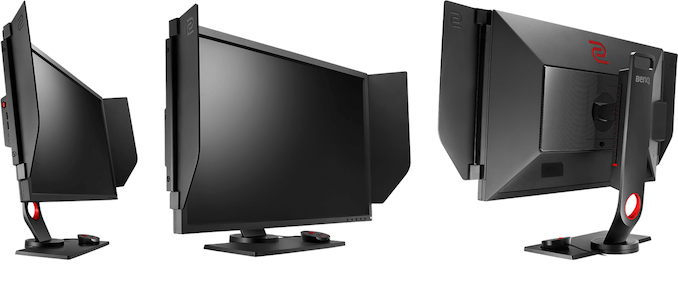
Gone in 0.5 ms: BenQ Unveils Zowie XL2746S 240 Hz Monitor w/ 0.5 ms Response Time

IPS technology has recently evolved to the point where 240 Hz refresh rates have started enter the territory of displays for hardcore gamers that were previously dominated by TN panels. However, TN technology still has a trick up its sleeve, and that is a very low grey-to-grey response times. Taking advantage of this last technical superiority, BenQ this week introduced its latest gaming display for e-sports professionals, the Zowie XL2746S. As expected from a Zowie monitor, it has a host of features aimed at gamers, going beyond just capabilities of its panel.


BenQ’s Zowie XL2746S LCD uses a 27-inch Full-HD TN panel featuring up to 320 nits brightness, a 1000:1 contrast ratio, a 240 Hz maximum refresh rate, and a 0.5 ms GtG response time. Since we are dealing with a TN panel, its viewing angles and color quality are expected to be poor, so we are only talking about support for sRGB color gamut, without wider color ranges like DCI-P3.


The Zowie XL2746S monitor supports VESA’s Adaptive-Sync technology and carries AMD’s FreeSync badge. In addition, the display supports DyAc+ technology that makes fast-paced action scenes look less blurry (keep in mind that this cannot co-exist with FreeSync/Adaptive-Sync), Black eQualizer to enhance dark scenes, and Color Vibrance to adjust color tones to make scenes more defined.


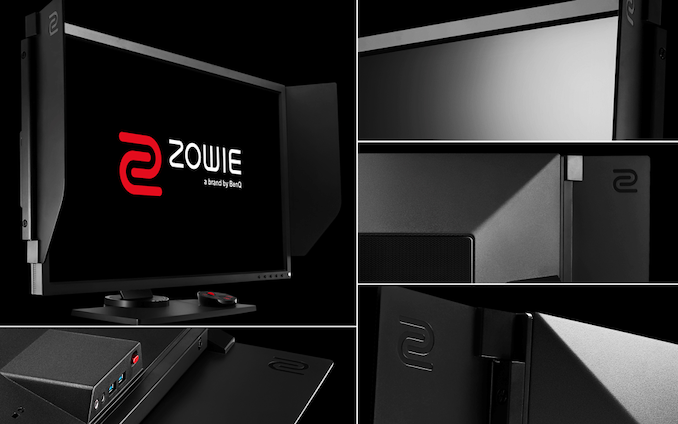
Designed specifically for hardcore gamers and e-sports athletes, BenQ’s Zowie monitors feature a special hood to reduce distractions and possible light glare, and also provide some protection against prying eyes during tournaments. They also come with a stand that can be adjusted in height, swivel, and tilt; and they are equipped with a hockey puck-shaped controller pad that can activate an appropriate profile quickly.


As for connectivity, the Zowie XL2746S has a DisplayPort 1.2a, a DVI-D DL, and two HDMI (2.0 and 1.4) inputs. In addition, the LCD also has audio connectors, as well as a dual-port USB 3.0 hub.


BenQ’s Display w/ a 240 Hz Refresh & 0.5 ms Response Time
  The Zowie XL2746S
Panel 27-inch class TN
Native Resolution 1920 × 1080
Maximum Refresh Rate 240 Hz
Dynamic Refresh Tech AdaptiveSync

FreeSync
Range ? Hz
Brightness 320 cd/m²
Contrast 1000:1
Viewing Angles 170°/160° horizontal/vertical
Response Time 0.5 ms GtG
Pixel Pitch ~0.3113 mm²
Pixel Density ~81 PPI
Color Gamut Support sRGB (?)
Inputs 1×DP 1.2a

1×DVI-D DL

1×HDMI 1.4

1×HDMI 2.0
Audio audio connectors
VESA Mounts
Warranty ? years
Additional Information ?
Retail Price €629

BenQ’s Zowie XL2746S monitor is now available in Europe directly from the manufacturer for €629.


Related Reading:


Source: BenQ (via PC Watch)


Source: AnandTech – Gone in 0.5 ms: BenQ Unveils Zowie XL2746S 240 Hz Monitor w/ 0.5 ms Response Time

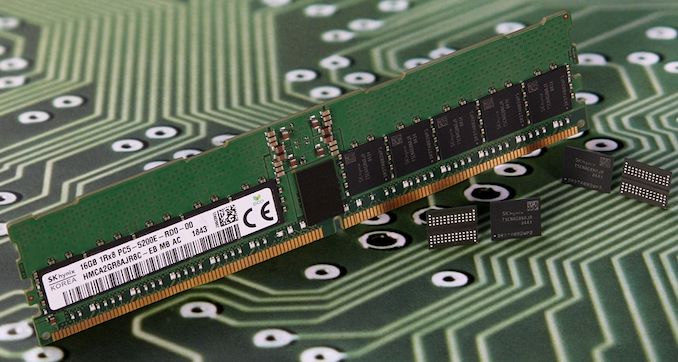
Cadence DDR5 Update: Launching at 4800 MT/s, Over 12 DDR5 SoCs in Development

JEDEC still has not published the DDR5 specification officially, yet it looks like DRAM makers and SoC designers are preparing for the DDR5 launch at full steam. Cadence, which was vocal about the new technology back in 2018, and has since released provisional DDR5 IP (the DDR5 controller and PHY) commercially, this week presented some additional information about the upcoming DDR5 market release as well as the technology’s progress.


DDR5 Platforms Getting Ready


On the SoC side of matters, we already know that AMD’s EPYC ‘Genoa’ as well as Intel’s Xeon Scalable ‘Sapphire Rapids’ will support DDR5 DRAM when they launch in the 2021 ~ 2022 timeframe. What is noteworthy, is that Cadence’s provisional DDR5 IP has ‘over a dozen design-ins’, so there are over 12 SoCs supporting DDR5 in various stages of development right now. Some of these system-on-chips will come earlier and some will be available later, but it is evident that there is a serious interest towards the technology among developers of SoCs.


Cadence is confident that its DDR5 controller and PHY are compliant to the formal JEDEC specification, so SoCs that use its IP will be compatible with upcoming DDR5 memory modules.


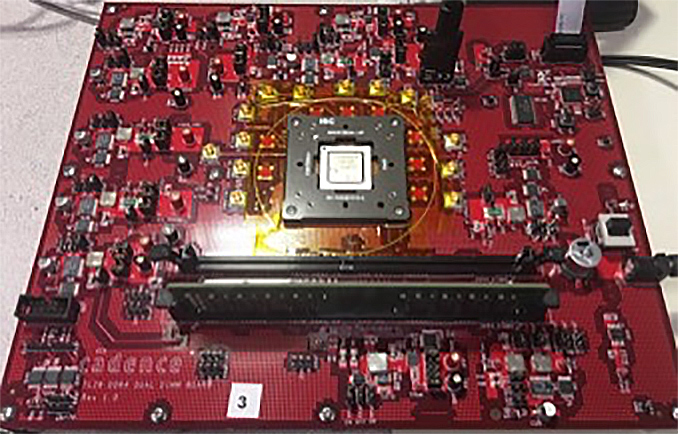
Cadence’s DDR5 testboard with a module on it


Here is what Marc Greenberg, director of DRAM IP marketing at Cadence, said:


“Close participation in the JEDEC working groups is an advantage. We get insight into how the standard will develop. We are a controller and PHY vendor and can anticipate any potential changes on the way to final standardization. In the early days of the standardization, we were able to adopt standard elements under development and work together with our partners to get very early working silicon. As we approach the release of the standard, we get more proof points to indicate that our IP will support DDR5 devices compliant to the standard.”


For Starters: 16 Gb DDR5-4800


Transition to DDR5 represents a major challenge for DRAM makers because the chips are set to increase capacity, rise data transfer rates, increase effective performance (per clock and per channel), and lower power consumption all at the same time (read more here and here). In addition, DDR5 is expected to make it easier to stack multiple DRAM devices, which will allow to increase DRAM capacity in servers (from what we have today).


Micron and SK Hynix have already announced sampling to partners of their DDR5 memory modules based on their 16 Gb chips. Samsung has not formally confirmed any sampling, but we know from its ISSCC 2019 announcement that the company has been preparing and evaluating its 16 Gb DDR5 devices and modules on internally for a while now. Anyhow, DDR5 will likely be available at launch from all three major DRAM producers.


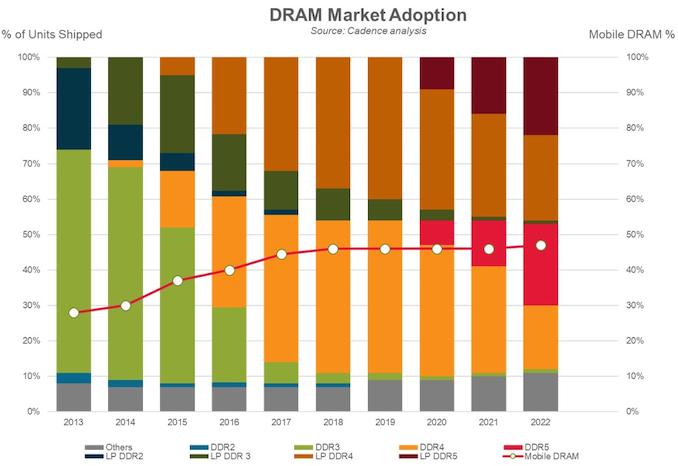
Cadence is confident that DDR5 ramp will begin with 16 Gbps DRAMs at 4800 MT/sec/pin data transfer rate (something that was indirectly confirmed by SK Hynix’s DDR5-4800 module showcase at CES 2020). From there, DDR5 will evolve in two directions: capacity and performance. Capacity wise, DDR5 will grow to 24 Gb (so expect DDR5 modules of odd capacity like 24 GB, 48 GB, etc.) and then to 32 Gb. As for performance, Cadence expects DDR5 to evolve to 5200 MT/sec/pin data rate in 12 – 18 months after DDR4-4800 launch and then to 5600 MT/s in another 12 – 18 months, so performance progress of DDR5 in servers will occur in a pretty much regular cadence.


On the client side, a lot will depend on controllers and memory module vendors, but enthusiast-grade DIMMs will certainly be faster than those used in servers.


Mr. Greenberg, said the following:


“DDR4 went to 3200 just this year. Adoption of DDR speed grades happens quite slowly. DDR5 is the next step. It is a big leap in bit rate performance. But it will then hang there for 12-18 months, then go up to 5200, and 5600 after that. We are back on the treadmill of one speed grade every 12-18 months.”


In fact, the step from DDR4-3200 to DDR5-4800 will bring a huge performance bump, but it does not end there for servers. Because of 16 Gb chips, internal DDR5 architecture optimizations, new server architectures, and usage of RDIMMs instead of LRDIMMs, single-socket systems with 256 GB DDR5 modules will get a nice performance increase in terms of latency (vs. today’s LRDIMMs).


Here is what Mr. Greenberg said:


“A lot of these machines have 8 channels on a processor [socket], each [channel] with 512 GB, making a 4 TB memory machine where you can access any byte in under 100 ns. If a database index is 4 TB, you can imagine how big a database could be supported. Quite a beast.”


Keeping in mind that AMD’s EPYC ‘Rome’ CPUs already have eight memory channels and support up to 4 TB of DDR4 DRAM per socket using 256 GB RDIMMs, one can take advantage of low latency (vs. LRDIMMs) even today, but not at DDR5’s speeds. Meanwhile, systems with LRDIMM support can have up to 4.5 TB per socket, but at a cost of additional latency.


DDR5 Shipping This Year?


As noted above, AMD’s Genoa and Intel’s Sapphire Rapids are not due until very late 2021, or rather early 2022, but Cadence seems to be optimistic and believes that ‘2020 will be the year of DDR5’. From Cadence’s perspective, this might mean tapeouts of actual DDR5-supporting SoCs (which is about time), but the company’s internal analysis shows that it expects DRAM vendors to actually start shipments of DDR5 memory this year.


Memory makers tend to start volume shipments of new types of DRAM ahead of general availability of platforms. Meanwhile, shipping a year before AMD’s Genoa and Intel’s Sapphire Rapids seems a bit early, but has several reasonable explanations: AMD’s and Intel’s DDR5-supporting processors are closer than communicated by the two companies, there are DDR5-supporting SoCs that are coming to market well ahead of those from AMD and Intel, system makers need time to test DDR5 modules and stock them ahead of major product launches.


In any case, if the DDR5 specification is at the Final Draft stage, it is possible for major DRAM makers to kick off volume production even without a published standard. Theoretically, SoC developers can also send their designs to manufacturing at this stage. Meanwhile, it is hard to imagine DDR5 to capture any sizeable market share in 2020 – 2021 timeframe without support from the major CPU vendors.


Related Reading:


Source: Cadence


Source: AnandTech – Cadence DDR5 Update: Launching at 4800 MT/s, Over 12 DDR5 SoCs in Development

TeamGroup Announces 32GB T-Force Vulcan Z and Dark Z DDR4 Modules

One of the world’s largest DRAM memory manufacturers TeamGroup has unveiled its first DDR4 memory kits featuring 32 GB sticks under its gaming-focused T-Force brand. The T-Force Vulcan Z and T-Force Dark Z will the first from the brand to be offered in 32 GB x 2 kits in dual-channel kits.


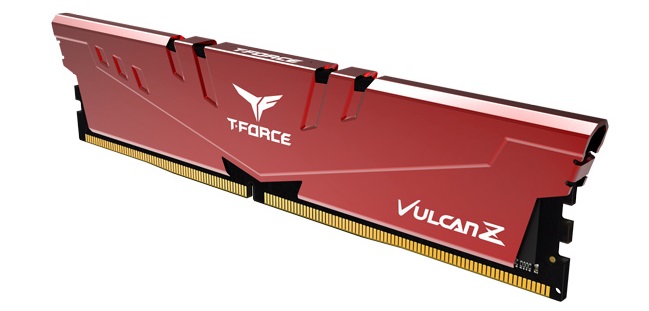
Starting with its T-Force Vulcan Z range, TeamGroup intends to release two different speeds with its 32 GB single stick options. It will be made available in DDR4-2666 and DDR4-3000 32 GB x 2 kits, which can operate in both single and dual-channel. The T-Force Vulcan Z features an aluminium heat spreader which is available in red or silver, with TeamGroup claiming that it uses selected memory IC chips for stability and performance.


TeamGroup T-Force Vulkan Z DDR4 Memory


Looking at the latency timings, the new T-Force Vulkan 2 x 32 GB kits, the DDR4-2666 kit has latency timings of CL 18-18-18-43 with an operating voltage of 1.2 V, while the DDR4-3000 kit has timings of CL 16-18-18-38 at 1.35 V.


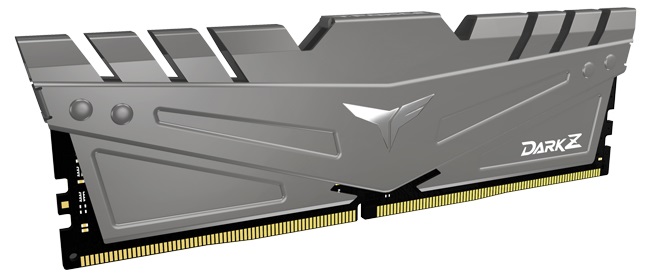
The T-Force Vulkan 2 x 32 GB will be available in just DDR4-3000, with CL 16-18-18-38 latency timings with an operating voltage of 1.35 V. Like the Vulkan Z, the Dark Z also features aluminium heat spreaders, with an armoured design and individually selected memory ICs. The Vulkan Z range will also be available with a choice of two colors, grey and red.


TeamGroup T-Force Dark Z DDR4 Memory


TeamGroup doesn’t specifically go into detail about which memory ICs its new 2 x 32 GB kits will feature, which opens the door for the manufacturer to change which vendor memory chips it uses. All of TeamGroup’s DDR4 kits support XMP 2.0 memory profiles, with the T-Force Vulkan Z and Dark Z kits compatible with both Intel and AMD platforms.


Each T-Force Vulcan Z and Dark Z memory kit across its range has a lifetime warranty. At present, TeamGroup hasn’t stated when stock will hit retail channels, nor has it stated its intended pricing structure for the new 2 x 32 GB memory kits.


Related Reading


Source: AnandTech – TeamGroup Announces 32GB T-Force Vulcan Z and Dark Z DDR4 Modules

Greenliant Launches 1.92 TB M.2 Industrial SSDs

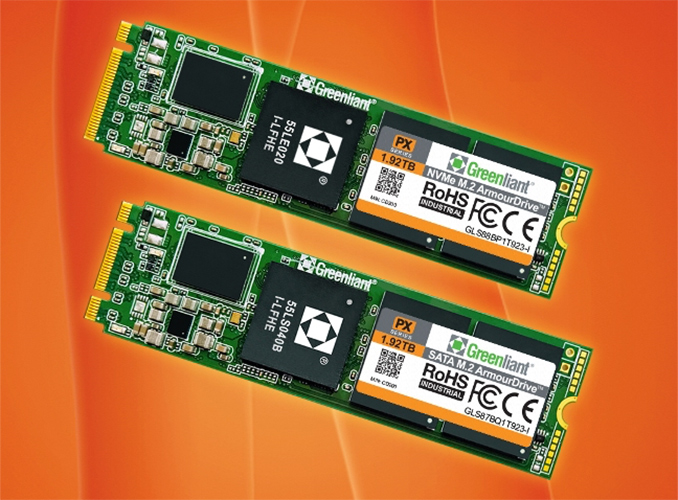
Greenliant revealed on Wednesday that it has started shipments of its new industrial-grade ArmourDrive M.2 SSDs. The enhanced-durability drives are rated to operate in a much wider range of temperatures than commercial drives and are available in both NVMe and SATA formats, with capacities from 240 GB up to 1.92 TB.


Greenliant’s ArmourDrive 88PX-series NVMe M.2-2280/PCIe 3.0 x4 SSDs and ArmourDrive 87PX-series SATA M.2-2280 SSDs are designed to operate in temperatures between -40°C and +85°C. The drives use 3D TLC NAND memory, feature a DRAM cache, and are based on an unknown/unlisted controller that support LDPC-based ECC, end-to-end data protection, dynamic and static wear leveling, AES-256/TCG OPAL encryption, and Secure Erase capabilities.


As far as performance is concerned, the Greenliant ArmourDrive 88PX NVMe SSDs are rated for up to 3400 MB/s sequential read speeds as well as up to 1100 MB/s sequential write speeds. Meanwhile, the Greenliant ArmourDrive 87PX SATA SSDs offer up to 550 MB/s sequential read speeds as well as up to 520 MB/s sequential write speeds.


Greenliant’s ArmourDrive 88PX and 87PX-Series SSDs
Capacity 240 GB 480 GB 960 GB 1920 GB
Controller NVMe 1.3 or AHCI

LDPC

End-to-End Data Protection

Dynamic and Static Wear Leveling
NAND Flash 3D TLC NAND
Form-Factor, Interface, Protocol M.2-2280, PCIe 3.0 x4 or SATA
Sequential Read PCIe up to 3400 MB/s
SATA up to 550 MB/s
Sequential Write PCIe up to 1100 MB/s
SATA up to 520 MB/s
Pseudo-SLC Caching Supported
DRAM Buffer Yes, capacity unknown
Encryption TCG Opal 2.0

AES-256
Power Consumption PCIe Active mode:

1.92TB: 5,200 mW

960GB: 5,000 mW

480GB: 4,100 mW

240GB: 3,900 mW

Idle mode: < 2,000 mW
  SATA Active mode:

1.92TB: < 2,100mW

960GB: < 2,000mW

480GB: < 1,800mW

240GB: < 1,500mW

Idle mode: < 900mW
Warranty ? years
MTBF 2,000,000 hours

Greenliant is not the first company to ship TLC-based M.2 drives that can work in extreme environments, but it is among the first suppliers to start selling 1.92 TB drives for industrial temperature ranges. Building high-capacity SSDs for industrial applications is not particularly easy since they use multi-layered chips all of which should work fine when it is extremely cold or extremely hot.


The company does not disclose prices of its ArmourDrive 88PX NVMe and ArmourDrive 87PX SATA SSDs, as prices depend on the quantity ordered as well as other factors.


Related Reading:


Source: Greenliant


Source: AnandTech – Greenliant Launches 1.92 TB M.2 Industrial SSDs

PowerColor Extends Product Warranty by Three Months Due to Coronavirus

PowerColor this week has announced that it is extending its warranties to existing customers by three months. The second manufacturer this month to extend its existing prodcut warranties, PowerColor is making the extension due to the SARS-CoV-2 Coronavirus global pandemic and all of the resulting lockdown-related restrictions on non-essential shipping.


With the novel Coronavirus affecting many daily aspects of life and industry, provisions of basic necessities are being prioritized over items classified as non-essential. With more emphasis on much of the world focused on remaining at home during these times, PowerColor has announced a three-month warranty extension program for customers whose warranties were due to expire in the next few months (March to June 2020).


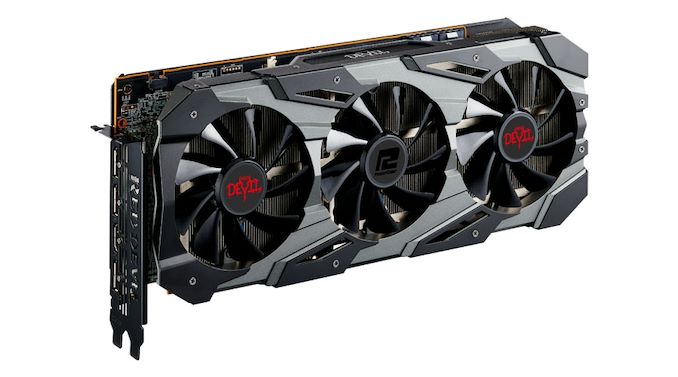
The brief announcement from PowerColor doesn’t specify which products would benefit from this three-month warranty extension, but it is likely to stretch across its entire product portfolio. The most notable products in PowerColor portfolio are its AMD Radeon graphics cards with aftermarket coolers. With delays on shipping likely due to the ongoing coronavirus outbreak, as well as workplace restrictions in place, this is beneficial to users currently in the process of an RMA.


The official statement from PowerColor reads:


“With the global crisis of COVID-19, we understand that these are critical times for everyone. This has impacted all aspects of our lives, and we understand that during these times, priorities are placed on more health-concerned matters. Many in the process of RMAs may find difficulty in shipping out cards for repair or service at this time, so we will be adding a 3-month extension to customers with warranties expiring between March through June 2020. PowerColor remains committed to deliver great products and services to our customers, and want to assure that we will continue to do so during these trying times.


Wishing health and safety for all The PowerColor team.”


Related Reading


Source: AnandTech – PowerColor Extends Product Warranty by Three Months Due to Coronavirus

Xiaomi Globally Launches Mi 10, Mi 10 Pro; Snapdragon 865 & 108MP Cameras

Whilst the Mi 10 and Mi 10 Pro haven’t been secret devices, having been launched in China over a month ago, today Xiaomi is catching up on what was originally planned to be a MWC2020 global product reveal and global launch event.

The new Mi 10 and Mi 10 Pro represent Xiaomi’s mainline flagship devices for 2020, featuring the latest Snapdragon 865 SoC, as well as a slew of different camera hardware, including the famed HMX 108MP camera sensor that was developed in collaboration between Samsung and Xiaomi.


Source: AnandTech – Xiaomi Globally Launches Mi 10, Mi 10 Pro; Snapdragon 865 & 108MP Cameras

Micron to Launch HBM2 DRAM This Year: Finally

Bundled in their latest earnings call, Micron has revealed that later this year the company will finally introduce its first HBM DRAM for bandwidth-hungry applications. The move will enable the company to address the market for high-bandwidth devices such as flagship GPUs and network processors, which in the last five years have turned to HBM to meet their ever-growing bandwidth needs. And as the third and final of the “big three” memory manufacturers to enter the HBM market, this means that HBM2 memory will finally be available from all three companies, introducing a new wrinkle of competition into that market.


Overall, while Micron has remained on the cutting-edge of memory technologies, the company has been noticeably absent from HBM thus far. Previous efforts have instead focused on GDDR5X, as well as a different take on wide-and-slow memory with Hybrid Memory Cube (HMC). First announced back in 2011 as a joint effort with  Samsung and IBM, HMC was a similar stacked DRAM type for bandwidth hungry applications, which featured a low-width bus & extremely high data rates to offer memory bandwidth that by far exceeded that of then-standard DDR3. As a competing solution to HBM, HMC did see some usage in the market, particularly in products like accelerators and supercomputers. Ultimately, however, HMC lost the battle against more widespread HBM/HBM2 and Micron folded the project in 2018 in favor of GDDR6 and HBM.


In the end, is has taken Micron around two years to develop its first HBM2 memory devices, and these will finally become available in 2020. Given the broad, financial nature of the call, Micron isn’t disclosing the specifications of its first HBM2 devices at this time, though it is a safe bet that the underlying DRAM cells will be produced using the company’s 2nd or 3rd Generation 10 nm-class process technologies (1y or 1z). Meanwhile, Micron will obviously do its best to be competitive against Samsung and SK Hynix both in terms of performance and capacity.


Sanjay Mehrotra, president and chief executive officer, had the following to say:


“In FQ2, we began sampling 1Z-based DDR5 modules and are on track to introduce high-bandwidth memory in calendar 2020. We are also making good progress on our 1-alpha node.”


Related Reading:


Source: Micron


Source: AnandTech – Micron to Launch HBM2 DRAM This Year: Finally

Plugable Launches Low-Cost 2.5 GbE USB Dongle: $30 for a Limited Time

Plugable this week has become the latest peripheral manufacturer to start producing 2.5 Gigabit Ethernet dongles, with the release of their own adapter. Designed to add support for faster networking speeds to PCs with USB 3.0 Type-A and Type-C ports, Plugable is pushing the “inexpensive” aspect of the network adapter hard, launching it at just $30.


Like most other 2.5GbE adapters we’ve seen to date, the Plugable 2.5G USB Ethernet Adapter (USBC-E2500) is based on Realtek’s RTL8156 controller, which supports 2.5GBASE-T and on down, all over standard Cat5e cabling. The Realtek chip supports such features as  9k Jumbo frame support, auto MDI-X (crossover detection and correction), and IEEE 802.1Q VLAN. Since some of these capabilities require OS support, the dongle comes with drivers for Apple MacOS (10.12 and newer), Microsoft Windows 7/8/10, and Linux (kernel 3.2).


Meanwhile, recognizing that the industry as a whole is in the middle of a transition from USB Type-A to USB Type-C, the USB-C native Plugable 2.5G USB Ethernet Adapter comes with a USB-C to USB-A adapter that’s conveniently tethered to the dongle’s cable. For USB dongles that even bother to account for both port types, we normally see loosely packed adapters, so this is an interesting choice that should make the adapter a lot harder to lose. Otherwise, the device is made of plastic and looks fairly small, so it should be lightweight and plenty easy to carry around.


The Plugable 2.5G USB Ethernet Adapter is now available directly from the company as well as from leading retailers. The official MSRP of the device is $39.99, but for a limited time the product will be available for $29.99 from Amazon with code 25ETHERNET. The adapter is being released in the US, UK, EU, Australia, Canada, and Japan.


With the COVID-19 outbreak and work from home initiatives being enforced around the globe, this might not be the best time to introduce 2.5G Ethernet dongles that are primarily meant for offices. None the less, we’re happy to see the continued proliferation of faster Ethernet controllers and dongles – and hope that cheaper network switches will catch up soon.


Related Reading:


Source: Plugable


Source: AnandTech – Plugable Launches Low-Cost 2.5 GbE USB Dongle: for a Limited Time

EIZO Expands Availability of OLED Foris Nova Monitor

EIZO this week expanded the availability of its 21.6-inch 4K OLED Foris Nova display. The display was originally launched back in October as a limited-edition product for the Japanese market. Overall, just 500 units were to be made from that production run. However it would seem that EIZO has modified their plans since then, as according to a press release issued by EIZO China, the Foris Nova is now available globally.


The EIZO Foris Nova uses a 21.6-inch printed OLED panel with a 3840×2160 resolution. The display offers a typical/peak brightness range of 132 – 330 nits, a contrast ratio of 1,000,000:1, and a black-white-black response time of 0.04 ms. The monitor can display 1.07 billion colors, covers 80% of the BT.2020 color space and supports the HDR10 and HLG HDR formats. As for connectivity, the Foris Nova connects to hosts using two HDMI 2.0 inputs, it also has 1 W stereo speakers, one headphone output, and one line out.


EIZO is officially positioning the Foris Nova as a personal entertainment display, though its support for HLG and BT.2020 color gamut makes it handy in professional use cases as well.


Meanwhile, the company’s plans to expand the availability of the monitor are a bit odd. As previously noted, when EIZO first announced the monitor they stated they would only make 500 units; but they’ve yet to actually announce a change to this cap (the official EIZO website still says ‘500 units’ to be made). None the less, the monitor is set to become available to a much larger audience, with the global launch making it available in China and beyond.


EIZO Foris Nova Specifications
  Foris Nova
Panel 21.6″ OLED
Native Resolution 3840 × 2160
Maximum Refresh Rate 60 Hz
Response Time 0.04 ms (black-white-black)
Brightness minimum: 0.0005 cd/m²

typical: 132 cd/m²

maximum: 330 cd/m²
Contrast 1,000,000:1
Viewing Angles 178°/178° horizontal/vertical
Pixel Pitch 0.1245 mm²
Pixel Density 204 ppi
Display Colors 1.07 billion
Color Gamut Support DCI-P3: ?

sRGB/Rec 709: ?

Adobe RGB: ?

SMPTE C: ?

Rec2020: 80%
Stand Tilt and height adjustable
Inputs 2 × HDMI (2.0a? 2.0b?)
PSU External
Global Price & Date Q2 2019

The worldwide release of EIZO’s Foris Nova monitor could be a good news for the manufacturer of its 21.6-inch printed OLED panel, JOLED (a division of Japan Display Inc., JDI). Expanded availability of the product could indicate that JOLED has started volume production of its 21.6-inch 4K printed OLED panels, which is why EIZO can now expand availability to China and other markets.


Related Reading:


Source: EIZO China (via Sina Tech, OLED-Info)


Source: AnandTech – EIZO Expands Availability of OLED Foris Nova Monitor

Qualcomm to Update Smartphone GPU Driver Every Quarter, Develops GPU Inspector Tool

As part of its Snapdragon Elite Gaming initiative, Qualcomm previously announced its intentions to release quarterly driver updates for its Adreno GPUs. And now at long last, the first update is set to arrive. In addition, the company has developed an Android GPU Inspector tool to help game designers to optimize their applications for better performance.


While standalone driver updates are still a new concept to smartphones, they are a tried and true aspect of PCs. As a result of being able to deliver periodic driver updates separate from the OS, PC GPU vendors have been able to boost gaming performance and fix bugs in games at a fairly rapid pace, to the benefit of PC gamers everywhere. Now, as part of their Snapdragon Elite Gaming program, Qualcomm wants to bring those same benefits to smartphones, shipping their own driver regular updates to phones so that these performance and feature updates are more readily available to smartphone gamers.


Overall, Qualcomm has stated that it wants to release new drivers for its Snapdragon SoCs every quarter for two to three years after launch. However, it should be noted that the company will not be going around handset vendors in delivering driver updates; the drivers will be sent to smartphone manufacturers, who in turn have to push them to the Google Play Store (or app stores in China). Which means that while Qualcomm hopes that their OEM partners will stick to the quarterly release schedule, it does not have control over what the OEMs ultimately do.


The first SoCs to get quarterly GPU driver are the current-generation Snapdragon 865 and Snapdragon 765/765G, as well as previous-generation Snapdragon 855. The first smartphones to be updated, in turn, will be the Samsung Galaxy S10, Samsung Galaxy Note 10, and Google’s Pixel 4 series. Meanwhile other handsets will be updated later.


In addition to drivers set to be updated quarterly, Qualcomm has also teamed up with Google to create the Android GPU Inspector tool, which promises to help discover performance optimization opportunities. According to Qualcomm, the tool helped Google and an unnamed game developer find an optimization that ‘saved the game 40% in GPU utilization’ on the Pixel 4 XL, which enabled smoother gameplay and longer battery life.


And this kind of close collaboration with game designers will not end with the Android GPU Inspector tool. Select game studios will get beta versions of Adreno GPU software driver in a bid to provide feedback to Qualcomm and, possibly, optimize their titles better.


Related Reading:


Sources: Qualcomm, AndroidAuthority


Source: AnandTech – Qualcomm to Update Smartphone GPU Driver Every Quarter, Develops GPU Inspector Tool

Richard Yu Press Interview: Huawei's CEO on COVID-19 and Huawei Apps

Today Huawei launched its latest generation of photography focused smartphone: the P40 series. This series consists of the P40, the P40 Pro, and the P40 Pro+, starting at €799 for the cheapest going up to €1399 for the high-end model, which features a 40W wireless charge mode, a 6.58-inch OLED 90 Hz display, 10x optical zoom, up to 100x zoom, Wi-Fi 6, and a range of new photography features to get the best shot.


After the launch, Huawei’s Consumer Business Group (CBG) CEO Richard Yu invited the press to a group question and answer session. There were two main topics that dominated the session – how the prevalence of COVID-19 is affecting Huawei’s strategy, but also how the continuation of the US ban on Huawei interacting with US companies is affecting users and in particular the available apps on Huawei’s own App Gallery that can’t use Google’s services.


Source: AnandTech – Richard Yu Press Interview: Huawei’s CEO on COVID-19 and Huawei Apps

Huawei Announces P40, P40 Pro and P40 Pro+: A New Generation of Cameras

Today, Huawei is doubling down on its efforts to regain western market share, revealing brand-new hardware as well as expanding the company’s AppGallery app store, introducing the new P40, P40 Pro as well as the P40 Pro+.

The trio of phones are successors to the company’s photography-focused P series, yet again pushing the envelope in terms of innovative camera hardware, adding to the mix some new exclusive sensors, including a new large 1/1.28” 52MP RYYB unit, as well as coming with an array of various other modules – including an expansive telephoto module selection.


Source: AnandTech – Huawei Announces P40, P40 Pro and P40 Pro+: A New Generation of Cameras

Folding@Home Reaches Exascale: 1,500,000,000,000,000,000 Operations Per Second for COVID-19

Folding@home has announced that cumulative compute performance of systems participating in the project has exceeded 1.5 ExaFLOPS, or 1,500,000,000,000,000,000 floating point operations per second. The level of performance currently available from Folding@home participants is by an order of magnitude higher than that of the world’s most powerful supercomputer.


Right now, cumulative performance of active CPUs and GPUs (which have returned Work Units within the last 50 days) participating in the Folding@home project exceeds 1,5 ExaFLOPS, which is 10 times faster than performance of IBM’s Summit supercomputer benchmarked for 148.6 PetaFLOPS. To get there, Folding@Home had to employ 4.63 million CPU cores as well as nearly 430 thousand GPUs. Considering the nature of distributed computing, not all CPU cores and GPUs are online at all times, so performance available for Folding@home projects varies depending on availability of hardware.


Folding@home Active CPUs & GPUs
Reported on Wed, 25 Mar 2020 23:04:31 GMT
  AMD GPUs NVIDIA GPUs CPUs CPU Cores TFLOPS x86 TFLOPS
Windows 75,823 314,952 474,277 3,588,315 680,371 1,384,998
Linux 3,675 41,113 78,124 811,997 85,028 167,152
macOS 41,582 230,198 2,578 2,578
Total 79,498 356,065 593,983 4,630,510 767,977 1,554,728
Note: CPUs and GPUs which have returned Work Units within the last 50 days are considered Active.

The outbreak of COVID-19 has been taxing for a number of computational biology and chemistry projects. IBM recently formed its COVID-19 High Performance Computing Consortium that pools together major supercomputers run by various research institutions and technology companies in the USA to run research simulations in epidemiology, bioinformatics, and molecular modeling. Cumulative performance of supercomputers participating in IBM’s COVID-19 HPC Consortium is 330 PetaFLOPS.


Folding@home distributed computing project uses compute capabilities to run simulations of protein dynamics in a bid to better understand them and find cures for various diseases. Recently F@H started to run projects simulating theoretically druggable protein targets from SARS-CoV-2, which attracted a lot of attention as SARS-CoV-2 and COVID-19 are clearly the hottest topics these days.


We at AnandTech also have our Folding@Home team, which are currently in a race against our sister site Tom’s Hardware. If you have a GPU spare that’s not too old, think about joining us in our battle. We are Team 198.


Related Reading:


Source: Folding@Home Twitter


Source: AnandTech – Folding@Home Reaches Exascale: 1,500,000,000,000,000,000 Operations Per Second for COVID-19

GSMA Details Refund Packages for MWC20 Attendees & Exhibitors

Following the cancellation earlier this year of the 2020 Mobile World Congress trade show, GSMA, the organizer behind the even, has finally disclosed details regarding the compensation packages that it will provide to attendees and exhibitors who had already paid to attend the show.  The organization will refund price of tickets to individual visitors, while exhibitors will have two options, depending on how much they’ve spent.


For visitors/attendees, things are relatively simple: all purchased tickets will be refunded via their original method of payment.


Meanwhile, exhibitors will be separated in two camps. Companies who spent up to £5,000 have two options: to get a full refund, or get a credit worth 125% of their 2020 show fees, spread out over the next three years. As for customers who spent over £5,000, they have two options: they can get the same 125%, 3 year credit against their 2020 outlay, or they can claim a cash refund of 50% of their 2020 spending, with a maximum cap of £150,000.


GSMA MWC2020 Refund Policy
  Option One Option Two
Attendee Tickets 100% refund
Exhibitors with up to £5,000 100% refund A cumulative credit of 125% of 2020 fees, paid out over three years as follows:

MWC2021: 65%

MWC2022: 35%

MWC2023: 25%
Exhibitors with over £5,000 50% refund

capped at £150,000

Overall, the GSMA’s terms for large companies that spend huge amounts of money are not as good as those for other categories. The GSMA would have already spent a significant amount of money on the show before it was canceled (especially so close to the actual show dates); and while it’s not something the group would ever directly state, it’s likely that they don’t have the means to offer a full refund to the show’s large exhibitors. The upside, at least? The group has stated that exhibitors who pulled out of the before the official cancellation will still be eligible to the credit deal.


Otherwise, as things stand, the GSMA is confident that MWC21 will take place from March 1 to March 4, 2021. The organizer does not plan to increase costs to booking rates. Meanwhile, the company understands that the global pandemic will have a serious impact on upcoming events in particular and industry in general.


Here is what John Hoffman, CEO of GSMA, told Mobile World Live:


“The convening ecosystem, the events business, is no doubt changed by Covid-19. We don’t know yet exactly what that means, but we do know that people will still want to come together and network and discuss and debate the future. So, while we haven’t figured out exactly what the market is going to decide, we do believe there is going to be an opportunity for us to adjust our business model, to adjust the way we do business and frankly to adjust the way the world will come together.”


Related Reading:


Source: Mobile World Live


Source: AnandTech – GSMA Details Refund Packages for MWC20 Attendees & Exhibitors