120Hz On The OnePlus 8 Pro: QHD+ Resolution But Still Power Hungry

High refresh rate displays in smartphones are all the rage in 2020, but the new exciting feature is still in its infancy in terms of hardware implementations. Currently there’s still a lot of caveats when using the higher refresh rate, particularly a large impact on the battery life of the phone.


A few weeks ago we covered the characteristic in Samsung’s Galaxy S20 series, noting how it results in a quite large bump in the power consumption of the device, even when seemingly not actually displaying any dynamic content on-screen.


The new OnePlus 8 Pro is another 120Hz flagship device that’s been recently released, and we finally managed to get our hands on a sample. Curiosity got the best of me and the power consumption of the phone at different refresh rates was amongst the first things I tested, particularly because the phone offers the 120Hz refresh rate at a native QHD+ software rendering resolution – something Samsung’s Galaxy S20 series can’t do.


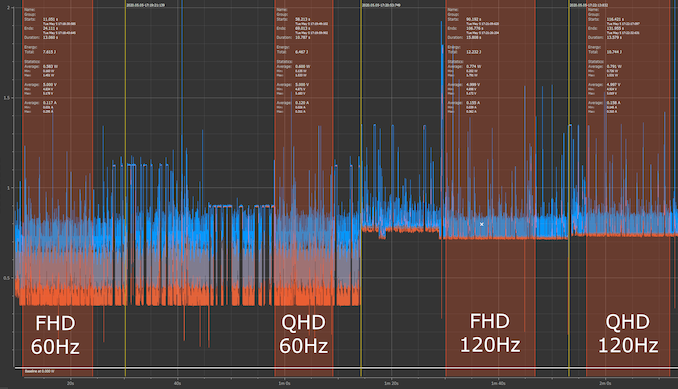
Observing the input power of the phone for a more graphical representation of the different modes, we immediately see that OnePlus’ 120Hz mode incurs a similar power jump to that of the Galaxy S20. The figures here aren’t quite correct as the phone’s power usage when connected to USB is unusually high so don’t pay too much attention to those numbers – just at the differences between the modes.


We can also see that there’s extremely little difference in the base power consumption of the phone between the FHD and QHD modes, both at 60Hz and 120Hz refresh rates. This is actually an important indicator as to narrow down whether the power draw comes from the SoC, or the display panel or DDICs.


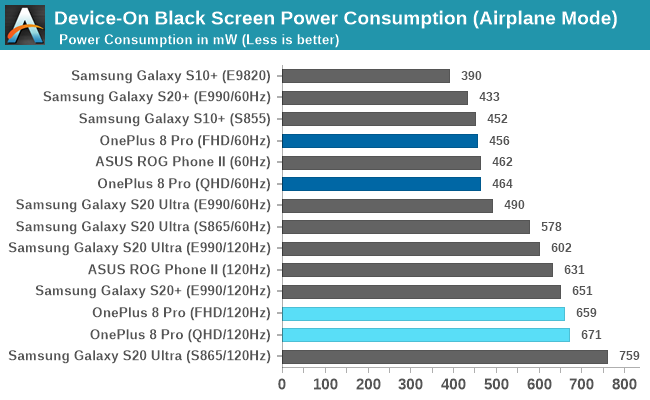
Device-On Black Screen Power Consumption (Airplane Mode)


Re-measuring the power in a more correct manner, the OnePlus 8 Pro falls in line with other phones of this generation, both at 60 and 120Hz.


We had expected the OnePlus 8 Pro to fare off worse than the Galaxy S20 series, and yes it does draw slightly more power – but not as much as I had initially thought it would. The hardware differences between the phones here relates to their display interfaces, the Galaxy S20 series features a single MIPI lane to the DDIC, a bottleneck that is the reason for why the phone can’t do QHD at 120Hz. The OnePlus 8 Pro on the other hand does feature dual MIPI interfaces to the display panel and thus has the bandwidth necessary for driving the higher refresh rate at the highest resolution.


The fact that the differences between the two phones is only a mere 20-25mW means that the display interfaces have very little to do with the increased power draw. The difference in the base power consumption between FHD and QHD modes is a mere 10mW, so seemingly that also has very little impact on power other than the additional power to actually render higher resolution dynamic content.


It seems that the power consumption here solely is to blame on the DDIC and the display panel itself, both having to work harder to drive the pixel matrix at higher frequencies. It’s a somewhat discouraging confirmation as it means the ecosystem is in dire need for true VRR (variable refresh rate), where the panel doesn’t need to be driven like this during static content.


We’ll be reviewing the OnePlus 8 Pro in more details in a full review in the coming weeks – today’s quick pipeline was just meant to address this burning matter of the 120Hz implementation of the phone. Generally, I expect the 120Hz mode here to have a slightly higher battery impact than what we saw on the S20 series, but nothing to drastically worse.


Related Reading:


Source: AnandTech – 120Hz On The OnePlus 8 Pro: QHD+ Resolution But Still Power Hungry

First ATX12VO Consumer Motherboard: The ASRock Z490 Phantom Gaming 4SR

A blog post from Intel has showcased the first consumer motherboard with the ATX12VO power standard from ASRock, and we reached out to ASRock for more details. They have now put up a product page for this board, the ASRock Z490 Phantom Gaming 4SR.


Source: AnandTech – First ATX12VO Consumer Motherboard: The ASRock Z490 Phantom Gaming 4SR

The ASRock Rack Z490D4U-2L2T, Micro-ATX Server For LGA1200

Off the back of the announcement of a substantial amount of Z490 motherboards designed for Intel’s 10th generation desktop processors, ASRock Rack has announced a server-focused model. The ASRock Rack Z490D4U-2L2T offers an impressive array of Ethernet including two Intel 10 GBE and two Intel Gigabit Ethernet ports; all on a micro-ATX form factor PCB.


With over 44+ Z490 models to choose from a variety of vendors, ASRock Rack has announced its intention to release a  server solution for LGA1200. Although ASRock Rack hasn’t officially revealed a complete list of specifications for its Z490D4U-2L2T micro-ATX motherboard, ASRock Rack has made some information public.


Potentially suited for cloud gaming servers and high-frequency trading, the ASRock Rack Z490D4U-2L2T includes IPMI remote management. It is equipped with an Intel X710-AT2 10 G Ethernet controller which adds two 10 GbE ports onto the rear panel, as well as two Intel Gigabit Ethernet controllers bringing the board’s Ethernet capacity up to four. For the storage is two PCIe 3.0 x4 M.2 slots which include support for Intel Optane memory, and has six SATA ports with RAID 0, 1, 5 and 10 array support. There is also an HDMI video output on the rear panel for use with Intel’s UHD integrated graphics.


It’s an interesting micro-ATX offering and adds an extra dimension to Intel’s latest Z490 chipset. This will likely support Intel’s Xeon range of 10th generation processors, but we can’t confirm that at this time. 


ASRock Rack hasn’t unveiled full specifications for the Z490D4U-2L2T, nor has it revealed when it’s expected to launch or at what price it will release. 


Related Reading


Source: AnandTech – The ASRock Rack Z490D4U-2L2T, Micro-ATX Server For LGA1200

The Acer Swift 3 SF314 Notebook Review: Swift Gets Swifter With Ryzen 4000

Almost two years ago to the day, we had a chance to check out Acer’s Swift 3 laptop featuring AMD’s first Ryzen Mobile platform, Raven Ridge. Acer has been a strong partner for AMD, generally being one of the first out of the gate with new designs featuring AMD’s latest platforms, and this year that partnership has played out again. Today we are taking a look at the newest AMD APU offering, the Ryzen 4000 “Renoir”, which is at the heart of Acer’s latest iteration of the 14-inch Swift 3. With a brand-new AMD processor and some innovations in the Swift 3 design itself, both AMD and Acer have made some tremendous improvements for 2020.


Source: AnandTech – The Acer Swift 3 SF314 Notebook Review: Swift Gets Swifter With Ryzen 4000

Apple Launches New 13" MacBook Pro: 10th Gen Ice Lake and New Scissor Keyboard


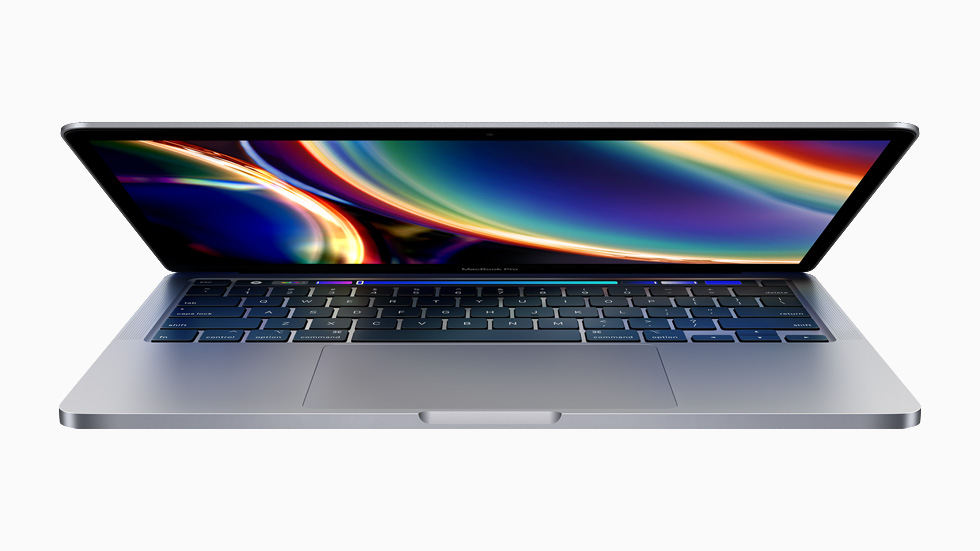
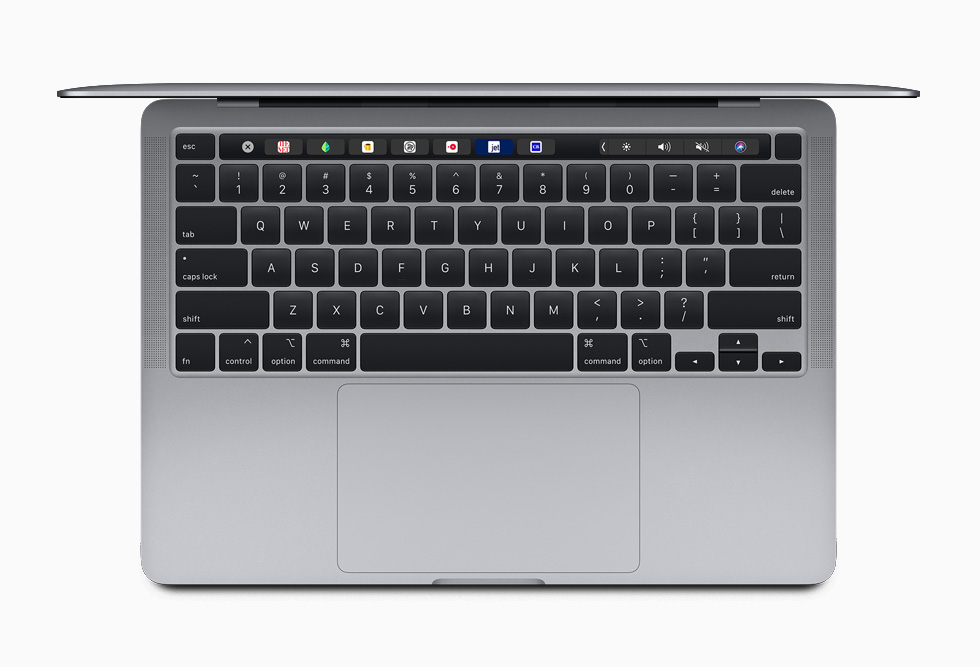
Today Apple is releasing new revamped versions of its 13” MacBook Pro line-up, most notably updating the series with the new scissor-switch style Magic Keyboard, as well as giving the option for Intel’s new 10th generation Ice Lake CPUs in the higher end models.


Apple last winter had rolled out its new 16” MacBook Pro which had introduced the new Magic Keyboard, making the choice to drop the controversial butterfly switch keyboard back to a scissor switch design. Today’s 13” line-up adopts the same changes across the smaller form factor models, including the new Touch Bar design that has been narrowed down to now include a physical escape key on the keyboard.


The new design otherwise doesn’t significantly diverge from its summer-2019 refresh, although this year it’s every so slightly thicker at 1.56cm instead of 1.49cm – certainly unnoticeable in everyday usage. It’s also 30g heavier at up to 1.4kg now (3.1lbs).


The most significantly internal change is the option for a new 10th generation Intel Ice Lake based CPU, running at 2.0GHz base clocks and Turbo Boost to up to 3.8GHz. As always with Apple products, this likely is a custom SKU just for Apple’s line-up as there’s no matching public part with these frequencies – the closest part is an i7-1060G7 which features the same peak clock, but only a meagre 1.0GHz base clock. Apple here likely is running a higher base TDP of 20-25W. For a $200 upsell, you can choose a higher-end 2.3/4.1GHz CPU configuration.


Whilst the Ice Lake based parts are new, Apple will continue to sell 8th generation Coffee Lake based parts at the lower end price spectrum in the $1299 and $1499 price points. Aside from the CPUs themselves, the two generational offerings of CPUs will also differ in their DRAM configuration as the new ICL parts come with 16GB of LPDDR4X-3733, whilst the CFL parts continue to just offer 8GB of LPDDR3-2133. The ICL parts are upgradeable to 32GB for an extra $400, and the CFL parts upgrade to 16GB for $100.


The display panel seemingly remains unchanged, featuring a 13” 2560 x 1600 IPS LCD panel with a wide Display P3 colour gamut, 500 nits peak brightness, and True Tone ambient colour adjustment.


MacBook Pro 13-Inch 2020
Model 2020 13-Inch

Higher-End
2019 13-Inch

Higher-End
2018 13-Inch

Entry-Level
CPU 2.0 GHz/3.8 GHz
Core i5-10???

4 CPU Cores
(Ice Lake)
2.4 GHz/4.1 GHz

Core i5-8???U

4 CPU Cores

(Coffee Lake)
1.4 GHz/3.9 GHz

Core i5-8???U

4 CPU Cores

(Coffee Lake)
GPU Intel Iris Plus Intel Iris Plus 655

(128MB eDRAM)
Intel Iris Plus 645

(? eDRAM)
Display 13″ 2560 x 1600 IPS LCD

DCI-P3 Gamut

True Tone
Memory 16 GB LPDDR4X-3733 8 GB LPDDR3-2133
SSD 512 GB PCIe SSD 256 GB PCIe SSD 128 GB PCIe SSD
Touch Bar Yes
I/O 4x Thunderbolt 3 (supports DP1.2 & USB 3.1 Gen 2 modes),

3.5mm Audio
2x Thunderbolt 3 (supports DP1.2 & USB 3.1 Gen 2 modes),

3.5mm Audio
Battery Capacity 58 Wh 58.2 Wh
Battery Life 10 Hours
Dimensions 1.56 cm x 30.41 cm x 21.24 cm 1.49 cm x 30.41 cm x 21.24 cm
Weight 3.1 lbs (1.4 kg) 3.02 lbs (1.37 kg)
Launch Price $1799 $1799 $1299

Connectivity-wise, the new 2020 13” MacBook Pros come in two favours: the lower-end $1299 and $1499 Coffee Lake based models feature two Thunderbolt 3 ports, whilst the Ice Lake based parts get four. We also see an addition of a 3.5mm headphone jack. Unfortunately, Apple seemingly hasn’t upgraded the Wi-Fi on the new models, and WiFi 6 / 802.11ax still isn’t present as they still make due with WiFi 5 / 802.11ac capability.


Battery-wise, there’s no changes in capacity as we’re still looking at a 58Wh unit, and Apple claims an identical “10 hours” of usage for all new models – the same as last year’s Coffee Lake models.


The higher-end Ice Lake parts come now with the aforementioned base 16GB of DRAM config at a $1799 price point with a 512GB SSD, or a $1999 option with a 1TB SSD. Storage configurations for the ICL models are doubled across the board, with the possibility to choose up to a 4TB configuration for an extra $1200.


The new 13″ MacBook lineup is available for order directly from Apple starting today.


Related Reading:


Source: AnandTech – Apple Launches New 13″ MacBook Pro: 10th Gen Ice Lake and New Scissor Keyboard

Updated IPhone SE Camera Testing: Replacement Phone Shows Much Improved Results

Last week we published our initial review of Apple’s new iPhone SE. In the piece, I had remarked that the camera was relatively disappointing and suffered from a lack of detail in photos, with the phone’s camera seemingly suffering from optical weaknesses that manifested in partially blurred out shots. This was quite puzzling as the iPhone SE’s camera module should be of the same design as that of the iPhone 8, which produced sharp images.


I had notified Apple of the results ahead of the publication of the article, and the company communicated back that they had not seen such results before, and that they were not what was expected of the new iPhone SE’s camera abilities.


The company decided to dispatch out a new phone, and to collect my initial unit for analysis. I exchanged units earlier in the week, and was able to retest the new phone’s cameras.


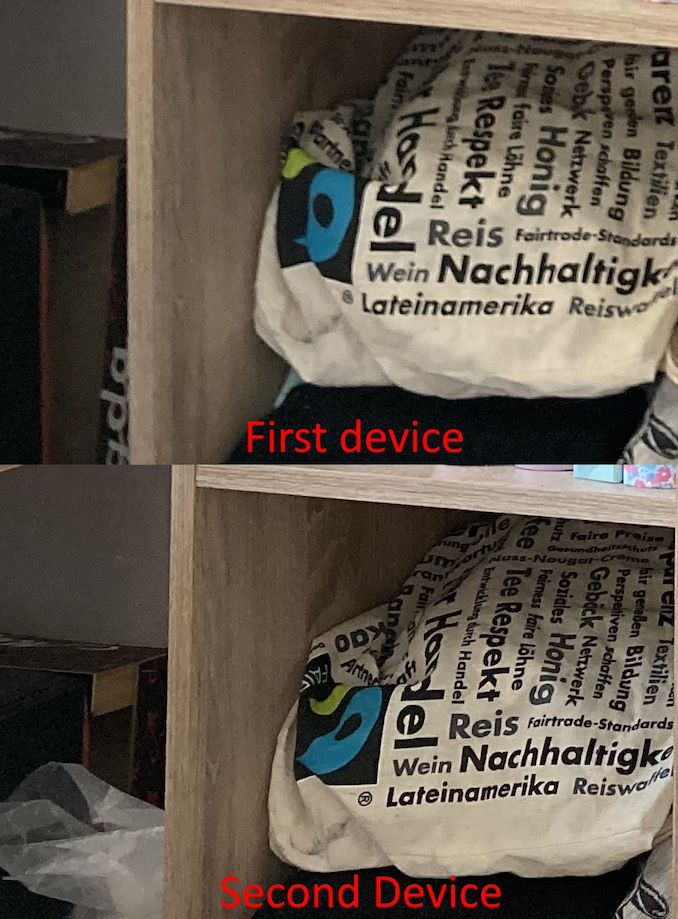
In the new camera samples, we can see a dramatic improvement in sharpness of the pictures, and the new phone exhibits none of the optical issues that were initially described in the article.


Although I wasn’t able to test both units side-by-side, as the old phone had been collected at the same time, here’s some similar scene shots (although they are done on different days with different lighting conditions) between the two phones:


One can immediately note massive improvements in sharpness, with the new phone now performing as good as, or even better, than the iPhone 8.


I’ve completely updated the initial camera evaluation with new samples, and all criticism about the detail retention and optical performance of the iPhone SE naturally don’t apply any more, with the phone now performing excellently in that area.


Read: Updated iPhone SE Quick Camera Evaluation


For transparency’s sake – we’ve kept on the old page with the old samples in the article so that readers can see the differences between the two units.


Post-mortem


Overall, the new update is both good news and bad news. The good news is that the iPhone SE should feature a much better camera than initially reported, and I hope that’s what most users will experience.


The bad news is that we still don’t exactly know what went wrong with the first unit – what I don’t doubt is confirmed is that it suffered from a manufacturing defect in the optical system of the camera.


The problem with confirming such a scenario is that it’s very unlikely that I was extremely unlucky in being the sole person receiving such a sample, as usually one-off faults like these are insanely rare, with the more likely scenario being some sort of systematic failure for a whole batch of units.


As an anecdote, the last time this happened was a few years back, with initial production runs of Huawei’s Mate 8 having camera focus issues, and this was confirmed to be faulty manufacturing of the initial batches rather than just my unit. The issue was partly resolved by software updates, and fully resolved by a recalibration in the manufacturing lines.


For such a QA-issue to happen to Apple is extremely rare, and to their credit, they took it very seriously with a prompt response and device replacement. Only their internal analysis will showcase the root cause of the problem, and unfortunately given the company’s more secretive nature, we might never find out about the results of that investigation.


We’ll be following up with a full-blown camera analysis of the new iPhone SE (and a ton of other phones we have to catch up on!) in the next few weeks.


Source: AnandTech – Updated IPhone SE Camera Testing: Replacement Phone Shows Much Improved Results

Sponsored Post: Here Are All of the Z490 Motherboards Announced During Gigabyte’s AORUS Direct


During its AORUS Direct event on April 30, Gigabyte announced a brand new line of motherboards: the Z490 series. These boards have been designed with Intel’s new elite 10th Gen desktop processors in mind, and come with a new chipset called Intel Z490 alongside a slew of impressive features and traits. Here’s a detailed overview of everything you need to know about these new motherboards, including a breakdown of the exciting technology in them and specific details about each model.


What’s New With Z490?
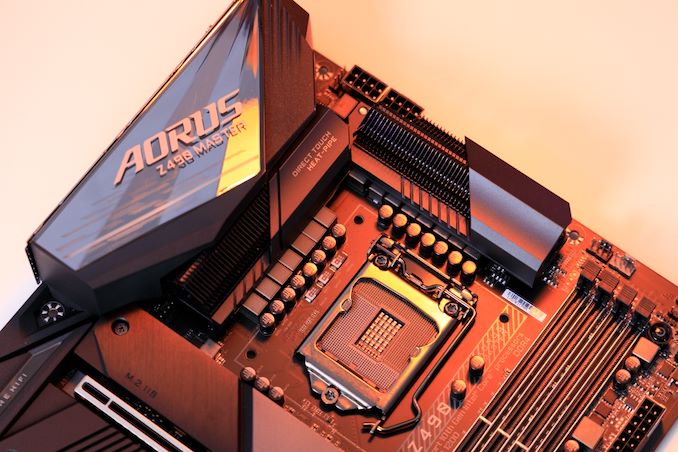


The Z490 motherboard lineup introduces plenty of new and exciting features that have never been seen on traditional desktop motherboards before. The most significant of these is a new power structure known as Extreme Power Design. This structure makes use of 90A power stages, an Intersil PWM controller, and 16 phases in its voltage regulator module (VRM). All of these powerful pieces of kit allow Z490 motherboards equipped with the Extreme Power Design to provide a whopping 1440A of power to your rig’s CPU, which is unprecedented in the desktop realm. With this kind of power, you can push your processor to its limits and then some without fear of power issues. Additionally, the advanced tantalum polymer capacitors that some of the motherboards use reduce the risk of voltage spikes by 22%, ensuring that the entire system remains stable throughout your gameplay experience.


Also new is Gigabyte’s XTREME MEMORY design that combines a dual in-line memory module (DIMM) system with shielded memory routing and more tantalum polymer capacitors. This structure makes it possible for Z490 motherboards to support RAM speeds of 4800 MHz and beyond, which is something that overclocking enthusiasts will no doubt love to hear.


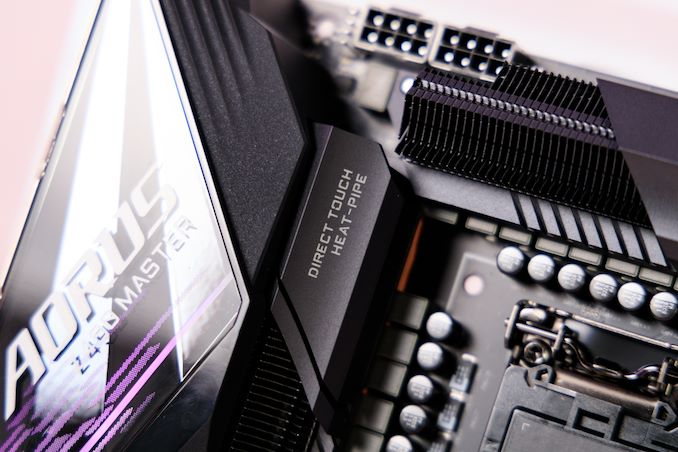
In order to solve the issue of heat, Gigabyte has also made significant improvements to its cooling systems. Its Direct Touch Heatpipe system has been enlarged by 33% and given a narrower gap between the area where pipe and the motherboard’s aluminum heatsink meet. On top of this, the Fins Array cooling system has also been upgraded to a louvered design.  These narrow channels allow more air to make contact with the motherboard’s heatsink, thus reducing heat buildup. Finally, many areas of the motherboards have been given a special NanoCarbon coating and a baseplate of this material has been added to the design as well. This material is better at dissipating heat than regular materials, and as a result, the addition of NanoCarbon to Z490 motherboards improves cooling by 10%. All of these different cooling systems combined reduce temperatures by up to 32 degrees Celsius compared to a motherboard with none of them.


In terms of aesthetics, Gigabyte has focused on giving each and every Z490 motherboard a striking, angular appearance as part of its initiative to create its “AORUS Universe” where each product looks like something straight out of a futuristic movie or video game. The use of high-quality metals for these motherboards accompanies this style very nicely, and also improves the physical durability of the motherboards as well.


As a result of all these awesome new features, the motherboards found within the Z490 lineup are capable of supporting every single CPU core clocking in at a stellar 5.3 GHz. For gamers, this will mean an increase to your framerate, and content creators will be able to significantly reduce render times so that they can get more work done.


The Full Z490 Motherboard Lineup
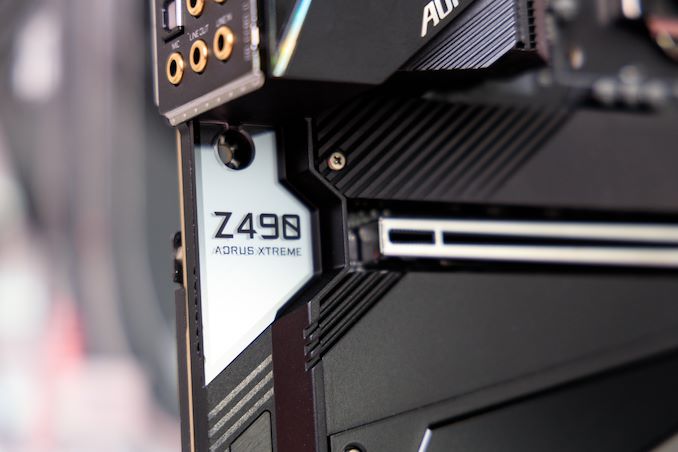


The majority of the new Z490 motherboards are of the AORUS variety, which are designed to be suited for gamers. The first — and most powerful — among these boards is the Z490 AORUS XTREME, which Gigabyte is calling its flagship motherboard. It’s outfitted with all of the advanced features and technologies listed in this article, as well as top-grade Hi-Fi equipment, support for Intel 2.5Gb ethernet and Wi-Fi 6, triple NVMe SSD slots, PCIe 4.0, and even Thunderbolt 3. Due to its elite quality, it will be the priciest motherboard at $799.99.


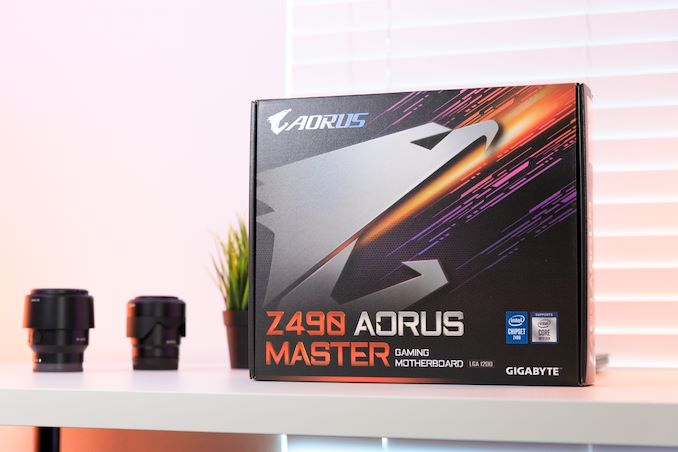
The next board in the lineup is the Z490 AORUS MASTER, which is a more affordable, high-end alternative to the Z490 AORUS XTREME. It lacks some of the advanced audio equipment that the XTREME has, doesn’t support Thunderbolt 3, and doesn’t have NanoCarbon on the Fins Array system. On top of this, it also has 14 phases in its Extreme Power Design instead of 16. However, it’s also priced much lower at $389.99, which will likely make it the overall favorite option for high-end PC owners.


Next up is the Z490 AORUS ULTRA. This motherboard is the mid-range pick in the lineup, as it uses a more traditional power structure instead of the Extreme Power Design and comes with 12 phases. In addition, it doesn’t have Hi-Fi audio features. Aside from this, though, it’s pretty much identical to the Z490 AORUS MASTER, and it even comes with NanoCarbon on the Fins Array that the MASTER lacks. It’s priced at $299.99, which strikes a nice balance between quality and cost.


Following the ULTRA is the Z490 AORUS PRO AX, which is the budget motherboard of the lineup. Compared to the ULTRA, it doesn’t come with any of the new cooling system improvements, and it doesn’t come with any tantalum polymer capacitors in its 12-phase power design either. Additionally, it only has two NVMe SSD slots. It does come with everything else that you can find in the ULTRA, however, and it’s priced lower at $269.99.
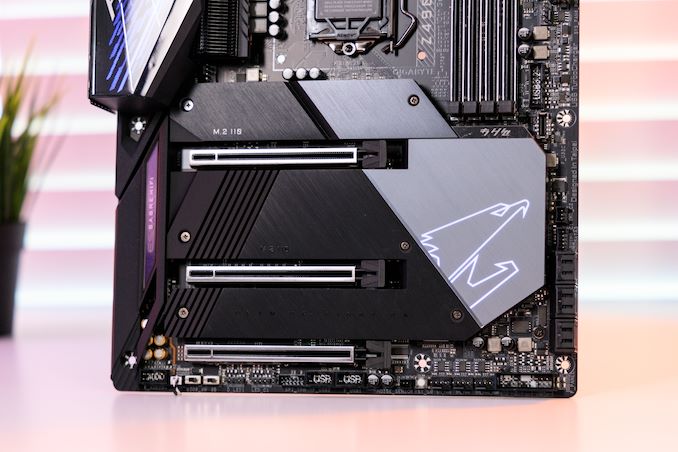


Don’t worry if you’re a fan of smaller PC builds, as Gigabyte has you covered with the next motherboard in the lineup, the Z490I AORUS ULTRA. This motherboard only comes with 8 phases, but it does use the advanced Extreme Power Design found in the Z490 AORUS XTREME and MASTER. That means that it comes with the 90A power stage as well as tantalum polymer capacitors. It doesn’t come with the cooling system upgrades or NanoCarbon plating, but considering how small of a form factor this motherboard has, that’s completely fine. It will retail for $269.99.


While most of the Z490 motherboards are meant for gaming, there are a couple that are geared towards content creators as well. These variants of the Z490, which are part of the VISION series, come with some unique features not found in the AORUS series. The first of these is the Z490 VISION D, which is the more powerful of the two VISION boards. It comes with similar Hi-Fi audio gear to that found in the Z490 AORUS XTREME, and an Extreme Power Design with 12 phases. Additionally, it comes with Thunderbolt 3 support, support for 32GB single DIMM memory, four total DIMMs instead of two, and it can even support two GPUs. It also comes with upgradeable M.2 expansion slots so that you’ll never run out of storage. It doesn’t come with the upgraded cooling that many of the AORUS motherboards have, but it does come with all of the same connectivity features like support for 2.5Gb ethernet and Wi-Fi 6. It’s priced at $299.99.


The other VISION motherboard is the Z490 VISION G. In many ways it is identical to the Z490 VISION G. However it does not have Hi-Fi audio equipment and also doesn’t support Thunderbolt 3. Instead, it uses USB 3.2 Gen 2 Type-C. The trade-off, though, is a lower price. The Z490 VISION G is less costly than the D variant, coming in at $199.99.


Lastly, there will also be two specialty motherboards available: the Z490 AORUS XTREME WATERFORCE and the Z490 AORUS ULTRA G2 Edition. The former is a variant of the XTREME motherboard that incorporates water cooling, while the latter is a version of the ULTRA that features a unique design inspired by Gigabyte’s partners at G2 Esports. Information about both of these motherboards can be found on Gigabyte’s website.


Gigabyte Motherboards Have Never Been Better


The Z490 lineup of motherboards represents the best of Gigabyte, and if you’re a PC user, things have never been as exciting as they are right now. Whether you’re an enthusiast who wants to have the best of the best, a casual PC gamer that wants something effective and affordable or a content creator who’s looking to take the entertainment world by storm, there’s a Z490 motherboard that will be perfect for you.


Source: AnandTech – Sponsored Post: Here Are All of the Z490 Motherboards Announced During Gigabyte’s AORUS Direct


Xiaomi Launches Mi Note 10 Lite, Redmi Note 9 & Note 9 Pro Globally

Today Xiaomi is launching a trio of mid- to low-end devices, and we’re seeing the global launch of the new Mi Note 10 Lite, Redmi Note 9 Pro and the Redmi Note 9.


The new Note 10 Lite is a cut-down version of last year’s Note 10 which was the first phone with an 108MP camera. The Lite variant keeps the design aesthetics but comes with a smaller 64MP still very capable camera.


The new Redmi Note 9 series phones adopt a new design language, offering new SoCs in the forms of the Snapdragon 720 and the Helio G85, all whilst maintaining their characteristic huge battery capacities as well as extremely low prices.


Source: AnandTech – Xiaomi Launches Mi Note 10 Lite, Redmi Note 9 & Note 9 Pro Globally

The Intel Z490 Overview: 44+ Motherboards Examined

After another long wait for a new Intel platform, Comet Lake and the 400 series finally descends. Here we get a new socket, support for up to 10-cores with its flagship Core i9-10900K/KF processors, and a few interesting adjustments on ethernet, Wi-Fi. Scrambling to be the latest and greatest, some motherboard vendors include support for PCIe 4.0 ‘for a future platform’, which some have outright identified as Rocket Lake. We asked every motherboard vendor for specifications and details on their new product lines.


Source: AnandTech – The Intel Z490 Overview: 44+ Motherboards Examined

Intel’s 10th Gen Comet Lake for Desktops: Skylake-S Hits 10 Cores and 5.3 GHz

Today we get the full range of its Intel’s 10th Generation processors for desktops. These chips, which fall under the banner of ‘Comet Lake’, will now go up to 10 cores and offer turbo speeds up to 5.3 GHz. Comet Lake is the fifth iteration of Intel’s very profitable Skylake microarchitecture, built on Intel’s 14++nm process, at a time when the competition is on 7nm with sixteen cores. The crux, according to Intel, is that it will offer the best gaming experience in this market.


Source: AnandTech – Intel’s 10th Gen Comet Lake for Desktops: Skylake-S Hits 10 Cores and 5.3 GHz

DisplayPort Alt Mode 2.0 Spec Released: Defining Alt Mode for USB4

As the tech industry gears up for the launch of the new USB4 standard, a few more parts first need to fall into place. Along with the core specification itself, there is the matter of alternate modes, which add further functionality to USB Type-C host ports by allowing the data pins to be used to carry other types of signals. Keeping pace with the updates to USB4, some of the alt modes are being updated as well, and this process is starting with the granddaddy of them all: DisplayPort Alt Mode.


The very first USB-C alt mode, DisplayPort Alt Mode was introduced in 2014. By remapping the USB-C high speed data pins from USB data to DisplayPort data, it became possible to use a USB-C port as a DisplayPort video output, and in some cases even mix the two to get both USB 3.x signaling and DisplayPort signaling over the same cable. As a result of DisplayPort Alt Mode’s release, the number of devices with video output has exploded, and in laptops especially, this has become the preferred mode for driving video outputs when a laptop doesn’t include a dedicated HDMI port.


Now, as USB4 prepares to enter service, DisplayPort Alt Mode is being updated as well. One of the many big changes in the USB4 spec is that DisplayPort is a first-class citizen, with USB4 able to encapsulate DisplayPort video data like Thunderbolt 3 already does. So in order to keep pace with USB4 – where things are a bit more rigorous and well-defined this time around – VESA has needed to tighten the Alt Mode standard to match, as well as to update the specification to incorporate DisplayPort 2.0 and its UHBR signaling standards. The end product, fittingly enough, will be called DisplayPort Alt Mode 2.0.


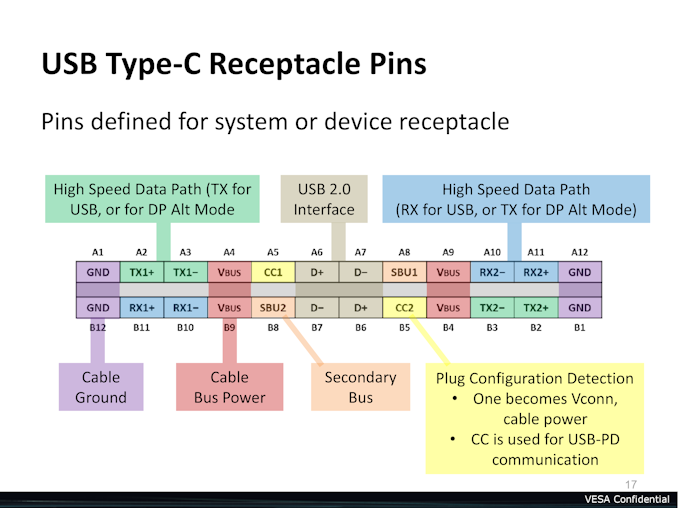
At a high level, as the USB-C connector itself isn’t changing for USB4, DisplayPort Alt Mode 2.0 doesn’t need to change much either. All of the physical mechanics regarding pin reassignment and what pins can carry what data are the same, so the crux of the alt mode still involves reassigning two or four of the high speed pairs offered in a USB-C cable/connector. That said, because the USB4 protocol is based on Thunderbolt 3 this time around, how USB4 data is carried is changing, and the behavior of USB4 cables is changing as well – mainly that they’ll be active cables for any appreciable distance – and so DP Alt Mode is being updated to accommodate this.


Besides immediate compatibility with USB4, the big change for DP Alt Mode 2.0 then is the addition of DisplayPort 2.0 functionality, to support the new UHBR 10, 13.5, and 20 signaling standards. With bandwidths of up to 20Gbps per lane, a full, 4 lane DP 2.0 connection can drive up to 80Gbps of bandwidth. And now with DP Alt Mode 2.0, an alt mode connection over a USB-C connection can do the same.


Under the hood, this is accomplished by reconfiguring a 4 lane USB4 connection into a 2 or 4 lane DisplayPort connection, driving DisplayPort signals over high speed lanes that would normally be carrying USB4 signals. USB4 normally relies on a 2-up/2-down configuration to form a single bidirectional connection. DP Alt Mode can either split this with USB, resulting in a reduced bandwidth 1-up/1-down USB 3 connection paired with a 2 lane DP connection, or DP can take over all 4 lanes for a full speed DP connection. Ultimately, this means that a DP Alt Mode 2.0 connection is just as capable DisplayPort 2.0 connection as far as display connectivity and bandwidth are concerned.


DisplayPort 2.0 vs DP Alt Mode 2.0 vs USB4
  DisplayPort 2.0 DP Alt Mode 2.0

(4 Lane Mode)
USB4
Max Cable Bandwidth 80Gbps 80Gbps 80Gbps
Max Downstream Bandwidth 80Gbps

(DP)
80Gbps

(DP)
40Gbps

(USB + DP)
Max Upstream Bandwidth N/A N/A 40Gbps

(USB)
Physical Layer Thunderbolt 3 Thunderbolt 3 Thunderbolt 3
DisplayPort 1x DP 2.0 Streams 1x DP 2.0 Streams 1x DP 2.0 Streams
Passive Cable Option Yes (40Gbps) Yes (40Gbps) Yes (40Gbps)
Interface Port DisplayPort USB Type-C USB Type-C

And this isn’t merely a coincidence: both DisplayPort 2.0 and USB4 are based on Thunderbolt 3 signaling, which Intel released to the wider tech industry on a royalty-free basis a couple of years back. So although there are some significant differences at the protocol level (mainly that USB4 carries a whole lot of things other than DP video), the signaling and resulting cable rules are virtually the same for USB4 and DisplayPort Alt Mode 2.0.


This also means that DP Alt Mode 2.0 should largely work with USB4-compliant cables, although VESA is being careful to avoid promising compatibility with all cables, as USB4 cables are still under development and eventual certification. Like USB4 then, for extremely short runs passive cables will be possible, while for runs over a foot or so – which is to say, pretty much all real-world monitor setups – an active cable is required.


Compatibility in active cables will in turn come down to the redrivers used in those cables. For USB4 cables to work with DP Alt Mode 2.0 they not only need to be able to redrive DP 2.0 signals, but they’ll need to be able to operate in full unidirectional mode – with all 4 lanes going downstream – as opposed to USB4’s bidirectional mode. The good news is that most USB4 cable redrivers are expected to support this, so the matter should largely be moot, but it again comes down to certification and what cable manufacturers end up doing.


On a final note about connectivity, those redriver requirements will apply to DP Alt Mode 2.0 adapters as well, meaning that active adapters will be required. While DP Alt Mode 1.0 could work with passive adapters given the relatively loose signaling used, the tighter signaling requirements for DP 2.0 mean that even USB to DisplayPort adapters need an active redriver in them.


Overall, the introduction of DisplayPort Alt Mode 2.0 means that there will be two different ways to pipe DisplayPort video over a USB4 cable, giving system builders and users an unusual degree of flexibility in designing devices and choosing how to wire them up. As previously discussed, USB4 can already carry encapsulated DisplayPort data within a USB4 signal. However with the introduction of DP Alt Mode 2.0, it also becomes possible to skip the middle man, so to speak, by reconfiguring a USB-C port to pass raw DisplayPort video.


But why even have multiple modes to begin with, you might ask? The matter comes down to performance as well as hardware costs. From a bandwidth standpoint, USB4 maxes out at 40Gbps of bandwidth in any one direction a bidirectional connection. So the most bandwidth available for DisplayPort video, assuming it saturates the connection, is only half of what DisplayPort 2.0 is capable of. A raw DisplayPort connection via Alt Mode 2.0, on the other hand, doubles that maximum bandwidth to 80Gbps since all lanes can be used to send data to a display. So if nothing else, Alt Mode is needed to drive ultra-high resolution connections over USB-C, such as 8K @ 60Hz with HDR.


DisplayPort Signaling Standards
Standard Raw Bandwidth

(4 Lanes)
Effective Bandwidth

(4 Lanes)
Target Monitor Resolutions
Alt Mode 1.0

(HBR3)
32.4 Gbps 25.92 Gbps 4K@120Hz

8K@60Hz (w/DSC)
Alt Mode 2.0

(UHBR 20)
80 Gbps 77.37 Gbps 8K@60hz HDR >8K@60Hz SDR

4K@144Hz HDR

2x 5K@60Hz

As for hardware costs, like Thunderbolt before it, using DisplayPort encapsulation with USB4 means that there needs to be USB4 controllers on both ends of the connection, as well as DisplayPort hardware to actually handle the DisplayPort data. Alt Mode, by contrast, allows for slightly simpler displays and sink devices: those only need DisplayPort hardware, and can forgo the USB4 controllers.


Ultimately, as was the case with DisplayPort Alt Mode 1.0, DP Alt Mode 2.0 is all about giving hardware vendors another way to drive video out without having to use a dedicated port. And with the ability to match DisplayPort 2.0 spec-for-spec, as well as combine DP video with USB4 data, Alt Mode 2.0 is certainly setup to do just that and more. And, according to VESA, we should get a chance to see that first-hand next year, with the first DP Alt Mode 2.0 devices expected in 2021.


Source: AnandTech – DisplayPort Alt Mode 2.0 Spec Released: Defining Alt Mode for USB4

AMD Reports Q1 2020 Earnings: CPU Sales Fuel Big Gains

As the first quarter 2020 earnings period continues, up next is AMD, who has reported their earnings for the first three months of the year. The company, enjoying an accelerating turn-around in its fortunes thanks in big part to its Zen series of CPU architectures and resulting products, has closed the books on one of its best first quarters in years, with the company turning a tidy profit in the process.


For the first quarter of 2020, AMD reported $1.79B in revenue, a staggering 40% jump over the same quarter a year ago. Their best first quarter in almost 10 years saw all of AMD’s metrics improve; along with that revenue AMD’s net income jumped by $146M (over 900%) to $162M, coming in just behind a seasonally strong Q4. Meanwhile gross margins are up as well, with AMD hitting 46%, improving on Q4 and leaping 5 points higher than the year-ago quarter.


AMD Q1 2020 Financial Results (GAAP)
  Q1’2020 Q4’2019 Q1’2019
Revenue $1.79B $2.13B $1.27B
Gross Margin 46% 45% 41%
Operating Income $177M $348M $38M
Net Income $162M $170M $16M
Earnings Per Share $0.14 $0.15 $0.01

As always, the flag bearer for AMD is their Computing and Graphics segment, which encompasses their desktop and notebook CPU sales, as well as their GPU sales. That division booked $1.44B in revenue for the quarter, $607M (73%) more than Q1 2020. Accordingly, the segment’s operating income as up significantly as well, going from just $16M a year ago to $262M this year.


AMD Q1 2020 Computing and Graphics
  Q1’2020 Q4’2019 Q1’2019
Revenue $1438M $1662M $831M
Operating Income $262M $360M $16M

AMD doesn’t provide a detailed breakout of information from this segment, but for this quarter they have provided some information on revenue and average selling prices (ASPs). Overall, client CPU sales were quite strong, with AMD recording record quarterly revenue for notebooks thanks in large part to the recent launch of its Renoir Ryzen 4000 APUs. The strength of the segment lead to higher ASPs on a year-over-year basis, though interestingly CPU ASPs dropped a bit over Q4 due to the higher notebook sales.


However, AMD’s graphics division ended up being a bit of a laggard here. GPU ASPs were down on both a yearly and quarterly basis, even though AMD has released numerous new Navi products in the last year. As always, it should be noted that ASPs don’t factor in production costs/profitability, but I am a bit surprised that AMD’s averages aren’t higher given their more conservative pricing strategy. Meanwhile graphics revenue was down on a quarterly basis, though this isn’t unexpected coming off of Q4; and unfortunately, AMD didn’t provide any year-over-year comparison data.


AMD Q1 2020 Enterprise, Embedded and Semi-Custom
  Q1’2020 Q4’2019 Q1’2019
Revenue $348M $465M $441M
Operating Income -$26M $45M $68M

Meanwhile AMD’s Enterprise, Embedded, and Semi-Custom segment saw a very mixed Q1, with the server CPU + semi-custom reporting group running a loss for the quarter. All told, the segment recorded $348M in revenue, $93M less than Q1’19. As a result the segment dipped into the red, recording an operating loss of $26M.


Breaking down the segment, AMD reported that semi-custom sales have dropped while EPYC processor sales are up, underscoring the unusual nature of the segment. Overall, EPYC sales have improved by “double digit” percentages over the previous quarter, an important development for AMD as it works to rebuild its server market share, but it ultimately wasn’t enough to offset the drop in semi-custom sales. AMD of course continues to be gung-ho on EPYC, while the semi-custom side of the segment should improve once AMD’s console customers start ramping up for their respective tenth-generation console launches.


Looking forward, like other hardware vendors, AMD is attempting the navigate the current coronavirus crisis. The company hasn’t taken any exceptional steps thus far (and is still reporting projections for the full year), but at the same time the pandemic can still potentially impact both supply and demand, and AMD has trimmed their revenue expectations for the second half of the year in response.


As for AMD’s product lineup, the company is still looking forward to releasing new hardware over the rest of the year, furthering its technological lead. Along with the obligatory release of Renoir APUs on the desktop, AMD is reiterating that products based on the Zen 3 CPU and RDNA2 GPU architectures will launch late this year. With that period still several months out – and still at risk of coronavirus-related delays – AMD still isn’t sharing more precise plans than that, but clearly the company is angling to at least start shipping these parts for revenue before the year is out.


Source: AnandTech – AMD Reports Q1 2020 Earnings: CPU Sales Fuel Big Gains

GPUs Unleashed: Intel Releases First Unlocked GPU Driver For OEM Systems

While Intel’s integrated GPUs have made immense strides over the past decade, there’s been one particular legacy they’ve been unable to break free from: OEM driver locking. Due to the large degree of customization and optimization that OEMs sometimes do to their systems, some OEMs have insisted on having video drivers “locked” to their platforms, so that only video drivers that they’ve customized and distributed can be installed.


This structure has always offered at least a modicum of utility, ensuring that newer drivers don’t break things or otherwise interfere with those system customizations. But as desktops and laptops live longer than ever, OEM have demonstrated a shorter attention span than Intel when it comes to driver updates. As a result, unfortunate system owners have found themselves stuck in a bind with older (and even some newer) systems, where there are newer drivers with important bug fixes for games and applications, but those drivers can’t be installed because they haven’t been customized and approved by the OEM.


Thankfully, it looks like the days of Intel OEM driver locking are finally behind us. Yesterday evening Intel released a new version of its Windows 10 GPU driver, version 26.20.100.8141, that’s fully unlocked, allowing it to be installed on virtually all OEM systems for the first time. And while there are a handful of catches, ultimately this driver should work with most OEM systems that are running a current, supported version of Windows 10 on top of an Intel Gen9 or later iGPU.


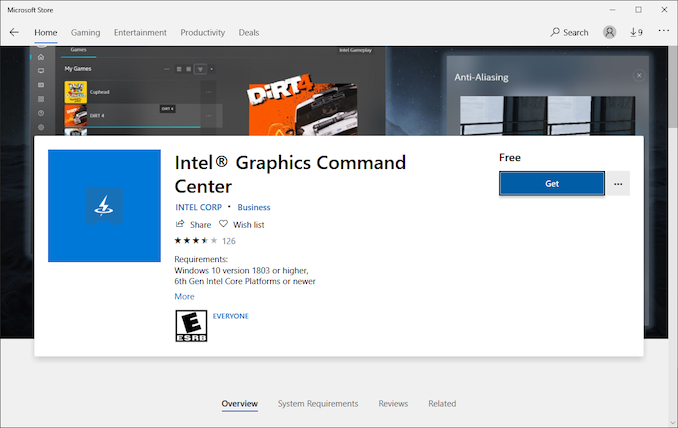
Going by Intel’s release notes, the key development here, besides seemingly throwing caution into the wind and telling OEMs to step back, is the now widespread use of Microsoft’s newer Declarative Componentized Hardware (DCH) video driver format. First introduced along Windows 10 1803 almost two years ago, DCH is a newer, modularized driver format that among other things, allows for more piecemeal distribution of the components within a driver. For Intel and NVIDIA users, for example, their respective graphics control panels are distributed and installed via the Windows Store when installing a DCH driver.


Critically, OEM-specific customizations are modularized under DCH as well, meaning that those customizations are no longer part of the base driver package, in Microsoft parlance. This means that it’s possible to distribute and update the base driver as a generic package, doing away with the need to make OEM-specific builds that incorporate their customizations. Ultimately, unlocked drivers have been part of Microsoft’s big plan for drivers since Windows 10 1803 shipped, and this week Intel is finally putting that plan further into motion with the release of their first unlocked driver set.


Meanwhile, although Intel is distributing unlocked drivers, they are being cautious about it, at least initially. At the very top of the driver description, before anything else, is the following warning text.


WARNING: Installing this Intel generic graphics driver will overwrite your Computer Manufacturer (OEM) customized driver. OEM drivers are handpicked, customized, and validated to resolve platform-specific issues, enable features and enhancements, and improve system stability. The generic driver’s intention is to temporarily test new features, game enhancements, or check if an issue is resolved. Once testing is complete Intel advises reinstalling the OEM driver until they validate it and release their own version.


For now, at least, Intel is calling these unlocked drivers test drivers. But so long as they work correctly, there’s going to be little need to go back to using pre-baked OEM drivers. Intel moves faster than the OEMs, and typically the company updates its generic drivers for far longer than OEMs update their custom drivers. So it should be a win for all parties: Intel improves the user experience by getting drivers to users sooner, users get bug fixes and updates sooner, and OEMs have to less ongoing maintenance and driver customization work. Which is all the more important for all parties as Intel’s integrated GPUs have continued to improve with recent releases like the Ice Lake Iris Plus (G7) iGPUs, as well as the upcoming Xe-based iGPU that will be in Tiger Lake.


Finally, with all of that said, it should be noted that there is a catch: because this unlocked driver functionality is based around the Windows 10 DCH driver model, it means that a system needs to already have an OEM DCH driver installed – a so-called “OEM DCH to Intel Generic DCH” driver upgrade. So for an older system that is running a current build of Windows 10 but is relying on a standalone-style driver, it will not be possible to install the unlocked Intel driver. In this case a user would first need to install an OEM DCH driver, if one is available. Otherwise, Intel’s new driver package doesn’t do anything for systems running pre-DCH drivers.


You can find the full details on Intel’s new iGPU driver, as well as the associated release notes, over on Intel’s driver download page.


Source: AnandTech – GPUs Unleashed: Intel Releases First Unlocked GPU Driver For OEM Systems

Sponsored Post: On April 30, Gigabyte is Making an Announcement – And it’s a Big One


On April 30 at 10 AM PST/1 PM EST, Gigabyte is planning to stream a special event known as AORUS Direct on its YouTube. Nobody knows *what* specifically will be revealed just yet, but it looks like it’s going to be something big.

During AORUS Direct, Gigabyte is likely going to reveal some new top-notch motherboards that could hit the market soon. Though Gigabyte manufactures laptop devices and custom graphics cards, its production of motherboards is what the company is best known for. April 30, the company might just show off brand-new ones.


This could be exciting news for PC gamers. As the backbone of a computer, motherboards are one of the most important parts in any rig. And as the market for motherboards has become increasingly varied in recent years, as one of the largest motherboard manufacturers Gigabyte has been able to use its size to deliver a wide range of boards. These days motherboards don’t just vary in size – from towering EATX boards to tiny mini-ITX builds – but also ever-expanding feature sets such as USB Type-C ports, M.2 slots, Wi-Fi, and even RGB lighting controls.


As well, overclocking continues to remain popular, with performance-focused boards getting extra cooling and support for higher RAM speeds in order to maximize their performance potential. Based on what they’ve accomplished so far, whatever Gigabyte has to offer with a new line of motherboards should be pretty interesting to see.


Make sure to save the date and time so you can catch the AORUS Direct stream. If some fantastic motherboards are announced, you won’t want to miss it. If you can’t make it, don’t worry — a post-stream recap highlighting everything you need to know will also be available.

Add To My Calendar


Source: AnandTech – Sponsored Post: On April 30, Gigabyte is Making an Announcement – And it’s a Big One

NVIDIA Closes Mellanox Acquisition, Adds High-Speed Networking to Tech Portfolio

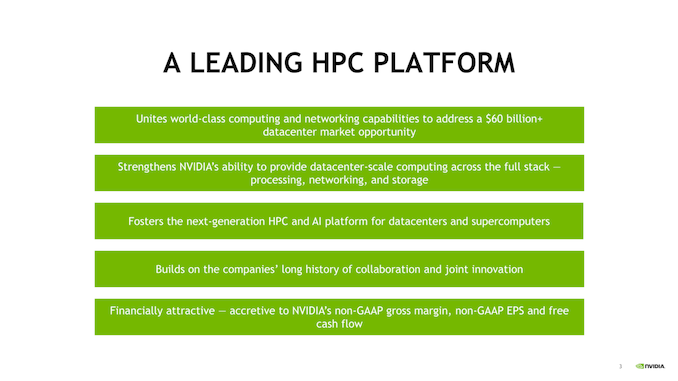
Just over a year ago, NVIDIA announced its intentions to acquire Mellanox, a leading datacenter networking and interconnect provider. And, after going through some prolonged regulatory hurdles, including approval by the Chinese government as well as a waiting period in the United States, NVIDIA has now closed on the deal as of this morning. All told, NVIDIA is pricing the final acquisition at a cool 7 billion dollars, all in cash.


Overall, in the intervening year, NVIDIA’s reasoning for acquiring the networking provider has not changed: the company believes that a more vertically integrated product stack that includes high-speed networking hardware will allow them to further grow their business, especially as GPU-powered supercomputers and other HPC clusters get more prominent. To that end, it’s hard to get more prominent than Mellanox, whose Ethernet and Infiniband gear is used in over half of the TOP500-listed supercomputers in the world, as well as countless datacenters.


Ultimately, acquiring the company not only gives NVIDIA leading-edge networking products and IP, but it will also allow them to exploit the advantages of being able to develop in-house the high-performance interconnects needed to allow their own high-performance compute products to better scale. NVIDIA already has significant dealings with Mellanox, as the company’s DGX-2 systems incorporate Mellanox’s controllers for multi-node scaling. As well, Mellanox’s hardware is used in both the Summit and Sierra supercomputers, both of which are also powered by NVIDIA GPUs. So this acquisition is in many respects just the latest expansion in NVIDIA’s ongoing efforts to grow their datacenter presence.


Source: AnandTech – NVIDIA Closes Mellanox Acquisition, Adds High-Speed Networking to Tech Portfolio

Khronos Announces OpenCL 3.0: Hitting the Reset Button on Compute Frameworks

Today something is happening for which I’m not sure there’s any parallel for in the computing industry – and certainly, there’s never been anything like it in the GPU computing ecosystem. Khronos, the consortium behind standards such as Vulkan, OpenCL, and OpenGL, is revealing OpenCL 3.0, the latest version of their GPU and parallel compute API. And, looking to reset the ecosystem, the group is turning back the clock on OpenCL, essentially reverting the core API back to OpenCL 1.2.

As a result, everything developed as part of OpenCL 2.x over the last 9 years has now become optional: vendors can (and generally will) continue to support those features, but those features are no longer required for compliance with the core specification. Instead of having to support every OpenCL feature – no matter how useful or useless it might be for a given platform – the future of the API is going to be around vendors choosing which optional features they’d like to support on top of the core, OpenCL 1.2-derrived specification. It’s a very Vulkan-like design philosophy, but it’s a major change in course for the industry’s biggest cross-vendor and cross-platform compute framework.


Source: AnandTech – Khronos Announces OpenCL 3.0: Hitting the Reset Button on Compute Frameworks

NVIDIA's GTC 2020 Keynote Is Back On: To Be Broadcast on May 14th

After becoming the victim of the SARS-CoV-2 coronavirus not once but twice, NVIDIA’s GTC 2020 keynote address has finally been rescheduled. The virtual keynote is now set to be broadcast on YouTube on May 14th, at 6am Pacific (13:00 UTC).


One of the many technology trade shows impacted by the now global pandemic, NVIDIA resorted to breaking up their annual GPU Technology Conference into multiple pieces. A number of presentations and sessions originally scheduled to be given at the show have instead been moved online as part of NVIDIA’s digital GTC 2020 conference. Meanwhile the show-defining keynote speech, as always to be delivered by CEO Jensen Huang, was previously rescheduled as a digital event for March before being postponed entirely.


And while NVIDIA isn’t saying much new about the contents of the keynote itself, it’s still expected to be one of NVIDIA’s most important presentations of the last few years. In particular, this year’s keynote is widely anticipated to include the announcement of a next-generation compute GPU architecture.


NVIDIA’s current Volta architecture-based GV100 GPU is now a few years old, and supercomputer planning announcements have tipped the fact that NVIDIA will have a new Tesla accelerator ready later this year. The current generation of Tesla accelerators have been a huge success story for NVIDIA, so there’s a great deal of interest in seeing how NVIDIA will keep up that momentum, especially in the face of stiff competition from all directions, from FPGA suppliers to Intel’s Xe GPU family.


Source: AnandTech – NVIDIA’s GTC 2020 Keynote Is Back On: To Be Broadcast on May 14th

Intel: Tiger Lake Client CPUs Coming Mid-Year

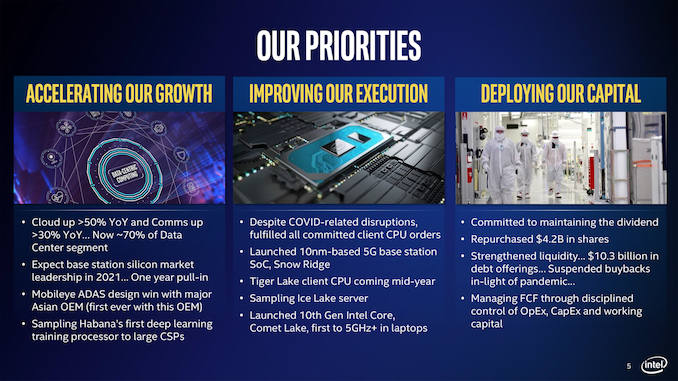
Along with detailing the nuts and the bolts of their Q1 2020 earnings, as part of Intel’s financial presentation, the company also offered a quick update on their upcoming Tiger Lake client CPUs. In short, the company is now preparing for volume production of the chips, and expects to being shipping them to OEMs mid-year.


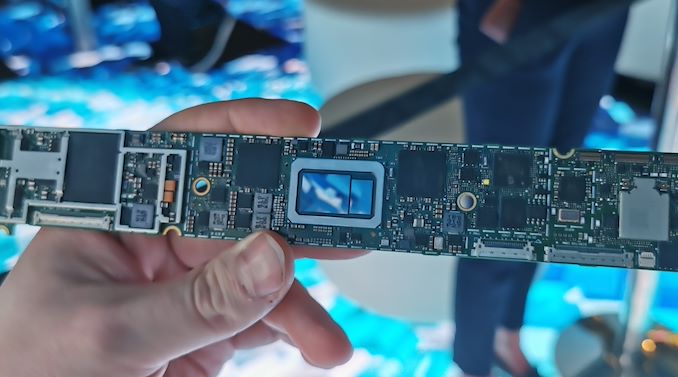
Intel first unveiled Tiger Lake back at CES 2020 early this year, where the company briefly detailed the architecture while showing off a device using a prototype chip. Tiger Lake will be based on Intel’s latest Core CPU architecture, and will also be the first CPU from the company to integrate an iGPU based on their new Xe-LP graphics architecture. The chips will be based on a newer version of Intel’s 10nm manufacturing process than what’s used in the current ice Lake chips, which Intel is calling their 10+ process. At the time, Intel was promising that Tiger Lake devices would show up by the holidays, a similar time frame as 2019’s Ice Lake launch.


All told then, Intel’s most recent update is right in-line with their previous promises. With Tiger Lake being another mobile-first launch, OEMs need to receive chips well in advance of when consumer products will reach the store shelves, both to give OEMs the necessary time to finalize their designs, as well as to build up a suitable stockpile of devices for a proper retail launch. So, as it always needs to be said when talking about Intel’s timelines for manufacturing, while Tiger Lake chips will be shipping mid-year, we’re not currently expecting devices any sooner than what Intel has previously discussed.


Finally, if everything goes according to plan or Intel, it looks like the Tiger Lake launch should be a higher volume affair than Ice Lake’s. Cognizant of Ice Lake’s slow ramp-up and launch in 2019, Intel is telling investors that they are holding twice as many Tiger Lake CPUs in reserve as compared to Ice Lake. The company does need to master its updated 10+ process to get there, but with any luck, Intel’s 4+ years of playing with 10nm may finally pay some better dividends as they bring up their latest process.


Source: AnandTech – Intel: Tiger Lake Client CPUs Coming Mid-Year

Intel Reports Q1 2020 Earnings: Another Strong Quarter For Both Client and Datacenter

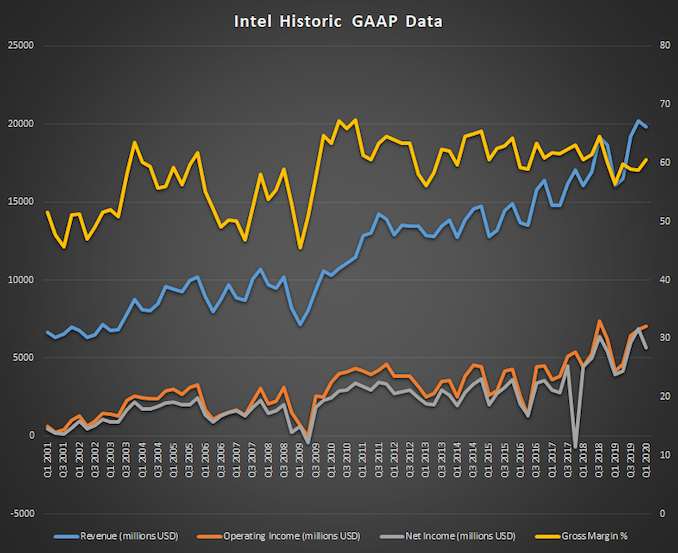
Kicking off earnings season for the tech industry, Intel yesterday evening reported their financial results for the first quarter of the year. And, like pretty much every Intel quarter for the last couple of years, it was a doozy, with Intel once again recording growing revenues and a very healthy profit margin.


For the first quarter of 2020, Intel reported $19.8B in revenue, a significant improvement over the year-ago quarter, and only slightly behind Intel’s record-breaking Q4. As a result of this strong revenue, income was also very healthy for the company, with Intel recording $5.7B in net income, a 43% jump over Q1’19. Meanwhile gross margins were up 4 percentage points to 60.6%, pushing Intel back above their much revered 60% gross margin threshold.


Intel Q1 2020 Financial Results (GAAP)
  Q1’2020 Q4’2019 Q1’2019
Revenue $19.8B $20.2B $16.1B
Operating Income $7.0B $6.8B $4.2B
Net Income $5.7B $6.9B $4.0B
Gross Margin 60.6% 58.8% 56.6%
Client Computing Group Revenue $9.8B -2% +14%
Data Center Group Revenue $7.0B -3% +43%
Internet of Things Revenue $1137M -2% +8%
Non-Volatile Memory Solutions Group $1.3B +8% +46%
Programmable Solutions Group $519M +3% +7%

Breaking things down on a group basis, many of Intel’s internal reporting groups saw double-digit growth over the year-ago quarter. Client computing revenue was up 14% to $9.8B, and data center revenue was an even bigger winner with $7.0B in revenue, a 43% jump over the previous year. The significant growth in the data center segment comes as Intel saw both higher average selling prices and higher volumes overall, with ASPs and volumes growing by 13% and 27% respectively. Overall Intel attributes the data center gains to the company’s “broad strength” in the market, though they did note that they’ve seen a 53% year-over-year increase in revenue from cloud service providers.


As for client computing revenue, the biggest gains there came from notebook ASPs, which were up 22% over the year-ago quarter. Other client metrics were relatively tame; notebook volumes actually slipped 3%, while on the desktop, ASPs were up 4% while volumes were down 4%. For Intel’s client group, the company is coming off of the second quarter of selling Ice Lake laptops, with improving supply and improving helping to drive those numbers. As well, Intel’s new Comet Lake-H CPUs were recently launched, which means those would have been shipping to OEMs in Q1 as well.


Rounding out Intel’s product portfolio, the company recorded smaller gains for their Programable Solutions Group, as well as their Internet of Things business. Overall IoT was a mixed bag: Mobileye revenue, which the company offers a separate breakout, was up 22% over the previous year, but the rest of Intel’s IoT business saw a 3% drop in revenue. Finally, Intel’s storage group was a surprising winner, with record revenue pushing them to year-over-year growth of 46%, thanks to higher NAND ASPs and lower unit costs.


Meanwhile, like most other tech companies, the 800lb gorilla of the chipmaking world finds itself in an interesting position as the novel coronavirus pandemic has shuttered large parts of the world’s economies. For Q1, Intel believes they actually benefitted somewhat from the outbreak, as companies and consumers needed to make previously-unplanned purchased of laptops and other equipment for working from home and remote learning. However as the pandemic continues, it’s likely to start impacting Intel’s sales in other ways, as idled business won’t be making their usual purchases and expansions. As a result, Intel isn’t even providing full-year financial guidance due to the economic uncertainty that the pandemic has caused.


On the flip side of the coin, as a business and employer themselves, the coronavirus outbreak has also threatened Intel’s manufacturing operations. Despite that, according to Intel the company was able to keep all of its essential manufacturing operations going, with an on-time delivery rate that’s still better than 90%.  So thus far Intel seems to have weathered the first part of the pandemic fairly well.


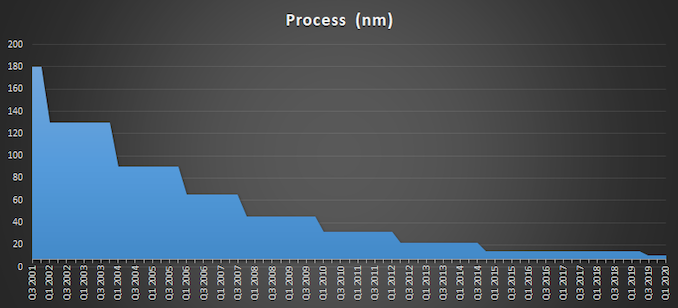
All eyes then will be on the second quarter, both for continuing developments with the coronavirus pandemic, as well as Intel’s own internal manufacturing efforts. With Intel set to start shipping its 10nm Tiger Lake CPUs to OEMs by mid-year, the company is going to be pushing its 10nm manufacturing lines harder than ever as they ramp up for a new generation of CPUs. While slowly improving, 10nm’s rocky bring-up remains a bit of a proverbial albatross around Intel’s neck, so further improving capacity and yields will go a long way towards helping Intel maintain its success, especially in light of heavy competition from AMD.


Source: AnandTech – Intel Reports Q1 2020 Earnings: Another Strong Quarter For Both Client and Datacenter

The iPhone SE (2020) Hands-On Quick Review: A Reinvigorated Classic

Apple’s latest iPhone SE is being released today, and it’s certainly going to make a big impact on the market, for the simple reason that this is a $399 iPhone. We’ve had the new phone for a mere 24 hours, but we’ve been able to quickly put the device through its paces, showcasing the biggest differentiating factors for the phone – a device that can be essentially described as an iPhone 8 but with the brains of an iPhone 11.

In that sense, the second-generation iPhone SE is an extremely straightforward device. Externally, there’s very little that exposes it as a 2020 phone, with only the most minute design changes present. Powered by Apple’s latest-generation A13 chip however, it’s hiding the strongest internal components in the market right now, easily beating any other device from the competition – at any price point. What’s left to be tested is how the new iPhone SE’s camera holds up, and if there’s any other noticeable differences between it, the iPhone 8, and the iPhone 11 series phones.


Source: AnandTech – The iPhone SE (2020) Hands-On Quick Review: A Reinvigorated Classic