NVIDIA Teases Next-Gen GPUs, DGX Hardware Ahead of GTC 2020 Keynote

Among the many events delayed or canceled due to the current coronavirus pandemic is NVIDIA’s annual GPU Technology Conference. After a false start, the spring event was rescheduled as an all-digital affair, centered around CEO Jensen Huang’s annual keynote. And with that keynote set to be broadcast on Thursday morning, the company has posted a short video teasing some of the new hardware we’re presumably going to see in the keynote.


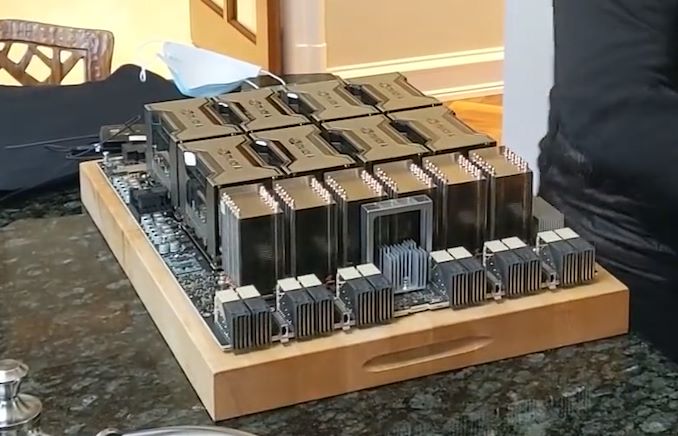
In the video, titled “What’s Jensen been cooking”, Huang pulls out a rather heavy-looking 8 GPU baseboard from his oven, placing it on his kitchen counter. Calling it “the world’s biggest video card”, the board has apparently “been cookin’ for a while.”


With no other context provided in the 27 second video, the board looks a great deal like an updated version of the baseboards used in NVIDIA’s DGX and HGX compute servers. And with NVIDIA’s next-generation compute architecture and GPU widely expected to be unveiled at the event, we are almost certainly looking at a server board full of NVIDIA’s next-gen accelerators.


No doubt we’ll be seeing and hearing a lot more about this board and the GPUs on it come Thursday, where NVIDIA’s keynote starts bright and early at 6am PT.


Source: AnandTech – NVIDIA Teases Next-Gen GPUs, DGX Hardware Ahead of GTC 2020 Keynote

Intel Initiates EOL for the VCA2: Three Xeons on a PCIe Card

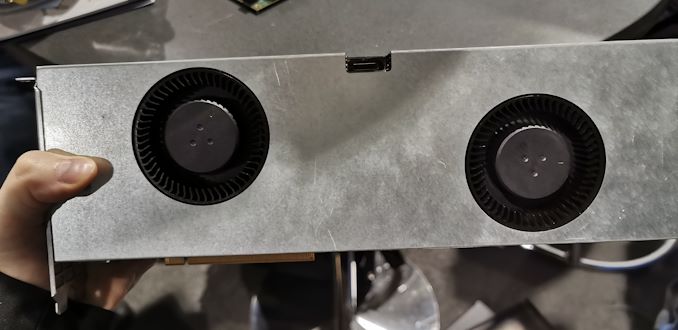
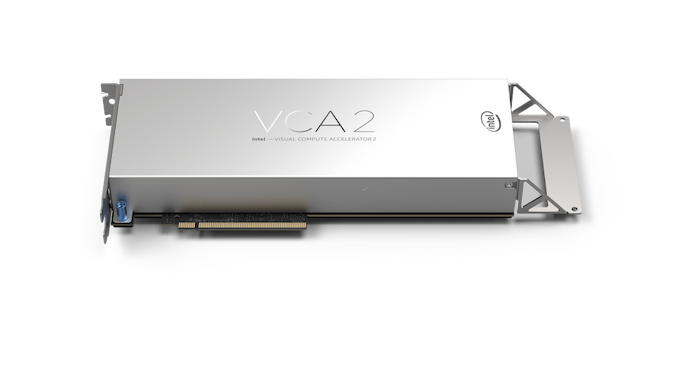
One of Intel’s more interesting products over the recent years was its range of Visual Compute Accelerator cards, designed to help cloud streaming and encoding/decoding of HD and UHD video. These cards were built on the QuickSync principle, using Intel’s integrated graphics to accelerate the process, but also using special Xeons with added eDRAM (known as Crystalwell) to help accelerate the process. These cards fit into a PCIe 3.0 x16 slot, and used a switch to control them, as well as shuttling data across the PCIe bus. They were launched in 2017, and now Intel is putting them onto the End-Of-Life track for product discontinuance.


These cards were geared towards the cloud video streaming market, and contained three E3-1585L v5 processors inside with Iris Pro P580 graphics. The card as a whole was rated for 235 W, which includes the switch inside, and through a host you could ssh into the CPUs similar to how Intel made Xeon Phi add-in cards. Intel’s SDK pacakages for the card revolved around AVC transcoding at 30 FPS, as well as a Kernel development kit for CAD applications.


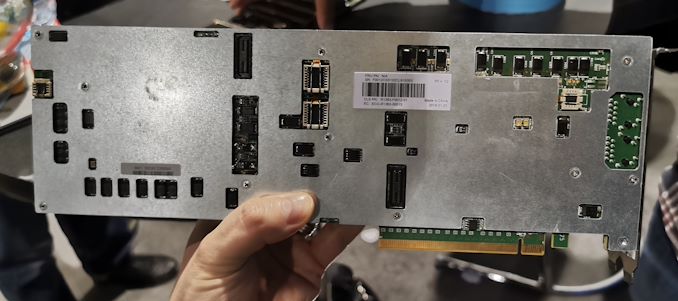
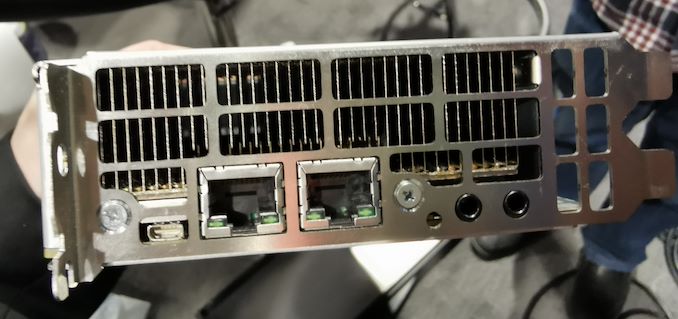
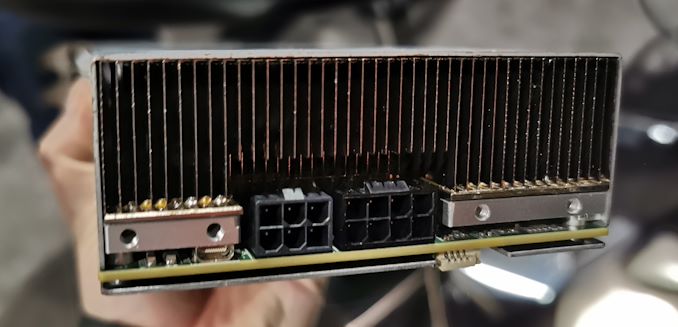
We actually saw a third party company at Supercomputing this year who built the cards specifically for HPE’s customer deployments. They were showing off the PCB routing and cooling skills. The card was quite heavy and long, requiring an 8-pin and a 6-pin PCIe connector to provide enough power.


The EOL timeline for the VCA1585LMV starts on May 22nd, with a final order date of August 1st. Orders are non-cancelable after September 1st, and all orders will be shipped by the end of the year. Any orders placed between the final order date and the final shipment date will be filled by any existing inventory. Interestingly enough, Intel also includes this snippet in its product notice that I’ve never seen before:


  • Intel will provide reasonable commercial efforts in debugging issues during the warranty period for the product after the PDA date has passed. Fixes cannot be committed, but Intel will endeavor to provide reasonable workarounds for the product.

At this point in time Intel has not stated if it plans to launch a new version of the Visual Compute Accelerator – given that VCA2 is now in EOL and no VCA3 is announced, this line of products has likely finished, or will be replaced by future AI/Xe/FPGA efforts.


Source: Intel PCN 117586-00, Intel Product Page, Intel Server Marketing Library


Related Reading


Source: AnandTech – Intel Initiates EOL for the VCA2: Three Xeons on a PCIe Card

Amazon Makes Graviton2 AWS Instances Available

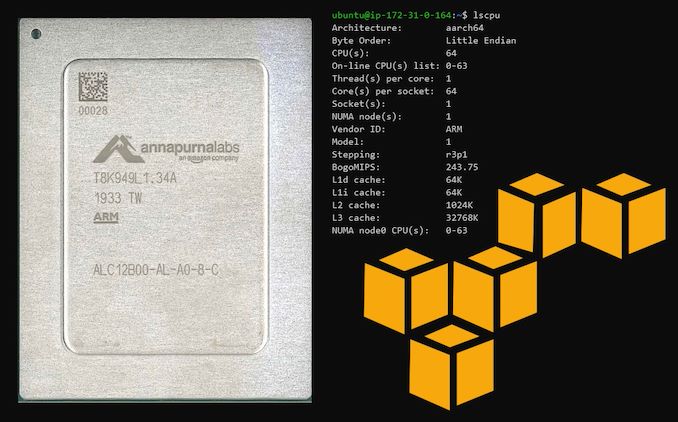
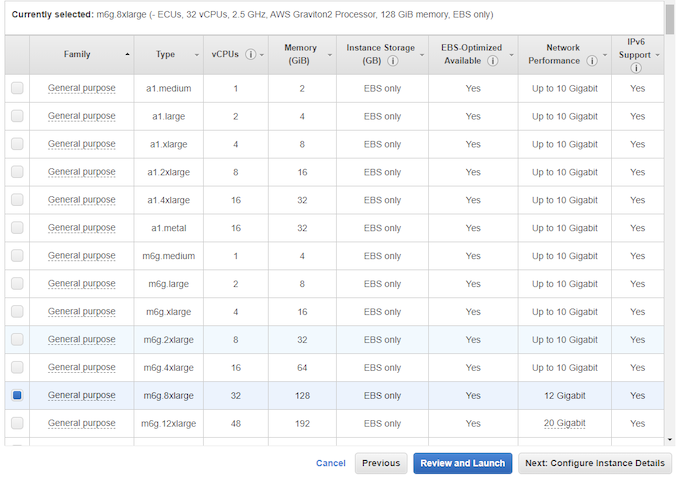
Following the Graviton2’s first official announcement back in December, as well as the preview period that has been going on for several months now, Amazon has today publicly launched new m6g instanced based on their new in-house Arm platform.


We had a more in-depth look into the Graviton2 in our analysis article back in March, and the Amazon silicon and Arm’s Neoverse-N1 cores certainly delivered on its promises, showcasing competitive performance both in single-threaded as well as multi-threaded scenarios. Most importantly, on AWS, the m6g instances delivered better cost efficiency compared to competing Intel and AMD-based instances. 


The new m6g instances in Amazon’s main global regions, including US East (N. Virginia), US East (Ohio), US West (Oregon), Europe (Ireland), Europe (Frankfurt), and Asia Pacific (Tokyo) starting today.


Related Reading:


Source: AnandTech – Amazon Makes Graviton2 AWS Instances Available

POCO Announces New POCO F2 Pro – An Affordable Flagship

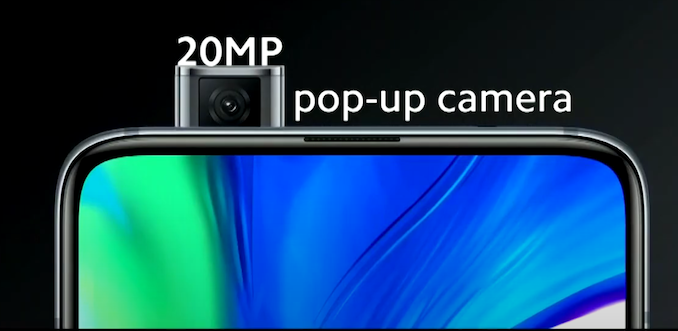
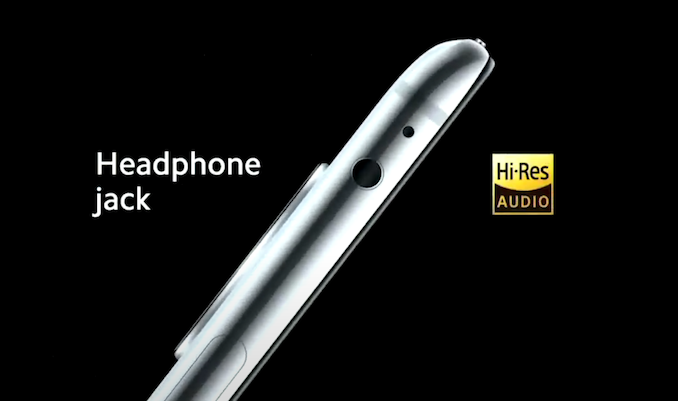
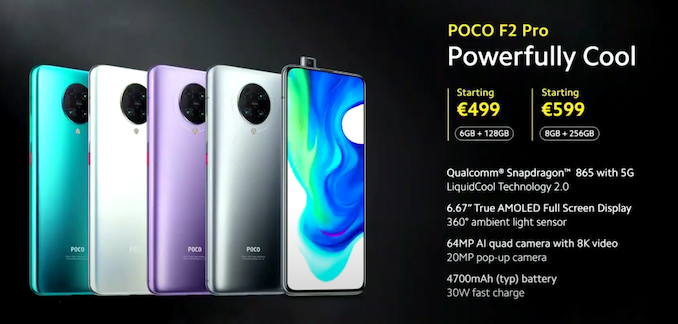
Today we’re seeing the return of the flagship killer – although this isn’t OnePlus we’re talking about, but rather then new POCO F2 Pro. It’s the successor to the wildly popular Pocophone F1 – one of Xiaomi’s sub-brands. The new F2 Pro features the new flagship Snapdragon 865, a new IMX686 64MP main camera sensor, 6.67” AMOLED screen and a massive 4700mAh battery, all topped up with a 3.5mm headphone jack. What’s also unusual about the phone is that it features a mechanical pop-up front camera, which allows it to have a true full screen experience without any notches or cut-outs.


POCO F2 Pro
  F2 Pro
SoC Qualcomm Snapdragon 865 

1x Cortex-A77 @ 2.84GHz

3x Cortex-A77 @ 2.42GHz

4x Cortex-A55 @ 1.80GHz


Adreno 640 @ 587MHz

GPU Adreno 620
DRAM 6 GB LPDDR4X
8 GB LPDDR5
Storage 128 / 256 GB UFS 3.1
Display 6.67″ AMOLED

2400 x 1080 (20:9)


180Hz Touch Sampling

Size Height 163.3 mm
Width 75.4 mm
Depth 8.9 mm
Weight 218 grams
Battery Capacity 4700 mAh (Typical)


30W Charging

Wireless Charging
Rear Cameras
Main 64MP 0.8µm 1/1.72″ IMX686

(2×2 binning to 1.6µm 16MP)


f/1.89

26mm eq.

Wide 13MP 1.12µm

Super-wide angle


f/2.4

123° FoV

Extra 5MP 1.12µm Telephoto Macro

f2.2

50mm eq.


2MP Depth

Front Camera Mechanical Pop-up 20MP 1/3.4″ 0.8µm
I/O USB 2.0 Type-C
3.5mm headphone jack

Fingerprint reader
Wireless (local) Wi-Fi 6

Bluetooth 5.1
Cellular GSM, CDMA, HSPA, 4G/LTE, 5G
Splash, Water, Dust Resistance
Dual-SIM nano-SIM
Launch OS Android 10
Launch Price 6GB + 128GB: $499 / 499€

8GB + 256GB: 599€

POCO brands itself as a performance-oriented vendor, and with the Snapdragon 865 it certainly trades blows with the best Android phones out there on the market. It’s interesting to see here that we’re going to see the same device with two different memory technologies; the 6GB variant of the phone will feature LPDDR4X, while the 8GB version will feature LPDDR5. Both variant come with corresponding 128 or 256GB of UFS 3.1 storage.


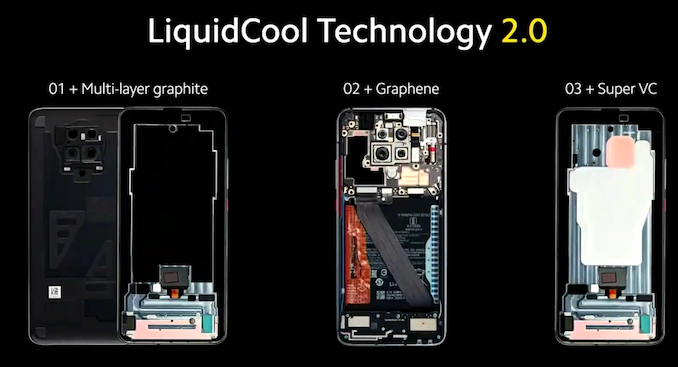
During the launch event, the company also focused on the thermal dissipation solutions of the POCO F2 Pro, claiming that the inclusion of a huge vapour chamber as well as very large graphene and graphene thermal layers would vastly outperform other contenders in the market such as the Galaxy S20 and the OnePlus 8 Pro. Here the F2 Pro claims to offer better peak and sustained performance, all whilst reducing frame minimums.


The F2 Pro comes with a 6.67” AMOLED screen at 2400 x 1080 resolution – this is likely the single biggest upgrade over the Poco F1 as it signifies the move away from LCD. The screen itself is claimed to reach up to 800 nits in high brightness mode. The one feature that seems to be lacking on the F2 Pro is the lack of higher refresh rates, with this being a 60Hz panel. Touch sampling at least is listed at a higher 180Hz for better input responsiveness.


The front of the device is characterised by its symmetrical bezels with no notch or display cut-out. This is enabled by a 20MP front camera that is housed in a mechanical pop-up camera module. It’s an interesting choice, but I got the feeling that most 2020 flagships have actually dropped this intermediary solution. Nevertheless, I’ve seen a lot of people be fan of it – although I don’t quite like the compromises such as the heavier weight (the Poco F2 Pro is 218g) and the lack of water resistance.


In the quite heavy 218g weight we find a large 4700mAh battery, which together with the efficient SoC and conservative screen configuration will undoubtedly result in extremely good battery life.


On the rear, we find a quad-camera setup. As the main shooter, we find the new Sony IMX686 64MP sensor – a new 1/1.72” sensor with 0.8µm pixels that bin 2×2 pixels to regular 16MP 1.6µm equivalent shots. What’s special here is that the phone is capable of 8K video recording, which I think is unique in this price range.


We’re lacking any mention of OIS on the side of the main camera, which might be a sign that the phone actually doesn’t have the feature. It’s an important compromise for the camera system if this is confirmed to be missing.


As a secondary camera there’s a 13MP 1.12µm ultra-wide-angle sensor with an optics capable of 123° field of view, as well as two extra modules – a 5MP telephoto macro and a 2MP depth sensor.


The 5MP telephoto macro is said to be special in its capabilities, alongside being able to serve as a 50mm equivalent telephoto, it can focus down to 2cm distance with some extremely high reproduction factor, resulting in extremely high macro magnification, more-so than any other phone on the market right now.


POCO also made fun of the competition, claiming it includes some features that some other vendors have forgotten about, including NFC, an IR blaster, and most importantly a headphone jack.


The biggest selling point of the POCO F2 Pro naturally is its price, and here the phone come at some real flagship killer figures at 499€ for the 6+128GB variant, and 599€ for the 8+256GB phones. I wouldn’t worry too much about the LPDDR4X on the former variant; the pricing here is extremely competitive in the face of say a regular OnePlus 8 which falls in at 699€. What you give up on is seemingly weight of the phone, a higher refresh rate screen, and OIS.


Availability starts today at various online stores, with expanded availability in the next few weeks and months.


Source: AnandTech – POCO Announces New POCO F2 Pro – An Affordable Flagship

The 1STPlayer Steampunk 80+ Gold 750W PSU Review: A New Challenger Emerges

Today we are taking a look at a fresh face in the PSU market, 1STPlayer and their Steampunk PSU series. The Steampunk 80+ Gold 750W that we are reviewing today looks similar to many PSUs in the market, with the exception that it comes from an OEM that we have never encountered before, injecting some new and exciting competition into a market normally dominated by a handful of manufacturers.


Source: AnandTech – The 1STPlayer Steampunk 80+ Gold 750W PSU Review: A New Challenger Emerges

Powercolor goes ITX with RX 5600 XT for $299

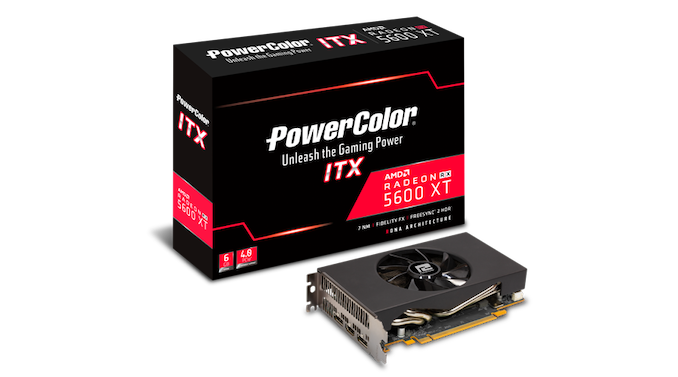
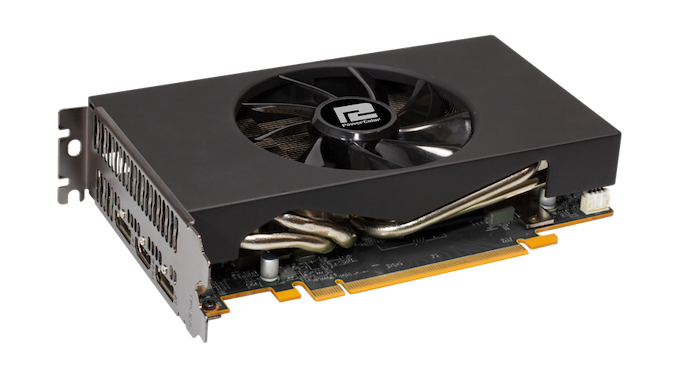
Small cards and small systems are always exciting to see, especially if there’s an avenue to create a nice PC within a small volume at multiple price points. There are a number of angles to go with this, from the silent runner all the way up to the overstated ‘look-at-me’ RGB custom builds that appear as part of marketing presentations at trade shows. It still requires having access to a good number of components in that form factor, which includes smaller and smaller graphics cards. Graphics cards built to work with the ITX form factor is part of that, going for a 17nm design that fits into any mini-ITX build (or with a riser cable, only just above the CPU slot), and Powercolor is launching its new RX 5600 XT option.


This new AXRX 5600 ITX 6GBD6-2DH GPU, set to retail at $299 from today, is 175mm in length and offers three video outputs: one HDMI and two DisplayPort connections. The dual slot card has three heatpipes and an unassuming façade – the GPU underneath is standard RX 5600 XT faire, with 2304 SPs, a 1355 MHz base clock, a 1560 MHz ‘game’ clock, and a boost clock up to 1620 MHz. The 8 GB of memory is rated at 14 Gbps, up from the 12 Gbps reference design, and the GPU supports PCIe 4.0 connectivity. It requires one 8-pin connector, and Powercolor recommends a minimum 500W power supply.


Source: Powercolor


Related Reading


Source: AnandTech – Powercolor goes ITX with RX 5600 XT for 9

MSI Unveils MEG Z490 Unify Series: Unassuming Style

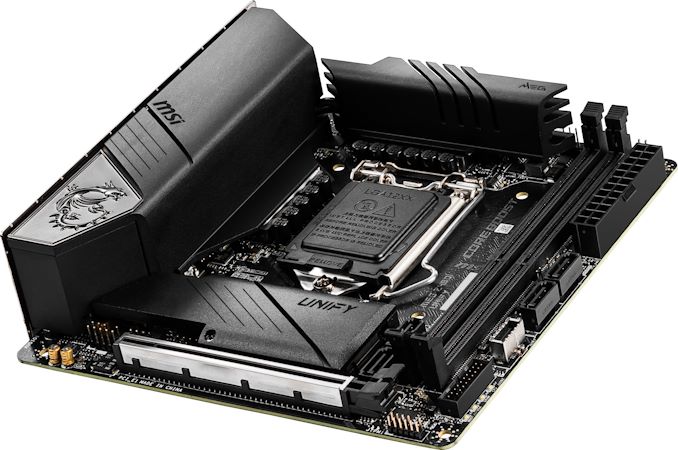
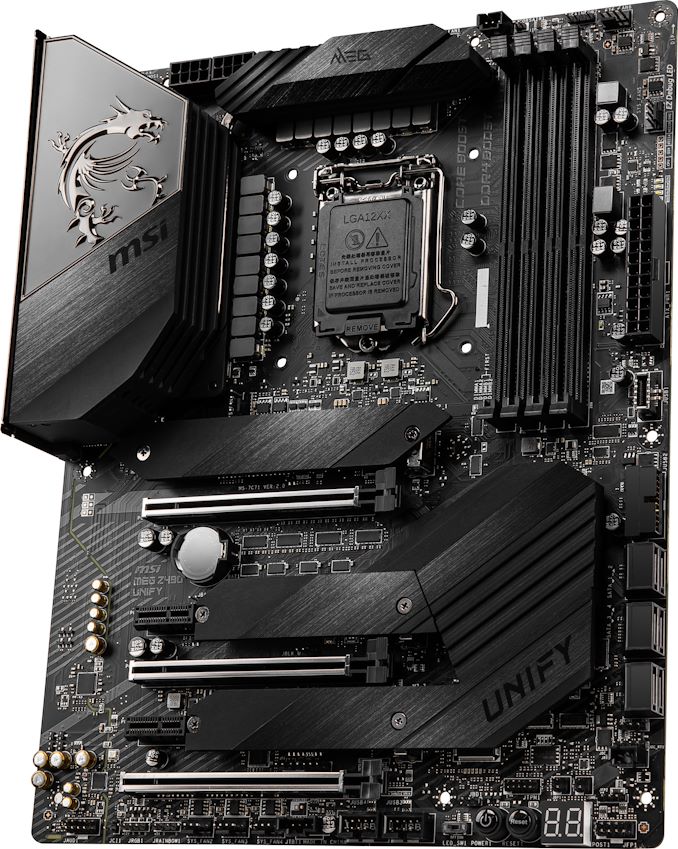
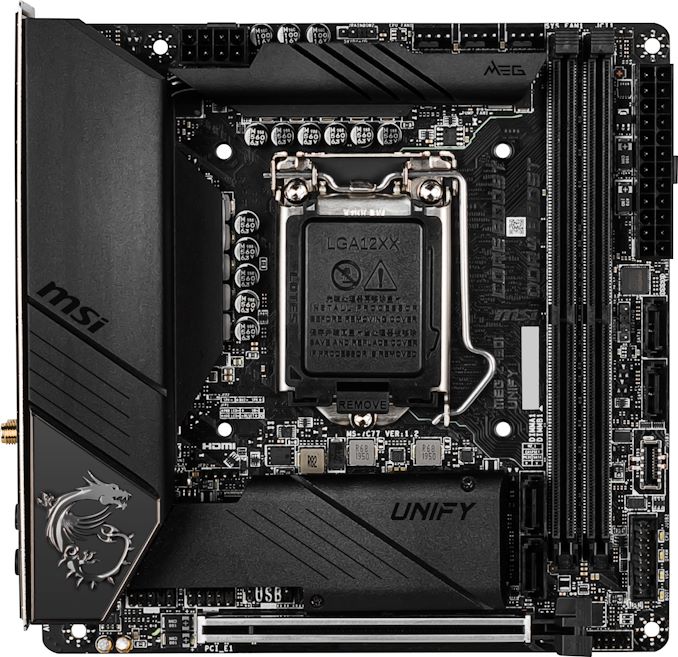
With the release of Intel’s 10th generation desktop processors (Comet Lake-S) looming ever closer, MSI has announced a pair of new Z490 models, the MSI MEG Z490 Unify and MSI MEG Z490I Unify. With a clear focus on design, the MEG Z490 Unify and Z490I Unify both carry an all-black aesthetic with no integrated RGB LEDs with some exciting features.


Starting with the MSI MEG Z490 Unify, it follows the ATX form factor and has a wave of features. This includes a solid-looking 16-phase power delivery with Intersil 90 A power stages with are doubled and is controlled by an ISL69269 PWM controller operating in an 8+0 configuration. Some of the main features include three PCIe 3.0 x4 M.2 slots, three full-length PCIe 3.0 slots working at x16, x8/x8, and x8/x8/+4, with two PCIe 3.0 x1 slots. There are six SATA ports with support for RAID 0, 1, 5, and 10 arrays, while the board supports up to 128 GB of DDR4-4800 across its four slots. On the rear panel plenty of high-speed connectivity including a single USB 3.2 G2 20 Gbps Type-C, and three USB 3.2 G2 10 Gbps Type-A ports, as well as a Realtek ALC1220 HD codec handing the boards audio and a Realtek RTL8125BG 2.5 G Ethernet port, and connectors for the Intel AX201 Wi-Fi 6 wireless interface.


The smaller mini-ITX sized MSI MEG Z490I Unify features a 10-layer PCB which is impressive for a board of its size. It has a direct 8-phase power delivery with 90 A power stages, and an Intersil ISL69269 PWN controller regulating the power to the CPU. Looking at the features, it includes dual PCIe 3.0 x4 M.2 slots, four SATA ports, and a single full-length PCIe 3.0 x16 slot, which MSI is stating that it is ready for PCIe 4.0. The rear panel includes a single Thunderbolt 3 Type-C input, with a DisplayPort 1.4 and HDMI video output pairing, and benefits from a Realtek ALC1220 HD audio codec. For networking, there is a single Realtek RTL8125BG 2.5 G Ethernet port, and connectors for the Intel AX201 Wi-Fi 6 wireless interface, which also has support for BT 5.1 devices.


It looks as though MSI enjoy success with its debut of the Unify series on the X570 chipset, and has made the non-RGB themed range a prominent series in its already stacked arsenal. MSI hasn’t officially stated when both the MEG Z490 Unify and MEG Z490I Unify will hit retail shelves, nor has any pricing information been disclosed at this time. 


Related Reading


Source: AnandTech – MSI Unveils MEG Z490 Unify Series: Unassuming Style

Qualcomm Announces Snapdragon 768G: Higher-bin 765 up to 2.8GHz


Today alongside with the launch of the Xiaomi Redmi K30 5G Racing Edition, Qualcomm is announcing the new Snapdragon 768G SoC which powers the device. The new SoC is a direct follow-up to the Snapdragon 765G announced last December, and the two chips are very likely the same silicon design, with the new variant increasing the clock frequencies.


Qualcomm Snapdragon Premium SoCs 2019-2020
SoC Snapdragon 768G Snapdragon 765

Snapdragon 765G
Snapdragon 730
CPU 1x Cortex A76
@ 2.8GHz


1x Cortex-A76

@ 2.4GHz


6x Cortex-A55

@ 1.8GHz

1x Cortex A76

@ 2.3GHz (non-G)
@ 2.4GHz (765G)


1x Cortex-A76

@ 2.2GHz


6x Cortex-A55

@ 1.8GHz

2x Cortex-A76

@ 2.2GHz


6x Cortex-A55

@ 1.8GHz
GPU Adreno 620
+15% perf over 765G
Adreno 620

+20% perf (non-G)
+38% perf (765G)
Adreno 618
DSP / NPU Hexagon 696

HVX + Tensor

5.4TOPS AI

(Total CPU+GPU+HVX+Tensor)

Hexagon 688

HVX + Tensor
Memory

Controller
2x 16-bit CH


@ 2133MHz LPDDR4X / 17.0GB/s

2x 16-bit CH


@ 1866MHz LPDDR4X 14.9GB/s

ISP/Camera Dual 14-bit Spectra 355 ISP


1x 192MP or 36MP with ZSL
or

2x 22MP with ZSL
Dual Spectra 350 ISP

1x 36MP with ZSL

or

2x 22MP with ZSL
Encode/

Decode
2160p30, 1080p120

H.264 & H.265


10-bit HDR pipelines

Integrated Modem Snapdragon X52 Integrated


(LTE Category 24/22)

DL = 1200 Mbps

4x20MHz CA, 256-QAM

UL = 210 Mbps

2x20MHz CA, 256-QAM

(5G NR Sub-6 4×4 100MHz

+ mmWave 2×2 400MHz)

DL = 3700 Mbps

UL = 1600 Mbps

Snapdragon X15 LTE


(Category 15/13)

DL = 800Mbps

3x20MHz CA, 256-QAM

UL = 150Mbps

2x20MHz CA, 64-QAM

Mfc. Process Samsung
7nm EUV (7LPP)
Samsung

8nm (8LPP)

The new chip features the same Cortex-A76 cores in a 1+1 configuration (one Prime high-clocked core, and one medium clocked core), alongside 6 Cortex-A55 cores. The difference in CPU performance lies in the frequencies of the big cores which are now at up to 2.8GHz and 2.4GHz for the Performance and Middle core – a more notable uplift from the 2.4 and 2.2GHz clocks of the Snapdragon 765G.


GPU clock frequencies have also been increased, resulting in at 15% performance boost over the Snapdragon 765.


The rest of the chip is seemingly identical to the Snapdragon 765 series. What’s interesting here is that Qualcomm does name it quite differently in its SKU line-up. While it very much shares the design of the Snapdragon 765, it’s also a possibility that it’s a silicon respin of the chip, the timelines certainly would make sense and it’s also not the first time that Qualcomm would have done this (Snapdragon 821 is an example of this). If the increased clocks come at a cost of higher power draw or loss of efficiency is anybody’s guess right now – there’s also the possibility that yields on Samsung’s 7LPP node has improved and thus enabled the higher frequencies.


Related Reading:


Source: AnandTech – Qualcomm Announces Snapdragon 768G: Higher-bin 765 up to 2.8GHz

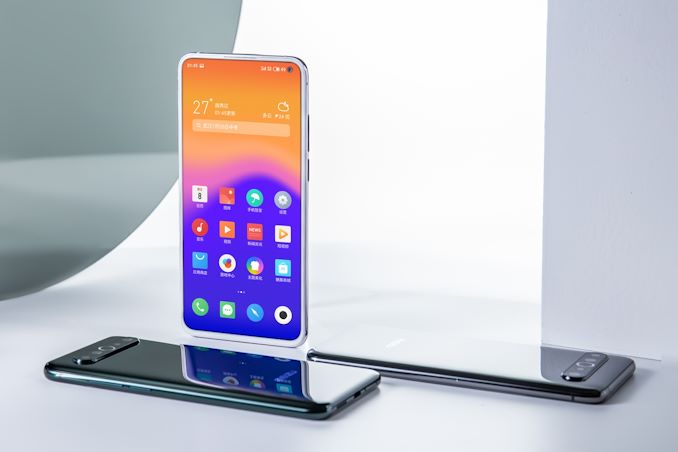
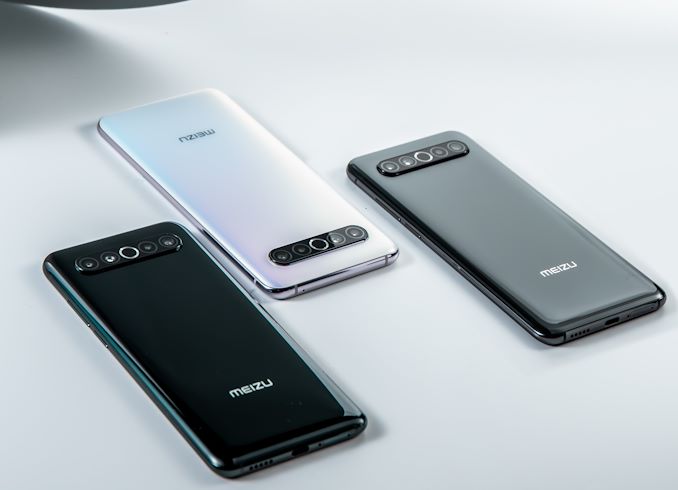
Meizu Announces New Meizu 17 and 17 Pro Flagships

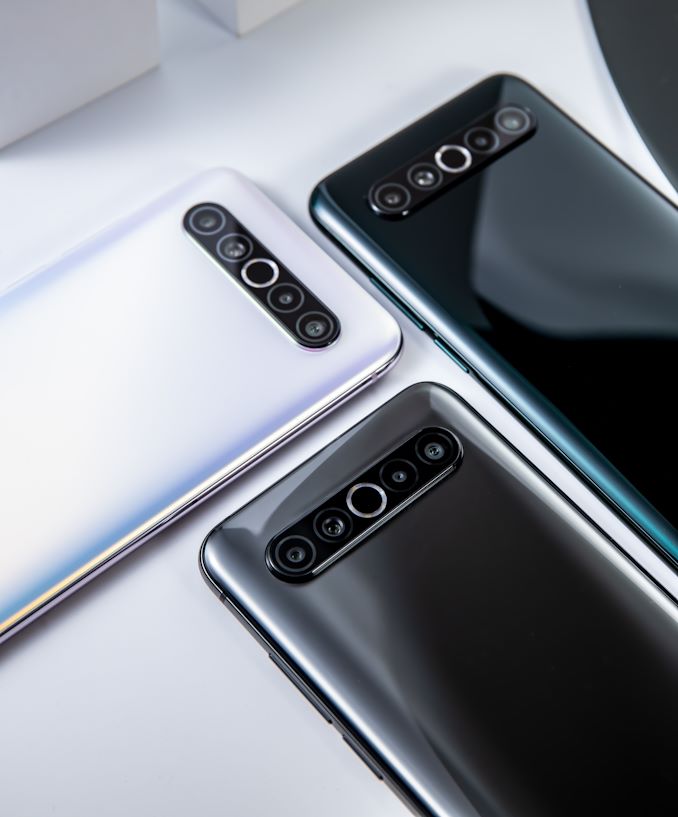
Today Meizu announced its 2020 flagship follow-up to the popular Meizu 16s: the new Meizu 17 and 17 Pro. The two new phones represent a design shift for the company as it moves to a new industrial design that’s a bit more unique. The new flagship phones are powered by the new Snapdragon 865 SoC and house Sony’s latest IMX686 64MP 1/1.72” main camera sensor.


Meizu is releasing two devices this year, both have the same form-factor with a 6.6” 90Hz OLED screen, but they differ in their other cameras and some other internal specifications, making for a slight price segmentation between the two units.


Meizu 17 Series
  Meizu 17 Meizu 17 Pro
SoC Qualcomm Snapdragon 865 

1x Cortex-A77 @ 2.84GHz

3x Cortex-A77 @ 2.42GHz

4x Cortex-A55 @ 1.80GHz


Adreno 640 @ 587MHz

Display 6.6″ AMOLED

2340 x 1080 (19.5:1)

90Hz Refresh Rate

180Hz Touch Sampling

Dimensions 160.0 x 77.2 x 8.5 mm
199 grams 217 grams
RAM 8 LPDDR4X 8/12GB LPDDR5
NAND

Storage
128/256 GB UFS 3.1
Battery 4500mAh (17.35Wh) typ.
30W Fast Charging
No wireless charging 27W Fast Wireless Charging
Front Camera 20MP

f/2.0
Primary Rear Camera 64MP 0.8µm 1/72″ IMX686

(16MP 1.6µm 2×2 binning)


f/1.8


26mm eq.

Secondary

Rear Camera
12MP 1.4µm IMX362

secondary main?


f/1.9

??mm eq.

8MP 1.0µm OV 08A10

Telephoto


f/2.4

79mm eq.

Tertiary

Rear Camera
8MP 1.12µm S5K4H7

Ultra-Wide


f/2.2

118° / 16mm eq.

32MP IMX616

Ultra-Wide


f/2.2

129° / 15mm eq.

Extra

Camera
5MP 1.12µm S5K5E9

Macro Camera


f/1.9

3D ToF
4G / 5G

Modem
Snapdragon 5G – Snapdragon Modem X55  (Discrete)

(LTE Category 24/22)
DL = 2500 Mbps – 7x20MHz CA, 1024-QAM
UL = 316 Mbps 3x20MHz CA, 256-QAM

(5G NR Sub-6)
DL = 7000 Mbps
UL = 3000 Mbps
SIM Size NanoSIM
Wireless 802.11a/b/g/n/ac/ax

BT 5.1 LE, NFC, GPS/Glonass/Galileo/BDS
Connectivity USB Type-C
no 3.5mm jack
Special Features On-screen fingerprint sensor,
Stereo Speakers
   
Launch OS Android 10 w/ FlymeOS
Launch Prices 8+128GB: RMB3699 (~$522)
8+256GB: RMB3999 (~$564)
8+128GB: RMB4299 (~$606)
12+256GB: RMB4699 (~$663)

Both phones are powered by the new Snapdragon 865 chipset by Qualcomm offering top of the line flagship performance. The two devices are 5G enabled and come with support with relevant sub-6GHz band support in their respective launch markets, starting with today’s China launch.


Meizu uses 128 or 256GB of UFS 3.1 storage capacities for both phones, while on the DRAM side the Meizu 17 comes with 8GB of LPDDR4X, and the 17 Pro offers either 8GB or 12GB of LPDDR5, marking Meizu as one of the rarer vendors who make use of the chipset’s hybrid memory controller.


The phone is actually quite large and a significant upsizing from past Meizu flagships, as the 17’s now come in a 160mm x 77.2mm (!!) footprint, making these one of the biggest phones out there. Thickness comes in at 8.5mm for both units.


In the bigger form-factor we find a 6.6” AMOLED display from Samsung which is said to have been designed in collaboration with Meizu to achieve smaller 3mm top and bottom bezels. The resolution is at 2340 x 1080p, so a 19.5:9 aspect ratio, and the screen support 90Hz refresh rate alongside 180Hz touch sampling.


The front camera module is a 20MP unit with f/2.0 optics and is a display hole cut-out design. The speciality here is that the cut-out radius is only 2.99mm which if we’re not mistaken is the smallest radius of its kind to date in a smartphone.


Whilst both variants feature the same 4500mAh battery capacity, the 17 Pro is heavier at 217 vs 199g because of the inclusion of different internal hardware. The one thing that is outright omitted from the regular version is wireless charging, whilst the Pro version supports 27W fast wireless charging, on top of the 30W wired charging for both units.


Both phones share the same main camera sensor with is a 64MP IMX686 – the successor to the widely popular IMX586 last year. The sensor features 0.8µm pixel pitches and is of a 1/1.72” diagonal which means it’s among the bigger sensors out there today. With 2×2 pixel binning it results in 16MP photos with an effective light gathering pixel-pitch of 1.6µm. The optics are a 26mm equivalent focal length with an f/1.8 aperture. Meizu seemingly doesn’t outright specify OIS so we do hope it’s present on the module.


The other camera modules differ completely between the two variants, starting off with the regular Meizu 17:


We find a 12MP secondary IMX362 module that in some PR materials is described as a telephoto module, although the company doesn’t exactly list the zoom or focal length. We find f/1.9 optics here.


There’s also a smaller Samsung S5K4H7 8MP ultra-wide angle module with a 118° field-of-view / 16mm equivalent focal length with f/2.2 optics, as well as a 5MP macro camera module.


The Meizu 17 Pro changes up the non-main camera modules. First of all, the telephoto module is now powered by an Omnivision 08A10 sensor with a 3x zoom capability to up to 79mm equivalent focal length, but it’s of a lower 8MP resolution with 1.0µm pixels.


Ultra-Wide Macro Shot


The ultra-wide angle on the 17 Pro is extremely interesting as it’s a 32MP IMX616, a very rare configuration. For some reason Meizu describes this as a 129° field of view module even though the focal length is only 15mm equivalent, narrower than some other devices we’ve seen out there, so the specs here are a bit conflicting. There’s f/2.2 optics on the unit. The speciality here is that Meizu dropped the macro module in favour of a 3D ToF (Time of flight) sensor, as the ultra-wide-angle unit has an auto-focus mechanism that allows it to focus as closely as 3cm and act both as a ultra-wide as well as a macro unit.


The Meizu 17 is available as 8+128 or 8+256GB configurations for RMB3699 (~$522) and RMB3999 (~$564), while the Meizu 17 Pro comes in either 8+128 or 12+256GB configs at RMB4299 (~$606) or RMB4699 (~$663), with pre-orders in China starting today and availability starting Monday the 11th. We expect Meizu to release the phones in other markets such as Europe later in a few months’ time, as they usually do.


Related Reading:


Source: AnandTech – Meizu Announces New Meizu 17 and 17 Pro Flagships

MediaTek Announces Dimensity 1000+ SoC

Today MediaTek announced a follow-up in its SoC line-up with the new Dimensity 1000+. This seems to be a binned or revisioned variant of the Dimensity 1000 announced last year, although we currently lack details on the exact changes.


MediaTek SoCs
SoC Dimensity 1000 Helio G90
(Helio G90T)
CPU 4x Cortex A77 @ 2.6GHz

4x Cortex A55 @ 2.0GHz
2x Cortex A76 @ 2.0GHz
(2.05GHz)

6x Cortex A55 @ 2.0GHz
GPU Mali-G77MP9 @ ? MHz Mali G76 MP4 @ 720MHz
(800MHz)
APU / NPU / AI Proc. / Neural IP “3rd gen APU”

2 “big” + 3 “small” + 1 “tiny”


4.5TOPs total perf

2x APU


+1TOPs total perf

Memory 4x 16b LPDDR4x LPDDR4X @ 2133MHz
ISP/Camera 80MP

or

32MP + 16MP
1x 48MP (64MP)

or

2x 24+16MP
Encode/

Decode
2160p60

H.264 & HEVC
& AV1 (Decode)
2160p30

H.264 & HEVC
Integrated Modem 5G Sub-6

DL = 4600Mbps

200MHz 2CA, 256-QAM,

4×4 MIMO

UL = 2500Mbps

200MHz 2CA, 256-QAM,

2×2 MIMO


LTE Category 19 DL

Category 12/13


DL = 600Mbps

3x20MHz CA, 256-QAM, 4×4 MIMO


UL = 150Mbps

2x20MHz CA,64-QAM

Connectivity WiFi 6 (802.11ax)

+ Bluetooth 5.1

+ Dual Band GNSS
 
Mfc. Process N7 12FFC

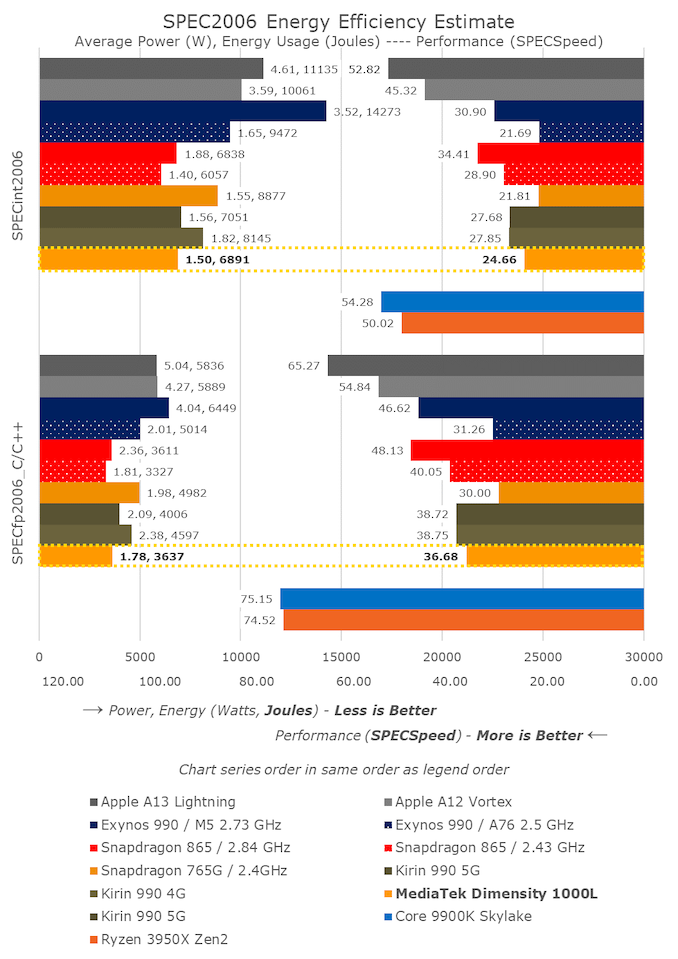
The Dimensity 1000+ is powered by 4x Cortex-A77 cores up to 2.6GHz and 4x Cortex A55 cores up to 2 GHz. Although we never saw any kind of Dimensity 1000 powered devices out there in the wild, we did manage to get our hands on an Oppo Reno 3 with a Dimensity 1000L – a lower binned variant of the flagship chip.


Even this lower binned variant performed quite excellently, able to showcase higher performance as well as better power efficiency compared to competing SoCs such as the Snapdragon 765.


The GPU is a Mali G77MP9 – but again since we never saw the full featured D1000 in the wild we don’t know how the D1000+ will perform. The lower-binned D1000L certainly showcased good performance at excellent power consumption.


The SoC includes a 5G modem capable of sub-6GHz frequencies (which covers the vast majority of markets). The chip also currently is the only mobile chip this year that support AV1 hardware decoding, an interesting feature that makes MediaTek’s offerings more future-proof than other chipsets.


Today’s announcement generally seems a bit meagre on details on what the D1000+ provides over the D1000. Vivo’s iQOO is said to be designing a phone powered by the new chipset, which hopefully means we’ll finally see the full potential of the Dimensity 1000 SoC materialise.


Related News:


Source: AnandTech – MediaTek Announces Dimensity 1000+ SoC

LG Announces VELVET Phone: Korea Only For Now

LG had been teasing the “Velvet” for several weeks now, trickle-feeding information about the company’s new premium level smartphone. Today, the company officially launches the device in Korea, fully revealing the specifications of the device as well as its pricing.


The LG Velvet isn’t a “true flagship” as it positions itself just one tier below that, featuring a Snapdragon 765 SoC as well as a lesser camera configuration. Where it does stand out is in the design – whilst some might criticise as “standard”, it’s probably LG’s best-looking phone in years. All whilst maintaining a reasonable price tag of around 670 USD.


LG Velvet
  V60
SoC Qualcomm Snapdragon 765


1x Kryo 475 Prime (CA76)

@ 2.3GHz

1x Kryo 475 Gold (CA76)

@ 2.2GHz

6x Kryo 475 Silver (CA55)

@ 1.8GHz

GPU Adreno 620
DRAM 8 GB
Storage 128 GB UFS 2.1

+microSD
Display 6.8″ FullVision AMOLED

2460 x 1080 (20.5:9)
Size Height 167.2 mm
Width 74.1 mm
Depth 7.9 mm
Weight 180 grams
Battery Capacity 4300 mAh (Typical)
Wireless Charging Qi
Rear Cameras
Main 48MP

f/1.8 w/OIS
Wide 8MP

Super-wide angle
Extra 5MP

Depth
Front Camera 16MP
I/O USB 2.0 Type-C
3.5mm headphone jack

Fingerprint reader
Wireless (local) Wi-Fi 6

Bluetooth 5.1
Cellular GSM, CDMA, HSPA, 4G/LTE, 5G
Splash, Water, Dust Resistance IP68
Dual-SIM nano-SIM
Launch OS Android 10
Launch Price ₩899,800 (~670 USD pre-tax)

Internally, the phone is powered by the Snapdragon 765 SoC, which is Qualcomm’s second-highest tier chip this year. Supporting two Cortex-A76 cores, one at 2.3GHz and one at 2.2GHz alongside 6 Cortex-A55 cores at 1.8GHz, it should perform adequately, although it’s still quite behind the flagship Snapdragon 865 phones out there.


LG configures the Velvet with 8GB of DRAM as well as 128GB of UFS 2.1 as base storage configurations, and there’s a microSD slot for expansions.


Dimension-wise, although it shares the same screen diagonal as the LG V60 at 6.8”, the Velvet is a quite smaller phone as the screen curves to the sides and has very narrow side-bezels, resulting in a 74.1mm body width – around the same form-factor as an S20+.


It’s an POLED display with 2460 x 1080 resolution in a 20.5:9 aspect ratio, LG here is lacking any special features such as high refresh rates.


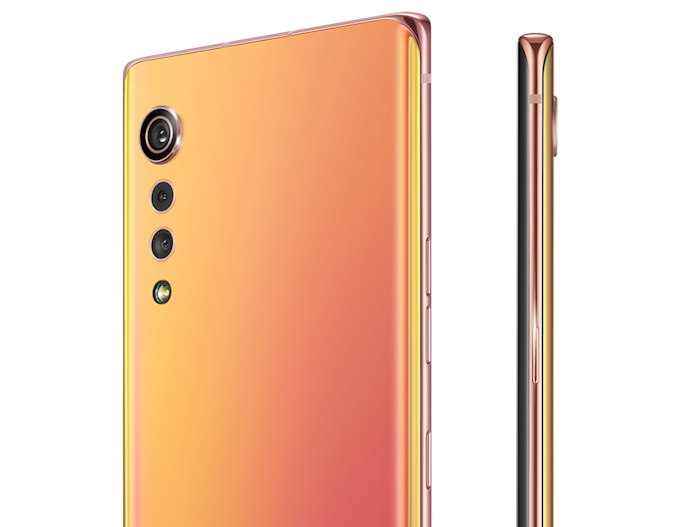
As teased several weeks ago, it’s a quite differently looking LG device as it sports a new industrial design that leaves behind some of LG’s more “practical” approaches of previous generations. Yes it’s still very much a glass sandwich and certainly not anything revolutionary, but I still think it looks quite good in terms of its execution.


The Velvet maintains a reasonable weight and thickness at 180g and 7.9mm – still able to host a 4300mAh battery in its body.


The camera setup was the one big unanswered question in terms of specifications of the phone, but today’s announcement seems quite disappointing in this regard. The phone has a 48MP main camera alongside a measly 8MP ultra-wide-angle and a 5MP depth sensor module. This really is quite below the industry standard at this device level – I just hope that the 48MP module is a decent one as I don’t have much expectations of that UWA.


Other selling-points of the Velvet is the fact that it still features a 3.5mm headphone jack which nowadays is a rarity in new phones.


LG announced the Velvet only in Korea for now at a price of ₩899,800 which corresponds to $670 pre-taxes. It’s an attractive phone, but I feel like it will be a make-or-break matter in regards to its camera abilities. The fact that LG is only releasing the device in Korea at this moment in time suggest that they’re experimenting and waiting out to gauge the reactions before possibly considering a wider device launch. I certainly commend them on the new industrial design of the phone – the company’s certainly on the right path in that regard.


Related Reading:


Source: AnandTech – LG Announces VELVET Phone: Korea Only For Now

New Lenovo ThinkPad Range with Ryzen 4000 & 4000 PRO Mobile

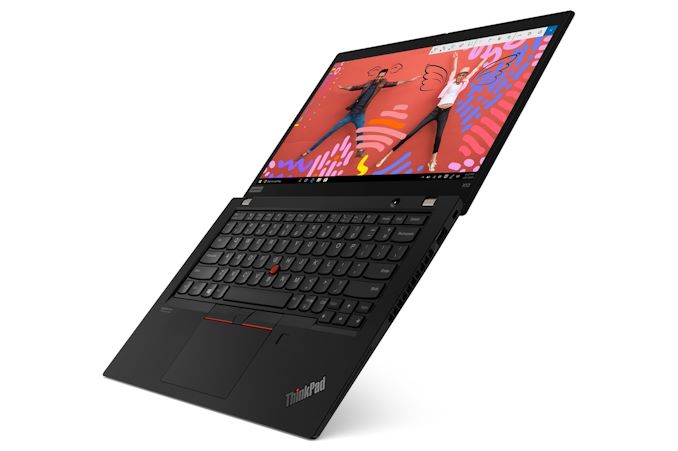
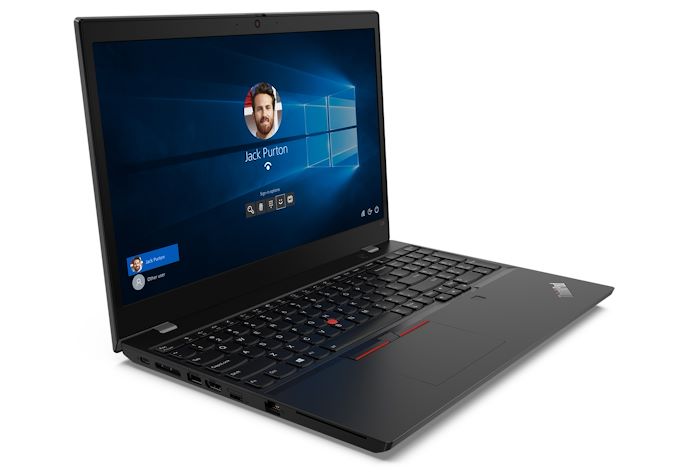
Small to medium business owners generally want a something in a compact design, to lug it around to a business meeting to take essential notes, but ultimately can be managed from a central administration system across hundreds or thousands of employees. Catering for this market is Lenovo, and it has announced a pair of new models designed for its SMB customers. The Lenovo ThinkPad E14 and E15 series of notebooks have been improved in design and are now available with up to an including an AMD Ryzen 7 4700U APU. Also announced are AMD’s ThinkPad T14, T14s, L14, L15, and smaller X13 models all featuring the latest AMD Ryzen 4000 PRO series processors with extra security features designed for professional and business users.


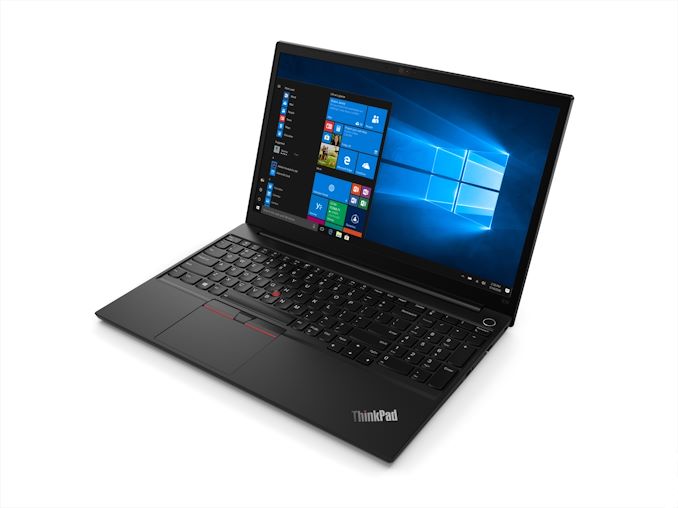
Adding to its portfolio, including its Intel 10th gen mobile refresh ThinkPad E14 and E15 series, SMB users looking now have an AMD Ryzen based option. Similar in design to the previous E14 and E15 series, the new Lenovo ThinkPad E series will be available with Ryzen 4000 Mobile. Lenovo has stated that it has an improved screen to body ratio of 85%, although it doesn’t provide the metric which this is measured against.


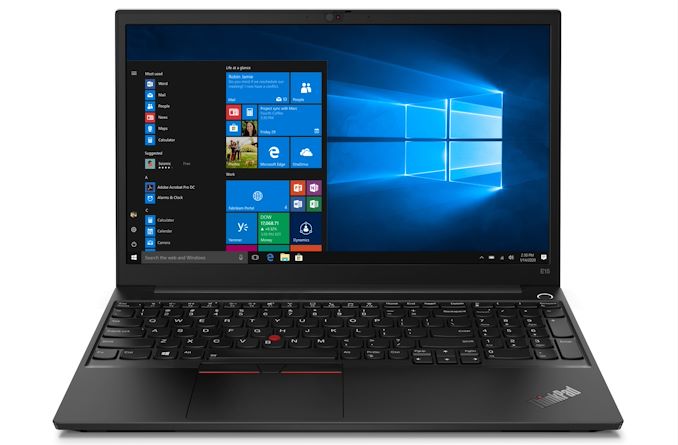
Lenovo ThinkPad E15 with Ryzen 4000 Mobile


The Lenovo ThinkPad series is is available with an eight-core AMD Ryzen 7 4700U APU without SMT and has seven Radeon graphics cores to power the display. While Lenovo hasn’t detailed the display or the other vital specifications at this time, it has added a touch fingerprint reader and an optional IR camera powered by Mirametrix. They are quoted as specialists in security and privacy with its gaze tracking technology. This combined with its Glance software which is integrated within adds an extra element of security which respond to a users presence and can automatically lock the laptop when users step away. The touch fingerprint reader is built into the power button and allows users the ability to turn the system on with one touch, which is more secure than conventional power buttons and is suited to business environments.


Lenovo ThinkPad X13 is the most portable from its range


Lenovo has also announced new ThinkPad T, X, and L series models powered by AMD Ryzen PRO 4000 series processors. The Lenovo ThinkPad 14 Gen 1 is advertised to include a projected 16-hour battery life and a thin lightweight frame of 17.9 mm and 1.46 Kg, with an even bigger 20-hour battery life on its uprated T14s model. The ThinkPad T14s has a slimmer profile at 16.1 mm thick, with a weight starting at 1.27 Kg. The smaller ThinkPad X13 model has a claimed battery life of up to 17.5 hours, with a thickness of 16.9 mm and a weight on an upward curve starting at just 1.28 Kg. This makes the ThinkPad X13 the lightest from its announced stack.


The Lenovo ThinkPad L15 powered by Ryzen 4000 PRO Mobile


Moving down the new Lenovo ThinkPad stack are the L14 and L15 models which are the largest in size with a thickness of 20.4 mm on the L14, whereas the L15 is slightly chunkier with a thickness of 21 mm. The ThinkPad L14 will have a weight starting at 1.61 Kg, while the L15 will weigh upwards of 1.98 Kg. Both include a projected battery life of up to 14-hours, which Lenovo claims it has used the MobileMark14 benchmark to get this data.


All the Lenovo ThinkPad T, X, and L series models will feature AMD’s newest Ryzen 4000 PRO mobile series processors, with extra layers of built-in security features, and feature Lenovo’s Self-Healing BIOS, and Lenovo ThinkShield. These new models will be available from June, with prices starting at $849 for the T14, $1029 for the T14s, and $849 for the X13 series. Also available from June will be the L14 and L15 series of ThinkPad models which will both start at $649.


As for the Lenovo ThinkPad E14 and E15 series, both will be available from June and come with a price tag starting at $639.


Related Reading


Source: AnandTech – New Lenovo ThinkPad Range with Ryzen 4000 & 4000 PRO Mobile

AMD Announces Ryzen Pro 4000 for Mobile: 8 Cores, 15 W, 4.1 GHz

On the back of AMD’s successful Ryzen Mobile 4000 series launch for consumer laptops, the company today launching its range of commercial processors from the same family. These processors are designed for the standard commercial verticals typically associated with company contracts, education deployments, medical use cases and any environment that requires a level of manageability across its workforce. The new AMD processors have up to eight of the latest Zen 2 cores, up to Vega 7 compute graphics, and are built on the latest TSMC 7nm process node technology.


Source: AnandTech – AMD Announces Ryzen Pro 4000 for Mobile: 8 Cores, 15 W, 4.1 GHz

The AMD Ryzen 3 3300X and 3100 CPU Review: A Budget Gaming Bonanza

When AMD announced the new Ryzen 3 processors built on Zen 2, I was under the impression that these were essentially the reject parts from AMD’s successful Ryzen 3000 line. Inside is a single chiplet with only four cores active out of eight, pushing up to 4.3 GHz; but the kicker was the low price of $120 for the high frequency version, or $99 for a bit slower. AMD has sold quad-core CPUs at $99 for a while, but this is the new core and the new manufacturing process, so would this be any different? We put them up against a $350 quad core from three years ago. It seemed like a crazy idea at the time.


Source: AnandTech – The AMD Ryzen 3 3300X and 3100 CPU Review: A Budget Gaming Bonanza

Intel Z490 Motherboards Available For Pre-Order: From $150 to $1299

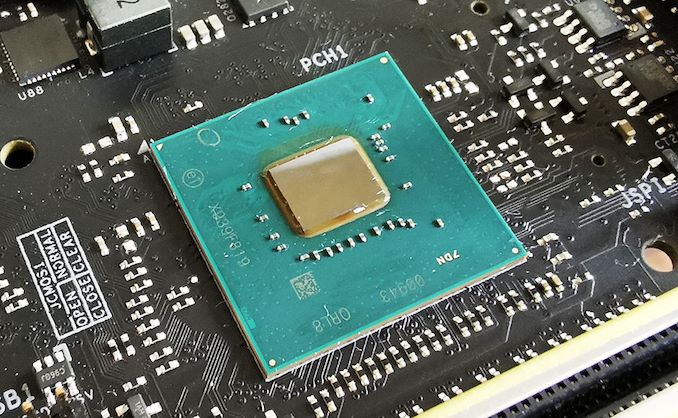
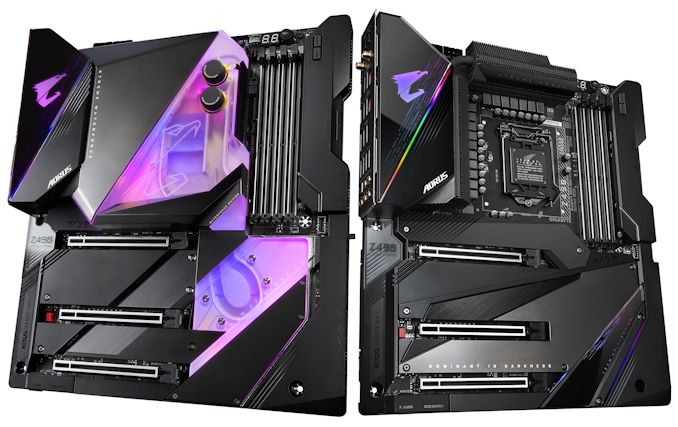
In preparation for the launch of Intel’s Z490 chipset and Intel’s 10th generation Comet Lake desktop processors, Z490 motherboards are now available to pre-order from various retailers. For entry-level models, pricing starts at just $150, with the more premium and expensive flagships models, notably the GIGABYTE Z490 Aorus Xtreme WaterForce, can cost a mouth-watering $1299.


We analyzed every Z490 motherboard we were told about

in our initial announcement coverage.
You can read that here. It includes the new pre-order pricing.


With every major chipset announcement, comes swathes of models catering to many different markets, including the entry-level, mid-range, content creators, gamers, and so forth. With the release of Intel’s 10th gen desktop processors and the supporting Z490 motherboard chipset looming closer, various retailers have put up listings for the majority of Z490 models on pre-order in anticipation of launch day on 20/05. Here are a select few.


GIGABYTE Z490 Aorus Xtreme WaterForce ($1299, and Xtreme ($799)


Some of the most notable models from the Z490 product stack are the GIGABYTE Z490 Aorus Xtreme WaterForce ($1299) and Z490 Aorus Xtreme ($799), which represents the difference between over the top, and flagship status models. Another example is also ASRock with its equally impressive Z490 Aqua ($1100) which compared to the previous X570 Aqua, has been updated with an OLED display and a pack of hardline fittings within the accessories bundle.


At present MSI’s flagship model the MEG Z490 Godlike is a reasonably priced flagship when compared to other vendors, and includes 10 G + 2.5 G Ethernet at $750. The most interesting models from MSI, the MEG Z490 Unify and Z490I Unify haven’t been announced at present. The EVGA Z490 Dark has a whopping price tag of $926, which does include a U.2 port, but is focused more towards hardened enthusiasts and extreme overclockers with its range of features including two memory slots on an E-ATX PCB for better memory overclocking and performance.


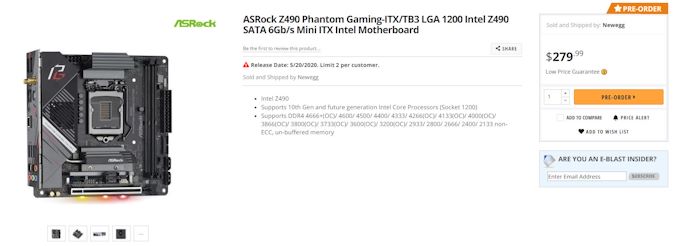
ASRock Z490 Phantom Gaming-ITX/TB3 is available to preorder for $280 at Newegg


The release of Intel’s 10th gen Comet Lake processors and Z490 motherboards are expected in May. Every model due for launch is currently on pre-order at various retailers around the world including Newegg in the US, and Scan Computers in the UK, with more retailers expected to list more Z490 for purchase over the coming days. A number of retailers are stating a release date of 5/20 for the motherboards.


Related Reading


Source: AnandTech – Intel Z490 Motherboards Available For Pre-Order: From 0 to 99

New ZADAK Twist DDR4 Memory, Up to DDR4-4133 and 256 GB

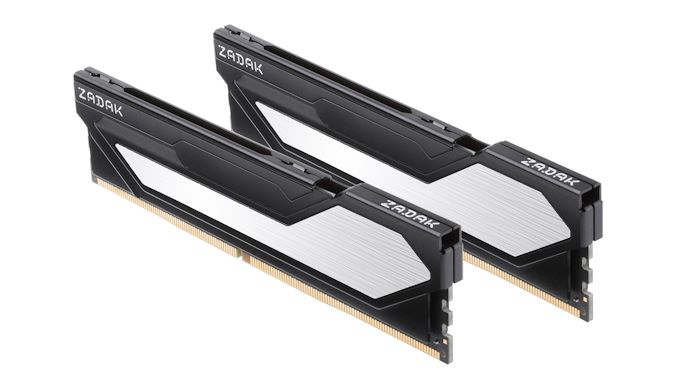
ZADAK has announced its latest range of DDR4 memory, the Twist series. Designed for users looking for a lower profile alternative to its previous memory brands, the Twist features aluminium heatsinks and is available in 8 GB to 32 GB modules with speeds of up to DDR4-4133, including a 256 GB of DDR4-4133.


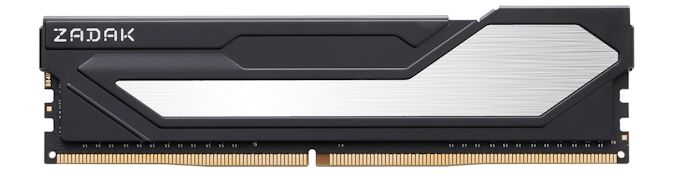
With a black and silver-finished aluminium heatsinks, ZADAK keeps up in the style stakes with its new Twist series. The heatsink measures in at 1.38 inches in height, which is lower profile than the vast majority of ZADAK’s current range, but cannot officially considered to be low profile in terms of specification. The heatsinks themselves are constructed from anodized aluminium without RGB LED lighting and are backed by ZADAK’s limited lifetime warranty.


Available in multiple capacities ranging from 8 GB to 256 GB kits and speeds from DDR4-2666 to DDR4-4133, it offers multiple kits for many different use cases. Each kit will be available in multiple capacities from 8 GB DIMMs to kits featuring 32 GB UDIMMs, for maximum capability across multiple platforms. For reference, Intel’s 10th gen Comet Lake desktop can accommodate up 128 GB, while HEDT platforms such as AMD’s Threadripper 3000 series can use the 256 GB (8 x 32 GB) kits.


ZADAK Twist DDR4 Memory Specifications
Speed Latency Voltage Available Configurations
DDR4-2666 16-18-18-38 1.20 V 8 GB x 1

16 GB x1

32 GB x 1

16 GB (2 x 8 GB)

32 GB (2 x 16 GB)

32 GB (4 x 8 GB)

64 GB (2 x 32 GB)

64 GB (4 x 16 GB)

128 GB (4 x 32 GB)

128 GB (8 x 16 GB)

256 GB (8 x 32 GB)
DDR4-3000 16-18-18-38 1.35 V
DDR4-3200 16-18-18-38 1.35 V
DDR4-3600 18-22-22-38

17-19-19-39
1.35 V
DDR4-4000 18-22-22-38 1.35 V
DDR4-4133 19-21-21-42 1.40 V

As an added bonus, there’s no RGB on these kits either. At present, ZADAK hasn’t revealed when its Twist series will be available in retail channels, nor has it unveiled any scope on pricing. 


Related Reading


Source: AnandTech – New ZADAK Twist DDR4 Memory, Up to DDR4-4133 and 256 GB

Microsoft Springs A Surface Refresh: Surface Book 3 And Surface Go 2 Plus Accessories

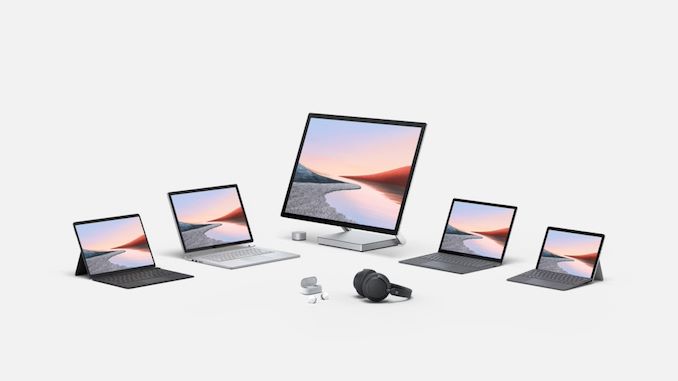
This morning Microsoft is announcing a refresh on a couple more of their Surface products that did not get updated back in October. The Surface Book 3 and Surface Go 2 will be making their way onto the shelves of the Microsoft Store this month, with the updated Surface Go 2 available May 12 along with the new accessories, and the Surface Book 3 coming on May 21.


Surface Go 2
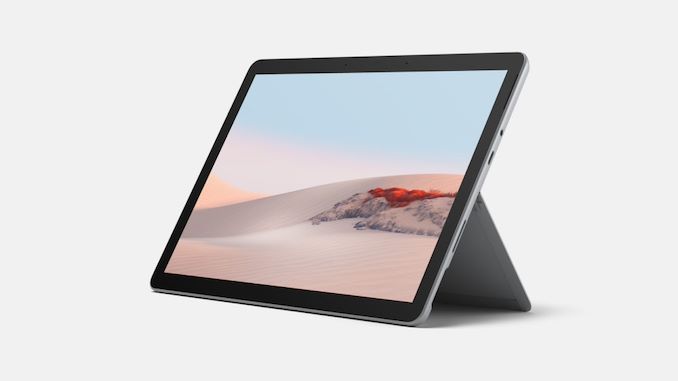


The smallest member of the Surface family is getting some nice updates. Microsoft has shrunk the bezels slightly and were able to fit in a 10.5-inch display in the same size device as the original generation. The new 10.5-inch PixelSense display also gets a slight resolution bump to compensate, coming in at 1920×1280, keeping the 3:2 aspect ratio Surface is known for, and achieving 220 pixels per inch.


Microsoft Surface Go 2
  Surface Go Specifications
CPU Intel Pentium Gold 4425Y (Amber Lake-Y)

2 core, 4 thread, 1.7 GHz base frequency 6W TDP


Optional Core m3-8100Y (Amber Lake-Y)

2 core, 4 thread, 1.1-3.4 GHz, 5W TDP

GPU Intel HD 615

24 EUs 850 MHz (900 Core m3) boost frequency
Display 10.5-inch PixelSense

1920×1280 3:2 aspect

220 Pixels Per Inch

10-point Multitouch

Surface Pen support
Dimensions 245 x 175 x 8.3 mm

9.6 x 6.9 x 0.33 inches
Weight 544 grams (WiFi) / 553 grams (LTE)

1.20 lbs (WiFi) / 1.22 lbs (LTE)
RAM 4 or 8 GB LPDDR3-1866
Storage 64 GB eMMC

128 NVMe SSD optional

256 GB NVMe SSD (Commerical Option)
Wireless 802.11ac with Bluetooth 4.1
Qualcomm Snapdragon X16 LTE Optional
Battery Up to 10 hours

24W Charger
Cameras Windows Hello IR camera

5 MP Front Camera with 1080p video

8 MP Rear Camera with 1080p video
Ports USB Type-C 3.1 Gen 1 with power delivery

Surface Connect

MicroSD

Headset
Price Starting at $399 USD

One of the biggest knocks against the first generation was its lackluster performance, and Microsoft is now offering two new processor options. The first generation shipped with an Intel Pentium 4415Y, based on the Amber Lake platform. On the base model, there is a slight boost, since it will now move to the Intel Pentium 4425Y, boosting the frequency from 1.6 GHz to 1.7 GHz. For those that want a bit more speed, Microsoft is also offering a model with the Intel m3-8100Y, also based on Amber Lake, but the key difference being that the Core lineup offers Turbo, and the Pentium lineup does not. The Core m3-8100Y boosts to 3.4 GHz at its default TDP of 5 Watts, and should make a substantial difference for light workloads.


Otherwise the hardware has not changed much. Microsoft has added dual-studio microphones, which pair well with the 5 MP front camera for video conferencing, which has become much more important in today’s climate. They’ve also added a new camera application for the rear 8 MP camera to make it easy to scan documents and whiteboards. One has to assume the app is based on their Office Lens software, which works very well for these tasks. The base unit still features 64 GB of eMMC storage, and you can opt for a 128 GB SSD model as well. It would have been nice to see both of those values doubled for this year, even if it meant the devices cost slightly higher.


The 10.5-inch convertible tablet of course works with the Surface Pen as well, and Microsoft has new colors for the Type Cover accessory for this season, with Platinum, Black, Poppy Red, and Ice Blue options this year.


The original Surface Go was a well-built machine, and the new version starts at the same base price of $399. Prices will go up from there, and Microsoft is continuing to offer the LTE version as well.


Surface Book 3
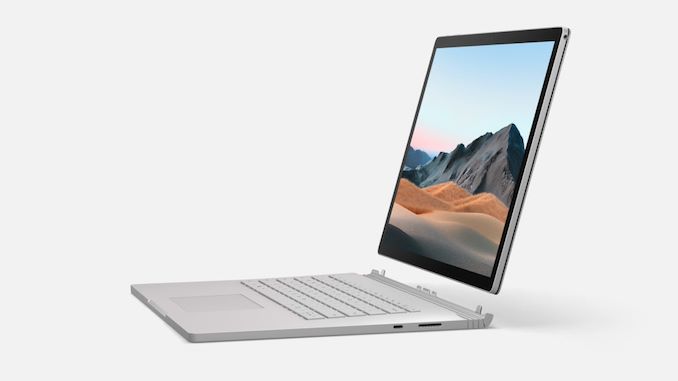


The Surface Book 2 is still today one of the nicest laptops available, and today’s refresh does not mess with what worked. Microsoft has kept the same design from the Surface Book 2, with both the 13.5-inch and 15-inch models getting new components inside. This may be disappointing to some who crave some new wow factors, but the Surface Book 2 was a fantastic device, and Microsoft has chosen not to mess with success.


Microsoft Surface Book 3
  13.5 No GPU 13.5 GPU 15
CPU Intel Core i5-1035G7

Quad-Core w/Hyperthreading

1.2-3.7 GHz 6MB Cache 15W TDP
Intel Core i7-1065G7

Quad-Core w/Hyperthreading

1.3-3.9 GHz 8MB Cache 15W TDP
RAM Up to 32GB LPDDR4X
GPU Intel Iris Plus G7 Intel Iris Plus G7 + NVIDIA GTX 1650 Max-Q 4GB Intel Iris Plus G7 + NVIDIA GTX 1660Ti Max-Q 6GB
Storage fastest SSD we have ever shipped
Display 13.5″ PixelSense

3000×2000 3:2 sRGB

Touch and Pen enabled
15″ PixelSense

3240×2160 3:2 sRGB

Touch and Pen enabled
Networking Wi-Fi 6 802.11ax

Bluetooth 5.0
Audio Stereo Speakers (front facing)

Dolby Audio Premium
Battery Up to 15.5 Hours Up to 17.5 Hours
Xbox Wireless No Yes
Right Side Surface Connect

USB Type-C 3.1 Gen 1 with USB Power Delivery

Headset Jack
Left Side 2 x USB 3.0 Type-ASD Card Reader
Dimensions 312 x 232 x 13-23mm

12.3 x 9.14 x 0.51-0.90 inches
343 x 251 x 15-23 mm

13.5 x 9.87 x 0.57-0.90 inches
Weight 1.53 kg

3.38 lbs
1.64 kg

3.62 lbs
1.90 kg

4.2 lbs
Cameras 8.0 MP Rear-facing camera with autofocus

5.0 MP front-facing camera with 1080p video

Windows Hello IR camera
Pricing Starting at $1599 USD

The big changes this year are all under the hood. The Surface Book lineup now features Intel’s Ice Lake processors, with the Core i5-1035G7 as the base option on the smaller 13.5-inch model, and the Core i7-1065G7 as an option on the 13.5, and standard on the 15-inch Surface Book 3. RAM options now allow for up to 32 GB, thanks to Ice Lake’s use of LPDDR4X. Microsoft has paired the new processors with new GPUs as well. The smaller device bumps the GPU from the NVIDIA GTX 1050 in the previous gen to a NVIDIA GTX 1650 Max-Q with 4 GB of GDDR5 for 2020. The larger Surface Book 3 gets a new NVIDIA GeForce GTX 1660 Ti Max-Q. For those that need Quadro, Microsoft is also offering the Quadro RTX 3000, which is actually a pretty big jump in GPU size compared to the GTX 1660Ti, going from 1536 CUDA cores up to 2304 on the RTX Quadro 3000. There may be some questions as to why Microsoft opted for a GTX 1660 Ti when the RTX 2060 Max-Q is available, but the RTX model is quite a bit more power hungry in most scenarios.


For 2020, Microsoft has also re-engineered their Surface Connect adapter, and the new Surface Book 3 should no longer drain the battery under high-load scenarios. The new model ships with a 127-Watt charger on the 15-inch model, and a 102-Watt charger on the GPU-equipped 13.5-inch version. The maximum power the original Surface Connect could handle was 100 Watts, so this small amount of extra capacity should do the trick.


Microsoft still is not interested in Thunderbolt 3, but the Surface Book 3 features the same USB-C 3.2 Gen 2 port as the previous model, including USB Power Delivery revision 3.0. The new Surface Book 3 will be available May 21 starting at $1599.


Accessories


Surface Headphones 2
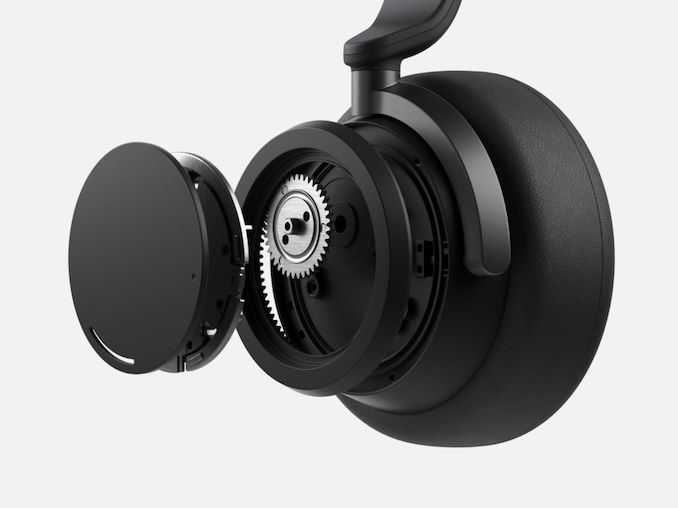


Microsoft launched the Surface Headphones back in 2018, and for 2020 they’ve updated them to the Surface Headphones 2. The new models feature the same noise-canceling features, with 13-levels of active noise cancelation, which can be adjusted with on-ear dials. Microsoft has improved the sound quality and battery life for this generation, and the new headphones now feature up to 20 hours of battery life, with a charge time of only two hours. There are also new ear cups which can be rotated 180° for comfort, and the Surface Headphones 2 now come in black, as well as the original platinum, to match the finish on the Surface lineup. The new headphones start at $249, and will be available May 12.


Surface Earbuds
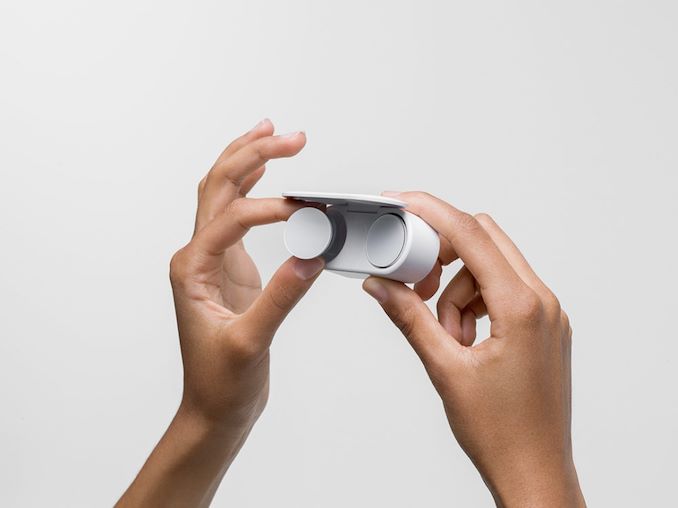


Maybe headphones are not your thing. Microsoft is now offering Surface Earbuds, featuring touch-controls for dialing and changing songs. They can auto-start Spotify by triple-tapping either earbud. They come with a wireless charging case, and offer “all-day” battery life. The Surface Earbuds will be available May 12 for $199.


Surface Dock 2
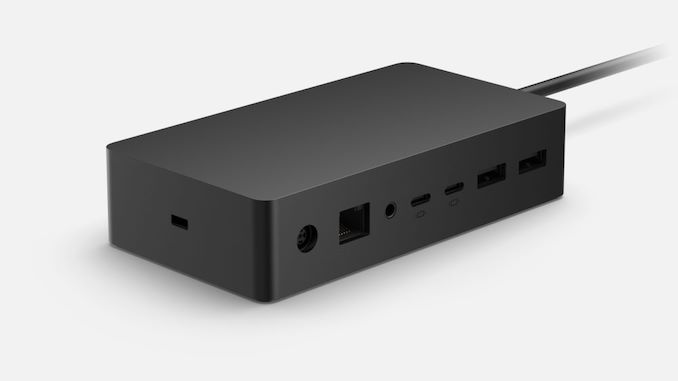


Microsoft has updated their Surface Dock with faster charging, higher data rates, and enterprise management, which was a feature that was likely very highly requested by Microsoft’s enterprise customers. They will also be offering a new USB-C Travel Hub to connect to multiple devices when you are on the go.


Source: Microsoft


Source: AnandTech – Microsoft Springs A Surface Refresh: Surface Book 3 And Surface Go 2 Plus Accessories

MAINGEAR Pro WS: Pre-Configured Systems for Creatives, Up to 64 cores and 72 TB Storage

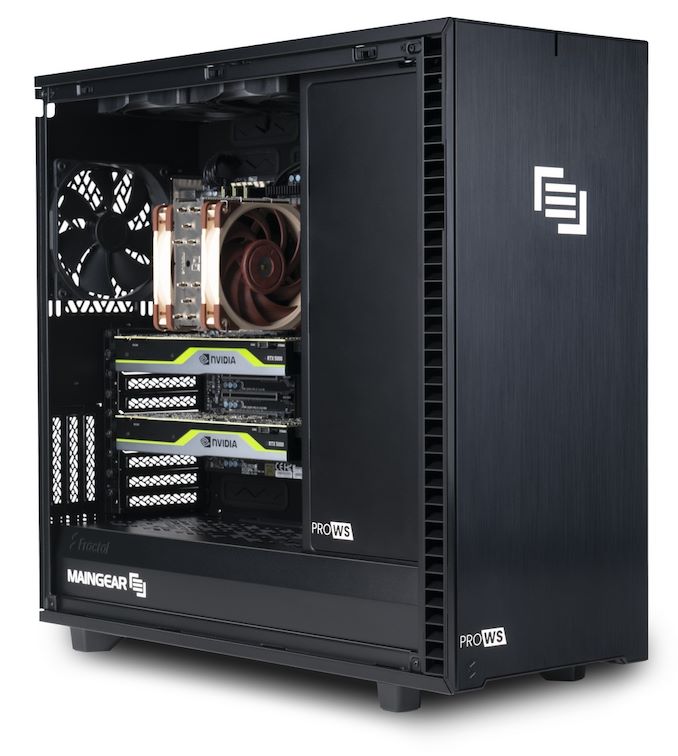
System integrators are there to offer users who don’t want to build their own system a way of getting a machine they can use for work or play. One of the benefits of using a system integrator to build your new system, and ultimately the additional cost of using this service, usually comes down to additional validation, checks, and the promise of a refined system from engineers that can build them in their sleep. One of the biggest markets in recent quarters is the creator market, and demand for workstations to help accelerate creative workflows is supposedly rising – on the back of this, MAINGEAR is launching its new configurable Pro WS range of workstations, complete with optimized builds for popular creative hardware.


4K/8K content creation, either on video, for animation, in modelling/CAD, or other areas such as the scientific verticals of oil/gas or financial markets, are all areas that require computational horsepower. Usually the more you have, the quicker a project can be completed. In a lot of cases if it can be GPU accelerated, having more than just a quick CPU is beneficial. If the hardware can be optimized for the software in question, such as the Adobe suite, CAD, Blender, Keyshot, etc, then all the better. Maingear promotes that it’s new Pro WS systems are recommended by Luxion, the makers of Keyshot.


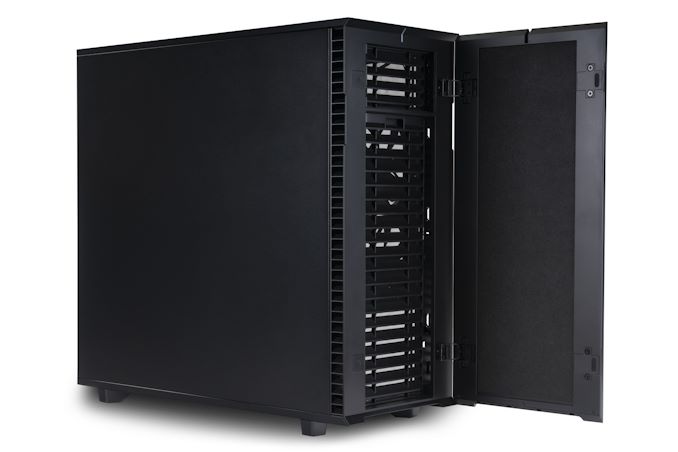
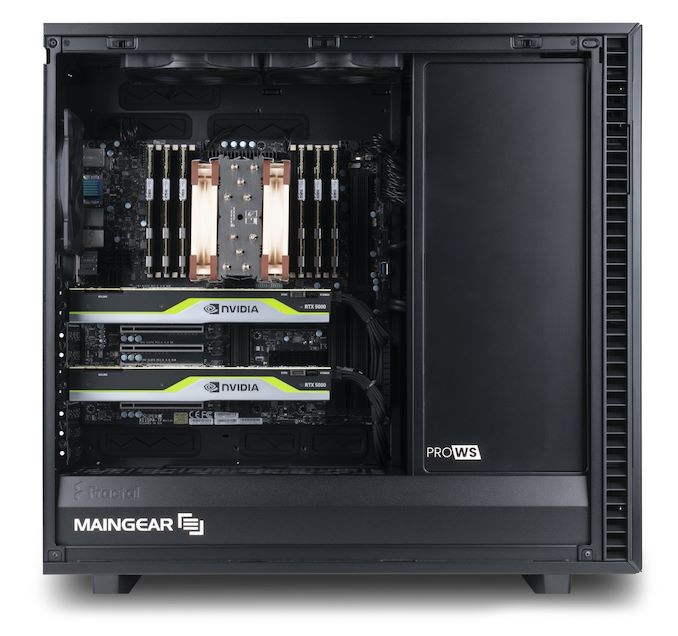
The new WS designs come with a standard Fractal Design R6 Blackout case but almost everything in it can be configured, with Maingear offering up to an Intel Core i9-10980XE or AMD Threadripper 3990X, up to 256 GB of memory, up to 72 TB of storage, Windows 10, and optional Thunderbolt 3 support. Users can select up to four high-end graphics cards, including Titan RTX/Quadro or Radeon/Radeon Pro, to which Maingear will assist in designing the appropriate cooling around the configuration.


Storage options are likely to include an array of fast NVMe drives, along with high capacity mechanical storage. Networking similarly so, with some designs natively supporting multi-gigabit Ethernet speeds. Users can request customized artworks and logos for the chassis, another key element to system integrator offerings. For designs studios looking to refurbish their workflow with a unified design and company logos, this is an optional extra.


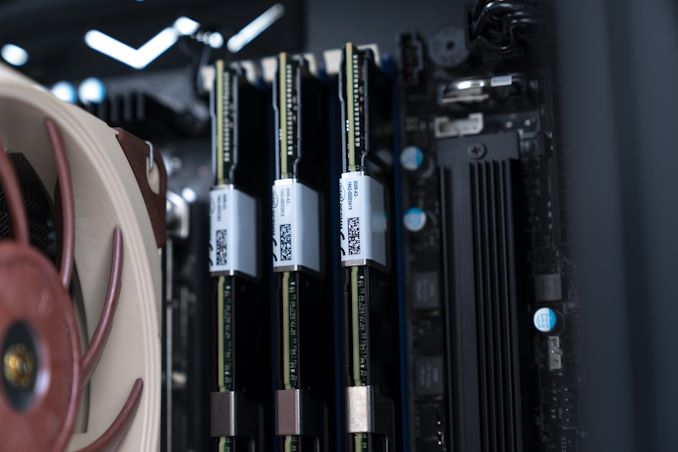
One of the images that Maingear sent us shows the use of Intel’s Optane DC Persistent Memory, and we were slightly confused as those modules require Intel Xeon Scalable hardware in order to operate. In fact, all of the stock images are of an LGA3647 system, which Maingear didn’t list in the specifications section of its press release. It appears that in the fine print of the press release that Maingear will offer ECC-enabled processors and Optane-supported processors at some point in the future, however for now only Intel/AMD high-end desktop options are available.


Maingear promises that its systems will be 100% bloatware free, with a fresh install of Windows 10 Pro on each machine. Users will still have to arrange their own licences for the various software packages they are interested in, as Maingear assumes that its customers will already have a workflow in place and need better systems for that workflow.


The MAINGEAR Pro WS systems will start today at retail from $1999, with options to select pre-configured designs for popular software – Keyshot, Adobe, Davinci, 2D/3D, CAD, and data science. All Pro WS systems come with lifetime service from MAINGEAR’s support team.


Source: MAINGEAR


Source: AnandTech – MAINGEAR Pro WS: Pre-Configured Systems for Creatives, Up to 64 cores and 72 TB Storage

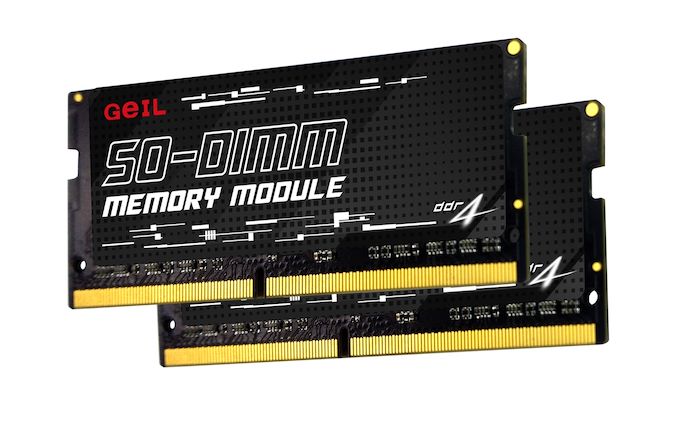
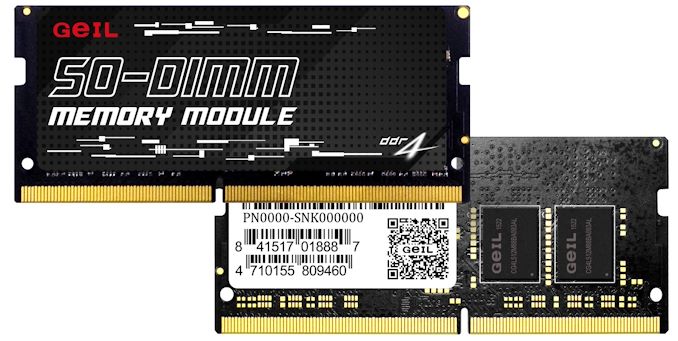
GeiL Unveils 64 GB DDR4-3200 SO-DIMM Kit, 2 x 32 GB

Memory manufacturer Golden Emporer International Limited, or known generally as GeiL, has announced its new memory line with support for Intel 10th Gen and AMD Ryzen 4000 series processors. Casually calling its new 64 GB product simply ‘SO-DIMM’, it will be available in a 2 x 32 GB DDR4-3200 kit.


With mobile processor architecture improving at a steady rate, memory capacity limits have increased designed to give gamers and content creators more robust memory capabilities. Designed to support Intel’s 10th generation and AMD’s Ryzen 4000 mobile series, the GeiL SO-DIMM offers users to upgrade its notebooks with 64 GB of memory. Not only DDR4-3200, but the GeiL SO-DIMM series also includes DDR4-2666 and DDR4-2933 variants.


With its black and simplistic design, the DDR4-3200 64 GB (2 x 32) kit has a CAS latencies of 22-22-22-52. GeiL states every kit is tested with its DYNA 4 SLT technology but doesn’t state publically what that entails. The DDR4-2666 kit has latencies of 19-19-19-43, while the DDR4-2933 has latencies of 21-21-21-48 (these sub-timings are similar to other vendors). Every 2 x 32 GB kit has an operating voltage of 1.2 V and is also backed by GeiL’s limited lifetime warranty.


While the product naming scheming is somewhat unimaginative, the SO-DIMM range of dual-channel 64 GB kits for mobile platforms is GeiL’s first 64 GB SO-DIMM kit. Geil hasn’t announced when the SO-DIMM 64 kits will be available, nor has it revealed pricing at this time.


Related Reading


Source: AnandTech – GeiL Unveils 64 GB DDR4-3200 SO-DIMM Kit, 2 x 32 GB

The ASRock Z490 Aqua: Thunderbolt 3, PCIe 4.0 Ready, Water Cooled

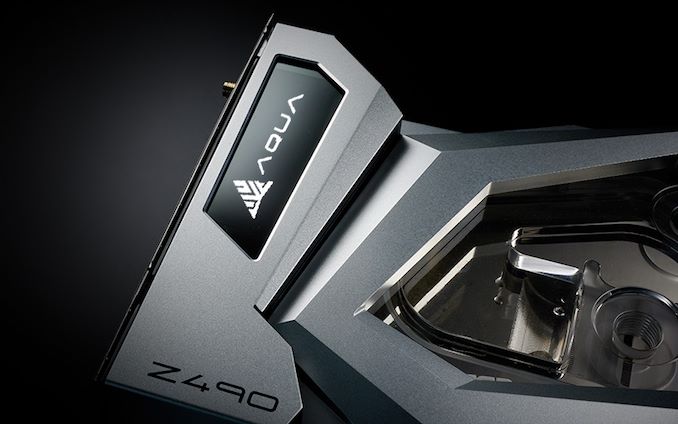
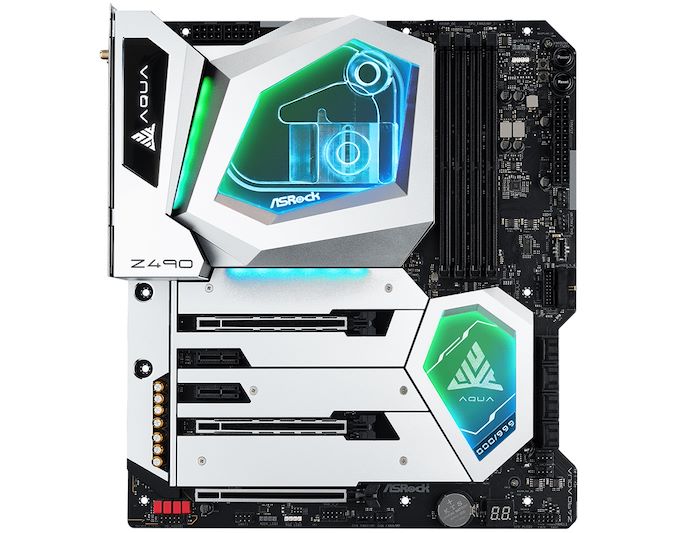
Following a resurgence of motherboards decked out with custom monoblocks, ASRock has announced details on its Z490 Aqua. It includes a familiar aluminium plated copper custom monoblock, with just 999 units available for purchase. It includes two Thunderbolt 3 Type-C ports, three PCIe 3.0 x4 M.2 slots, an Aquantia 10 G and Realtek 2.5 G Ethernet controller pairing, including hardline water cooling fittings within the accessories bundle.


During Computex 19, ASRock unveiled its X570 Aqua motherboard which we since reviewed, which is currently one of the most stunning desktop models in existence. The new ASRock Z490 Aqua builds upon the success of its AMD based model, with a full cover block monoblock which cools the CPU and the 16-phase power delivery. Following the same design as the X570 model, the ASRock Z490 Aqua adds an OLED display which can display with CPU voltages, temperatures, system and POST statuses, with an abundance of premium controllers and features onboard.


Included in the long list of features are three full-length PCIe 3.0 slots which run at x16, x8/x8, and x8/x8/+4, with two PCIe 3.0 x1 slots. It uses a 16-phase power delivery which is kept cool by the large monoblock, and benefits from 90 A power stages with a maximum Vcore current of up to 1260A. Providing power to the CPU is a pair of 8-pin 12V ATX CPU power inputs, with an Intersil ISL69269 PWM controller operating in a 14+2 configuration. There is support for DDR4-4700, with a total capacity of up to 128 GB across four memory slots. It does have support for ECC DDR4 UDIMMs, but these will operate in non-ECC mode.


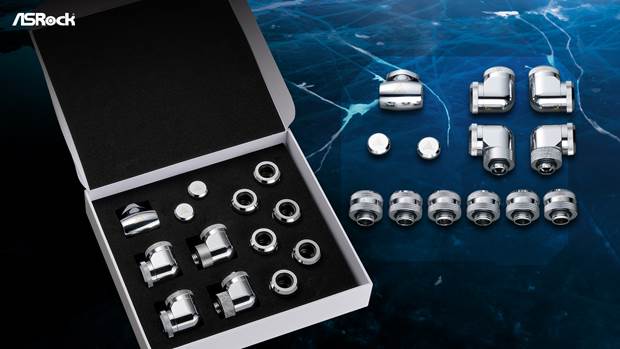
New for the Z490 Aqua is a pack of hardline water cooling fittings which come in the board’s accessories bundle. This includes six knurled silver straight fittings, four 90° right-angled fittings, with a filling and drawing value, and two stop-cap fittings with the Aqua logo, all packed into a nice presentation box.



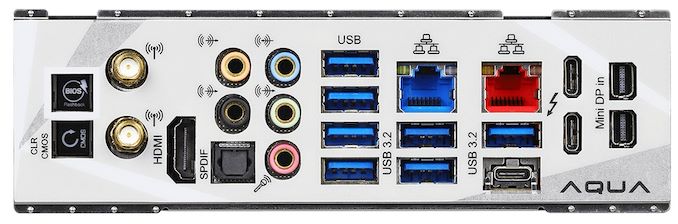
The rear panel of the ASRock Z490 Aqua is stacked with two Thunderbolt 3 Type-C and two accompanying Mini DisplayPort input ports. Also present are three USB 3.2 G2 10 Gbps Type-A, one USB 3.2 G2 10 Gbps Type-C, and four USB 3.2 G1 Type-A ports. For users intending to leverage Intel’s integrated graphics, there is a single HDMI video input. For users demanding premium networking, the Z490 Aqua is using an Aquantia AQC107 10 G and Realtek RTL8125BG 2.5 Ethernet controller pairing, as well as an Intel Wi-Fi 6 wireless interface which provides support for BT 5.0 devices. There are five 3.5 mm color-coded audio jacks and S/PDIF optical output which are powered by a Realtek ALC1220 HD audio codec, which is assisted by an ESS Sabre 9128 DAC which controls the front panel audio. Finishing off the rear panel is a clear CMOS switch and a BIOS Flashback button.


The ASRock Z490 Aqua is expected to weigh a considerable amount when all the aluminium, the backplate, and custom monoblock is factored in; the ASRock X570 Aqua for reference weighed a whopping 2.5 kg (~5.5 lbs). Only 999 units will be available for purchase which will add an element of exclusivity, which we expect to add to the price tag.


ASRock hasn’t unveiled pricing at this time, but we expect the Z490 Aqua to be available either at the launch of Intel’s 10th Generation Comet Lake processors or shortly after.


Related Reading


Source: AnandTech – The ASRock Z490 Aqua: Thunderbolt 3, PCIe 4.0 Ready, Water Cooled