Marvell Unveils its Comprehensive Custom ASIC Offering

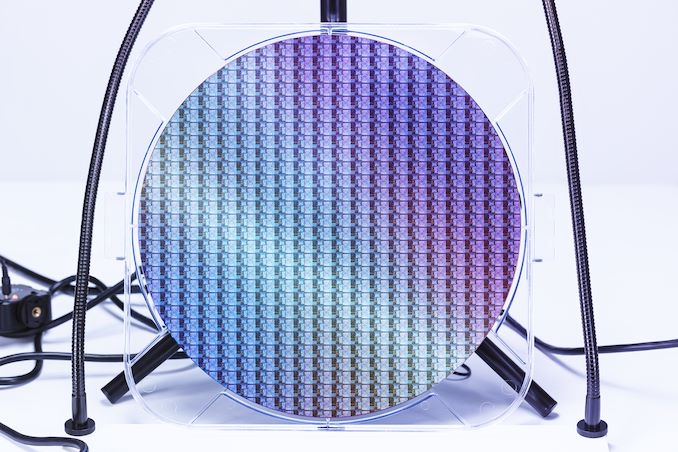
Last week Marvell had updated us with an overview of the company’s new more extensive and comprehensive custom ASIC offerings, detailing the company’s design abilities gained through the company’s acquisition of AveraSemi in 2019. For customers who are seeking to deploy differentiated products in the infrastructure and enterprise space without spinning up their own design teams, it seems like a no-brainer business proposition.


Source: AnandTech – Marvell Unveils its Comprehensive Custom ASIC Offering

Intel Adds Core i9-10850K To Desktop Chip Lineup: 10 Cores Minus 100MHz

Intel this morning is taking the wraps off of a new Core i9 processor that it’s adding to its family of Comet Lake desktop CPUs. Taking its place as the closest thing to a budget option in the i9 pile, the i9-10850K is a slightly lower-clocked version of Intel’s flagship 10-core i9-10900K processor. Overall the chip is clocked 100MHz slower than the 10900K in every aspect, from base clocks to turbo clocks, a rather small increment at a time when Intel’s chips boost to over 5000Mhz. Meanwhile, although Intel has yet to publish an official price, expect to see the 10850K priced a bit lower than the $488 10900K.


Intel 10th Gen Comet Lake

Core i9 and Core i7
AnandTech Cores Base

Freq
TB2

2C
TB2

nT
TB3

2C
TVB

2C
TVB

nT
TDP

(W)
IGP MSRP

1ku
Core i9
i9-10900K 10C/20T 3.7 5.1 4.8 5.2 5.3 4.9 125 630 $488
i9-10900KF 10C/20T 3.7 5.1 4.8 5.2 5.3 4.9 125 $472
i9-10900 10C/20T 2.8 5.0 4.5 5.1 5.2 4.6 65 630 $439
i9-10900F 10C/20T 2.8 5.0 4.5 5.1 5.2 4.6 65 $422
i9-10900T 10C/20T 1.9 4.5 3.7 4.6 35 630 $439
i9-10850K 10C/20T 3.6 5.0 4.7 5.1 5.2 4.8 125? 630 $453
Core i7
i7-10700K 8C/16T 3.8 5.0 4.7 5.1 125 630 $374
i7-10700KF 8C/16T 3.8 5.0 4.7 5.1 125 $349
i7-10700 8C/16T 2.9 4.7 4.6 4.8 65 630 $323
i7-10700F 8C/16T 2.9 4.7 4.6 4.8 65 $298
i7-10700T 8C/16T 2.0 4.4 3.7 4.5 35 630 $325

Aside from clockspeeds, the Core i9-10850K is a fairly unremarkable processor within Intel’s larger lineup. The chip features the same fully-enabled 10-core configuration as the 10900K, as well as Comet Lake’s full UHD 630 integrated GPU. The unlocked chip also features the same Thermal Velocity Boost (TVB) capabilities as the flagship i9, and while Intel’s figures don’t include a TDP rating, we’re confident that it’s the same 125 Watts as the company’s other high-end K-series parts. So for all practical purposes this is a 10900K clocked 100MHz lower, and that’s it.


More curious, perhaps, is why Intel is even bothering to release the chip. While the company does keep a fairly fine-grained and highly-binned product lineup, 100MHz is a small difference even by Intel’s usual standards. On paper at least, the 10850K will deliver better than 97% of the 10900K’s performance; so Intel has created a SKU that’s not even 3% different from its other full-TDP i9 parts.


Our best guess at this point is that, having pushed its 14nm process and Skylake CPU architecture as far as it can go with its fifth rendition, that the company has been amassing chips that can’t quite reach the 10900K’s lofty clockspeeds. Judging from overclocking results as well as ongoing issues with retail shortages, Intel is seemingly playing on the very far edge of their frequency rage, so even 100MHz in headroom can make the difference between whether a chip passes validation or not. Though any kind of de facto price cut is also undoubtedly helpful for Intel against AMD’s highly-competitive Ryzen 3000 series lineup.


Moving on, today’s processor release isn’t just an OEM release, but is a retail release as well. Listings for the BX8070110850K began appearing for the chip even before today’s announcement, confirming that the chip will soon be for sale as a proper boxed CPU release. Pricing is a bit more unclear however, as Intel’s announcement doesn’t include an official MSRP. While Intel will need to price it under the $488 of the 10900K, street pricing is a whole other matter. With the 10900K in short supply and even the i7-10700K going for over $400, early retail listings have been inconsistent. We’ll know more for sure once wide sales begin, but it’s hard to imagine the 10850K going for less than $450.


Source: AnandTech – Intel Adds Core i9-10850K To Desktop Chip Lineup: 10 Cores Minus 100MHz

Qualcomm Announces Quick Charge 5 with SMB1396/SMB1398: PD-PPS Up to 100W

Today Qualcomm is announcing a new commercial fast charging solution in the form of Quick Charge 5, taking advantage of the latest technology developments in charging circuits and leveraging the USB Power Delivery Programmable Power Supply (PD-PPS) standard in order to achieve charging powers of up to 100W.


Source: AnandTech – Qualcomm Announces Quick Charge 5 with SMB1396/SMB1398: PD-PPS Up to 100W

Chenbro Announces RB13804, a Dual Socket 1U Xeon 4-Bay HPC Barebones Server

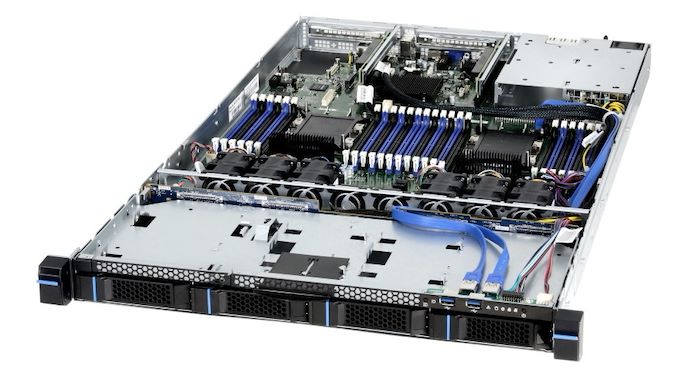
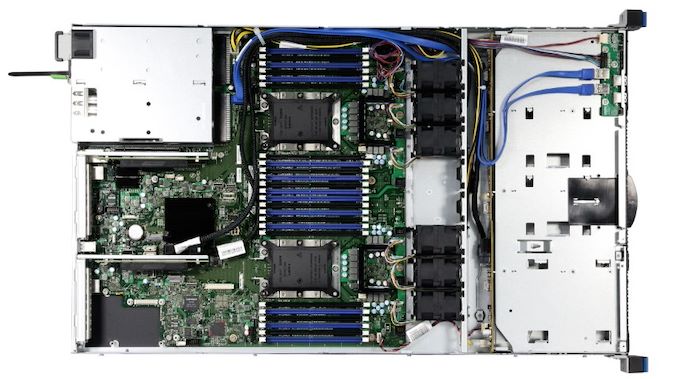
For nearly four decades, Chinese manufacturer Chenbro has been one of the major players in the OEM and ODM rackmount server market. Now the company is releasing a new 1U rack-mount server for the Dual Xeon market. The RB13804 is the latest 1U rack-mountable barebones system to come out of the company and is based on Intel’s C624 platform, offering support for up to two Intel second-generation Xeon Scalable processors. 


One of the notable features of the Chenbro RB13804 is storage options: it includes support for up to four hot-swappable 3.5″ drives, space for up to two 2.5″ drives, and optional mounting for a Slim optical drive. Touching on the core specifications, the RB13804 is using an Intel S2600WFTR server board with two Intel LGA3647 sockets, supporting Intel’s second-generation Cascade Lake SP Xeon Scalable processors up to a maximum of 165 W per socket. For memory, the 1U rackmount barebones kit has twenty-four memory slots with support for up to 7.5 TB of DDR4-2933 UDIMM ECC memory.


It also has high-level networking capabilities with dual 10 GbE Base-T Ethernet ports, a single Ethernet management port, three USB 3.0 Type-A ports, and an integrated RAID module for high-level storage deployment. Other features include six 40×56 mm cooling fans mounted in the middle, with a maximum speed of 22.5 K rpm. Included with the barebones kit is an 800 W CRPS 80 PLUS Platinum power supply, two empty FHHL PCIe 3.0 x16 slots, and one I/O module. Overall the server weighs a hefty 11.6 KG, and that is without other hardware installed.


Otherwise, the Chenbro RB13804 uses a tool-less top cover for easier maintenance and upgrade path-ways. Chenbro is offering the RB13804 for ODMs who want to customize and add logo branding designed for specific customers needs, with a focus on flexibility to allow the server to be used in multiple roles. The RB13804 is available globally through Chenbro direct and its partners, though the company isn’t publishing official pricing at this time.


Related Reading


Source: AnandTech – Chenbro Announces RB13804, a Dual Socket 1U Xeon 4-Bay HPC Barebones Server

Intel Roadmap Update: Alder Lake In H2’21, Ice Lake-SP Late This Year

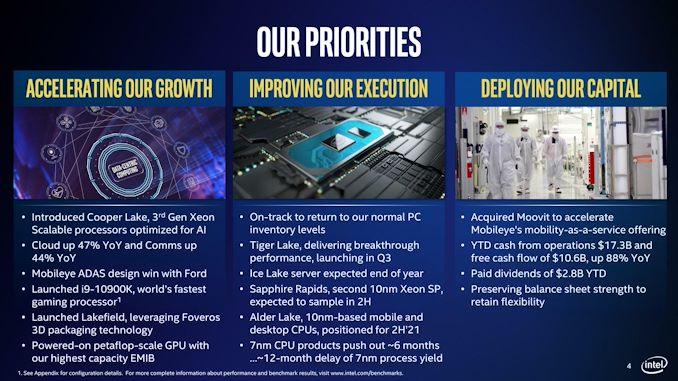
Among several different updates tucked into Intel’s Q2’2020 earnings report, the company included a brief update on some of their future products. While the bulk of the company’s focus is currently on their next-generation Tiger Lake CPUs, which are launching this quarter, the company is also looking at what comes after Tiger Lake, as well as the future of their highly profitable server business.


First off, Alder Lake has finally been formally outed. The successor to Tiger Lake now has an official launch window of the second-half of 2021. The 10nm chip will be for both mobile and desktops, making it the first 10nm chip that Intel has confirmed will come to desktops. Very little is otherwise officially known about the chip, but Intel’s ISA documents have previously revealed that there will be some new instructions found in that chip.


Otherwise the six-month window for kicking off production shipments is a fairly wide one for a chip that doesn’t rely on a new process node. Intel product cycles are rarely under a year long, so at first blush we’d be surprised if this was anything earlier than a late 2021 product. But with Intel’s recent 7nm delay and planned ramp-up of their 10nm process, it may be that Intel will be trying to pull it in and launch it in Q3, similar to this year’s Tiger Lake launch.


Meanwhile on the server side of matters, Intel is preparing for both Ice Lake-SP as well as its successor, Sapphire Rapids. One of the many victims of Intel’s 10nm woes, Ice Lake-SP is Intel’s first 10nm server chip. As of late the company has been riding a wave of profitability based on its server parts, so a newer part that improves on core counts and energy efficiency will be a welcomed addition to Intel’s product lineup, not to mention better able to fend off AMD’s powerful EPYC “Rome” processors.


Initial production shipments for Ice Lake-SP are set to start by the end of this year. Though Intel’s language is loose enough that this may mean that larger volumes of the chip may not ship until 2021.


Following Ice Lake-SP will be Sapphire Rapids, Intel’s second-generation 10nm server part. Along with getting Intel’s product release cadence closer to being back on track, Sapphire Rapids will play an important role in unifying Intel’s split Xeon families. Intel’s oddball 14nm Cooper Lake Xeons, which are currently shipping, support bfloat16, but Ice Lake-SP will not. For 10nm chips that support is finally being rolled into Sapphire Rapids, making the new chip the successor to both Cooper Lake and Ice Lake-SP in every way.


Sapphire Rapids will follow Ice Lake-SP by roughly a year. According to Intel’s presentation deck, chips will begin sampling in H2’2020, while CEO Bob Swan’s prepared remarks state that initial production shipments will begin at that time.


What follows these chips, in turn, will be the big question that Intel is currently wangling with in light of their 7nm delay. The company has made it clear that they intend to maintain an annual release cadence, divorced from their process roadmap if necessary. Depending on the state of their 7nm process, that may mean 7nm chips, 10nm chips, chips using dies from both processes, or even using dies from third-party fabs. Intel has opened the door to all possibilities, and their 2022 chips will likely be their first chance to embrace their new pragmatic approach.


Source: AnandTech – Intel Roadmap Update: Alder Lake In H2’21, Ice Lake-SP Late This Year

Intel 7nm Delayed By 6 Months; Company to Take “Pragmatic” Approach in Using Third-Party Fabs

While today second quarter earnings report from Intel represented a high-water mark for the company amid booming sales and revenues, unfortunately not everything disclosed today was good news from the company. As part of Intel’s quarterly earnings presentation, the company announced that their under-development 7nm manufacturing process has suffered a six month delay due to a defect in the process. As a result, the first consumer products aren’t due until at least late 2022, leaving Intel with 10nm as their best in-house manufacturing process for the next couple of years.

But even more important than that, the delay has spurred some soul searching within Intel, driving the company to pivot on its manufacturing plans and open the door to using third-party fabs for a much broader segment of its products. Going forward, the company will be taking what CEO Bob Swan and other leadership are calling a “pragmatic” approach, looking at both in-house and third-party fabs and using those fabs that make sense for the company and the product in question. And while the company has not announced any specific plans to outsource production – they are looking at it for products in the 2022-and-later timeframe – it would be hard to overstate how dramatic of a shift this is for the industry, and for a company that even five years ago was the world’s leader in silicon lithography manufacturing.


Source: AnandTech – Intel 7nm Delayed By 6 Months; Company to Take “Pragmatic” Approach in Using Third-Party Fabs

Intel Reports Q2 2020 Earnings: Data Center Sales Fuel Another Record Quarter

Kicking off another earnings season for the tech industry, we once again have Intel, who is reporting their financial results for the second quarter of the year. This is the first full coronavirus-impacted quarter for the company and the tech industry as a whole, but if you were looking solely at Intel’s results, you wouldn’t know there’s a pandemic going on: the company posted yet another record quarter, delivering their highest Q2 revenues ever with a sizable profit margin riding on top of that.


For the second quarter of 2020, Intel reported $19.7B in revenue, more than $3B ahead of their year-ago quarter, and only slightly behind Q1’s $19.8B in revenue. As a result of this strong revenue, income was also very healthy for the company, with Intel recording $5.1B in net income, a 22% jump over Q2’19.


It is interesting to note, however, that Intel’s famed gross margin took a pretty sizable hit for the most recent quarter. Intel recorded a gross margin of just 53.3%, well below the 60% margin the company is known for. This matter was briefly mentioned in the company’s earnings call, where the larger-than-expected drop was labeled as being largely a timing item, with Intel taking a hit as they ramp up Tiger Lake. At the same time, however, 10nm demand overall is higher, which although is not a bad problem to have, 10nm is more expensive to build on than Intel’s well-refined (and paid for) 14nm fabs.


Intel Q2 2020 Financial Results (GAAP)
  Q2’2020 Q1’2020 Q2’2019
Revenue $19.7B $19.8B $16.5B
Operating Income $5.7B $7.0B $4.6B
Net Income $5.1B $5.7B $4.2B
Gross Margin 53.3% 60.6% 59.8%
Client Computing Group Revenue $9.5B -3% +7%
Data Center Group Revenue $7.1B +2% +43%
Internet of Things Group Revenue $816M -8% -32%
Mobileye Revenue $146M -43% -27%
Non-Volatile Memory Solutions Group $1.7B +24% +76%
Programmable Solutions Group $501M -3% +2%

Breaking things down on a group basis, many of Intel’s internal reporting groups have grown over the year-ago quarter, and some quite significantly. Client computing revenue was up 7% to $9.5B, while data center revenue was the big winner in terms of growth, with $7.1B in revenue making for a 43% jump over the previous year. The significant growth in the data center segment comes thanks in part to a big jump in cloud service provider revenue, which was up 47% year-over-year. That, in turn, was driven in part by Intel’s recently-launched Cooper Lake Xeon processors, which has the major server providers cycling in systems using those new chips.


As for client computing revenue, the biggest gains there once again came from notebook sales, which have taken off in the face of the coronavirus pandemic. All-told, notebook revenue is up 14% over Q2’19, while slower desktop sales have caused desktop sales to drop by 14%. The net result is that PC sales were up 2% year-over-year, with desktop and notebook ASPs ticking up slightly as well.


Rounding out Intel’s product portfolio, the company’s Non-Volatile Memory Solutions Group was the other big winner for the company. Revenue there reached $1.7B, 76% higher than Q2’19, and 24% over last quarter. This was driven by growth in both ASPs and volume (bit growth), allowing Intel to book more revenue at every level. The Programable Solutions Group, on the other hand, saw a very mild 2% increase in revenue.


Unfortunately for Intel, their Internet of Things sub-groups didn’t fare very well, in part due to greater exposure to the coronavirus pandemic. The IoT Group itself saw revenues fall 32% from Q2’19, dropping to $816M. Meanwhile Mobileye was equally exposed, seeing a 27% drop to $146M in revenue.


the company recorded smaller gains for their Programable Solutions Group, as well as their Internet of Things business. Overall IoT was a mixed bag: Mobileye revenue, which the company offers a separate breakout, was up 22% over the previous year, but the rest of Intel’s IoT business saw a 3% drop in revenue. Finally, Intel’s storage group was a surprising winner, with record revenue pushing them to year-over-year growth of 46%, thanks to higher NAND ASPs and lower unit costs.


Overall, Intel believes that they’ve weathered the current pandemic fairly well – something no one was quite sure of a quarter ago – which is reflected in their Q2 results. Some business units have fared better than others, but ultimately demand for the company’s chips remains high, albeit in a different mix than Intel would have seen in more normal circumstances. Reflecting this optimism, at point the company has resumed providing full-year guidance: they are now expecting 2020 to be Intel’s best year ever, making for their fifth record year in a row.


Unfortunately for Intel, while the coronavirus hasn’t tripped them up too much, their own internal issues are, and as a result Intel’s long-term situation is more muddled than ever. As part of today’s earnings release the company is announcing that their 7nm CPU plans have been pushed back by 6 months, and that 7nm yields are about 12 months behind where Intel planned for them to be. This is due to a defect in their 7nm process, which the company has since root caused and is correcting, but none the less it’s caused a 7nm delay they can hardly afford. Intel’s first consumer 7nm chips are now not expected to land until at least late 2022, if not later.


We’ll have more on this subject in a separate article a bit later today, but the fallout from the delay is that Intel is now planning to take a far more pragmatic approach to fab utilization. Which is to say that the company is keeping their options open for using third-party fabs if that proves to be their best option, making full use of their die disaggregation technologies like Foveros to mix-and-match dies from different sources as necessary.
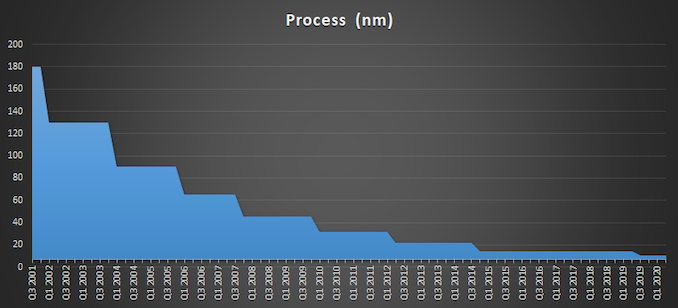


In the meantime, the big winner within Intel is the company’s 10nm process, which the company is going to have to lean on more heavily in light of the 7nm delay. According to Intel they have further accelerated their 10nm ramping due to growing demand for 10nm products – both PC and comms/5G – with Tiger Lake shipments set to be 20% higher than what Intel was originally planning for back in January. So while 10nm has been something of an albatross for Intel, it’s not going to be a short-lived manufacturing node as Intel rushes to 7nm; instead it’s going to be a core part of their plans for the next two or three years.


Source: AnandTech – Intel Reports Q2 2020 Earnings: Data Center Sales Fuel Another Record Quarter


The Xiaomi Mi 10 Pro Review – A Solid Overall Value

Amongst the many flagship devices released in this first half of the year, one often overlooked device was Xiaomi’s Mi 10 series. The company’s leading Snapdragon 865 phones were released quite early on, but were largely overshadowed by other competitor devices, with the phone not having official US carrier support or releases also playing a big role. In Europe and other markets however, Xiaomi is an increasingly important player and is quickly filling in the gap that’s being left by Huawei.

Today, we’re having a closer look at the Xiaomi Mi 10 Pro, how the phone stacks up against the competition, and especially how the phone’s camera system is unlike any other on the market. Although we’re reviewing the Pro variant today, Xiaomi also offer the regular Mi 10 which is essentially identical in looks and features, with the exception that it lacks some of the more versatile camera setups of the Pro variant.


Source: AnandTech – The Xiaomi Mi 10 Pro Review – A Solid Overall Value

ASUS Announces ROG Phone III – 144Hz S865+ Monster

Today ASUS is announcing its newest flagship gaming-oriented phone, the ROG Phone III. A direct successor to the quite well received ROG Phone II from last year, the company is keeping the formula quite basic this year, keeping the general characteristics of the ROG Phone III similar to that to its predecessor whilst upgrading the core components such as the SoC, now featuring for the first time in a device the new Snapdragon 865+.


ASUS ROG Phones
  ROG Phone III ROG Phone II
SoC Qualcomm Snapdragon 865+

1x Cortex A77 
3.1GHz
3x Cortex A77 @ 2.42GHz
4x Cortex A55 @ 1.80GHz


Adreno 650 @ +10%

Qualcomm Snapdragon 855+ 

1x Cortex-A76 @ 2.96GHz

3x Cortex-A76 @ 2.42GHz

4x Cortex-A55 @ 1.80GHz


Adreno 640 @ 675MHz

DRAM 16 GB LPDDR5 12 GB LPDDR4X
Storage up to 512GB UFS 3.1 128 / 512GB UFS 3.0
Display 6.59″ AMOLED

2340 x 1080 (19.5:9)
144Hz


270Hz Touch

6.59″ AMOLED

2340 x 1080 (19.5:9)

120Hz


240Hz Touch

Size Height 171.0 mm 170.99 mm
Width 78 mm 77.6 mm
Depth 9.85 mm 9.48 mm
Weight 240 grams 240 grams
Battery Capacity 6000mAh


30W charging (PD)

6000mAh


Wireless Charging
Rear Cameras
Main 64MP IMX686

0.8µm pixels (1.6µm 4:1 16MP)

 
48MP IMX586

0.8µm pixels (1.6µm 4:1 12MP)

f/1.79
Telephoto
Wide 13MP

125° wide-angle
13MP

125° wide-angle
Extra 5MP Macro
Front Camera 24MP 24MP
I/O USB-C 3.1 (Side)

+ USB-C 2.0 (Bottom)
USB-C 3.1 (Side)

+ USB-C 2.0 (Bottom)

3.5mm headphone jack

Wireless (local) 802.11ax WiFi-6

Bluetooth 5.1 LE + NFC
802.11ac Wave 2 Wi-Fi

Bluetooth 5.0 LE + NFC


802.11ad (Wireless display)

   
Other Features Dual Stereo Speakers


Under-Display Fingerprint Sensor

Dual-SIM Dual nanoSIM
Launch Price   8+256GB + S865  :    799€

12+512GB + S865+:    999€

16+512GB + S865+:  1099€
12+512GB: $899 / £829 / 899€ 

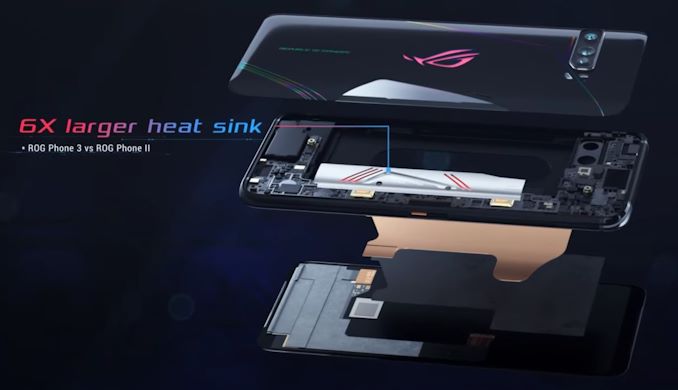
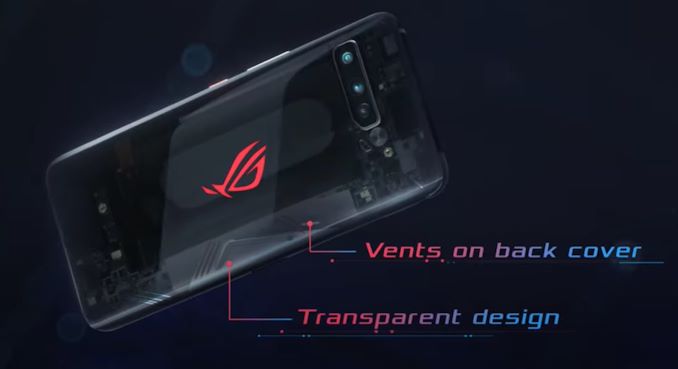
The new SoC upgrades the CPU and GPU speeds by 10%, upping the frequencies on the Cortex-A77 cores to up to 3.1GHz for the first time ever in a smartphone. ASUS says that it’s also vastly upgraded the heat sink of the SoC inside the phone, with it now being 6x larger than that found on the ROG Phone II. Combined with a revamped vapour chamber design, the new phone is said to be virtually immune to thermal throttling and is able to keep is peak performance figures for prolonged periods even in demanding situations.


The phone also upgrades its RAM and storage options. You’re able to feature up to 16GB of LPDDR5 memory, whilst the 512GB NAND storage has been upgraded to an UFS 3.1 unit, improving transfer speeds by up to 15%.


On the display side, ASUS has kept the same screen size and resolution as on the ROG Phone II at 6.59” and 2340 x 1080, but this time around has upped the already high 120Hz refresh rate to up to 144Hz, with also an uptick in the input touch sampling rate to up to 270Hz. This being the biggest feature of the ROG Phone II, it’s arguably seen smaller upgrades this generation.


ASUS is seemingly also keeping a very similar footprint between generations as both phones still have 171 x 78mm length and widths, although the new phone is listed as being thicker at now up to 9.85mm. Weight hasn’t changed and still falls in at a hefty 240g, mostly taken up by the huge 6000mAh battery that also hasn’t seen changes this generation. Much like its predecessor, these are gigantic phones.


On the camera side of things, we’ve seen a big improvement on the main camera unit which has been switched from the previous generation IMX586 sensor to a newer IMX686. The upgrade here lies in its larger 1/1.72” sensor size, retaining 0.8µm pixels but being improved in resolution to up to 64MP with a quad-Bayer colour filter array, binning down to 16MP for regular mode shots. As of writing we don’t have information on the optics of the camera.


The ultra-wide-angle seems to have at surface remained the same at 13MP with a 125° field of view, but again we’re lacking specifics. An addition to the camera array is a 5MP macro camera which generally is more of a gimmick rather than something that augments the capture experience.


In terms of connectivity, of course the big upgrade is the move to 5G thanks to the new X55 modem. Wi-Fi 6 also the norm now and BT has been upgraded to version 5.1. We don’t see mention of ASUS’ “wireless display” functionality with 802.11ad so it might be the company has removed this feature this generation.


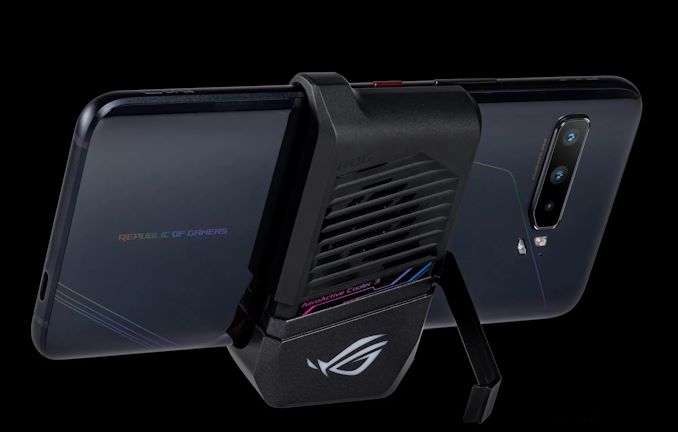
One other big feature that’s been removed is the 3.5mm headphone jack. Unfortunately, as in many other vendors this has gone the way of the Dodo, and is only otherwise available through ASUS’ AeroActive Cooler 3 add-on accessory which features a pass-through USB-C and 3.5mm port.


Availability in Europe later this month, the US in September


The ROG Phone III is said to first appear in Europe later this month in the form of a Strix variant with a regular Snapdragon 865 and 8+256GB of RAM for 799€, whilst the 12+512GB and 16+512GB variants will be offered later for 999€ and 1099€. In the US, the phone will only release in September with pricing there being released at a later date.


Related Reading:


Source: AnandTech – ASUS Announces ROG Phone III – 144Hz S865+ Monster

The ASUS ROG Strix B550-F Gaming Wi-Fi Motherboard Review: Premium Value

Motherboards based on AMD’s B550 chipset have exploded onto the scene. Despite B550 being a cost-down version of X570 for the budget market, motherboard manufacturers have gone a little overboard in offering over 50 different models to consumers, ranging in price between $120 and $300+. The usual battleground for a good solid motherboard is in the $200 range, which should enable something with the standard features but a bit of quality thrown in as well. For $210 with Wi-Fi 6 or $190 without, the ASUS ROG Strix B550-F Gaming straddles that popular price point. Today we’re reviewing what the B550-F Gaming has to offer.


Source: AnandTech – The ASUS ROG Strix B550-F Gaming Wi-Fi Motherboard Review: Premium Value

OnePlus Announces Nord – Snapdragon 765 at 399€

Today OnePlus is announcing its latest smartphone, the new OnePlus Nord. The Nord is a special device for the company as it’s the first time since its inception that we’re seeing a product release outside of the usual flagship line-up. The new Nord positions itself as a mid-range device in the “premium” category, coming with a Snapdragon 765 SoC as well as an attractive price point.


Source: AnandTech – OnePlus Announces Nord – Snapdragon 765 at 399€

Altair Semiconductor Renames to Sony Semiconductor Israel

Today, after more than four years of being acquired by Sony, Altair Semiconductor is renaming itself as Sony Semiconductor Israel. The IoT focused company over the last few years has been growing its success under the Sony conglomerate, and has deepened its integration with Sony’s other semiconductor businesses.


We have been honored to be part of Sony for the past four years, playing a key role in the company’s core business,” says Sony Semiconductor Israel CEO Nohik Semel, “To better reflect our long-term commitment to our partners and customers, as well as the quality of our offering, we have decided to change Altair’s company name to Sony.”


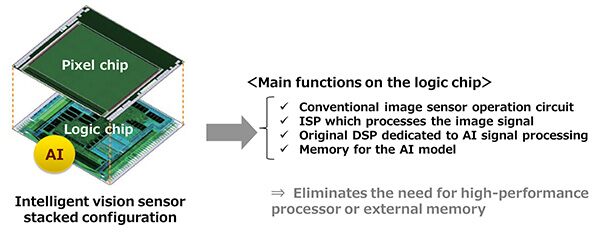
As an example of the collaboration over the last few years, we’ve seen Sony employ AI DSP IP developed by Altair/Sony Semiconductor Israel that’s been deployed in the new IMX500/501 image sensor, integrating a AI inference block within the sensor’s logic die.


Related Reading:


Source: AnandTech – Altair Semiconductor Renames to Sony Semiconductor Israel

AMD Launches 12 Desktop Renoir Ryzen 4000G Series APUs: But You Can’t Buy Them

Today AMD is finally lifting the lid on its long-awaited desktop Zen2 based APU family. Using the same silicon as in the Ryzen Mobile 4000 family, AMD is pumping it up into 35 W and 65 models in the same AM4 platform that is in use today. There has been strong demand from PC builders to release these chips, which were on the topics of forum conversation all the way back at CES. There’s only one downside to these new processors: you can’t buy them. AMD states that the initial release of Ryzen 4000G hardware is for OEMs like Dell and HP only.


Source: AnandTech – AMD Launches 12 Desktop Renoir Ryzen 4000G Series APUs: But You Can’t Buy Them

Launching the #CPUOverload Project: Testing Every x86 Desktop Processor since 2010

One of the most visited parts of the AnandTech website is our benchmark database, Bench. Over the last decade we’ve placed as much benchmark data as we can in there for every sample we can get our hands on. As the CPU editor, one of my duties is to maintain the CPU part of Bench, making sure the benchmarks are relevant and the newest components are tested. Today we are announcing our latest major Bench refresh with our new Benchmark suite, and some very lofty goals.


Source: AnandTech – Launching the #CPUOverload Project: Testing Every x86 Desktop Processor since 2010

Xiaomi Releases 34" WQHD 144Hz Curved Gaming Monitor for 399€

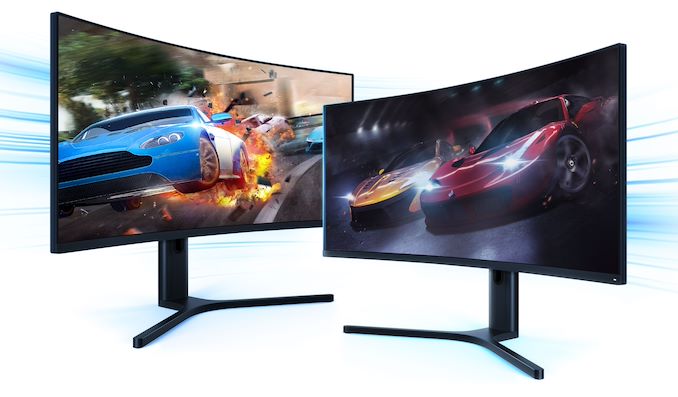
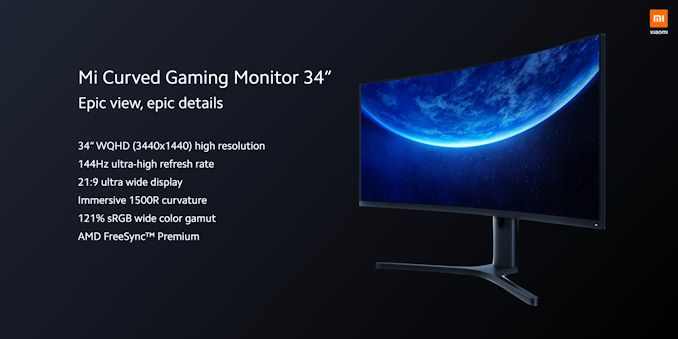
This week Xiaomi launched a whole lot of different consumer goods in its European and other markets, amongst which was the new Mi Curved Gaming Monitor. The new monitor is a 34” WQHD ultra-widescreen unit supporting refresh rates of up to 144Hz, notably undercutting the competition at a price point of only 399€.


Whilst most monitors of this class come at quite steep price points, the new Xiaomi panel’s feature set focusing on the basics of the monitor means that it can offer some extremely good value. The 34” panel comes at a resolution of 3440 x 1440 and is of a VA type that is speculated to be manufactured by Samsung Display. As with other such VA panels we see a 3000:1 contrast ratio which should offer deeper blacks than other display technologies besides OLEDs and locally dimmed backlight monitors.


The curvature lands at 1500R which means it gives you an immersive field-of-view without too much of an exaggeration. The monitor’s design is minimalistic and has minimal bezels on the top and sides, with only a thicker design for the bottom bezel.


The one thing missing from the monitor’s spec sheet is any kind of HDR support, given the monitors limited brightness of only up to 300cd/m² – one of the only real compromises of the hardware. It has a wide colour gamut support of up to 121% of sRGB coverage.


In terms of I/O, the monitor features two DisplayPort 1.4 ports as well as two HDMI 2.0 ports, which actually makes it quite versatile in terms of input abilities as it allows for window modes with left/right split or even a picture-in-picture setup. There’s also support for FreeSync – although at an undisclosed refresh rate range.


It lacks any USB connectivity and only has a 3.5mm audio jack as an extra connector. The power supply is integrated into the monitor with a standard AC connector having to be plugged into it.


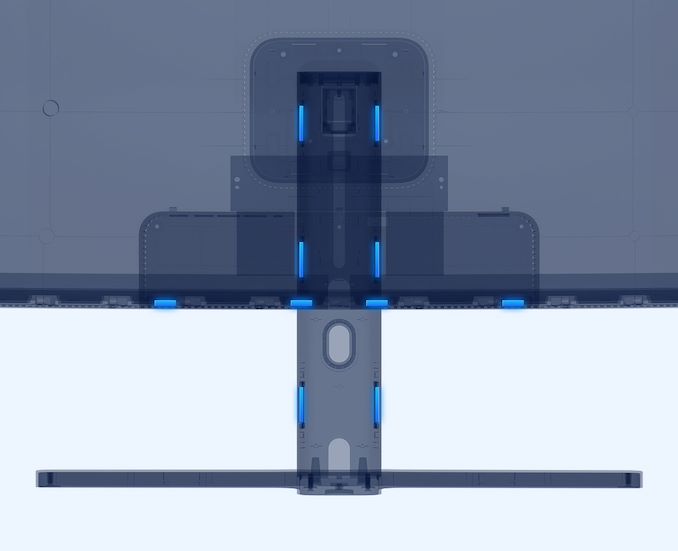
Xiaomi says the stand and back support is easily removable with magnetic holders, secured only by an easy-remove latch. The stand is adjustable in height, swivel and tilt, and can be removed completely in favour of a 100 x 100mm VESA mount, for which there’s included extra spacer bolts and screws.


Xiaomi Mi Curved Gaming Monitor
  General Specifications
Panel 34″ VA
Native Resolution 3440 × 1440 (21:9)
Maximum Refresh Rate 144 Hz
Response Time 4 ms GtG
Brightness 300 cd/m² (peak)
Contrast 3000:1
Backlighting LED
Viewing Angles 178°/178° horizontal/vertical
Curvature 1500R
Aspect Ratio 21:9
Color Gamut 125% sRGB/BT.709
DisplayHDR Tier None
Dynamic Refresh Rate AMD FreeSync

? – 144Hz
Pixel Pitch 0.233 mm²
Pixel Density 110 PPI
Inputs 2 × DisplayPort 1.4

2 × HDMI 2.0
Audio 3.5 mm output
USB Hub
Stand Height / Rotation

VESA: 100×100
MSRP 399€

Related Reading:


Source: AnandTech – Xiaomi Releases 34″ WQHD 144Hz Curved Gaming Monitor for 399€

NVIDIA and AMD Summer 2020 Video Card Game Bundles: Death Stranding & Godfall

With summer here and the tail-end of at least one series of video cards approaching, both NVIDIA and AMD have launched new video card game bundles in the last week in order to spur some extra video card sales. On the NVIDIA side, the company is bundling Death Stranding with RTX video cards, meanwhile AMD is now including Godfall with all of their RX 5000 series cards, as well as World of Warcraft: Shadowlands for the RX 5600 XT and higher.


NVIDIA


Starting things off with NVIDIA, the green giant has launched their first game bundle in a while, offering copies of the PC release of Death Stranding with their RTX video cards. The previously PS4-exclusive game was released for that console in 2019, and then released for the PC this month, where it has incorporated RTX technology enhancements such as DLSS 2.0.


NVIDIA Current Game Bundles

(July 2020)
Video Card

(incl. systems and OEMs)
Bundle
GeForce RTX 20 Series (All) Death Stranding
GeForce GTX 16 Series (All) None

NVIDIA’s bundle covers all of their RTX video cards, from the GeForce RTX 2060 on up. And, as is usually the case, the game offer also covers laptops and desktops sold with these video cards. Though it should be noted that this latest bundle is going to be quite short lived, with the offer ending on July 29th.


Meanwhile, NVIDIA is not currently offering any game bundles for its lower-tier cards, the GeForce GTX series.


As always, codes must be redeemed via the GeForce Experience application on a system with a qualifying graphics card installed. More information and details can be found in the terms and conditions. Be sure to verify the participation of any vendors purchased from, as NVIDIA will not give codes for purchases made from non-participating sellers.


AMD


On the other end of the spectrum, AMD has also launched a new Raise The Game bundle for recent Radeon cards. Here the company is offering a multi-tier bundle that covers all of their desktop RX 5000 series parts, as well as the majority of their mobile parts.


For the Radeon RX 5500 and higher, AMD is including a voucher for a copy of Godfall, Counterplay Games’ upcoming action RPG, which is due to launch late this year. Meanwhile the company is also offering a second game with purchases of RX 5600 & RX 5700 hardware, in the form of World of Warcraft: Shadowlands. Shadowlands is WoW’s upcoming expansion, and this is a particularly curious offer: AMD is only including the expansion itself, and not a full copy of World of Warcraft. Nominally a $40 product, Shadowlands on its own is not small potatoes, but as gamers need to already own WoW to make use of it, I can’t recall the last time anyone has offered a dependent expansion pack as a bundled game.


AMD Current “Raise the Game” Bundles

(July 2020)
Video Card

(incl. systems and OEMs)
Bundle
Radeon RX 5700 Series Godfall

World of Warcraft: Shadowlands
Radeon RX 5600 Series Godfall

World of Warcraft: Shadowlands
Radeon RX 5500 Series Godfall
Radeon RX 5300M None

As with past AMD offers, these bundles are also good for laptops and desktops including these video cards as well. So on the laptop side of matters, the RX 5500M qualify for the relevant bundles. In fact the only current-generation AMD video card not to get a bundled game of some type is the 5300M, their cut-down Navi 14 part.


Finally, as opposed to NVIDIA’s offer, AMD’s latest game bundle will be a much longer-lived event: the campaign is set to run through October 3rd. As always, you can check AMD’s website for a complete list of participating retailers and OEMs, along with information on how to redeem the vouchers.


Sources: NVIDIA & AMD


Source: AnandTech – NVIDIA and AMD Summer 2020 Video Card Game Bundles: Death Stranding & Godfall

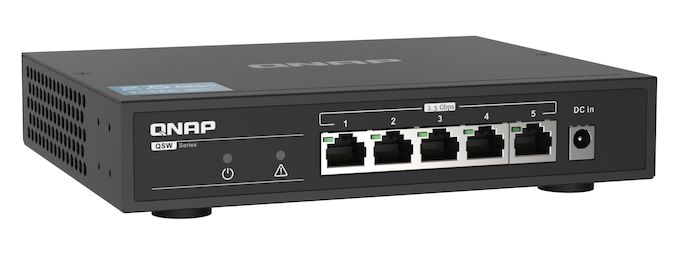
At Last, a 2.5Gbps Consumer Network Switch: QNAP Releases QSW-1105-5T 5-Port Switch

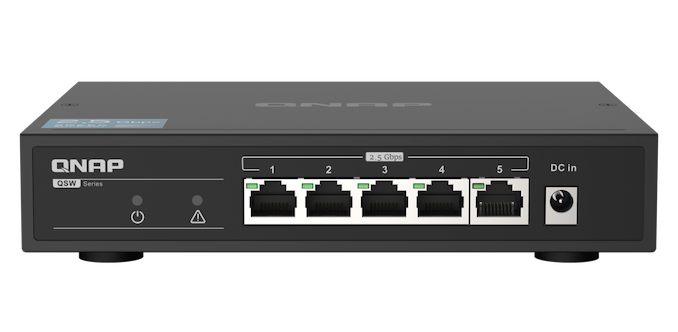
After entirely too long of a delay, the wait for faster consumer-grade network switches appears to be coming to an end. This week QNAP launched its QSW-1105-5T switch, one of the industry’s first unmanaged 2.5Gbps (2.5GBASE-T) switches. The 5-port switch supports 2.5GbE operation on all five of its RJ45 Ethernet ports, and along with being unmanaged it is also fanless, allowing the switch to work maintenance-free and installed virtually anywhere. The QSW-1105-5T is already on sale in Taiwan for roughly $100, meaning that we’re looking at a price-per-port of about $20.


The saga of NBASE-T has been something of a long one. First introduced in 2016, the standard added the then-new 2.5GBASE-T and 5GBASE-T modes, which were designed to offer a series of intermediate steps between the existing 1Gbps (1000BASE-T) and 10Gbps (10GBASE-T) standards. By scaling down parts of the 10GBASE-T spec, the new standards would allow more modest – but still many times faster – network transmission rates than 1Gbps Ethernet, all the while being able to reuse existing Cat5e and Cat6 cabling. Overall, 2.5GBASE-T allows for 2.5Gbps Ethernet over Cat5e at the same 100m distances as 1Gbps Ethernet, while 5GBASE-T allows for 5Gbps speeds over 100m runs of Cat6, as well as quasi-official support for shorter Cat5e runs.


Given the technology reuse, moderately-priced NBASE-T network cards were quick to hit the market. However affordable switches have been a more complex matter: while the high initial price of NBASE-T was easy enough to eat on a single controller, multiplied over several ports on a switch, it quickly drove up the price tag. As a result, the market for NBASE-T switches has largely between split between downgraded pro gear like Netgear’s $70-per-port XS505M, and mixed-port switches like Asus’s XG-U2008, which offer just two 10G/NBASE-T ports along with a slew of Gigabit Ethernet ports. So cheap NBASE-T networking options have remained elusive, at least until now.


Thankfully, in the last year we’ve finally started seeing the slower of the NBASE-T modes, 2.5GBASE-T, sprint towards wide adoption. The 2.5Gbps standard is the cheapest to implement, and with recent controller releases from the likes of RealTek and Intel, 2.5Gbps controllers have quickly become a staple on high-end motherboards. Accordingly, with the price per port coming down for 2.5Gbps controllers, it’s also bringing down the price of whole switches. And this is where QNAP’s new switch comes in.


The QSW-1105-5T is one of the first switches to be released using these new generations of cheap controllers. Aimed squarely at the home and SMB markets, the switch doesn’t offer any frills such as network management, Power over Ethernet, or SFP+ ports. Instead it focuses on the things that matter for the home market: supporting 2.5Gbps networking in a small, passively-cooled switch that’s suitable to be neglected by being tucked under a desk or in a closet.


QNAP QSW-1105-5T Switch
Speeds 100M/1G/2.5G
Ports (RJ45) 5
Managed No
Power 12 W
Dimensions 3.4 x 18 x 14.5 cm
Cooling Passive

(Fanless)
Price ~$100

As the first of what will undoubtedly be many 2.5G switches over the coming months, the QSW-1105-5T also gives us our first real look at what we can expect from this generation of switches as far as footprints and power consumption goes. Since it’s not carved from a pro-grade switch, the 18 cm x 14.5 cm switch is significantly smaller than earlier NBASE-T switches. And with a maximum power consumption rating of 12 W, we’re looking at power consumption of just a bit over 2 Watts per port, which is also a significant improvement over admittedly far more powerful switches.


All of which sounds unremarkable, and indeed that’s exactly what makes the QSW-1105-5T so interesting. The biggest barrier to wide consumer adoption over the last few years has been the cost – both in regards to the core technology and added frills – so we’ve been waiting for quite a while to see NBASE-T technology transition from pro-grade switches to cheap, consumer-grade gear.


Otherwise, QNAP’s new switch is further evidence that the PC industry is going to coalesce around 2.5Gbps Ethernet for the time being. Besides being the fastest standard to officially and fully support Cat5e cabling – which was installed in walls en masse when home networking first took off – it’s also the cheapest and lowest-power option. This is allowing it to be widely deployed not only in new motherboards and cheap USB adapters, but finally in switches as well – and making QNAP’s new switch a good match for all of those new NICs. And while I’d like to see cheaper 5Gbps and 10Gbps gear as well, 5GBASE-T seems likely to remain a premium (if not niche) option, owing to the higher controller costs as well as its higher power consumption, both of which remain big problems for a switch.


At any rate, QNAP’s 2.5Gbps switch is on sale now in Taiwan. The company has not announced release dates elsewhere, but judging from some of their previous product releases, I’d expect it to start showing up in North America some time in the next few months.


Source: AnandTech – At Last, a 2.5Gbps Consumer Network Switch: QNAP Releases QSW-1105-5T 5-Port Switch

TSMC Confirms Halt to Huawei Shipments In September

TSMC on Thursday has confirmed that it had stopped processing new orders from Huawei back on May 15th. The news is the first official statement from the company on the matter, since the US Commerce Department’s expansion of rules to require licenses for sales to Huawei of semiconductors which us US technology.


Under the rule change, Taiwan based TSMC is not allowed to sell to Huawei silicon products unless the Chinese vendor receives (an unlikely) license from US regulators. Huawei and TSMC had been given a 3-months grace period in which existing orders were allowed to be processed and shipped. TSMC yesterday has confirmed that the manufacturer does not plan to ship any wafers to Huawei or HiSilicon after September 14th.


It’s been wildly speculated that Huawei had been pre-empting the US ban and making very large orders to TSMC to be able to have a sufficient silicon supply for the rest of the year. However, once this stock runs out and if the political situation hasn’t been resolved by then, it would mean big troubles for the Chinese vendor. Beyond Huawei’s consumer business segment which had grown to be the #2 smartphone vendor in the world, behind Samsung and ahead of Apple, Huawei is an important player in the cellular infrastructure market where they are currently the leading player for telecommunications equipment.


HiSilicon is also a big player in the DTV SoC market, IP camera SoC market, and most recently an entrant in the server CPU market with their in-house Kunpeng 920 chip and custom microarchitecture. Without means to manufacture their designs, it leaves the company in a precarious situation. Other semiconductor foundries are also unlikely to be able to pick up Huawei as a customer as they all use US-made equipment. In theory, even Shanghai based SMIC would be banned from supplying Huawei – in practice we haven’t heard any confirmation on the situation there yet.


As for TSMC, Huawei represented the manufacturer’s biggest customer with a 23% revenue share in 2019. Surprisingly enough, the company states that the Huawei ban is unlikely to have an effect on the company’s revenues, with other customers being able to pick up coveted manufacturing capacity. The company even forecasts 20% year-on-year growth for the July-September period, and is further increasing its capital expenditure for the year to up to $17bn.


Related Reading:


Source: AnandTech – TSMC Confirms Halt to Huawei Shipments In September

The Dell XPS 13 (9300) Review: Return of the King

Dell changed the Windows laptop market in a single stroke with the launch of the updated XPS 13 back in 2015, ushering in the world of the InfinityEdge display, and moving the entire industry forward. We were fortunate enough to get a chance to check out the precursor to the new XPS 13 back in November, with a review of the XPS 13 2-in-1. Dell had chosen not to rest on their laurels, and the 2-in-1 proved to be one of the best notebooks around if you needed a compact and powerful convertible laptop.

Today we are evaluating the traditional clamshell version of the 2020 XPS 13, and while it offers many of the same features and design touches, it does so in a more familiar form factor that many customers are going to prefer. As a result, with the same Ice Lake processor underpinning it and Dell’s expert design capabilities on full display, the XPS 13 has the makings for one of the best 13-inch notebooks of the year.


Source: AnandTech – The Dell XPS 13 (9300) Review: Return of the King

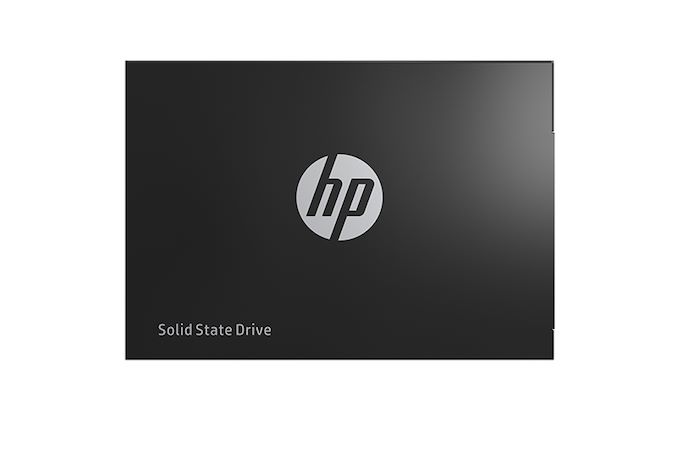
HP Announces S750 SSD: 96L Entry-Level SATA

HP-branded SSDs (manufactured by Biwin) have over the past few years become one of the more recognizable consumer SSD brands, thanks in large part to the success of the EX920 and EX950 high-end NVMe SSDs. However, they offer a wider range of products, and the SATA drives are now getting an update: The new HP S750 SATA SSD replaces the S700 and to some extent also the S700 Pro models, bringing a more modern budget SATA design using 96-layer 3D NAND.


HP/Biwin partners with Silicon Motion for most of their SSD controllers including the one for this drive, with an unspecified degree of customization for HP. We believe the HP H6578 controller used in the S750 is based on either the SM2259 or its DRAMless counterpart the SM2259XT. Pricing for the S750 has not been announced, but the 3 year warranty with endurance ratings of around 0.6 DWPD indicates this is a low-end SATA drive that will compete against DRAMless and QLC-based SSDs.


HP wasn’t specific about what kind of 96-layer 3D NAND is used in the S750, but the existence of a 256GB model with decent performance specs makes it unlikely that they’re using QLC NAND. The performance sweet spot for the S750 line is the 512GB model, as the 1TB model comes with lower random read and write performance ratings. This suggests that the 1TB model may be using a different, larger NAND die than the smaller two.


HP S750 SSD Specifications
Capacity 256 GB 512 GB 1 TB
Interface, Form Factor 2.5″ SATA 6Gbps
Controller HP H6578 (Silicon Motion)
NAND Unspecified 96-layer 3D NAND
DRAM Unspecified
Sequential Read 560 MB/s
Sequential Write 520 MB/s
4KB Random Read IOPS 55k 90k 74k
4KB Random Write IOPS 79k 89k 80k
Idle Power 0.41 W 0.42 W 0.42 W
Active Power 1.83 W 2.17 W 2.29 W
Write Endurance 160 TB

0.6 DWPD
320 TB

0.6 DWPD
650 TB

0.6 DWPD
Warranty 3 years


Source: AnandTech – HP Announces S750 SSD: 96L Entry-Level SATA