Intel’s SG1 is 4x DG1: Xe-LP Graphics for Server Video Acceleration and Streaming

For the last few years, Intel has had a product line known as the Visual Computing Accelerator (VCA). With the VCA2 product being put on EOL earlier this year, without a replacement, we wondered where this market of Intel’s was going to go. At Intel’s Architecture Day 2020, it would appear the company is set to product a new SG1 graphics card for the server market for this purpose.


Intel’s Visual Compute Accelerator


Two versions of the VCA have existed, and the hardware underneath was relatively unorthodox – Intel put three of its Xeon E3 processors onto a single PCB behind a PCIe switch.
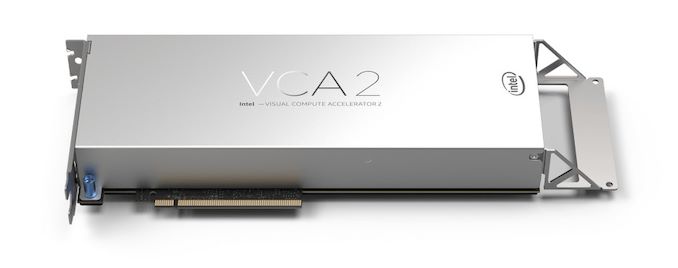


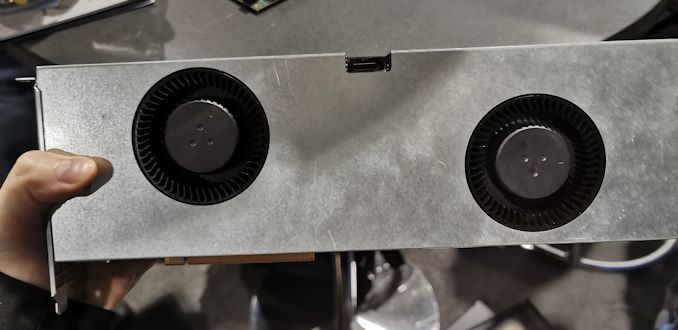
Each processor connected to its own DRAM and chipset as well, and the goal was to use the Intel Gen graphics on-board to be able to accelerate streaming video either for consumption or gaming. These processors had the best version of Intel’s Iris Pro P6300/P580 GT4e graphics, along with 128 MB of L4 eDRAM and 32 GB of DRAM each – we saw a company that built VCE cards for Intel’s partners back at Supercomputing 2019.


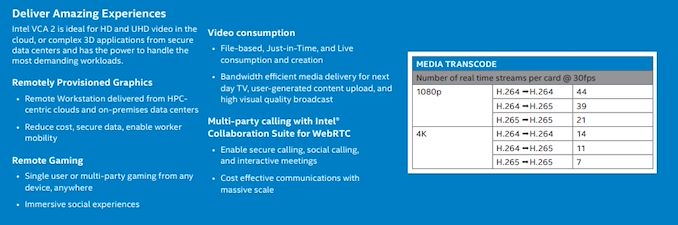
Each VCA2 was capable of transcoding 44 streams of 1080p30 H.264 simultaneously, or 14 streams of 4K30 H.264. However, the second generation VCA2 was put on the EOL path earlier this year, with no replacement in sight.


DG1 and SG1


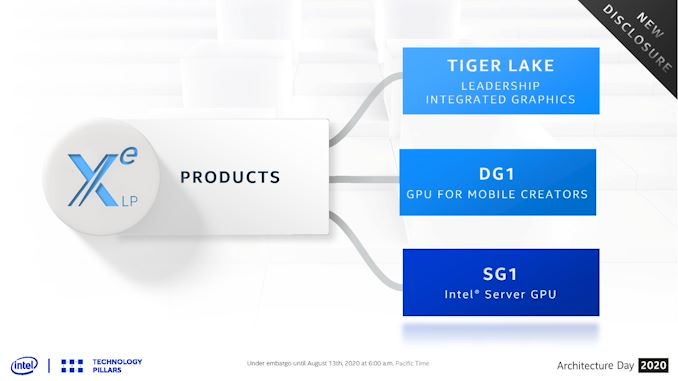
Intel declared during Architecture Day that it is planning three products built on its new Xe-LP graphics architecture. The company went into some detail about the form of Xe-LP graphics that will be going into the new Tiger Lake notebook processor, which will be the first version on the market (the full announcement of Tiger Lake is expected to be on September 2nd).
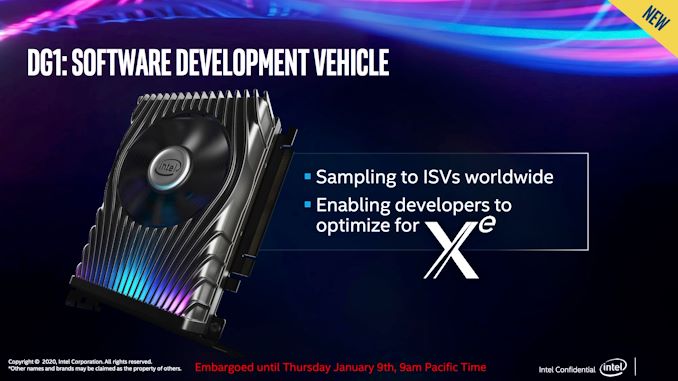


The other product previously announced on Xe-LP was DG1: Desktop/Discrete Graphics 1. This is expected to be the first discrete PCIe add-in card for LP, targeting at the low-end market. Intel has already shown the software development vehicle for DG1 at CES in January 2020, with the announcement that they were starting to sample a version of the card to its software partners in advance of a bigger launch later in the year. The card was the same size of the low-to-mid range graphics on the market today, without a PCIe connector, indicating that it should be under 75W.


The third product is SG1: Server Graphics. Intel gave near zero details as to the setup of SG1, however they did mention that the target market was for video acceleration and streaming, exactly where the VCA series has sat. This would make it align with the mothballing of the current VCA series later this year. The VCA2 card was a GPU that had an 8-pin and a 6-pin power connector and 3x 45W CPUs as well as dual Ethernet outputs, so we fully expect SG1 to be of a similar size.


Intel confirmed to us that SG1 will be a product containing four DG1 silicon dies, put on the same PCB. We expect there to be additional direct external networking connectivity and memory support, and it will be interesting to see how the PCIe lanes are distributed and configuration will be.


Related Reading


Source: AnandTech – Intel’s SG1 is 4x DG1: Xe-LP Graphics for Server Video Acceleration and Streaming
Western Digital's USB 3.1 Gen 2 WD My Passport SSD Gets an NVMe Refresh

Western Digital’s lineup of direct-attached storage (DAS) products targets a range of markets and form-factors. After the acquisition of HGST / G-Technology and SanDisk, the company now offers similar products under multiple brand names. Portable bus-powered SSDs are an example. Subtle differences in the feature sets of the products enhance their appeal to the brand’s target market.


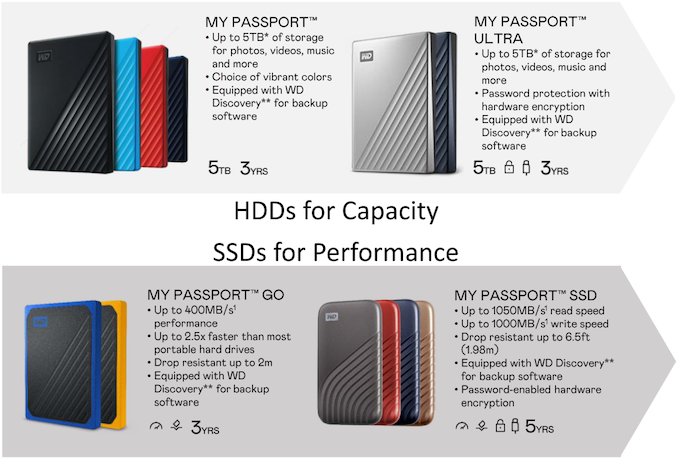
Late last year, the WD_Black P50 was introduced as the fastest non-Thunderbolt portable SSD in the market, thanks to its USB 3.2 Gen 2×2 interface. The branding clearly indicated that gamers were the target market. The regular WD branding is reserved for the My Passport series. We reviewed the first model in the My Passport SSD series back in 2017. It used the planar TLC-based SanDisk X400 M.2 SATA SSD internally with a USB 3.1 Gen 2 Type-C host interface. A new version of the My Passport SSD was released the following year with a WD Blue 3D NAND SATA SSD using 64L 3D TLC flash. Both products were held back performance-wise by the use of a SATA SSD. Today’s product launch brings NVMe into the picture for the My Passport SSD product line.


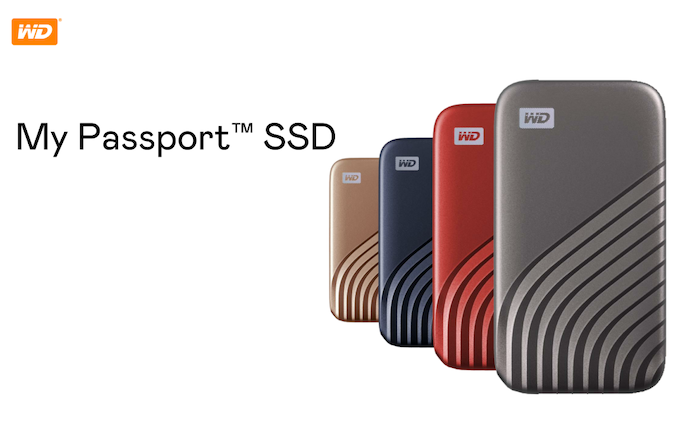
The WD My Passport SSD targets productivity use-cases for business professionals (including certain content creators). The new version’s industrial design and appearance has changed, with the sharp corners and fully-plastic enclosure now replaced by an aesthetically-pleasing partial metal enclosure having rounded corners. WD claims that the new design feels less rigid and more portable, and has a more pocketable shape overall.


While the WD_Black P50 and the SanDisk Extreme Pro portable SSDs meant for huge games and large media files used the WD Black SN750 NVMe SSD internally, the new WD My Passport uses the DRAM-less WD Blue SN550 NVMe SSD. This still uses a PCIe 3.0 x4 interface, and the performance numbers for the 500GB+ models are good enough to saturate a USB 3.1 Gen 2 interface. Hardware encryption is one of the key features of the higher-end products in the My Passport line-up, and the new My Passport SSD also supports AES-256 for data protection without performance loss.


The WD My Passport SSD 2020 provides a huge leap in performance (up to 1050 MBps) compared to the 2018 version (540 MBps). The 256GB capacity SKU has been phased out, and only three capacities are going to be offered – 500GB ($120), 1TB ($200 – WD’s MSRP is $190), and 2TB ($380). While the My Passport SSD 2018 was available only in a single color (gray/black), the 2020 version is available in four colors – gray, red, blue, and gold.


The SanDisk Extreme Pro Portable SSD is our current favorite when it comes to USB 3.1 Gen 2 portable SSDs, thanks to its compact design, performance consistency, and thermal performance. Power consumption (particularly at idle) was one of its Achilles heels compared to the OWC Envoy Pro EX USB-C (which provided similar performance, albeit in a slightly larger form-factor). If the WD My Passport SSD manages to reach close to the SanDisk Extreme Pro’s performance profile while also optimizing power consumption, Western Digital may end up with yet another compelling offering in the portable SSD market.


Source: AnandTech – Western Digital’s USB 3.1 Gen 2 WD My Passport SSD Gets an NVMe Refresh

NVIDIA Reports Q2 FY2021 Earnings: Datacenter Revenue Surpasses Gaming for the First Time

This afternoon NVIDIA announced their results for the second quarter of their 2021 fiscal year, closing out on an exceptional quarter for the company that set numerous revenue records. With over $3.8 billion in revenue, Q2’FY21 was not only NVIDIA’s biggest quarter yet, however for the first time NVIDIA’s datacenter revenue has surpassed their gaming revenue, the traditional cornerstone of the company. Thanks to the Mellanox acquisition as well as ongoing A100 accelerator sales, the datacenter market has, at long last, become NVIDIA’s single largest revenue segment.


NVIDIA Q2 FY2021 Financial Results (GAAP)
  Q2’FY2021 Q2’FY2020 Q1’FY2021 Q/Q Y/Y
Revenue $3866M $2579M $3080M +26% +50%
Gross Margin 58.8% 59.8% 65.1% -6.3% -1.0%
Operating Income $651M $571M $1028M -33% +14%
Net Income $622M $552M $917M -32% +13%
EPS $0.99 $0.90 $1.47 -33% +10%

For Q2’FY21, NVIDIA booked $3.87B in revenue. Compared to the year-ago quarter, this is a jump in revenue of 50%, making it not only NVIDIA’s best Q2 yet, but their biggest quarter overall. And while NVIDIA’s relative profitability took a hit due to GAAP accounting rules, the company still booked $622M in net income for the quarter, 13% more than in Q1’FY20.


Impacting NVIDIA’s results both positively and negatively was the Mellanox acquisition, which closed at the start of Q2. Mellanox added another 14% to NVIDIA’s revenue – all in the datacenter segment – helping to fuel NVIDIA’s new highs. At the same, however, closing the acquisition came with additional one-time charges for NVIDIA, cutting into NVIDIA’s profit margins. As a result, NVIDIA’s gross margin for the quarter was 58.8%, down 1 percentage point from last year, and several percentage points from last quarter.


NVIDIA Quarterly Revenue Comparison (GAAP)

($ in millions)
In millions Q2’FY2021 Q2’FY2020 Q1’FY2021 Q/Q Y/Y
Gaming $1654 $1313 $1339 +24% +26%
Professional Visualization $203 $291 $307 -34% -30%
Datacenter $1752 $655 $1141 +54% +167%
Automotive $111 $209 $155 -28% -47%
OEM & IP $146 $111 $138 +6% +32%

Breaking down NVIDIA’s revenue by platform, the big news here is NVIDIA’s datacenter revenue, which at $1.752B, has for the first time has surpassed NVIDIA’s gaming revenue. A significant contributor to this shift was Mellanox’s networking products, which contributed over 30% to NVIDIA’s datacenter revenues. But even without Mellanox’s gear, NVIDIA’s comparable GPU-centric datacenter revenue would be over $1.2B, surpassing even last quarter’s numbers.


Among several firsts, Q2 is also the first full quarter for A100 revenue for NVIDIA. Even a quarter later, A100 production is still ramping – and is nowhere near the majority of NVIDIA’s datacenter GPU sales – but the high performance (and highly profitable) accelerator is helping to further grow NVIDIA’s already sizable datacenter GPU revenues.


Overall, datacenter revenue overtaking gaming revenue has been a long time coming for NVIDIA, and an important step in the company’s long-term goal of diversifying beyond graphics. While it’s arguably taken longer than CEO Jensen Huang would perhaps have liked to see, there’s no longer a question of whether NVIDIA has “made it” as a compute company rather than a gaming graphics company – and this is a big factor in NVIDIA’s market cap recently surpassing Intel’s.


Meanwhile NVIDIA’s gaming revenue, even after being bumped from the lead spot in terms of revenue, closed out on another record quarter with $1.65B in revenue. This was up almost 25% on both a yearly and quarterly basis, with NVIDIA finding itself the unusual beneficiary of the current coronavirus pandemic. With people largely staying isolated and staying home, video gaming is on the rise, and according to NVIDIA this has also boosted gaming GPU and SoC sales.


Going forward, it will be interesting to see if gaming revenue remains solidly in second-place for NVIDIA, or if it and datacenter revenue end up jockeying for position. Both segments are expected to grow, especially as NVIDIA prepares for the impending launch of their next generation of GeForce video cards. A strong showing late in the year could give gaming revenue one more – and possibly its last – hurrah as NVIDIA’s largest segment.


Meanwhile NVIDIA’s professional visualization segment once again brought up third place for the company. That segment saw just $203M in revenue, which is down significantly both on a quarterly and yearly basis. After enjoying a mild bump in Q1 due to the coronavirus pandemic, office closures and other changes have begun suppressing ongoing demand, with both laptop and desktop sales declining. For the same reason, this has driven higher sales of virtualization/cloud products for remote working, but not by enough to offset PC losses.


NVIDIA’s automotive business was also a victim of COVID, with the segment pulling in just $111M in revenue for the quarter. This was down on both a quarterly and yearly basis, with the latter representing a 47% drop in revenues. According to comments made on NVIDIA’s earnings call, automotive production bottomed out in April due to COVID, hurting revenue for the segment.


ended up being something of a laggard for Q1’FY21. The segment booked $155M in revenue, which is down 7% from the year-ago quarter. NVIDIA’s automotive business moves at a much different pace than its GPU businesses – in part because it’s not set to really take off until self-driving cars become a retail reality – so the business tends to ebb and flow.


Finally, NVIDIA booked $146M in OEM & IP revenue for Q2. Among other things, this is the segment where NVIDIA books its entry-level laptop GPU sales, and it’s those products that helped to drive higher revenues here.


Wrapping things up, looking ahead to Q3 of FY2021, NVIDIA’s current predictions call for another record quarter. The company is expecting around $4.4B in revenue, and gross margins are anticipated to recover to above 62% as well. On the product side of matters, Q3 should see additional ramping of NVIDIA’s A100 accelerators, and almost certainly will see the launch of new Ampere-based GeForce video cards from the company as well.


Source: AnandTech – NVIDIA Reports Q2 FY2021 Earnings: Datacenter Revenue Surpasses Gaming for the First Time

The NZXT Kraken Z63 & X73 AIO Cooler Review: Shiny On Top, Solid Underneath

Today we are taking a look at NZXT’s latest liquid coolers, the Kraken X-3 and Z-3 series. These are more of a refresh rather a total upgrade over last year’s X-2 series, but NZXT has made some notable tweaks. Between the two families there are five different coolers in three sizes, covering the usual 240/280/360mm configurations. Both the X and Z series utilize the same cooling hardware, but NZXT has positioned the Z series as a premium option with a novel aesthetic feature – while the X series has RGB lighting on top of the pump base, the Z series tops its base with a full-fledged (and full color) LCD screen.


Source: AnandTech – The NZXT Kraken Z63 & X73 AIO Cooler Review: Shiny On Top, Solid Underneath

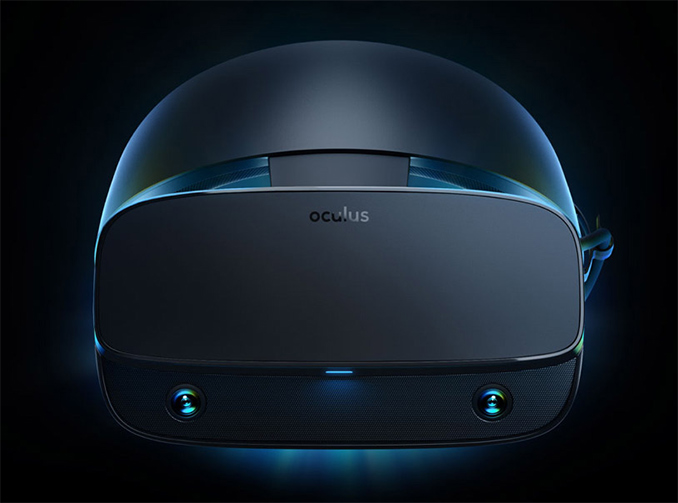
Mandatory Socialization: Facebook Accounts To be Required for Oculus Headsets

Signaling the end to any remaining degrees of separation between Facebook and its VR headset division, Oculus, today the social media company announced that it will be further integrating the two services. Coming this fall, the company will begin sunsetting stand-alone Oculus accounts as part of an effort to transition the entire Oculus ecosystem over to Facebook. This will start in October, when all new Oculus accounts and devices will have to sign up for a Facebook account, while support for existing stand-alone accounts will be retired entirely at the start of 2023.


Originally an acquisition for Facebook, the Oculus Rift and underlying Oculus software ecosystem were initially developed by the then-independent Oculus VR group. After acquiring the company for $2 Billion back in 2014, Facebook has for the last several years largely treated Oculus as a stand-alone entity, selling products under the Oculus brand and leaving Facebook integration an optional feature – a feature co-founder Palmer Luckey even guaranteed during the 2014 acquisition.


None the less, Oculus’s days as a stand-alone ecosystem are now coming to a close, as Facebook has laid out their plans to transition Oculus users over to Facebook accounts, and the significant social media repercussions that entails.


According to Facebook, winding-down Oculus accounts will be a two-part process for the company. Starting in October, all new accounts will need to be Facebook accounts – or more specifically, users will need a Facebook account to log into the Oculus ecosystem. Meanwhile current stand-alone Oculus account holders will be grandfathered in for a time on their existing devices, however any future unreleased devices, even when paired with an existing Oculus account, will still require a Facebook login.


Facebook will then maintain support for grandfathered accounts through the start of 2023. At that point the company will officially drop support for stand-alone Oculus accounts, and while the company is not threatening to immediately disconnect or disable non-Facebook users, “full functionality will require a Facebook account.” In particular:


We will take steps to allow you to keep using content you have purchased, though some games and apps may no longer work. This could be because they require a Facebook account or because a developer has chosen to no longer support the app or game you purchased.


Ultimately, for Facebook this marks the final step of the Oculus acquisition, more fully integrating the company and its systems into the larger Facebook ecosystem. Facebook’s primary strength as a service provider to end-users remains its social offerings, so the company cannot fully exploit those strengths so long as Oculus users remain outside the Facebook ecosystem. At the same time, this will also give the revenue-generating side of Facebook significantly more access to information about Oculus users, which the company will then be able to use to use for targeted advertising, usage tracking, and other purposes.


Source: AnandTech – Mandatory Socialization: Facebook Accounts To be Required for Oculus Headsets

AMD Releases the A520 Chipset: For Ryzen on a Budget

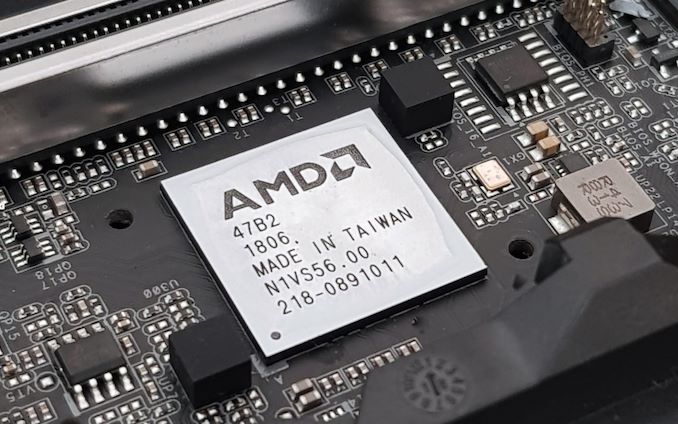
AMD has officially lifted the lid on its latest entry-level chipset designed for its Zen 2-based Ryzen 3000 and 4000 processors, the A520 chipset. Following AMD’s mid-tier B550 chipset launch a few months back, A520 brings up the bottom of AMD’s now fully-modernized chipset stack, dialing down on things like PCIe speeds to allow its board partners to build more budget-friendly Ryzen 3000/4000 motherboards.


Overall, A520 offers up to twenty-six available PCIe 3.0 lanes available when paired with a Ryzen 3000 processor, with twenty of these coming directly from the CPU. And, wasting no time, numerous vendors, including ASUS, ASRock, GIGABYTE, MSI, and Biostar have already unveiled some of their entry-level A520 boards.


Source: AnandTech – AMD Releases the A520 Chipset: For Ryzen on a Budget

Hot Chips 2020 Live Blog: Keynote Day 2, Dan Belov of Deepmind (1:30pm PT)

Hot Chips has gone virtual this year! Lots of talks on lots of products, including Tiger Lake, Xe, POWER10, Xbox Series X, TPUv3, and a special Raja Koduri Keynote. Stay tuned at AnandTech for our live blogs as we commentate on each talk.


Source: AnandTech – Hot Chips 2020 Live Blog: Keynote Day 2, Dan Belov of Deepmind (1:30pm PT)

Hot Chips 2020 Live Blog: Intel/Barefoot Tofino2 12.9 Tbps Switch (10:30am PT)

Hot Chips has gone virtual this year! Lots of talks on lots of products, including Tiger Lake, Xe, POWER10, Xbox Series X, TPUv3, and a special Raja Koduri Keynote. Stay tuned at AnandTech for our live blogs as we commentate on each talk.


Source: AnandTech – Hot Chips 2020 Live Blog: Intel/Barefoot Tofino2 12.9 Tbps Switch (10:30am PT)

Hot Chips 2020 Live Blog: Intel 10nm Agilex FPGAs (8:30am PT)

Hot Chips has gone virtual this year! Lots of talks on lots of products, including Tiger Lake, Xe, POWER10, Xbox Series X, TPUv3, and a special Raja Koduri Keynote. Stay tuned at AnandTech for our live blogs as we commentate on each talk.


Our first session of Day 2 is on FPGAs, starting with updated to Intel’s 10nm Agilex family. Given that Intel spoke about 224G PAM4 transceivers last week at Architecture Day, we expect more of those sorts of details, along with new packaging options.


Source: AnandTech – Hot Chips 2020 Live Blog: Intel 10nm Agilex FPGAs (8:30am PT)

342 Transistors for Every Person In the World: Cerebras 2nd Gen Wafer Scale Engine Teased

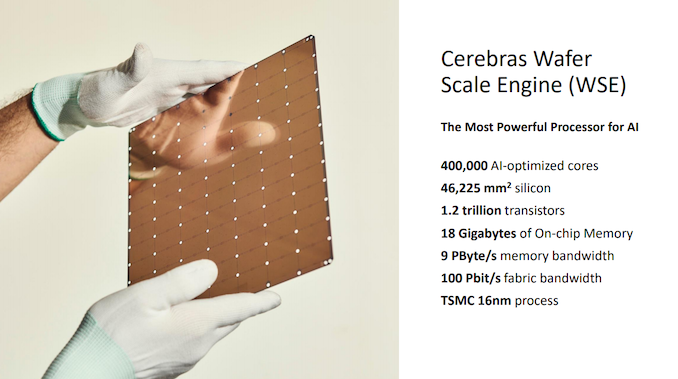
One of the highlights of Hot Chips from 2019 was the startup Cerebras showcasing its product – a large ‘wafer-scale’ AI chip that was literally the size of a wafer. The chip itself was rectangular, but it was cut from a single wafer, and contained 400,000 cores, 1.2 trillion transistors, 46225 mm2 of silicon, and was built on TSMC’s 16 nm process.


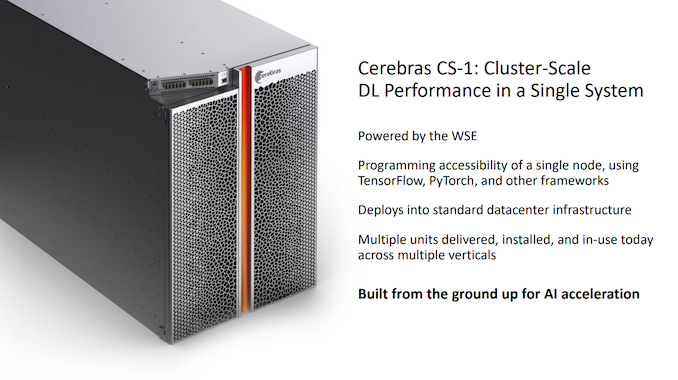
The whole thing created a very big buzz, and later that year the company showed of the first system, CS-1, which is a 15U unit in order to power a single chip. Power consumption was in the 15 kW range, and the unit cost a few million. They are already being deployed by research institutions.


Initially Cerebras was set to announce its 2nd generation product here at Hot Chips this year, however the time-scale didn’t align exactly, so the company is instead going through its software procedures. But at the end of the slide deck, there’s a special slide with some details about the next generation.


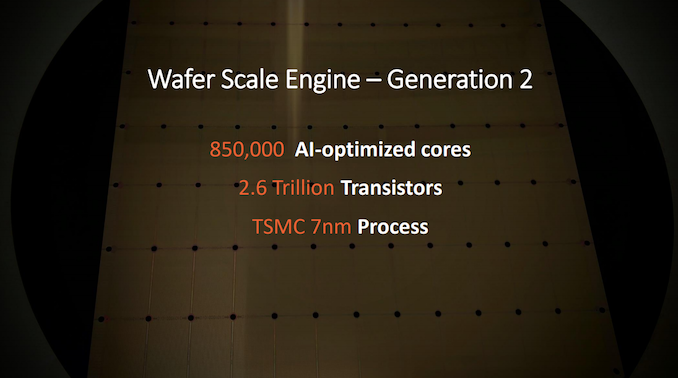
Obviously when doing wafer scale, you can’t just add more die area, so the only way is to optimize die area per core and take advantage of smaller process nodes. That means for TSMC 7nm, there are now 850,000 cores and 2.6 trillion transistors. Cerebras has had to develop new technologies to deal with multi-reticle designs, but they succeeded with the first gen, and transferred the learnings to the new chip. We’re expecting more details about this new product later this year.


Source: AnandTech – 342 Transistors for Every Person In the World: Cerebras 2nd Gen Wafer Scale Engine Teased

Lenovo Refreshes the Yoga Lineup With Ryzen and Next-Gen Intel Core Processors

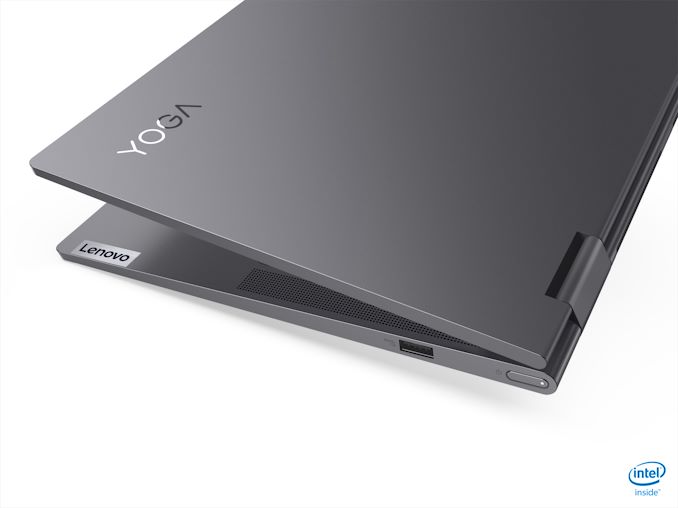
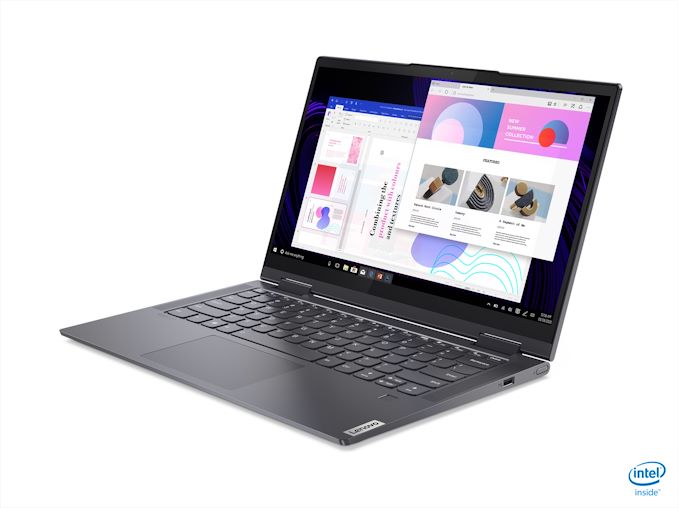
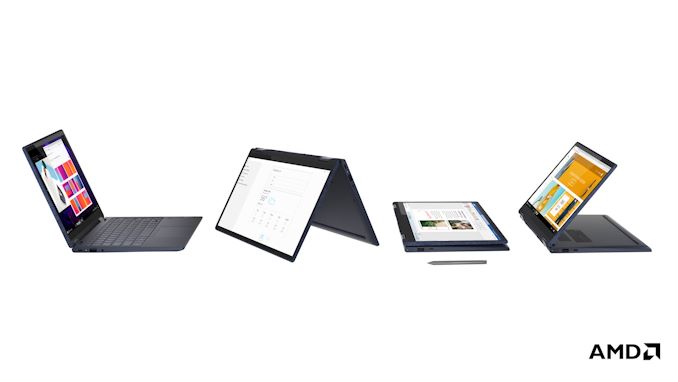
There are several iconic designs in the PC space that have spawned many competing clones, and Lenovo is the proud parent of one such design in the Lenovo Yoga. The 360° hinge and touch support proved to be one of the most useful convertible designs around, with an uncompromised laptop feel, but added versatility of tent, tablet, and stand modes. Today Lenovo is announcing a refresh of their consumer range of Yoga convertible laptops, with not only new internals, but also a new naming scheme.


Lenovo hasn’t released a full specification list for all of the models yet, but there will be both Intel and AMD models available. The AMD models will be based on the 4000-series Renoir platform, and since Intel has not formally announced their new Tiger Lake range of chips, the Intel models are only listed as “next-generation” Intel Core, but with Xe graphics and Thunderbolt 4 support, there is little doubt these will be based on Tiger Lake.


Lenovo Yoga 7i


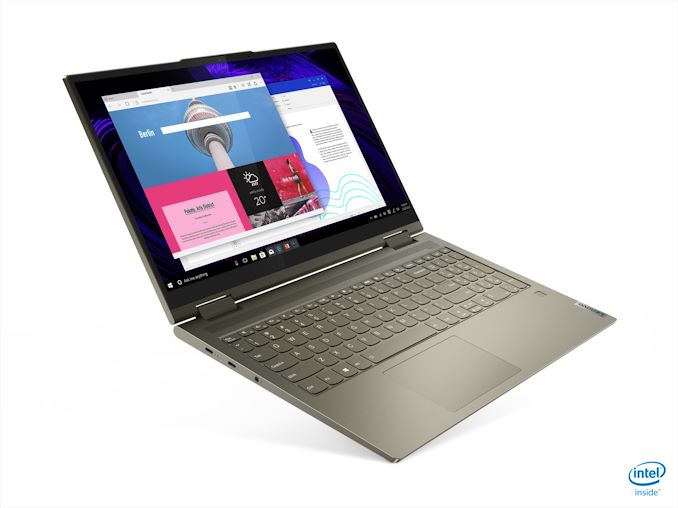
The Lenovo Yoga 7i will be available in both 14 and 15-inch models with a 1920×1080 display with Dolby Vision, with the larger 15-inch model also offering VESA DisplayHDR 400. Lenovo has also managed to shrink the bezels by 20% compared to the outgoing Yoga C740, and there will be two color choices this year, with the traditional Slate Gray as well as a Dark Moss finish. Both units offer a color-matched backlit keyboard, with the larger 15-inch version also squeezing in a number pad.


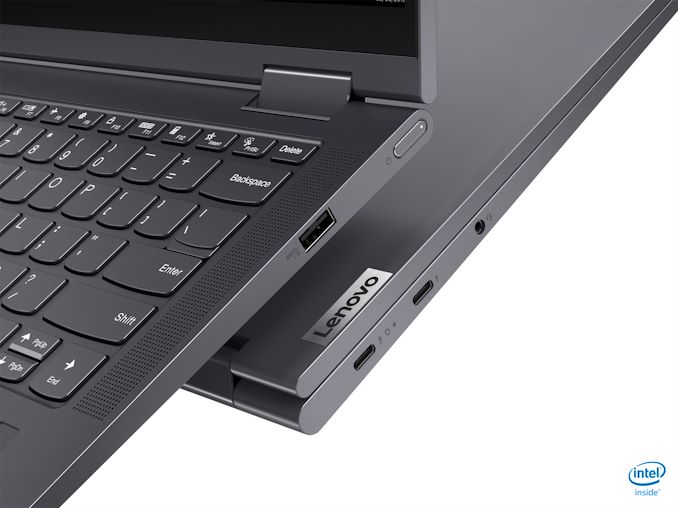
The 7i features Intel processing, with up to 16 GB of LPDDR4X RAM and 1 TB of SSD storage. There are two Thunderbolt 4 ports as well for high-speed expansion. Despite the bezels shrinking, Lenovo has managed to increase the battery capacity to 71 Wh, which gives a rated battery life of 13 hours on the 15.6-inch model, and 16 hours on the 14-inch laptop. Wi-Fi 6 and Bluetooth 5 round out the connectivity.


For sign-in Lenovo offers a fingerprint reader, and to get to the sign-in quicker, there’s now an instant-boot when the laptop lid is opened. For those that need a stylus, Lenovo supports an active pen as well.


Despite all of the tech, the new Yoga 7i starts at only $849.99, with the larger model starting at $799. Availability is expected in November.


Lenovo Yoga 6


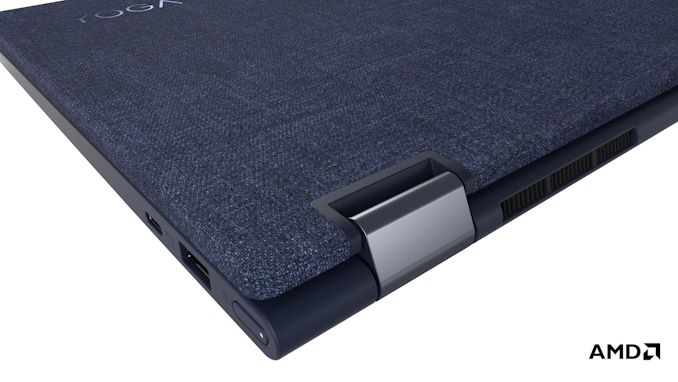
Lenovo’s much-anticipated AMD powered Yoga is the Yoga 6, which can be outfitted with up to an AMD Ryzen 7 4700U processor, 16 GB of DDR4 RAM, and up to 1 TB of SSD storage and Wi-Fi 6. The 13.3-inch laptop weighs in at just 2.9 lbs and offers a 300-nit 1920×1080 display. With the included 60-Wh battery, Lenovo rates the Yoga 6 at a very impressive 18 hours of battery life.


The design of the Yoga 6 is very interesting though, with an “Abyss Blue” color and a very sharp looking fabric lid. It’s a great looking notebook that easily stands out from the crowd.


Lenovo also includes a fingerprint reader, webcam shutter, and the Yoga 6 can also be used with a digital pen.


The Lenovo Yoga 6 will be available starting in October, starting at $699.99.


Source: Lenovo


Source: AnandTech – Lenovo Refreshes the Yoga Lineup With Ryzen and Next-Gen Intel Core Processors

SK Hynix Launches First 128 Layer 3D NAND SSD: Gold P31 NVMe

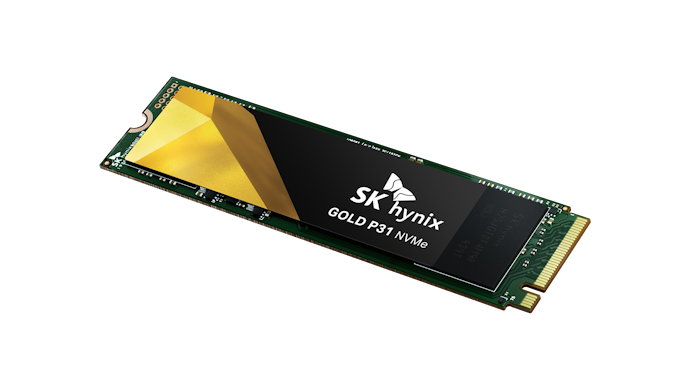
Last year SK Hynix re-entered the consumer retail SSD market with their Gold S31 SATA SSD. At CES 2020, they previewed a pair of consumer NVMe drives, the first of which has now arrived: The SK Hynix Gold P31, the industry’s first retail consumer SSD using 128-layer 3D NAND.


The Gold P31 is now available in 500GB and 1TB capacities. A forthcoming 2TB model will instead be branded as the Platinum P31, marking it as a more premium product on the basis of capacity alone rather than any major technological difference. These drives  use a PCIe 3.0 x4 interface even though the era of PCIe 3.0 is coming to a close. In other respects, however, these are fairly high-end drives. The rated performance is about as high as can be achieved with these capacities and a PCIe 3.0 interface, and the rated write speeds after filling the SLC cache are quite good. Write endurance is rated for 0.4 DWPD which is also competitive with other high-end consumer TLC SSDs.


SK Hynix Gold P31 SSD Specifications
Capacity 500 GB 1 TB
Form Factor M.2 2280 single-sided
Interface PCIe 3 x4 NVMe
Controller SK Hynix in-house
DRAM SK Hynix LPDDR4-4266
NAND Flash SK Hynix 128L 3D TLC
Sequential Read (128kB) 3500 MB/s
Sequential Write

(128kB)
SLC 3100 MB/s 3200 MB/s
TLC 950 MB/s 1700 MB/s
Random Read (4kB) SLC 570k
TLC 500k
Random Write (4kB) SLC 600k
TLC 220k 370k
Power Active 6.3 W
Idle < 50 mW
L1.2 Idle < 5 mW
Warranty 5 years
Write Endurance   750 TB

0.4 DWPD
MSRP $74.99

(15¢/GB)
$134.99

(13¢/GB)

As one of just three major DRAM  manufacturers and one of the few major NAND manufacturers, SK Hynix is capable of vertical integration that can only be matched by Samsung and Micron. But despite that potential advantage, for most of the 3D NAND era SK Hynix has been almost an also-ran in the SSD market. That’s been changing recently: instead of merely announcing higher 3D NAND layer counts than the competition, they’re starting to actually deliver it on time.


The new 128L 3D TLC used in the P31 is Hynix’s second generation using what they call a “4D NAND” structure that puts a lot of the memory chip’s peripheral circuitry under the array of memory cells instead of alongside. This is quite similar to what Intel and Micron have been doing with their “CMOS under the array” design for their 3D NAND. Between the high layer count and the density advantage of the “4D NAND” structure, the Hynix 128L TLC NAND should be very cost competitive, and this is reflected in the launch MSRPs for the Gold P31 SSDs.


Our 1TB review sample of the SK Hynix Gold P31 arrived yesterday and is currently on the testbed. We’ll have a full review ready soon.


Related Reading


Source: AnandTech – SK Hynix Launches First 128 Layer 3D NAND SSD: Gold P31 NVMe

Hot Chips 2020 Live Blog: Microsoft Xbox Series X System Architecture (6:00pm PT)

Hot Chips has gone virtual this year! Lots of talks on lots of products, including Tiger Lake, Xe, POWER10, Xbox Series X, TPUv3, and a special Raja Koduri Keynote. Stay tuned at AnandTech for our live blogs as we commentate on each talk.


Source: AnandTech – Hot Chips 2020 Live Blog: Microsoft Xbox Series X System Architecture (6:00pm PT)