CES 2021: Thermaltake Unveils Tower 100 Mini ITX Chassis

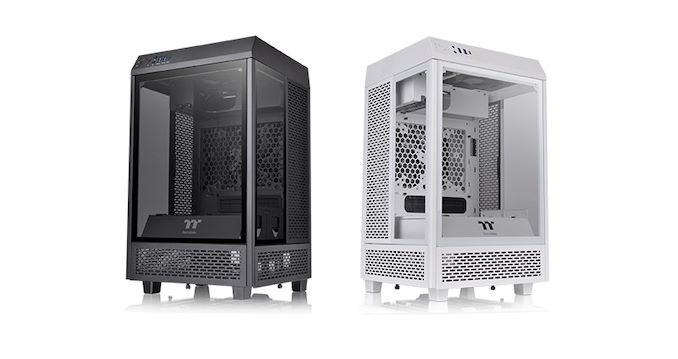
Thermaltake has announced a new compact chassis based on its monolithic sized Tower 900 chassis. The new Tower 100 includes support for mini-ITX form factor motherboards, with ample cooling capabilities and support for larger graphics cards such as the NVIDIA RTX 3080.


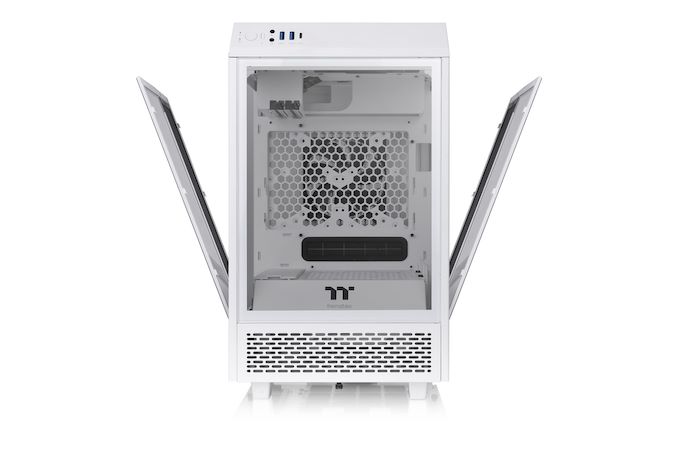
The Thermaltake Tower 100 includes filtered ventilation from top to bottom, with 4 mm thick temperated glass side panels which amalgamated the need for style and performance. It includes an angled top-mounted I/O panel which includes support for USB 3.2 G2 Type-C, with dual USB 3.0 Type-A and front panel audio inputs.


According to Thermaltake, these chassis are designed for optimal airflow, and include two 120 mm 1000 RPM cooling fans, with one preinstalled in the top, and another in the bottom. It has support for additional fans including one 120/140 mm in the top, one 120/140 mm in above the PSU cover, and one 120/140 mm in the rear. Users can also install a 120 mm AIO CPU cooler in the top, with maximum clearance for a CPU cooler standing at 190 mm. It also includes capabilities to install graphics cards with a maximum length of up to 330 mm, which is fine for cards such as the NVIDIA RTX 3080, but a little short for the top-spec RTX 3090.


The Thermaltake Tower 100 will be available in two colors, black, and a subtle Snow Edition. Thermaltake states that the Tower 100 mini-ITX chassis will include a 3-year limited warranty, with a release in the US and Canada expected in late January.


Interested in more of the latest industry news? Check out our CES 2021 trade show landing page!


Source: AnandTech – CES 2021: Thermaltake Unveils Tower 100 Mini ITX Chassis

CES 2021: XPG MANA Gaming Gum, Chewable Caffeine For Gamers

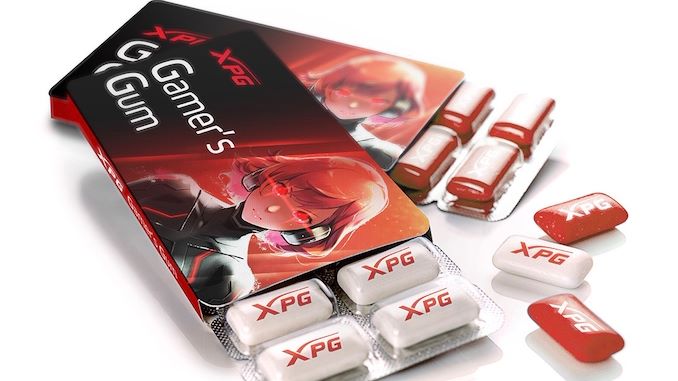
It’s not April Fools Day, but ADATA XPG has lifted the lid on one of its latest gaming products for CES 2021. XPG Gaming Gum is designed to give gamers a boost with chewable caffeine. XPG first teased this on its official Twitter page back in March 2020.


The new XPG MANA Gaming gum includes caffeine and a vitamin called Lutein, which is reportedly beneficial for eye health. It remains to be seen if chewing gaming gum can be a proper substitute for proper eye health, with plenty of options available on the market, including eyewear with blue light filters. It is recommended that gamers and those who regularly use a PC often take breaks, as prolonged exposure to screens can cause dryness of the retina.


With a lot of emphasis on energy products in the gaming market reliant on caffeine, it is recommended that users moderate the use of stimulants. The XPG Gaming Gum we are told has a minty fresh flavor. XPG isn’t the first to unveil gaming gum, with Razer announcing its Respawn range of gaming consumables last year. Perhaps Duke Nukem might be the ideal customer as he tends to run out of gum a lot.


There’s currently no word on pricing or availability.


Interested in more of the latest industry news? Check out our CES 2021 trade show landing page!


Source: AnandTech – CES 2021: XPG MANA Gaming Gum, Chewable Caffeine For Gamers

CES 2021: Thermaltake Launches TOUGHAIR Series Air Coolers

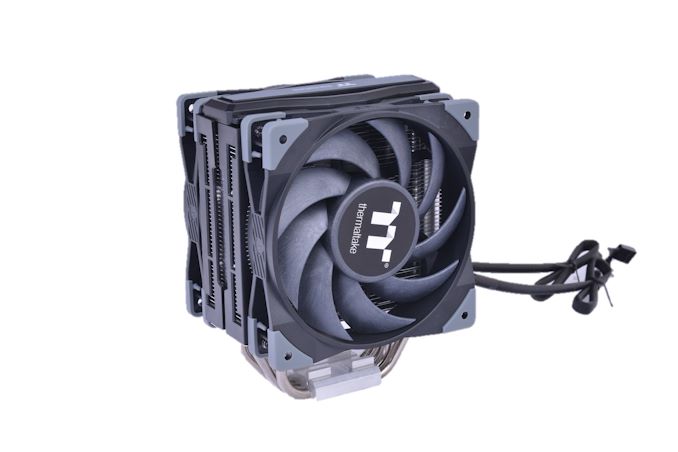
This year at CES, Thermaltake is unveiling three new air coolers, the Toughair 110, 310, and 510. Each model is aimed at a different CPU segment and looks to offer an affordable and supports most of the popular desktop chipsets, including Intel’s LGA1150 and AMD’s AM4 socket.


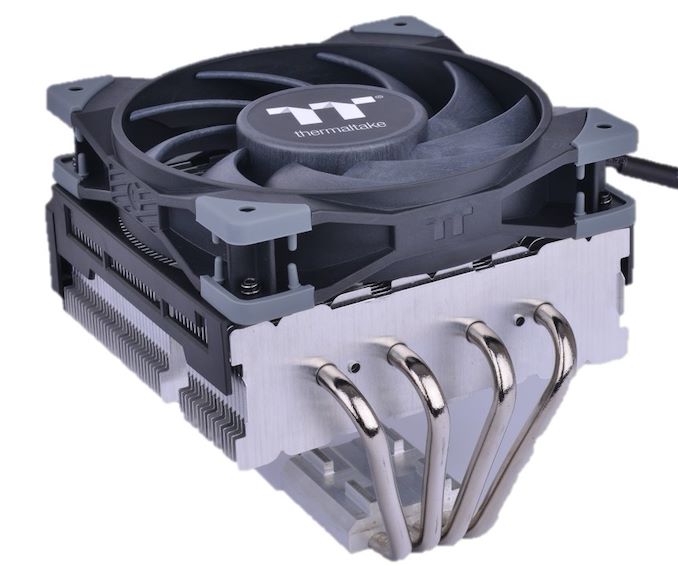
The Thermaltake Toughair series includes three different models, each with different levels of cooling capability. The smallest of the trio is the Toughair 110, which includes a horizontal low-profile single fan design for chassis with space restrictions and is capable of cooling CPUs with a TDP of up to 140 W.


The Thermaltake Toughair 110 Low Profile CPU Cooler


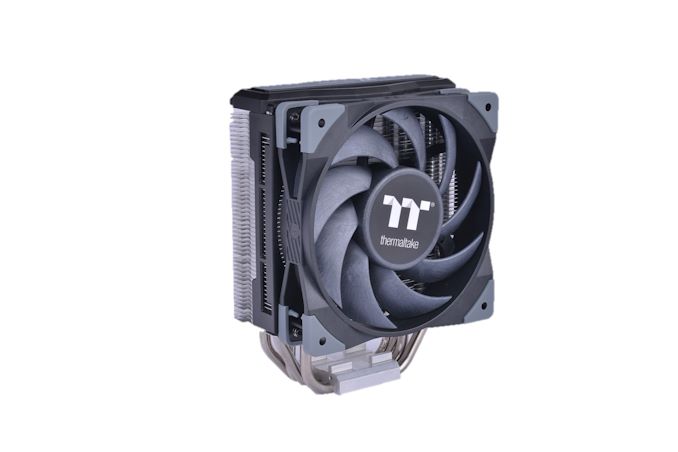
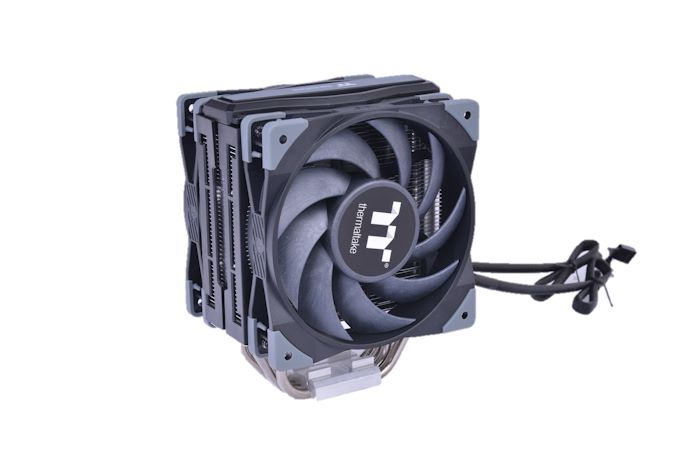
Moving up the series, the Toughair 310 and 510 share the same vertical fin stack array, with the 310 coming with one 120 mm PWM fan capable of variable speeds from 500 to 2000 RPM, while the 510 is supplied with two. The stack itself uses four 6 mm copper heat pipes with direct contact for more optimized heat dissipation and is compatible with Intel’s latest LGA1200 and 115x, with support for AMD’s AM4, AM3, and AM2 chipsets. The Toughair 310 can support CPUs up to 170 W, while the 510 with two 120 mm fans can support up to 180 W.


Toughair 310


The Thermaltake Toughair 110, 310, and 510 come with a 2-year manufacturer’s warranty and are set to cost $35, $40, and $50, respectively. 


Toughair 510


Interested in more of the latest industry news? Check out our CES 2021 trade show landing page!


Source: AnandTech – CES 2021: Thermaltake Launches TOUGHAIR Series Air Coolers

CES 2021: Acer Touts Trio of 4K and 1440p High Refresh Rate Gaming Monitors

Gaming monitors have tended to prefer lower resolutions and higher refresh rates, but catering to the wide variety of users in the market, Acer has also been developing monitors for gamers who want higher resolutions with those same high refresh rates. Set to be released under their Nitro and Predator families, for CES 2021 the company is promoting a mix of new and previously-announced (i.e. delayed) monitors, which will provide both high resolutions and the faster refresh rates that make gaming monitors so smooth. Plus, the pricing looks solid.


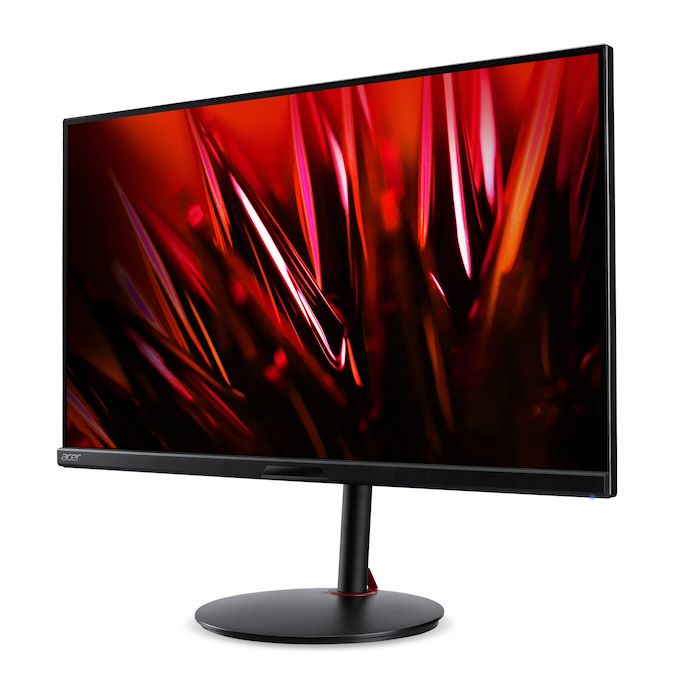
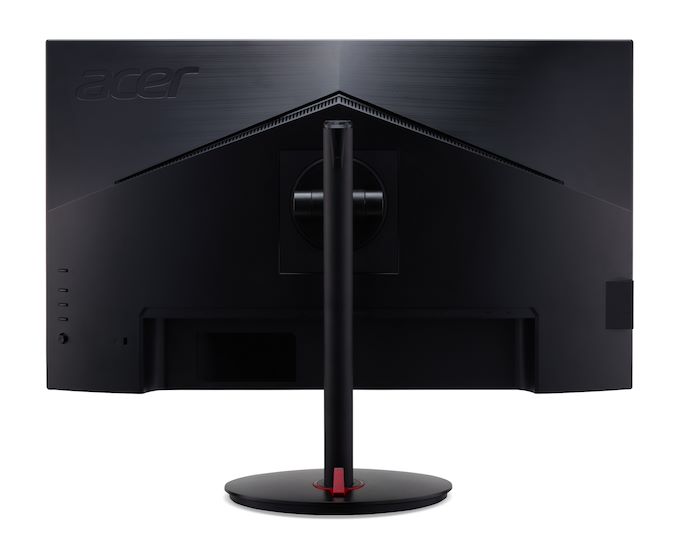
Acer Nitro XV282K KV – UHD and FreeSync with HDMI 2.1


First unveiled back in September in China, Acer is bringing its first HDMI 2.1 monitor, the Acer Nitro XV282K KV, over to North America. Although a handful of a name, it is clearly targeted at the latest generation of consoles, specifically the Xbox Series X, as this UHD display features both VESA Variable Refresh (FreeSync) and HDMI 2.1, making it a perfect choice for those looking to pair the console with a high-refresh rate UHD display.


The 28-inch panel offers 3840×2160 resolution, and up to 144 Hz refresh rate with AMD FreeSync support. Acer claims 1 ms response time as well. This IPS display also offers 90% of the P3 color gamut, and Acer claims 100,000,000:1 contrast. The display is rated for HDR 400, and it comes with an included HDMI 2.1 cable for easy connection.


The Acer Nitro XV282K KV will be available in the US in May, starting at $899.99 USD.


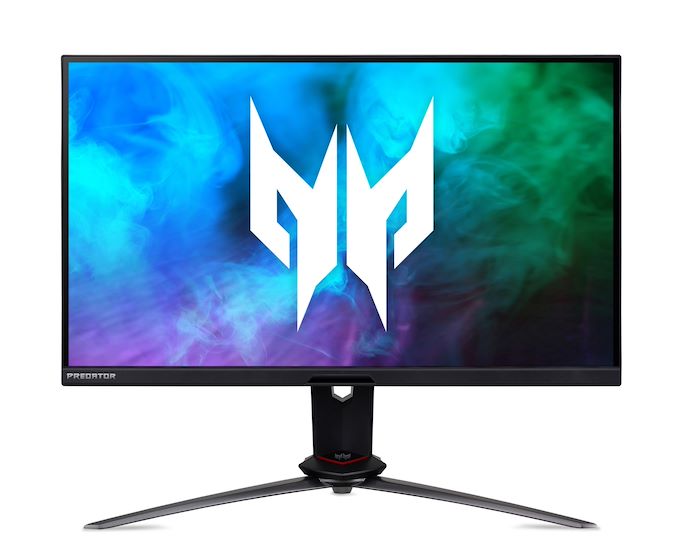
Acer Predator XB273U NX – QHD and G-SYNC


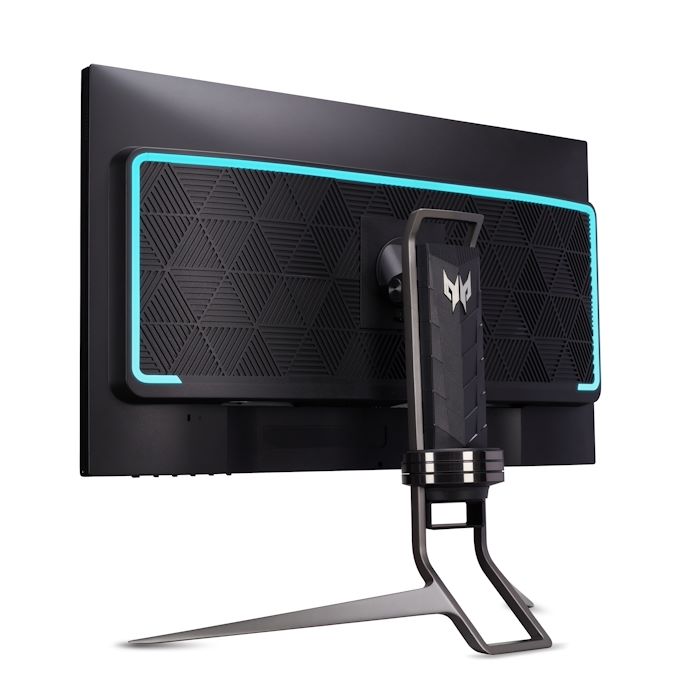
Second up is a totally new monitor from Acer, the 27-inch Acer Predator XB273U NX. The 2560×1440 display features Acer’s Agile-Splendor IPS panel, and can achieve an impressive 275 Hz refresh when overclocked.


It also supports HDR, and up to 95% of the P3 gamut. Acer claims 0.5 ms response time in gray to gray transitions, and coupled with the high refresh rate, should make for a very smooth experience. This display offers NVIDIA G-SYNC variable refresh rate. It also features the new NVIDIA Reflex Latency Analyzer, which measures the time between a mouse click and the pixel actually changing, and is a feature aimed at the pro-gamer crowd for gameplay analysis.


The Acer Predator XB273U NX will be available in May starting at $1099.99 USD.


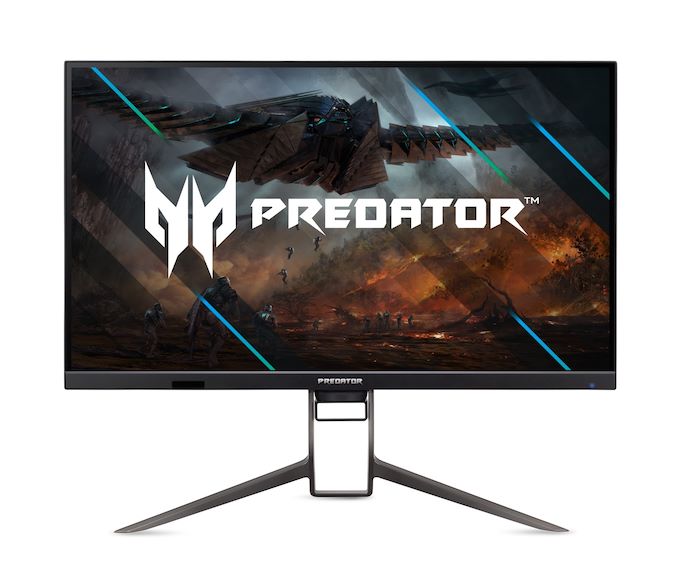
Acer Predator XB323QK NV – UHD and G-SYNC


Finally, Acer is also offering an update on their 31.5-inch behemoth G-Sync monitor, the Acer Predator XB323QK NV. This monitor was first announced back in June of 2020 with a September ship date, but it has since been pushed out to May of this year.


Aimed at the high-end of the market, the Acer Predator XB323QK NV offers a high-refresh UHD display with 3840×2160 resolution and a 144 Hz refresh rate. Sporting DisplayHDR 400 certification, the monitor can produce 90% of the P3 gamut.


Like the other monitors being promoted today, the Acer Predator XB323QK NV will also available in May. Pricing will start at $1199.99 USD.


Source: Acer


Source: AnandTech – CES 2021: Acer Touts Trio of 4K and 1440p High Refresh Rate Gaming Monitors

Lenovo Announces New IdeaPad 5 Laptops at CES: AMD, Intel, Qualcomm, and 5G

Always one of the biggest set of announcements for CES is from Lenovo, with updates to a lot of their lineup being announced every January, as well as some very interesting new products being shown off most years. As we head into CES week, Lenovo is teasing us with some updates to their IdeaPad lineup, including a new 5G model. As tends to be the case, we don’t always have the full spec sheets for these announcements yet, but let’s dig in and see what Lenovo is planning for the start of 2021.


IdeaPad 5G
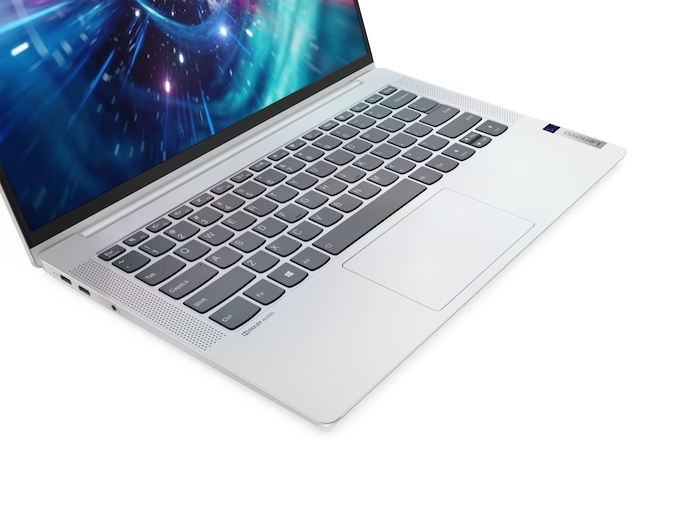


5G is still a buzzword, but it is nice to see the technology coming to laptops as well. Lenovo’s new IdeaPad 5G is powered by a Qualcomm Snapdragon 8cx processor, and is coupled to the X55 modem to provide sub-6 GHz 5G capabilities for speedier networking in supported locations. Interestingly, the new laptop offers the fastest cellular connectivity, but only has Wi-Fi 5 support when you do connect to an access point. The 14-inch laptop offers a 1920×1080 16:9 display which can hit 300 nits in the sRGB gamut. RAM is up to 8 GB of LPDDR4X, and storage offerings will be up to 512 GB of PCIe SSD.
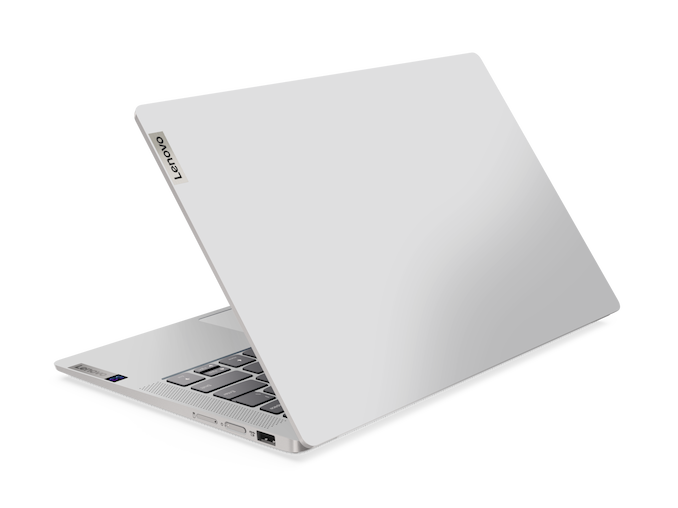


The IdeaPad, thanks to the 8cx platform, is able to go fanless, which is one of the benefits of the low-powered Arm platform. Another benefit is battery life, with Lenovo claiming up to 20 hours of video playback from just 51 Wh capacity is a strong showing, and the USB-C charging offers Rapid Charge Express. Lenovo hasn’t fixed a price yet, other than to say it will vary by market, and that it will not be released in North America at this time.


IdeaPad 5 Pro and 5i Pro
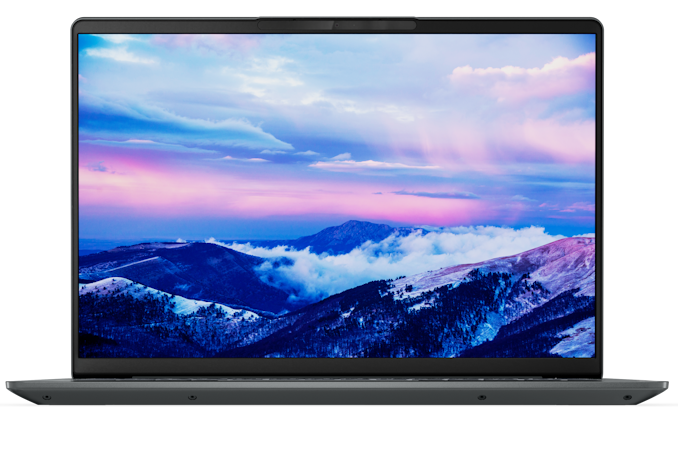


Back in the x86 world, Lenovo is releasing two new IdeaPad models powered by AMD Ryzen in the 5 Pro, and 11th Gen Intel Core in the 5i Pro. These new laptops have moved to a 16:10 aspect ratio, and will be available in both a 14-inch and 16-inch model. We have seen a lot of laptops make the jump to taller displays in the last year or two, and it is very nice to see Lenovo offer several models with the 16:10 ratio.


Lenovo is utilizing the IR sensor for time-of-flight, instead of just for Windows Hello login, which is a nice touch. The laptop will sense when you get up and walk away, and automatically pause video, as an example. Lenovo is also adding Amazon Alexa Show Mode, which lets you use your PC as an Alexa device when you want to.


The displays are not only 16:10 aspect, but the 14-inch model offers a 90 Hz refresh rate and 400 nits of brightness. The 16-inch offers 120 Hz and 350 nits, which is nice to see in a non-gaming laptop. Both the Intel and AMD models will also offer an NVIDIA MX450 graphics card as a bump over integrated graphics.
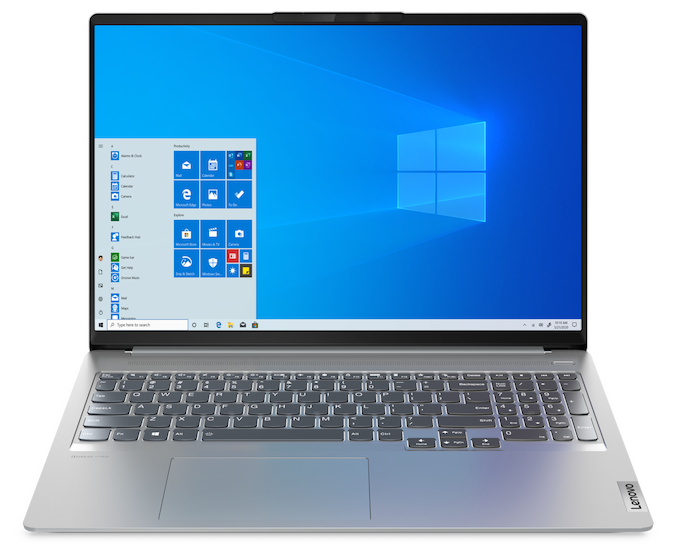


The 14-inch model will offer a 56.5 Wh battery, while the larger 16-inch model jumps to a very impressive 75 Wh unit, and all of them feature Rapid Charge Express for quicker charging over USB-C.


On the Intel model, Tiger Lake is paired with up to 16 GB of DDR4 RAM and up to 1 TB of PCIe storage, and the 16-inch model features a Thunderbolt 4 port. Those opting for the next-generation AMD Ryzen H model lose access to the Thunderbolt 4, but the 16-inch IdeaPad 5 Pro can be outfitted with 32 GB of DDR4, rather than the 16 GB max in the smaller model.
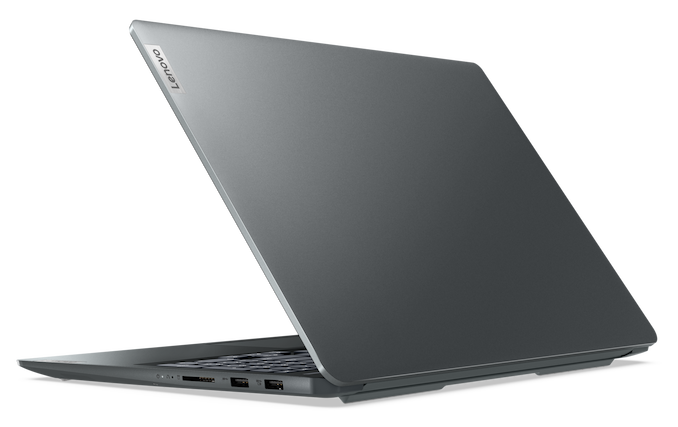


Lenovo has also added a larger trackpad, and updated the keyboard with new keys and backlighting.


These devices, other than the 16-inch AMD powered model, will not initially be in the US market, but availability for all models will be in March, with prices as follows:


  • IdeaPad 5 Pro 16” AMD laptop starts at $1149.99 and is to be available starting May 2021.
  • IdeaPad 5 Pro 14” AMD laptop (not in the U.S.) available in EMEA March 2021, starts at €799.00
  • IdeaPad 5i Pro 16” Intel laptop (not in the U.S.) available in EMEA March 2021, starts at €899
  • IdeaPad 5i Pro 14” Intel laptop (not in the U.S.) available in EMEA March 2021 starts at €699


Source: Lenovo


Source: AnandTech – Lenovo Announces New IdeaPad 5 Laptops at CES: AMD, Intel, Qualcomm, and 5G

GIGABYTE Z490 Aorus Master Motherboard Review: Clawing at the Competition

Throughout the majority of 2020, we saw an escalating war between AMD and Intel battling for supremacy in the desktop CPU market, which is an obvious win for the consumers. One of the side battles thus appeared in the motherboard market, with the Z490 chipset paving the way for Intel’s 14 nm Comet Lake processors. One such model is the GIGABYTE Z490 Aorus Master, which is poisitioned in the mid-range segment’s upper end with a premium feature set. Some of the most notable features include 2.5 GbE and Wi-Fi 6 networking, triple PCIe 3.0 x4 M.2 slots, and plenty of rear panel connectivity.


Source: AnandTech – GIGABYTE Z490 Aorus Master Motherboard Review: Clawing at the Competition

Jim Keller Becomes CTO at Tenstorrent: "The Most Promising Architecture Out There"

It is high praise when someone like Jim Keller says that your company ‘has made impressive progress, and has the most promising architecture out there’. That praise means twice as much if Keller actually joins the company. Today Tenstorrent is announcing that Jim Keller, compute architect extraordinaire, has joined the company as its Chief Technology Officer, President, and joins the company board.


Source: AnandTech – Jim Keller Becomes CTO at Tenstorrent: “The Most Promising Architecture Out There”

Qualcomm Appoints Cristiano Amon to CEO, Effective June 30th 2021

Throughout the industry wide push towards 5G, Qualcomm has been at the forefront of making the most noise about 5G technology. The company has developed patents and technologies that cover both infrastructure and end-points, and the face of that business in recent years has been Cristano Amon. In his position as President, Cristiano has championed the use of the latest generation of wireless connectivity technologies, and has been a key architect of how the company has driven the deployment of 5G involving Qualcomm solutions. Today it has been announced that Cristiano Amon has been voted by the Qualcomm Board of Directors to succeed current CEO Stephen Mollenkopf, 52, upon his retirement later this year. Mollenkopf has been with Qualcomm for 26 years, taking the job as CEO in 2014.


Qualcomm’s business falls into three distinct categories: wireless products, patent licensing, and strategic investment. As president, Cristiano has headed the wireless product and semiconductor division through the development, deployment, and execution of Qualcomm’s worldwide 5G infrastructure initiatives as well as modems, processors, and new markets such as automotive, IoT, and the RF front-end. In his new role, the other divisions will come into his purview. Amon, 50, joined Qualcomm in 1995 as an engineer and has worked up through the semiconductor side company, steering development of Qualcomm’s productization as well as its M&A, and Amon has served as President since January 2018.


“I am honored to be named the next CEO of Qualcomm and appreciate the confidence that Steve and the Board have in me,” said Amon. “Qualcomm is an incredible Company. We have been at the forefront of innovation for decades and I look forward to maintaining this position going forward. In addition to driving the expansion of 5G into mainstream devices and beyond mobile, Qualcomm is set to play a key role in the digital transformation of numerous industries as our technologies become essential to connecting everything to the cloud. The need for our solutions has never been more pronounced and our leadership position has never been more evident. I look forward to working with our 41,000 employees around the world to create technologies that revolutionize the way people live, work and connect with each other.”


2021 comes at a key time for Qualcomm, especially as 5G is gaining traction in key markets and the differential deployment of the two major 5G technologies (sub 6 GHz and mmWave) has become a technological sticking point for both infrastructure and product design. The current global climate has made this difficult, but Qualcomm is pushing ahead with wireless providers to assist in seamless transitions, with roadmaps for each region of the world scaling out over several years. The company recently surged ahead announcing a high-end smartphone processor (Snapdragon 888) as well as the first entry-level 5G SoC (Snapdragon 480) this week, both of which will be in a number of handsets by the end of year covering device price ranges from $200 to over $1000.


Over the past few years during Mollenkopf’s tenure, alongside +170% stock value growth, Qualcomm has weathered a number of legal disputes, such as with Europe, Apple and the FTC, regarding its business models. In 2018, Qualcomm was the target of a takeover by Broadcom, which would have valued the combined company at $117 billion, but was both rejected by Qualcomm and blocked by US regulators due to national security concerns. Amon takes the role with targets that include shipping 500 million mobile SoCs with 5G in 2021.


At this time Qualcomm has not stated if Amon’s direct position will be filled, or by whom, although the company has several months to make that decision. Here at AnandTech we have interviewed Cristiano on a couple of occasions [1,2], as well as SVP/GM of Mobile Technologies, Alex Katouzian [3], who leads the Mobile division. With backgrounds in engineering, through our discussions with both Cristano and Alex, it is clear how much the underlying technology behind the products has been a key driver of what makes them excited about the direction the company is taking. We hope to get an opportunity to quiz Cristiano later in the year about his intended direction for Qualcomm as he takes the helm.


Source: Qualcomm


Related Reading


Source: AnandTech – Qualcomm Appoints Cristiano Amon to CEO, Effective June 30th 2021

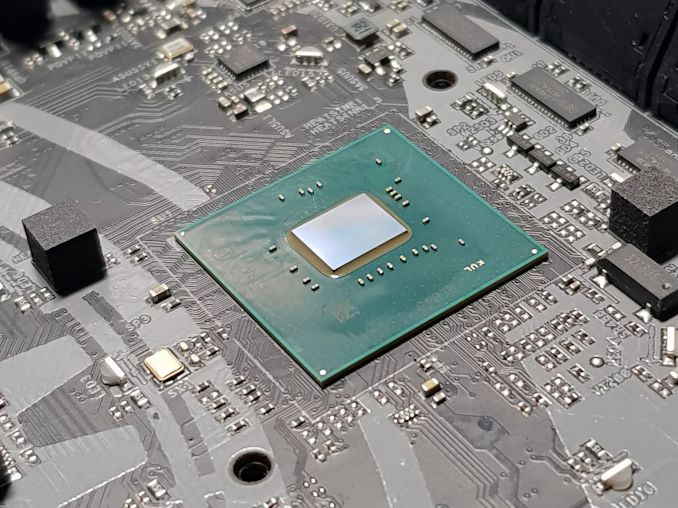
Intel Begins End-of-Life Plan For Coffee Lake 300-Series Chipsets

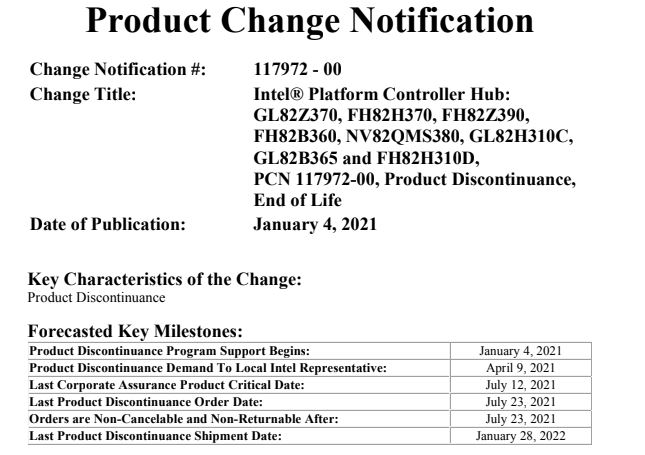
Intel has begun plans to discontinue its 300-series chipsets, including the higher-end Z390, Z370 chipsets, as well as its longer life B and H series chipsets. The 300-series chipsets are based on the second revision of Intel’s LGA1151 socket designed for its Coffee Lake processors.


In 2017, to complement the launch of its 8th generation Core i7, i5, i3, Pentium, and Celeron Coffee Lake processors, Intel unveiled its 300-series chipsets. This includes the Z390, Z370, B365, and H310 chipset. The most notable processors for the 300-series are the Core i7-8700K and Core i5-8600K, which remained as its flagship desktop processors throughout the end of 2017 and well into 2018. Intel even released its Core i7-8086K processor, a limited edition chip, and had high-binned silicon for high overclocking potential. The 300-series was then replaced with the 400-series, with a focus on Intel’s 9th Generation Core processors, but supported 9th Gen and 8th Gen.


Outlining its discontinuance plan until the last shipping date expected on or before January 28th 2022, Intel advises its customers to make its final orders by July 23rd 2021.


Perhaps one of the most critical elements of the end of life plan is the H310 chipset. This is a chipset designed for longevity with three variations, including H310 and H310D based on 14 nm and the H310C built on 22 nm. It could be that the H310 chipset wasn’t as popular as expected, especially compared to the H81 chipset, which lasted over 7 years before it was discontinued.


The Intel 300-series chipset has since been replaced by the 400-series desktop chipset, including Z490, W480, H470, B460, and Q470. These chipsets offer better support for its Coffee Lake processors. There have also been many rumors circulating that Intel’s latest 500-series chipsets will be announced during CES, with Intel finally switching to PCIe 4.0 with its new 10 nm Rocket Lake processors are expected towards the end of Q1.


Related Reading


Source: AnandTech – Intel Begins End-of-Life Plan For Coffee Lake 300-Series Chipsets

Zotac ZBOX CI662 nano Fanless mini-PC Review: Second Stab at Silencing Succeeds

Zotac is one of the major players in the SFF PC space, having marketed ultra-compact form-factor machines even before the NUCs took off. The growth in that segment has broadened the available market for their mini-PCs, allowing them to experiment with a wide variety of models for different use-cases.

The passively-cooled SFF systems from Zotac are marketed under the ‘C-series’ tag. These ‘nano’ units used to adopt a NUC form-factor (100mm x 100mm) with similar chassis dimensions, which provided performance and thermal efficiency commensurate with their size. Starting with the Kaby Lake-Refresh series, the company started adopting a larger form factor and added some platform features. We had reviewed the Zotac ZBOX CI660 nano in that generation in early 2019.

Today, we are taking a look at the Comet Lake-U-based follow-up – the Zotac ZBOX CI662 nano.


Source: AnandTech – Zotac ZBOX CI662 nano Fanless mini-PC Review: Second Stab at Silencing Succeeds

Cost Increases and Tariffs: ASUS to Increase MSRP on Graphics Cards and Motherboards

It is fairly easy to state that 2020 has had a deep effect on the supply chain mechanics of creating electronics and electronic components. Not only have there been logistical challenges in meeting regular levels of production, but the increase in demand due to work-from-home measures is putting additional strain up and down the ecosystem. On top of this, continued volatility with regards to trade and tariffs have been leaving more questions unanswered as to how companies involved in the results of all of this should engineer their operations.


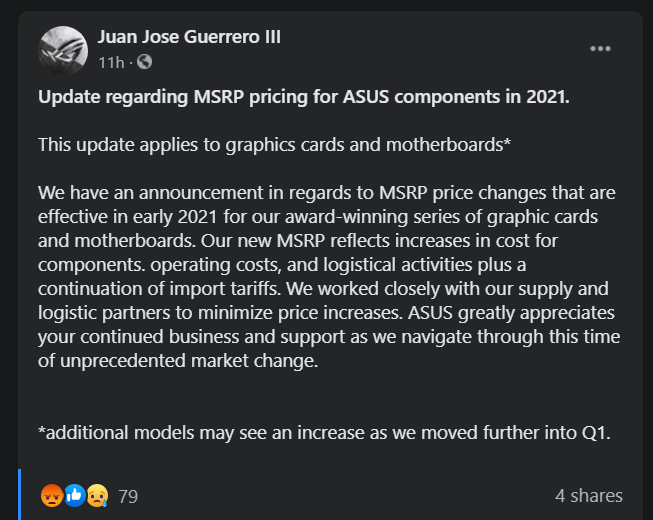
To that end, ASUS has put out a statement through its public Facebook group stating that it will be increasing MSRP on components, with graphics cards and motherboards being highlighted as the initial targets, with more to potentially follow. The reasons for this are described in the post, made by long-time ASUS employee Juan Jose Guerrero III, are due to ‘increases in cost for components, operating costs, and logistical activities plus a continuation of import tariffs’. Guerrero goes on to say that ASUS ‘worked closely with our supply logistic partners to minimise price increases’.  


The exact scale of the price increases will be borne through the next few weeks, as the price adjustments work their way through the supply chain to distributors and finally retailers. ASUS is a large scale production house for both AIB graphics cards and motherboards, and can often deal with economies of scale, so the fact that the company has chosen to be open about its MSRP increases should indicate that other similar businesses might have changes coming soon, if not already applied, given that the issue of component costs, logistics, and import tariffs are industry wide and not just limited to one company. ASUS highlights that these are two initial product lines, and ‘additional models may see an increase as we move further into Q1’.


Should an exact price differential list be made public, we will share it.  


Source: ASUS PC DIY Group (Facebook)


Related Reading


Source: AnandTech – Cost Increases and Tariffs: ASUS to Increase MSRP on Graphics Cards and Motherboards

The ASRock Rack B550D4-4L, a B550 Motherboard with BMC

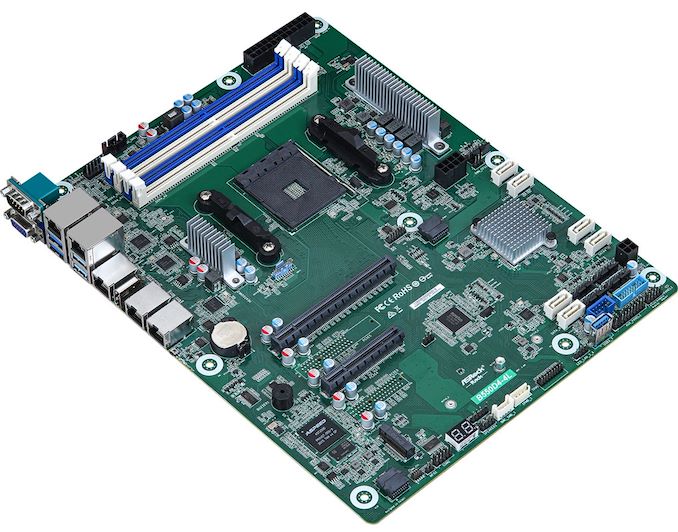
ASRock Rack, the professional arm of ASRock, has launched an interesting B550 model which is aimed at the server and workstation market, but uses the mid-range chipset. The ASRock Rack B550D4-4L benefits from support for AMD’s latest Ryzen 5000 series of processors, with a BMC controller, support for up to 128 GB of non-ECC DDR4-3200 memory, and includes a single PCIe 3.0 M.2 slot from the chipset.


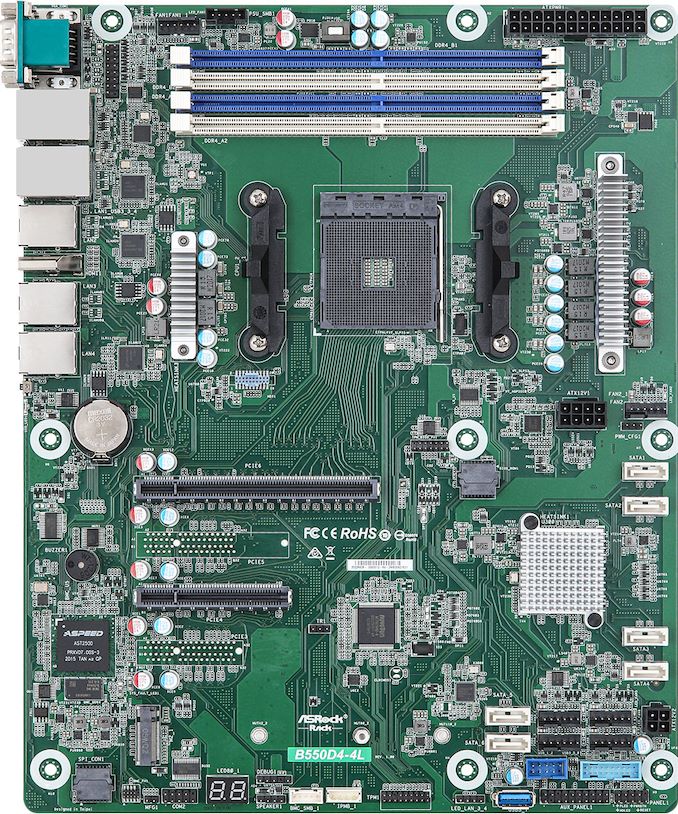
The main feature on the ASRock Rack B550D-4L, which other B550 models do not have, is the inclusion of an ASPEED AST2500 BMC controller, which adds IPMI configuration access across a network. A Realtek RTL8211E provides connectivity for the IPMI management, and it also includes four more Intel i210 Gigabit Ethernet controllers with RJ45 ports on the rear. Also present on the rear panel is a pair of USB 3.2 G2 Type-A and two USB 3.2 G1 Type-A ports, with a single HDMI output for integrated graphics, a D-sub output for the BMC controller, and a DB9 serial port. 


Designed for use in a server and workstation environment, the ASRock Rack B550D4-4L uses a transposed AM4 PGA1331 socket with four memory slots located horizontally along the top. The memory slots allow for up to 128 GB of ECC and non-ECC UDIMM DDR4-3200 memory, while for storage, the board includes a single PCIe 3.0 x4 M.2 slot with support for SATA drives too. For conventional storage drives, ASRock Rack also includes four SATA ports powered by the B550 chipset, which supports RAID 0, 1, and 10 arrays, while an ASMedia ASM1061 chip controls another two ports.


The board uses a simplistic design, with a green PCB, which is typical of server-grade and workstation models. Towards the center of the B550D4-4L is a full-length PCIe 4.0 x16 slot, with a half-length PCIe slot that runs in Gen4 x4 mode with a Ryzen 5000 processor installed. This board technically supports Ryzen 5000 (Gen 4), Ryzen 4000G APUs (Gen 3), and Ryzen 3000 CPUs (Gen 3), along with all Pro counterparts, but ASRock doesn’t go into detail about how the PCIe is split with the other processors.


Located around the PCB is plenty of connectivity with a BMC_SMB header, a TPM header, a PMBus connector, as well as six 6-pin fan headers. It uses a conventional 24-pin 12 V ATX power input for power to the motherboard, with a single 8-pin 12 V EPS connector for the CPU. There is also a two-digit debug display for monitoring POST codes.


Although the ASRock B550D-4L will fit conventional chassis with its ATX size, it’s primarily designed for 1U chassis and professional use cases such as server and workstation systems. ASRock hasn’t unveiled any information about when it can be expected to launch at retail.


Related Reading


Source: AnandTech – The ASRock Rack B550D4-4L, a B550 Motherboard with BMC

Graphcore Series E Funding: $710m Total, $440m Cash-in-Hand

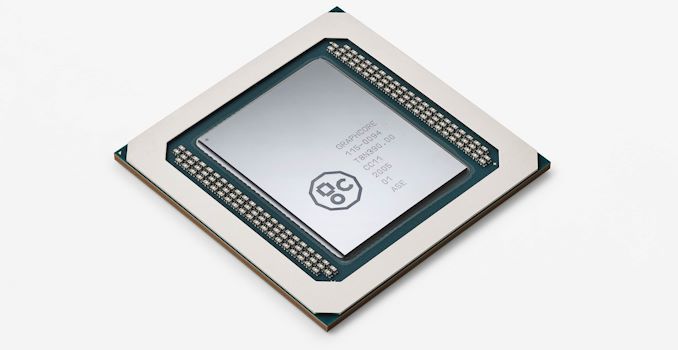
For those that aren’t following the AI industry, one of the key metrics to observe for a number of these AI semiconductor startups is the amount of funding they are able to generate. While funding is no explicit guarantee of success, it does indicate perhaps how much faith the venture capitalists (as well as OEMs and other silicon vendors) have in the technology. One of the most well-funded ventures in this space is Graphcore, and the company just announced its latest Series E funding round of $222 million, taking it to $710m total across the five rounds.


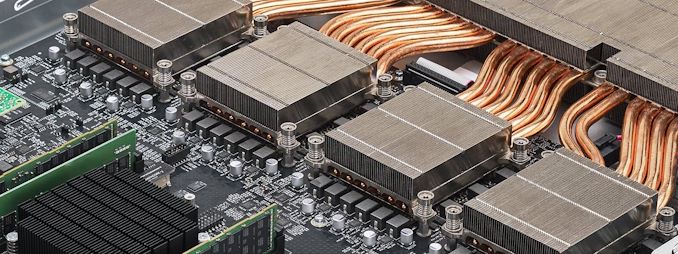
Graphcore, based in Bristol UK, is already on its second generation product, launching the Colossus MK2 GC200 in 2020. This chip contains 60 billion transistors, 900MB of built-in memory, is manufactured on TSMC’s N7 node at 823 mm2, and can achieve 250 TFLOPs of AI compute. Graphcore bundles four of them into a 1U chassis along with an Arm-based control chip and a crazy amount of networking to enable a network containing up to 64000 chips. Customers can order this IPU-M2000 unit, or 16 of them in a dedicated rack. Graphcore also provides the POPLAR software stack, with direct support for PyTorch, TensorFlow, ONNX, and PaddlePaddle machine learning frameworks.


The latest $222m Series E funding round was led by Ontario Teachers’ Pensions Plan Board (what?), with additional funds managed by Fidelity International and Schroders as new investors. Previous investors also participated, including Baillie Gifford and Draper Esprit. With the latest round of funding bringing the total up to $710m, this would put Graphcore at #2 in terms of AI Chip pure-play startups. This is just behind the $850m invested into Chinese semiconductor startup Horizon Robotics, founded by a CEO Yu Kai a Baidu veteran, of which the latest $150m round finished in December. SambaNova is #3 with $456m, and Nuvia has $293m. The latest round of funding brings Graphcore’s valuation to $2.77 billion.


With Graphcore’s first generation product, the company aligned with Dell to provide server units featuring eight add-in PCIe cards, each with two of its first generation IPUs. The company is claiming that the newest second generation MK2 is rolling out to more customers even during COVID times, especially to academic research such as UMass, Oxford, and ICL. Official details on its corporate customers seem somewhat thin, beyond an official tie-in with Microsoft, however Graphcore has said that they are currently working with hyperscalers and financial service companies.


This is perhaps why Graphcore also stating that it has $440m cash-in-hand is quite important. As every startup has an effective burn rate of capital, this should be sufficient for the company to also go out to enable more customers, as well as develop next generation products. Graphcore has already announced through TSMC that it is already scoping TSMC’s 3nm process for a future product line. Graphcore is also a member of the recently formed MLCommons, the governing body behind MLPerf, and expects to participate with its first submissions on MK2 in Q2 this year.


Source: Graphcore


Related Reading


Source: AnandTech – Graphcore Series E Funding: 0m Total, 0m Cash-in-Hand

Qualcomm Announces Snapdragon 480 – First 5G Low-end SoC

Today Qualcomm is making a big step towards enabling wide-spread adoption of 5G through the announcements of the new Snapdragon 480 low-end 5G SoC. The company had already alluded a few months ago that it would be releasing a Snapdragon 400-series design with 5G compatibility, bringing the new connectivity standard to the lowest-cost devices of the market, targeting the very high volume $250 price range.


Source: AnandTech – Qualcomm Announces Snapdragon 480 – First 5G Low-end SoC
Intel Core i9-10850K Review: The Real Intel Flagship

When a company like Intel creates a CPU design, the process of manufacturing brings about variation on the quality of the product. Some cores will only reach a certain frequency, while others have surprisingly good voltage characteristics. Two goals of processor design are minimizing this variance, but also shifting the peak higher, all while controlling how much of the silicon is actually useable. This is part of the magic of ‘binning’, the process of filtering the silicon into different ‘bins’ for applicability to a given product. It is through this process that the Core i9-10850K exists, albeit reluctantly.


Source: AnandTech – Intel Core i9-10850K Review: The Real Intel Flagship

LG’s Latest Flex-OLED Display: Curved for Gaming, Flat for TV

Ever since LG displayed its first rollable OLED TV at CES 2019, and perhaps even before then, the vision of these flexible displays was that they could encompass any curved surface to provide a display with a vivid color profile in line with state-of-the-art OLED technology. At the time, this meant watches and other such wearables, but as LG has promoted these flexible displays a lot for TV, it made sense that at some point they would come up with a curved display for gaming. The trick is to make it work for both TV and gaming.

One of the first announcements for this year’s remote CES show is that LG’s latest flexible display is a 48-inch model that can be used flat for regular TV viewing, or as a 1000R curved display for gaming. This means that in both viewing modes, the display aims to offer a uniform viewing distance with comparable depth and quality, even with a curvature radius of 1000mm. This is a tighter curvature than a lot of gaming displays currently on the market, such as 1200R to 2000R models, and those only serve the curved display gaming community. LG doesn’t state what the resolution is, however they do confirm that the display has a variable refresh rate range from 40 Hz to 120 Hz, along with a supposed 0.1 millisecond response time.


Combined with this, the display implements LG’s CSO technology, which enables the display to vibrate to create sound, rather than have external speakers. This is down to a new thin film ‘exciter’ (the bit that actually vibrates), which LG states that they’ve managed to reduce down from a thickness of 9mm to 0.6mm. The display also has a low-blue-light mode to reduce eye strain.


As often with these promotions for CES, we expect LG to be around 3-9 months from actually launching the product commercially. LG did not go into detail about how the display transitions from curved to flat, for example, and nor did they mention price. Leading edge features like this will likely come at a premium.


Interested in more of the latest industry news? Check out our CES 2021 trade show landing page!


Source: AnandTech – LG’s Latest Flex-OLED Display: Curved for Gaming, Flat for TV

AnandTech Year In Review 2020: Solid State Drives

Solid state storage might not have been the most exciting tech sector to follow in 2020, but it certainly had its fair share of new technologies arriving, consumer-friendly price drops, and a major corporate acquisition deal. 3D NAND flash memory has reached 176 layers, PCIe 4.0 NVMe SSDs are gaining gaining ground, and QLC NAND has enabled the first 8TB M.2 SSDs.


Source: AnandTech – AnandTech Year In Review 2020: Solid State Drives

ASRock DeskMini H470 Review: A No-Frills LGA 1200 mini-PC Platform

The mini-STX form-factor was introduced by Intel in 2015 to provide additional options in the burgeoning small form-factor (SFF) PC space. Since then, vendors such as ASRock, ECS, and MSI have been releasing new products based on the mSTX form-factor – and not just for Intel platforms, but AMD as well. As a result, while it’s still a small part of an overall much larger market, mSTX has seen increasing traction as the smallest form factor to still be able to accept socketed CPUs.

A good chunk of mSTX’s success, in turn, has been thanks to the efforts of ASRock. The company’s DeskMini series is one of the better known mSTX line-ups in the market. Slotting in between traditional motherboards and barebones ultra-compact form-factor machines, DeskMini mSTX boxes are the next step past UCFF machines in terms of customization: in addition to user-upgradable RAM and permanent storage, the user is free to choose any suitable CPU (subject to TDP limitations) and a cooler compatible with the supplied chassis – making it possible to configure and upgrade the very heart of a mSTX box. Graphics still need to be integrated (or occasionally, added via MXM cards), but with integrated graphics getting better with every generation, mSTX has been increasingly unimpeded by this trade-off.

Today we’re going to be taking a look as the DeskMini H470 – ASRock’s offering for Intel’s LGA 1200 processors using the H470 chipset. Aspects we’ll be covering include a look at a sample build process, the results from subjecting it to our standard SFF PC evaluation routine, and an analysis of how it stacks up against the other SFF options in the market.


Source: AnandTech – ASRock DeskMini H470 Review: A No-Frills LGA 1200 mini-PC Platform

Xiaomi Announces the Mi 11: First Snapdragon 888 Device

Today Xiaomi held the Chinese launch announcement of the new Mi 11 – the company’s new mainstream flagship phone for 2021. The new phone features a new super-high-end OLED screen that ticks off every checkmark feature that you’d expect from a 2021 design, including 1440p resolution and 120Hz refresh rates, features the new Snapdragon 888 SoC at its heart – as well as comes in a new thinner, lighter, and more stylish industrial design compared to its predecessors.


Source: AnandTech – Xiaomi Announces the Mi 11: First Snapdragon 888 Device

AnandTech Year In Review 2020: Flagship Mobile

We’re a few days away from completing the 2020 calendar year, and it’s been a quite a hectic year for everybody. In times of troubles, the smartphone industry had been under a two-prong attack from both an economic stand-point as well as the from a product maturity standpoint – trying hard to innovate with new features to convince users to upgrade their previous generation devices. This year, we’ve seen several new industry trends make breakthrough advances in terms of technology in smartphones, beyond the obvious elephant in the room, by which 2020 will be remembered by: Big camera sensors, 120Hz displays, several large SoC moves, 5G, and several other vendor product choices.


Source: AnandTech – AnandTech Year In Review 2020: Flagship Mobile