Intel 11th Generation Core Tiger Lake-H Performance Review: Fast and Power Hungry

Today we’re reviewing Intel’s new Tiger Lake-H 8-core Core i9-11980HK: 8 Willow Cove cores on the newest 10SF process node, we find the chip in Intel’s reference platform laptop, and it delivers quite the performance, but also demands quite some power:


Source: AnandTech – Intel 11th Generation Core Tiger Lake-H Performance Review: Fast and Power Hungry

AMD and GlobalFoundries Update Wafer Supply Agreement: Orders Through 2024, Now Non-Exclusive

In a brief Securities and Exchange Commission Form 8-K filing, AMD this afternoon has revealed that it has once again amended its wafer supply agreement with US fab (and AMD fab spin-off) GlobalFoundries. Under the terms of the amended seventh amendment, AMD will see out its existing commitment to use GlobalFoundries through 2024, with the latest amendment setting purchase targets for 2022, 2023, and 2024. Beyond those new targets, however, the agreement releases AMD from all further exclusivity commitments to GlobalFoundries. AMD is now free to use any fab on any process node that it wants.


As a quick refresher, the seventh WSA amendment, which was signed in January of 2019, set terms for the AMD/GlobalFoundries relationship through the end of 2024. Among other things, it set wafer purchase targets for the first three years of the agreement (2019-2021), leaving the last three years to be negotiated at a later time. Meanwhile, that agreement also began the process of decoupling AMD from GlobalFoundries by allowing AMD to utilize other competing fabs for 7nm and smaller, while GlobalFoundries remained AMD’s exclusive provider for chips made on 12nm and larger nodes.


The latest amendment, in turn, essentially finishes what the seventh amendment started. In what AMD/GloFo are calling the “A&R Seventh Amendment”, the updated amendment sets wafer purchase targets for 2022, 2023, and 2024. The full details on these targets are not yet available, however according to the 8-K filing, AMD expects to buy approximately $1.6 billion in wafers from GlobalFoundries in the 2022 to 2024 period.


As with the previous agreement, these targets are binding in both directions. GlobalFoundries is required to allocate a minimum amount of its capacity to orders from AMD, and AMD in turn is required to pay for these wafers, whether they use this capacity or not. For finished wafers, the agreement sets new, undisclosed prices. Meanwhile for any capacity AMD does not use, they will once again be required to pay GlobalFoundries a portion of the difference. GlobalFoundries will be also getting pre-paid for some of these orders in 2022 and 2023, though the 8-K form does not disclose by how much.


Arguably the bigger news here is that, outside of AMD’s minimum wafer purchase requirements over the next three years, the latest amendment otherwise further separates AMD and GlobalFoundries going forward, as it removes all other exclusivity commitments. This leaves AMD free to place orders at any fab on any process node that the company wishes, as opposed to having to use GlobalFoundries for 12nm and beyond.


Now with that said, the net impact of this change is likely to be limited as AMD was already free to pursue other fabs for 7nm and smaller nodes – which will be the vast majority of AMD’s needs over the next three years. But it does underscore how AMD and GlobalFoundries are slowly moving farther apart, as GlobalFoundries has left the race for cutting-edge manufacturing nodes.


It should also be noted that the latest WSA does technically extend the agreement one last(?) time. The previous seventh amendment was set to expire March 31st, 2024. Whereas the new amendment expires on December 31st, 2024. However other than adjusting it to cover the full calendar year, there are no current signs that AMD plans to significantly extend their current agreement with GlobalFoundries. By dropping all exclusivity agreements – and especially in the midst of this chip crunch – it looks like AMD is slowly winding down its dealings with GlobalFoundries for high-performance logic chips.


In the meantime, however, AMD still has three years and $1.6 billion in wafer orders to place at GlobalFoundries. According to a separate statement from AMD, these 12/14nm wafer orders will be used to fulfill orders for trailing-edge logic products, as well as for I/O dies for AMD’s current-generation Ryzen and EPYC CPUs. As with their trailing-edge prodcts, the company will still need to keep producing their current-gen products for a time, even after they’re supplanted with newer technologies. And, given the ongoing chip crunch, having a contractually-guaranteed supply of chips is no doubt a great relief to some executives within AMD.


Still, it’s somewhat difficult to imagine AMD needing over a billion dollars in last-gen logic and I/O dies going into the next three years. In 2019 we remarked that “AMD’s needs for such a large node (or GlobalFoundries’ other specialized nodes) in the 2022-2024 timeframe are not nearly as obvious” and that remains true to this day. So it will be interesting to see if AMD places enough orders to use all of that capacity, or whether they’ll end up leaving some of it on the table.


Finally, GlobalFoundries also sent out a brief statement sharing their thoughts on the newest WSA amendment.


“We have partnered with AMD for more than a decade, playing a key role in accelerating their business, and look forward to extending our partnership for years to come. GF will provide wafers from our Fab 8 Malta, NY, facility, reinforcing both companies’ commitment to manufacturing in the United States.


This agreement gives AMD the support they need to continue their explosive growth in the server and high performance computing markets, and it demonstrates GF’s commitment to redefining the fabless-foundry relationship and helping out customers win their respective market segments”


Source: AnandTech – AMD and GlobalFoundries Update Wafer Supply Agreement: Orders Through 2024, Now Non-Exclusive

The Inland Performance Plus 2TB SSD Review: Phison's E18 NVMe Controller Tested

Phison’s E18 is their second-generation PCIe 4.0 SSD controller, and it keeps them in the running for the fastest consumer SSDs. Micro Center’s Inland Performance Plus is the cheapest way to get this much performance, if you live close to one of their retail stores.


Source: AnandTech – The Inland Performance Plus 2TB SSD Review: Phison’s E18 NVMe Controller Tested

Jim Keller Q&A: What Should We Ask Him?

A few weeks ago silicon guru Jim Keller reached out to me with a very simple question: shall we do an interview about his new position at Tenstorrent, alongside the CEO? After about 0.2 seconds of thinking, I said of course. However, interviews are typically initiated by companies who want to talk about their product, and so I proposed a two stage interview.


The first interview would be on the topic of Tenstorrent, the company Jim now works for, with CEO Ljubisa Bajic. Jim was actually the first angel investor of this AI startup back in 2016, which makes the whole thing very interesting, and now the company is supplying customers and showcasing silicon. As CTO, Jim is actively working towards the next generation product families, and his mere presence is certainly increasing the interest of customers looking at Tenstorrent’s solutions. We recorded that interview yesterday, a full 90 minutes, and are currently in the process of transcribing for AnandTech.


The second interview was at my request – a 1-on-1 with Jim Keller, discussing his role in the industry, as well as his thoughts and perceptions about life, liberty, and the pursuit of happiness. Jim has two very well produced interviews with Lex Fridman freely available, as well as a number of industry talks. As part of this our interview, which is taking place tomorrow (Thursday), I would like to canvas the thoughts of the AnandTech audience about what they would really like to ask Jim.


Jim’s talents are broad, from atom to device, but also the conceptual nature of how devices, corporations, and humans all intersect, as well as the research and thoughts behind what makes us tick. Jim has worked under a number of key revolutionaries, such as Steve Jobs and Elon Musk, making him better poised than most to talk about the parallels between abstractions in hardware compared to abstractions in the future of computation. This is a key opportunity to put questions to Jim beyond the simple engineering questions, which is why asking our readers what you would like to be talked about becomes such a broad topic.


What should we ask Jim about? Please put your thoughts down below, and I’ll merge them with thoughts from social media as well. We’ve scheduled 90 minutes or so for some open-ended light hearted discussion. Jim isn’t able to speak to anything he’s still under NDA about, which likely means any questions about his full at Intel won’t be answered.


The interview is taking place tomorrow, May 13th. Deadline is noon May 13th UK.

The interview is likely to be published the week of May 24th.

I also interviewed Jim by telephone back in 2018 after he joined Intel.


Related Reading


Source: AnandTech – Jim Keller Q&A: What Should We Ask Him?

NVIDIA Launches GeForce RTX 3050 and RTX 3050 Ti for Laptops

Coinciding with today’s launch of Intel’s Tiger Lake-H CPUs for high performance laptops, NVIDIA is also using the occasion to launch their latest lineup of laptop video cards, the GeForce RTX 3050 and RTX 3050 Ti For Laptops. Based on NVIDIA’s newest and smallest Ampere GPU, GA107, the RTX 3050 series finally rounds out the rest of NVIDIA’s laptop offering, introducing a mobile video card that’s better suited for mid-power systems, and cheaper than RTX 3060 to boot. Laptops featuring the new RTX 3050 video adapters will be available today, with all of the major vendors set to ship laptops using NVIDIA’s latest laptop adapter in short order.


NVIDIA’s xx50 tier of laptop video cards has traditionally been the company’s high-volume/low-price products for laptops, and the RTX 3050 family is no different. Laptops with the new adapters will start at $799, and will frequently crop up as a baseline option in Tiger Lake-H laptops. With Intel only shipping 32 EUs in Tiger Lake’s integrated GPU – just a third of how many are in Tiger Lake-U – Intel isn’t setting the bar for graphics performance particularly high in this generation of H-series CPUs. As a result, there’s a wide-open market for NVIDIA’s latest low-end graphics adapter to give these machines a boost in graphics performance.


And, like the RTX 3060 For Laptops launch back at the start of the year, it’s actually the laptop market that is getting the newest silicon first. For the RTX 3050 series, NVIDIA is rolling out their new GA107 GPU. Cut from the same cloth as the rest of the Ampere family, NVIDIA’s 5th Ampere chip is the smallest and cheapest yet, fulfilling the company’s traditional waterfall launch strategy of rolling out successively cheaper and lower-power/lower-performing chips for additional markets. As an added kicker, these are the first xx50 tier products to have ray tracing – and thus qualify for the RTX moniker – so expect to see NVIDIA promoting that aspect rather hard.


NVIDIA GeForce RTX 30 Series Laptop Specifications
  RTX 3070

Laptop GPU
RTX 3060

Laptop GPU
RTX 3050 Ti

Laptop GPU
RTX 3050

Laptop GPU
CUDA Cores 5120 3840 2560 2048
ROPs 80 48 32? 32?
Boost Clock 1290 – 1620MHz 1283 – 1703MHz 1035 – 1695MHz 1057 – 1740MHz
Memory Clock 14Gbps GDDR6 14Gbps GDDR6 12Gbps? GDDR6 12Gbps? GDDR6
Memory Bus Width 256-bit 192-bit 128-bit 128-bit
VRAM 8GB 6GB 4GB 4GB
TDP Range 80 – 125W 60 – 115W 35 – 80W 35 – 80W
GPU GA104 GA106 GA107 GA107
Architecture Ampere Ampere Ampere Ampere
Manufacturing Process Samsung 8nm Samsung 8nm Samsung 8nm Samsung 8nm
Launch Date 01/26/2021 01/26/2021 05/11/2021 05/11/2021


NVIDIA normally launches two parts at the xx50 tier for laptops, and for this generation NVIDIA has stuck squarely with tradition. At the top is the RTX 3050 Ti, a full-fat (or close to it) GA107 implementation with 20 SMs, for a total of 2560 CUDA cores. Below it is the RTX 3050 (vanilla), with has 16 SMs for 2048 CUDA cores. As these are Ampere family parts, NVIDIA has kept the basic GPU functional blocks proportional across the lineup, so we’re looking at 80/64 tensor cores and 20/16 ray tracing cores for the RTX 3050 Ti and RTX 3050 respectively.


Past that, NVIDIA isn’t sharing too much about GA107 in particular. We’re still waiting to find out the die size and transistor count (just how much smaller is it than the 276mm2 GA106?), as well as a few details like ROP counts.


As for clockspeeds, both RTX 3050 laptop parts are a bit more modestly clocked, owing to their lower TDP options. Officially, the boost clock for the RTX 3050 Ti for laptops is anywhere between 1035MHz and 1695MHz, depending on what the OEM dials in. Meanwhile the vanilla RTX 3050 for laptops lands between 1057MHz and 1740MHz; a bit higher than the Ti version, owing to the fewer enabled SMs in the lower-end part.


Meanwhile, both adapters will ship with 4GB of GDDR6 memory. We’re still awaiting confirmation from NVIDIA on the clockspeed, but 12Gbps is a reasonable bet for both power and cost reasons. Both cards come with a 128-bit memory bus – another typical design choice for xx50 tier parts – so this puts the cards’ memory bandwidth at or above 192GB/sec.
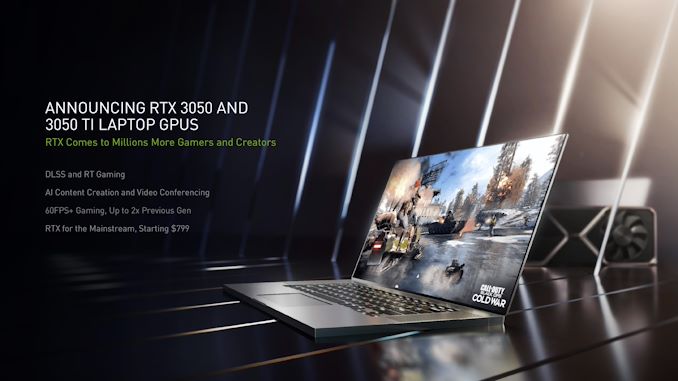


Finally, both parts offer the same 35 Watt to 80 Watt TDP window. This very wide range allows for the RTX 3050 parts to be suitable for use in everything from 13-inch gaming laptops to 17-inch workstation laptops. Though it also underscores the fact that the cards’ performance will vary pretty widely from OEM to OEM, since power and cooling allowances are such a critical element of performance. Overall, the new RTX 3050 parts come in at a lower TDP than the RTX 3060 – which started at 60 Watts – which opens the door for use in a bunch more designs, though I fully expect RTX 3060 to be more efficient where the parts overlap in power consumption.


Performance Expectations & 140 Wins


For better or worse, NVIDIA doesn’t spend a lot of time talking about the actual performance of their low-end laptop adapters, and the RTX 3050 series is no exception. The company’s promotional focus is more on features and how it compares to Intel’s integrated graphics, so we don’t have a lot of performance guidance to work with. Not helping matters again is the wide TDP range, which means different laptop designs can end up being quite far apart in performance.
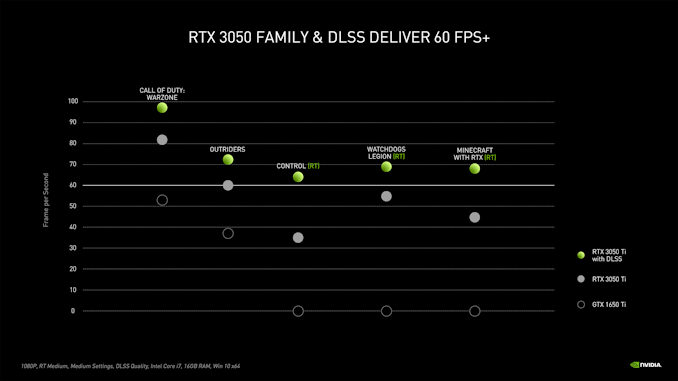


For the games where NVIDIA does provide GTX 1650 Ti data as a comparison point, they have the RTX 3050 Ti at roughly 60% faster. But with a sample size of two games, this should be taken as a very rough estimate.


If nothing else, expect to see NVIDIA push DLSS harder here than they have on any other RTX 30 series part thus far. As these are the lowest performing Ampere parts (to date), they have little performance to spare for ray tracing and other resource-intensive effects at native (1080p) resolution, so NVIDIA will be relying on DLSS to make these advanced features viable on this entry-level hardware.


Otherwise, as Ampere family parts, the new RTX 3050 for laptop accelerators offer the usual suite of NVIDIA features, including those laptop features rolled out back at the RTX 3060 For Laptops launch earlier this year. So this includes HDMI 2.1 output support and Dynamic Boost 2.0. As well, even these entry-level parts support PCI Express 4.0 connectivity and resizable PCIe base address register (reBAR) support to maximize performance there.
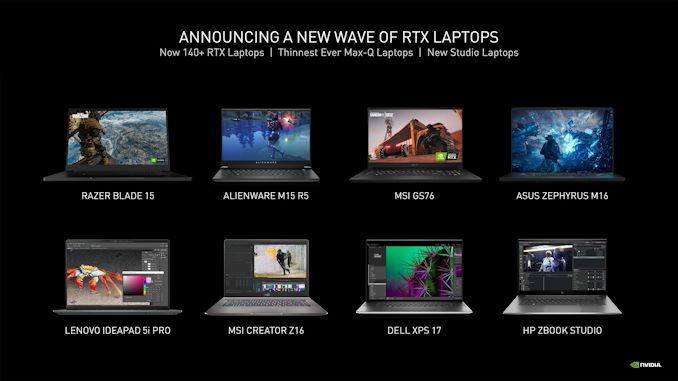


Overall, NVIDIA is touting 140 wins across the consumer and professional (Studio) markets, underscoring the fact that the RTX 3050 series will be NVIDIA’s highest volume parts for the laptop market. Over the years NVIDIA has established a rather cozy symbiotic relationship with Intel’s H-series laptop CPUs – with xx50 tier parts being the de facto choice for laptops that include a discrete GPU as a baseline option – and it looks like that will once again be the case for Tiger Lake -H. Already NVIDIA has wins in 15-inch and 17-inch laptops from Dell, Lenovo, HP, and ASUS, and there will be more to come as OEMs continue to launch their next-generation H-series laptops.


Finally, according to NVIDIA, the first RTX 3050-equipped laptops will be released as soon as today, depending on the shipping schedule of each OEM. Laptops with the new adapters will start at $799.


Source: AnandTech – NVIDIA Launches GeForce RTX 3050 and RTX 3050 Ti for Laptops

Intel Launches 11th Generation Core Tiger Lake-H: Eight Core 10nm Mobile Processors

Ever since the launch of the first series of Intel Core 11th Generation Tiger Lake processors aimed at the ‘U-series’ 15 W market, Intel has teased us that there was another design being produced in the wings. While the Tiger Lake-U was built for portability, battery life, and integrated graphics, the Tiger Lake-H series would double the cores, and be the partner for premium mobile gaming as well as on-the-go muscle. Today is the launch of this new platform, and Intel is promoting over 1 million Tiger Lake-H processors shipped to partners and 80 devices coming to market.


Source: AnandTech – Intel Launches 11th Generation Core Tiger Lake-H: Eight Core 10nm Mobile Processors

Using a PCIe Slot to Install DRAM: New Samsung CXL.mem Expansion Module

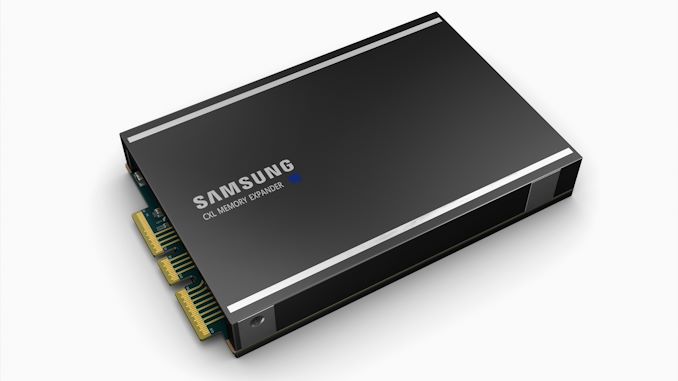
In the computing industry, we’ve lived with PCIe as a standard for a long time. It is used to add any additional features to a system: graphics, storage, USB ports, more storage, networking, add-in cards, storage, sound cards, Wi-Fi, oh did I mention storage? Well the one thing that we haven’t been able to put into a PCIe slot is DRAM – I don’t mean DRAM as a storage device, but memory that actually is added to the system as useable DRAM. Back in 2019 a new CXL standard was introduced, which uses a PCIe 5.0 link as the physical interface. Part of that standard is CXL.mem – the ability to add DRAM into a system through a CXL/PCIe slot. Today Samsung is unveiling the first DRAM module specifically designed in this way.


Source: AnandTech – Using a PCIe Slot to Install DRAM: New Samsung CXL.mem Expansion Module

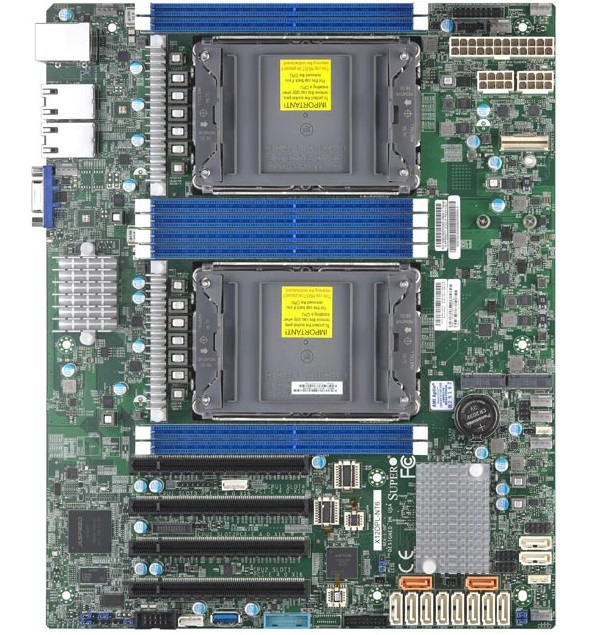
Supermicro: We Put Two 10nm Ice Lake Xeon LGA4189 Sockets on an ATX Motherboard

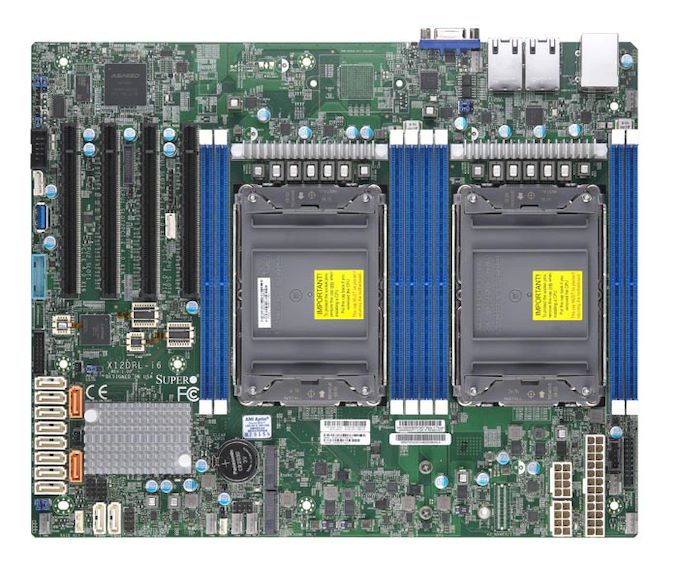
Usually, when vendors release dual-socket motherboards, this is typically done on larger form factors such as extended ATX (E-ATX) and even larger ones such as SSB-EEB for server form factors. Supermicro looks to buck the trend and has recently listed a pair of Intel motherboards with dual LGA4189 sockets, designed for Intel’s latest Ice Lake 3rd Gen Xeon Scalable processors.


Both the Supermicro X12DPL-NT6 and X12DPL-i6 conform to the ATX form factor and have a very similar design. The key metrics include support for two Intel 3rd generation Ice Lake Xeon processors but also eight memory slots between the two, indicating that each processor runs in only quad-channel mode. This is important as some enterprise situations do not require the full memory bandwidth of eight memory channels, and thus having fewer physical channels on board helps with form factor as well as cost. That being said, this motherboard can support up to 2TB of DDR4-3200 ECC memory (1 TB per socket). Also, due to the size of the board, Supermicro recommends that only 185 W TDP processors maximum are used.


The Supermicro X12DPL-NT6 ATX motherboard


Towards the bottom of the board is four full-length PCIe 4.0 x16 slots, each with single slot spacing. Providing both physical and remote access to the system is ASPEEDs latest AST2600 BMC controller. For storage, the chipset is powering twelve SATA ports with support for RAID 0, 1, 5, and 10 arrays. Both models also include two PCIe 4.0 x4 M.2 slots, supporting both 22110/2280 M.2 form factors, while the second port is limited to 2280 M.2.


Focusing on the differences between the two boards, the X12DPL-NT6 is the higher-end variant. It includes a dual 10 G-Base T Ethernet powered by an Intel X550 controller, which is cooled by a heatsink, and it also includes an additional PCIe 4.0 x8 port for NVMe drives. The Supermicro X12DPL-i6 instead dual Intel i210 Gigabit controllers and does not have the additional PCIe 4.0 x8.


On the rear panels, both models include two USB 3.2 G1 Type-A ports, with an additional port on the motherboard directly at the bottom. There is also a USB 3.2 G1 front panel header that offers an additional two Type-A ports.


At the time of writing, we don’t know when the Supermicro X12DPL-NT6 or the X12DPL-i6 will be available to purchase, nor do we have any pricing information at this time. But fitting a dual-socket design on a simple ATX is rather fun.


Related Reading


Source: AnandTech – Supermicro: We Put Two 10nm Ice Lake Xeon LGA4189 Sockets on an ATX Motherboard

GIGABYTE Z590 Aorus Tachyon Review: Built for SPEED

One of the most unique models on the Z590 chipset is the GIGABYTE Z590 Aorus Tachyon. While it functions as a ‘relatively’ normal day-to-day motherboard, the main focus is on extreme overlcoking. Building on the design of its previous XOC models, which are part of its long lineage of performance-inspired designs, the Tachyon has just two memory slots that have been designed to shorten the distance between the memory and the CPU for improved latency and overall performance. The PCIe slots are also designed to allow for massive GPU coolers as well as ancilliary power connections for graphics benchmarking. Other features include an extensive toolkit for overclockers, plenty of premium controllers such as 2.5 Gb Ethernet, Wi-Fi 6E, and a premium onboard audio solution. Aiming to offer a solution that extreme overclockers can push Rocket Lake to its breaking point, as well as plenty for less aggressive enthusiasts, the GIGABYTE Z590 Aorus Tachyon looks to take Z590 to the next level.


Source: AnandTech – GIGABYTE Z590 Aorus Tachyon Review: Built for SPEED

AMD's Wi-Fi 6E Module: The RZ608

One of the elements of building a complete end-to-end solution means having all the components under one brand. The complexity of modern gadgets means that having everything made under one company is near-on impossible – especially with the wealth of IP and patents in every small segment of the modern electronic device. To facilitate the appearance of uniform branding, companies will often rebrand the components under their own name. Introducing the AMD RZ608, a Wi-Fi 6E 2×2 wireless module!


Source: AnandTech – AMD’s Wi-Fi 6E Module: The RZ608

Intel’s Integrated Graphics Mini-Review: Is Rocket Lake Core 11th Gen Competitive?

In the last few months we have tested the latest x86 integrated graphics options on the desktop from AMD, with some surprising results about how performant a platform with integrated graphics can be. In this review, we’re doing a similar test but with Intel’s latest Rocket Lake Core 11th Gen processors. These processors feature Intel’s Xe-LP graphics, which were touted as ‘next-generation’ when they launched with Intel’s mobile-focused Tiger Lake platform. However, the version implemented on Rocket Lake has fewer graphics units, slower memory, but a nice healthy power budget to maximize. Lo, Intel set forth for battle.


Source: AnandTech – Intel’s Integrated Graphics Mini-Review: Is Rocket Lake Core 11th Gen Competitive?

The Microsoft Surface Laptop 4 15-Inch Review: Refreshing Ryzen

Over the years, Microsoft’s Surface team has become quite a driver of innovation in the PC space. While the original Surface Pro was mostly just a curio, Microsoft continued to iterate through designs, and eventually found their breakthrough product with the very popular Surface Pro 3 convertible tablet. Since then, Microsoft has been able to further build off of the Surface brand’s success with additional and interesting designs, including the Surface Book with its detachable display, the Surface Studio all-in-one, and the Surface Pro X which pushes the Surface Pro design into a new, more modern take on the convertible tablet.

But with a burgeoning brand, Microsoft has also developed some more conservative devices under the Surface family, and this is most evident with Microsoft’s Surface Laptop lineup. The Surface Laptop, now in its fourth generation, has never felt like it was as innovative as the other designs, but the most conventional member of the Surface family does something that no other Surface device can: cater to a wider market looking for a more traditional laptop design. As a result, the Surface Laptop has become a quiet workhorse of sorts for the Surface family, filling the need for a traditional clamshell laptop while still finding just enough space to put the Surface flourish on the complete package.

Today, we are looking at the latest generation Surface Laptop 4 to see how the changes under the hood impact the experience of Microsoft’s thin and light clamshell laptop design.


Source: AnandTech – The Microsoft Surface Laptop 4 15-Inch Review: Refreshing Ryzen

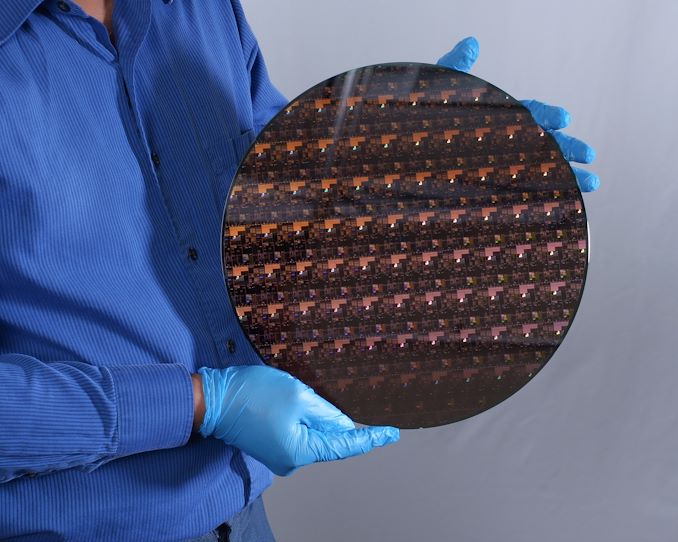
IBM Creates First 2nm Chip

Every decade is the decade that tests the limits of Moore’s Law, and this decade is no different. With the arrival of Extreme Ultra Violet (EUV) technology, the intricacies of multipatterning techniques developed on previous technology nodes can now be applied with the finer resolution that EUV provides. That, along with other more technical improvements, can lead to a decrease in transistor size, enabling the future of semiconductors. To that end, Today IBM is announcing it has created the world’s first 2 nanometer node chip.


Source: AnandTech – IBM Creates First 2nm Chip

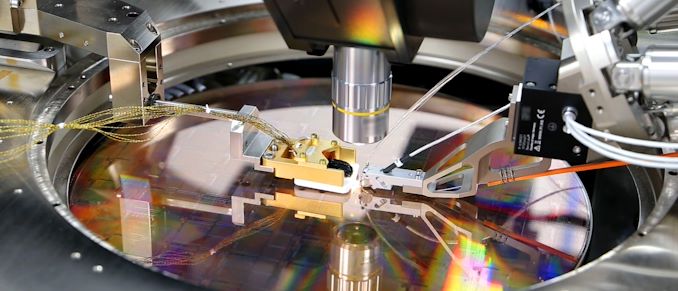
GlobalFoundries Upgrades for Silicon Photonics in Quantum Computers

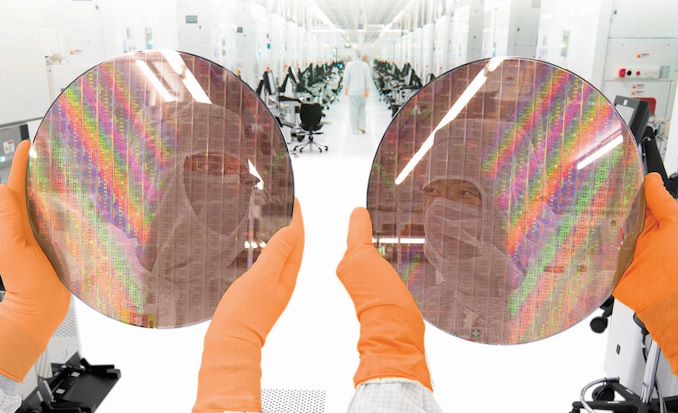
One of the targets of the modern foundry business is to have a wide array of manufacturing process technologies. This enables it to cater to as many customers as possible. That includes logic, embedded memory, radio frequency, analog, high voltage, long life cycle, and now silicon photonics. As part of a partnership between GlobalFoundries and PsiQuantum announced today, new proprietary manufacturing tools have been installed into GlobalFoundries’ most advanced facility in Malta, New York. This will enable GF to build silicon photonics to enable what could be a 1 million+ qubit quantum computer from PsiQuantum.


Source: AnandTech – GlobalFoundries Upgrades for Silicon Photonics in Quantum Computers

Intel EMEA To Partners: Not Invulnerable to Substrate Shortages through 2021

As part of Intel’s Partner Connect conference last month, AnandTech has learned that information has been provided to European, Middle East and Asia (EMEA) customers and partners regarding the current level of semiconductor supply through the rest of the year. Intel works closely with its key distributors and customers in each region to ensure that they have sufficient support to effectively sell to their customers, however the recent high demand for semiconductors has put additional strain on Intel’s ecosystem, perhaps more so than the high demand period for server processors a couple of years ago. In a discussion session led by Intel’s GM for EMEA, Maurits Tichelman, it was highlighted that May was set to be a testing time for distribution, with the rest of the year still subject to market forces. It was also mentioned that despite Intel’s decades of experience with demand surges, it is not invulnerable to substrate shortages.


Source: AnandTech – Intel EMEA To Partners: Not Invulnerable to Substrate Shortages through 2021

Intel’s Chief Revenue Officer: We have Silicon, but Shortages in Wi-Fi, Substrates, Panels

One of the key commentaries about the current semiconductor shortages is around where exactly the bottlenecks are. The traditional interpretation of a semiconductor shortage implies that not enough silicon can be made, but over the last few months a number of companies have pointed to post-silicon production, such as testing and packaging, causing some of the issues. To the best of our knowledge, none of the companies affected by the shortages are specifically pointing at partner companies or specific supply chain areas where there is a bottleneck, however there have been a number of comments focused in the direction of packaging, substrates, and the specialist films involved for high performance compute.

AnandTech has learned that at its Partner Connect 2021 event recently, Intel Chief Revenue Officer Michelle Johnston Holthaus expanded the dimensions to which the supply chain is causing the semiconductor shortage. During the event Keynote, as part of a planned Q&A session with the host John Kalvin (Intel GM of Scale and Partner Organization), Holthaus expanded on the commentary surrounding Intel’s silicon flow and where the supply chain bottlenecks are for Intel and associated partners.


Source: AnandTech – Intel’s Chief Revenue Officer: We have Silicon, but Shortages in Wi-Fi, Substrates, Panels

Intel to Invest $3.5 Billion USD into Foveros and EMIB Production in Rio Rancho

At a news conference today, Intel has announced that its Rio Rancho campus in New Mexico will be getting an investment of $3.5 billion USD for an expansion of its current state-of-the-art facilities for the company to roll out its new Foveros packaging technology in volume for its own products as well as its customers. This comes on top of the $20 billion USD that Intel has committed to two new fabrication plants in its Ocotillo campus in Arizona for wafer production. In partnership with New Mexico state and local government, the new investment is expected to provide 1000 construction jobs over three years, 700 permanent technical positions at the company, and 3500 ancillary positions in the area when the facility is fully functional.


Source: AnandTech – Intel to Invest .5 Billion USD into Foveros and EMIB Production in Rio Rancho

The ADATA GAMMIX S50 Lite 2TB SSD Review: Mainstream PCIe Gen4

Today we’re taking a look at ADATA’s XPG Gammix S50 Lite, a mid-range consumer NVMe SSD based on Silicon Motion’s new SM2267 controller. Among other notable features, the Gammix S50 Lite is the first mainstream-focused SSD that supports PCIe 4.0 – though as we’ll see in our benchmarks that support is largely incidental, as the drive’s performance is mostly the same as high-end Gen3 SSDs.


Source: AnandTech – The ADATA GAMMIX S50 Lite 2TB SSD Review: Mainstream PCIe Gen4