Interview with Intel’s Raja Koduri: Zettascale or ZettaFLOP? Metaverse what?

We currently live in a sea of buzzwords. Whether that’s something to catch the eye when scrolling through our news feed, or a company wanting to latch their product onto the word-of-the-day, the quintessential buzzword gets lodged in your brain and it’s hard to get out. Two that have broken through the barn doors in the technology community lately have been ‘Zettascale’, and ‘Metaverse’. Cue a collective groan while we wait for them to stop being buzzwords and into something tangible. That’s my goal today while speaking to Raja Koduri, Intel’s SVP and GM of Accelerated Computing.


What makes buzzwords like Zettascale and Metaverse so egregious right now is that they’re referring to one of our potential futures. To break it down: Zettascale is talking about creating 1000x the current level of compute today but in the latter half of the decade, to take advantage of the high demand for computational resources by both consumers and businesses, and especially machine learning; Metaverse is something about more immersive experiences, and leveling up the future of interaction, but is about as well defined as a PHP variable.


The main element that combines the two is computer hardware, coupled by computer software. That’s why I reached out to Intel to ask for an interview with Raja Koduri, SVP and GM, whose role is to manage both angles for the company towards a Zettascale future and a Metaverse experience. One of the goals of this interview was to cut through the miasma of marketing fluff and understand exactly what Intel means with these two phrases, and if they’re relevant enough to the company to be built into those future roadmaps (to no-one’s surprise, they are – but we’re finding out how).


Source: AnandTech – Interview with Intel’s Raja Koduri: Zettascale or ZettaFLOP? Metaverse what?

Apple Announces M1 Ultra: Combining Two M1 Maxes For Workstation Performance

As part of Apple’s spring “Peek Performance” product event this morning, Apple unveiled the fourth and final member of the M1 family of Apple Silicon SoCs, the M1 Ultra. Aimed squarely at desktops – specifically, Apple’s new Mac Studio – the M1 Ultra finds Apple once again upping the ante in terms of SoC performance for both CPU and GPU workloads. And in the process, Apple has thrown the industry a fresh curveball by not just combining two M1 Max dies into a single chip package, but by making the two dies present themselves as a single, monolithic GPU, marking yet another first for the chipmaking industry.

Back when Apple announced the M1 Pro and the already ridiculously powerful M1 Max last fall, we figured Apple was done with M1 chips. After all, how would you even top a single 432mm2 chip that’s already pushing the limits of manufacturability on TSMC’s N5 process? Well, as the answer turns out to be, Apple can do one better. Or perhaps it would be more accurate to say twice as better. As for the company’s final and ultimate M1 chip design, the M1 Ultra, Apple has bonded two M1 Max dies together on to a single chip, with all of the performance benefits doubling their hardware would entail.

The net result is a chip that, without a doubt, manages to be one of the most interesting designs I’ve ever seen for a consumer SoC. As we’ll touch upon in our analysis, the M1 Ultra is not quite like any other consumer chip currently on the market. And while double die strategy benefits sprawling multi-threaded CPU and GPU workloads far more than it does more single-threaded tasks – an area where Apple is already starting to fall behind – in the process they re breaking new ground on the GPU front. By enabling the M1 Ultra’s two dies to transparently present themselves as a single GPU, Apple has kicked off a new technology race for placing multi-die GPUs in high-end consumer and workstation hardware.


Source: AnandTech – Apple Announces M1 Ultra: Combining Two M1 Maxes For Workstation Performance

The Apple "Peek Performance" Event Live Blog (Starts at 10am PT/18:00 UTC)

Join us a bit later today for Apple’s spring product launch event, which for this year is being called “Peek Performance“.


The presentation kicks off at 10am Pacific (18:00 UTC) and should be packed with a barrage of Apple product announcements. In previous years these events have covered new Macs, iPads, and even iPhones, and this year should be much the same. So it should be interesting to see what Apple has in store, especially as the company continues its multi-year transition in the Mac from x86 CPUs to their own Arm-based Apple Silicon chips.


Join us at 10am PT for more details!


Source: AnandTech – The Apple “Peek Performance” Event Live Blog (Starts at 10am PT/18:00 UTC)

AMD Announces Ryzen Threadripper Pro 5000 WX-Series: Zen 3 For OEM Workstations

In 2020, AMD released a new series of workstation-focused processors under its Threadripper umbrella, aptly named the Threadripper Pro series. These chips were essentially true workstation versions of AMD’s EPYC server processors, offering the same massive core counts and high memory bandwidth as AMD’s high-performance server platform. By introducing Threadripper Pro, AMD carved out an explicit processor family for high-performance workstations, a task that was previously awkwardly juggled by the older Threadripper and EPYC processors.

Now, just under two years since the release of the original Threadripper 3000 Pro series, AMD is upgrading that lineup with the announcement of the new Threadripper Pro 5000 series. Based on AMD’s Zen 3 architecture, the newest Threadripper Pro chips are designed to up the ante once more in terms of performance, taking advantage of Zen 3’s higher IPC as well as higher clockspeeds. Altogether AMD is releasing five new SKUs, ranging from 12c/24t to 64c/128t, which combined with support for 8 channels of DDR4 across the entire lineup, will offer a mix of chips for both CPU-hungry and bandwidth-hungry compute tasks.


Source: AnandTech – AMD Announces Ryzen Threadripper Pro 5000 WX-Series: Zen 3 For OEM Workstations

The ASUS Vivobook Pro 15 OLED Review: For The Creator In All Of Us

ASUS has been building notebooks for the creator market for several years now, and today we are looking at the Vivobook Pro 15 OLED. The name kind of gives away the special feature of this device but including a 15.6-inch OLED display adds a major punch to the offering. Although OLED has not taken over the PC industry like it has the smartphone world, there is really nothing like the stunning contrast ratio OLED provides, as well as the wider color gamut most OLED devices support.


Source: AnandTech – The ASUS Vivobook Pro 15 OLED Review: For The Creator In All Of Us

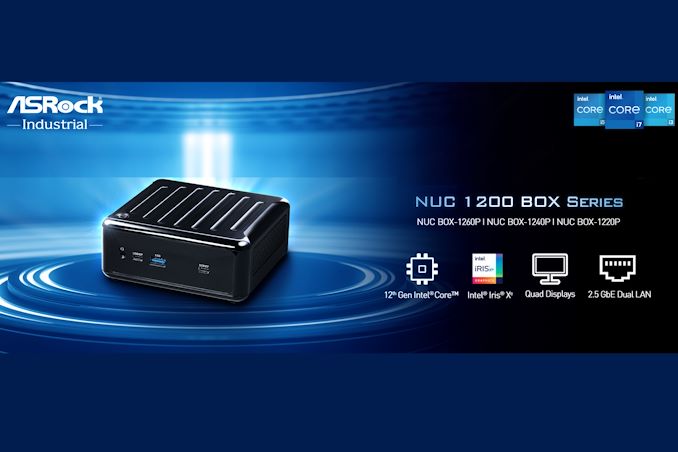
ASRock Industrial's NUC1200 BOX Series Brings Alder Lake to UCFF Systems

Intel recently updated their low-power processors lineup with the Alder Lake U and P Series 12th Gen Core mobile SKUs. With support for a range of TDPs up to 28W, these allow ultra-compact form-factor (UCFF) PC manufacturers to update their traditional NUC clones. Similar to the Tiger Lake generation, ASRock Industrial is again at the forefront – launching the NUC1200 BOX Series within a few days of Intel’s announcement.


The new NUC1200 BOX Series retains the chassis design and form-factor of the NUC1100 BOX Series. The NUC BOX-1165G7 left a favorable impression in our hands-on review, and the NUC1200 BOX Series seems to be carrying over all those aspects. The company is launching three models in this series – NUC BOX-1260P, NUC BOX-1240P, and NUC BOX-1220P. The specifications are summarized in the table below.


ASRock Industrial NUC 1200 BOX (Alder Lake-P) Lineup
Model NUC BOX-1260P NUC BOX-1240P NUC BOX-1220P
CPU Intel Core i7-1260P

4C + 8c / 16T

(C) 2.1 – 4.7 GHz

(c) 1.5 – 3.4 GHz

20 – 64W (28W)
Intel Core i5-1240P

4C + 8c / 16T

(C) 1.7 – 4.4 GHz

(c) 1.2 – 3.3 GHz

20 – 64W (28W)
Intel Core i3-1220P

2C + 8c / 12T

(C) 1.5 – 4.4 GHz

(c) 1.1 – 3.3 GHz

20 – 64W (28W)
GPU Intel® Iris Xe Graphics (96EU) @ 1.4 GHz Intel® Iris® Xe Graphics (80EU) @ 1.3 GHz Intel® UHD Graphics for 12th Gen Intel® Processors (64EU) @ 1.1 GHz
DRAM Two DDR4 SO-DIMM slots

Up to 64 GB of DDR4-3200 in dual-channel mode
Motherboard 4.02″ x 4.09″ UCFF
Storage SSD 1x M.2-22(42/60/80) (PCIe 4.0 x4 (CPU-direct))
DFF 1 ×  SATA III Port (for 2.5″ drive)
Wireless Intel Wi-Fi 6E AX211

2×2 802.11ax Wi-Fi (2.4Gbps) + Bluetooth 5.2 module
Ethernet 2 × 2.5GbE port (Intel I225-LM)
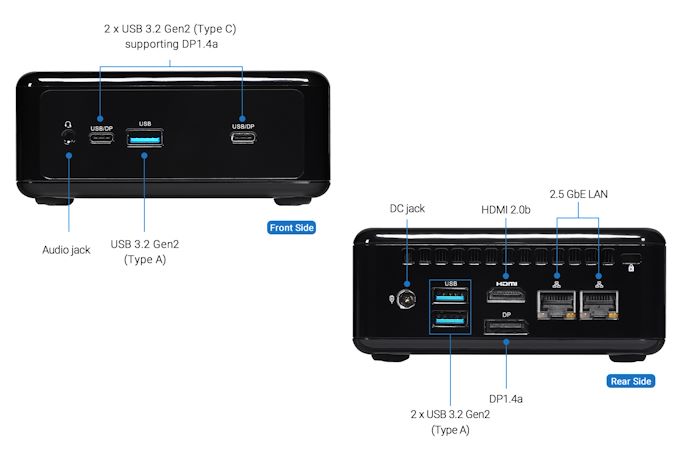
USB Front 1 × USB 3.2 Gen 2 Type-A

2 x USB 3.2 Gen 2 Type-C (USB4 Certification Pending)
Rear 2 × USB 3.2 Gen 2 Type-A
Display Outputs 1 × HDMI 2.0b

1 x DisplayPort 1.4a

2 × DisplayPort 1.4a (using Front Panel Type-C ports)
Audio 1 × 3.5mm audio jack (Realtek ALC233)
PSU External (19V/90W)
Dimensions Length: 117.5 mm

Width: 110 mm

Height: 47.85 mm
MSRP ? ? ?


According to the products’ datasheet, ASRock Industrial plans to get the two Type-C ports in the front panel certified for USB4. Since the certification plan is still pending, they are being advertised as USB 3.2 Gen 2 for now. Going by our experience with the NUC-BOX1165G7, at least one of the front Type-C ports should be able to support Thunderbolt 4 peripherals.


The key updates over the NUC1100 BOX series seem to be the integration of dual 2.5GbE ports (compared to 1x 1GbE + 1x 2.5GbE), addition of 6GHz Wi-Fi support, and the presence of Alder Lake processors with their hybrid architecture comprising of both performance and efficiency cores.


Since the units target the embedded market also, they have the usual bells and whistles including an integrated watchdog timer and an on-board TPM. Pricing is slated to be announced in the coming months.


Source: AnandTech – ASRock Industrial’s NUC1200 BOX Series Brings Alder Lake to UCFF Systems

The Intel Core i3-12300 Review: Quad-Core Alder Lake Shines

Just over a month ago Intel pulled the trigger on the rest of its 12th generation “Alder Lake” Core desktop processors, adding no fewer than 22 new chips. This significantly fleshed out the Alder Lake family, adding in the mid-range and low-end chips that weren’t part of Intel’s original, high-end focused launch. Combined with the launch of the rest of the 600 series chipsets, this finally opened the door to building cheaper and lower-powered Alder Lake systems.


Diving right in, today we’re taking a look at Intel’s Core i3-12300 processor, the most powerful of the new I3s. Like the entire Alder Lake i3 series, the i3-12300 features four P-cores, and is aimed to compete in the entry-level and budget desktop market. With prices being driven higher on many components and AMD’s high-value offerings dominating the lower end of the market, it’s time to see if Intel can compete in the budget desktop market and offer value in a segment that currently needs it.


Source: AnandTech – The Intel Core i3-12300 Review: Quad-Core Alder Lake Shines

SPEC Updates SPECviewperf 2020 v3.0 Benchmark with Linux Edition

The SPEC Graphics Performance Characterization (SPECgpc) group updated the Windows version of the workstation GPU benchmark suite – SPECviewperf 2020 – twice last year. The intent of the benchmark is to replay GPU workload traces from real-world professional applications (Maya for media and entertainment, Catia, Creo, NX, and Solidworks for CAD/CAM, OpendTect for the energy industry, and the Tuvok visualization library for rendering medical images). Version 3.0, released in December 2021, updated the Solidworks viewset to better reflect the OpenGL API calls in the latest version of the software. Version 2.0 had enabled selective downloading of the viewsets.


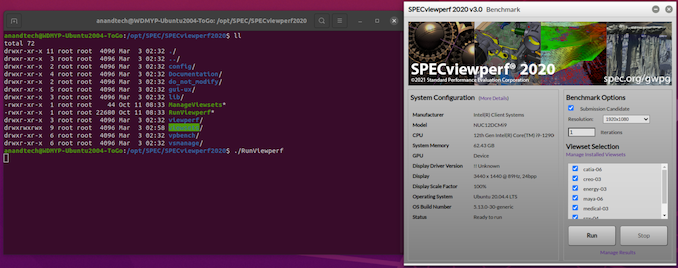
While the Windows version of the benchmark had been through three versions, the Linux community was left out, having to rely on the SPECviewperf 13 released almost a decade ago. That is changing today with the availability of the Linux edition of SPECviewperf 2020 v3.0. The benchmark updates the viewsets with traces from the latest versions of the relevant applications and also updates the models to match the Windows version. Since the benchmarks wrapper framework (even for the Windows version) is based on Node-Webkit (now NW.js), the creation of a Linux edition had to mainly deal with the actual viewset processing. Automation and results processing are identical between the Windows and Linux versions.


Unlike SPECviewperf 13 Linux Edition which was distributed as a compressed tar archive, the SPECviewperf 2020 v3.0 Linux Edition is a .deb package. The benchmark requires Canonical Ubuntu Linux 20.04, 16GB or more of RAM, and 80GB of fixed disk drive space. Viewsets are processed at two resolutions – 1080p and 4K, with 1080p being the minimum. The GPU drivers are required to support OpenGL 4.5, and the GPU itself needs to have 2GB minimum VRAM.


The benchmark is available for download free of cost for everyone other than vendors of computers and related products / services who are not members of SPEC/GWPG. Such vendors can purchase a license for $2500.


Linux has a much greater market share in the workstation segment compared to consumer desktops. It is heartening to see SPECgpc update the aging SPECviewperf 13 Linux edition. The latest viewsets and models in the SPECviewperf 2020 v3.0 Linux Edition bring it on par with the benchmarking capabilities of the Windows edition.


Source: AnandTech – SPEC Updates SPECviewperf 2020 v3.0 Benchmark with Linux Edition

Universal Chiplet Interconnect Express (UCIe) Announced: Setting Standards For The Chiplet Ecosystem

If there has been one prominent, industry-wide trend in chip design over the past half-decade or so, it has been the growing use of chiplets. The tiny dies have become an increasingly common feature as chip makers look to them to address everything from chip manufacturing costs to the overall scalability of a design. Be it simply splitting up a formerly monolithic CPU in to a few pieces, or going to the extreme with 47 chiplets on a single package, chiplets are already playing a big part in chip design today, and chip makers have made it clear that it’s only going to grow in the future.

In the meantime, after over 5 years of serious, high-volume use, chiplets and the technologies underpinning them seem to finally be reaching an inflection point in terms of design. Chip makers have developed a much better idea of what chiplets are (and are not) good for, packaging suppliers have refined their ultra-precise methods needed to place chiplets, and engineering teams have ironed out the communications protocols used to have chiplets talk amongst each other. In short, chiplets are no longer experimental designs that need to be proven, but instead have become proven designs that chip makers can rely on. And with that increasing reliance on chiplet technology comes the need for design roadmaps and stability – the need for design standards.

To that end, today Intel, AMD, Arm, and all three leading-edge foundries are coming together to announce that they are forming a new and open standard for chiplet interconnects, which is aptly being named Universal Chiplet Interconnect Express, or UCIe. Taking significant inspiration from the very successful PCI-Express playbook, with UCIe the involved firms are creating a standard for connecting chiplets, with the goal of having a single set of standards that not only simplify the process for all involved, but lead the way towards full interoperability between chiplets from different manufacturers, allowing chips to mix-and-match chiplets as chip makers see fit. In other words, to make a complete and compatible ecosystem out of chiplets, much like today’s ecosystem for PCIe-based expansion cards.


Source: AnandTech – Universal Chiplet Interconnect Express (UCIe) Announced: Setting Standards For The Chiplet Ecosystem

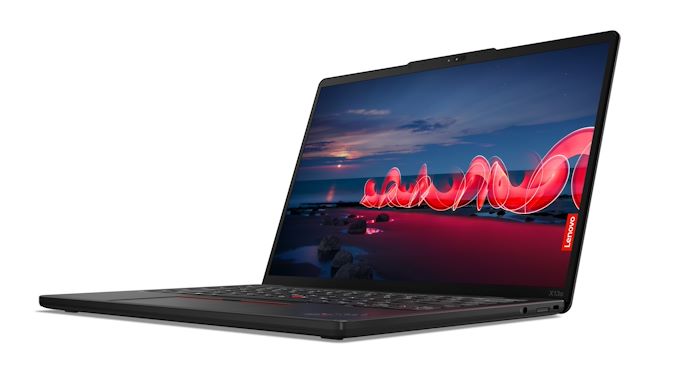
Lenovo Launches The ThinkPad X13s Laptop, Powered By Snapdragon 8cx Gen 3

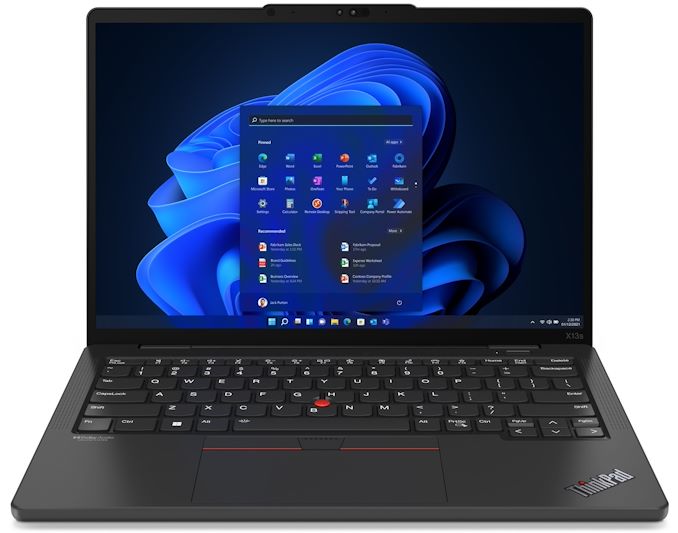
During the MWC 2022 trade show in Barcelona, Lenovo unveiled the first laptop powered by Qualcomm’s new Snapdragon 8cx Gen 3 chip, the ThinkPad X13s. Using a passively-cooled design, Lenovo is claiming that the ThinkPad X13s has a long battery life with up to 28 hours of video playback, as well as boasting plenty of wireless connectivity, including support for 5G mmWave, Wi-Fi 6E, and is all housed in a 90% recycled magnesium chassis.


Over the last couple of months, we’ve dedicated a number of column inches to Qualcomm’s latest Snapdragon 8cx Gen 3. It uses four Arm Cortex-X1 prime cores at 3.0 GHz, four smaller A78 efficiency cores operating at 2.4 GHz, and it also includes the company’s latest Adreno graphics.


The biggest challenge for Qualcomm with the Snapdragon 8cx Gen 3 and the Windows on Arm project has been application compatibility. Qualcomm has been working closely with Microsoft and software vendors to allow its Arm-based processors to work with x86 apps, and last year’s launch of Windows 11 added x86-64 application compatibility as well. So these days it’s less a matter of what will work on WoA laptops, and more about how quickly x86 applications will run.


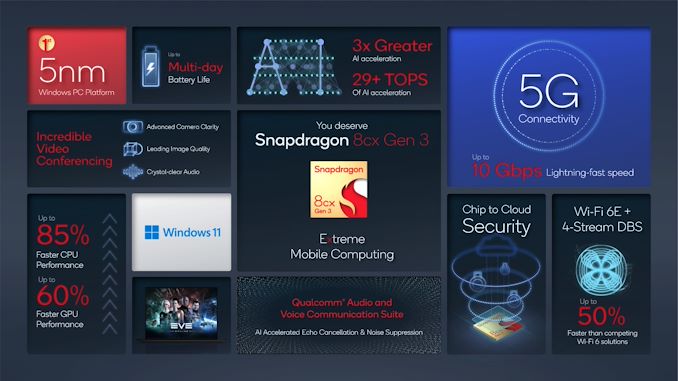
Qualcomm Snapdragon 8cx Gen 3 SoC Marketing from Snapdragon Tech Summit Dec 2021


For more details on the Qualcomm Snapdragon 8cx Gen 3 processor, as well as our interviews with Qualcomm SVP Alex Katouzian and VP For Windows and Chrome PCs at Qualcomm, Miguel Nunes, check out the links below:


Focusing on Lenovo’s big announcement at MWC 2022, it has launched several new notebooks for 2022, but all eyes are on the ThinkPad X13s. Lenovo, of course, is a large and respected name in the productivity laptop space, so their willingness (or unwillingness) to adopt new CPUs/SoCs is often a good barometer of overall OEM interest in new chips.


Aside from being the first consumer-based notebook powered by the Qualcomm Snapdragon 8cx Gen 3 processor, the ThinkPad X13s has a wide variety of features for users on the go, both focusing on productivity and longevity, all housed inside a 0.53-inch thick frame.


A big talking point surrounds the battery life of the ThinkPad X13s, with Lenovo claiming an impressive 28-hours of usage between charges. While this sounds impressive on paper, the onus is on the types of workloads being used, with Lenovo quoting video playback figures with its 49.5-Wh Li-ion Polymer battery. It has dimensions of 11.76 x 13 x 0.53-inches (WxDxH), is constructed from 90% certified recycled magnesium, and weighs just 2.35 lbs making it ultra-portable and lightweight.


Lenovo offers the ThinkPad X13s with three different display types: an IPS AG 300-nit panel, an IPS touch AG 300-nit panel, and a low-power IPS AG display with 400-nits of brightness. All three display types include a 13.3-inch screen with an aspect ratio of 16:10 and an output resolution of 1920 x 1080p. 


Housing within the central section of the top bezel, the Lenovo ThinkPad X13s can be equipped with two different webcams, one of which has 5MP RGB, while the other is a 5MP IR camera with support for Computer Vision presence detection. In terms of connectivity, the ThinkPad X13s has two USB 3.2 G2 Type-C ports, with one 3.5 mm audio jack and a SIM card slot. The SIM card slot allows users to access either 5G sub6 or 5G mmWave depending on the configuration. At the same time, Lenovo also offers users the choice of Wi-Fi 6 or Wi-Fi 6E wireless networking.


Lenovo ThinkPad X13s Specifications
Component Surface Laptop Studio
CPU Snapdragon 8cx Gen 3
GPU Snapdragon 8cx Gen 3 Adreno
Display 13.3″ WUXGA (16:10) 300-nit IPS AG (1920×1080)

13.3″ WUXGA (16:10) 300-nit IPS Touch AG (1920×1080)

13.3″ WUXGA (16:10) Low Power 400-nit IPS AG (1920×1080)
RAM Up to 32 GB LPDDR4x (soldered) Dual-Channel
Storage Up to 1 TB PCIe SSD
Networking Wi-Fi 6/6E

5G sub6 eSIM

5G mmWave eSIM
I/O 2 x USB Gen 3.2 Type-C

1 x Audio Jack

SIM Card Slot
Battery Up to 28 hours

49.5 Wh Li-ion Polymer Battery
Camera 5MP RGB Camera

5MP IR Camera /w Computer Vision
Operating System Windows 11
Dimensions (inches) 11.76 x 13 x 0.53
Weight 2.35 lbs
Starting Price (USD) $1,099


Lenovo has stated that the Qualcomm Snapdragon 8cx Gen 3 powered ThinkPad X13s will be available in May, with prices starting at $1099. It also states that in the US, the ThinkPad X13s will be available on carriers including AT&T and Verizon sometime in 2022.


Source: Lenovo


Related Reading


Source: AnandTech – Lenovo Launches The ThinkPad X13s Laptop, Powered By Snapdragon 8cx Gen 3

AMD's Ryzen 9 6900HS Rembrandt Benchmarked: Zen3+ Power and Performance Scaling

Earlier this year, AMD announced an update to its mobile processor line that we weren’t expecting quite so soon. The company updated its Ryzen 5000 Mobile processors, which are based around Zen3 and Vega cores, to Ryzen 6000 Mobile, which use Zen3+ and RDNA2 cores. The jump from Vega to RDNA2 on the graphics side was an element we had been expecting at some point, but the emergence of a Zen3+ core was very intriguing. AMD gave us a small pre-brief, saying that the core is very similar to Zen3, but with ~50 new power management features and techniques inside. With the first laptops based on these chips now shipping, we were sent one of the flagship models for a quick test.


Source: AnandTech – AMD’s Ryzen 9 6900HS Rembrandt Benchmarked: Zen3+ Power and Performance Scaling

Bitspower Quietly Launches its First Ever Air CPU Cooler, The Phantom

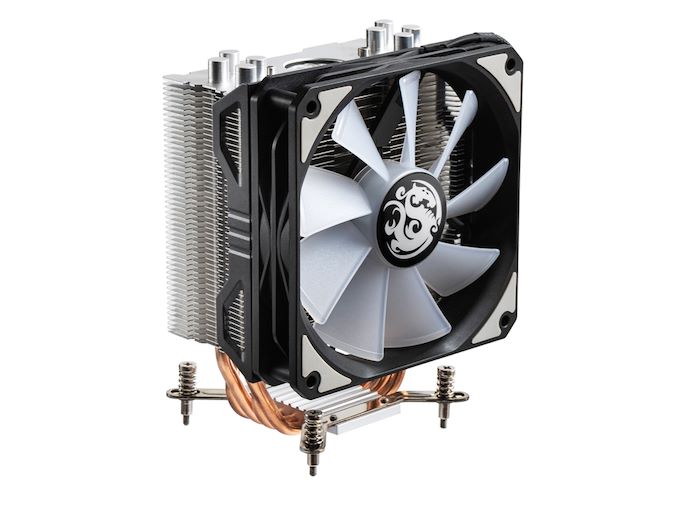
More known for its custom water cooling components, Bitspower has released its first-ever air-based CPU cooler, the Phantom. Designed for the entry-level market, the Phantom includes a single 120 mm RGB enabled cooling fan and supports Intel’s latest LGA1700 desktop socket and AMD’s AM4 socket.


With a height of 158 mm, the Phantom is compatible with most desktop cases. It is constructed of aluminum, with four copper heat pipes attaching the large aluminum fin stack to the cold plate. To aid in heat dissipation, it uses a single 120 mm cooling fan which includes RGB for users looking to add a bit of flair to their system. The cooling fan included has a maximum speed of 1800 RPM, which Bitspower claims the fan has an airflow rating of 80 CFM, and it operates with a maximum volume of 34 dBA.


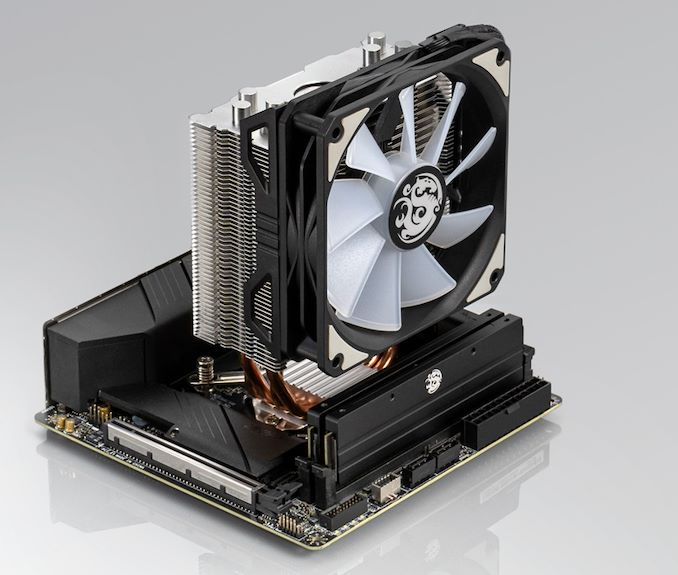
The Bitspower Phantom CPU Cooler is installed onto a mini-ITX motherboard.


Despite the official listing on the Bitspower website not providing much information on specification and capability, I reached out to Bitspower CEO Vincent Yu and confirmed what the webpage leaves out. This includes the official dimensions of the Bitspower Phantom CPU cooler, which has a relatively small footprint of 116 x 51 x 158 mn. Vincent Yu also confirmed that the Bitspower Phantom could dissipate heat from most desktop processors, with a rated TDP of 200 W. 


The Bitspower Phantom air cooler is available directly from its website for 1450 TWD. Still, Bitspower has confirmed to me that it will be available in other regions soon with an expected MSRP of $55.


Source: Bitspower


Related Reading


Source: AnandTech – Bitspower Quietly Launches its First Ever Air CPU Cooler, The Phantom

The GIGABYTE Z690 Aorus Master Mobo Review: 10GbE Rounds Out A Premium Board

The latest motherboard to grace our test bench is the GIGABYTE Z690 Aorus Master, which hails from its Aorus gaming series and sits just one step below its Aorus Xtreme models. Some of its most notable features include 10 Gigabit Ethernet and Wi-FI 6E networking, USB 3.2 G2x2 connectivity, as well as plenty of storage capacity consisting of five M.2 slots and six SATA ports. The Aorus Z690 Master also boasts support for DDR5-6400 memory and an impressive 20-phase power delivery designed for overclockers looking to squeeze out extra performance. Does the GIGABYTE Z690 Aorus have enough about it to justify the $470 price tag? We aim to find out in our latest Z690 motherboard review.


Source: AnandTech – The GIGABYTE Z690 Aorus Master Mobo Review: 10GbE Rounds Out A Premium Board

The Intel NUC12 Extreme Dragon Canyon Preview: Desktop Alder Lake Impresses in SFF Avatar

Intel kick-started a form-factor revolution in the early 2010s with the introduction of the ultra-compact NUCs. The systems were meant to be an alternative to the tower desktops used in many applications where the size, shape, and the system capabilities were mostly unwarranted. The success of the NUCs enabled Intel to start reimagining the build of systems used in a wider range of settings.


More recently, the introduction of the Skull Canyon NUC in 2016 was Intel’s first effort to make a gaming-focused SFF PC. And desktop-focused Compute Elements (essentially, a motherboard in a PCIe card form-factor) launched in early 2020 meant that full-blown gaming desktops could credibly come under the NUC banner. In the second half of 2020, the Ghost Canyon NUC9 – the first NUC Extreme – made a splash in the market with support for a user-replaceable discrete GPU. Ghost Canyon was extremely impressive, but the restrictions on the dGPU size and high-end pricing were dampeners. Intel made some amends with the NUC11 Extreme (Beast Canyon), using a special Tiger Lake SKU with a 65W TDP and comparatively competitive pricing.


The introduction of Alder Lake and its desktop-first focus has enabled Intel to prepare a new flagship in the NUC Extreme lineup barely 6 months after the launch of the Beast Canyon NUC. The new Dragon Canyon platform was briefly teased at the 2022 CES, with the promise of a Q1 launch. Intel is keeping up its word with the launch of a number of NUC12 Compute Elements and NUC12 Extreme Kit SKUs. Today, we are having a detailed look at what the NUC12 Extreme brings to the table, particularly in comparison to the NUC11 Extreme. The recent introduction of Windows 11 means that our benchmarks comparison set is currently limited – today’s preview does not deal with any systems other than the NUC12 Extreme and NUC11 Extreme.


Source: AnandTech – The Intel NUC12 Extreme Dragon Canyon Preview: Desktop Alder Lake Impresses in SFF Avatar

Intel Launches Alder Lake U and P Series Processors: Ultraportable Laptops Coming In March

Following the January launch of Intel’s first Alder Lake-based 12th Gen Core mobile processors, the Alder Lake-H family, Intel this morning is following that up with the formal launch of the rest of their mobile product stack. Designed to fill out the lower-power portion of Intel’s product stack for smaller thin and light laptops, today the company is launching the 28 watt Alder Lake-P series processors, as well as the 15 watt and 9 watt Alder Lake-U series processors. Laptops based on both processor sub-families are set to become available in March, where they will be competing against rival AMD’s recently launched Ryzen 6000 Mobile series.


Technically, today’s announcement from Intel is largely a redux in terms of information. The company announced the Alder Lake P and U series alongside the H series chips back at CES, though in a blink-and-you’ll-miss-it fashion, as the bulk of Intel’s efforts were focused around the more imminent H series. But now that the H series launch has passed and the first U/P series laptops are about to hit the market, Intel is giving its lower power processors their moment in the sun.


Along with reiterating on the specifications of the U/P series processors, including clockspeeds, core counts, and integrated GPU configurations, today’s announcement also offers some new concrete details on the overall platform. In particular, we now have confirmation of what I/O options are included for the various low-power chip configurations, as well as the number of USB ports and PCIe lanes available. As well, Intel is also offering a full update on its Evo design program, outlining the updated requirements for Alder Lake Evo laptops.


Source: AnandTech – Intel Launches Alder Lake U and P Series Processors: Ultraportable Laptops Coming In March

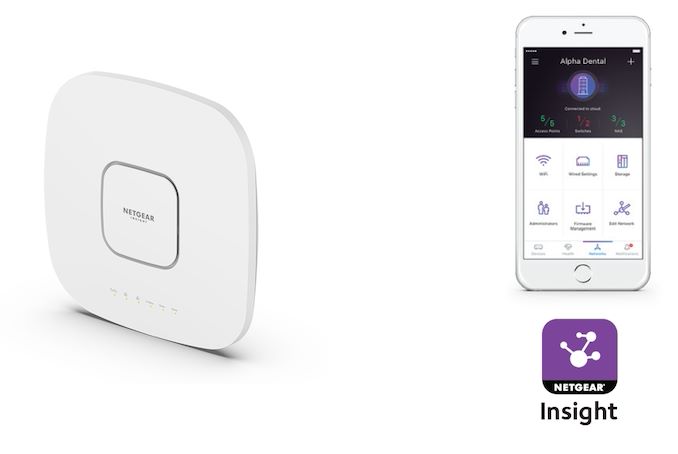
Netgear Launches WAX630E AX7800 Wi-Fi 6E Access Point for SMBs

Netgear has been building up a portfolio of software-defined networking (SDN) products over the last few years. The introduction of the cloud-based Insight management feature to their lineup of SMB products has made their lineup of routers, switches, and access points appeal to a wider customer base. SMB-focused versions of leading technologies often lag their consumer counterparts by a year or so, and updates to flagship offerings are often spaced apart. However, Netgear’s Wi-Fi 6 WAX630 (introduced in June 2021) is receiving a Wi-Fi 6E upgrade / companion today in the form of the WAX630E.


The Qualcomm-based WAX630E is one of the first reasonably-priced SMB Wi-Fi 6E APs for SMBs and micro-businesses. Many announced and leaked offerings in the Wi-Fi 6E space have been delayed (with FCC certification being a stumbling block), allowing Netgear’s offering to become available for purchase ahead of the competition. The advantages of Wi-Fi 6E have been covered in multiple articles previously – including the original Wi-Fi Alliance announcement coverage, and Netgear’s first Wi-Fi 6E product in the consumer space last year. The availability of a much wider interference-free spectrum in 6 GHz – up to seven usable 160 MHz – means that consumer experience is bound to be much better. The downside is the reduced range due to power limitations (APs at 30 dBm max., and clients at 24 dBm max.).


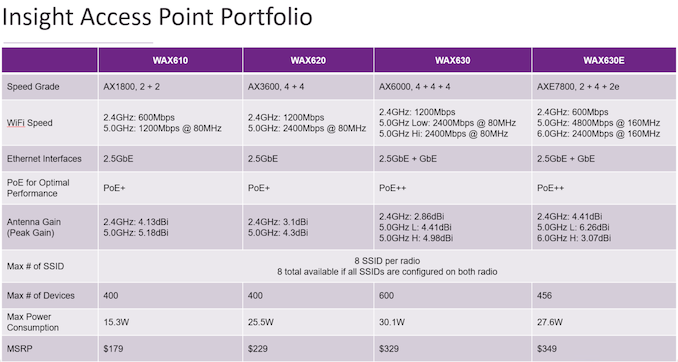
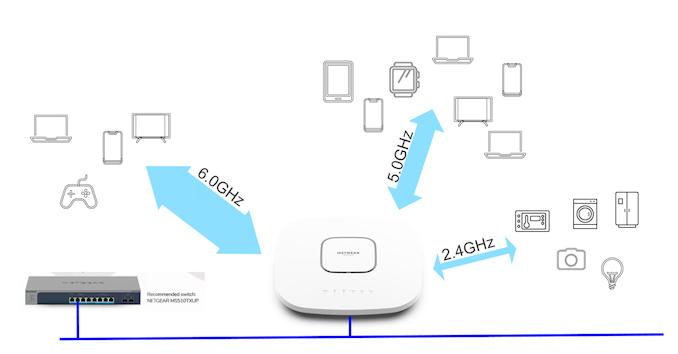
On the technical front, the WAX630E replaces the third 4×4 5GHz band of the WAX630 with a 2×2 6GHz radio. The 2.4 GHz radio configuration has also been reduced to 2×2 in the WAX630E from the 4×4 in the WAX630. These updates have allowed Netgear to price the WAX630E very competitively at $350 – a reasonable premium of $20 over the WAX630’s $330. The reduced number of radios also allows the WAX630E to sport lower maximum power consumption compared to the WAX630 (27.6W vs. 30.1W). However, the availability of 160MHz channels enables the AP to be marketed as an AX7800 device (600 Mbps for the 2×2 2.4 GHz, 4800 Mbps for the 4×4 5 GHz, and 2400 Mbps for the 2×2 6 GHz radios). The AP has a 3000 sq. ft. coverage area. The WAX630E retains the same physical footprint as the WAX630, though it is slight heavier.


The AP supports PoE++ over the 2.5GbE LAN port (an extra 1Gbps LAN port is also available). Netgear recommends the Insight-managed MS510TXUP NBASE-T PoE++ switch for use with the WAX630E. The introduction of the new AP provides a wider range of options for Netgear’s customers, whose needs with respect to required number of clients and client types to support, speeds, and pricing may vary.


Netgear believes that cloud-based management of Wi-Fi 6E APs will be a must in the long-run. Outdoor APs will eventually need to figure out a solution for ensuring that they do not interfere with other licensed 6 GHz band users. FCC mandates that real-time geolocation database cross-checks need to be performed by APs, which might be a challenge without regular updates to the database. While the WAX630E is not affected by this (due to its indoor nature), cloud-based management / real-time connection to a database maintained by the vendor might become essential moving forward. Netgear’s Insight provides IT administrators with a centralized dashboard for multi-location installations, allowing for both local and remote management. Netgear is touting scalability and easy-to-use multi-location support as advantages over solutions requiring local controllers.


The WAX630E is available for pre-order today – $350 for the PoE variant, and $370 for the one with a power adapter included. The units are expected to ship early next month.


Source: AnandTech – Netgear Launches WAX630E AX7800 Wi-Fi 6E Access Point for SMBs

EVGA Unleashes Z690 Dark K|NGP|N Edition Motherboard: Alder Lake Goes Extreme

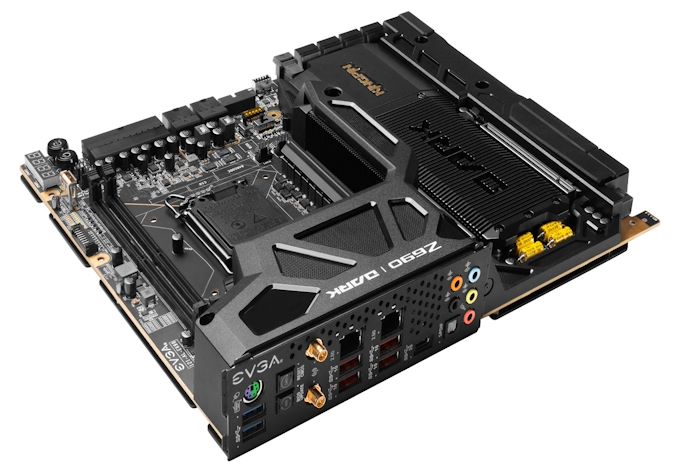
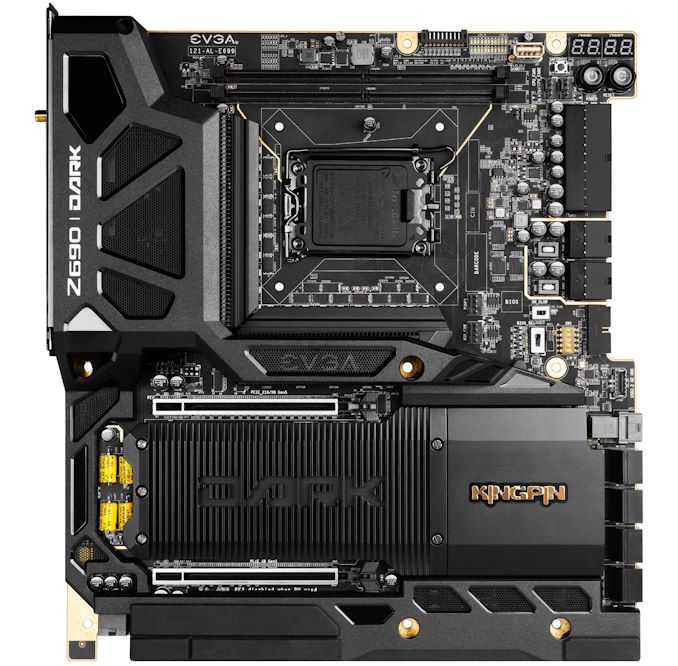
Although these long, cold, and dark nights are starting to come to an end, EVGA has launched its darkest and most devilish desktop motherboard to date, the EVGA Z690 Dark K|NGP|N Edition. Designed in collaboration with legendary extreme overclocker Vince ‘K|NGP|N’ Lucido, the Z690 Dark K|NGP|N Edition boasts an impressive feature set including support for DDR5-6600 memory, three PCIe 4.0 x4 M.2 slots, eight SATA ports, and a large 21-phase power delivery to push Intel’s Alder Lake to the extreme.


Built around the Intel’s high-end Z690 chipset, the EVGA Z690 Dark K|NGP|N Edition isn’t a conventional motherboard by any stretch of the imagination. It is based on the E-ATX form factor and has interesting design characteristics, including a transposed LGA1700 socket that allows extreme overclockers to mount LN2 pots more easily.


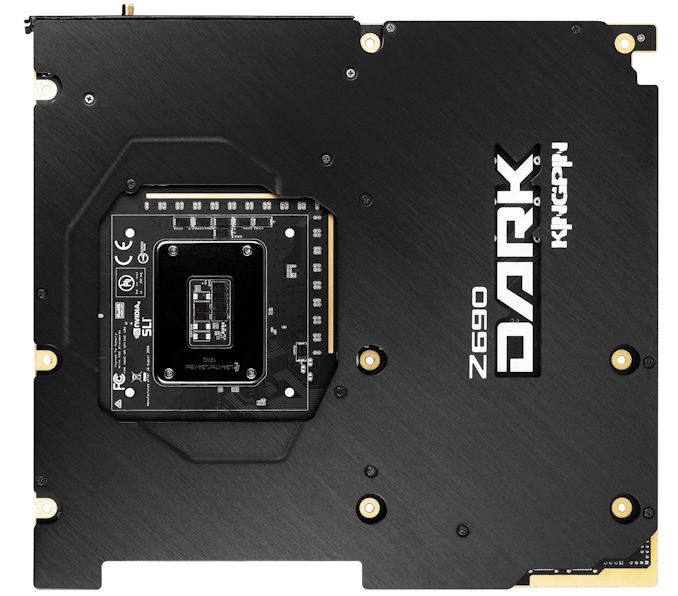
To make the board more robust, EVGA includes a large black metal backplate on the rear of the board to reinforce the PCB. This also includes right-angled connectors, including two 8-pin 12V ATX CPU power inputs and a 24-pin 12V ATX motherboard power input that intrudes into the PCB with a handy cutout designed to make cable management more effortless. It also includes an impressive accessories pack that features an EVGA flat test bench plate that we saw in our previous review of the EVGA Z590 Dark motherboard.


Looking at the feature set, the Z690 Dark K|NGP|N Edition includes two full-length PCIe 5.0 slots that can operate at x16 and x8/x8, with three PCIe 4.0 x4 M.2 slots that sit in between the PCIe slots and underneath a large black finned ‘Dark’ branded heatsink. There are eight SATA ports for conventional storage and optical drives, six of which are from the chipset with RAID 0, 1, 5, and 10 support, and two that come via an ASMedia ASM1061 SATA controller.


Even though the Z690 Dark has a solid feature set for enthusiasts, the real focus by EVGA with this model is on extreme overclocking. This includes a large 21-phase power delivery cooled by an active heatsink with two fans. It also has a 10-layer PCB throughout and contains an overclocker’s toolkit in the top right-hand corner that consists of dual two-digit LED debuggers, a power button, a reset button, dip-switches to disable PCIe slots, and a slow mode switch. There’s also a probe-lt header where users can monitor voltages in real-time from various components on the board, such as the CPU and power inputs.


The large black metal backplate on the rear of the EVGA Z690 Dark K|NGP|N Edition


In terms of connectivity, there’s plenty on the rear panel, including one USB 3.2 G2x2 Type-C, four USB 3.2 G2 Type-A, and two USB 3.2 G1 Type-A ports. For networking, EVGA uses two Intel I225-V 2.5 GbE controllers and includes Intel’s latest AX211 Wi-Fi 6E CNVi. Despite focusing on performance, EVGA has also gone with a premium audio solution, including a Realtek ALC1220 HD audio codec and an EVGA NU Audio SV3H615 headphone amplifier with five 3.5 mm audio jacks and a single S/PDIF optical output.


The EVGA Z690 Dark K|NGP|N Edition is currently available to purchase at the EVGA website for $830. However, at the time of writing, purchases are limited to one per household, and it seems as though it’s only available to EVGA Elite Members at this time.


Source: EVGA


Related Reading


Source: AnandTech – EVGA Unleashes Z690 Dark K|NGP|N Edition Motherboard: Alder Lake Goes Extreme

From There to Here, and Beyond

I’ll be the first to admit, I had no history with AnandTech before I joined. It was by sheer chance, meeting one of the writers at an overclocking event, that led me to first become a reader, then a writer, to what has become my career in journalism. If you’re new to AnandTech then welcome! It’s been my home for over a decade, where we’ve always had the goal of pushing the boundaries for all things technical and engineering-related.  For all the old hands – I know many of you work at the companies we report on around the industry, and we’ve been forever glad for your continued support and interactions. Long may it continue, especially in an industry that is slowly consolidating around a few key players, both in technical and publishing – for as long as the audience demands it, AnandTech will aim to provide.


Personally, I was always into computers, but it was overclocking that got me into hardware. Not just getting more frames in my games, but actual competitive overclocking, trying to get the best scores in the world. People liken it to the Formula 1 or car tuning, when in reality it feels like drag racing – 8 hours of preparation for a 10 seconds quarter mile. Studying chemistry at the time, on the surface there seemed to be not much more than a little overlap, except for a desire to learn more about what I was doing, the why, and how it all worked. That oblivious-yet-determined manner led to Rajinder Gill, senior motherboard editor at the time, suggesting that Anand bring me on as a freelancer back in 2010. Initially with news, I transitioned into Rajinder’s role rather quickly after he left, and starting from the Sandy Bridge launch in early 2011, I spent the next five years reviewing motherboards at AnandTech as my day job after graduating my PhD. I still look back on my first proper motherboard review, the ASRock P67 Extreme4, with rose-tinted spectacles. It was a great board for the time, and I still have it in my collection.


That’s what got me to AnandTech, and after 11 years I feel the need to change, so I have decided to take up a new position in the industry. When Anand left in 2014, after 18 years at the helm, I was still quite green in my role and didn’t really take his words to heart at the time. Looking back at them today, I see a lot of parallels, even though I’ve never sat in that senior role. Since Anand left, I was promoted to Senior CPU Editor, and Ryan Smith has taken the Editor-in-Chief role with grace and poise – he’s consistently talked me down from a ledge when this industry has piled on, and all I’ve wanted to do is lash out! After Anand left, it was Ryan who brought me on as a full-time employee, and helped navigate AnandTech through two acquisitions, to where the brand currently sits today with Future. Despite being (roughly) the same age, Ryan has been a mentor and a director for a lot of the content I’ve written, for which I’m very thankful. I hope he knows how much it has meant over the years.


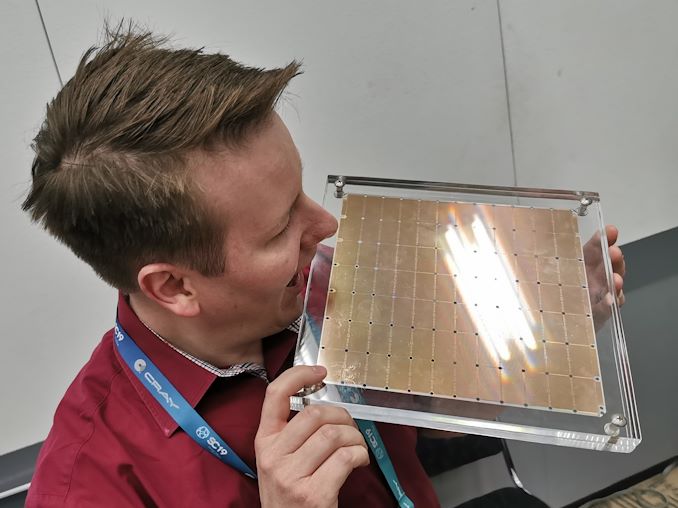
I’ve really enjoyed working at AnandTech. I love getting my teeth into the latest technical details, and getting advance briefings from the researchers never ceases to be a great pleasure of mine. It doesn’t matter whether that’s for an upcoming product, attending technical IEEE conferences, or for Hot Chips talk, or seeing inside the secret R&D room at Computex. In a lot of ways, my academic experience has overlapped with my coverage that I would never have predicted – we’re on the cusp of finding out how we need More Than Moore’s Law in the modern era. My travel in 2019 topped 200,000 miles, which doesn’t really bother me in the slightest, as I’ve been able to meet and discuss with key industry movers and shakers. A crowning moment was talking AMD into making its 64-core Threadripper into a better price the evening before the announcement. Or biting one of Intel’s 10nm wafers. Being able to travel around and visit companies has shown me just how many amazing people and stories there are in our industry, and it’s a shame there aren’t enough hours in the day to focus on them all, as I know a lot of you would want to hear about them. I hope I’ve also been able to bring a little bit of humor and fun to my content too.


If there’s one thing that has remained through all that time, it’s the dedication of AnandTech’s writers to provide as many detailed technical write-ups as we can. Over the years I’ve worked with some incredible talent, especially Andrei, and I’ve managed individuals that I’ve seen improve leaps and bounds, especially Gavin who now leads our motherboard coverage. Big shoutouts go to the rest of the team over the years: Ryan, Brett, Ganesh, Billy, Kristian, Tracy, Anton, Joe, Matt, Matt, Josh, Nate, Rajinder, Gary, Virginia, and Howard. You’ve all meant a lot to me in so many different ways. Then there’s also the audience, who have always provided copious feedback, either here, on social media, or through our email conversations. Please don’t stop giving all of us constructive criticism on how to do our jobs better, regardless of where we are or who we work for.


As for me, I’m finding new ventures: a mixture of behind-the-scenes and public-facing opportunities, as well as continued consulting, but still within this tech industry that we love to analyze. We’re on the cusp of finding out how we need More Than Moore’s Law in the modern era. I’ll still be that loud voice on Twitter, critiquing every financial disclosure and presentation, and if you’re interested in what I’m doing next, then I’m likely to announce my future roles over there or on LinkedIn in short course. While today is my final day at AnandTech, don’t be surprised if my name pops up again here over the next week or two, as I’ve prepared some content in advance, including our AMD Rembrandt review and an interview with Raja Koduri. Stay tuned for those.


To all of the readers over the years, thank you so much for this opportunity. I couldn’t have done it without you. I hope that you’ll continue to give all the AnandTech writers the support you have shown me.


~Ian


Source: AnandTech – From There to Here, and Beyond

AnandTech Interview with Dr. Ann Kelleher: EVP and GM of Intel’s Technology Development

It’s somewhat of an understatement to say that Intel’s future roadmap on its process node development is one of the most aggressive in the history of semiconductor design. The company is promising to pump out process nodes quicker than we’ve ever seen, despite having gone through a recent development struggle. Even with CEO Pat Gelsinger promising more than ever before, it’s up to Intel’s Technology Development (TD) team to pick up the ball and run with it in innovative ways to make that happen. In charge of it all is Dr. Ann Kelleher, EVP and GM of Intel’s Technology Development, and on the back of some strong announcements last year we reached out for the chance to interview her regarding Intel’s strategy.


Source: AnandTech – AnandTech Interview with Dr. Ann Kelleher: EVP and GM of Intel’s Technology Development

Intel Discloses Multi-Generation Xeon Scalable Roadmap: New E-Core Only Xeons in 2024

It’s no secret that Intel’s enterprise processor platform has been stretched in recent generations. Compared to the competition, Intel is chasing its multi-die strategy while relying on a manufacturing platform that hasn’t offered the best in the market. That being said, Intel is quoting more shipments of its latest Xeon products in December than AMD shipped in all of 2021, and the company is launching the next generation Sapphire Rapids Xeon Scalable platform later in 2022. Beyond Sapphire Rapids has been somewhat under the hood, with minor leaks here and there, but today Intel is lifting the lid on that roadmap.


Source: AnandTech – Intel Discloses Multi-Generation Xeon Scalable Roadmap: New E-Core Only Xeons in 2024