Acer’s Predator Triton 300: Thin Laptop w/ Core i7, GeForce GTX 1650, PowerGem

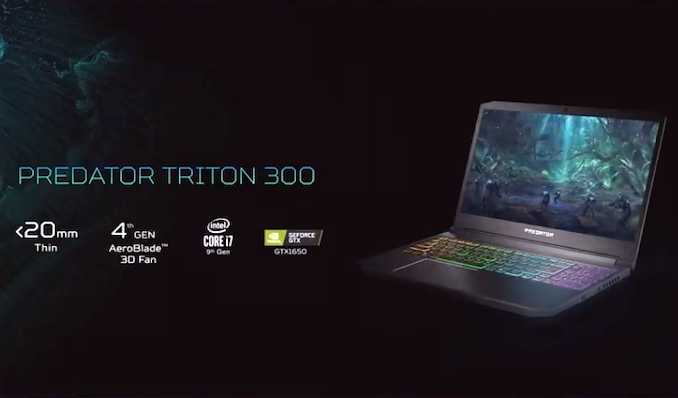
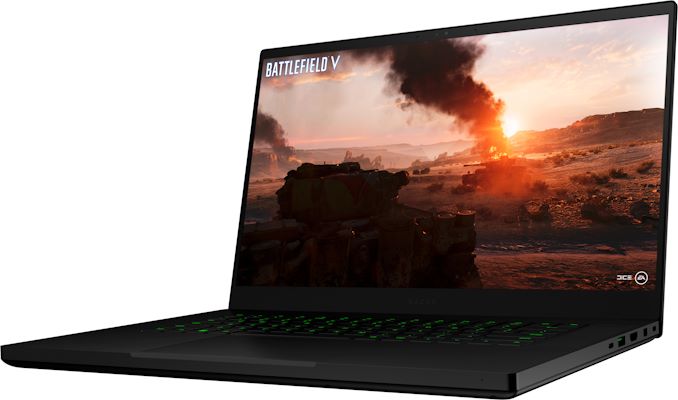
Numerous mobile gamers nowadays demand not only performance, but also portability. In an attempt to bring together gaming-grade performance and compactness of mainstream laptops, Acer developed its all-new Predator Triton 300 which packs performance of a gaming PC into a chassis that is thinner than 2 cm.


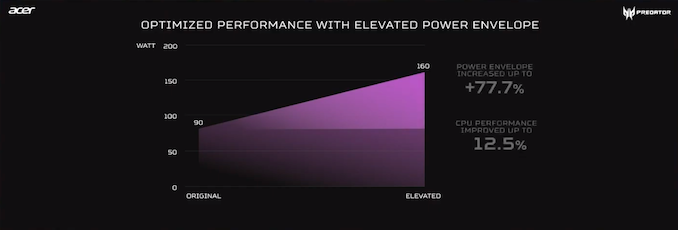
The Acer Predator Triton 300 is powered by Intel’s 9th Generation Core processor as well as NVIDIA’s GeForce GTX 1650 GPU. To ensure that both chips run at their maximum clocks possible, the manufacturer cools them down using its new cooling system that relies on its 4th Generation AeroBlade 3D fans and further amplifies them with its PowerGem technology.


As we are talking about a system for hardcore gamers and esports professionals, the Predator Triton 300 is equipped with a display featuring a 144 Hz refresh rate as well as a 3 ms response time.


This is a breaking news. We will add more details as soon as we get them.


Source: AnandTech – Acer’s Predator Triton 300: Thin Laptop w/ Core i7, GeForce GTX 1650, PowerGem

Acer Unveils ConceptD 7 Pro: Core i7, Quadro RTX 5000, 4K Calibrated Monitor

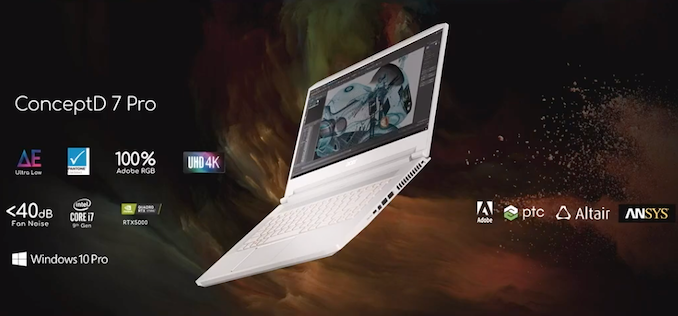
Acer today announced its new lineup of laptops aimed at professionals and offering appropriate performance, capabilities, and certifications from ISVs. Acer’s Concept D Pro notebooks use Intel’s processors as well as NVIDIA’s Quadro RTX professional GPUs. One of the first PCs in the lineup is the ConceptD 7 Pro that is only 17.9 mm thick yet provides desktop-class performance.


The Acer ConceptD 7 Pro is equipped with a Pantone Validated 15.6-inch 4K IPS display that is factory calibrated to match requirements of professional designers and engineers. The system itself is based on Intel’s 9th Generation Core processor that is paired with NVIDIA’s Quadro RTX 5000 GPU with 16 GB GDDR6 memory (probably in Max-Q configuration) as well as up to 32 GB of DDR4 memory and a PCIe-based NVMe SSD.


Being very powerful, does not mean being heavy and bulky. The ConceptD 7 Pro is only 17.9 mm thick and weighs around 2.1 kilograms.


This is a breaking news. We will add more details as soon as we get them.


Source: AnandTech – Acer Unveils ConceptD 7 Pro: Core i7, Quadro RTX 5000, 4K Calibrated Monitor

Acer Launches 2019 Swift 5: 14-Inch, Ice Lake, GeForce MX 250, 990 Grams

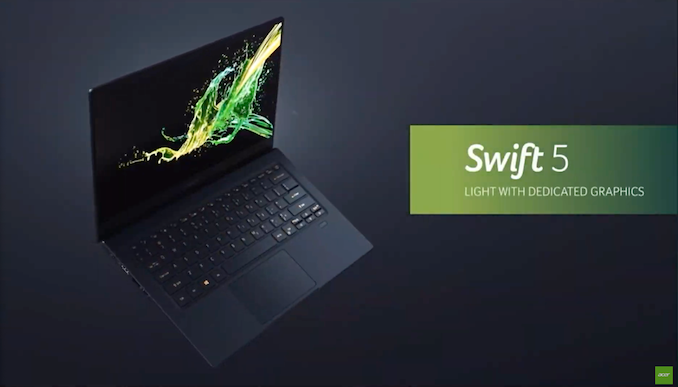
Acer introduced its new ultra-portable Swift 5 notebook at its Next@Acer event in Berlin, Germany. Weighing less than 1 kilogram, the new 14-inch machine appears to be one of the industry’s thinnest and lightest laptops with discrete graphics.


The Swift 5 is based on Intel’s 10th Generation Core processor codenamed Ice Lake with up to four cores that is accompanied by NVIDIA’s discrete GeForce MX 250 discrete GPU. The laptop naturally uses LPDDR4X RAM as well as a PCIe-based NVMe solid-state storage subsystem to provide high performance while consuming a low amount of power.


As far as connectivity is concerned, the system is equipped with Thunderbolt 3 as well as Wi-Fi 6 technologies.


This is a breaking news. We will add more details as soon as we get them.


Source: AnandTech – Acer Launches 2019 Swift 5: 14-Inch, Ice Lake, GeForce MX 250, 990 Grams

Razer's Cheaper Blade 15 Base Models: Core i7-9750H, GeForce GTX 1660 Ti, $1599

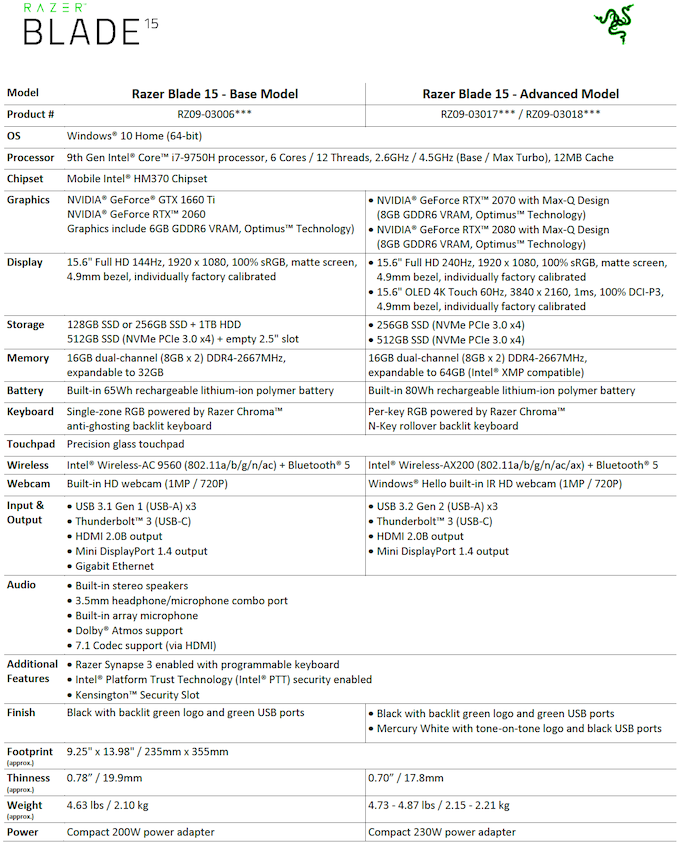
Having established strong positions on the market of high-end and professional gaming laptops with its Blade 15 and Blade Pro notebooks, Razer needs to address lower price bands to keep growing. On Wednesday, the company introduced cheaper versions of the Blade 15 Base model that offer somewhat lower performance in games, but cost up to $400 less than the original Blade 15 Base launched earlier this year.


Like other 2019 Blade 15 SKUs, the new Blade 15 Base versions are based on Intel’s six-core Core i7-9750H processor (2.6 – 4.5 GHz) that is paired with 16 GB of dual-channel DDR4-2667 memory. Meanwhile, the new models come with NVIDIA’s GeForce GTX 1660 Ti with 6 GB of GDDR6 memory (down from the GeForce RTX 2060) as well as a storage subsystem comprised of a 128 GB SSD and 1 TB HDD or a 256 GB SSD and 1 TB HDD (vs. a 512 GB SSD + 1 TB HDD originally). The cheapest model also has a 15.6-inch Full-HD LCD with a 60 Hz refresh rate (as opposed to 144 Hz in case of the original SKU).


Apart from the insides, the design of the cheaper Razer Blade 15 Base are similar to their counterpart released this spring. The laptops come in a CNC-machined aluminum chassis that is 19.9 mm thick, only available in black, and weighs 2.1 kilograms. They systems also feature Intel’s Wireless-AC 9560 802.11ac + Bluetooth 5 solution, a GbE port, one Thunderbolt 3 connector, three USB 3.1 Gen 1 Type-A ports, two display outputs (miniDP 1.4 and HDMI 2.0b), a 3.5-mm headset jack, a 1MP/720p webcam, a 65 Wh lithium-ion polymer battery, and other essentials.


The new Razer Blade 15 Base models are available immediately in the US and Canada at Razer.com with more retailers and markets to follow shortly. The cheapest Razer Blade 15 Base with a 128 GB SSD, 1 TB HDD, and a 60 Hz Full-HD display costs $1,599, whereas a slightly more advanced model with a 256 GB SSD, 1 TB HDD, and a 144 Hz Full-HD screen is priced at $1,799.


Related Reading:


Source: Razer


Source: AnandTech – Razer’s Cheaper Blade 15 Base Models: Core i7-9750H, GeForce GTX 1660 Ti, 99

Razer’s 2019 Blade Stealth: Ice Lake and GeForce GTX 1650 for Project Athena

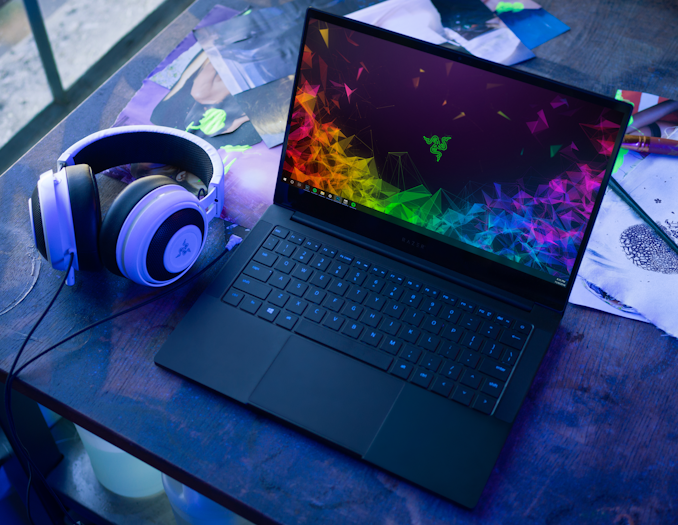
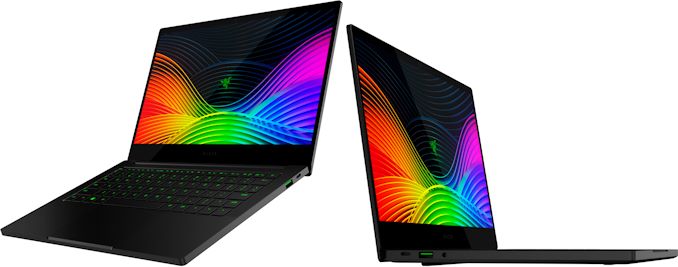
Razer on Wednesday has unveiled its new Blade Stealth laptops that are based on Intel’s 10th Generation Core processors codenamed Ice Lake paired with NVIDIA’s GeForce GTX discrete graphics. The new machines are slightly less compact than their predecessors, yet they offer considerably higher performance in games. In addition, the company introduced its Mercury White laptop that does not have a dGPU, but offers a longer battery life.


Razer’s Blade Stealth laptops have come a long way. Originally introduced as ultra-thin notebooks with integrated graphics, they needed an external Thunderbolt 3 GPU to offer decent performance in games. By contrast, the latest Blade Stealth machines integrate a sophisticated discrete GPU to provide good performance out-of-the-box. The new 2019 Blade Stealth laptop is powered by Intel’s quad-core  Ice Lake Core i7-1065G7 CPU that is accompanied by NVIDIA’s GeForce GTX 1650 graphics processor with 4 GB of GDDR5 memory. The systems also feature 16 GB of LPDDR4-3733 memory as well as a 256 GB or 512 GB M.2 PCIe 3.0 x4 SSD.


Usage of Intel’s codenamed Ice Lake processor and other advanced components enable the new Razer Blade Stealth to comply with Intel’s requirements for Project Athena laptops.


All of Razer’s latest Blade Stealth notebooks come with a 13.3-inch displays featuring a 1920×1080 or 3840×2160 resolution depending on the SKU. Meanwhile, the 4K Ultra-HD panel covers 100% of the sRGB and AdobeRGB color gamut and come factory-calibrated, so the UHD models are positioned for professionals needing a decent monitor rather than for mobile gamers.


Meanwhile, in a bid to integrate NVIDIA’s GeForce GTX 1650 GPU into a 13.3-inch chassis, Razer had to increase its thickness by 0.5 mm as well as to install a new advanced cooling system that adds 100 grams to its weight (vs. previous generation). Traditionally, Blade Stealth machines use a CNC-milled aluminum chassis with a black anodized finish.


In addition, the new Blade Stealth is available without a dGPU, and comes in a Mercury White chassis.


When it comes to wireless connectivity, the 2019 Razer Blade Stealth comes with Intel’s Wireless-AX201 Wi-Fi + Bluetooth 5.0 solution that supports Gbps speeds over 160 MHz channels. The wired I/O department includes a Thunderbolt 3 port, two USB 3.0 Type-A ports, and one USB 3.1 Gen 2 Type-C port. As for other features, the laptop has an RGB-backlit Razer Chroma keyboard, a sizeable trackpad, a 720p webcam with IR sensors for Windows Hello, four stereo speakers with Dolby Atmos support, and a 3.5-mm audio connector.


Razer Blade Stealth Laptops: Fall 2018 vs Fall 2019 Models
  13.3″/FHD

Base


2018

13.3″/FHD

Graphics


2018

13.3″/UHD

Graphics 4K


2018

13.3″

Mercury White


2019

13.3″/FHD

w. GTX


2019

13.3″/UHD

w. GTX


2019

Display Diagonal 13.3″
Resolution 1920×1080 3840×2160 1920×1080 3840×2160
Brightness 400+ cd/m² ? ? ?
Color Gamut 100% sRGB

100% AdobeRGB
? ? 100% sRGB

100% AdobeRGB
Bezels ? 4.9 mm
CPU Core i7-8565U

4C/8T

1.8 – 4.6 GHz

8 MB LLC

15 W
Core i7-1065G7

4C/8T

1.3 – 3.9 GHz

8 MB LLC

15 W
Graphics Intel UHD Graphics 620 NVIDIA GeForce MX150 (25 W) with 4 GB Intel Iris Plus NVIDIA

GeForce GTX 1650

4 GB GDDR5
RAM Capacity 8 GB 16 GB 16 GB
Type LPDDR3-2133 LPDDR4-3733
Storage 256 GB M.2 SATA SSD 256 GB M.2 PCIe SSD 512 GB M.2 PCIe SSD 256 GB

M.2 PCIe

SSD
512 GB M.2 PCIe SSD
Wi-Fi Intel Wireless-AC 9560 (IEEE 802.11ac) Intel Wireless-AX 201
Bluetooth 5.0 5.0
USB 2 × USB 3.1 Gen 1 Type-A

1 × USB 3.1 Gen 2 Type-C
Thunderbolt 1 × Thunderbolt 3 port (USB Type-C)
Other I/O 720p webcam with IR for Windows Hello, TRRS connector for audio, four speakers with Dolby Atmos, microphone
Dimensions Height 14.8 mm | 0.58 inches 15.3 mm | 0.6 inches
Width 304.6 mm | 11.99 inches
Depth 210 mm | 8.27 inches
Weight 1.28 kg

2.82 lbs
1.31 kg

2.89 lbs
1.38 kg

3.04 lbs
1.36 kg

2.99 lbs
1.42 kg

3.13 lbs
1.48 kg

3.26 lbs
Battery Life Capacity 53.1 Wh 53.1 Wh
  Life 13 hours ? ? ? ? ?
Launch Price $1,399 $1,599 $1,899 $1,499 ? ?

Razer’s 2019 Blade Stealth laptops will be available at the end of September 2019 from Razer.com and select retailers in the United States and Canada starting at $1,499.99/ €1,679.99. Later on, the new notebooks will come to the UK, France, Germany, Nordics, China, Australia, Hong Kong, Japan, Singapore, and Taiwan


Dimensions and Weight of Razer’s Blade Stealth Laptops:

Fall 2018 vs Fall 2019 Models
  13.3″/FHD

Base


2018

13.3″/FHD

Graphics


2018

13.3″/UHD

Graphics 4K


2018

13.3″

Mercury White


2019

13.3″/FHD

w. GTX


2019

13.3″/UHD

w. GTX


2019

Dimensions Height 14.8 mm | 0.58 inches 15.3 mm | 0.6 inches
Width 304.6 mm | 11.99 inches
Depth 210 mm | 8.27 inches
Weight 1.28 kg

2.82 lbs
1.31 kg

2.89 lbs
1.38 kg

3.04 lbs
1.36 kg

2.99 lbs
1.42 kg

3.13 lbs
1.48 kg

3.26 lbs

Related Reading:


Source: Razer


Source: AnandTech – Razer’s 2019 Blade Stealth: Ice Lake and GeForce GTX 1650 for Project Athena

AOC Launches CQ27G1 Curved Monitor: 27 Inch, 144 Hz, FreeSync, Sub-$300

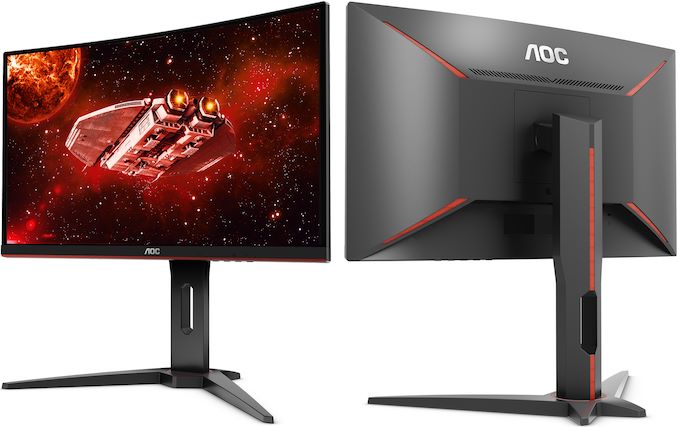
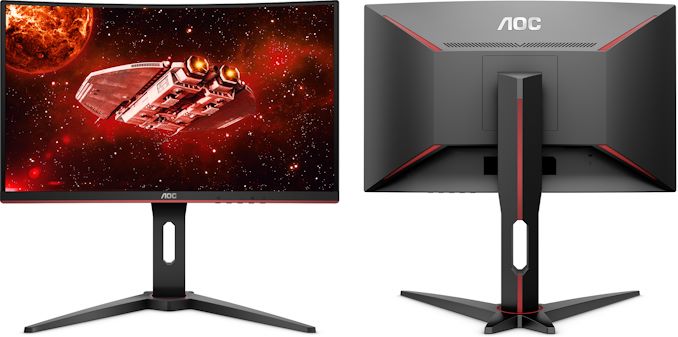
AOC has expanded its lineup of inexpensive G1-series curved displays with a new model. The new 27-inch CQ27G1 features a QHD resolution as well as G1’s traditional set of features, including a 144 Hz maximum refresh rate, AMD’s FreeSync technology, and a 1800R curvature.


The AOC CQ27G1 is based on a 27-inch curved VA panel featuring a 2560×1440 resolution, 250-nits peak brightness, a 3000:1 contrast ratio, 178/178º viewing angles, 1 ms MPRT response times, and a 144 Hz refresh rate. In line with other inexpensive VA panels on the market, this one can display 16.7 million colors.


AOC’s CQ27G1 monitor will sit between the Full-HD C27G1 of the same size and the larger QHD C32G1. Just like other members of the family, this one features three key technologies important for gamers, including AMD’s FreeSync dynamic refresh rate technology, a 144 Hz maximum refresh rate, and 1 ms ultra-low motion picture response time. AOC has not revealed the FreeSync ranges of the display and whether they are wide enough to support AMD’s Low Frame Rate (LFC) features. Typically, entry-level 144 Hz monitors offer rather decent FreeSync ranges from 30 to 144 Hz, yet LFC capability is not guaranteed.


When it comes to connectivity, the CQ27G1 keeps the number of ports to a minimum, it only features a DisplayPort 1.2, two HDMI 2.0 inputs, as well as a 3.5-mm headphone jack. To keep BOM costs in check, neither of AOC’s G1 monitors are equipped with speakers, or a USB hub. Meanwhile, the CQ27G1 features a decent stand that can adjust height (±130 mm), tilt (-4° ~ +21.5°), and swivel (±34°). Furthermore, the display has 100×100 VESA mounting holes.


AOC’s 27-Inch G1 QHD Monitor
  CQ27G1
Panel 27″ IPS
Native Resolution 2560 × 1440
Maximum Refresh Rate 144 Hz
Response Time 1 ms MPRT
Brightness 250 cd/m²
Contrast 3000:1
Viewing Angles 178°/178° horizontal/vertical
Curvature 1800R
Pixel Pitch 0.2335 mm²
Pixel Density 109 ppi
Anti-Glare Coating ?
Color Gamut sRGB
Dynamic Refresh Rate AMD FreeSync (30 – 144 Hz?)
Inputs 1 × DP 1.2

2 × HDMI 2.0
USB Hub none
Audio audio out port
Power Consumption Idle: 0.5 W

Typical: 29 W
Stand Tilt: -4° ~ +21.5°

Swivel: ±34°

Height: ±130 mm
Launch Price $279.99

AOC’s CQ27G1 curved display is now available from Amazon and other leading retailers for $279.99.


Related Reading


Source: AOC


Source: AnandTech – AOC Launches CQ27G1 Curved Monitor: 27 Inch, 144 Hz, FreeSync, Sub-0

Toshiba Memory to Acquire Lite-On’s SSD Business: Gains IP, R&D, Manufacturing Ops

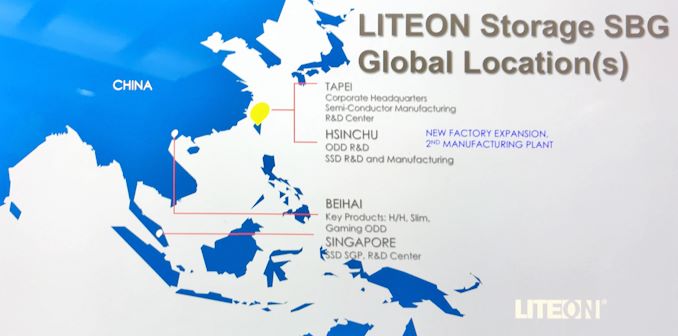
Toshiba Memory, which is set to rebrand as Kioxia Holdings this October, has signed a definitive agreement to acquire SSD business of Lite-On Technology Corp. The decision will enable Toshiba to produce its own SSDs using proven IP, technologies, and product lines.


Under the terms of the agreement, Toshiba Memory will pay Lite-On $165 million dollars for its SSD business, which includes IP, R&D operations, manufacturing lines (i.e., equipment, buildings, etc.), sales channels, and other assets. The transaction is expected to close sometimes in the first half of 2020.


While Lite-On is primarily known for its SSDs as well as optical disc drives, the company produces a wide range of products for major PC makers, including Dell and Lenovo. Despite the fact that Lite-On is the world’s No. 3 supplier of enterprise and datacenter NVMe drives with a 7% market share (according to Forward Insight), SSD business is not the main source of revenue that Lite-On has.


At present, Lite-On has two SSD manufacturing facilities in Taiwan that can produce 12 million of client drives as well as 6 million of datacenter drives per year. In addition, the company owns a $45 million stake in its joint venture with Tsinghua Unigroup (it invested $45 million in early 2018) that develops and produces SSDs in Suzhou, China. This JV can produce up to 45 million drives a year. It is likely that Toshiba Memory will obtain Lite-On’s 45% stake in the JV as a part of its acquisition deal, but this was not explicitly confirmed in the press release.


As a result of the acquisition, Toshiba Memory will expand its SSD market share and will therefore improve its profit margins as it is more lucrative to sell drives rather than 3D NAND memory. Meanwhile, it should be noted that Tsinghua Unigroup formed the JV with Lite-On to produce SSDs based on 3D NAND made in China by one of the producers the Chinese government controls or supports directly or via ivarious companies. That said, it remains to be seen how Kioxia will deal with Tsinghua Unigroup once the acquisition with Lite-On is closed.


Nobuo Hayasaka, acting President and CEO of Toshiba Memory had the following to say:


“Lite-On’s solid state drive business is a natural and strategic fit with Toshiba Memory and expands our focus in the SSD industry. This is an exciting acquisition for us, as it positions us to meet the projected growth in demand for SSDs in PCs and data centers being driven by the increased use of cloud services.”


Related Reading


Source: Toshiba Memory


Source: AnandTech – Toshiba Memory to Acquire Lite-On’s SSD Business: Gains IP, R&D, Manufacturing Ops

Intel’s LGA4189-4 and LGA4189-5 for Cooper Lake & Ice Lake CPUs Now Available

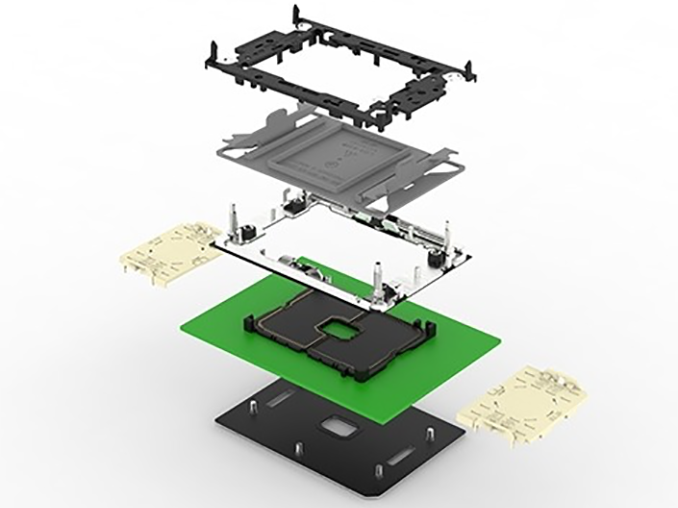
TE Connectivity, a maker of various connectivity solutions, has introduced its newly-developed LGA4189 sockets for Intel’s next-generation Xeon Scalable processors supporting PCIe Gen 4. The products have been validated by Intel and are therefore ready for production of motherboards aimed at next-gen servers. It is worth noting that we already know some Cooper Lake systems are already deployed at large companies, suggesting that some LGA4189 sockets have been validated already.


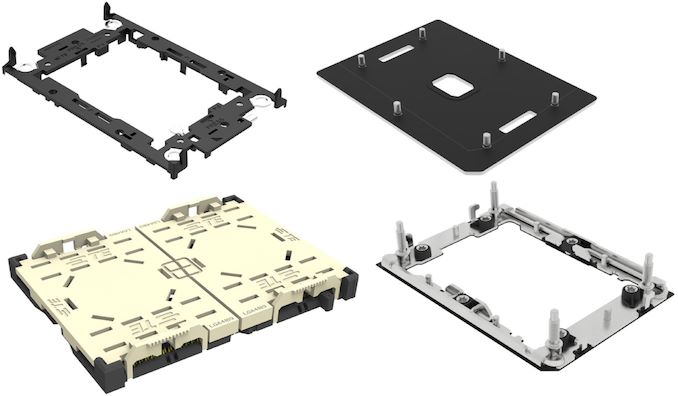
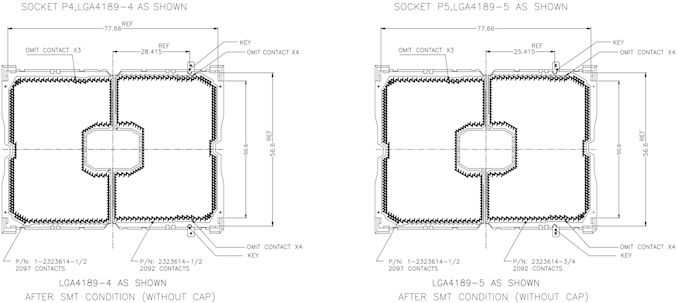
TE offers LGA4189-4 and LGA3189-5 sockets (which are called Socket P4 and Socket P5), appropriate backplates, compatible bolster plates, mounting mechanisms, and dust covers. As discovered previously, Intel’s next-generation Xeon Scalable processors in LGA4189 packaging will feature a native eight-channel memory controller and PCIe 4.0, with at least eight channel memory on standard configurations.


One interesting thing to note is that TE Connectivity will offer Intel’s LGA 4189 socket in two versions: the LGA4189-4 (branded as Socket P4) and the LGA4189-5 (branded as Socket P5). Being a socket maker, TE indicates that key features of Socket P4 and Socket P5 are the same: they have the same pin count, the same 0.9906 mm hex pitch, the same SP height of 2.7 mm, and the same mounting mechanisms. Meanwhile, the company does not disclose why Intel needed two separate 4189-pin sockets. Keeping in mind that Intel will have two next-generation Xeon Scalable processors — codenamed Cooper Lake and Ice Lake — it looks like that the the single-die CPUs and multi-die CPUs will use different sockets and will not be pin-to-pin compatible despite the fact that they are going to use the same platform.


A 4189-pin socket that has to sufficient 56-core power and support ultra-fast interconnections is extremely complex to build. TE is currently “one of the few manufacturers that can provide sockets and hardware” for Intel’s next-gen server CPUs, the company said. Meanwhile, TE says that its LGA4189 hardware is now available to interested parties, such as server makers.


Related Reading


Source: TE Connectivity


Source: AnandTech – Intel’s LGA4189-4 and LGA4189-5 for Cooper Lake & Ice Lake CPUs Now Available

LG's New 55+ inch OLED Plant in China Opens: Over 1m+ per Year

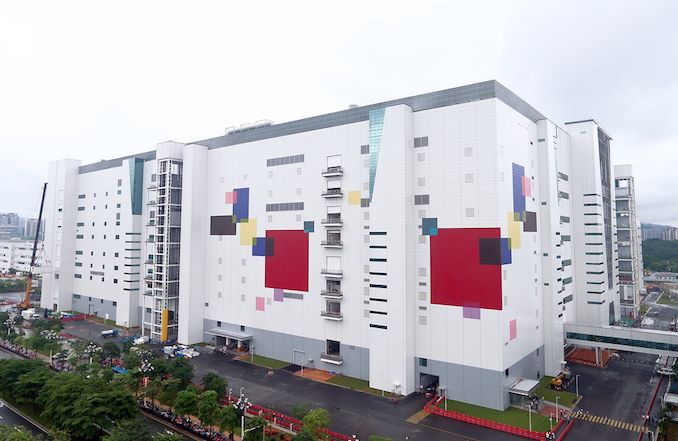
LG Display this month started production at its 8.5th Generation OLED manufacturing facility in Guangzhou, China. When fully ramped, total capacity of the factory will be 90,000 substrates per month. The plant will produce 55, 65, and 77-inch high-resolution panels for televisions. In fact, LG’s goal is to make 10 million large size OLED panels per year by 2022, which means to more than double its current output.


The new 8.5G OLED panel plant is a nine-level building above the ground that occupies a 74,000 m² piece of land and provides 427,000 m² of floor space. Initial capacity of the manufacturing facility will be 60,000 2200×2500 mm substrates per month, which will be expanded to 90,000 sheets per month by 2021. The factory will be operated by LG Display High-Tech China, a joint venture between LG Display and Guangzhou Development District, in which the former holds a 70% stake (with ~$2,150 billion in capital).


Facing cut-throat competition from various makers of liquid crystal displays, LG Display recently set a strategic goal to significantly expand production of large OLED panels in a bid to serve more lucrative and growing market segments. LGD says that it sold 2.9 million huge OLED panels in 2018 and expects to sell 3.8 million large panels this year, which will turn this business to profitability. Citing market researchers, the manufacturer says that demand for OLED TVs and panels is growing and to that end, it makes a great sense to invest in OLED plants.


Right now, LG makes 70,000 8.5G OLED substrates at its plant near Paju, South Korea. The company is building a 10.5th Generation OLED plant near Paju that will produce 45,000 of 2940×3370 mm substrates per month when it is ready in 2022. Combined, LGD will manufacture 160,000 8.5G OLED substrates and 45,000 10.5G OLED sheets a month in 2022. The company hopes that its expanded manufacturing capacity will enable it to make 10 million of large OLED panels per year by 2022.


Related Reading:


Source: LG Display


Source: AnandTech – LG’s New 55+ inch OLED Plant in China Opens: Over 1m+ per Year

World’s First Smartphone with a 64 MP Camera: Xiaomi’s Redmi Note 8 Pro

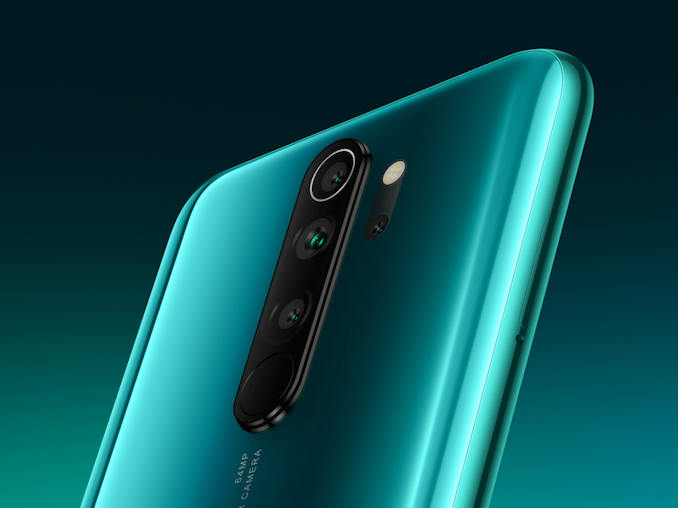
Xiaomi has unveiled its new breed of Redmi Note smartphones boasting with high-performance SoCs as well as premium cameras. The new flagship Redmi Note 8 Pro is the industry’s first handset to feature Samsung GW1 64MP camera module, whereas the Redmi Note 8 offers a 48 MP camera at an entry-level price point.


The Redmi Note 8 Pro


The Xiaomi Redmi Note 8 Pro comes in a rather standard chassis comprised of an aluminum frame encompassed with Gorilla Glass 5 and features a 6.53-inch IPS LCD display with a 2340×1080 resolution as well as a 19.5:9 ratio. With a screen to body ratio of 91.4% (according to Xiaomi) and a rain drop selfie camera module, the device will be available in three colors: Mineral Grey, Pearl White and Forest Green.



Being a range-topping ‘Pro-level’ device, the Redmi Note 8 Pro is based on MediaTek’s flagship G90T SoC (two Cortex-A76, six Cortex-A55, quad-cluster Mali G76 at 800 MHz, AI-specific accelerators, dual-channel LPDDR4X controller, 12FFC) accompanied by 6 or 8 GB of LPDDR4X memory as well as 64 or 128 GB of NAND flash storage (expandable using a microSD card). The SoC is cooled down using Xiaomi’s LiquidCool cooling system (featuring a large piece of aluminum and a heat pipe) in a bid to sustain peak performance for prolonged periods. Performance wise, the new smartphone promises to be rather powerful, yet one of the main reasons to use the MediaTek G90T is because it supports a 64 MP camera module.


In fact, imaging capabilities are the key selling point of the Redmi Note 8 Pro. The main camera is comprised of the Samsung GW1 64 MP RGB module, an 8 MP ultrawide sensor with a 120° field of view, a 2 MP dedicated macro lens, a 2 MP depth sensor, and a dual-LED flash. Meanwhile, the phone also has a 20 MP camera for selfies.
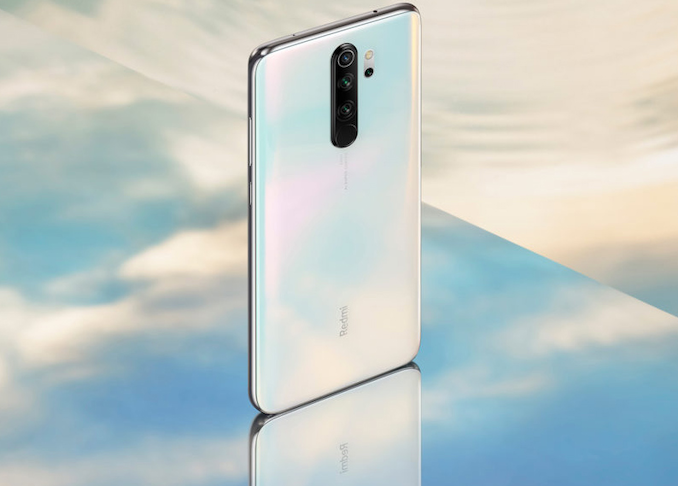


Of course, the Redmi Note 8 Pro supports 4G/LTE: up to 600 Mbps downloads and up to 150 Mbps downloads. Other notable features of the Redmi Note 8 Pro include a 4,500 mAh battery, 802.11ac Wi-Fi, Bluetooth 5.0, NFC, IP52 splash-proof protection, a USB 2.0 Type-C port for data and charging, a 3.5-mm audio jack, an IR blaster, and stereo speakers.


The Redmi Note 8


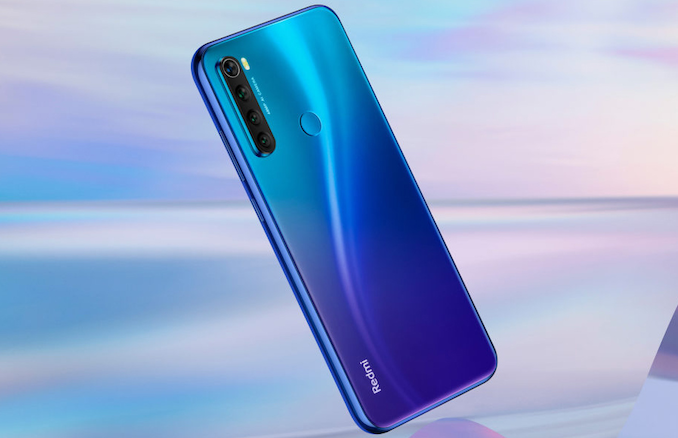
The ‘younger’ brother of the family — the Redmi Note 8 — is naturally a more cost effective option. Coming in an aluminum with glass on the front and plastic on the back chassis, this smartphone has a 6.3-inch IPS LCD display with 2340×1080 resolution. It is based on Qualcomm’s Snapdragon 665 SoC (four Cortex-A73-like cores, four Cortex-A53-like cores, an Adreno 610 GPU, X12 LTE modem) that is paired with 4 or 6 GB of RAM as well as 64 GB or 128 GB of storage.



Even though it is positioned as a mainstream smartphone, the Redmi Note 8 also has a premium quad-module main camera comprising of a 48 MP RGB sensor, an 8 MP ultrawide sensor with a 120° field of view, a 2 MP dedicated macro lens, a 2 MP depth sensor, and a LED flash. It also has a 13 MP camera for selfies. Inherited from the ‘older’ brother are a USB Type-C connector, an IR blaster, and a 3.5-mm headset jack.


Spec Comparison


The Xiaomi Redmi Note 8 Family
  Redmi Note 8 Pro Redmi Note 8
Display IPS LCD

6.53″

2340×1080

Corning Gorilla Glass 5
IPS LCD

6.3″

2340×1080
SoC MediaTek G90T

2x Cortex-A76 at 2 GHz

6x Cortex-A55 at 2.05 GHz

quad-cluster Mali G76 at 800 MHz AI-specific accelerators

dual-channel LPDDR4X controller 12FFC
Qualcomm Snapdragon 665

4x Cortex-A73-like cores

4x Cortex-A53-like cores

Adreno 610 GPU

X12 LTE modem
RAM 6 or 8 GB LPDDR4X 4 or 6 GB DRAM
Storage 64 GB or 128 GB of NAND flash

microSD card slot
Local Connectivity Wi-Fi  802.11ac Wi-Fi
Bluetooth Bluetooth 5.0
Data/Charging USB 2.0 Type-C
Audio 3.5-mm jack

stereo speakers

active noice cancellation
3.5-mm jack

stereo speakers
NFC Yes
LTE 4G/LTE

CAT 12 UL 600 Mbps

CAT 13 UL 150 Mbps
X12 LTE
Navigation  A-GPS, GLONASS, BDS  A-GPS, GLONASS, BDS, GALILEO
Rear Camera Main 64 MP, f/1.8,

1/1.7-inch

0.8µm pixels

PDAF
48 MP, f/1.8,

1/2-inch

0.8µm pixels, 

PDAF
Ultrawide 8 MP, f/2.2

13mm (ultrawide)

1/4-inch

1.12 µm pixels
Macro 2 MP, f/2.4

1/5-inch

1.075 µm pixels
Depth 2 MP, f/2.4

1/5-inch

1.075 µm pixels
Front Camera 20 MP, f/2.0 13 MP, f/2.0
Battery Capacity 4500 mAh 4000 mAh
Expected Life ? ?
SIM Size Nano SIM + Nano Sim
Sensors accelerometer, gyro, proximity, compass
Biometric Security Fingerprint Yes (?) Yes
Facial Recognition
Dimensions Height 161.3 mm | 6.35 inches 158.3 mm | 6.23 inches
Width 76.4 mm | 3.01 inches 75.3 mm | 2.96 inches
Thickness 8.8 mm | 0.35 inches 8.4 mm | 0.33 inches
Weight 199 grams | 7.02 ounces 190 grams | 6.7 ounces
Colors Mineral Grey

Pearl White

Forest Green
Blue

White/Grey

Black
Protection Drop ?
Splashes IP52
OS Google Android 9.0 with MIUI 10
Launch Countries China initially, NA/EU launch later
Price 6 GB + 64 GB — RMB 1,399

6 GB + 128 GB — RMB 1,599

8 GB + 128 GB — RMB 1,799


starts at $172

4 GB + 64 GB — RMB 999

6 GB + 64 GB — RMB 1,199

6 GB + 128 GB — RMB 1,399


starts at $124

Price and Availability


So far, Xiami has introduced its Redmi Note 8 series only for China, where they will ship in September, but expect the smartphones to hit other markets in the future. The Redmi Note 8 Pro starts at RMB 1,399 for a 6 GB + 64 GB version and goes all the way to RMB 1,799 for an 8 GB + 128 GB model. The Redmi Note 8 is naturally cheaper: it costs RMB 999 – RMB 1,399 depending on configuration.


Related Reading:


Sources: Xiaomi/Redmi, GSMArena


Source: AnandTech – World’s First Smartphone with a 64 MP Camera: Xiaomi’s Redmi Note 8 Pro

Toshiba's Timeline for PCIe 4.0 SSDs

Following up on several announcements from Flash Memory Summit earlier this month, Toshiba has shared more information about their plans for transitioning their NVMe SSDs to PCI Express 4.0. None of their PCIe Gen4 SSDs are particularly close to volume production, so rather than share preliminary performance numbers Toshiba is talking more about which product segments will be migrating first and what other design changes are coming at the same time as the interface speed boost. Toshiba’s perspective on final products and market readiness stands in contrast to the roadmaps from the SSD controller vendors that are racing to be the first ready with a full lineup of PCIe 4.0-capable controllers.


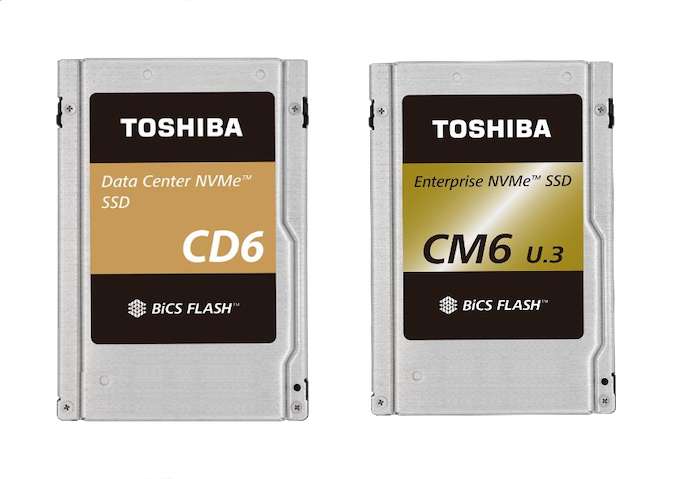
Toshiba expects the server market to be the first segment to embrace PCIe 4.0. AMD has just launched their second-generation EPYC platform with a comparative wealth of PCIe 4.0 lanes, and companies like Broadcom and Microsemi are offering PCIe 4.0 switches and HBAs. The ecosystem is just about ready to support a large-scale transition from PCIe Gen3 to Gen4, and Toshiba is expecting mainstream adoption to begin next year. They are timing their first two Gen4 SSDs for 2020. The Toshiba CM6 enterprise NVMe SSD and the CD6 datacenter NVMe SSD are successors to the existing CM5 and CD5 respectively, with the CM6 offering some more advanced enterprise features like PCIe dual-port support. Both drives will be using Toshiba’s BiCS4 96-layer 3D TLC NAND flash memory, and they’re currently expecting peak speeds of 6.7GB/s.


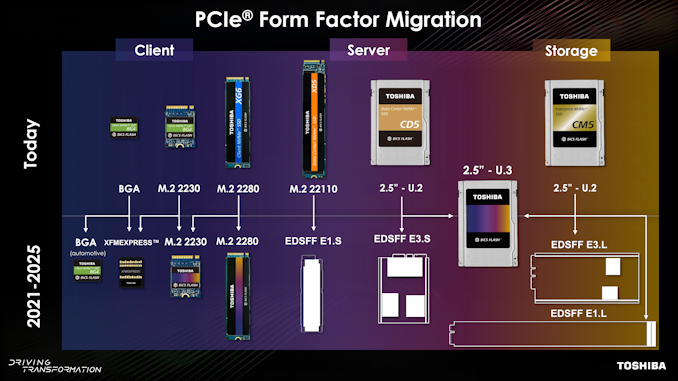
Toshiba is fully on board with the new EDSFF family of form factors, but they aren’t expecting them to be going mainstream in time for the first wave of PCIe Gen4 datacenter SSDs. Instead, Toshiba is choosing the U.3 standard for the near term. This is mechanically identical to the familiar 2.5″ U.2 form factor, but U.3 changes up the pin assignments. U.2 and U.3 SSDs both use the same mechanical connector as SAS drives, but where U.2 puts PCIe pins in positions not used by SAS drives, U.3 drives are capable of operating with a PCIe link on the same pins that SAS drives use for their data link. The motivation behind this change is to simplify cabling and backplanes for tri-mode ports that can accept SATA, SAS or NVMe SSDs. Broadcom in particular has been selling tri-mode HBAs and RAID cards that support all three protocols, and the use of U.3 instead of U.2 makes it much easier to make full use of the flexibility of those host interfaces. U.2 drives won’t work in U.3 drive bays, but U.3 drives are required to work with U.2 ports. Toshiba has enabled this by adding an extra set of PCIe PHYs to their SSD controllers rather than put switches on the SSD between the controller and connector. This avoids any potential damage to signal integrity that such switches might impose.


The Toshiba CM5 is available in both 2.5″ U.2 and PCIe add-in card form factors, but the latter is being dropped by the CM6 due to a perceived lack of demand or compelling use cases. The add-in card form factor was already a very small slice of the SSD market, and PCIe 4.0 allows products that were using a PCIe 3.0 x8 interface to drop back down the a four-lane connection as provided by U.2/U.3 ports. For products that were using the AIC form factor more for the sake of enabling higher SSD capacity than for the sake of a wider PCIe link, the EDSFF 1U Long “Ruler” form factor will be taking over eventually, but that may not happen for another product generation or two.


Toshiba is currently working with their partners for testing and validation of the CM6 and CD6, with volume availability planned for 2020. Further down the road, Toshiba is also working on an XD6 replacement for their XD5. These are their more hyperscaler-oriented datacenter drives, with more of a focus on low power and latency compared to the CD and CM series focus on higher performance and more advanced features. The XD5 uses the M.2 22110 form factor. The XD6 will retain that option and may also be Toshiba’s first SSD to use the EDSFF E1.S (1U Short) form factor. Datacenter M.2 drives need the advantages of EDSFF form factors a lot more than other existing form factors do, and across the industry as a whole it looks like the E1.S form factor will be the first EDSFF variant to go mainstream. Officially, the XD6 is being targeted for shipment “after 2020”.


Even though there are a few PCIe Gen4 SSDs already available in the consumer segment, Toshiba is predicting that PCIe Gen4 will remain a niche enthusiast feature for a while longer. Since Toshiba’s client SSD sales are almost exclusively to OEMs rather than direct to consumers in the form of retail products, they aren’t under much pressure yet to switch these products over to PCIe Gen4 and haven’t made any official statements about upcoming products for this segment. We probably won’t see a successor to the XG6 and XG6-P until Toshiba’s 1xx-layer 3D NAND is ready. If Toshiba decides to continue their pattern of using that product line as the first shipping SSDs with a new generation of NAND, then the hypothetical XG7 might show up before they’re ready to move their client SSDs to PCIe Gen4. M.2 will continue to be the mainstream form factor for client NVMe SSDs, but Toshiba is already planning for smaller form factors to become more commonplace. They’ve announced the new XFMEXPRESS card for small portable and embedded systems, and they are expecting the M.2 2230 card size to gain popularity as M.2 2280 transitions to more of a niche role for enthusiast drives and multi-TB capacities.


Storage array appliances tend to have long product cycles, and this is one of the areas where even SAS SSDs are still relevant. Toshiba is expecting this market segment to be one of the last to migrate to PCIe Gen4 and new form factors, probably reaching a tipping point around 2023. Ultimately, these systems will probably be moving to the EDSFF E1.L or E3 form factors.


Toshiba’s strategy is similar to the partial roadmap that Samsung shared last fall. They are also starting with their high-performance enterprise/datacenter drives. Samsung’s client NVMe drives and their entry-level datacenter drives typically use the same controllers, and while no PCIe 4.0 update to these product lines has been announced, we can expect to see something in 2020 or possibly at the very end of this year.


Source: AnandTech – Toshiba’s Timeline for PCIe 4.0 SSDs

Dressed to Impress: Team Group’s T-Force Delta Max RGB SATA SSD

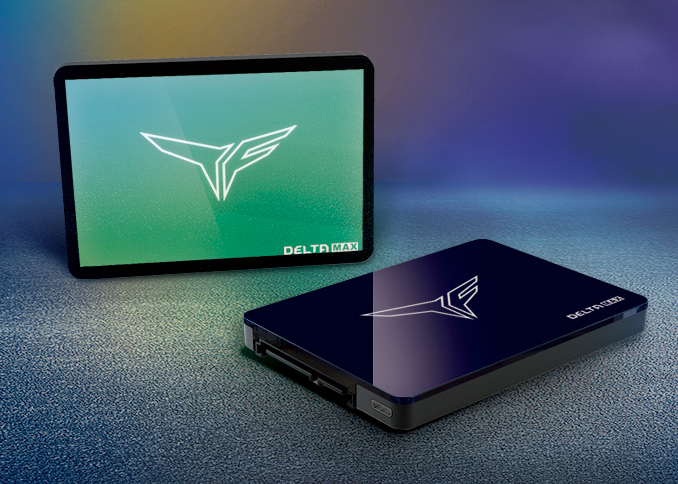
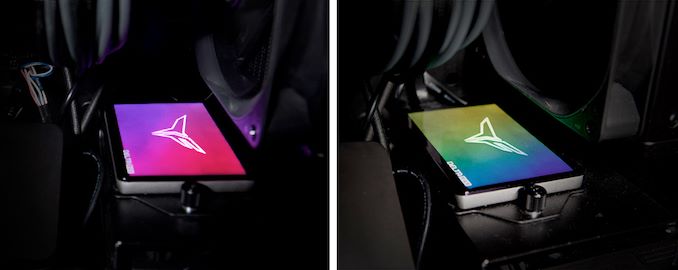
RGB LEDs are used for thousands of enthusiast-class products these days, so in many cases manufacturers compete against each other in terms of style and try to make their devices look better than their rivals. Team Group this week introduced its T-Force Delta Max RGB SSD that features an addressable RGB LED module which covers its entire top surface making the device look like no other product on the market.


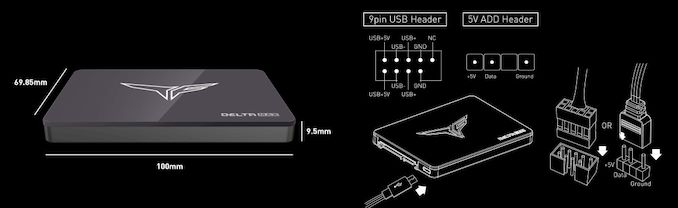
Team Group’s T-Force Delta Max RGB SSD comes in a 2.5-inch/9.5-mm SATA form-factor. Set to be available in 250 GB, 500 GB, 1 TB, and 2 TB versions, the SSD is based on Silicon Motions’s SM2258 controller paired with Micron’s 64-layer or 96-layer 3D TLC NAND memory. From performance point of view, we are dealing with fairly standard mainstream SATA drives: the SSD is rated for up to 560/510 MB/s sequential read/write speed as well as up to 90K/80K random read/write IOPS.


True to its name, the SSD features an oversized addressable RGB LED module on top that features built-in rainbow color water flowing lighting effect and can be controlled using software from leading motherboard manufacturers. The product has a 9-pin USB header for built-in lighting effect as well as a 4-pin 5V header for controls using appropriate apps.


The RGB LED module naturally takes space, which is why the T-Force Delta Max RGB is 2.5 mm thicker than most 2.5-inch SSDs available on the market today (which are 7 mm thick). Considering the fact that the drive is aimed at desktop enthusiasts, it is unlikely that it will be bought to use inside mobile PCs. Nonetheless, one should keep this peculiarity in mind.


Team Group T-Force Delta Max RGB SSD Specifications
Capacity 250 GB 500 GB 1 TB 2 TB
Model Number T253TM250G3C302 T253TM500G3C302 T253TM001T3C302 ?
Controller Silicon Motion SM2258
NAND Flash 3D TLC NAND
Form-Factor, Interface 2.5-inch/9.5-mm, SATA 6 Gbps
Sequential Read 560 MB/s
Sequential Write 500 MB/s 510 MB/s
Random Read IOPS 90K 90K
Random Write IOPS 75K 80K
Pseudo-SLC Caching Supported  
DRAM Buffer Yes, capacity unknown  
TCG Opal Encryption ?  
Power Management ?  
Warranty 3 years
MTBF ?
TBW ? ? ?  
Additional Information Link
MSRP $59.99 $89.99 $149.99 ?

Team’s ‘dressed to impress’ T-Force Delta Max RGB SSDs will be available shortly. The 250 GB version carries a price tag of $59.99, the 500 GB model is priced at $89.99, whereas the 1 TB SKU features an MSRP of $149.99.


Related Reading:


Source: Team Group


Source: AnandTech – Dressed to Impress: Team Group’s T-Force Delta Max RGB SATA SSD

AUO’s Mini LED Monitors: 32-Inch 4Kp144, 65-Inch 4Kp144, VR, & Others

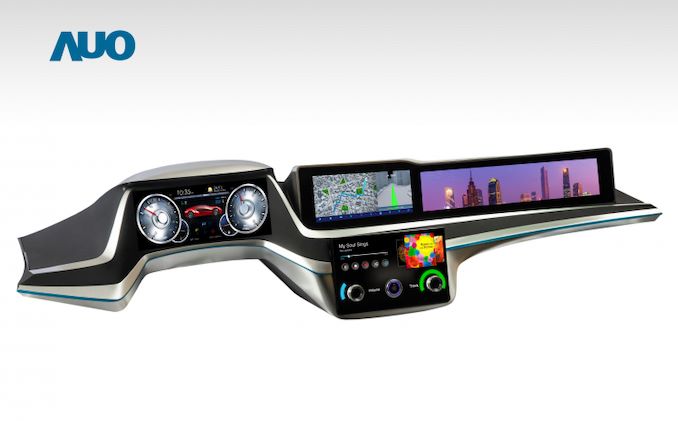
Among other leading-edge consumer displays demonstrated by AU Optronics this week at Touch Taiwan 2019 trade show are the company’s monitors with Mini LED backlighting. The displays are intended for a variety of applications that benefit from high brightness and contrast ratios, including Ultra-HD televisions, computer displays, VR headsets, and in-car infotainment systems.


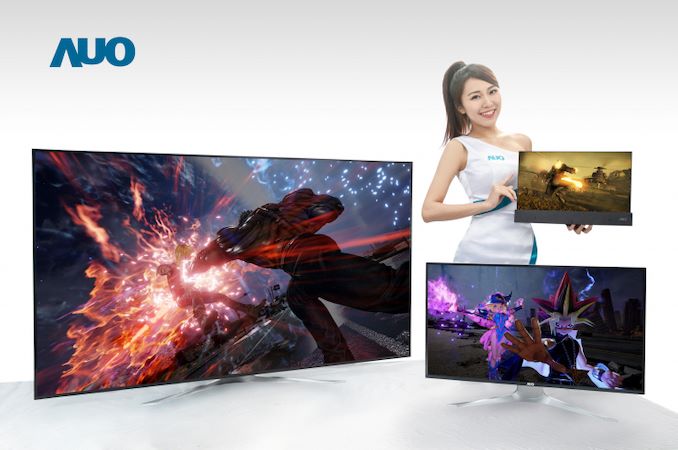
The largest Mini LED-enabled screen from AUO is a 65-Inch display featuring a 3840×2160 resolution, 2,500 nits peak brightness, a 144 Hz refresh rate, and over 1,000 local dimming zones. Officially, this one is called a ‘large size gaming display’ and could easily compete against NVIDIA’s BFGDs sold by ASUS and HP when it is available. Meanwhile, being a maker of panels, AUO cannot pre-announce actual retail products by its partners.


The somewhat smaller Mini LED offering from AUO is its 32-inch prototype featuring a 4K resolution, 1,500 nits peak brightness, a 144 Hz refresh rate, as well as over 1,000 local dimming zones. The LCD resembles ASUS’ 32-inch ProArt PA32UCX professional display introduced at CES, but has a considerably higher refresh rate and is positioned for gaming applications.


One more gaming screen from AUO featuring a Mini LED backlighting is a 17.3-inch LTPS 4K gaming display that meets VESA’s DisplayHDR 1000 (which means at least 1000 nits brightness) requirements and is designed for high-end notebooks.


Another interesting prototype with a Mini LED backlight module is AUO’s 2.9-inch LTPS display with 2,304 dimming zones as well as a whopping pixel density of 1,688 PPI. The screen promises ultimate fidelity and ultra-realistic VR experience, though it is unclear when AU Optronics will be able to ship the device commercially to interested parties.


Extending its Mini LED technology to non-gaming applications, AU Optronics has also developed a 12.3-inch LTPS curved cluster panel featuring a 750R curvature, a high resolution, 1000 nits brightness, and high contrasts. The screen is intended for vehicles, but considering how long it takes for auto industry to validate new technologies, AUO expects it to adopt this or similar displays within five years.


Based on the fact that AUO, which is one of the leading producers of LCDs on the planet, makes rather high bets on Mini LED-based backlighting, it looks like the technology certainly has a big future at least in high-end applications. What remains to be seen is when and whether this technology will get cheaper and will be used for mainstream displays.


Related Reading:


Source: AUO


Source: AnandTech – AUO’s Mini LED Monitors: 32-Inch 4Kp144, 65-Inch 4Kp144, VR, & Others

ASUS ZenBook Pro Duo UX58: A Dual Screen Laptop with 100% DCI-P3 OLED
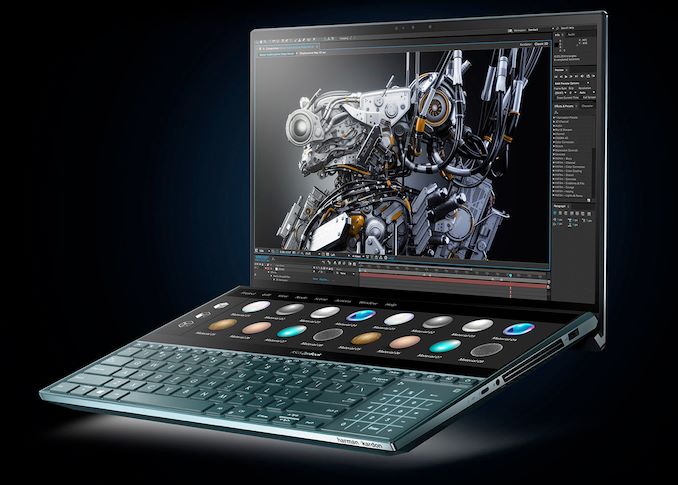
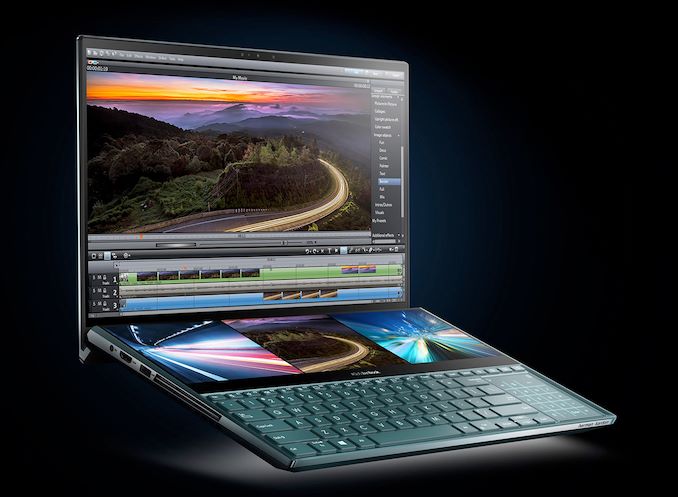
Modern notebooks can offer performance and feature set comparable to those of desktop PCs. One thing that laptops cannot offer is the screen real estate: desktops can be equipped with a large 32-43-inch monitor, whereas mobile workstations come with a 15.6 – 17.3-inch LCD at best (unless, of course, they are connected to an external panel). ASUS this week launched its ZenBook Pro Duo notebook that comes with a 15.6-inch 4K primary OLED display that is accompanied by a 14-inch secondary screen.
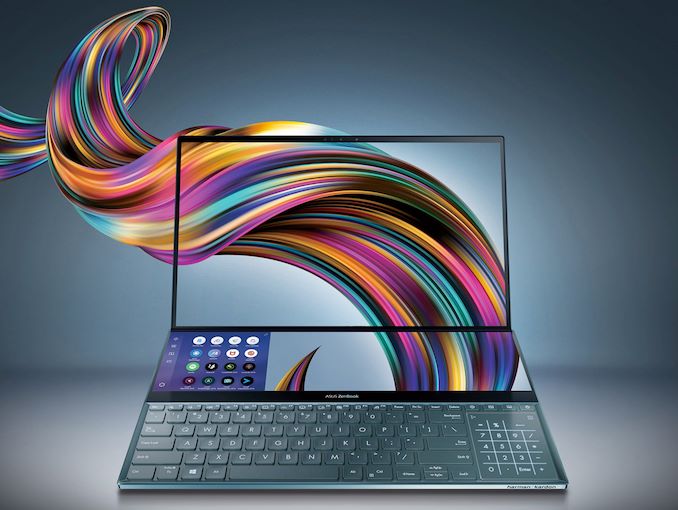


Being in the flagship family of mobile PCs from ASUS, the ZenBook Pro notebooks incorporate all the latest and greatest technologies that the company has to offer. This includes a luxurious aluminum unibody chassis that stand out from any competition. The ZenBook Pro Duo UX58 is clearly not an exception: it comes in a celestial blue aluminum chassis with reflective edges that looks extremely stylish. Unlike most laptops in the series, the ZenBook Pro Duo UX58 is not that compact: it is 2.4 cm thick and it weighs 2.5 kilograms. But there is a reason why the notebook is not really compact: it has two displays and contains high-performance components like Intel’s eight-core CPU and NVIDIA’s GeForce RTX discrete GPU.
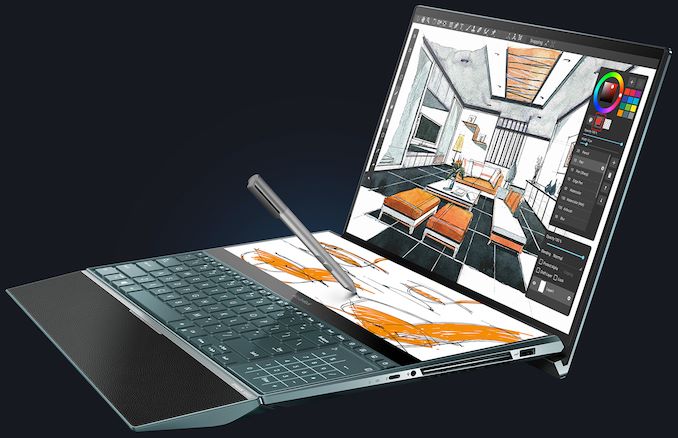
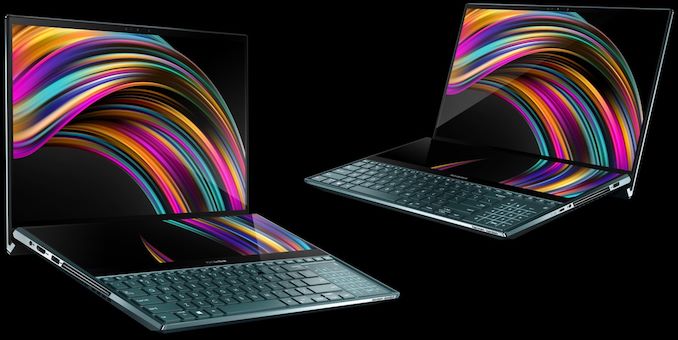


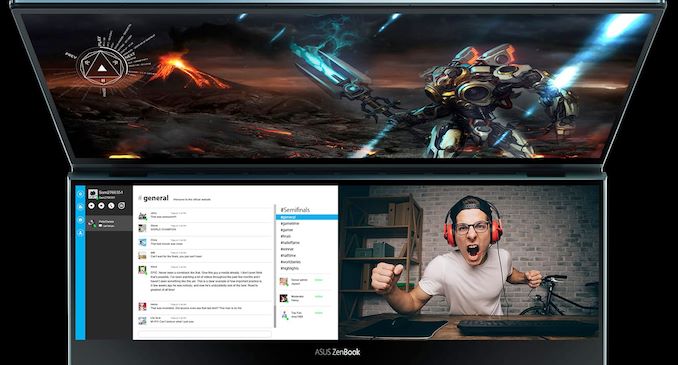
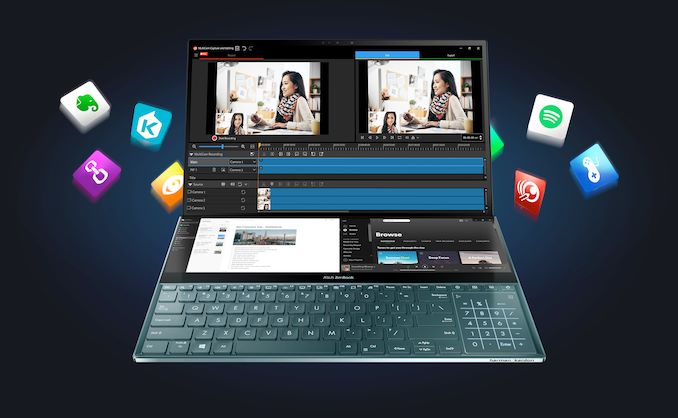
The primary display of the ASUS ZenBook Pro Duo UX58 is a Pantone Validated 15.6-inch OLED touchscreen with a 3840×2160 resolution that can reproduce 100% of the DCI-P3 color gamut. The secondary display of the laptop, which the company calls ScreenPad Plus and which is located above the keyboard, is a 14-inch touch-enabled display featuring a 3840×1100 resolution, a 32:9 aspect ratio, and 178˚ viewing angles. The ScreenPad Plus can be used like a regular secondary display under Windows to extend the desktop space. Besides, it can be used with ASUS’s ScreenXpert control software that simplifies multiscreen window and program management as well as can run specially-designed apps. Furthermore, ASUS is also working with developers of professional applications to create versions that can take advantage of the ScreenPad Plus in a way that many apps take advantage of Apple’s TouchBar.


The internals of the ASUS ZenBook Pro Duo UX58 is as premium as its externals. Depending on exact model, the notebook can be based on Intel’s six-core Core i7-9750H or unlocked eight-core Core i9-9980HK processor, though we do not know whether ASUS lets owners of the notebook overclock this CPU. The systems also feature NVIDIA’s discrete GeForce RTX 2060 graphics processor with 6 GB of GDDR6 memory; 8, 16 or 32 GB of DDR4-2666 DRAM, and an SSD with up 1 TB capacity (PCIe 2.0/3.0 x4/NVMe). Considering that we are dealing with very high-performance components, expect ASUS to use a specially designed cooling systems with multiple heat pipes and fans. To boost performance of the notebook, it has a Turbo Fan button that speeds up fans to maximize cooling performance and enable the CPU and the GPU to increase their boost clocks.


Connectivity wise, the ZenBook Pro Duo UX58 is a first-class machine as well. On the wireless side of things, the laptop is equipped with Intel’s Wi-Fi 6 solution (with Gbps+ throughput) and Bluetooth 5.0. As for physical connectors, the laptop comes with one Thunderbolt 3 port, two USB 3.1 Gen 2 Type-A connectors, an HDMI 2.0 display output, a 3.5-mm combo audio jack, and a proprietary jack for charging.


When it comes to multimedia capabilities, the mobile PC has a Windows Hello-capable webcam with IR sensors, Harman Kardon-badged stereo speakers, and a microphone array with Cortana and Alexa voice-recognition support,


At present, ASUS offers two versions of its ZenBook Pro Duo laptops: the model UX581GV-XB74T based on the six-core CPU for $2,499 as well as the model UX581GV-XB94T powered by the eight-core CPU for $2,999. Eventually, the company will offer other SKUs.


The ASUS ZenBook Pro Duo Laptops
  General UX581GV-XB74T UX581GV-XB94T
Primary Display General 15.6-inch OLED with touch
Resolution

Color Gamut
3840×2160

100% DCI-P3

133% sRGB
Features Pantone Validated

DisplayHDR True Black 500
Secondary Display Diagonal 14-inch with touch
Resolution 3840×1100
Viewing Angles 178˚
CPU Options Intel Core i7-9750H

Intel Core i9-9980HK
Intel Core i7-9750H

6C/12T, 2.6 – 4.5 GHz
Intel Core i9-9980HK

8C/16T, 2.4 – 5 GHz
Graphics Integrated HD Graphics 630 (24 EUs)
Discrete NVIDIA GeForce RTX 2060 6 GB GDDR6
RAM <32 GB DDR4-2666 16 GB DDR4-2666 32 GB DDR4-2666
Storage SSD 256 GB PCIe 3.0 x2

512 GB PCIe 3.0 x2

1 TB Optane H10
Intel Optane Memory H10 PCIe 3.0 x4

1 TB 3D QLC + 32 GB 3D XPoint
Wireless Wi-Fi Intel Wi-Fi 6 (802.11ax)
Bluetooth Bluetooth 5.0
USB 3.1 Gen 2 1 × TB 3 (Type-C)

2 × USB Type-A
Thunderbolt 1 × TB 3 (data, DP displays)
Display Outputs 1 × HDMI 2.0

1 × TB3 with DisplayPort
Gigabit Ethernet none
Card Reader none
Webcam Windows Hello-capable webcam with IR sensors
Fingerprint Sensor none
Other I/O Microphone, stereo speakers, audio jack
Battery 62 Wh Li-Poly

71 Wh Li-Poly
71 Wh Li-Poly
Dimensions Width 35.9 cm | 14.13 inch
Depth 24.6 cm | 9.68 inch
Thickness 2.4 cm | 0.94 inch
Weight 2.5 kilograms | 5.51 lbs
Price various $2,499 $2,999

Related Reading:


Source: ASUS


Source: AnandTech – ASUS ZenBook Pro Duo UX58: A Dual Screen Laptop with 100% DCI-P3 OLED

Sharp to Demonstrate 120-Inch 8K LCD TV & 8K TV with 5G Modem at IFA

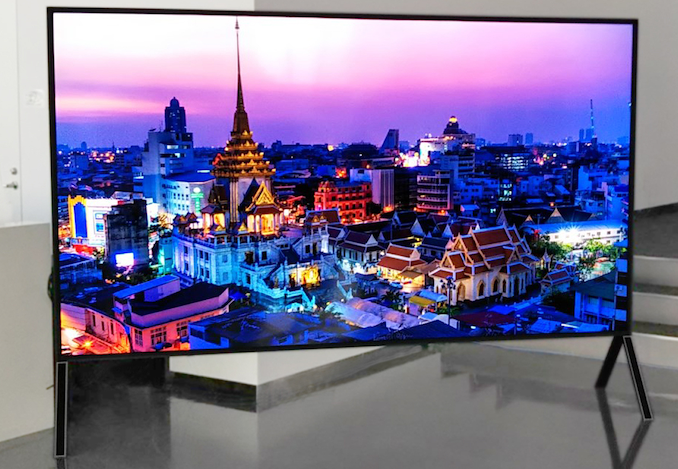
Being the world’s first manufacturer to develop an Ultra-HD television featuring a 7680×4320 resolution, Sharp still has an edge over its rivals on the 8K front. At IFA next week the company plans to showcase its latest 8K devices, including the world’s largest liquid crystal display as well as an 8K TV with an integrated 5G modem.


Sharp’s next-generation 120-inch display with an 8K resolution will be the pinnacle of the company’s (and the industry’s) LCD technology as previously screens of this size used other types of panels. Sharp does not disclose refresh rate of the giant monitor or its peak brightness, but we do know that Sharp’s 2nd Generation commercial 8K UHDTVs featured a 100/120 Hz refresh rate as well as 400 – 1000 nits brighness for SDR and HDR content, respectively. Whether this one will or not will depend on its manufacturing feasibility and commercial potential.


Another interesting 8K device that Sharp plans to demonstrate at IFA will be its 8K display with a built-in 5G modem designed specifically for museums and schools. The 8K Viewer with 5G enables remote viewing of art (or architecture) masterpieces or highly-detailed images/videos needed for education with a naked eye remotely (and with a certain level of interactivity, provided that there is an appropriate infrastructure).


In fact, Sharp plans to create a so-called 8K+5G ecosystem whereby ultra-high-resolution videos and images will be delivered over a 5G network to the end user or to the Internet. For example, a camcorder equipped with a 5G modem will be able to broadcast 8K video with HDR to the Internet without using a smartphone. Considering the fact that an 8K video stream with ultra-wide color gamut will require bandwidth of at least 512 Gbps (Ultra HD Blu-ray’s 128 Gbps × 4), 5G will make a lot of sense for such a broadcast, but to enjoy it one will need a fast Internet connection as well.


Related Reading:


Source: Sharp


Source: AnandTech – Sharp to Demonstrate 120-Inch 8K LCD TV & 8K TV with 5G Modem at IFA

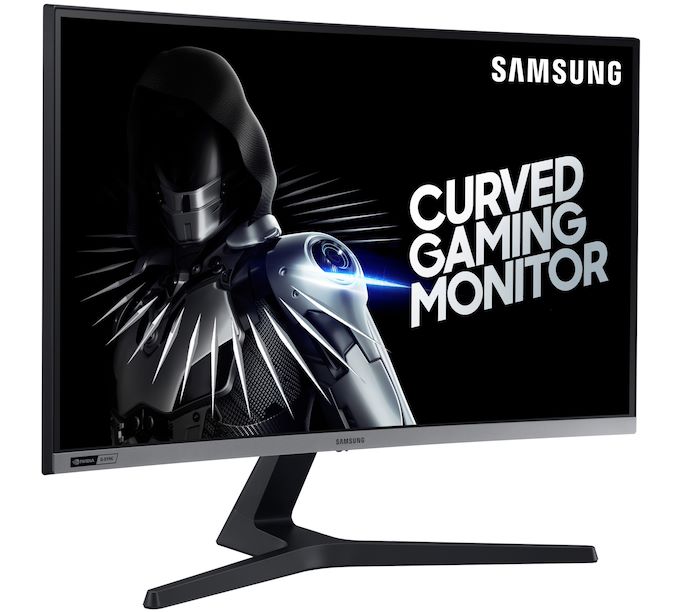
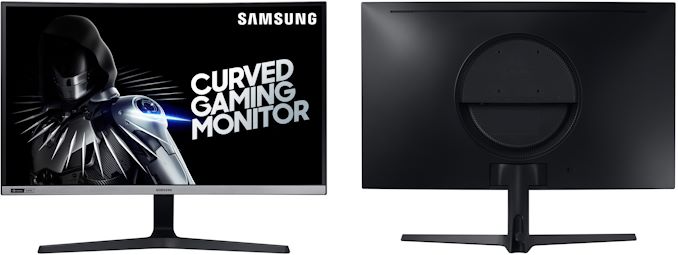
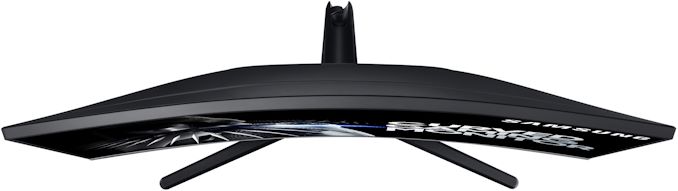
Samsung’s CRG5 Curved 27-Inch 240 Hz G-Sync Monitor Now Available for $370

Samsung has started sales of one of the industry’s first curved monitors featuring a 240 Hz maximum refresh rate. Aimed at gamers and esports professionals ‘looking for maximum performance’, the CRG5 supports NVIDIA’s G-Sync variable refresh rate technology as well as multiple features designed specifically for this target audience.


The Samsung 27-inch CRG5 display is based on a curved VA panel featuring a 1920×1080 resolution, 300 nits brightness, a 3000:1 contrast ratio, a 4 ms response time, a 240 Hz maximum refresh rate, and a 1500R curvature. The LCD can display 16.7 million of colors and can reproduce 72% of the NTSC 1976 color gamut, which is in line with monitors developed primarily for hardcore gamers and esports enthusiasts.


Three key selling features of the CRG5 are curvature, support for NVIDIA’s G-Sync variable refresh rate technology, and a 240 Hz maximum refresh rate, a combination not available previosly. Meanwhile, since the monitor is designed for a very special target audience seeking for extreme performance and immersion, it also supports low input lag mode (which bypasses processing by the monitor’s internal scaler), genre-specific game modes, black equalizer mode that makes ultra dark parts of the scenes look brighter, as well as an on-screen crosshair.


When it comes to connectivity, the CRG5 LCD is equipped with one DisplayPort 1.2 input, two HDMI 2.0 ports, a USB connector for firmware upgrades, and a 3.5-mm audio jack. Meanwhile, the display has a stand that can adjust tilt as well as VESA 75×75 mounting holes.


The Samsung Curved Gaming Display w/ 240 Hz Refresh
  27CRG5
Panel 27″ VA
Native Resolution 1920 × 1080
Maximum Refresh Rate 240 Hz
Response Time 4 ms GtG
Brightness 250 cd/m² (typical)
Contrast 3000:1
Backlighting LED
Viewing Angles 178°/178° horizontal/vertical
Curvature 1500R
Aspect Ratio 16:9
Color Gamut 72% NTSC 1976
DisplayHDR Tier
Dynamic Refresh Rate Tech NVIDIA G-Sync

range?
Pixel Pitch 0.3113 mm²
Pixel Density 81 PPI
Inputs 1 × DisplayPort 1.2

2 × HDMI 2.0
Audio 3.5 mm output
USB Hub 1 × USB 3.0 Type-A input
Stand Adjustments Height: no

Tilt: -2˚ – 15˚

Swivel: no
MSRP $369.99

Samsung CRG5 curved 240 Hz monitor is now available from leading retailers like Amazon starting at $369.99 ~ $399.99. In Europe, the product will be available in the near future.


Related Reading


Source: Samsung


Source: AnandTech – Samsung’s CRG5 Curved 27-Inch 240 Hz G-Sync Monitor Now Available for 0

Dell’s New Latitude 5300 2-in-1 and Latitude 5400: Chromebooks for Enterprise

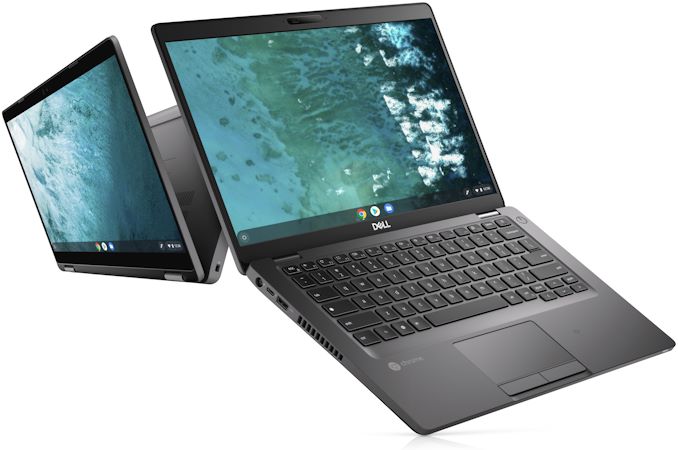
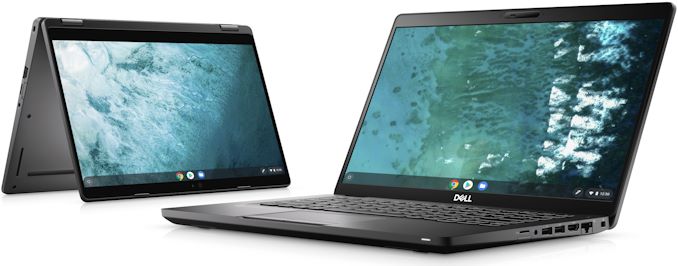
Most laptops running Chrome OS are aimed at students or consumers, but this week Google introduced its Chromebook Enterprise initiative designed to make its platform viable for enterprise users as well, thus challenging Microsoft’s Windows. Dell is the first major PC maker to launch Chromebook Enterprise notebooks designed for businesses and supporting appropriate security, management, and deployment features.


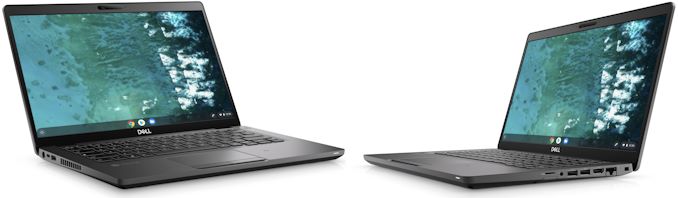
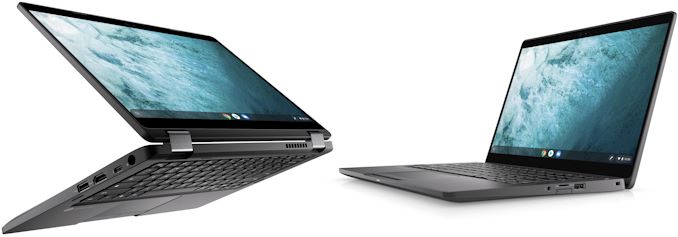
The Chromebook Enterprise systems introduced this week are Dell’s Latitude 5300 2-in-1 Chrome convertible notebook with a touch-sensitive Full-HD 13.3-inch display as well as Latitude 5400 Chrome laptop with a 14-inch HD or Full-HD monitor with or without touch support. Both machines come in a post-industrial carbon fiber chassis that features carbon fiber reinforced polymer LCD back and has passed 17 MIL-STD tests. The laptops are 19.3 ~ 19.6 mm thick and weight 1.36 ~ 1.47 kilograms depending on the model. As for battery, Dell will offer options with a 42 Wh, 51 Wh, 60 Wh, or 68 Wh battery packs. This is truly a wide enterprise offering.


Dell’s Latitude 5300 2-in-1 Chrome and Latitude 5400 Chrome notebooks are based on Intel’s 8th Generation Core (also Pentium or Celeron) processors with up to four cores as well as Intel UHD Graphics 610/620 paired with up to 32 GB of DDR4-2666 memory as well as an SSD of up to 1 TB capacity (that’s a lot for a Chromebook!). As for connectivity, the laptops are equipped with 802.11ac Wi-Fi, Bluetooth 5.0, an optional Intel XMM 7360 4G/LTE modem, a GbE (5400-series only), a USB 3.1 Gen 2 Type-C port with DisplayPort as well as power delivery for docking, two USB 3.1 Gen 1 Type-A, one HDMI 1.4 port, a microSD card reader, and a 3.5-mm connector for headsets. Multimedia capabilities of the mobile PCs include a webcam, stereo speakers, a microphone array, and other essentials.


Being aimed at business and enterprise users, Dell’s Latitude 5300/5400-series Chrome notebooks also feature the H1 secure microcontroller, verified boot, a spill resistant keyboard, and other features. Pre-installed software includes Google’s Chrome Enterprise Upgrade with Console, VMware’s Workspace One, Dell’s Data Guardian Cloud, Dell’s Safe Data, as well as Dell’s ProSupport Plus.


Dell’s Chromebook Enterprise Notebooks
  Chromebook 5300

2-in-1
Chromebook 5400

Clamshell
Display Diagonal 13.3″ with touch 14″ HD with/without touch
Resolution 1920×1080 1366×768 without touch

1920×1080 with/without touch
Brightness 255 cd/m² 220 cd/m²
CPU 8th Gen Core

Celeron/Pentium
Graphics UHD 620 (Core/Pentium)

UHD 610 (Celeron)
RAM up to 32 GB DDR4-2666 (two slots)
Storage M.2-2230 NVMe/PCIe SSD, up to 1 TB
Wi-Fi Intel Dual-Band Wireless-AC 9560 802.11ac Wi-Fi module
Bluetooth BT 5.0
WWAN Intel XMM 7360 Global LTE-Advanced (optional)
GbE No Yes
USB 1 × USB 3.1 Gen 2 Type-C for data, charging, display output

2 × USB 3.1 Gen 1 Type-A
1 × USB 3.1 Gen 2 Type-C for data, charging, display output

3 × USB 3.1 Gen 1 Type-A
Webcam 720p optional 720p with shutter
Other I/O HDMI 1.4, microSD, TRRS connector for audio, speakers, microphone
Battery 42 Wh Express Charge

60 Wh Express Charge

60 Wh Long Life Battery
42 Wh Express Charge

51 Wh Express Charge

68 Wh Express Charge

68 Wh Long Life Battery
Dimensions Thickness 16.9 – 19.3 mm

0.66 – 0.76 inches
19.6 – 20.85 mm

0.77 – 0.82 inches
Width 305.7 mm | 12 inches 323.05 mm | 12.7 inches
Depth 207.5 mm | 8.16 inches 216 mm | 8.5 inches
Weight 1.36 kilograms | 3 pounds 1.47 kilograms | 3.24 pounds
Battery Life ?
Price (starting at) $819 $699 for 1366×768

Dell started sales of its Latitude 5300 2-in-1 Chrome as well as Latitude 5400 Chrome laptops this week. The convertible machine starts at $819, whereas the non-convertible notebook starts at $699.


Related Reading:


Source: Dell


Source: AnandTech – Dell’s New Latitude 5300 2-in-1 and Latitude 5400: Chromebooks for Enterprise

AMD Bulldozer 'Core' Lawsuit: AMD Settles for $12.1m, Payouts for Some

AMD this month has agreed to pay compensation that totals $12.1 million to users who purchased FX-8000/9000 CPUs via its website or in the state of California. The case comes down to AMD advertising these processors as having 8 cores, and the claim that a shared FPU unit within a ‘dual core’ module does not constitute an actual core of performance similar to a separate core/FPU unit. Users who qualify for the compensation are estimated to recieve in the region on $35, depending on the exact uptake, and no one person can claim more than $7500.


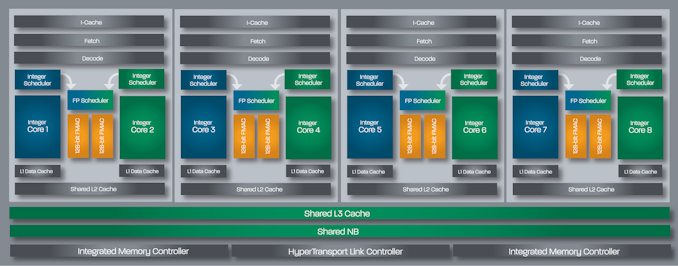
AMD’s Bulldozer microarchitecture used ‘dual-core modules’ containing two independent ALUs and a shared FPU. AMD believed that such design allowed it to call its FX-8000 and FX-9000 series processors as the industry’s first eight-core desktop CPUs, yet the latter were quite often behind their quad-core rivals from Intel in terms of performance. As a result, a group of people from California filed a class action suit that accused AMD of false advertising back in 2015.


In early 2019, the Northern District Court of California sided with the plaintiffs and ruled that AMD’s FX-8120, FX-8150, FX-8320, FX-8350, FX-8370, FX-9370, and FX-9590 processors were incorrectly advertised as having eight cores. On August 23, the court published the class action settlement agreement under which AMD agreed to pay plaintiffs and the settlement class a compensation.


Under the terms of the deal, AMD has to create a $12.1 million settlement fund that will cover compensations to the end users, attorney fees, and settlement administration fees. The Class Counsel agreed to limit its petition for attorneys’ fees and reimbursement of expenses to no more than 30% of the fund, or $3.630 million, whereas the costs of settlement administration will be between $350,000 and $700,000. As a result, the pot to share between the actual purchasers of AMD’s select FX processors will be between $7.77 million and $8.12 million.


Purchasers entitled for up to $7500 total, have a confirmed purchase(s), and to have purched one of the processors while living in California or from AMD’s website. It is noteworthy that people who bought AMD’s FX-8000E series CPUs with reduced power consumption are not eligible to get a reimbursement, and neither are people who purchased AMD’s six-core and quad-core FX-6000 and FX-4000 products.


It is hard to estimate how much money will each owner of AMD’s FX-8120, FX-8150, FX-8320, FX-8350, FX-8370, FX-9370, and FX-9590 processors will get, but considering the fact the settlement is limited to select CPUs and residents of California and those from AMD.com, actual sums may be quite sizeable. Should the actual value per unit be over $300, this will be subject to court approval.


AMD and the Settlement Administrator are order to crease a website at www.AMDCPUSettlement.com that should include the ability to file claim forms online. At press time, the website was offline, but it should be up shortly. We are awaiting AMD’s official press release on the matter.


Update:


AMD has given an official comment on the result:


AMD is pleased to have reached a settlement of this lawsuit. While we believe the allegations are without merit, we also believe that eliminating the distraction and settling the litigation is in our best interest.”


Related Reading


Sources: PACER, The Register (click through for document filing)


Source: AnandTech – AMD Bulldozer ‘Core’ Lawsuit: AMD Settles for .1m, Payouts for Some

The MSI MEG X570 Godlike Motherboard Review: Thor's Flagship

With the introduction of AMD’s X570 chipset, motherboard vendors have upped its game in the premium stakes with a variety of premium mid-range and high-end models. The MEG X570 Godlike is MSI’s flagship model and is heavily geared towards gamers and enthusiasts. The premium controller set of the X570 Godlike is spearheaded by Killer Networking: with dual on-board ports, Wi-Fi 6 802.11ax connectivity, and a 10 G Super LAN add-on card in the accessories bundle. Also on offer is up to five PCIe 4.0 x4 M.2 slots, two of which come from an Xpander-Z Gen4 add-on card, and a pair of Realtek ALC1220 HD audio codecs which makes this one of the most feature-rich models on the X570 chipset.


Source: AnandTech – The MSI MEG X570 Godlike Motherboard Review: Thor’s Flagship

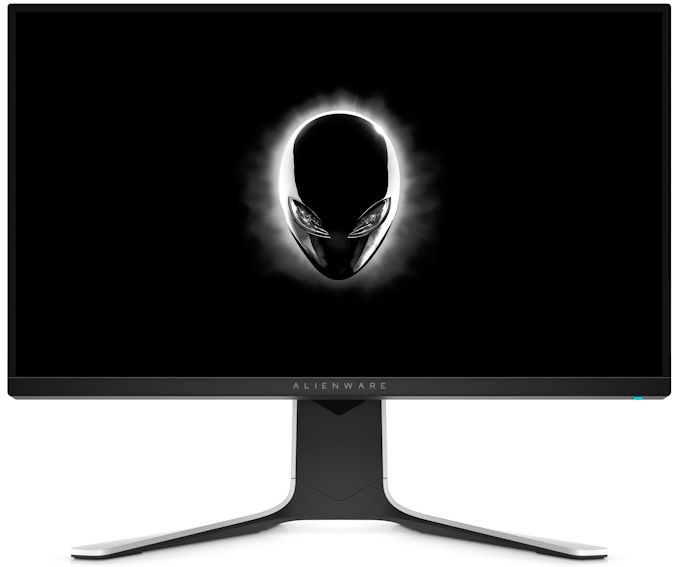
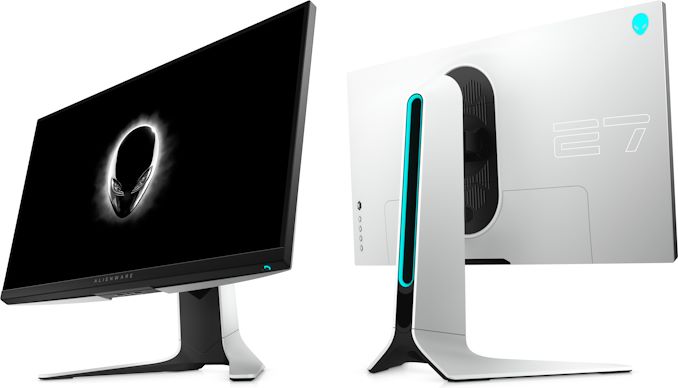
Fast & Furious: The Alienware 27 (AW2720HF) 240 Hz IPS Monitor with FreeSync

Dell has announced its Alienware 27 gaming display that is based on a ‘Fast IPS’ panel that brings together a 240 Hz refresh rate, rich colors, and wide viewing angles. Aimed at hardcore and esports gamers, the model AW2720HF also supports AMD’s FreeSync variable refresh rate technology.


Displays with a 240 Hz maximum refresh rate have been around for years, yet all of them were based on TN panels with all their peculiarities like 170°/160° viewing angles and mediocre reproduction of colors. By comparison, IPS panels have offered 178°/178° viewing angles and superior colors, yet could not hit truly high refresh rates. This year AU Optronics introduced its ‘Fast IPS’ panels featuring a 240 Hz refresh rate as well as a Full-HD resolution, bringing qualities of IPS displays to hardcore and professional gamers.


The Alienware 27 (AW2720HF) monitor relies on one of such Fast IPS panels offering a 1920×1080 resolution, 350 nits brightness, a 1000:1 contrast ratio, 178°/178° viewing angles, a 1 ms GtG response time (with overdrive in extreme mode), and a variable refresh rate of up to 240 Hz. The 27-inch LCD can display 16.78 million of colors and can reproduce 99% of the sRGB color space. In order to ensure consistent performance even when ambient lighting is too bright, the monitor has an antiglare coating with 3H hardness.


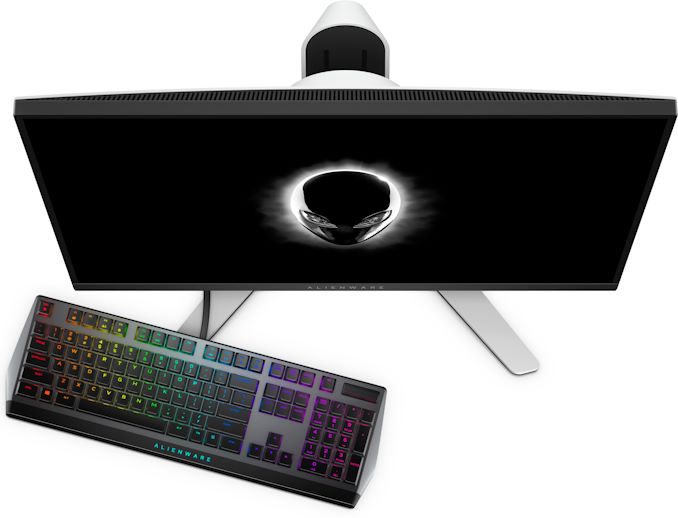
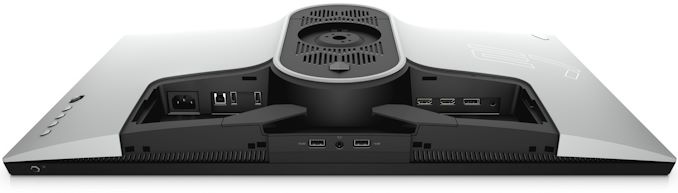
For connectivity, the Alienware 27 has one DisplayPort 1.2a connector, two HDMI 2.0 inputs, one quad-port USB 3.1 Gen 1 hub, one headpone jack, and one line-out jack. The stand of the display can adjust height, tilt, swivel, and pivot. Speaking of the stand, it is noteworthy that the AW2720HF, according to Alienware, features its latest Legend futuristic design style that makes the monitor look like an indispensable part of an intergalactic spaceship. Of course, the monitor has customizable RGB LEDs for personalization.


As we are talking about a gaming display, it is not surprising that the Alienware 27 naturally supports on-screen features like an FPS counter, timer, customizable frame modes, user customization, and other things that one comes to expect from a product of this pedigree.


The Alienaware 27 IPS Display with 240 Hz Refresh Rate
  AW2720HF
Panel 27-inch class IPS
Native Resolution 1920 × 1080
Maximum Refresh Rate 240 Hz
Dynamic Refresh Technology AMD FreeSync
Range ?
Brightness 350 cd/m²
Contrast 1000:1
Viewing Angles 178°/178° horizontal/vertical
Response Time 1 ms GtG

with overdrive in extreme mode
Pixel Pitch ~0.27675 mm²
Pixel Density ~82 PPI
Color Gamut Support 99% sRGB
Inputs 1×DP 1.2

2×HDMI 2.0
Audio audio input

audio output
Stand Height:+/- 130 mm,

Tilt: 5° to 21°

Swivel: 20° to 20°

Pivot: 90° to 90°


Built in cable management

Warranty 3 years
MSRP $599.99

Dell’s furiously fast 240 Hz Alienware 27 gaming monitor will be on sale for $599.99 starting from September 17.


Related Reading


Source: Dell


Source: AnandTech – Fast & Furious: The Alienware 27 (AW2720HF) 240 Hz IPS Monitor with FreeSync