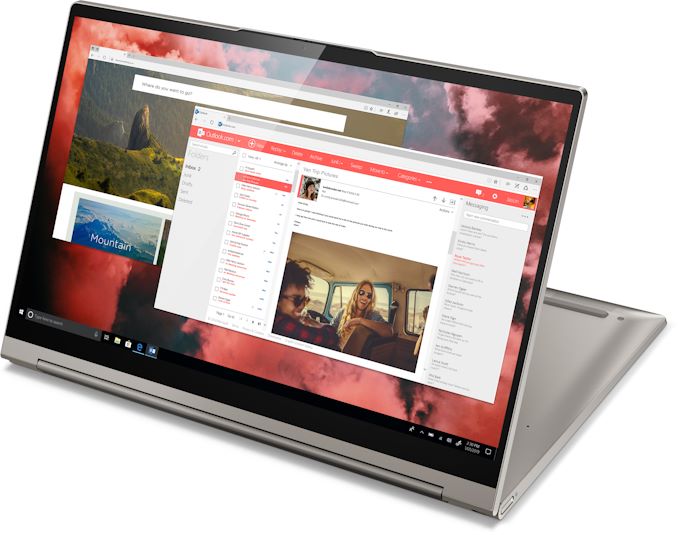
Lenovo Unveils Yoga C940 14-Inch: Ice Lake, 4K, Dolby Vision

Lenovo has introduced its new-generation top-of-the-range Yoga C940-series 14-inch convertible notebooks. The new breed has been equipped with Intel’s 10th Generation Ice Lake processors along with plethora of new improvements which include better connectivity as well as power efficiency.


Being Lenovo’s flagship convertible PC for consumers and (to some degree) creative professionals, the Yoga 9-series has evolved quite significantly over the years. While the original Yoga 900 featured a 13.3-inch display of a 3200×1800 resolution, the all-new Yoga C940 comes with a larger HDR-supporting 14-inch LCD featuring a Full-HD or Ultra-HD resolution as well as 400/500 nits brightness. Furthermore, despite the fact that Yoga 9 displays are now larger, their overall dimensions and thickness is lower, making the systems more compact. What remained intact are all-metal CNC-machined chassis (now with twice polished aluminum lid) as well as signature 360° watchband hinge.
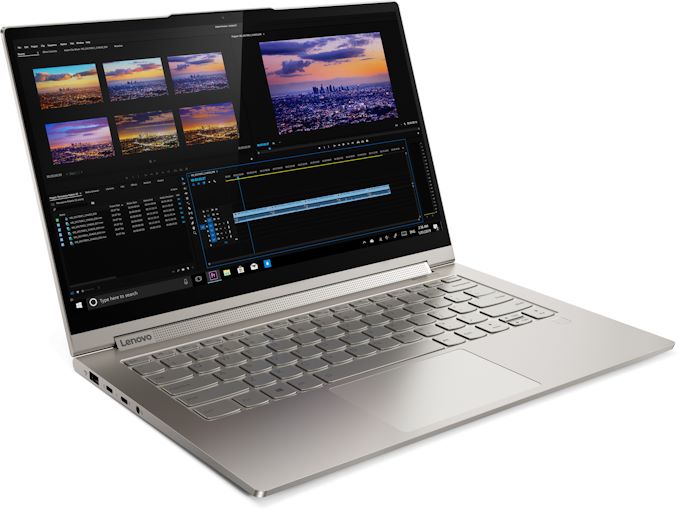


Enabling the Lenovo Yoga C940 14-inch convertibles are Intel’s 10th Generation Core i5/i7 Ice Lake processors with advanced Iris Plus integrated graphics and a revamped motherboard design featuring a smaller footprint that allows to make actual systems smaller. To make the Yoga C940 more appealing, Lenovo equipped it with its special Intelligent Cooling Mode (activated by pressing FN+Q) that automatically adjusts performance and cooling based on workloads. The CPUs are paired with 8, 12 or 16 GB of LPDDR4X memory as well as an NVMe/PCIe solid-state storage subsystem of up to 1 TB (see exact specifications in the table below).
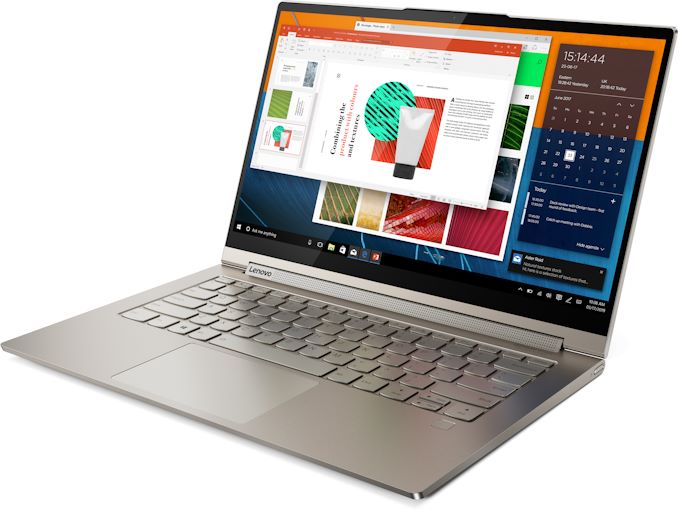


As far as connectivity is concerned, the new Yoga C940 14-inch comes with Wi-Fi 5 or Wi-Fi 6, two Thunderbolt 3 ports, as well as one USB 3.1 (Gen2) Type-A port. Furthermore, the Yoga C940 also has a Dolby Atmos-supporting rotating soundbar, a far field microphone array (to support Alexa, Wake on Voice and similar functionality), a fingerprint reader, and a webcam with Lenovo’s TrueBlock privacy shutter.
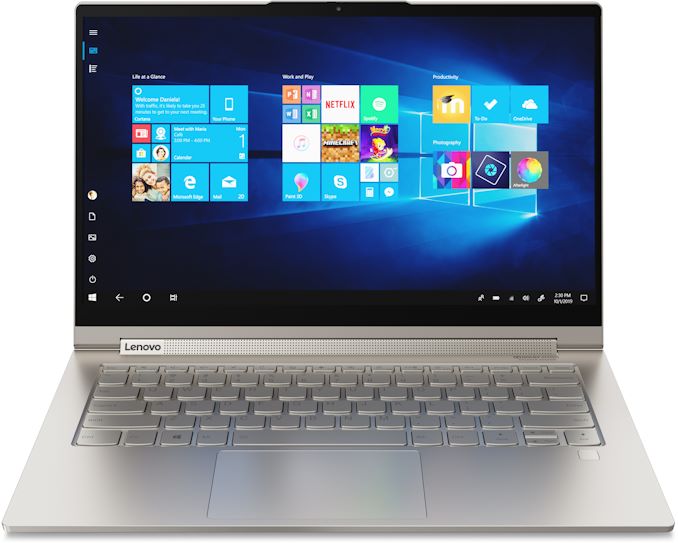


Because of the new processor and system design, the Lenovo Yoga C940 is now 14.1 mm thick (down from 14.5 mm) and weighs starting at 1.35 kilograms (down from 1.38 kg). While Lenovo does not mention battery capacity of the machine, it says that the Full-HD model can work for up to 17.5 hours (up from 14.5 hrs), whereas the Ultra-HD laptop can work for up to 9.5 hours (up from 9 hrs), which suggests that this device may qualify under Intel’s Athena programme.


Lenovo’s Yoga C940 14-Inch
  Yoga C940 14-Inch FHD

C940-14IIL
Yoga C940 14-Inch UHD

C940-14IIL
Display Type  IPS IPS
Resolution 1920×1080 3840×2160
Brightness 400 cd/m² 500 cd/m²
Color Gamut 100% sRGB 100% sRGB
Touch Yes Yes
HDR Dolby Vision DisplayHDR 400
CPU Intel’s 10th Generation Core i5/i7
Graphics Iris Plus UHD 950 or UHD 960
RAM 8 GB, 12 GB, 16 GB LPDDR4X
Storage PCIe 3.0 x4 SSD: 256 GB, 512 GB, 1 TB

Optane Memory H10: 32 GB 3D XPoint + 512 GB QLC

Optane Memory H10: 32 GB 3D XPoint + 1 TB QLC
Wi-Fi Wi-Fi 5 or Wi-Fi 6
Bluetooth Bluetooth 5
Thunderbolt 2 × USB Type-C TB3 ports
USB 1 × USB 3.1 Gen 1 Type-A
Fingerprint Sensor Yes
Webcam HD camera with IR and TrueBlock shutter
Other I/O Far-field microphone, Dolby Atmos soundbar, TRRS audio jack trackpad, etc.
Battery Capacity ? Wh
Life up to 17.5 hours up to 9.5 hours
Dimensions Thickness 14.1 mm | 0.56 inches
Width 320.6 mm | 12.62 inches
Depth 215.2 mm | 8.47 inches
Weight 1.35 kilograms | 2.98 lbs
Operating System Windows 10

Lenovo’s Yoga C940 convertible notebooks will hit the market in October. The 14-inch models will start at $1249.99.


Related Reading:


Source: Lenovo


Source: AnandTech – Lenovo Unveils Yoga C940 14-Inch: Ice Lake, 4K, Dolby Vision
TCL Waterfall Tech Demo: Screen Edges Done Right

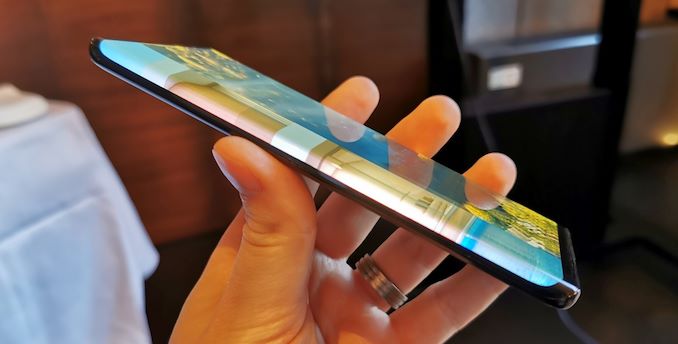
Modern edge display technology is a compromise between screen real estate, comfort, and aesthetics. Personally, I’ve never owned a Note, or a device with an excessive edge with edge-related technologies: I find the hold compromised and the edge features often don’t justify the discomfort. TCL is aiming for its Waterfall display to solve that.


Source: AnandTech – TCL Waterfall Tech Demo: Screen Edges Done Right

YMTC Starts Volume Production of 64-Layer 3D NAND

Yangtze Memory Technologies Co. (YMTC) this week said that it had started volume production of its 64-layer 3D NAND memory that uses its proprietary Xtacking architecture. The bhips were developed entirely in China and will be used for SSDs as well as UFS storage.


YMTC’s 64-layer 3D TLC NAND device features a 256 Gb capacity, yet its interface speed is unknown. YMTC said that it would launch its own SSDs as well as UFS cards for embedded and mobile applications based on the new memory chips, but did not disclose any details about the said products or their availability timeframe.


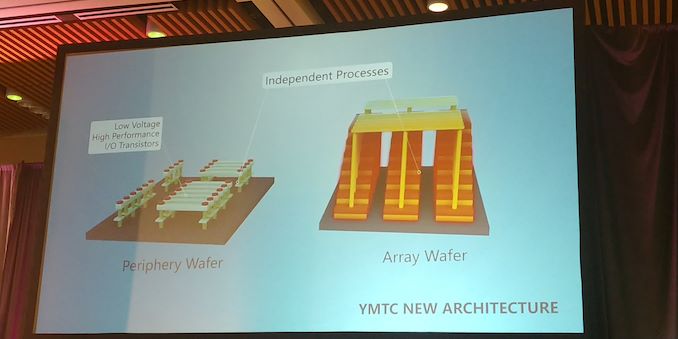
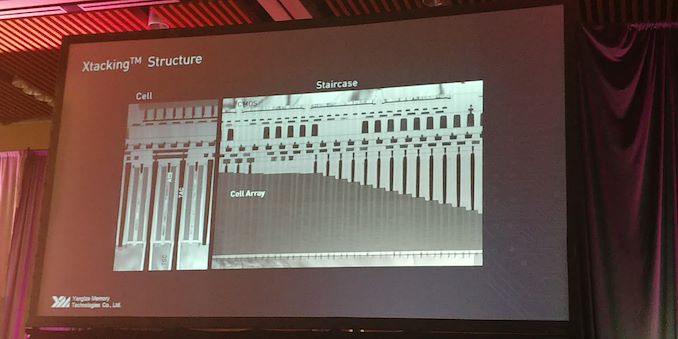
YMTC’s 3D NAND uses the company’s proprietary Xtacking architecture that is designed to enable very high I/O speeds and to some degree minimize die size. Traditionally, manufacturers of 3D NAND make memory array as well as NAND logic (address decoding, page buffers, etc.) on one wafer using the same process technology. By contrast, YMTC produces 3D NAND array and NAND logic on two separate wafers using different process technologies, and then bonds the two wafers together, connecting the memory arrays to the logic by metal vias using one additional process step. Making logic and I/O using an advanced process technology enables to increase I/O speed. Besides, the method places logic under the array, reducing die size of the actual device. YMTC says that Xtacking is not too expensive, though without revealing many details.


We have learned (but cannot verify) that a report suggests YMTC will output around 100,000 3D NAND wafers per month at XMC’s fab in Wuhan, China, in 2020. The same unconfirmed source states the output is expected to increase to 150,000 3D NAND wafers per month. This is quite a significant output, especially for China. While such production capacity will not immediately make YMTC a formidable rival to established 3D NAND makers globally, but it will certainly enable the company to gain some market share in China and this is exactly what it (and its parent Tsinghua Unigroup) wants.


Related Reading:


Sources: Global Times, DigiTimes


Source: AnandTech – YMTC Starts Volume Production of 64-Layer 3D NAND

The TCL One Piece Tech Demo: The Smartphone with No Holes and No Buttons

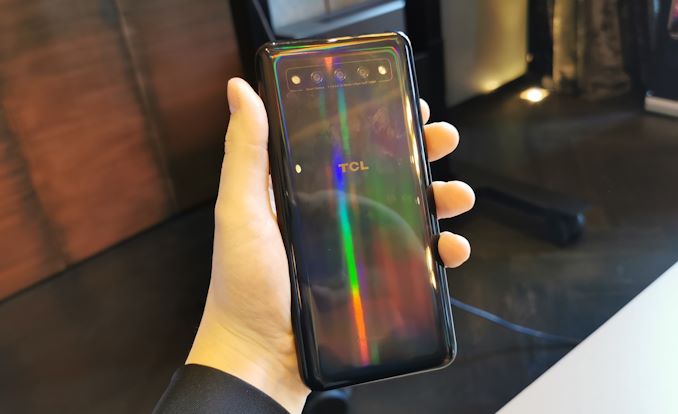
One of the things I love about TCL is its willingness to show off internal conceptual designs to the press. It’s something we see in the car industry all the time, however it’s quite rare in the consumer technology space AnandTech operates in. This year TCL had a couple of demos for us: a seamless smartphone unibody design, and a unique display that redefines what ‘edge’ really means.


Source: AnandTech – The TCL One Piece Tech Demo: The Smartphone with No Holes and No Buttons

Samsung Announces Standards-Compliant Key-Value SSD Prototype

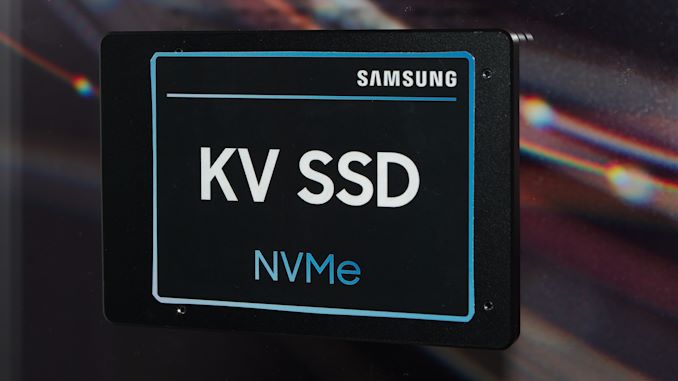
Samsung has announced a new prototype key-value SSD that is compatible with the first industry standard API for key-value storage devices. Earlier this year, the Object Drives working group of Storage Networking Industry Association (SNIA) published version 1.0 of the Key Value Storage API Specification. Samsung has added support for this new API to their ongoing key-value SSD project.


Most hard drives and SSDs expose their storage capacity through a block storage interface, where the drive stores blocks of a fixed size (typically 512 bytes or 4kB) and they are identified by Logical Block Addresses that are usually 48 or 64 bits. Key-value drives extend that model so that a drive can support variable-sized keys instead of fixed-sized LBAs, and variable-sized values instead of fixed 512B or 4kB blocks. This allows a key-value drive to be used more or less as a drop-in replacement for software key-value databases like RocksDB, and as a backend for applications built atop key-value databases.


Key-value SSDs have the potential to offload significant work from a server’s CPUs when used to replace a software-based key-value database. More importantly, moving the key-value interface into the SSD itself means it can be tightly integrated with the SSD’s flash translation layer, cutting out the overhead of emulating a block storage device and layering a variable-sized storage system on top of that. This means key-value SSDs can operate with much lower write amplification and higher performance than software key-value databases, with only one layer of garbage collection in the stack instead of one in the SSD and one in the database.


Samsung has been working on key-value SSDs for quite a while, and they have been publicly developing open-source software to support KV SSDs for over a year, including the basic libraries and drivers needed to access KV SSDs as well as a sample benchmarking tool and a Ceph backend. The prototype drives they have previously discussed have been based on their PM983 datacenter NVMe drives with TLC NAND, using custom firmware to enable the key-value interface. Those drives support key lengths from 4 to 255 bytes and value lengths up to 2MB, and it is likely that Samsung’s new prototype is based on the same hardware platform and retains similar size limits.


Samsung’s Platform Development Kit software for key-value SSDs originally supported their own software API, but now additionally supports the vendor-neutral SNIA standard API. The prototype drives are currently available for companies that are interested in developing software to use KV SSDs. Samsung’s KV SSDs probably will not move from prototype status to being mass production products until after the corresponding key-value command set extension to NVMe is finalized, so that KV SSDs can be supported without needing a custom NVMe driver. The SNIA standard API for key-value drives is a high-level transport-agnostic API that can support drives using NVMe, SAS or SATA interfaces, but each of those protocols needs to be extended with key-value support.


Source: AnandTech – Samsung Announces Standards-Compliant Key-Value SSD Prototype

The TCL Plex Smartphone Hands-On: Dedicated Low-Light Camera for Video

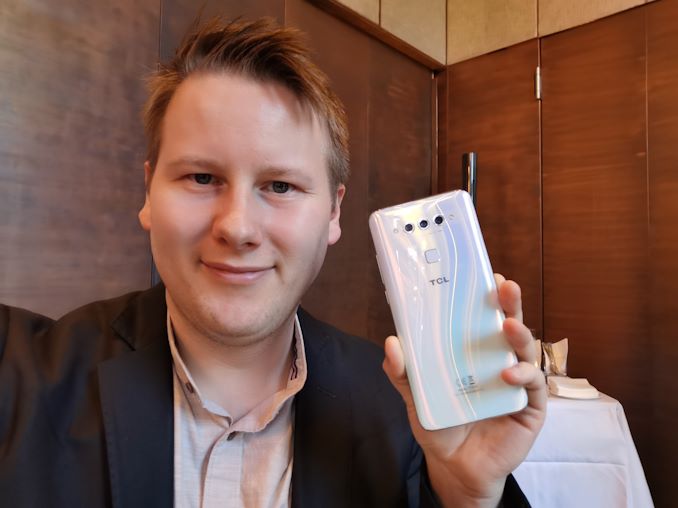
As one of the world’s largest TV manufacturers, with its hands in a lot of other things, TCL is a fairly common name among certain regions of the world. The company also does the hardware for a number of smartphone brands already, namely Blackberry and Alcatel, but this year at IFA, executives were keen to launch TCL as its own smartphone brand, as well as showcasing new smartphone technologies like foldable displays. TCL is coming to the market with its first device, the TCL Plex, very soon, and we had a chance to see the hardware in action.


Source: AnandTech – The TCL Plex Smartphone Hands-On: Dedicated Low-Light Camera for Video

The Snapdragon 855 Phone Roundup: Searching for the Best Implementations

Over the last few years we’ve seen a lot of changes in the mobile market when it comes to the internal hardware of devices. At the heart of every smartphones sits the SoC, which dictates almost every aspect of a device’s experience. Qualcomm has played a major role in shaping the smartphone, thanks to its widely-used Snapdragon platform. The company has had its ups and downs over the last few years, but particularly starting with the Snapdragon 835 from a couple of generations ago we’ve seen some continued and very robust execution from the chip vendor.

This year, Qualcomm’s flagship SoC was the Snapdragon 855. The chip is well known and has been powering the vast majority of Android devices this year, bar a few exceptions. With so many options from various vendors, an interesting question arises: who has managed to do the best implementations in getting out the most out of the silicon? To help settle that question, today we’re doing a smartphone roundup – we’re taking a look at device performance from a slew of different S855 devices from various vendors, while investigating how software and hardware designs can change a device’s experience on the very same silicon.


Source: AnandTech – The Snapdragon 855 Phone Roundup: Searching for the Best Implementations

Samsung Unveils Galaxy Fold Availability, Sort Of

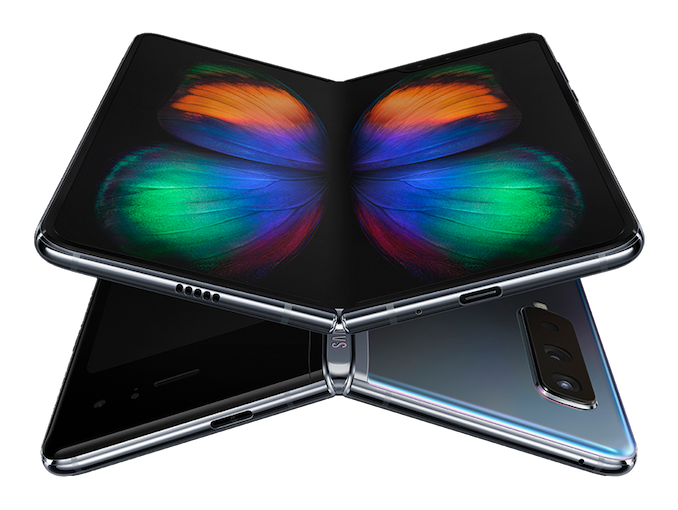
Samsung late on Wednesday disclosed availability of its Galaxy Fold smartphone. The smartphone was originally set to be launched earlier this year, but had been delayed in April because the device needed a redesign in a bid to improve its reliability. As expected, the handset will be available in the US this October at previously disclosed price points.


Introduced at Mobile World Congress 2019 in February, Samsung’s Galaxy Fold was supposed to be launched in April. During evaluation of the device by the press, it was discovered that that its hinge needed reinforcements, whereas the top protective layer of the Infinity Flex Display needed to be redesigned to make it apparent that it was a part of the phone, not a protective film.


All the improvements had been made by late July, so the Samsung announced that that the Galaxy Fold would be available in September. On Wednesday, the company said that the foldable smartphone would be available ‘next month’, meaning October.


When bough in retail and without a contract, the Samsung Galaxy Fold will cost $1980 in the US, £1799 in the UK, and €2000 in Eurozone.


Samsung Galaxy Fold
  Galaxy Fold
SoC Qualcomm Snapdragon 855 

1x Kryo 485 (CA76) @ 2.84GHz

3x Kryo 485 (CA76) @ 2.42GHz

4x Kryo 485 (CA55) @ 1.80GHz


Adreno 640 @ 578MHz

Display Main Display:

7.3″ 2048 x 1536 Foldable Dynamic AMOLED (4.2:3)


Cover display:

4.6″ 1680 x 720 Super AMOLED (21:9)

Dimensions Folded:

160.9 x 62.9 x 17.0 to 15.5mm

Unfolded:

160.9 x 117.9 x 6.9mm


263g

RAM 12GB LPDDR4X
NAND 512GB UFS3.0
Battery 4380mAh  (16.86Wh)
Front Camera Cover Camera:

10MP f/2.2 “Selfie camera”

Front camera:

10MP f/1.9 4K video recording

Front camera:

8MP, f/2.2

Dual Pixel PDAF

“Live focus”

Primary Rear Camera 77° Regular Angle

12MP 1.4µm Dual Pixel PDAF

Tri-stack CMOS Sensor (Embedded DRAM),

4K60, 1080p240, 720p960 high-speed recording

Adjustable aperture f/1.5 or f/2.4

OIS, auto HDR, LED flash

Secondary Rear Camera 123° Wide Angle

16MP 1.0µm f/2.2
Tertiary Rear Camera 45° / Telephoto lens 2x zoom

12MP 1.0µm f/2.4,

OIS
SIM Size LTE model: eSIM + nanoSIM


5G model: nanoSIM

Wireless 802.11a/b/g/n/ac/ax 2×2 MU-MIMO, BT 5.0 LE,

NFC, GPS/Glonass/Galileo/BDS
Connectivity USB Type-C
Features It Folds
Launch OS Android 9.0
Launch Price $1980 / £1799 / 2000€ 

Samsung also disclosed that the US market will get two colors: Cosmo Black and Space Silver.


Related Reading:


Source: Samsung


Source: AnandTech – Samsung Unveils Galaxy Fold Availability, Sort Of

Intel’s Next-Generation ‘Cascade Lake-X’ HEDT CPUs Due in October

Intel said Wednesday that its next-generation codenamed Cascade Lake-X processors for high-end desktops will be revealed next month. The company says that the new CPUs will provide a significant boost in performance per dollar when compared to its existing codenamed Skylake-X products, which gives some idea regarding improvements of the chips.


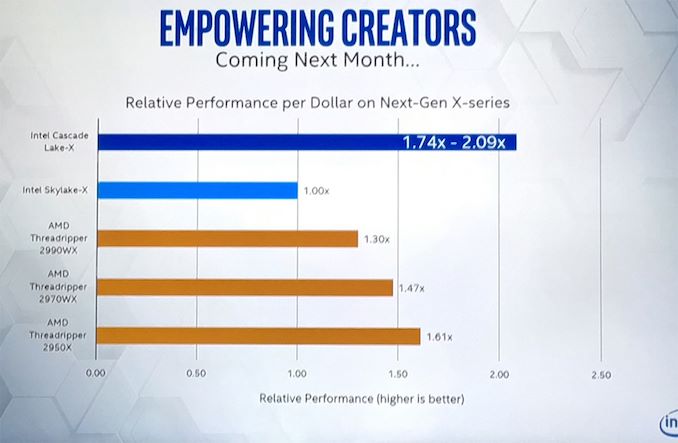
Intel naturally does not disclose specifications of its processors that are at least a month away, so instead it demonstrated a slide showing relative performance per dollar in content creation applications. According to Intel’s internal testing, its Cascade-Lake-X processors will provide a 1.74x – 2.09x relative per-dollar performance improvement when compared to Skylake-X.


Trying to figure out exact core count or price points of Cascade Lake-X CPUs from one performance diagram is certainly not a good business. Meanwhile, from Intel’s launch of its 2nd Generation Xeon Scalable products we know that the company offers either a higher frequency, or more cores at the same price when compared to the prior generation products. So, it is reasonable to expect Cascade Lake-X to provide similar advantages compared to Skylake-X. Also, Intel has launched the Xeon W-3200 series based on Cascade Lake, which will offer some similarity to these parts.


Intel’s Cascade Lake-X processors will use LGA2066 socket and will be compatible with Intel X299-based motherboards with appropriate BIOS and features.


Related Reading:


Source: Tom’s Hardware


Source: AnandTech – Intel’s Next-Generation ‘Cascade Lake-X’ HEDT CPUs Due in October

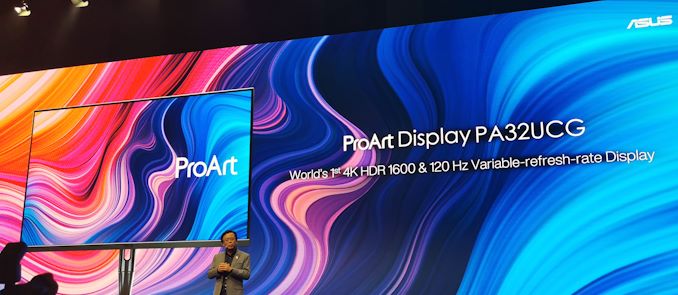
ASUS ProArt PA32UCG: The Ultimate Mini LED 4K 120 Hz Monitor with HDR 1600

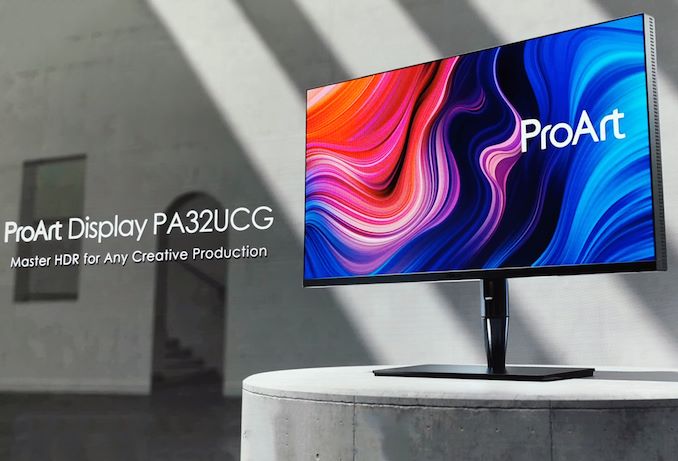
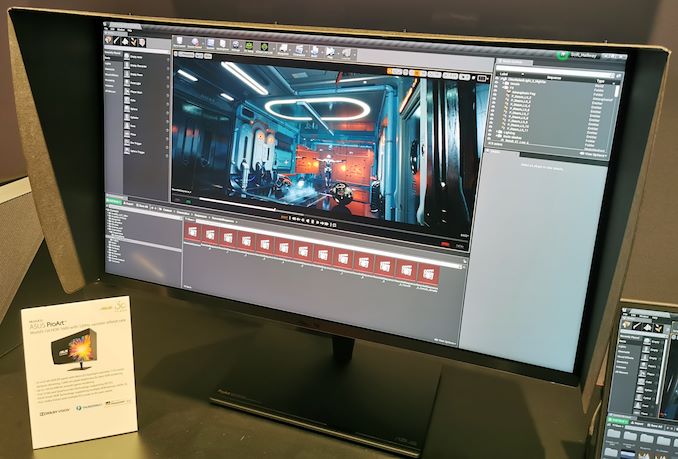
Content creation is about to change drastically in the coming years as ultra-high-definition displays with wide color gamut, superior refresh rates, and great contrasts become widely available and demand for high-quality visuals increases. Being one of the leading makers of professional monitors, ASUS cannot ignore the ongoing trends and develops professional displays for next-gen content creation workloads. At IFA today, the company announced its ProArt PA32UCG LCD, one of the most advanced professional monitors introduced to date.


To meet above mentioned requirements for next-generation displays, ASUS (and other makers of monitors) has  to use either bright OLED panels with all their pros and cons, or advanced IPS LCD panels featuring full-area local area dimming (FALD) backlighting enhanced with quantum dots (or other methods) for more accurate colors. With its ‘portable’ ProArt PQ22UC, the company decided to go OLED, but with the new ProArt PA32UCG (and similarly-sized LCDs for color-critical workloads), the company prefers IPS panels featuring the said treatments.


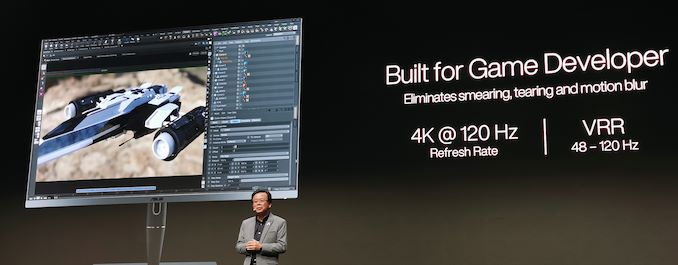
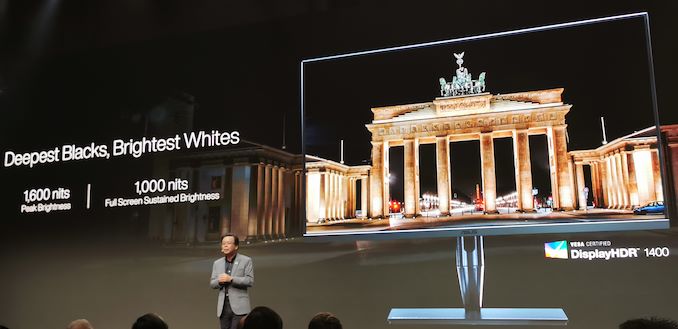
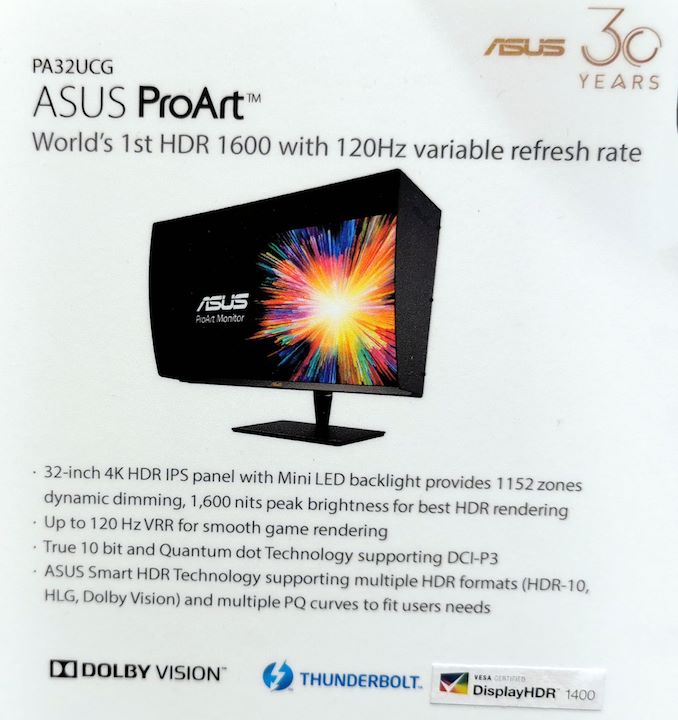
Aimed primarily at game developers, the ProArt PA32UCG features a 10-bit IPS panel of 3840×2160 resolution that offers a variable refresh rate (VRR) between 48 Hz and 120 Hz and is equipped with a Mini LED-based backlighting featuring 1,152 individual local dimming zones and quantum dots. That backlighting enables 1000 nits sustained brightness, up to 1600 nits peak brightness in HDR mode (officially, the LCD carries VESA’s DisplayHDR 1400 badge though), and a very high contrast ratio.


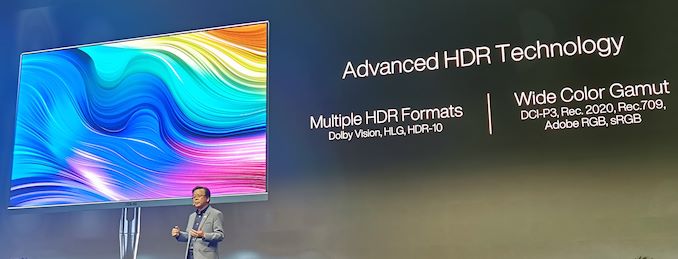
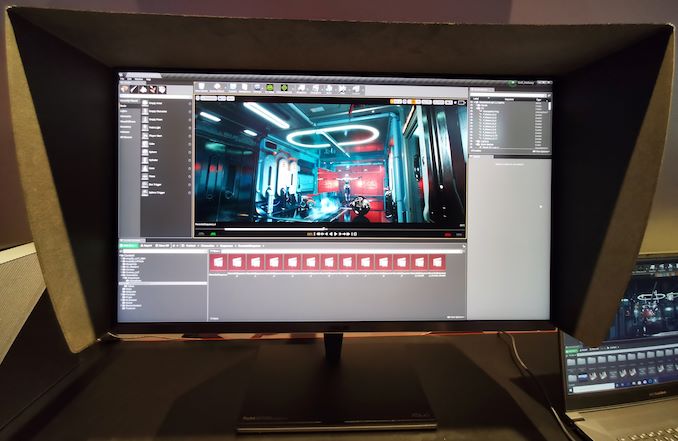
The ASUS ProArt PA32UCG monitor can display 1.07 billion of colors and reproduce the sRGB, Adobe RGB, DCI-P3, and Rec. 2020 color spaces used for video post-production as well as graphics design nowadays, yet ASUS does not disclose anything about percentage of the coverage. Meanwhile, since the display will come factory calibrated with a Delta <1 accuracy, expect its color reproduction to be very precise. To ensure this when deployed, the display will come with a light-shielding hood.


Additionally, the LCD supports HDR10, Dolby Vision as well as hybrid log gamma (HLG) HDR formats, but there is no word about HDR10+ support. ASUS also does not reveal anything about internal 3D LUTs (look up tables) for HDR gradations, but only mentions multiple PQ curves to fit users’ needs. This is explainable though as the product is many months away from its commercial launch.


As for connectivity, ASUS so far has only confirmed Thunderbolt 3 support, but it is logical to expect DisplayPort 1.3/1.4 as well as HDMI 2.1 (since we have VRR here) connectors to be present as well.


The company demonstrated the ProArt PA32UCG monitor at its IFA 2019 event, so we know that the monitor works and probably is in its final stages of development.


Specifications of the ASUS ProArt Mini LED 4K 120 Hz Display
  ProArt PA32UCG
Panel 32″ IPS
Native Resolution 3840 × 2160
Maximum Refresh Rate 48 – 120 Hz VRR
Response Time unknown
Brightness 1000 cd/m² (sustained)

1600 cd/m² (peak)
Contrast high
Viewing Angles 178°/178° horizontal/vertical
HDR HDR10, Dolby Visin, HLG
Backlighting Mini-LED-based 1152-zone FALD
Pixel Pitch 0.1845 mm²
Pixel Density 138 ppi
Display Colors 1.07 billion
Color Gamut Support DCI-P3

Adobe RGB

Rec. 2020

sRGB
Aspect Ratio 16:9
Stand Hight, Tilt, and Swivel adjustable
Inputs Thunderbolt 3

DisplayPort (?)

HDMI 2.0 (?)
USB Hub ?
Launch Date Q1 2020

ASUS intends to bring its ultimate ProArt PA32UCG to the market sometimes in the first quarter of 2020 if everything goes as planned. The company naturally does not talk about prices just yet.


Related Reading:


Source: ASUS


Source: AnandTech – ASUS ProArt PA32UCG: The Ultimate Mini LED 4K 120 Hz Monitor with HDR 1600

Intel to Launch Core i9-9900KS Next Month: 5 GHz on All Cores

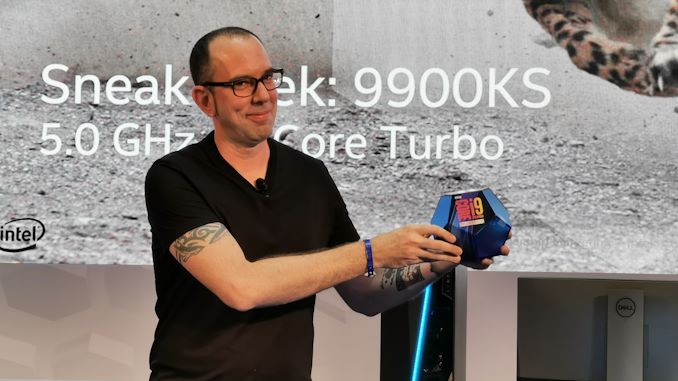
At its pre-IFA press event, Intel confirmed that its new enthusiast-class Core i9-9900KS processor will launch in October. The CPU will be very similar to the Core i9-9900K introduced last year, but will feature a higher all-core Turbo frequency when it has sufficient cooling.


The Intel Core i9-9900KS will feature eight cores with Hyper-Threading running at 4.0 GHz base frequency and boosting all the way to 5.0 GHz on all cores, up 300 MHz from 4.7 GHz in case of the Core i9-9900K. Essentially, the new CPU is just an eight-core Coffee Lake Refresh silicon binned to hit higher clocks when cooling is good enough.


Intel 9th Gen Core 8-Core Desktop CPUs
AnandTech Cores Base

Freq
All-Core Turbo Single

Core Turbo

Freq
IGP DDR4 TDP Price

(1ku)
i9-9900KS 8 / 16 4.0 GHz 5.0 GHz 5.0 GHz UHD 630 2666 ? ?
i9-9900K 8 / 16 3.6 GHz 4.7 GHz 5.0 GHz UHD 630 2666 95 W $488
i9-9900KF 8 / 16 3.6 GHz 4.7 GHz 5.0 GHz 2666 95 W $488
i7-9700K 8 / 8 3.6 GHz 4.6 GHz 4.9 GHz UHD 630 2666 95 W $374
i7-9700KF 8 / 8 3.6 GHz 4.6 GHz 4.9 GHz 2666 95 W $374

Intel first teased the Core i9-9900KS ahead of Computex earlier this year, so the product launch is not a surprise. The important thing is that the CPU will finally hit the market this October.


In a bid to maintain an intrigue, Intel did not disclose TDP of its new product. Besides, the company also did not disclose launch price of its Core i9-9900KS and we are curious to find out how much will the chipmaker want from its new range-topping enthusiast part.


Related Reading:


Source: Tom’s Hardware


Source: AnandTech – Intel to Launch Core i9-9900KS Next Month: 5 GHz on All Cores

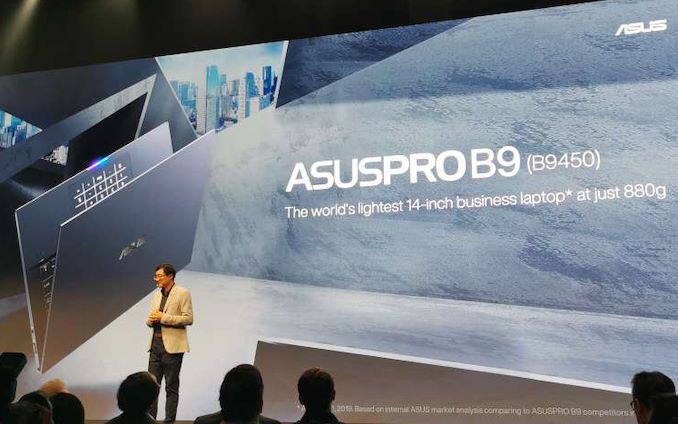
ASUS Unveils ASUSPRO B9 (B9450): A 14-Inch Ice Lake Laptop at 880 Grams

ASUS announced its all-new ASUSPRO notebook aimed at business users who need rich functionality, advanced security, and ultimate portability. Taking advantage of Intel’s Project Athena as well as Intel’s latest Ice Lake platform, the ASUSPRO B9 (B9450) offers rather ultimate capabilities in a package that weighs starting from 880 grams.


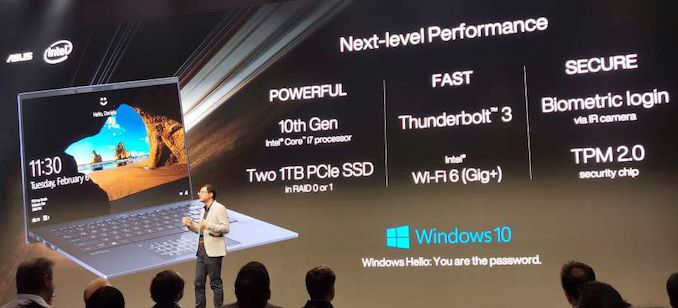
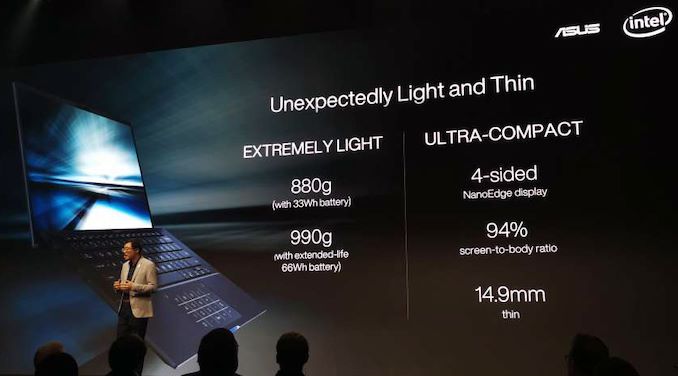
Traditionally for ASUS’ thin-and-light business-oriented machines, the ASUSPRO B9450-series laptops come in a 13-inch-class magnesium alloy chassis that is 14.9 mm thick and houses a 14-inch NanoEdge Full-HD display with anti-glare coating and ultra-thin bezels. Due to a reworked internal architecture (courtesy of Intel’s Ice Lake platform), the notebook weighs 880 grams when equipped with a 33 Wh battery or 990 grams when a 66 Wh battery is installed. Besides, the new ASUSPRO B9 can withstand MIL-STD 810G tests (probably ASUS refers primarily to drop tests), so it is pretty rugged too.


Inside the ASUSPRO B9450-series machines is Intel’s 10th Generation Core processors codenamed Ice Lake with up to four cores and advanced Gen 11 graphics. The CPU is accompanied by LPDDR4X memory as well as up to two 1 TB PCIe 3.0 x4 SSDs operating in RAID 0 mode for superior performance or RAID 1 mode for added reliability.


In line with Intel’s Project Athena recommendations, the ASUS PRO B9450 is equipped with Thunderbolt 3 as well as Wi-Fi 6 connectivity. Furthermore, it has a Windows Hello-capable webcam with IR sensors as well as a TPM 2.0 chip for ultimate security.


ASUS plans to start sales of the ASUSPRO B9450-series notebooks in the near future. Exact configurations and prices will be disclosed when the laptops are available.


Related Reading:


Source: ASUS


Source: AnandTech – ASUS Unveils ASUSPRO B9 (B9450): A 14-Inch Ice Lake Laptop at 880 Grams

Samsung’s A-Series 5G Smartphone: Galaxy A90 5G

With multiple makers of smartphones launching expensive high-end 5G smartphones this year, it was a matter of time before more reasonably priced 5G handsets emerge. Samsung is among the first companies to introduce a 5G-enabled smartphone that promises not to break the bank. In addition to faster networks support, the Samsung A90 offers a bunch of first-class features, including an advanced SoC as well as premium imaging capabilities.


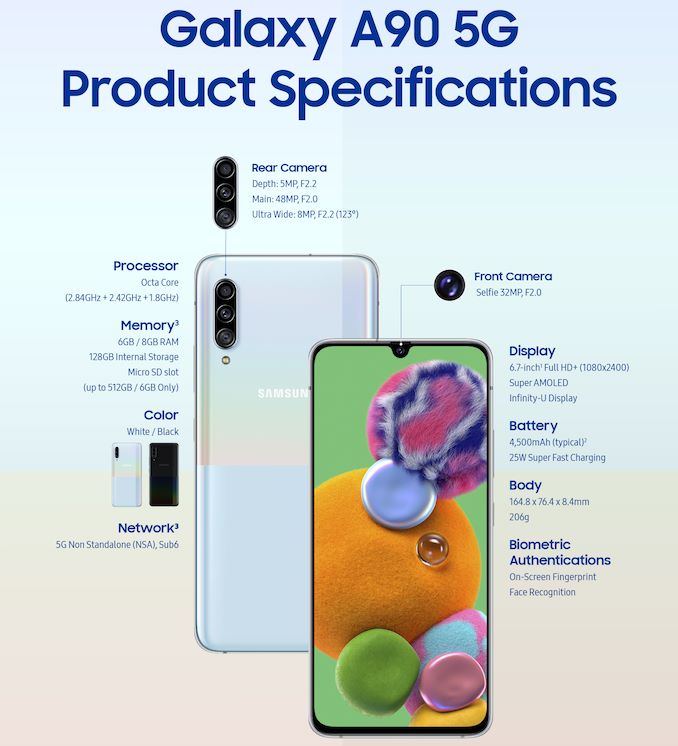
Equipped with a 6.7-inch Super AMOLED display featuring a 2400×1080 resolution and a raindrop selfie camera module, the Galaxy A90 5G is based on Qualcomm’s flagship Snapdragon 855 SoC accompanied by 6 or 8 GB of LPDDRX as well as 128 GB of NAND flash storage (expandable using a microSD card). Just like other Qualcomm-based 5G smartphones, the Galaxy A90 5G uses Qualcomm’s X50 modem. This is the same SoC and modem that power Samsung’s Galaxy S10 5G handset, so from performance and connectivity perspectives, the Galaxy A90 5G promises to behave just like the range-topping model.


Imaging capabilities of the Galaxy A90 5G include a 48 MP main camera, an 8 MP ultrawide lens, and a 5 MP depth sensor. Meanwhile, a 32 MP module is used for selfies.


One of the interesting selling points of the Galaxy A90 5G is support for Samsung’s DeX platform that enables desktop-like experience on Android-based devices (e.g., open up multiple windows, re-size windows, drag and drop content, etc.) when they connected to a PC display or a TV. Of course, proper DeX experience will require an external keyboard and mouse.


Other notable features of Samsung’s Galaxy A90 5G are a 4,500 mAh battery, 802.11ac Wi-Fi, Bluetooth 5.0, a USB 2.0 Type-C port for data and charging, stereo speakers, Dolby Atmos support for USB-C headsets, a fingerprint reader, and facial recognition.


Samsung’s Galaxy A90 5G & S10 5G
  Galaxy A90 5G Galaxy S10 5G
SoC Qualcomm Snapdragon 855 

1x Kryo 485 (Cortex-A76) @ 2.84GHz

3x Kryo 485 (Cortex-A76) @ 2.42GHz

4x Kryo 485 (Cortex-A55) @ 1.80GHz


Adreno 640

Display 6.4-inch

2400 x 1080 (19:9)

(flat edges)
6.7-inch

3040 x 1440 (19:9)

(curved edges)
SAMOLED SAMOLED

HDR10+

1200 nits peak brightness
Gorilla Glass 6
Dimensions 164.8 x 76.4 x 8.4 mm

206 grams
162.6 x 77.1 x 7.94 mm

198 grams
RAM 6 or 8 GB 8 GB
NAND 128 GB 256 GB or 512 GB
+ microSD
Battery 4500 mAh (17.32Wh)
Primary Front Camera

32 MP f/2.0

10MP f/1.9

4K video recording
Secondary Front Camera hQVGA

Time-of-flight

3D sensor
Primary Rear Camera 48 MP 0.8µm PDAF

f/2.0, 26mm, 1/2″
77° Regular Angle

12MP 1.4µm Dual Pixel PDAF

Tri-stack CMOS Sensor (Embedded DRAM),

4K60, 1080p240, 720p960 high-speed recording

Adjustable aperture f/1.5 or f/2.4,

OIS, auto HDR, LED flash

Secondary Rear Camera 8 MP wide angle

f/2.2, 12mm, 1.12µm
123° Wide Angle

16MP 1.0µm f/2.2
Third

Rear Camera
5 MP depth sensor, f/2.2 45° / Telephoto lens 2x zoom

12MP 1.0µm f/2.4,

OIS
Fourth

Rear Camera
hQVGA

Time-of-flight

3D sensor
4G Modem Snapdragon X24 LTE (Snapdragon Integrated)

2G / 3G / 4G LTE (Category 20/13)

DL 2000 Mbps (7x20MHz CA, 256-QAM),

 UL 316 Mbps (2x20MHz CA, 64-QAM)
5G Modem Snapdragon X50

5G NR (mmWave & sub-6 GHz, TDD)

DL 5Gbps (8x CA, 2×2 MIMO)
SIM Size NanoSIM (?) NanoSIM

Dual NanoSIM/Hybrid SIM/microSD (Certain models)
Wireless 802.11a/b/g/n/ac, BT 5.0 LE, NFC, GPS/Glonass/Galileo/BDS 802.11a/b/g/n/ac/ax 2×2 MU-MIMO,

BT 5.0 LE, NFC, GPS/Glonass/Galileo/BDS
Connectivity USB Type-C USB Type-C

3.5 mm headset
Special Features Under-screen optical fingerprint sensor Under-screen ultrasonic fingerprint sensor
accelerometer, gyro, proximity, compass heart-rate sensor, iris scanner, face unlock,

fast charging (Qualcomm QC 2.0, Adaptive Fast Charging, USB-PD),

wireless charging & reverse charging (WPC & PMA),

IP68 water resistance
Launch OS Android 9.0 with Samsung OneUI
Launch Prices 6 GB + 128 GB: ?

8 GB + 128 GB: ?
8 GB + 256 GB: $1299

8 GB + 512 GB: $1399

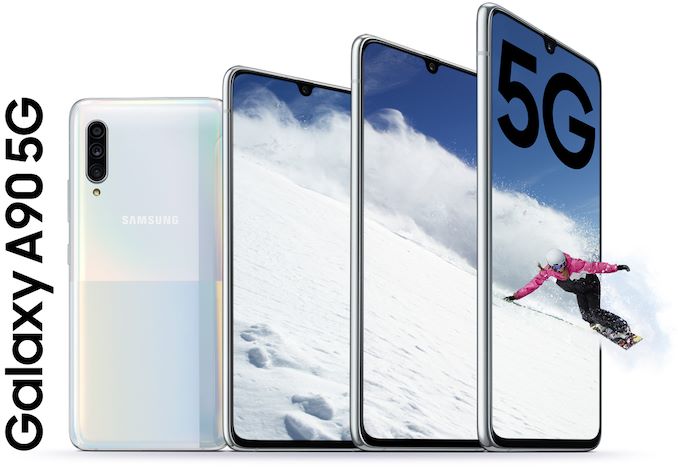
Samsung’s Galaxy A90 5G will be released in black and white in South Korea on September 4. Exact price is unknown, but one of the rumours suggests that it will be below $1000. The launch in other countries will likely follow shortly as operators will certainly be interested in starting sales of a reasonably priced 5G handset in time for the holiday season.


Related Reading:


Source: Samsung


Source: AnandTech – Samsung’s A-Series 5G Smartphone: Galaxy A90 5G

8K Association Sets Minimal Specs for 8K Ultra-HD TVs

The 8K Association, a group led by leading makers of TVs and display panels focused to facilitate growth of the 8K ecosystem, this week introduced a list of minimal technical specifications that should be met by a TV carrying an 8K logotype. If the initiative is embraced widely by the industry, it will ensure that next-generation 8K televisions and monitors will offer consistent performance levels and therefore experience.


While resolution is a key characteristic of any display or TV, it clearly is not the only feature that defines quality and experience they provide. Nowadays, there are hundreds of mediocre 4K Ultra-HD ‘HDR’-badged displays and TVs which use cheap panels and backlighting that lack proper bit depth, luminance, and color gamut that are essential for proper reproduction of 4K and HDR content. Such hardware ruins user experience and slowdowns adoption of new technologies by content creators.


To avoid such a situation in the looming 8K era and develop strict guidelines for next-generation TVs, AU Optronics, Samsung Electronics, Panasonic, Hisense, and TCL formed the 8K Association in January, 2019. Since then, the 8KA was also joined by Astro Design, ATEME, Chili, Innolux, Intel, Louis Pictures, Novatek, Samsung Display, Tencent, V-Silicon, and Xperi.


Recently, the 8K Association rolled out its first set of specifications covering 8K input parameters, display performance, interface, and media formats. In a nutshell, the 8KA wants an 8K TV or display to meet the following minimums:


  • Feature a resolution of 7680×4320 pixels
  • Support 24p, 30p, and 60p frames per second input framerate
  • Have a peak luminance of at least (a minimum of) 600 nits
  • Support HEVC codec
  • Use HDMI 2.1 interface

The 8K specification by the 8KA also covers things like bit depth, frame rate, chroma sub-sampling, black level, color gamut, white point, HDR modes, and additional codecs.


It remains to be seen whether 8KA’s initiative is embraced by other suppliers of televisions and SoCs, but the idea of making 8K Ultra-HD TVs and displays more appealing to the end user by guaranteeing certain experience certainly looks attractive.


Related Reading:


Source: 8K Association (via Hexus)


Source: AnandTech – 8K Association Sets Minimal Specs for 8K Ultra-HD TVs

CRU ioSafe Solo Hawk Rugged SSD Review

ioSafe’s disaster-resistant solutions cater to an important niche in the storage market. In mid-2018, the company was acquired by CRU. The Solo Hawk Rugged SSD is one of the first ioSafe-branded products to be launched after the acquisition. The portable SSD is a 2.5″ SATA drive in a waterproof and crush-resistant enclosure that can also withstand extreme weather conditions and chemical environments. Read on for our thoughts on the Solo Hawk Rugged SSD and find out more about the various aspects that make it rugged.


Source: AnandTech – CRU ioSafe Solo Hawk Rugged SSD Review

It Hurtz a Lot: ASUS's New 300 Hz Laptops

ASUS has been at the forefront of using displays with extreme refresh rates with its ROG-series gaming laptops. The company was the first to launch notebooks with a 120 Hz LCD in 2016, was the first to release a mobile PC with a 144 Hz monitor, and then the first to produce a laptop with a 240 Hz earlier this year. At IFA, the company is demonstrating the industry’s first laptops featuring a display with a 300 Hz refresh rate.


Designed specifically for hardcore gamers and esports professionals on the go, the ASUS ROG Zephyrus S GX701 will be the world’s first notebook with a display supporting up to 300 Hz refresh rate and a 3 ms GtG response time. This machine will be available already in October, 2019. In addition, similar LCDs with a 300 Hz refresh rate and a 3 ms GtG response time will be featured on a prototype ROG Zephyrus S GX502 as well as on the 15-inch and 17-inch models of the ROG Strix Scar III.


ASUS does not disclose the maker of its 300 Hz/3 ms display panels, though it is highly likely that the company uses panels with a 240 Hz native refresh rate in overdrive mode. What is noteworthy is that production 240 Hz ROG Zephyrus S GX701 and ROG Zephyrus S GX502 will feature factory-calibrated displays with Pantone Validation, so in addition to gamers, these machines will also be appreciated by professionals who use color-critical applications.


When it comes to other hardware used by the forthcoming 300 Hz laptops and other premium mobile gaming PCs from ASUS, the company says that the flagship ROG Zephyrus S GX701 will come with NVIDIA’s GeForce RTX 2080 GPU clocked up to 1230 MHz at 100W in Turbo mode. Meanwhile, on display will be prototyes of the ROG Zephyrus S GX502 as well as the 15-inch and 17-inch flavors of the Strix Scar III with the 300 Hz display which will use NVIDIA’s GeForce RTX 2070 GPU with up to 1540 MHz GPU clock at 115W in Turbo mode. Given usage of NVIDIA’s graphics processors, the laptops will also support G-Sync variable refresh rate. As these are just prototypes, it will be interesting to see if these make it to market.


As for other specifications of the new ROG Zephyrus S-series laptops will pack up to Intel’s six-core Core i7-9750H processor accompanied by up to 32 GB of DDR4-2666 as well as an NVMe solid-state storage subsystem. Other specifications will be disclosed at a later date, but it is safe to assume that top-of-the-range SKUs will use premium components. Prices will depend on exact configurations.


The ASUS ROG Zephyrus S GX701, asthe industry’s first laptop featuring a 300 Hz monitor, will be available this October, in time for holiday season. The manuacturer promises that similar 300 Hz panels will be available on other ROG machines in 2020.


Related Reading


Source: ASUS


Source: AnandTech – It Hurtz a Lot: ASUS’s New 300 Hz Laptops

NVIDIA Quadro Comes Up Aces: Mobile Quadro RTX Unveiled Alongside ACE Laptop Reference Design

Today NVIDIA is announcing some big updates to their mobile Quadro lineup, and the Santa Clara company has announced new products, new reference designs, and a wide-range of upcoming products from NVIDIA’s partners to showcase all of the design effort put in.


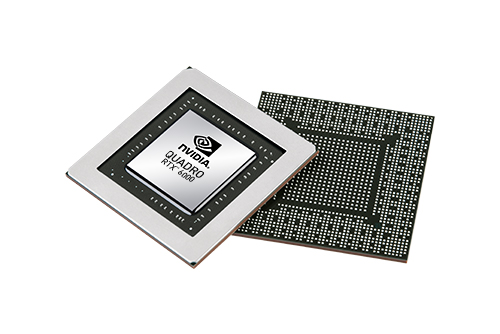
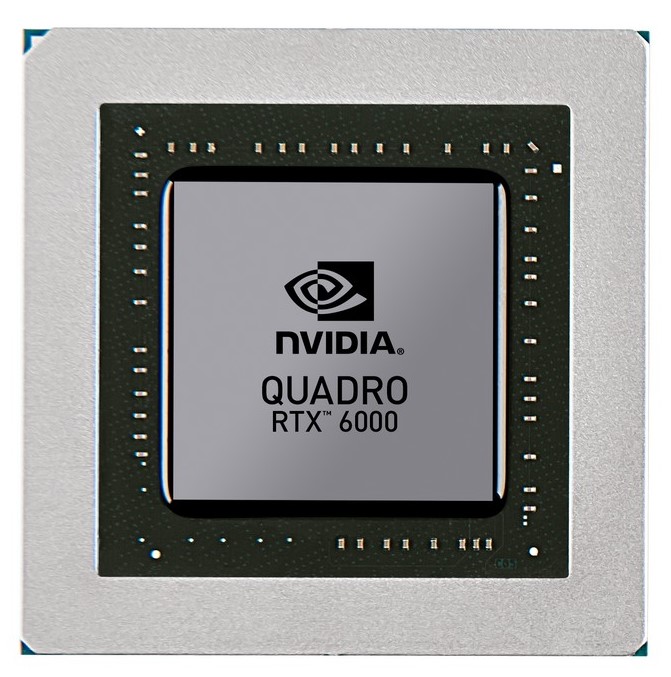
NVIDIA’s Turing architecture was unveiled roughly a year ago bringing the addition of real-time ray tracing support to the company’s already strong GPU lineup. Since then, we’ve seen the transition to GeForce RTX cards in laptops as well. The missing piece was the Quadro RTX for laptops, which is a piece that is no longer missing. The top of the product stack will be the Quadro RTX 6000, featuring a massive 24 GB of memory, and as is typical of NVIDIA’s laptop cards starting with Pascal, these are the full desktop counterparts, meaning the RTX 6000 offers the same 4608 CUDA cores, and 384-bit memory interface. This is the TU102 GPU, which is the same chip that powers the GeForce RTX 2080 Ti, and has previously only been available in a desktop form factor.


For those that perhaps don’t quite need that much performance and memory, NVIDIA is also announcing the RTX 5000, which drops down to a mere 16 GB of GDDR6, and 3072 CUDA cores. Considering the MSRP difference of the two desktop version of the cards is about $4000, you can expect the laptop MSRPs to also be very far apart.


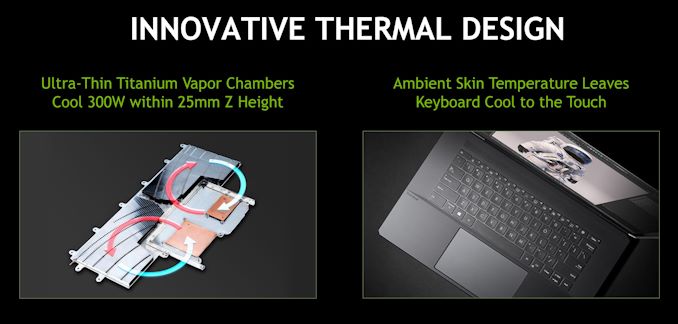
But what good is all of that GPU in a thin and light form factor. Laptops are notorious for struggling to keep up with cooling required for even a 200-Watt RTX 2080. Asking them to deal with up to 50% more heat is a big ask.


This is where NVIDIA’s other big announcement comes into play. NVIDIA is announcing the ACE Reference Design for mobile workstation, and their goal is to pack all of this compute into just a 15.6-inch laptop chassis. Their solution to the intense power demands is a new cooling solution featuring titanium vapor chambers, which NVIDIA has designed to dissipate the 300-Watt cooling requirement in just a 25 mm thick laptop. This will keep the laptop thin and light enough to be easily portable, but still able to cope with the extreme amount of power a Quadro RTX 6000 will consume. As to the fan noise – that’s something to be determined, but there’s only so much you can twist the laws of nature, so it’s likely to require a significant amount of airflow. NVIDIA is claiming performance within 10% of the equivalent desktop GPUs.


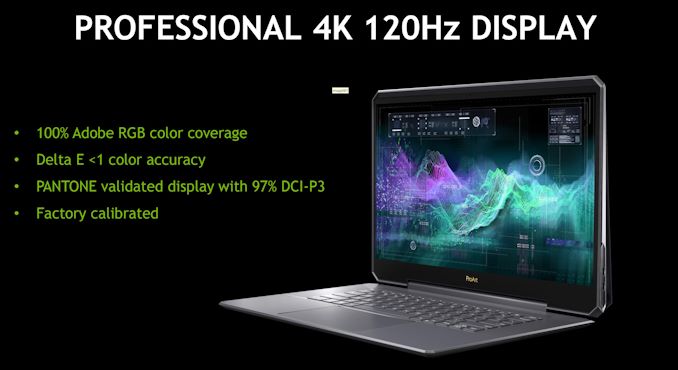
ACE is not just about cooling though. Quadro RTX Studio laptops based on the ACE reference design will also feature UHD 120 Hz displays, factory calibrated to Delta E of less than 1.0, and covering 100% of Adobe RGB and 97% of the P3 gamut. Gamers have been enjoying the benefits of high-refresh rates for several years now in the laptop space, and it’s great to see the 120 Hz range coming to premium UHD resolution displays.


ACE will also feature NVIDIA’s Optimus technology, which NVIDIA is dubbing Enhanced Optimus, so the power-hungry GPU will be able to be put to sleep when not needed, dramatically extending the battery life of the mobile workstation, and for charging, NVIDIA has designed a slim 300-Watt adapter for the lineup.


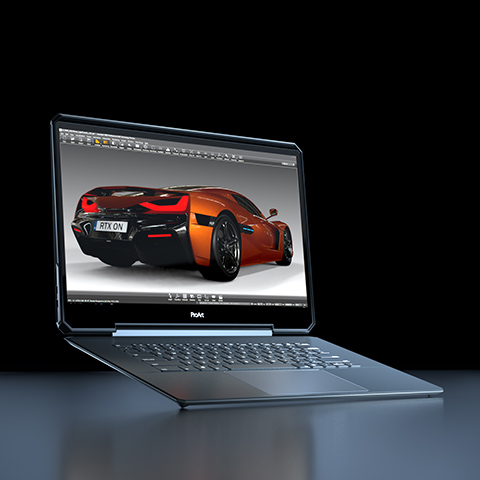
ACE is not just an idea either. NVIDIA has partnered with ASUS and Acer to launch devices, including the ASUS ProArt StudioBook One, highlighting all of the new design requirements of the reference. The ProArt StudioBook One will launch with an Intel Core i9-9980HK processor, 64 GB of DDR4 memory, the UHD 120 Hz panel, a 90-Wh battery, and three Thunderbolt 3 ports.


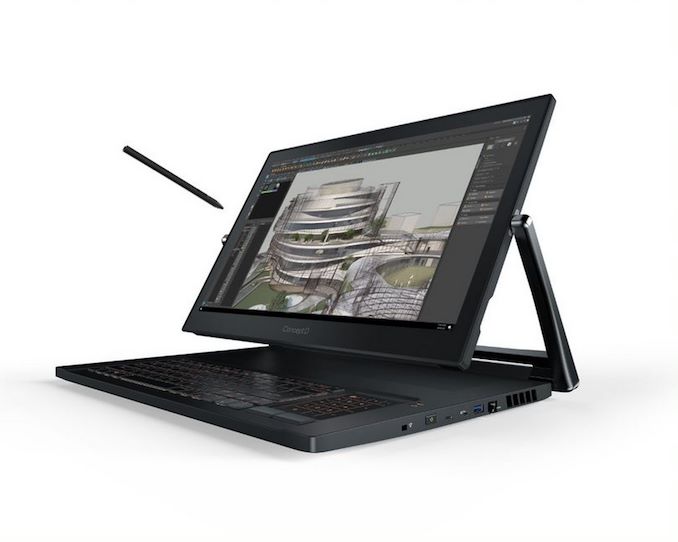
Acer is announcing Quadro RTX laptops as well, with the ConceptD 9 Pro and ConecptD 7 Pro featuring the Quadro RTX 5000, with the ConceptD 9 Pro based off the Acer Predator Triton 900, and featuring the Ezel Aero Hinge, which should be an interesting take on the mobile workstation. Acer also has the ConceptD 5 Pro, featuring a Quadro RTX 3000, and the ConceptD 5, featuring a GeForce RTX 2060.


Finally, NVIDIA is extending their Studio branding to also cover select desktop workstations featuring Quadro RTX, with designs from ASUS, Acer, HP and MSI.


NVIDIA somewhat owns the laptop GPU market by default, since AMD hasn’t really tried to bring their latest GPUs into the mobile form factor, so NVIDIA is somewhat stuck competing against itself, but even so, the new RTX class of Quadro cards should offer a significant jump in performance, closing the gap between what needs to be done on a desktop and what does not. Laptop form factors are always going to face power delivery and thermal constraints that desktops do not really have to deal with, but even so, the new Quadro RTX 6000 looks to be able to come very close to the performance of its desktop counterpart. With the full 24 GB of GDDR6 on tap, and over 40 RTX-Accelerated professional applications available, the Quadro range offers a compelling argument. The ACE reference design also ensures standards of display quality which will be helpful for buyers, and the addition of the 120 Hz UHD display is a great feature.


Source: NVIDIA


Source: AnandTech – NVIDIA Quadro Comes Up Aces: Mobile Quadro RTX Unveiled Alongside ACE Laptop Reference Design

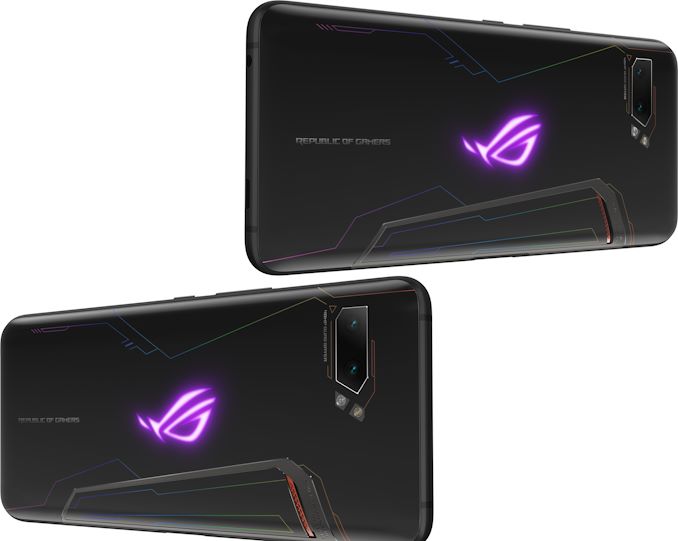
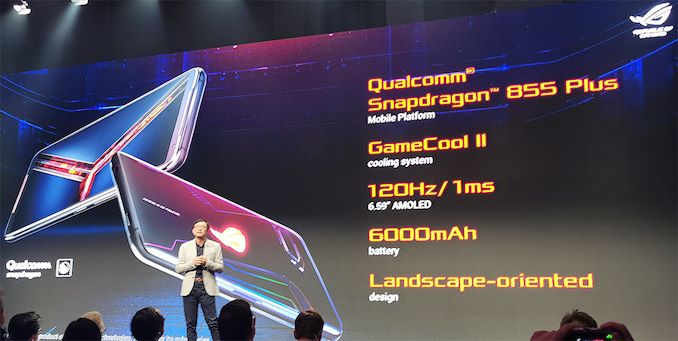
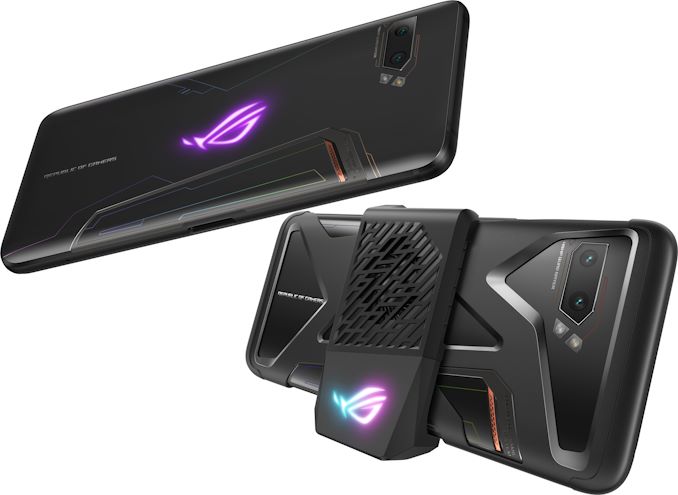
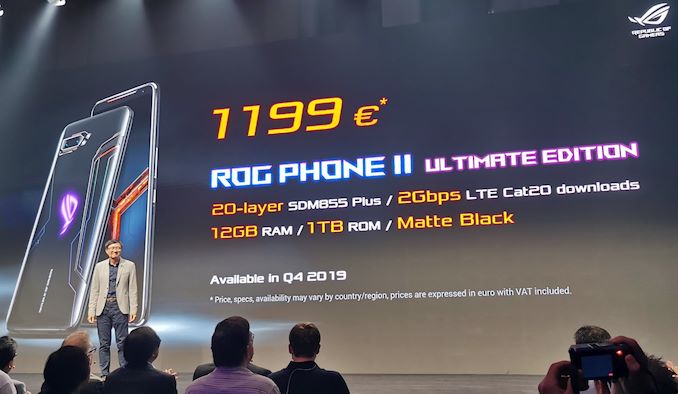
ASUS ROG Phone II Ultimate Edition: 120 Hz, 12 GB / 1 TB with 6000 mAh

ASUS introduced a revamped version of its top-of-the-range ROG smartphone for gamers at IFA today. The ASUS ROG Phone II Ultimate Edition got a new color scheme, more storage space, and CAT 20 4G/LTE.


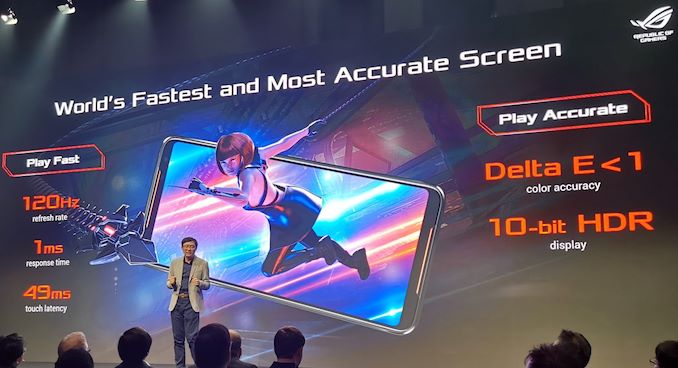
Launched in July, the ASUS ROG Phone II based on Qualcomm’s Snapdragon 855 Plus and equipped with a 6.59-inch 120 Hz OLED display is one of the most powerful handset for gamers available today. Just like with fast cars, it is always possible to make things better and release a special edition for those who want something exclusive.


The ASUS ROG Phone II Ultimate comes in a Matte Black chassis to emphasize its premium nature and is equipped with a 1 TB of UFS 3.0 storage subsystem to store more games and other content locally. Furthermore, the Ultimate Edition also supports CAT 20 4G/LTE speeds of up to 20 Gbps (as it has 4×4 antennae) for ultra-fast downloads.


As it usually happens with ultra-premium products, the ROG Phone II Ultimate Edition will be available exclusively from ASUS’ online store. In Europe, the device will be available in October for €1,199.


A 512GB storage version, without the 2 Gbps LTE, will start at 899 Euro and will be on sale from September 20th.


Related Reading:


Source: ASUS


Source: AnandTech – ASUS ROG Phone II Ultimate Edition: 120 Hz, 12 GB / 1 TB with 6000 mAh

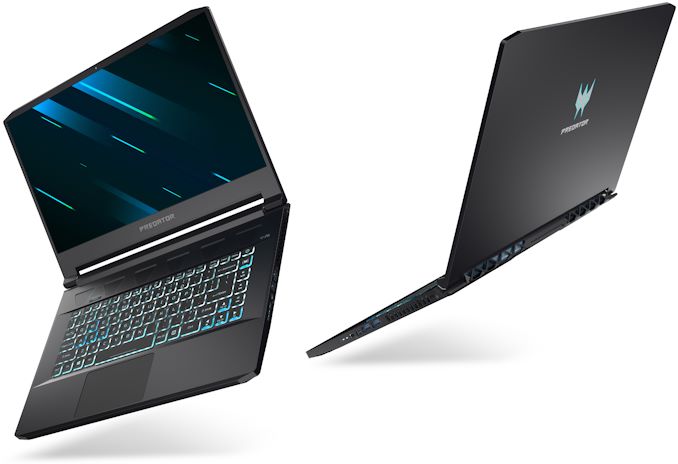
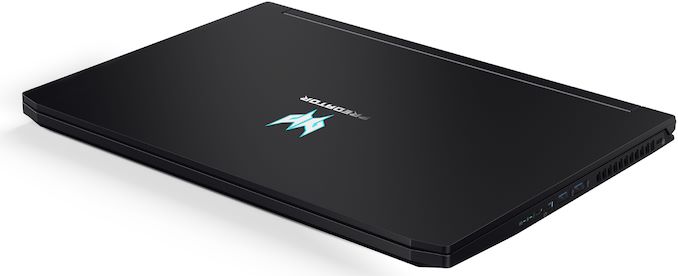
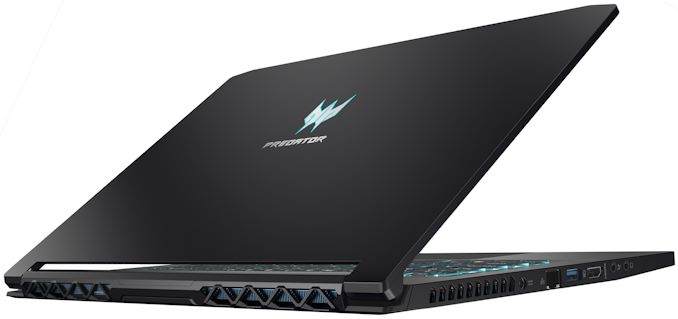
Blink Quickly: Acer’s Predator Triton 500 Gets a 300 Hz Display

Introduced earlier this year, Acer’s Predator Triton 500 turned out to be a formidable 15.6-inch gaming PC that brought together rather extreme performance and relatively compact dimensions. Starting this Fall, the machine will also get a display featuring a 300 Hz refresh rate, one of the first in the industry.


The Acer Predator Triton 500 packs Intel’s six-core Core i7-8750H processor along with NVIDIA’s GeForce RTX 2060 or RTX 2080 with Max-Q into an all-metal chassis featuring a z-height of just 17.9 mm. The system can be further equipped with 16 GB or 32 GB of DDR4 memory, up to two 512 GB PCIe 3.0 x4 SSDs in RAID 0 mode for ultimate storage performance, and all the other things that you come to expect from a gaming-grade laptop.


In a bid to make the Predator Triton 500 even more appealing to demanding gamers and esports professionals, Acer will offer it with a Full-HD display featuring a 300 Hz refresh rate as well as a 3 ms GtG response time. This LCD will of course cost a premium and will consume a lot of power, but since it is aimed at gamers requiring ultimate experience and performance, these are not the primary concerns.


Acer has not disclosed exact configurations of the Predator Triton 500 with a 300 Hz display or their prices, but it is natural to expect the laptop to use the fastest GPU possible in a bid to take advantage of the extremely fast LCD.


Related Reading:


Source: Acer


Source: AnandTech – Blink Quickly: Acer’s Predator Triton 500 Gets a 300 Hz Display

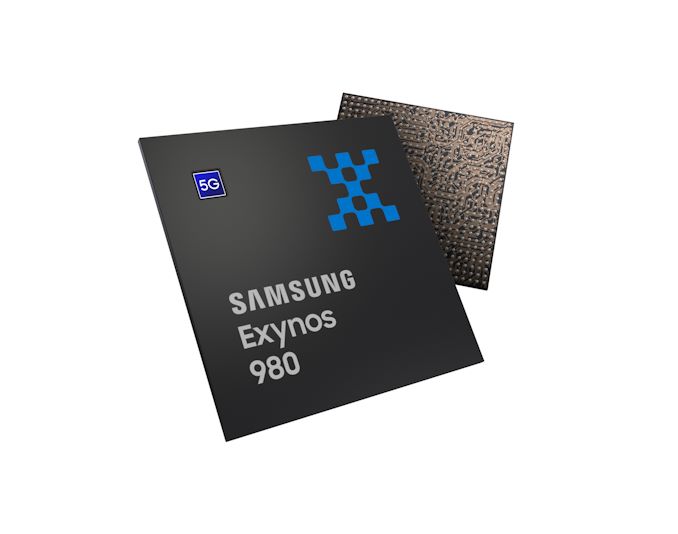
Samsung Announces Exynos 980 – Mid-Range With Integrated 5G Modem

In a surprise announcement, Samsung today unveiled their very first SoC with integrated 5G connectivity. The new chipset isn’t a flagship follow-up to the Exynos 9825 and 9820, but rather a new entry to the mid-range and seemingly a follow-up to the Exynos 9610 chipset. Nevertheless, the new chip brings a slew of new firsts to the market which should help the new Exynos 980 to be extremely competitive with upcoming offerings from Qualcomm and MediaTek.


Samsung Exynos SoCs Specifications
SoC Exynos 980 Exynos 9610
CPU 2x Cortex-A77 @ 2.2GHz

+ 6x Cortex-A55 @ 1.8GHz
2x Cortex-A73 @ 2.3GHz

+ 4x Cortex-A53 @ 1.7GHz
GPU Mali G76MP5 Mali G72MP3
NPU Integrated
Memory

Controller
LPDDR4X LPDDR4X
Media 10bit 4K120 encode & decode

H.265/HEVC, H.264, VP9
10bit 4K120 encode & decode

H.265/HEVC, H.264, VP9
Modem Shannon Integrated 


(LTE Category 16/18)

DL = 1000 Mbps

5x20MHz CA, 256-QAM

UL = 200 Mbps

2x20MHz CA, 256-QAM

(5G NR Sub-6)

DL = 2550 Mbps

UL = 1280 Mbps

Shannon Integrated


(LTE Category 13/13)

DL = 600 Mbps

3x20MHz CA, 256-QAM

UL = 150 Mbps

2x20MHz CA, 64-QAM

WiFi Integrated 802.11ax (WiFi 6) Integrated 802.11ac (WiFi 5)
ISP Main: 108MP

Dual: 20MP+20MP
Rear: 24MP

Front: 24MP

Dual: 16MP+16MP
Mfc.

Process
Samsung
8nm LPP
Samsung

10nm LPP

The very odd thing about the Exynos 980 is its new naming scheme. This is the first time Samsung has opted for a three numeral scheme in its Exynos line-up which is certainly bound to be a bit confusing at the beginning, certainly also because of similarities in the naming to the Kirin 980. However it’s quite evident that this new chip looks to be a follow-up to the Exynos 9610. I’m questioning Samsung’s naming scheme here and how it’ll play out for its follow-up chips both in the mid-range and next flagship iterations.


Nevertheless, the new Exynos 980 is the first chip to be announced to come with the new Cortex-A77 CPU from Arm. Whilst Samsung was able to jump the gun here in terms of announcement, we’re still expecting HiSilicon to be the first to market with a SoC with the new CPU in the next few weeks. Samsung’s integration of the new CPU within a mid-range SoC is quite aggressive, particularly seeing that the company lagged behind in this regard in previous generation Exynos SoCs such as the 9610. The A77 cores are clocked in at 2.2GHz which is naturally quite a bit less than what we expect of flagships, but the cores should be extremely efficient in this implementation. The two big cores are accompanied by 6 Cortex-A55’s at 1.8GHz, making this a octa-core SoC.


The GPU on the Exynos 980 is the same as its last flagship SoCs, a Mali-G76, however this time it’s only in an MP5 configuration which is less than half the cores of its flagship counterpart. I’m expecting the clock frequency of this GPU to be a lot more aggressive than its flagship counter-part, so performance should be more than half, which is actually quite a good performance target relative to Qualcomm’s mid-range SoCs.


The new chip is also the first mid-range from Samsung to integrate their in-house NPU architecture which the company promotes as augmenting camera capture abilities of the SoC platform.


The biggest news however is the announcement that this is an SoC with integrated 5G modem. Although we still have to wait out the competition, it might be one of the first SoCs with such integrated connectivity. LTE connectivity corresponds to Category 16/18 with 1000/200Mbps download and upload speeds, enabled through 5CA/2CA connectivity. On top of the LTE connectivity, the chip also supports 5G NR Sub-6 with speeds of up to 2550/1280Mbps. Through E-UTRA-NR Dual Connecivity (EN-DC), the modem can bundle LTE and 5G NR together and achieve up to 3.55Gbps download speeds. This modem looks to lack mmWave capabilities, but given its mid-range positioning as well as global preference of Sub-6 5G connectivity, it looks to be a strategic decision based on cost-effectiveness.


Also a first, is the fact that the new chip now integrates WiFi 6 (802.11ax). Samsung had started with its own WiFi connectivity solutions last year, integrating them into the SoCs, something we’ve yet to see implemented by vendors in the higher-end flagship SoCs which rely on external combo-chips.


Finally, the SoC promises ISP camera ability to support up to 108MP sensors, which falls in line with S.LSI’s own 108MP Isocell camera sensor.


The Exynos 980 is to start mass production by the end of the year and we’re likely to see devices shortly after. Overall, the chip seems unusually competitive for Samsung, showcasing quite a lot of firsts. Along with the new naming scheme, it feels a bit of a strategy shift compared to previous generation mid-range Exynos chips. Hopefully the new design enables Samsung to better compete for design wins outside of Samsung’s own Mobile division.


Related Reading:


Source: AnandTech – Samsung Announces Exynos 980 – Mid-Range With Integrated 5G Modem